That’s what I said to my parents as a teenager back in the 60s. I don’t remember what occasioned me to say this, but I can still hear myself saying it.
No doubt adolescent idealism played a part in the negative perception of my inherited church. And no doubt the countercultural 60s played a part in me speaking up about it. For the 60s were a time of social unrest and revolt against norms, materialism, and war. People organized and worked for change in the social order and in government. Raised in the church and on plenty of scripture, I saw the church operating as just another establishment enterprise and as one that was evocative of the nearby country club.
Wasn’t the church a social venue, a private club where members came together for banquets and weddings and as something to belong to? Wasn’t the member-run church I attended flush with country-club type politics? Weren’t there were bitter disputes over issues during church business meetings? Wasn’t there a membership cost for upkeep and to have a say on what was what?
With that familiar system in place, one could play a round on Sundays on a familiar course and be reminded of green pastures, still waters, and hazards. A bit cynical? Perhaps. But that is how teenage me saw things. And I wasn’t alone in my opinion that the church I inherited resembled something other than what is described in the Acts of the Apostles and the epistles.
The Jesus People Movement, begun on the west coast in the late 60s, was a spiritual awakening that, by the power of the Holy Spirit, took place outside the established church and on the street. The JPM sought a reset and a return to the life of the early church, a life that included the gifts of the spirit, miracles, signs and wonders, healing, prayer, and simple living.
What first alerted me and several in our church youth group about the Jesus People Movement, I don’t recall. There was no internet back then. Some of what was going on in Haight-Ashbury San Francisco was covered in the secular media. But Chicago media had no local Jesus People reports.
May 5, 1973: Hundreds of Calvary Chapel members line Corona del Mar beach for baptism ceremony.
I do remember Jesus People music showing up at a local Chrisitan book store and seeing event flyers posted there. That’s how I came to hear long-haired Larry Norman sing I Wish We’d All Been Ready at the DuPage County fairgrounds one night. And that’s how I learned of street preachers and their meetings at local high schools. And some preached in farmer’s fields and baptized in a pond.
While parents and church leaders tuned into the evening news and read the newspapers trying to see where things were headed and, perhaps, wondering if their established ways were under attack, us ‘radical’ youth met in homes and read scripture, specifically the Acts of the Apostles, from our “One Way” New Testaments. And that was when we saw what the church was to be and what it wasn’t. And that was when our church, in typical establishment practice, decided to hire a youth leader to “oversee” and manage the youth.
I write these things not as the judge of the church. Read the book of Revelation and the letter to the seven churches in Asia for the One who does judge the church. Rather, I write as am a member of the body of Christ. My concern: has the body transitioned into something akin to the bride of the world?
My 60s assessment signaled this. The Jesus People Movement signaled this. What about the Church of 2024 – is it the Bride of Christ? Why are people leaving the church? Does ensuring that everything is done “decently and in order” mean the Holy Spirit is restricted to only work within a corporate power structure and hierarchy? Wasn’t the body of Christ given one spirit to drink? (1 Cor. 12:13)
~~~~~
Why is church after church succumbing to corruption and false doctrine? Yes, it’s the result of greed, immorality, and a lust for power. But we’ve had those vices forever. So, why is there an epidemic of corruption in the church now?
Author, pastor, and church planter, Lance Ford, who’s worked inside pastor training networks for decades, answers that question with a line reminiscent of Bill Clinton’s first presidential campaign motto: “It’s the system, stupid.” Lance explains more in this enlightening edition of The Roys Report, featuring his session from our recent Restore Conference.
I sat down with a close friend the other day. I asked him about his early church experience, as I am interested in church dynamics.
Here’s what Dan (not his real name) said during the interview:
“My parents attended a Baptist church in Chicago before moving to the suburbs. I was a kid and just remember old buildings with a fusty smell and pictures to color. After the move, we started attending a Bible church. I was eight years old.
“I don’t remember a single sermon. But I do remember the church sanctuary. I sat there Sunday mornings and evenings for maybe twenty years.
“There was a plaque on the back wall above the choir loft. It said “God is in His holy temple. Let all the earth keep silent. Hab. 2:20.
“Front and center was a large wing pulpit. Three large minister chairs were behind it along the choir loft. A piano on the left and an organ on the right flanked the platform.
“On the main floor in front of the pulpit was the oak communion table. “This Do In Remembrance of Me” was carved on the front. The table held the offering plates and a flower arrangement.
“To the right of the platform and behind a large rectangular hole in the wall was the baptistry. A landscape was painted on the walls surrounding the water tank.
“Opposite the platform, sixteen rows back, was the entrance to the sanctuary. A clock was centered above the double doors to let the minister know when to end the service.
“Rows of blond wood pews filled the space between the front and back with an aisle down the center and along each end.
“The side walls were painted-beige cinder block. Each wall had three windows of tinted-amber bubble glass. Forest green curtains bordered two sides of each window.
“The walls around the windows were bare except for a wooden rack near the organ. It held the numbers in attendance at the service and at Sunday school the week before. An usher counted attendance every Sunday.
“That’s a twenty-five-year snapshot. I don’t recall that room ever changing.”
I asked him about the service.
“Prelude. Hymns. Lots of choruses about leaving earth and flying away. Sermon. Calls for salvation and rededication of your life. Postlude. Every Sunday.”
I asked him about memories that stick out.
“Let’s see. There was the leader of the boy’s club. He let us run around and be crazy one night each week. One time he took us to a construction site to show us what he was working on. He was a carpenter.
“There was an adult Sunday School teacher who visited a nursing home once a month. He had me come with him on those Saturdays. I’d play a hymn with my trumpet. Afterward he would give a short devotional.
“And there was this interim minister – there were lots of them – who got me my first job as a clerk in a Camera/Photo store. One time – I was twelve or thirteen – he had me come with him downtown to Pacific Garden Mission. I played my trumpet and he spoke to those who had come off the streets of Chicago.”
I told Dan that he only mentioned certain men as memories that stick out. Then I asked if anyone had mentored him.
“No one from church. Only my trumpet teachers did.”
I asked him to explain.
“I started playing the trumpet in third grade. My uncle gave me a beat-up Conn trumpet that he longer wanted to play. In the Junior High School, the band director wasn’t crazy about the look or the sound of my horn. So, he switched me to French horn for two years. But my heart was with the trumpet. I asked my parents for private lessons.
“Before I started lessons – this was during eighth grade – my father and I went to an instrument store. He bought me a brand-new Bach Stradivarius b-flat trumpet. The horn was a beautiful and expensive gift. I felt affirmed.
“My first trumpet teacher was a high school principal who also played trumpet in big bands. The first question he asked me: What trumpet players did I listen to? I told him Herb Albert. He just shook his head.
“He told me who I should listen to and to what pieces of music. He began giving me exercises to practice. Major and minor scales. Tonguing exercises. I’d have to play them for him the following week.
“The summer before high school I took what he taught me and practiced like crazy. The high school concert band director had sent out the requirements for entering the band. Those included playing major and minor scales and site reading.
“A month before my freshman year began, I was called in to audition for the band director. I played all the scales and sight read what he put in front of me. He was pleased. I was in the concert band – first trumpet section right behind the first chair trumpet, a sophomore.
“My junior year of high school the band director Mr. Gies became my second trumpet teacher. He also played the trumpet semi-professionally.
“What happened was this: the guy who sat first chair was a stellar trumpeter but he needed to be replaced. During the summer the first chair French horn player became pregnant. Both would soon be leaving the school. So, the band director began one-on-one time with me.
“Over several months Mr. Gies and I met in the school auditorium during an open period for both of us. Playing the trumpet in that auditorium, that sanctuary, was like no other experience. With those unstifled acoustics I could open up and project a nice broad sound.
“Mr. Gies asked me how I practiced. I shared with him the Carmine Caruso method for building chops. I learned the method from my first trumpet teacher, Mr. Lichti.
“I told him that the method involves interval training, articulation, range and produces endurance. With it, I had developed an extensive range -double high C to over an octave below the treble staff. The method had formed my sound to that point.
“Sitting together offstage, Mr. Gies and I worked through the Caruso method along with the Clarks – Clark Technical Studies – which are exercises used for the development of fingering technique.
“I cherished that time alone with the band director. In between playing an exercise we talked about anything and everything. And sometimes we were silent and it felt comfortable.
“We practiced together the rest of my junior year. I was ready for the first chair trumpet position when the other guy left.
“My third trumpet teacher was at a Bible school. After high school I entered a Christian Ed/Music program. The Christian Ed program was a bust but the music program was a blessing.
“I took private lessons from the concert band director, Mr. Edmonds. Unlike the other teachers, he was an established pianist with perfect pitch. He had a different take, a different sound in mind, for my horn – a precise centered pitch. He was also a composer. He adapted classical music for our concert band to play.
“In between playing my practiced exercises and being critiqued, the director and I would talk about anything. I shared with him the challenges I was facing. My practice time was limited because of my studies and the time spent listening to classical music for music appreciation class. And I had a part time job. He prayed for me at the end of each lesson.
“Like back in high school, I sat first trumpet second seat behind a sophomore in the concert band. But at an outdoor band concert, Mr. Edmonds had me solo the opening trumpet lines of Rimsky-Korsakov’s “Procession of the Nobles”. And when The Gaither Trio – Bill, Gloria, and Danny – came to town for a couple of concerts and needed some horns for the finales, Mr. Edmonds offered his two first chair trumpet players. The private lessons and my practice gave me opportunities to play.
“Looking back . . . sitting next to a trumpet teacher week after week, I learned from those who knew what to listen for and who to listen to. Mr. Lichti, for example, helped me realize that I had “deaf spots” in my listening. To develop my “ear”, I began to listen to Adolph “Bud” Herseth, principal trumpet in the Chicago Symphony Orchestra. I wanted to emulate his bel canto sound and his musical acumen.
“To accomplish this, I had to take a risk. You see, with one-on-one instruction you cannot hide, you can’t fake or pretend. You play your horn and the truth comes out. Sloppy practicing is immediately revealed and so is the need for discipline. You need another’s knowledgeable perspective to grow as a musician. Words or notes alone are not enough.
“The three trumpet teachers I mentioned invited me into their musical realm, which was both affirming and daunting, as I was made me accountable to them. In the role of apprentice, they imparted to me trumpet knowledge, technical ability, and a love for the craft.
“And now that I think about it, I take it back. The man who took me and others to his construction site and the man who took me with him to the rest home and the man who took me with to the Chicago mission and got me my first job were mentors. They influenced me just like the trumpet teachers advanced the formation of my horn playing.
“You asked about my early church experience. I’d say that there was lots of scaffolding but no formation. For me, there was really nothing life changing about going to church and sitting in silence listening to someone standing behind a pulpit. But there was with people I spent time with.”
End of interview.
~~~~~
Church culture: “Tragically, in recent years, Christians have gotten used to revelations of abuses of many kinds in our most respected churches–from Willow Creek to Harvest, from Southern Baptist pastors to Sovereign Grace churches. Respected author and theologian Scot McKnight and former Willow Creek member Laura Barringer wrote this book to paint a pathway forward for the church.”
In this podcast, theologian Scot McKnight and his daughter, Laura Barringer, join Julie Roys to discuss their latest book, A Church Called Tov: Forming a Goodness Culture That Resists Abuses of Power and Promotes Healing.
While their first book explained the characteristics of a “tov,” or good, culture, their latest book tackles the next challenge—transforming ingrained toxic cultures into tov ones.
Pivoting Your Church from Toxic to Healthy | The Roys Report
“Regrettable errors” is a deplorable defense in the mishandling of sexual abuse in a church. But that was the response of a Bishop who failed to act quickly on allegations against a lay minister.
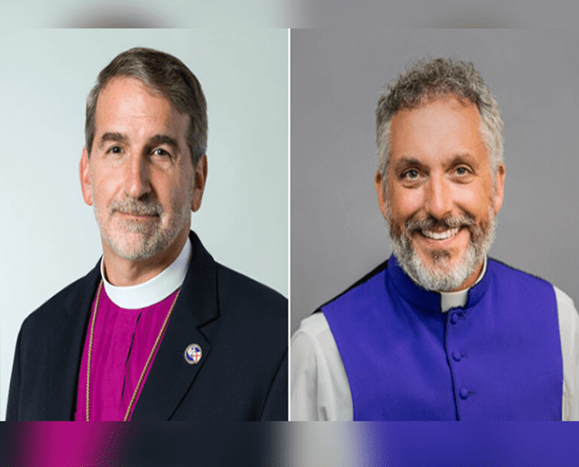
As reported by Kathryn Post on Sept. 30, 2022, “A long-awaited third-party report on sexual abuse reveals that leaders in an Anglican Church in North America diocese failed to act on tips about sexual misconduct and abuse and defended an alleged abuser as innocent while questioning reported survivors’ credibility.”
As you’ll learn, Bishop Stewart Ruch of the Upper Midwest Diocese had made a “secret appeal “to ACNA’s seven-member Provincial Tribunal to call off the investigation. This deliberate act began a power struggle with Foley Beach, primate and archbishop of the Anglican Church in North America.
The following reports by Kathryn Post and the abuse survivor’s accounts that include grooming are disturbing to read and more so for me. I knew the leaders – the “shepherds” – involved in the “regrettable errors”.
I attended the Church of the Resurrection for many years. Stewart Ruch became pastor of “Rez” while the church gathered in the auditorium of Glenbard West High School before moving to Wheaton. I lived around the corner from Stewart and Kathryn. I was in small group with Eirik Olsen and Randy York, now priests in Bishop’s Ruch’s close-knit diocese. My thoughts follow the reports.
How would you assess the handling of the sexual abuse situation, the attempted cover up, and the ensuing power struggle from the following reports? Is Bishop Ruch’s paltry mea culpa and a claim of spiritual attack a CYA defense designed to protect himself from discredit and from being discharged from a coveted position? What Say You?
“(RNS) — In July 2021 Stewart Ruch III, bishop of the Anglican Church in North America’s Upper Midwest Diocese, went on leave after making what he called “regrettable errors” in handling cases of abuse in the diocese.
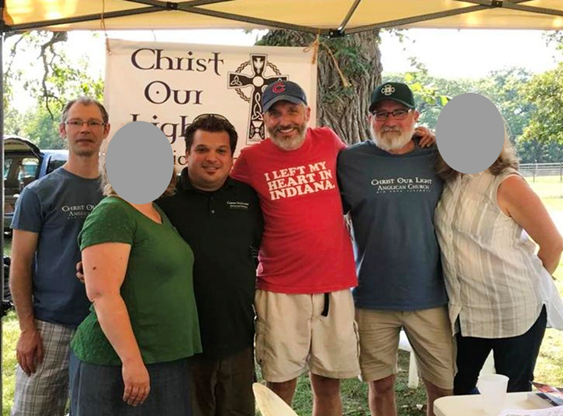
By that time, many who attended the roughly 30 churches in Ruch’s diocese knew that the missteps Ruch was referring to had to do with his delay in informing them of the accusations against Mark Rivera, a volunteer leader at Christ Our Light Anglican, an Upper Midwest Diocese church in Big Rock, Illinois.”
~~~~
What had happened was this, according to Bishop Stewart’s Letter Regarding Devastating Situation in Diocese of May 4, 2021.
“Two years ago, on May 20, 2019, Mark Rivera, a volunteer lay leader (with the title of Catechist) at Christ Our Light in Big Rock, Illinois, was accused of a sexual offense against a minor. Christ Our Light was part of the Greenhouse Missionary Society, which is within our diocese. When Greenhouse leadership learned of this accusation, Mark was immediately removed from his position as Catechist. On June 10, 2019, Mark was arrested and jailed in Kane County.”
“(RNS) — Mark Rivera, a former lay pastor in a conservative Anglican denomination who was convicted in December of felony child sexual abuse and assault, was sentenced on Monday afternoon (March 6) to 15 years in the department of corrections.
Judge John Barsanti of Illinois’ 16th Judicial Circuit Court in Kane County granted Rivera the minimum sentences for his crimes. The judge earlier found Rivera guilty of two counts of predatory sexual assault of a victim under 13 years old (a Class X felony) and three counts of aggravated criminal sexual abuse of a victim under 13 (a Class 2 felony). Rivera will get credit for time already served in jail and spent under electronic monitoring and will be eligible for parole before completing his full sentence.”
The mother says leaders in the Anglican Church in North America pressured her not to report her daughter’s abuse allegations
“In May 2019, Cherin’s 9-year-old daughter told her that she had been abused by [Mark] Rivera. She reported the alleged abuse to [Rev. Rand] York, believing that her great uncle and the others in church leadership would protect her daughter.
According to Cherin, who asked that her last name not be used in order to protect her daughter’s identity, church leaders not only failed to report the allegations to the police or to the Department of Children and Family Services, but some also pressured her not to go to the police.
Despite this pressure, Cherin reported the alleged abuse to the police. In June 2019 Rivera was arrested and later charged with felony child sexual assault and abuse. He is currently out on bond.
In November 2020, Rivera’s neighbor, Joanna Rudenborg, reported to the Kane County Sheriff’s office that Rivera had raped her twice between 2018 and 2020. The Kane County Sheriff’s office would not comment beyond saying there is an ongoing investigation. Rivera’s lawyer did not respond for comment. (Emphasis mine.)
Ten people in all have come forward with allegations of sexual abuse against a volunteer leader in the Anglican Church in North America.
“Church leaders and members in the Diocese of the Upper Midwest, of the Anglican Church in North America, trusted Rivera’s spiritual authority. According to reports from former Christ Our Light Anglican Church parishioners, they dismissed his frequent physical affection — his habit of kissing young girls on the cheek or inviting teenagers to sit on his lap — as “just Mark being Mark.””
After 9-year-old child told her mother that Rivera had abused her, “nine additional people have made allegations of abuse by Rivera, including child sexual abuse, grooming, rape, and assault, and Rivera has been charged with felony child sexual assault and abuse of the 9-year-old. To date, the diocese has publicly acknowledged only some of the allegations, and according to abuse prevention advocates, has downplayed the access he had to children and others while in church leadership.”(Emphasis mine.)
““Both my diocese and the ACNA got hit this summer by a vicious spiritual attack of the enemy,” Ruch wrote to the denomination’s top official, Archbishop Foley Beach, on Jan. 14. “I believe this is the case because both entities are doing robust Gospel work, and Satan hates us.”
“I have decided to come off of my voluntary and temporary leave of absence effective March 7, 2022,” Ruch announced to Beach. “I believe my calling as a bishop who is responsible for leading and pastoring my diocese requires me to return to my work of service, preaching and oversight.”
The ongoing investigative process, he further said, was neither “canonical or, more importantly, biblical.”
Despite an advising chancellor and others expressing solidarity with Ruch through some ecclesiastical mumbo-jumbo, “others say that Ruch and other leaders have made the situation worse by defending the church instead of attending to Rivera’s alleged victims.” (Emphasis mine.)
~~~~
“A long-awaited third-party report on sexual abuse reveals that leaders in an Anglican Church in North America diocese failed to act on tips about sexual misconduct and abuse and defended an alleged abuser as innocent while questioning reported survivors’ credibility.
The probe into events in the Upper Midwest Diocese, conducted by the investigative firm Husch Blackwell, also found that an ACNA priest did not report abuse by a lay pastor to the Department of Child and Family Services, claiming a church lawyer told him he was exempt from mandatory reporting laws. It also found that Bishop Stewart Ruch III and others allowed a church volunteer to have contact with teenagers after he had lost his teaching job for inappropriate behavior with students.” (Emphasis mine.)
Returning from self-imposed hiatus, ACNA Bishop Stewart Ruch works to regain trust
“After 16 months of a self-imposed hiatus after admitting to mishandling sexual abuse allegations in his diocese in Wheaton, Illinois, Bishop Stewart Ruch — a charismatic, controversial figure in the Anglican Church in North America — is taking steps to revive trust in his leadership. But a meeting last week held to soothe concerns of members of Church of the Resurrection showed he has work to do to restore trust.”
At a staged meeting where “Ruch and other leaders at Resurrection sat in armchairs in front of a packed church, according to church members who attended . . . Ruch read several statements, answered questions chosen from those submitted by congregants and read by church leaders. Ruch answered by reading from a script.”
“It gave me hope that the church realized that they needed to make some institutional programmatic changes or implementation and policies that would make it clear to everybody what their roles were when and if these kinds of crises hit,” one Resurrection member told RNS.
“But Ruch and other church leaders also appeared to want to manage the narrative about the bishop’s handling of the case and his return. Attendees were asked not to record the meeting, and clergy, accompanied by two police officers, were stationed at the sanctuary entrance. Audrey Luhmann, who stopped attending Resurrection in person over her concerns about church culture and who has been an outspoken member of ACNAtoo, an anti-abuse advocacy group, was barred from entering the meeting. ACNAtoo also reported that another clergy staffer tried to compel an alleged abuse victim’s mother to leave the meeting.” (Emphasis mine.)
“Archbishop Foley Beach, the primate of the Anglican Church in North America, accused his denomination’s highest court of attempting to stop an investigation into an Illinois bishop’s alleged misconduct.
“According to a statement Beach issued Wednesday (June 7), Bishop Stewart Ruch of the Upper Midwest Diocese made a “secret appeal” earlier this year to ACNA’s seven-member Provincial Tribunal to call off the investigation. After the tribunal issued a stay order, Beach and other denominational leaders questioned the impartiality of four tribunal members. He also asserted that the denomination’s bylaws don’t give the tribunal authority to issue a stay order.
“This power struggle, which had been conducted behind closed doors for months, broke into the open Wednesday with Beach’s Sept. 7, 2022 “Update on the Diocese of the Upper Midwest.””
A 10-person board of inquiry found there was probable cause to present Ruch for trial for violating denominational bylaws.
“Bishop Stewart Ruch, a controversial figure in the Anglican Church in North America, will be brought to a church court trial, according to an announcement published to the denomination’s website on Tuesday afternoon
On July 10, a 10-person board of inquiry selected by the denomination’s leader, Archbishop Foley Beach, received a presentment (or list of charges) against Ruch. The board submitted a public declaration on Friday that said at least two-thirds of the board found there was probable cause to present Ruch for trial. Specifically, per the denomination’s bylaws, they found grounds to try Ruch for violation of his ordination vows, for “conduct giving just cause for scandal or offense, including the abuse of ecclesiastical power” and for “disobedience, or willful contravention” of the denominational or diocesan bylaws.” (Emphasis mine.)
Per Wikipedia: “ACNAtoo formed in June 2021 when Joanna Rudenborg took to Twitter and alleged that she had been raped twice by ACNA catechist Mark Rivera and decried the subsequent mishandling of multiple survivors’ allegations by leadership in the Diocese of the Upper Midwest.”
“Ursa” alleges that Christopher Lapeyre abused his power as a teacher and mentor to groom her while she was a minor and enter a manipulative sexual relationship with her when she was a very young adult.
As mentioned above, I had personal connections with Stewart and Kathryn Ruch, Eirik Olsen, and Randy York while attending Church of the Resurrection during its GWHS days. I was in a small group with Eirik and Randy and their wives. Wheaton College grads, Stewart and Eirik and Randy and their wives, Jeannie and Kaye respectively, are especially close.
I’ll start by saying that I knew each of them to be decent people who expressed love for the Lord.
-It is said that after a spiritual crisis, Ruch returned fully to the Christian faith in September 1991.
-Stewart had been the rector of the Church of the Resurrection since 1999 and later consecrated as the first bishop of the Diocese of the Upper Midwest on 28 September 2013.
I knew Stewart to be a high-spirited guy whose heart, as he said from the platform, was for evangelism. He came across to me as someone who could spur excited devotion but also as someone all over the place. So, I was surprised that a young inexperienced guy who was known to have panic attacks was made rector of “Rez” and doubly surprised when he was made a bishop.
Though a decent guy who loves the Lord, Stewart was in no wise of the caliber needed for those positions. Stewart, in my estimation, was not a spiritually mature candidate for either position. His becoming pastor was one of the main reasons I left “Rez”. Another was that there was a “Leanne Payne” contingent that concertedly wanted Stewart in those positions. (More about my Leanne Payne experience in a future post.)
As revelations of the mishandling of sexual abuse under Ruch’s oversight became known to me, I was confirmed in my assessment of Stewart.
Eirik Olsen and Randy York are working priests and leaders in Ruch’s diocese. I know them as very capable in the business world. They both operate in a corporate milieu that does not tolerate sexual misconduct. HR depts rush in to handle allegations. So, I was surprised to find that they were slow to act in these matters.
I understand the scriptural criteria for accusations in a church setting. I also understand that sexual abuse and the grooming that precedes it happen in private. Allegations of abuse turn into “he said she said” scenarios. Two or three witnesses are not around to corroborate allegations. In matters of alleged abuse, a wait-and-see-what happens attitude, as reported above, leads to more abuse.
If there is any question, you separate out the alleged perpetrator immediately and provide counseling for the alleged victim. You don’t make excuses for the alleged perpetrator. Blind allowance is not an act of grace. You work to uncover, not coverup, what is taking place. In general, when someone is reluctant to press an issue, are they compromised by similar issues?
Do the proper work of a shepherd as you look after God’s flock which has been entrusted to you.
From the accounts presented above – remember Mark Rivera was found guilty of sexual abuse and sentenced to 15 years – one does not let more chips fall where they may before acting. Act to sort out what is true from the posturing obfuscations.
And one does not hide behind a subjective defense of “spiritual attack” to fend off accountability. If Bishop Stewart can sense a “spiritual attack on himself and the church, why didn’t he (and Leanne Payne-discipled others) sense it around Mark Rivera and the abused in Big Rock?
Incompetence by all three men is my finding. And a lack of spiritual discernment on the part of all three men and the church that put them in those positions. Stewart must be removed from his position.
Putting well-liked good-natured people into positions of oversight is deceptively easy. If you want to test someone’s maturity before placing them upwards, place them under the direct oversight of someone spiritually mature and give them a responsibility for several years. If you don’t know what spiritual maturity is then learn, not from books, but from obedience to Christ in all things.
Do the proper work of a shepherd as you look after God’s flock which has been entrusted to you, not under compulsion, but gladly, as in God’s presence; not for shameful profit, but eagerly. 1 Peter 5: 2
If one member of the body suffers, all members suffer with it. 1 Cor. 12: 26
What Say You?
~~~~~
Added 5-22-2024:
“On Monday, a group of ACNA clergy published an open letter expressing concern that there have not been public updates about a promised church trial for Ruch since November 2023. The letter pushes for regular updates on the trial’s progress and for information about why Ruch has not been inhibited, or limited in his duties, because of his alleged laxity in the past.”
An ACNA bishop, Todd Atkinson, tapped to assist during Bp. Stewart Ruch’s (short term) absence, was removed from ordained ministry after a church trial found he had engaged in inappropriate relationships with women and interactions with minors.
My job is to make clear to everyone just what the secret plan is, the purpose that’s been hidden from the very beginning of the world in God who created all things. This is it: that God’s wisdom, in all its rich variety, was to be made known to the rulers and authorities in the heavenly places – through the church.” The Apostle Paul, Ephesian 3: 9 & 10
This weekend is our church’s 150th anniversary of the chapel. The church: St. Mark’s, named after the Evangelist.
St. Mark, the Evangelist
The Anniversary booklet states,
St. Mark’s origins go back to the earliest days of Geneva, around 1830, when Episcopal services were held in a log house belonging to Mrs. Charity Herrirngton, which stood at what is now State Street near River Lane. These were the first religious services held in Geneva [IL].
And this,
Early in 1868 plans were drawn and a contractor selected to erect a church in the Gothic style, built of local riverstone with limestone sills and hood moldings, to seat 250….
There is much more of St. Mark’s history to recount. But here, I’ll share my St. Mark’s experience and the photos I shot today after the 8:00 service.
I came to St. Mark’s after moving into the area. At the same time, I was moving away from attending Bible churches. Raised in Evangelical churches and then attending them for years as an adult, I became desirous of a higher church setting, one that honored the beauty of words, of music, of architecture and the sacred. The Bible churches and many others, it seemed to me, were becoming more and more like the surrounding culture in their desire to be relevant.
I like Anglicanism’s emphasis on the Word and Sacrament along with the informing elements of tradition (the practices of the historical church) and reason (involving the intellectual). I like how the liturgy (worship hymns, reading of Scripture, offering, sermon, confession, the Creed, the Peace) points to the apex of the service – the Eucharist. In the churches I attended previously the service is centered around Scripturally illiterate sermons.
The words of The Book of Common Prayer have a stately beauty and sacredness to them. The wording should be so. We are petitioning royalty. Who in turn, points me to the Eucharist — the REAL Presence of Jesus Christ offered to me each week. It is the main reason I attend St. Mark’s.
The church has been a tremendous blessing to me over the almost eleven years I have attended. And, that is why I also must mention the many good people of St. Marks. They have been generous with their grace towards me. What they have received they have passed on to me.
One last word. I have spent many a time alone in St. Mark’s Chapel. This occurs during the Good Friday night vigil. I sign up for an hour alone before the cross, keeping watch. As such, it is a sacred time at 4:00 am. It is my time to come away and meditate on the cross. I come away from the chapel with a gift of grace, given to me “according to the measure the king used when he was distributing gifts. That’s why it says…
When he went up on high
He led bondage itself into bondage
And he gave gifts to people.
(Ephesians 4:7 & 8)
St. Marks’ is a gift of grace to me. Rulers and authorities would be wise to take note.
Pentecost mural by Louis Frederick Grell (1919)
Burning Bush
~~~
Imagine 150 years of marriages and baptisms and confirmations and funerals and friendships and giving, and the Eucharist, and witness for Christ to the community. Imagine the Kingdom Continuum.
Jesus said to them, “If the world hates you, know that it hated me before you. If you were from this world, the world would be fond of its own. But the world hates you for this reason: that you’re not from the world. No: I chose you out of the world.” John’s gospel account 15: 18-19
~~~
From the many conversations I have had on Twitter, the word on the street is that “God is love and is all about love. We love, so we are doing what God accepts.” So, where does the world’s hate come in?
The hate spoken of in John’s gospel is generated by a protection of one’s place in the world against “outsiders”. Over and over again I have had that hatred and vitriol directed at me on Twitter. I cannot show you the Tweet replies. They are vulgar and pernicious. The replies come from a place beneath this world.
The hate-filled replies occur when I say something other than what is considered loving by those protecting their place in the world. Replies are derived from a worldview. And, one’s worldview depends on whether you accept being called out of this world knowing that that those in the world will hate you or if you are in this world for its approbation:
Called-Out Ones worldview: “For God so loved the world, that He gave…”
Social Justice Warrior (SJW) worldview: “For the world so loved me, when I…”
In order to make the world-accepted SJW worldview sustainable, mainstream churches create a Jesus who is palatable, marketable, consumable and renewable. The ministers do this by parsing Scripture into love notes. Their resultant Scripture messages, whether in a sermon or in a blog or on Twitter, remind me of a bag Valentine Sweethearts – candy hearts.
These churches promote “inclusion” because in a consumer-driven society, choice of how you live, choice of what you accept and who you accept, choice of right and wrong-choice becomes the ultimate approbation in this world.
~~~
Coming to a church near you: a populist theology which promotes the acceptance of the gay lifestyle, universal health care and illegal immigration all as works of Christian charity from the pulpits of body-of-Christ-divisive politics (race, gender, class, sexuality, etc.). This populist theology uses the high-sounding term “social justice” so as to neutralize detractor’s objections and to force a consensus, a groupthink around the premise of political correctness redefined as God’s love.
I encounter this populist theology every day now. If you are on Twitter “fighting the good fight”, you may receive the same replies from Catholics that I did. They go something like this:
1. “God is love. I know many committed gay couples who love each other.”
2.“Jesus never talked about sexuality or homosexuality, therefore it is a non-issue. If Jesus was concerned about homosexuality he would have said something.”
3.“Jesus is about loving your neighbor. Jesus is not judgmental. Jesus is fully accepting, inclusive. He’s about loving the homosexual. Who are we to judge?” (from Pope Francis’, “Who am I to judge?”).
4.“Loving your neighbor means universal healthcare. You are not charitable if you are against universal healthcare. You must be a Conservative who hates people.”
5.“Jesus and Paul are not the same. Jesus is love and Paul is rules. Jesus is universal love. Paul, on the other hand, is a picayune fundamentalist and fundamentalists are authoritarians. Jesus would say “Live, love, eat, pray and let live.”
6.“Jesus is social justice. He talked about helping the poor. Dorothy Day is a hero. Many of our heroes are beatified saints, saints who did good deeds while alive. Jesus demands good works from us. “Faith without works is dead”.”
7.“Women are talking in church. Women are being ordained. Scripture is being updated and should be inclusive of homosexuality, as well.”
My first thought when I encountered these replies: “The Catholic church has done great harm to its charges by not teaching the whole of Scripture, the whole council of God.” Scripture has been defined down to a constructed abstraction of Jesus’ words.
One of the main reasons the populist theology has taken root in the Catholic and all (yes, all) of the mainline churches, I believe, is the lack of Scripture knowledge coupled with a deficit of personal faith-history. Deism is pervasive in the church: “God and His Word are far away from reality and not relevant to what I am experiencing”; “You don’t understand same-sex attraction. You can’t change me so, accept me for what I am.”
Post-modernist pop-theologians rightly question history and what has been passed down through millennia but without a sufficient regard for and knowledge of the discipline of the study of history – factual non-repeatable events. Their pick-and-choose history approach leads to utter confusion about who Jesus is, what happened the first century and to whether or not Jesus even existed. I have witnessed such dissociative history making on Twitter. Such groping at history and at Scripture reminds me of the Indian parable of the blind men and the elephant: each of the blind men encounter a different part of the elephant (trunk, tail, etc.) and then return home and proceed to project their ‘understanding’ of the elephant as the elephant while claiming the other five blind men must be mistaken.
Populist theology also has historical Leftist ties (“Unconstrained vision” is the term used by Economist Thomas Sowell to define the philosophy of the Left). Political philosopher Jean-Jacque Rousseau wrote, “man is born free, but is everywhere in chains.” Another philosopher, Marquis de Condorcet, believed that men in their natural state with a “natural inclination” would seek out the social good. For them, man’s nature was not the problem. Rather, institutions needed to be reformed so that man’s better nature would come out. Hence, pop-theology presses for reforms: the church must be reformed to help men to realize their better nature. “We are so much smarter now,” is the inference.
Enter the church’s “social justice” moment. And the “social justice” proffered is done under the guise of the common good but it is in reality a narrowing of focus down to subjective individual rights and individual happiness, in parallel with what is happening politically in Europe and the U.S. currently. The “common” part of their “common good” are those who share the same self-directed interests. Others must conform to their self-interests for the common good.
My second thought after reading the above replies: “It is time for another reformation – putting the Bible (again) into people’s hands and teaching them how to read it for themselves.”
It would seem that many of the above respondents view Scripture through the lens of a post-modern Epicurean Catholic world view, a worldview which replaces historical narrative (in this case, derived from the “faith once delivered”) with a relevant “social gospel” or populist theology promulgated as authentic Christianity. And with little knowledge of Scripture many Catholics are ‘falling’ for what they have been taught by the top-down government and media of the Catholic church and its social justice-primed priesthood.
When they do (see replies above) they end up with a Jesus who is fantasy blend of Dorothy Day, Ghandi, Mr. Rogers and a Democrat with a Jesus bleeding heart – an ends-justifies-the-means person. In other words, they end up not with a literal historical Jesus, but rather a figurative Jesus and one disposed to making you and your world feel good about doting on yourself. And, if you can get other people to dish out love and charity and “understanding” and, most importantly, cash, then you have done right by pseudo-Jesus.
Every self-designated Catholic I have encountered on Twitter appears to know little or nothing of Scripture. For them, it seems, raw Scripture, ‘unrefined’ by the Catholic priesthood, seems to be tied to evangelicals who are considered fundamentalists and therefore, presumptively, not connected with their Jesus’ all-assuming love. What they know and repeat is what a priest or Jesuit tells them, and their reply is usually about social justice, a catch-all for not being judged but for being loved.
Without making this post too long, here are some of my quick replies to the above points. Feel welcome to add yours in the comment section below.
1.The plea bargaining “God is Love” defense is foiled when you define love, not in terms of codependence and sexuality, but as desiring the ultimate good for another. This of course leads to a definition of what is good. I reply with Jesus’s request of the Father, “Set them apart for yourself in the truth; your word is truth.” (John 17:17)
2. When someone says that Jesus never talked about homosexuality I remind them that Jesus’s mission was to the lost sheep of Israel, the ones who were supposed to be “a light to the Gentiles”. The Israelites knew the law, the Torah. The law forbids homosexuality. This was common knowledge in the first century. Jesus did not need to repeat it. Paul, on the other hand, an apostle to the Gentiles did need to speak about the matter (e.g., Rome, Ephesus, etc. had temples to pagan gods which involved all manner of sexual immorality.)
3. Here we have justification by plea bargain. Jesus prays for his own that they will be sanctified, separate – taken “out of the world” worldview.
4.If you know Scripture then you know that Jesus did not heal everyone in the world during his earthly time. He told us that we can do the same and greater things than he has done when filled with the spirit. Beyond the fact of outright healing, there is the matter of personal healthcare. Universal healthcare replaces a person’s personal responsibility for their health with a non-caring impersonal government bureaucracy. This costly tax-payer bureaucracy will need to control your behavior, your paycheck and the doctor’s practice to control costs. As such, it is loving to not desire socialized coverage.
5.When I hear someone say that Jesus is Gospel and Paul is not relevant I remind them that Jesus met Paul on the road to Damascus. In the fullness of time Jesus encountered Paul. I remind them that Paul right then and there became an eyewitness of Jesus and therefore an apostle. I remind them that Jesus sent Paul to be Jesus to the Gentiles – the heathen, the pagans, the unclean. I tell them that Paul wrote the theology of the newly established Kingdom of God on earth in his letters to the infant churches.
6.I remind them that the gospel is “Jesus is Lord”. All else falls in line and in order under this proviso: salvation, sanctification (called out of the world) and then social gospel (to affect the world under the direction of the Kingdom’s Lord.)
When Jesus tells the rich man “Sell all you have and give it to the poor” we understand the means to the rich man’s salvation: renunciation of his coveting relationship of wealth- a relationship which came between Jesus and the rich man, sanctification (separation from the love of his money and the hold it had on him) and then faith with works – a complete detachment from self-preservation- giving his wealth to the poor, a product of the new Kingdom focus.
7.Women vs. gay acceptance and Scripture: I remind them that there is a difference between culturally defined and morally defined. There is a difference between cultural practice and culturally-imposed taboos and doctrinal principles and God-directed temperantia-God’s ordered structure for the being of man. Paul wrote about the former in his letters to the church at Corinth. Anything perceived as ambiguous was directed back to a person’s Holy-Spirit directed conscious.
It is no secret that the Evil One’s mission from the very beginning is to ask, “Did God really say you couldn’t…?”
Pop-theology proposes to modernize and conform the church to be a welcoming inclusive place for whatever the prevailing winds of PC doctrine bring to the church’s door step. Be it known: the called-out ones – the ecclesia – will remain faithful under the Lordship of Jesus. The churches that wallow in the world will have their candlestick taken away. In the dark their mutual admiration society will be left grappling with elephant parts.
This is how the body of Christ becomes leprous>>Anglican bishops prep for tough talks on same-sex marriage https://t.co/O7OVRVBWYV via @RNS
Viewed from the six lane highway, the structure appears to be a brick fortress surrounded by acres of treeless grass and a vast moonscape of parking lot. The function without form building inspires no awe, no upward glance and no transcendent thought. The surrounding barren landscape contains no greenhouse, no food or flower gardens, no observatory and no animal shelter. There is nothing of nature’s bounty in my view, only the requisite shrubs to offset the stark landscape. Behold, another mega-church built to feed the souls of six thousand; another unadorned mega-church in a far western suburb of architecturally savvy Chicago.
Every other Saturday I visit someone several towns away. As I do I pass this mega-church going and coming, typically between 10 and 11:30 am. This Saturday, like all the other times before, I saw, again to my astonishment, that there were no cars in the parking lot. There was no activity whatsoever. I wondered at a stewardship that builds a Scripture fort surrounded by acres of asphalt parking that is to be filled only periodically by the six thousand. The transmutation of creation into an austere block complex hurt my soul to see. And, what about the transmutation of the six thousand?
As a child, I first attended a Baptist church and later, Bible/Free churches. Beauty was a no show at these churches. There were, of course, colorful Sunday school materials – what is considered Christian education resources – for the kids. And with a constant pamphlet diet – a three point sermon with alliteration – there was no hunger for intellectual activity. I observed, as did Mark Noll in his book “The Scandal of the Evangelical Mind“: “The scandal of the evangelical mind is that there is not much of an evangelical mind.” I saw extreme resistance to obtaining knowledge. The pews were there to be used, but scholarly books, not so much. It would not be too far off to say that understanding was gained by and strictly limited to what the Bible ‘teachers’, self-help pablum and popular seminars say the Bible says.
Over some fifty years I have heard the same bad theology passed down from generation to generation. Not once in the Bible church did I ever hear a sermon or a class talk about the Kingdom of God being here and now – a major thrust of the four Gospels. The sermons, to an Amen, were, “You need to get saved so you can get to heaven. If you are saved then you need to come forward to rededicate your life. Then you must think seriously about becoming a missionary. Everyone must get to heaven because this world will be judged harshly.” Imagine how our world would change if we prayed for and practiced “on earth as it is in heaven”, and prepared for the return of our King? He will be bringing heaven down to earth to join them together.
There was and is also the highly profitable Rapture fantasy series based on a mis-reading of the Paul’s letters to the Thessalonians. And, of course, there is the teaching of a literal six-day creationism. Science must be eschewed as being antagonistic toward God and His Word. I learned otherwise on my own.
And, there is the constant reiteration of the mis-understanding of Paul’s letter to the Romans. Sadly, Romans, since the Reformation and the Enlightenment, has been reduced to a quirky systematic theology – all about us. Paul’s circular letter to the Christians in and around Rome speaks of God’s plan to redeem his creation. The letter is a well thought out dissertation reminding Jewish and gentile Christians in Rome of God’s covenantal faithfulness, his righteousness. It was meant to reinforce an Old Testament understanding of God’s plan for redeeming his creation that was in place all along.
I never heard this at church. Instead, I heard the four spiritual laws imposed onto Romans. And with this I was taught that God imputes – gives – his righteousness to me, sinner that I am. But, this thinking has no basis in Romans given its Scriptural context of Genesis 15 and the Abrahamic covenant. Regarding my righteousness: I am made righteous in the law court of God by God’s exercise of His covenant faithfulness and his desire to put the world to right.
I don’t recall anyone over those years, except for a few visiting professors, who seriously studied theology, N.T. Greek or Hebrew to understand the context of what was written. Often, the visiting seminary professors would reassert the same bad theology using highfalutin terms and out-of-context proof texts.
I have heard countless sermons based on poached verses to create a ‘relevant” topic to preach on Sunday mornings. Relevance and accommodation are apparently key to mega-ness. The mega-church I’ve mentioned offers two services: traditional and contemporary worship. As such, this church divides the Body of Christ into sects for mega-accommodation.
Am I jaded about the Evangelical church? After many years of being involved with these Bible churches, in some sense I am. That is perhaps why I can see the six thousand continuing to come back to the mega-church because it looks… bigly: “There has to be something for me inside this Yuge Assembly of Bricks Church.”
If the election of Donald Trump, supported by the many Evangelicals who voted for him tells you anything, and if the existence of the mega-church tells you anything it is that the Evangelical assembly line approach to Christianity must go onward. And, Bible fortresses must be built.
~~~
A coincidence? I found this audio link on Twitter this morning:
Reflections on horrible preaching
~~~
“The day-to-day services of the Christian churches are embarrassing reminders of the fact that religion is losing its sublime godwardness, and turning instead towards the world of mass production.”
― Roger Scruton, An Intelligent Person’s Guide to Modern Culture
“Beauty is vanishing from our world because we live as though it did not matter.” ―Roger Scruton, Beauty
What is revealed to me in the experience of beauty is a fundamental truth about being – the truth that being is a gift, and receiving it is a task. This is a truth of theology that demands exposition as such.” ― Roger Scruton, Face of God: the Gifford Lectures
“The point of Christian scholarship is not recognition by standards established in the wider culture. The point is to praise God with the mind. Such efforts will lead to the kind of intellectual integrity that sometimes receives recognition. But for the Christian that recognition is only a fairly inconsequential by-product. The real point is valuing what God has made, believing that the creation is as “good” as he said it was, and exploring the fullest dimensions of what it meant for the Son of God to “become flesh and dwell among us.” Ultimately, intellectual work of this sort is its own reward, because it is focused on the only One whose recognition is important, the One before whom all hearts are open.” ― Mark A. Noll, The Scandal of the Evangelical Mind
“We have entered, as I see it, a spiritual limbo. Our educational institutions are no longer the bearers of high culture, and public life has been deliberately moronised. But here and there, sheltered from the noise and glare of the media, the old spiritual forces are at work” Roger Scruton
*****
“When a common culture declines, the ethical life can be sustained and renewed only by a work of the imagination.”-Roger Scruton
*****
“Jesus prayed, “This is eternal life, that they may know You . . .” (John 17:3). The real meaning of eternal life is a life that can face anything it has to face without wavering. If we will take this view, life will become one great romance— a glorious opportunity of seeing wonderful things all the time. God is disciplining us to get us into this central place of power.” Oswald Chambers
*****
“No power on earth or in hell can conquer the Spirit of God in a human spirit, it is an inner unconquerableness.” Oswald Chambers
*****
To those who have had no agony Jesus says, “I have nothing for you; stand on your own feet, square your own shoulders. I have come for the man who knows he has a bigger handful than he can cope with, who knows there are forces he cannot touch; I will do everything for him if he will let Me. Only let a man grant he needs it, and I will do it for him.” The Shadow of an Agony,Oswald Chambers
*****
“If we wish to erect new structures, we must have a definite knowledge of the old foundations.” John Calvin Coolidge
*****
Atheism is a post-Christian phenomenon.
*****
If social justice looks like your hand in someone else’s pocket then you are stealing.
*****
“In Sweden, giving to charity, absurdly, came to be considered a lack of solidarity, since it undermined the need for the welfare state.” – Roland Martinsson
*****
“…to love democracy well, it is necessary to love it moderately.” Alexis de Tocqueville
*****
Capitalism seeks to help others through a servce or product it provides. Free Market Capitalism is the most moral and fair economic system available to man. Capitalism augments personal growth, responsibility and ownership. Charity flourishes under capitalism. Charity dies under subjective “fair share” government confiscatory policies. Socialism redistributes ambivalence and greed.
*****
“We are to regard existence as a raid or great adventure; it is to be judged, therefore, not by what calamities it encounters, but by what flag it follows and what high town it assaults. The most dangerous thing in the world is to be alive; one is always in danger of one’s life. But anyone who shrinks from that is a traitor to the great scheme and experiment of being.” G.K. Chesterton
*****
Any intelligent fool can make things bigger, more complex, and more violent.
It takes a touch of genius – and a lot of courage – to move in the opposite direction. Albert Einstein
*****
“You shall know the truth and the truth shall make you odd.” Flannery O’Connor
*****
“There is but one good; that is God. Everything else is good when it looks to Him and bad when it turns from Him.” C.S. Lewis, The Great Divorce
*****
“Though He slay me, yet will I trust Him” (Job 13:15).
*****
God’s grace is not about the allowance for sin. God’s grace is about the conversation God allows regarding sin.
*****
From the book of Proverbs: We are not to favor the rich or the poor. We are to pursue justice.
*****
“Always keep in contact with those books and those people that enlarge your horizon and make it possible for you to stretch yourself mentally.” Oswald Chambers
*****
One goldfish says to another, “If there is no God who keeps changing the water?”
*****
“The truth is always there in the morning.”
From Cat On A Hot Tin Roof script – playwright Tennessee Williams
*****
God blesses those who hunger and thirst for justice, for they will be satisfied.
*****
“America’s greatness has been the greatness of a free people who shared certain moral commitments. Freedom without moral commitment is aimless and promptly self-destructive.” John W. Gardner
**
“Men of integrity, by their very existence, rekindle the belief that as a people we can live above the level of moral squalor. We need that belief; a cynical community is a corrupt community.” John W. Gardner
*****
“In the world it is called Tolerance, but in hell it is called Despair, the sin that believes in nothing, cares for nothing, seeks to know nothing, interferes with nothing, enjoys nothing, hates nothing, finds purpose in nothing, lives for nothing, and remains alive because there is nothing for which it will die.” Dorothy L. Sayers
*****
“Art, like morality, consists of drawing the line somewhere.”
G. K. Chesterton
*****
“The battle line between good and evil runs through the heart of every man.” Alexander Solzhenitsyn
*****
This is what the LORD says:
“Stand at the crossroads and look;
ask for the ancient paths,
ask where the good way is, and walk in it,
and you will find rest for your souls.
But you said, ‘We will not walk in it.’
-The prophet Jeremiah, 6:16
*****
“…our common task is not so much discovering a truth hiding among contrary viewpoints as it is coming to possess a selfhood that no longer evades and eludes the truth with which it is importunately confronted.” James McClendon, Ethics: Systematic Theology, Vol. 1
*****













 Cindy Wity
And Nothing but the Whole Elephant
October 1, 2017 Leave a comment
Jesus said to them, “If the world hates you, know that it hated me before you. If you were from this world, the world would be fond of its own. But the world hates you for this reason: that you’re not from the world. No: I chose you out of the world.” John’s gospel account 15: 18-19
~~~
From the many conversations I have had on Twitter, the word on the street is that “God is love and is all about love. We love, so we are doing what God accepts.” So, where does the world’s hate come in?
The hate spoken of in John’s gospel is generated by a protection of one’s place in the world against “outsiders”. Over and over again I have had that hatred and vitriol directed at me on Twitter. I cannot show you the Tweet replies. They are vulgar and pernicious. The replies come from a place beneath this world.
The hate-filled replies occur when I say something other than what is considered loving by those protecting their place in the world. Replies are derived from a worldview. And, one’s worldview depends on whether you accept being called out of this world knowing that that those in the world will hate you or if you are in this world for its approbation:
Called-Out Ones worldview: “For God so loved the world, that He gave…”
Social Justice Warrior (SJW) worldview: “For the world so loved me, when I…”
In order to make the world-accepted SJW worldview sustainable, mainstream churches create a Jesus who is palatable, marketable, consumable and renewable. The ministers do this by parsing Scripture into love notes. Their resultant Scripture messages, whether in a sermon or in a blog or on Twitter, remind me of a bag Valentine Sweethearts – candy hearts.
These churches promote “inclusion” because in a consumer-driven society, choice of how you live, choice of what you accept and who you accept, choice of right and wrong-choice becomes the ultimate approbation in this world.
~~~
Coming to a church near you: a populist theology which promotes the acceptance of the gay lifestyle, universal health care and illegal immigration all as works of Christian charity from the pulpits of body-of-Christ-divisive politics (race, gender, class, sexuality, etc.). This populist theology uses the high-sounding term “social justice” so as to neutralize detractor’s objections and to force a consensus, a groupthink around the premise of political correctness redefined as God’s love.
I encounter this populist theology every day now. If you are on Twitter “fighting the good fight”, you may receive the same replies from Catholics that I did. They go something like this:
1. “God is love. I know many committed gay couples who love each other.”
2. “Jesus never talked about sexuality or homosexuality, therefore it is a non-issue. If Jesus was concerned about homosexuality he would have said something.”
3. “Jesus is about loving your neighbor. Jesus is not judgmental. Jesus is fully accepting, inclusive. He’s about loving the homosexual. Who are we to judge?” (from Pope Francis’, “Who am I to judge?”).
4. “Loving your neighbor means universal healthcare. You are not charitable if you are against universal healthcare. You must be a Conservative who hates people.”
5. “Jesus and Paul are not the same. Jesus is love and Paul is rules. Jesus is universal love. Paul, on the other hand, is a picayune fundamentalist and fundamentalists are authoritarians. Jesus would say “Live, love, eat, pray and let live.”
6. “Jesus is social justice. He talked about helping the poor. Dorothy Day is a hero. Many of our heroes are beatified saints, saints who did good deeds while alive. Jesus demands good works from us. “Faith without works is dead”.”
7. “Women are talking in church. Women are being ordained. Scripture is being updated and should be inclusive of homosexuality, as well.”
My first thought when I encountered these replies: “The Catholic church has done great harm to its charges by not teaching the whole of Scripture, the whole council of God.” Scripture has been defined down to a constructed abstraction of Jesus’ words.
One of the main reasons the populist theology has taken root in the Catholic and all (yes, all) of the mainline churches, I believe, is the lack of Scripture knowledge coupled with a deficit of personal faith-history. Deism is pervasive in the church: “God and His Word are far away from reality and not relevant to what I am experiencing”; “You don’t understand same-sex attraction. You can’t change me so, accept me for what I am.”
Post-modernist pop-theologians rightly question history and what has been passed down through millennia but without a sufficient regard for and knowledge of the discipline of the study of history – factual non-repeatable events. Their pick-and-choose history approach leads to utter confusion about who Jesus is, what happened the first century and to whether or not Jesus even existed. I have witnessed such dissociative history making on Twitter. Such groping at history and at Scripture reminds me of the Indian parable of the blind men and the elephant: each of the blind men encounter a different part of the elephant (trunk, tail, etc.) and then return home and proceed to project their ‘understanding’ of the elephant as the elephant while claiming the other five blind men must be mistaken.
Populist theology also has historical Leftist ties (“Unconstrained vision” is the term used by Economist Thomas Sowell to define the philosophy of the Left). Political philosopher Jean-Jacque Rousseau wrote, “man is born free, but is everywhere in chains.” Another philosopher, Marquis de Condorcet, believed that men in their natural state with a “natural inclination” would seek out the social good. For them, man’s nature was not the problem. Rather, institutions needed to be reformed so that man’s better nature would come out. Hence, pop-theology presses for reforms: the church must be reformed to help men to realize their better nature. “We are so much smarter now,” is the inference.
Enter the church’s “social justice” moment. And the “social justice” proffered is done under the guise of the common good but it is in reality a narrowing of focus down to subjective individual rights and individual happiness, in parallel with what is happening politically in Europe and the U.S. currently. The “common” part of their “common good” are those who share the same self-directed interests. Others must conform to their self-interests for the common good.
My second thought after reading the above replies: “It is time for another reformation – putting the Bible (again) into people’s hands and teaching them how to read it for themselves.”
It would seem that many of the above respondents view Scripture through the lens of a post-modern Epicurean Catholic world view, a worldview which replaces historical narrative (in this case, derived from the “faith once delivered”) with a relevant “social gospel” or populist theology promulgated as authentic Christianity. And with little knowledge of Scripture many Catholics are ‘falling’ for what they have been taught by the top-down government and media of the Catholic church and its social justice-primed priesthood.
When they do (see replies above) they end up with a Jesus who is fantasy blend of Dorothy Day, Ghandi, Mr. Rogers and a Democrat with a Jesus bleeding heart – an ends-justifies-the-means person. In other words, they end up not with a literal historical Jesus, but rather a figurative Jesus and one disposed to making you and your world feel good about doting on yourself. And, if you can get other people to dish out love and charity and “understanding” and, most importantly, cash, then you have done right by pseudo-Jesus.
Every self-designated Catholic I have encountered on Twitter appears to know little or nothing of Scripture. For them, it seems, raw Scripture, ‘unrefined’ by the Catholic priesthood, seems to be tied to evangelicals who are considered fundamentalists and therefore, presumptively, not connected with their Jesus’ all-assuming love. What they know and repeat is what a priest or Jesuit tells them, and their reply is usually about social justice, a catch-all for not being judged but for being loved.
Without making this post too long, here are some of my quick replies to the above points. Feel welcome to add yours in the comment section below.
1. The plea bargaining “God is Love” defense is foiled when you define love, not in terms of codependence and sexuality, but as desiring the ultimate good for another. This of course leads to a definition of what is good. I reply with Jesus’s request of the Father, “Set them apart for yourself in the truth; your word is truth.” (John 17:17)
2. When someone says that Jesus never talked about homosexuality I remind them that Jesus’s mission was to the lost sheep of Israel, the ones who were supposed to be “a light to the Gentiles”. The Israelites knew the law, the Torah. The law forbids homosexuality. This was common knowledge in the first century. Jesus did not need to repeat it. Paul, on the other hand, an apostle to the Gentiles did need to speak about the matter (e.g., Rome, Ephesus, etc. had temples to pagan gods which involved all manner of sexual immorality.)
3. Here we have justification by plea bargain. Jesus prays for his own that they will be sanctified, separate – taken “out of the world” worldview.
4. If you know Scripture then you know that Jesus did not heal everyone in the world during his earthly time. He told us that we can do the same and greater things than he has done when filled with the spirit. Beyond the fact of outright healing, there is the matter of personal healthcare. Universal healthcare replaces a person’s personal responsibility for their health with a non-caring impersonal government bureaucracy. This costly tax-payer bureaucracy will need to control your behavior, your paycheck and the doctor’s practice to control costs. As such, it is loving to not desire socialized coverage.
5. When I hear someone say that Jesus is Gospel and Paul is not relevant I remind them that Jesus met Paul on the road to Damascus. In the fullness of time Jesus encountered Paul. I remind them that Paul right then and there became an eyewitness of Jesus and therefore an apostle. I remind them that Jesus sent Paul to be Jesus to the Gentiles – the heathen, the pagans, the unclean. I tell them that Paul wrote the theology of the newly established Kingdom of God on earth in his letters to the infant churches.
6. I remind them that the gospel is “Jesus is Lord”. All else falls in line and in order under this proviso: salvation, sanctification (called out of the world) and then social gospel (to affect the world under the direction of the Kingdom’s Lord.)
When Jesus tells the rich man “Sell all you have and give it to the poor” we understand the means to the rich man’s salvation: renunciation of his coveting relationship of wealth- a relationship which came between Jesus and the rich man, sanctification (separation from the love of his money and the hold it had on him) and then faith with works – a complete detachment from self-preservation- giving his wealth to the poor, a product of the new Kingdom focus.
7. Women vs. gay acceptance and Scripture: I remind them that there is a difference between culturally defined and morally defined. There is a difference between cultural practice and culturally-imposed taboos and doctrinal principles and God-directed temperantia-God’s ordered structure for the being of man. Paul wrote about the former in his letters to the church at Corinth. Anything perceived as ambiguous was directed back to a person’s Holy-Spirit directed conscious.
It is no secret that the Evil One’s mission from the very beginning is to ask, “Did God really say you couldn’t…?”
Pop-theology proposes to modernize and conform the church to be a welcoming inclusive place for whatever the prevailing winds of PC doctrine bring to the church’s door step. Be it known: the called-out ones – the ecclesia – will remain faithful under the Lordship of Jesus. The churches that wallow in the world will have their candlestick taken away. In the dark their mutual admiration society will be left grappling with elephant parts.
Added 10-4-17:
Rate this:
Filed under Christianity, Homosexuality, LGBT, Political Commentary, The Church Tagged with Catholic Church, Christianity, church, Homosexuality, LGBT, Liberalism, post-modernism