Not Wanting to Look Away – A Life of War Zone Witness and Writing

The first time I heard about novelist, war correspondent, activist, pacifist, letter writer, and third wife of Ernest Hemingway, Martha Gellhorn, was during a documentary about Hemingway. I became intrigued by the pluck of this woman, as I am about Maria Agnesi and Rose E. Livingston.

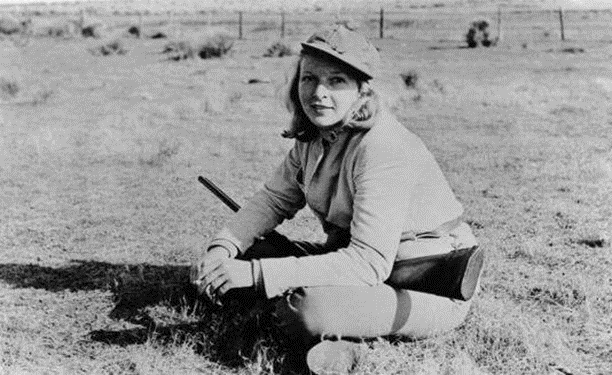
1944. To witness the D-Day landings on the beaches of Normandy during World War II, Gellhorn stowed away on a hospital ship (locked herself in a bathroom) and masqueraded as a medic. She impersonated a stretcher bearer.

All night she labored, with blisters on her hands, her mind and heart seared with images of pain and death she would never forget. Later she would learn that every one of the hundreds of credentialed journalists, including her husband, sat poised behind her in the Channel with binoculars, never making it to shore. Hemingway’s story soon appeared in Collier’s alongside hers, with top billing and more dazzle, but the truth had already been written on the sand. There were 160,000 men on that beach and one woman. Gellhorn.

– PAULA MCLAIN writing about The Extraordinary Life of Martha Gellhorn, the Woman Ernest Hemingway Tried to Erase ~A maverick war correspondent, Hemingway’s third wife was the only woman at D-Day and saw the liberation of Dachau. Her husband wanted her home in his bed.

Gellhorn’s reporting from the front lines of every major international conflict in six decades distinguishes her as one of the great war correspondents of the 20th century. Her war coverage spanned from the Spanish Civil War in the 1930s to the Vietnam War.

Martha would go to great lengths to get a good story. During the Second World War she rode with British pilots on night raids over Germany.  She was one of the first journalists to report on Dachau once it was liberated by the Allies. She paid her own way to go to Viet Nam and cover the war.  

I followed the war wherever I could reach it. I had been sent to Europe to do my job, which was not to report the rear areas or the woman’s angle. –  Martha Gellhorn

From Martha Gellhorn: ‘A Twentieth Century Life’ : NPR:

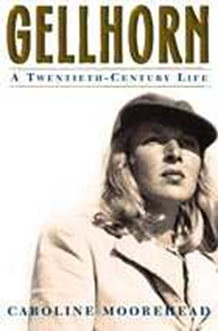
Caroline Moorehead, author of Gellhorn: A Twentieth Century Life, says Gellhorn remained undaunted for most of her 90 years. “I think she was fearless but she knew what it was like to be frightened,” a toughness she got from her upbringing, Moorehead says.

Gellhorn covered wars in a different way than other journalists. “She didn’t write about battles and she didn’t know about military tactics,” Moorehead says. “What she was really interested in was describing what war does to civilians, does to ordinary people.”

Background

Gellhorn was born in Missouri in 1908. Her independent and determined nature along with the desire to champion the cause of the oppressed was formed in her by the examples of her father and mother. George Gellhorn, a German-born Jew, was a reputable gynecologist and social reformer in St. Louis. Edna Fischel Gellhorn championed women’s suffrage, child welfare laws, and free health clinics. Both parents were reformers, advocating for the disenfranchised.

Gellhorn was an activist early on. At age 7, she participated in “The Golden Lane,” a rally for women’s suffrage at the Democratic Party’s 1916 national convention in St. Louis. (Source)

She later attended Bryn Mawr College, a women’s liberal arts school. Her first published articles appeared in The New Republic. “In 1930, determined to become a foreign correspondent, she went to France for two years, where she worked at the United Press bureau in Paris, but was fired after she reported sexual harassment by a man connected with the agency.” (Source)

 In the fall of 1934 Martha would go on to work for FERA (Federal Emergency Relief Administration). There, she documented the lives of the unemployed, the hungry, and the homeless during the Great Depression, alongside photographer Dorothea Lange. Gellhorn became close to Eleanor Roosevelt during that time.

Gellhorn’s began her journalist career during the Spanish Civil War. She arrived in Madrid in 1937 to cover the conflict for Collier’s Weekly. There she met Ernest Hemingway, also in Spain as a correspondent. They married in 1940. The marriage lasted five years. Gellhorn left Hemingway. The breakup was due to Hemingway’s unhappiness about Gellhorn’s’ absence when she was on assignment and his drinking and infidelity.

From Paula McLain, author of a biographical novel about Martha Gellhorn titled Love and Ruin :

She saw herself as a champion of ordinary people in extraordinary circumstances, and worked hard, all her life, to give voice to the voiceless. She never wanted to be famous, and was enraged to know that the larger world knew her mostly through her marriage to Ernest Hemingway, which lasted from 1940-1945. “Why should I be a footnote to someone else’s life,” she noted ruefully in an interview, pointing out that she’d been her own woman and writer before meeting him, and would go on being just that. She in fact went on to publish for nearly fifty years after leaving him, writing a total of five novels, fourteen novellas, two short story collections and three books of essays.

While many consider Hemingway a better fiction writer, many consider Gellhorn a better journalist. Two of Gellhorn’s writings – an article and a letter – show how she analyzed what she witnessed in terms of what man is capable of doing to man. Her writing, biting and eye-opening, reveals her conscience.

Given the evil of ordinary, rather bland, bureaucrats and judges and the globalist tyranny that would make slaves of us all and the toxic air of nihilism, Gellhorn’s writing should serve as a warning to us all.

The Article

Martha Gellhorn was present at the Trial of Adolf Eichmann in Jerusalem, as was Hannah Arendt, who wrote the 1963 book Eichmann in Jerusalem: A Report on the Banality of Evil.

Gellhorn, in a February 1962 The Atlantic article titled Eichmann and the Private Conscience, writes “on some of the facts and some of the lessons to be learned from this Trial, which is unique in the history of the world”. The following quotes about Eichmann are from that article:

This is a sane man, and a sane man is capable of unrepentant, unlimited, planned evil. He was the genius bureaucrat, he was the powerful frozen mind which directed a gigantic organization; he is the perfect model of inhumanness; but he was not alone. Eager thousands obeyed him. Everyone could not have his special talents; many people were needed to smash a baby’s head against the pavement before the mother’s eyes, to urge a sick old man to rest and shoot him in the back of the head; there was endless work for willing hands. How many more like these exist everywhere? What produced them — all sane, all inhuman?

We consider this man, and everything he stands for, with justified fear. We belong to the same species. Is the human race able — at any time, anywhere — to spew up others like him? Why not? Adolf Eichmann is the most dire warning to us all. He is a warning to guard our souls; to refuse utterly and forever to give allegiance without question, to obey orders silently, to scream slogans. He is a warning that the private conscience is the last and only protection of the civilized world.
(Emphasis mine.)

In a single sentence, Eichmann divided the world into the powers of light and darkness. He chose the doctrine of darkness, as did the majority of his countrymen, as did thousands throughout Europe — men with slave minds, pig-greedy for power: the Vichy police, the Iron Guard, big and little Quislings everywhere. He stated their creed in one line: “The question of conscience is a matter for the head of the state, the sovereign.”

Gellhorn’s Letter Writing

“She wrote several a day, often describing the same episodes to different people, sending letters by boat, sometimes adding to them over days until they stretched to 50 pages. Letters were, as her friend Bill Buford put it in his introduction to Gellhorn’s book, Travels With Myself and Another, her main form of social life. . ..  Gellhorn’s friend George Brennan once suggested to her that letters were her ‘real genre, and it is where you yourself come through most genuinely and convincingly’.” (Source) (We have lost touch with hand-written humanness – our own and others – with email and texting.)

While Gellhorn’s wartime dispatches rank among the best of the century, her personal letters are their equal: as vivid and fascinating as anything she ever published.

Gellhorn’s correspondence from 1930 to 1996–chronicling friendships with figures as diverse as Eleanor Roosevelt, Leonard Bernstein, and H. G. Wells, as well as her tempestuous marriage to Ernest Hemingway–paint a vivid picture of the twentieth century as she lived it. (Source)

Gellhorn’s connection to Leonard Bernstein:

“While traveling in Israel in 1949, Gellhorn met Leonard Bernstein by chance in a “scruffy bar” in Tel Aviv. A few months later, Bernstein turned up unannounced (with a grand piano in tow, no less!), in Cuernavaca, Mexico, where she was living and proposed he move in with her for a while. She convinced him to rent a house up the road instead. One night, he persuaded her to try marijuana with him for the first time, having heard from local musicians that it “helped the music flow.” They were both sick all night, with “appalling nightmares.” While never romantic, the two remained close friends and confidants for decades.” (Source)

Gellhorn’s wrote to Bernstein after viewing West Side Story. She was affected by Cool, the most disturbing number (relentless unresolved tritones) of the musical.

“But what stays in my mind, as the very picture of terror, is the scene in the drug store, when the Jets sing a song called “Keep Cool, Man.” I think I have never heard or seen anything more frightening. (It goes without saying that I think the music so brilliant I have no words to use for it.) I found that a sort of indicator of madness: the mad obsession with nothing, the nerves insanely and constantly stretched–with no way to rest, no place to go; the emptiness of the undirected minds, whose only occupation could be violence and a terrible macabre play-acting. If a man can be nothing, he can pretend to be a hoodlum and feel like a somebody. I couldn’t breathe, watching and hearing that; it looks to me like doom, as much as these repeated H-bomb tests, with the atmosphere of the world steadily more and more irrevocably poisoned. I think that drug store and the H-bomb tests are of the same family.

“What now baffles me is that all the reviews, and everyone who has seen the show, has not talked of this and this only: the mirror held up to nature, and what nature. I do not feel anything to be exaggerated or falsified; we accept that art renders beautiful, and refines the shapeless raw material of life. The music and the dancing, the plan, the allegory of the story do that; but nature is there, in strength; and surely this musical tragedy is a warning. . ..” (Emphasis mine.)

The complete letter is here: Notes and Letters — West Side Story

Though I’ve not read of any religious practice in Gellhorn’s life and though her hard-drinking way of life is not something I would recommend – New York Times writer Rick Lyman described Gellhorn as “a cocky, raspy-voiced, chain-smoking maverick”; Gellhorn was a self-made woman who took cyanide to end her life at 90 – still, there is much to commend about Martha Gellhorn: her devotion to humanity and the eyewitness conscience-driven writing of her dauntless war zone life.

Gellhorn, who had a distrust of politicians, documented what the politicians’ war did to civilians. “I followed the war wherever I could reach it,” said Gellhorn. Hers was the Samaritan’s attitude of not wanting to look away. “I wrote very fast, as I had to,” she says, “afraid that I would forget the exact sound, smell, words, gestures, which were special to this moment and this place.” 

Paula McLain, Gellhorn’s biographer, writes that Gellhorn saw herself as a champion of ordinary people in extraordinary circumstances, and worked hard, all her life, to give voice to the voiceless

Gellhorn said of herself “The only way I can pay back for what fate and society have handed me is to try, in minor totally useless ways, to make an angry sound against injustice.”

Gellhorn’s reporting was widely influential at the time and cleared a path for women.

There is a hard, shining, almost cruel honesty to Gellhorn’s work that brings back shellshocked Barcelona, Helsinki, Canton and Bastogne – the prelude and crashing symphony of World War II – with almost unbearable vividness.

The Guardian, reviewing Gellhorn’s book The Face of War

In a journalism career that spanned 60 years, Gellhorn’s particular brand of nerve was rare as radium. Fear seemed to activate rather than suppress her, and it taught her courage in the face of injustice instead of despair. Sharpened by rage and wielded in the service of others, her voice became a sword. I’m not sure I have encountered its equal, even today. We could use an army of such voices, in fact. And precisely now.Paula McLain (Emphasis mine.)

~~~~~

Martha Gellhorn Quotes:

“Americans did not acquire their fear neurosis as the result of a traumatic experience – war devasting their country, pestilence sweeping the land, famine wiping out helpless millions. Americans had to be taught to hate and fear an unseen enemy. The teachers were men in official positions, in government, men whom Americans normally trust without question.”

“I do not see myself as a footnote to someone else’s life.” (Regarding her marriage to Hemingway.)

“Stop spying on the lawful citizenry. Democracy and dossiers go ill together. It is all right for God but all wrong for the State to keep its eye on sparrows.”

“From the earliest wars of men to our last heart-breaking worldwide effort, all we could do was kill ourselves. Now we are able to kill the future.”

“In more than half the nations of our world, torture certifies that the form of government is tyranny. Only tyranny, no matter how camouflaged, needs and employs torturers. Torture has no ideology.”

“The only way I can pay back for what fate and society have handed me is to try, in minor totally useless ways, to make an angry sound against injustice.”

“War happens to people, one by one. That is really all I have to say and it seems to me I have been saying it forever. Unless they are immediate victims, the majority of mankind behaves as if war was an act of God which could not be prevented; or they behave as if war elsewhere was none of their business. It would be a bitter cosmic joke if we destroy ourselves due to atrophy of the imagination.”

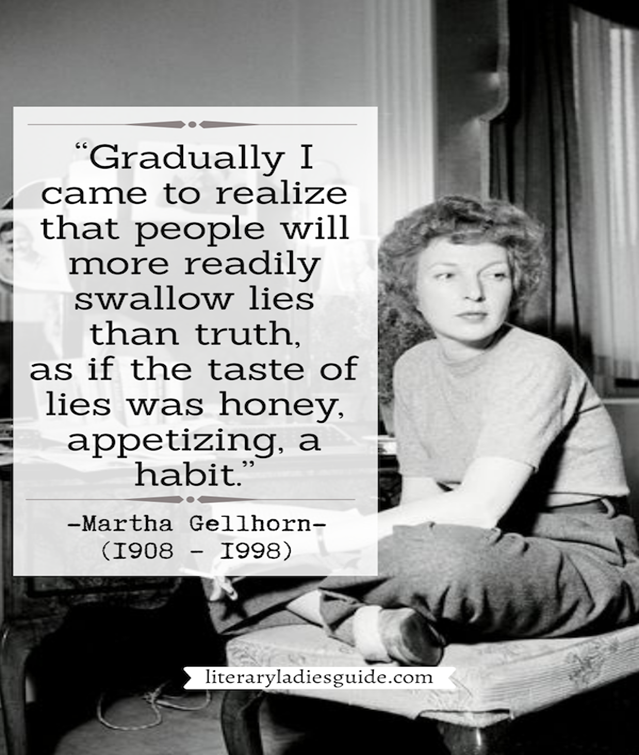
“Gradually I came to realize that people will more readily swallow lies than truth, as if the taste of lies was homey, appetizing: a habit.”

“On the night of New Year’s Day, I thought of a wonderful New Year’s resolution for the men who run the world: get to know the people who only live in it.”

“Here one has the perfect example of justice: the men have kept their women enslaved…stupid and limited and apart, for their male vanity and power; result: the dull women bore the daylights out of the men.”

“Democracy is dying. It’s a disease called cowardice.” (From a 1938 letter.)

~~~~~

Janet Somerville, author of Yours, for Probably Always, talks about novelist, war correspondent, activist, and iconoclast Martha Gellhorn.

Janet Somerville on Martha Gellhorn | The Hemingway Society

Janet Somerville on Martha Gellhorn | The Hemingway Society

~~~~~

A different war, a different correspondent:

Exposing abuse and corruption can be a thankless job. Powerful figures doing wrong often deny and attack those exposing them. And their supporters often join suit—attacking the messenger, rather than holding their leader accountable. . . why continue reporting, advocating, and shining a light when doing so comes at such a high personal cost?

Why Not Quit – Julie Roys

Why Not Quit? | The Roys Report (julieroys.com)

~~~~~

More on Martha:

1981, Martha Gellhorn Unedited Interview, War correspondent, Ernest Hemingway, Spanish Civil War (youtube.com)

Martha Gellhorn. ‘Face to Face’ interview with Jeremy Isaacs. 1995. – YouTube

The Face Of War: Gellhorn, Martha: 9780871132116: Books – Amazon.ca

Married to Her Writing | The National Endowment for the Humanities (neh.gov)

Get to Know Martha Gellhorn – Paula McLain

Gellhorn at war | Books | The Guardian

Martha Gellhorn (Hemingway) | EH@JFK | JFK Library

Martha Gellhorn: Writer, Warrior, Witness (historynet.com)

Martha Gellhorn: The World’s Greatest War Correspondent (youtube.com)

Martha Gellhorn’s Career as a War Correspondent and Marriage to Ernest Hemingway (townandcountrymag.com)

Martha Gellhorn, War Correspondent, Novelist, & Memoirist (literaryladiesguide.com)

Great Lives – Martha Gellhorn – BBC Sounds

Martha Gellhorn: Eyewitness to War | The National WWII Museum | New Orleans (nationalww2museum.org)

A Line from Linda: Martha Gellhorn’s “Eichmann and the Private Conscience”

Leonard Bernstein Asked About Hemingway, So Martha Gellhorn Set the Record Straight (thedailybeast.com)

Nothing More Than Alright

A short story . . .

My father, on the nights when my mother goes to bridge club, makes creamed chipped beef with peas on toast for supper. He told me one time that in the military it’s called “shit on a shingle” or SOS for short. He makes me eat it even though I can’t stomach peas or the dried beef or the gravy and I’m not a soldier. Tonight again, my mother is at bridge club and I’m sitting here with SOS.

After looking at my plate for a long time, I move the peas out of the gravy, off the toast and onto the plate with my knife. I’m hoping I won’t have to eat them. The kitchen phone rings and I jump to answer it. My best friend Janey wants to know if I want to go with her and her boyfriend Nick to watch West Side Story at the Sky-Hi Drive-In. I say I sure do and hang up. My father doesn’t want me on the phone during supper.

The peas are cold and clammy now and I say I they’re cold and clammy and I can’t eat them. My father tilts his head down and tells me to eat them. I want to say no but I need his okay to go to the movie. So, I stab some peas with my fork and swirl them in the flour gravy and then I eat the green-grey mush with a bite of toast. I gag. I drink some milk and wash it down. My father lifts his head and says “alright”. I clear the dishes and wash them. I’ve done what he wanted, so now I can ask him about Friday night. But I wait until he’s sitting in front of the TV.

An hour later, my father is in the basement watching TV. I sit with him and ask about his movie. He says troops have been ordered to risk their lives and retake a hill that’s not important in the battle. I ask him why. He says it shows the enemy their resolve to continue to fight if an agreement is not reached in negotiations.

A Marlboro commercial comes on and I ask him about Friday night. He wants to know about the movie. I tell him it’s a musical about people fighting, dancing and falling in love and he says “Okay. Ask your mother when she come home from playing bridge.”

My mother finally gets home and I tell her about Friday night. She says she knows the movie. “Saw it with a friend when it came out in ’61,” she says. She knows Janey and Nick and she says it’s okay with her that I go.

Saturday night Nick’s car pulls into the driveway. He honks the horn and I yell “They’re here”. My father yells from the basement “Have a good time honey. Call if there is a problem.” Mom, on the phone with someone, yells for me to come straight home after the movie. I yell back “I will.”

I get in the back seat of Nick’s Chevy and we drive off – but not in the direction of the Sky-Hi. I ask where we’re going. Janey turns to me and says that Nick asked his friend Tom to come along. He had nothing to do, Nick says. I immediately panic. I wonder if I look alright.

I have a face full of pimples and a bony nose that’s too big for my face. I wonder if I used enough concealer. The green top I’m wearing is wrinkled. It was at the bottom of my closet. And the jeans I’m wearing are worn thin. I was expecting to sit in the dark and watch a movie with Nick and Janey.

We pull up to a ranch house on the other side of town. Nick honks the horn. A skinny blonde-haired guy walks out the front door and down the front walk. “Here’s Tom,” Janey says.

Tom gets in the back seat. Janey introduces Tom. I don’t know him from school. I give him a quick smile and then give Janey a stare. She just winks back at me. She knows I don’t have a boyfriend.

Tom is neatly dressed. He’s wearing a button-down shirt, khaki pants and loafers. His boxy glasses make him look like a bookworm. In junior high school he’d be called “a climber” and Nick “a greaser.”

The Twin Theater Sky-Hi Drive In is on the west end of our town. On the way we listen to the AM radio. A Chicago station plays Born to Be Wild and I Will Always Think About You. Tom and I sit quietly in the back. I suck in my lips and look out my window. The cloudy sky looks like flour gravy.

We arrive at Sky-Hi and pay for our tickets. Nick drives over to a center spot in the East Theater. Nick and Tom say they’re going to the concession stand. They ask what we want. Janey and I ask for Cokes and popcorn. I hand Nick some money and they head off. The guys return after twenty minutes just as the coming attractions start. I roll down my window and Tom hands me the Coke and popcorn. I say thank you. He gets into the back seat on the other side of the car.

Janey’s been sitting next to Nick the whole time he’s been driving. Now Nick puts his arm around Janey’s shoulder and they snuggle together. Janey asks “are you guys okay back there?” I say I have to move over to see the screen. I look at Tom and he gives me a nod that says it’s okay. I scooch over to the middle of the back seat and put my legs to the left side of the floor hump. “That’s better,” I say.

Finally, the movie begins. There’s an overture and then the Jets sing about being a Jet and beating up other gangs. The Jets and the Sharks want to fight each other for control of the streets. But first they go to a dance. It’s a musical, so I guess it doesn’t have to make sense.

At the dance, Tony of the Jets meets Maria, Bernardo’s sister. Bernardo is the head of the Puerto Rican Shark gang. Tony and Maria fall in love at first sight. Nobody is happy about that except Tony and Maria. Tony’s half in half out about the gang stuff but he’s all in on Maria. He wants to run away with her.

Tony and Maria start singing Tonight and I stop eating popcorn. I put my hand down on the car seat so I can lean forward and hear what’s coming from the speaker. My little finger touches Tom’s little finger. He takes my hand into his. We stay this way, looking at the movie and holding hands, until the movie ends and headlights turn on.

It’s past midnight when we leave Sky-HI. Nick says he’ll drive me home first. I go back and sit behind Nick. Tom looks out his window. Everyone is quiet. Nick turns on the radio. Ain’t Nothing Like the Real Thing comes on. I suck in my lips and look out my window. On the way home I see a car with one headlight and say “perdiddle.”  Janey and Nick kiss.

At home I get out of the car and say thanks to Janey and Nick and goodnight to Tom. Tom says good night looking at Nick and Janey.

I go inside and hear the TV on in the basement. I walk down the hallway to my bedroom. My mother is sitting in her bed reading her magazines. She sees me and asks “Susan, how was it?” I poke my head into the room and tell her it was alright.

“Just alright? Nothing more?” she asks.

“Nothing more than alright” I say.

“Okay,” she says. “Now go to bed. It’s late. Tomorrow’s another day.”

As I walk away she reminds me that she has bridge club again tomorrow night. I say okay.

In my room I take the ticket stub out of my jeans pocket. I find a pen and write on the back of the stub West Side Story Tom. I pull my keepsake box out from under the bed and put the ticket stub inside along with the Valentine cards from third grade and my second-place medals from clarinet solo contests and some poems I wrote. I close the box and put it back.

I go to bed thinking about the movie and Tom and peas on my plate.

©Jennifer Ann Johnson, Kingdom Venturers, 2024, All Rights Reserved

Somewhere in the Lost World of Love

Love. Is it die-cut like the Valentine cards of grade school? Is it cliché like pop music? Is it a potion we constantly thirst for? Is it intoxication and under its influence we are not in our right minds? Is love passion? Sentimental? Carnal? Absolute? “What do any of us really know about love?” 

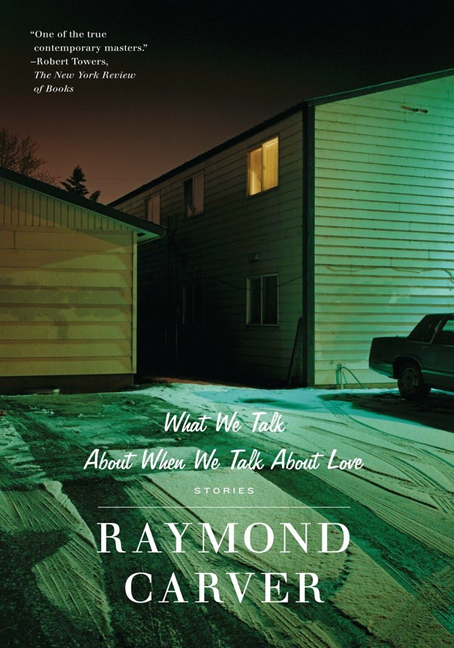
The last question is raised during a conversation between two couples. Their dialog and the juxtaposition of the couple’s ideas about love are found in Raymond Carver’s 1981 short story What We Talk About When We Talk About Love. Carver has us listen in.

We learn from narrator Nick that he and his wife Laura are spending the afternoon at Mel and Terri’s home. Both couples live in Albuquerque, but as Nick says and the ‘love’ dialog relates, they “were all from somewhere else”.

Nick tells us that Mel McGinnis is a forty-five-year-old cardiologist who, before medical school, spent five years in seminary. Terri is his second wife. We later learn that Mel was married before to Majorie and has two children. His movements are usually precise when he hasn’t been drinking. 

Terri, we learn, was previously in an abusive relationship with a guy named Ed. He would beat her and drag her around the room by her ankles, all the while professing his love for her.

Mel and Terri have been married for four years.

Nick tells us about Laura and their relationship: she’s a legal secretary who’s thirty-five and three years younger than he is. He says they’re in love, they like each other and enjoy each other’s company. “She’s easy to be with.” They’ve been married for eighteen months. 

Beside the four adults, sunlight and gin figure in the story.

As the story begins, the four are sitting around a kitchen table. Sunlight fills the room. Gin and tonic water are being passed around. The subject of love comes up.

(I get the sense that the older couple have argued a lot about what love is and now want to air it all again in front of the younger couple. It seems they have things they want to get off their chest. Is that why the cheap gin is being passed around? Are Nick and Laura in place to be the arbiters of who’s right and who’s wrong?)

The heart doctor Mel, based on “the most important years of his life” in seminary, thinks that “real love was nothing less than spiritual love”.  (This signals that love’s definition may not be solid.)

Terri believes that Ed, the man who tried to kill her, loved her. She asks “What do you do with love like that? Mel responds that Ed’s treatment could not be called love.

Terri then makes excuses for Ed’s behavior – “People are different”. She defends him – “he may have acted crazy. Okay. But he loved me.”

We begin to notice a growing tension between Mel and Terri. (There has been tension in their marriage about Ed and Marjorie before this.)

Mel relates that Ed threatened to kill him. Mel reaches for more gin and becomes antagonistic himself. He calls Terri a romantic for wanting brutal reminders of Ed’s love. Then he smiles at her hoping she won’t get mad. Terri responds to Mel, not with a rejection of his or of Ed’s behavior, but with what might have been her leave-the-door-open enabling response to Ed after one of his physical attacks: “Now he wants to make up.” Her past relationship reveals the continuous nature of Terri’s emotional deficit.

(Does Mel know how to land verbal blows on Terri like Ed did physically?)

Mel tries to soften the blow by calling Terri “honey” and by saying again that what Ed did wasn’t love. He then asks Nick and Laura what they think.

Nick says he doesn’t know the man or the situation to make a decision. Laura says the same and adds “who can judge anyone else’s situation?” Nick touches her hand and she smiles.

Nick picks up her “warm” hand, looks at the polished and manicured nails and then holds her hand. With this display of affection, Nick shows his love and respect for Laura, the opposite of the emotional and physical abuse Terri suffered at the hands of Ed.

Mel posits that his kind of love is absolute and nonviolent. (Then again, emotional abuse doesn’t kill or leave physical bruises.)

Terri and Mel describe Ed’s two attempts at suicide. Terri talks with sympathy for the guy. “Poor Ed” she says. Mel won’t have any of it: “He was dangerous.” Mel says they were constantly threatened by Ed. They lived like fugitives, he says. Mel bought a gun.

Terri stands by her illusion that Ed loved her – just not the same way that Mel loves her.

They go to relate that Ed’s first suicide attempt -drinking rat poison – was “bungled”. This puts him in the hospital. Ed recovers. The second attempt is a shot in the mouth in a hotel room. Mel and Terri fight over whether she will sit at his hospital bedside. She ends up there.

Mel reiterates that Ed was dangerous. Terri admits they were afraid of Ed. Mel wants nothing to do with Ed’s kind of love. Terri, on the other hand, reiterates that Ed loved her – in an odd way perhaps but he was willing to die for it. He does die.

Mel grabs another bottle of gin.

Laura says that she and Nick know what love is. She bumps Nick’s knee for his response. He makes a show of kissing Laura’s hand. The two bump knees under the table. Nick strokes Laura’s thigh.

Terri teases them, saying that things will be different after the honeymoon period of their relationship. Then, with a glass of gin in hand, she says “only kidding”. Mel opens a new bottle of gin and proposes a toast “to true love.”

The glow of the afternoon sun and of young love in the room makes them feel warm and playful, like kids up to something.

Matters-of-the-heart Mel wants to tell them “what real love is”. He goes on about what happens to the love between couples who break up. After all, he once loved his ex-wife, Marjorie, and Terri once loved Ed. Nick and Laura were also both married to other people before they met each other.

He pours himself more gin and wipes the “love is” slate clean with “What do any of us really know about love?” He – the gin Mel – talks about physical love, attraction, carnal love, sentimental love, and memory of past love. Terri wonders if Mel is drunk. Mel says he’s just talking. Laura tries to cheer Mel by saying she and Nick love him. Mel responds saying he loves them too. He picks up his glass of gin.

Mel now gets around to his example of love, an example that he says should shame anyone who thinks they know what they are talking about when they talk about love. Terri asks him to not talk drunk. (Is Mel, focused only on himself and his gin, becoming a slurring, stammering and cursing drunk?) He tells her to shut up.

Mel begins his story of an old couple in a major car wreck brought on by a kid. Terri looks over at Nick and Laura for their reaction. Nick thinks Terri looks anxious. Mel hands the bottle of gin around the table.

Mel was on call that night. He details the extensive wounds. The couple is barely alive. After saying that seat belts saved the lives of the couple, he then makes a joke of it. Terri responds affirmatively to Mel and they kiss.

Mel goes on about the old couple. Despite their serious injuries, he says, they had “incredible reserves” – they had a 50/50 chance of making it.

Mel wants everyone to drink up the cheap gin and then go to dinner. He talks about a place he knows. Terri says they haven’t eaten there yet. The heart doctor’s coherence dissipates with each drink.

He says he likes food and that he’d be a chef if he had to do things all over again. Then he says he wants to come back in another life as a medieval knight. Knights, he says, were safe in armor and they had their ladies. As he talks, Mel uses the word “vessels”. Terri corrects him with “vassals”. Mel dismisses her correction with some profanity and false modesty.

Nick counters the heart doctors fantasy by saying that knights could suffer a heart attack in the hot armor and they could fall of a horse and not get back up because it is heavy.  

Mel responds to Nick and Terri, acknowledging it would be terrible to be a knight, that some “vassal” would spear him in the name of love. More profanity. More gin.

Laura wants Mel to return to old couple story. The sunlight in the room is thinning. (And so is “love’s” illumination.)

Terri gets on Mel’s nerves with something she said jokingly. Mel hits on Laura saying he could easily fall in love with her if Terri and Nick weren’t in the picture. He’d carry her off knight-like. (Terri and Nick, of course, are sitting right there.)

Mel, with more vulgarity, finally returns to his anecdote. The old couple are covered head to toe in casts and bandages with little eye, nose and mouth holes. The husband is depressed, but not about his extensive injuries. He’s depressed because he cannot see his wife through his little eye holes. Mel is clearly blown away by this kind of love. He asks the other three if they see what he’s talking about. They just stare at him.

Sunlight is leaving the room. Nick acknowledges that they were all “a little drunk”.

Mel wants everyone to finish off the gin and then go eat. Terri says he’s depressed, needs a pill. Mel wants to call his kids, who live with his ex-wife and her new boyfriend.  Teri cautions Mel about taking to Marjorie – it’ll make him more depressed.

Terris says that Marjorie, because she isn’t remarried, is bankrupting them. Mel, who says he once loved Marjorie, fantasizes about Majorie dying after being stung by a swarm of bees, as she’s allergic to bees. Mel then shows with his hands on Terri’s neck how it would happen to “vicious” Marjorie.

Mel decides against phoning his children and mentions about going out to eat again. Nick is OK with eating or drinking more. Laura is hungry. Terri mentions putting out cheese and crackers put she never gets up to do this. Mel spills his glass of gin on the table – “Gin’s gone”. Terri wonders what’s next.

As the story ends, daylight (illumination) is gone from the kitchen. The four are ‘in the dark’ about what love really is. The conversation is also gone after Mel’s futile attempts to talk about love in any satisfying way and the inability of two characters to move on from the past and with two characters wondering what’s next.

The only sound Nick hears is the sound of human hearts beating (somewhere in the Lost World of Love).

~~~~

This story, though not of “Christian” genre, certainly would resonate with many readers. Do you relate to anyone in the story?

Terri understood Ed’s abusive and suicidal behavior as him being passionate about love. Mel, the heart doctor and would-be knight, showed himself idealistic and ignorant about the realities of the ‘heart’ and not loving towards Terri. Nick and Laura revealed the affection and passion of the heady first days of romance love. The old couple possessed an enduring love for each other after many years of marriage.

Why would I, as a Christian, gravitate to a ‘worldly’ author like Raymond Carver, especially when his stories are filled with alcohol? One reason is that I recognize myself in many of his stories. I see elements of myself at various stages of my life in each of the characters above. I could pretend to see myself otherwise, as I think some Christians do.

Another reason is that Carver writes about working class people. He doesn’t write down to people. His writes stories of domestic American life with its passions, fears, foibles, and fantasies. He writes with realism about human nature, revealing the old self that I must recognize in myself to put away.

I find his writing sobering, as in his story Where I’m Calling From.

~~~~~

RARE: Raymond Carver Reads “What We Talk About When We Talk About Love” (youtube.com)

~~~~~

Men need sex. And it’s their wives’ job to give it to them—unconditionally, whenever they want it, or these husbands will come under Satanic attack.

Stunningly, that’s the message contained in many Christian marriage books. Yet, research shows that instead of increasing intimacy in marriages, messages like these are promoting abuse.

In this edition of The Roys Report, featuring a talk from our recent Restore Conference, author Sheila Wray Gregoire provides eye-opening insights based on her and her team’s extensive research on evangelicalism and sex.

How Christian Teachings on Sex Enable Abuse | The Roys Report (julieroys.com)

How Christian Teachings on Sex Enable Abuse | The Roys Report

Where Have All the Bookstores Gone…?

With the closing of the Borders book stores I am fearful that others will follow. I need my tactile book-in-hand fix.  Amazon doesn’t do it for me and neither do the one-dimensional Nooks or E-books. I need the book cover to flirt with me, the inside jacket to draw me in and the inky scent of words to intoxicate me. I always give a book a once-over during the courting process.

For many years now I have regularly shopped for books at my local Barnes & Noble. When I enter the store at 9:00 am every Saturday morning I love to see all the books before me waiting like a massive orchestra for its conductor. I greet each section and then the libretto starts.

On these days you would find me browsing, investigating, brooding and dilly-dallying to my heart’s content. I like the fact that there is nothing ‘E’ about my visit. It is up front and personal.  Mano y mano. I need to wrestle with the pages.

 My Barnes & Noble store stocks DVDs and Music CDs as well as a large assortment of books to choose from. If they shut this store I may need to go on life support due to a binding withdrawal.

http://www.wttw.com/chicagotonight/video/TVss9Rp4wAN0Gy7wtrOnEmDmT4JKKusY/

Nobel Prize in Literature 2010: Mario Vargas Llosa

“We would be worse than we are without the good books we read, more conformist, not as restless, more submissive, and the critical spirit, the engine of progress, would not even exist.  Like writing, reading is a protest against the insufficiencies of life.  When we look in fiction for what is missing in life, we are saying, with no need to say it or even to know it, that life as it is does not satisfy our thirst for the absolute – the foundation of the human condition – and should be better.  We invent fictions in order to live somehow the many lives we would like to lead when we barely have one at our disposal.” [emphasis mine]

Quote from:

Mario Vargas Llosa’s Nobel Lecture, given December 7th, 2010.