What’s Up with God?
May 14, 2023 Leave a comment
“What’s up with God?” This question has been posed in various forms throughout history, often in the context of the problem of evil. And often with God’s existence being made contingent upon man’s assessment of God in relation to evil, as was posited by Greek philosopher Epicurus in what has become known as the “Epicurean paradox”:
If God is willing to prevent evil, but is not able to
Then He is not omnipotent.
If He is able, but not willing
Then He is malevolent.
If He is both able and willing
Then whence cometh evil.
If He is neither able nor willing
Then why call Him God?
What’s up with theodicy? Ivan Fyodorovich Karamazov, one of The Brothers Karamazov in Dostoyevsky’s masterful novel, is a sullen and withdrawn 24-year-old rationalist afflicted with great inner conflict. He rejects the world as it is because it doesn’t line up with the moral reasoning of his “Euclidean mind, an earthly mind”:
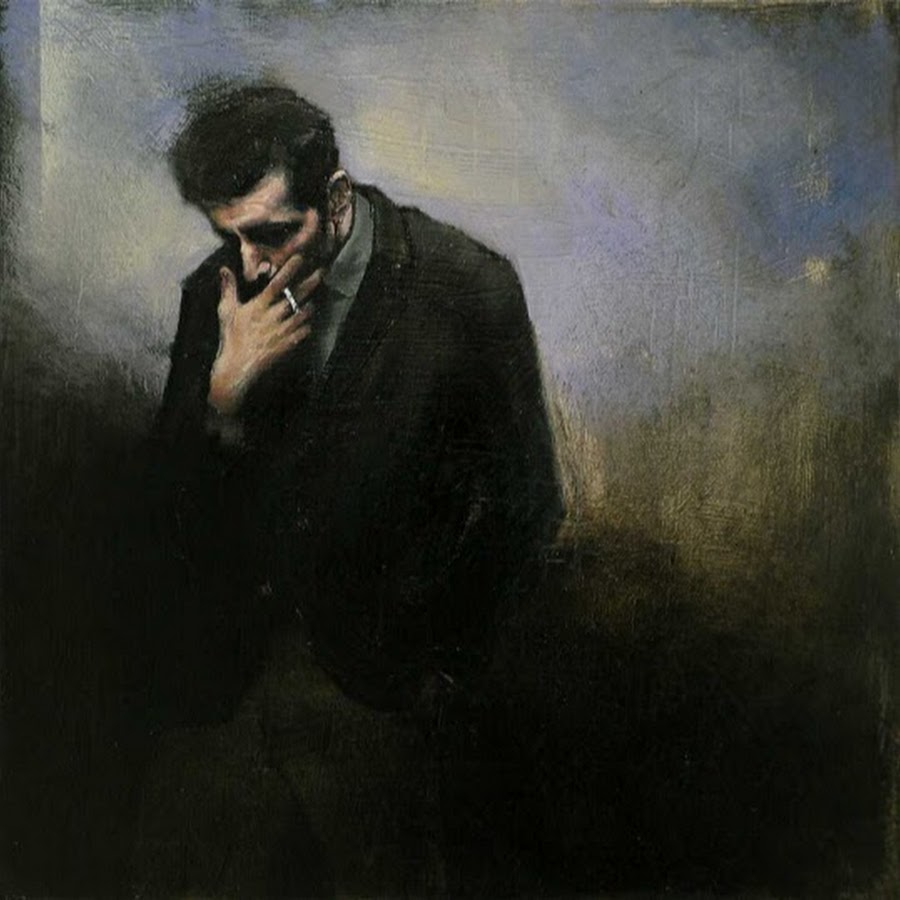
“I accept God […] It’s not God that I do not accept, you understand, it is this world of God’s […] that I do not accept and cannot agree to accept.”- Ivan, The Brothers Karamazov, Part 2: Book 5, Chapter 3
Where is the vindication of God’s goodness and justice and the idea of a loving God in the horror of unjust human suffering—particularly the suffering of children?
Going further than Ivan, professional God-denying atheist Richard Dawkins thinks he knows what’s up with God. He’s done a “1619 Project” on God:
“The God of the Old Testament is arguably the most unpleasant character in all fiction: jealous and proud of it; a petty, unjust, unforgiving control-freak; a vindictive, bloodthirsty ethnic cleanser; a misogynistic, homophobic, racist, infanticidal, genocidal, filicidal, pestilential, megalomaniacal, sadomasochistic, capriciously malevolent bully.” Richard Dawkins, THE GOD DELUSION P.31.
It’s not just philosophers and characters in novels and atheists who question “What’s up with God?” Those who have walked in God’s presence have also thought that God as God should act in certain ways.
Job and his friends had strong inclinations as to how God should act. Their back-and-forth dialogues disclose that they thought that God should act with the retribution principle: the righteous prosper and the wicked suffer. Do your due diligence, bring offerings and sacrifices and God will return the favor. If you suffer misfortune, it is because you have made God unhappy and you are not as righteous as you thought you were.
Quid pro quo religious rituals were common throughout ancient Near Eastern history. Ancients interested in attaining a god’s favor offered sacrifices in order to receive it. Sacrifice as a form of bribery was also common during the Greek and Roman times when there were many gods to feed and take care of. The religious practitioners thought of the gods as being like them – needy. Now let’s go back in time to the first What’s up with God? situation recorded in Scripture.
As you read Genesis chapter 4 you find that the narrator, without adding any moral qualification of his own, wants the reader to assess what is said and done. Note: this Mother’s Day story doesn’t end well.
The setting: just outside the garden of Eden.
We read that brothers Cain and Abel offer the fruits of their labor to God as a sacrifice. They may have placed the offerings outside the flaming sword-protected gate of the garden. Abel offers the best cuts from the mature firstlings of his flock. Cain offers portions of what’s been growing. They both offer yields from God’s good creation, but there is an issue with one of the offerings. The narrator doesn’t give us the motives behind the offerings but we do get Cain’s reaction and God’s response.
When his offering is not considered by God, Cain became hot with anger. His face became downcast. What’s behind Cain’s response? Likely two very human attitudes: “Why was Abel’s offering accepted and not mine – No fair! Inequality! I am the oldest! What about my rights?!” and “God isn’t supposed to act this way when I give him something. What’s up with God?!”
Cain likely felt that he had rights by placing God in debt to him with his offering. He did what he felt was required and now God must do what is required and return the favor. He had made a deal with his offering perhaps thinking “If I feed God then I get a return on my investment”. As noted above, this was a typical Near Eastern attitude of brokering with the gods for favor (I am not assuming that there are only four humans on earth at this time.)
Then the Lord said to Cain, “Why are you angry? Why is your face downcast? If you do what is right, will you not be accepted? But if you do not do what is right, sin is crouching at your door; it desires to have you, but you must rule over it.” Genesis 4: 6-7
God gives Cain a free-will choice. I read it as “Do you want to be accepted or are you just looking to get your conditional ritual brokering accepted? If you want to be accepted, then do what is right with regard to me and you’ll be accepted. You doing right is infinitely more acceptable than a plateful of greens.”
Or, “Cain, you can continue going you own way. Just be ready to be pounced on and be overtaken by more of the same “What’s up with God?” behavior that overcame and killed your brother Abel. You would then live like a wild animal. Isn’t that how you imagine yourself now –as one of them, free to roam and ready to pounce? I told your parents to continue what I began – bring order to the as-yet-to-be-ordered world, to subdue and rule. Will you choose to be disorder and the sower of suffering for yourself and others?
Cain made his free-will choice. It appears that he decided that God was petty and unfair. So, he weaponized his anger toward God and destroyed his image. He brought Abel to a field and murdered him. But what happens on the field does not stay on the field. Abel’s split blood cried out to God and the “petty and unfair” God came looking for murderously unfair Cain.
“Then the Lord said to Cain, “Where is your brother Abel?” He said, “I do not know; am I my brother’s keeper?” And the Lord said, “What have you done? Listen, your brother’s blood is crying out to me from the ground!”
Cain admits no culpability. As a consequence of Cain’s attitude and actions, God curses Cain. The curse in Genesis 4 is very similar to the one in Genesis 3, except that it’s not just the ground that is cursed it is a human being that is also cursed.
“And now you are cursed from the ground, which has opened its mouth to receive your brother’s blood from your hand. When you till the ground, it will no longer yield to you its strength; you will be a fugitive and a wanderer on the earth.”
It seems that the punishment God gave Cain was Cain’s heart’s desire: to be his own man and to go his own way. But Cain balks, perhaps realizing that what goes around comes around. And so, for protection, Cain’s implied plea is for God to act like a “brother’s keeper”.
“Cain said to the Lord, “My punishment is greater than I can bear! Today you have driven me away from the soil, and I shall be hidden from your face; I shall be a fugitive and a wanderer on the earth, and anyone who meets me may kill me.” Then the Lord said to him, “Not so! Whoever kills Cain will suffer a sevenfold vengeance.” And the Lord put a mark on Cain, so that no one who came upon him would kill him.
The Lord shows undeserved goodwill toward Cain, favor that Cain had once assumed should be automatic with his offering. The Lord treats Cain as Cain should have treated his brother Abel.
Cain should have received the death penalty. (Did Richard Dawkins ever read Genesis 4?), but instead is banished from living near the garden and the Lord’s presence. The mark placed on Cain by God means that God promises to look after Cain in exile, so that no one who came upon him would kill him. The Lord promises Cain justice in avenging his split blood.
These are very sad words: “Then Cain went away from the presence of the Lord and settled in the land of Nod, east of Eden.” (“Nod” = “wandering”)
In the land of wandering, Cain has a chance to repent and return to God. But . . . the willful Cain goes his own way. Instead of wandering, Cain defies God and builds a city. The city for him equals protection, security, being surround by allies, and a lack of trust in God’s character.
When God didn’t respond to Cain’s offering, Cain could have asked “Why” to gain understanding but his attitude kept him from doing so. He had decided about how God should act. If Cain had asked God “Why?”, would God have answered “Just because I chose your younger brother’s offering this time doesn’t make me petty and unfair? It doesn’t mean that I don’t accept you. You don’t know me. Three dimensions cannot contain me. The fourth dimension of time allows for your understanding of me. And Cain, you assumed something about me with your petty conditional thinking. Had you asked you would have found out what I am like and what I desire. My lack of response was meant as a challenge. I wanted you to respond with questioning humility and to patiently wait for my response.”
What does the Genesis 4 narrator want to us understand? That we must begin our understanding of God with the acknowledgement of and respect for God as God? That God is Other than us? That because God has made himself present to us never means that one is on equal terms with God? That we must not try to domesticate God with our assumptions about him? That Cain thought that God would be as needy as he was for attention and that was the motive for his offering?
God prescribed a “fugitive and a wanderer on the earth” life for Cain. Exile to the land of exclusion was done, I believe, as a means for Cain to take time to reflect on his attitude and on what he had done and to come to the point of repentance and to returning to the presence of God. But self-reliant Cains hunkers down and builds a city for protection. As we shall see in a future post, cities magnify what is in the human heart.
In the Cain and Abel account, the question of “What’s up with God?” is met with “What have you done?”
*****
“The suffering and evil of the world are not due to weakness, oversight, or callousness on God’s part. But rather, are the inescapable costs of a creation allowed to be other than God.” – John Polkinghorne
*****
*****
“The cross of popular evangelicalism is not the cross of the New Testament. It is, rather, a new bright ornament upon the bosom of a self-assured and carnal Christianity whose hands are indeed the hands of Abel, but whose voice is the voice of Cain. The old cross slew men; the new cross entertains them. The old cross condemned; the new cross amuses. The old cross destroyed confidence in the flesh; the new cross encourages it. The old cross brought tears and blood; the new cross brings laughter. The flesh, smiling and confident, preaches and sings about the cross; before the cross it bows and toward the cross it points with carefully staged histrionics but upon that cross it will not die, and the reproach of that cross it stubbornly refuses to bear.” — A.W. Tozer
*****
Informed Dissent:
Vaccine Atrocities
Former Pfizer VP Dr. Michael Yeadon
How to Save Your Life and Those You Love When Hospitalized – LewRockwell
Patient Documents | OurPatientRights.com (protocolkills.com)
The American Sovereignty Declaration: It’s Time for America to Exit the W.H.O.” – Dr. Robert Malone
“ . . . in the course of the COVID-19 pandemic, the WHO lied about the nature, origins and effective responses to the Wuhan Virus. The “China Model” of lockdowns, masks and vaccine mandates and digital enforcement mechanisms was endorsed. And the WHO approved the use of expensive and inadequately tested gene therapies as “vaccinations” and the suppression of readily available, effective and inexpensive treatments. Thanks in part to such misconduct, the pandemic has resulted in the deaths of over a million Americans and many more elsewhere around the world, an untold number of whom perished needlessly.
Given the WHO’s appalling record, it is outrageous that the Biden administration is working to give the WHO and its Director-General more power over sovereign nations, including the United States. Yet, U.S. government officials are actively negotiating amendments to existing International Health Regulations and a new treaty governing future pandemics. These accords would effectively repose in Dr. Tedros the authority unilaterally to dictate what constitutes an actual or potential Public Health Emergency of International Concern (PHEIC) and to order how affected nations must respond.” (Emphasis mine.)
The American Sovereignty Declaration (substack.com)
The American Sovereignty Declaration: It’s Time for America to Exit the W.H.O.
Sign at this link>> Sovereignty Coalition
*****







 Cindy Wity