Ramparts
April 13, 2025 Leave a comment
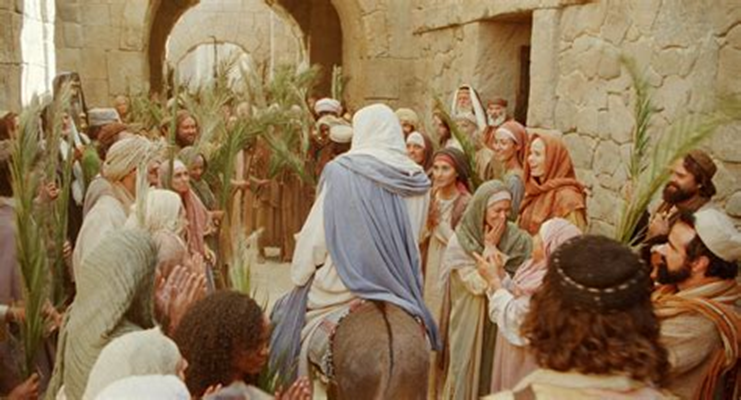
A few days before he would lay down his life to deal with the problem of evil, Jesus made the ascent to Jerusalem, not Rome. When he came near and saw the city, he wept over it. The city of peace would reject the Prince of Peace for the preservation of antipathy to any rule but its own.
Jesus came to his own and his own, with messianic hopes, wanted the evil in their lives – imperial Rome with its emperor worship and rule of Judea – to be dealt with. His own would also reject the testimony about him given by the prophets and John the Baptist. His own would deal with the landowner’s son to claim everything for themselves.
To acknowledge Jesus – what was said of him and what he said and did and who he claimed to be – meant acknowledging the evil within their own control. There were only two possible responses to the claims: repentance or rejection.
Jesus came to his own and found people who responded with hatred in the presence of goodness and who sought to destroy the good insofar as it was in their power to do so. They were not aware of their own evil and avoided any such awareness of it. They considered themselves above reproach and lashed out at Jesus for his reproach of them.
They were threatened by the spiritual health of those around them and refused to tolerate the sense of their own sinfulness. They would destroy others to maintain their appearance of moral-purity. They deemed others unfit, unclean, and unworthy but refused any self-examination that would reveal the evil within themselves. Pride was their rampart.
These exercised political power with man-made traditions – religious obligations and taboos – and status quo policing in order to crush and demolish any spiritual life beyond their control. They built societal barriers to keep belief in check.
Jesus confronted and named their evil antilove first hand:
Legal experts grumbled that it was blasphemous for Jesus to say “Your sins are forgiven” to a paralytic who, with help from four friends, descended from an opened celling for healing. The “experts” were ready to pounce and cripple Jesus’ ministry for acting God-like. Jesus healed the cripple showing them that he had the authority on earth to forgive sins. Mk. 2: 1-12
Legal experts from the Pharisees became offended when they saw Jesus eating with tax collectors and sinners. Jesus told them that “It is the sick who need a doctor. I came to call the bad people, not the good.” Mk 2:14-17
Like those in Jesus’ parable about a victim of a robbery, the “experts” thought “Better to be separated from that than to get involved with unclean rabble.” Rather than seek the recovery and redemption of others, they will actually destroy others in the cause of protecting their own laziness and to preserve the integrity of their sick self.
People took note when they saw that John the Baptist’s disciples and the Pharisees’ disciples were fasting. They wanted to know why Jesus’ disciples didn’t get with the fasting program. These people had been taught to judge people with religious protocols. Why weren’t the questioners fasting? Mk 2:18-20
One sabbath Jesus and his disciples were walking through a cornfield. The disciples plucked corn to eat as they went along. This really bothered the Pharisees. They confronted Jesus asking “Why are they doing something illegal on the sabbath?”
Jesus reminded them of their history: David and his men, when distressed and hungry, ate the bread of the presence which only the priest is allowed to eat. Jesus then flipped the script on them, saying “The sabbath was made for man, not man for the sabbath.”
Though the religious police tried to throw up a man-made barrier against the good, in this case grabbing food to eat in a field, Jesus pushed back with the real intent for the sabbath rest – delighting in all that is good, just as God had done after six days of giving functions to the material cosmos. Mk 2: 23-27
On another sabbath Jesus went to the synagogue. People were watching to see if Jesus would heal the man with a withered hand on the sabbath so they could frame a charge against him. Jesus called the man to the front of the room.
He then asked those in attendance “Is it lawful to do good on the sabbath or to do evil? To save life or to kill?” He waited and then asked, “If one of you has a child or an ox that falls into a well on the Sabbath day, will you not immediately pull it out?” Unable to answer they remained silent. Mk 3: 1-6
Here was the essence of antilove they had been taught to submit to and emulate by those who, with a form of godliness, put up barriers to the spiritual health of others. On this day it revealed itself as a spiritual disability – the inability to show lovingkindness.
They gave priority to sabbath rules and the sabbath police and to their own well-being and status within their community and not to extending themselves for the physical and spiritual well-being of another.
Their hardheartedness made Jesus deeply upset. He looked around at them angrily. Then he healed the man’s hand. With this, the Pharisees – feeling a slap in the face – went off and collaborated with a political group to find a way to destroy Jesus. They sought to destroy the good insofar as it was in their power to do so. Mk 3: 1-6
Crowds constantly swarmed Jesus. He and the disciples were not able to have a meal. His family heard this and said “He’s out of his mind.” They, no doubt, thought that Jesus’ behavior would cause them to incur the disapproval of religious authorities and be kicked out of their synagogue into social isolation. This, in spite of the good that he was doing throughout Galilee. Preservation of self- status and inclusion – was important to them. Mk 3: 20-21
Legal experts showed up from Jerusalem. To get things back under their control they said of Jesus “He’s possessed by Beelzebul! He casts out demons by the prince of demons!” While they took action to preserve the integrity of their sick selves with projection, Jesus was plundering the “strong man’s house” right in their neighborhood. Mk 3: 22-30
When Jesus came to his home region, he began to teach in the synagogue on the sabbath. Those in attendance – townspeople who knew his family – were amazed at what they heard and took offense at him. For, they were ready for the same o ‘ same o ‘ sabbath and not for anything that disrupted status quo. Maintaining status quo, appearances, and antipathy was more important than spiritual growth.
Jesus said “Prophets are honored everywhere except in their own country, their own family, and their own home. Mk 6: 1-4
Pharisees and legal experts circled Jesus. They had seen some of his disciples eating with unwashed hands. This was against the tradition of the elders. They questioned Jesus wanting to know what’s up with that. Jesus calls them hypocrites and reads them the riot act from Isaiah:
With their lips this people honor me,
But with their hearts they turn away from me;
All in vain they think to worship me;
All they teach is human commands.
Jesus goes on to give them a prime example of them abandoning God’s commands and replacing them with human traditions that nullify God’s word.
Practicing human traditions gave religious leaders a pretense of righteousness. It also gave them leverage over the people and provided them the means to patrol them while avoiding any self-examination that would reveal the evil within themselves. They had fortified their evil selves with human commands while invalidating God’s word. Mk 7: 1-13
One day the Pharisees came to Jesus and wanted to test him out. They demanded a sign. They couldn’t see with their two good eyes. They couldn’t hear with their two good ears. The feeding of the five thousand and the four thousand, the healings, exorcisms, resurrections and authoritative teaching were not good enough for them. Antilove is blind and deaf in the presence of goodness. Mk 8: 11-12
When Jesus asked his disciples “Who do people say that I am?” Peter spoke up: “Messiah!”
But then Jesus told the disciples that there was big trouble up ahead – Jerusalem trouble as in “The elders, chief priests, and the scribes are going to finalize their rejection of me with death” – Peter began to scold Jesus, putting up resistance to the thought that their new-found messiah would die and not overthrow Roman rule in Judea and take his place as king. Mk 9: 31-33
Jesus had to scold Peter. His human thoughts were not Gods’ thoughts. The test had presented itself again.
A few years before his ascent to the “holy city”, it was to the pinnacle of the temple that Satan, Antilove Itself, brought Jesus to test him.
Jesus didn’t take Satan’s bait. He didn’t jump to reassure himself of His Father’s words. And though Adam, the father of humanity, failed a similar test by testing what God said, Jesus would not. Nor would he make a spectacle of himself for Satan or before a palm branch-waving crowd.
When he came near and saw the city, he wept over it and said of his own . . .
“If only you’d known on this day – even you! – what peace meant. But now it’s hidden, and you can’t see it. Yes, the days are coming upon you when your enemies will build up earthworks all around you, and encircle you, and squeeze you in every direction. They will bring you crashing to the ground, you and your children with you. They won’t leave one single stone on another, because you didn’t know the moment when God was visiting you.” Luke 19: 41-46
Antilove would reject the One that would lay down his life for his own. The ramparts of antipathy to any rule but its own would be torn down.
~~~~~
“The demand of the loveless and the self-imprisoned that they should be allowed to blackmail the universe: that till they consent to be happy (on their own terms) no one else shall taste joy: that theirs should be the final power; that Hell should be able to veto Heaven.” – George MacDonald, C.S. Lewis’ The Great Divorce
~~~~~
Brain Rot: What Our Screen Are Doing to Our Minds (3)
In the third podcast of this series, “Brain Rot: What Our Screen Are Doing to Our Minds,” host Dr. Karyne Messina, psychologist, psychoanalyst and author talked about the problems that can emerge in Erik Erikson’s Identity versus Identity Diffusion stage of development along with Dr. Harry Gill, a psychiatrist who has a PhD in neuroscience. The two mental health professionals discussed major difficulties they see in their young patients when they are exposed to too much screen time. . .
They also focused on the impact of social media on the formation of identity, a critical part of healthy personality development. Drs. Messina and Gill shared the challenges young people have navigating in the digital age, which can include exposure to people who are inauthentic on social media, role confusion, and addiction to video games. They emphasized the importance of limiting screen time, encouraging adolescents to have real-life experiences versus having mainly on-line relationships while fostering healthy habits to support brain development and overall well-being during this crucial stage of development.
Brain Rot: What Our Screen Are Doing to Our Minds (3) – New Books Network
~~~~~








 Cindy Wity