Birding
December 14, 2024 Leave a comment
Thanksgiving morning Toby woke up to noise and smells. He got out of bed and went downstairs in his PJs. The noise and smells were coming from the kitchen. His mother, aunt Susie and grandma Evans were talking and cooking. His seven-year-old sister Tilly was sitting on the counter singing one of her happy songs.
In the family room, Uncle Kevin and his father were sitting at a card table. Grandpa was sitting in the big chair reading a book. Toby went over to the card table.
“Hey Tob,” said Uncle Kevin.
“What are you doing?” Toby asked.
“We’re playing Risk,” replied his father.
“Can I play?” Toby asked.
“I think this game is a bit too hard for you,” his father replied. “We’ll play a different game later.”
Grandpa called Toby to come over and sit on his lap. Five-year old Toby did just that. He wanted to know what grandpa was looking at.
“It’s A Year-Round Guide to Indiana Bird Watching,” grandpa told him.
“Why you reading that grandpa?
“I like birds, Tobias. Do you?”
“Uh-huh.” Toby rubbed his eyes and lifted the book to see the pictures. “What’s that?’ He pointed to the page.
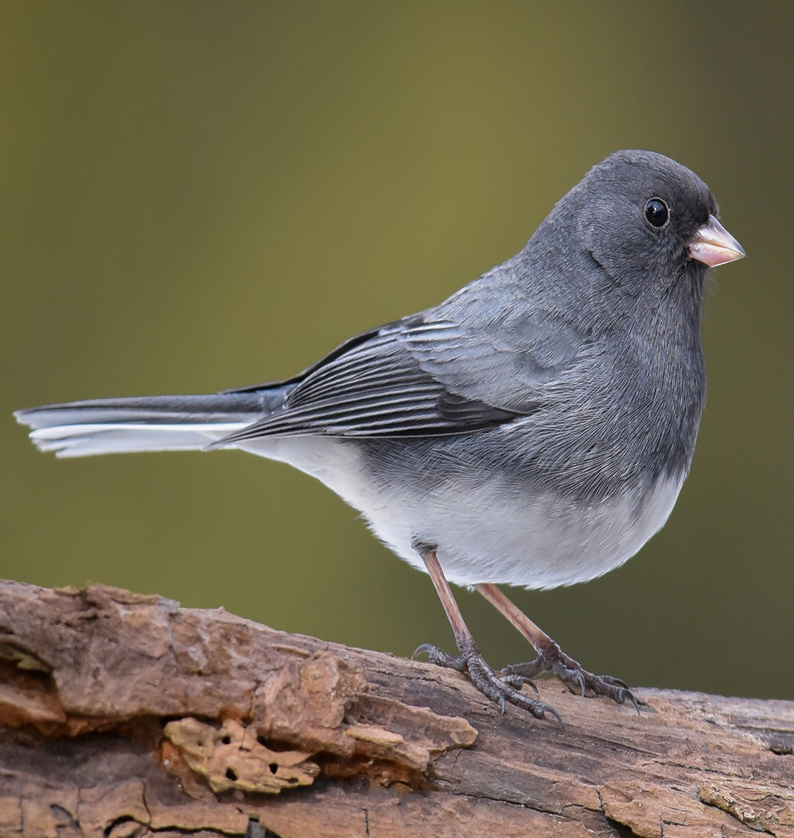
“That’s a Dark-eyed Junco,” grandpa replied. “It says here that they like to eat seeds, insects and berries.”
“Huh. His name is Junco?”
“Yes. If you were a bird, I’d call you a Blue-eyed Tobias.” Grandpa smiled.
Toby turned the page. “Why do you like birds, grandpa?”
“Birds are special creatures. They seem to be wherever we are, as if God wanted to make sure we notice them. They are free and at the same time totally dependent on God and His created order.
“And there are so many kinds of birds, Tobias.” Grandpa flipped through the pages. “They bring color and sound to our lives. Seeing them and hearing them is proof that nature is healthy. I try to spot a bird by its coloring and by its songs and calls.”
“Birds have songs?”
“They sure do. Male birds sing to attract female birds. They also sing to scare off other birds from their territory and to bond with mates and young’uns. You want to hear a Mourning Dove Song?”
“Yeah.”
Grandpa took a deep breath, formed his mouth and went “coo-AH-oo coo-coo”. He waited and then again “coo-AH-oo coo-coo.”
“The Mourning Dove keeps repeating this song until a female is attracted. That’s how I met your grandmother.” Toby’s eyes lit up when he saw grandma smile.
“Bird experts can tell the species of a bird by just listening to its song. Each species has its own song.”
“What’s speecheese?”
“A species is a way to name animals that are alike and have babies like them. Let’s see,” he found the page. “It says here that the Dark-eyed Junco is a species of Junco, a group of small, grayish sparrows.”
“It also says that Male Dark-eyed Juncos sing a sweet, high-pitched trill that sounds similar to the songs of the Chipping Sparrow and Pine Warbler. And during the winter, Juncos come to backyard feeders for millet and bird seed. I saw one at my bird feeder this morning.”
Toby looked over at the kitchen. “Let’s see if your mother has something for you to eat.” Grandpa moved Toby to his feet, got up, and the two of them went into the kitchen.
Toby was given a yogurt by his mother. Eating it, he watched Grandpa put his finger into the cranberry sauce, taste it and pucker his lips. Then grandpa put his finger into the mashed sweet potatoes, tasted it and said “Yum!” And then he put his finger into the pumpkin pie mix, tasted it and said “mm-mmm.”
When he reached for the stuffing, Grandma, hands on her hips, said, “Shoo you two. Come back when we’re ready to eat, in about two hours.”
“Let’s go for a walk Toby,” Grandpa said. “Get dressed in warm clothes. We’re going birding.”
A voice in the next room said, “Dad, the weather man said that central Indiana is 30 degrees and cloudy.”
Before Toby left the kitchen his mother said, “Go make your bed first and then put on your corduroy pants and blue sweater and then comb your hair.”
Toby shot upstairs and came back down two minutes later. His mother looked him over and then had grandpa put on his winter coat, his gloves, and the knitted hat that grandma made for him.
Outside, grandpa went over to his car and took out a pair of binoculars. He showed Toby and said “Maybe we will see a cardinal today.”
As they walked down two blocks past houses, they saw no birds. But then Grandpa spotted a Mourning Dove on a roof. He handed Toby the binoculars after adjusting the focus. “Let’s wait here and listen.”
When the dove began its song, Toby was transfixed until the dove flew out of sight.
They walked to the end of the street and came to a T-intersection. On the other side of the crossroad was open farmland. Wind whistled through the field of corn stalk stumps. Grandpa tied the ear flaps of Toby’s knitted hat below his chin.
To their left and down the road about forty yards was a small group of trees and undergrowth. “Let’s head there,” Grandpa told Toby.
As they walked along on the farm side of the road, Toby found a corn cob. Holding the smooth kernelled end, Toby showed grandpa the half-eaten end.
Grandpa looked it over and said, “Probably some squirrel started eating it. Or may be a goose.”
As they neared the trees, grandpa stopped and brought the binoculars to his eyes. He then handed them to Toby. “What do you see in that tree?” Grandpa pointed.
Toby looked and said, “The birds keep moving so I can’t see them.”
“They might be getting ready for winter,” Grandpa replied. They’re probably in a hurry to get out of the wind and get things settled for winter.”
Then Grandpa spotted a falcon perched on top of a utility pole that was about thirty yards down the road. He adjusted the focus of the binoculars and handed them to Toby. “Look up there. Can you see that falcon, Tobias?” He pointed to the electric pole.
Toby looked and said, “That is a falcon?”
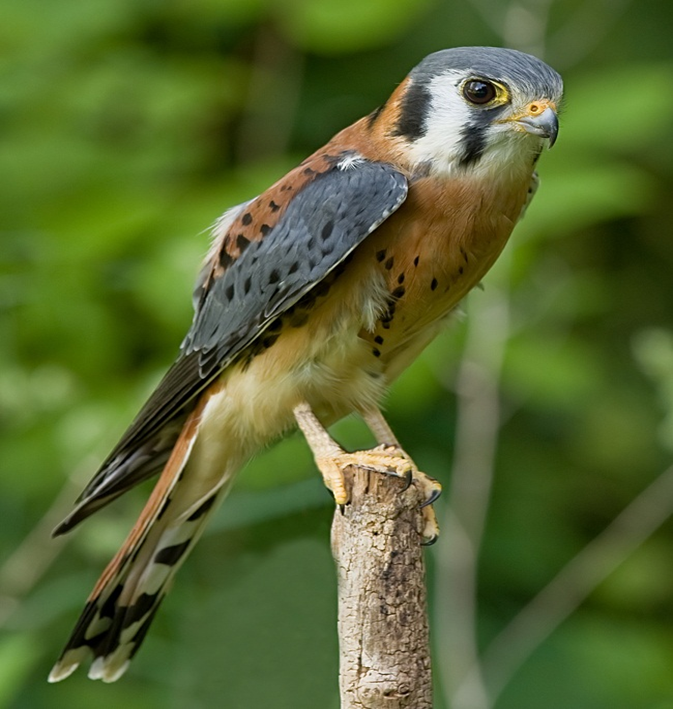
Grandpa looked again. “Yes. A falcon known as the American Kestrel. I can tell by dark gray head, the rust-colored back and tail, the white cheeks and throat and blue-black bill. It’s the smallest of falcons. Some call it a “Sparrow Hawk”.”
“They like open areas without dense cover. He’s sitting up there to view the whole area for food. He’s scanning for prey on the ground. He’ll sit and wait. He’ll only attack when he’s sure that he will succeed. When he has prey in sight, he will either catch it on the ground or in flight.
“In the summer months he’ll hunt and eat dragonflies, cicadas, beetles, grasshoppers, butterflies and moths, scorpions, and spiders. He’ll hover and capture insects in the air.
“In winter weather, like right now, he’ll hunt small mammals like mice, voles, shrews, and bats. And he’ll hunt small birds . . . like that little sparrow that just flew into the field. He pointed to it.
Grandpa let Toby use the binoculars to observe the falcon. “Let’s see what happens,” he said. “I wonder if that falcon noticed that small bird.”
A moment later, the falcon swooped down, grabbed the bird with his claws, and flew back to his high perch.
“Did you see that grandpa?” Toby asked.
“I sure did. He’s going back to his perch to eat it. Take another look.”
“Do birds eat other birds, grandpa?”
“They sure do. Birds of prey, like this falcon, have evolved to catch diverse things like insects, small mammals, and birds.
“I just remembered something. When I was a boy, Tobias, my father took me birding. One day he said “Frankie, there are so many birds but you never see dead birds. He told me that dead birds vanish because predators and scavengers come along and eat them. That’s why most bird bodies disappear. Creatures like foxes, badgers, ants, and birds of prey scavenge dead birds. The value of the bird’s life is returned to nature. Nature, he said, provides food for itself. Live birds and dead birds contribute to the lifecycle of our ecosystem.”
The sun never came out. The icy wind blowing across the open field made Toby’s nose and cheeks red. Grandpa said it was time for them to head back.
When they arrived home and opened the door, they were met with a rush of warm air, laughter, and savory smells. They saw the dining room table was set and the food ready to come out.
“Go wash your hands you two,” mom said. “We are ready to eat.”
When everyone had found their place at the table, mom asked grandpa to pray the blessing.
We give you thanks, most gracious God, for the beauty of
earth and sky and sea; for the richness of mountains, plains,
and rivers; for the songs of birds and the loveliness of flowers.
We praise you for these good gifts, and pray that we may
safeguard them for our posterity. Grant that we may continue
to grow in our grateful enjoyment of your abundant creation.
And now we ask Your blessing on this food we are about to eat. Amen.
A loud “AMEN!” followed.
Toby’s mother then handed Toby’s father a knife and said, “Carve the bird.” Toby gulped when he heard that. He looked over at grandpa.
“Tom turkey has been well fed. Now, he feeds us. Tobias, do you know which bird is at every meal?”
“No.”
“A swallow. Do you know which birds go to church a lot?
“No.”
“Birds of prey. What do you call a mean turkey?”
“I dunno.”
“A jerk-ey. What do you give a sick bird?”
“I dunno.”
“Tweetment! Did you hear about the owl with no friends?
“No.”
“He was owl by himself.”
The adults groaned. Toby wanted more.
After plates were filled and people were busy eating, Uncle Kevin asked Toby to tell everyone what he saw birding with grandpa.
“I saw a falcon. It came down and got a bird and ate it,” Toby exclaimed.
“Ewwwww!” Tilly didn’t like the thought.
Toby forked a piece a turkey, held it up, looked at his sister and said “Now I am a falcon!” and gobbled it down.
©Lena Johnson, Kingdom Venturers, 2024, All Rights Reserved
~~~~~
American Kestrel
Dark-eyed Junco
Dark-eyed Junco Sounds, All About Birds, Cornell Lab of Ornithology
Bird Sounds and Songs of the Dark-eyed Junco | The Old Farmer’s Almanac
Dark-eyed Junco | Audubon Field Guide
Easter Morning Central Indiana Bird Song
~~~~~
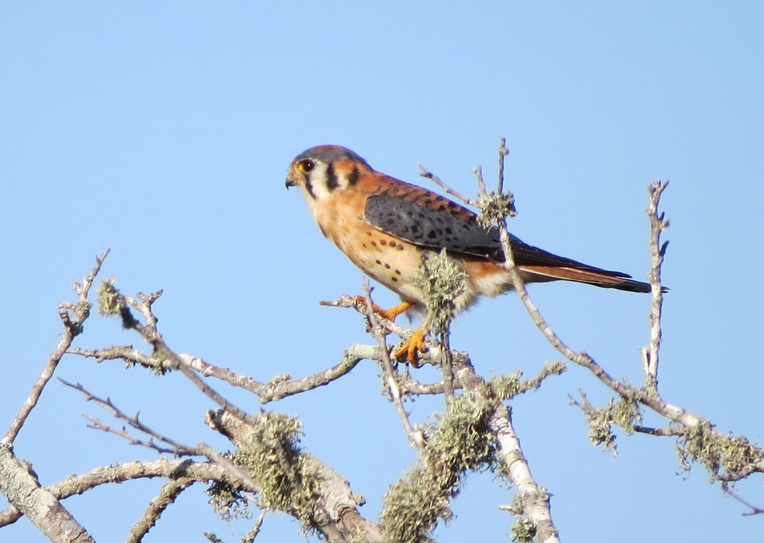
American Kestrel – Photo by John Mariani
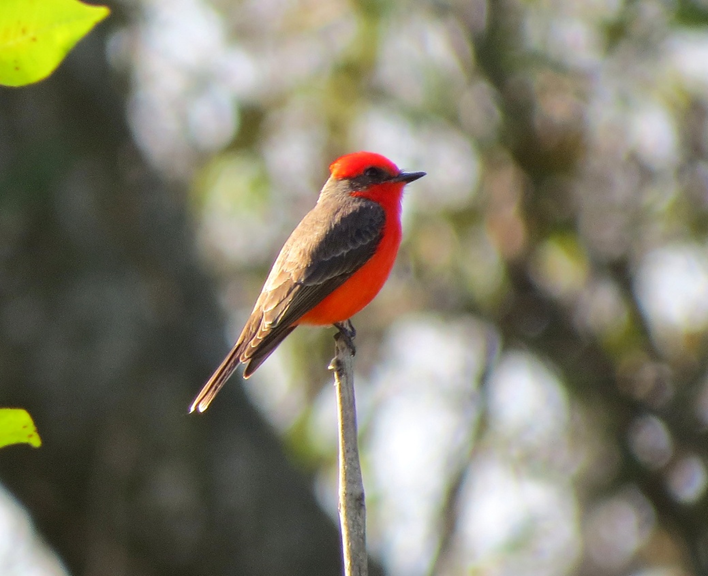
Vermilion Flycatcher at Cattail Marsh in Beaumont, TX – Photo by John Mariani
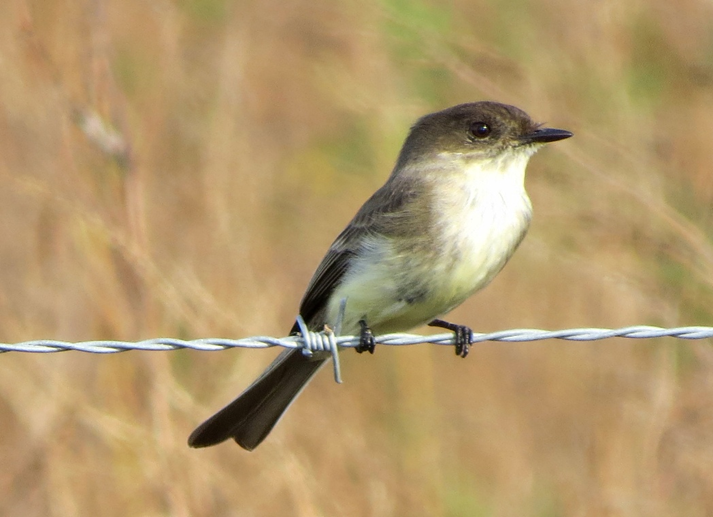
Eastern Phoebe at Anahuac National Wildlife Refuge, TX – Photo by John Mariani
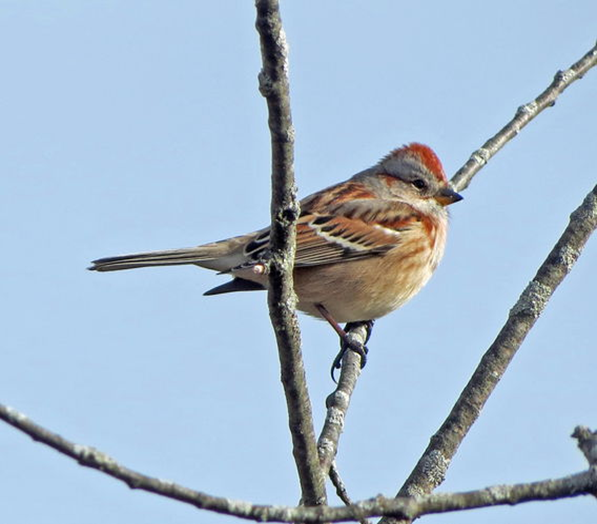
American Tree Sparrow, Northwest Ohio – Photo by American_Phoenix
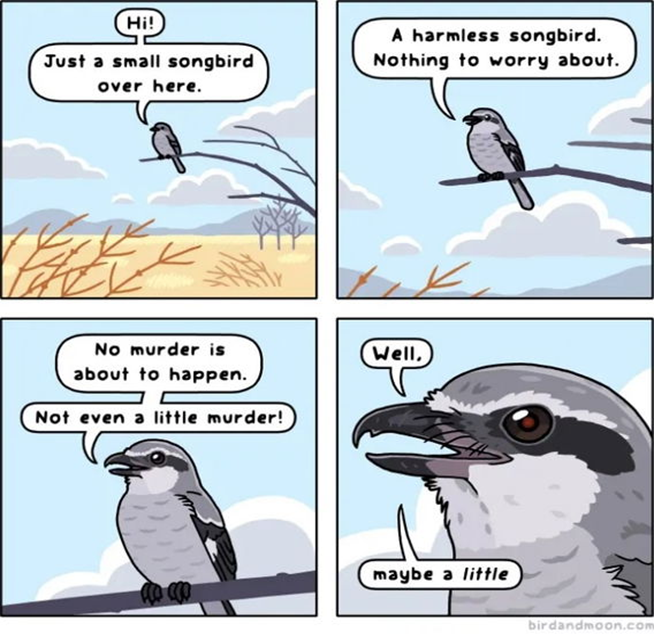
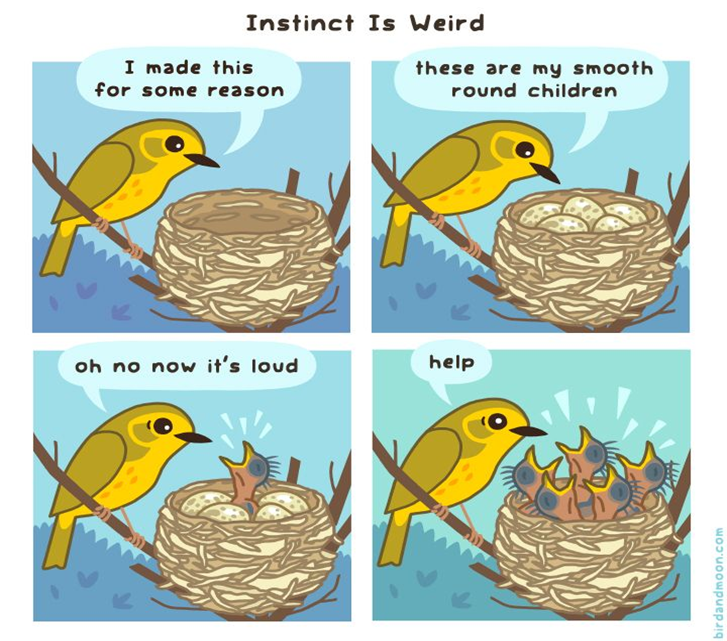
The quirky nature humor of https://rosemarymosco.com/
Northern Shrike, new cartoon by Rosemary Mosco.
~~~~~
The presence of birds in our lives brings good health. Indeed research shows that the richer and more various the birds in a neighborhood, the higher people’s satisfaction with life. Birdsong is the natural sound linked most strongly to reducing stress and promoting restoration, particularly when it is more diverse and people are prompted to notice it. Birds bring joy.
Five curious health benefits of dark midwinter, according to science | The Independent
~~~~~
Imagination sees a parallel universe.


 Cindy Wity