The Last Wound

Nighthawk Diner was almost empty by the time I walked in. My thoughts were rambling and looking for a place to land.

“Coffee, Roy?”

“Yeah, fill ‘er up. And a slice of your apple pie.” I shoved an empty cup across the counter toward Max.

The sound of gun shots came from the alley behind the diner. Then several more. I got up from the counter.

Max poured the coffee. “Roy, it’s almost The Fourth of July.” I sat down.

A couple at the end of the counter were setting off their own fireworks. She made it clear that she had changed her mind about him.

I sat with my coffee half-listening and half-mulling. Did she learn something that made her realize that she would never change him?

Whatever the reason, the woman got up, huffed out, and hailed a cab. The guy looked over at me and threw up his hands. I half-nodded half-smiled and returned to my coffee. It was late. I was tired and way past understanding anything.

There was another loud crack in the alley. I let it go. Max brought the pie.

“Say Roy, did you ever catch whoever vandalized the jewelry store a few doors down?”

“The smash and grab? Yeah, a couple of guys stole some expensive watches and fenced them to buy drugs. They’re locked up now.”

Max wiped his hands with the towel that hung from his waist. “They vandalize others so they can vandalize themselves. Makes no sense.”

“It makes the same sense as losing a finger or an eye playing with fireworks.”

As I was saying this, a fire engine with sirens blaring and lights flashing drove past the window. An ambulance and a squad car followed.

“I guess I better have a look.”  I paid for the coffee and the apple pie, grabbed my hat and headed for the door.

“Say hi to Laci for me, Roy.”

“Will do, Max.”

Outside, I expected the sulfurous, rotten egg-like odor given off by fireworks. But the heavy acrid smell of a fire filled the air. I could see fire trucks at Center City College campus. That’s where I headed chewing on some Black Jack gum my best girl had put in my coat pocket.

~~~

I cleared the police barricade tape with my ID and walked toward the Larks Faculty Admin Building. A fireman stood in a fifth-floor window. He radioed below to the fire chief I walked up to. The fire was out, he said, and there was a body on the floor.

“Roy, the elevator is shut off. You’ll need to walk up.”

That was the corpulent sergeant Fullman. Beads of sweat rolled down his face. He wasn’t about to walk up the five flights of stairs. So, I had to.

The climb to the fifth floor wasn’t easy. The handkerchief covering my nose and mouth didn’t keep out the sharp-tasting smoke and I was already tired from being up the past 30 hours. My heart was thumping like a freight train passing through a small town at night.

The sign on the fifth-floor office read:

Arthur J. Talbot

Professor

School of Humanities, Arts and Cultural Studies

Inside, a fireman stood poking through a large pile of charred books. He was making sure that there were no more embers.

The shelves had been emptied. Books had been thrown into a pile next to the desk and set on fire. Everything had been doused with water. There was no vanilla-like smell of old books. There was a damp burnt wood smell.

A man’s body lay face down on the floor. I put on some nitrile gloves, knelt down, and lifted his shoulder to look at his face. The anniversary photo on the desk confirmed the dead man to be Professor Talbot.

He didn’t appear to have any wounds, but the large book he was holding – Virgil’s Aeneid in the original Latin – had large gashes in the cover. Was he holding the book to protect himself?

Before I got up, I noticed something under the desk. I stuck my arm under and pulled out a wooden replica of a tall ship. The engraved brass label read USS Constitution, “Old Ironsides1797. A third of the ship had burnt away. I handed it to the fireman.

I searched the pockets of his tweed jacket, his waistcoat, and his pants. His wallet, his wedding band and his watch had not been taken. It wasn’t robbery. It was someone with a grudge making a deadly point.

The fireman pointed to the waste basket. “The fire started there.”

“How did it spread to the books.”

“Accelerant was used in the bin and on the books. Someone lit some paper, threw it in the bin and then dumped the blaze on the books.”

I stood back trying to imagine the scene and then went to the open window. I stuck my head out and yelled down to sergeant Fullman “Send up forensics.” The outside air didn’t clear my head. There was a pungent taste in my mouth. I tossed my gum out the window.

Ten minutes later, two white-coveralled techs with masks make it to the fifth floor. One of them starts taking pictures. The other examines the professor’s skull.

“I see no injuries. He might have been overcome trying to put out the fire and died of smoke inhalation.”

I left the techs to their work. I had to go back outside. My stomach didn’t know what to do with the taste in my mouth.

“Roy, what did you find out?” Sargent Fullman asked from his bench perch. I told him that it looked like a homicide. “Crime never sleeps, Roy. Not even on a holiday.”

“You better go home, Sarge. Mrs. Sarge will be worried about you in this heat.”

I stood there blowing my nose and looking around at the crowd that had gathered behind the police tape. Some of the onlookers were holding protest signs. One very anxious woman stood out. It was the woman in the photo.

I pulled her out from the line and brought her to a quiet spot.

“Ma’am, I’m Detective Winder. Are you Mrs. Talbot?”

“Yes, detective. I’m Alice Talbot. Is my husband OK?”

“I’m afraid, Mrs. Talbot, that your husband has passed. I’m looking into what happened.”

This news had her crumble into my arms and then she pulled back. The smell of smoke on my clothes had her wondering horrible things. I told her that her husband’s books had been burnt but that he was untouched by the fire.

She looked over at the protestors. I figured they were adding more pain to an already painful night for Mrs. Talbot.

“Mrs. Talbot, do you have someone you can stay with tonight?”

“My daughter.”

“I would like to talk to you again, tomorrow. Is that OK?”

“Yes, detective.”

“Just one question tonight. Why was your husband here on campus so late at night before a holiday?”

“He was to give the Fourth of July speech . . . at the bandshell in Larks Park . . . before the fireworks. He told me that he wanted to make sure it was his best. He said it would likely be his last.”

“Why did he think it would be his last speech?”

“Some students filed complaints against him. They thought his teaching was biased or not biased enough. I don’t know.” She looked over again at the protestors.

I had an officer wait with Mrs. Talbot until her daughter arrived.

I went home, put my clothes in a dry cleaner’s bag, put my gum on the dresser, took a shower, and then slipped into bed next to my best girl.

~~~

I woke up two hours later when I heard the TV. Laci had the news on.

“Fifty-nine-year-old Professor Arthur J. Talbot, a professor at Center City College, was found dead in his office. There are reports that his books had been destroyed in the fire.

“One colleague described Professor Talbot as the pillar of the School of Humanities, Arts and Cultural Studies. Professor Talbot authored several books about philosophy, ethics, and religious studies. 

“He is most well-known for his books Minds Made Up: Ideology as Identity and Zero-Sum Culture and The Leveling of Society.

“He is survived by his wife Alice, two children and seven grandchildren.”

I turned the TV off when Laci reminded me that it was the Fourth. I had hoped to spend it with her on the patio with some ice-cold lemonade and a couple of steaks on the grill. But murder has a way of deciding for others.

I called Mrs. Talbot and her daughter answered. I told her that I needed to spend a few minutes with Mrs. Talbot.

“Come right over. The family will be here soon. It’s 208 Larks Avenue, a brownstone across from Larks Park.”

It was the start of one of those searing and sultry days of summer. The package of Black Jack gum in my coat pocket was getting soft, too soft. I wanted to shed my suit coat, loosen my tie, and open my collar. But I had to look like business. I hoped the Talbot place had AC.

When I arrived, Mrs. Talbot’s daughter opened the door.

I addressed mother and daughter. “I am sorry for your loss. I am curious. Is there anyone who would want to hurt your husband, your father?”

Mrs. Talbot wiped her eyes. “I can’t think of anyone directly. But there are students who don’t like what he taught, don’t like what he wrote. The department chair received student complaints about his teaching style, his course content, and his courses on ethics and religion. He was penalized in his annual performance review for a bias toward Christianity.”

Mrs. Talbot wiped her eyes again. “I saw the protestors last night again. I saw them at his last talk on campus. I see them outside our house with signs.”

“Has a protestor ever harmed you or your husband.”

“Not directly. But we don’t feel safe in our home or leaving our home. Now they’ve had their way with him.” She couldn’t continue and laid her head on her daughter’s shoulder.

I asked the daughter if she knew of anyone specifically who had filed a complaint.

“I think my father said her name is Madison with a ‘y’ . . . Madisyn Sawyer. She lives directly across from us on the other side of the park.” She walked over to the window. “Right there.” She pointed to a four-story apartment building.

Before I left, I told them that there would be an autopsy to determine the cause of death. I would let them know what I find out.

“Detective,” Mrs. Talbot lifted her head, “Arthur was to give the Fourth of July speech today over at the bandshell across the street. He showed me the third draft of the speech. He went to the college last night to finish it – something about wanting to make sure of a Latin phrase from Virgil’s Aeneid.”

“Do you know what phrase he was thinking about?”

Tu ne cede malis, sed contra audentior ito. It translates as ‘do not give in to evil but proceed ever more boldly against it.’”

“Ma’am, I wish I could have heard him deliver that speech.”

As I opened the door, a couple was just about to enter.

“Who are you?” asked the man.

“I’m Detective Winder. And you?”

“I’m her son Matthew and this is my wife, Mandy. Any information on my father’s death?”

I told him that I was there to find out who might want to harm his father. I asked him and he said that he knew of no one. I told them there will be an autopsy to determine the cause of death and that I would be in touch when I had more.

Walking down the sidewalk, I noticed someone standing with his bike across the street. He was watching the Talbot house. I decided to walk across the park to question Madison with a ‘y’. When he saw me coming in his direction, he got on his bike a rode away.

 ~~~

I make my way over and up to Madisyn Sawyer’s fourth-floor studio apartment. I knock. A short round woman with fuchsia-streaked pixie hair and an assortment of piercings and tattoos answered. I identify myself.

“The police! Are you here to arrest me?”

“Do I need to?”

“Isn’t that what police do, detective? Arrest people and find them guilty?”

“I’ll let you know. Ms. Sawyer. I’m looking into the events of last night and the death of Professor Talbot.”

 “Come in.”

“Ms. Sawyer, I understand that you filed a complaint against professor Talbot. Is that correct?”

“Yes, detective. I had issues with his Introduction to Ethics and Issues in Death and Dying class. He had us reading Thomas Aquinas and asking us about the “highest good.”

“Is that a problem?”

“There are other perspectives, detective.”

“Were you aware that Professor Talbot was at his office last night?”

“Yeah. I was down on the third floor working on my Master’s thesis. I wanted to finish some research before the holiday. Professor Talbot came down to talk about my research for my dissertation. Then he went back up to the fifth floor, I think.”

“What time was that?”

“Around eight eight-thirty, I think. Before I went home, I went up to ask him about some research I came across. But he wasn’t there.”

“Was anyone else around the fifth floor then?”

No. But there was someone coming up the stairs as I was going down. “

“Describe him.”

“He looked like a high-schooler. He had black hair. He was skinny. Wore jeans and a black hooded sweatshirt and sneakers.”

“Anything else?”

“He was carrying a bicycle tire pump.”

I look around the studio apartment. Two bikes and two backpacks leaned against the wall. Outside the small open kitchen area there was a table with two chairs. On the table was a lit oil candle. On the wall was a TV the size of a billboard. The room filled out with a well-used arm hair holding a cat that couldn’t be bothered and a futon with protest signs leaning against it. Books were scattered around in piles. I scan some of the titles.

“These titles . . .? You don’t agree with what Professor Talbot teaches?”

“Is that a crime?”

“Only if it’s not by the book.”

I notice a photo on the refrigerator door.

“Who is this?” I was looking at a photo of a smiling Ms. Sawyer and a severe-looking dark-haired guy.

“That’s Hadrien Marie. We share the apartment.”

“Does he attend the college?”

“Oh no. He owns a vape shop on third street. He’s there now.”

I give her my card and ask her to call me if she hears anything about last night.

I came away with the impression that Ms. Sawyer’s prerogative was not used to change her mind, as they used to say of women. It was her prerogative to impose change on other people’s minds. She came across as a protest.

~~~

I grab another stick of Black Jack gum from my pocket and walk over to the college to ask about CCTV of last night.

The building superintendent tells me that there are cameras on the exterior of the building, the first-floor entrance, and hallway cameras. I ask to see the exterior footage from last night starting at nine-o’clock.

Just after nine, I see the man that Ms. Sawyer described entering the building.

I ask for the footage of the first-floor camera starting at nine. I see the black-hooded young man with jeans and the bicycle pump entering the building and heading up the stairs. I ask for the footage of the third-floor camera. It shows the hooded man heading up the stairs and Ms. Sawyer going down the stairs.

The fifth-floor footage shows the hooded man reaching the top of the stairs. He enters the professor’s office. He’s in there for three minutes and leaves.

The first-floor video shows him leaving the building minutes later. The exterior video shows him getting on his bike and riding off.

I need to find this young man. I capture a screen shot of him on the first floor. The image of him was a bit blurry but there was enough to show people. There was enough to show me that this guy looked a lot like the same guy watching the Talbot house. I walk back to the Talbot house.

~~~

Matthew opens the door. “Anything yet, detective?”

“I want to show your mother a picture.”

Mrs. Talbot is seating on the couch surrounded by her grandchildren. I have her look at the screen image.

“No. I don’t know him.” She handed the picture to her son.

“Has anyone noticed a young guy standing across the street watching your house?”

“What?” Matthew went over to the street window and looked out. “He’s there right now, detective.”

“Do you recognize him?”

“I . . . well . . . that might be the kid that used to vandalize our house when we were at church. That was years ago. Matthew looked at the photo again. “Yeah, that could be him.”

Mrs. Talbot came to the window. “There was a boy in our neighborhood who seemed to hate us. We’d come home from church and find the top of our tulips cut off. We’d find our garbage cans knocked over. We’d find dead animals in out mail box. We’d find our car tires flat. He’d ride by on his bike yelling all kinds of nasty things. In my day we called kids like that juvenile delinquents.”

“Mom, they’re called young offenders today, as if a change of designation was social progress. And, that kid was Brandon . . . Brandon Brix. I had a few run ins with him.”

I go out the door to speak with the young man. But he gets on his bike and rides off.

I leave the Talbots and walk to the station. I need to find out more about Brandon Brix.

Brandon, according to the police blotter, had committed a couple of misdemeanors at the age of twelve. He had been charged with defacing school property with spray paint and with petty theft of tools taken from several garages. He was sentenced to six months in juvenile detention and then placed on parole for a year. Brandon is now eighteen. He lives on Shore Oaks drive with his mother. That’s where I headed next.

I drive up to the Brix house and see a bicycle laying on the grass. I knock. A fiftyish woman with heavy bags under eyes answers.

“Mrs. Brix?”

“Yes. Who are you?”

“I’m detective Winder. I need to speak to Brandon.”

“Oh no. Don’t tell me he’s back to his old ways.”

“That’s what I’m here to find out, ma’am.”

“Brandon! Come down here!”

The young man I had seen across the street and in the screen-capture came down the stairs. He looked scared.

“Brandon, I’m detective Winder. I am investigating what happened to Professor Talbot last night. Cameras have you at the college last night. Cameras have you going into Professor’s Talbot’s office. Can you explain?”

“Oh, Brandon, you didn’t, did you?”

“No ma. I was there to apologize to Professor Talbot. I finally worked up the courage to face him. I watched him go to the college last night. I waited till there wasn’t anyone around. I just wanted to talk to him. I had messed with him and his family when I was a kid.”

“Detective, I divorced my no-good husband when Brandon was ten. He had a lot of anger over that. That’s what’s at the root of his troubles.”

“So, Brandon, you were there to apologize to the Professor?

“Yes sir. But the Professor wasn’t in his office. I didn’t want to walk around to find him. I didn’t belong there in the first place. So, I wrote him a note and left it on his desk. I wanted to take responsibility for the way I acted toward him and his family.”

“Ma’am, sounds like Brandon figured out what was at the root of his troubles. It was his bad behavior.”

“Brandon, that is a noble of you,” his mother hugged him.

“You saw no fire?”

“No sir. I heard about what happened to Professor Talbot on TV. I went over to their house hoping for a time to speak with Mrs. Talbot alone. But people were coming and going.”

“Why were your carrying a bicycle pump, Brandon?”

“I didn’t want it stolen. I used to steal things when I was a kid so I knew what could happen.”

I asked Brandon to come to the station to make a statement. I needed to establish a timeline, talk to the medical examiner, talk to forensics, and review the videos from the administration building. If Brandon didn’t start the fire, then who did?

~~~

I met with the medical examiner and the deceased.

“Roy, toxic fumes, not flames, were the primary cause of death. There are no major burn injuries or grievous external wounds, no blunt force trauma found that could be attributed as the direct cause of death. “

“Note the swelling around the faces and eyes. And there is soot and smoke particles inside his nasal passages. He inhaled large quantities of smoke which may have caused a fatal heart attack. I’ll know more later.

“You know Roy, he could have left the room to breathe in clean air. But he must have stayed inside trying to put out the fire destroying his books. He also could have used the fire extinguisher in the hall, but maybe he didn’t want that powder on his books. Maybe he thought he could put out the fire.”

Mike in forensics had more to report.

“Roy, the fire started in the garbage bin next to the desk. It was started with an accelerant – liquid paraffin. Liquid paraffin is used in lamps and candles. The building administrator said that no candles or lamps or anything flammable is allowed in the building. And no smoking and vaping is allowed within a hundred feet of entrances and exits. Someone brought in the liquid paraffin and lit it up.”

I asked Mike for pictures of the scene. I was hoping to find Brandon’s note to Professor Talbot.

“Roy, whatever paper was on the desk must have been pushed into the garbage bin. Here are pics of the charred scraps that had floated up from the fire and landed in the room.”

All but one document had been typewritten. The one handwritten scrap had “Mr. Talbot.” The rest of the note had burned off.

The videos were next. I start with the fifth-floor video at eight last night.

I see Professor Talbot walking down the stairs with a paper in his hands. I follow him to the third floor. He stops to talk to Ms. Sawyer. He hands her a paper. She looks it over and looks rather unhappy.

The Professor goes back to the fifth floor but he doesn’t go to his office. He goes to an office several doors down. He stays there for an hour. I call the college and ask about the office. I learn that it is Professor Cline’s office. He’s a close friend of Professor Talbot.

I call Professor Cline and ask about that meeting. He says that Professor Talbot wanted to go over his speech with him. He confirmed the time.

I watch the fifth-floor video and see Brandon go into Talbot’s office for three minutes and then leave. Professor Talbot was still down the hall.

Minutes later, Ms. Sawyer reaches the fifth floor and looks into Professor Talbot’s office. Then she walks halfway down the hall and then walks back to his office and goes in. She’s in the office for six minutes and then heads down the stairs.

Fifteen minutes later, Professor Talbot leaves Professor Cline’s office. Professor Clines heads down the stairs with his briefcase. Professor Talbot goes to the men’s room. He leaves the men’s room after a few minutes and returns to his office. He does not come out. He is not seen again. I see smoke. The automated sprinkler system must have gone off.

Ms. Sawyer was the last to enter the office. Or, was she? Old buildings like the Larks building have fire escapes. Was the office window opened by the fire department or had it been opened by someone using the fire escape to vandalize the office and start the fire?

Before I go to review the building’s exterior camera video, I call the fire department. The chief asks around and says that every fireman up on the fifth floor thought that the victim had opened the window.

I watch the video from building’s main entrance exterior camera. I see Brandon unchaining his bike and then riding off. Ten minutes later I see Ms. Sawyer with her backpack doing the same. The fire started after she left the Professor’s office. Was she in on it?

I rewind the exterior night footage video and then advance it slowly.

A figure appears on the far left. It looks like a black-hooded man with a backpack. He’s about the same height as Brandon but Brandon didn’t have a backpack when he left the building. The figure comes near the building. I switch to the building’s corner camera video to view the fire escape. Only the outside railing of the fire escape is visible in the video, but I can see movement on the fire escape each time the figure passes a lit window.

I check the main entrance video and the internal videos again. I don’t see the black-hooded man. He must have gone up the fire escape.

I watch and watch. I can’t see the fifth-floor window but smoke begins pouring out at that level. Minutes later I see the hooded figure walk away from the fire escape. The figure tosses something into a garbage can by the sidewalk. He gets on a bike and rides away.

I send Mike of forensics to check out the trash can on the campus. He calls after twenty minutes and tells me that he found a fire starter and a bottle of liquid paraffin. I tell him to grab the finger prints from both and to finger print the fire escape near the fifth-floor and the window. Our suspect has left his mark.

The campus has plenty of people walking around with backpacks. There were two at Ms. Sawyers place. And there was an oil candle.

An hour later I get the results. The finger prints match Hadrian Marie, the owner of a vape shop on third street. He had previously been arrested for criminal damage to property – fire damage to a church. He was more severe than he looked.

I get a probable cause warrant from the DA to search the studio apartment. I take Mike and two officers with me. The fireworks over at Larks Park were about to begin.

~~~

Back at the station, I put Ms. Sawyer in one interview room and Mr. Marie in another.

Mike calls me and says he’s pretty sure that one of the backpacks has liquid paraffin spilled on the bottom. And he found a black-hooded sweatshirt that smells like smoke in the hamper. He’s on his way back to the station with the items to analyze them.

I interview Ms. Sawyer first. I want to know if she was involved.

“Why am I here, detective? Why is Hadrian here?”

“Ms. Sawyer, video from last night has Professor Talbot handing you some papers and you looking very unhappy. What was that about?”

“I asked Professor Talbot to review my Master’s thesis. He said that before I narrowed my focus and framed my argument, I needed to broaden my perspective. He said I needed a more thorough review of existing literature to identify gaps in my thesis. He said that I needed to consider not only what I agreed with but also what I disagreed with. He handed me some resources to critically review.”

“Did this upset you?”

“Well, yeah. I was frustrated. I mean, I’d already spent a lot of time on the thesis and thought I had nailed it.”

“Ms. Sawyer, after you left the admin building last night, did you go straight home?”

“Yes.”

“Was Hadrian home when you arrived?”

“No. He came home later. He had to close the Vape shop. Why?

“Sit tight.” I leave the room and go talk to Mike.

“Roy, on the bottom of both backpacks there are drops of liquid paraffin. It’s the same liquid paraffin used in the candle. The fire investigator says It’s the same liquid paraffin that was used as an accelerant.”

“Thanks Mike.”

I head to Interview Room 2 to question the wild-eyed Mr. Marie.

I enter and find him standing in the corner with his arms crossed and a mean mug.

“Why are we here? And shouldn’t you be out watching your glorious American fireworks?”

“Mr. Marie, I am detective Winder. Have a seat.”

“Now, Mr. Marie, where were you last night between 9 PM and 10:30?”

“At my shop. Till ten. Then I went home.”

“Mr. Marie, we searched your apartment and found things that tie you to the fire and the death of Professor Talbot.’

“What?! How can that be. I was at my shop. I was at home.”

“We found traces of liquid paraffin in your backpack. It’s the same liquid paraffin that is used for the candle in your apartment. It’s the same liquid paraffin that accelerated the fire in the professor’s office.”

Mike walks in and hands me the finger print results.

“It appears, Mr. Marie, that you’ve left a trail of finger prints on the fifth-floor fire escape and on the office window and on the office trash can and on the fire starter and bottle of liquid paraffin found in the trash can adjacent to the admin building. It appears that you’ve crossed a bridge and burned it behind you.”

“What are you taking about?”

“I saw the plaque on the wall of your apartment.” I look at my notes. “It says . . .

“You are America. Unconstrained by habit and convention. Unencumbered by what is, ready to seize what ought to be. For everywhere in this country, there are first steps to be taken, there is new ground to cover, there are more bridges to be crossed. Obama, right?”

“Madisyn called me, Mr. Dick, and told me what the old guy said about her paper. She tells me everything that guy says. She told me that students complained about his teaching style and course content. They complained about his courses on ethics and religion, his Christian bias. He never includes teaching about decolonizing and anti-racism. He never includes the things that really matter!

“The “greater good!” Hah! He knows nothing about the “greater good” when there is so much injustice and so much inequality in the world!

“So yeah, I came in the window. Yeah, I threw the books on the floor. Yeah, I lit the fire. It was a statement. A statement against his old tired way of thinking. He’s stuck in the past. He needed a wakeup call.”

“Mr. Marie, did you strike Mr. Talbot?

“He came at me as I was going out the window. I only had the fire starter to protect myself. So, I swung it at him.”

Mr. Marie, did you strike Mr. Talbot?

“I struck the book he put up to his face. He was alive when I went out the window.”

“Professor Talbot perished from the fire. And now Mrs. Talbot, her children, her grandchildren and his many students must suffer the injustice and inequality of your act.”

At this point, I read Mr. Marie his rights.

“Detective, Madisyn has nothing to do with this. I waited by the window until Madisyn left the building. I didn’t want her involved.”

“We’ll see about that. Hadrian Marie, you willfully started a fire to intimidate Mr. Talbot. You are being charged with arson and the involuntary manslaughter of Mr. Talbot. Your unconstrained habits and convention will be remanded into custody. You will be encumbered by it is.”

“I want a lawyer.”

I returned to Interview Room 1 and Ms. Sawyer.

“Ms. Sawyer, video from last night has you going up to the fifth-floor, looking into Professor Talbot’s office, then walking halfway down the hall, and then walking back to his office. You are in there for six minutes.”

I show her the video.

“It looks to me that you checked Professor Talbot’s office to see if he was in there. He wasn’t. Then you hear his voice. You walk down the hallway and hear him talking with Professor Cline. Then, you go back to Professor Talbot’s office. What were you doing in there?”

“I was . . .I was writing a note about the research I found.”

“Did you see another handwritten note on the desk?

“Yeah. I looked like something a kid wrote to Professor Talbot.”

“Ms. Sawyer, we found your finger prints on the books piled on the floor. We also found your finger prints on the window you opened for Hadrian. And, we also found drops of liquid paraffin in your backpack – both backpacks found at your apartment.”

“It was supposed to be a statement, detective.”

“You mean you were showing him a different perspective when you tossed his books into a pile on the floor, opened the window for Hadrian, handed him the liquid paraffin and then left. You will be charged with second degree murder in the commission of felony arson.”

“The last wound the professor suffered, Ms. Sawyer, was fatal. He was trying to put out the fire consuming his books. His fifty-nine-year-old heart gave out. He died of smoke inhalation and heart failure.”

At this point, I read Ms. Sawyer her rights.

~~~

Back at my desk, I make a note to call Mrs. Talbot in the morning. I’ll tell her about Mr. Marie and Ms. Madison with a ‘y’, and about Brandon Brix. I put it in my pocket with the pack of Black Jack gum.

I call my best girl.

“Roy, the fireworks are over.”

“Laci, I wrapped the case. I’ve been crisscrossing the campus all day long. My dogs are killing me and I’m beat. Listen, darling, tomorrow I’ll make sure there are lots of fireworks and then we’ll grill some steaks and watch The Thin Man.

“You never change, Roy.”

“That’s why you love me. See you soon.”

~~

©J.A. Johnson, Kingdom Venturers, 2026, All Rights Reserved

Transit

I experienced my first water crossing at the age of eight. My father made it happen.

My mother wanted to visit her sister in Muskegon, MI. We lived in Chicago. So, instead of taking the mapped route – driving through northern Indiana around the bottom of Lake Michigan and up to Muskegon – my father booked us on a car ferry that would carry us from Manitowoc, WI to Ludington, MI over Lake Michigan.

When the four of us that included my younger brother arrived at the ferry port in Manitowoc, a porter drove the car onto the ferry boat. We boarded and headed up to the top deck. The lake passage would take four hours.

Seeing the size of the boat, the cars rolling aboard, the expanse of water all around, the sunset and then the harbor lights on the other side and hearing the booming blast of the ferry horn, smelling and tasting the earthy lake air, and running around the decks wearing the white captain caps with black bills that my father bought for me and my brother –  I was no longer in the bathtub with floating toys.

Dad liked to drive back roads to get to destinations. The car ferry was another. He liked to explore and put himself in new situations. My mother liked the familiar, the safe familiar. She expressed her concerns and then went with dad.

My father put himself in positions that would stretch him. After attending the Moody Bible Institute with my mother (I was born while they attended as married students), he pastored a tiny church in the frozen north of Minnesota. But, with me and then a brother coming along a year later, a better paying job was required.

My father, with family in tow, returned to Chicago. He studied traffic management and was hired to work as the shipping manager for ServiceMaster. As the family grew, he went on to work various jobs, mostly in sales. There were times when he worked a second job at night. He did what he had to do. He worked to provide for us. My father made that happen and he did more.

While the jobs paid the bills and provided for those under his care, he continued to stretch himself. This latter was not a fear of missing out on some experience. This was, perhaps, a fear of missing out on the desire that brought him to MBI many years before. He served as a Sunday School teacher, as a church chairman, as a village trustee, and then as village mayor.

Dad and mom served on the missions committee of the church. On Sundays after church, they hosted meals for furloughed missionaries from all over the world including Ecuador, Japan, the Congo, and Wycliffe Bible translators from New Zealand. They also hosted professors who spoke at our church, professors such as classical Christian apologist Norman Geisler from Trinity Evangelical Divinity School. Those meals in our home exposed me to a bigger-than-me world, just as the car ferry passage did.

That water crossing was not just exposure to a novel experience, it was exposure to my father’s heart, to his momentum to see beyond and go beyond. There were other experiences with my father: going to Riverview amusement park in Chicago, going to a Cub’s game at Wrigley Field, playing taps on my trumpet at a Memorial Day event where my father, as mayor, gave a speech. The Bach trumpet I played was a gift from my father before I entered high school. And there were the aforementioned times when I was present to the man who took on serving roles.   

My passage from the pre-adult pre-parenting years with all of the childish outsized expectations, demands, and responses to that of becoming a parent and a context of doing what must be done day in and day out and also stretching myself to be more began with the transit across Lake Michigan. My father, now in the presence of the Lord, made that happen.

~~~

Now I Lay Me Down

My name is Roy Winder. I’m a homicide detective. I investigate suspicious deaths, collect evidence, and work to solve cases. My job is putting two and two together. But two and two don’t always add up to a solve a mystery, as in my last case.

When the call came, I drove over to Grace church on Fourth street. The minister led me to the body lying face up at the bottom of the baptismal tank. My first impression: foul play wasn’t involved. I didn’t see any blood or signs of a fight or an instrument of death. I saw repose. The large man in a large tub laid there with his large hands across his chest like he was finally at rest.

I asked the minister if he knew the man. He said he didn’t.

The guy didn’t look street homeless. He had a few days growth of beard but didn’t look dirty and haggard. The man at the bottom of the tank looked like he had enough to eat.

He had on a wet blue mechanics coverall jumpsuit. Above a chest pocket holding a tire pressure gauge was a red-bordered oval name patch with the name “Sam.”

Twenty years on the force – I’ve seen all kinds of things. And I have smelled the unwashed and the dead. And “Sam”, unwashed or not, was certainly dead. The flies knew it too. We shewed them away and covered our noses.

The minister said that a small group of people stayed overnight in the church during the Maundy Thursday Vigil. They smelled something awful and called him.

I asked about the vigil.

“The Maundy Thursday service extends into an all-night prayer vigil. Some folks sign up to stay every hour of the night to commemorate Jesus’ request that his disciples stay up praying with him in the Garden of Gethsemane before his arrest. Anyway, when I got here this morning at 7 AM I went looking for the smell and found this poor soul in our baptistry.”

I asked for the names of those who were there overnight. But they might not have seen the man. The smell and the bloated body told me that “this poor soul” likely died at least forty-eight hours ago. Had he been in the tank since Tuesday?

I asked the pastor about any recent baptisms. He said there would be baptisms this Easter Sunday.

“Maybe “this poor soul” couldn’t wait till Sunday.”

“Well, the thing is,” the minister explained, “we are an Anglican church. Baptisms are done with sprinkled water and not dunking. We rent this building. It had been a Baptist church but that congregation moved on to another building. The baptistry had been closed off and never used.”

I asked how he got in.

“The church is typically left open to access the office and parishioners can come into the sanctuary to pray.”

After the three-hundred-pound body was lifted out of the tank and put on a stretcher, I searched the body for an ID and phone. I found a wallet but no phone on Samuel J. Muckle, age 63. There was black residue on the grooves and cracks of his hands, almost like fingerprint dust. Sam was then taken to the morgue for an autopsy.

I wanted to know the cause of death. I wanted to know why he was in the church’s baptismal tank. I needed to find out who would be missing him. I began my inquiry back at the station.

I searched through the missing person’s database. With no matching descriptions and no missing person calls of late, I gave a copy of Sam’s driver’s license photo to a local news station. Someone had to know him.

When the autopsy report came to my desk the next day, there was no fingerprint match to anyone in our system. He wasn’t wanted by the law. DNA matching would take a bit longer.

The coroner’s report said that there were no signs of violence. Sam died of natural causes. A pulmonary embolism likely brought on by obesity did him in. The coroner thought that he may have gone into the tank and then tried to lift himself out and that struggle may have caused cardiac arrest. A large contusion on the back of the head suggested that Sam may have fallen backward, hit his head and laid there trying to recover. Time of death was estimated around 8 o’clock Tuesday evening.

Sam’s photo on TV last night produced results. The first to recognize him was a coworker named Jake. He came into the station and I interviewed him.

According to Jake, Sam hadn’t shown up for work the last few days. They work together as auto mechanics. That explained the oil-stained hands. Jake asked about Sam and I told him the sorry truth. He was shaken.

Jake worked with Sam for several years. When Sam needed a smaller pair of hands to reach something in a tight space under the hood, he asked Jake. When Jake needed help with a truck’s transmission, he asked Sam.

I asked him where Sam lived and for a phone number. He told me where Sam lived and that when he called the number, the phone rang in Sam’s locker at the shop.

“Was Sam married?”

“Sam was married but he never spoke about his wife Midge. He only talked about his kids and sport cars.”

“Was Sam a church-going man?”

Jake said that he’d been invited to Sam’s daughter’s wedding several years ago but that’s the only time he saw Sam in church.

“Where was the wedding?”

“Some Baptist church over on fourth street.”

I walked Jake out and told him that I’d come over to shop to go through Sam’s locker and pick up the phone. Mr. Muckle’s daughter Kerri was in the lobby waiting to talk to me. She looked up at me with the watery searching eyes that every homicide detective has seen.

Kerri said that her ex-husband had called her when he saw her father on the news. She was frantic. She wanted to know if her father was OK.

I brought her to an interview room for a private conversation. I told her that her father had passed. She burst into tears so I put a box of tissues in front of her. I told her that her father was found in the baptismal tank of the church over on fourth street. This had her asking me why. I had no answer only that there didn’t seem to any foul play involved.

“Where is your mother? Is she home? Did you call her?”

“Yes. I called her. She’s been staying with my two aunts. They’re investigating a pastor about some allegations of misconduct and abuse.”

“Investigating a pastor?”

“My aunts call themselves the “snoop sisters.” They like to dig up dirt on people they call “holy rollers.”

“Is she coming home? I need to talk to her.”

“She’ll be here this afternoon.”

“Did your father and mother get along?”

“They didn’t fight. But they didn’t talk much either. Mom cooked, did laundry, and managed us kids. Dad ate, went to work, fixed things, and watched stock car races and old westerns on TV. After us kids moved out, they had separate bedrooms. Maybe they made things work because of us kids. They were married but not so much. Know what I mean? “

I didn’t know what she meant. I’m happily married to my best girl, a blue-eyed blond who likes a man who serves and protects.

“The coroner thinks that your father may have died from a pulmonary embolism caused by the effects of obesity.”

“My mother called him ‘Chub.’”

“Chub?”

“Yeah. That’s the nickname she gave him. Dinner’s ready “Chub,” she’d say. “Chub” get Todd to mow the law. “Chub” my car needs fixing. “Chub” this and that.

“Was your father depressed?”

“I don’t think so. He was a quiet gentle soul. He let things bounce off of him. But maybe not. He did overeat.”

“Do you know why your father would want to be in the baptistry?”

“No. I mean. I attended there. I was married there and that is the only link to my father and that church.”

Your father wasn’t a church going man?

“Only for weddings.”

“What about baptisms? Sprinklings?”

“Yeah, and those times too.”

“Is there anything else I should know about your father?”

“I don’t think so.”

“I’m sorry for your loss. I’ll walk you out.”

Alan, Kerri’s ex-husband and Sam’s former son-in law, was in the lobby waiting to talk to me. Kerri walked past him without a word. I brought him to an interview room.

Alan said that he recognized the photo and wanted to know about his former father-in-law – if he was missing, if there was any foul play. I gave him the sorry news and told him where I found the body.

“I figured obesity would take him but in a baptistry?”

I asked Alan how long he had known his father-in-law.

“I’d been married to Kerri for seven years. I was around my father-in-law at a few get togethers.

I asked Alan if he thought Sam was depressed.

“I would be if I lived with that woman.”

Alan described his mother-in-law as disagreeable and without an ounce of grace. She had a habit of calling her husband “chub.” He didn’t know if this was a term of endearment or a belittling remark that his father-in-law just accepted.

“She didn’t find things amusing except when she found fault with someone. There was one family gathering where she and her sisters where gossiping about someone and the situation they talked about resolved itself in a funny unexpected way. I said God must have a sense of humor. She snapped back at me saying that God had no sense of humor.”

Could a disagreeable woman without a sense of humor cause a man to eat himself to death and end up in a baptistry?

That afternoon Sam’s wife Midge showed up at the station. She wanted to see the body, so I drove her over to the morgue. She looked at Sam’s face and said “That’s Him. That’s Chub.”

Driving back to the station, I asked Midge if things were OK back at home.

 “Things were as they always were.”

“He was found in a baptistry. Do you know why?”

“Maybe he thought it was a spa. I don’t know.”

“You investigate people.”

“I find out people’s secrets and put them in their place. Isn’t that what you cops do?”

“We investigate who put them in their place, as in baptistries. You don’t wonder why your husband was found dead in a baptistry?”

“Why should I? There was no funny business was there?”

“Not that I could see.”

“Well, then.”

I wasn’t getting much out of Midge. She volunteered nothing. Her investigation into her husband’s death had ended.

On Sunday, a day off without a homicide call, I went to Grace church over on Fourth street. It was Easter Sunday with talk of resurrection -the other side of death that homicide detectives don’t get calls for.

On my way out after the service, rector Philbee greeted me.

“Sam’s daughter contacted me. The family will have the funeral service here this week. You are invited. Did you find out why Sam came here?”

“I interviewed the family and nothing adds up.”

“Well, detective, as you know, people do all kinds of violence to get what they want. And there are some who desperately want the kingdom of God and do violence to themselves to get ahold of it. I wonder if that was what was going on with Sam.”

On Monday I closed the case. What did I have? Sam’s was no suspicious death. But it was a mystery of location, location, location.

Putting two and two together, I had a husband, father and friend who died of natural causes in an unused baptistry. And, I had no clear motive for Sam going out of his way to be in that exact place. I had no idea of what he hoped to find there. Maybe the padre was right.

The funeral for Samuel J. Muckle was held a few days after Easter Sunday at Grace church. I attended and sat in the back row. I wanted to see “this poor soul” laid to rest. Around the casket were dozens of white trumpet-looking lilies. They gave off a sweet and fragrant scent.

~~

©J.A. Johnson, Kingdom Venturers, 2026, All Rights Reserved

The End is Year

2025. Those of us striving to maintain the good, the true, the beautiful, and our precious homeland felt a hard-to-name force displacing us from the “past, people, place, and prayer” (Kingsnorth).

That force, soon to be coupled to Deterministic AI, is moving us in the direction of History deemed as an evolutionary process called Progress, as if later was better. Paul Kingsnorth, in his book Against the Machine, calls the force “The Machine.”

This year, The Machine’s red in tooth and gear displacement process included Charlie Kirk being shot in the neck and killed in front of the whole country in daylight. Kirk, as everyone knows, was a Christian and spoke in terms of the “past, people, place, and prayer.” Since the murder, the growing response is the rejection of what The Machine did to Kirk and is doing to them – the Process of Dehumanization.

People want the values Kirk spoke about and represented. They want to invest in precious lasting values – the good, the true and the beautiful – and they no longer want a modern Machine culture that generates everything the way central banks generate money: fiat morality, fiat identity, fiat community, fiat justice, fiat politics.

It is no surprise that in 2025, people and countries, sensing a constant state of flux, uncertainty, and manipulation in the fiat USD, were buying precious metals. The go-to values of physical commodities such as gold or silver increased in 2025.

At the beginning of 2025, gold was $2,640/oz. Recently, it was $4,550. Gold will likely hit $10k/oz. in 2026.

Silver, at the beginning of 2025, was $29/oz. Now, it’s over $77/oz.

Going Forward, a Few Recommendations:

The U.S. needs to uncouple from any involvement with the corrupt money-laundering country of Ukraine. We should not provide any security agreements to Ukraine. We should walk away and let Europe deal with Europe. Ukraine can become part of the EU (money-laundering system).

The U.S. needs to uncouple from its involvement with Israel. Israel can go off and do its own thing.

There should not be one-size-fits-all federal AI regulations. Better, keep AI out of our lives.

Big Tech’s Darkest Failure: How an AI Chatbot Manipulated a Child Into Suicide

Americans should resist all attempts in their state to build energy-hoarding data centers and more 5G (spy on us) towers.

At a minimum and no more, the U.S. should establish, by law, one day voting on paper ballots with a secure chain of custody.

Americans should resist all attempts to ID them digitally.

Americans should resist all attempts to go cashless and converting to a digital currency that will track all of purchases and decide who’s in and who’s out.

The U.S. should deport all illegal invaders. They are not refugees. They are economic and criminal opportunists. The open borders “compassion” behind “Welcoming the stranger” is exactly like a judge applying ad hoc justice to multiple offence criminals because they are minorities and because of their “circumstances.”

A Few Obvious Predictions:

Democrats will continue presenting themselves as saving the world while doing everything they can to tear it down using massive fraud, abortion, assisted suicide, anarchy, and more. The Left will continue with its Trump Derangement Syndrome (TDS). The deep-state media tells them what to think about everything.

Globalists will continue to globalize. They will continue to try to amass power over people and make them worker bees with a hive mind. Unless Kingdom Christians say “No More!”

The Islamification of the West will continue its takeover of U.S. communities and states unless Kingdom Christians say “No More!” Why repeat “Thy will be done on earth as it is on heaven” if it has no meaning here and now? Mamdani to use Quran for swearing in ceremony.

Trans-cultists, Islamists and the mentally ill will continue to kill. The media will continue to say that guns kill.

Humans will continue to lose their humanity with associations and applications of things that move them away from the good, the true, and the beautiful in the name of novelty and efficiency.

Literary life:

This year, beside the books shown on the side bar under Goodreads, I read:

The Truth and Beauty: How the Lives and Works of England’s Greatest Poets Point the Way to a Deeper Understanding of the Words of Jesus by Andrew Klaven

Recessional: The Death of Free Speech and the Cost of a Free Lunch by David Mamet

The Silent Corner: A Novel of Suspense by Dean Koontz

The Best American Mystery Stories Of The Century: The Definitive Anthology of 100 Years of Crime, Mystery, and Thriller Short Stories Edited by Tony Hillerman

All the Pretty Horses by Cormac McCarthy

(I encourage everyone to read Paul Kingsnorth’s Against the Machine: On the Unmaking of Humanity at the beginning of 2026. See what Kingsnorth means by The Machine and understand how it affects you. The book is referenced on my blog here Displaced in Place and here The Hound of Hell.)

Want to start a literary life? I recommend this website:

House of Humane Letters – Recover the Lost Intellectual Tradition

Media:

I am not on social media. It is a waste of time and worse. The Machine will use it to distract you while it moves you where it wants you to go.

If I watch TV, I typically watch true crime shows such as The First 48 and Homicide Hunter. The rest on TV is not worth viewing.

Except, I did watch the first episode of Pluribus. The 1st episode was subscription free on Prime. Watching Pluribus, I was reminded of The Invasion of the Body Snatchers. The series looks interesting. For more info, check out this podcast: In “Pluribus” An America Without Division, But At What Price? – New Books Network

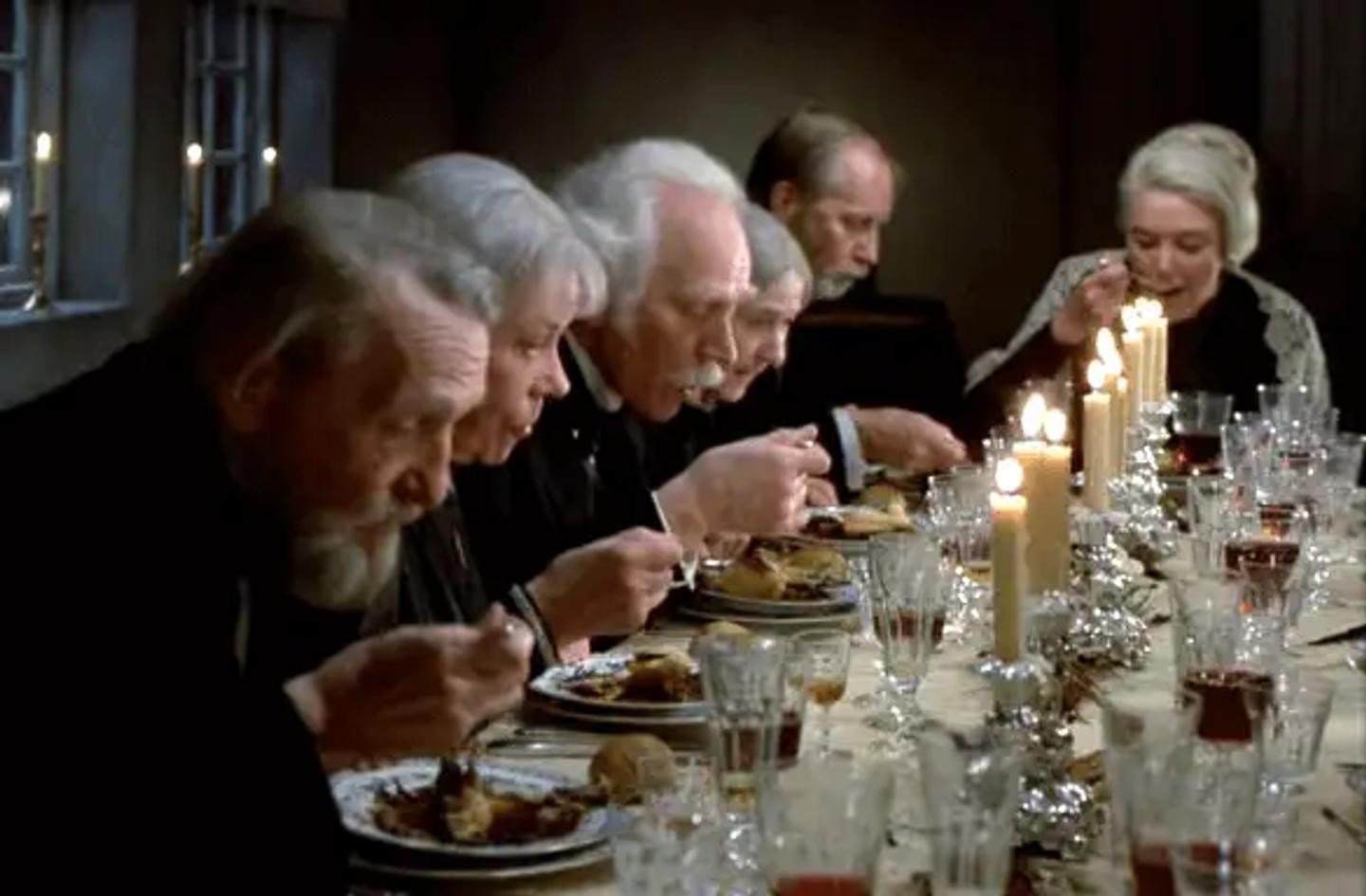
I recently purchased the Criterion Collection DVD of Babette’s Feast. I watched this last weekend. What a blessing!

Babette’s Feast, based on a Karen Blixen story, is a delightful tale of generosity in 19th century Denmark. A lavish feast evokes the transformative power of God’s grace. “Mercy and truth have kissed.”

~~~~

The Right Brain Needs Your Support

Dr Iain McGilchrist is a psychiatrist, neuroscientist, philosopher and literary scholar is the author of The Master and His Emissary and The Matter with Things. His work on the divided brain has helped millions of people find wisdom, meaning, and guidance for living in the modern world.

Iain and Demetri [Kofinas] begin their conversation exploring McGilchrist’s core thesis about the divided brain, how the left and right hemispheres attend to the world in fundamentally different ways, where we see evidence of an increased preponderance in left-brain thinking, and how this has impacted the way we conduct science, reason through problems, use our imagination, and apply wisdom to the world.

Iain believes that our civilization is caught in what some have described as a metacrisis, exacerbated by the encroachment of the left hemisphere onto more and more areas of lived experience. We see it in the procedurally abysmal manner in which modern medicine goes about formulating diagnoses, the ever-increasing obsession with process over outcomes, the commodification of writing, the rise in depression, the policing of language, and the reverence for machine-like efficiency and profit maximization at the expense of almost everything else.

The Metacrisis: Finding Reality & Meaning | Iain McGilchrist

The Metacrisis: Finding Reality & Meaning | Iain McGilchrist

British psychiatrist, neuroscientist, and author Dr. Iain McGilchrist about intelligence, mental illness, and AI.

~~~~~

A New (Year) baby has arrived:

Incarnation Day

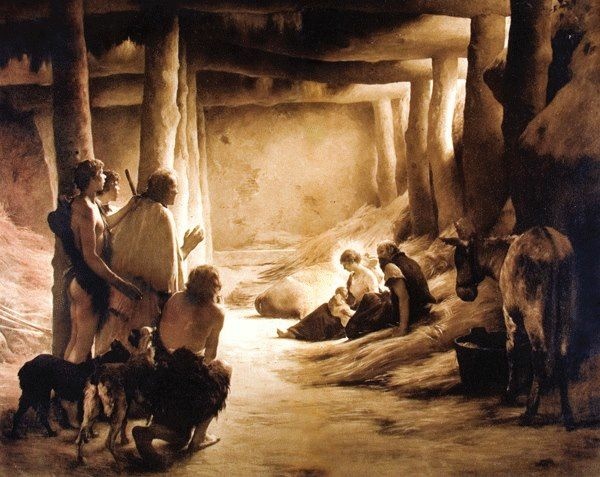
Three Luci Shaw poems for Incarnation Day

~~~

It is as if Infancy were the Whole of Incarnation

One time of the year
the new-born child
is everywhere,
planted in madonnas’ arms
hay mows, stables
in palaces or farms,
or quaintly, under snowed gables,
gothic angular or baroque plump,
naked or elaborately swathed,
encircled by Della Robia wreaths,
garnished with whimsical
partridges and pears,
drummers and drums,
lit by oversize stars,
partnered with lambs,
peace doves, sugar plums,
bells, plastic camels in sets of three
as if these were what we need
for eternity.

But Jesus the Man is not to be seen.
We are too wary, these days,
of beards and sandalled feet.

Yet if we celebrate, let it be
that he
has invaded our lives with purpose,
striding over our picturesque traditions,
our shallow sentiment,
overturning our cash registers,
wielding his peace like a sword,
rescuing us into reality
demanding much more
than the milk and the softness
and the mothers warmth
of the baby in the storefront creche,
(only the Man would ask
all, of each of us)
reaching out
always, urgently, with strong
effective love
(only the Man would give
his life and live
again for love of us).

Oh come, let us adore him-
Christ–the Lord.

~~~

Kenosis

In sleep his infant mouth works in and out.
He is so new, his silk skin has not yet
been roughed by plane and wooden beam
nor, so far, has he had to deal with human doubt.

He is in a dream of nipple found,
of blue-white milk, of curving skin
and, pulsing in his ear, the inner throb
of a warm heart’s repeated sound.

His only memories float from fluid space.
So new he has not pounded nails, hung a door,
broken bread, felt rebuff, bent to the lash,
wept for the sad heart of the human race.

~~~

Mary’s Song

Blue homespun and the bend of my breast
keep warm this small hot naked star
fallen to my arms. (Rest…
you who have had so far to come.)
Now nearness satisfies
the body of God sweetly. Quiet he lies
whose vigor hurled a universe. He sleeps
whose eyelids have not closed before.

His breath (so slight it seems
no breath at all) once ruffled the dark deeps
to sprout a world. Charmed by dove’s voices,
the whisper of straw, he dreams,
hearing no music from his other spheres.
Breath, mouth, ears, eyes
he is curtailed who overflowed all skies,
all years. Older than eternity, now he
is new. Now native to earth as I am, nailed
to my poor planet, caught
that I might be free, blind in my womb
to know my darkness ended,
brought to this birth for me to be new-born,
and for him to see me mended
I must see him torn.

America Reflagged

A short story . . .

Tom stood watching at the front room window. Moments before, his father was sitting on the couch reading the Chicago Tribune. But then his father put the paper down, got up, walked through the kitchen and down into the basement and then came back upstairs and went out the back door.

Tom put the funnies down, got up off the floor and went to the picture window. His father, in a white tank tee shirt, tan Bermuda shorts, black socks and black street shoes, was in the front yard unfurling the American flag. Then he put the flag’s pole in its holder on the front of the house and took a couple of steps back to look at the flag and at his flagstone-bordered landscaping beneath it.

Tom knew when he woke up that morning that it was Fourth of July. The Ben Franklin store, where he bought his candy, comic books, and baseball cards, had been selling snakes, snaps, and sparklers. And last night neighbors shot off fountains, rockets, and loud firecrackers. He fell asleep with a rotten egg smell coming in through the bedroom window next to his bed.

Tom wanted to see if anyone else was up on the Fourth of July. He ran outside and grabbed his banana bike from the patio. Riding up and down the street he saw no one and no other flags. No one had a flag. Not the Schroeders, not the Selders, not the Millers, not the Capellos, not the Romanos, not the Majewskis, not the Dubickis, not the Ruiz, not the Martínez, not the Clemons. Not anyone. He rode his bike home.

Tom ate the pancakes his father made for breakfast and drank some Tang. He cleared his plate, made his bed, and then raced off on his bike to find a place to watch the Fourth of July parade. He had to hurry. He saw people carrying lawn chairs and blankets.

Tom found a grassy space near a street light. Just in time. The Good Humor truck was passing by. He bought a Creamsicle with his allowance. Not long after, down the street came sirens and drums and beeping clowns in little cars. There were floats, horses, cheerleaders, military units, and marching bands. There were people as far as he could see. When the parade was over Tom rode back home with sticky hands and orange lips.

Tom folded his hands and bowed his head as his mother gave thanks for the dinner father prepared to give mom a break. He finally decided to eat the creamed chipped beef on toast, except for the peas, and one small bite of his mom’s Jello-salad that didn’t contain carrots. Mom said there was watermelon for dessert.

Tom helped his mother with the dinner dishes and then he helped his father carry lawn chairs to the car. His father then drove the family over to Commons Park for the annual Fourth of the July Fireworks Spectacle. Hundreds of people were already there.

Tom asked his father ten times when it would start. His father said, “Be patient, Tom. It needs to be darker.” When Tom asked the eleventh time, a single whistling flare shot up into the sky. Then nothing. Then KA-BOOM! Babies started crying. Tom said “Cool!”

Tom heard a swoosh-swoosh-swoosh. Then nothing. Then KA-BOOM! KA-BOOM! KA-BA-BOOM! The sky lit up with red, white and blue sparkles. Then more swooshes. One colorful burst after another filled the sky. Instant stars twinkled and fluttered down. Some stars trailed off making a loud sizzling noise as they fell to earth, some fanned out like spider legs, some like flowers, and some like waterfalls. Roman candles shot out multi-colored stars, spinners, and comets. Fountain fireworks shot off showers of sparks like a fountain of light.

Tom stared at all this with mouth and eyes wide open. Then things got quiet and Tom asked why. His father said, “I think it’s time for the finale. You’ll know when they shoot off the aerial salutes.” Tom asked about the salutes. His father said “They are shells that contain a large quantity of flash powder. They create a loud bang and a bright flash.” And that’s what happened next.

Tom felt his insides shake when the three salutes announced the finale. Babies cried. Dogs yelped and cowered. Earth and sky were filled with explosions of light and color for the next five minutes. When the Spectacle Finale ended people applauded and headed for their cars.

Tom rubbed his eyes all the way home. The fireworks display had filled them with ash. But when the car pulled into the driveway, he stopped rubbing his eyes to see the flag in the front yard. He tugged on his father’s shirt and said “Dad, we’re the only ones on the street with a flag. I guess some people like parades and the Spectacle but flags not so much.” His father said, “Should we leave the flag out tonight?” Tom replied “Yes.” “Then,” his father said, “help me shine a light on it.” And that’s what Tom did.

Tom lay in bed that night thinking that there should be more days just like this one. He soon fell asleep to the sound of the neighbor’s firecrackers and the smell of rotten eggs coming in his bedroom window.

©Lena Johnson, Kingdom Venturers, 2025, All Rights Reserved

~~~~~

Watch This Before July 4 | Office Hours, Ep. 16

~~~~~

Thirteen Novels Every Conservative Should Read

Host Scot Bertram talks with Ronald J. Pestritto, professor of politics and Charles and Lucia Shipley Chair in the American Constitution at Hillsdale College, about Hillsdale’s new online course, “The Federalist.” 

(@23:19) Christopher Scalia, senior fellow at the American Enterprise Institute, gives a defense of fiction and discusses his new book 13 Novels Conservatives Will Love (but Probably Haven’t Read).

Thirteen Novels Every Conservative Should Read

Thirteen Novels Every Conservative Should Read – The Radio Free Hillsdale Hour – Omny.fm

~~~~~

Preface (to Mark Twain’s Tom Sawyer)

Most of the adventures recorded in this book really occurred; one or two were experiences of my own, the rest those of boys who were schoolmates of mine. Huck Finn is drawn from life; Tom Sawyer also, but not from an individual⁠—he is a combination of the characteristics of three boys whom I knew, and therefore belongs to the composite order of architecture.

The odd superstitions touched upon were all prevalent among children and slaves in the West at the period of this story⁠—that is to say, thirty or forty years ago.

Although my book is intended mainly for the entertainment of boys and girls, I hope it will not be shunned by men and women on that account, for part of my plan has been to try to pleasantly remind adults of what they once were themselves, and of how they felt and thought and talked, and what queer enterprises they sometimes engaged in.

The Author.

Hartford, 1876.

~~~~~

“Who knows, he may grow up to be President someday, unless they hang him first!”
Aunt Polly about Tom Sawyer”
― Samuel Clemmons, The Adventures of Tom Sawyer

The Adventures of Tom Sawyer (Full Audiobook) by Mark Twain

One famous quote from “The Adventures of Tom Sawyer” is: “Right is right, and wrong is wrong, and a body ain’t got no business doing wrong when he ain’t ignorant and knows better.”

~~~~~

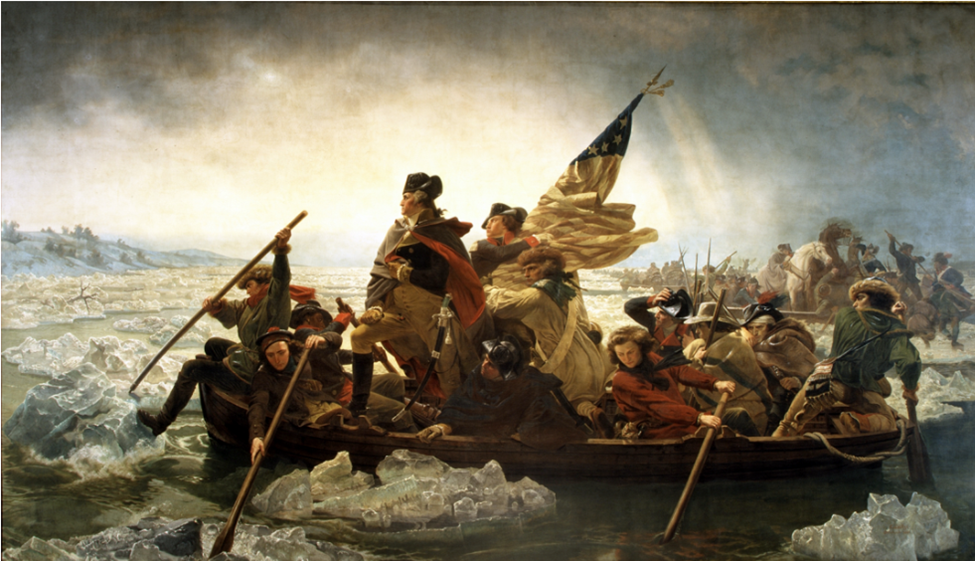
Emanuel Leutze, Washington Crossing the Delaware, 1851, Oil on canvas, The Metropolitan Museum of Art, New York

Ramparts

A few days before he would lay down his life to deal with the problem of evil, Jesus made the ascent to Jerusalem, not Rome. When he came near and saw the city, he wept over it. The city of peace would reject the Prince of Peace for the preservation of antipathy to any rule but its own.

Jesus came to his own and his own, with messianic hopes, wanted the evil in their lives – imperial Rome with its emperor worship and rule of Judea – to be dealt with. His own would also reject the testimony about him given by the prophets and John the Baptist. His own would deal with the landowner’s son to claim everything for themselves.

To acknowledge Jesus – what was said of him and what he said and did and who he claimed to be – meant acknowledging the evil within their own control. There were only two possible responses to the claims: repentance or rejection.

Jesus came to his own and found people who responded with hatred in the presence of goodness and who sought to destroy the good insofar as it was in their power to do so. They were not aware of their own evil and avoided any such awareness of it. They considered themselves above reproach and lashed out at Jesus for his reproach of them.

They were threatened by the spiritual health of those around them and refused to tolerate the sense of their own sinfulness. They would destroy others to maintain their appearance of moral-purity. They deemed others unfit, unclean, and unworthy but refused any self-examination that would reveal the evil within themselves. Pride was their rampart.

These exercised political power with man-made traditions – religious obligations and taboos – and status quo policing in order to crush and demolish any spiritual life beyond their control. They built societal barriers to keep belief in check.

Jesus confronted and named their evil antilove first hand:

Legal experts grumbled that it was blasphemous for Jesus to say “Your sins are forgiven” to a paralytic who, with help from four friends, descended from an opened celling for healing. The “experts” were ready to pounce and cripple Jesus’ ministry for acting God-like. Jesus healed the cripple showing them that he had the authority on earth to forgive sins. Mk. 2: 1-12

Legal experts from the Pharisees became offended when they saw Jesus eating with tax collectors and sinners. Jesus told them that “It is the sick who need a doctor. I came to call the bad people, not the good.” Mk 2:14-17

Like those in Jesus’ parable about a victim of a robbery, the “experts” thought “Better to be separated from that than to get involved with unclean rabble.” Rather than seek the recovery and redemption of others, they will actually destroy others in the cause of protecting their own laziness and to preserve the integrity of their sick self.

People took note when they saw that John the Baptist’s disciples and the Pharisees’ disciples were fasting. They wanted to know why Jesus’ disciples didn’t get with the fasting program. These people had been taught to judge people with religious protocols. Why weren’t the questioners fasting? Mk 2:18-20

One sabbath Jesus and his disciples were walking through a cornfield. The disciples plucked corn to eat as they went along. This really bothered the Pharisees. They confronted Jesus asking “Why are they doing something illegal on the sabbath?”

Jesus reminded them of their history: David and his men, when distressed and hungry, ate the bread of the presence which only the priest is allowed to eat. Jesus then flipped the script on them, saying “The sabbath was made for man, not man for the sabbath.”

Though the religious police tried to throw up a man-made barrier against the good, in this case grabbing food to eat in a field, Jesus pushed back with the real intent for the sabbath rest – delighting in all that is good, just as God had done after six days of giving functions to the material cosmos. Mk 2: 23-27

On another sabbath Jesus went to the synagogue. People were watching to see if Jesus would heal the man with a withered hand on the sabbath so they could frame a charge against him. Jesus called the man to the front of the room.

He then asked those in attendance “Is it lawful to do good on the sabbath or to do evil? To save life or to kill?” He waited and then asked, “If one of you has a child or an ox that falls into a well on the Sabbath day, will you not immediately pull it out?” Unable to answer they remained silent. Mk 3: 1-6

Here was the essence of antilove they had been taught to submit to and emulate by those who, with a form of godliness, put up barriers to the spiritual health of others. On this day it revealed itself as a spiritual disability – the inability to show lovingkindness.

They gave priority to sabbath rules and the sabbath police and to their own well-being and status within their community and not to extending themselves for the physical and spiritual well-being of another.

Their hardheartedness made Jesus deeply upset. He looked around at them angrily. Then he healed the man’s hand. With this, the Pharisees – feeling a slap in the face – went off and collaborated with a political group to find a way to destroy Jesus. They sought to destroy the good insofar as it was in their power to do so. Mk 3: 1-6

Crowds constantly swarmed Jesus. He and the disciples were not able to have a meal. His family heard this and said “He’s out of his mind.” They, no doubt, thought that Jesus’ behavior would cause them to incur the disapproval of religious authorities and be kicked out of their synagogue into social isolation. This, in spite of the good that he was doing throughout Galilee. Preservation of self- status and inclusion – was important to them. Mk 3: 20-21

Legal experts showed up from Jerusalem. To get things back under their control they said of Jesus “He’s possessed by Beelzebul! He casts out demons by the prince of demons!” While they took action to preserve the integrity of their sick selves with projection, Jesus was plundering the “strong man’s house” right in their neighborhood. Mk 3: 22-30

When Jesus came to his home region, he began to teach in the synagogue on the sabbath. Those in attendance – townspeople who knew his family – were amazed at what they heard and took offense at him. For, they were ready for the same o ‘ same o ‘ sabbath and not for anything that disrupted status quo. Maintaining status quo, appearances, and antipathy was more important than spiritual growth.

Jesus said “Prophets are honored everywhere except in their own country, their own family, and their own home. Mk 6: 1-4

Pharisees and legal experts circled Jesus. They had seen some of his disciples eating with unwashed hands. This was against the tradition of the elders. They questioned Jesus wanting to know what’s up with that. Jesus calls them hypocrites and reads them the riot act from Isaiah:

With their lips this people honor me,

But with their hearts they turn away from me;

All in vain they think to worship me;

All they teach is human commands.

Jesus goes on to give them a prime example of them abandoning God’s commands and replacing them with human traditions that nullify God’s word.

Practicing human traditions gave religious leaders a pretense of righteousness. It also gave them leverage over the people and provided them the means to patrol them while avoiding any self-examination that would reveal the evil within themselves. They had fortified their evil selves with human commands while invalidating God’s word. Mk 7: 1-13

One day the Pharisees came to Jesus and wanted to test him out. They demanded a sign. They couldn’t see with their two good eyes. They couldn’t hear with their two good ears. The feeding of the five thousand and the four thousand, the healings, exorcisms, resurrections and authoritative teaching were not good enough for them. Antilove is blind and deaf in the presence of goodness. Mk 8: 11-12

 When Jesus asked his disciples “Who do people say that I am?” Peter spoke up: “Messiah!”

But then Jesus told the disciples that there was big trouble up ahead – Jerusalem trouble as in “The elders, chief priests, and the scribes are going to finalize their rejection of me with death” – Peter began to scold Jesus, putting up resistance to the thought that their new-found messiah would die and not overthrow Roman rule in Judea and take his place as king. Mk 9: 31-33

Jesus had to scold Peter. His human thoughts were not Gods’ thoughts. The test had presented itself again.

A few years before his ascent to the “holy city”, it was to the pinnacle of the temple that Satan, Antilove Itself, brought Jesus to test him.

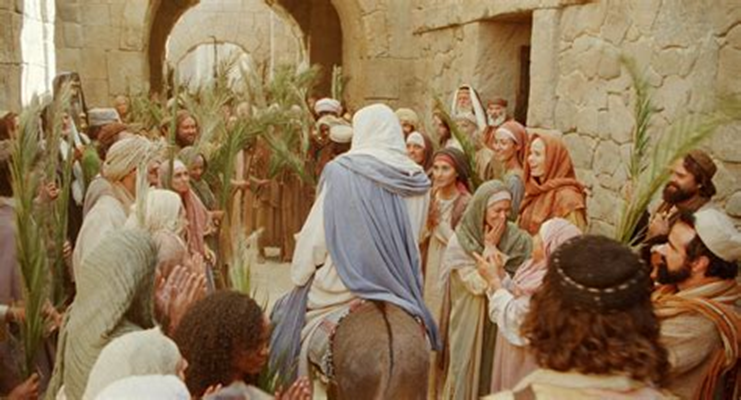
Jesus didn’t take Satan’s bait. He didn’t jump to reassure himself of His Father’s words. And though Adam, the father of humanity, failed a similar test by testing what God said, Jesus would not. Nor would he make a spectacle of himself for Satan or before a palm branch-waving crowd.

When he came near and saw the city, he wept over it and said of his own . . .

“If only you’d known on this day – even you! – what peace meant. But now it’s hidden, and you can’t see it. Yes, the days are coming upon you when your enemies will build up earthworks all around you, and encircle you, and squeeze you in every direction. They will bring you crashing to the ground, you and your children with you. They won’t leave one single stone on another, because you didn’t know the moment when God was visiting you.” Luke 19: 41-46

Antilove would reject the One that would lay down his life for his own. The ramparts of antipathy to any rule but its own would be torn down.

~~~~~

“The demand of the loveless and the self-imprisoned that they should be allowed to blackmail the universe: that till they consent to be happy (on their own terms) no one else shall taste joy: that theirs should be the final power; that Hell should be able to veto Heaven.” – George MacDonald, C.S. Lewis’ The Great Divorce

~~~~~

Brain Rot: What Our Screen Are Doing to Our Minds (3)

In the third podcast of this series, “Brain Rot: What Our Screen Are Doing to Our Minds,” host Dr. Karyne Messina, psychologist, psychoanalyst and author talked about the problems that can emerge in Erik Erikson’s Identity versus Identity Diffusion stage of development along with Dr. Harry Gill, a psychiatrist who has a PhD in neuroscience. The two mental health professionals discussed major difficulties they see in their young patients when they are exposed to too much screen time. . .

They also focused on the impact of social media on the formation of identity, a critical part of healthy personality development. Drs. Messina and Gill shared the challenges young people have navigating in the digital age, which can include exposure to people who are inauthentic on social media, role confusion, and addiction to video games. They emphasized the importance of limiting screen time, encouraging adolescents to have real-life experiences versus having mainly on-line relationships while fostering healthy habits to support brain development and overall well-being during this crucial stage of development.

Brain Rot: What Our Screen Are Doing to Our Minds (3)

Brain Rot: What Our Screen Are Doing to Our Minds (3) – New Books Network

~~~~~

Birding

Thanksgiving morning Toby woke up to noise and smells. He got out of bed and went downstairs in his PJs. The noise and smells were coming from the kitchen. His mother, aunt Susie and grandma Evans were talking and cooking. His seven-year-old sister Tilly was sitting on the counter singing one of her happy songs.

In the family room, Uncle Kevin and his father were sitting at a card table. Grandpa was sitting in the big chair reading a book. Toby went over to the card table.

“Hey Tob,” said Uncle Kevin.

“What are you doing?” Toby asked.

“We’re playing Risk,” replied his father.

“Can I play?” Toby asked.

“I think this game is a bit too hard for you,” his father replied. “We’ll play a different game later.”

Grandpa called Toby to come over and sit on his lap. Five-year old Toby did just that. He wanted to know what grandpa was looking at.

“It’s A Year-Round Guide to Indiana Bird Watching,” grandpa told him.

“Why you reading that grandpa?

 “I like birds, Tobias. Do you?”

“Uh-huh.” Toby rubbed his eyes and lifted the book to see the pictures. “What’s that?’ He pointed to the page.

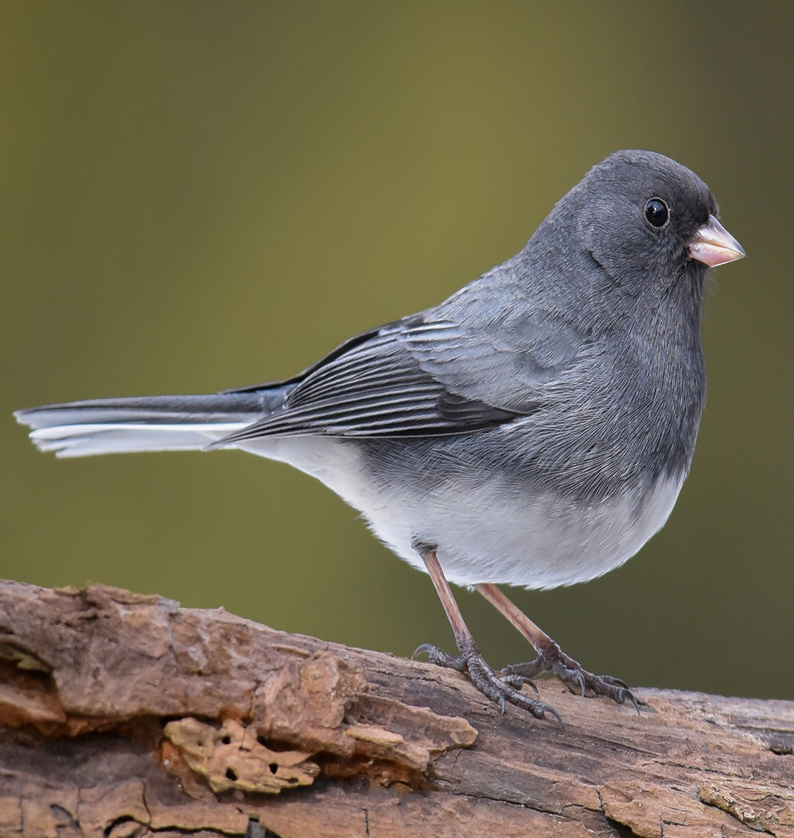
“That’s a Dark-eyed Junco,” grandpa replied. “It says here that they like to eat seeds, insects and berries.”

“Huh. His name is Junco?”

“Yes. If you were a bird, I’d call you a Blue-eyed Tobias.” Grandpa smiled.

Toby turned the page. “Why do you like birds, grandpa?”

“Birds are special creatures. They seem to be wherever we are, as if God wanted to make sure we notice them. They are free and at the same time totally dependent on God and His created order.

“And there are so many kinds of birds, Tobias.” Grandpa flipped through the pages. “They bring color and sound to our lives. Seeing them and hearing them is proof that nature is healthy. I try to spot a bird by its coloring and by its songs and calls.”

“Birds have songs?”

“They sure do. Male birds sing to attract female birds. They also sing to scare off other birds from their territory and to bond with mates and young’uns. You want to hear a Mourning Dove Song?”

“Yeah.”  

Grandpa took a deep breath, formed his mouth and went “coo-AH-oo coo-coo”. He waited and then again “coo-AH-oo coo-coo.”

“The Mourning Dove keeps repeating this song until a female is attracted. That’s how I met your grandmother.” Toby’s eyes lit up when he saw grandma smile.

“Bird experts can tell the species of a bird by just listening to its song. Each species has its own song.”

“What’s speecheese?”

“A species is a way to name animals that are alike and have babies like them. Let’s see,” he found the page. “It says here that the Dark-eyed Junco is a species of Junco, a group of small, grayish sparrows.”

“It also says that Male Dark-eyed Juncos sing a sweet, high-pitched trill that sounds similar to the songs of the Chipping Sparrow and Pine Warbler. And during the winter, Juncos come to backyard feeders for millet and bird seed. I saw one at my bird feeder this morning.”

Toby looked over at the kitchen. “Let’s see if your mother has something for you to eat.” Grandpa moved Toby to his feet, got up, and the two of them went into the kitchen.

Toby was given a yogurt by his mother. Eating it, he watched Grandpa put his finger into the cranberry sauce, taste it and pucker his lips. Then grandpa put his finger into the mashed sweet potatoes, tasted it and said “Yum!” And then he put his finger into the pumpkin pie mix, tasted it and said “mm-mmm.”

When he reached for the stuffing, Grandma, hands on her hips, said, “Shoo you two. Come back when we’re ready to eat, in about two hours.”

“Let’s go for a walk Toby,” Grandpa said. “Get dressed in warm clothes. We’re going birding.”

A voice in the next room said, “Dad, the weather man said that central Indiana is 30 degrees and cloudy.”

Before Toby left the kitchen his mother said, “Go make your bed first and then put on your corduroy pants and blue sweater and then comb your hair.”

Toby shot upstairs and came back down two minutes later. His mother looked him over and then had grandpa put on his winter coat, his gloves, and the knitted hat that grandma made for him.

Outside, grandpa went over to his car and took out a pair of binoculars. He showed Toby and said “Maybe we will see a cardinal today.”

As they walked down two blocks past houses, they saw no birds. But then Grandpa spotted a Mourning Dove on a roof. He handed Toby the binoculars after adjusting the focus. “Let’s wait here and listen.”

When the dove began its song, Toby was transfixed until the dove flew out of sight.

They walked to the end of the street and came to a T-intersection. On the other side of the crossroad was open farmland. Wind whistled through the field of corn stalk stumps. Grandpa tied the ear flaps of Toby’s knitted hat below his chin.

To their left and down the road about forty yards was a small group of trees and undergrowth. “Let’s head there,” Grandpa told Toby.

As they walked along on the farm side of the road, Toby found a corn cob. Holding the smooth kernelled end, Toby showed grandpa the half-eaten end.

Grandpa looked it over and said, “Probably some squirrel started eating it. Or may be a goose.”

As they neared the trees, grandpa stopped and brought the binoculars to his eyes. He then handed them to Toby. “What do you see in that tree?” Grandpa pointed.

Toby looked and said, “The birds keep moving so I can’t see them.”

“They might be getting ready for winter,” Grandpa replied. They’re probably in a hurry to get out of the wind and get things settled for winter.”

Then Grandpa spotted a falcon perched on top of a utility pole that was about thirty yards down the road. He adjusted the focus of the binoculars and handed them to Toby. “Look up there. Can you see that falcon, Tobias?” He pointed to the electric pole.

Toby looked and said, “That is a falcon?”

Grandpa looked again. “Yes. A falcon known as the American Kestrel. I can tell by dark gray head, the rust-colored back and tail, the white cheeks and throat and blue-black bill. It’s the smallest of falcons. Some call it a “Sparrow Hawk”.”

“They like open areas without dense cover. He’s sitting up there to view the whole area for food. He’s scanning for prey on the ground. He’ll sit and wait. He’ll only attack when he’s sure that he will succeed. When he has prey in sight, he will either catch it on the ground or in flight. 

“In the summer months he’ll hunt and eat dragonflies, cicadas, beetles, grasshoppers, butterflies and moths, scorpions, and spiders. He’ll hover and capture insects in the air.

“In winter weather, like right now, he’ll hunt small mammals like mice, voles, shrews, and bats. And he’ll hunt small birds . . . like that little sparrow that just flew into the field. He pointed to it.

Grandpa let Toby use the binoculars to observe the falcon. “Let’s see what happens,” he said. “I wonder if that falcon noticed that small bird.”

A moment later, the falcon swooped down, grabbed the bird with his claws, and flew back to his high perch.

“Did you see that grandpa?” Toby asked.

“I sure did. He’s going back to his perch to eat it. Take another look.”

“Do birds eat other birds, grandpa?”

“They sure do. Birds of prey, like this falcon, have evolved to catch diverse things like insects, small mammals, and birds.

“I just remembered something. When I was a boy, Tobias, my father took me birding. One day he said “Frankie, there are so many birds but you never see dead birds. He told me that dead birds vanish because predators and scavengers come along and eat them. That’s why most bird bodies disappear. Creatures like foxes, badgers, ants, and birds of prey scavenge dead birds. The value of the bird’s life is returned to nature. Nature, he said, provides food for itself. Live birds and dead birds contribute to the lifecycle of our ecosystem.”

The sun never came out. The icy wind blowing across the open field made Toby’s nose and cheeks red. Grandpa said it was time for them to head back.

When they arrived home and opened the door, they were met with a rush of warm air, laughter, and savory smells. They saw the dining room table was set and the food ready to come out.

“Go wash your hands you two,” mom said. “We are ready to eat.”

When everyone had found their place at the table, mom asked grandpa to pray the blessing.

We give you thanks, most gracious God, for the beauty of
earth and sky and sea; for the richness of mountains, plains,
and rivers; for the songs of birds and the loveliness of flowers.
We praise you for these good gifts, and pray that we may
safeguard them for our posterity. Grant that we may continue
to grow in our grateful enjoyment of your abundant creation.
And now we ask Your blessing on this food we are about to eat. Amen.

A loud “AMEN!” followed.

Toby’s mother then handed Toby’s father a knife and said, “Carve the bird.” Toby gulped when he heard that. He looked over at grandpa.

“Tom turkey has been well fed. Now, he feeds us. Tobias, do you know which bird is at every meal?”

“No.”

“A swallow. Do you know which birds go to church a lot?

“No.”

“Birds of prey. What do you call a mean turkey?”

“I dunno.”

“A jerk-ey. What do you give a sick bird?”

“I dunno.”

“Tweetment! Did you hear about the owl with no friends?

“No.”

“He was owl by himself.”

The adults groaned. Toby wanted more.

After plates were filled and people were busy eating, Uncle Kevin asked Toby to tell everyone what he saw birding with grandpa.

“I saw a falcon. It came down and got a bird and ate it,” Toby exclaimed.

“Ewwwww!” Tilly didn’t like the thought.

Toby forked a piece a turkey, held it up, looked at his sister and said “Now I am a falcon!” and gobbled it down.

©Lena Johnson, Kingdom Venturers, 2024, All Rights Reserved
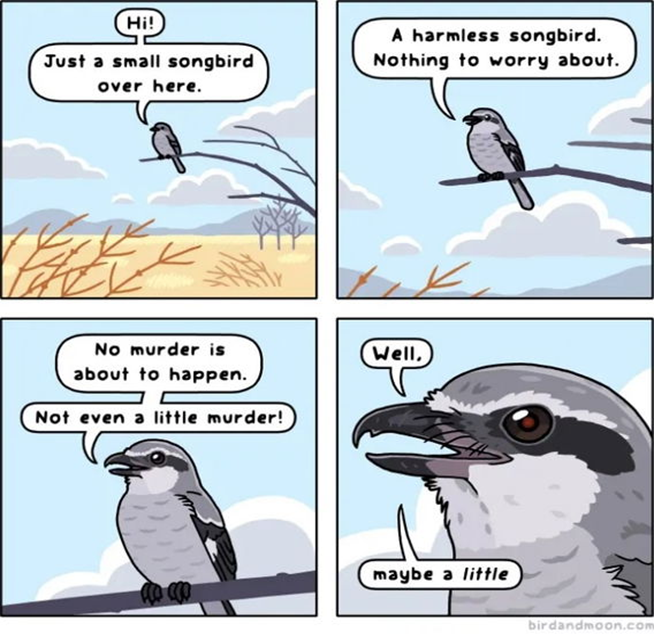
~~~~~

American Kestrel

American Kestral – Call of the Male

Dark-eyed Junco

Dark-Eyed Junco

Dark-eyed Junco Sounds, All About Birds, Cornell Lab of Ornithology

Bird Sounds and Songs of the Dark-eyed Junco | The Old Farmer’s Almanac

Dark-eyed Junco | Audubon Field Guide

Easter Morning Central Indiana Bird Song

Easter Morning Central Indiana Bird Song

~~~~~

American Kestrel – Photo by John Mariani

Vermilion Flycatcher at Cattail Marsh in Beaumont, TX – Photo by John Mariani

Eastern Phoebe at Anahuac National Wildlife Refuge, TX – Photo by John Mariani

American Tree Sparrow, Northwest Ohio – Photo by American_Phoenix

The quirky nature humor of  https://rosemarymosco.com/

Northern Shrike, new cartoon by Rosemary Mosco.

~~~~~

The presence of birds in our lives brings good health. Indeed research shows that the richer and more various the birds in a neighborhood, the higher people’s satisfaction with life. Birdsong is the natural sound linked most strongly to reducing stress and promoting restoration, particularly when it is more diverse and people are prompted to notice it. Birds bring joy.

Five curious health benefits of dark midwinter, according to science | The Independent

~~~~~

Imagination sees a parallel universe.

The Unbroken Chain of Truth in the Lives of Broken People

Our common understanding of what Peter’s betrayal of Jesus meant. Our shared history of misery and redemption. Our interrelated human experience of being guided by truth and beauty. Each of these connections are considered by a twenty-two-year-old clerical student named Ivan Velikopolsky in the very short story The Student (1894) by Anton Chekhov.

Things start out fine for hunter Ivan on Good Friday. The weather is agreeable. But when it begins to grow dark the weather turns cold and stiff winds blow. He starts to walk home.

On the path, he feels that nature itself is “ill at ease” by the change in weather and that darkness in response is falling more quickly. He senses overwhelming isolation and unusual despair surrounding him and the village three miles away where he spots the only light – a blazing fire in the widow’s garden near the river.

As he walks, he remembers what is waiting for him at home – a miserable situation that he sees as the desperation, poverty, hunger, and oppression of what people have dealt with over time and that it’s always been this way no matter the secular changes by those who come along. He doesn’t want to go home. Instead, he walks over to the campfire at the widow’s garden.

There, by the fire, are two widows – Vasilisa and her daughter Lukerya. He greets them and they talk.

Ivan relates the gospel events to the two widows. This has an acute effect on them. As he heads home, Ivan reflects on the implications of this and has an epiphany.

“At just such a fire the Apostle Peter warmed himself,” said the student, stretching out his hands to the fire, “so it must have been cold then, too. Ah, what a terrible night it must have been, granny! An utterly dismal long night!”

 . . .it was evident that what he had just been telling them about, which had happened nineteen centuries ago, had a relation to the present — to both women, to the desolate village, to himself, to all people.

He returns home with a different outlook. He sees the “same desperate poverty and hunger, the same thatched roofs with holes in them, ignorance, misery, the same desolation around, the same darkness, the same feeling of oppression” differently – with an attitude of “unknown mysterious happiness”. There’s a sense of resurrection in Ivan’s attitude as he rises out of the despondency of dark winter’s return to a new life of hope based on the human connection to enduring truth and with Easter on the horizon.

Was Ivan’s new attitude born out of the women’s reaction that signaled an age-old inherent understanding of what the betrayal of truth produces?

It seems to me that Ivan is more than just a clerical student. He’s also a student of history and cultural anthropology. And he knows scripture. He is able to see our common plight and our common redemption through the broken lives of others.

I’m not going to share any more of this gem of a very short story (2 min. read). Ivan has more to say to us from his epiphany. I recommend reading the story before listening to the audio version of it with commentary at the end.

The Student was written 130 years ago. Chekhov’s realist fiction hands to readers today one end of an unbroken chain of truth.

Will the human condition improve with Progressivism or when humans stop betraying the truth and seek what is above instead of materialism?

John Donne wrote “No man is an island entire of itself”.  Certainly, no man is a context entirely of himself.

And Thomas Dubay said

The acute experience of great beauty readily evokes a nameless yearning for something more than earth can offer. Elegant splendor reawakens our spirit’s aching need for the infinite, a hunger for more than matter can provide.

Reading Chekhov’s The Student

~~~~~

Beauty out of brokenness?

“Poetically translated to “golden joinery,” kintsugi, or Kintsukuroi, is the centuries-old Japanese art of fixing broken pottery. Rather than rejoin ceramic pieces with a camouflaged adhesive, the kintsugi technique employs a special tree sap lacquer dusted with powdered gold, silver, or platinum. Once completed, beautiful seams of gold glint in the conspicuous cracks of ceramic wares, giving a one-of-a-kind appearance to each “repaired” piece.”Kintsugi, a Centuries-Old Japanese Method of Repairing Pottery with Gold (mymodernmet.com)

“The aesthetic that embraces insufficiency in terms of physical attributes, that is the aesthetic that characterizes mended ceramics, exerts an appeal to the emotions that is more powerful than formal visual qualities, at least in the tearoom. Whether or not the story of how an object came to be mended is known, the affection in which it was held is evident in its rebirth as a mended object. What are some of the emotional resonances these objects project?

“Mended ceramics foremost convey a sense of the passage of time. The vicissitudes of existence over time, to which all humans are susceptible, could not be clearer than in the breaks, the knocks, and the shattering to which ceramic ware too is subject. This poignancy or aesthetic of existence has been known in Japan as mono no aware, a compassionate sensitivity, an empathetic compassion for, or perhaps identification with, beings outside oneself. It may be perceived in the slow inexorable work of time (sabi) or in a moment of sharp demarcation between pristine or whole and shattered. In the latter case, the notion of rupture returns but with regard to immaterial qualities, the passage of time with relation to states of being. A mirage of “before” suffuses the beauty of mended objects.”

Christy Bartlett, Flickwerk: The Aesthetics of Mended Japanese Ceramics (12/51

“What kind of a church would we become if we simply allowed broken people to gather, and did not try to “fix” them but simply to love and behold them, contemplating the shapes that broken pieces can inspire?”
― Makoto Fujimura, Art and Faith: A Theology of Making

Mending Trauma | Theology of Making (youtube.com)

Online Conversation | Art + Faith: A Theology of Making, with Makoto Fujimura | The Trinity Forum (ttf.org)

https://makotofujimura.com

~~~~~

Nothing More Than Alright

A short story . . .

My father, on the nights when my mother goes to bridge club, makes creamed chipped beef with peas on toast for supper. He told me one time that in the military it’s called “shit on a shingle” or SOS for short. He makes me eat it even though I can’t stomach peas or the dried beef or the gravy and I’m not a soldier. Tonight again, my mother is at bridge club and I’m sitting here with SOS.

After looking at my plate for a long time, I move the peas out of the gravy, off the toast and onto the plate with my knife. I’m hoping I won’t have to eat them. The kitchen phone rings and I jump to answer it. My best friend Janey wants to know if I want to go with her and her boyfriend Nick to watch West Side Story at the Sky-Hi Drive-In. I say I sure do and hang up. My father doesn’t want me on the phone during supper.

The peas are cold and clammy now and I say I they’re cold and clammy and I can’t eat them. My father tilts his head down and tells me to eat them. I want to say no but I need his okay to go to the movie. So, I stab some peas with my fork and swirl them in the flour gravy and then I eat the green-grey mush with a bite of toast. I gag. I drink some milk and wash it down. My father lifts his head and says “alright”. I clear the dishes and wash them. I’ve done what he wanted, so now I can ask him about Friday night. But I wait until he’s sitting in front of the TV.

An hour later, my father is in the basement watching TV. I sit with him and ask about his movie. He says troops have been ordered to risk their lives and retake a hill that’s not important in the battle. I ask him why. He says it shows the enemy their resolve to continue to fight if an agreement is not reached in negotiations.

A Marlboro commercial comes on and I ask him about Friday night. He wants to know about the movie. I tell him it’s a musical about people fighting, dancing and falling in love and he says “Okay. Ask your mother when she come home from playing bridge.”

My mother finally gets home and I tell her about Friday night. She says she knows the movie. “Saw it with a friend when it came out in ’61,” she says. She knows Janey and Nick and she says it’s okay with her that I go.

Saturday night Nick’s car pulls into the driveway. He honks the horn and I yell “They’re here”. My father yells from the basement “Have a good time honey. Call if there is a problem.” Mom, on the phone with someone, yells for me to come straight home after the movie. I yell back “I will.”

I get in the back seat of Nick’s Chevy and we drive off – but not in the direction of the Sky-Hi. I ask where we’re going. Janey turns to me and says that Nick asked his friend Tom to come along. He had nothing to do, Nick says. I immediately panic. I wonder if I look alright.

I have a face full of pimples and a bony nose that’s too big for my face. I wonder if I used enough concealer. The green top I’m wearing is wrinkled. It was at the bottom of my closet. And the jeans I’m wearing are worn thin. I was expecting to sit in the dark and watch a movie with Nick and Janey.

We pull up to a ranch house on the other side of town. Nick honks the horn. A skinny blonde-haired guy walks out the front door and down the front walk. “Here’s Tom,” Janey says.

Tom gets in the back seat. Janey introduces Tom. I don’t know him from school. I give him a quick smile and then give Janey a stare. She just winks back at me. She knows I don’t have a boyfriend.

Tom is neatly dressed. He’s wearing a button-down shirt, khaki pants and loafers. His boxy glasses make him look like a bookworm. In junior high school he’d be called “a climber” and Nick “a greaser.”

The Twin Theater Sky-Hi Drive In is on the west end of our town. On the way we listen to the AM radio. A Chicago station plays Born to Be Wild and I Will Always Think About You. Tom and I sit quietly in the back. I suck in my lips and look out my window. The cloudy sky looks like flour gravy.

We arrive at Sky-Hi and pay for our tickets. Nick drives over to a center spot in the East Theater. Nick and Tom say they’re going to the concession stand. They ask what we want. Janey and I ask for Cokes and popcorn. I hand Nick some money and they head off. The guys return after twenty minutes just as the coming attractions start. I roll down my window and Tom hands me the Coke and popcorn. I say thank you. He gets into the back seat on the other side of the car.

Janey’s been sitting next to Nick the whole time he’s been driving. Now Nick puts his arm around Janey’s shoulder and they snuggle together. Janey asks “are you guys okay back there?” I say I have to move over to see the screen. I look at Tom and he gives me a nod that says it’s okay. I scooch over to the middle of the back seat and put my legs to the left side of the floor hump. “That’s better,” I say.

Finally, the movie begins. There’s an overture and then the Jets sing about being a Jet and beating up other gangs. The Jets and the Sharks want to fight each other for control of the streets. But first they go to a dance. It’s a musical, so I guess it doesn’t have to make sense.

At the dance, Tony of the Jets meets Maria, Bernardo’s sister. Bernardo is the head of the Puerto Rican Shark gang. Tony and Maria fall in love at first sight. Nobody is happy about that except Tony and Maria. Tony’s half in half out about the gang stuff but he’s all in on Maria. He wants to run away with her.

Tony and Maria start singing Tonight and I stop eating popcorn. I put my hand down on the car seat so I can lean forward and hear what’s coming from the speaker. My little finger touches Tom’s little finger. He takes my hand into his. We stay this way, looking at the movie and holding hands, until the movie ends and headlights turn on.

It’s past midnight when we leave Sky-HI. Nick says he’ll drive me home first. I go back and sit behind Nick. Tom looks out his window. Everyone is quiet. Nick turns on the radio. Ain’t Nothing Like the Real Thing comes on. I suck in my lips and look out my window. On the way home I see a car with one headlight and say “perdiddle.”  Janey and Nick kiss.

At home I get out of the car and say thanks to Janey and Nick and goodnight to Tom. Tom says good night looking at Nick and Janey.

I go inside and hear the TV on in the basement. I walk down the hallway to my bedroom. My mother is sitting in her bed reading her magazines. She sees me and asks “Susan, how was it?” I poke my head into the room and tell her it was alright.

“Just alright? Nothing more?” she asks.

“Nothing more than alright” I say.

“Okay,” she says. “Now go to bed. It’s late. Tomorrow’s another day.”

As I walk away she reminds me that she has bridge club again tomorrow night. I say okay.

In my room I take the ticket stub out of my jeans pocket. I find a pen and write on the back of the stub West Side Story Tom. I pull my keepsake box out from under the bed and put the ticket stub inside along with the Valentine cards from third grade and my second-place medals from clarinet solo contests and some poems I wrote. I close the box and put it back.

I go to bed thinking about the movie and Tom and peas on my plate.

©Jennifer Ann Johnson, Kingdom Venturers, 2024, All Rights Reserved