A Bugger’s Life

What’s bugging Harry Caul?

Harry, a professional eavesdropper, is being paid to spy on a woman having an affair. But something he overheard makes him question whether he can remain a detached listener.

Harry and his crew use powerful microphones to record a conversation between the woman and her lover as they walk around a crowded San Francisco square. Later, after filtering out background noise on the tape, Harry replays a cryptic phrase in the recording. He imagines it to mean that the woman is being targeted to be murdered by his client.

Listening to his conscience, already replaying guilt and shame from a previous snooping assignment, Harry looks for a way out, for a way to not have blood on his hands. To offload his responsibility, he confides to a priest in a confessional, the oldest form of eavesdropping:

I’ve been involved in a job that may bring misfortune to two young people. It’s happened before. What I do has caused harm to someone. I’m afraid it will happen this time too. I’m not responsible for it. I can’t be responsible for it. 

The conversation in the park and in Harry’s soul takes place in the 1974 film by Francis Ford Coppola – a tense thriller and character study titled The Conversation.

Gene Hackman (God rest his soul) plays Harry Caul, ‘the best bugger on the West Coast.’ Harry is obsessed with technology and works in a world where privacy can be bought and sold using it.

On-the-job Harry, a surveillance expert, is an invader of privacy. He gets paid to move in close, take pictures, and record private conversations with electronic devices. But Harry has a paranoid fear of anyone being up close and personal with him.

Harry guards his privacy. He lives in a sparsely furnished apartment that is secured by three locks and an alarm system. It’s his fortress. He uses a payphone to make personal calls and lies about having a home telephone. Alone, Harry spends time playing his saxophone along with jazz records. Jazz is the music of individualists and loners.
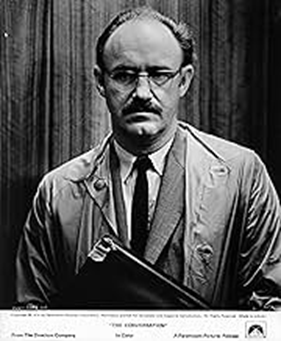
Harry looks like a regular Joe. He easily fits into crowds and isn’t noticed while snooping. But Harry isn’t public. The enigmatic Harry stays emotionally detached from others, cut him off from the rest of the world as though he’s not really a part of it yet. This suggested in his last name “Caul,” the thin membrane that surrounds a fetus until it is born. His translucent raincoat suggests the caul.

Harry’s work is intrusive, but he wants protection from the same. He avoids below-the-surface relationships with people in his industry, his coworker Stan (John Cazale), and Amy, the mistress he supports and visits at random times.

Harry records private moments between humans. But the guarded Harry can’t or won’t expose himself to another human. His involvement with Amy (Teri Garr) is not a relationship nor intimacy. Harry shows up on his birthday and Amy thinks it is a good time to get to know Harry, to know his secrets. But Harry says he has no secrets to his secret lover. Harry is distant even from the person he is physically closest to.

As with the priest, Harry off loads his conscience and distances himself from the detrimental effects of his work. When Stan wants to speculate about the meaning of the conversation between Ann and Mark on the tapes, Harry insists that it is just a job and that it is unprofessional to get too curious or assume anything. How ironic for the intensely curious Caul!
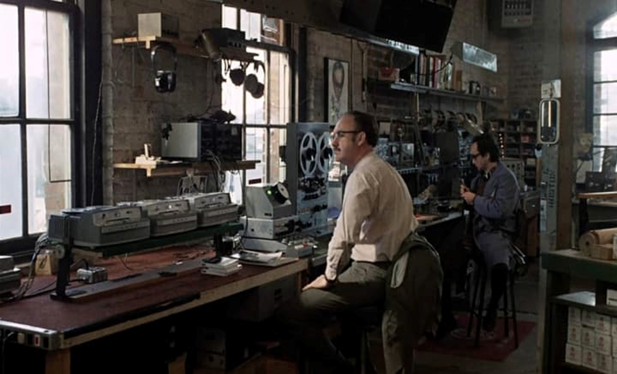
Stan: It wouldn’t hurt if you filled me in a little bit every once in awhile. Did you ever think of that?
Harry Caul: It has nothing to do with me! And even less to do with you!
Stan: It’s curiosity! Did you ever hear of that? It’s just g*ddamn human nature!
Harry Caul: Listen, if there’s one sure fire rule that I have learned in this business is I don’t know anything about human nature. I don’t know anything about curiosity. That’s not part of what I do.

The man who hires Harry is Martin Stett (Harrison Ford). Stett is the assistant to Harry’s client, the director (Robert Duvall). Initially, Stett is friendly. But when Harry refuses to hand over the tapes, he becomes intimidating and warns Harry to “be careful.” He surveils Harry at the surveillance tech convention.

After a party at his workshop, Harry spends the night with Meredith (Elizabeth MacRae), a woman he has just met. He finds out the next morning that the tapes have been stolen. Stett had Meredith steal the tapes.

Stett tells Harry that they couldn’t wait for the tapes. He then tells Harry to come to the director’s office to hand over the photographs and collect his money. There, Harry meets the director and realizes that the woman he has been spying on is the director’s wife. The taped conversation now seems to signal the worst for the woman.
After leaving the office, Harry decides to get involved. His Catholic conscience kicks in and so does his covert curiosity. He surveils the lovers in a hotel room and . . .

I’ll stop there, with the basic elements of the film. You can watch the movie, experience the intrigue, check out the enigmatic Harry Caul character, and find out what’s bugging Harry Caul.

~~~

Some questions and thoughts:

Does Harry’s method of recording reality, a cryptic conversation here, turn out to be flawed?

Does anyone who views or hears another from a distance – do they know that person? Or, do they only hear and see what they want to.

Do devices divine truth?

Does Harry compartmentalize his work-self from his conscience so as to maintain his addiction to snooping?

Does Harry become a pawn in another scheme?

Does Harry become a “partner in crime” that he so wanted to avoid?

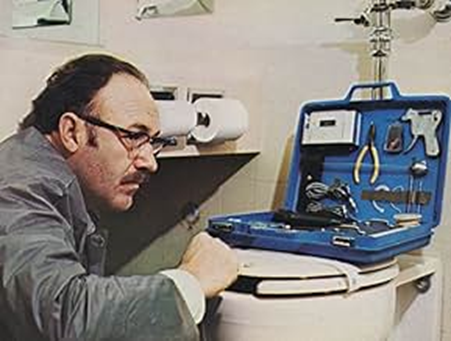
Does the overflowing toilet scene signify the ugly truth coming to the surface?

How does super snoop Harry end up at the end of the movie? What’s his psychological state? What does his utter helplessness represent?

In the end, with what’s left intact, does Harry Caul find what is ‘bugging’ him? Does Harry come up empty?
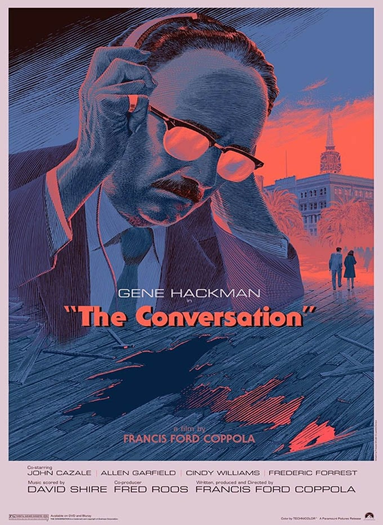
Why would a Christian and book reader like me watch this movie? Well, for one reason, it is a great movie.

The Conversation, written, produced, and directed by Francis Ford Coppola between the Godfather movies, is a tense thriller and character study. The 1974 film is not like most of the pathetic and mindless flicks of today. There are no superheroes, no CGI, no WOKE agenda, no gratuitous sex, nudity, and violence. The violence that does occur is presented as an off-stage event like in Greek tragedies.

See the called-out elements of its PG rating here: https://www.imdb.com/title/tt0071360/parentalguide/?ref_=tt_ov_pg#certificates

The movie was shot using long lenses and camera positions on rooftops. You get the idea of watching at a distance and of surveillance cameras panning scenes.

Another reason to watch is that Gene Hackman was a great actor. The character study involving a Catholic man who is self-isolating and who hears and views others from a distance – Hackman’s Harry Caul makes the movie.

Another is to consider the consequences of hearsay or of unfounded information, of surveillance versus participation, and of perception versus reality. Can we really know someone, their thinking, and their situation from a distance, from what others would have us believe?

And, there is the matter of someone listening without our knowledge. Though made in 1974, the issues of privacy the movie presents are relevant regarding you and I being surveilled today. The analog technology shown in the film has been replaced with digital technology that gains access to our private electronic communications, as through wiretapping or the interception of e-mail or cell phone calls.

We live in the age of digital technology that includes emails, texts, smart phones, and social media. How does Harry’s addiction to technology that supports his habit of seeing and hearing others at distance and his voyeuristic predilections affect him?

~~~~~~

~~~~~

Finding God in Stories | Office Hours, Ep. 15

~~~~~

Scot Bertram talks with Clare Morell, fellow at the Ethics and Public Policy Center and director of EPPC’s Technology and Human Flourishing Project, about the long-term effects of smartphone use on children and her new book The Tech Exit: A Practical Guide to Freeing Kids and Teens from Smartphones. And Benedict Whalen, associate professor of English at Hillsdale College, continues a series on the life and work of American writer Mark Twain. This week, he discusses The Adventures of Tom Sawyer.

Clare Morell Helps to Keep Kids Free from Screens

Clare Morell Helps to Keep Kids Free from Screens – The Radio Free Hillsdale Hour – Omny.fm

~~~~~~

Have an Analog New Year

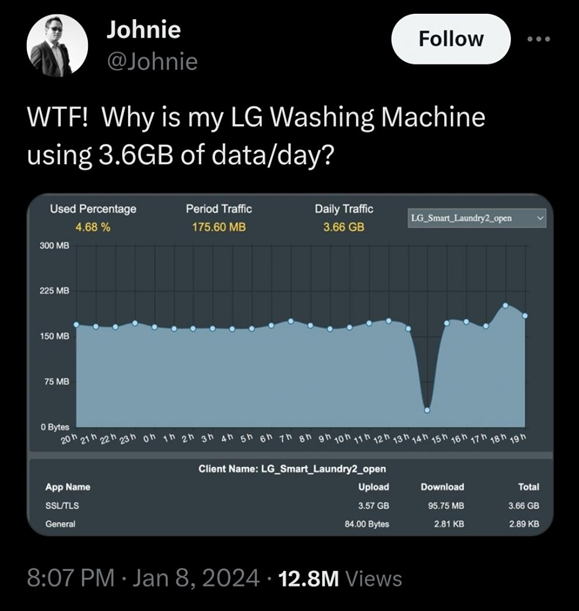
I like my hand crank pencil sharpener. It doesn’t spy on me and report on what I am doing. It doesn’t try to sell me a new pencil when one is sharpened down to the nib. It doesn’t try to hack my pencil and steal it from me. It doesn’t need electric energy, Wi-Fi, a password, and app to use it. I don’t need to buy antivirus software. My analog hand crank pencil sharpener is a simple mechanical device that is noninvasive. I use it to sharpen pencils needed for the highlighting and marginalia of the physical books I read to expand my personal bandwidth.

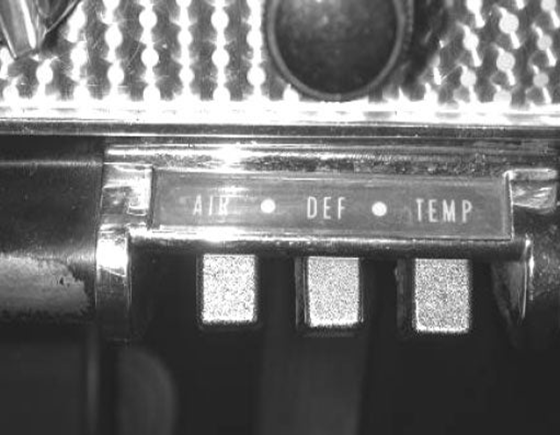
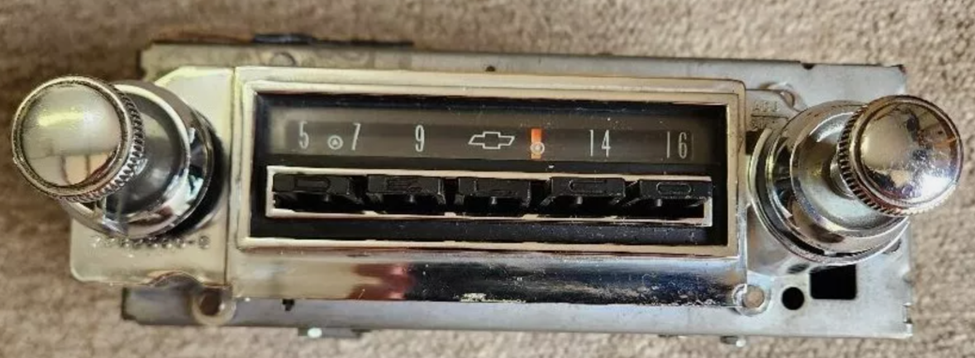
My ’64 Chevy Impala – the first car I ever owned – had hand-crank analog windows and a Delco AM Push-Button Radio (which I tuned to Chicago’s WLS-AM 890). The Impala had mirrors and no cameras, screens, and distracting bells and whistles. The car was not dependent on a semiconductor chip or software engineering.

The Impala got me from point A to point B without tracking my whereabouts and driving habits with an embedded GPS transmitter and selling that data to a third-party data broker that sold it to my insurance company so they can adjust my rate based on my driving. The Impala didn’t invade my privacy by automatically storing text and call data from my cell phone. The car was not a rolling data territory.

The corded Touch-Tone wall phone hung on the wall of my parent’s kitchen used copper wires. It didn’t pretend to be a computer. It held no apps with choice architecture programming. It wasn’t a branch of cyberspace. The phone didn’t spy on me and data grab me. When the conversation was finished, I hung up the phone and walked away from it. It wasn’t an extension of me. It wasn’t omnipresent.

Back in the ‘50s, our black and white TV used “rabbit ears” to get the best possible reception. Aluminum foil was sometimes placed on the ends of the rabbit ears to enhance reception.

The original television technology used analog signals to transmit video and audio. It wasn’t connected to a cable or Wi-Fi. The programming had commercials but it didn’t ply me with the ads I spent time looking at in the weekly newspaper insert. It was a passive non-spying device.

I listened to 45s and LPs using a turntable. The devices used in the first third of my life have been analog. I was born some twenty years before the end of the analog age (the 1970’s when signals went from waves to digital 1’s and 0’s and the use of transistors in computers).

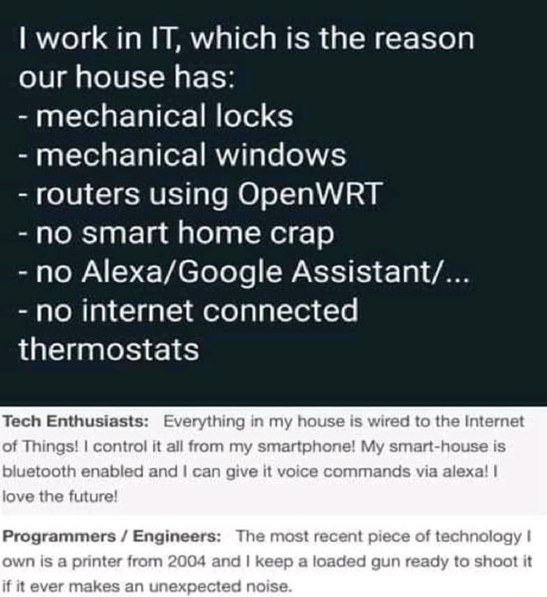
Having lived with analog technology, I prefer it over the “convenience” of “time-saving” digital devices. My reasons, echoed as concerns in the podcasts below, include not wanting to be spied on and exploited.

I do not want to be data-colonized by devices. I do not want to be an economic zone for more products and services and a mishmash of values. And, I do not want to be a product of That Hideous Strength (C.S. Lewis; the title comes from a poetic allusion to the Tower of Babel).

If you’ve read that story based on themes from Lewis’ lectures, you know about the National Institute for Coordinated Experiments or N.I.C.E. It was run by some masterminds who thought they knew best for everyone, increasing human efficiency to the point of human dissolution.

From The Devils in Our World – Official Site | CSLewis.com we read . . . N. I. C. E.’s . . .goal was “… the scientific reconstruction of the human race in the direction of increased efficiency …” (That Hideous Strength, 258). In The Abolition of Man’s more abstract terms, it was the power of some — the conditioners — over others; it was the conquest of nature and of human nature in particular through eugenics. Ultimately, it meant the abolition of man (63-64). (Emphasis mine.)

I am no fan of the digital technology because I see that the digital technology is no fan of me, a human.

Should human life be appropriated for data collection? Should an imposed alternate reality be tolerated for convenience and to ‘save’ us from boredom? Should we allow the “properties of being” to go the way of all totalitarian systems?

What do you get from your cell phone, your HD TV or the internet? Is it truth, beauty and goodness or is it isolation, loneliness, and nihilism streamed in 0s and 1s? Is it truth, beauty and goodness or is it materialism and modification of behavior?

I agree with Alexander R. Galloway, who considers the terms digital and analog in today’s world in his article Golden Age of Analog | Critical Inquiry: Vol 48, No 2, when he says  . . .

 If anything, the golden age of analog is happening today, all around us, as evidenced by the proliferation of characteristically analog concerns: sensation, materiality, experience, affect, ethics, and aesthetics. 

Analog concerns are human concerns whereas digital concerns are about data collection and modifying consumer’s behavior with choice architecture and ‘nudges” toward a profitable end for the “conditioners.”

I feel more secure and loved with a bookshelf full of classic books than with the bits and bytes of pseudo-reality that AI/ChatGPT promises.

Humans seek their own “profitable” ends via analog concerns. Have an analog New year.

~~~~~

I’ve been asked about my take on AI. There is a lot to consider. Here are a few thoughts:

It is said that individuals who learn to harness AI tools will improve their lives. They say that new AI technologies will save us time, help us live smarter, and become super-productive unlike anything we’ve ever seen before.

They say that AI will have the potential to help out with the boring and tedious stuff in our daily lives. And, that AI will solve complex problems including the fictitious “climate change crisis,” and offer a host of other benefits to mankind including massive amounts of information to make better informed choices. (Did you know that Computers Can’t Do Math?)

The downsides of AI/ChatGPT? There will be censorship of certain information and values leading to disinformation and misinformation – a machine’s type of ‘lying’. AI is capable of false narratives.

AI/ChatGPT has no ethics or morality but there will be bias no doubt favoring DEI, ESG, CRT, political correctness, and the green new scam. We all know the acronym GIGO.

MoneyGPT: AI and the Threat to the Global Economy by Jim Rickards contains the warning

 . . . we must remain vigilant on the question of whose values will be promoted in the age of AI. As Rickards predicts, these systems will fail when we rely on them the most.

MoneyGPT shows that the danger is not that AI will malfunction, but that it will function exactly as intended. The peril is not in the algorithms, but in ourselves. And it’s up to us to intervene with old-fashioned human logic and common sense before it’s too late.

There is the possibility of AI/ChatGPT inventing fantasy or confabulation when there are missing links of data. From Confabulation in Brain Injury: Causes and Treatment:

Confabulation is a memory disorder characterized by the production of fabricated, distorted, or misinterpreted memories about oneself or the world, without the conscious intention to deceive. It’s as if the brain, in its attempt to fill gaps in memory, creates a patchwork of experiences that may or may not have actually occurred. . .

Unlike lying, confabulation occurs without any intent to mislead. The individual genuinely believes in the truth of their statements, no matter how implausible they may seem to others. This can lead to a host of complications in personal relationships, professional settings, and even legal matters.

For all the proposed massive benefits of AI/ChatGPT, there is a real physical cost.

On Oct. 10, 2023 we were told that A.I. Could Soon Need as Much Electricity as an Entire Country:

peer-reviewed analysis published Tuesday lays out some early estimates. In a middle-ground scenario, by 2027 new A.I. servers sold that year alone could use between 85 to 134 terawatt hours (Twh) annually. That’s similar to what Argentina, the Netherlands and Sweden each use in a year, and is about 0.5 percent of the world’s current electricity use.

A “green energy” grid is not able to handle charging a horde of EVs let alone power the semiconductors needed to store and process your personal data. The only good to come out of this: nuclear reactors will be built to handle base loads.

One of the “masterminds” behind “green energy”- Joe Biden – has created anti-oil and gas policies that “limit pipeline infrastructure and increased production on federal lands.” Natural gas prices have escalated because of this. Americans will suffer.

When temps drop this winter, AI/ChatGPT is not what’s needed. We need cheap and reliable energy.

Multiple Arctic outbreaks to affect more than 250 million in central, eastern US into mid-January

Going forward, I don’t see a need for AI/ChatGPT. Presumed to offer me a better self, I see AI/ChatGPT replacing thought and imagination with prescribed “answers.” We are not to think. We are to AI/ChatGPT.

Did the Greatest Story Ever Told come from AI/ChatGPT?

Will the greatest world ever known come about through AI/ChatGPT? No! That will happen when the New Jerusalem joins heaven and earth and we live in God’s immediate presence.

So, we use digital devices and AI/ChatGPT to save time. But what do we do with our saved time? Do we go back to a screen and throw away saved time? What does it mean to be “more productive”?

Digital technology and AI/ChatGPT seem to share the same ethics as Karl Marx:

“My object in life is to dethrone God and destroy capitalism.” – Karl Marx

“Keep people from their history, and they are easily controlled.” – Karl Marx

Besides the abolition of private property, Karl Marx wanted to destroy five things: the family, individuality, eternal truths, nations, and the past. All of this is possible with AI.

Will AI/CHATGPT become the opium of the masses?

“The best way to control the opposition is to lead them.” — Vladimir Lenin

And the best way to do that today is via a digital medium that includes AI/ChatGPT.

A post-human world, packaged and sold as modern conveniences and life enhancing, is being delivered by digital technology.

~~~~~

Still autonomous after all these years of data colonization? Asking for a friend.

In the present day, Big Tech is extracting resources from us, transferring and centralizing resources from people to companies. These companies are grabbing our most basic natural resources–our data–exploiting our labor and connections, and repackaging our information to control our views, track our movements, record our conversations, and discriminate against us. These companies tell us this is for our own good, to build innovation and develop new technology. But in fact, every time we unthinkingly click “Accept” on a set of Terms and Conditions, we allow our most personal information to be kept indefinitely, repackaged by companies to control and exploit us for their own profit. 

Data grab: the new colonialism

Data grab: the new colonialism of big tech and how to fight back – London School of Economics and Political Science

Data Grab: The New Colonialism of Big Tech and How to Fight Back a book by Nick Couldry and Ulises A. Mejias

~~~~

In October of 2022, I wrote “I’m becoming a neo-Luddite of sorts. I have a particular dislike for digital technology as it modifies the means of relating to ourselves, to those around us and to our world. Its dissociative medium detaches us from reality, thereby affecting identity, memory, perception, and truth.”

“The medium is the message.” -Marshall McLuhan 

With digital medium, have we transitioned from “lineal connections” to “configurations”? (McLuhan, Understanding Media, p. 12)?

For McLuhan, it was the medium itself that shaped and controlled “the scale and form of human association and action”. Taking the movie as an example, he argued that the way this medium played with conceptions of speed and time transformed “the world of sequence and connections into the world of creative configuration and structure.” Therefore, the message of the movie medium is this transition from “lineal connections” to “configurations”

Respond: Marshall McCluhan, Chapter 1: The Medium is the Message | Matthew Marchewka

Does a digital medium deskill users over time? Are “tech bros” looking to deskill more users with AI/ChatGPT and do away with human workers? Are we to become Zeros in a world of 0s and 1s? Welcome to the binary new world.

~~~~

AEI senior fellow Christine Rosen, author of The Extinction of Experience. In the technological age, we too often see basic human activities, from reading and writing, to shopping and conversing, as obstacles to efficiency that must be overcome, simplified, or replaced. And while digital technology has provided many benefits, it has also come with unintended consequences for our habits of mind and social interactions. Rosen argues that we need a “new humanism” that puts the human person front-and-center and encourages people to regularly “touch grass.” 

Keeping it Real – Law & Liberty

~~~~~

Do you know that Congress has passed a law to shut off your car?

 Vehicle monitoring software could soon use ‘kill switch’ under the guise of ‘safety’ – LifeSite (lifesitenews.com)

Do you know about another digital trend that needs to be reversed: Going Cashless.

“It’s Just Not Right”: Major Venues Now Punishing People For Using Cash Vs. Plastic | ZeroHedge

The potential benefits of central bank digital currency or CBDC are being discussed by the “masterminds” of the International Monetary Fund (IMF). We will be told that using CBDC will be more convenient, but for whom?

CBDCs create a “digital trail”, IMF’s handbook notes. Our data – transaction histories and user demographics — could be collected and stored. AND, our CBDC accounts could be restricted or blocked by the powers that be or AI as a form of a social credit system and digitally based conformity.

If instituted, say goodbye to privacy and, perhaps, your balance. Welcome to the Binary New World and the surveillance State.

Please don’t tell me it’s more convenient to use digital.

Gold and silver and even the fiat dollar are analog assets. They can’t be hacked.

~~~~~

“A September report by Mozilla News’ *Privacy Not Included team called modern cars the “worst product category we have ever reviewed for privacy.”

“The team researched 25 car brands and concluded, “Every car brand we looked at collects more personal data than necessary and uses that information for a reason other than to operate your vehicle and manage their relationship with you.

“They can collect super intimate information about you — from your medical information, your genetic information, to your ‘sex life’ (seriously), to how fast you drive, where you drive, and what songs you play in your car — in huge quantities. They then use it to invent more data about you through ‘inferences’ about things like your intelligence, abilities, and interests.”

Your Car Stores Your Text Messages – Law Enforcement Can Retrieve Them Anytime, Following Federally Rejected Lawsuit | The Gateway Pundit | by Stefanie Ladner, The Western Journal

~~~~~

The new law would change the definition of “electronic communications surveillance provider” via an amendment to vastly expand what Goitein describes as “the universe of entities that can be compelled to assist the NSA.”

Tell your representatives to vote NO on massive expansion of domestic surveillance state – U.S. businesses to be forced to serve as NSA spies – NaturalNews.com

~~~~~

For the past few years, parents, researchers, and the news media have paid closer attention to the relationship between teenagers’ phone use and their mental health. Researchers such as Jonathan Haidt and Jean Twenge have shown that various measures of student well-being began a sharp decline around 2012 throughout the West, just as smartphones and social media emerged as the attentional centerpiece of teenage life. Some have even suggested that smartphone use is so corrosive, it’s systematically reducing student achievement. I hadn’t quite believed that last argument—until now.

Are Phones Making the World’s Students Dumber? – The Atlantic

~~~~~

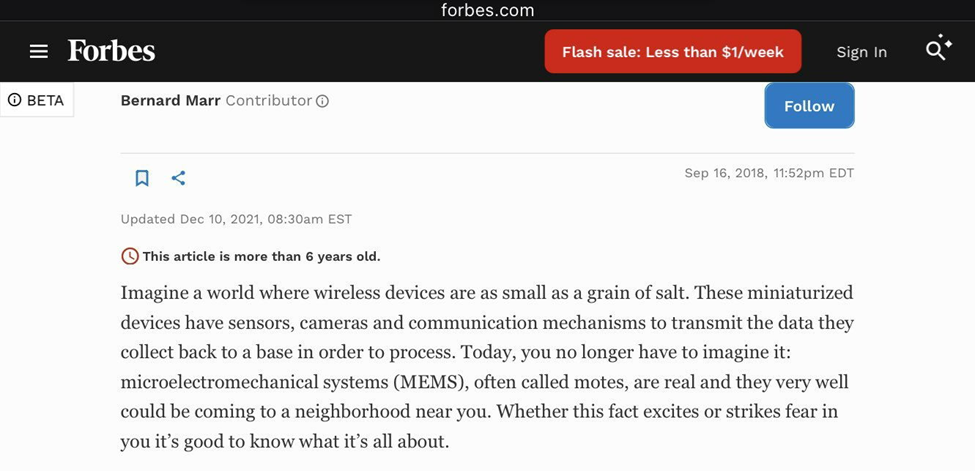
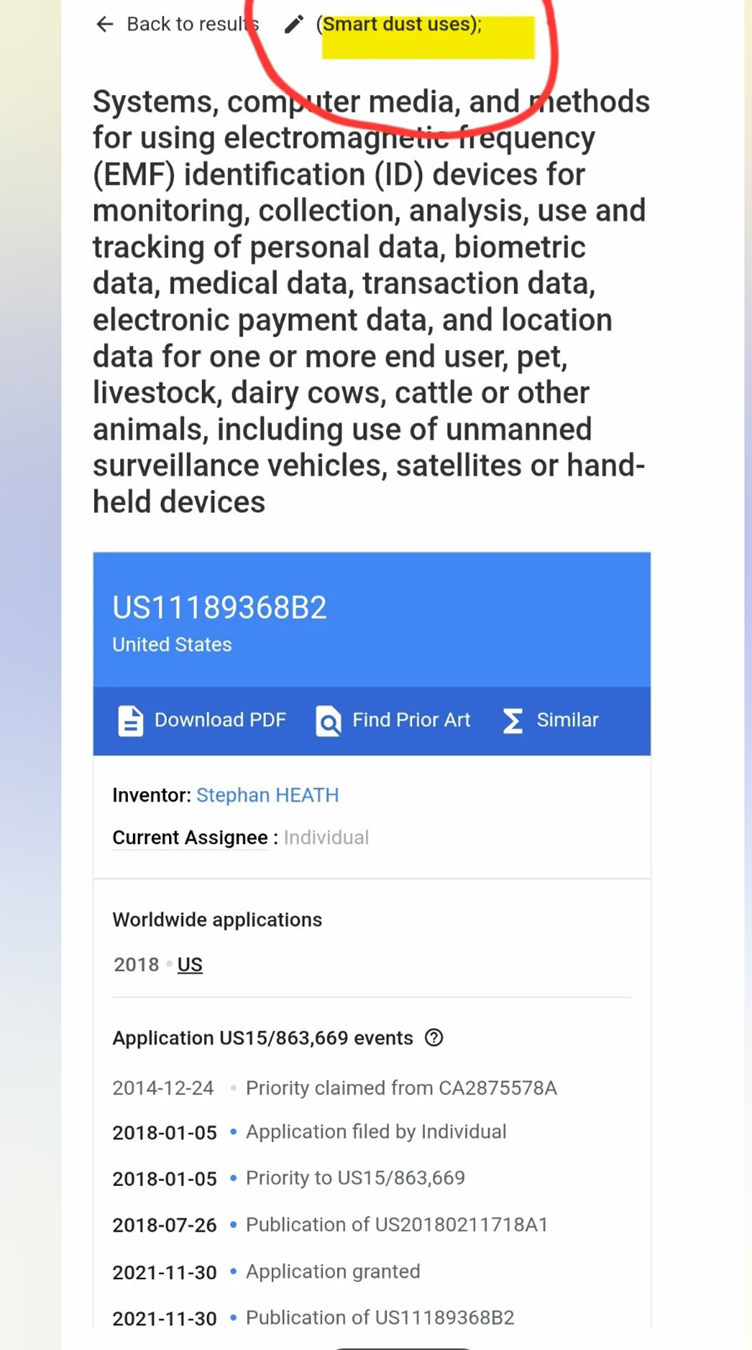
Invasive Technology – Smart Dust

Is the fog Smart Dust?

~~~~~

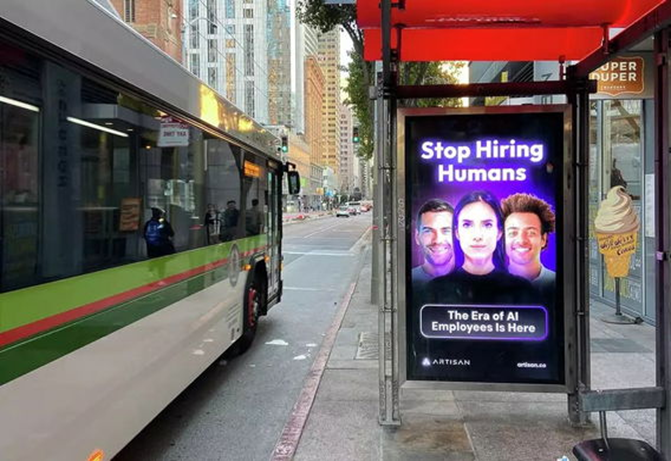
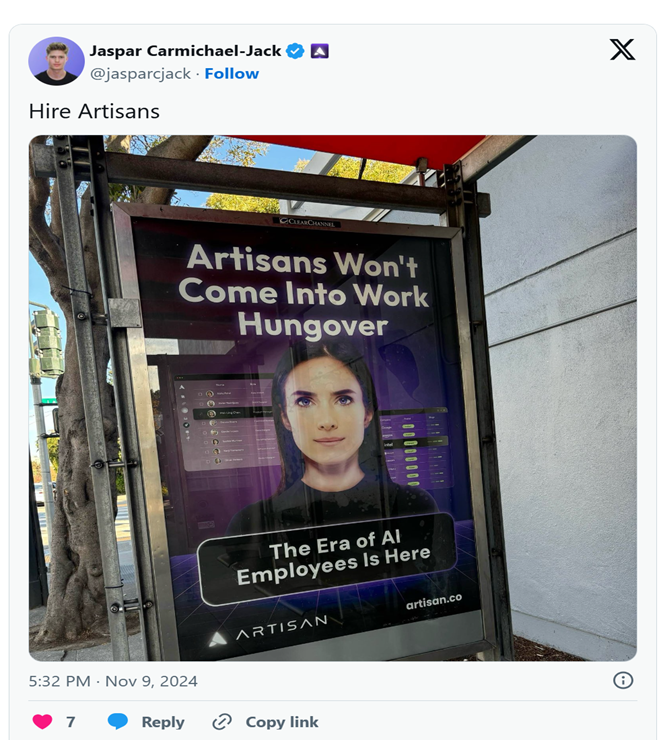
‘They hate people’: Bleak tech billboards spark angst in San Francisco

Request a Consumer Disclosure Report

Access your file and learn more about the personal information LexisNexis Risk Solutions maintains about you in accordance with the Fair Credit Reporting Act:

Home – LexisNexis Risk Solutions Consumer Disclosure

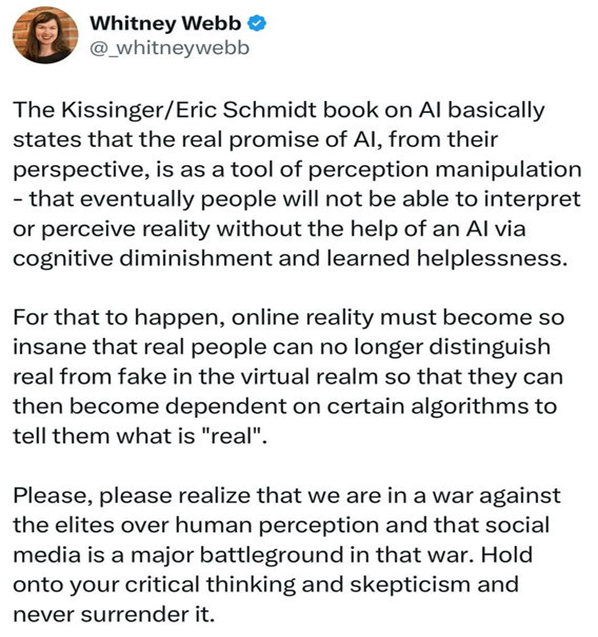
Is AI/ChatGPT “extremely dangerous to our democracy?”

Multiple local news stations say the same thing verbatim

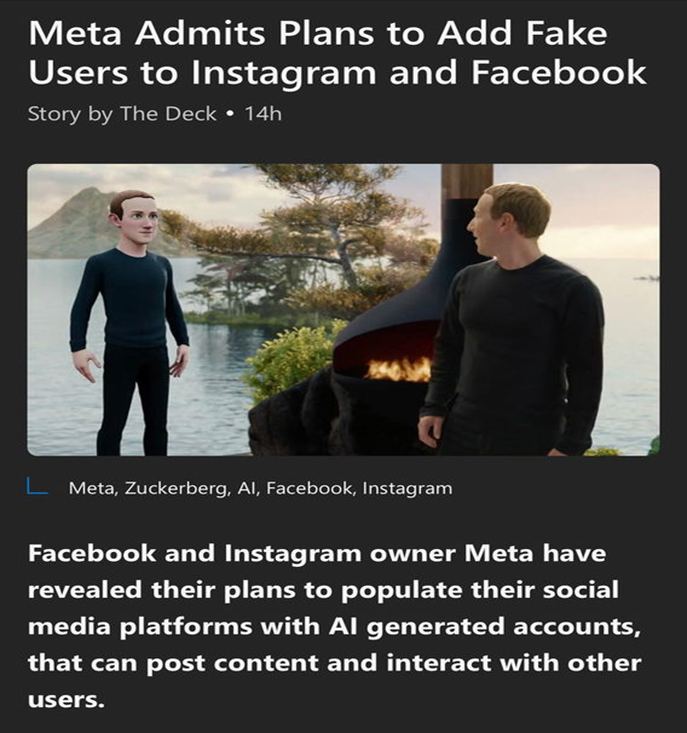
Is AI/ChatGPT and Facebook extremely dangerous to our humanity?

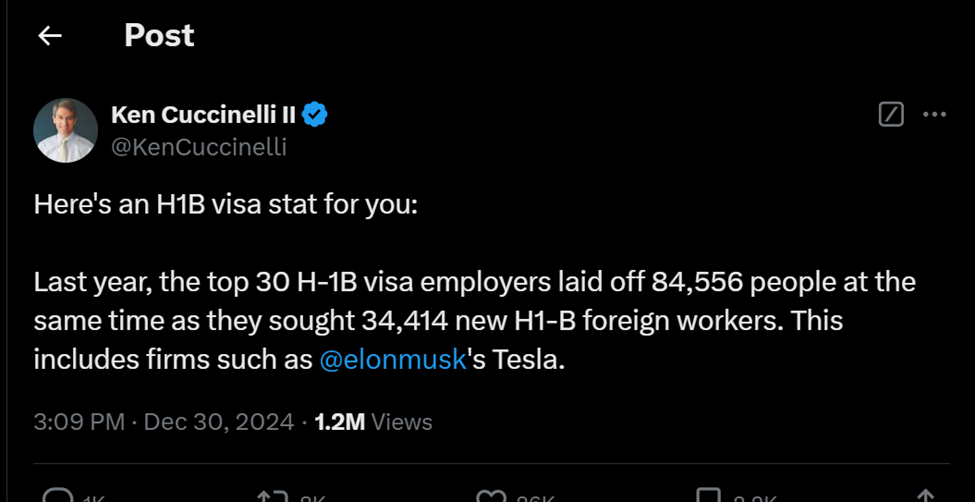
Ungar-Sargon: “Of Course Mass Immigration Raises The GDP, It Makes Oligarchs Unbelievably Wealthy.”