Thrown Off Balance

One of the greatest disciples of the twentieth century was neither a priest, nor a religious, nor a married person. She was a celibate, single woman who spent the last 13 years of her life battling lupus while writing some of the best fiction the world has ever known—all while living on a 544-acre dairy farm in Milledgeville, Ga. with her mother, her books, and forty-four peacocks. Her name was Flannery O’Connor.

-Fr. Damian Ference, The Vocation of Flannery O’Connor

Writing that may be dismissed as jarring, acerbic, and too controversial by people who are loathe to sit in the same room with someone who won’t validate their narrative – whether Progressive or Christian – are the short stories of Flannery O’Connor (1925–1964). She didn’t compile fluff for people to sit with the comfortable.

“She believed that story-telling ought to help modern men and women see “things as they are,” cutting through the fog of a culture that tells us that everything can be just the way we’d like it to be.”  -George Weigel, Flannery O’Connor and Catholic realism

O’Connor’s stories are typically set in the rural American South. Her sardonic Southern Gothic style employed the grotesque, the transgressive, and wild, comical and deeply-flawed characters who are often alienated from God and often in violent situations. Because of these traits, her stories may be dismissed by some readers – they do not sense a clear-cut Gospel message in her work or a comforting message.

Faith, for O’Connor, was not something easy or comforting. It involved a struggle with doubt within the seeming randomness and cruelty of life. She understood that struggle as maturing her faith.

In a letter to Lousie Abbot, O’Connor wrote

I think there is no suffering greater than what is caused by the doubts of those who want to believe. I know what torment this is, but I can only see it, in myself anyway, as the process by which faith is deepened. A faith that just accepts is a child’s faith and all right for children, but eventually you have to grow religiously as every other way, though some never do.

What people don’t realize is how much religion costs. They think faith is a big electric blanket, when of course it is the cross. It is much harder to believe than not to believe. If you feel you can’t believe, you must at least do this: keep an open mind. Keep it open toward faith, keep wanting it, keep asking for it, and leave the rest to God.

O’Connor wrote about the world as she found it in the Protestant South and etched her Catholic worldview into her stories. She professed: “I see from the standpoint of Christian orthodoxy. This means that for me the meaning of life is centered in our redemption by Christ and what I see in the world I see in relation to that.” 

Her signature short story, A Good Man is Hard to Find, embodies this. You might recognize yourself and what’s at work in your life upon reading it.

The title of the story is the title of a well-known song of O’Connor’s day, sung by Bessie Smith. But the story doesn’t reference a woman’s hard time with men as the song does. The story would have us look at what it means to be a “good man”. Everyone has their own definition of what it means to be good, as do two characters in the story – the grandmother and the Misfit.

The grandmother values her Southern upbringing and mannerisms. For a road trip, the grandmother is all fancied up, white gloves and all, as is the habit of Southern women. The grandmother thinks goodness is being polite, nice, respectful, and agreeing with her views on things. This is brought out in her conversation with Red Sam, a character as fatuous as the grandmother. He delivers the title’s line that comes across as a cliché dismissive of the real world’s Misfit-type violence.

The escaped-convict Misfit, also steeped in Southern tradition, views the world through an amoral nihilist filter. He is unconcerned with traditional morality or even the value of other people’s lives. He shows up in a big black hearse-like vehicle. By a turn of events, generated by the manipulative grandmother and her cat, they meet. The grandmother, “good” in a decent person sense of good does not appreciate what she is up against. Will she finally grasp what makes a “good man?”

The family members, who shout and argue until someone gives in and behave in petty selfish ways without much reflection or moral thought find themselves in a less-than-good situation. What happens to them?

What does the Misfit say about punishment, the law, and about Jesus and the resurrection?

And what does the story show about the activity of and need for grace and the state of the human condition that refuses it?

I have purposefully not given you a summary of A Good Man is Hard to Find. Reading it first and then listening to podcasts would be the best introduction to her work.

Why do I read Flannery O’Connor?

Her unsentimental gimlet-eyed Kafkaesque realism speaks to me as a writer in our distorted and moronic times.

“Writers who see by the light of their Christian faith will have, in these times, the sharpest eye for the grotesque, for the perverse, and for the unacceptable. To the hard of hearing you shout, and for the almost-blind you draw large and startling figures.” ― Flannery O’Connor

Flannery O’Connor. Photo: Joe McTyre

Her stories move mystical concepts down from a theological mountain into the hands of her characters – the misfits, freaks, and outsiders who reckon with them or don’t. Her ‘parables’ hit home more than all the logical sermons I’ve heard on grace, salvation, goodness, punishment, forgiveness, and moral decay.

And, like Jesus, she’s “thrown everything off balance.”

~~~~~

The Great Books Podcast: ‘A Good Man Is Hard to Find’ Flannery O’Connor

The Great Books Podcast: ‘A Good Man Is Hard to Find’ Flannery O’Connor | National Review

A Good Man is Hard to Find BONUS episode

A Good Man is Hard to Find BONUS episode (1517.org)

~~~~~

Bishop Barron Presents | Ethan and Maya Hawke – Understanding Flannery (youtube.com)

~~~~~

Further on Flannery:

Flannery O’Connor Reads ‘A Good Man is Hard to Find’ in Rare 1959 Audio | Open Culture

A Good Man Is Hard to Find by Flannery O’Connor — HCC Learning Web (hccs.edu)

How Flannery O’Connor and Cormac McCarthy Helped to Invent the South – By Nick Ripatrazone | The Marginalia Review of Books

The Complete Stories (archive.org)

Flannery O’Connor Reads ‘A Good Man is Hard to Find’ in Rare 1959 Audio | Open Culture

Flannery | American Masters | PBS

The Vocation of Flannery O’Connor – Word on Fire

Flannery O’Connor Reads “A Good Man Is Hard to Find” (1959) (youtube.com)

~~~~~

(Cormac McCarthy (1933 – 2023) had a several influences including O’Connor. Georgia-born O’Connor wrote in Southern Gothic mode and Tennessee-born McCarthy in Appalachian Gothic mode.  Both, with grim-humor, created grotesque characters and nihilistic settings – O’Conner to reveal the possibility of divine grace and lapsed Catholic McCarthy to wonder about the meaning of life. Both writers use violence in their stories. McCarthy to the extreme (Anton Chigurh, No Country for Old Men.)

Flannery O’Connor on Why the Grotesque Appeals to Us, Plus a Rare Recording of Her Reading “A Good Man Is Hard to Find”:

In these grotesque works, we find that the writer has made alive some experience which we are not accustomed to observe every day, or which the ordinary man may never experience in his ordinary life. We find that connections which we would expect in the customary kind of realism have been ignored, that there are strange skips and gaps which anyone trying to describe manners and customs would certainly not have left. Yet the characters have an inner coherence, if not always a coherence to their social framework. Their fictional qualities lean away from typical social patterns, toward mystery and the unexpected. It is this kind of realism that I want to consider.

All novelists are fundamentally seekers and describers of the real, but the realism of each novelist will depend on his view of the ultimate reaches of reality.

Truth Beyond the Binary

“The Gleaners” (1857), by Jean-François Millet, depicts women picking up loose grain in the field. Without words it relates the hardships and the dignity of everyday workers. The painting connects us to our own human story. We recognize something of ourselves in this glimpse of reality. We understand a day’s slog and strain. We empathize with the workers.

The painting’s aesthetic realism, its naturalism and unromanticized imagery draw us in. We like that it rejects idealization and artificiality. “The Gleaners” portrays ’us’ as we are. And the subject’s universality – women doing manual labor – is a catalyst for imaginative truth.

We empathize with the subjects as we project ourselves into their perspective. We imagine what it must be like working in a field under the hot sun. We imagine constantly bending over to pick up left-over scraps of the grain harvest so that poor women and children could live on them. We imagine ourselves in 1857.

We find ourselves stepping out of our world and connecting with history – mankind has been doing manual labor since the beginning of time. We find ourselves connecting not just with the women, but with all of humanity, a humanity that shares the work, burdens, and cares of life. And, our imagination wants to know more of the wordless ‘story’.

We cannot see the women’s faces. Are the women young or old? Are they talking to pass the time? Singing? Are they married? Have children? Do they work from sun up to sun down? How do their backs feel at the end of the day? Are their hands dried out and cracked from handling the grain?

~~~~~

Anton Chekhov’s stories are noted for their ‘naturalness’ – the ability to show ‘exactly what a little piece of life’ is like. Like with Millet’s realistic painting, his prose provides down-to-earth characters, details and a setting that, though with Russian aspects, is universal in its close-to-home familiarity.

Russian-American novelist Vladimir Nabokov, in his Lectures on Russian Literature, described Chekhov as writing “the way one person relates to another the most important things in his life, slowly and yet without a break, in a slightly subdued voice”.

Chekhov, a practicing doctor, observed everyday life and ordinary people as he made house calls and treated patients. He wrote with a concentration on the daily lives of individuals using natural detail. We connect with the subjects in terms of shared experiences, emotions, and challenges that are common to all human beings.

You won’t find sanctimony or moralizing or happy endings in his stories nor heroes in the conventional sense. Chekhov had nothing to prove, no ideology or politics to promote, and he created all his characters equal.

And though Chekhov’s stories seem to go nowhere, his ‘close to home’ imagery mirrors our own situations. Life often goes on unchanged or less than we had hoped for. Life often goes on without resolution. And that is the case in a touching story by Anton Chekhov – “On Easter Eve” (1886).

A brief introduction: “The narrator describes his moving experience of attending an early-morning celebration of Easter Eve in the countryside after crossing a river in flood in the middle of a very starry night, admiring the fireworks and listening to the boatman’s account of the sudden demise of the church deacon while composing Easter hymns.”

The ferryman, a novice monk, grieves the loss of a brother. Nikolai, a sensitive soul enraptured by words, was skilled at writing Akathists. (Akathist or “unseated hymn” is a type of hymn usually recited by Eastern Orthodox or Eastern Catholic Christians. It may be dedicated to a saint, holy event, or one of the persons of the Holy Trinity.)

The passenger (narrator) listens to the ferryman recount the death of his best friend Nikolai and about the gift Nikolai had for writing hymns of praise. “And Nikolai was writing akathists! Akathists! Not mere sermons or histories.” The passenger then asks “Are they so hard to write then? The ferryman responds “Ever so hard” and goes on to describe what’s involved, including the following:

Everything must be harmonious, brief and complete. There must be in every line softness, graciousness and tenderness; not one word should be harsh or rough or unsuitable. It must be written so that the worshipper may rejoice at heart and weep, while his mind is stirred and he is thrown into a tremor.

Just one more quote to invite you to be with the narrator and ferryman “On Easter Eve”.

Here the narrator describes Easter Eve at the Russian Orthodox Church, reminding me of the swollen river he had just crossed:

One was tempted to see the same unrest and sleeplessness in all nature, from the night darkness to the iron slabs, the crosses on the tombs and the trees under which the people were moving to and fro. But nowhere was the excitement and restlessness so marked as in the church. An unceasing struggle was going on in the entrance between the inflowing stream and the outflowing stream. Some were going in, others going out and soon coming back again to stand still for a little and begin moving again. People were scurrying from place to place, lounging about as though they were looking for something. The stream flowed from the entrance all round the church, disturbing even the front rows, where persons of weight and dignity were standing. There could be no thought of concentrated prayer. There were no prayers at all, but a sort of continuous, childishly irresponsible joy, seeking a pretext to break out and vent itself in some movement, even in senseless jostling and shoving.

Juxtaposed “On Easter Eve”: great sadness and great celebration, life and death, light and dark. Chekhov captures common shared experiences. There is nothing lofty, sarcastic, or judgmental in the story. There’s just a truthful and loving portrait – a ‘gleaning’ – of humanity at its most authentic moments.

Enjoy this heart-tug of a story.

~~~~~

“French painter Jean-François Millet, whose humble manner of living stands in stark contrast to the impact his work had on many artists who succeeded him, saw Godliness and virtue in physical labor. Best known for his paintings of peasants toiling in rural landscapes, and the religious sub-texts that often accompanied them, he turned his back on the academic style of his early artistic education and co-founded the Barbizon school near Fontainbleau in Normandy, France with fellow artist Théodore Rousseau.” Millet Paintings, Bio, Ideas | TheArtStory

~~~~~

Margarita Mooney Suarez shares about beauty and the liberal arts. (We need more women like her.)

Beauty and the Liberal Arts, with Margarita Mooney Suarez

Beauty and the Liberal Arts, with Margarita Mooney Suarez – Teaching in Higher Ed

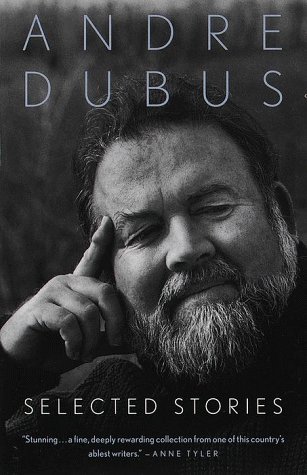
Andre Dubus

       “…my belief in the sacrament of the Eucharist is simple: without touch, God is a monologue, an idea, a philosophy; he must touch and be touched, the tongue on flesh, and that touch is the result of the monologues, the idea, the philosophies which led to faith; but in the instant of the touch there is no place for thinking, for talking; the silent touch affirms all that, and goes deeper: it affirms the mysteries of love and mortality.”   On Charon’s Wharf

 “For ritual allows those who cannot will themselves out of the secular to perform the spiritual, as dancing allows the tongue-tied man a ceremony of love.”   A Father’s Story

        “Short story writers simply do what human beings have always done. They write stories because they have to; because they cannot rest until they have tried as hard as they can to write the stories. They cannot rest because they are human, and all of us need to speak into the silence of mortality, to interrupt and ever so briefly stop that quiet flow, and with stories try to understand at least some of it.”   Into the Silence

                 “Very early, I understood that women were required to be other than what they were.”  Of Robin Hood and Womanhood