A short story . . .
I couldn’t pedal any faster. Heart and legs pumped and pumped and pumped until I threw my bike down in the front yard and heard “Wash your hands, Dennis. It’s time for supper.”
Summer, like a best friend ready to pal around, came around again before my freshman year in high school. I was ready that summer to go and do a lot of things, except for one. Did I tell you this story? After sixty years, some memories, like which stories I may have told, become muddled and others remain clear as the day they happened.
Before the start of my freshman year in the fall of ’67, I received a letter from the high school that detailed all the programs the school offered. The two that interested me were sports and band.
That summer I began cross country training under Coach Howard. I was a runner. The kids on my block called me Flash. I was always chosen first for street football and sandlot baseball. But that hot and sweaty five-and-ten-mile practice summer I found out that I was not a long-distance runner. I had only enough wind for sprints and to play the trumpet.
To play in the concert band, I had to tryout that summer. I auditioned with the band director Mr. Gilles. He had me play all the major and minor scales and sight-read several pieces. I learned a week later that I was accepted into the band. This was huge. I had played the French horn in the Junior High band.
My stint with the French horn came about when the Junior High band director Mr. Palmero decided that he didn’t like the sound coming out of my beat-up Conn trumpet. The horn was a gift from an uncle who used it, from its appearance, for anything but playing. Mr. Palmero had me switch to a rental French horn. This lasted two years.
That summer – the summer before high school – my father, bless his soul, bought me a brand-new Bach b-flat trumpet. The new horn and lots of practice paid off. And that part of my Junior High experience was behind me. But how could I forget those two years?
Junior High School had a social system of Greasers and Climbers. You were lumped into one or the other based on your appearance. Greasers, like my colorful friend Juan, wore a black leather jacket, black pants, black socks and shoes and a white tee shirt. The absence of color except for the tee was Juan’s Greaser uniform.
Climbers, like most of my friends, sometimes wore paisley shirts with white collars, bell bottoms and white socks, but mostly dressed in color. I wore simple button-down shirts and sometimes a paisley shirt with bell-bottoms and black socks. I walked around with a French horn case. I wasn’t sure of the privileges accrued to either group other than being liked for what you weren’t.
I remember Juan pestering me to become a Greaser. He even had his girlfriend Lucille tell me that she would doing anything for me if I would become a Greaser. This conversation took place one morning in one of my eighth-grade classes. Lucille, who sat in front of me, turned around and offered herself on the altar of Greaserdom. I declined the invitation. I had more than I could handle. Three girls wanted my attention – in the hallways and in the band. All three played an instrument.
Diane, who I sat next to, was first chair French horn. Mary K. was a flutist and Mary E. played the clarinet. In the social scheme of things, we were considered Climbers because we played in the band and dressed in more than black and white.
I liked the attention of Diane, Mary, and Mary, but I didn’t want to go “steady” as was their intention. I put “going steady” in the same category as having to choose to be either a Greaser or a Climber. I was an independent sort. I was wary of anyone pressuring me to do something I wasn’t inclined to do, as when I was told to play the French horn. I continued on the horn because it kept me playing music. But I should return to telling you about that summer before high school.
Several days a week I had cross country practice. I also practiced my trumpet every day and I worked a part time job at a photo store. At church, I was moved up into the Senior High Youth group.
Our teens group met on Sunday mornings and after church on Sunday nights. Those evening times included going out for pizza or ice cream. During these outings I noticed that the older girls in the group were cliquish and something of a mystery. I wondered what they were saying when they whispered to each other. They weren’t like the junior high girls. They weren’t passing me notes telling me what they were thinking. But that secretiveness, as I recall, made those times wait-and-see fun.
One of the first weekday outings for our group that summer was a picnic at a local park. When we gathered in the parking lot of the Bible church there was a lot of discussion about who was riding with whom. There were only a couple of drivers and cars. I was a freshman. I had no driver’s license or car yet. Neither did my best friend Bill, also a freshman.
A ‘63 convertible T-bird, radio blasting, pulled into the lot. The guy driving was Ken. I’d seen him in the Sunday meetings. He had said that he transferred from another area high school and would be a senior in the new high school. He asked Bill and I if we wanted a ride to the park. We agreed. I remember thinking that going my own way, in James Dean fashion, would be noticed by the girls.
After several group outings, Ken started calling me and asking me to come over. He said that he had a Triumph TR3 that he was rebuilding and that he needed some help. I told him I didn’t know anything about cars. It didn’t matter to him. He begged me to come over. I finally accepted his invitation one hot, boring summer afternoon. I thought why not learn about cars. I would be driving soon enough.
That afternoon I rode my bike across town to his parent’s house. I found the garage door open with Ken standing inside. He was holding an oily car part in his hand. The TR3 was parked in the garage with the hood up. I asked about his parents. He explained that his mother worked in a clothing store and that his father worked at the local country club in the men’s locker room. ‘They’re never home during the day’ he told me. I remember hearing this and feeling a bit uneasy not knowing the neighborhood or Ken that well. It must have shown. He immediately began talking about what he was trying to do.
As best as I can recall, he said something to the effect that the Triumph had a stock positive earth electrical system and he was trying to connect a radio. Positive earth and negative earth connections had me at a loss. I knew about magnets. They had positive and negative poles and that opposites attract and like polarities repel.
I remember becoming interested in seeing the sporty little car repaired when Ken said that he might let me drive it. To help him make the polarity conversion, I read aloud the steps in the Triumph manual as he made the changes. The first step, as I recall, was to disconnect and remove the battery.
After the polarity conversion was completed, Ken invited me inside. We washed up and Ken offered me something to drink. He handed me a glass of lemonade and we sat in the kitchen. We talked for a while and then I went home. And that is how things went the next two times I came over to work on the car. We cleaned the carburetor, worked on the engine, and talked afterward.
I learned that Ken liked golf, Edgar Rice Burroughs books, and Edgar Cayce books. All three of his likes were not in my universe. I told him about cross country practice, summer band practice, and my job. I didn’t have any time to read that summer.
When I was invited over a fourth time, we worked on the brakes. After we finished, he invited me in again for a drink. This time he offered me a Coke and some rum to put in it. I said no. Then he asked me if I wanted to play cards. I told him I didn’t know how to play cards. He said he’d show me. I thought that here was something else that I could learn, so I agreed.
Ken left the room and came back with a deck of cards. He began to tell me the different hands and their value and the rules of the five-card stud, his favorite game. He dealt the cards and I gathered them up, holding them fanned out in my hand just like in a TV western.
I quickly lost every hand I played but Ken convinced me to keep trying. After winning one hand he asked me if I wanted to bet on the next hand. I told him I don’t bet. He said it would only be for candy. So, I continued to play. When my pile of M&Ms disappeared, I said I had to get home for supper. I got on my bike and headed back across town toward home.
I should remind you that while I was meeting with Ken on free afternoons, I was still doing all the things I mentioned before.
Ken called again the following week. I came over and we worked on replacing the radiator. When that was done, we cleaned up and sat down for a couple Cokes. Again, Ken wanted to play cards. And again, we played several hands. After I won a few hands, Ken wanted to know if I wanted to play for stakes. I told him that I just like playing.
But Ken persisted, asking me if I wanted to “up the ante.” I told him no. After several more hands he asked me again and I said “what are you talking about.” He said that if I were to lose the next hand that I would have to do whatever he wanted and that if he was to lose that he would do whatever I wanted. The “stakes” as he called them sounded weird to me. But at the same time, I knew that I always had the power to say no, so I played along thinking that friends don’t mess with friends. What could he ask me to do? Buy him a Coke or an ice cream the next time the teens group went out?
I lost the next hand. He then told me that he wanted me to clean the house – sweep, vacuum, everything. I looked at him like he was crazy. He then said that I had agreed to the stakes and had lost and must do what he wanted. I told Ken that I wouldn’t clean his house.
He came back and said that I had to because I gave my word and because I am a Christian. He then left the room and came back to the kitchen with a small men’s Speedo swimsuit. He told me that he wanted me to wear the Speedo while I cleaned the house. I had no idea that Ken would impose that on me. I remember a feeling of revulsion and saying “No way!”
I would not do what he wanted. I’d pay the bet some other way. Rattled, I got up and headed for the door. I promised to come back another day and help him with the TR3. That was the best I could offer. I got on my bike and sped off toward home.
Some weeks passed. At the start of August, twenty days before school started, I got a phone call from Ken. He wanted me to come over. He said the Triumph was ready to roll. I agreed to come over, thinking that this would be a harmless way to honor my bet and be done with the whole business. And maybe I’d have the chance to drive the car, as he had said.
I headed over to his house and found the Triumph parked on the street. Ken walked out of the garage and asked me if I was ready for a ride. We got in the sports car and Ken started the engine. He shifted into first and then turned on the newly installed radio. He drove the TR3 out of the neighborhood and headed for the nearby highway. The convertible sports car responded quickly, moving effortlessly through five gears. But since I hadn’t learned to drive stick shift, he wouldn’t let me drive the car.
We returned to his house an hour later. Ken parked the car in the garage and we went in for a Coke. He asked about playing cards again. I said I wouldn’t. Then he said that he had a roulette game in his room. Ken wanted to show me. I went with him to his bedroom thinking that I would see this thing he was so interested in and then head home.
When we got to his bedroom, Ken uncovered the roulette game from a box that was stored under a bunk bed. He spun its center wheel, showing me how it worked. He handed it to me and I sat down on his bed to hold the wheel on my lap. I spun the wheel to see where the ball would land. As I did, Ken sat down next to me. I quickly moved over to make room for him. Ken then moved closer, put his arms around me, and started wrestling me down to the bed.
At this point in the story, a reader might view me as naïve or even stupid for hanging around Ken after the Speedo incident. I was both and wound up tight. In church, Ken acted one way and with me he acted so weird. I do remember feeling mortified at being attached to what happened and for not picking up what Ken was doing.
I never told my parents about Ken. I had thought that I was on my own and what would they understand anyway. And I remembered the sting of humiliation I felt once before.
My mother had asked me to do something – maybe wash the supper dishes. I said that I wouldn’t. I was being defiant. She got my father involved. He had me go into my bedroom and pull my pants and underpants down in front of my mother. Then he smacked me hard with a wooden stick.
No twelve-year old boy wants to pull down their pants. Not in the Junior High locker room. Not ever in front of their mother. I deserved the punishment but not the process. But I digress.
I would remind the reader that I was fourteen years old that summer and about to enter high school. And it was the sixties. There was no internet, no social media. I had to figure things out myself with the information that came from an eighth-grade sex education class and a birds-and-bees sit-down with my parents.
The Sex-Ed talk, the graphic charts, the film strips and the short movies made the class squirm and giggle. I squirmed again when my parents took me aside to talk about sex.
They showed me a series of prenatal pictures from the 1965 April issue of Life magazine. On the cover was a photograph called Foetus 18 Weeks and the words “Drama of Life Before Birth.”
My father talked about how a woman becomes pregnant. He talked about waiting until marriage to have sex. He told me about nocturnal emissions. He said that I should masturbate if I can’t contain myself. He told me how. And then he ended our talk saying that I should never ever let a man put his penis in my mouth. I had never had such a thought and it wasn’t mentioned in the sex ed classes. This sounded like Drama of Life After Birth and something bizarre.
Things were changing rapidly in my life and in the world. Like any teenager, I wanted to fit in and be accepted. I thought the acceptance of an older friend would be a good thing. I believed in friendship. Hanging around with Bill, my best friend, I learned to value friendship as the most important and most freeing of relationships. And I still do today. I can’t tell you why being free is so important to me. I can tell you that friendship is not suffocating.
Trying to be a friend to Ken kept me coming back one more time. But as I found out, he wanted to be a predator and not a friend. I should return to what happened that afternoon.
Ken, taller than me, leveraged himself on top of me on the bed. He used his feet against the footboard of the bed and his tall frame as a lever to pin me face down. I kept thrashing about, trying to push myself out. I was telling him to stop. He grabbed one of my legs and pulled it up onto the bed. I tried to roll out sideways but couldn’t. He kept forcing my shoulder back down. Then I saw him grab a rope from the wall side of the bed. He must have hidden the rope for a time like this.
Ken tried to loop my neck and hands to the bunk bed post. I fought to keep the rope off of my neck. Then, with his full weight on top of me, I felt Ken’s pelvis thrusting back and forth on my backside. In that moment, with Ken rubbing himself on me and me thinking that my life might end, I felt a huge surge of adrenaline.
I pushed myself straight up from the bed with all of my strength. Still face down, I put one leg on the floor and then the other. I had to forcefully wrench my head out the headlock he put on me. When I finally pulled myself free from the rope and his grip, I ran out of the room, headed straight for my bike, and fled. That summer.
How do these things I’ve told you not mess with someone’s head? If I told you that this story is true and you know me, then you know it is true.
© Lena Johnson, 2024, All Rights Reserved
~~~~~
“I’ve learned a lot in these last four years. Most importantly, I’ve learned that I’m not alone. One in six men have an abusive sexual experience before they turn 18. Secrecy, shame and fear are the tools of abuse, and it is only by breaking the stigma of childhood sexual abuse that we can heal, change attitudes, and create safer environments for our children.”
–Anthony Edwards Writes about Sexual Molestation at Hand of Gary GoddardAnthony Edwards Writes About Sexual Molestation At Hand Of Gary Goddard (deadline.com)



















And the Beat Down Goes On
May 4, 2026 Leave a comment
“. . . the terror of the night
or the arrow that flies by day
or the pestilence that stalks in darkness
or the destruction that wastes at noonday.” Psalm 91
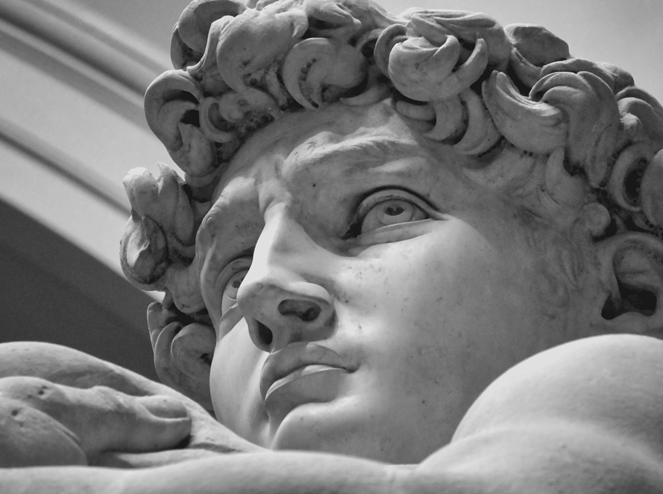
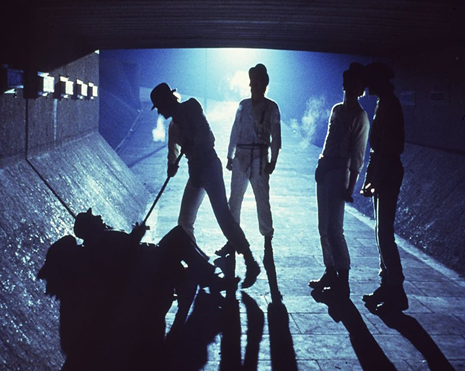
Fires, floods and extreme weather will imperil a third of all life on land in the next 60 years.
Nobel Physicist Predicts END DATE For Modern Civilization: And it’s quite soon…
The New York Times’s Resident Catastrophist Delivers Another Subscription to the End of the World
You wake up in a news cycle that never sleeps. With a cup of coffee, you read what ‘doomcasters’ are saying about end-of-life scenarios appearing on the horizon. Now you are fully awake and wondering what to do with these high alert headlines? Do you let existential crisis into your life?
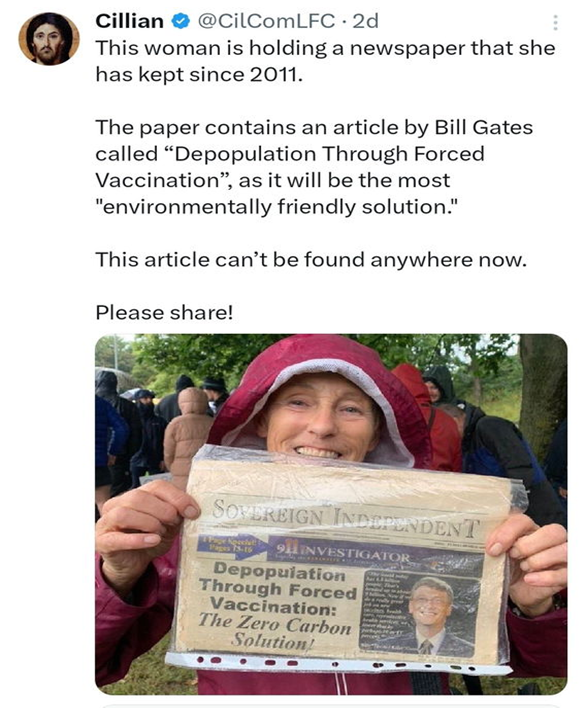
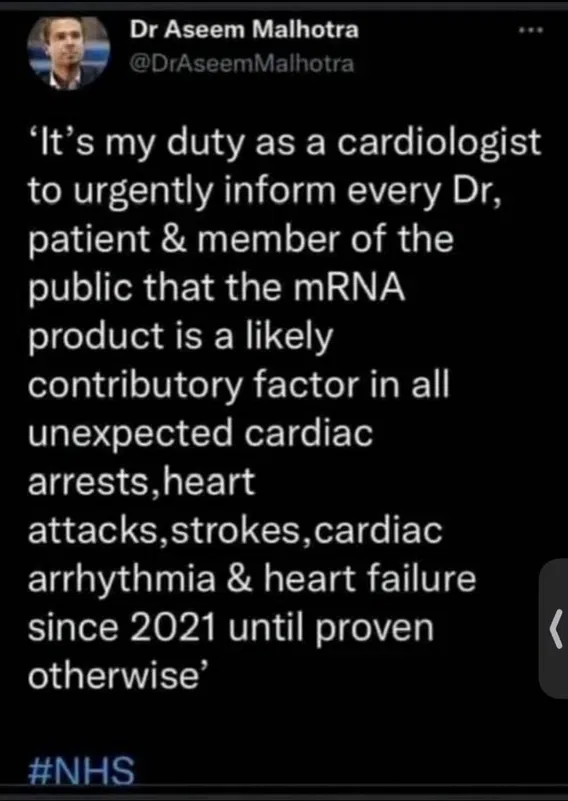
You sip your coffee and remember that not long ago the world was subjected to pandemic hysteria. Coronavirus, the “global crisis of unprecedented reach and proportion,” started making headlines at the beginning of 2020.
You recall the WHO declaring the coronavirus a “public health emergency of international concern.” And the headlines declaring surges in COVID-19 cases attributed to the Omicron variant, a “tripledemic” – COVID combined with flu and RSV, and of overwhelmed hospitals and healthcare systems and dancing nurses.
How could you forget that Biden imposed OSHA vaccination and testing emergency standards on your business or the reality-warping restrictive policies involving mandated lockdowns, masking, social distancing, fines, and vaccines, or the CDC predicting people will die?
You pour yourself another cup of coffee and look out the kitchen window. You see the couple next store – Vivian and Zoe – walking their dog Baxter. The other day, when you took the garbage can to the curb, the apoplectic twosome accosted you with “Democracy is threatened by the likes of you extremists, fascists, racists, homophobe Christian nationalists!” and “Trump is Hitler!” They saw you going to church last Sunday.
You drink your coffee troubled that Viv and Zoe had been beaten down by another media existential crisis campaign, akin to the rollout of the COVID-19 marketing campaign that told us to worry about it, and how to worry about it.
Under the spell of the “Democracy is threatened” campaign, Viv and Zoe were in a state of emotional panic. And that had them beat down on the closest person who didn’t share their views or the views of the commercial-sponsored media. The media’s inordinate influence has you very concerned about the collective fear and confusion its campaigns were causing to psyches.
The beat down goes on . . . in our heads.
~~~
How shall we then live in the context of existential dread?
Day after day imagination is battered with dire predictions– the end of this and that unless we do this and that. The steady beat of amplified headlines overwhelms one’s patience, strength, and soul.
Climate change, pandemics, wars, “Democracy!” AI Could Make Humans Irrelevant!
How do we respond to headlines telling us that we are done for? Should we let fear and helplessness dominate our lives? Can we live in terms of “accepting disharmony from the outset and defying it”? This last way of going forward is the directive C.S. Lewis prescribes in his essay “On Living in an Atomic Age.”
Published in post-war 1948 and at the beginning of the atomic age, the essay provides a reality-check perspective and presents a scenario of how to live in life-ending times.
The following is an excerpt from the opening of Lewis’ short essay. During COVID the excerpt was passed around on the internet, with “atomic” replaced with “coronavirus.” Certainly, the essay can be applied to any dire life-threatening circumstances.
In one way we think a great deal too much of the atomic bomb. “How are we to live in an atomic age?” I am tempted to reply: “Why, as you would have lived in the sixteenth century when the plague visited London almost every year, or as you would have lived in a Viking age when raiders from Scandinavia might land and cut your throat any night; or indeed, as you are already living in an age of cancer, an age of syphilis, an age of paralysis, an age of air raids, an age of railway accidents, an age of motor accidents.”
In other words, do not let us begin by exaggerating the novelty of our situation. Believe me, dear sir or madam, you and all whom you love were already sentenced to death before the atomic bomb was invented: and quite a high percentage of us were going to die in unpleasant ways. We had, indeed, one very great advantage over our ancestors — anesthetics; but we have that still. It is perfectly ridiculous to go about whimpering and drawing long faces because the scientists have added one more chance of painful and premature death to a world which already bristled with such chances and in which death itself was not a chance at all, but a certainty.
This is the first point to be made: and the first action to be taken is to pull ourselves together. If we are all going to be destroyed by an atomic bomb, let that bomb when it comes find us doing sensible and human things praying, working, teaching, reading, listening to music, bathing the children, playing tennis, chatting to our friends over a pint and a game of darts—not huddled together like frightened sheep and thinking about bombs. They may break our bodies (a microbe can do that) but they need not dominate our minds.
The full essay, in the document below, contains questions and positions Lewis maintains, such as
Are we “accepting disharmony from the outset and defying it?”
Do we “hold up our own human standards against the idiocy of the universe?”
Are we the product of blind physical forces and therefore unable to provide answers to questions of a fatalist existence?
“But suppose we really are spirits? Suppose we are not the offspring of Nature…?”
“We must go back to a much earlier view.”
“We must simply accept it that we are spirits, free and rational beings, at present inhabiting an irrational universe, and must draw the conclusion that we are not derived from it.”
“If there is no straight line elsewhere, how did we discover that Nature’s line is crooked?”
“Nothing is more likely to destroy a species or a nation than a determination to survive at all costs.”
https://www.matthewaglaser.com/living-in-an-atomic-age
“On Living in an Atomic Age” (first published 1948) by C. S. Lewis (1898–1963) From: Present Concerns: Essays by C.S. Lewis (edited by Walter Hooper; New York: Harcourt Brace Jovanovich, 1986), pages 73–80
Born a few years after the above essay was published, I became well aware of ‘doomcasting’ headlines. I recalled some of the headlines in my January 2025 post Surface Readings.
The post began with the words of poet W H Auden – “Now is the age of anxiety” and my own take on things: “Impending doom has been in the news during my entire lifetime.” I wrote about the headlines and pronouncements of those anxious times which included the book The Late great Planet Earth based on the modern and heretical notion of dispensationalism.
~~~
Imagination Reset
Taking in the spirit of the times, imaginations are exposed to the negation of life and dire predictions often made for political ends that use fear to move power into the hands of the few.
Taking in the digital tabloid times is the “WHAAM!” of a Roy Lichtenstein Ben-Day dots painting. Imagination is amped up and ready to pop with a Pow!
What happens to our imaginations when we are constantly confronted with crisis? And, how do we live with dire predictions?
With the 24/7/365 news cycle, it’s little wonder that “News Avoidance” is becoming a common way to deal with the constant specter of troubling things, as Thaddeus G. McCotter writes in I Didn’t Read the News Today, Oh Boy: Embracing the ‘News Avoidance’ Pandemic
“If you live today, you breath in nihilism … it’s the gas you breathe. If I hadn’t had the Church to fight it with or to tell me the necessity of fighting it, I would be the stinkingest logical positivist you ever saw right now.” ― Flannery O’Connor
What we shouldn’t avoid are resources such as poetry, art, classical literature and music to help us cope with and see beyond the terrors of the modern age. We need the signal of those who came before and dealt with all kinds of things and not the clamoring noise of influencers.
Poet Wallace Stevens, in “The Noble Rider and the Sound of Words” writes that poetry, as it interacts with reality and the imagination, can shape our perspective and provide meaning and comfort in a world that often feels overwhelming and harsh.
Wallace emphasizes the role of imagination in countering the beat down of life. If you are a Christian, you already know that the poetry of the Psalms does just that, e.g., Psalm 91.
In the video below, Dr. Jason Baxter, author of The Medieval Mind of C.S. Lewis discusses his book, Why Literature Still Matters.
Why Literature Still Matters: An Interview with Dr. Jason Baxter | Classical Home Education
~~~
If you need a quick antidote to climate hysteria, Itxu Díaz provides his take on the news of impending doom: Climate Change Scientists Set a Date for the Arrival of Hell on Earth: the Year 2085.
~~~
Naomi Wolf with Outspoke: “I’m here tonight to talk about a huge news story that broke in the last couple of days. It could be thread that unravels the whole COVID virus/vaccine perpetrator issue.
“A criminal syndicate, essentially.
“Even just this initial gesture is so transformational. It breaks the spell of, “No one can be held accountable, no one can be investigated from the untouchable third rail COVID vaccine rollout, COVID virus rollout.””
“The Shocking Story of NIH Secretly Funding COVID”
~~~
And the Beat Down Goes On
~~~
Wreathing (Matthew 6:34)
On my shed door, atop its plastic wreath,
a robin fashioned a nest, found twigs the binding.
then, behold,
above the manufactured certainty,
within the steadfastly twig-tucked wreathing,
her brood burst burst burst forth.
J.A. Johnson, 2026
Rate this:
Filed under 2026 Current Events, Climate change, COVID-19, Death, Depression, journalism, media, nihilism, pandemic, Political Commentary, social engineering, war Tagged with apocalypse, art, books, C.S. Lewis, Climate change, COVID-19, death, Democracy, entertainment, journalism, media, nuclear war, pandemics, social media, writing