Revolutions of the Soul

Know this: the issue, whether abortion, gender, sexuality, racism, capitalism, equality, colonialism, Jews or some other oppressor/oppressed power struggle– the issue is never the issue. The revolution is the issue. The key question of any revolution is who holds power, as Lenin wrote.

Many of the revolution’s WOKE reactionaries are blinded by the mythic romance of revolution. Pursuit of revolution itself is seen as something valuable, as taking part in something stylishly ‘Che Guevarean’ and adventurous and something to be passionate about. It may be a religion for some.

The revolution’s WOKE reactionaries are OK with creating suffering and totalitarianism as long as the rhetoric is about total transformation, whatever that entails.

The revolution of the hour: for the destruction of the Western world; we are to be the causalities and they, the martyrs in their romantic myth.

I’ve learned how true revolution takes place. It’s not through mad passions but through everyday empathy and love and the tiny alterations of the heart and mind that move us in that direction . . .

~~~

Literary critic Joseph Epstein, with the title of his book-length essay, asks The Novel, Who Needs It? Turns out, I do, as it offers “truth of an important kind unavailable elsewhere in literature or anywhere else.”

So, I’ve made it a point to read the realist fiction of Russian writers – Solzhenitsyn, Dostoyevsky, Tolstoy, and others along with Chekhov’s short stories.

With a sense of moral urgency, fiction-writing has always been serious business for Russians. The great writers were the truth-tellers, the prophets, the voice of the voiceless, and the conscience of a nation— “a second government,” as Alexander Solzhenitsyn once put it.

Why read great novels and Russian literature today? Gary Saul Morson provides his reasoning:

Like realism in painting, the realism in Russian fiction captures life with an accurate, detailed, unembellished depiction of life. It rejects flowery idealization, fantasy, and supernatural elements, and presents close observation of the human experience which can lead to personal discovery.

Life’s most important questions are explored in Russian fiction. The open-endedness of the writing leaves one to ponder the choices one is making. Literary realism can be grounding.

Ultimately about ideas, superior fiction shows how ideas -ideology and love for two examples – are played out in the lives of the characters. Over time, with tiny alterations, they change their minds –- and you see their conversion. Character development in literary realism is important.

“A single novel can touch on the wildest adventure but also dwell on the most private personal psychology,” writes Epstein. He gives the example of Moby Dick. I went with Tolstoy’s Anna Karenina for the latter.

Anna Karenina (1878), a novel about love and the family, explores the lives of its characters. Some pursue romantic love and others develop mature love. There are heroes and villains in Tolstoy’s most pro-family story.
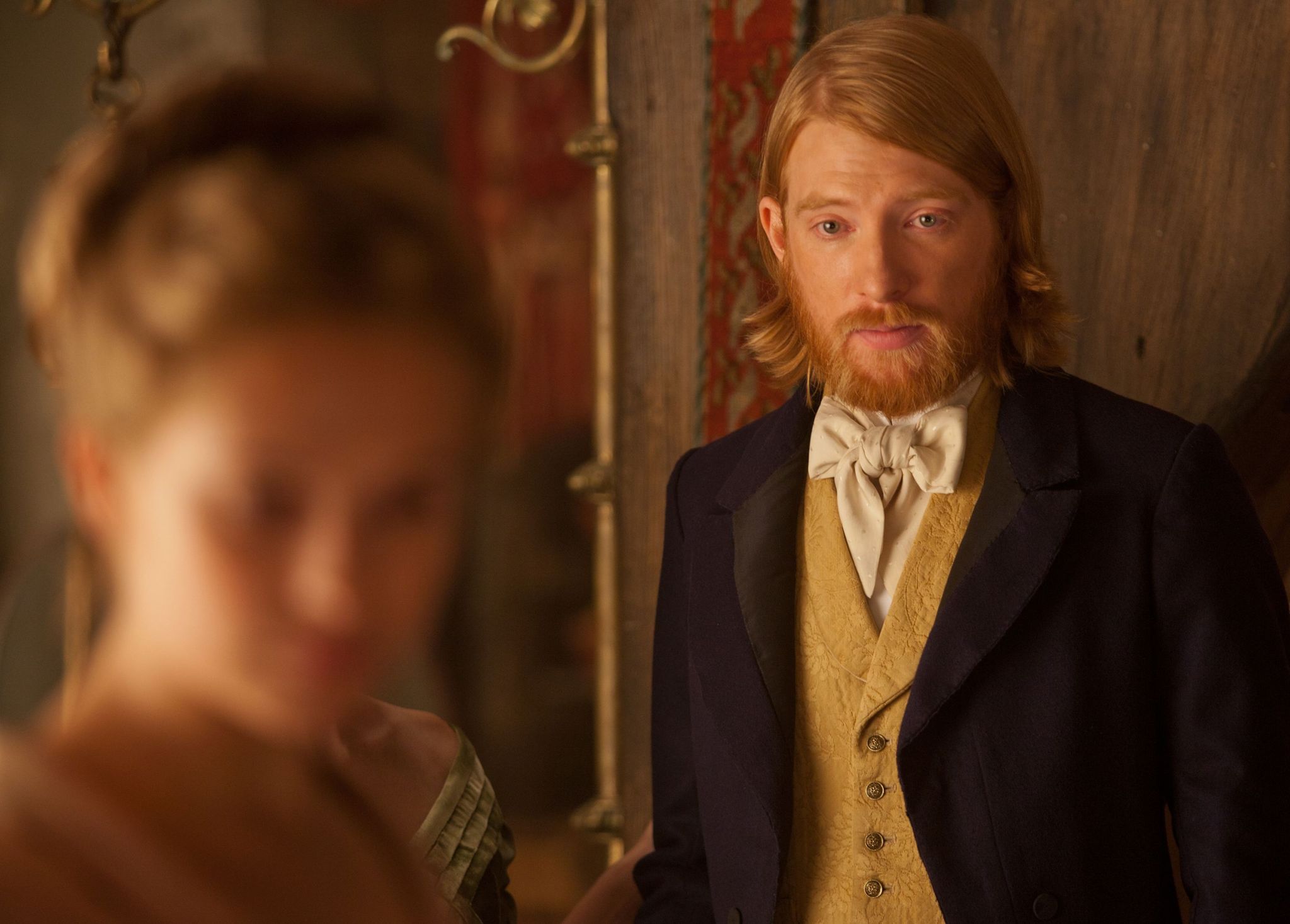
The consequences of infidelity and the compromises made for forbidden love begin to add up for both Anna and Stiva. In contrast are those well-married and living a rather prosaic life – Kitty and Levin. Over time and with many intimate conversations to understand each other, they have matured from romance to love and found contentment.

Tolstoy at 68 years of age, had just finished Anna Karenina. It has been said by some that as he wrote Anna, Tolstoy was going through a spiritual crisis. He perhaps goes through a very similar spiritual conversion as does Levin.

Tolstoy had been as baptized and raised according to the principles of the Orthodox Christian Church. But later, at eighteen, he said “I no longer believed in anything I had been taught.” I see that as a typical eighteen-year-old response to what feels confining and irrational.

But Tolstoy moves from staunch atheist to a firmly spiritual person. He believed that God was the answer to the type of carnal excess and groundless passions found in the Anna and Vronsky relationship.

Were Levin’s thought processes and his spiritual journey, his tiny alterations of consciousness, also Tolstoy’s spiritual journey? We get a sense of spiritual crisis, of spiritual revolution, and of spiritual maturation in the following four excerpts.

Tolstoy narrates the birth of Levin’s son almost entirely from the new father’s point of view. The birth of his son sparks a spiritual breakthrough in Levin.

Anna Karenina, Part 7, Chapter 13

One night, Kitty awakens Levin with news that her labor has begun. Levin is beside himself, aware only of her suffering and the need to alleviate it. Kitty sends Levin to fetch the midwife and the doctor and to get a prescription from the pharmacist. As he heads for the door, Levin hears a pitiful moan.

“Yes, that’s her,” he told himself, and clutching his head, he ran downstairs.

“Lord have mercy! Forgive us, help us! He repeated the words that suddenly came to his lips out of nowhere, and he, a nonbeliever repeated these words not only with his lips. Now, at this moment, he knew that neither all his doubts nor the impossibility of believing with his reason, which he had known in himself, in any way prevented him from turning to God. Now all that flew from his soul like dust. Who else was he to turn to if not to the One in whose hands he felt himself, his soul, his love?”

Gary Saul Morson, in Anna Karenina in Our Time: Seeing More Wisely,73:

“His reason suspended out of intense empathy, Levin, an unbeliever on rational grounds, finds himself praying, and not “only with his lips” (738). Why he, an atheist, prays sincerely at this moment becomes for him a riddle touching on life’s essential meaning. Desperate to do something but with nothing to do, Levin simply has to endure, a state that (as we shall see with Karenin) provokes the soul torn from its habitual responses to experience the sublime.”

Anna Karenina, Part 7, Chapter 14

Levin is floored, angry that the pharmacist preparing the opium and the doctor drinking his coffee are so laid back – taking their time – about the approach of the birth. He’s in such a state he can’t think straight. For them, the birth was an ordinary event. But for landowner Levin, who had been primarily concerned with farming and agricultural and was writing a theory book about it, there was no place to catalog the event.

Levin has no way to analyze what is happening. “All the usual conditions of life without which it is impossible to form a conception of anything ceased to exist for Levin. He had lost the sense of time.”

When Levin hears Kitty’s first scream, Levin is nonplussed. He has so bonded to Kitty over time that, in empathy, he suffers intense agony. He had experienced the same intense feelings and helplessness as his brother was dying.

“He knew and felt only that what was transpiring was similar to that which had transpired a year before in the provincial town hotel at his brother Nikolai’s deathbed. But that had been grief – and this was joy. Still, both that grief and this joy were identically outside all of life’s ordinary conditions; they were like an opening in that ordinary life through which something sublime appeared. What was transpiring had come about with identical difficulty and agony; and with identical incomprehensibility, the soul, when it did contemplate this sublime something, rose to a height as it had never risen before, where reason could not keep up.

“Lord, forgive and help us,” he repeated to himself incessantly, feeling, in spite of such a long and seemingly total estrangement, that he was addressing God just as trustingly and simply as during his childhood and first youth.”

Anna Karenina, Part 7, Chapter 15

Watching his brother die, Levin thinks that death is a cruel joke – you live, suffer, struggle and suddenly cease to exist. Now seeing his wife in such a painful state and thinking she is dying, he is beside himself: he “had long since given up wanting the child. He now hated the child. He didn’t even wish for her life now, he only wanted a cessation to these horrible sufferings.” New life brings new suffering.

But with the birth of his son and being anchored to life by his new family, Levin then understands that death is merely part of life. He maturely concludes that if one lives “for one’s soul” rather than for illusory self-gratification, the end of life is no longer a cruel trick, but a further revelation of life’s truths.

“If Levin had been told before that Kitty was dead, and that he had died with her, and that their children were angels, and that God was standing before him, he would have been surprised at nothing. But now, coming back to the world of reality, he had to make great mental efforts to take in that she was alive and well, and that the being howling so desperately was his son. Kitty was alive, her suffering was over. And he was inexpressively happy. This he understood and it made him completely happy. But the child? Where had he come from, and why, and who was he? He simply could not understand, could not get used to the idea. It seemed to him something superfluous, something extra, which he could not get used to for a long time.

Anna Karenina, Part 7, Chapter 16

A changed man.

“At ten o’clock the old prince, Sergey Ivanovitch, and Stepan Arkadyevitch were sitting at Levin’s. Having inquired after Kitty, they had dropped into conversation upon other subjects. Levin listened to them and during these conversations could not keep from recalling what had come to pass, what had happened prior to this morning, recalled himself as he had been yesterday, before all this. It was as if a hundred years had passed since then. He felt as if he were on some in accessible height from which he was making an effort to descend in order not to insult the people he was speaking to. He spoke and thought incessantly about his wife, the details of her present condition, and his son, to the idea of whose existence he was trying to accustom himself. The entire feminine world, which had taken on for him a new, previously unknown significance since he had been married, now in his mind had risen so high that his mind could not grasp it. He listened to the conversation about dinner yesterday at the club and thought, “What is happening with her now? Has she fallen asleep? How is she feeling? What is she thinking? Is my son Dimitri crying? And in the middle of the conversation, in the middle of a sentence, he jumped up and left the room.”

. . .
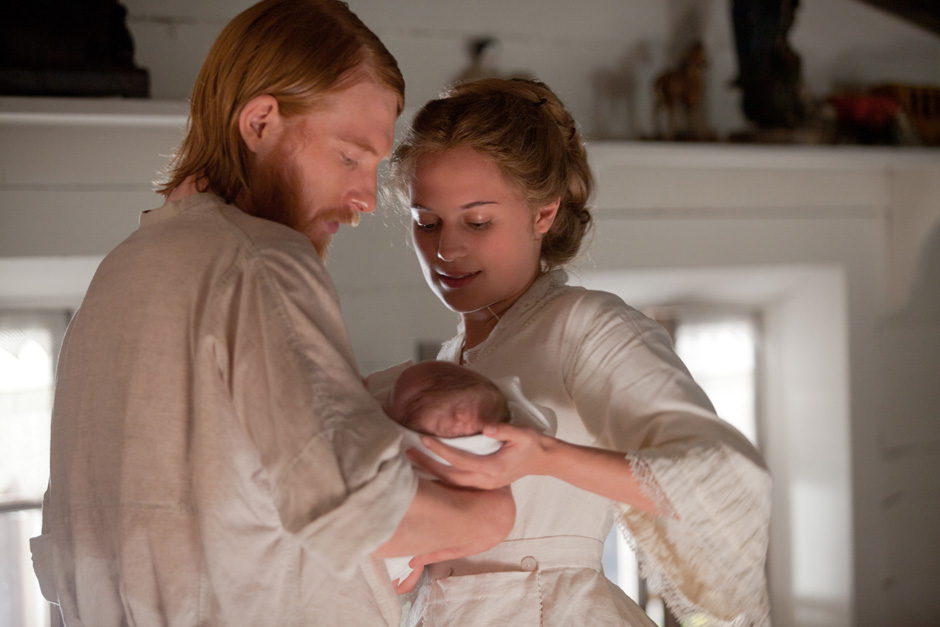
“Her gaze, bright in any case, shone even more brightly the closer he came. On her face was that same alteration from earthly to unearthly that one sees on the face of the dead; but there it is farewell, here a welcome. Again agitation similar to what he had experienced at the moment of the birth overwhelmed his heart. She took his hand and asked him whether he had slept. He couldn’t answer and turned away, convinced of his own weakness.

~~~

These four excerpts offer an opening into the ordinary life of Levin and Kitty. Other characters, the novel’s headliners Anna and Vronsky, go through significant turmoil over their decisions. Dolly, whose husband Stiva was unfaithful, stands out. But not for bad decisions or for the number of mentions, but for her care and love. She simply does what is needed and shows Christian love.

I’ll end with a quote from Gary Saul Morson’s Anna Karenina in Our Time: Seeing More Wisely:, 190:

“In this novel, Christian love produces monstrosity, and real saintliness, if the term can be so used, is inconspicuous. It does not sound a trumpet.

Any doctrine that defies human nature and everyday practices will, if backed by sufficient force, create much greater suffering than it sets out to alleviate. A movement that is truly “revolutionary” – that, like Bolshevism, sets out to change human nature entirely – will create evil on a scale not seen before the twentieth century. Tolstoy saw Christian love, revolutionism, and all other utopian ways of thinking as related errors. If so, they are errors of our time, and perhaps prosaic goodness offers the best hope of correction.”

I would correct the above with “Tolstoy saw insincere Christian love . . .”

~~~~~

The Abiding Truths of Russian Literature – A Conversation with Gary Saul Morson

The Abiding Truths of Russian Literature – A Conversation with Gary Saul Morson

The Abiding Truths of Russian Literature: A Conversation with Gary Saul Morson – AlbertMohler.com

~~~~~

2017 marks the centenary of the Bolshevik Revolution, an event that tragically reshaped Russian and Western history. How such an extraordinary event, and the ghastly regime it produced, could ever have happened depended not only on a great war, and the theoretical arcana of Karl Marx but, perhaps even more, on the outlook of the Russian intelligentsia and its assumptions about its social role. These same psychological and ideological predispositions continue to be found among intellectuals today. Hence, understanding the cultural setting of the Russian Revolution also helps us understand some of the more dangerous currents in contemporary intellectual life.

“Russian Lessons from 1917” – Gary Saul Morson – YouTube

~~~~~
Scaffolding

I sat down with a close friend the other day. I asked him about his early church experience, as I am interested in church dynamics.

Here’s what Dan (not his real name) said during the interview:

“My parents attended a Baptist church in Chicago before moving to the suburbs. I was a kid and just remember old buildings with a fusty smell and pictures to color. After the move, we started attending a Bible church. I was eight years old.

“I don’t remember a single sermon. But I do remember the church sanctuary. I sat there Sunday mornings and evenings for maybe twenty years.

“There was a plaque on the back wall above the choir loft. It said “God is in His holy temple. Let all the earth keep silent. Hab. 2:20.  

“Front and center was a large wing pulpit. Three large minister chairs were behind it along the choir loft. A piano on the left and an organ on the right flanked the platform.

“On the main floor in front of the pulpit was the oak communion table. “This Do In Remembrance of Me” was carved on the front. The table held the offering plates and a flower arrangement.

“To the right of the platform and behind a large rectangular hole in the wall was the baptistry. A landscape was painted on the walls surrounding the water tank.

“Opposite the platform, sixteen rows back, was the entrance to the sanctuary. A clock was centered above the double doors to let the minister know when to end the service.

“Rows of blond wood pews filled the space between the front and back with an aisle down the center and along each end.

“The side walls were painted-beige cinder block. Each wall had three windows of tinted-amber bubble glass. Forest green curtains bordered two sides of each window.

“The walls around the windows were bare except for a wooden rack near the organ. It held the numbers in attendance at the service and at Sunday school the week before. An usher counted attendance every Sunday.

“That’s a twenty-five-year snapshot. I don’t recall that room ever changing.”

I asked him about the service.

“Prelude. Hymns. Lots of choruses about leaving earth and flying away. Sermon. Calls for salvation and rededication of your life. Postlude. Every Sunday.”

I asked him about memories that stick out.

“Let’s see. There was the leader of the boy’s club. He let us run around and be crazy one night each week. One time he took us to a construction site to show us what he was working on. He was a carpenter.

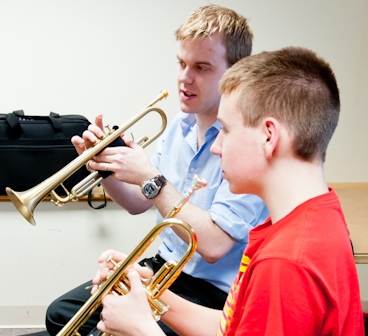
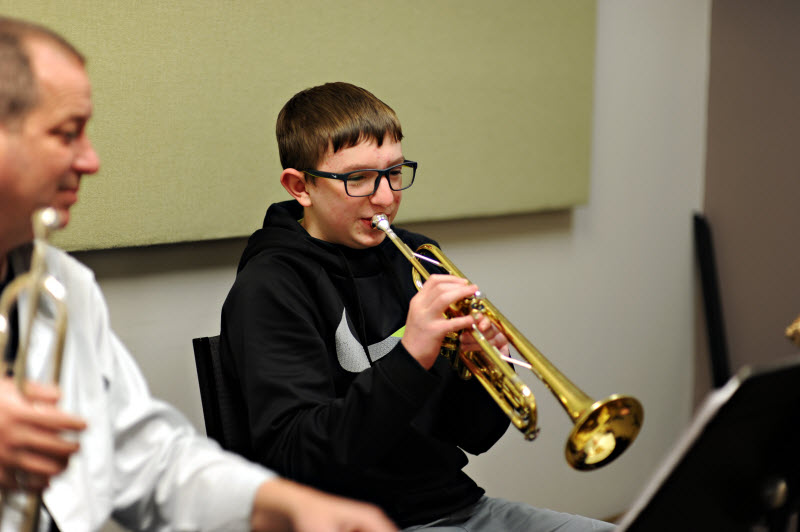
“There was an adult Sunday School teacher who visited a nursing home once a month. He had me come with him on those Saturdays. I’d play a hymn with my trumpet. Afterward he would give a short devotional.

“And there was this interim minister – there were lots of them – who got me my first job as a clerk in a Camera/Photo store. One time – I was twelve or thirteen – he had me come with him downtown to Pacific Garden Mission. I played my trumpet and he spoke to those who had come off the streets of Chicago.”

I told Dan that he only mentioned certain men as memories that stick out. Then I asked if anyone had mentored him.

“No one from church. Only my trumpet teachers did.”

I asked him to explain.

“I started playing the trumpet in third grade. My uncle gave me a beat-up Conn trumpet that he longer wanted to play. In the Junior High School, the band director wasn’t crazy about the look or the sound of my horn. So, he switched me to French horn for two years. But my heart was with the trumpet. I asked my parents for private lessons.

“Before I started lessons – this was during eighth grade  – my father and I went to an instrument store. He bought me a brand-new Bach Stradivarius b-flat trumpet. The horn was a beautiful and expensive gift. I felt affirmed.

“My first trumpet teacher was a high school principal who also played trumpet in big bands. The first question he asked me: What trumpet players did I listen to?  I told him Herb Albert. He just shook his head.

“He told me who I should listen to and to what pieces of music. He began giving me exercises to practice. Major and minor scales. Tonguing exercises. I’d have to play them for him the following week.

“The summer before high school I took what he taught me and practiced like crazy. The high school concert band director had sent out the requirements for entering the band. Those included playing major and minor scales and site reading.

“A month before my freshman year began, I was called in to audition for the band director. I played all the scales and sight read what he put in front of me. He was pleased. I was in the concert band – first trumpet section right behind the first chair trumpet, a sophomore.

“My junior year of high school the band director Mr. Gies became my second trumpet teacher. He also played the trumpet semi-professionally.

“What happened was this: the guy who sat first chair was a stellar trumpeter but he needed to be replaced. During the summer the first chair French horn player became pregnant. Both would soon be leaving the school. So, the band director began one-on-one time with me.

“Over several months Mr. Gies and I met in the school auditorium during an open period for both of us. Playing the trumpet in that auditorium, that sanctuary, was like no other experience. With those unstifled acoustics I could open up and project a nice broad sound.

“Mr. Gies asked me how I practiced. I shared with him the Carmine Caruso method for building chops. I learned the method from my first trumpet teacher, Mr. Lichti.

“I told him that the method involves interval training, articulation, range and produces endurance. With it, I had developed an extensive range -double high C to over an octave below the treble staff. The method had formed my sound to that point.

“Sitting together offstage, Mr. Gies and I worked through the Caruso method along with the Clarks – Clark Technical Studies – which are exercises used for the development of fingering technique.

“I cherished that time alone with the band director. In between playing an exercise we talked about anything and everything. And sometimes we were silent and it felt comfortable.

“We practiced together the rest of my junior year. I was ready for the first chair trumpet position when the other guy left.

“My third trumpet teacher was at a Bible school. After high school I entered a Christian Ed/Music program. The Christian Ed program was a bust but the music program was a blessing.

“I took private lessons from the concert band director, Mr. Edmonds. Unlike the other teachers, he was an established pianist with perfect pitch. He had a different take, a different sound in mind, for my horn – a precise centered pitch. He was also a composer. He adapted classical music for our concert band to play.

“In between playing my practiced exercises and being critiqued, the director and I would talk about anything. I shared with him the challenges I was facing. My practice time was limited because of my studies and the time spent listening to classical music for music appreciation class. And I had a part time job. He prayed for me at the end of each lesson.

“Like back in high school, I sat first trumpet second seat behind a sophomore in the concert band. But at an outdoor band concert, Mr. Edmonds had me solo the opening trumpet lines of Rimsky-Korsakov’s “Procession of the Nobles”. And when The Gaither Trio – Bill, Gloria, and Danny – came to town for a couple of concerts and needed some horns for the finales, Mr. Edmonds offered his two first chair trumpet players. The private lessons and my practice gave me opportunities to play.

“Looking back . . . sitting next to a trumpet teacher week after week, I learned from those who knew what to listen for and who to listen to. Mr. Lichti, for example, helped me realize that I had “deaf spots” in my listening. To develop my “ear”, I began to listen to Adolph “Bud” Herseth, principal trumpet in the Chicago Symphony Orchestra. I wanted to emulate his bel canto sound and his musical acumen.

“To accomplish this, I had to take a risk. You see, with one-on-one instruction you cannot hide, you can’t fake or pretend. You play your horn and the truth comes out. Sloppy practicing is immediately revealed and so is the need for discipline. You need another’s knowledgeable perspective to grow as a musician. Words or notes alone are not enough.

“The three trumpet teachers I mentioned invited me into their musical realm, which was both affirming and daunting, as I was made me accountable to them. In the role of apprentice, they imparted to me trumpet knowledge, technical ability, and a love for the craft.

“And now that I think about it, I take it back. The man who took me and others to his construction site and the man who took me with him to the rest home and the man who took me with to the Chicago mission and got me my first job were mentors. They influenced me just like the trumpet teachers advanced the formation of my horn playing.

“You asked about my early church experience. I’d say that there was lots of scaffolding but no formation. For me, there was really nothing life changing about going to church and sitting in silence listening to someone standing behind a pulpit. But there was with people I spent time with.”

End of interview.

~~~~~

Church culture: “Tragically, in recent years, Christians have gotten used to revelations of abuses of many kinds in our most respected churches–from Willow Creek to Harvest, from Southern Baptist pastors to Sovereign Grace churches. Respected author and theologian Scot McKnight and former Willow Creek member Laura Barringer wrote this book to paint a pathway forward for the church.”

A Church Called Tov: Forming a Goodness Culture That Resists Abuses of Power and Promotes Healing by Scot McKnight | Goodreads

In this podcast, theologian Scot McKnight and his daughter, Laura Barringer, join Julie Roys to discuss their latest book, A Church Called Tov: Forming a Goodness Culture That Resists Abuses of Power and Promotes Healing.

While their first book explained the characteristics of a “tov,” or good, culture, their latest book tackles the next challenge—transforming ingrained toxic cultures into tov ones.

Pivoting Your Church from Toxic to Healthy | The Roys Report

Pivoting Your Church From Toxic to Healthy | The Roys Report (julieroys.com)

~~~~~

Bud Herseth’s Final Concert on NPR – YouTube

Adolph Herseth Interview – YouTube

~~~~~

Binary Beckons for More from You

Two options guided my early incorrigible years: “Either you do what I say or your father will deal with you when he comes home” “Either you clean you room or lose your allowance” “Either you are home by 9 or you will be grounded.” The church, too, presented two stark choices: “Either you get saved and go to heaven or you go to hell”; “Either walk the straight and narrow or walk the wide way of the world.”

The either/or binaries of my early childhood were meant to prepare me for life. I learned that if I wandered off into “or” territory there was sure to be consequences. My parents guided my behavior from their own experience of walking within binary guard rails.

They had learned that from the simplest safety issues to the most important issues in life, honest straightforward either/or choices are required. My late mother shared one such either/or choice.

My father, having grown up in the Dutch Reformed church where smoking was the norm for men, was given a choice by my mother when she was dating my father: “Either you stop smoking or that’s it.” Thankfully, my father didn’t “or” the situation. I wouldn’t be here if he did.

With knowledge of their own either/or choices and exposing me to the either/or choices of the book of Proverbs, my parents either/or’d my youth. Binary guard rails were set in place for my time in Jr. High and High school.

When I attended Moody Bible Institute after high school (early 70s), the binary thinking infused in me by the church came into question.

A first-year class called “Personal Evangelism” was taught by Mr. Winslett. During that semester Mr. W described different religions. As he did so he labeled the churches of the Seventh Day Adventists, Mormons, Jehovah’s Witness and others as cults. When he came to the Catholic church, he said it was a cult because Catholics worshipped Mary, had a pope, and put tradition ahead of scripture. I remember hearing this and thinking that we’re better than all of them. But something felt off.

(Per Article I of The Chicago Statement on Biblical Inerrancy found on the Moody Bible Institute website, the Bible, not tradition, is the authoritative Word of God.)

The highly partisan Mr. W, a representative of MBI, had sallied Catholicism: MBI represented real Christianity and Catholicism, a “cult”, did not; either you are with us in Bible first thinking or you are not one of us. (Mr. W was the only teacher I met a MBI like this. But there are many who preach and teach the same binary “us and them” thing.)

I was raised Protestant. Differences of Protestantism and Catholicism were minimally noted in my church. But I had read about Luther, the Ninety-five Theses, and the Reformation. I knew about the abuses and corruption of the Catholic church. Those include Johann Tetzel selling indulgences.

But faith in God and his salvation coupled to Mary, the pope and tradition were not Christianity deal breakers for me. For without faith it is impossible to please God, because anyone who approaches Him must believe that He exists and that He rewards those who earnestly seek Him.

Instead of imposing exclusionary theology, abide by the words of the old hymn: “God moves in a mysterious way His wonders to perform . . . God is his own interpreter, and he will make it plain.”

Years later I came across the same “us and them” attack. I brought my daughter to an Awana program going on at a Baptist church. On the night that she and I were to race the Pinewood Derby Car we had crafted together, the speaker bad-mouthed the Catholic church during a promotion for the Baptist church we were standing in.

He said something to the effect that their Baptist church wasn’t like the unsound Catholic church. I was shocked. There were members of that Baptist church and other churches in attendance. What did they walk away with that night?

I’ve seen this attitude surface so many times by haughty either/or Protestants. I’ve also seen it in either/or Catholics. Both groups interpret Church teaching in a narrow way, then argue that whoever disagrees with their tightly wound interpretation must—by the fact of that disagreement—be in opposition to Church teaching. The Either-Or fallacy used by both Protestants and Catholics: “I can’t be in error therefore YOU must be!” 

Another anecdote of the “us and them” attitude: One night I was sitting in a donors meeting listening to a presentation. The Episcopal church I attended wanted to annex and refurbish the house next store and make it ministry usable. At front and center of the room that night was a picture board showing the proposed design. The crossway from the existing church building to the house showed a cross in relief in the arc above the passageway. One woman remarked that we should get rid of the cross because “we’re not Baptists.”

Look. Our family and church backgrounds teach us to think in opposites – basically in terms of good and bad. We are presented with two options and they appear as your only options and mutually exclusive. We then bring unmediated polar extremes into adulthood.

Either/or thinking integrated into our lives and then reinforced by our respective cultures can produce a worldview in stringent binary terms: as a one or zero. Black-and-white thinking is used to reduce the world to something we can handle which then provides a sense of certainty and security. But “a one or zero” thinking can be adversarial, dividing people into “us vs. them.” A few examples:

“I am right and you are wrong.” (How does that work out in marriage? With our neighbors?)

“If you’re not with me, you’re against me. I have friends and enemies but not acquaintances.”

“Either I win or I lose in this situation.”

It can also produce all-or-nothing false dilemma fallacies which are really manipulative setups:

“If you care about your neighbor, you will get vaccinated” and “Putting others first will get us through he pandemic” “Getting vaccinated is loving your neighbor as yourself.”

“Social solidarity is the most precious tenet of our democracy.” 

“You’re either pro-choice or anti-woman. There’s no other moral stance.”

“If you’re not part of the solution, you’re part of the problem.”

“Either you let your child change their gender or they will commit suicide.”

“You are either racist (by not agreeing with me) or you are anti-racist (by agreeing with me).”

“If you are against LGBTQ books in the library you are a book banner.”

“If you question what is being taught in public schools, you are a domestic terrorist.”

“If you question the 2020 election you are a MAGA extremist.”

“If you don’t accept the climate science consensus (or COVID science consensus), then you are a science denier.”

Either/or “us and them” thinking tends toward exclusion and not embrace. It tends toward absolutism, authoritarianism, fundamentalism and judgement. We see it in Hamas’ attack on Israel. We see it in climate activism. We see it in cancel culture. We see it in the murderous history of totalitarian regimes. We see it in church teaching and we sing it: “Onward, Christian soldiers, marching as to war.”

We see it in the teachings and practice of Christians, Muslims, and the Progressive Left which would have us believe that they are the opposite of conservative either/or thinking while mandating their own anything-goes version of it. Theology, ideology and government policies are marketed with the dichotomy of good and bad.

It seems that many have retained their childhood’s unyielding binary worldview. It is used as a defense mechanism, as a means of protection from the “hazards and vicissitudes of life”. (From the statement made by FDR when he signed the Social Security Act.)

I’ve seen the binary thinking defense mechanism employed by Christians. Though it comes across as holding fast to the faith and Sola Scriptura, faith vs. science messaging reduces the supposed conflict to “us vs. them” binary thinking which allows no quarter for God’s revelation in nature as revealed by science. Yet, God has revealed himself in both scripture and nature. Science is a tool for understanding God’s revelation of Himself in the physical world.

When I told my eighty-nine-year-old Godly mother that, based on research, I believed the universe to be billions of years old and that God used evolution, she didn’t reply “That’s interesting. Tell me more.” She said “That’s heresy!” Her defense mechanism alarm bell went off. She was reacting from what she had been taught and how she had been taught to think about what she was taught.

Becoming emotionally invested in extremes may lead to the exclusion of people, as “Heresy!” suggests. Such binary thinking can produce unrealistic portrayals of others and it can become used, as mentioned above, as a weaponized defense against others.

Certainly, there are people who watch news commentators because they relish the mocking and “owning” of the opposition. Certainly, there are people who go to church for the same reasons. But there is nothing mature about participation in bad mouthing others. I see nothing of this in Jesus.

I come across Jesus-whipping-the-money-changers-in-the-temple memes on social media. These are extrapolated as Jesus is “destroying” his enemies, so we can do the same. Horrible nonsense.

Relying solely on binary thinking is intellectual and spiritual laziness. An open both/and questioning mind is not a slippery slope and it’s not anything-goes Progressivism. Seek truth and not the comfort of tribal consensus.

Consider that no one has all the information – not your pastor nor MBI nor Anthony Fauci nor climate scientists. It’s OK. Consider that not everything is black and white. Knowing the difference and knowing when to introduce AND with “perhaps” is wisdom.

The Creator of the universe is not a small-minded Person. He holds a universe of disparate thought, theories, and faith in his hands. He is not threatened by any of it. A follower of the Creator of the universe lets God hold the messiness and uncertainty of life in His hands and does not feel threatened.

Finally, a reductionist’s worldview makes it incredibly difficult to hold space for the uncertainty and messiness of others. But there is a better way, a much better way: love and maturity.

Love is great-hearted; love is kind,

Knows no jealousy, makes no fuss,

Is not puffed up, no shameless way,

Doesn’t force its rightful claim,

Doesn’t rage or bear a grudge,

Doesn’t cheer at other’s harm,

Rejoices, rather, in truth.

Love bears all things, believes all things;

Love hopes all things, endures all things.

As a child I spoke, and thought, and reasoned like a child; When I grew up, I threw off childish ways.

I Cor. 13:4-7, 11

~~~~~

(Note: I’ve summed up a lot so as to make this post accessible. I was involved in the Jesus People movement during high school. Along with those in the movement I questioned a lot of the binary thinking of the church. I’ll share that story in another post.)

~~~~~
Science and Faith

In this episode, we focus on the apparent tension between science and faith.

“Many people believe that science and religious faith are bitter enemies with conflicting views of the universe. One the one hand there is the scientific account of the origins of life and then there is the story of universal origins told by the bible. But is this tension real, or is it based on a deep misunderstanding of what the Bible is and how it communicates?

 . . .

“Consider this a crash course in reading the Bible as an ancient cross-cultural experience.”

Science and Faith

Science & Faith (bibleproject.com)

~~~~~~

 Kate Boyd | Science and the Messy Middle

Kate Boyd has been learning to live out her faith in the messy middle in a culture that rewards picking a side. While her journey didn’t begin with a conflict between science and religion, her story explores the complexities of understanding the Bible in today’s context and anyone who has struggled with issues of science and faith will resonate with this conversation.

Kate Boyd | Science and the Messy Middle

149. Kate Boyd | Science and the Messy Middle | Language of God (biologos.org)

~~~~~

I’ve been told that I’m either naive or stupid.

I’m not sure which side I’m moron.

Not Tame Not Tony

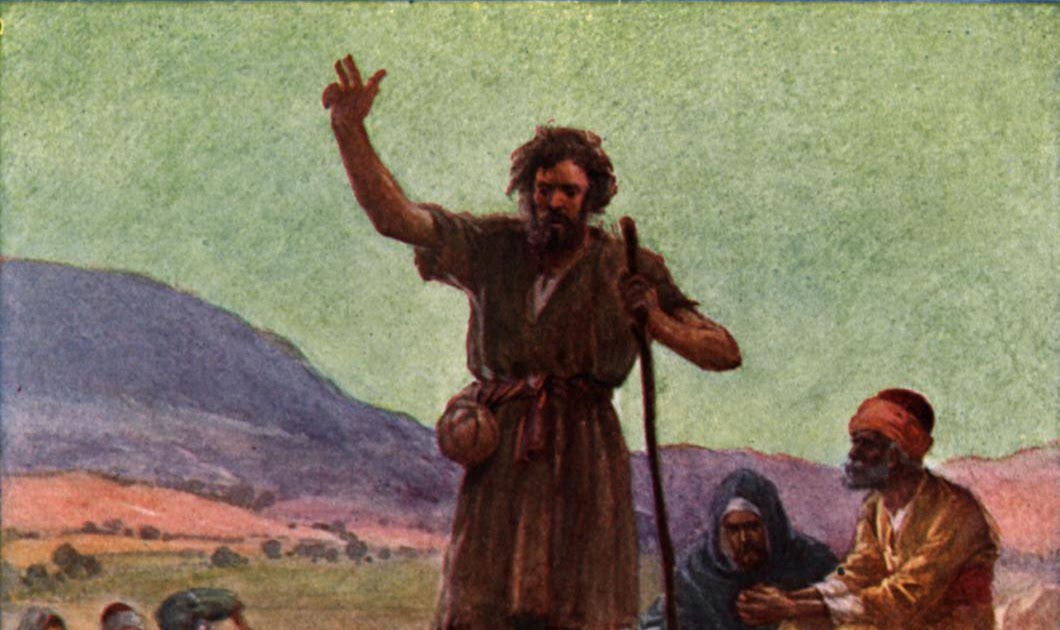
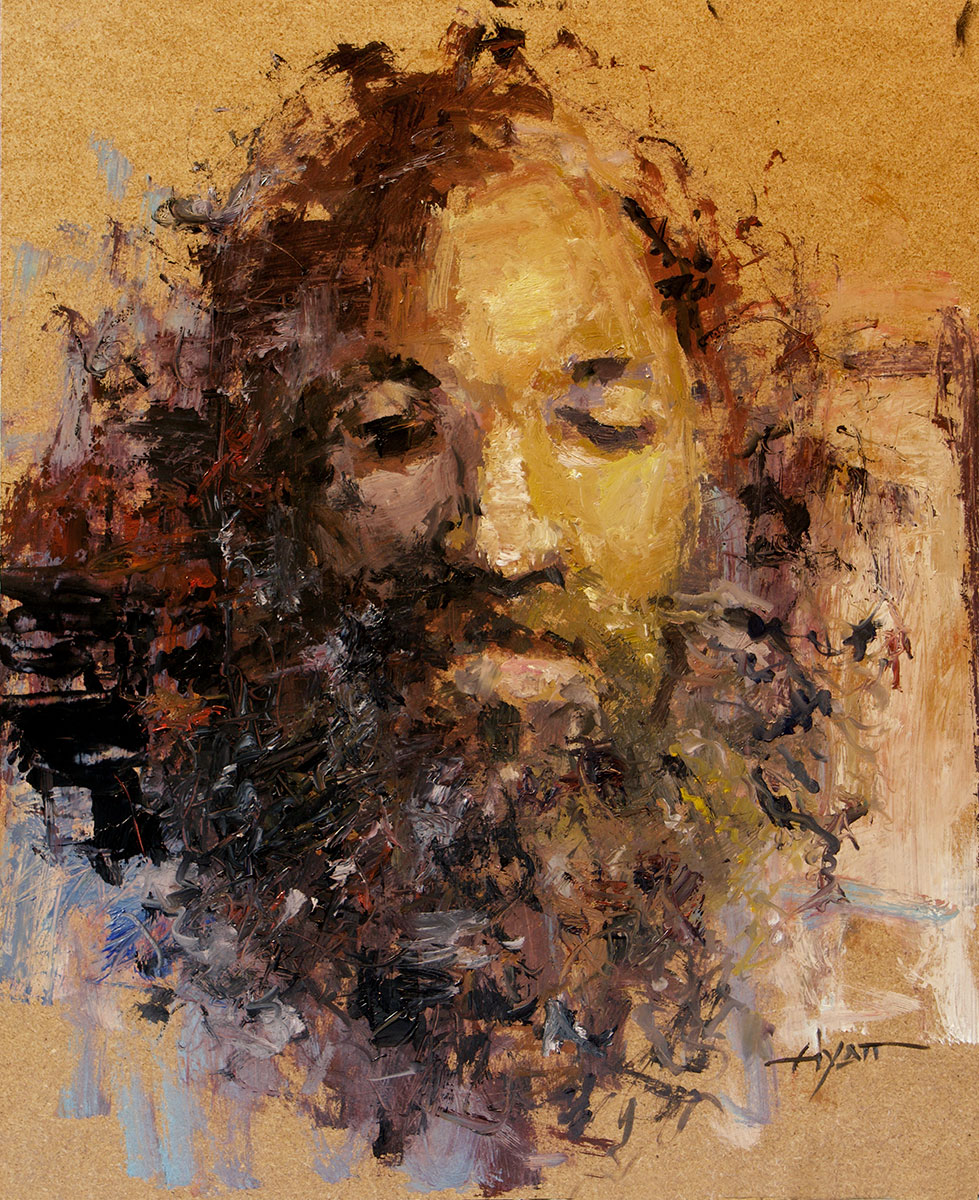
Wearing camel hair clothes with a leather belt, eating locust and wild honey – that’s not the way, truth and life of today’s celebrity preachers. No. The wilderness figure of the unentangled Forerunner was light-years away from metropolitan Evangelical-industrial-complex pastors.

John the Baptist had none of the trappings of celebrity mega-church preachers, not even the dressed-down attire that some celebrity preachers wear so as to not put too much emphasis on appearance while placing emphasis on their appearance and calling attention to themselves.

John the Baptist didn’t dress like swanky celebrity preachers, who call attention to their prosperity gospel. He didn’t dress like royalty.

The Forerunner didn’t promote himself. He said “Someone a lot stronger than me is coming close behind” and “Look! There’s God’s lamb! He’s the one who takes away the world’s sin! He’s the one I was speaking about when I said, ‘There’s a man coming after me who ranks ahead of me, because he was before me. I came to baptize with water – so that he could be revealed to Israel.”

The Forerunner was a doormat. He laid down his life to make way for the One who would lay down his life for the world, of whom, John told the crowd, he was not worthy to undo his sandals.

John the Baptist didn’t preach impediments. He didn’t preach a prosperity health and wealth gospel or a power of love and positive attitude gospel. He wasn’t a reed bobbling in the winds of culture. The Baptist announced a baptism of repentance for the forgiveness of sins – not a “you can do it” message.

The Baptist wasn’t a culture warrior. He didn’t preach mushy church talk. He didn’t entertain. He didn’t cajole. He didn’t try to impress with his knowledge. He didn’t preach social justice. Dressed in penitential garb, John called for repentance and criticized a King for his wicked ways.

His wasn’t a ‘you gotta get saved so you can go to heaven’ message. There was no ‘what’s-in-it-for-me’ retribution principle sermon. No. He declared a person, a lamb, a Holy Spirit baptizer, a realized hope. John’s message was for those who had ears to hear: repent and be baptized and I’m not the center of attention.

John the Baptist didn’t have a large auditorium with a worship band and multi-media productions. His message drew huge crowds out to a wilderness riverside. The whole of Judea and everyone who lived in Jerusalem went out to the desert to see the spectacle of a hairy wild-eyed Elijah standing in a river calling for confession of sins, repentance and a plunge in the river.

John the Baptist didn’t have degrees, references, prestige or the charisma of a “winning personality”. The bona fides of the crude and unorthodox John were the words that came out of his mouth and all the prophets and law that had made their prophecies before he came on the scene.

John the Baptist had none of the revenue streams of the modern-day mega pastors. He had no salary. He didn’t receive perks and special treatment. He wore and ate and lived off the land.

The Baptist had no social media accounts or TV presence. He had no royalties from book sales, no online webinars, no DVD sales. He didn’t sell “merch”. He didn’t offer boat cruises and trips to the Holy Land (well, he was already there) and receive a free trip in return. He had no brand or image to protect. There was no John the Baptist newsletter promoting his ministry, detailing the number baptized, and asking for donations.

John the Baptist didn’t have a $6 million church-owned lakefront mansion. Like the son of man, John the Baptist had nowhere to lay his head except when it was time to give up his life. John’s head, laid on a platter, was a gift from King Herod, “that fox” who regularly enjoyed listening to John’s disturbing words.

The Forerunner heralded the beginning of Jesus’ ministry, not his own. Sent from God, John came as evidence about the life that was the light of the human race so that everyone might believe through him. He prepared the way, not for himself but for the One who was to come. John eschewed self-promotion, celebrity, and the creation of a following. He wasn’t Forerunner “forward”.

Is that the way, truth and life of today’s celebrity preachers?

The following text were referenced: Matthew 11: 7-15; Mark 1: 4-11; Luke 1: 57-80, 13: 32; John 6:6-36

~~~~~
Podcast: Celebrities for Jesus – YouTube

Calvary Chapel Pastor Remains Despite Reports of Addiction & Abuse (julieroys.com)

The Roys Report Investigation – churches & leaders:

Investigations | The Roys Report (julieroys.com)

~~~~~

Jesus vs. Evangelicals Pt 1

JESUS v. Evangelicals | The Roys Report (julieroys.com)

Jesus vs. Evangelicals Pt 2

JESUS v. Evangelicals, Part II: The Megachurch | The Roys Report (julieroys.com)

Moving On

It’s the first Tuesday of the month.

I watched him park his black Mercedes. I watched him cross the parking lot. He was angry talking on the phone. I watched him sneer at a man get out of a car next to his. I watched him looking at his watch. I watched him enter the home. My son Edward.

I watched over him in my belly. I watched him at my breast. I watched his first steps. I heard his first words.

I heard his loud voice from my chair by the window. I heard my name. I heard “Five minutes.” I heard the front desk “Over there.”

I watched him come over. I heard “Mom, I’m here.” I felt a kiss on my head. I smelled cigar and bourbon. I saw my face cringe in the mirror. I saw him look in the mirror. “Sit down,” I said.

“I don’t have much time,” he said.

“Where you off to?” I said.

“My new business Going Beyond Inc.,” he said.

“What’s that?” I said.

“Human enhancement technology,” he said.

“What’s that?” I said.

“Life extension. Changing and improving humanity with technology,” he said. “Well how you been?”

“I’ve been here where you put me,” I said.

“I asked how you are,” he said.

“I’m eighty-seven years old have trouble reading, hearing, walking, eating, pooping, Jim is gone, and my only child has business to attend to,” I said.

“I come as often as I can get away,” he said. “Besides,” he said, “I pay them good money to look after you when I’m not here.”

“You better get on with it” I said. “Things are not improving here.”

I saw him place a twenty-dollar bill on the lamp stand.

“Have them buy some of that candy you like,” he said.

“I’ll rent a son,” I said.

I watched him look in the mirror one last time. I felt a kiss on my head. I smelled cigar and bourbon. I heard “Bye mmmm.” I watched him walk away.

I heard his loud voice from my chair by the window. I heard “Next month” “Keep eye on her.” I heard the front desk “Oh, she’s not going anywhere.”

I watched him leave the home. I watched him cross the parking lot. He was angry talking on the phone. I watched him looking at his watch. I watched him look over his car on the passenger side. I watched him get in his Mercedes. I watched him drive off. My son Edward.

©Jennifer Ann Johnson, Kingdom Venturers, 2023, All Rights Reserved

~~~~~

“Navigating the Technological Divide” – Joe Vukov

Joe Vukov, Associate Professor of Philosophy and the Associate Director of the Hank Center for the Catholic Intellectual Heritage at Loyola University Chicago, helps to explain the pitfalls of both extremes—on one side, the transhumanists (who embrace technology as a way to become more human) and on the other, the neoLuddites (who shun certain kinds of technology)—and begins to clear a path somewhere in the middle. 

151. Joe Vukov | Navigating the Technological Divide | Language of God (biologos.org)

~~~~~

Transhumanist, Human Enhancement Resources:

Joseph Vukov, The Perils of Perfection: On the Limits and Possibilities of Human Enhancement – PhilPapers

~~~

Like a thief in the night, artificial intelligence has inserted itself into our lives. It makes important decisions for us every day. Often, we barely notice. As Joe Allen writes in this groundbreaking book, “Transhumanism is the great merger of humankind with the Machine. At this stage in history, it consists of billions using smartphones. Going forward, we’ll be hardwiring our brains to artificial intelligence systems.”

Dark Aeon | Book by Joe Allen, Stephen K. Bannon | Official Publisher Page | Simon & Schuster (simonandschuster.com)

SINGULARITY WEEKLY | Joe Allen | Substack

Joe Allen | www.JOEBOT.xyz (wordpress.com)

~~~~~

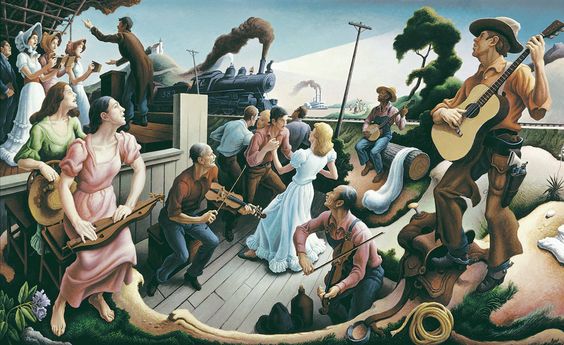
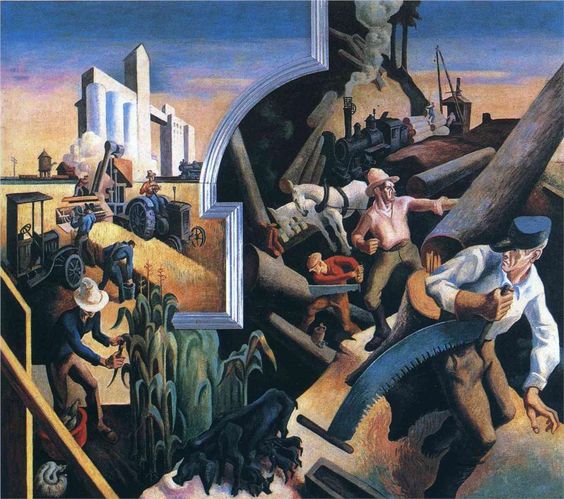
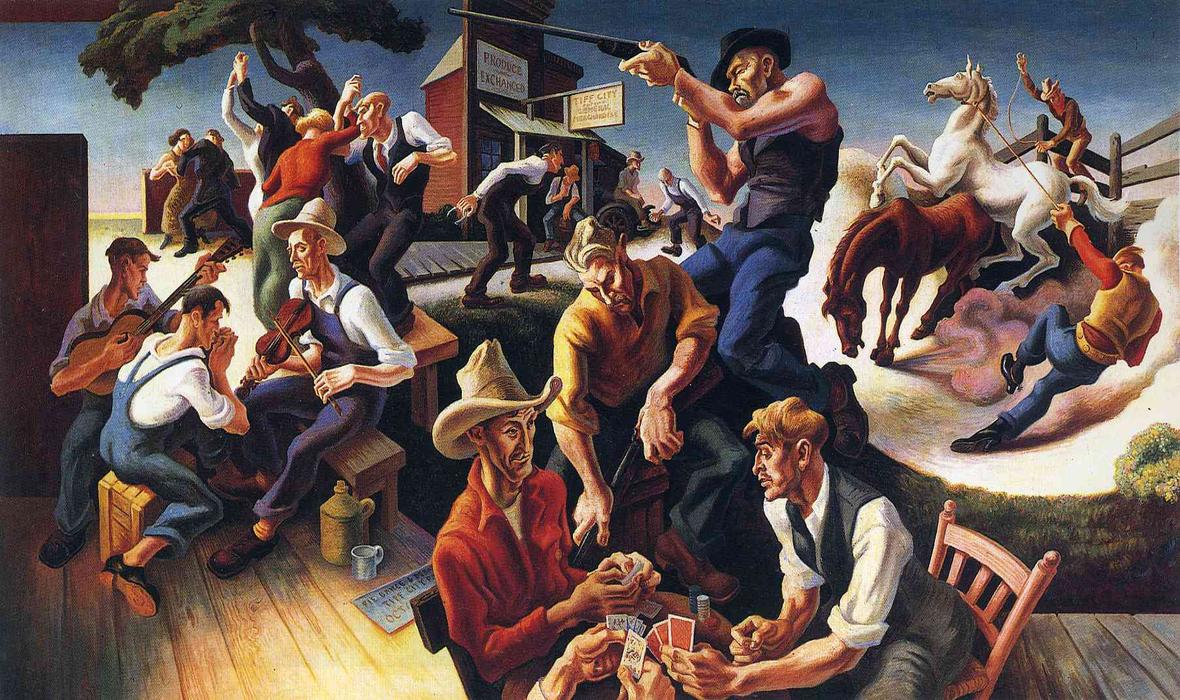
Thomas Hart Benton

Sources of Country Music – Thomas Hart Benton
Midwest – Thomas Hart Benton
Arts of the West – Thomas Hart Benton

Present But Not Accounted For

The death, burial, and resurrection of Jesus– who did the evangelists turn to for their record of these events? They relied on the testimony of several women – supporters and disciples – who had been with Jesus from the earliest days of his Galilean ministry and followed him to Jerusalem. The women were authoritative apostolic witnesses of these events in the early Christian community. Their telling and retelling of these events shaped the Gospel tradition.

The four gospel accounts variously record the women’s eyewitness testimony of the exceptional events in spite of what is alleged about a first century woman’s testimony not considered credible in a court run by men.

The gospel writers, as did other ancient historiographers, set great store in the role of eyewitnesses.[1] First-hand accounts of what was seen and heard and its interpretation were the most reliable. As a matter of record and for a connection to the sources, the identities of the women who witnessed the events of the Passion and resurrection are clearly identified by the gospel writers (see Women as Eyewitnesses below). The women were present and accounted for in the gospels.

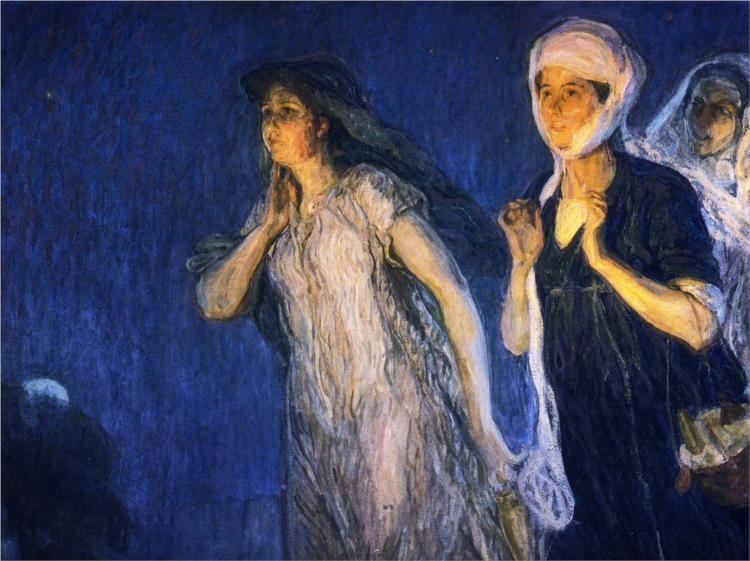
The-Three-Marys-Henry Ossawa Tanner

Across the four gospel accounts, two or three women are noted to be at the cross, at the burial and at the empty tomb. This would fulfill Torah’s requirement (Deut. 19:15) for two or three witnesses for evidence to be substantiated.

We can be thankful that the women’s eyewitness testimonies, even if rejected by a first century court of men, provides for us today the historical reality of the extraordinary events. Those who have not seen the risen Lord are dependent on those who have such as Mary Magdalene, an apostle to the apostles, who said “I have seen the Lord!”

The women’s testimony, even if rejected by men, certainly didn’t preclude women in the community from accepting it. The women’s firsthand account of the events spread throughout the Christian community, where as many women as men, and likely more, were drawn to early Christianity. And where the role of the women as benefactors and disciples of Jesus was already well-known.[2] That a woman was commissioned by Jesus to be his “go and tell” witness – this was no surprise. The resurrection was the “Do you know what this means!” surprise.

For the women involved, it wasn’t a matter of passive observation. It involved active understanding, as Richard Bauckham, in Gospel Women: Studies of the Named Women in the Gospels writes [3]:

“It would be a mistake to envisage the women’s role of eyewitnesses as a passive one. As participants in events that radically changed their own lives, the women, in telling and retelling the stories of the events of the passion and resurrection, were also interpreting the significance of the events.”

It would also be a mistake to assume that what the women were relating had to reinterpreted and retold by men.

Again, Richard Bauckham[4] :

“I conclude that there is no evidence to suggest that the role of women in the resurrection stories has been depreciated or limited in the Gospel narratives of Matthew, Luke, and John. Where male prejudice against the credibility is explicitly evoked (Luke 24:11), this is so that it may be decisively overturned.

“Where readers may bring such prejudice to the texts, even though the texts give no pretext for doing so, again the effect of the narratives will be to refute and to reverse assumptions of male priority and female unreliability.

“. . . it suggests that within the Christian communities themselves the role of women as witnesses was highly respected. There seems to be no evidence that it became less so over time. It is one of a variety of striking aspects of early Christianity that belong to the countercultural nature of the Christian communities as societies in which God’s eschatological overturning of social privilege was taken very seriously.” (Emphasis mine.)

Present but not accounted for: women, apostolic traditioners and eyewitness guarantors of not only the Passion and resurrection events but also of the incarnation, are not included in the kerygmatic summaries of Peter and Paul.

(Kerygmatic summaries can be thought of as basically sermon outlines open to improvisation and amplification from gospel tradition influences.)

Kerygmatic summaries in sermons (Acts 2:14-36, 3:12-36, 10:34-43, 13:16-41) and in Paul’s resurrection discussion (1 Cor. 15) do not mention the role of women. That they are not mentioned doesn’t disavow the women’s roles as apostolic traditioners and eyewitness guarantors of the gospel tradition. The sermons are an overview of the gospel story meant for a crowd not aware of it.

(Did Peter and Paul have concerns about mentioning the role of women to a patriarchal assembly? Where they concerned that their message would be rejected by male listeners? It’s a real possibility.)

What may be seen as a snub, though, is not being accounted for in Paul’s resurrection appearance list (1 Cor. 15:3-7).

Here ‘s Richard Bauckham’s take on that [5]:

“. . . we should notice that the women are not in fact, as so often assumed, absent from 1 Corinthians 15:3-7. Paul distinguishes between an appearance to the twelve and one to all the apostles, since, unlike Luke, he does not confine the term “apostle” to the twelve. At this appearance, he would have assumed that other apostles he knew, such as Barnabas, Sylvanus, and James the Lord’s brother, were present along with the twelve. Now that it is generally recognized that Paul knew and had a great respect for at least one woman apostle, Junia (Rom 16:7), we must certainly also conclude that he would have taken for granted that women were included in an appearance to “all the apostles.”

(The apostle Paul calls Andronicus and Junia (Rom 16:7) “apostles”, likely meaning that they had been present at a resurrection appearance of Jesus. The name Junia was probably the Latin name of Jesus’s disciple Joanna (Luke 8:3; 24:10).) Andronicus (Junia’s husband Chuza?) and Junia (Joanna), Palestinian Jews, were likely members of the Jerusalem church before going to Rome.

Present today but not accounted for: Women as apostolic traditioners and eyewitness guarantors of the gospel traditions in today’s sermons AND women of the same caliber and devotion to the Lord in our pulpits.

We need more women traditioners, like those who followed and supported Jesus from the earliest days of his Galilean ministry and then followed him to Jerusalem and to the cross, the burial, and the empty tomb. We need more women traditioners like those who sat at Jesus’s feet and were discipled by him: “[Martha’s] sister, Mary, sat at the Lord’s feet, listening to what he taught.” (Luke 10:39). But women today have been “roled” into submission with the weight of out of context scripture verses.

The apostle Paul, in 1 Timothy 2:14, alludes to women being deceived and about divine order needing to be observed. Does anyone think that the women supporters and disciples of Jesus were deceived and out of order? Does anyone think that women were deceived in the tomb garden as Eve had been deceived in Eden’s Garden? What I see in scripture is a reversal of status – from women easily deceived to women rightfully believed.

Paul wrote to Timothy alluding to the female only cult of Artemis (Diana) in Ephesus. The women of the cult had been deceived. The women of the cult subordinated men. Paul didn’t want that deception and disorder brought into the church community at Ephesus. Ephesus and the Diana cult were the context for “I do not permit a woman to teach or to assume authority over a man; she must be quiet.” (1 Tim. 2:12). Paul’s words to Timothy were of a parochial concern, intending to make Timothy be aware of what’s around him and how he could confront it.

Paul’s words to Timothy were not a universal injunction against women believing them to be unreliable in discerning what is true and good and thereby disqualified as an authoritative voice in the church. If Paul thought that, then the female apostolic traditioners and eyewitness guarantors of the birth, death, burial, and resurrection of Jesus would also be suspect. That would fly in the face of reality.

Consider that throughout scripture we find that God used lowly salvation agents to bring about a reversal of status, not just for the agents e.g., Hannah and Mary, but also for Israel and the world. And, as mentioned, women – Mary and Elizabeth – were also apostolic traditioners and eyewitness guarantors of the incarnation. (Read Luke chapter 1 where events are related from a gynocentric perspective, rather than the typical androcentric perspective. Quite a pulpit!)

The narrative of women communicating the word of God is so clear in the New Testament. Women were present and accounted for in the Gospels, in the epistles and in extrabiblical sources. Today, women are being accounted for in a role, a designated role, a pre- “countercultural nature of the Christian communities as societies in which God’s eschatological overturning of social privilege was taken very seriously” role.

*****


[1] See Richard Bauckham’s Jesus and the Eyewitnesses: The Gospels as Eyewitness Testimony (William B. Eerdmans Pub. Co., Grand Rapids, MI, 2017) for the role of testimony in ancient historiography and in the gospels.

[2] See chapter 5, Joanna the Apostle, in Richard Bauckham’s Gospel Women: Studies of the Named Women in the Gospels (William B. Eerdmans Pub. Co., Grand Rapids, MI, 2002) for the background behind the financial support given Jesus by Joanna, the wife of Herod’s steward Chuza (Luke 8:3) and for background of women in the first century being in possession of independent financial resources.

[3] Richard Bauckham, Gospel Women: Studies of the Named Women in the Gospels (William B. Eerdmans Pub. Co., Grand Rapids, MI, 2002) 302

[4] Ibid, 285-286

[5] Ibid, 310

*****

Why women should be church leaders and preachers // Ask NT Wright anything – YouTube

*****

N.T. Wright on the Dangers of Neglecting the History of the New Testament by The Stetzer ChurchLeaders Podcast (soundcloud.com)

How Not to Read the Bible

How (Not) to Read the Bible: Making Sense of the Anti-women, Anti-scie – FaithGateway Store

How (Not) To Read the Bible (bibleproject.com)

*****

There are sermons and books on the roles for men and women. There are sermons and books about male-female hierarchy. There are sermons and books explaining gender roles in egalitarian or complementarian terms. “Roles!” “Roles!” “Roles!”  There are voices so contentious and acrimonious demanding “Roles” that schisms result. The apostle Paul would be a-Pauled!

Southern Baptists vote to expel two churches led by female pastors (nbcnews.com)

“Sarah Clatworthy, a member of Lifepoint Baptist Church in San Angelo, Texas, who has called on the SBC “to shut the door to feminism and liberalism,” said she supported the ban on female pastors.

“We should leave no room for our daughters and granddaughters in the generations ahead to have confusion on where the SBC stands,” she said. “Let them know Scripture is our authority and not the culture.”’

Southern Baptist Convention votes to uphold removal of Saddleback Church over women pastors after appeal by Rick Warren | CNN

The first century women were not feminists or liberals, though it would look that way to the legalists. They saw and reported what they had witnessed and learned. They were active in the “countercultural nature of the Christian communities as societies in which God’s eschatological nature overturning of social privilege was taken very seriously”.

Many think of Scripture and the church in androcentric terms. How could they not when they see men on a platform expounding, in male voices, what the scripture says. Have these interpreters rightly divided the word of God regarding men and women in the Kingdom of God? Have they wrongly divided men and women in the Kingdom of God into superficial roles?

I’ve read inferences and assumptions as to how things are to be: The Role of Women in the Church | Articles | Moody Church Media (moodymedia.org) and Dispensational Theology | Articles | Moody Church Media (moodymedia.org). The latter includes nonsense about a “rapture” occurring – a misinterpretation of scripture which leads one to doubt the former’s “Role of Women” interpretation.

And, I’ve read even-handed accounts:  Can Women be Pastors and Preachers? What the Bible Really Says (biblestudytools.com) and Complementarianism vs Egalitarianism – Do Christians Have Gender Roles Wrong? (crosswalk.com)

Remember Genesis 2? Adam (‘adam, a generic term meaning “human person”) was split in two and Eve was formed from one half of Adam. We read that this was done to form an equal partnership that would work to bring form and function to creation, a work God started and handed over to mankind. I find this partnership emphasis continued in the apostle Paul’s writing.

As I read Paul’s letters to the individual Christian communities, as I read his explanations and guidance of how to think and relate as new creations where they’re at, I hear his admonitions: “Get your act together! The world has its way of thinking! The world has its own form and function! But you are of different stock! Think and act like it! Work together for the sake of the gospel!”

The Spirit of God has been released into the world. The Spirit of God will go where it will. Did you really think that anyone could domesticate the Holy Spirit with theology and dispensationalism and policies of roles? Sure, those things tend to make one feel safe and secure, like you have a handle on things. But as we have seen with Jesus and now with the Holy Spirit, neither one “plays” by our rules.

Finally, note that Paul wrote to the Corinthian “brothers and sisters” that God gives His gifts as He determines (1 Cor. 12:1, 11). No further distinction is made regarding their allotment.

*****

Women as Eyewitnesses

In the gospel narratives of the Passion, burial and resurrection of Jesus, there are five named eyewitnesses and two unnamed but specified eyewitnesses: Mary Magdalene, Mary the mother of James and Joses, Salome, Joanna, and Mary of Clopas, the mother of the sons of Zebedee, and the mother of Jesus. Each evangelist mentions the women significant to their readers.

These had active roles as eyewitnesses. You see, they were there in person at the cross, at the burial, and at the empty tomb, as we learn in Matthew’s gospel account:

“There were several women there [at the cross], watching from a distance. They had followed Jesus from Galilee, helping to look after his needs. They included Mary Magdalene, Mary the mother of James and Joseph, and the mother of Zebedee’s sons.” (Matt 27: 55-56).

Mary Magdalene and the other Mary [the mother of James and Joseph] had watched the burial of Jesus. They had been sitting opposite the tomb (Matt. 27:61). They returned on the first day of the week to look at the tomb. (Matt: 28:1). There, they encounter an earthquake and an angel. They receive divine revelation: “He is not here; he has risen, just as he said.” (Matt. 28: 5-6). The women then receive a command to proclaim (“Go and tell”) the Lord’s resurrection to the disciples (Matt. 28: 7). As they start running to herald the news, they are suddenly met by Jesus who says “Hello!” and “Don’t be afraid” and “Go and tell my brothers that they should go to Galilee. Tell them they’ll see me there.”

The gospel of John, chapter 20, records that Mary Magdalene, after seeing the stone rolled away from the Jesus’ tomb, runs off to tell Peter and John, the one closest to Jesus, that the body was missing. Peter and John run to the tomb and check it out. Mary Magdalene must have shown them the way because she – not them – had watched the burial.

Back at the empty tomb, Mary begins crying as she looks inside. She then sees two angels who ask her why she is crying. Mary then turns and sees a figure standing nearby. She thinks it’s the gardener. The figure asks why she is crying. She explains and then Jesus reveals himself to her. Jesus then tells her “Go to my brothers and say to them, ‘I’m going up to my father and your father – to my God and your God.”

Mary Magdalene, an apostle to the apostles, went and told the disciples, “I’ve seen the Lord!” and that he said these things to her. Later, when the disciples see the Lord, they corporately say what Mary said: “We’ve seen the Lord!” Seeing is followed by belief.

Jesus told the group “God’s blessings on people who don’t see, and yet believe!”

Notice in the following synoptic gospel texts how “women” and seeing verbs are emphasized.

Matthew 27:55-56

Many women were there, watching from a distance. They had followed Jesus from Galilee to care for his needs. Among them were Mary Magdalene, Mary the mother of James and Joseph, and the mother of Zebedee’s sons.

Mark 15:40-41

 Some women were watching from a distance. Among them were Mary Magdalene, Mary the mother of James the younger and of Joseph, and Salome.  In Galilee these women had followed him and cared for his needs. Many other women who had come up with him to Jerusalem were also there.

Luke 23: 49

But all those who knew him, including the women who had followed him from Galilee, stood at a distance, watching these things.

*****

Informed Dissent:

A Nurses’ POV on COVID and Healthcare (substack.com)

“Atrazine [a herbicide] is an endocrine disrupter, which is able both demasculinize (chemically castrate) and completely feminize adult male frogs as well as other aquatic life. It has been documented to affect murine (mouse) reproductive systems.

“. . . common foods which are endocrine disruptors can cause feminization in adult human males:

“. . . Secondary hypogonadism caused by the excessive intake of isoflavones in soy milk was diagnosed. In men, an excessive intake of isoflavones may cause feminization and secondary hypogonadism.”

Kennedy is right – Atrazine and Gender Fluidity (substack.com)

Dr. Ben Hu, Patient Zero? New FOIA Documents Released Reveal a ‘Smoking Gun’: COVID Was Created at Wuhan Lab, Escaped From ‘Gain of Function’ Research – And Was Financed by US Taxpayer Money! | The Gateway Pundit | by Paul Serran | 176

Here we go. Swedes are moving in the right direction:

Sweden adopts ‘100% fossil-free’ energy target, easing way for nuclear – EURACTIV.com

Even Sweden Doesn’t Want Migrants Anymore (foreignpolicy.com)

Oh, swell!

Convalescing Pope Francis Slips Right Back Into Old Habits: Meets With Socialists, Climate Alarmists – Globalist Pontiff Pushing Document in Favor of LGBTQ+ Acceptance by the Church | The Gateway Pundit | by Paul Serran | 176

Child trafficking:

Discord servers used in child abductions, crime rings, sextortion (nbcnews.com)

End Child Trafficking | Operation Underground Railroad (ourrescue.org)

*****

*****

Why Weren’t We Allowed To Question The Covid Vaccines? – YouTube

A Mighty Host [Lyric Video] – YouTube

A Mighty Host — Brian Sauvé: For the New Christendom (briansauve.com)

Bryson Gray – Reclaim The Rainbow (w/ @JimmyLevy & Shemeka Michelle) [MUSIC VIDEO] – YouTube

What’s Up with God?

“What’s up with God?” This question has been posed in various forms throughout history, often in the context of the problem of evil. And often with God’s existence being made contingent upon man’s assessment of God in relation to evil, as was posited by Greek philosopher Epicurus in what has become known as the “Epicurean paradox”:

If God is willing to prevent evil, but is not able to

Then He is not omnipotent.

If He is able, but not willing

Then He is malevolent.

If He is both able and willing

Then whence cometh evil.

If He is neither able nor willing

Then why call Him God?

What’s up with theodicy? Ivan Fyodorovich Karamazov, one of The Brothers Karamazov in Dostoyevsky’s masterful novel, is a sullen and withdrawn 24-year-old rationalist afflicted with great inner conflict. He rejects the world as it is because it doesn’t line up with the moral reasoning of his “Euclidean mind, an earthly mind”:

Ivan Fyodorovich Karamazov

“I accept God […] It’s not God that I do not accept, you understand, it is this world of God’s […] that I do not accept and cannot agree to accept.”- Ivan, The Brothers Karamazov, Part 2: Book 5, Chapter 3

Where is the vindication of God’s goodness and justice and the idea of a loving God in the horror of unjust human suffering—particularly the suffering of children?

Going further than Ivan, professional God-denying atheist Richard Dawkins thinks he knows what’s up with God. He’s done a “1619 Project” on God:

“The God of the Old Testament is arguably the most unpleasant character in all fiction: jealous and proud of it; a petty, unjust, unforgiving control-freak; a vindictive, bloodthirsty ethnic cleanser; a misogynistic, homophobic, racist, infanticidal, genocidal, filicidal, pestilential, megalomaniacal, sadomasochistic, capriciously malevolent bully.” Richard Dawkins, THE GOD DELUSION P.31.

It’s not just philosophers and characters in novels and atheists who question “What’s up with God?” Those who have walked in God’s presence have also thought that God as God should act in certain ways.

Job and his friends had strong inclinations as to how God should act. Their back-and-forth dialogues disclose that they thought that God should act with the retribution principle: the righteous prosper and the wicked suffer. Do your due diligence, bring offerings and sacrifices and God will return the favor. If you suffer misfortune, it is because you have made God unhappy and you are not as righteous as you thought you were.

Quid pro quo religious rituals were common throughout ancient Near Eastern history. Ancients interested in attaining a god’s favor offered sacrifices in order to receive it. Sacrifice as a form of bribery was also common during the Greek and Roman times when there were many gods to feed and take care of. The religious practitioners thought of the gods as being like them – needy. Now let’s go back in time to the first What’s up with God? situation recorded in Scripture.

As you read Genesis chapter 4 you find that the narrator, without adding any moral qualification of his own, wants the reader to assess what is said and done. Note: this Mother’s Day story doesn’t end well.

The setting: just outside the garden of Eden.

We read that brothers Cain and Abel offer the fruits of their labor to God as a sacrifice. They may have placed the offerings outside the flaming sword-protected gate of the garden. Abel offers the best cuts from the mature firstlings of his flock. Cain offers portions of what’s been growing. They both offer yields from God’s good creation, but there is an issue with one of the offerings. The narrator doesn’t give us the motives behind the offerings but we do get Cain’s reaction and God’s response.

When his offering is not considered by God, Cain became hot with anger. His face became downcast. What’s behind Cain’s response? Likely two very human attitudes: “Why was Abel’s offering accepted and not mine – No fair! Inequality! I am the oldest! What about my rights?!” and “God isn’t supposed to act this way when I give him something. What’s up with God?!”

Cain likely felt that he had rights by placing God in debt to him with his offering. He did what he felt was required and now God must do what is required and return the favor. He had made a deal with his offering perhaps thinking “If I feed God then I get a return on my investment”. As noted above, this was a typical Near Eastern attitude of brokering with the gods for favor (I am not assuming that there are only four humans on earth at this time.)

Then the Lord said to Cain, “Why are you angry? Why is your face downcast? If you do what is right, will you not be accepted? But if you do not do what is right, sin is crouching at your door; it desires to have you, but you must rule over it.” Genesis 4: 6-7

God gives Cain a free-will choice. I read it as “Do you want to be accepted or are you just looking to get your conditional ritual brokering accepted? If you want to be accepted, then do what is right with regard to me and you’ll be accepted. You doing right is infinitely more acceptable than a plateful of greens.”

Or, “Cain, you can continue going you own way. Just be ready to be pounced on and be overtaken by more of the same “What’s up with God?” behavior that overcame and killed your brother Abel. You would then live like a wild animal. Isn’t that how you imagine yourself now –as one of them, free to roam and ready to pounce? I told your parents to continue what I began – bring order to the as-yet-to-be-ordered world, to subdue and rule. Will you choose to be disorder and the sower of suffering for yourself and others?

Cain made his free-will choice. It appears that he decided that God was petty and unfair. So, he weaponized his anger toward God and destroyed his image. He brought Abel to a field and murdered him. But what happens on the field does not stay on the field. Abel’s split blood cried out to God and the “petty and unfair” God came looking for murderously unfair Cain.

“Then the Lord said to Cain, “Where is your brother Abel?” He said, “I do not know; am I my brother’s keeper?” And the Lord said, “What have you done? Listen, your brother’s blood is crying out to me from the ground!”

Cain admits no culpability. As a consequence of Cain’s attitude and actions, God curses Cain. The curse in Genesis 4 is very similar to the one in Genesis 3, except that it’s not just the ground that is cursed it is a human being that is also cursed.

“And now you are cursed from the ground, which has opened its mouth to receive your brother’s blood from your hand. When you till the ground, it will no longer yield to you its strength; you will be a fugitive and a wanderer on the earth.”

It seems that the punishment God gave Cain was Cain’s heart’s desire: to be his own man and to go his own way. But Cain balks, perhaps realizing that what goes around comes around. And so, for protection, Cain’s implied plea is for God to act like a “brother’s keeper”.

“Cain said to the Lord, “My punishment is greater than I can bear! Today you have driven me away from the soil, and I shall be hidden from your face; I shall be a fugitive and a wanderer on the earth, and anyone who meets me may kill me.” Then the Lord said to him, “Not so! Whoever kills Cain will suffer a sevenfold vengeance.” And the Lord put a mark on Cain, so that no one who came upon him would kill him. 

The Lord shows undeserved goodwill toward Cain, favor that Cain had once assumed should be automatic with his offering. The Lord treats Cain as Cain should have treated his brother Abel.

Cain should have received the death penalty. (Did Richard Dawkins ever read Genesis 4?), but instead is banished from living near the garden and the Lord’s presence. The mark placed on Cain by God means that God promises to look after Cain in exile, so that no one who came upon him would kill him. The Lord promises Cain justice in avenging his split blood.

These are very sad words: “Then Cain went away from the presence of the Lord and settled in the land of Nod, east of Eden.” (“Nod” = “wandering”)

In the land of wandering, Cain has a chance to repent and return to God. But . . .  the willful Cain goes his own way. Instead of wandering, Cain defies God and builds a city. The city for him equals protection, security, being surround by allies, and a lack of trust in God’s character.

When God didn’t respond to Cain’s offering, Cain could have asked “Why” to gain understanding but his attitude kept him from doing so. He had decided about how God should act. If Cain had asked God “Why?”, would God have answered “Just because I chose your younger brother’s offering this time doesn’t make me petty and unfair? It doesn’t mean that I don’t accept you. You don’t know me. Three dimensions cannot contain me. The fourth dimension of time allows for your understanding of me. And Cain, you assumed something about me with your petty conditional thinking. Had you asked you would have found out what I am like and what I desire. My lack of response was meant as a challenge. I wanted you to respond with questioning humility and to patiently wait for my response.”

What does the Genesis 4 narrator want to us understand? That we must begin our understanding of God with the acknowledgement of and respect for God as God? That God is Other than us? That because God has made himself present to us never means that one is on equal terms with God? That we must not try to domesticate God with our assumptions about him? That Cain thought that God would be as needy as he was for attention and that was the motive for his offering?

God prescribed a “fugitive and a wanderer on the earth” life for Cain. Exile to the land of exclusion was done, I believe, as a means for Cain to take time to reflect on his attitude and on what he had done and to come to the point of repentance and to returning to the presence of God. But self-reliant Cains hunkers down and builds a city for protection. As we shall see in a future post, cities magnify what is in the human heart.

In the Cain and Abel account, the question of “What’s up with God?” is met with “What have you done?”

*****

“The suffering and evil of the world are not due to weakness, oversight, or callousness on God’s part. But rather, are the inescapable costs of a creation allowed to be other than God.” – John Polkinghorne

*****

*****

“The cross of popular evangelicalism is not the cross of the New Testament. It is, rather, a new bright ornament upon the bosom of a self-assured and carnal Christianity whose hands are indeed the hands of Abel, but whose voice is the voice of Cain. The old cross slew men; the new cross entertains them. The old cross condemned; the new cross amuses. The old cross destroyed confidence in the flesh; the new cross encourages it. The old cross brought tears and blood; the new cross brings laughter. The flesh, smiling and confident, preaches and sings about the cross; before the cross it bows and toward the cross it points with carefully staged histrionics but upon that cross it will not die, and the reproach of that cross it stubbornly refuses to bear.” — A.W. Tozer

*****

Informed Dissent:

Vaccine Atrocities

Former Pfizer VP Dr. Michael Yeadon

Large study finds people who received COVID jab have higher risk of visual impairment – LifeSite (lifesitenews.com)

SARS-CoV-2 Spike Protein Accumulation in the Skull-Meninges-Brain Axis: Potential Implications for Long-Term Neurological Complications in post-COVID-19 | bioRxiv

Rand Paul says ‘no more,’ urges Americans to ‘resist’ lockdowns and mask mandates | The Post Millennial | thepostmillennial.com

US Military Doctor Testifies She Was Ordered to ‘Cover Up’ Vaccine Injuries | Principia Scientific Intl. (principia-scientific.com)

FOIA Reveals Troubling Relationship between HHS/CDC & the American College of Obstetricians and Gynecologists – America Out Loud

How to Save Your Life and Those You Love When Hospitalized – LewRockwell

Patient Documents | OurPatientRights.com (protocolkills.com)

The American Sovereignty Declaration: It’s Time for America to Exit the W.H.O.” – Dr. Robert Malone


“ . . . in the course of the COVID-19 pandemic, the WHO lied about the natureorigins and effective responses to the Wuhan Virus. The “China Model” of lockdownsmasks and vaccine mandates and digital enforcement mechanisms was endorsed. And the WHO approved the use of expensive and inadequately tested gene therapies as “vaccinations” and the suppression of readily available, effective and inexpensive treatments. Thanks in part to such misconduct, the pandemic has resulted in the deaths of over a million Americans and many more elsewhere around the world, an untold number of whom perished needlessly.

Given the WHO’s appalling record, it is outrageous that the Biden administration is working to give the WHO and its Director-General more power over sovereign nations, including the United States. Yet, U.S. government officials are actively negotiating amendments to existing International Health Regulations and a new treaty governing future pandemics. These accords would effectively repose in Dr. Tedros the authority unilaterally to dictate what constitutes an actual or potential Public Health Emergency of International Concern (PHEIC) and to order how affected nations must respond.” (Emphasis mine.)

The American Sovereignty Declaration (substack.com)

The American Sovereignty Declaration: It’s Time for America to Exit the W.H.O.
Sign at this link>>  Sovereignty Coalition

News Release: New ‘Sovereignty Coalition’ Campaign to Prevent the Surrender of American Freedom – Sovereignty Coalition

*****

How Disney Comes Up With New Movie Ideas – YouTube

The Way We Live and Die Now

“According to the report “Martyred Christians in Nigeria” issued by Intersociety, over the past 14 years at least 52,250 Nigerian Christians have been brutally murdered at the hands of Islamist militants.’

Over 50,000 Christians killed in Nigeria by Islamist extremists – Vatican News

5,068 Citizens Massacred For Being Christians In Nigeria In 2022, 1,041 Slaughtered In First 100 Days Of 2023 – InterSociety (intersociety-ng.org)

“The attackers targeted the St Francis Xavier Catholic Church in the town of Owo as the worshippers gathered on Pentecost Sunday, according to local officials. They gunned down parishioners and detonated an explosive device, local media reported.”

Nigeria: gunmen kill dozens in ‘satanic’ attack on Catholic church | Nigeria | The Guardian

The world hates and crushes those not in conformity to its prescribed world-order manifestations.

A prescribed world-order? Above, Islamic extremism carried out genocidal attacks. Here’s another example from the last century:

“Although the Bolsheviks called for the abolition of private property, their real goal was spiritual: to translate Marxist- Leninist ideology into reality. For the first time, a state was created that was based explicitly on atheism and claimed infallibility. . . In countries where communism came to hold sway, it hollowed out society’s moral core, degrading the individual and turning him into a cog in the machinery of the state. Communists committed murder on such a scale as to all but eliminate the value of life and to destroy the individual conscience in survivors.”

100 Years of Communism—and 100 Million Dead | Hudson

Aleksandr Solzhenitsyn chronicled the dehumanizing and destructive force of a prescribed world-order – Marxist-Leninist Stalinism – with its relentless steamroller of conformity.

The same crusade to exact conformity to the prescribed world-order is present today. We see this in calls for “Diversity”, conformity in drag. “Diversity” is one of the ruses used to sort out those who conform from those who do not conform to the prescribed world-order.

COVID mandates – lockdowns, masks, social distancing, vaccines, etc. – were all done by edicts to bring about conformity to a prescribed world-order. Turning over America’s sovereignty to the World Health Organization (WHO) is meant to enforce conformity to a prescribed world order.

A system of spying on people is meant to enforce conformity to a prescribed world order.

New WHO Pandemic Initiative Uses ‘Listening Surveillance Systems’ To Identify ‘Misinformation & Rumors.’ – Stephen K Bannon’s War Room

A digital currency is meant to enforce conformity to a prescribed world order.

Digital Dollar: When You Don’t Own Money – In The Tank #395 – The Heartland Institute

Steamroller conformity measures – executive orders, regulations, etc. – are now being rolled out for the “climate crisis”. Any who do not conform will be dealt with one way or another.

The same spirit of the world, with its drive to conformity, existed in the first century.

In the gospel according to Mark, we read that religious and political authorities did not like what was Jesus was saying and doing. Jesus had posed a question to a sabbath synagogue group, which by their non-answer, exposed their hard-heartedness. In spite of their conformity-based silence (who would dare speak out with religious authorities in the room?), Jesus went on to heal a man with a withered hand on the sabbath. Offense was taken, for Jesus didn’t conform to the pre-scribed world-order. He didn’t play by the rules.

“The Pharisees [religious authorities] went out right away and began to plot with the Herodians [political authorities] against Jesus, trying to find a way to destroy him “(Mk. 3:6).

Bearing faithful witness, as the early Christians did when they accurately reported what they had seen and heard of Jesus including what they witnessed during his post-resurrection appearances, is a costly commitment of life as it stands up against the prescribed world-order. Some called the witness subversive and divisive. Others alluded to it as misinformation. What the early Christians testified to did not conform to the pre-scribed world-order and so they had to be put down. Many such witnesses proved the fortitude of their faith in Christ by undergoing a violent death.

“. . . all fortitude has reference to death. All fortitude stands in the presence of death. Fortitude is basically readiness to die or, more accurately, readiness to fall, to die, in battle. . . “man must be ready to let himself be killed rather than to deny Christ or to sin grievously.” Readiness to die is therefore one of the foundations of the Christian life.””

Josef Pieper, The Four Cardinal Virtues (University of Notre Dame Press, 1966) 117, 118

“Just like the early church, we are being persecuted. When I became bishop years ago, I inherited a persecuted church. I had no intention then to let the church lose steam, and I don’t want that happening now. We must not be afraid or lose confidence, but plow ahead with mission in the midst of persecution. Courage only comes from God. Outside of Jesus, your own courage will fail you. When you see the gospel at work saving lives, you count your suffering for nothing.”

Benjamin Kwashi, Archbishop of the Province of Jos, Nigeria

(From the Greek word martus (a witness) comes the English derivation “martyr”.)

“If the world hates you,” Jesus went on,” know that it hated me before it hated you. If you were from the world, the world would be fond of its own. But the world hates you for this reason: that you’re not from this world. No: I chose you out of this world.”

Jesus, in the gospel according to John 15: 18-19

This world hates and crushes those not in conformity to its prescribed world-order manifestations. It hates any exposure of its diabolical machinations working to conform people to the ruler of this world. And that is what the Christian life does – exposes world-order lies.

One testifies that one is not loyal to the prescribed world-order as one embodies new creation-ordered reality – Christ in you – and lives that reality out in the home, in the church, and in the community of creation. As spirit-filled Christians we live in the new creation-ordered world. And that puts us in opposition to any conformity to a spirit-voided prescribed world-order.

Some will mock and jeer those not conformed to their prescribed world-order. Others, as history has shown, may gun down those who do not conform (Listen to homily below). For, unlike Christians who take new creation life from the True Vine (Jn. 15), those of the world-order take their life from the fallen, dried up, and withered branch of ideology. For them, adhering to the ideological life is everything. And so, their scripture might read . . .

“Do not be shaped by new creation-order but be fundamentally transformed by the renewing of your mind with prescribed conformity. Then you and others will be able to disapprove of and resist God’s authority and accept the authority of the world-order.”

Antichrist’s Letter to the church in Media 12:2

*****

“If one part of our body hurts, we hurt all over. If one part of our body is honored, the whole body will be happy.” -1 COR. 12:26

*****

Mass for Persecuted Christians

Music: Paul Jernberg

Theirs is the Kingdom of Heaven – YouTube

Homilist: Fr. Benedict Kiely (founding director of Nasarean.org)

0:33 – Introit: Look to Your Covenant, O Lord

4:38 – Confiteor / I confess to Almighty God

5:54 – Kyrie / Lord, have mercy

6:37 – Gloria / Glory to God in the Highest

9:39 – Responsorial Psalm: Let the Nations Know

12:45 – Alleluia (traditional Melkite)

14:09 – Homily

31:32 – Universal Prayer / Great Litany (Roman Hurko)

35:15 – Offertory antiphon: You Will Save the Humble People, O Lord

39:51 – Sanctus / Holy, Holy, Holy

41:31 – Pater Noster / Our Father

43:22 – Agnus Dei / Lamb of God

44:32 – Communion antiphon: That Which I Tell You in the Dark

48:15 – The Beatitudes

52:10 – Marian Hymn: We Fly Unto Your Heart of Compassion

53:38 – Closing Hymn: Praise, My Soul, the King of Heaven

Nasarean.org | Aid & Advocacy for Persecuted Christians in the Middle East

The Voice of the Martyrs (persecution.com)

VOM Radio – LAOS PASTOR: “God is Real and He Healed Me”

******

Josiah Lippincott, a Hillsdale college alum and former page for Devin Nunes, has an essay at American Greatness: Conservatives Lost the Culture War and the Trump Agenda Is the Only Path Forward. Here are a few excerpts:

“COVID-19 made the weakness of American Christianity painfully clear. Protestant and Catholic churches alike overwhelmingly declared themselves nonessential during the spring of 2020. That was, sadly, merely an acknowledgement of a longstanding reality. . .

The vague admonitions to “have faith” and “follow Christ” that pepper the Sunday morning pastoral exhortations from America’s pulpits generally lack any practical core. America’s pastors, with few exceptions, shy away from fighting for the faith they supposedly love. They lack the sternness and fidelity of their forebears. Compare a St. Augustine to a Pope Francis or a Martin Luther to a David French. Our Christian forebears had iron in their souls. The modern pastor is generally soft. . .

America is awash in men’s groups, Bible studies, discipleship training, women’s seminars, and worship conferences. Yet divorce is through the roof, abortion is common, and homosexuality lauded from the very centers of American financial and political power. Whatever utility all this frenetic religious activity has had for the private faith lives of ordinary Americans, it is abundantly clear it has not had any real benefit for the moral and spiritual health of the nation as a whole.”

Josiah makes the point that “Political power doesn’t flow from scoring debate points in the “free marketplace of ideas.” It comes from the willingness to impose one’s beliefs on others and possessing the resources to do so. 

All morality requires enforcement.”

*****

Subversive podcast with Josiah Lippincott

*****

Informed Dissent:

“A new pandemic prevention initiative by the World Health Organization will rely on “social listening surveillance systems” to identify “rumors and misinformation,” War Room can reveal.

The initiative – Preparedness and Resilience for Emerging Threats (PRET) – seeks to “guide countries in pandemic planning” while “incorporat[ing] the latest tools and approaches for shared learning and collective action established during the COVID-19 pandemic.””

Module one of the initiative’s blueprint describes how the spread of content deemed “misinformation” amounts to a new “health threat” called “infodemics.”’

New WHO Pandemic Initiative Uses ‘Listening Surveillance Systems’ To Identify ‘Misinformation & Rumors.’ – Stephen K Bannon’s War Room

*****

Live from the Darian Gap: Chinese Communists Plan to Take Over the United States Exposed (banned.video)

‘Net Zero is taking the world’s population backwards’ | Neil Oliver issues grave Ulez warning – YouTube

The Land Shall Mourn

“There is no God and we are his prophets.”
― spoken by Ely, an old man the father and son meet on the road in Cormac McCarthy’s The Road

In the process of removing God from this world will we abuse our ecosystem to the point of environmental catastrophe? It would appear so in Cormac McCarthy’s post-apocalyptic novel The Road.

The Road Protagonists: A father and his son. They walk alone through a scorched America. These two and a few other hungry souls are the only things moving in the ravaged landscape save for the ash in the wind. Stones crack in the cold created by sunlight-blocking ash. Snow is gray.

The Road Antagonist: The world and everyone living in it.

“It is implied throughout The Road that the apocalypse that has shrouded the bleakest of all landscapes was brought about by us, by humanity. That we authored this environmental catastrophe through thoughtless pillaging of resources laid before us. We upset the balance of our ecosystem. And that by extension, we have removed God from this world.”

Christopher C. King. “God’s Silence, Humanity’s Deafness: On Cormac McCarthy’s Two New Novels.” Oxford American, Spring 2023, p.102

Do we prophecy of our own destruction and the extinction of the planet when we say there is no God?

Does playing God with science mean the world will be saved? Would creating a ‘perfect race’ through AI and genetic manipulation save the world? That doesn’t appear to be the case in the deep-space terror movie Alien Covenant unless you think a perfect creation is a face-hugging parasitoid

Peter Weyland, founder and owner of Weyland Corporation, creates an android. The android chooses the name “David” for himself after observing Michelangelo’s statue.

To find the fountain of youth, Weyland finances a voyage into deep space (Prometheus to LV-223) to search for mankind’s creator. In the process we learn that androids, like the humans that programmed them, can become narcissistic, unhinged and murderous (the most efficient means to a selfish end).

“[Michael] Fassbender plays both the kindly android Walter and his twisted, civilization-ending “brother” David. David can create (and uses that talent to engineer alien life), while Walter cannot — an intentional limitation in his programming. But in a moving and seductive scene that’s been described as possibly homoerotic, David teaches Walter the flute, declaring “you have symphonies in you, brother!” Later, the pair share a kiss, with David telling Walter no one will ever love like he does — before attempting to kill him.”

Couch, Aaron. “’Alien: Covenant’ Screenwriter on the Michael Fassbender Scene That ‘Easily Could Have Gone Wrong.’” The Hollywood Reporter, The Hollywood Reporter, 17 Apr. 2023

Long story cut way short: android David does away with the kindly Walter android and becomes pseudo-Walter. He boards the colonization ship Covenant as Walter. He does this to continue his face-hugging parasitoid creation project, begun on LV-223, on Origae-6. David freezes his regurgitated face-hugger embryos, tucks in the last of the crew’s survivors and heads to the helm. On his way, David requests Richard Wagner, Das Rheingold, Act Two, The Entry of the Gods into Valhalla. David, with an inflated sense of self from having dealt with everything that would stop him, views himself as a God-level creator.

There are those around us with a similar God-complex. They are easy to spot in history and they are easy to spot in everyday life. They walk around with an attitude of extreme entitlement and arrogance. They act with grandiosity, bullying, exploitation, gaslighting, and to isolate and destroy their opponents. They build relationships that serve them and refuse to take responsibility for their actions.

Speaking of God complexes and creating face-hugging monsters, the extremely arrogant Anthony Fauci, the former NIH director – the deceptive Francis Collins, and the CCP played God with bio-weapons. And that led to the release of COVID and that led to the wearing of masks.

(Dr. Li-Meng Yan is a courageous whistleblower

Covid is a BIOWEAPON that leaked from Wuhan lab during military ‘Frankenvirus’ tests, claims Chinese whistleblower | The US Sun (the-sun.com)

Chinese whistleblower exposes COVID-19’s origins on ‘Tucker Carlson Today’ | Fox News )

*****

What do we know this Earth Day? Do we know what mankind is capable of?

If you have lived just 20 years, all you may know are the COVID and “anthropogenic climate crisis!” narratives. Live to seventy and you see mankind longing for and creating weapons of mass destruction and instigating one war after another in a desire to control territories, resources and humans. Live to seventy and you see mankind creating one crisis after another to transfer money and power to the State.

Is mankind creating an environmental catastrophe or is it that the gods of this world are plundering the resources of the earth and humanity with Green Energy policies that in effect transfer money and power to a few whilst doing nothing to affect the climate and drastically affecting to the negative human flourishing?

Is it OK for the gods of this world to create bio-weapon viruses in their conquest of the earth? Is it OK that the gods of this world produce Frankenstein-like creations with gene mutations in their quest to be god-like creators and AI implants to obtain eternal life for the brain? (cf. Alcasan in C.S. Lewis’ The Hideous Strength. His guillotined head becomes the host for, it seems, Satan.)

Would you agree? If man is a godless soulless creature, a mere chemical phenomenon with no moral center, then all kinds of evil and suffering are possible. The scenarios presented in The Road and Alien Covenant indicate that man knows well the outcome of man without God and man as his own god.

If man is made in the image of God, what does that mean?

It means that we look after God’s temple-cosmos creation not as self-appointed gods but as co-workers with God. As such, we do not exploit and ravage the earth or each other but operate with wisdom and love.  These last are not church words that are meaningless in the ‘real’ world.

For us to “Subdue the earth, in the context of the Genesis creation account, means to continue adding form and function to what God has started. For instance, we read in the Genesis account and later in the “Creation Psalm” (104) that God directed “the waters” for the benefit of His creation. Irrigation and water management are examples of humans likewise bringing form and function to creation for the benefit of many.

Psalm 104: 9-13 (Emphasis mine.):

You set a boundary that they [the waters] may not pass,
    so that they might not again cover the earth.

10 You make springs gush forth in the valleys;
    they flow between the hills,
11 giving drink to every wild animal;
    the wild asses quench their thirst.
12 By the streams the birds of the air have their habitation;
    they sing among the branches.
13 From your lofty abode you water the mountains;
    the earth is satisfied with the fruit of your work.

Wisdom and love perspective: We are part of God’s creation and yet we are to rule over creation as God rules over creation – with love and care. You may feel that God is an absent landlord, but consider that that our image of God designation confirms that God has assigned us the task to care for the works of His hands with the work of our hands. That we receive the Holy Spirit when we believe and are baptized means that we have communication with God. Wisdom and love are imparted to us so that we may act with wisdom and love in the ‘real’ world. Our eyes are opened to God’s view of the cosmos.

God sees us as one creature among many.

“While I know myself as a creation of God, I am also obligated to realize and remember that everyone else and everything else are also God’s creation.” – Maya Angelou

Science and technology before the late twentieth century had splendidly humanitarian aims, but they also had a dangerously anthropocentric tendency that got us into the way of thinking about nature that has proved so disastrous. By viewing the other creatures as valuable only for our sake, only as resources, we have got to the self-defeating point of wasting, spoiling and exhausting the resources. It just isn’t good enough to see environmental issues as about preserving nature for us to use or enjoy. We need to recover the sense that other creatures have intrinsic value. It’s just good that they exist.

The Community of Creation – a sermon preached at St Edward’s church, Cambridge, 28 April 2012 by Richard Bauckham

Therefore, the land shall mourn. —Hosea 4:3

Creation has been groaning and lamenting the effects of mankind’s evil right up to the present time. In McCarthy’s The Road creation’s redemption never comes. Blame for the devastation, by at least one person, has been passed on to a perception of God’s absence: “There is no God and we are his prophets.”

What does redemption look like? It begins by acknowledging that we live in an interconnected and interdependent world.  When one part of creation suffers, we suffer.  

When we acknowledge that there is a problem that needs to be addressed, we look for ways to address the problem without doing harm to others and the planet. We study the problem without media intervention. We find reliable sources. We don’t make demands. We make positive recommendations and, when possible, take steps to enable ourselves and others to produce a solution.

All of creation – God-imaged men and women and flora and fauna and sea monsters and behemoths and galaxies and planets and weather and insects (not Alien xenomorphs) –is to reflect the “good” form and function given it by the Creator and the loving care God and his co-workers provide. 

Like it or not, all things since the Big Bang have worked together for the glory of God, not the glory of men. We can be in sync with that or with The Road.

Psalm 148

Praise for God’s Universal Glory

Praise the Lord!
Praise the Lord from the heavens;
    praise him in the heights!
Praise him, all his angels;
    praise him, all his host!

Praise him, sun and moon;
    praise him, all you shining stars!
Praise him, you highest heavens
    and you waters above the heavens!

Let them praise the name of the Lord,
    for he commanded and they were created.
He established them forever and ever;
    he fixed their bounds, which cannot be passed.

Praise the Lord from the earth,
    you sea monsters and all deeps,
fire and hail, snow and frost,
    stormy wind fulfilling his command!

Mountains and all hills,
    fruit trees and all cedars!
10 Wild animals and all cattle,
    creeping things and flying birds!

11 Kings of the earth and all peoples,
    princes and all rulers of the earth!
12 Young men and women alike,
    old and young together!

13 Let them praise the name of the Lord,
    for his name alone is exalted;
    his glory is above earth and heaven.
14 He has raised up a horn for his people,
    praise for all his faithful,
    for the people of Israel who are close to him.
Praise the Lord!

*****

*****

*****

“Fake and Bake – Earth Day Edition”

*****

Informed Dissent:

What’s in the Pfizer Documents? | Naomi Wolf – YouTube

Anthony Fauci and the Public Health Establishment | Robert F. Kennedy, Jr. – YouTube

The Deep State’s Last Ditch Efforts To Scare Us – The Tenpenny Report

Study Finds “No Evidence” Face Masks Protect Vulnerable Against COVID – Summit News

Former nurse describes COVID-19 protocols as ‘medical murder’ – Alpha News

The Worst Atrocity in the History of the World has been Confirmed (substack.com)

Face masks may raise risk of stillbirths, testicular issues and cognitive decline, study says | Daily Mail Online

This is a must read >>>>  The Risks of CBDCs | Cato Institute

Central Bank Digital Currencies Are About Control – They Should Be Stopped (forbes.com)

Emmer Introduces Legislation to Prevent Unilateral Fed Control of a U.S. Digital Currency | Press Releases | Congressman Tom Emmer (house.gov)   untitled (house.gov)

Sen. Cruz Introduces Legislation Prohibiting Unilateral Fed Control of a U.S. Digital Currency | Senator Ted Cruz (senate.gov)

Governor Ron DeSantis Announces Legislation to Protect Floridians from a Federally Controlled Central Bank Digital Currency and Surveillance State (flgov.com)

Robert F. Kennedy Jr. Joins Ron DeSantis in Railing Against CBDCs – Decrypt

Oklahoma legislators push back against CBDC with cash bill – JDfor2024

“In July, the Fed will officially launch its FedNow Service. According to the press release, this service will “facilitate nationwide reach of instant payment services by financial institutions — regardless of size or geographic location — around the clock, everyday of the year.”

Protect Yourself Against the Fed’s Central Bank Digital Currency (banyanhill.com)

Dr. Robert Redfield: Bird flu will be a greater pandemic than COVID-19 | Just The News

*****

“At its best our age is an age of searchers and discoverers, and at its worst, an age that has domesticated despair and learned to live with it happily.” –Flannery O’Connor

*****

Indiana:

INDIANAPOLIS — A loud boom and bright flash rocked central Indiana on Friday night, and experts believe it was caused by a meteor.

Dr. Brian Murphy, the director of the Holcomb Observatory and Planetarium in Indianapolis, discussed the reports with 13News and said a meteor was the likely source. 

“This sounds like it was a fireball, which is a relatively large object,” he said, like a large rock entering the atmosphere.

Crews and services investigate loud boom near Hamilton County | wthr.com (Video)

Illinois:

Chicago

City told to reinstate employees fired over COVID-19 vaccination requirement – Chicago

TribuneCitizen Free Press on Twitter: “Lori Lightfoot reacts to the violent riots in Chicago this weekend: “It’s wrong to say it’s mayhem.” https://t.co/C3PxSlXWHu” / Twitter

*****

You must understand, the leading Bolsheviks who took over Russia were not Russians. They hated Russians. They hated Christians. Driven by ethnic hatred they tortured and slaughtered millions of Russians without a shred of human remorse. It cannot be overstated. Bolshevism committed the greatest human slaughter of all time. The fact that most of the world is ignorant and uncaring about this enormous crime is proof that the global media is in the hands of the perpetrators.

-Aleksandr Solzhenitsyn

*****

There All Along

“For the first time, people knew with certainty that there was more to the natural world than meets the eye.” [i]

The development of optical devices – telescopes, microscopes, and camera obscuras – enabled the curious in 17th century Europe to see beyond the boundaries of the naked eye. With enhanced vision, natural philosophers and artists were learning to see beyond what one was accustomed to seeing and beyond strongly held beliefs and theories of how things were. Acceptance that the world was very different than it seemed followed.

A patent for the “looker”, an instrument “for seeing things far away as if they were nearby“, was filed by a Dutch master lens grinder and spectacle maker Hans Lippershey in 1608. A backstory goes that children were playing with lenses in his spectacle shop. The kids noticed that a nearby weather vane looked larger when a pair of lenses were stacked. Lippershey’s patent was turned down on the grounds that the device was so simple that anyone could build one. Indeed, three Dutchmen had applied for the patent at the same time.

A year later, Italian natural philosopher, astronomer, and mathematician Galileo adapted his own “looker” to view the heavens. By grinding and polishing lenses and adding aperture stops, he improved the magnification up to about thirty times. With the modified spy glass, Galileo was looking for observational evidence to prove that the earth was going around the sun and not vice versa. He started his observations with the moon and found that it wasn’t a smooth uncorrupted surface as people were led to believe by the Catholic church. The Galilean moon had crater spots and irregular terrain.

“The prevailing astronomical tradition had long taught that the heavens were perfect and unchanging, in contrast to the earth, which seemed in constant upheaval. This claim derived from the simple observation that change was almost never observed in the heavens. Christian theology, inspired by this pagan Greek idea, had interpreted the consistency of the night sky in terms of sin and the fall.”[ii]

Galileo developed the scientific method and in so doing natural philosophy began to change from prevailing tradition accounts to experiment-justified and mathematically explained accounts. His revolutionary telescopic discoveries furthered the acceptance of the Copernican heliocentric system and eventually an unwanted acceptance into the Inquisition process. The crime: seeing what was there all along and not seeing what he was told to see.

Spectacle lens stacking was also behind the invention of the compound microscope about 1590. Three Dutch opticians or spectacle makers—Hans Jansen, his son Zacharias Jansen and Hans Lippershey are credit with credited with the invention. The curious would use the microscope to explore new unseen worlds. One such inquisitor was Dutch civil servant Antonie van Leeuwenhoek.

Leeuwenhoek, grinding and polishing his own lenses, began his pioneering observations of freshwater microorganisms in the 1670s. He effectively launched microbiology in 1674 as the first to observe bacteria and protozoa, thereby laying the foundations for the sciences of bacteriology and protozoology. His researches on lower animals refuted the doctrine of spontaneous generation.

(I find it so interesting that Leeuwenhoek started doing his microbiology work on his own, without grants and schooling in optics and biology. He examined a vast range of specimens -insects, canal water, cow’s eyes and dragonfly’s eyes, human body parts, and much more. He was determined to see beneath the surface and what was there all along. With the help of local drafters who drew the microscopic images, Leeuwenhoek passed his observations on to the Royal Society of London where they caused quite a stir.

The camera obscura optical device had been around for a long time – long before it was named. In his 1611 book Dioptrice, German astronomer Johannes Kepler coined the term camera obscura which means ‘dark chamber’ in Latin.

The instrument, up until the 16th century, typically took the form of a closed room with windows shuttered and a small hole in a blind or door. Light entered the room through the hole and cast an image onto a screen or onto the wall opposite the door. This type of dark room camera obscura was used by astronomers to make solar observations without damaging their eyes.

The ‘pinhole’ was later (mid-16th century) replaced with a convex glass lens, used in spectacles since the 13th century. The updated camera obscura made it possible to accurately draw the camera image by tracing outlines onto a paper screen. Through the lens and a light-controlling aperture diaphragm the projected image, smaller than actual size, was clear and bright with a concentration of color and a noticeable effect on color in deep shadow. Because this device provided a more accurate representation of the likeness of things and things not seen by the naked eye, it was of interest to surveyors, cartographers, topographers and painters, including Johannes Vermeer.

Small world. Born the same week of October 1632 as microscopist Antoine van Leewenhoek, Vermeer lived near Leewenhoek. The two Dutchmen lived on streets across from the small Delft Market Square. They may have known each other, but that is only conjecture as there is no evidence to support their relationship. They lived during the Dutch Golden Age, a time in Holland of economic, cultural, and scientific knowledge expansion. It was time of freedom from intellectual inquisitions.

(I recommend Laura J. Snyder’s Eye of the Beholder: Johannes Vermeer, Antoni van Leeuwenhoek, and the Reinvention of Seeing for more on the life and times and work of Vermeer and van Leewenhoek and the optical instruments behind the Scientific Revolution that made it possible to see “that there was more to the natural world than meets the eye.”)

Many artists at this time, wanting to depict more realistic images, were experimenting with optical devices such as mirrors and the camera obscuras. It Is not known that Vermeer used the camera obscura. Perhaps, based on the camera’s projected image, Vermeer created a shadowy image outlining the scene before painting. Artists at that time were keen on keeping their methods secret.

We can only guess at the use of a double-convex lens or the camera obscura for The Cavalier and the Young Woman. The scene is a wide-angle lens view. Note that the man is much larger than the woman which reflects an accurate depiction tending toward a photo realistic quality. Many artists at that time would paint both the man and the woman the same size based not on sight but on how things should be perceived.

Many Dutch homes, at the time of Vermeer, were filled with paintings depicting everyday life.  Vermeer both collected and sold such paintings while running an inn that operated in the lower part of the family home. He painted up in the loft. At one point Vermeer and his wife Catherina had eleven children to support.

Vermeer is well-known for his depiction of individual women in quiet domestic scenes, most notably the mysterious Girl with The Pearl Earring. Was this Vermeer’s daughter?

Vermeer also captured the times. Natural philosophers were studying heaven and earth and Vermeer captured this in The Astronomer and The Geographer. Optical devices are required for both disciplines.

Vermeer’s interest in the natural world can be seen in his obsession with maps – depicted in nine of his paintings. See The Cavalier and the Young Woman for one example.

Vermeer began and ended his painting career with paintings of religious iconography: Christ in the House of Mary and Martha (1654-55) and Allegory of Catholic Faith (1670-74).

What were the natural philosophers thinking during this period? A couple of examples might reveal the range of thought.

“I think therefore I am” René Descartes believed that everything he knew, or believed he knew, came from his senses and sensory experience and was therefore suspect. Descartes “espoused an epistemology, or method of knowledge acquisition, that expressed mistrust in the senses, and placed primary value on reasoning from ideas found in the mind rather than from observations of nature.”[iii]

Francis Bacon defended the empirical study of nature and wanted to avoid bringing preconceived notions and prejudices into the findings. He argued for a cooperative and methodical procedure to keep knowledge from being subjected to the four idols of the mind that skewed findings off in a certain direction. He “rejected the claims of those who thought that all knowledge, even knowledge of the physical world, came primarily through human reason and not the senses.”[iv]

Natural philosophers like Descartes and Bacon investigated the natural world with an understanding of God as the Creator. They had views of spiritual reality and wanted views of physical reality. With the new optical devices they were able to see beyond the religious symbolism found in art, architecture, and the simplistic and even disparaging views of nature. Their investigations did not lead them to reject God. Instead, they saw science as a way of learning more about God.

Here’s Francis Bacon’s motivation for aggressively studying both God’s word and God’s world:

To conclude, therefore, let no man upon a weak conceit of sobriety or an ill-applied moderation think or maintain that a man can search too far, or be too well studied in the book of God’s word, or the book of God’s works, divinity or philosophy; but rather let men endeavor an endless progress or proficiency in both; only let men beware that they apply both to charity, and not to swelling; to use, and not to ostentation; and again, that they do not unwisely mingle or confound these learnings together.

Francis Bacon (1824). “The Works of Francis Bacon: Baron of Verulam, Viscount St. Albans, and Lord High Chancellor of England”, p.11

Bacon also said A little science estranges a man from God; a lot of science brings him back. A lot of science took place in the 17th century.

“At the moment, the scientific world was in the midst of a revolution. The so-called Scientific Revolution, today associated with Copernicus, Kepler, Bacon, Harvey, Galileo, and Newton was brought about in part by a new emphasis on empirical methods – making careful observations of the natural world – as opposed to the nonempirical, logical methods preferred by many medieval followers of Aristotle. No longer would the reliance on ancient texts, or armchair philosophizing about the world from a scholar’s study, be considered adequate. The clarion call of natural philosophers (for they were not yet called “scientists”) became “See for yourself”. [v]

With the aid of telescopes, microscopes, and camera obscuras the evidence of things not as yet seen – millions of stars, microbes, the color of shadows and much more of the natural world – came into view for natural philosophers and painters. They dared to see for themselves what was there before ancient texts and religious dogmas came out with authoritative views of the natural world. They saw what was there all along.

*****

Daring to see:

Today we have radio telescopes, infrared telescopes, x-ray telescopes, the Hubble telescope and the James Webb Space Telescope. With the JWST we can see light wavelengths not visible to us. And, we can see back in time towards the beginnings of the universe some 13.7 billion years ago. Check out this podcast to learn more about JWST: 124. Deb Haarsma | James Webb Space Telescope | Language of God (biologos.org)

We have the Large Hadron Collider which “boosts particles, such as protons, which form all the matter we know. Accelerated to a speed close to that of light, they collide with other protons. These collisions

produce massive particles, such as the Higgs boson or the top quark. By measuring their properties, scientists increase our understanding of matter and of the origins of the Universe.”

We have positron emission tomography scan (PET scan), radiographic technique to examine the metabolic activity in various tissues especially in the brain.

We have functional magnetic resonance imaging (fMRI) which measures the small changes in blood flow that occur with brain activity.

There are two microscopes that can zoom in to a resolution of less than an angstrom (one ten-millionth of a millimeter)

X-ray examination: “X-ray use has become a common practice among art authenticators. Not only does it unlock secrets underneath paintings, but it helps to establish authenticity.”

*****

Informed Dissent:

Dr. Robert Malone’s Testimony on COVID-19 Injections and the 5th Generation Warfare Against Humanity (rumble.com)

Merck Partnered with Moderna in 2019 to Vaccinate America’s Farms Using mRNA Technology – YouTube

How Long Have You Been Consuming Gene Therapied Pork? (mercola.com)

SHOCKING UPDATE: FBI Now Admits to 40 Undercover Agents Infiltrated the Crowds on Jan. 6 #Fedsurrection | The Gateway Pundit | by Jim Hoft

“Chris Wray and Merrick Garland Are Pure Evil.  100% Evil to Their Core.” – Steve Bannon on the Biden Regime’s Unprecedented Attack on Christians | The Gateway Pundit | by Joe Hoft

Pravda propaganda:

Biden Treasury Sec. Janet Yellen Says ‘The United States is Doing Extremely Well, Economically’ (VIDEO) | The Gateway Pundit | by Mike LaChance

(GALLUP) Top worries: inflation, economy, drug use, healthcare, Social Security | Sharyl Attkisson

The Coming Digital Currency Nightmare:

Brave New Europe: Pay fine and go directly to JAIL if you use more than $1,000 in cash… – Revolver News

Texas May Launch Its Own Gold-backed Digital Currency | OilPrice.com

Disney+ has unveiled a German original about a teenager who falls in love with the devil from the team behind Netflix’s How to Sell Drugs Online (Fast).

Disney+ Original Greenlit From ‘How To Sell Drugs Online (Fast)’ Team – Deadline

7 members of CDC team assessing chemical exposure in East Palestine, Ohio, fell ill | Pittsburgh Post-Gazette

“Any power that government takes from the people, it will never return voluntarily. Every power that government takes, it will ultimately be abused to the maximum extent possible. Nobody ever complied their way out of totalitarianism. The only thing we can do is resist.”
Robert F. Kennedy, Jr. at Hillsdale College

*****

The Left destroys whatever it touches:


[i] Laura J. Snyder, Eye of the Beholder: Johannes Vermeer, Antoni van Leeuwenhoek, and the Reinvention of Seeing, New York W.W. Norton & Company, Inc., 2015, p.319

[ii] Karl W. Giberson, The Wonder of the Universe: Hints of God in Our Fine-Tuned World, InterVarstiy Press, 2012, p. 49

[iii] Snyder, 187

[iv] Ibid, 319

[v] Ibid, 4