Hypercatastrophic Cardiomyopathy
October 28, 2018 Leave a comment
A recurring diagnosis in Scripture, as the augmented title suggests, is the enlarged and unresponsive heart. We can read accounts when God brings into certain character’s lives situations which reveal the true condition of that character’s heart. I am reminded of Pharaoh and the Exodus account. 
Pharaoh, you will recall, wanted Israel to remain slaves. Pharaoh wanted the cheap labor for his building program. God, seeing His people’s suffering, wanted them to be set free and go to the Promised land. And, God wanted Exodus for Israel in order to fulfill His covenant promises. Now, of course, God could have just snapped His fingers and made that happen. But, as we read Scripture, we find that God hardens Pharaoh’s heart (Exodus 4:210) so as to bring about the necessary change of heart.
Signs and wonder were produced to reveal a different authority, but to no avail:
Each one threw down his staff, and it became a serpent. But Aaron’s staff swallowed up the other staffs. Yet Pharaoh’s heart became hard and he would not listen to them, just as the LORD had said. Exodus 7:12-13
Sending plagues on Egypt exercised Pharaoh’s will. But, the only change to his heart condition was that it became enlarged and unresponsive. After the fourth plague we read…
and the LORD did as Moses requested. He removed the swarms of flies from Pharaoh and his officials and his people; not one fly remained. But this time also Pharaoh hardened his heart and would not let the people go. Exodus 8:31-32
The last test of wills, the death of the Egyptians’ first-born children, was a Pharaoh heart-changer:
Then he called for Moses and Aaron at night and said, “Get up, get out from among my people, both you and the Israelites; and go, serve the Lord, as you said. Take both your flocks and your herds, as you have said, and go, and [ask your God to] bless me also. The Egyptians [anxiously] urged the people [to leave], to send them out of the land quickly, for they said, “We will all be dead.” Exodus 12: 31-33
As we read on, we find Pharaoh rejecting the pain and suffering of his people and hardening his resolve once again. He pursues the Israelites. But, the Red Sea dissolves his resolve.
In book of Daniel we read of kings who are heart-tested. King Nebuchadnezzar receives a dream and a vision (signs and wonders) which clearly delineated the outcome of his life. Yet this king went on his way, without a change of heart and full of himself. He just accommodated himself to there being another god to account for. Daniel, the scribe, recounts the king’s life for king Belshazzar:
O king [Belshazzar], the Most High God gave your father Nebuchadnezzar kingship, greatness, glory, and majesty. And because of the greatness that he gave him, all peoples, nations, and languages trembled and feared before him. He killed those he wanted to kill, kept alive those he wanted to keep alive, honored those he wanted to honor, and degraded those he wanted to degrade. But when his heart was lifted up and his spirit was hardened so that he acted proudly, he was deposed from his kingly throne, and his glory was stripped from him. He was driven from human society, and his mind was made like that of an animal. His dwelling was with the wild asses, he was fed grass like oxen, and his body was bathed with the dew of heaven, until he learned that the Most High God has sovereignty over the kingdom of mortals, and sets over it whomever he will. Daniel 5: 18-21
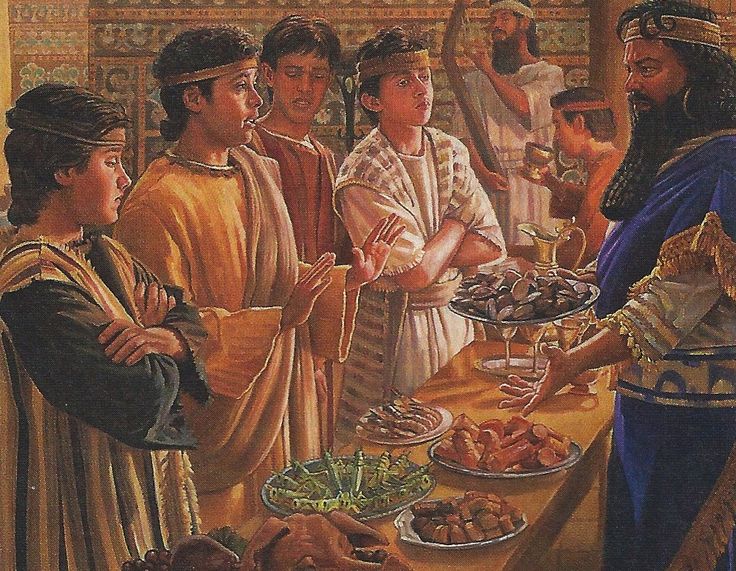
Unlike king Nebuchadnezzar, King Belshazzar was not given the opportunity to have a change of heart. In the presence of thousands of his party guests, Belshazzar sees a mysterious hand writing on the wall. Belshazzar empties his bowels (Daniel 5:6). Above is the introduction to Daniel’s interpretation of the writing. The interpretation, revised for this post: “King, you have been weighed on the scales and you’ve been found to be deficient of heart-health. You are going the way of all enlarged-hearted people.”
And so it came about …
During that same night Belshazzar the [last] Chaldean king was slain [by troops of the invading army]. So Darius the Mede received the kingdom; he was about the age of sixty-two. Daniel 5:30-31
Israel’s prophets declared the hardness of Israel’s hearts.
“But they will say, ‘It’s hopeless! For we are going to follow our own plans, and each of us will act according to the stubbornness of his evil heart. Jeremiah 18:12
Jonah took a hard heart with him as he walked away from God’s calling – preach to the city of Nineveh. But his hard-heart period ended with some fish oil in the belly of a great fish.
The prophets were referred to in describing Jesus’ kingdom ministry and mankind’s heart condition:
Although Jesus had performed so many signs in their presence, they still did not believe in Him. This was to fulfill the word of Isaiah the prophet: “Lord, who has believed our message? And to whom has the arm of the Lord been revealed?” “He has blinded their eyes and hardened their hearts, so they can neither see with their eyes, nor understand with their hearts, nor turn–and I would heal them.” Isaiah said this because he saw Jesus’ glory and spoke about him. The gospel of John 12:38-41
The end condition of mankind with self-induced Hypercatastrophic Cardiomyopathy is given to us by the Apostle John:
The rest of humankind, who were not killed by these plagues, did not repent of the works of their hands or give up worshiping demons and idols of gold and silver and bronze and stone and wood, which cannot see or hear or walk. And they did not repent of their murders or their sorceries or their fornication or their thefts. Revelation 9:20-21
The end result of mankind with self-induced Hypercatastrophic Cardiomyopathy is given to us by the Apostle Paul:
But because of your stubbornness and unrepentant heart you are storing up wrath for yourself in the day of wrath and revelation of the righteous judgment of God. Romans 2:5
~~~
How does one self-induce Hypercatastrophic Cardiomyopathy? Here’s a short but comprehensive list:
By dehumanizing yourself. By becoming like the idols you give yourself to.
Denying one’s human existence is an act of God.
Through practice. Deny yourself nothing. Indulge yourself and call it liberty, freedom and rights.
Practice porneia (i.e., adultery, fornication, homosexuality, lesbianism, bestiality, use of pornography).
By valuing your existence in terms of dollars or sexual encounters.
By calling yourself “gay”.
By defining truth as what your friends let you get away with saying; by saying 2 + 2 = 5
By lying.
By denigrating your senses with alcohol, drugs and Epicurean pleasures.
By deceiving your yourself. By saying sin is what people do to me or sin is what I get caught doing.
By giving ideology preeminence over truth.
By attributing the spiritual, including recorded signs and wonders, to sentimental wishful thinking.
With complacency, lethargy, lack of spiritual exercise. By sitting in front of the TV or the internet.
Never acknowledge sin you’ve committed; refuse to tolerate any sense of sin, see guilt as weakness.
Scapegoat.
Surround yourself with affirmations of your behavior
By equating things which are not equitable: equal rights with equality, i.e., male/female union as equal to a homosexual union; equating wealth with gain and poverty with loss.
When the love you sought rejects you, you seek power over others.
By not forgiving.
By grieving the Holy Spirit.
By needing a life at gunpoint every day to provoke a change in your heart: “She would have been a good woman,” The Misfit said, “if it had been somebody there to shoot her every minute of her life.” A Good Man is Hard to Find, Flannery O’Connor
How do you recognize those with enlarged and hard hearts? Let’s start with these characteristics:
They act like Richard III, a man who killed family successors to the throne to secure England’s throne of power for himself. Aka, a self-absorbed monster in Shakespeare’s play Richard the III: “I am determined to prove a villain/And hate the idle pleasures of these days.”
They seem to be wearing a Full Metal Jacket: Self-protected and fully inured against any outside stimulus that might affect their mindset. They are deadly to others.
They are glazed over and Gargoyle-like.
They seem to be shrinking. They are becoming the miniscule citizens of C.S. Lewis’ “grey town” in the Great Divorce.
Their thick skin is really dragon skin (see Eustace Clarence Scrubb in C. S. Lewis’ The Voyage of the Dawn Treader)
They do the exact opposite of the now well-known Five Love Languages:
They seek affirmation at all costs to others. They do not affirm others unless those others have affirmed them.
They avoid touch. Anyone touching them would know the cold, hard empty shell that they have become.
They demand gifts of power, of rights. They vote for those who give them these “gifts”. They, instead of giving gifts, seek more tokens to put in their pinball machine life. Giving gifts is intolerable to them unless it brings them more affirmation and more power over others.
Their acts of service consist of virtue signaling (which costs nothing) and voting for those who affirm their lifestyle and for socialism to pay for it.
They spend no quality time on anyone except for those who feed their narcissism.
~~~
How does one reverse Hypercatastrophic Cardiomyopathy before your time is up? It will take some life-saving surgery. And, there is only instrument that is able to cut through an enlarged hardened heart:
For the word of God is alive and active. Sharper than any double-edged sword, it penetrates even to dividing soul and spirit, joints and marrow; it judges the thoughts and attitudes of the heart. Hebrew 4:12
Post-surgery, be prepared to have your eyes wide open, your hearing passages enlarged and your unresponsive heart quickened.
For my brothers and sisters in Christ I pray with Saint Paul:
To have the eyes of your utmost self opened to God’s light. Then you know exactly what the hope is that goes with God’s call. Ephesians 1:18
A prayer:
Lord Jesus Christ, Maker of heaven and earth, have mercy upon me a sinner.
Though you have been faithful, I have been unfaithful. Though you have been true, I have been untrue. I have hardened my heart and have received only a portion of the results of my stubbornness and pride. Have mercy upon me and forgive me. I repent of my wickedness and my resolve to harden my heart.
I ask that you put within me a new heart, and a new spirit. Remove the heart of stone from my flesh and give me a heart of flesh. I ask this in your name. Amen.






‘Tis the Season to Rethink Equal Outcomes
November 10, 2018 Leave a comment
The Progressive’s notion of equal outcomes: “income equality” realized through redistribution; test results based on tests revised so that certain people could pass the test; participation-trophy type merit; laws that ‘fix’ opportunity for certain people; verdicts and sentencing of activist judges who rule based on a defendant’s social circumstances rather than by the crime committed upon another; homosexual ‘marriage’ as marriage equality; “equal pay for equal work” which dismisses the resultant quality of what each worker produces; a state in which people have approximately the same material wealth and achieve equal levels of income; equating equal opportunities with equal results…
Economist Thomas Sowell gives us some insight into Progressive thinking:
Equal opportunity does not mean equal results, despite how many laws and policies proceed as if it does, or how much fashionable rhetoric equates the two.
An example of that rhetoric was the title of a recent New York Times column: “A Ticket to Bias.” That column recalled bitterly the experience of a woman in a wheelchair who bought a $300 ticket to a rock concert but was unable to see when other people around her stood up. This was equated with “bias” on the part of those who ran the arena.
The woman in the wheel chair declared, “true equality remains a dream out of reach.” Apparently only equality of results is “true’ equality….
…Confusion between equal opportunity and equal results is a dangerous confusion behind many kinds of spoiled brat politics. -Thomas Sowell from Spoiled Brat Politics, The Thomas Sowell Reader
To put us in the proper reflective mood for the Season to Rethink Equal Outcomes, below are three accounts from Scripture which reveal to us God’s concept of equal outcomes.
But the king replied to Araunah, “No, I insist on paying you for it. I will not sacrifice to the LORD my God burnt offerings that cost me nothing.” So David bought the threshing floor and the oxen and paid fifty shekels of silver for them. 2 Samuel 24:24
The first thing I notice about the above account is that forms of capitalism have been around for a long time. That is, capitalism, simply defined, as an economic and social system in which property, business, and industry are privately owned and directed towards making the greatest possible profits for successful organizations and people, especially as contrasted to cooperatively or state-owned means of wealth.
In the above account there was a cooperative exchange of private property between two individuals. Both were satisfied with the outcome. And, apparently God was satisfied with the outcome. David’s desire was to not give God the impression that he was doing something good for God, a.k.a. virtue signal or tokenism, but to pay proper respect and attribute worth to God through his offering.
David built an altar to the LORD there and sacrificed burnt offerings and fellowship offerings. Then the LORD answered his prayer in behalf of the land, and the plague on Israel was stopped. 2 Samuel 24:25
The second thing I notice is restraint. Though Araunah offered his property freely to king David (2 Sam. 24:23) the king did not accept it without paying Araunah its worth to Araunah and perhaps more. That cost David. The king could have just taken the property to begin with. Beastly kings and rulers throughout history have seized property for themselves and for “the masses”. David was not about to disrespect his neighbor Araunuh or his God by stiffing either. The king did not exploit Araunuh for righteous ends.
Worth had to be accounted for with regard to Araunah’s property and with regard to a show of respect to God. “I will not sacrifice to the LORD my God burnt offerings that cost me nothing.” That is what David said and that is what the widow thought.
Then Jesus sat down opposite the offering box, and watched the crowd putting coins into it. Many rich people were throwing in large amounts. And a poor widow came and put in two small copper coins, worth less than a penny. He called his disciples and said to them, “I tell you the truth, this poor widow has put more into the offering box than all the others. For they all gave out of their wealth. But she, out of her poverty, put in what she had to live on, everything she had.” Mark 12:41-44
The first thing we notice in this account is the virtue signaling and tokenism of cha-ching-ers who want to appear to profit God while incurring little or no cost to themselves. In kingdom contrast, the unassuming widow, like king David, gave an offering that cost her appreciably and was God’s Temple worthy. The widow gave her financial security. The Lord was pleased to acknowledge her gift acknowledging the God Who is Faithful (Psalm 146: 8). She loved God more than life itself. Now, did you notice in these two stories that taking into account the worth of each party and their property creates equal outcomes – both parties being satisfied and even pleased with what is exchanged? This method of accounting, making sure the ‘other’ is considered and is valued as at least equal with ourselves, can be applied to all interactions.
In a previous post I wrote:
We are told by Jesus to “love your neighbors as yourself”. To do this we must consider our own self-interest and then apply the same measure of self-interest toward our neighbors. This parity of accounting is not unlike the Lord’s accounting of forgiveness: “forgive us our trespasses as we forgive others their trespasses.” […,] the resentment worldview has a perverted accounting system: the self is to be credited and others must be debited for there to be parity in their world. If the word “fairness” is ever to be applied socially and economically to our culture then these two commands of our Lord define its limited and personal application.
As shown from Scripture, God endorsed equal outcomes are marriages of opportunities with offerings. The outcomes are not forced or determined by a higher power or the state. The individuals involved come to an agreement about the outcome. A marriage of a man and woman is the archetype of this union of opportunity and offering.
The man and woman exchange vows and rings and, over time, their lives. The opportunity: they met and each determined that an exchange of their life for the other would make both happy. The offering: they give themselves which costs everything. They do so freely. The exchange is not coerced as in a shot-gun wedding or when those in power decide to take your property by force. When things are forced and a person is acted upon without it being offered it is called rape. It is called stealing when a person’s property is forcibly taken.
The equal outcome of marriage is that the two become one. The transaction creates a greater good (including little ones) and both parties equally, with God’s help, continue to be satisfied with the outcome.
One more illustration from Scripture regarding the marriage of opportunity and offering. Remember this woman?
While Jesus was at Bethany, in the house of Simon (known as “the Leper’), a woman came to him who had an alabaster vase of extremely valuable ointment. She poured it on his head as he was reclining at the table.
When the disciples saw it, they were furious.
“What’s the point of all this waste?” they said. “This could have been sold for a fortune, and the money could have been given to the poor!”
Jesus knew what they were thinking.
“Why make life difficult for the woman?” he said. “It’s a lovely thing, what she’s done for me. You always have the poor with you, don’t you? But you won’t always have me. When she poured this ointment on my body, you see, she did it to prepare me for burial. “I’m telling you the truth: where this gospel is announced in all the world, what she has done will be told, and people will remember her.”
Matthew 26: 6-13
What do we learn about opportunity and offering from this account of a woman pouring a very expensive offering onto Jesus’ head? We learn that the Progressives around Jesus were highly offended when they couldn’t control the outcome of the “alabaster vase of extremely valuable ointment”. We also learn from Jesus about the opportunity that brought them together: “… you won’t always have me”. The woman’s offering was what she could have lavished on herself. Maybe she applied David’s words to her head: “I will not sacrifice to the LORD my God burnt offerings that cost me nothing.”
The extravagant and expensive offering given freely was freely accepted by Jesus in preparation for his burial. In fact, he tells us that the equally shared outcome of what she had done was worth proclaiming: the marriage of opportunity and sacrificial offering as an act of love.
Rate this:
Filed under Christianity, Culture, Economics, Political Commentary, Politics, Progressivism, socialism Tagged with Christianity, culture, Economics, equal outcomes, politics, progressivism, Scripture