You Say You Want a Revolution

Not your usual Thanksgiving fare . . . If you live in Disneyworld, then don’t bother reading further.

May 19, 1925. Saloth Sar, as the eighth of nine children, is born into a well-off and well-connected farming family, landowners in Kompong Thong province in central Cambodia. He arrives in a time when the kingdom of Cambodia is a French protectorate within French Indochina.

Sar’s childhood is strict and sheltered in the capital city of Phnom Penh. He spends a year at a Buddhist monastery prep-school before attending a French Catholic primary school. He involves himself with the violin, drama, soccer and carpentry. His Cambodian education continues until 1949.

Having won a scholarship to study abroad with a group of some 200 students, Sar journeys to Paris to study radio technology. During the one-month boat trip in 1949, Sar meets Mey Mann. Mann would later describe Sar at that time as being a pleasant man who showed little interest in politics. But in Paris during the early 1950s, Sar becomes a different man. He turns his conscious into consciousness.

What Happened? Marx and Mao happened.

“Though a Roman Catholic and a devout Jeffersonian [preferring agrarian life over city life] coming out of high school, Sar attended university in Paris, 1949-1953, where he came under the influence of several Marxists, especially the radical former nazi-collaborator Jean-Paul Sartre (1905-1980).”

Bradely J. Birzer in The Horrors of Communism: Roland Joffe’s “The Killing Fields” ~ The Imaginative Conservative

In Paris, Sar is in the company of fellow travelers – radicalized Cambodians. He joins their reading group and immerses himself in the writings of Marx, Lenin and Mao. Sar connects with the ruthless ways of Lenin and Mao. He joins France’s Stalinist Communist Party.

As a result of neglecting his studies, Sar loses his scholarship. He then returns to Cambodia in 1953 to bring revolution to Cambodia. Mey Mann, who also went off to Paris as a young college student, also came back a leftist revolutionary.

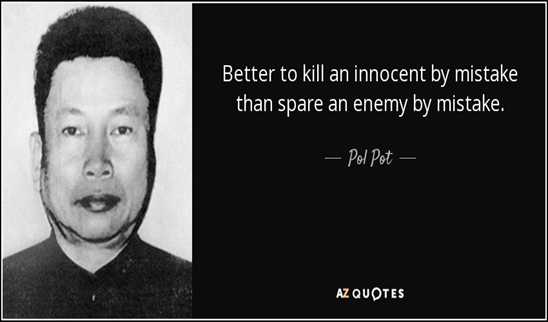
Back in Cambodia, Saloth Sar joins Vietnamese communists who were intent on ridding South East Asia of western influence. When he becomes the leader of the Khmer Rouge (Red Cambodians) he takes on the nom de guerre Pol Pot, which means “the original Cambodian.” His family’s ancestry traced back to Cambodian royalty.

William Branigin, who spent 19 years overseas, reporting in Southeast Asia, Central America, the Middle East and Europe, provides background to Pol Pot’s growing revolutionary activism and his Maoist leanings in his article ARCHITECT OF GENOCIDE WAS UNREPENTANT TO THE END – The Washington Post:

After years of secret communist activity in Phnom Penh, Pol Pot rose to the leadership of the underground movement in 1962. The following year he fled to the countryside to escape a crackdown by the government of Prince Norodom Sihanouk, who dubbed the revolutionaries “Khmers Rouges,” or Red Khmers. . ..

Ensconced in the Cambodian northeast in an isolated jungle base protected by Vietnamese communist guerrillas who were then his allies, Pol Pot and his followers concocted a strange ideological brew of Marxism and what one scholar described as “badly digested Maoism.” During this period Pol Pot was apparently influenced by a five-month trip he made to China at the beginning of Mao Zedong’s Cultural Revolution and his economic “Great Leap Forward.” It was marked by the partial evacuation of Chinese cities and purges of “class enemies.”

 . . .

Pol Pot then launched his own version of the “Great Leap Forward,” but with an apparent determination to jump even farther. The Khmer Rouge promptly emptied the cities, viewed as breeding grounds of capitalism, and began slaughtering old-regime soldiers and officials. The aim was to establish an agrarian Utopia in a single giant bound over the various stages of Marxist development. It was “Year Zero,” and people were entirely expendable. . ..

Pol Pot combined Stalinist and Maoist models with a focus on an agrarian society. With support from rural Cambodians, North Vietnamese, and the Chinese, Pol Pot was able to take control of the country in 1975. The Khmer Rouge began inverting the entire structure of Cambodian society.
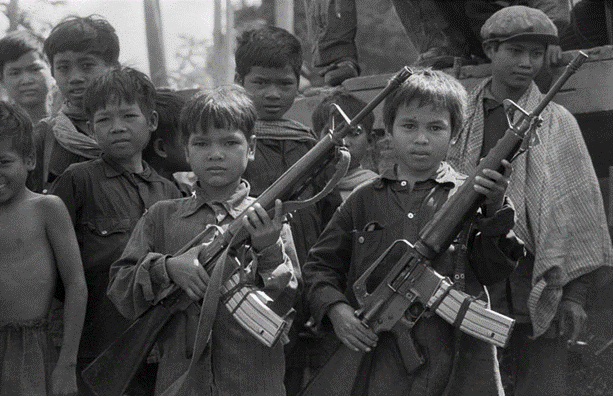
Children, indoctrinated into the new ideology, were given power. Taught to “harden their hearts” toward their countrymen and their own families, they decided who was ideologically pure and who must be purged. But that was not enough for Pol Pot. He remained obsessively paranoid, as Branigin writes:

But soon the revolution began devouring its own children, as Pol Pot launched repeated purges of those he believed were plotting against him or working for his Vietnamese or American enemies. Thousands were tortured into making “confessions” at Tuol Sleng, a Phnom Penh school-turned-jail whose director reported to Pol Pot.

In another article, POL POT: LOVER OF LIFE BECAME INSTRUMENT OF DEATH – The Washington Post William Branigin writes

In pursuit of their dreams of a communist Utopia, the Khmer Rouge abolished money, commerce, religion and traditional education. They suppressed family relationships, individualism, intellectuals and ethnic groups, slaughtered anyone who showed recalcitrance and enforced unquestioning obedience to “Angka,” the organization.

Thousands were beaten to death, then dumped in mass graves in the regime’s “killing fields.” Many more succumbed to starvation, disease and overwork. Out of a population of about 8 million, demographers and researchers estimate, at least 1 million, and possibly as many as 1.7 million, died.

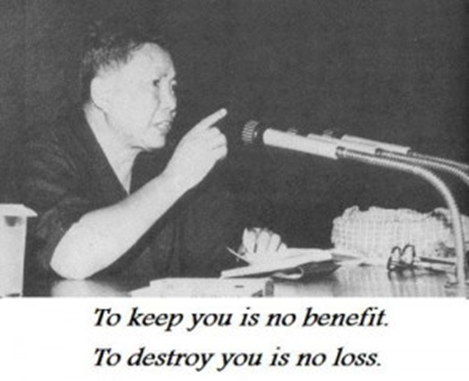
But as the killing intensified, the revolution increasingly turned on itself, targeting “enemies” whom Pol Pot perceived to be multiplying like germs, creating what he called a “sickness in the party.”

There is much to the Pol Pot murderous legacy that is not written here. This brief intro describing Saloth Sar’s fundamental transformation into genocidal dictator Pol Pot is meant to open eyes to the fundamental transformation -subtle and not so subtle – that is taking place in our country right now.

I want my readers to recognize the signs of the coming onslaught on humanity. The Biden regime, the Merrick Garland DOJ, Leftist judges and the media, are showing signs of demanding ideological conformity to their form of totalitarian “Democracy!” The Left’s constant lawfare against Trump is just one indicator of this.

And though implemented in more efficient ways today, e.g., digital technology, the same Lennin Think and Maoism is being used by the intelligentsia to control every aspect of our lives – from thought to word to deed, from sunup to sundown and throughout the night.

To understand Pol Pot’s way of thinking and that of today’s intelligentsia, listen to the podcast below – Thinking Like Lenin with Gary Saul Morson.

The three videos below reveal the man Pol Pot and the political horrors of his regime. Learn about the brutalities of the Khmer Rouge in the 1970s and the genocide, one of the worst in recorded history, of about half the Cambodian nation. Learn from the firsthand accounts of Dith Pran and Haing S. Ngor.

Dith Pran, a Cambodia-born journalist, helped bring to light the brutalities of the Khmer Rouge in the 1970s. His three brothers were killed by the Khmer Rouge.

Haing S. Ngor, Cambodian physician and actor, is best known for his Dith Pran role in the movie The Killing Fields (1984), which depicted the brutal Khmer Rouge regime in Cambodia that Ngor himself had also lived through.

Watch Roland Joffé’s The Killing Fields to see what is coming our way under the growing despotism.

The Killing Fields – Trailer #1 – YouTube

Also, you may want to watch the third in Christopher Nolan’s Batman Tribology, The Dark Knight Rises, to get a sense of the anarchy and destruction just beginning to be released upon the world to bring about change. Gotham’s (Western Civilization’s) infrastructure is set apart for destruction by Bane and his “social justice” henchmen.

And learn about dehumanizing Marxism:

“Marx’s mechanical theory of society reduces real individuals, with their hopes and fears, beliefs and desires, to mere abstract “classes”. He subordinates reality—messy, limited, and all too human—to a perfect model in which utopia is the only possible outcome. As [Theodore] Dalrymple puts it: “Marx’s eschatology, lacking all common sense, all knowledge of human nature, rested on abstractions that were to him more real than the actual people around him.””

Laurie Wastell, Orwell and Dalrymple on English Class (quillette.com)

You say you want a revolution . . . so, with bloodlust, you can rid the world of monarchy and colonialism, of Christians and Jews, of the West, and of “oppressors” and replace it with an oppressive murderous regime and a descent into hell; to create a colony of insect peasants, war slaves, and execution squads, of senseless brutality, mind-numbing torture and purges; to create a society where indoctrinated children decide ideological purity among its members and where families cease to exist . . . well, you can count me out.

~~~~~

The Stomach-Churning Events Of The Killing Fields Of Cambodia – YouTube

POL POT – The Killing Fields – Forgotten History – YouTube

Last Word: Dith Pran – YouTube

~~~~~

Thinking Like Lenin with Gary Saul Morson

Thinking Like Lenin with Gary Saul Morson

Gary Saul Morson Ph.D. — The Moral Imagination Michael Matheson Miller

Gary Saul Morson & James Panero discuss “Leninthink” | The New Criterion

Stream Gary Saul Morson & James Panero discuss “Leninthink” by The New Criterion | Listen online for free on SoundCloud

~~~~~

Mey Mann on the origin of Pol Pot’s murderous ways:

“On many occasions, Mey Mann said he tried to understand why the Khmer Rouge had turned to the killing fields. He asked Ieng Sary and Khmer Rouge leader Nuon Chea many times when Pol Pot had changed, when Saloth Sar turned into the leader of a murderous regime, but he never got a clear answer.

““Nobody knows. I don’t know why it happened like that, why they tried the extreme way,” Mey Mann said. “When we were students, we thought in a good way and did everything step by step. I don’t know which year Pol Pot changed his attitude.

““Maybe Pol Pot wanted to follow China and be strict like that. He was too biased to China and needed support from them because he hated Vietnam,” he said. “But Pol Pot forgot that Cambodia has only 10 million people. If China goes the tough way and kills 100 people, they have many more people so it doesn’t have a big effect. But here, that’s a big killing.””

Former KR Intellectual Expresses Contrition – The Cambodia Daily

Saloth Sar/Pol Pot explains his motives:

“What influenced me most was the actual situation in Cambodia,” Pol Pot told American journalist Nate Thayer. When he came home from Paris, he found that his family had fallen on hard times. A once prosperous uncle had become a rickshaw puller, and other relatives had lost their land and livestock.

”I came to carry out the struggle, not to kill people,” the infirm, 72-year-old Pol Pot argued to Thayer. ”Even now, and you can look at me: Am I a savage person?” he asked, adding: “My conscience is clear.”

Thayer’s Pol Pot Interview: POL POT: UNREPENTANT An Exclusive Interview By Nate Thayer – Nate Thayer (typepad.com)

Nate Thayer, journalist who interviewed Khmer Rouge leader Pol Pot, dies at 62 : NPR

~~~~~

“Wokeism is Maoism”- Xi Van Fleet, a survivor of Mao’s cultural revolution who is warning Americans about what’s to come.

Survivor of Mao’s China WARNS America is falling for the SAME tricks – YouTube

~~~~~

“In order to survive you have to pretend to be stupid.” -Dith Pran, about life in Cambodia under Khmer Rouge

“I see … a pile of skulls and bones. For the first time since my arrival, what I see before me is too painful, and I break down completely. These are my relatives, friends and neighbors, I keep thinking … It is a long time before I am calm again. And then I am able, with my bare hands, to rearrange the skulls and bones so that they are not scattered about.”

— Dith Pran, writing about his return to Cambodia for The New York Times in 1989.

“This is sad for the Cambodian people because he was never held accountable for the deaths of 2 million of his fellow countryman. The Jewish people’s search for justice did not end with the death of Hitler and the Cambodian people’s search for justice doesn’t end with Pol Pot.”

— Dith Pran, upon the death of Khmer Rouge leader Pol Pot in 1998, quoted in The Times.

~~~~~

Cambodian Genocide: 33 Haunting Photos From The Killing Fields (allthatsinteresting.com)

~~~~~

ARCHITECT OF GENOCIDE WAS UNREPENTANT TO THE END – The Washington Post

The Killing Fields: authentically good | Period and historical films | The Guardian

The Tragic Real-Life Story Of The Killing Fields (grunge.com)

Last Word: Dith Pran – YouTube

Pol Pot – Definition, Death & Quotes (biography.com)

Dith Pran, ‘Killing Fields’ Journalist, Dies at 65 : NPR

Pol Pot And The Cambodian Reign Of Terror Of The Killing Fields (allthatsinteresting.com)

Cambodia | Holocaust and Genocide Studies | College of Liberal Arts (umn.edu)

Part of my life is saving life.  Dith Pran

Young Americans Post Sick Videos on Chinese-Run TikTok Praising 9/11 Mastermind Osama Bin Laden’s Evil “Letter to America” After Seeing it in a British Newspaper (VIDEO) | The Gateway Pundit | by Cullen Linebarger

~~~~~

Lenin Think:

Why do revolutions “eat their own?” What is the sociological dynamic here? – History Stack Exchange
The Gift of Giving


Wow!  When you see, and hear someone doing the work of the kingdom of God, you take note…

A conversation with John Montgomery, Founder and CIO Bridgeway Capital Management:


Reference:

Bridgeway Capital Management (BCM): OUR COMMITMENT

“BCM’s articles of incorporation state that it will donate 50% of its profits to charitable causes. Over the years, BCM has granted tens of millions of dollars and time to more than 500 different nonprofits. Bridgeway includes all of its Partners (as permanent staff members are known) in the giving program.”


Lord’s Resistance Army (LRA)

Haman and Hate (and Hamas by Proxy?) meet the Hangman, Conclusion

Part One: A Feast for the Eyes

Part Two: Persia Meets Reality and Esther

Part Three: Haman and A Star is Worn


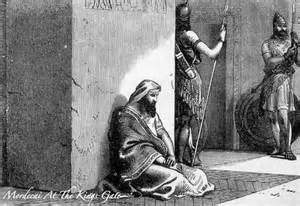
Mordecai sitting at the King's Gate-all ears and eyes

Mordecai sitting at the King’s Gate-all ears and eyes


Haman is booked

Haman is booked


Part Four, Conclusion: Who Remains Silent in Times Like These?

 “The entire story of Israel, on one level at least, is the story of how Israel’s God is taking on the arrogant tyrants of the world, overthrowing their power, and rescuing his people from under its cruel weight.” N.T. Wright, “How God Became King”

 As we have learned so far, Persian King Xerxes and his right hand man Haman have issued decrees, edicts and proclamations. At the urging of Haman a death warrant for the Jews was sent throughout Xerxes’ vast kingdom.

 The edict, that genocide of the Jews was to occur on a certain day, is shouted from the citadel in the capital city of Susa. The targeted Jew’s days are numbered: on the thirteenth day of the twelfth month, the month of Adar the Jews are to be annihilated, their property plundered.

 This horrifying declaration is soon answered by the Jewish population. The people mourn and fast. They put on sackcloth and ashes as signs of their distress. Xerxes and Haman, on the other hand, party on.

 But then banqueting tables are turned and the Jew’s great sadness is turned to rejoicing. Moving quickly though the events we’ll see how.

 Before we go on you should know this Resurrection Day that…The days of evil are numbered and the Day of Final Deliverance from Death is at hand. The empty tomb is the proclamation of our deliverance from both evil and death, on a certain future day. The Purim celebration would become a foretaste of deliverance. Resurrection day is the foretaste of the Day of Deliverance.

 From Chapter One of The Book of Esther: King Xerxes, in response to Queen Vashti’s no-show at the royal bacchanalia deposes Queen Vasti and sends out a decree to everyone in his kingdom, a decree proclaiming that every man should be ruler over his own household.

From Chapter Two: Esther is fast-tracked by the head eunuch to become Xerxes new queen. The king then gives a great banquet, “Esther’s Banquet” to show off his queen to all his nobles and officials. Xerxes proclaims a holiday throughout the provinces and distributed gifts with liberality. Mordecai’s salvation of Xerxes from an assignation attempt is recorded in the king’s record books.

 From Chapter Three: Xerxes honors Haman, making him his right-hand man. Haman is paraded about and is honored by all except a particular Jew-Mordecai. Haman’s ego is crushed. His anger turns to hate. Haman chooses to become anti-Semitic. Haman complains to Xerxes about a “certain people”.

 Xerxes to Haman regarding the Jews, “do with the people as you please.” A genocidal Death Warrant is issued after the king’s authority via his signet ring is handed over to Haman. A copy of the text of the edict is to be issued as law in every province and made known to the people of every nationality so they would be ready for that day.  …couriers went out, spurred on by the king’s command, and the edict was issued.”

Chapter 4: Mordecai, Esther’s uncle, hears about the edit. It is shouted from the citadel in the capital city of Susa. Mordecai is stunned. With sackcloth and ashes Mordecai let’s the world know, and more importantly, let’s God ‘know’ that he is mourning the loss of his family and his people the Jews. (Notice how Mordecai’s protest (like Job’s) is personal and self-effacing and not riotous, vulgar, angry and destructive like today’s demonstrations?)

Important to our understanding of The Book of Esther wherein there is no mention of God is the fact that God had promised Abraham in a covenant (see Genesis 15) that “a) Abraham’s seed would become as numerous as the stars of heaven, b) his family would be exiles in a foreign land and eventually be brought out, and c) his family would inherit the land of Canaan.” (N.T. Wright, “Justification”.)

Mordecai’s great distress is based, I believe, on his understanding of God’s promises to Abraham and his understanding of God righteousness–God keeping his promises-and the declared challenge to God’s faithfulness by an earthly tyrant. Sackcloth and ashes are man’s quiet submission to God: man is dust and will return to dust and that salvation alone comes from God. Let’s see what happens next.

Esther quickly learned about Mordecai’s distress. She sends him new clothes to put on, to comfort him. She did not know about the edict.

Mordecai responds to the eunuch sent by Esther. He hands him the edict to give to Esther. Mordecai tells the eunuch that Esther must approach the king and get him to rescind this edict. Esther receives the news with great dread. She replies to Mordecai that people who just show up at court uninvited are put to death. And, “…thirty days have passed since I was called to go to the king.”

When Esther’s words were reported to Mordecai, he sent back this answer: “Do not think that because you are in the king’s house you alone of all the Jews will escape. For if you remain silent at this time, relief and deliverance for the Jews will arise from another place, but you and your father’s family will perish. And who knows but that you have come to your royal position for such a time as this?”(emphasis mine)

 Then Esther sent this reply to Mordecai:  “Go, gather together all the Jews who are in Susa, and fast for me. Do not eat or drink for three days, night or day. I and my attendants will fast as you do. When this is done, I will go to the king, even though it is against the law. And if I perish, I perish.”

So Mordecai went and carried out all of Esther’s instructions. The Jews in every corner of the kingdom fasted for three days.

Submission takes the high road.

Maybe you have noticed by now that submission plays a big role in this and other Biblical narratives. Putting on sackcloth and ashes and fasting are forms of submission. Replying, “If I perish, I perish” is another. Recall Mary’s submission to the angel regarding her being impregnated by the Holy Spirit? “I am the Lord’s servant,” Mary answered, May it be to me as you have said.” And, we must recall our Lord’s submission to the Father’s divine purpose: “Father, if you are willing, take this cup from me; yet not my will, but yours be done.”

 The act of submission to a sovereign God even when God’s presence and His direct intervention are not evident is described for us in a ‘genealogy of faith found in Hebrews chapter 11. There we read of the “By faith…” accounts of individuals who submitted themselves to God. That submission is faith in the righteousness of God. It is saying God keeps His promises and that He does so no matter what men do to affect them, even up annihilation of those promises personified in God’s people the Jews.

 Submission to a scepter

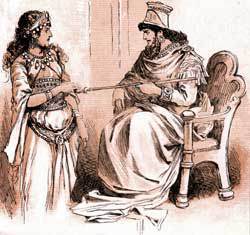
After three days of fasting Esther puts on her royal robes and presents herself to the King. She appears in the hallway within direct view of the king. She anxiously awaits his invitation. Xerxes scepter is offered to her. Esther touches the tip of scepter showing respect and submission to his authority.

Civil disobedience and submission

Civil disobedience and submission

 Now imagine for a moment being Queen Esther. Xerxes, the King of his household had, had by proxy decree allowed for the annihilation of her people the Jews without giving it second thought. Queen Esther no doubt felt that her life hung in the balance, one side of the scale weighted against her. But then the finger God was upholding her.

 The king asked Esther “What is your request? Even up to half the kingdom, it will be given you.”

Esther’s response is not direct. She invites Xerxes and Haman to a banquet that same day. The banquet happens, the wine is poured and again the king asks Esther what her petition is. And again, Esther, faltering in courage, suggests another banquet the next day and “Then I will answer the king’s question.” On to banquet number two and a swelling ego.

 With banquet number one under his belt and banquet number two written into his day planner Haman is pretty impressed with himself. He brags to his wife and friends that it was only the King and himself who were invitees to the Queens banquets. Haman boasts of his great connections and vast wealth. Yet, there was something sticking in his craw-that Mordecai who is mourning everyday at the gate in sack cloth and ashes.

 Haman’s wife, knowing that Mordecai was the decreed king of his household offered a solution to Haman’s hangdog demeanor.

“Have a gallows built, seventy-five feet high, and ask the king in the morning to have Mordecai hanged on it. Then go with the king to the dinner and be happy.” In other words, “Don’t Worry. Be Happy!” Haman liked the idea and had the gallows built. Problem solved.

 Sleepless in Susa

That same night the king couldn’t sleep. This was due to too much wine at the banquet or perhaps God’s purpose was the pea under the mattress. Whatever the reason the king ordered his favorite book to be brought in-the king’s chronicles. These books were records all of the king’s doings, perfect for nights like these.

The king ordered his favorite book to brought in-the king’s chronicles. These books were records all of the king’s doings, perfect for nights like these.

 Lo and behold, what was long ago forgotten was still in black and white on the parchment- Mordecai had saved the king by exposing an assassination plot. The king then asked his attendants what had been done for Mordecai. Such an act of respect for the king’s life should be honored. His attendants answered, “nada” (I don’t know Persian for “nothing.”) The king wanted to settle up with Mordecai immediately so he asked his servants, “Who is in the court?”

 Lo and behold, Haman, the proud, is, at that very moment, standing in the outer court hoping to get permission from the king to have Mordecai hanged. Haman, too, wanted to settle up quickly as possible.

 Haman enters the king’s presence and immediately the king asks Haman “What should be done for the man the king delights to honor?”

 Haman, already full of Haman, thinks the king is, of course, talking about whom else but Haman. Haman, with great flare, then details a litany of delights that the king should lavish on such a man.

 The king commands Haman, “Go at once.” “Get the robe and horse and do just as you have suggested for Mordecai the Jew, who sits at the king’s gate. Do not neglect anything you have recommended.” Oh, the irony.

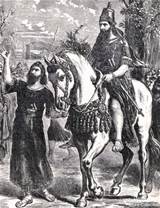
 Haman did as the king commanded. He paraded Mordecai through the city streets proclaiming as he went, “This is what is to be done for the man the king delights to honor!”

Carpe the irony:  Haman is leading Mordecai through Susa

Carpe the irony: Haman is leading Mordecai through Susa

 Afterward Mordecai returned to the king’s gate (nothing had changed; a curious ride through the city on horseback does not a decree rescind). Haman returned to his wife and friends and gave them the low down.

 Zeresh, Haman’s wife, taking the reins away from Haman decides, like many others had in recorded history, that it is time to stop messing with the Jewish people. In her mind the Jews’ God defends them. He is real. Enough already, Haman, your pride is plaguing us. Be done with this man and his people.

 While she is talking Haman is whisked away to banquet Number Two

 No Fear (well maybe some)

 King Xerxes and Haman, knees knocking I’m guessing, dine with Queen Esther a second time. And, a second time the king asks Esther, “What is your request? Even up to half the kingdom, it will be given you.”

 “Then Queen Esther answered, “If I have found favor with you, O king, and if it pleases your majesty, grant me my life-this is my petition. And spare my people-this is my request. For I and my people have been sold for destruction and slaughter and annihilation.”

 Well, king Xerxes is greatly troubled by such a statement. He wonders out loud who would do such a thing “Who is he?” ”Where is the man who would dare do such a thing?”

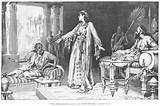
 “Esther said, “The adversary and enemy is this vile Haman.” 

Esther points out the evil.

Esther points out the evil.

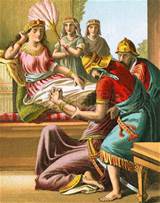
In a rage, knowing that he had been used by Haman, Xerxes got up from the dinner and went into the palace garden. In the mean time, Haman knowing that his life is over throws himself at Esther’s feet and begs for his life. The king returns and finds Haman now clawing at Esther. His rage grows.

As it is written, one of the eunuchs attending the king, Harbona, pointed in the direction of Haman’s house. He told the king that Haman had erected a seventy-five foot high gallows on which to hang Mordecai, “the same Mordecai who helped my lord.”

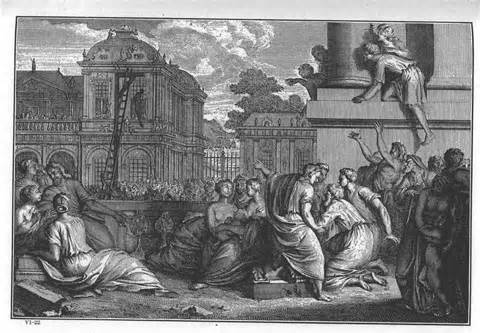
 The king didn’t ponder this at all. “Hang Haman on that same gallows”. Then his fury subsided. Problem solved. Seventy-five feet: my how the mighty have fallen! 

Evil begs for mercy and finds none.

Evil begs for mercy and finds none.

The tables are turned

 That same day King Xerxes gave Queen Esther the estate of Haman. Esther told the King of her uncle and how he adopted her after her parents had died. The king took off his signet ring and put it on Mordecai’s finger. Mordecai was appointed the head of Haman’s vast estate by Esther. But, a decree was still out there and could not be rescinded. Something had to be done before the day of annihilation.

 Déjà vu all over again but this time Sovereignty steps in.

 Esther once again approached the king weeping and pleading for the life of her people. She asked for a counter decree to be issued. King Xerxes answered both Esther and Mordecai, “Write another decree in the king’s name in behalf of the Jews as seems best to you.”

 So, all the same secretaries who were summoned once before to write out the Jew’s death warrant were summoned again. Mordecai’s counter decree would allow the Jews to defend themselves from all enemies and to take their plunder. The edict was dispatched via multiple couriers to the 127 provinces of king Xerxes.

 “The couriers, riding the royal horses, raced out, spurred on by the king’s command. And the edict was also issued in the citadel of Susa.” The response is celebration in each Jewish community.

 “In every province and in every city, where ever the edict of the king went, there was joy and gladness among the Jews, with feasting and celebrating. And many people of other nationalities became Jews because fear of the Jews had seized them.”(emphasis mine)

 Hate has its day in the People’s Court

Haman’s day of holocaust, the thirteenth day of the twelfth month of Adar, finally arrived. But the Jews had prepared to defend themselves. Mordecai’s edict gave them the power to stand against their enemies and take their plunder. And so the attempt at genocide began throughout the kingdom.

 It is written about the Jews, “No one could stand against them, because the people of all other nationalities were afraid of them. And all nobles of the provinces, the satraps, the governors and the king’s administrators helped the Jews because fear of Mordecai had seized them….The Jews struck down all their enemies with the sword, killing and destroying them, and they did what they pleased to those who hated them…But they did not lay hands on the plunder.”

 In summary, the last two Chapters of The Book of Esther detail the extent of the Jews self-defense against hatred. Various numbers of deaths occur in different places within the 127 provinces. In one verse (16 of Chapter 9) it is written that seventy-five thousand enemies of the Jews were killed. That is seventy-five times one thousand deaths or one thousand deaths for each foot of height of the “Haman Gallows”

 Speaking of justice by extrapolation, Haman’s ten sons, the ten acorns that don’t fall far from the tree are hanged on their father’s gallows. The Jews understood that evil is passed down from generation to generation. The sins of the father, in this case anti-Semitism, would continue to manifest its ugly hatred if not nipped in the neck. 

Haman meets the end of his rope.

Haman meets the end of his rope.

After all of the fighting had stopped and the Jews enemies vanquished, Mordecai sent letters to all the Jews in every province of King Xerxes. He declared these days of Adar to become an annual celebration, “as the time when the Jews got relief from their enemies, and as the month when their sorrow was turned to joy.” These days would become known as The Feast of Purim, “For Haman son of Hammedatha, the Agagite, the enemy of all the Jews, had plotted against the Jews to destroy them and had cast pur (that is, the lot) for their ruin and destruction.”

 The balance of The Book of Esther tells us that all of the prior events were recorded for posterity in the king’s books. Mordecai was held in high esteem by all who knew his name.


 Something to think about this Resurrection Day

You may cast your lot with those who hate the Jews but the outcome will be the same as those enemies of the Jews in the Kingdom of the Media and Persia. This historically proven pronouncement includes Hamas, the anti-Semitic Boycott-Divest & Sanction (BDS) groups, Iran-The Islamic Republic, ISIS, anti-Semitic Europeans and all those who hate the Jews. So all such, you are forewarned. And, nuclear bombs are no threat to the God who created the vast universe, the infinitesimal atom, a particle’s chirality and also allowed man to find quantum mechanics among the mysteries of life. God knows the number hairs on your head. Did you think that he doesn’t notice the hatred raging in your head?

If you cast your faith on God’s sovereignty you will find that God is faithful to his covenant promises. Make a stand with God and you find God standing with you (read about Shadrach, Meshach, and Abednego in the book of Daniel). Esther’s life is an exemplary illustration of submission to God’s sovereignty.

 Esther, in an act of civil disobedience came before King Xerxes and spoke truth to power. It took Esther a couple of banquets to ramp up the courage but Esther made a stand for herself and for the people of God.

Esther is also an example of one life given as a ransom for many (see the Gospel of mark, chapter 10, vs. 45 regarding these words spoken about Jeshua, Jesus).

 It has been said that the degree of anti-Semitism in a society is an indicator of its health. Look at Europe to see where the U.S. is heading.

 Finally, Orthodox Christian theologian Charles Malik who was also a Lebanese diplomat, political theorist, philosopher and president (1958) of the U.N.’s General Assembly wrote a book titled “Christ and Crisis” (1962).

 Malik’s definition of crisis: “the crisis is simply the fact that Jesus Christ is the Lord and is judging.”

 Malik warned that “The greatest weakness of Western strategy is its relative neglect of the intellectual and spiritual dimension.”(emphasis mine)

 When facing a crisis at any level, in any context we must confront it with courage and the cross.

 In 1962 Malik wrote,

“There are three unpardonable sins today, to be flippant or superficial in the analysis of the world situation, to live and act as though halfhearted measures would avail; and to lack the moral courage to rise to the historic occasion.”

 Esther understood “crisis” and acted with sober courage to avert a holocaust that was decreed with hatred within the shadow of a gallows. (See also the life of Dietrich Bonheoffer.) 

Who Remains Silent in Times Like These? 

***

For current information regarding the increasing anti-Semitism in our world bookmark this website: LegalInsurrection

 Here is a sample post: Vienna, “Free, Free Palestine” chant becomes “Kill, Kill the Jews”