Learning to See

He took the blind man by the hand and led him out of the village, and when he had put saliva on his eyes and laid his hands on him, he asked him, “Can you see anything?” And the man looked up and said, “I can see people, but they look like trees, walking.” Then Jesus laid his hands on his eyes again, and he looked intently, and his sight was restored, and he saw everything clearly. -The gospel of Mark, 8: 23-25

In the account above, Jesus amplified the blind man’s ability to see so that he could view physical reality with clarity. Now seeing, the man could function in the world. He no longer had to sit under the shade of a tree begging for assistance.

After Jesus announced the arrival of the kingdom of God on earth, he sought to increase the depth perception of his followers. He wanted them to be able to observe and perceive what that kingdom was about so that they could, with new insight, function in the kingdom.

Jesus acted and spoke for those with “eyes that see, ears that hear.” Others, conditioned by the world, would not see and hear what was going on. They remained blind and begging.

To amplify understanding, Jesus used allegorical short stories to create vivid pictures of reality as he saw it. He used parables when he taught and when he was tested.

When teaching on the cultivation of the kingdom of God he used the parable of the Sower.

When tested by an expert of religious law, he used the parable of the Good Samaritan. This encounter is recorded in Luke’s gospel account:

A religion scholar stood up with a question to test Jesus.

“Teacher, what do I need to do to get eternal life?”

Jesus responded with a question: “What’s written in God’s Law? How do you interpret it?”

The scholar gave a Torah answer: “Love the Lord your God with all your heart and with all your soul and with all your strength and with all your mind and love your neighbor as yourself.”

“Good answer!” said Jesus. “Do it and you’ll live.”

Looking for a loophole, the scholar then asked “And just how would you define ‘neighbor’?”

Jesus answered by telling the story of the Good Samaritan. He then asked, “What do you think? Which of the three – the priest, the Levite or the Samaritan – became a neighbor to the man attacked by robbers?”

“The one who treated him kindly,” the religion scholar responded.

Jesus said, “Go and do the same.”

In response to the initial test question, Jesus uses the Socratic method. He asked the scholar to give his own response to the eternal life question. Jesus acknowledges the scholar’s correct answer.

But then the scholar wished to justify his “neighbor” position in front of the crowd.

(You don’t do this, of course, unless you hold a well-known exclusionary stance such as associating with fellow Jews but not associating with Samaritans (viewed by Jews as a mixed race who practiced an impure, half-pagan religion), Romans, and other foreigners.)

The scholar’s question revealed what Jewish religious leaders, like those named in Jesus’ parable, thought about those who didn’t see the world like they did – ‘others’ should be excluded from their concern and left to die. This way of ‘seeing’ would lead to Jesus being (so they thought) permanently excluded, i.e., crucified.

Jesus doesn’t answer the scholar’s “neighbor” question. Instead, he exposes the insular blindness of the questioner with a short story.

Jesus shows, not tells, his answer so that the scholar and those listening may experience the answer through actions, words, subtext, thoughts, senses, and feelings rather than through exposition, summarization, and description. Jesus puts the scholar in the room, so to speak, with the Samaritan.

With the parable, Jesus wanted the scholar to see the world as he sees it, that of “God so loves the world” and not just a chosen few.

Note that in his response to the question “Who became a neighbor? the scholar refuses to name the ’other.’ He refuses to say “Samaritan.” He protected his standing in the community and his insular blindness.

Going on his way, the religious scholar now had an image to reflect on. He could see himself like the priest and the Levite and mind his own business and walk off, ignoring the one who is of no value to him. He could abandon the ‘other’ before any claim is made on him.

Or he could see beyond himself and exclusion and be a Samaritan and love his neighbor like himself. That would be kingdom ‘seeing.’

~~~~~

Man’s ability to see is in decline. Those who nowadays concern themselves with culture and education will experience this fact again and again. We do not mean here, of course, the phys­iological sensitivity of the human eye. We mean the spiritual capacity to perceive the visible reality as it truly is.

To be sure, no human being has ever really seen everything that lies visibly in front of his eyes. The world, including its tangible side, is unfathomable. Who would ever have perfectly per­ceived the countless shapes and shades of just one wave swelling and ebbing in the ocean! And yet, there are degrees of perception. Going below a certain bottom line quite obviously will endanger the integrity of man as a spiritual being. It seems that nowadays we have arrived at this bottom line. (Emphasis mine.)
—Josef Pieper, Only the Lover Sings, “Learning How to See Again”

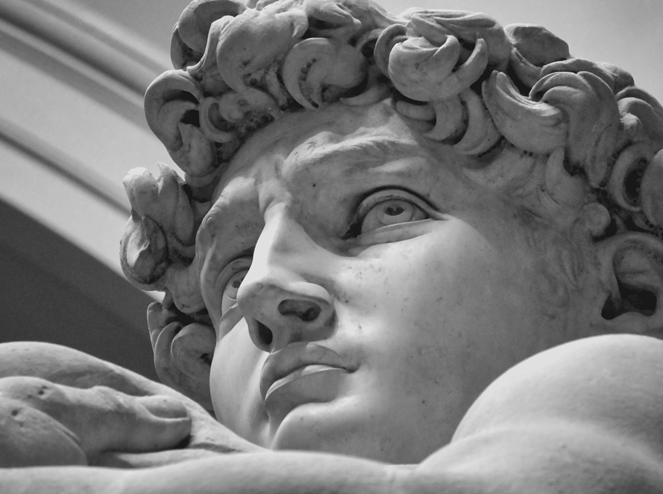
The concept of contemplation also contains this special intensified way of seeing. A twofold meaning is hereby intended: the gift of retaining and preserving in one’s own memory whatever has been visually perceived. How meticulously, how intensively—with the heart, as it were—must a sculptor have gazed on a human face before being able, as is our friend here, to render a portrait, as if by magic, entirely from memory! And this is our second point: to see in contemplation, moreover, is not limited only to the tangible surface of reality; it certainly perceives more than mere appearances. Art flowing from contemplation does not so much attempt to copy reality as rather to capture the archetypes of all that is. Such art does not want to depict what everybody already sees but to make visible what not everybody sees. (Emphasis mine.)
—Josef Pieper, Only the Lover Sings, “Three Talks in a Sculptor’s Studio: Vita Contemplativa”

I first came across the writings of Josef Pieper, a 20th century Catholic German philosopher, reading The Four Cardinal Virtues: Human Agency, Intellectual Traditions, and Responsible Knowledge. About the Author:

“Josef Pieper (1904-1997) was a distinguished twentieth-century Thomist philosopher. Schooled in the Greek classics and in the writings of St. Thomas Aquinas, he studied philosophy, law, and sociology, and taught for many years at the University of Münster, Germany.”

Donald DeMarco writes in Josef Pieper… Truth And Timeliness that

Pieper is most noted for his many books on virtue. In fact, he is commonly known as the “Philosopher of Virtue.” Virtue for Pieper, following Aristotle and Aquinas, is perfective of the person. But the person is real and has an identifiable and intelligible nature. Wherever this nature is denied, totalitarianism gains a foothold. For, if there is no human nature, then there can be no crimes against it.

Pieper wrote while drafted into Germany’s army during World War II and is credited for translating C.S Lewis’s Problem of Pain into German. Because he criticized the Nazis regime, his works were not published until later.

It is said that “While many philosophers in his time focused on politics, Pieper was concerned with the great tradition of Western Culture. He spent his entire life reflecting on the value of culture in modern society and the necessity of the creative arts for the nourishment of the human soul.”

Josef Pieper’s short essay Learning How to See Again begins: “Man’s ability to see is in decline.” Even in the 1950s when he wrote the essay, he suggested that there was too much to see. How much more are we distracted today by screens.

Pieper recommended an artistic vision – visual, musical or literary – as a conduit for the contemplative life. He proposed participating in the arts as a remedy for seeing anew, to see reality as it truly is.

We must learn to see again.

~~~~~

Teaching ‘Tales From Shakespeare’

Benedict Whalen, associate professor of English at Hillsdale College, delivers a lecture on how to teach Tales From Shakespeare by Charles and Mary Lamb to young children. 

This lecture was given at the Hoogland Center for Teacher Excellence seminar, “The Art of Teaching: Children’s Literature” in September 2024. The Hoogland Center for Teacher Excellence, an outreach of the Hillsdale College K-12 Education Office, offers educators the opportunity to deepen their content knowledge and refine their skills in the classroom.

Teaching ‘Tales From Shakespeare’

Teaching ‘Tales From Shakespeare’ – Hillsdale College K-12 Classical Education Podcast – Omny.fm

~~~~~
The Approaching Eclipse

Imagine creating something significant and you make it public it and it is well-received. Then, State media (MSNBC and the NYT for example) pans it and you are declared an “enemy of Democracy.” The self-expression born of your life’s work, your name, and your personhood are to be eclipsed – blackened – by an authoritarian enforcement of new cultural norms. You are to be held hostage artistically and, if you do not conform, literally.

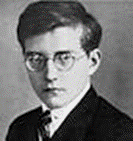
You realize that you can either abandon your life’s work out of fear of crushing reprisals, or you find a subversive way to bring your work to the public, as did one of the greatest composers of the 20th century.

“In January 1936, after Stalin attended a performance of [Dmitri] Shostakovich’s dangerously erotic opera Lady Macbeth of the Mtsensk District, there appeared the notorious Pravda editorial ‘Chaos Instead of Music’, with its threat that things could ‘end badly’ for Soviet musicians – and for Shostakovich in particular. Its unnamed author was David Zaslavsky, a well-connected Soviet journalist and propagandist. No family was left untouched by the purges. The composer’s uncle, sister, brother-in-law and mother-in-law were arrested and when his patron, Marshal Tukhachevsky, was declared an ‘enemy of the people’, it is likely that he himself was interrogated by the NKVD. The musicologist Nikolay Zhilayev, to whom Shostakovich played the second movement in May 1937, had joined the disappeared by the time of the Fifth’s Leningrad premiere on November 21, 1937.” – David Gutman, Shostakovich’s Fifth Symphony: A deep dive into the best recordings | Gramophone

The opera was attacked as “muddle instead of music” in an editorial, probably written by Stalin himself, in the Communist Party newspaper, Pravda. If Shostakovich did not turn away from the “decadent” avant-garde in favor of Soviet Realism, threatened the editorial, “things could end very badly.” The popular opera disappeared from the stage overnight. One of the Soviet Union’s most prominent composers was in danger of becoming a “nonperson” just as he was reaching his artistic prime.Timothy Judd, writing in Shostakovich’s Fifth Symphony: The Unlikely Triumph of Freedom

After the vicious official attack, Shostakovich lived in constant fear. Conductor, composer, music director, and arranger Benjamin Zander, writes

Overnight the 30-year-old composer’s rapidly ascending star plummeted. He came to regard himself, and to be regarded, as a doomed man, waiting with packed bags for the secret police to take him away during the night. In fact, the police never came, but the fear of official reprisals for any displeasure which his music might occasion coloured every moment of his life after that. He was never to know freedom again, except surreptitiously in some of his music.

Knowing that at any moment the authoritarian Soviet State might find fault with his music and then imprison him and his family, Shostakovich looked for a way to continue to work within the overshadowing Stalinist system.

“Shostakovich attempted to restore himself to the good graces of the Soviet critical establishment with “a conscious attempt to create a simplified ‘Socialist realist’ style that could be acceptable both to the Party and to the intelligentsia.” (Source)

And so, knowing that his latest effort would not be accepted (written in 1936, but not publicly performed until 1961) . . .

Shostakovich withdrew the Fourth Symphony from its scheduled performance and began the composition of a fifth which had as its [imposed by the State] subtitle, ‘An artist’s practical answer to just criticism’. His intention was to reinstate himself, through this work, in the eyes of the Politburo. The Fifth Symphony did indeed do that: the first performance was a huge success. It is anything but cheerful: the first movement is dark and foreboding, the second is ironic and brittle, and the third a deep song of sorrow. However, only the message at the end was important to the Soviets, and Shostakovich knew that. The long final movement, as they heard it, climaxed in a triumphant march, a paean of praise to the Soviet State.Benjamin Zander

Was the Fifth Symphony to be understood as essentially Stalinist? There was more to the forced empty pomp of the fourth movement than met the Politburo’s ears.

“In [Solomon Volkov’s 1979] Testimony, Shostakovich fiercely renounces all this, in particular denying that the Fifth’s finale was ever meant as the exultant thing critics took it for: “What exultation could there be? I think it is clear to everyone what happens in the Fifth. The rejoicing is forced, created under threat, as in Boris Godunov. It’s as if someone were beating you with a stick and saying, ‘Your business is rejoicing, your business is rejoicing,’ and you rise, shaky, and go marching off, muttering, ‘Our business is rejoicing, our business is rejoicing.’ What kind of apotheosis is that? You have to be a complete oaf not to hear that.” -Samuel Lipman, writing in Shostakovich decoded? | The New Criterion (Emphasis mine.)

Was the Fifth Symphony a subversive symphonic response to Stalin, one that both mocks the dictator while bowing to him?

In the remarkable finale, Shostakovich achieves one of the greatest coups of his symphonic career: a “victorious” closer that drives home the expected message and at the same time makes an entirely different point — the real one. The resounding march that ends the movement represents the triumph of evil over good. The apparent optimism of the concluding pages is, as one colleague of the composer put it, no more than the forced smile of a torture victim as he is being stretched on the rack. (Source)

Shostakovich publicly described the new work as “a Soviet artist’s reply to just criticism.” Privately, he said (or is said to have said) that the finale was a satirical picture of the dictator, deliberately hollow but dressed up as exuberant adulation. It was well within Shostakovich’s power to present a double message in this way, and it is well beyond our means to establish whether the messages are true or false. The listener must read into this music whatever meaning may be found here; its strength and depth will allow us to revise our impressions at every hearing.  (Source)

Did Shostakovich openly camouflage* a subversive message in the forced celebration of the fourth movement? The finale was not what it seemed.

Mark Pettus, in Pushkin and the Key (?) to Shostakovich’s 5th writes:

“In his official comments on his symphony, Shostakovich said the following:

“”I wanted to show in my symphony how, through a series of tragic conflicts, of great internal spiritual struggle, optimism as a worldview finds its affirmation.”

“The affirmation of “optimism as a worldview” — what a grotesque phrase! Farewell, spiritual struggle! It would seem impossible to accept this account of what the music “means” — and yet this interpretation seems to have been swallowed whole by the establishment; the work was praised, and Shostakovich’s “rebirth” as an ideologically acceptable composer was complete. And, indeed — music being what it is — the symphony seems to offer no objective reason for doubting the official reception. After all, isn’t the triumph of the finale… triumphant?

“. . . if things were so straightforward, then what made Pasternak, who was in the audience at the premiere, supposedly say the following:

“”And to think that he said everything he wanted to, and nothing happened to him!””

Shostakovich, with a motif from his own Four Romances on Poems by Pushkin, Op. 46: I. Rebirth, had inserted a Pushkin reference into the fourth movement. The poem-motif attacked Stalin and his ways and went on to express that over time, his work which had been defaced, will survive even the most brutal oppression and defilement. The reference heralded his own “rebirth”, as an ideologically acceptable composer and as a resurrected artist.

Rebirth (Alexander Pushkin)

A barbarian artist, with his indolent brush,
Blackens the painting of a genius,
And, atop it, he senselessly traces
His lawless drawing.

But, over the years, these alien layers of paint
Are shed like old scales;
Before us, the genius’s creation
Emerges with its former beauty.

Thus do delusions vanish
From my tormented soul,
And in it visions arise
Of primal, pristine days.

In the podcasts below, you’ll hear conductor Joshua Weilerstein explore the four movements of Shostakovich’s 5th Symphony. 

* “Time and again, Tolstoy uses this technique of open camouflage. He does so, I think, so that we learn not to equate noticeability with importance and so that we acquire, bit by tiny bit, the skill of noticing what is right before us.” – Gary Saul Morson, The Moral Urgency of Anna Karenina – Commentary Magazine

~~~~~

Playing the fourth movement (Allegro Non Troppo) of Shostakovich’s 5th in high school concert band, I had no idea of the circumstances under which it had been composed – an artist threatened with suppression and persecution. I had no idea of the Pushkin reference hidden in the work. As first trumpet, all I knew was that it was a brass-forward piece of music. But now, I notice what was right before me and that has expanded my temporal bandwidth enough to see the approaching eclipse.

The barbarian artists of our day – Progressives and the Biden regime – with indolent brushes, blacken any expression, any individual, and any name that will not conform to its strictures and senselessly traces lawless drawings upon the works of truth, beauty, and goodness using the media, the administrative state, the CIA, the DOJ, and Taylor Swift.

Reason doesn’t suit the appetite of most. Artists, writers, playwrights, poets, journalists, composers, and musicians must work to subvert the approaching eclipse of humanity by the State, the WHO, the WEF, AI, transhumanism, and communism.

~~~~~

“This was not the Moral Majority of my father’s era. Rather, this was a subversive, courageous subculture that was resisting the dominant narrative, and the morass of darkness that is our dominant cultural moment.” – Dr. Naomi Wolf: “Letter from CPAC”

~~~~~

Here is the State eclipsing a journalist. . .

And here is State approved writing that blackens individuals . . .

White Rural Rage: The Threat to American Democracy: Schaller, Tom, Waldman, Paul: 9780593729144: Amazon.com: Books

~~~~~

Shostakovich Symphony No. 5, Part 1

Shostakovich’s life and career was so wrapped up with his relationship to the Soviet government that it is sometimes hard to appreciate that, all else aside, he was one of the great 20th century composers. His 5th symphony is the meeting point between Shostakovich’s music and the political web he was often ensnared in, and it is a piece that is still being vociferously debated. This week we’re going to tell the story of the piece’s genesis, and then we’ll explore the movements of the symphony.

Shostakovich Symphony No. 5, Part 1
Shostakovich Symphony No. 5, Part 2

Sticky Notes: The Classical Music Podcast: Shostakovich Symphony No. 5, Part 1 (libsyn.com)

Sticky Notes: The Classical Music Podcast: Shostakovich Symphony No. 5, Part 2 (libsyn.com)

~~~~~

Solar Eclipse – April 8th, 2024

How southern Indiana communities are preparing for the 2024 solar eclipse – Inside INdiana Business

2024 Total Solar Eclipse Planning Toolkit: INDIANA UNIVERSITY CENTER FOR RURAL ENGAGEMENT

2024 eclipse guide: Times, places, states and livestream (astronomy.com)

“Photographing the Eclipse” Rick Galloway, IAS Member Rick gives a presentation on how photograph the eclipse and not miss it by doing so.

IAS February 2024 General Meeting – YouTube

How To Photograph the Solar Eclipse! (youtube.com)

More Than Meets the Ear

“Music exists when rhythmic, melodic or harmonic order is deliberately created, and consciously listened to, and it is only language-using, self-conscious creatures … who are capable of organizing sounds in this way, either when uttering them or when perceiving them. We can hear music in the song of the nightingale, but it is music that no nightingale has heard.” Philosopher Roger Scruton

~~~

Did you know that…

The Kingdom of God is about re-creation?

God can turn our mistakes into passing notes?

Improvisation is the exploration of an occasion?

Jazz is the interplay of order and non-order, of tradition and innovation?

Music reshapes our lives?

Music teaches us delayed gratification?

Hope lives in the midst of delay?

Music has a lot to teach us?

Music can increase empathy?

You can’t demonize those you just made music with?

As a musician for most of my life, I learned about and embraced many of these aspects and applications of music. From the videos below I learned that the Kingdom of God employs music to instruct our souls. Here are three short videos, the first two by Jeremy Begbie. The last video demonstrates the reality of the last question above.

These videos are from a musical point of view. But high culture (good literature, good drama, good art, etc.) can also provide us with many of the same benefits.

Jeremy Begbie is a theologian and professionally trained pianist. Here he demonstrates how music can help unlock the truths of the Christian gospel. Begbie is the Thomas A. Langford Research Professor of Theology at Duke Divinity School.

First, the intersection of theology and music:

Next, Unexpected Intersections:

Last, well, you had better watch…


Saving Leonardo and Modern Man From Himself

dual mindHave you read Saving Leonardo: A Call to Resist the Secular Assault on Mind, Morals & Meaning by Nancy Pearcey, B & H Publishing Group, Copyright 2010?  

It has been a while, 2010 actually, since I read this Christian-perspective-of-culture concordance. A certain blog post triggered a memory redux of Saving Leonardo.

The Christian author Nancy Pearcey writes about the dualism behind modern man’s worldview.  Her book informs us as to how secularism emerged to be a prominent worldview. She also tells us how she sees that worldview affecting us, destroying our culture.  Her desire in writing this book is to make every Christian knowledgeable and aware, prepared to take on the current secular worldview:

“A worldview approach enables Christians to move beyond merely denouncing social ills such as abortion, which can sound harsh, angry and judgmental.  And, it equips them to demonstrate positively that biblical wisdom leads to a just and humane society.  Protests and placards are not enough.  To be strategically effective in protecting human dignity, we need to get behind the slogans and uncover the secular worldviews that shape people’s thinking.”

For starters there is this curious quote at the front of the book and the only reference to book’s title reference, Leonard da Vinci, that I could find aside from a section titled “Da Vinici versus Degas” (regrettably, there is no index at the back of the book):

Leonardo da Vinci

Hence the anguish and the innermost tragedy of this universal man, divided between his irreconcilable worlds.

(Giovanni Gentile, Leonardo’s Thought)

I’m not sure why Pearcey chose Giovanni Gentile’s quote to provide the “Forward” for her book about modern man’s dualistic thinking.  Giovanni Gentile was known at one time as the official philosopher of Fascism in Italy.  His theories contained rejection of individualism, acceptance of collectivism, with the state as the ultimate location of authority and loyalty to which the individual found in the conception of individuality no meaning outside the state (which in turn justified totalitarianism). Wow! In essence Giovanni Gentile didn’t believe a person could have a thought of his own apart from the state. 

In any case, as a student of art, music, literature and science as well as some philosophy and a good bit of theology and being something of a Leonardo da Vinci/Sherlock Holmes type that I am, this book, found on a table in a local book store, caught my eye.

Nancy Pearcey studied under Francis Schaeffer at L’Abri Fellowship in Switzerland. She begins her book by referring to a simile Schaeffer used to describe modern manShe writes:

“Using the metaphor of a building, he (Schaeffer) warned that truth had been split into two stories.  The lower story consists of scientific facts, which are held to be empirically testable and universally valid. The upper story includes things like morality, theology, and aesthetics, which are now regarded as subjective and culturally relative. Essentially the upper story became a convenient dumping ground for anything that the empiricist world view did not recognize as real.  Schaeffer used a simple graphic, which we can adapt like this:

The two-story concept of truth

Values

Private, subjective, relative

Facts

Public, objective, universal

This dichotomy has grown so pervasive that most people do not even recognize they hold it.  It has become part of the cultural air we breathe. Consider two prominent examples:

Martin Luther King Jr. ~ “Science deal mainly with facts; religion deals with mainly values.”

Albert Einstein ~ “Science yields facts but not “value judgments”; religion expresses values but cannot “speak of facts.””

As you are well aware by the verbal sparks flying everywhere around us, the dichotomy within our own honed thinking as it engages with others with their hardened dichotomy is like steel striking a flint rock. Truly, the fact/value split has inflicted great damage to our culture.  It clearly affects the worlds of politics, education, religion and societal norms such as marriage.  Saving Leonardo is a good place to begin your research into how we as a culture came to be this way.

Saving Leonardo gives the reader an overview of the history behind modern man’s fact/value split (shown above as the “lower story” and the “upper story.”).  The book presents the two basic worldviews that are prevalent today: Continental and Analytic. These two streams are manifested throughout today’s culture via art, music, literature, movies, politics, education, law, sexual mores, societal institutions and pop culture.

Pearcey uses the following descriptive dichotomies to describe our evolved mindsets:

Facts/Values
Box of Things/ box of the mind
Machine/ghost (Descartes)
Nature/Freedom (Kant)
Formalism/expressionism
Mind (autonomous self)/body (biochemical machine) or in toto, the Liberal view of the human being
Imaginative truth (art)/rational truth (deterministic world of science)

In discussing the Continental worldview Pearcey notes that there are the schools of idealism, Marxism, phenomenology, existentialism, postmodernism and deconstructionism.

The Analytic worldview stream, she says, holds empiricism, rationalism, materialism, naturalism, logical positivism and linguistic analysis.

In comparing the two worldviews John Stuart Mill is quoted: “the antagonism already separating the two traditions: The lower story, with its materialism, “is accused of making men beasts” while the upper story, with its irrationalism, is accused of making men lunatics.”

Pearcey notes that culture has reflected the dueling mindsets since their inception during the age of Enlightenment. Artists, composers, writers, dramatists and producers have portrayed the philosophies of their day through their art. Saving Leonardo gives prominent examples of those creative forces that have either mirrored the prevailing thought or who have worked to oppose it.

In brief, you will encounter Hemingway, London, Huxley, Hegel, Duchamp, Picasso, Kandinsky, Darwin, Nihilism, Abstract expressionism, Christian realism, John Cage and a host of others – philosophers, painters, composers and writers who influenced culture from where they stood in the house: the upper story or the lower story.

As an example of the constant interplay between dueling mindsets, the split in thinking, as shown below, shows how those of the Romantic period tried to view their ‘art’ as separate and above the newly arrived scientific fact proposed by Darwinism:

The Romantics’ two-story of truth

Imaginative truth

Creative World (Art)

Rational truth

Deterministic world (Science)

Within a Christian worldview there is no need whatsoever to divide man’s thinking into separate spheres such as spiritual fact versus science or materialism.  A Christian man or woman who is whole is a romantic-rationalist.  One very good example of such a person would be the Christian apologist and fantasy writer C.S. Lewis. Lewis, as revealed by his writing and talks, had integrated the upper and lower stories.

 Pearcey, in the section C.S. Lewis: We Can’t All Be Right, quotes Lewis:

“The Christian and the Materialist hold different views about the universe.  They can’t be both right.  The one who is wrong will act in a way which simply doesn’t fit the real universe.”

(Little wonder that homosexuality is given credence in our culture.)

Saving Leonardo is good starting point for further research.  It will certainly pique your interest when the dots start to connect to form our deformed culture right before your eyes.

End thoughts:  Unlike Pearcey I do not have an issue with modern music or with modern art.  I find them both to be revealing and stimulating each in their own way. 

Jazz is not mentioned in this book, as best I can recall.  This is a shame. I hear jazz as a very human and creative outlet within our world. I find it rather strange that the author never mentions the spontaneity, sonority and musical improvisation of jazz. I love Bach and Shostakovich and Henryk Górecki. But I also listen to Dizzy Gillespie and Thelonious Monk and Wynton Marsalis.

I also listen to the Blues:  Robert Johnson, Muddy Waters, B.B. King, et al. My tastes in music, art and literature run eclectic.

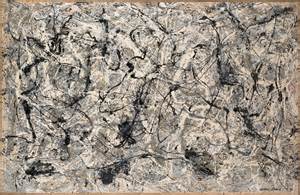
I certainly don’t agree with the author that art has to have unifying narrative to be of value.  One of the earliest painters I connected with was Jackson Pollack.  I remember seeing a painting of his in a Life magazine article and then later at the Art Institute in Chicago. This was a time back in my junior high school days. 

Jackson’s drip paintings reminded me of a brain’s neural network being charged with emotion. Perhaps, his paintings are a one-nanosecond glimpse of a much larger narrative. In any case, art is something you can take or leave as you see fit based on your own life narrative.

There will be places in the book where you will take issue with her opinions, just I did (see below).  This is good.  Find out why you agree or disagree with her. I urge you to become knowledgeable about the current world view encircling you by reading this book. Form your own Christian-romantic-rationalist worldview to withstand secularism’s pressures.

Nancy Peacey pushes for there to be narrative and a teleological basis to paintings, music and literature.  Again, I disagree about the need for narratives.

There will be times of narrative and Newtonian Classical Physics and Bach and Norman Rockwell and Shakespeare and Charlotte Brontë where cause and effect and resolution are clearly known.  There will also be times of seeming disarray and unknowns and lack of resolution as in Quantum Physics and the music of György Ligeti, John Cage and Schoenberg and the paintings of Picasso and Jackson Pollock and the poems of Jack Kerouac.  We need both. As creators, though, we are all teleologically dependent whether we like it or not.  Intelligent design is baked into the pottery.

Jackson Pollock No 28

Jackson Pollock – No.28, 1950. Enamel on canvas

 In the final words of the book Pearcey encourages parents to not push their kids into being conservative (keeping things as they are).  Rather, she encourages parents to push for “revolutionary” children.

Like the “Forward” quote source I find this curious. From my reading of Saving Leonardo, there seems to be no direct context given for defining her word “revolutionary”.  Perhaps she means being an ‘out-side-the-box’ artist, composer or writer.  Apparently she hasn’t read Flannery O’Connor’s Wise Blood.

 *******

Point of contention with the book:

The book is divided into two main parts: The Threat of Global Secularism and Two Paths to Secularism. As a side note I became particularly interested in Chapter Three of the book’s Part One. The title of Chapter Three: Sex, Lies and Secularism.

In this section of Chapter Three “Hooking up, Feeling Down” Pearcey begins “Let’s move to the most contentious sexual issues of our day such as homosexuality, transgenderism and the hook-up culture.” She then goes on to say that having an understanding of the two-story dualism of modern thinking will help the Christian in providing a holistic biblical alternative.

Because of her shotgun approach of scoping transgenderism in the same sights as homosexuality, Pearcey does, I believe, relegate transgenderism to be on par morally with acting out homosexually and one-night stand sexuality. I would state emphatically here that transgenderism by definition is not about acting out sexually. Transgenderism is not equal to homosexuality whether as a sexual issue or a gender issue. It IS about gender identity/gender dysphoria and seeking to become a whole person ~ a romantic rationalist.  Or, to describe it using her term, it’s being “revolutionary.”

Further information about transgenderism:

 The Transgender Moment

A ‘Naturalized’ Woman

The Church and Gender

Other ‘related’ dichotomies: Robert Pirsig’s “Zen and the Art of Motorcycle Maintenance.” Pirsig’s distinction between the “classical” and the “romantic” view is conceptually analogous to Thomas Sowell’s distinction between the constrained and unconstrained visions in “A Conflict of Visions”

Where do I go when the music starts?


Where do I go when the music starts?

When I blow my horn and jazz blurts out?

Maybe I am holed up in the right hemisphere with the shades drawn

– the motel existential.

Maybe I go underground and then

Maybe, man, I am submersed head-to-toe in liquid sublimity –

Me being all lava-in-a-lamp like.


Where do I go when the music starts?

I go with it.


© Sally Paradise, 2011, All Rights Reserved