Somewhere in the Lost World of Love

Love. Is it die-cut like the Valentine cards of grade school? Is it cliché like pop music? Is it a potion we constantly thirst for? Is it intoxication and under its influence we are not in our right minds? Is love passion? Sentimental? Carnal? Absolute? “What do any of us really know about love?” 
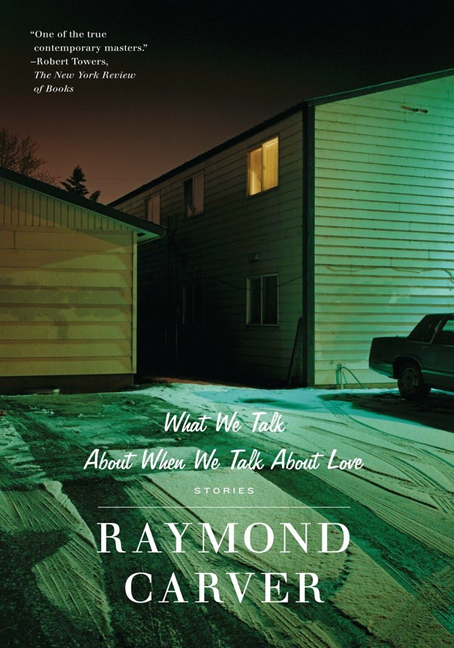
The last question is raised during a conversation between two couples. Their dialog and the juxtaposition of the couple’s ideas about love are found in Raymond Carver’s 1981 short story What We Talk About When We Talk About Love. Carver has us listen in.

We learn from narrator Nick that he and his wife Laura are spending the afternoon at Mel and Terri’s home. Both couples live in Albuquerque, but as Nick says and the ‘love’ dialog relates, they “were all from somewhere else”.

Nick tells us that Mel McGinnis is a forty-five-year-old cardiologist who, before medical school, spent five years in seminary. Terri is his second wife. We later learn that Mel was married before to Majorie and has two children. His movements are usually precise when he hasn’t been drinking. 

Terri, we learn, was previously in an abusive relationship with a guy named Ed. He would beat her and drag her around the room by her ankles, all the while professing his love for her.

Mel and Terri have been married for four years.

Nick tells us about Laura and their relationship: she’s a legal secretary who’s thirty-five and three years younger than he is. He says they’re in love, they like each other and enjoy each other’s company. “She’s easy to be with.” They’ve been married for eighteen months. 

Beside the four adults, sunlight and gin figure in the story.

As the story begins, the four are sitting around a kitchen table. Sunlight fills the room. Gin and tonic water are being passed around. The subject of love comes up.

(I get the sense that the older couple have argued a lot about what love is and now want to air it all again in front of the younger couple. It seems they have things they want to get off their chest. Is that why the cheap gin is being passed around? Are Nick and Laura in place to be the arbiters of who’s right and who’s wrong?)

The heart doctor Mel, based on “the most important years of his life” in seminary, thinks that “real love was nothing less than spiritual love”.  (This signals that love’s definition may not be solid.)

Terri believes that Ed, the man who tried to kill her, loved her. She asks “What do you do with love like that? Mel responds that Ed’s treatment could not be called love.

Terri then makes excuses for Ed’s behavior – “People are different”. She defends him – “he may have acted crazy. Okay. But he loved me.”

We begin to notice a growing tension between Mel and Terri. (There has been tension in their marriage about Ed and Marjorie before this.)

Mel relates that Ed threatened to kill him. Mel reaches for more gin and becomes antagonistic himself. He calls Terri a romantic for wanting brutal reminders of Ed’s love. Then he smiles at her hoping she won’t get mad. Terri responds to Mel, not with a rejection of his or of Ed’s behavior, but with what might have been her leave-the-door-open enabling response to Ed after one of his physical attacks: “Now he wants to make up.” Her past relationship reveals the continuous nature of Terri’s emotional deficit.

(Does Mel know how to land verbal blows on Terri like Ed did physically?)

Mel tries to soften the blow by calling Terri “honey” and by saying again that what Ed did wasn’t love. He then asks Nick and Laura what they think.

Nick says he doesn’t know the man or the situation to make a decision. Laura says the same and adds “who can judge anyone else’s situation?” Nick touches her hand and she smiles.

Nick picks up her “warm” hand, looks at the polished and manicured nails and then holds her hand. With this display of affection, Nick shows his love and respect for Laura, the opposite of the emotional and physical abuse Terri suffered at the hands of Ed.

Mel posits that his kind of love is absolute and nonviolent. (Then again, emotional abuse doesn’t kill or leave physical bruises.)

Terri and Mel describe Ed’s two attempts at suicide. Terri talks with sympathy for the guy. “Poor Ed” she says. Mel won’t have any of it: “He was dangerous.” Mel says they were constantly threatened by Ed. They lived like fugitives, he says. Mel bought a gun.

Terri stands by her illusion that Ed loved her – just not the same way that Mel loves her.

They go to relate that Ed’s first suicide attempt -drinking rat poison – was “bungled”. This puts him in the hospital. Ed recovers. The second attempt is a shot in the mouth in a hotel room. Mel and Terri fight over whether she will sit at his hospital bedside. She ends up there.

Mel reiterates that Ed was dangerous. Terri admits they were afraid of Ed. Mel wants nothing to do with Ed’s kind of love. Terri, on the other hand, reiterates that Ed loved her – in an odd way perhaps but he was willing to die for it. He does die.

Mel grabs another bottle of gin.

Laura says that she and Nick know what love is. She bumps Nick’s knee for his response. He makes a show of kissing Laura’s hand. The two bump knees under the table. Nick strokes Laura’s thigh.

Terri teases them, saying that things will be different after the honeymoon period of their relationship. Then, with a glass of gin in hand, she says “only kidding”. Mel opens a new bottle of gin and proposes a toast “to true love.”

The glow of the afternoon sun and of young love in the room makes them feel warm and playful, like kids up to something.

Matters-of-the-heart Mel wants to tell them “what real love is”. He goes on about what happens to the love between couples who break up. After all, he once loved his ex-wife, Marjorie, and Terri once loved Ed. Nick and Laura were also both married to other people before they met each other.

He pours himself more gin and wipes the “love is” slate clean with “What do any of us really know about love?” He – the gin Mel – talks about physical love, attraction, carnal love, sentimental love, and memory of past love. Terri wonders if Mel is drunk. Mel says he’s just talking. Laura tries to cheer Mel by saying she and Nick love him. Mel responds saying he loves them too. He picks up his glass of gin.

Mel now gets around to his example of love, an example that he says should shame anyone who thinks they know what they are talking about when they talk about love. Terri asks him to not talk drunk. (Is Mel, focused only on himself and his gin, becoming a slurring, stammering and cursing drunk?) He tells her to shut up.

Mel begins his story of an old couple in a major car wreck brought on by a kid. Terri looks over at Nick and Laura for their reaction. Nick thinks Terri looks anxious. Mel hands the bottle of gin around the table.

Mel was on call that night. He details the extensive wounds. The couple is barely alive. After saying that seat belts saved the lives of the couple, he then makes a joke of it. Terri responds affirmatively to Mel and they kiss.

Mel goes on about the old couple. Despite their serious injuries, he says, they had “incredible reserves” – they had a 50/50 chance of making it.

Mel wants everyone to drink up the cheap gin and then go to dinner. He talks about a place he knows. Terri says they haven’t eaten there yet. The heart doctor’s coherence dissipates with each drink.

He says he likes food and that he’d be a chef if he had to do things all over again. Then he says he wants to come back in another life as a medieval knight. Knights, he says, were safe in armor and they had their ladies. As he talks, Mel uses the word “vessels”. Terri corrects him with “vassals”. Mel dismisses her correction with some profanity and false modesty.

Nick counters the heart doctors fantasy by saying that knights could suffer a heart attack in the hot armor and they could fall of a horse and not get back up because it is heavy.  

Mel responds to Nick and Terri, acknowledging it would be terrible to be a knight, that some “vassal” would spear him in the name of love. More profanity. More gin.

Laura wants Mel to return to old couple story. The sunlight in the room is thinning. (And so is “love’s” illumination.)

Terri gets on Mel’s nerves with something she said jokingly. Mel hits on Laura saying he could easily fall in love with her if Terri and Nick weren’t in the picture. He’d carry her off knight-like. (Terri and Nick, of course, are sitting right there.)

Mel, with more vulgarity, finally returns to his anecdote. The old couple are covered head to toe in casts and bandages with little eye, nose and mouth holes. The husband is depressed, but not about his extensive injuries. He’s depressed because he cannot see his wife through his little eye holes. Mel is clearly blown away by this kind of love. He asks the other three if they see what he’s talking about. They just stare at him.

Sunlight is leaving the room. Nick acknowledges that they were all “a little drunk”.

Mel wants everyone to finish off the gin and then go eat. Terri says he’s depressed, needs a pill. Mel wants to call his kids, who live with his ex-wife and her new boyfriend.  Teri cautions Mel about taking to Marjorie – it’ll make him more depressed.

Terris says that Marjorie, because she isn’t remarried, is bankrupting them. Mel, who says he once loved Marjorie, fantasizes about Majorie dying after being stung by a swarm of bees, as she’s allergic to bees. Mel then shows with his hands on Terri’s neck how it would happen to “vicious” Marjorie.

Mel decides against phoning his children and mentions about going out to eat again. Nick is OK with eating or drinking more. Laura is hungry. Terri mentions putting out cheese and crackers put she never gets up to do this. Mel spills his glass of gin on the table – “Gin’s gone”. Terri wonders what’s next.

As the story ends, daylight (illumination) is gone from the kitchen. The four are ‘in the dark’ about what love really is. The conversation is also gone after Mel’s futile attempts to talk about love in any satisfying way and the inability of two characters to move on from the past and with two characters wondering what’s next.

The only sound Nick hears is the sound of human hearts beating (somewhere in the Lost World of Love).

~~~~

This story, though not of “Christian” genre, certainly would resonate with many readers. Do you relate to anyone in the story?

Terri understood Ed’s abusive and suicidal behavior as him being passionate about love. Mel, the heart doctor and would-be knight, showed himself idealistic and ignorant about the realities of the ‘heart’ and not loving towards Terri. Nick and Laura revealed the affection and passion of the heady first days of romance love. The old couple possessed an enduring love for each other after many years of marriage.

Why would I, as a Christian, gravitate to a ‘worldly’ author like Raymond Carver, especially when his stories are filled with alcohol? One reason is that I recognize myself in many of his stories. I see elements of myself at various stages of my life in each of the characters above. I could pretend to see myself otherwise, as I think some Christians do.

Another reason is that Carver writes about working class people. He doesn’t write down to people. His writes stories of domestic American life with its passions, fears, foibles, and fantasies. He writes with realism about human nature, revealing the old self that I must recognize in myself to put away.

I find his writing sobering, as in his story Where I’m Calling From.

~~~~~

RARE: Raymond Carver Reads “What We Talk About When We Talk About Love” (youtube.com)

~~~~~

Men need sex. And it’s their wives’ job to give it to them—unconditionally, whenever they want it, or these husbands will come under Satanic attack.

Stunningly, that’s the message contained in many Christian marriage books. Yet, research shows that instead of increasing intimacy in marriages, messages like these are promoting abuse.

In this edition of The Roys Report, featuring a talk from our recent Restore Conference, author Sheila Wray Gregoire provides eye-opening insights based on her and her team’s extensive research on evangelicalism and sex.

How Christian Teachings on Sex Enable Abuse | The Roys Report (julieroys.com)

How Christian Teachings on Sex Enable Abuse | The Roys Report

The Advent of One Day at a Time

When have entered a dark season. Houses and yards are lit up. And, perhaps, some of the residents.

“The holidays are always bad” – Frank Martin.

American writer Raymond Carver published a story about a man trying to move from an addiction to alcohol toward sobriety. The story, set over three days, includes New Years Day. Where I’m Calling From first appeared in the New Yorker in 1982.

Written in Carver’s no-nonsense economical fashion, the story is told by a nameless Narrator who immediately draws us into the residential treatment center where he finds himself and another because of an inability to stop drinking.

“J.P and I are on the front porch at Frank Martin’s drying out facility. Like the rest of us at Frank’s Martin’s, J.P. is first and foremost a drunk. But he’s also a chimney sweep. It’s his first time here, and he’s scared. I’ve been here once before. What’s to say? I’m back.”

From the opening words we learn that alcoholism can take over one’s identity. The Narrator labels both J.P. and himself and everyone at the treatment center. But then the Narrator does go on to say that he knows J.P. as more than “a drunk”.

We also learn, from the Narrator’s “I’m back”, that the struggle with alcoholism can become a cycle of drinking and drying out. And then we find out that it can also become the ultimate wake-up call.

Let’s listen in . . .

“We’ve only been in here a couple of days. We’re not out of the woods yet. J.P. has these shakes, and every so often a nerve — maybe it isn’t a nerve, but it’s something — begins to jerk in my shoulder. Sometimes it’s at the side of my neck. When this happens, my mouth dries up. It’s an effort just to swallow then. I know something’s about to happen and I want to head it off. I want to hide from it, that’s what I want to do. Just close my eyes and let it pass by, let it take the next man. J.P. can wait a minute.

“I saw a seizure yesterday morning. . .”

A large man nicknamed Tiny had the seizure. As the Narrator tells us, Tiny was showing signs of improvement and looking forward to going home for New Year. But then Tiny collapsed at the table before all of them and was rushed to the hospital. The physical signs of alcoholism and withdrawal from it – shakes, spasms, swallowing issues and a seizure – have a major effect on the Narrator.

Loss of self-control brought the Narrator and the “drunk” others to Frank Martin’s drying out facility. And now the loss of physical control due to alcohol use disorder – the Narrator doesn’t want to countenance that. He recoils and hopes for the best – to “let it pass by” to someone else at the table.

“But what happened to Tiny is some-thing I won’t ever forget. Old Tiny flat on the floor, kicking his heels. So every time this little flitter starts up anywhere, I draw some breath and wait to find myself on my back, looking up, somebody’s fingers in my mouth.”

Reading on we get a sense of the need for company and storytelling that withdrawing from alcoholism produces. J.P. and the Narrator sit on the front porch of Frank Martin’s drying out facility. The Narrator listens to J.P.’s story.

The first thing we hear about is a childhood trauma. Twelve-year-old J.P. happened to fall into a dry well near a farm near where he grew up. It wasn’t until later that day that his dad found him and pulled him up. We find out from the Narrator the effect on J.P.:

“J.P. had wet his pants down there. He’d suffered all kinds of terror in that well, hollering for help, waiting, and then hollering some more. He hollered himself hoarse before it was over. But he told me that being at the bottom of that well had made a lasting impression.”

(So far, two lasting impressions from life-or-death situations.)

J.P. remembers looking up at the circle of blue sky from the “bottom of that well” and seeing passing clouds and birds and hearing rustling (of insects?) and the wind blow over the opening. To me this is a picture of the alcoholic at the bottom of the well (the bartending term “well” comes from one of the many names for the underneath of the bar top) and who now looks up and sees life going on without him and a “little circle of blue” that represents hope. The Narrator relates what J.P. said about that time:

“In short, everything about his life was different for him at the bottom of that well. But nothing fell on him and nothing closed off that little circle of blue. Then his dad came along with the rope, and it wasn’t long before J.P. was back in the world he’d always lived in.”

J.P. receives a lifeline. The Narrator wants to hear more.

“Keep talking, J.P. Then what?””

We learn from the Narrator that J.P. meets Roxy, a chimney sweep, at a friend’s house. J.P. says that he could “feel his heart knocking” as she looked him over.  J.P. receives a “good luck” kiss from Roxy.

“He could feel her kiss still burning on his lips, etc. At that minute J.P. couldn’t begin to sort anything out. He was filled with sensations that were carrying him every which way.”

J.P. asks to date her.

“Then what?” the Narrator says. “Don’t stop now, J.P.”

We learn that J.P. and Roxy date. To be close to Roxy, J.P. becomes a chimney sweep and begins working with her. The two later marry, have two kids, and buy a house. The Narrator relates what J.P. felt at the time and adds a comment:

“I was happy with the way things were going,” he says. “I had everything I wanted. I had a wife and kids I loved, and I was doing what I wanted to do with my life.” But for some reason — who knows why we do what we do? — his drinking picks up.

J.P.  goes on to talk about how he began to drink more and more, even taking a “thermos bottle of vodka in his lunch pail”. But then he stops talking.

The Narrator, who’s using J.P. story to help himself relax and avoid his own situation, coaxes to J.P. to continue.

J.P.’s drinking effects his relationship with Roxy. Their fights became physical – a broken nose for J.P. and a dislocated shoulder for Roxy.

“They beat on each other in front of the kids. Things got out of hand. But he kept on drinking. He couldn’t stop. And nothing could make him stop. Not even with Roxy’s dad and her brother threatening to beat hell out of him. They told Roxy she should take the kids and clear out. But Roxy said it was her problem. She got herself into it, and she’d solve it.”

Roxy fixes things by getting a boyfriend. J.P, finds out and goes berserk – like pulling off her wedding ring and cutting it in two. Things for the “drunk” J.P. go downhill – like falling off a roof and breaking a thumb and being arrested for drunk driving.

The Narrator wants us to know that he and J.P. are staying at Frank Martin’s of their own free will and that they’re trying to get their life back on track. Since it’s the Narrator’s second visit, Frank encourages him to stay longer – “The holidays are always a bad time.”

We then learn from the Narrator how J.P. arrived at the residential treatment center. Roxy’s father and brother drive J.P. to Frank Martin’s drying out facility, carry him upstairs and put him to bed. A couple of days later, J. P’s out on the porch with the Narrator telling his stories.

At one point, when the two are on the front porch, Frank Martin, who the Narrator says looks like a prize fighter and “like somebody who knows the score”, comes out to finish his cigar.

“He lets the smoke carry out of his mouth. Then he raises his chin toward the hills and says, “Jack London used to have a big place on the other side of this valley. Right over there behind that green hill you’re looking at. But alcohol killed him. Let that be a lesson. He was a better man than any of us. But he couldn’t handle the stuff, either.”

Frank then encourages them to read London’s Call of the Wild. The book is in the house, he tells them.

J.P., who wants to hide when Frank’s around, says he wishes he had a name like “Jack London” instead of his own name, Joe Penny. (Does the initial using  J. P. feel that the shame, failure, and disappointment of being a “drunk” is attached to “Joe Penny? Does he desire a new name because of his tarnished name?)

The Narrator then tells us about his two trips to Frank Martin’s. When his wife brought him here the first time, Frank said he could help. The Narrator wasn’t sure:

“But I didn’t know if they could help me or not. Part of me wanted help. But there was another part.”

The second time, the Narrator was driven to Frank Martin’s by his girlfriend. He had moved in with her after his wife told him to leave.

This second trip to the treatment center came after their drinking bouts around Christmas. The girlfriend had received horrible news in the form of a medical report. With that kind of news, they decided to start drinking and get “good and drunk”. On Christmas day they were still drunk. After a lot of Bourbon, the Narrator decides to go back for treatment. The drunk girlfriend drops him off. The Narrator is not sure if she made it home OK. They haven’t talked on the phone.

New Year’s Eve morning. The Narrator tries to contact his wife, but no answer. He recalls their last conversation. They screamed at each other. “What am I supposed to do?” he says, thinking that he can’t communicate with her anyway.

We learn that there’s a man in the group who’s in denial and says his drinking is under control. He says he doesn’t know why he’s at Frank Martin’s. But he also doesn’t remember how he got there.

New Year’s Eve. Frank made steaks for the group. But Tiny doesn’t eat. He fears another seizure. “Tiny is not the same old Tiny”.

After dinner Frank brings out a cake. In pink letters across the top: HAPPY NEW YEAR – ONE DAY AT A TIME.

Eating cake J.P. tells the Narrator that his wife is coming in the morning, the first day of the year.

The Narrator tries calling his wife collect, but there’s no answer again. He thinks about calling his girlfriend but he decides that he doesn’t’ want to deal with her. He hopes she’s OK but he doesn’t want to find out if there is something wrong with her.

In the morning, Roxy arrives. J.P. introduces his wife to the Narrator. The Narrator wants a “good luck” kiss. The Narrator can see that Roxy loves J.P. She uses “Joe” instead of “J.P.”

This scene seems to trigger something in the Narrator. Lighting a cigarette, he notices that he has the shakes. They started in the morning. He wants something to drink. Depressed, he turns his mind to something else.

The Narrator remembers a happy time with his wife in their house and the house painter that surprised him one morning. These were good vibes: “And at that minute a wave of happiness comes over me that I’m not him — that I’m me and that I’m inside this bedroom with my wife.”

Sitting outside on the front steps, the Narrator thinks about reconnecting – calling his estranged wife again and then his girlfriend. He tries to remember any of Jack London’s books he’s read. “To Build a Fire” comes to mind. It’s a life-or-death story set in the Yukon.

The Narrator thinks again about reconnecting – calling his estranged wife and wish her a “Happy New Year” and to let her know where he’s at when she asks. After that, he’d call his girlfriend hoping that her mouthy teenage son won’t pick up the phone.

~~~~~

Carver’s style has been described as “dirty realism”. Bill Buford, in Granta Magazine, Summer 1983, describes the style:

“Dirty Realism is the fiction of a new generation of American authors. They write about the belly-side of contemporary life – a deserted husband, an unwanted mother, a car thief, a pickpocket, a drug addict – but they write about it with a disturbing detachment, at times verging on comedy. Understated, ironic, sometimes savage, but insistently compassionate, these stories constitute a new voice in fiction.”

Carver’s influences include Anton Chekhov, Ernest Hemingway, Flannery O’Connor to some degree and others.

Like with Chekhov’s stories, Carver’s stories are like windows you can peer through and get a sense of the characters and what’s going on. Though indirect and conveying things without moral pronouncements, Carver’s stories suggest much with details that can say many things. Falling into a well and the mention of Jack London, for example, in the story above.

J.P.’s account of falling into a well gives us some idea of how it feels to be an alcoholic – helpless, in over your head, scared, and looking for a lifeline and a way out.

The Narrator, at the beginning, says “We’ve only been in here a couple of days. We’re not out of the woods yet” and at the end Jack London’s “To Build a Fire” comes to mind. I see his initial admission of trekking through the woods to sobriety and his later hint of his attempts toward sobriety (building a fire in the woods) as an inclusio or framing of the Narrator’s struggle with alcohol. His journey to sobriety will require a set of survival skills he doesn’t yet possess.

The setting of “To Build a Fire” is in the extreme cold of the largely uninhabited Yukon Territories. The unnamed (like the Narrator) solitary hiker is walking on a side trail in the woods toward an outpost. His self-confidence in hiking and survival skills has him disregard an old man’s advice about not traveling alone in such harsh weather.

Remember the Narrator saying this about his first arrival at Frank Martin’s?

“But I didn’t know if they could help me or not. Part of me wanted help. But there was another part.”

The hiker thinks that he can keep trekking toward the outpost without building a fire, despite it being 50 degrees below zero. His dog seems smarter than the hiker who underestimates the power of nature and the possibilities that can arise. While the hiker has some practical smarts, he lacks wisdom. A quote from the story describes the hiker:

“The trouble with him was that he was without imagination. He was quick and alert in the things of life, but only in the things, and not in the significances.”

At one point the hiker, almost frozen, finally decides to build a fire. Because it was easier to gather the wood needed, he builds his fire underneath a canopy of tree branches. The boughs above his fire are laden with snow. The jostling of his twig gathering and the heat of the fire cause the snow to fall onto the fire and quench it. The hiker tries again, this time out in the open, but he’s freezing up. His hands can’t function. He eventually resigns himself to his frozen fate.

One could see parallels between the unnamed hiker’s folly and the Narrator’s struggle with alcoholism. For one, there’s a self-reliance that paid off in the past that goes on to think it can handle all things. Maybe that’s why Frank Martin brought up Jack London:

“Jack London used to have a big place on the other side of this valley. Right over there behind that green hill you’re looking at. But alcohol killed him. Let that be a lesson. He was a better man than any of us. But he couldn’t handle the stuff, either.”

Another would be building a fire (drying out) under the pretense that you’ve got things figured out and under control. And that could end up in a cycle of a cycle of fires going out and building another fire, of drinking and drying out. Or worse.

Besides the hidden clues, discernable themes of addiction, self-destructive behaviors, addiction’s effect on others, loss of control while under the influence of alcohol, identity, loneliness, alienation, failure, vulnerability, and the need for human connection and story – they’re found in Where I’m Calling From.

~~~~~

Raymond Carver described himself as “inclined toward brevity and intensity”.

Characterized by an economy with words, Carver’s stories focus on surface description and its subject matter. Things are laid bare. No flowery words. No adverbs. Meaning is found in the raw context.

“Carver decided to explore minimalism in writing. He showed, in his text, real situations of everyday life; some of them could be crude, or complicated to understand, but still, he represented feelings that everyone could recognize: sadness, loneliness, failure, etc.”

-Maialen De Carlos,  The American Short Story and Realism: Raymond Carver (byarcadia.org)

Raymond Carver once said “I’m a paid-in-full member of the working poor.”  He wrote stories that a blue-collar reader could connect with – of unremarkable people and the seemingly insignificant details that affect them. His own life was a constant struggle with alcohol addiction.

Carver had self-destructive issues with drinking. Alcohol shattered his health, his work and his family – his first marriage ended because of it. He stopped drinking on June 2nd 1977.

The Life of Raymond Carver documentary with Rare Interview (1989):

Hailed as the American Chekhov and short-listed for a Pulitzer Prize at the time of his death, only ten years earlier Raymond Carver had been completely down and out. In this vintage program filmed just a year after he died, Carver’s second wife, Tess Gallagher, and writers Jay McInerney and Richard Ford, his close friends, explore Carver’s artistic legacy: his stories and poems about the other side of the American Dream. In addition, excerpts from two of Carver’s most famous stories are dramatized. “No one since Steinbeck had written about these people,” says McInerney, “the people whose dreams go belly-up.”

The Life of Raymond Carver documentary with Rare Interview (1989) (youtube.com)

~~~~~

Why do I read Carver?  Because he writes about people like me and my lived experience. I can relate to J.P. and the Narrator. I’ve known alienation, loneliness, shame, brokenness, failure. I’ve made bad decisions. I’ve been at the bottom of the well. And the bottom of the well has been in me.

Several years ago I had a chat with the rector of the church I was attending. It was midweek when he and I met in the church hallway. I had just dropped off some bags of groceries to be delivered to a homeless shelter in the area.

We hadn’t talked in a while and he wanted to catch up. So we sat down in a room just off the entrance to the chapel. I could tell, first off, that he was eager to convince me to share a room with another single woman during the upcoming trip to Israel that he was heading. When I let him know that I wasn’t interested, he asked me how I was doing.

I told him about work and that I was thinking about retiring at some point. Then, I don’t remember why – maybe to tell him Where I’m Calling From, I told him that there was a well of pain so deep in me that if I brought any of it up, I didn’t know what would happen.

He responded with “Hmmm.” When our conversation ended, he prayed for me.

What I like about Carver’s stories is what I like about Anton Chekov’s stories   – I don’t find sanctimony or moralizing. There is no rush to judgement. There are common shared experiences.

Where I’m Calling From, for the most part, is narrated in the present tense. If narrated in the past tense, we’d be in a position to judge. We’d be in the “I told you so” position.

But the present tense narration draws us in. We become involved. We wait and see what happens. We listen to the stories being told. We don’t judge. We understand. And we connect. As a follower of Jesus in this dark season, this is what I’m called to do.

The entire creation is groaning and that includes me.

~~~~~

Short Story Roulette (archive.org)

~~~~~

Advent: The Season of Hope (youtube.com)