Nothing More Than Alright

A short story . . .

My father, on the nights when my mother goes to bridge club, makes creamed chipped beef with peas on toast for supper. He told me one time that in the military it’s called “shit on a shingle” or SOS for short. He makes me eat it even though I can’t stomach peas or the dried beef or the gravy and I’m not a soldier. Tonight again, my mother is at bridge club and I’m sitting here with SOS.

After looking at my plate for a long time, I move the peas out of the gravy, off the toast and onto the plate with my knife. I’m hoping I won’t have to eat them. The kitchen phone rings and I jump to answer it. My best friend Janey wants to know if I want to go with her and her boyfriend Nick to watch West Side Story at the Sky-Hi Drive-In. I say I sure do and hang up. My father doesn’t want me on the phone during supper.

The peas are cold and clammy now and I say I they’re cold and clammy and I can’t eat them. My father tilts his head down and tells me to eat them. I want to say no but I need his okay to go to the movie. So, I stab some peas with my fork and swirl them in the flour gravy and then I eat the green-grey mush with a bite of toast. I gag. I drink some milk and wash it down. My father lifts his head and says “alright”. I clear the dishes and wash them. I’ve done what he wanted, so now I can ask him about Friday night. But I wait until he’s sitting in front of the TV.

An hour later, my father is in the basement watching TV. I sit with him and ask about his movie. He says troops have been ordered to risk their lives and retake a hill that’s not important in the battle. I ask him why. He says it shows the enemy their resolve to continue to fight if an agreement is not reached in negotiations.

A Marlboro commercial comes on and I ask him about Friday night. He wants to know about the movie. I tell him it’s a musical about people fighting, dancing and falling in love and he says “Okay. Ask your mother when she come home from playing bridge.”

My mother finally gets home and I tell her about Friday night. She says she knows the movie. “Saw it with a friend when it came out in ’61,” she says. She knows Janey and Nick and she says it’s okay with her that I go.

Saturday night Nick’s car pulls into the driveway. He honks the horn and I yell “They’re here”. My father yells from the basement “Have a good time honey. Call if there is a problem.” Mom, on the phone with someone, yells for me to come straight home after the movie. I yell back “I will.”

I get in the back seat of Nick’s Chevy and we drive off – but not in the direction of the Sky-Hi. I ask where we’re going. Janey turns to me and says that Nick asked his friend Tom to come along. He had nothing to do, Nick says. I immediately panic. I wonder if I look alright.

I have a face full of pimples and a bony nose that’s too big for my face. I wonder if I used enough concealer. The green top I’m wearing is wrinkled. It was at the bottom of my closet. And the jeans I’m wearing are worn thin. I was expecting to sit in the dark and watch a movie with Nick and Janey.

We pull up to a ranch house on the other side of town. Nick honks the horn. A skinny blonde-haired guy walks out the front door and down the front walk. “Here’s Tom,” Janey says.

Tom gets in the back seat. Janey introduces Tom. I don’t know him from school. I give him a quick smile and then give Janey a stare. She just winks back at me. She knows I don’t have a boyfriend.

Tom is neatly dressed. He’s wearing a button-down shirt, khaki pants and loafers. His boxy glasses make him look like a bookworm. In junior high school he’d be called “a climber” and Nick “a greaser.”

The Twin Theater Sky-Hi Drive In is on the west end of our town. On the way we listen to the AM radio. A Chicago station plays Born to Be Wild and I Will Always Think About You. Tom and I sit quietly in the back. I suck in my lips and look out my window. The cloudy sky looks like flour gravy.

We arrive at Sky-Hi and pay for our tickets. Nick drives over to a center spot in the East Theater. Nick and Tom say they’re going to the concession stand. They ask what we want. Janey and I ask for Cokes and popcorn. I hand Nick some money and they head off. The guys return after twenty minutes just as the coming attractions start. I roll down my window and Tom hands me the Coke and popcorn. I say thank you. He gets into the back seat on the other side of the car.

Janey’s been sitting next to Nick the whole time he’s been driving. Now Nick puts his arm around Janey’s shoulder and they snuggle together. Janey asks “are you guys okay back there?” I say I have to move over to see the screen. I look at Tom and he gives me a nod that says it’s okay. I scooch over to the middle of the back seat and put my legs to the left side of the floor hump. “That’s better,” I say.

Finally, the movie begins. There’s an overture and then the Jets sing about being a Jet and beating up other gangs. The Jets and the Sharks want to fight each other for control of the streets. But first they go to a dance. It’s a musical, so I guess it doesn’t have to make sense.

At the dance, Tony of the Jets meets Maria, Bernardo’s sister. Bernardo is the head of the Puerto Rican Shark gang. Tony and Maria fall in love at first sight. Nobody is happy about that except Tony and Maria. Tony’s half in half out about the gang stuff but he’s all in on Maria. He wants to run away with her.

Tony and Maria start singing Tonight and I stop eating popcorn. I put my hand down on the car seat so I can lean forward and hear what’s coming from the speaker. My little finger touches Tom’s little finger. He takes my hand into his. We stay this way, looking at the movie and holding hands, until the movie ends and headlights turn on.

It’s past midnight when we leave Sky-HI. Nick says he’ll drive me home first. I go back and sit behind Nick. Tom looks out his window. Everyone is quiet. Nick turns on the radio. Ain’t Nothing Like the Real Thing comes on. I suck in my lips and look out my window. On the way home I see a car with one headlight and say “perdiddle.”  Janey and Nick kiss.

At home I get out of the car and say thanks to Janey and Nick and goodnight to Tom. Tom says good night looking at Nick and Janey.

I go inside and hear the TV on in the basement. I walk down the hallway to my bedroom. My mother is sitting in her bed reading her magazines. She sees me and asks “Susan, how was it?” I poke my head into the room and tell her it was alright.

“Just alright? Nothing more?” she asks.

“Nothing more than alright” I say.

“Okay,” she says. “Now go to bed. It’s late. Tomorrow’s another day.”

As I walk away she reminds me that she has bridge club again tomorrow night. I say okay.

In my room I take the ticket stub out of my jeans pocket. I find a pen and write on the back of the stub West Side Story Tom. I pull my keepsake box out from under the bed and put the ticket stub inside along with the Valentine cards from third grade and my second-place medals from clarinet solo contests and some poems I wrote. I close the box and put it back.

I go to bed thinking about the movie and Tom and peas on my plate.

©Jennifer Ann Johnson, Kingdom Venturers, 2024, All Rights Reserved
Somewhere in the Lost World of Love

Love. Is it die-cut like the Valentine cards of grade school? Is it cliché like pop music? Is it a potion we constantly thirst for? Is it intoxication and under its influence we are not in our right minds? Is love passion? Sentimental? Carnal? Absolute? “What do any of us really know about love?” 

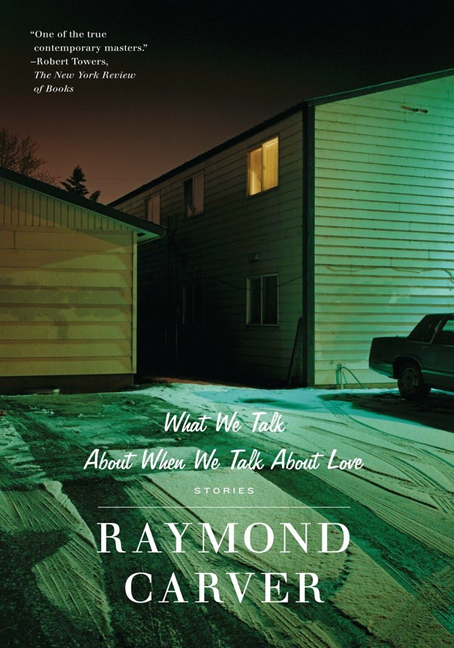
The last question is raised during a conversation between two couples. Their dialog and the juxtaposition of the couple’s ideas about love are found in Raymond Carver’s 1981 short story What We Talk About When We Talk About Love. Carver has us listen in.

We learn from narrator Nick that he and his wife Laura are spending the afternoon at Mel and Terri’s home. Both couples live in Albuquerque, but as Nick says and the ‘love’ dialog relates, they “were all from somewhere else”.

Nick tells us that Mel McGinnis is a forty-five-year-old cardiologist who, before medical school, spent five years in seminary. Terri is his second wife. We later learn that Mel was married before to Majorie and has two children. His movements are usually precise when he hasn’t been drinking. 

Terri, we learn, was previously in an abusive relationship with a guy named Ed. He would beat her and drag her around the room by her ankles, all the while professing his love for her.

Mel and Terri have been married for four years.

Nick tells us about Laura and their relationship: she’s a legal secretary who’s thirty-five and three years younger than he is. He says they’re in love, they like each other and enjoy each other’s company. “She’s easy to be with.” They’ve been married for eighteen months. 

Beside the four adults, sunlight and gin figure in the story.

As the story begins, the four are sitting around a kitchen table. Sunlight fills the room. Gin and tonic water are being passed around. The subject of love comes up.

(I get the sense that the older couple have argued a lot about what love is and now want to air it all again in front of the younger couple. It seems they have things they want to get off their chest. Is that why the cheap gin is being passed around? Are Nick and Laura in place to be the arbiters of who’s right and who’s wrong?)

The heart doctor Mel, based on “the most important years of his life” in seminary, thinks that “real love was nothing less than spiritual love”.  (This signals that love’s definition may not be solid.)

Terri believes that Ed, the man who tried to kill her, loved her. She asks “What do you do with love like that? Mel responds that Ed’s treatment could not be called love.

Terri then makes excuses for Ed’s behavior – “People are different”. She defends him – “he may have acted crazy. Okay. But he loved me.”

We begin to notice a growing tension between Mel and Terri. (There has been tension in their marriage about Ed and Marjorie before this.)

Mel relates that Ed threatened to kill him. Mel reaches for more gin and becomes antagonistic himself. He calls Terri a romantic for wanting brutal reminders of Ed’s love. Then he smiles at her hoping she won’t get mad. Terri responds to Mel, not with a rejection of his or of Ed’s behavior, but with what might have been her leave-the-door-open enabling response to Ed after one of his physical attacks: “Now he wants to make up.” Her past relationship reveals the continuous nature of Terri’s emotional deficit.

(Does Mel know how to land verbal blows on Terri like Ed did physically?)

Mel tries to soften the blow by calling Terri “honey” and by saying again that what Ed did wasn’t love. He then asks Nick and Laura what they think.

Nick says he doesn’t know the man or the situation to make a decision. Laura says the same and adds “who can judge anyone else’s situation?” Nick touches her hand and she smiles.

Nick picks up her “warm” hand, looks at the polished and manicured nails and then holds her hand. With this display of affection, Nick shows his love and respect for Laura, the opposite of the emotional and physical abuse Terri suffered at the hands of Ed.

Mel posits that his kind of love is absolute and nonviolent. (Then again, emotional abuse doesn’t kill or leave physical bruises.)

Terri and Mel describe Ed’s two attempts at suicide. Terri talks with sympathy for the guy. “Poor Ed” she says. Mel won’t have any of it: “He was dangerous.” Mel says they were constantly threatened by Ed. They lived like fugitives, he says. Mel bought a gun.

Terri stands by her illusion that Ed loved her – just not the same way that Mel loves her.

They go to relate that Ed’s first suicide attempt -drinking rat poison – was “bungled”. This puts him in the hospital. Ed recovers. The second attempt is a shot in the mouth in a hotel room. Mel and Terri fight over whether she will sit at his hospital bedside. She ends up there.

Mel reiterates that Ed was dangerous. Terri admits they were afraid of Ed. Mel wants nothing to do with Ed’s kind of love. Terri, on the other hand, reiterates that Ed loved her – in an odd way perhaps but he was willing to die for it. He does die.

Mel grabs another bottle of gin.

Laura says that she and Nick know what love is. She bumps Nick’s knee for his response. He makes a show of kissing Laura’s hand. The two bump knees under the table. Nick strokes Laura’s thigh.

Terri teases them, saying that things will be different after the honeymoon period of their relationship. Then, with a glass of gin in hand, she says “only kidding”. Mel opens a new bottle of gin and proposes a toast “to true love.”

The glow of the afternoon sun and of young love in the room makes them feel warm and playful, like kids up to something.

Matters-of-the-heart Mel wants to tell them “what real love is”. He goes on about what happens to the love between couples who break up. After all, he once loved his ex-wife, Marjorie, and Terri once loved Ed. Nick and Laura were also both married to other people before they met each other.

He pours himself more gin and wipes the “love is” slate clean with “What do any of us really know about love?” He – the gin Mel – talks about physical love, attraction, carnal love, sentimental love, and memory of past love. Terri wonders if Mel is drunk. Mel says he’s just talking. Laura tries to cheer Mel by saying she and Nick love him. Mel responds saying he loves them too. He picks up his glass of gin.

Mel now gets around to his example of love, an example that he says should shame anyone who thinks they know what they are talking about when they talk about love. Terri asks him to not talk drunk. (Is Mel, focused only on himself and his gin, becoming a slurring, stammering and cursing drunk?) He tells her to shut up.

Mel begins his story of an old couple in a major car wreck brought on by a kid. Terri looks over at Nick and Laura for their reaction. Nick thinks Terri looks anxious. Mel hands the bottle of gin around the table.

Mel was on call that night. He details the extensive wounds. The couple is barely alive. After saying that seat belts saved the lives of the couple, he then makes a joke of it. Terri responds affirmatively to Mel and they kiss.

Mel goes on about the old couple. Despite their serious injuries, he says, they had “incredible reserves” – they had a 50/50 chance of making it.

Mel wants everyone to drink up the cheap gin and then go to dinner. He talks about a place he knows. Terri says they haven’t eaten there yet. The heart doctor’s coherence dissipates with each drink.

He says he likes food and that he’d be a chef if he had to do things all over again. Then he says he wants to come back in another life as a medieval knight. Knights, he says, were safe in armor and they had their ladies. As he talks, Mel uses the word “vessels”. Terri corrects him with “vassals”. Mel dismisses her correction with some profanity and false modesty.

Nick counters the heart doctors fantasy by saying that knights could suffer a heart attack in the hot armor and they could fall of a horse and not get back up because it is heavy.  

Mel responds to Nick and Terri, acknowledging it would be terrible to be a knight, that some “vassal” would spear him in the name of love. More profanity. More gin.

Laura wants Mel to return to old couple story. The sunlight in the room is thinning. (And so is “love’s” illumination.)

Terri gets on Mel’s nerves with something she said jokingly. Mel hits on Laura saying he could easily fall in love with her if Terri and Nick weren’t in the picture. He’d carry her off knight-like. (Terri and Nick, of course, are sitting right there.)

Mel, with more vulgarity, finally returns to his anecdote. The old couple are covered head to toe in casts and bandages with little eye, nose and mouth holes. The husband is depressed, but not about his extensive injuries. He’s depressed because he cannot see his wife through his little eye holes. Mel is clearly blown away by this kind of love. He asks the other three if they see what he’s talking about. They just stare at him.

Sunlight is leaving the room. Nick acknowledges that they were all “a little drunk”.

Mel wants everyone to finish off the gin and then go eat. Terri says he’s depressed, needs a pill. Mel wants to call his kids, who live with his ex-wife and her new boyfriend.  Teri cautions Mel about taking to Marjorie – it’ll make him more depressed.

Terris says that Marjorie, because she isn’t remarried, is bankrupting them. Mel, who says he once loved Marjorie, fantasizes about Majorie dying after being stung by a swarm of bees, as she’s allergic to bees. Mel then shows with his hands on Terri’s neck how it would happen to “vicious” Marjorie.

Mel decides against phoning his children and mentions about going out to eat again. Nick is OK with eating or drinking more. Laura is hungry. Terri mentions putting out cheese and crackers put she never gets up to do this. Mel spills his glass of gin on the table – “Gin’s gone”. Terri wonders what’s next.

As the story ends, daylight (illumination) is gone from the kitchen. The four are ‘in the dark’ about what love really is. The conversation is also gone after Mel’s futile attempts to talk about love in any satisfying way and the inability of two characters to move on from the past and with two characters wondering what’s next.

The only sound Nick hears is the sound of human hearts beating (somewhere in the Lost World of Love).

~~~~

This story, though not of “Christian” genre, certainly would resonate with many readers. Do you relate to anyone in the story?

Terri understood Ed’s abusive and suicidal behavior as him being passionate about love. Mel, the heart doctor and would-be knight, showed himself idealistic and ignorant about the realities of the ‘heart’ and not loving towards Terri. Nick and Laura revealed the affection and passion of the heady first days of romance love. The old couple possessed an enduring love for each other after many years of marriage.

Why would I, as a Christian, gravitate to a ‘worldly’ author like Raymond Carver, especially when his stories are filled with alcohol? One reason is that I recognize myself in many of his stories. I see elements of myself at various stages of my life in each of the characters above. I could pretend to see myself otherwise, as I think some Christians do.

Another reason is that Carver writes about working class people. He doesn’t write down to people. His writes stories of domestic American life with its passions, fears, foibles, and fantasies. He writes with realism about human nature, revealing the old self that I must recognize in myself to put away.

I find his writing sobering, as in his story Where I’m Calling From.

~~~~~

RARE: Raymond Carver Reads “What We Talk About When We Talk About Love” (youtube.com)

~~~~~

Men need sex. And it’s their wives’ job to give it to them—unconditionally, whenever they want it, or these husbands will come under Satanic attack.

Stunningly, that’s the message contained in many Christian marriage books. Yet, research shows that instead of increasing intimacy in marriages, messages like these are promoting abuse.

In this edition of The Roys Report, featuring a talk from our recent Restore Conference, author Sheila Wray Gregoire provides eye-opening insights based on her and her team’s extensive research on evangelicalism and sex.

How Christian Teachings on Sex Enable Abuse | The Roys Report (julieroys.com)

How Christian Teachings on Sex Enable Abuse | The Roys Report

Never My Love


The first day of Junior High School Darren left his house and found the end of the “stand quietly” line waiting for him. That is where he put the French horn case down. On the walk to school the bell of the case had banged his left leg. The pain in his shin reminded him that his band director, who liked to tap out tempo on his head, had decided that Darren would play French horn and not his trumpet. “We need French horn players,” said Mr. Palmer, the Jr. High band director. And, when Darren sat second chair behind first chair Diane in the horn section he became aware of his loss.

As Darren walked from class to class that first day he looked around and began to wonder: “What am I supposed to be? What am I supposed to wear or even say? What are troll dolls?” Juan, who was in most of the same classes as Darren, would fill him.

“Look, if you are a greaser you wear all black.” Juan fell back into his chair so that Darren could see. Sure enough. Juan wore black pants, a black shirt, a black leather jacket that never came off, black pointed shoes and the telltale sign of all greaserhood – black socks.

“Look.” Juan pointed to Bill across the room. “That is a climber. He wears white socks and does sports. Sometimes climbers wear paisley shirts. They are freakin’ flowery.”

Darren now knew the social code but wasn’t sure what he was. With Juan being in most of the same classes he decided that day that he should be a greaser. So, that night he told his mom he needed lots of black socks and plain “No flowers” shirts. He wanted Juan and one teacher to like him.

Darren’s seventh-grade Spanish teacher was a larger than life blonde who, Darren thought, must have noticed that Darren was in her class. After all, someone with shocking red-orange hair stood out. Newly purchased hair goop would put in check his cowlick.

Darren learned his Spanish verbs and infinitives. He learned Spanish adjectives as fast as he could. He needed no incentive. To speak the Romance language in class invoked a passion he had never felt before. “Señorita, eres hermosa!” Darren would daydream his devotion to her.

Geography class offered a different topology. Mrs. Foley contained significant geography on her person. Unmercifully, the kids would snicker, “Fatty Foley,” under their breaths. Then uncontrollable giggling would ensue until the yard stick smacked the bulletin board.

In the halls, between periods, notes were passed and looks connected. If you received a note from a third party that meant that someone wanted to go steady with you. That is what Juan told Darren. So, when Darren received his first note he was at once terrified and curious. He did not know what “going steady” meant. He wasn’t going to ask Juan and look stupid. The black socks kept Darren from doing any such thing.

It wasn’t till lunch period that day that Darren unraveled the note and read it. Therein, he found out that Mary K liked him and wanted to go steady. Mary K played first chair flute in the band. Darren became filled with dread as he thought about going to band rehearsal after lunch. He had no response or “going steady” in him. When the bell rang he went to rehearsal pretending that he hadn’t gotten the note. But the pretense didn’t last long.

Mary stared at Darren from her chair. The girls around her were giggling. Darren felt his face become lobster red. He could do nothing about it except hide behind the music stand and empty the spit out of his horn tubes.

After practice Mary waited for Darren at the bottom of the risers. As she waited Darren took every single tube off his French horn and blew through each one slowly. Then he began to polish the horn never looking up. When the next period bell rang he looked up over the stand and there was Mary.

“Will you walk me home after school? Mary asked.

“Sure, I guess, sure.” Darren then rushed off to shop class leaving Mary and her gaggle of friends.

Later, not sure of what was coming next, Darren gathered up his homework, shut his locker and picked up his horn. He waited at the main entrance not knowing when Mary was done with her classes. She appeared twenty minutes later.

“Hey, I’m ready.” Mary looked at Darren and the two left the building.

Darren had no idea where Mary lived. He had no idea if this walk meant that he was “going steady.” He didn’t say anything in case her liking him would change. The walk took them across town.

“If you have a ring I will wear it,” Mary said as they neared her house. Darren had no ring. He had black socks.

“Yeah, OK, right,” Darren replied and said, “See you tomorrow.”

By now Darren’s arm shoulders and arms were aching. Carrying the horn across town had worn them out. He took his time getting home. At home, he reassured himself, no one was to know about this. He couldn’t explain it anyway. And, there was his hunger to take care of.

The next day, Darren found his way to his first period English class and to his seat. Juan was already there in the seat behind him.

“Hey, are you going steady with a climber girl?”

“What?”

“Mary is a cheerleader, man.”

“How would I know that?” With that Darren turned to the front of the class and hoped he never had to go steady again. But then again, he did like it, in a greaser kind of way.


Between second and third period class Darren received another note. This time it was a direct note from another Mary – Mary E.  Mary E was also in the band. She played clarinet.

Band rehearsal loomed on the horizon, 12:30 that day. There was no escaping this “going steady” business. And now there was a decision to be made – Mary or Mary or feign strep throat coming on.

At 12:30 Darren walked into the band room and over to his chair. There was another note. It was right on his stand. “Now what?”, he quietly muttered. When he did, Diane looked over at him. The note was from Diane. She wanted to go steady.

The “going steady” madness continued for Darren throughout seventh and eighth grade. His arms never stopped aching. It was no relief to learn that girls in Junior High School were fickle and flighty, especially if you didn’t give them a ring. No matter. The black socks remained a social staple for Darren.

During the summer after eighth grade graduation, Darren tried out for the High School Concert Band. He played all the major and minor scales so flawlessly on his new B Bach trumpet that Mr. Gies awarded him first chair. The trumpet had been a graduation gift from Darren’s father who must have known what “going steady” meant.


© Jennifer A. Johnson, 2017, All Rights Reserved

Valentines Day W/Marcus Miller, Chaka Khan

Valentine Vicissitude?

If I love thee

And, thou lovest me

Is not our love child . . . Fidelity?

*****

© Sally Paradise, 2010, All Rights Reserved

A Valentine’s Poem (with Nod to Henry Gibson)


Two different Jelly Bellys are we
And two different modes of melody;
Two different windows open to share,
Two different whirligigs a-swirl in the air,
Two different Ones are We.  

© Sally Paradise, 2010, All Rights Reserved