Learning to See

He took the blind man by the hand and led him out of the village, and when he had put saliva on his eyes and laid his hands on him, he asked him, “Can you see anything?” And the man looked up and said, “I can see people, but they look like trees, walking.” Then Jesus laid his hands on his eyes again, and he looked intently, and his sight was restored, and he saw everything clearly. -The gospel of Mark, 8: 23-25

In the account above, Jesus amplified the blind man’s ability to see so that he could view physical reality with clarity. Now seeing, the man could function in the world. He no longer had to sit under the shade of a tree begging for assistance.

After Jesus announced the arrival of the kingdom of God on earth, he sought to increase the depth perception of his followers. He wanted them to be able to observe and perceive what that kingdom was about so that they could, with new insight, function in the kingdom.

Jesus acted and spoke for those with “eyes that see, ears that hear.” Others, conditioned by the world, would not see and hear what was going on. They remained blind and begging.

To amplify understanding, Jesus used allegorical short stories to create vivid pictures of reality as he saw it. He used parables when he taught and when he was tested.

When teaching on the cultivation of the kingdom of God he used the parable of the Sower.

When tested by an expert of religious law, he used the parable of the Good Samaritan. This encounter is recorded in Luke’s gospel account:

A religion scholar stood up with a question to test Jesus.

“Teacher, what do I need to do to get eternal life?”

Jesus responded with a question: “What’s written in God’s Law? How do you interpret it?”

The scholar gave a Torah answer: “Love the Lord your God with all your heart and with all your soul and with all your strength and with all your mind and love your neighbor as yourself.”

“Good answer!” said Jesus. “Do it and you’ll live.”

Looking for a loophole, the scholar then asked “And just how would you define ‘neighbor’?”

Jesus answered by telling the story of the Good Samaritan. He then asked, “What do you think? Which of the three – the priest, the Levite or the Samaritan – became a neighbor to the man attacked by robbers?”

“The one who treated him kindly,” the religion scholar responded.

Jesus said, “Go and do the same.”

In response to the initial test question, Jesus uses the Socratic method. He asked the scholar to give his own response to the eternal life question. Jesus acknowledges the scholar’s correct answer.

But then the scholar wished to justify his “neighbor” position in front of the crowd.

(You don’t do this, of course, unless you hold a well-known exclusionary stance such as associating with fellow Jews but not associating with Samaritans (viewed by Jews as a mixed race who practiced an impure, half-pagan religion), Romans, and other foreigners.)

The scholar’s question revealed what Jewish religious leaders, like those named in Jesus’ parable, thought about those who didn’t see the world like they did – ‘others’ should be excluded from their concern and left to die. This way of ‘seeing’ would lead to Jesus being (so they thought) permanently excluded, i.e., crucified.

Jesus doesn’t answer the scholar’s “neighbor” question. Instead, he exposes the insular blindness of the questioner with a short story.

Jesus shows, not tells, his answer so that the scholar and those listening may experience the answer through actions, words, subtext, thoughts, senses, and feelings rather than through exposition, summarization, and description. Jesus puts the scholar in the room, so to speak, with the Samaritan.

With the parable, Jesus wanted the scholar to see the world as he sees it, that of “God so loves the world” and not just a chosen few.

Note that in his response to the question “Who became a neighbor? the scholar refuses to name the ’other.’ He refuses to say “Samaritan.” He protected his standing in the community and his insular blindness.

Going on his way, the religious scholar now had an image to reflect on. He could see himself like the priest and the Levite and mind his own business and walk off, ignoring the one who is of no value to him. He could abandon the ‘other’ before any claim is made on him.

Or he could see beyond himself and exclusion and be a Samaritan and love his neighbor like himself. That would be kingdom ‘seeing.’

~~~~~

Man’s ability to see is in decline. Those who nowadays concern themselves with culture and education will experience this fact again and again. We do not mean here, of course, the phys­iological sensitivity of the human eye. We mean the spiritual capacity to perceive the visible reality as it truly is.

To be sure, no human being has ever really seen everything that lies visibly in front of his eyes. The world, including its tangible side, is unfathomable. Who would ever have perfectly per­ceived the countless shapes and shades of just one wave swelling and ebbing in the ocean! And yet, there are degrees of perception. Going below a certain bottom line quite obviously will endanger the integrity of man as a spiritual being. It seems that nowadays we have arrived at this bottom line. (Emphasis mine.)
—Josef Pieper, Only the Lover Sings, “Learning How to See Again”

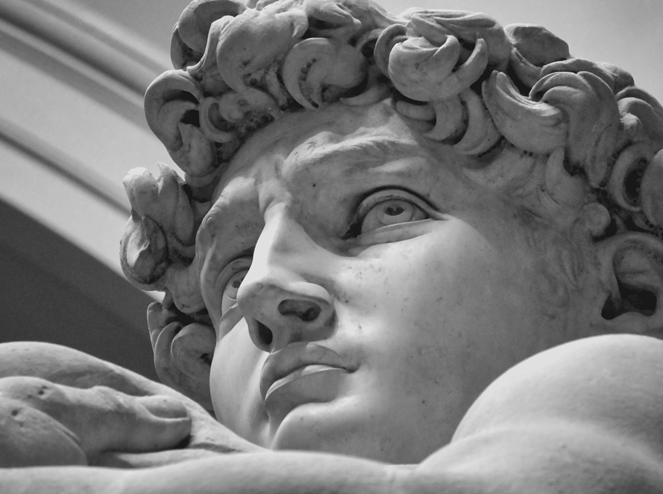
The concept of contemplation also contains this special intensified way of seeing. A twofold meaning is hereby intended: the gift of retaining and preserving in one’s own memory whatever has been visually perceived. How meticulously, how intensively—with the heart, as it were—must a sculptor have gazed on a human face before being able, as is our friend here, to render a portrait, as if by magic, entirely from memory! And this is our second point: to see in contemplation, moreover, is not limited only to the tangible surface of reality; it certainly perceives more than mere appearances. Art flowing from contemplation does not so much attempt to copy reality as rather to capture the archetypes of all that is. Such art does not want to depict what everybody already sees but to make visible what not everybody sees. (Emphasis mine.)
—Josef Pieper, Only the Lover Sings, “Three Talks in a Sculptor’s Studio: Vita Contemplativa”

I first came across the writings of Josef Pieper, a 20th century Catholic German philosopher, reading The Four Cardinal Virtues: Human Agency, Intellectual Traditions, and Responsible Knowledge. About the Author:

“Josef Pieper (1904-1997) was a distinguished twentieth-century Thomist philosopher. Schooled in the Greek classics and in the writings of St. Thomas Aquinas, he studied philosophy, law, and sociology, and taught for many years at the University of Münster, Germany.”

Donald DeMarco writes in Josef Pieper… Truth And Timeliness that

Pieper is most noted for his many books on virtue. In fact, he is commonly known as the “Philosopher of Virtue.” Virtue for Pieper, following Aristotle and Aquinas, is perfective of the person. But the person is real and has an identifiable and intelligible nature. Wherever this nature is denied, totalitarianism gains a foothold. For, if there is no human nature, then there can be no crimes against it.

Pieper wrote while drafted into Germany’s army during World War II and is credited for translating C.S Lewis’s Problem of Pain into German. Because he criticized the Nazis regime, his works were not published until later.

It is said that “While many philosophers in his time focused on politics, Pieper was concerned with the great tradition of Western Culture. He spent his entire life reflecting on the value of culture in modern society and the necessity of the creative arts for the nourishment of the human soul.”

Josef Pieper’s short essay Learning How to See Again begins: “Man’s ability to see is in decline.” Even in the 1950s when he wrote the essay, he suggested that there was too much to see. How much more are we distracted today by screens.

Pieper recommended an artistic vision – visual, musical or literary – as a conduit for the contemplative life. He proposed participating in the arts as a remedy for seeing anew, to see reality as it truly is.

We must learn to see again.

~~~~~

Teaching ‘Tales From Shakespeare’

Benedict Whalen, associate professor of English at Hillsdale College, delivers a lecture on how to teach Tales From Shakespeare by Charles and Mary Lamb to young children. 

This lecture was given at the Hoogland Center for Teacher Excellence seminar, “The Art of Teaching: Children’s Literature” in September 2024. The Hoogland Center for Teacher Excellence, an outreach of the Hillsdale College K-12 Education Office, offers educators the opportunity to deepen their content knowledge and refine their skills in the classroom.

Teaching ‘Tales From Shakespeare’

Teaching ‘Tales From Shakespeare’ – Hillsdale College K-12 Classical Education Podcast – Omny.fm

~~~~~
The Unbroken Chain of Truth in the Lives of Broken People

Our common understanding of what Peter’s betrayal of Jesus meant. Our shared history of misery and redemption. Our interrelated human experience of being guided by truth and beauty. Each of these connections are considered by a twenty-two-year-old clerical student named Ivan Velikopolsky in the very short story The Student (1894) by Anton Chekhov.

Things start out fine for hunter Ivan on Good Friday. The weather is agreeable. But when it begins to grow dark the weather turns cold and stiff winds blow. He starts to walk home.

On the path, he feels that nature itself is “ill at ease” by the change in weather and that darkness in response is falling more quickly. He senses overwhelming isolation and unusual despair surrounding him and the village three miles away where he spots the only light – a blazing fire in the widow’s garden near the river.

As he walks, he remembers what is waiting for him at home – a miserable situation that he sees as the desperation, poverty, hunger, and oppression of what people have dealt with over time and that it’s always been this way no matter the secular changes by those who come along. He doesn’t want to go home. Instead, he walks over to the campfire at the widow’s garden.

There, by the fire, are two widows – Vasilisa and her daughter Lukerya. He greets them and they talk.

Ivan relates the gospel events to the two widows. This has an acute effect on them. As he heads home, Ivan reflects on the implications of this and has an epiphany.

“At just such a fire the Apostle Peter warmed himself,” said the student, stretching out his hands to the fire, “so it must have been cold then, too. Ah, what a terrible night it must have been, granny! An utterly dismal long night!”

 . . .it was evident that what he had just been telling them about, which had happened nineteen centuries ago, had a relation to the present — to both women, to the desolate village, to himself, to all people.

He returns home with a different outlook. He sees the “same desperate poverty and hunger, the same thatched roofs with holes in them, ignorance, misery, the same desolation around, the same darkness, the same feeling of oppression” differently – with an attitude of “unknown mysterious happiness”. There’s a sense of resurrection in Ivan’s attitude as he rises out of the despondency of dark winter’s return to a new life of hope based on the human connection to enduring truth and with Easter on the horizon.

Was Ivan’s new attitude born out of the women’s reaction that signaled an age-old inherent understanding of what the betrayal of truth produces?

It seems to me that Ivan is more than just a clerical student. He’s also a student of history and cultural anthropology. And he knows scripture. He is able to see our common plight and our common redemption through the broken lives of others.

I’m not going to share any more of this gem of a very short story (2 min. read). Ivan has more to say to us from his epiphany. I recommend reading the story before listening to the audio version of it with commentary at the end.

The Student was written 130 years ago. Chekhov’s realist fiction hands to readers today one end of an unbroken chain of truth.

Will the human condition improve with Progressivism or when humans stop betraying the truth and seek what is above instead of materialism?

John Donne wrote “No man is an island entire of itself”.  Certainly, no man is a context entirely of himself.

And Thomas Dubay said

The acute experience of great beauty readily evokes a nameless yearning for something more than earth can offer. Elegant splendor reawakens our spirit’s aching need for the infinite, a hunger for more than matter can provide.

Reading Chekhov’s The Student

~~~~~

Beauty out of brokenness?

“Poetically translated to “golden joinery,” kintsugi, or Kintsukuroi, is the centuries-old Japanese art of fixing broken pottery. Rather than rejoin ceramic pieces with a camouflaged adhesive, the kintsugi technique employs a special tree sap lacquer dusted with powdered gold, silver, or platinum. Once completed, beautiful seams of gold glint in the conspicuous cracks of ceramic wares, giving a one-of-a-kind appearance to each “repaired” piece.”Kintsugi, a Centuries-Old Japanese Method of Repairing Pottery with Gold (mymodernmet.com)

“The aesthetic that embraces insufficiency in terms of physical attributes, that is the aesthetic that characterizes mended ceramics, exerts an appeal to the emotions that is more powerful than formal visual qualities, at least in the tearoom. Whether or not the story of how an object came to be mended is known, the affection in which it was held is evident in its rebirth as a mended object. What are some of the emotional resonances these objects project?

“Mended ceramics foremost convey a sense of the passage of time. The vicissitudes of existence over time, to which all humans are susceptible, could not be clearer than in the breaks, the knocks, and the shattering to which ceramic ware too is subject. This poignancy or aesthetic of existence has been known in Japan as mono no aware, a compassionate sensitivity, an empathetic compassion for, or perhaps identification with, beings outside oneself. It may be perceived in the slow inexorable work of time (sabi) or in a moment of sharp demarcation between pristine or whole and shattered. In the latter case, the notion of rupture returns but with regard to immaterial qualities, the passage of time with relation to states of being. A mirage of “before” suffuses the beauty of mended objects.”

Christy Bartlett, Flickwerk: The Aesthetics of Mended Japanese Ceramics (12/51

“What kind of a church would we become if we simply allowed broken people to gather, and did not try to “fix” them but simply to love and behold them, contemplating the shapes that broken pieces can inspire?”
― Makoto Fujimura, Art and Faith: A Theology of Making

Mending Trauma | Theology of Making (youtube.com)

Online Conversation | Art + Faith: A Theology of Making, with Makoto Fujimura | The Trinity Forum (ttf.org)

https://makotofujimura.com

~~~~~

Truth Beyond the Binary

“The Gleaners” (1857), by Jean-François Millet, depicts women picking up loose grain in the field. Without words it relates the hardships and the dignity of everyday workers. The painting connects us to our own human story. We recognize something of ourselves in this glimpse of reality. We understand a day’s slog and strain. We empathize with the workers.

The painting’s aesthetic realism, its naturalism and unromanticized imagery draw us in. We like that it rejects idealization and artificiality. “The Gleaners” portrays ’us’ as we are. And the subject’s universality – women doing manual labor – is a catalyst for imaginative truth.

We empathize with the subjects as we project ourselves into their perspective. We imagine what it must be like working in a field under the hot sun. We imagine constantly bending over to pick up left-over scraps of the grain harvest so that poor women and children could live on them. We imagine ourselves in 1857.

We find ourselves stepping out of our world and connecting with history – mankind has been doing manual labor since the beginning of time. We find ourselves connecting not just with the women, but with all of humanity, a humanity that shares the work, burdens, and cares of life. And, our imagination wants to know more of the wordless ‘story’.

We cannot see the women’s faces. Are the women young or old? Are they talking to pass the time? Singing? Are they married? Have children? Do they work from sun up to sun down? How do their backs feel at the end of the day? Are their hands dried out and cracked from handling the grain?

~~~~~
Anton Chekhov’s stories are noted for their ‘naturalness’ – the ability to show ‘exactly what a little piece of life’ is like. Like with Millet’s realistic painting, his prose provides down-to-earth characters, details and a setting that, though with Russian aspects, is universal in its close-to-home familiarity.

Russian-American novelist Vladimir Nabokov, in his Lectures on Russian Literature, described Chekhov as writing “the way one person relates to another the most important things in his life, slowly and yet without a break, in a slightly subdued voice”.

Chekhov, a practicing doctor, observed everyday life and ordinary people as he made house calls and treated patients. He wrote with a concentration on the daily lives of individuals using natural detail. We connect with the subjects in terms of shared experiences, emotions, and challenges that are common to all human beings.

You won’t find sanctimony or moralizing or happy endings in his stories nor heroes in the conventional sense. Chekhov had nothing to prove, no ideology or politics to promote, and he created all his characters equal.

And though Chekhov’s stories seem to go nowhere, his ‘close to home’ imagery mirrors our own situations. Life often goes on unchanged or less than we had hoped for. Life often goes on without resolution. And that is the case in a touching story by Anton Chekhov – “On Easter Eve” (1886).

A brief introduction: “The narrator describes his moving experience of attending an early-morning celebration of Easter Eve in the countryside after crossing a river in flood in the middle of a very starry night, admiring the fireworks and listening to the boatman’s account of the sudden demise of the church deacon while composing Easter hymns.”

The ferryman, a novice monk, grieves the loss of a brother. Nikolai, a sensitive soul enraptured by words, was skilled at writing Akathists. (Akathist or “unseated hymn” is a type of hymn usually recited by Eastern Orthodox or Eastern Catholic Christians. It may be dedicated to a saint, holy event, or one of the persons of the Holy Trinity.)

The passenger (narrator) listens to the ferryman recount the death of his best friend Nikolai and about the gift Nikolai had for writing hymns of praise. “And Nikolai was writing akathists! Akathists! Not mere sermons or histories.” The passenger then asks “Are they so hard to write then? The ferryman responds “Ever so hard” and goes on to describe what’s involved, including the following:

Everything must be harmonious, brief and complete. There must be in every line softness, graciousness and tenderness; not one word should be harsh or rough or unsuitable. It must be written so that the worshipper may rejoice at heart and weep, while his mind is stirred and he is thrown into a tremor.

Just one more quote to invite you to be with the narrator and ferryman “On Easter Eve”.

Here the narrator describes Easter Eve at the Russian Orthodox Church, reminding me of the swollen river he had just crossed:

One was tempted to see the same unrest and sleeplessness in all nature, from the night darkness to the iron slabs, the crosses on the tombs and the trees under which the people were moving to and fro. But nowhere was the excitement and restlessness so marked as in the church. An unceasing struggle was going on in the entrance between the inflowing stream and the outflowing stream. Some were going in, others going out and soon coming back again to stand still for a little and begin moving again. People were scurrying from place to place, lounging about as though they were looking for something. The stream flowed from the entrance all round the church, disturbing even the front rows, where persons of weight and dignity were standing. There could be no thought of concentrated prayer. There were no prayers at all, but a sort of continuous, childishly irresponsible joy, seeking a pretext to break out and vent itself in some movement, even in senseless jostling and shoving.

Juxtaposed “On Easter Eve”: great sadness and great celebration, life and death, light and dark. Chekhov captures common shared experiences. There is nothing lofty, sarcastic, or judgmental in the story. There’s just a truthful and loving portrait – a ‘gleaning’ – of humanity at its most authentic moments.

Enjoy this heart-tug of a story.

~~~~~
“French painter Jean-François Millet, whose humble manner of living stands in stark contrast to the impact his work had on many artists who succeeded him, saw Godliness and virtue in physical labor. Best known for his paintings of peasants toiling in rural landscapes, and the religious sub-texts that often accompanied them, he turned his back on the academic style of his early artistic education and co-founded the Barbizon school near Fontainbleau in Normandy, France with fellow artist Théodore Rousseau.” Millet Paintings, Bio, Ideas | TheArtStory

~~~~~

Margarita Mooney Suarez shares about beauty and the liberal arts. (We need more women like her.)

Beauty and the Liberal Arts, with Margarita Mooney Suarez

Beauty and the Liberal Arts, with Margarita Mooney Suarez – Teaching in Higher Ed

There All Along

“For the first time, people knew with certainty that there was more to the natural world than meets the eye.” [i]

The development of optical devices – telescopes, microscopes, and camera obscuras – enabled the curious in 17th century Europe to see beyond the boundaries of the naked eye. With enhanced vision, natural philosophers and artists were learning to see beyond what one was accustomed to seeing and beyond strongly held beliefs and theories of how things were. Acceptance that the world was very different than it seemed followed.

A patent for the “looker”, an instrument “for seeing things far away as if they were nearby“, was filed by a Dutch master lens grinder and spectacle maker Hans Lippershey in 1608. A backstory goes that children were playing with lenses in his spectacle shop. The kids noticed that a nearby weather vane looked larger when a pair of lenses were stacked. Lippershey’s patent was turned down on the grounds that the device was so simple that anyone could build one. Indeed, three Dutchmen had applied for the patent at the same time.

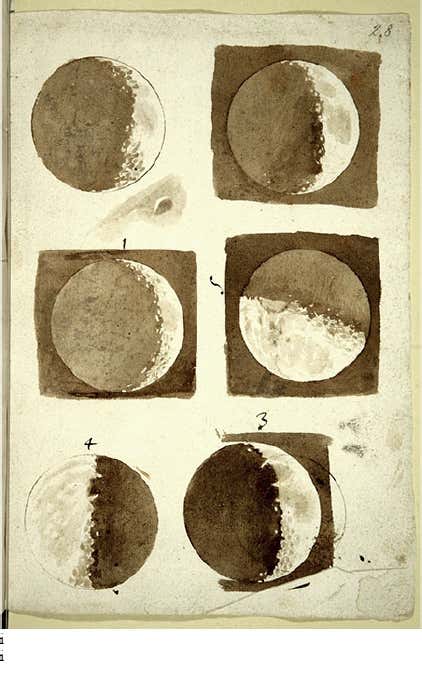
A year later, Italian natural philosopher, astronomer, and mathematician Galileo adapted his own “looker” to view the heavens. By grinding and polishing lenses and adding aperture stops, he improved the magnification up to about thirty times. With the modified spy glass, Galileo was looking for observational evidence to prove that the earth was going around the sun and not vice versa. He started his observations with the moon and found that it wasn’t a smooth uncorrupted surface as people were led to believe by the Catholic church. The Galilean moon had crater spots and irregular terrain.

“The prevailing astronomical tradition had long taught that the heavens were perfect and unchanging, in contrast to the earth, which seemed in constant upheaval. This claim derived from the simple observation that change was almost never observed in the heavens. Christian theology, inspired by this pagan Greek idea, had interpreted the consistency of the night sky in terms of sin and the fall.”[ii]

Galileo developed the scientific method and in so doing natural philosophy began to change from prevailing tradition accounts to experiment-justified and mathematically explained accounts. His revolutionary telescopic discoveries furthered the acceptance of the Copernican heliocentric system and eventually an unwanted acceptance into the Inquisition process. The crime: seeing what was there all along and not seeing what he was told to see.

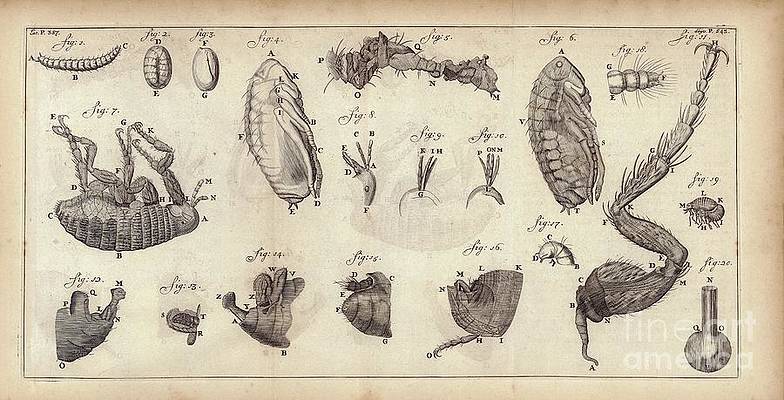
Spectacle lens stacking was also behind the invention of the compound microscope about 1590. Three Dutch opticians or spectacle makers—Hans Jansen, his son Zacharias Jansen and Hans Lippershey are credit with credited with the invention. The curious would use the microscope to explore new unseen worlds. One such inquisitor was Dutch civil servant Antonie van Leeuwenhoek.

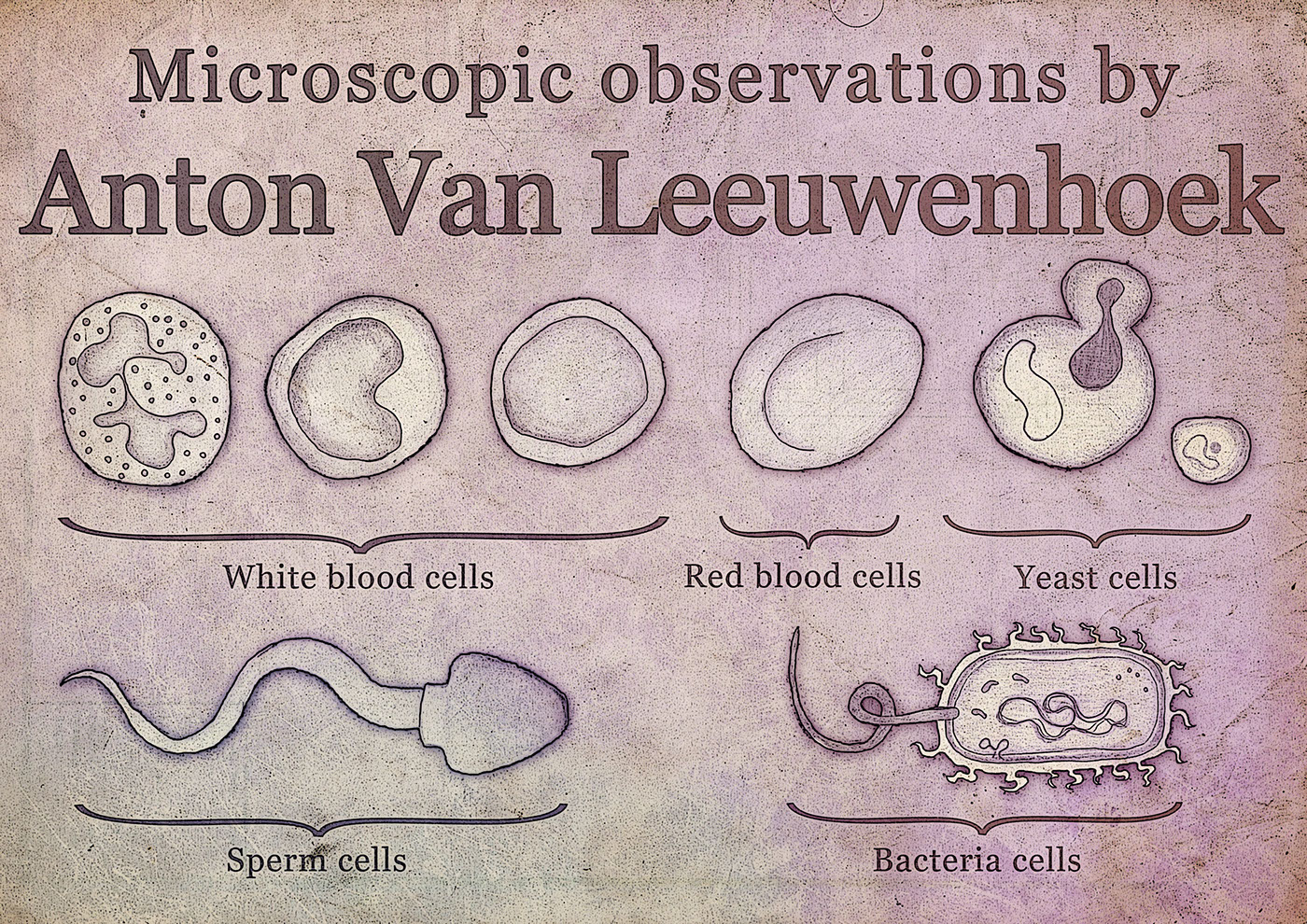
Leeuwenhoek, grinding and polishing his own lenses, began his pioneering observations of freshwater microorganisms in the 1670s. He effectively launched microbiology in 1674 as the first to observe bacteria and protozoa, thereby laying the foundations for the sciences of bacteriology and protozoology. His researches on lower animals refuted the doctrine of spontaneous generation.

(I find it so interesting that Leeuwenhoek started doing his microbiology work on his own, without grants and schooling in optics and biology. He examined a vast range of specimens -insects, canal water, cow’s eyes and dragonfly’s eyes, human body parts, and much more. He was determined to see beneath the surface and what was there all along. With the help of local drafters who drew the microscopic images, Leeuwenhoek passed his observations on to the Royal Society of London where they caused quite a stir.

The camera obscura optical device had been around for a long time – long before it was named. In his 1611 book Dioptrice, German astronomer Johannes Kepler coined the term camera obscura which means ‘dark chamber’ in Latin.

The instrument, up until the 16th century, typically took the form of a closed room with windows shuttered and a small hole in a blind or door. Light entered the room through the hole and cast an image onto a screen or onto the wall opposite the door. This type of dark room camera obscura was used by astronomers to make solar observations without damaging their eyes.

The ‘pinhole’ was later (mid-16th century) replaced with a convex glass lens, used in spectacles since the 13th century. The updated camera obscura made it possible to accurately draw the camera image by tracing outlines onto a paper screen. Through the lens and a light-controlling aperture diaphragm the projected image, smaller than actual size, was clear and bright with a concentration of color and a noticeable effect on color in deep shadow. Because this device provided a more accurate representation of the likeness of things and things not seen by the naked eye, it was of interest to surveyors, cartographers, topographers and painters, including Johannes Vermeer.

Small world. Born the same week of October 1632 as microscopist Antoine van Leewenhoek, Vermeer lived near Leewenhoek. The two Dutchmen lived on streets across from the small Delft Market Square. They may have known each other, but that is only conjecture as there is no evidence to support their relationship. They lived during the Dutch Golden Age, a time in Holland of economic, cultural, and scientific knowledge expansion. It was time of freedom from intellectual inquisitions.

(I recommend Laura J. Snyder’s Eye of the Beholder: Johannes Vermeer, Antoni van Leeuwenhoek, and the Reinvention of Seeing for more on the life and times and work of Vermeer and van Leewenhoek and the optical instruments behind the Scientific Revolution that made it possible to see “that there was more to the natural world than meets the eye.”)

Many artists at this time, wanting to depict more realistic images, were experimenting with optical devices such as mirrors and the camera obscuras. It Is not known that Vermeer used the camera obscura. Perhaps, based on the camera’s projected image, Vermeer created a shadowy image outlining the scene before painting. Artists at that time were keen on keeping their methods secret.

We can only guess at the use of a double-convex lens or the camera obscura for The Cavalier and the Young Woman. The scene is a wide-angle lens view. Note that the man is much larger than the woman which reflects an accurate depiction tending toward a photo realistic quality. Many artists at that time would paint both the man and the woman the same size based not on sight but on how things should be perceived.

Many Dutch homes, at the time of Vermeer, were filled with paintings depicting everyday life.  Vermeer both collected and sold such paintings while running an inn that operated in the lower part of the family home. He painted up in the loft. At one point Vermeer and his wife Catherina had eleven children to support.

Vermeer is well-known for his depiction of individual women in quiet domestic scenes, most notably the mysterious Girl with The Pearl Earring. Was this Vermeer’s daughter?

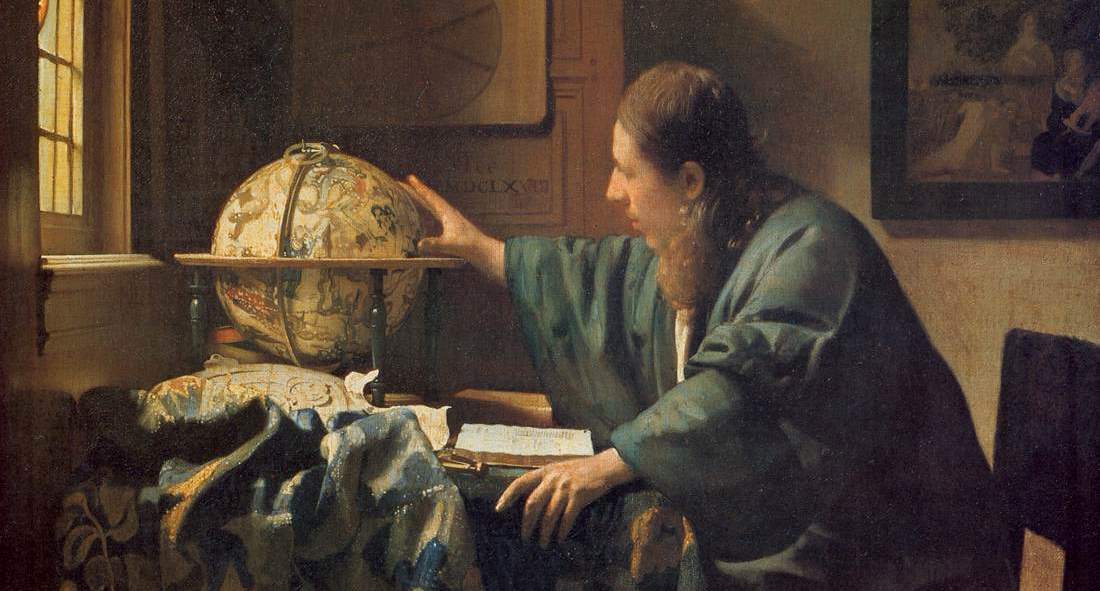
Vermeer also captured the times. Natural philosophers were studying heaven and earth and Vermeer captured this in The Astronomer and The Geographer. Optical devices are required for both disciplines.

Vermeer’s interest in the natural world can be seen in his obsession with maps – depicted in nine of his paintings. See The Cavalier and the Young Woman for one example.

Vermeer began and ended his painting career with paintings of religious iconography: Christ in the House of Mary and Martha (1654-55) and Allegory of Catholic Faith (1670-74).

What were the natural philosophers thinking during this period? A couple of examples might reveal the range of thought.

“I think therefore I am” René Descartes believed that everything he knew, or believed he knew, came from his senses and sensory experience and was therefore suspect. Descartes “espoused an epistemology, or method of knowledge acquisition, that expressed mistrust in the senses, and placed primary value on reasoning from ideas found in the mind rather than from observations of nature.”[iii]

Francis Bacon defended the empirical study of nature and wanted to avoid bringing preconceived notions and prejudices into the findings. He argued for a cooperative and methodical procedure to keep knowledge from being subjected to the four idols of the mind that skewed findings off in a certain direction. He “rejected the claims of those who thought that all knowledge, even knowledge of the physical world, came primarily through human reason and not the senses.”[iv]

Natural philosophers like Descartes and Bacon investigated the natural world with an understanding of God as the Creator. They had views of spiritual reality and wanted views of physical reality. With the new optical devices they were able to see beyond the religious symbolism found in art, architecture, and the simplistic and even disparaging views of nature. Their investigations did not lead them to reject God. Instead, they saw science as a way of learning more about God.

Here’s Francis Bacon’s motivation for aggressively studying both God’s word and God’s world:

To conclude, therefore, let no man upon a weak conceit of sobriety or an ill-applied moderation think or maintain that a man can search too far, or be too well studied in the book of God’s word, or the book of God’s works, divinity or philosophy; but rather let men endeavor an endless progress or proficiency in both; only let men beware that they apply both to charity, and not to swelling; to use, and not to ostentation; and again, that they do not unwisely mingle or confound these learnings together.

Francis Bacon (1824). “The Works of Francis Bacon: Baron of Verulam, Viscount St. Albans, and Lord High Chancellor of England”, p.11

Bacon also said A little science estranges a man from God; a lot of science brings him back. A lot of science took place in the 17th century.

“At the moment, the scientific world was in the midst of a revolution. The so-called Scientific Revolution, today associated with Copernicus, Kepler, Bacon, Harvey, Galileo, and Newton was brought about in part by a new emphasis on empirical methods – making careful observations of the natural world – as opposed to the nonempirical, logical methods preferred by many medieval followers of Aristotle. No longer would the reliance on ancient texts, or armchair philosophizing about the world from a scholar’s study, be considered adequate. The clarion call of natural philosophers (for they were not yet called “scientists”) became “See for yourself”. [v]

With the aid of telescopes, microscopes, and camera obscuras the evidence of things not as yet seen – millions of stars, microbes, the color of shadows and much more of the natural world – came into view for natural philosophers and painters. They dared to see for themselves what was there before ancient texts and religious dogmas came out with authoritative views of the natural world. They saw what was there all along.

*****

Daring to see:

Today we have radio telescopes, infrared telescopes, x-ray telescopes, the Hubble telescope and the James Webb Space Telescope. With the JWST we can see light wavelengths not visible to us. And, we can see back in time towards the beginnings of the universe some 13.7 billion years ago. Check out this podcast to learn more about JWST: 124. Deb Haarsma | James Webb Space Telescope | Language of God (biologos.org)

We have the Large Hadron Collider which “boosts particles, such as protons, which form all the matter we know. Accelerated to a speed close to that of light, they collide with other protons. These collisions

produce massive particles, such as the Higgs boson or the top quark. By measuring their properties, scientists increase our understanding of matter and of the origins of the Universe.”

We have positron emission tomography scan (PET scan), radiographic technique to examine the metabolic activity in various tissues especially in the brain.

We have functional magnetic resonance imaging (fMRI) which measures the small changes in blood flow that occur with brain activity.

There are two microscopes that can zoom in to a resolution of less than an angstrom (one ten-millionth of a millimeter)

X-ray examination: “X-ray use has become a common practice among art authenticators. Not only does it unlock secrets underneath paintings, but it helps to establish authenticity.”

*****

Informed Dissent:

Dr. Robert Malone’s Testimony on COVID-19 Injections and the 5th Generation Warfare Against Humanity (rumble.com)

Merck Partnered with Moderna in 2019 to Vaccinate America’s Farms Using mRNA Technology – YouTube

How Long Have You Been Consuming Gene Therapied Pork? (mercola.com)

SHOCKING UPDATE: FBI Now Admits to 40 Undercover Agents Infiltrated the Crowds on Jan. 6 #Fedsurrection | The Gateway Pundit | by Jim Hoft

“Chris Wray and Merrick Garland Are Pure Evil.  100% Evil to Their Core.” – Steve Bannon on the Biden Regime’s Unprecedented Attack on Christians | The Gateway Pundit | by Joe Hoft

Pravda propaganda:

Biden Treasury Sec. Janet Yellen Says ‘The United States is Doing Extremely Well, Economically’ (VIDEO) | The Gateway Pundit | by Mike LaChance

(GALLUP) Top worries: inflation, economy, drug use, healthcare, Social Security | Sharyl Attkisson

The Coming Digital Currency Nightmare:

Brave New Europe: Pay fine and go directly to JAIL if you use more than $1,000 in cash… – Revolver News

Texas May Launch Its Own Gold-backed Digital Currency | OilPrice.com

Disney+ has unveiled a German original about a teenager who falls in love with the devil from the team behind Netflix’s How to Sell Drugs Online (Fast).

Disney+ Original Greenlit From ‘How To Sell Drugs Online (Fast)’ Team – Deadline

7 members of CDC team assessing chemical exposure in East Palestine, Ohio, fell ill | Pittsburgh Post-Gazette

“Any power that government takes from the people, it will never return voluntarily. Every power that government takes, it will ultimately be abused to the maximum extent possible. Nobody ever complied their way out of totalitarianism. The only thing we can do is resist.”
Robert F. Kennedy, Jr. at Hillsdale College

*****

The Left destroys whatever it touches:


[i] Laura J. Snyder, Eye of the Beholder: Johannes Vermeer, Antoni van Leeuwenhoek, and the Reinvention of Seeing, New York W.W. Norton & Company, Inc., 2015, p.319

[ii] Karl W. Giberson, The Wonder of the Universe: Hints of God in Our Fine-Tuned World, InterVarstiy Press, 2012, p. 49

[iii] Snyder, 187

[iv] Ibid, 319

[v] Ibid, 4

Restoring Moral Equilibrium


 “In the face of sorrow, imperfection, and the fleetingness of our affections and joys, we ask ourselves “Why”? We need reassurance. We look to art for the proof that life in this world is meaningful and that suffering is not the pointless thing it so often appears to be, but the necessary part of a larger and redeeming whole.

Tragedies show us the triumph of dignity over destruction and compassion over despair.”

-Sir Roger Scruton, philosopher and writer

~~~
“In art, beauty has to be won and the work is harder as the surrounding idiocy grows. But the task is worth it.”

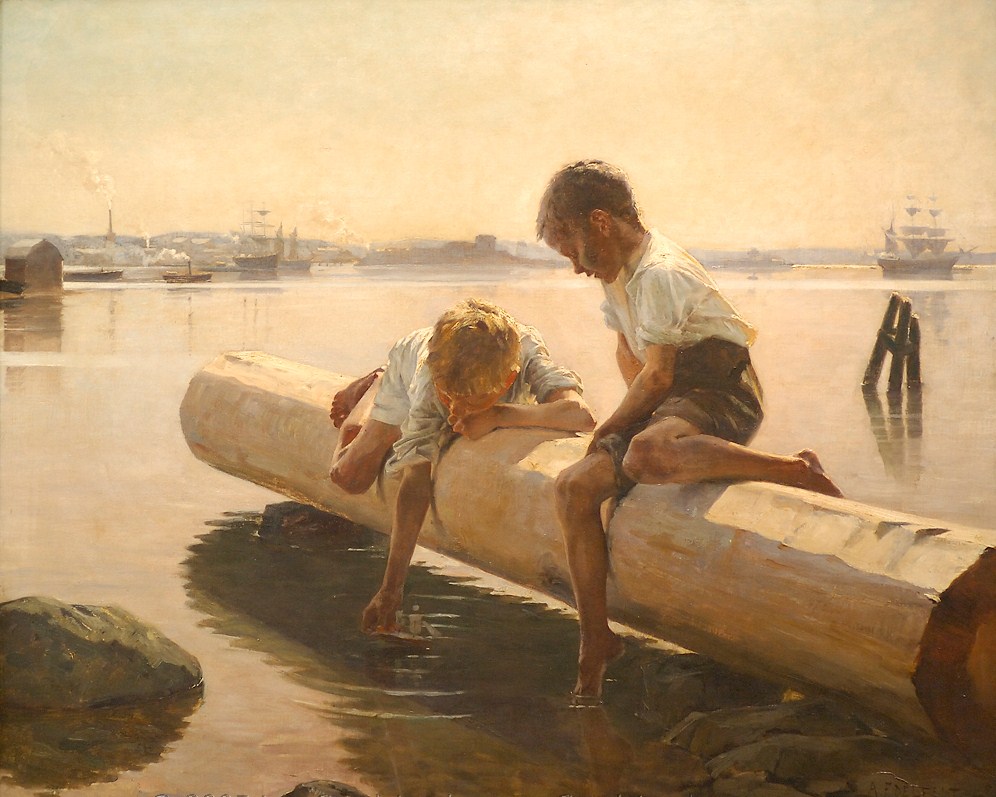
Little Boat – Albert G. A. Edelfelt (21 Jul 1854 – 18 Aug 1905) was a Finnish painter

Gulpture in the Park


“… Abstraction came about through the ever-narrowing focus of aesthetic gaze.

The post-modern offshoots of abstract art may seem to be engaged in the same artistic project; but the appearance is, it seems to me, deceptive. Post-modern abstraction is really construction, in which abstract elements are combined ab initio, and without reference to the natural forms and perceptions which might have endowed them with meaning…. Their purpose is to glorify the sovereign role of the artist, who shifts and arranges them as would a child playing with colored blocks…The result has been a sudden narrowing of the artistic intention, and a launching of post-modern art towards bombast and doodling by turns.”

-Roger Scruton, An Intelligent Persons’ Guide to Modern Culture, Chapter Eight

~~~
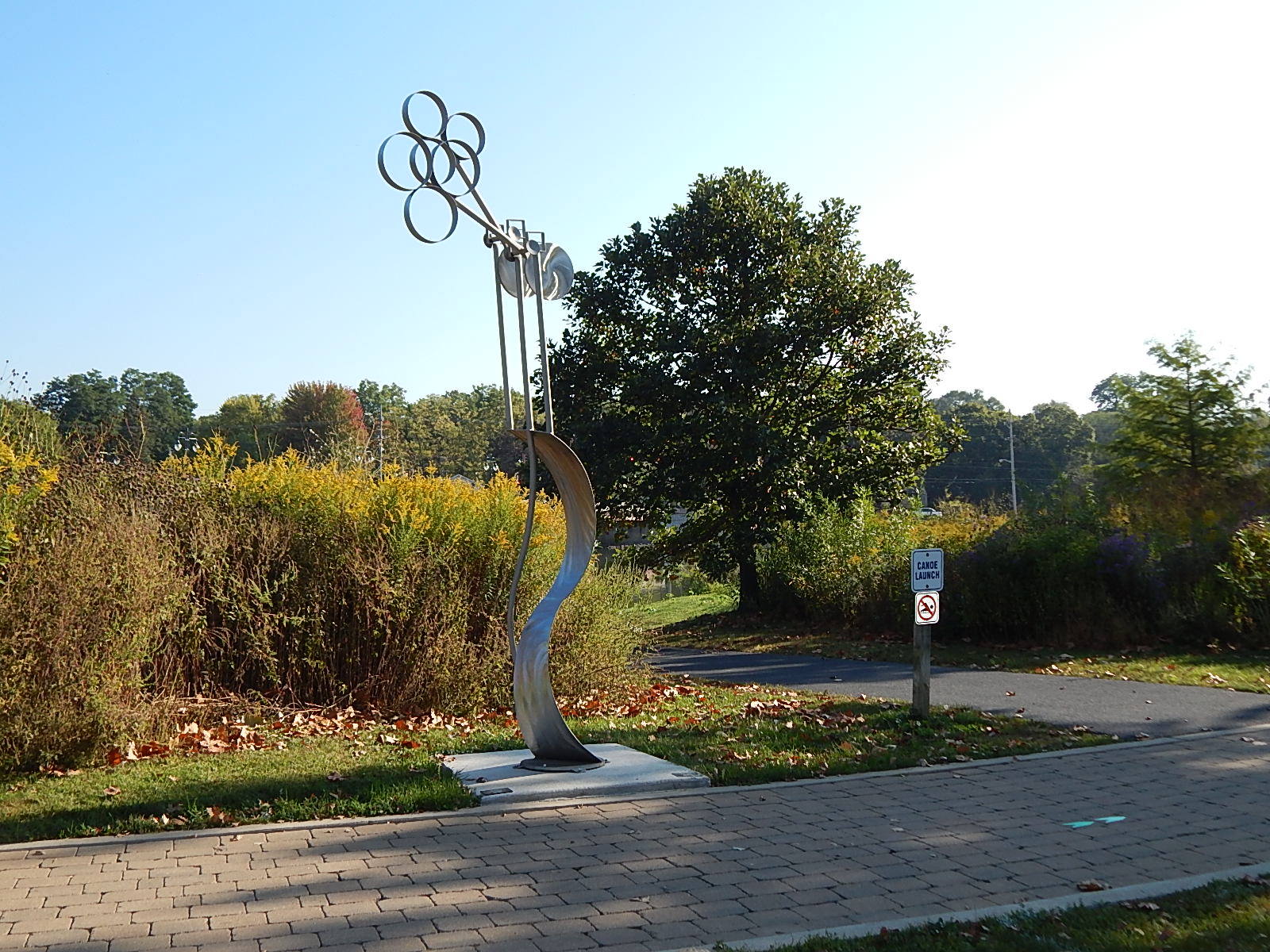
Over many months now, during my morning contemplative walks in a local park, I have encountered objets d’déclin. Mother Earth needed tattoos to be in vogue.

A gaggle of local apparatchiks of post-modern persuasion decided at some point that nature’s exhilarating beauty-a body of narrative to be read over and to reflect on-should be forever ‘inked’ with the flippant constructionism of various ‘artists’.

The local approvers and inciters of inhuman aesthetics have ‘carnivalized’ a local nature preserve, a park and a paradise infused with wildflowers along a river, where, along such “springs in the valleys” (Psalm 104) “The birds of the sky nest by the waters; they sing among the branches.” No matter, though. By so doing, the self-appointed culture-mongers can connote their relevance and earn self-aggrandizement brownie points with the community.

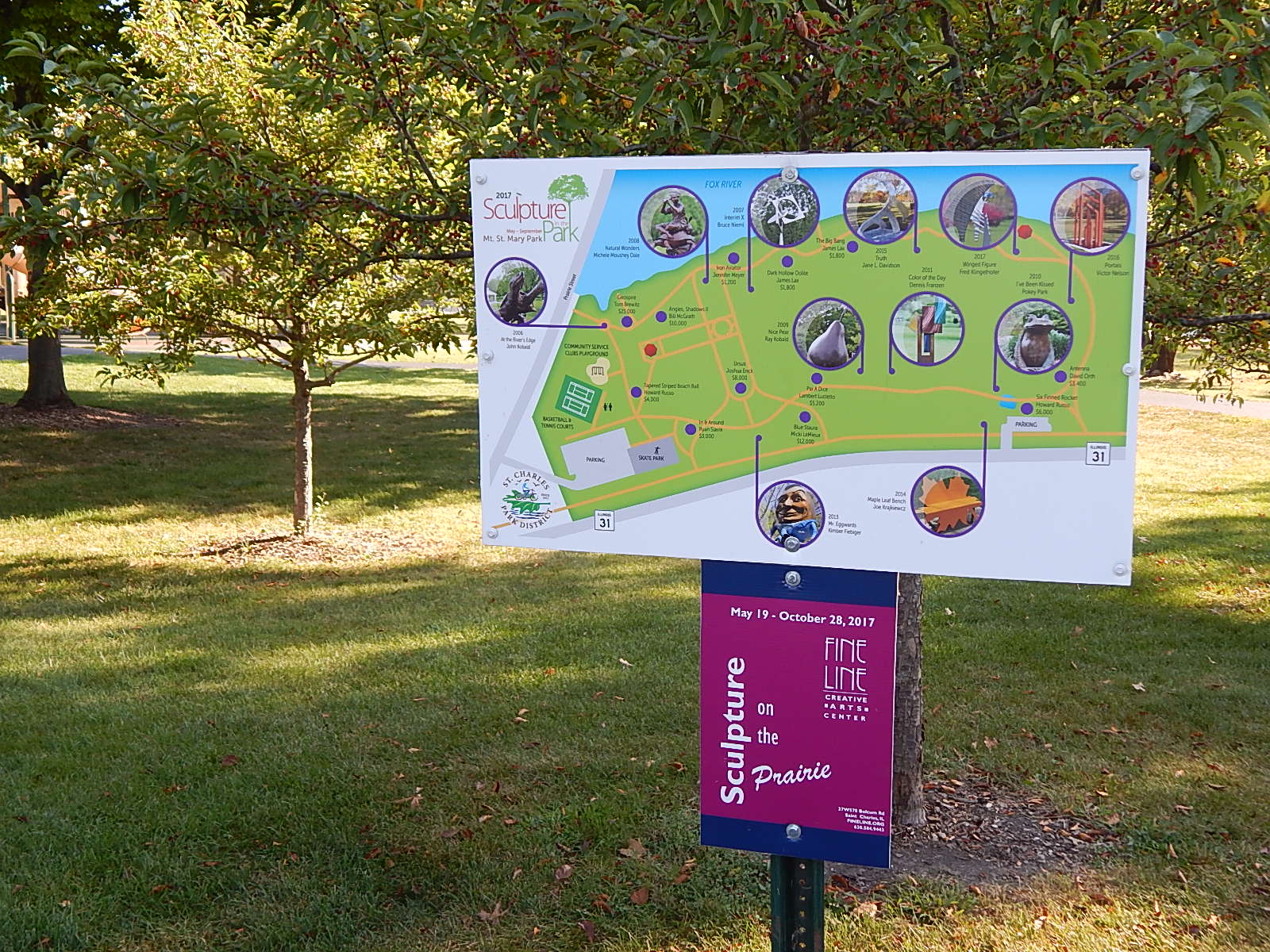
Pictures at an Exhibition:

Entrance to St. Mary’s Park

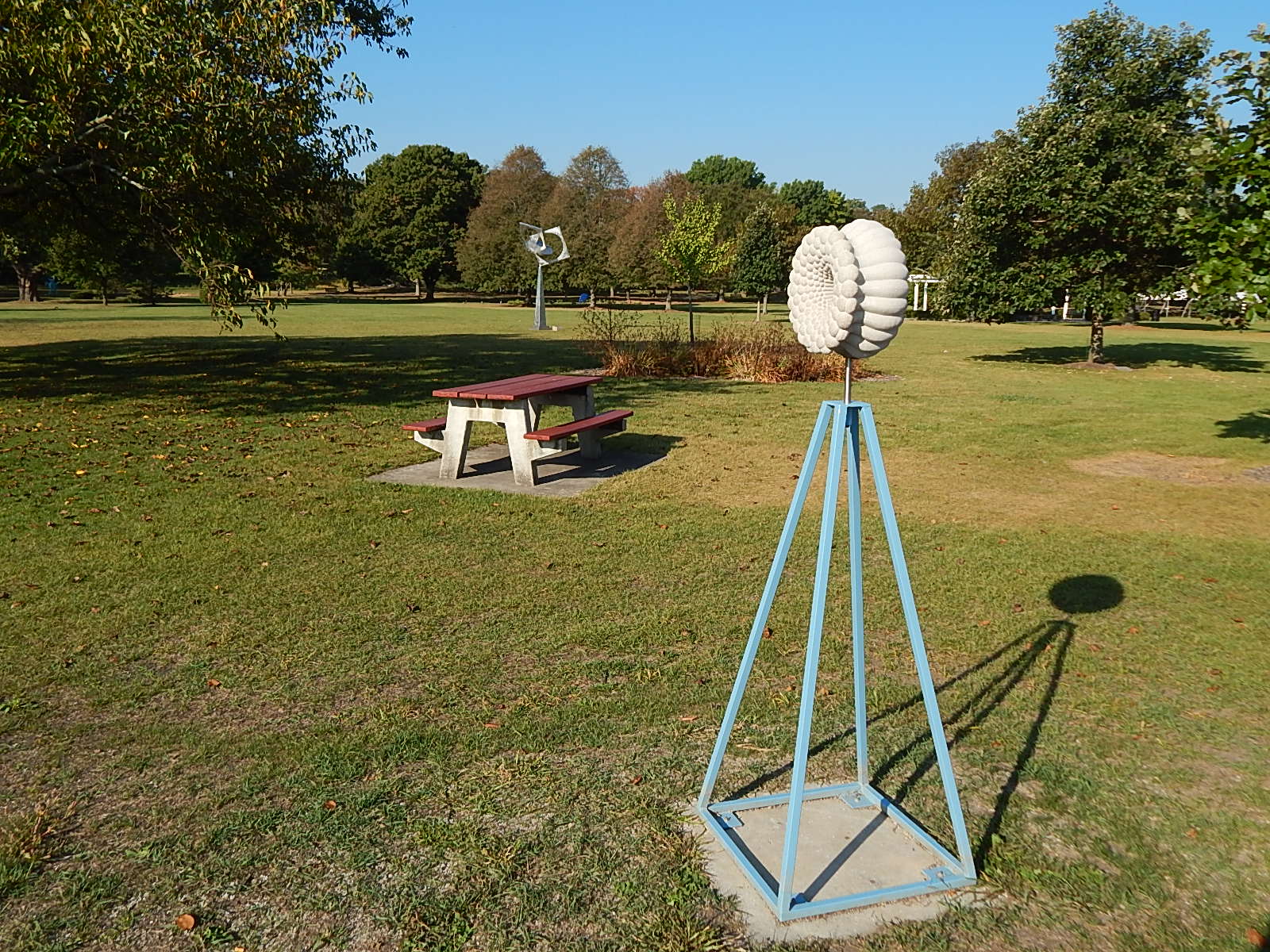
PM Art vs. Tree Planted in Memoriam

Nature’s Way

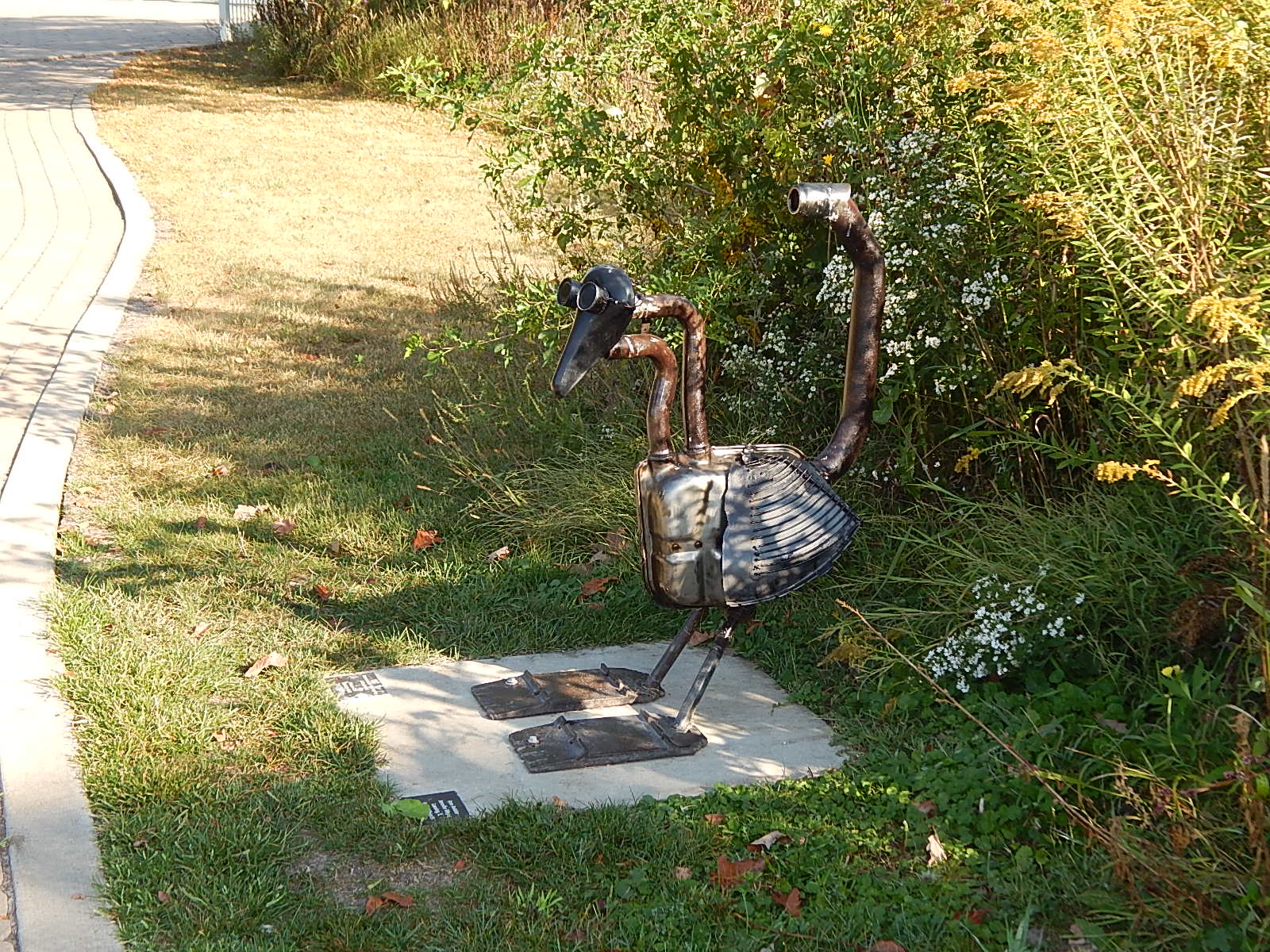
Nature Sculpts


Nature Revealed in Sculpture

And, “Do Not Feed Post-Modern Artists”

The last photo, a #LGBT advert, fits the theme: the ‘carnivalizing’ of nature and nature’s compliment, Scripture. More about this in the next post.

Born to Walk Around on Crucifixion Ground


jacopo-tintoretto-crucifixion-1500s

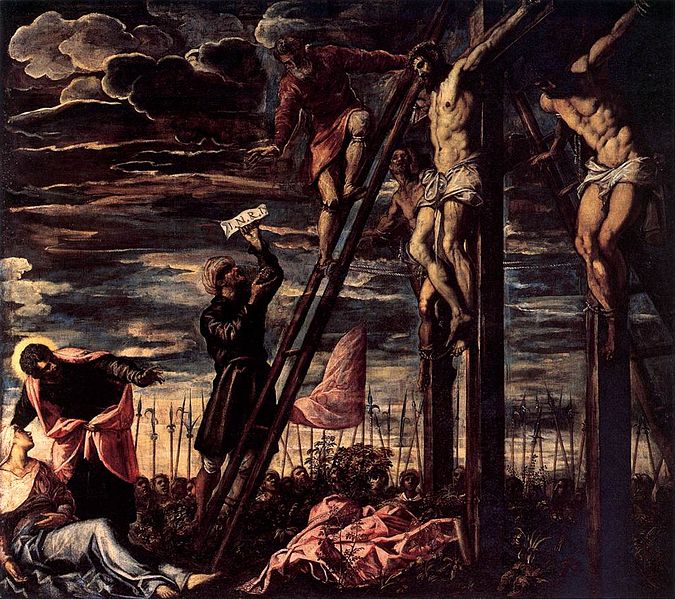
“Two particular details about Roman crucifixion are of special interest to us in this book. First, it would not be much of an exaggeration to say that Jesus of Nazareth grew up under the shadow of the cross…The Galilee of Jesus’ boyhood, then, all knew about Roman crosses (Antiquities 17.286-98; War 2.66-79)…When he told his followers to pick up their crosses and follow him, they would not have heard this as a metaphor…The second point of special interest for us is the way in which the Romans sometimes used crucifixion as a way of mocking a victim with social or political pretensions. “You want to be high and lifted up?” they said in effect. “All right, we’ll give you ‘high and lifted up.’” Crucifixion thus meant not only killing by slow torture, not only shaming, not only issuing a warning, but also parodying the ambitions of the uppity rebels. They wanted to be move up the social scale?  Let them be lifted up above the common herd…”

– from the chapter The Cross in Its First-Century Setting, N.T. Wright’s The Day the Revolution Began


Jacopo Tintoretto (1518-1594) – The Crucifixion of Christ

(In the public domain)

The Tree of Life Envisioned

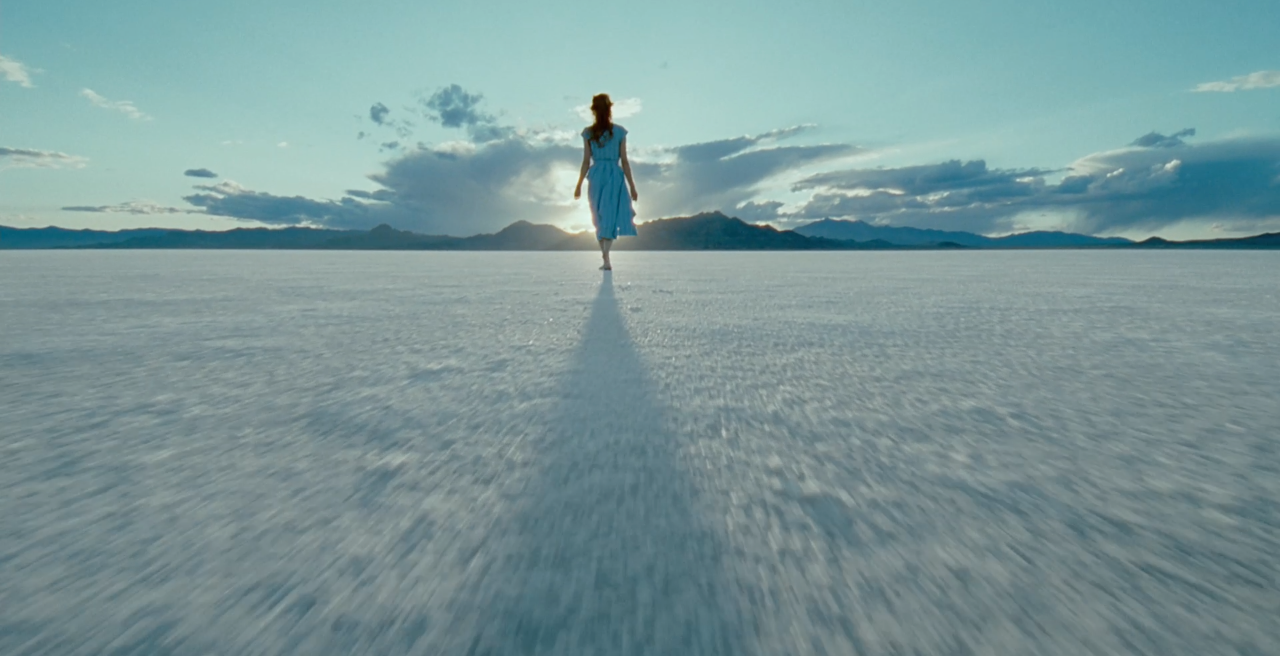
Recently I viewed Terence Malick’s The Tree of Life. It would be difficult for me to adequately describe the effect this movie had on me, the emotion and reflection evoked from me as a Christian parent who has lost a child.  This movie operates, more than any I have ever seen, on an intimate meaning-of-life level while the breadth of its vision enables us to direct our eyes away from ourselves and out into the vast cosmos. And in doing so, synchronicity with creation is summoned.

 Life’s deepest and most pressing questions, the universal “whys” behind all of life are posed using the simple narrative of the lives of the O’Brien family of five. Underlying the film’s basic premises of wonder and questioning is the ancient wisdom book of Job, for me the touchstone of the film.  I believe that each viewer’s prior contemplation of life’s deepest questions would certainly individualize the film’s impression on the viewer.  Without individuation, though, the movie is just an amalgam of exceptional pictures and music – a mood piece. I see The Tree of Life as being a spiritual movie and not a religious documentary and therefore I believe it will affect each viewer differently.

 Without going into too much of the narrative detail, detail which may deprive you of the movie’s impact, here is my initial impression of Terrence Malick’s The Tree of Life:

 Though I was ready for the usual exceptional visual imagery – Stanley Kubrick’s movies come to mind – that is part and parcel of Malick’s cinematic talent (see also his Days of Heaven) I was blown away by the large scope of the movie:  creation, the meaning of life, the existence of suffering, nature and grace and the Creator. 

One of the visual and emotional pleasures of this movie is that the images are offered to us in prolonged time frames – there are no frenetic montages matched to every blink of the eye. The absence of the modern movie restlessness allows us to contemplate the force of those images. We are then able to react with deeply held authentic feelings and at the same time not feel the need to immediately dispose of those feelings so as to be ready for the next emotional roller coaster ride of images. In this way the movie parallels life:  creation and real life takes place over time.  I believe the movie honors the fact that God takes time to accomplish His purposes – in the universe and in the saga of our lives. And, as the movie depicts, we do not understand God’s ways but, as I have seen, God, who is outside of time, uses time to reveal His Nature and His Grace to us.

 Malick rolls out before us a grand sweeping chromatic scroll of the universe. The visual imagery, often shown in natural lighting is enhanced with beautifully evocative musical selections including works by Bach, Mozart, Brahms, Smetana’s The Moldau River, Preisner’s Lacrimosa, Cassidy’s The Funeral March and Górecki’s Sorrowful Songs Symphony. Such music invokes us to come present to the spiritual within our souls.

 The awe-inspiring and overwhelming dynamic universe centers around and is grounded by a tree in the backyard of a family’s home in Waco Texas, circa 1950s. Using a minimalist script this family of five provides creation’s human narrative: father (emblematic of nature), mother (emblematic of grace) and their three young sons.  The father, the mother and Jack O’brien, the eldest son and main character give us our viewpoints. Later on in the movie Jack’s character is played as an adult by Sean Penn. The adult Jack becomes an architect who creates buildings derivative of his own hard-edged “nature”.

 Within this family life narrative we see birth, growth, maturation, anger, relational distance, death, sorrow, loss, envy, survival, strife and sin. Along the way the ever pressing questions of life are whispered to our ears using voiceovers.

 As I mentioned the display of the immensity and dynamism of the created universe provides the backdrop for these most important issues of life, questions that this family of five and certainly any sane person on earth ponders at some point in their life:  Where is God?; Does God see what is happening?; Does God care? Are we left on our own? What about evil? What about the loss of a child? Why is there suffering?

 After the death of her son Mrs. O’Brien asks, “He was in God’s hands the whole time, wasn’t he?” “If God is good and cares about us, why does he make us suffer?”  Throughout the movie we are engaged to ponder these hard questions and to once again look through a glass darkly for the answers.

 Watching this film I was also reminded of Dostoevsky’s The Brothers Karamazov and the philosophical lessons Smerdyakov learned from Ivan, regarding the impossibility of evil in a world without a God.

 In depicting some of the range of God’s creation we see vast spatial distances which hold myriad galaxies and we also see, looking through other end of the telescope, intricate microcosmic details.  We are reminded that the Creator God is ever beyond our finite comprehension. For this reason I am thankful that Malick chose to countenance theism and not a Woody Allen-type nihilism that turns its back on God and mocks Him every time.

 The movie begins by referencing the oldest piece of wisdom literature in the world, the book of Job. The stage is set with God responding to Job who had cursed the day he was born after being overwhelmed with trouble, suffering and loss.  From Job 38:4, 7:

 “Where were you when I laid the earth’s foundation … while the morning stars sang together and all the sons of God shouted for joy?”

 Throughout the movie there are other paraphrased Scripture references including Job 13:15, “I will be true to you whatever comes.”

 I believe I also heard a paraphrased reference to Paul’s letter to the Roman church during a scene where Jack is praying: “I know what I want to do but I can’t do it.”  Also, there is an oblique reference to Paul’s letter to the Corinthian church regarding the character of love:

  “There are two ways through life:  the way of nature and the way of grace. You have to choose which one you’ll follow. Grace doesn’t try to please itself. Accepts being slighted, forgotten, disliked. Accepts insults and injuries. Nature only wants to please itself. Get others to please it too. Likes to lord it over them. To have its own way. It finds reasons to be unhappy when all the world is shining around it. And love is smiling through all things. The nuns taught us that no one who loves the way of grace ever comes to a bad end.” Mrs. O’Brien, The Tree of Life

 Beyond the infusions of Scripture, I saw revealed man’s unconscious need to bump up against someone bigger and stronger than life itself. And though we are infinitesimally small compared to the enormous universe we matter to God.  In another wisdom book of the Bible, the Psalms, the shepherd boy David speaks in awe of God’s intimate knowledge of His creatures,

“When I consider your heavens, the work of your fingers, the moon and the stars, which you have set in place, what is man that you are mindful of him, the son of man that you care for him?”

  The film doesn’t seek to answer the questions of life but only poses them offering up grace as the consummate reconciler. As a believer in Jesus Christ I am transformed daily by God’s grace.  Just as important, I am forgiven and reconciled with God because Jesus Christ was nailed to another tree – the cross. His resurrection now provides me access to the Tree of Eternal Life. I know the One Who is the Answer.

A tree of life was planted in the garden long ago…

  “Now the Lord God had planted a garden in the east, in Eden; and there he put the man he had formed. And the Lord God made all kinds of trees grow out of the ground—trees that were pleasing to the eye and good for food. In the middle of the garden were the tree of life and the tree of the knowledge of good and evil.”…

 Now the serpent was more crafty than any of the wild animals the Lord God had made. He said to the woman, “Did God really say, ‘You must not eat from any tree in the garden’?”

The woman said to the serpent, “We may eat fruit from the trees in the garden, but God did say, ‘You must not eat fruit from the tree that is in the middle of the garden, and you must not touch it, or you will die.’”

 “You will not surely die,” the serpent said to the woman. “For God knows that when you eat of it your eyes will be opened, and you will be like God, knowing good and evil.”

When the woman saw that the fruit of the tree was good for food and pleasing to the eye, and also desirable for gaining wisdom, she took some and ate it. She also gave some to her husband, who was with her, and he ate it. Then the eyes of both of them were opened, and they realized they were naked; so they sewed fig leaves together and made coverings for themselves.

Then the man and his wife heard the sound of the Lord God as he was walking in the garden in the cool of the day, and they hid from the Lord God among the trees of the garden. But the Lord God called to the man, “Where are you?”


While we ask God “Where are You in all of this?”, God is asking us “Where are you?”

Meet David Henry Hwang, Playwright

Abandoment Issued

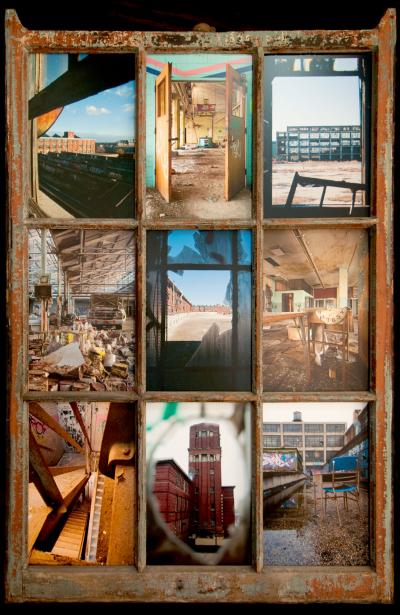
Recently, I purchased a Brad Pogatetz photograph.  Brad, a local artist, presented his work in a local art fair.  I was nonplussed by the volume and the character of his work.  Brad’s photography reverently records the haunted dilapidation enshrined in the abandonment of man’s creations. (OK, I wrote this after two beers and a shot of 100 Anos tequila.)

In any case, I am impressed. 

http://bradpogatetz.com/

http://www.lakevieweastfestivalofthearts.com/