Watercolors
March 17, 2024 1 Comment
A short story . . .
On a cold and damp March afternoon, Maeve met with funeral director Finn Joyce to discuss final arrangements. The appointment was set up after she responded to a mailer asking if it “would give you peace of mind to plan in advance so that your family would not have to make the arrangements themselves” and after reading an article about “Unexpected Deaths in The US Are Rising at an Alarming Rate.”
Director Finn, a tall thin man with dark auburn hair, pale skin, soft hands and a whisky voice, greeted Maeve and showed her to the Arrangement Room. There, he offered her coffee and water.
Finn began their conversation by pointing to a photograph on his desk: “My wife Fiona and I have lived in the area and have operated this funeral home for twenty-five years. Fiona works with families of the deceased to arrange details of the funeral and the obituary wording. She also does the makeup and . . .”
Maeve broke in. “I was here for Eileen Delaney’s funeral. She was a friend of mine.”
“By the number who attended the funeral, she was well-loved. How long had you known her?”
“We worked together at the Evercrest Nursing Home for some thirty-five years.”
“I know the place. I been called there many times. Do you still work there?”
“Yes. I’ve taken over Eileen’s responsibilities.”
“Ah, well then, maybe I’ll see you there. My wife helped Eileen’s husband with the funeral arrangements and wrote the obituary with the help of her husband and family. We have a list of services that we can offer you and we can talk about your last wishes.” He handed her a brochure.
“We prepare obituaries, arrange clergy services and pallbearers, coordinate with the cemetery or crematory . . .” Finn stopped when he saw that Maeve wasn’t paying attention. She was looking over his shoulder at something on the wall.
“That watercolor. I know it.” Maeve said.
Finn turned around. “My wife bought it at an art show here in town. I love how the light filters through the trees.”
“That’s Summer at Blossom Grove.”
“You know the artist?” Finn got up from his chair and looked at the corner of the painting. “You know M. Monahan? Wait. Is that you?” He looked at the application on his desk. “Well Maeve, you’re quite an artist.”
Maeve blushed. “I painted the same scene at four times of the year. I wanted to show the greening and flowering and the fading and falling of leaves and the limbs in winter.”
“You know, Maeve, people have brought watercolor portraits of the deceased to the wakes here. The portraits are a beautiful memorial. They have a graceful ethereal quality to them. I provide an easel next to the casket for the portrait.”
“I paint them. I paint portraits of the people in the home. When they pass, I give the portrait to the family. I got the idea when I attended my Irish grandfather’s funeral. Family and friends came to look at his dead body the night before he was buried. They drank and shared stories about his life. When a person dies at the home, the funeral home is called and the deceased is abruptly taken away. With my portraits, I give the family a corporeal reminder so they can share stories about the person’s life.”
“The portraits are well done. You’ve must have been doing this for a long time.”
“Thank you. Yes. I started as an oil painter years ago when I worked as an ER nurse. I wanted to depict the actual strangeness of the real world I encountered every day with surrealism, in a Frida Kahlo kind of way. But over time, the work and my life were becoming too dark. So, I decided to make a change and work in a nursing home where there is a less tragic and more of a long-suffering realism. And, that’s when I became a watercolor portraitist. I like the medium. Watercolors have a life and a flow of their own when you brush them on the paper. You let go and see what happens. They are kind of unruly to a certain degree as are the subjects I paint.”
“From the comments I overhear at the wake, you certainly capture the essence of the person,” Finn remarked.
He went on to explain his services and then invited Maeve to the display room where several different caskets were showcased. He then showed her the Reposing Room where the prepared body rests until the funeral takes place. He went on to show her a Reception Room where memorial services are held.
“There will be a wake in this room tomorrow. A tragic story,” Finn shared. “A 46-year-old man – a husband and father and founder of an investment firm – was killed in a car-jacking. The newspaper said the killer got away.”
“How terrible. The sudden loss of a husband and father must be devastating for that family.”
“Yes, it has been. I met with his wife this morning. She is having a hard time . . . How does one reckon with the out-of-the-blue senselessness of what happened?”
At that moment, Fiona walked up and introduced herself to Maeve. She recognized Maeve from the art show and praised her work. She then mentioned to Finn that a call had come in. She gave him the name and location.
“I’ll walk you to the door,” Finn said. “Feel free to call if there are any questions. Maeve offered her hand. Finn took her hand and put his hand on hers.
“Sorry to share that with you. I am deeply saddened by what happened. After all my years as a mortician, I have never become accustomed to such unforeseen tragedy. And, sadly, there will be no watercolor portrait to place by the casket tomorrow.”
Maeve nodded her understanding and then thanked Finn and went on her way.
~~~
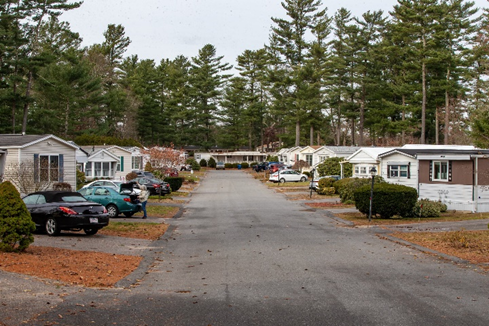
The next morning, after working a night shift at Evercrest and then making a stop, Maeve drove home to Valley Mobile Home Park and found two cars parked out front of her mobile home. She parked next to her trailer, grabbed the mail from the mail box, and then ran to the door and walked in. Sitting at the kitchen table were her younger sisters Molly and Morren and her niece Maisie. Duffy, Molly’s Pomeranian, began barking wildly when she walked in. Maeve put her purse and the mail on the counter and looked at all three.
“Who died and why is Duffy carrying on like that?” Maeve asked, taking off her rain coat. The three women sitting before her reminded her of nesting dolls – Molly the largest of the three and Maisie the smallest.
“Duffy doesn’t like that black cross running down your face.” Molly replied.
“It’s raining.” Maeve grabbed a napkin form the table and began dabbing her face.
“And Duffy doesn’t like that guy next store.” Morren added.
“My neighbor?” Maeve asked. “Why? What’s wrong with him?”
“He’s a disgusting creature, Molly blurted. “Those tattoos, that yellow skin, his scarred-up face and watery eyes. He looks like a carny who runs the Tilt-A -Whirl. He was out in front of his trailer and gave us a nasty look when we got out of the car.”
“Well,” Maeve asked the group, “was Duffy barking at him and did you give him a nasty look when you saw him?”
Molly sighed loudly. The other two just looked at their hands.
“I don’t know him, “Maeve said. “He stays to himself. There’s something sad about the guy – like he’s had a hard time of it.”
“Maybe so. He is what he is,” remarked Morren.
“We’re here to check on you,” Molly declared.
“Check on me?” Maeve laughed. She poured coffee for herself and the others and sat down.
“Yeah, Moreen and I are wondering why you’ve been so quiet lately.”
“I’ve had things on my mind. Last things things. Do something about Duffy.” Maeve replied.
Molly had Duffy come up on her lap.
“Is that why you went to church this morning?” Morren asked.
Maeve looked at the three of them. “I thought I should become a familiar face around there. I want to be recognized by the gate keepers when I go the way of all the earth.”
“I see that you’ve been reading the obits,” Molly held up the open newspaper.
“My co-worker Eileen died suddenly. Cardiac arrest. I wanted to see what they wrote about her,” replied Maeve.
Molly looked through the obit page. “Let’s see what it says . . .
“Eileen Delaney passed away on . . . at her home aged 68. She will be greatly missed by her family who adored her, friends who loved her, and many people whose lives she impacted in such a beautiful way at Evercrest Nursing Home. Eileen was along-time member of such and such Church. Eileen was born . . . married William Patrick Delaney. . . celebrated a beautiful 42-year marriage. Bill passed away . . . Eileen greatly missed him. She and Bill had many adventures together . . . traveling to Europe and Caribbean and Alaskan cruises. Ballroom dancing and hiking were their favorite pastimes. They are survived by two children . . . three grandchildren. Sadly missed by brothers . . . brothers-in-law, sisters-in-law, aunts, uncles, cousins, nephews, nieces, relatives and a wide circle of friends. Eileen stayed active throughout her life . . . she was a member of the American Needlepoint Guild. Eileen Delaney’s’ family invites you to join them in celebrating her life. Please attend with your best Eileen stories. The funeral service and burial will be held . . .
“How long have you been working at that nursing home,” Morren asked Maeve.
“About thirty-five years. Since the divorce.”
“Maeve, you could’ve gone on to get your doctorate in nursing like me,” Molly said. “Then you could write papers, have them peer reviewed, and published in journals. You would be recognized for your work, make better money, and move out of this trailer park.”
“Recognized?” Maeve replied. “I see myself doing what I’m doing. I don’t see myself doing anything else or living anywhere else.”
“Maybe not. But do you hate life? Morren badgered. “I mean, c’mon, you haven’t remarried and you haven’t gone anywhere and now you’re thinking about death. What about life?”
Maisie spoke up. “Aunt Maeve, do you have a bucket list?”
“A bucket list?” Maeve got up and walked over to the kitchen window and looked out. She was surprised to see her neighbor looking back at her from his kitchen window. How strange, she thought.
“Yeah, you know, things you want to do before you die.” Molly said.
“I had an appointment with a funeral director yesterday to talk about funeral arrangements,” Maeve pointed at her sisters, “so you two won’t have to bother with them – and I have an appointment with Father Flannery tomorrow after work to talk about the art of dying.” Maeve took the Joyce Funeral Home brochure out of her purse and placed it on the table.
“What brought on all this morbidity Maeve?” Molly prodded. “Is it because you are with the dying five six days a week? What about living a little?”
“It’s not morbid to plan one’s death. And besides,” Maeve smiled, “I am thinking outside the box.”
“Not too would be a grave mistake,” Molly came back.
“The funeral director blamed the cost of living as driving up the cost of dying. He said I could pay now or pay later with a payable-on-death bank account accessed by my family.” Maeve sat down and waited for a reaction.
Morren looked at Molly and then at Maisie. She wasn’t sure if that was a joke.
Maisie laughed. “Now I know where I get my weird sense of humor. Aunt Maeve, I meant doing things like travel. You could. . . go see the world, see the pyramids.”
“You want me to go look at tombs? No, thanks. And no, I don’t have a list like that.”
“You could go to Barcelona or Rome and meet some dashing foreigner and be swept off your feet.” Molly urged.
“You know,” Maeve replied. “I listen to the stories of seniors in the home. Their stories are better than romance novels and what’s on TV. The things they’ve seen and done . . . you’d be surprised.”
“I just want to see you broaden your horizons,” Morren pleaded. “You have work. You have a hobby. But with all that that the world has to offer, why not live a little.”
Molly looked at her watch. “Well, Maevy, we came to check on you. My TV program starts in twenty minutes. We better get going. If you suddenly decide to take off to parts unknown let us know.”
Maeve picked up the coffee cups and put them in the sink. She saw her neighbor again standing in the window. But this time he had a gun in his mouth. Maeve yelled “Oh God!” and ran out the door. Molly, Morren and Maisie ran to the kitchen window.
“What’s that creature doing?” Molly scoffed. “If he offed himself there would be one less freak in the world.”
“What’s aunt Maeve doing?” asked Maisie.
Maeve was standing in the rain between the two mobile homes in her blue nurse scrubs. She was saying something to her neighbor but his window was closed. He kept shaking his head. Maeve pleaded with him, “Open your window! Open your window!” Finally, with one hand, he pulled up the kitchen window.
“Talk to me, “Maeve begged, “I’m listening.”
The man took a swig of something and then wiped his mouth with his arm.
“Lady, my best girl died in January been together for fifteen years she was on dialysis my dog Biscuit hell I think some of those mean kids around here ran off with her I lost my job at the steel mill I’m about to lose my trailer.” The man held up a piece of paper. “I find myself in the impossible position of being who I am right here and now.”
“I’m listening,” Maeve replied.
“What are you looking at?” The man jerked his head angrily toward Maeve’s kitchen window where Molly, Morren and Maisie were watching. He waved his gun at the window and the three women disappeared from it. Molly called the police.
“I’m here . . . for you,” Maeve pleaded with her neighbor. “I don’t know your name. What’s your name?
“Esau.”
“Esau, don’t die like this.”
“Is there a better way to go about it?
“You could die holding someone’s hand. Can I call Father Flannery?”
“What’s he gonna do throw holy water on me and make it all better hell I was baptized as a little tiny baby and look at me now I done some stupid things in my life but I paid all my debts I am good people labeled not good enough to attend my own daughter’s wedding can you picture that?
“Yes! I can paint you,” Maeve offered.
Esau laughed. “Paint me?”
“Yes. I paint portraits.”
“Lady don’t you see I’m already painted.” The man pulled off his tee shirt. “My cross hain’t bleeding like yours is I got this in Nam.” The man pointed the gun at the cross tattoo. “I got a lot of things in Nam that’ll change a man forever.” He put the gun back in his mouth.
Maeve dabbed her face with her sleeve. Overhead, the sky was growing darker. A sudden crack of thunder and its rumbling off had Duffy howling. Large drops of rain were falling.
“I’ll paint a portrait of you, right now Esau. So your children can remember you.” Maeve said this to buy more time.
“Lady, they want nothing to do with me.” Esau scowled.
“They never will if you shoot yourself,” Maeve replied.
He took another swig from the bottle. “You’ll stand in the rain and you’ll paint me?”
“Yes! Or inside if you’ll let me in.” Maeve replied. “Do you have family?”
“Yessss I havvvvve family,” the man howled. “My best girl has family but you know NO ONE wants to see you until you’re dead.” He put the gun back in his mouth.
“I can call them. Hold on. I can paint your portrait for them. Hold on Esau,” Maeve yelled. “I’ll get my phone and paints.”
As Maeve turned to run back inside, she heard a loud pop. Esau was gone from the window.
Moments later, heavy downpours arrived.
©Lena Johnson, Kingdom Venturers, 2024, All Rights Reserved
~~~




 Cindy Wity