Now I Lay Me Down
March 29, 2026 Leave a comment
My name is Roy Winder. I’m a homicide detective. I investigate suspicious deaths, collect evidence, and work to solve cases. My job is putting two and two together. But two and two don’t always add up to a solve a mystery, as in my last case.
When the call came, I drove over to Grace church on Fourth street. The minister led me to the body lying face up at the bottom of the baptismal tank. My first impression: foul play wasn’t involved. I didn’t see any blood or signs of a fight or an instrument of death. I saw repose. The large man in a large tub laid there with his large hands across his chest like he was finally at rest.
I asked the minister if he knew the man. He said he didn’t.
The guy didn’t look street homeless. He had a few days growth of beard but didn’t look dirty and haggard. The man at the bottom of the tank looked like he had enough to eat.
He had on a wet blue mechanics coverall jumpsuit. Above a chest pocket holding a tire pressure gauge was a red-bordered oval name patch with the name “Sam.”
Twenty years on the force – I’ve seen all kinds of things. And I have smelled the unwashed and the dead. And “Sam”, unwashed or not, was certainly dead. The flies knew it too. We shewed them away and covered our noses.
The minister said that a small group of people stayed overnight in the church during the Maundy Thursday Vigil. They smelled something awful and called him.
I asked about the vigil.
“The Maundy Thursday service extends into an all-night prayer vigil. Some folks sign up to stay every hour of the night to commemorate Jesus’ request that his disciples stay up praying with him in the Garden of Gethsemane before his arrest. Anyway, when I got here this morning at 7 AM I went looking for the smell and found this poor soul in our baptistry.”
I asked for the names of those who were there overnight. But they might not have seen the man. The smell and the bloated body told me that “this poor soul” likely died at least forty-eight hours ago. Had he been in the tank since Tuesday?
I asked the pastor about any recent baptisms. He said there would be baptisms this Easter Sunday.
“Maybe “this poor soul” couldn’t wait till Sunday.”
“Well, the thing is,” the minister explained, “we are an Anglican church. Baptisms are done with sprinkled water and not dunking. We rent this building. It had been a Baptist church but that congregation moved on to another building. The baptistry had been closed off and never used.”
I asked how he got in.
“The church is typically left open to access the office and parishioners can come into the sanctuary to pray.”
After the three-hundred-pound body was lifted out of the tank and put on a stretcher, I searched the body for an ID and phone. I found a wallet but no phone on Samuel J. Muckle, age 63. There was black residue on the grooves and cracks of his hands, almost like fingerprint dust. Sam was then taken to the morgue for an autopsy.
I wanted to know the cause of death. I wanted to know why he was in the church’s baptismal tank. I needed to find out who would be missing him. I began my inquiry back at the station.
I searched through the missing person’s database. With no matching descriptions and no missing person calls of late, I gave a copy of Sam’s driver’s license photo to a local news station. Someone had to know him.
When the autopsy report came to my desk the next day, there was no fingerprint match to anyone in our system. He wasn’t wanted by the law. DNA matching would take a bit longer.
The coroner’s report said that there were no signs of violence. Sam died of natural causes. A pulmonary embolism likely brought on by obesity did him in. The coroner thought that he may have gone into the tank and then tried to lift himself out and that struggle may have caused cardiac arrest. A large contusion on the back of the head suggested that Sam may have fallen backward, hit his head and laid there trying to recover. Time of death was estimated around 8 o’clock Tuesday evening.
Sam’s photo on TV last night produced results. The first to recognize him was a coworker named Jake. He came into the station and I interviewed him.
According to Jake, Sam hadn’t shown up for work the last few days. They work together as auto mechanics. That explained the oil-stained hands. Jake asked about Sam and I told him the sorry truth. He was shaken.
Jake worked with Sam for several years. When Sam needed a smaller pair of hands to reach something in a tight space under the hood, he asked Jake. When Jake needed help with a truck’s transmission, he asked Sam.
I asked him where Sam lived and for a phone number. He told me where Sam lived and that when he called the number, the phone rang in Sam’s locker at the shop.
“Was Sam married?”
“Sam was married but he never spoke about his wife Midge. He only talked about his kids and sport cars.”
“Was Sam a church-going man?”
Jake said that he’d been invited to Sam’s daughter’s wedding several years ago but that’s the only time he saw Sam in church.
“Where was the wedding?”
“Some Baptist church over on fourth street.”
I walked Jake out and told him that I’d come over to shop to go through Sam’s locker and pick up the phone. Mr. Muckle’s daughter Kerri was in the lobby waiting to talk to me. She looked up at me with the watery searching eyes that every homicide detective has seen.
Kerri said that her ex-husband had called her when he saw her father on the news. She was frantic. She wanted to know if her father was OK.
I brought her to an interview room for a private conversation. I told her that her father had passed. She burst into tears so I put a box of tissues in front of her. I told her that her father was found in the baptismal tank of the church over on fourth street. This had her asking me why. I had no answer only that there didn’t seem to any foul play involved.
“Where is your mother? Is she home? Did you call her?”
“Yes. I called her. She’s been staying with my two aunts. They’re investigating a pastor about some allegations of misconduct and abuse.”
“Investigating a pastor?”
“My aunts call themselves the “snoop sisters.” They like to dig up dirt on people they call “holy rollers.”
“Is she coming home? I need to talk to her.”
“She’ll be here this afternoon.”
“Did your father and mother get along?”
“They didn’t fight. But they didn’t talk much either. Mom cooked, did laundry, and managed us kids. Dad ate, went to work, fixed things, and watched stock car races and old westerns on TV. After us kids moved out, they had separate bedrooms. Maybe they made things work because of us kids. They were married but not so much. Know what I mean? “
I didn’t know what she meant. I’m happily married to my best girl, a blue-eyed blond who likes a man who serves and protects.
“The coroner thinks that your father may have died from a pulmonary embolism caused by the effects of obesity.”
“My mother called him ‘Chub.’”
“Chub?”
“Yeah. That’s the nickname she gave him. Dinner’s ready “Chub,” she’d say. “Chub” get Todd to mow the law. “Chub” my car needs fixing. “Chub” this and that.
“Was your father depressed?”
“I don’t think so. He was a quiet gentle soul. He let things bounce off of him. But maybe not. He did overeat.”
“Do you know why your father would want to be in the baptistry?”
“No. I mean. I attended there. I was married there and that is the only link to my father and that church.”
Your father wasn’t a church going man?
“Only for weddings.”
“What about baptisms? Sprinklings?”
“Yeah, and those times too.”
“Is there anything else I should know about your father?”
“I don’t think so.”
“I’m sorry for your loss. I’ll walk you out.”
Alan, Kerri’s ex-husband and Sam’s former son-in law, was in the lobby waiting to talk to me. Kerri walked past him without a word. I brought him to an interview room.
Alan said that he recognized the photo and wanted to know about his former father-in-law – if he was missing, if there was any foul play. I gave him the sorry news and told him where I found the body.
“I figured obesity would take him but in a baptistry?”
I asked Alan how long he had known his father-in-law.
“I’d been married to Kerri for seven years. I was around my father-in-law at a few get togethers.
I asked Alan if he thought Sam was depressed.
“I would be if I lived with that woman.”
Alan described his mother-in-law as disagreeable and without an ounce of grace. She had a habit of calling her husband “chub.” He didn’t know if this was a term of endearment or a belittling remark that his father-in-law just accepted.
“She didn’t find things amusing except when she found fault with someone. There was one family gathering where she and her sisters where gossiping about someone and the situation they talked about resolved itself in a funny unexpected way. I said God must have a sense of humor. She snapped back at me saying that God had no sense of humor.”
Could a disagreeable woman without a sense of humor cause a man to eat himself to death and end up in a baptistry?
That afternoon Sam’s wife Midge showed up at the station. She wanted to see the body, so I drove her over to the morgue. She looked at Sam’s face and said “That’s Him. That’s Chub.”
Driving back to the station, I asked Midge if things were OK back at home.
“Things were as they always were.”
“He was found in a baptistry. Do you know why?”
“Maybe he thought it was a spa. I don’t know.”
“You investigate people.”
“I find out people’s secrets and put them in their place. Isn’t that what you cops do?”
“We investigate who put them in their place, as in baptistries. You don’t wonder why your husband was found dead in a baptistry?”
“Why should I? There was no funny business was there?”
“Not that I could see.”
“Well, then.”
I wasn’t getting much out of Midge. She volunteered nothing. Her investigation into her husband’s death had ended.
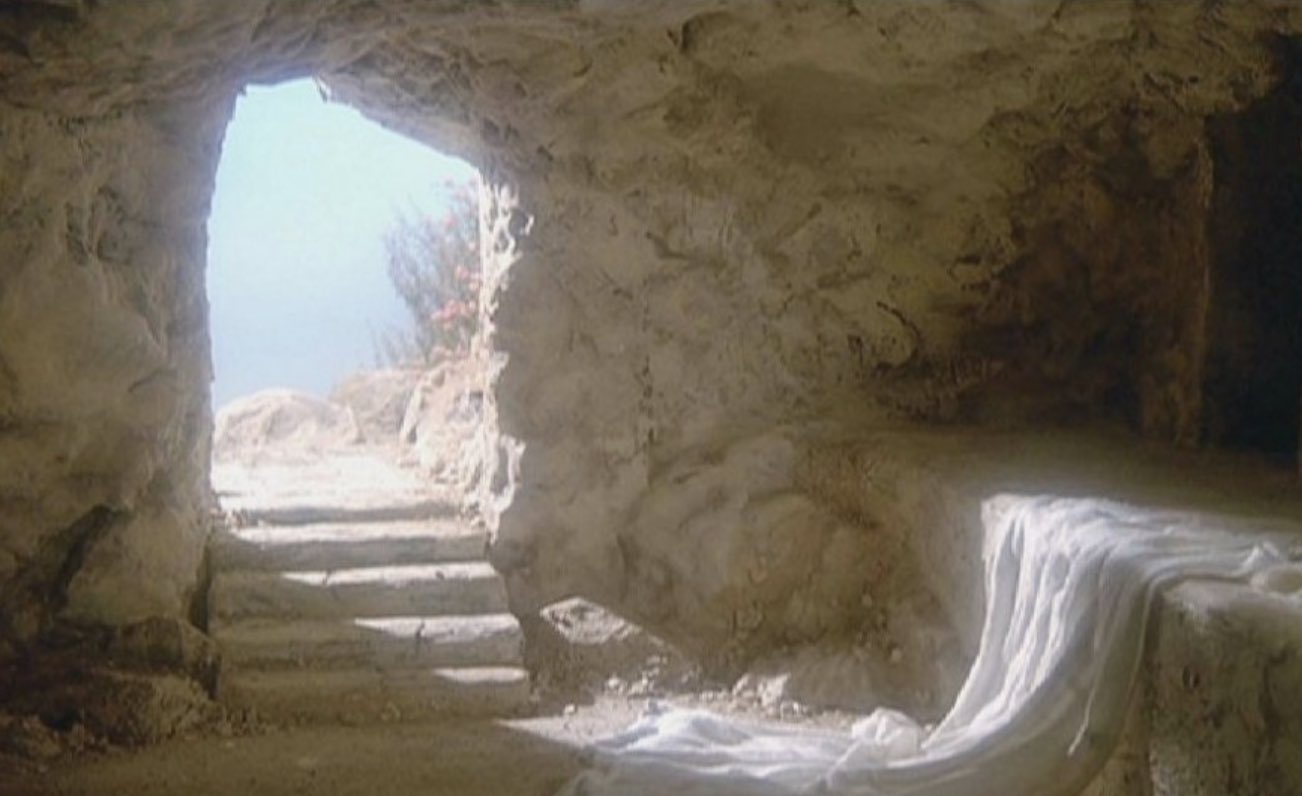
On Sunday, a day off without a homicide call, I went to Grace church over on Fourth street. It was Easter Sunday with talk of resurrection -the other side of death that homicide detectives don’t get calls for.
On my way out after the service, rector Philbee greeted me.
“Sam’s daughter contacted me. The family will have the funeral service here this week. You are invited. Did you find out why Sam came here?”
“I interviewed the family and nothing adds up.”
“Well, detective, as you know, people do all kinds of violence to get what they want. And there are some who desperately want the kingdom of God and do violence to themselves to get ahold of it. I wonder if that was what was going on with Sam.”
On Monday I closed the case. What did I have? Sam’s was no suspicious death. But it was a mystery of location, location, location.
Putting two and two together, I had a husband, father and friend who died of natural causes in an unused baptistry. And, I had no clear motive for Sam going out of his way to be in that exact place. I had no idea of what he hoped to find there. Maybe the padre was right.
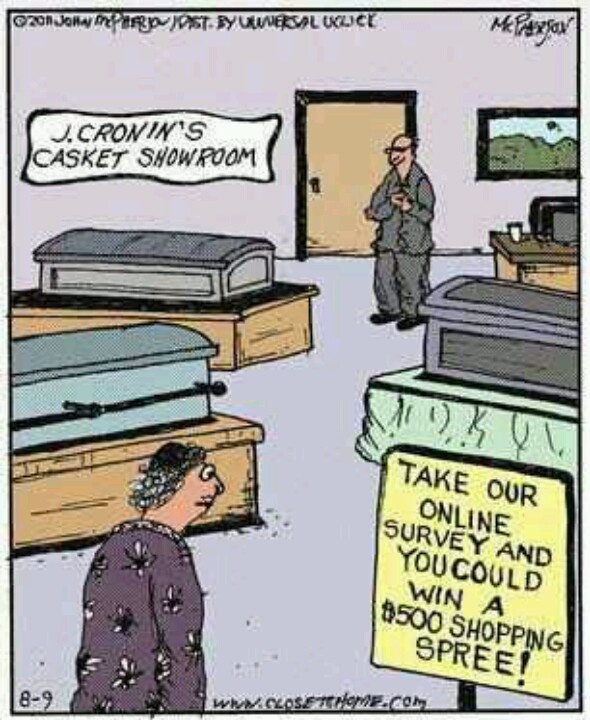
The funeral for Samuel J. Muckle was held a few days after Easter Sunday at Grace church. I attended and sat in the back row. I wanted to see “this poor soul” laid to rest. Around the casket were dozens of white trumpet-looking lilies. They gave off a sweet and fragrant scent.
~~
©J.A. Johnson, Kingdom Venturers, 2026, All Rights Reserved



















And the Beat Down Goes On
May 4, 2026 Leave a comment
“. . . the terror of the night
or the arrow that flies by day
or the pestilence that stalks in darkness
or the destruction that wastes at noonday.” Psalm 91
Fires, floods and extreme weather will imperil a third of all life on land in the next 60 years.
Nobel Physicist Predicts END DATE For Modern Civilization: And it’s quite soon…
The New York Times’s Resident Catastrophist Delivers Another Subscription to the End of the World
You wake up in a news cycle that never sleeps. With a cup of coffee, you read what ‘doomcasters’ are saying about end-of-life scenarios appearing on the horizon. Now you are fully awake and wondering what to do with these high alert headlines? Do you let existential crisis into your life?
You sip your coffee and remember that not long ago the world was subjected to pandemic hysteria. Coronavirus, the “global crisis of unprecedented reach and proportion,” started making headlines at the beginning of 2020.
You recall the WHO declaring the coronavirus a “public health emergency of international concern.” And the headlines declaring surges in COVID-19 cases attributed to the Omicron variant, a “tripledemic” – COVID combined with flu and RSV, and of overwhelmed hospitals and healthcare systems and dancing nurses.
How could you forget that Biden imposed OSHA vaccination and testing emergency standards on your business or the reality-warping restrictive policies involving mandated lockdowns, masking, social distancing, fines, and vaccines, or the CDC predicting people will die?
You pour yourself another cup of coffee and look out the kitchen window. You see the couple next store – Vivian and Zoe – walking their dog Baxter. The other day, when you took the garbage can to the curb, the apoplectic twosome accosted you with “Democracy is threatened by the likes of you extremists, fascists, racists, homophobe Christian nationalists!” and “Trump is Hitler!” They saw you going to church last Sunday.
You drink your coffee troubled that Viv and Zoe had been beaten down by another media existential crisis campaign, akin to the rollout of the COVID-19 marketing campaign that told us to worry about it, and how to worry about it.
Under the spell of the “Democracy is threatened” campaign, Viv and Zoe were in a state of emotional panic. And that had them beat down on the closest person who didn’t share their views or the views of the commercial-sponsored media. The media’s inordinate influence has you very concerned about the collective fear and confusion its campaigns were causing to psyches.
The beat down goes on . . . in our heads.
~~~
How shall we then live in the context of existential dread?
Day after day imagination is battered with dire predictions– the end of this and that unless we do this and that. The steady beat of amplified headlines overwhelms one’s patience, strength, and soul.
Climate change, pandemics, wars, “Democracy!” AI Could Make Humans Irrelevant!
How do we respond to headlines telling us that we are done for? Should we let fear and helplessness dominate our lives? Can we live in terms of “accepting disharmony from the outset and defying it”? This last way of going forward is the directive C.S. Lewis prescribes in his essay “On Living in an Atomic Age.”
Published in post-war 1948 and at the beginning of the atomic age, the essay provides a reality-check perspective and presents a scenario of how to live in life-ending times.
The following is an excerpt from the opening of Lewis’ short essay. During COVID the excerpt was passed around on the internet, with “atomic” replaced with “coronavirus.” Certainly, the essay can be applied to any dire life-threatening circumstances.
In one way we think a great deal too much of the atomic bomb. “How are we to live in an atomic age?” I am tempted to reply: “Why, as you would have lived in the sixteenth century when the plague visited London almost every year, or as you would have lived in a Viking age when raiders from Scandinavia might land and cut your throat any night; or indeed, as you are already living in an age of cancer, an age of syphilis, an age of paralysis, an age of air raids, an age of railway accidents, an age of motor accidents.”
In other words, do not let us begin by exaggerating the novelty of our situation. Believe me, dear sir or madam, you and all whom you love were already sentenced to death before the atomic bomb was invented: and quite a high percentage of us were going to die in unpleasant ways. We had, indeed, one very great advantage over our ancestors — anesthetics; but we have that still. It is perfectly ridiculous to go about whimpering and drawing long faces because the scientists have added one more chance of painful and premature death to a world which already bristled with such chances and in which death itself was not a chance at all, but a certainty.
This is the first point to be made: and the first action to be taken is to pull ourselves together. If we are all going to be destroyed by an atomic bomb, let that bomb when it comes find us doing sensible and human things praying, working, teaching, reading, listening to music, bathing the children, playing tennis, chatting to our friends over a pint and a game of darts—not huddled together like frightened sheep and thinking about bombs. They may break our bodies (a microbe can do that) but they need not dominate our minds.
The full essay, in the document below, contains questions and positions Lewis maintains, such as
Are we “accepting disharmony from the outset and defying it?”
Do we “hold up our own human standards against the idiocy of the universe?”
Are we the product of blind physical forces and therefore unable to provide answers to questions of a fatalist existence?
“But suppose we really are spirits? Suppose we are not the offspring of Nature…?”
“We must go back to a much earlier view.”
“We must simply accept it that we are spirits, free and rational beings, at present inhabiting an irrational universe, and must draw the conclusion that we are not derived from it.”
“If there is no straight line elsewhere, how did we discover that Nature’s line is crooked?”
“Nothing is more likely to destroy a species or a nation than a determination to survive at all costs.”
https://www.matthewaglaser.com/living-in-an-atomic-age
“On Living in an Atomic Age” (first published 1948) by C. S. Lewis (1898–1963) From: Present Concerns: Essays by C.S. Lewis (edited by Walter Hooper; New York: Harcourt Brace Jovanovich, 1986), pages 73–80
Born a few years after the above essay was published, I became well aware of ‘doomcasting’ headlines. I recalled some of the headlines in my January 2025 post Surface Readings.
The post began with the words of poet W H Auden – “Now is the age of anxiety” and my own take on things: “Impending doom has been in the news during my entire lifetime.” I wrote about the headlines and pronouncements of those anxious times which included the book The Late great Planet Earth based on the modern and heretical notion of dispensationalism.
~~~
Imagination Reset
Taking in the spirit of the times, imaginations are exposed to the negation of life and dire predictions often made for political ends that use fear to move power into the hands of the few.
Taking in the digital tabloid times is the “WHAAM!” of a Roy Lichtenstein Ben-Day dots painting. Imagination is amped up and ready to pop with a Pow!
What happens to our imaginations when we are constantly confronted with crisis? And, how do we live with dire predictions?
With the 24/7/365 news cycle, it’s little wonder that “News Avoidance” is becoming a common way to deal with the constant specter of troubling things, as Thaddeus G. McCotter writes in I Didn’t Read the News Today, Oh Boy: Embracing the ‘News Avoidance’ Pandemic
“If you live today, you breath in nihilism … it’s the gas you breathe. If I hadn’t had the Church to fight it with or to tell me the necessity of fighting it, I would be the stinkingest logical positivist you ever saw right now.” ― Flannery O’Connor
What we shouldn’t avoid are resources such as poetry, art, classical literature and music to help us cope with and see beyond the terrors of the modern age. We need the signal of those who came before and dealt with all kinds of things and not the clamoring noise of influencers.
Poet Wallace Stevens, in “The Noble Rider and the Sound of Words” writes that poetry, as it interacts with reality and the imagination, can shape our perspective and provide meaning and comfort in a world that often feels overwhelming and harsh.
Wallace emphasizes the role of imagination in countering the beat down of life. If you are a Christian, you already know that the poetry of the Psalms does just that, e.g., Psalm 91.
In the video below, Dr. Jason Baxter, author of The Medieval Mind of C.S. Lewis discusses his book, Why Literature Still Matters.
Why Literature Still Matters: An Interview with Dr. Jason Baxter | Classical Home Education
~~~
If you need a quick antidote to climate hysteria, Itxu Díaz provides his take on the news of impending doom: Climate Change Scientists Set a Date for the Arrival of Hell on Earth: the Year 2085.
~~~
Naomi Wolf with Outspoke: “I’m here tonight to talk about a huge news story that broke in the last couple of days. It could be thread that unravels the whole COVID virus/vaccine perpetrator issue.
“A criminal syndicate, essentially.
“Even just this initial gesture is so transformational. It breaks the spell of, “No one can be held accountable, no one can be investigated from the untouchable third rail COVID vaccine rollout, COVID virus rollout.””
“The Shocking Story of NIH Secretly Funding COVID”
~~~
And the Beat Down Goes On
~~~
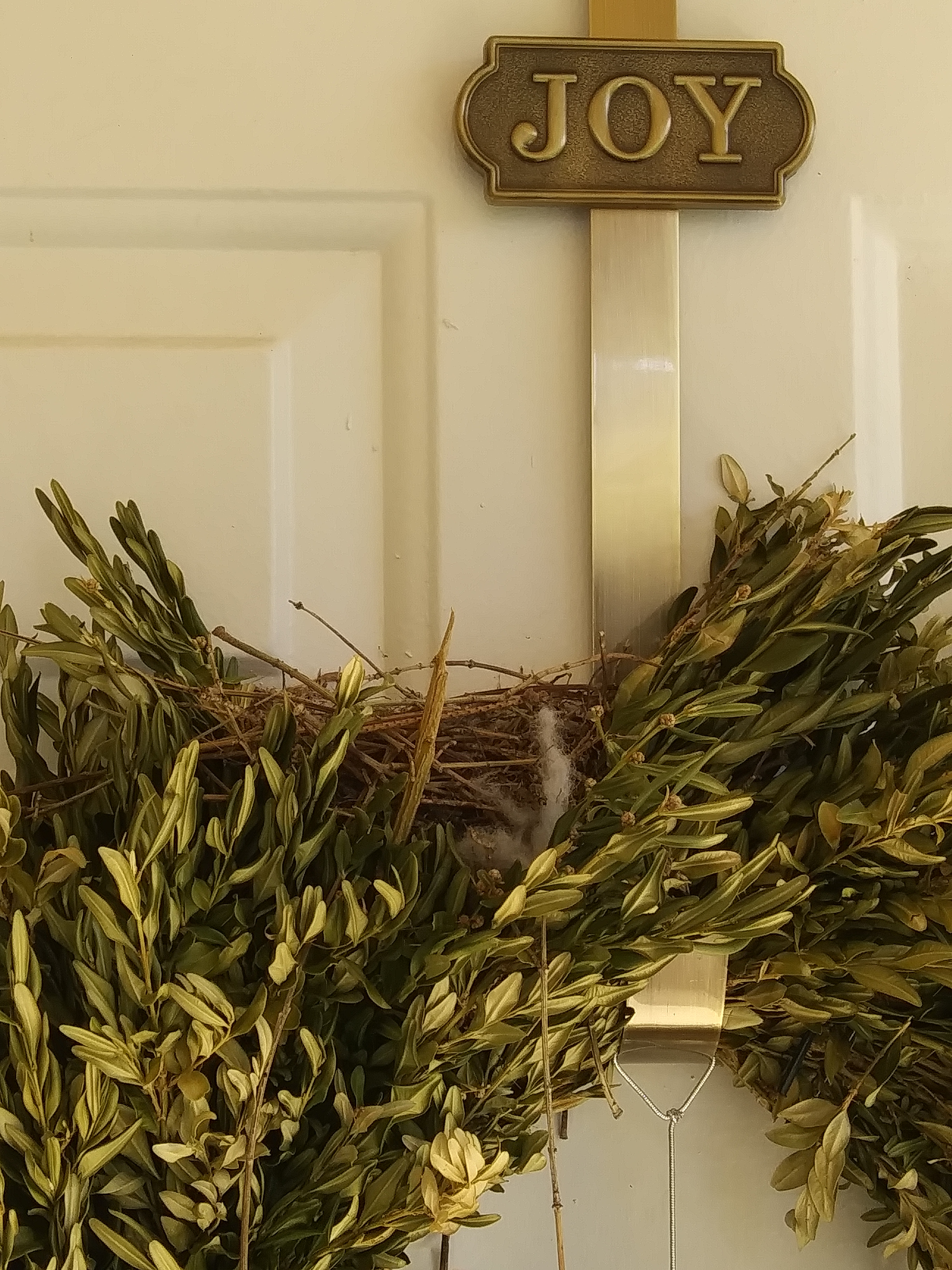
Wreathing (Matthew 6:34)
On my shed door, atop its plastic wreath,
a robin fashioned a nest, found twigs the binding.
then, behold,
above the manufactured certainty,
within the steadfastly twig-tucked wreathing,
her brood burst burst burst forth.
J.A. Johnson, 2026
Rate this:
Filed under 2026 Current Events, Climate change, COVID-19, Death, Depression, journalism, media, nihilism, pandemic, Political Commentary, social engineering, war Tagged with apocalypse, art, books, C.S. Lewis, Climate change, COVID-19, death, Democracy, entertainment, journalism, media, nuclear war, pandemics, social media, writing