The Approaching Eclipse

Imagine creating something significant and you make it public it and it is well-received. Then, State media (MSNBC and the NYT for example) pans it and you are declared an “enemy of Democracy.” The self-expression born of your life’s work, your name, and your personhood are to be eclipsed – blackened – by an authoritarian enforcement of new cultural norms. You are to be held hostage artistically and, if you do not conform, literally.

You realize that you can either abandon your life’s work out of fear of crushing reprisals, or you find a subversive way to bring your work to the public, as did one of the greatest composers of the 20th century.

“In January 1936, after Stalin attended a performance of [Dmitri] Shostakovich’s dangerously erotic opera Lady Macbeth of the Mtsensk District, there appeared the notorious Pravda editorial ‘Chaos Instead of Music’, with its threat that things could ‘end badly’ for Soviet musicians – and for Shostakovich in particular. Its unnamed author was David Zaslavsky, a well-connected Soviet journalist and propagandist. No family was left untouched by the purges. The composer’s uncle, sister, brother-in-law and mother-in-law were arrested and when his patron, Marshal Tukhachevsky, was declared an ‘enemy of the people’, it is likely that he himself was interrogated by the NKVD. The musicologist Nikolay Zhilayev, to whom Shostakovich played the second movement in May 1937, had joined the disappeared by the time of the Fifth’s Leningrad premiere on November 21, 1937.” – David Gutman, Shostakovich’s Fifth Symphony: A deep dive into the best recordings | Gramophone

The opera was attacked as “muddle instead of music” in an editorial, probably written by Stalin himself, in the Communist Party newspaper, Pravda. If Shostakovich did not turn away from the “decadent” avant-garde in favor of Soviet Realism, threatened the editorial, “things could end very badly.” The popular opera disappeared from the stage overnight. One of the Soviet Union’s most prominent composers was in danger of becoming a “nonperson” just as he was reaching his artistic prime.Timothy Judd, writing in Shostakovich’s Fifth Symphony: The Unlikely Triumph of Freedom

After the vicious official attack, Shostakovich lived in constant fear. Conductor, composer, music director, and arranger Benjamin Zander, writes

Overnight the 30-year-old composer’s rapidly ascending star plummeted. He came to regard himself, and to be regarded, as a doomed man, waiting with packed bags for the secret police to take him away during the night. In fact, the police never came, but the fear of official reprisals for any displeasure which his music might occasion coloured every moment of his life after that. He was never to know freedom again, except surreptitiously in some of his music.

Knowing that at any moment the authoritarian Soviet State might find fault with his music and then imprison him and his family, Shostakovich looked for a way to continue to work within the overshadowing Stalinist system.

“Shostakovich attempted to restore himself to the good graces of the Soviet critical establishment with “a conscious attempt to create a simplified ‘Socialist realist’ style that could be acceptable both to the Party and to the intelligentsia.” (Source)

And so, knowing that his latest effort would not be accepted (written in 1936, but not publicly performed until 1961) . . .

Shostakovich withdrew the Fourth Symphony from its scheduled performance and began the composition of a fifth which had as its [imposed by the State] subtitle, ‘An artist’s practical answer to just criticism’. His intention was to reinstate himself, through this work, in the eyes of the Politburo. The Fifth Symphony did indeed do that: the first performance was a huge success. It is anything but cheerful: the first movement is dark and foreboding, the second is ironic and brittle, and the third a deep song of sorrow. However, only the message at the end was important to the Soviets, and Shostakovich knew that. The long final movement, as they heard it, climaxed in a triumphant march, a paean of praise to the Soviet State.Benjamin Zander

Was the Fifth Symphony to be understood as essentially Stalinist? There was more to the forced empty pomp of the fourth movement than met the Politburo’s ears.

“In [Solomon Volkov’s 1979] Testimony, Shostakovich fiercely renounces all this, in particular denying that the Fifth’s finale was ever meant as the exultant thing critics took it for: “What exultation could there be? I think it is clear to everyone what happens in the Fifth. The rejoicing is forced, created under threat, as in Boris Godunov. It’s as if someone were beating you with a stick and saying, ‘Your business is rejoicing, your business is rejoicing,’ and you rise, shaky, and go marching off, muttering, ‘Our business is rejoicing, our business is rejoicing.’ What kind of apotheosis is that? You have to be a complete oaf not to hear that.” -Samuel Lipman, writing in Shostakovich decoded? | The New Criterion (Emphasis mine.)

Was the Fifth Symphony a subversive symphonic response to Stalin, one that both mocks the dictator while bowing to him?

In the remarkable finale, Shostakovich achieves one of the greatest coups of his symphonic career: a “victorious” closer that drives home the expected message and at the same time makes an entirely different point — the real one. The resounding march that ends the movement represents the triumph of evil over good. The apparent optimism of the concluding pages is, as one colleague of the composer put it, no more than the forced smile of a torture victim as he is being stretched on the rack. (Source)

Shostakovich publicly described the new work as “a Soviet artist’s reply to just criticism.” Privately, he said (or is said to have said) that the finale was a satirical picture of the dictator, deliberately hollow but dressed up as exuberant adulation. It was well within Shostakovich’s power to present a double message in this way, and it is well beyond our means to establish whether the messages are true or false. The listener must read into this music whatever meaning may be found here; its strength and depth will allow us to revise our impressions at every hearing.  (Source)

Did Shostakovich openly camouflage* a subversive message in the forced celebration of the fourth movement? The finale was not what it seemed.

Mark Pettus, in Pushkin and the Key (?) to Shostakovich’s 5th writes:

“In his official comments on his symphony, Shostakovich said the following:

“”I wanted to show in my symphony how, through a series of tragic conflicts, of great internal spiritual struggle, optimism as a worldview finds its affirmation.”

“The affirmation of “optimism as a worldview” — what a grotesque phrase! Farewell, spiritual struggle! It would seem impossible to accept this account of what the music “means” — and yet this interpretation seems to have been swallowed whole by the establishment; the work was praised, and Shostakovich’s “rebirth” as an ideologically acceptable composer was complete. And, indeed — music being what it is — the symphony seems to offer no objective reason for doubting the official reception. After all, isn’t the triumph of the finale… triumphant?

“. . . if things were so straightforward, then what made Pasternak, who was in the audience at the premiere, supposedly say the following:

“”And to think that he said everything he wanted to, and nothing happened to him!””

Shostakovich, with a motif from his own Four Romances on Poems by Pushkin, Op. 46: I. Rebirth, had inserted a Pushkin reference into the fourth movement. The poem-motif attacked Stalin and his ways and went on to express that over time, his work which had been defaced, will survive even the most brutal oppression and defilement. The reference heralded his own “rebirth”, as an ideologically acceptable composer and as a resurrected artist.

Rebirth (Alexander Pushkin)

A barbarian artist, with his indolent brush,
Blackens the painting of a genius,
And, atop it, he senselessly traces
His lawless drawing.

But, over the years, these alien layers of paint
Are shed like old scales;
Before us, the genius’s creation
Emerges with its former beauty.

Thus do delusions vanish
From my tormented soul,
And in it visions arise
Of primal, pristine days.

In the podcasts below, you’ll hear conductor Joshua Weilerstein explore the four movements of Shostakovich’s 5th Symphony. 

* “Time and again, Tolstoy uses this technique of open camouflage. He does so, I think, so that we learn not to equate noticeability with importance and so that we acquire, bit by tiny bit, the skill of noticing what is right before us.” – Gary Saul Morson, The Moral Urgency of Anna Karenina – Commentary Magazine

~~~~~

Playing the fourth movement (Allegro Non Troppo) of Shostakovich’s 5th in high school concert band, I had no idea of the circumstances under which it had been composed – an artist threatened with suppression and persecution. I had no idea of the Pushkin reference hidden in the work. As first trumpet, all I knew was that it was a brass-forward piece of music. But now, I notice what was right before me and that has expanded my temporal bandwidth enough to see the approaching eclipse.

The barbarian artists of our day – Progressives and the Biden regime – with indolent brushes, blacken any expression, any individual, and any name that will not conform to its strictures and senselessly traces lawless drawings upon the works of truth, beauty, and goodness using the media, the administrative state, the CIA, the DOJ, and Taylor Swift.

Reason doesn’t suit the appetite of most. Artists, writers, playwrights, poets, journalists, composers, and musicians must work to subvert the approaching eclipse of humanity by the State, the WHO, the WEF, AI, transhumanism, and communism.

~~~~~

“This was not the Moral Majority of my father’s era. Rather, this was a subversive, courageous subculture that was resisting the dominant narrative, and the morass of darkness that is our dominant cultural moment.” – Dr. Naomi Wolf: “Letter from CPAC”

~~~~~

Here is the State eclipsing a journalist. . .

And here is State approved writing that blackens individuals . . .

White Rural Rage: The Threat to American Democracy: Schaller, Tom, Waldman, Paul: 9780593729144: Amazon.com: Books

~~~~~

Shostakovich Symphony No. 5, Part 1
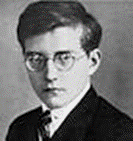
Shostakovich’s life and career was so wrapped up with his relationship to the Soviet government that it is sometimes hard to appreciate that, all else aside, he was one of the great 20th century composers. His 5th symphony is the meeting point between Shostakovich’s music and the political web he was often ensnared in, and it is a piece that is still being vociferously debated. This week we’re going to tell the story of the piece’s genesis, and then we’ll explore the movements of the symphony.

Shostakovich Symphony No. 5, Part 1
Shostakovich Symphony No. 5, Part 2

Sticky Notes: The Classical Music Podcast: Shostakovich Symphony No. 5, Part 1 (libsyn.com)

Sticky Notes: The Classical Music Podcast: Shostakovich Symphony No. 5, Part 2 (libsyn.com)

~~~~~

Solar Eclipse – April 8th, 2024

How southern Indiana communities are preparing for the 2024 solar eclipse – Inside INdiana Business

2024 Total Solar Eclipse Planning Toolkit: INDIANA UNIVERSITY CENTER FOR RURAL ENGAGEMENT

2024 eclipse guide: Times, places, states and livestream (astronomy.com)

“Photographing the Eclipse” Rick Galloway, IAS Member Rick gives a presentation on how photograph the eclipse and not miss it by doing so.

IAS February 2024 General Meeting – YouTube
How To Photograph the Solar Eclipse! (youtube.com)

Give Birth to the Promise of Living


And all God’s people said…

“All of God’s promises, you see, find their yes in Jesus; and that’s why we say the yes, the “Amen,” through Jesus when we pray to God and give him glory.” II Corinthians 1:20

B-A-C-H and The Art of the Faith

The following quotes are sourced from J. S. Bach in Japan:

”What people need in this situation is hope in the Christian sense of the word, but hope is an alien idea here,” says the renowned organist Masaaki Suzuki, founder and conductor of the Bach Collegium Japan. He is the driving force behind the “Bach boom” sweeping Japan during its current period of spiritual impoverishment. “Our language does not even have an appropriate word for hope,” Suzuki says. “We either use ibo, meaning desire, or nozomi, which describes something unattainable.” After every one of the Bach Collegium’s performances Suzuki is crowded on the podium by non “Christian members of the audience who wish to talk to him about topics that are normally taboo in Japanese society—death, for example. “And then they inevitably ask me to explain to them what ‘hope’ means to Christians.” (emphasis added)

“Although less than 1 percent of the 127 million Japanese belong to a Christian denomination, another 8 to 10 percent sympathize with this “foreign” religion. Tokuzen explained: “Most of those sympathizers are part of the elite, and many have had their first contact with Christianity through the music of Johann Sebastian Bach.””

The Art of the Fugue

“When Bach died on July 28, 1750, after two botched eye operations performed by John Taylor, a quack from England, his last major work, The Art of the Fugue, remained incomplete. It culminates in a quadruple contrapunctus bearing his signature, for it is formed from the letters b-a-c-h (in German musical terminology b-natural is called “h”)….

The Art of the Fugue is perhaps Bach’s most abstract and intellectually challenging work. Yet its pristine grace led Arthur Peacocke, the English theologian and biologist, to aver that the Holy Spirit himself had written it, using Bach’s hand.”

Hum along with Glenn Gould and let faith arise…

Sacred Sounds Amid the Hegemony of Noise

At a time of great crisis in our world we need more than ever to embrace the sacred. 

In the garden of prayer there are sacred sounds and there is holy silence.

As Spanish Mystic St. Teresa of Avila (March, 28, 1515 ~ October, 4, 1582) I come to the garden to meet with Him.

There I find water from the well and the fountain and the stream.  Water from above.

Saint Augustine:  When you sing you pray twice.

Here are some ideas, some choral music for your garden.

 Harry Christophers and The Sixteen present the music and backgrounds of composers James MacMillan, John Rutter and Sir John Tavener.

http://youtu.be/Vx-vx0XolxI


Tomás Luis Victoria (c.1548 – August 20, 1611)  ~ Spanish Counter Reformation Composer


http://youtu.be/br0weaJgrnw

The Tree of Life Envisioned

Recently I viewed Terence Malick’s The Tree of Life. It would be difficult for me to adequately describe the effect this movie had on me, the emotion and reflection evoked from me as a Christian parent who has lost a child.  This movie operates, more than any I have ever seen, on an intimate meaning-of-life level while the breadth of its vision enables us to direct our eyes away from ourselves and out into the vast cosmos. And in doing so, synchronicity with creation is summoned.

 Life’s deepest and most pressing questions, the universal “whys” behind all of life are posed using the simple narrative of the lives of the O’Brien family of five. Underlying the film’s basic premises of wonder and questioning is the ancient wisdom book of Job, for me the touchstone of the film.  I believe that each viewer’s prior contemplation of life’s deepest questions would certainly individualize the film’s impression on the viewer.  Without individuation, though, the movie is just an amalgam of exceptional pictures and music – a mood piece. I see The Tree of Life as being a spiritual movie and not a religious documentary and therefore I believe it will affect each viewer differently.

 Without going into too much of the narrative detail, detail which may deprive you of the movie’s impact, here is my initial impression of Terrence Malick’s The Tree of Life:

 Though I was ready for the usual exceptional visual imagery – Stanley Kubrick’s movies come to mind – that is part and parcel of Malick’s cinematic talent (see also his Days of Heaven) I was blown away by the large scope of the movie:  creation, the meaning of life, the existence of suffering, nature and grace and the Creator. 

One of the visual and emotional pleasures of this movie is that the images are offered to us in prolonged time frames – there are no frenetic montages matched to every blink of the eye. The absence of the modern movie restlessness allows us to contemplate the force of those images. We are then able to react with deeply held authentic feelings and at the same time not feel the need to immediately dispose of those feelings so as to be ready for the next emotional roller coaster ride of images. In this way the movie parallels life:  creation and real life takes place over time.  I believe the movie honors the fact that God takes time to accomplish His purposes – in the universe and in the saga of our lives. And, as the movie depicts, we do not understand God’s ways but, as I have seen, God, who is outside of time, uses time to reveal His Nature and His Grace to us.

 Malick rolls out before us a grand sweeping chromatic scroll of the universe. The visual imagery, often shown in natural lighting is enhanced with beautifully evocative musical selections including works by Bach, Mozart, Brahms, Smetana’s The Moldau River, Preisner’s Lacrimosa, Cassidy’s The Funeral March and Górecki’s Sorrowful Songs Symphony. Such music invokes us to come present to the spiritual within our souls.

 The awe-inspiring and overwhelming dynamic universe centers around and is grounded by a tree in the backyard of a family’s home in Waco Texas, circa 1950s. Using a minimalist script this family of five provides creation’s human narrative: father (emblematic of nature), mother (emblematic of grace) and their three young sons.  The father, the mother and Jack O’brien, the eldest son and main character give us our viewpoints. Later on in the movie Jack’s character is played as an adult by Sean Penn. The adult Jack becomes an architect who creates buildings derivative of his own hard-edged “nature”.

 Within this family life narrative we see birth, growth, maturation, anger, relational distance, death, sorrow, loss, envy, survival, strife and sin. Along the way the ever pressing questions of life are whispered to our ears using voiceovers.

 As I mentioned the display of the immensity and dynamism of the created universe provides the backdrop for these most important issues of life, questions that this family of five and certainly any sane person on earth ponders at some point in their life:  Where is God?; Does God see what is happening?; Does God care? Are we left on our own? What about evil? What about the loss of a child? Why is there suffering?

 After the death of her son Mrs. O’Brien asks, “He was in God’s hands the whole time, wasn’t he?” “If God is good and cares about us, why does he make us suffer?”  Throughout the movie we are engaged to ponder these hard questions and to once again look through a glass darkly for the answers.

 Watching this film I was also reminded of Dostoevsky’s The Brothers Karamazov and the philosophical lessons Smerdyakov learned from Ivan, regarding the impossibility of evil in a world without a God.

 In depicting some of the range of God’s creation we see vast spatial distances which hold myriad galaxies and we also see, looking through other end of the telescope, intricate microcosmic details.  We are reminded that the Creator God is ever beyond our finite comprehension. For this reason I am thankful that Malick chose to countenance theism and not a Woody Allen-type nihilism that turns its back on God and mocks Him every time.

 The movie begins by referencing the oldest piece of wisdom literature in the world, the book of Job. The stage is set with God responding to Job who had cursed the day he was born after being overwhelmed with trouble, suffering and loss.  From Job 38:4, 7:

 “Where were you when I laid the earth’s foundation … while the morning stars sang together and all the sons of God shouted for joy?”

 Throughout the movie there are other paraphrased Scripture references including Job 13:15, “I will be true to you whatever comes.”

 I believe I also heard a paraphrased reference to Paul’s letter to the Roman church during a scene where Jack is praying: “I know what I want to do but I can’t do it.”  Also, there is an oblique reference to Paul’s letter to the Corinthian church regarding the character of love:

  “There are two ways through life:  the way of nature and the way of grace. You have to choose which one you’ll follow. Grace doesn’t try to please itself. Accepts being slighted, forgotten, disliked. Accepts insults and injuries. Nature only wants to please itself. Get others to please it too. Likes to lord it over them. To have its own way. It finds reasons to be unhappy when all the world is shining around it. And love is smiling through all things. The nuns taught us that no one who loves the way of grace ever comes to a bad end.” Mrs. O’Brien, The Tree of Life

 Beyond the infusions of Scripture, I saw revealed man’s unconscious need to bump up against someone bigger and stronger than life itself. And though we are infinitesimally small compared to the enormous universe we matter to God.  In another wisdom book of the Bible, the Psalms, the shepherd boy David speaks in awe of God’s intimate knowledge of His creatures,

“When I consider your heavens, the work of your fingers, the moon and the stars, which you have set in place, what is man that you are mindful of him, the son of man that you care for him?”

  The film doesn’t seek to answer the questions of life but only poses them offering up grace as the consummate reconciler. As a believer in Jesus Christ I am transformed daily by God’s grace.  Just as important, I am forgiven and reconciled with God because Jesus Christ was nailed to another tree – the cross. His resurrection now provides me access to the Tree of Eternal Life. I know the One Who is the Answer.

A tree of life was planted in the garden long ago…

  “Now the Lord God had planted a garden in the east, in Eden; and there he put the man he had formed. And the Lord God made all kinds of trees grow out of the ground—trees that were pleasing to the eye and good for food. In the middle of the garden were the tree of life and the tree of the knowledge of good and evil.”…

 Now the serpent was more crafty than any of the wild animals the Lord God had made. He said to the woman, “Did God really say, ‘You must not eat from any tree in the garden’?”

The woman said to the serpent, “We may eat fruit from the trees in the garden, but God did say, ‘You must not eat fruit from the tree that is in the middle of the garden, and you must not touch it, or you will die.’”

 “You will not surely die,” the serpent said to the woman. “For God knows that when you eat of it your eyes will be opened, and you will be like God, knowing good and evil.”

When the woman saw that the fruit of the tree was good for food and pleasing to the eye, and also desirable for gaining wisdom, she took some and ate it. She also gave some to her husband, who was with her, and he ate it. Then the eyes of both of them were opened, and they realized they were naked; so they sewed fig leaves together and made coverings for themselves.

Then the man and his wife heard the sound of the Lord God as he was walking in the garden in the cool of the day, and they hid from the Lord God among the trees of the garden. But the Lord God called to the man, “Where are you?”


While we ask God “Where are You in all of this?”, God is asking us “Where are you?”

Aaron Copland – The Promise of Living

*******
The Tender Land.

Antonin Dvorak – Symphony No. 9 “From the New World” – 3rd movement
