Mercy Me or Else


“Mercy and truth are met together; righteousness and peace have kissed each other.” Psalms 85:10


In these days of full grown 60’s love and its love child Ad Hoc Gospel mercy like rights are now demanded. And this “mercy” is demanded of Christians who pose a threat to the LGBT community by not agreeing that homosexuality is accepted in God’s kingdom on earth.

In the domain of “peace and love” LGBT advocacy a Christian saying so is “judgmental” and therefore not merciful. The Christian is therefore deemed unJesus-like. For the advocates, the millenniums-old Christian narrative must be changed, adapted and ’queered’ so that mercy can be given without knowledge of wrongdoing.

No one has to tell me that life is hard. We all look for relief from what life brings us. Yet, those who advocate for mercy towards those who practice homosexuality look for relief for those who bring hardship onto themselves. “But”, some tell me, “they are born with homosexuality. They can’t help themselves. They were born “this way”. So, they want Christians to back off and give homosexuality a pass. And yet, there is no doubt that same-sex attraction is a pernicious addiction that is fostered to full-grown habit by #LGBT advocacy.

Homosexuals “shall not pass” into the kingdom of God. Truth, reason, nature, Scripture (1 Cor. 6:9-11, among other texts) – none of these will give homosexuality a pass. Neither will science. There is no “gay gene.”

Does not the word “mercy” imply a transgression has been committed? The word, “grace”, another Biblical-panacea term is swapped by religious advocates for “mercy” as the means to the same end. These two words are used interchangeably to invoke a softness towards behavior ‘formerly thought’ unacceptable by the ‘unenlightened’.

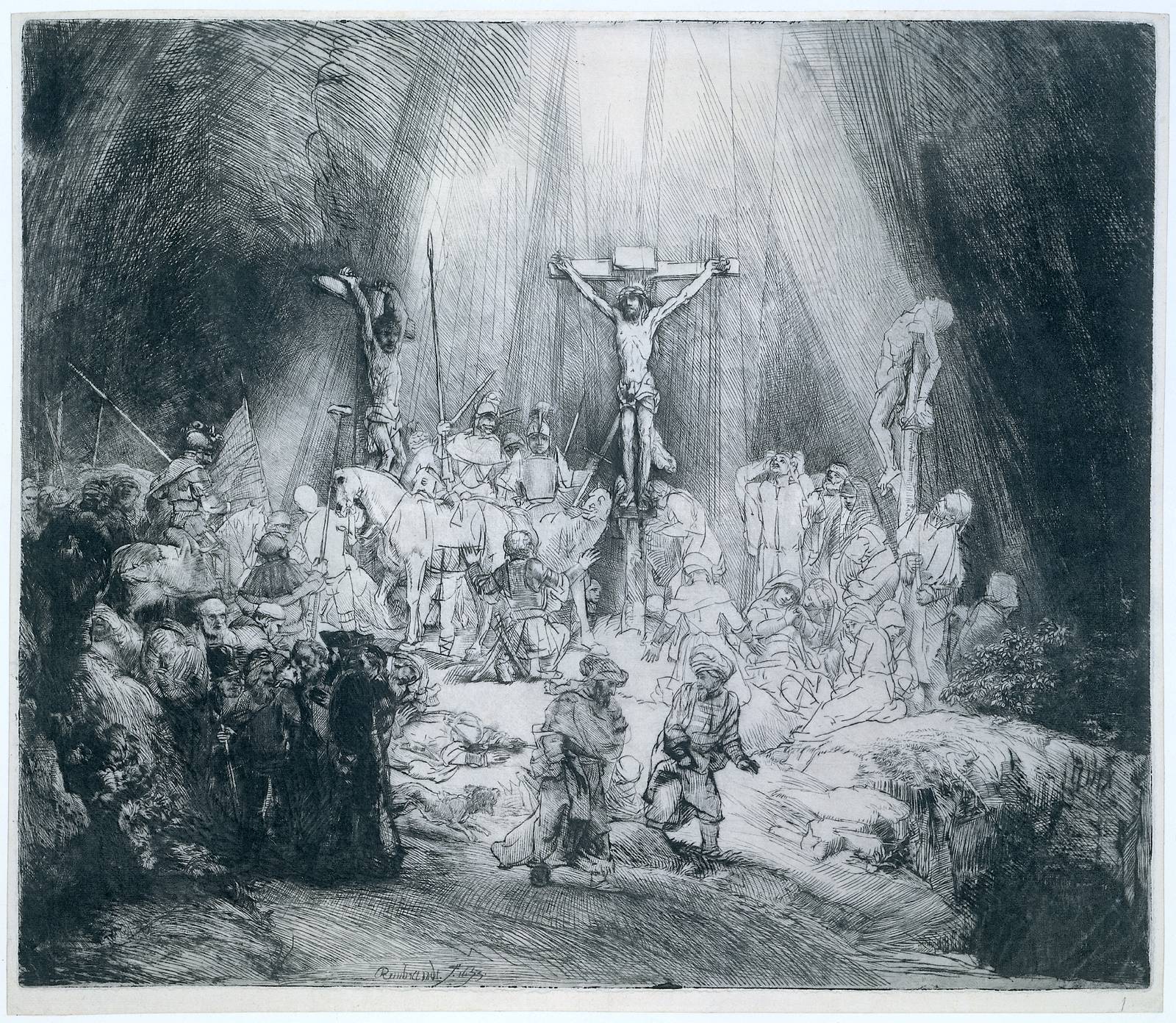
There will always be a demand for mercy without the truth of the transgression. But for the thief on the cross, his transgression was known. It was nailed above his head and he acknowledged it. He asked Jesus for mercy and received it.

The bad character on the other cross wanted mercy without truth: “Get us out of this!” 

Aren’t you the Messiah? He said. “Rescue yourself-and us too!

But, mercy without truth is actually sympathy for the devil.

“`

One wonders if the flight from woman, the de-feminization and de-humanization of society, toward a cold exo-human reason plays a major role in redefining mercy as licentiousness.

Nobody Does It Better


It was almost 5 AM when Carl finished his workout. Carl headed for FoodNation to buy groceries for the day. Once inside, there was no mistaking the smell of freshly baked carbs. Carl smiled. He remembered an old cartoon where an enticing aroma was shown to lift a character off of his feet, draw him along and then place him in front of its enticing source. Carl decided not to be a cartoon character today.

Carl walked past his wafting imagination. He walked past the aisle of styrene-encased carbs and the men in knee pads reshuffling and restocking dated poly-packaged carbs. He walked past the sugar-covered carbs.

Carl walked past the frozen carbs, the cryopreserved carbs.

Carl walked past the aisle of processed ethnic food stuffs. Carl walked past the aisle of colorful billboard-boxed carbs. Each box proclaiming vast health benefits with every “great” bite. Carl walked past the cardboard-boxed dried carbs. Carl walked past the aisle of unembarrassed in-the-bag sugar. Carl walked past the aisles of incarcerated-canned vegetables and the hitting-the-bottle jars of preserved condiments.

And Carl walked past the fashionable colors of carbonation in the liquid sugar aisle.

Carl reached the water aisle and pulled a bottle of drinking water off the shelf. He smiled. Like James Bond he would live to die another day.


Carl had come to his health care senses a while back. At that time, he didn’t feel good or look the part of 00Carl. So, there was no doubt – he had to make some changes. And beside his own topology concerns there was one, no, there were many other prompters that changed his health habits.

Carl couldn’t help notice that many men and women were no longer walking. Instead, they were waddling. To go forward they would rock back and forth, shifting weight from one bad knee to the other in a slow, plodding fashion, as if pulling a sled full of lumber. Some of the living dead weight moved though FoodNation driving their immense form around in the motorized shopping carts with the appearance of a parody parade float.

When Carl reached the checkout counter that day he waited while up ahead liters of soft drinks, boxes and boxes of cereal, bags of treats and goodies and packaged preservatives force-fed the conveyor belts.

Once the motorized cart had been emptied of its contents, Carl placed the divider down on the conveyor. Behind the divider he placed his bottled water, a bag of walnuts, a carton of eggs, a bag of mixed greens and a salmon fillet for dinner. Carl had decided to invest in his future. He needed his legs to make a go of it.


The end. (But not for Carl.)


© Jennifer A. Johnson, 2017, All Rights Reserved

~~~

When will a grocery store be designed for health instead of consumerism? Along the same line, have you noticed the horrible and often offensive background music?

Mission Impossible Theme>>>

Coming to Oneness Matters: The Future of Protestantism


I love debate. I enjoy coherent viewpoints.

I track closely with Peter Leithart (8:30-26:00):


Restoring Moral Equilibrium


 “In the face of sorrow, imperfection, and the fleetingness of our affections and joys, we ask ourselves “Why”? We need reassurance. We look to art for the proof that life in this world is meaningful and that suffering is not the pointless thing it so often appears to be, but the necessary part of a larger and redeeming whole.

Tragedies show us the triumph of dignity over destruction and compassion over despair.”

-Sir Roger Scruton, philosopher and writer

~~~

“In art, beauty has to be won and the work is harder as the surrounding idiocy grows. But the task is worth it.”

Little Boat – Albert G. A. Edelfelt (21 Jul 1854 – 18 Aug 1905) was a Finnish painter

Getting Back to Outside-of-Spacetime Normal


“Elsewhere on the Las Vegas Strip, things appeared to go back to normal quite quickly.”  -Quote from a Oct. 4th, 2017 Daily Mail post


“I am please asking your prayers for the late 13 year old J— T—— and for his family and friends. J—, a neighbor of ours passed away unexpectedly on Tuesday, Oct. 3rd. J— was a smart, kind young man. He went through a lot of pain in his short life. May J— be surrounded with God’s unconditional love and may God lift J—’s family and friends up at this time. Give them peace, comfort, and spiritual healing over the loss of their family member and friend.”

-a recent prayer request from a church’s prayer email list

~~~

Whether be it hurricanes, floods, tornados, mass killings, local armed robberies (my town) and the loss of a child, there are life-events that seem to come out of nowhere. And, they are beyond our control. There are also cause-and-effect circumstances that follow from our own actions. These consequences often situate us in a place beyond our control. After any such occurrences, whether thrust upon us or resultant, it becomes clear to us that there is no going back to before. One passes through an event horizon* after which things will never be the same.

Those in the world who experience any of the above will likely face the situation initially with shock, hurt and outrage and then, as some time passes, turn to a “let’s return to normal” Epicurean palliative mind set -“the show must go on”. Later, they may turn off their feelings altogether within a Stoic apathy, especially if life-events ‘pile’ up. The cycle of indifference then ‘piles’ up until “action must be taken”.

After a horrific event most will seek a motive when great harm is done to others. They will ask “Why?” because they want to discover the means to stop all pain in this life, pain which so often comes home with them. A Christian will view the events from a Kingdom of God perspective, one which is Outside of Spacetime Normal.

“I am persuaded, you see, that neither death nor life, nor angels nor rulers, nor the present, nor the future, nor powers, nor height, nor depth, nor any other creature will be able to separate us from the love of God in King Jesus our Lord.” -Paul’s letter to the Roman church, 8: 38-39

Those of us who call Jesus “Lord” are being conformed to the image of the Alpha and Omega, the One who is outside of spacetime ‘normal’. As such, we are a royal priesthood (1 Peter 2:9) and are summoned to do the work of a priest – stand between heaven and earth and intercede for the world. We are to take the hurt, the pain, the sufferings and the groanings of the world and bring it to the Father and to do so without ceasing.

Maybe you have witnessed the following in your spirit. I have come to understand, after 55 years of a relationship with the Lord, that the Holy Spirit is constantly in conversation with the Father and the Son through me. The Spirit is constantly interceding. I am made continually aware of those around me. I lift them to the Lord. In my spirit I hear the cries of thousands who are hurting. When I see news reports of disasters – natural and manmade – I pray in the Spirit. Most times I do not have words. The Spirit, helping me in my weakness, prays through my very limited understanding.

“…the spirt comes alongside and helps us in our weakness. We don’t know what to pray for as we ought to; but the same spirit pleads on our behalf, with groanings too deep for words. And, the Searcher of Hearts knows what the spirit is thinking, because the spirit pleads for God’s people according to God’s will.”  -Paul’s letter to the Roman church, 8: 26-27

For some, prayers begin with a “Why?” and end up with “How could you let this happen?”

For followers of Jesus our often-wordless intercessions begin with, “How long, Sovereign Lord Jesus?” and end with “Come Lord Jesus. Maranatha.”


~~~

*event horizon is a boundary in spacetime, the shell of “points of no return”. Nothing inside the event horizon can ever cross the boundary and escape beyond it, including light. Nothing that enters a black hole can get out or can be observed from outside the event horizon.

Marginalizing Truth…


…to Fit Around One’s Agenda

Below, a recent Tweet by the same Jesuit priest referred to in my previous post. James Martin, as he often does, redefines the Gospel so as to frame the #LGBT as “intersectional” (I’m using a popular SJW word) with those who may be on the fringe of society – in other words, those deemed as being over-looked and under-loved. The LGBT’s one-of-a-kind “trials”, he posits, must be considered independently and also, curiously, in relation to others who have suffered some…thing.

Martin is seeking to brand himself as the patron saint of gays. He may well succeed with his populist mission in the venue of the Catholic church. Know that he will be held accountable for his use of the Gospel as a means to an end.

Here are my replies to his Tweet:

And…

1/Jesus’ encounter w/Zacchaeus (whose name means “pure”; a chief tax-collector) reveals the POWER OF GOD to redeem a man’s life…

2/3-Zacchaeus completely repents: he finds that the Kingdom of God is worth more to him than riches & power. Read the full account: (Luke 19:1-10)

https://www.biblegateway.com/passage/?search=Luke+19:1-10&version=NIV

3/3-Jesus’ encounter w/Paul on the Damascus road is another example of the life changing POWER OF GOD affecting those who have power over others

 Added 10-8-2017:

As I have said, the LGBT are self-marginalizing: (Caution vulgar and repulsive language)

As recorded in the four Gospels and also in the Book of Acts, Jesus and his Apostles encounter those in power and those under the influence of power. Jesus and his Apostles redefine power in every instance.  In so doing they proclaim the Lordship of Jesus the Christ and introduce them to the Kingdom of God on earth. More about this in a subsequent post.

And Nothing but the Whole Elephant


Jesus said to them, “If the world hates you, know that it hated me before you. If you were from this world, the world would be fond of its own. But the world hates you for this reason: that you’re not from the world. No: I chose you out of the world.” John’s gospel account 15: 18-19

~~~

From the many conversations I have had on Twitter, the word on the street is that “God is love and is all about love. We love, so we are doing what God accepts.” So, where does the world’s hate come in?

The hate spoken of in John’s gospel is generated by a protection of one’s place in the world against “outsiders”. Over and over again I have had that hatred and vitriol directed at me on Twitter. I cannot show you the Tweet replies. They are vulgar and pernicious. The replies come from a place beneath this world.

The hate-filled replies occur when I say something other than what is considered loving by those protecting their place in the world. Replies are derived from a worldview. And, one’s worldview depends on whether you accept being called out of this world knowing that that those in the world will hate you or if you are in this world for its approbation:

Called-Out Ones worldview: “For God so loved the world, that He gave…”

Social Justice Warrior (SJW) worldview: “For the world so loved me, when I…”

In order to make the world-accepted SJW worldview sustainable, mainstream churches create a Jesus who is palatable, marketable, consumable and renewable. The ministers do this by parsing Scripture into love notes. Their resultant Scripture messages, whether in a sermon or in a blog or on Twitter, remind me of a bag Valentine Sweethearts – candy hearts.

These churches promote “inclusion” because in a consumer-driven society, choice of how you live, choice of what you accept and who you accept, choice of right and wrong-choice becomes the ultimate approbation in this world.

~~~

Coming to a church near you: a populist theology which promotes the acceptance of the gay lifestyle, universal health care and illegal immigration all as works of Christian charity from the pulpits of body-of-Christ-divisive politics (race, gender, class, sexuality, etc.). This populist theology uses the high-sounding term “social justice” so as to neutralize detractor’s objections and to force a consensus, a groupthink around the premise of political correctness redefined as God’s love.

I encounter this populist theology every day now. If you are on Twitter “fighting the good fight”, you may receive the same replies from Catholics that I did. They go something like this:

1.       “God is love. I know many committed gay couples who love each other.”

2.      “Jesus never talked about sexuality or homosexuality, therefore it is a non-issue. If Jesus was concerned about homosexuality he would have said something.”

3.      “Jesus is about loving your neighbor. Jesus is not judgmental. Jesus is fully accepting, inclusive. He’s about loving the homosexual. Who are we to judge?” (from Pope Francis’, “Who am I to judge?”).

4.      “Loving your neighbor means universal healthcare. You are not charitable if you are against universal healthcare. You must be a Conservative who hates people.”

5.      “Jesus and Paul are not the same. Jesus is love and Paul is rules. Jesus is universal love. Paul, on the other hand, is a picayune fundamentalist and fundamentalists are authoritarians. Jesus would say “Live, love, eat, pray and let live.”

6.      “Jesus is social justice. He talked about helping the poor. Dorothy Day is a hero. Many of our heroes are beatified saints, saints who did good deeds while alive. Jesus demands good works from us. “Faith without works is dead”.”

7.      “Women are talking in church. Women are being ordained. Scripture is being updated and should be inclusive of homosexuality, as well.”


My first thought when I encountered these replies: “The Catholic church has done great harm to its charges by not teaching the whole of Scripture, the whole council of God.” Scripture has been defined down to a constructed abstraction of Jesus’ words.

One of the main reasons the populist theology has taken root in the Catholic and all (yes, all) of the mainline churches, I believe, is the lack of Scripture knowledge coupled with a deficit of personal faith-history. Deism is pervasive in the church: “God and His Word are far away from reality and not relevant to what I am experiencing”; “You don’t understand same-sex attraction. You can’t change me so, accept me for what I am.”

Post-modernist pop-theologians rightly question history and what has been passed down through millennia but without a sufficient regard for and knowledge of the discipline of the study of history – factual non-repeatable events. Their pick-and-choose history approach leads to utter confusion about who Jesus is, what happened the first century and to whether or not Jesus even existed. I have witnessed such dissociative history making on Twitter. Such groping at history and at Scripture reminds me of the Indian parable of the blind men and the elephant: each of the blind men encounter a different part of the elephant (trunk, tail, etc.) and then return home and proceed to project their ‘understanding’ of the elephant as the elephant while claiming the other five blind men must be mistaken. Blind_men_and_elephant2

Populist theology also has historical Leftist ties (“Unconstrained vision” is the term used by Economist Thomas Sowell to define the philosophy of the Left). Political philosopher Jean-Jacque Rousseau wrote, “man is born free, but is everywhere in chains.” Another philosopher, Marquis de Condorcet, believed that men in their natural state with a “natural inclination” would seek out the social good. For them, man’s nature was not the problem. Rather, institutions needed to be reformed so that man’s better nature would come out. Hence, pop-theology presses for reforms: the church must be reformed to help men to realize their better nature. “We are so much smarter now,” is the inference.

Enter the church’s “social justice” moment. And the “social justice” proffered is done under the guise of the common good but it is in reality a narrowing of focus down to subjective individual rights and individual happiness, in parallel with what is happening politically in Europe and the U.S. currently. The “common” part of their “common good” are those who share the same self-directed interests. Others must conform to their self-interests for the common good.

My second thought after reading the above replies: “It is time for another reformation – putting the Bible (again) into people’s hands and teaching them how to read it for themselves.”

It would seem that many of the above respondents view Scripture through the lens of a post-modern Epicurean Catholic world view, a worldview which replaces historical narrative (in this case, derived from the “faith once delivered”) with a relevant “social gospel” or populist theology promulgated as authentic Christianity. And with little knowledge of Scripture many Catholics are ‘falling’ for what they have been taught by the top-down government and media of the Catholic church and its social justice-primed priesthood.

When they do (see replies above) they end up with a Jesus who is fantasy blend of Dorothy Day, Ghandi, Mr. Rogers and a Democrat with a Jesus bleeding heart – an ends-justifies-the-means person. In other words, they end up not with a literal historical Jesus, but rather a figurative Jesus and one disposed to making you and your world feel good about doting on yourself. And, if you can get other people to dish out love and charity and “understanding” and, most importantly, cash, then you have done right by pseudo-Jesus.

Every self-designated Catholic I have encountered on Twitter appears to know little or nothing of Scripture. For them, it seems, raw Scripture, ‘unrefined’ by the Catholic priesthood, seems to be tied to evangelicals who are considered fundamentalists and therefore, presumptively, not connected with their Jesus’ all-assuming love. What they know and repeat is what a priest or Jesuit tells them, and their reply is usually about social justice, a catch-all for not being judged but for being loved.

Without making this post too long, here are some of my quick replies to the above points. Feel welcome to add yours in the comment section below.

1.      The plea bargaining “God is Love” defense is foiled when you define love, not in terms of codependence and sexuality, but as desiring the ultimate good for another. This of course leads to a definition of what is good. I reply with Jesus’s request of the Father, “Set them apart for yourself in the truth; your word is truth.” (John 17:17)

2.   When someone says that Jesus never talked about homosexuality I remind them that Jesus’s mission was to the lost sheep of Israel, the ones who were supposed to be “a light to the Gentiles”. The Israelites knew the law, the Torah. The law forbids homosexuality. This was common knowledge in the first century. Jesus did not need to repeat it. Paul, on the other hand, an apostle to the Gentiles did need to speak about the matter (e.g., Rome, Ephesus, etc. had temples to pagan gods which involved all manner of sexual immorality.)

3.   Here we have justification by plea bargain. Jesus prays for his own that they will be sanctified, separate – taken “out of the world” worldview.

4.      If you know Scripture then you know that Jesus did not heal everyone in the world during his earthly time. He told us that we can do the same and greater things than he has done when filled with the spirit. Beyond the fact of outright healing, there is the matter of personal healthcare. Universal healthcare replaces a person’s personal responsibility for their health with a non-caring impersonal government bureaucracy. This costly tax-payer bureaucracy will need to control your behavior, your paycheck and the doctor’s practice to control costs. As such, it is loving to not desire socialized coverage.

5.      When I hear someone say that Jesus is Gospel and Paul is not relevant I remind them that Jesus met Paul on the road to Damascus. In the fullness of time Jesus encountered Paul. I remind them that Paul right then and there became an eyewitness of Jesus and therefore an apostle. I remind them that Jesus sent Paul to be Jesus to the Gentiles – the heathen, the pagans, the unclean. I tell them that Paul wrote the theology of the newly established Kingdom of God on earth in his letters to the infant churches.

6.      I remind them that the gospel is “Jesus is Lord”. All else falls in line and in order under this proviso:  salvation, sanctification (called out of the world) and then social gospel (to affect the world under the direction of the Kingdom’s Lord.)

When Jesus tells the rich man “Sell all you have and give it to the poor” we understand the means to the rich man’s salvation: renunciation of his coveting relationship of wealth- a relationship which came between Jesus and the rich man, sanctification (separation from the love of his money and the hold it had on him) and then faith with works – a complete detachment from self-preservation- giving his wealth to the poor, a product of the new Kingdom focus.

7. Women vs. gay acceptance and Scripture: I remind them that there is a difference between culturally defined and morally defined. There is a difference between cultural practice and culturally-imposed taboos and doctrinal principles and God-directed temperantia-God’s ordered structure for the being of man. Paul wrote about the former in his letters to the church at Corinth. Anything perceived as ambiguous was directed back to a person’s Holy-Spirit directed conscious.


It is no secret that the Evil One’s mission from the very beginning is to ask, “Did God really say you couldn’t…?”

Pop-theology proposes to modernize and conform the church to be a welcoming inclusive place for whatever the prevailing winds of PC doctrine bring to the church’s door step. Be it known:  the called-out ones – the ecclesia – will remain faithful under the Lordship of Jesus.  The churches that wallow in the world will have their candlestick taken away. In the dark their mutual admiration society will be left grappling with elephant parts.


Added 10-4-17:

Gulpture in the Park


“… Abstraction came about through the ever-narrowing focus of aesthetic gaze.

The post-modern offshoots of abstract art may seem to be engaged in the same artistic project; but the appearance is, it seems to me, deceptive. Post-modern abstraction is really construction, in which abstract elements are combined ab initio, and without reference to the natural forms and perceptions which might have endowed them with meaning…. Their purpose is to glorify the sovereign role of the artist, who shifts and arranges them as would a child playing with colored blocks…The result has been a sudden narrowing of the artistic intention, and a launching of post-modern art towards bombast and doodling by turns.”

-Roger Scruton, An Intelligent Persons’ Guide to Modern Culture, Chapter Eight

~~~

Over many months now, during my morning contemplative walks in a local park, I have encountered objets d’déclin. Mother Earth needed tattoos to be in vogue.

A gaggle of local apparatchiks of post-modern persuasion decided at some point that nature’s exhilarating beauty-a body of narrative to be read over and to reflect on-should be forever ‘inked’ with the flippant constructionism of various ‘artists’.

The local approvers and inciters of inhuman aesthetics have ‘carnivalized’ a local nature preserve, a park and a paradise infused with wildflowers along a river, where, along such “springs in the valleys” (Psalm 104) “The birds of the sky nest by the waters; they sing among the branches.” No matter, though. By so doing, the self-appointed culture-mongers can connote their relevance and earn self-aggrandizement brownie points with the community.

Pictures at an Exhibition:

Entrance to St. Mary’s Park

PM Art vs. Tree Planted in Memoriam

Nature’s Way

Nature Sculpts


Nature Revealed in Sculpture

And, “Do Not Feed Post-Modern Artists”

The last photo, a #LGBT advert, fits the theme: the ‘carnivalizing’ of nature and nature’s compliment, Scripture. More about this in the next post.

The Life of the Party


The office of the Director of Behavioral Management Services (BMS), Social Sciences Division, Administration Building No. 1 of 20, Government Dept. of Social Services, Godwin Ave., Washington D.C.:

A knock on the door.

A voice from inside, “Come in.”

“Life Coach Tidd reporting sir.”

“How did it go today, Tidd? Have a seat.”

“Thank you, sir.” Tidd takes a seat.

“It went well I believe. This morning I coached client Xym to continue his lifestyle. He was questioning whether his former church would accept him. I told him, ‘No matter, this government accepts you as you are. You are free to be yourself. If you are not yourself you will be unhappy. And our mission at Behavioral Management Life Coach Services is to pursue happiness with you, the client. Happy clients are the best advertisement tax dollars can buy.’ Xym seemed relieved.

My ten o’clock client, a youth pastor, I once again had to remind him of our Uniform Behavior Code which must be presented weekly to the youth. He was more than a little hesitant…”

“Remind him, Tidd, about our Universal Morals Seminars. Sounds like he needs a refresher course. We must teach our youth to be nice, pleasant, respectful. We teach them self-improvement and doing one’s best, and feeling good about oneself…and all that. We must form our youth while we can, before any thoughts of You Know Who enters the picture.

Let me remind you, Tidd, that our core mission is to generate self-happiness. We want our clients to feel good about themselves. You Know Who is not particularly interested in our daily problems. That is why we are here, Tidd. We are here for them. We are inclusive and You Know Who is not. We listen, we coach, we improve the life process for each and every one of our clients. And we do it for free!”

“Sir, this youth pastor asked me if I knew about grace. I said of course I did. I watch Will and Grace.”

“Excellent response, Tidd. Keep redirecting his thinking. We must deconstruct any inherited meaning so that we can construct what the people want constructed today, here and now. And besides, it makes no sense for this youth pastor to get all mucked up with some ancient spiritual mumbo jumbo when our Moral Code is so…so relevant and compassionate. Religion is values. But we are a values organization based on settled social science. Keep in mind that we Life Coaches are precursors to our clients in the discovery of truth. No savior from on high delivers like we do. ”

“So true, Sir. Sir, I also talked to Anna, you know the one, the feminist. I encouraged her to go ahead and write her article laying out the case for women in the work place to be promoted every two years. I told her that she is a wondrously talented person who has been sinfully suppressed by males running a patriarchal system and that the feminine had been imposed upon her by superior forces and reinforced by a culture of romance in art and literature. You should have seen her swoon.”

“Good work, Tidd. You remind me of myself when I life coached in the field.”

“Thank you, Sir.”

“Tidd, I am going to promote you. But before I do I want you to attend the “Cultivate the Imperial Self” training course. It is mandatory for all level three Life Coaches. The training will give you a chance to brush up on yourself. You will also learn how to do consciousness raising and how to cultivate indignation and righteous resentment and to have both directed at metanarratives. In other words, there will no longer be one voice. Also, as part of the training you will learn how to make your clients suspicious of any written word and how to liberate language from the shackles of dictated meaning. And, critical to our mission, you will learn how to build consensus among our clients. Consensus building insures our client’s happiness. The more “Likes” the better, and all that.

Before the end of the week, Tidd, let me know if any of your clients want individual rights. As you know they must fill out an application first and then I will talk to the Department of Rights. They usually issue guaranteed SCOTUS honored rights in a matter of five business days. It sounds like your client Anna needs a right to be promoted every two years. Let me know about that one. Janet, the head of our Rights on Demand Department -Rodd – will ram it through for you. Get my gist, Tidd?”

“Yes, sir, and quite funny at that, if I may say so. Thank you, sir.”

‘In any case, individual rights are the wellspring of our organization. Without them where would we be? Hand them out freely. But remember to tell them what equality says, “No rights without their duties.”

“Yes, sir. And, before I go, here is my list of follow-up appointments.”

“You are coming to the dinner tonight, Tidd, aren’t you?”

“Oh, yes, I wouldn’t miss it for the world.”

“Good. See you there.”


Later that night:

“Life Coach F.E. Tidd we are awarding you the 2017 Pat ‘Em on the Head Kick ‘Em in the Ass Achievement Medal for Life Coaching Excellence.


© Jennifer A. Johnson, 2017, All Rights Reserved

A Local Sighting, Part Two


Part One: Local Sighting

Part Two


You’ve just left the pool of Siloam. Your face is washed. Your eyes sparkle. And this time you are leading you mother. You find your way back to your neighborhood with familiar sounds and smells and now with fresh sights connecting the dots through firing synapses. You are almost there and you detect hubbub at the corner of Market St. And Way St.

Your neighbors, gathered, buzzing, are waiting for you. They want to see if you can see. But, they can’t believe their own eyes when you approach leading your mother and you are not hesitating with each step.

There’s a shout. “Isn’t this the man who used to sit here and beg? This is the corner Market St. and Way St., isn’t it?”

“Yes, and yes, it’s sure looks like him,” someone shouts.

“No, it isn’t!” another man shouts back. It’s got to be somebody else. These kinds of things don’t happen, not where I’m from anyway.”

As you approach the crowd you motion with your hand and say, “Yes, it’s me. Here’s my cup.”

“Well, then,” the one from out of town asks you, “how did your eyes get opened?”

“Those around me told me it was the man called Jesus! He made some mud. Then he spread it on my eyes. Then he sent me off to the pool of Siloam to wash. So, I went, and washed, and now I can see! I can see you.”

“And, we see you, but where is Jesus?” several ask you.

“I don’t know. I don’t know where to look. I’m new at this.”

Some men, eyewitnesses in fact, who were scandalized by the fact that Jesus may have broken some particular law on the sabbath, took you to the Pharisees for some jot and tittle questioning. The Pharisees had you start again:

“He put mud on my eyes and I washed, and now I can see!” You looked at them and saw their disbelief. Under your breath you said, “Ignoring reality will not go well for you.”

But they did and it did not go well.

Some of the Pharisees could no longer keep silent. “This man can’t be from God. He doesn’t keep the sabbath!”

Others said, “Yes, but, how can a sinner do signs like these?”

And so, the fact that you could now see had partys of Pharisees seeing things differently.

So, they questioned you again. This time they questioned the genesis of your sight.

“What have you got to say about him? they asked. He opened your eyes after all.”

“He’s a prophet,” you replied. You say Jesus is a prophet because unquestionable good is sent from God.

Doubting Judeans in the kangaroo court didn’t believe that you really had been blind from birth and now could see. So, they called your parents and grilled them.

“Is this man really your son,” they asked, “the one you say was born blind? How is it that he now sees?”

“Well, “replied your parents, who were very concerned about their synagogue status, “we know this he is indeed our son, and that he was born blind, but we don’t know how it is that he can now see, and we don’t know who it was who opened his eyes. Ask him! He’s a grown up. He can speak for himself.”

You knew that your parents knew how you came to see. You knew why they were holding back. They were afraid of what the leaders of the community would think of this yet inexplicable event. You also knew that you were blind from birth and that you were no longer sightless and that someone sent from God applied mud to your utter darkness. Reality would have to be dealt with at some point.

So, perhaps hoping to trip you up, you were called in for a second time of questioning. Some said the sabbath had been broken by Jesus-he did the unthinkable!

“Give God the glory!” they said. “We know that this man is a sinner.”

“I don’t know whether he’s a sinner or not,” you replied. (You never claimed to be able to see into a man’s motives.) “All I know is this: I used to be blind, and now I can see.”

Incredulous, they prodded you again, “What did he do to you? How did he open your eyes?”

(At this point you recalled the story of Elisha’s servant: Elisha had prayed, “Open my servant’s eyes, LORD, so that he may see.” The LORD opened the servant’s eyes, and the servant looked and saw the hills full of horses and chariots of fire all around Elisha. “Don’t be afraid,” Elisha told his servant. “Those who are with us are more than those who are with them.”)

Unafraid, you respond, “I told you already and you didn’t listen. Why do you want to hear it again?” With a new-found gleam in your eye you decide to throw a hot coal into the inquiry. “You don’t want to become his disciples too, do you?”

“You’re his disciple,” they scoffed, “but we are Moses’s disciples. We know that God spoke to Moses, but we don’t know where this man comes from.”

“Well, here’s a fine thing!” you replied. “You don’t know where he’s from, and he opened my eyes! We know that God doesn’t listen to sinners; but if anyone is devout, and does his will, he listens to them. It’s never, ever been heard of before that someone should open the eyes of a person born blind. If this man isn’t sent from God, he couldn’t do anything.”

Rattled to the core, the Pharisees denounced you: “You were born in sin from top to toe. You are going to start teaching us?” They threw you out so as to not to be defiled in the sight of God or man. Jesus did the opposite.

Jesus heard that you had been thrown out. He found you at the corner of Market and Way streets talking to your neighbors. He walked up to you and asked,” Do you believe in the son of man?”

Scanning the face of Jesus, you reply, “Who is he, sir, so that I can believe in him?”


“You have seen him. In fact, it is the person who is talking to you.”

Now it seemed that all of your brain synapses were firing at once. And this came out of your mouth, “Yes, sir, I do believe.”

You fall to your knees and give God the glory. No one demanded it from you, you wanted to worship the son of man, the one sent from God, the giver of light.

Jesus looked down at you and then around at your neighbors and spectators and said, “I came into this world for judgment so that those who can’t see would see, and that those who can see would become blind.”

Some of the spectators were Pharisees, the self-styled purveyors of “a light to the Gentiles”. They heard what Jesus said to the crowd. Indignant, they retorted, “So! We’re blind too, are we?” They weren’t expecting a Kingdom of God inversion, one that would turn their world upside down.

“If you were blind,” replied Jesus, “you wouldn’t be guilty of sin. But now, because you say, ‘We can see,’ your sin remains.

The Pharisees walked off in a huff. The crowd, in wonder, remained around you until sunset.


The next morning your father wakes you up. “C’mon. Get up. Now that Jesus has put things right for you there is work to be done. But first, come and see the sunrise.”


~~~

The above account is found in the Gospel of John chapter nine. My retelling of the account has been embellished. The scripture passages are referenced from, “The Kingdom New Testament, A Contemporary Translation”, N.T. Wright (I highly recommend this NT translation over the NIV or any other translation.)