The Fowler’s Snare Chronicles

There is no way back but there is a way through.

The day that brothers Bryce and Blake returned to campus after a fencing tournament they were immediately escorted to the IU auditorium where the first session of the Ex Novo Institute in Basic Life Process had already started. It seemed to them that the whole student body was in attendance. They stood at the back of the balcony with the others who came in late.

Up front, a large screen projected a woman’s face. Her owlish eyes darted back and forth behind the circular frames of her glasses. The small, and yet imposing woman, had cropped black hair and was dressed in something like a military uniform. She was speaking from a podium off to the left of the screen.

“There will no longer be any recognition of the past. Clear your mind of all that came before. You are students of today. Your mindset is today. Your thoughts are today’s thoughts. When you complete the Basic Life Process course, you will become stewards of the New Way Forward and not of the dug-up past.”

Bryce and Blake gave each other a puzzled look.

“You will no longer be weighed down with the obligations of tradition and faith. Tradition and faith brought you guilt and prejudice and racism and greed and violence. You are to rid yourself of such baggage. Your motivations and direction will come from Central Screen. Central Screen will be your personal Event Horizon.”

A logo appeared on the large screen. Beneath the words “Central Screen” was what looked like graph paper curved into a cone pointing down. At the edge of the taper was “Event Horizon”. The cone’s tip was labeled “Singularity.”

“You will be given a new set of values from Central Screen. All that is good will come from Central Screen. There is no such thing as a morality that stands outside human society. Morality is subordinated to the General Will as shown on Central Screen.

“You will no longer have to worry about what is good and the right thing to. You won’t need religion. The Central Screen software will make particular ethical perceptions clearer by demonstrating how they exemplify more general rules based in scientific certainty. The software will provide a systematic accounting of reality that our intuitive moral perceptions and judgements can only hint at.”

When the first session had concluded, a student approached the speaker, Director Argans. She scanned the student’s face with her CenSoid App. “Yes, Alistair?”

“Director Argans, I am currently in the humanities doctoral program here at IU. My doctoral thesis is on Dante, Botticelli, and the Florentine Renaissance. I rushed back from Italy for this required course. Am I to understand, what you’re saying is, that the independent study of the humanities, the study of all languages and literatures, the arts, history, and philosophy is no more? Everything is to be found on Central Screen?

“Alistair, as you will learn on Day Three, anything that holds a bellicose inspiration from the past is a danger to the organization of peace. You will learn what unites us as world citizens. You want to live free from oppressive and pugnacious attachments to the past, don’t you Alistair? To see what can be, unburdened by what has been.

“It was pope Francis, Alistair, who said “a conservative is one who clings to something and does not want to see beyond that.” He also said that it was a “suicidal attitude because one thing is to take tradition into account, to consider situations from the past, but quite another is to be closed up inside a dogmatic box.

“And, wasn’t it Rousseau who said that people in their natural state are basically good. But this natural innocence, however, is corrupted by the evils of society? We are in the process of creating a new society using simple rational principles provided through Central Screen.”

“Well, Miss Argans, I never thought of art as bellicose or of being in a dogmatic box.”

“Alistair, you will after session three. Humanities stirs the emotions and emotions cloud reason. You will be given a new set of “realistic” or “rational” values to work with. In our workshops you will learn a new way forward with Central Screen AI. What will it profit you, Alistair, if you gained that doctorate and lose yourself with a suicidal attitude in the process?”

Another student broke in and Alistair wasn’t able to ask another question. He walked away stunned by what he had heard.

~~~~

“That was ten years ago this month.”

Comet got up from his chair and looked out the attic window of the Victorian house on Jefferson St. in Martinsville, Indiana. Seeing no threat, he sat back down and faced Scribe who was typing.

“That Ex Novo session was ten years ago this month. Make sure to note the dates in this chronicle. And listen, sis,” Comet emphasized, “no real names go into this eyewitness account. If these chronicles get into the wrong hands we’d be done for and so would mother and father and Grace downstairs. We are recording the diabolical acts of the Save Democracy party as Comet and Scribe. Let’s call this next chronicle Surface.”

“Surface?” asked Scribe.

“The Save Democracy party wants nothing to do with the past. Many in our world read and study history to know how to proceed. Practical wisdom is case based. But the Party studies the future, rewrites the past and proceeds with abstract theoretical reasoning or surface knowledge.

The party leadership operates like a ship’s captain heading out to sea and who ignores the traditional knowledge passed down through generations used by navigators to read the stars, winds, and currents.

“The Save Democracy party leadership ignores the guidance of the vast ocean underneath and the vast night sky above, the enduring connection to the space and time we all travel in. It ignores charts and says “I know my way around. I know where I want to go. I know the way forward just by looking at the surface” and “I know how to use a rudder.”

“The ship will move and be tossed about because the ocean surface is never still. Wind-driven waves and currents will steer the boat this way and that. It may take on water and go all Titanic. If not, it will end up lost at sea without a way back to port. Scribe, we have escaped. But most have been forced into steerage aboard the Surface ship of fools!”

“Got it, said Scribe. “I think.” She inserted another sheet of paper into the typewriter. “Did you finish what happened during that first Ex Novo Institute?”

“Ah, no. After the first session I came up and questioned Miss Argans about my law classes and finishing them up. She told me the same thing she said to the guy in front of me. When I left her, I noticed that I was being followed. I went to the second session – we all had to. It was the same lecture as the day before: tear it all down and start over. That time many of the students were clapping. Maybe out of fear or maybe because the words resonated with what they had been taught over the years.

“During the third session I saw the same people who had been following me. They were removing people from the auditorium. I snuck out. I went into hiding. We’ve been hiding ever since.”

Comet got up and took another look out the attic window. He remembered the day he saw the Rooms for Rent sign in the front yard. The widow Grace was happy to have them around to help keep things up and to keep her company. She also needed the money. The socialist economy had created hyperinflation. She let them rent two rooms.

Comet and Scribe arrived together. Their parents, who didn’t want either of them to grow up in the Save Democracy system, thought it best if they stayed out of sight together.

The house was a good location for Comet, a former astronomy student at IU. He spent many nights at IU’s Goethe Link Observatory just eleven miles north of Martinsville. He felt safe there in the middle of the night.

~~~~~

The street was quiet. What Comet thought unsettling was the Save Democracy party headquarters in the Morgan County Courthouse a few blocks away and the massive 5G tower standing next to it monitoring all digital communications and transactions.

“So, you were going to tell me what happened before all this Ex Novo business.” Scribe put another sheet of paper in the portable Smith-Corona typewriter.

Seeing no threat on the street Comet began pacing to give his account.  “Let’s call this next chronicle The Surface Comes to Power.”  Scribe began typing.

“Four years before the first Ex Novo days, a November election was held. But the man elected was not allowed into the White House. The Save Democracy party and a few others in the House of Representatives passed a resolution saying that the man was an “insurrectionist” and therefore disqualified under Section 3 of 14th Amendment “insurrection” clause. With Secret Service agents counting the electoral votes, together they refused to certify the election on January 6, 2025.  

“The Counting and Certification of Electoral Votes in Washington, DC, had been designated a National Special Security Event by the Secretary of Homeland Security. The military received an amended directive allowing for their direct involvement in civilian law enforcement operations under emergency conditions, including situations where there is an imminent threat. The military was used by the Save Democracy to facilitate a coup, a coup set in motion four years before on January sixth. An “insurrection” setup scenario had been initiated by the Save Democracy party in concert with the FBI, “deep state” actors, and later with a show trial.

“Right after the election, the twenty-fifth amendment was used to depose the current feeble-minded president. He was replaced by a puppet, the feeble-minded Vice president. The elected Vice President was given an office but no access to the White House or policy.  

“The Save Democracy party, over time, having taken control of both the house and senate with the votes of non-citizens, absentee votes counted after the election, and massive voter fraud, then removed the conservative members of the Supreme court with expulsions based on made-up ethics violations.

“The court was then reconstituted to hold fifteen members of the Save Democracy party. All challenges to the constitutionality of such sweeping changes failed because the plaintiffs were told they had no standing. No subsequent challenges were brought before the court after the Save Democracy party Speaker of the House tore up the U.S. Constitution during a State of the Union speech.

“It was then declared that the electoral college would be abolished and all future elections would have the oversight of the new Elections Council.

“Using the military “under emergency conditions” to keep the peace, Save Democracy members were quickly installed throughout state and local governments and the courts where there hadn’t been support for the Save Democracy party. The newly installed were given a mandate to defend One People, One Equality, One Equity, the motto of the Save Democracy party. The ensuing reign of terror went well beyond the atrocities of the French Revolution.”

Scribe stopped typing. “French Revolution? I don’t know what that is. Will the readers know?”

Comet sat down and faced her. “You were only six years old when the Save Democracy party took over the country. The party didn’t want anyone to learn history as it would expose them and their ways. You weren’t given a chance to learn history. I’ll explain the French Revolution later. You are an autodidact. You’ve learned a lot on your own already. I better go on. Have you got everything so far?”

“Yeah, go a little slower. I’m not used to typing on this thing” Scribe added another sheet of paper to the typewriter.

“OK. The Save Democracy party members immediately enacted permanent martial law. The Party media said that martial law had been imposed because of the civil unrest due to “perverse and macabre” political foes – those who didn’t accept what had happened to their country. Martial law allowed the Save Democracy party members to keep in check “extremist elements”, to control the drug trade for profit, and to exploit terrorism for its own ends.

“The operation of new penal codes was entrusted, not to legal authorities, but to local oversight committees. They hunted down those thought to be a threat to the community. Anyone could be accused of being disloyal to the Save Democracy party even based on hearsay. Anyone – father, mother, grandmother, grandfather, and child – could be imprisoned, tortured or executed for allegedly being critical of the Save Democracy party. Many were arrested on fabricated charges just to keep people living in fear of the local Save Democracy party.

“A favorite form of torture in many towns was the “Underneath pit.” An arrestee was thrown into a ten-foot-deep hole in the ground. The hole was exposed to the elements. The width of the pit was barely bigger than the person thrown in. He or she would not be able to bend or change their position. The hole was the prisoner’s latrine. After many days the person would become a sliver of flesh with only the feeling of anger keeping them alive. These tortures are still going on today.

“With the new power they had been given, local Save Democracy party members kept up the perpetual and brutal oppression of citizens. They loved to dehumanize. For them it was a game. They found new ways of doing so and posted them on Central Screen. Limitless coercion and terror were essential to the Save Democracy party’s New Way Forward.

“Random terror was meant to convey the constant and unyielding force of the Party’s control over humanity. It emphasized a future devoid of freedom and individuality. The end product was to create mindless and unfeeling oxen for the party.

“Out of fear of being sent home and losing benefits – a threat made on Party media – fifteen million illegal migrants voted for Party candidates every election.

“Once the Save Democracy party had full control, it was decided that vast numbers of the population had to be culled, as the welfare system, hospitals, schools, and prisons were overwhelmed. Some in the party just wanted to lower the population numbers out of climate concerns. So, a gain-of-function virus was released from a bioweapons lab in California. Millions of people suffered and died from the higher levels of spike protein in the One Health self-amplifying mRNA vaccine.

“The Committee of Public Singularity was established out of fear of a viral outbreak of past knowledge. The Committee created the Ex Novo-Institute in Basic Life Process to deal with the Underneath, a mindset that had been banned as extremist.

“The idea behind the institute was to make a clean sweep of human nature. At the compulsory meetings people were told that the Save Democracy party was building from scratch a new ideal society on the concepts of humanitarianism, social science, and collectivism using Central Screen programming. The analog past was to be replaced with a digital future controlled by Central Screen AI.

“What I learned during the Ex Novo sessions was that voiding the past and human attachments were required by the New Way Forward. Old thoughts, old habits, old culture, and old customs had to be destroyed. No one was to experience any connection with family, friends, children or about anything, past or present. They were to die to all that. All of life was to come from the Party’s Central Screen. All of life was to come from the Surface.”

~~~~

“You staying with me, Scribe?”

“Yeah. This stuff you’re telling me is nasty. I don’t like thinking about it.” Scribe shivered.

“Yeah, it is. That’s why we are making a record of it. People need to know what happened. Right now, the Save Democracy party is erasing anything connected to the past. Let’s keep going.”

Once again, Comet got up and looked out the window. The neighborhood was quiet.

During the first days at the house, Grace talked about Martinsville. The first settlers, she said, arrived in Morgan County in 1822. Large numbers of Quakers migrated here from the south because of their opposition to slavery. 

She also said Martinsville was nicknamed the City of Mineral Water. Oil workers discovered the foul-smelling mineral water while drilling. Mineral water was thought to have healing properties. It was used in the Martinsville Sanitarium which operated as a health resort until about 1957. But now, she said, the Sanitarium was being used by the Party for optogenetic experiments on citizens.

That’s what her last renters, neuroscience students, told her. The Party is controlling subjects with the presence of light to alter cell behavior with regard to reward, motivation, fear, and sensory processing.

Seeing nothing on the street that concerned him, Comet continued dictating while pacing.

“In tandem with the Ex Novo-Institute, there was an even more invasive program: ReCognify Conditioning. The Save Democracy party, along with the social programmers of the World Economic Forum, claimed that human nature is no different to that of a programmable machine.

“Transhumanist scientists began implanting vast numbers of the population with synthetic memories using brain chips to create a new ideal human. The ReCognify program had been initially tested on criminals. According to one unauthorized release of Party documents, customized AI-generated content converted visual information into codes delivered directly to the brain and stored in DNA and RNA, forever altering the subject.

“Prisoners were implanted with synthetic memories of their crimes – but from the perspective of their victim or victims. The embedded artificial memories prompted reactions like remorse, empathy, and understanding.

“The ReCognify program then began to be used on the general population to wipe away past memories and to make people docile and pliable to the Party’s party authority. The Ex Novo Institute was the means to bring in those subjects the Party thought would be troublemakers. But not everyone would submit to ReCognify and the “forced forgetting” process.”

“Hold it,” said Scribe. “The ink is beginning to wear thin. I need another ribbon. I wonder if . . .”

“We’ll ask Grace if she has more,” Comet said. “C’mon. We need a break.”

~~~~

“We know that the son of God has come and given us understanding so that we know the truth. And we are in the truth, in his son Jesus the Messiah. This is the true God; this is the life of the age to come.”

Father Denny stopped reciting 1 John from memory when the barn door creaked opened. Everyone drew quiet. Bryce and Blake and their wives appeared at the door. Father Denny waved them in. The couples greeted him and six others of the Underneath community.

The group met to support each other in a barn on a southern Indiana farm. They had been living on the farm, hiding from the Save Democracy for the past ten years. The refuge was Father Denny’s idea.

Anglican priest Father Mason Denny, a gaunt bewhiskered marathoner, left his Indy parish and moved to the sweeping 80-acre working farm to help his friend Tom and his wife Sally. The Binghams were in their seventies and working the farm had become too much for them. They had no idea what happened to their children. They hoped the Save Democracy party hadn’t taken them.

Seeing the possibilities and after much prayer, Father Denny knew that he had to create a refuge to help those of the Underneath escape the “fowler’s snare,” as he called the Save Democracy party’s operations. A portion of the farm land was already being used as a short-term RV campsite. Using all of his retirement funds, he converted the campsite into a mobile home park and began rescuing students.

When the Ex Novo Institute staff began pulling students out of the audience for the ReCognify program, Father Denny brought several students to the farm. The students knew Father Denny and trusted him. He had been a chaplain on campus, providing spiritual services in the Beck chapel on the IU campus. This was before the Save Democracy party banned all such meetings as subversive.

The rescued students lived in the mobile homes and worked the farm. From their organic garden they harvested green onions, Italian greens, tomatoes, asparagus, spinach, strawberries, green beans, heirloom tomatoes, summer squash, blackberries, melons, and herbs. From the field, they gathered sweet corn.

They grew an array of flowers – zinnias, gladiolus, dahlias, and sunflowers – and tended goats, rabbits, and chickens.

Every Saturday they held a farmer’s market to sell produce, goat cheese, pastured eggs, and pies and to barter with locals for butter, flour, meat, and diesel fuel.

Father Denny found a way to sustain the Underneath, a mindset that had been banned. But it had come at a personal cost.

~~~~

Comet and Scribe sat at the farmhouse kitchen table with Tom, Sally, Father Denny, and Skippy, Tom and Sally’s three-legged Airedale.

Comet and Scribe had recently found their way to the refuge. Grace, the woman they were staying with, gave them directions to the farm after local Party authorities came around one day looking for them. One of her neighbors, who had received a ReCognify implant, had given them away.

Comet asked Scribe to read the transcript of what Grace related about her husband.

“Bill was a mechanic in a manufacturing company. He told me that every day in the lunch room there were news reports on the TV saying that inflation was transitory and that the economy was doing great and that wages rose again for the fourteenth quarter in the row. Bill began posting his pay stubs on his tool box to show that it wasn’t true. His foreman came along and told him to take it down or face dismissal. Bill didn’t take it down and he was dismissed. The Party wouldn’t allow him to work again.”

Comet described how he and Scribe were recording what took place the last fifteen years. He explained his use of “Surface” to describe the operation of the Save Democracy party.” Father Denny agreed with his analogy.

Comet and Scribe were eager to hear Father Denny’s story. They said they would record the story and use false names and places.

“Scribe, you don’t have to keep lugging that portable typewriter around.” Tom offered. “We can hide it under a floorboard in the other room. No one will find it there.”

Scribe nodded and smiled in relief.

“Are we ready Scribe?” Father Denny asked. 

“Ready, sir,” Scribe replied. Father Denny began.

“During my twentieth year as rector of an Indy church, I lost my wife Ellen to the effects of the mandated vaccine. Despite my protestations and my own refusal to take the mRNA vaccine, she thought it a Christian thing to do to obey the authorities, especially as the Party had mandated “No vaccine. No church gathering.”

“After Ellen’s passing, I came to realize that the authorities had more in mind than a vaccine mandate. I was faced with a choice.

“You see. Churches not obeying Save Democracy party directives were closed. The churches with what I call “cultural Christians” – those that obeyed mandates and focused on . . .” he paused and looked over at Comet, “. . . Surface issues pushed by Central Screen Apps, issues such as social justice, equity, race, gender, sexuality, and creation care – remained open.

The Party knew that the fate of its project of atheistic secularization was tied to the religious feelings people had. The Party saw that it couldn’t convert the religious with ideology. But it could use religion to further its ideology and fill the void of absence of spirituality.

“I saw that the spiritual way of life was to be replaced with the Surface way of life. Religious symbols were to be replaced with secular symbols. The church and the gospel were being replaced with Assemblies of the General Will and the “well done” of social credit scores. The Party worked to fill the ideological and spiritual absence of religion.

“As a way to reorient churches, ministers were forced to sign a social contract acknowledging that Man is born free, and everywhere he is in chains and that all people should unite with the General Will of the people to bring about the common good of the New Way Forward.

“The General Will, as dictated by the Central Screen app, meant the total subordination of citizens. All rights, all property and all religion would be subject to the General Will. Freedom would be associated with obedience. As such, the General Will directive provided Party members a defense for oppressing and destroying those who did not obey including those of the Underneath.

“The deeper-than-surface Christianity that I call the “Underneath” was an ideological, political and spiritual problem for the Save Democracy party. The “error correction” of “the science” didn’t work on the Underneath. Its underlying history, tradition, and transcendent gospel had to be rooted out and destroyed.

“The Save Democracy party understood that those like myself and those here on the farm and elsewhere – disciples of Jesus – are not directed by Central Screen. We are directed by the Lord of heaven and earth. We don’t compromise and hold back a reserve of ourselves to maintain the status quo and avoid trouble. We speak to the fiction and lies around us and that has brought suffering.

“The cultural Christians of Central Screen desire the good feelings of social justice activism but none of the adversity attached to proclaiming the gospel message. They portray themselves as being and doing right with social justice standards. Jesus quoted Isaiah to the Pharisees and legal experts when a dispute arose about a manmade imperative:

‘These people make a big show of saying the right thing,
    but their heart isn’t in it.
They act like they are worshiping me,
    but they don’t mean it.
They just use me as a cover
    for teaching whatever suits their fancy,
Ditching God’s command
    and taking up the latest fads.’

“Compromised, they live within the lie. They perpetuate and legitimize the ideological fiction of the Party. They become oppressed and the oppressor, persecuting critics of Central Screen activism.

“The party also knew that it couldn’t convert those of the Underneath with what they called the “Reformation” – the ideological work of scientific atheism through the Ex Novo Institute. They saw those of the Underneath as tenacious holdouts.

“Ex Novo programming was meant to show that The General Will is the purpose of life. Faith in The General Will was to become an inner conviction. Then, they assumed, all illusions about heaven and the afterlife and the kingdom of God fade away and disappear. The Surface was to be one’s spiritual refuge.

“When the vestry came to me one day and said “we need to show pronoun hospitality” I told them that I would retire. I could see that many in the congregation did not believe the lies of Central Screen, but they felt, as Vaclav Havel wrote in his essay The Power of the Powerless, that they must behave as though they did, or they must at least tolerate them in silence, or get along well with those who did.

“Havel went on to say that “They need not accept the lie. It is enough for them to have accepted their life with it and in it. For by this very fact, individuals confirm the system, fulfill the system, make the system, are the system.”

“Seeing this mindset in the congregation, I told the vestry I would leave and go on the road and see the country. I ended up here on Tom and Sally’s farm in southern Indiana. I expected my son to join me here at the farm when he returned from his doctoral research trip to Italy. But that didn’t happen.

“I lost contact with him son after he returned to the states. I was frantic and looked for him all over campus. Those I asked said that the last time they saw Alistair was at the end of the first session of the Ex Novo Institute. They said he was asking questions.”

“I was there. I was behind him in line,” Comet jumped in.

Father Denny felt a sinking sensation in his stomach.  “I know Alistair. I knew that he would question things and exercise his point of view. But I also knew that the Save Democracy party accepted no challengers. So, I imagine the worst and pray for his safe return.”

Father Denny sighed heavily. “That was ten years ago and I haven’t heard a word about my son since.”

~~~~

The rescue from the third Ex Novo Institute session that December day happened quickly. The students were not able to inform their families. Telling them their whereabouts would put their families at serious risk. When the students didn’t sign in for the next Ex Novo Institute session, their families would be contacted and would be forced to take Truth Test Serum to tell the Party’s enforcement squad where they were. Having no knowledge of where the students were, they would be released. Father Denny later found a way to tell them that “they were safe and not to worry.”

Refugees Erin and Joseph were fourth-year neuroscience students. Jeremy studied computer science. Quinn had been a biotechnology major and worked part time at the Ray Bradbury Center at the IU Indy campus. Steven and Melanie were pre-med students.

Bryce was working on a Masters in epidemiology when he met Bryn, who was studying Environmental Health. Blake was working on his master’s degree in Business Analytics when he met Alice who was studying Business Admin Medicine. Father Mason Denny married the two couples in a ceremony held on the farm.

Mobile homes housed the former students. Each couple had a mobile home. Erin, Quinn, and Melanie shared a mobile home, as did Joseph, Jeremy and Steven. Father Mason Denny had a room in the farmhouse. Comet and Scribe had rooms in the farmhouse.

The members of the Underneath brought with them as many books as they could when they escaped Ex Novo and ReCognify. Father Denny brought his library to the farm. No other books would be available.

The Save Democracy party had dictated that books and education created inequality and unhappiness and were therefore banned. Libraries no longer contained books. Libraries were converted into ReCognify centers. The outside world had been cut off from knowledge that wasn’t Central Screen provided.

There were no electronics – phones, computers, TVs, radios, GPS devices – and no Central Screen app on the farm grounds. This was done to secure the location. Father Denny told the group that “The farm isn’t off the grid. We are hiding in the open and keep a low profile.”

Isolated from their families, members of the Underneath farm refuge supported each other. Weekdays were filled with farm work. At night the group ate together and then gathered in the barn or at the fire pit behind a thicket. They read texts out loud and recited memorized scripture. Each had committed entire Scripture texts to memory.

Father Denny had told them that “memorization is a means to internalize information of sacred nature, a transmutation of the metaphysical into flesh and blood and marrow.” It was also, he said, a means to create a memory palace – a mental sanctuary of information tied to farm scenes so that they can recall what was memorized. This, he said, would sustain them if captured by the Party.

On Sundays, the farm’s Underneath community came together for a liturgical service. They sang, prayed, and recited scripture. Father Denny administered to the group and administered the Eucharist.

Comet and Scribe set all this down under the heading “Rescue, Refuge, and New Reality.”

~~~~

The nights of the Underneath community were filled with readings and recitations, music and drama.

One night, Alice read Wise Blood by Flannery O’Connor. Over several nights, Father Denny read Vaclav Havel’s essay The Power of the Powerless. Other nights he read Father Brown stories. Over several nights, Jeremy read Robinson Caruso and Comet read Treasure Island. Quinn recited the poem ‘Dover Beach’ by Matthew Arnold.

Alister talked about his trip to Italy, and about the Italian Renaissance, Dante, and Botticelli.

Sally played the piano, Melanie played the flute, Jeremy the guitar, and Father Denny played some of his Big Band LPs for dancing.

One night they acted out Hamlet. Bryce and Blake played Hamlet and Laertes and fenced during the last Act. The brothers had, at one time, been in the U.S. Olympic fencing team.

One fire-pit night Alice quipped that women make the best archeologists because they are good at digging up the past. And Bryn said the smarted person in the Bible was Abraham: “He knew a Lot.”

One night they came together to listen to Quinn read Fahrenheit 451.

When Quinn finished reading the first chapter, Jeremy said “Read the part again, the part where fire chief Captain Beatty explains to Montag about how books had lost their value.”

Quinn turned back a few pages and read.

“Surely you remember the boy in your own school class who was exceptionally ’bright’, did most of the reciting and answering while others sat like so many leaden idols, hating him. And wasn’t it this bright boy you selected for beatings and torture after hours? Of course it was. We must all be alike. Not everyone born free and equal, as the constitution says, but everyone made equal. Each man the image of every other; then all are happy, for there are no mountains to make them cower, to judge themselves against. So! A book is a loaded gun in the house next door. Burn it. Take the shot from the weapon. Breach man’s mind. Who knows who might be the target of the well-read man?’

“Wow!” Said Jeremy. “That’s what the Party was pushing during Ex Novo. Exactly that!”

Father Denny added, “Polish poet Czesław Miłosz once said that “In a room where people unanimously maintain a conspiracy of silence, one word of truth sounds like a pistol shot.””

Comet and Scribe took notes.

~~~~

Comet brought his refractor telescope with him to the farm. One late night the group headed outside to explore the night sky. The area around the farm had little light pollution, so the evening sky sparkled with illumination.

The moon was full that night and the entire earth-facing surface was clear to see. Comet pointed the telescope at the lunar surface. Everyone took a turn viewing.

Scribe, waiting her turn, caught sight of something coming from the road. The moonlight-etched figure walked and weaved toward them like one of the disoriented ReCognits. The figure stumbled down, got up and tried to wave but fell down again and stayed down.

The group moved closer. Bryce turned the man over and lifted the soiled hair from his face.

“It’s Alister! he shouted. “Help me get him up.”

~~~~

Alister opened one eye and saw his father sitting in a chair. He was asleep.

“Dad,” Alister whispered.

Father Denny jolted up from the chair. “I just had a dream that you came home.”

“I had the same dream,” Alister replied. “I guess we’re on the same wavelength.”

Father Denny felt Alister’s head. “You have a fever. Here, drink this water.” He propped up Alister and helped him drink. “How do you feel?”

“I feel weak. I have a headache and a stiff neck. I ache all over.”

“Can you talk about what happened?’

“Maybe later today.” With that Alister closed his eyes and fell asleep.

That evening Sally came downstairs and told father Denny that Alister was awake and his fever was down. Father Denny, Tom, Comet and Scribe went up to see Alister. He was sitting up in bed with Skippy on his lap. He smiled when they entered the room

Father Denny, seeing that Alister’s face was no longer pale, put the back of his hand on his forehead. “You’ve cooled down, thank God.”

“I’m ready to tell you what happened.” Alister took a long drink of water. The four took their place around the bed.

“After that first Ex Novo Institute session, I went up to Director Argans to ask about continuing my doctoral program. I won’t go into all she said right now, but I left with the understanding that the Party had put the kibosh on everything pertaining to cultural memory and intellectual diversity. Everything was to be the General Will of the people.

“When I left the auditorium, I went to my room and packed. I was going to come here. But then two Save Democracy party goons came in and took me to their headquarters on campus. There, over many days I was subjected to constant Central Screen videos. I was deprived of food and sleep. People I knew came in and tried to coax me into signing my allegiance to the Party. I wouldn’t.

“They must have seen that they needed to break me even more so I was placed in solitary confinement.  They put a sign above the cell. It read “The Divine Comedy.”

“I don’t know how long I was in there. What sustained me was my faith in God and what I had learned.

“Sometime, after a lifetime in that cell, I was brought outside. The fresh air in my lungs revived me. But then they dropped me into a deep hole in the ground. They said that if I wanted to be part of the Underneath that I would be put underneath.

“The hole was so tight that I could not move side to side or up and down. And it was so deep that I could not climb out. I was left there, day and night, in all kinds of weather and with bugs. I was in there maybe twenty days. Then one night I felt a rope on my face. I looked up and saw no one.

“I pulled on the rope and it was secure. I tried to climb it but I was too weak. But then a voice said “Hold on.” So, I did.

“I was pulled out to the surface and onto the ground. When I looked, there was no one around. No one.”

The group looked at each other.

“I found my way here.”

~~~~

When Alister had fully regained his strength, the Underneath community held a Eucharistic service in thanksgiving for his rescue and homecoming.

The first reading, Jeremiah 51:45-48, was read by Bryce:

“Get out of this place while you can,
    this place torched by God’s raging anger.
Don’t lose hope. Don’t ever give up
    when the rumors pour in hot and heavy.
One year it’s this, the next year it’s that—
    rumors of violence, rumors of war.
Trust me, the time is coming
    when I’ll put the no-gods of Babylon in their place.
I’ll show up the whole country as a sickening fraud,
    with dead bodies strewn all over the place.
Heaven and earth, angels and people,
    will throw a victory party over Babylon
When the avenging armies from the north
    descend on her.” God’s Decree!”

Alister read from Psalm 124: 6-8:

“Oh, blessed be God!
    He didn’t go off and leave us.
He didn’t abandon us defenseless,
    helpless as a rabbit in a pack of snarling dogs.

We’ve flown free from their fangs,
    free of their traps, free as a bird.
Their grip is broken;
    we’re free as a bird in flight.

God’s strong name is our help,
    the same God who made heaven and earth.”

Blake read the epistle, 2 Corinthians 6:16-18:

“Don’t become partners with those who reject God. How can you make a partnership out of right and wrong? That’s not partnership; that’s war. Is light best friends with dark? Does Christ go strolling with the Devil? Do trust and mistrust hold hands? Who would think of setting up pagan idols in God’s holy Temple? But that is exactly what we are, each of us a temple in whom God lives. God himself put it this way:

“I’ll live in them, move into them;
    I’ll be their God and they’ll be my people.
So leave the corruption and compromise;
    leave it for good,” says God.
“Don’t link up with those who will pollute you.
    I want you all for myself.
I’ll be a Father to you;
    you’ll be sons and daughters to me.”
The Word of the Master, God.

Father Denny read the gospel, Luke 21:11-19:

“Jesus went on, “Nation will fight nation and ruler fight ruler, over and over. Huge earthquakes will occur in various places. There will be famines. You’ll think at times that the very sky is falling.

“But before any of this happens, they’ll arrest you, hunt you down, and drag you to court and jail. It will go from bad to worse, dog-eat-dog, everyone at your throat because you carry my name. You’ll end up on the witness stand, called to testify. Make up your mind right now not to worry about it. I’ll give you the words and wisdom that will reduce all your accusers to stammers and stutters.

 “You’ll even be turned in by parents, brothers, relatives, and friends. Some of you will be killed. There’s no telling who will hate you because of me. Even so, every detail of your body and soul—even the hairs of your head!—is in my care; nothing of you will be lost. Staying with it—that’s what is required. Stay with it to the end. You won’t be sorry; you’ll be saved.””

Using the Jeremiah text, Father Denny spoke on “Come out of her, my people! The world, Babylon, would have you come out as its own creation but we have come out as sons and daughters of the Father.”

He then read Revelation 18:4-5:

“Get out, my people, as fast as you can,
    so you don’t get mixed up in her sins,
    so you don’t get caught in her doom.
Her sins stink to high Heaven;
    God has remembered every evil she’s done.
Give her back what she’s given,
    double what she’s doubled in her works,
    double the recipe in the cup she mixed;
Bring her flaunting and wild ways
    to torment and tears.
Because she gloated, “I’m queen over all,
    and no widow, never a tear on my face,”
In one day, disasters will crush her—
    death, heartbreak, and famine—
Then she’ll be burned by fire, because God,
    the Strong God who judges her,
    has had enough.

The Eucharistic Feast followed.

~~~~

On the following Saturday, at 9 AM, two tables were set up along the roadside. They were covered with fresh produce, flowers, eggs, goat cheese, and a cooler with rabbit and chicken meat. Local people began to come along and exchange goods.

Bryce thought that everything was going well that beautiful August morning. But then he noticed something and whispered to Blake, “Don’t look. I think that’s Director Argans getting out of that car on the right. She has white pointy hair now.”

Blake, conversing with customers, saw her approach the table. When the farm stand customers saw a uniform, they got in their cars and drove off.

“Where is your sign?” It was Director Argans.

“I’m sorry ma’am. What sign?” Blake looked puzzled.

“The “People of The General Will Unite” sign!” She crossed her arms and waited for an answer.

“Ma’am, here is our sign.” Blake grabbed the grease board from the table, erased “THANK YOU FOR COMING OUT,” and wrote something on it. He read it out loud: “We are compliant and obedient and there is no need to worry about us.”

Director Argans looked it over, huffed, and then her black eye brows shot up above the frames of her round glasses and her jaw dropped. She was looking between Bryce and Blake. Alister had come up to the table. Director Argens grabbed an apple from the basket on the table and headed back to her car.

Bryce breathed a sigh of relief. He looked over at Blake and said “Good one! She doesn’t know who we are compliant and obedient to.” And together, they said “There is no need to worry about us!”

~~~~

Comet and Scribe created a circular letter to send to other Underneath communities in hiding.

It began . . . “These chronicles have been written with eyewitness accounts so that you may know the history and extent of evil in the land. There are many other evil acts of the “Save Democracy” party which are not recorded here.

“These Fowler’s Snare chronicles have been written so that you may share in our faithful witness:

We have escaped like a bird

from the snare of the fowlers;

the snare is broken,

and we have escaped.

Our help is in the name of the Lord,

who made heaven and earth.”

©Lena Johnson, Kingdom Venturers, 2024, All Rights Reserved

Image Bearers in the Age of Images

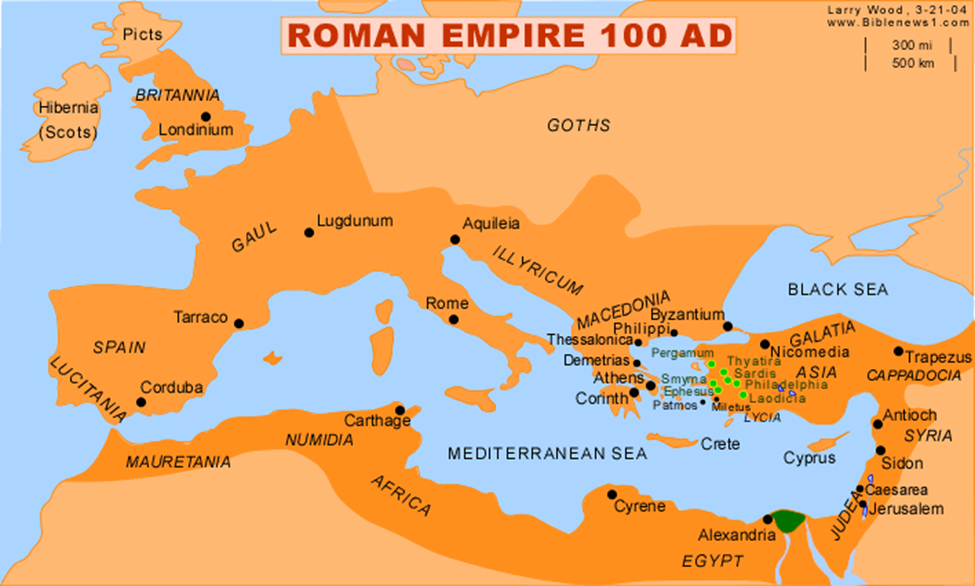
Ephesus, a major seaport on the eastern Mediterranean and the capital of a Roman province in Asia, was a vibrant hub of commerce, and a center of Roman rule and the Roman imperial cult.

Centuries before becoming a political capital, Ephesus was a center of religious activity. Communities of Jesus-followers living in the Greek city of Ephesus at the end of the first century AD would be confronted daily with political and cultic imagery. The city was renowned for its devotion to various gods and goddesses.

Artemis

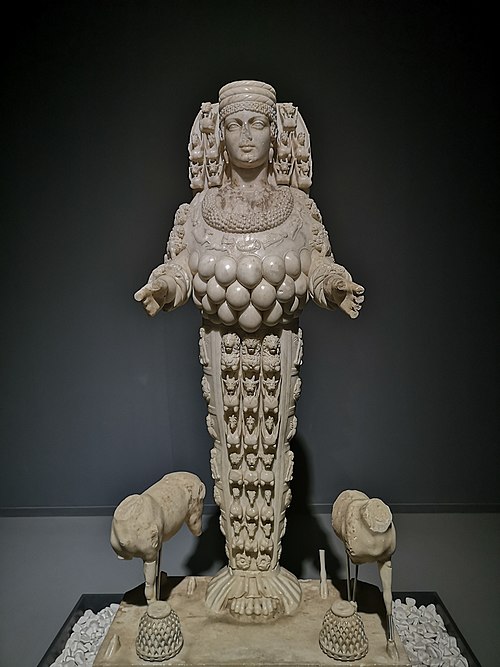
Christians in that Greco-Roman setting would be well aware of one of the most prominent goddesses: Artemis. Her temple was famous for its great size and for the magnificent works of art that adorned it (See video below.)

The Greek goddess Artemis was worshipped as the goddess of hunting, wild animals, and fertility. Her Roman counterpart was Diana. Goddess Diana shared similar aspects of deity with Artemis. She was worshipped as a benefactress of the countryside and nature, hunters, wildlife, childbirth, crossroads, the night, and the Moon (See video below.)

During his second missionary journey to Ephesus, the Apostle Paul caused a big stir with the Artemis image industry (c. A.D. 52) (Acts 18:19).

The Lady of Ephesus no 718 1st century AD Ephesus Archaeological Museum

“Around that time there was a major disturbance because of the Way. There was a silversmith called Demetrius who made silver statues of Artemis, which brought the workmen a tidy income. He got them all together, along with other workers in the same business.

“Gentlemen,” he began. “You know that the reason we are doing rather well for ourselves is quite simply this business of ours. And now you see, and hear, that this fellow Paul is going around not only Ephesus but pretty well the whole of Asia, persuading the masses to change their way of life, telling them that gods made with hands are not gods after all! This not only threatens to bring our business into disrepute, but it looks as if it might make people disregard the temple of the great goddess Artemis. Then she – and, after all, the whole of Asia, indeed the whole world worships her! – she might lose her great majesty.” (Acts 19:23-28)

The temple of Artemis was one of the wonders of the world. Its great size and lavish decorations were a major attraction for the many pilgrims and tourists who came to Ephesus. Their Artemis image purchases provided the guild of silversmiths the coin to produce more images and to sustain their livelihoods. After listening to Demetrius, “the whole city was filled with uproar” and people shouted “Great is Ephesian Artemis!”

We read in Acts 19 that the town clerk quieted the crowd. A riot would bring the Roman army down on them. He said, “Citizens of Ephesus, who is there who does not know that the city of the Ephesians is the temple keeper of the great Artemis and of the statue that fell from heaven?”

Nike

Jesus-followers living in Ephesus would also be conscious of ubiquitous images of Nike, a Greek goddess who personified Victory. That Muse website has more about Nike:

“. . .she was almost always represented in Greek art as a beautiful, winged woman. Her main role in life was to fly around battlefields, rewarding victors. The winning soldiers received a wreath of laurel leaves, symbolizing fame and glory. But she also visited and crowned outstanding athletes and heroes.”

In Roman mythology Nike is called Victoria. She is depicted as holding a palm leaf with her right hand while carrying a laurel wreath on the other. She was worshipped by the Roman army as personifying speed, strength, and victory.

Polytheism

The citizens of cosmopolitan Ephesus were polytheistic. It was common for them to add new gods to their personal pantheon. Like with Artemis (Diana) and Nike (Victoria), different gods had different roles.

Polytheism was not a religion with written scriptures. People knew the multiplicity of Greco-Roman deities by their images and myths – their form of theology. Seeing their gods was a way to believe and to practice their contractual religion (do ut des, “I give that you might give”). Offerings and sacrifices were offered to the gods in return for certain favors.

Contrary to the explicit polytheism all around them – pagan temples, pagan priests, pagan priestesses, pagan worshippers and pagan idols – Christians, along with the Jews, were monotheistic. Ephesians tolerated Christians who worshipped a new and different god (except as noted above with Paul) as there were many gods divided up among many peoples. And it seems, at that time, that the Roman government did not yet have a policy of persecution of the Christians; official action was based on the need to maintain good order, not on religious hostility. 

Political and Cultic Imagery

Citizens of this capital of the Roman Empire in Asia Minor would also celebrate and worship deified Emperors who claimed being a divine son of god. Julius Caesar, Augustus, Tiberius, and subsequent Roman emperors were regularly referred to as “son of god” (divi filius). Coins were struck with the imperial image on one side and “son of god” on the other.

The Roman Empire, claiming divine authority on earth, spread its political influence in religious terms using monuments, iconography, myths, and Imperial cult rituals.

Symbolizing victory, Victoria’s (nike’s) image was vital to the Roman military. Her likeness, with crowns, laurel wreaths, or palm branches as victory emblems, was seen on coins, sculptures, and architectural reliefs, triumphal arches, and monuments.

Worship of Victoria was also thought to bring good fortune and help with politics, business, and personal undertakings.

The goddess Artemis had been worshiped for centuries. Her great temple in Ephesus (one of the seven wonders of the world) and the cult of Ephesian Artemis was vitally important to the citizens, as notes N.L. Gill in his post The Cult Statue of Artemis of Ephesus:

“The Ephesians’ goddess was their protector, a goddess of the polis (‘political’), and more. The Ephesians’ history and fate were intertwined with hers, so they raised the funds needed to rebuild their temple and replace their statue of the Ephesian Artemis.”

The Dispatch

Into this political and cultic context at the end of the first century AD, a circular letter was sent around to Jesus-follower communities in and around Ephesus.

1 John is a pastoral letter that presents a no-nonsense counter-cultural narrative. It is full of contrasts: those born of the world and those born of the father, light vs. darkness, truth vs. falsehood, righteousness vs. sin, love of the Father vs. love of the world, and the Spirit of God vs. the spirit of the Antichrist. 

The letter was penned by an eyewitness of gospel events and one who had seen way beyond the images and idols and imperial power of Rome. 1 John is a rebuke to the claims of the Antimessiahs and to the appeal of a pagan culture. It also provided spiritual reinforcement for the letter’s recipients.

1 John was most likely written by John the Elder (and not John the son of Zebedee and one of the Twelve; more below) around 90 AD during the reign of Domitian (81-96 A.D.). (Domitian believed in the divine nature of his rule, aligning himself with the lineage of the first Roman emperor Augustus. He saw himself as an absolute ruler and took pride in being called master or god: “dominus et deus.”)

John opens his letter, not with the typical (“grace and peace”) greeting, but with an authoritative “we” reassurance of his and other’s experience of Jesus, the son of God. He speaks in terms of visual, aural, and physical contact with the Messiah. This is crucial for what he writes against the “Antimessiahs”.

“That which was from the beginning, which we have heard, which we have seen with our eyes, which we have gazed at, and our hands have handled – concerning the Word of Life!” That life was displayed, and we have seen it, and bear witness, and we announce to you the life of God’s coming age, which was with the father and was displayed to us. That which we have seen and heard we announce to you too, so that you also may have fellowship with us. And our fellowship is with the father, and with his son Jesus the Messiah. We are writing these things so that our joy may be complete.” (1 John 1: 1-4)

John the Elder closes the circle of the fellowship of the joy bound by linking those (“we”) who were physically present with the Messiah with the Ephesian Christians who heard the gospel message and believed that Jesus is the Messiah, so that “our joy may be complete.”

(NB: The “joy” talked about here is not the DNC slogan “Joy”– a cover for the Harris cackle. Rather, John’s “our joy” completed would be the satisfaction of a deep yearning by the “we” for the readers to believe that Jesus is the son of God and the Messiah and for them to be included in the dancing embrace of the father, son and spirit.)

John then writes in terms of the associative “we” about what it means for followers of Jesus to have fellowship with him: we are not to deceive ourselves about our sin, we keep the Lord’s commandments and we show rightly ordered love. (1 John 1: 6 – 2:11).

Conflict Within and Without

The letter’s opening brings to the fore one of the main purposes of the letter: to reaffirm that Jesus, the son of God and the Christ, (mentioned some 24 times in the letter) did have a real body and not, as some were saying, that Jesus only seemed to be human, and that his human form was an illusion (Docetism). This thinking had come into Ephesian churches.

Stephen Bedard writes at the History of Christianity:

“Docetism was a doctrine in the early years of the Christian church that claimed that Jesus didn’t have a physical body. The name comes from the Greek dókēsis which means “to seem.” It refers to the belief that Jesus only seemed to have a physical body. . .

“It was understood that mind/spirit was good and body was bad. Since Jesus is good, he must be all spirit and not body at all. In modern language, Jesus was almost a hologram. He looked perfectly human but underneath the image, there was no muscle or bone.”

Those worshipping images would not believe that a god would come down and dwell in the flesh. They believed the gods stayed up and away from humans and did their own thing. Intellectual sorts, who were anti-incarnation, unethical, and loveless Gnostics, were deceiving Ephesian Christians (1 John 2:26).

John presented truth tests to discern whether they were false teachers. Anyone who denied that Jesus is the Messiah was not from God (1 John 4:2-3). They were a “liar” and an “Antimessiah” (1 John 2:22).

He writes about “the spirit of truth” and the spirit of error (1 John 4:6). And, that “many false prophets have gone out into the world” (1 John 4:1). “They went out from among us, but they were not really of our number” (1 John 2:19)

Denying that Jesus was the Messiah, the Antimessiahs split off from the church community. They didn’t accept Scripture’s references about Jesus or the testimony of eyewitnesses. (They were revisionist historians who, like many in Progressive churches today, homed in on his sayings. They think of Jesus in terms of being a fellow traveler who imparted esoteric truths.) Whatever love or joy the Antimessiahs had went with them when they left the church.

In his second letter, John echoes this warning: “Many deceivers, you see, have gone out into the world. These are people who do not admit that Jesus is the Messiah has come in the flesh. Such a person is the Deceiver – the Antimessiah!” (2 John 2:7)

(Ongoing conflict: Earlier (c. A.D. 52), Priscilla and Aquila, who had come to Ephesus with Paul, instructed a Jew named Apollos in the way of the Lord. Apollos then “vigorously refuted his Jewish opponents in public debate, proving from the Scriptures that Jesus was the Messiah. (Acts 18:28))

Beside the conflict within the local churches, there was the ever-present Roman Empire that expected worship of the emperor. John writing over and over that Jesus is the son of God (and not the emperor) put the Christians in direct opposition to Rome. But it seems that, at that time, Rome was somewhat lax about forcing the Jews and Christians to burn incense for the emperor. If these two groups did disturb Rome’s Pax Romana, they would be dealt with.

 (Calling Jesus “Lord” and having a “kingdom of God” message also conflicted with the Roman empire’s ‘divine’ prerogatives.)

Living as a Conquering Contradiction

As mentioned above, imperial Rome spread political propaganda through religion. And throughout Ephesus there would be visual representations of Roman conquest and power: grand architecture and monuments, centurions and soldiers all around, and the conquering, overcoming, prevailing, subduing, obtaining victory, Nike/Victoria images around the city and on coins.

Perhaps, with all of these images in mind, John the Elder writes:

“. . . everything fathered by God conquers the world. This is the victory (nike, νίκη) that conquers the world: our faith. (1 John 5:4):

Conquering Attitude

We, the “fathered by God” no longer continue sinning (1 John 3: 9; 5:18).

Because we are “fathered by God” we understand that we are God’s children (1 John 3: 1) and that loving one another is a character trait of all who know the father (1 John 4:7).

And because we are “fathered by God” and “God is love” (1 John 4:7-12), we as his children need not live in fear like the pagans who look to capricious gods and superstitious practices and the Roman state for understanding and favor. (Sounds like Progressives today.)

We understand that “the one in you is greater than the one who is in the world” (the Antimessiah) (1 John 4:4).

We believe that Jesus the Messiah has been fathered by God (1 John 5: 1), (The center of Christianity is the Incarnation of Jesus, God becoming flesh and dwelling among humanity. John railed against the Antimessiahs because he and others had witnessed the flesh and blood presence and power of the true Messiah. Jesus wasn’t some esoteric figure floating in the air. He wasn’t a statue or icon of a god. Jesus, son of God, Messiah, was “displayed” to John and others as a new way of being human.)

We understand that “we are from God, and the whole world is under the power of evil one” (1 John 5:19) (As Paul wrote to the Ephesian church some 30-40 years before:

“For our struggle is not against flesh and blood, but against the rulers, against the authorities, against the powers of this dark world and against the spiritual forces of evil in the heavenly realms.” – Ephesians 6:12)

As the letter comes to a close, John reemphasizes his message:

We know that the son of God has come and given us understanding so that we know the truth. And we are in the truth, in his son Jesus the Messiah. This is the true God; this is the life of the age to come. (1 John 5:20-21).

The letter of 1 John ends with a succinct pastoral exhortation based on what was said at the beginning of the letter about the reality of what John and others had witnessed: “keep yourself from idols.”

Christians are not to get involved with unreality. They are not to collude with evil. Early Christians believed that idol worship in its various forms was used by demonic forces. The Apostle Paul in 1 Corinthians 10:21–22:

“You cannot drink the cup of the Lord and the cup of demons. You cannot partake of the table of the Lord and the table of demons. Or are we provoking the Lord to jealousy? Are we stronger than he?”

Those of us born of the father live in the tension of contrasts: light vs. dark, truth vs. falsehood, righteousness vs. sin, love of the Father vs. love of the world, and the Spirit of God vs. the spirit of the Antimessiahs. We are to overcome that tension with the reality of Jesus, son of God and Messiah.

I see tremendous forces (DEI, ESG, LGBTQ, Critical Race theory, WEF, WHO, Globalism, etc.) at work to conform everyone into a monolithic unity of enforced pluralism subject to one Satanic Beast. Those who confess loyalty to the Beast will find it easier to get a job, move up, gain tenure and more. Those who don’t will be called “weird” and sacrificed to the Beast.

In the milieu of this sociocultural pluralism, it would be quite easy to glide into a religious pluralism and end up worshipping the vaunted images of the world and rage against those who don’t – “Great is Ephesian Artemis!”

And, with the multiplicity of political and cultic images generated daily to influence behavior, it would be quite easy to glide into a religious pluralism so as to be accepted, to have “likes” and clicks and to avoid the pressure being applied by the culture. One would thus end up having a form of godliness (virtue signaling) but denying its power (2 Timothy 3:5). Neither John the Elder nor I want anything to do with such people.

For those who question the uniqueness or claims of Christian faith, John’s letter with truth tests would be in order.

Not longer just image bearers of the One True God, we are more: overcoming image bearers of Jesus, the son of God, Messiah, and Lord.

~~~~

This circular pastoral letter was most likely written by John the Elder and not John the son of Zebedee, one of the Twelve. John was from an aristocratic family in Jerusalem and a member of the High Priest’s family.

According to Polycrates, bishop of Ephesus late in the second century, John (the Elder), “who leaned back on the Lord’s breast,” was a (Jewish high) “priest” (who had officiated in the Jerusalem temple early in his life), a “witness”, and a “teacher” (Eusebius, Hist. Eccl. 5.24.2-7). (cf. Acts 4:6 & John 18:15, John’s record of Jesus’ high priestly intercessory prayer in John 17, and his courtyard access John 18:15).

John the Elder was most likely the Beloved disciple who was mentioned in John 21: 20-23. Because of his proximity to Jesus, John the Elder was an eyewitness of the events of gospel history. He was at Jesus’ crucifixion and given charge over Mary. He eventually brought her with him to Ephesus.

“When Jesus saw his mother there, and the disciple whom he loved standing nearby, he said to her, ‘Woman, here is your son,’ and to the disciple, ‘Here is your mother.’ From that time on, this disciple took her into his home.” (John 19:26-27)

Several years younger than the Twelve Apostles, John the Elder survived most of them. It seems that he lived into the reign of Trajan (AD 98-117) as prominent Christian teacher in Asia. (We don’t know why he is called John the Elder. “Elder” may refer to John’s old age (Likely 80-90 years old at the end of the first century) more than an honorific. He writes to his “little children” in his letters.

John the Elder most likely wrote the Gospel of John and the three Johannine letters – 1, 2 & 3 John.

~~~~~

What would Ancient Ephesus have looked like? (city that once housed an ancient wonder of the world) (youtube.com)

Temple of Artemis at Ephesus – Sanctuary of the Ephesian Diana (learning-history.com)

Greek Mythology Explained | Artemis: Goddess of the Hunt | Miscellaneous Myths (youtube.com)

~~~~~

Within days, global elitists will try to put world government on steroids. The perpetrators don’t want us to know it, but that’s the purpose of the upcoming “Summit of the Future” and the accord it is supposed to adopt, dubbed the “Pact for the Future.”

Rather than openly doing so by voting to revise the United Nations Charter, the idea is to launch a “process” to be conducted largely behind closed doors. The UN’s Secretary-General and former president of the Socialist International, Antonio Guterres, however, has let slip that process’ goal – namely, granting him authority unilaterally to declare and dictate the responses to emergencies caused by any of a number of so-called “complex global shocks.”

Read the UN document here>>>> “Pact for the Future” – The Socialist Manifesto (malone.news)

Contact your representatives!!

Take action here>>> THE U.N. IS NOT A WORLD GOVERNMENT – KEEP IT THAT WAY! | AlignAct

9-11-2024:

HOUSE TO VOTE TO ENSURE SENATE VOTES ON W.H.O. TYRANNY; IT MUST DO THE SAME ON THE U.N.’S NEXT (substack.com)

Globalist Ambitions at the U.N.’s Summit of the Future (rumble.com)

BRIEFING: Globalist Ambitions at the U.N.’s Summit of the Future – Sovereignty Coalition

~~~~~

My sister sent me this video. I agree with Hamrick:

Church, Unite for the Soul of America! | Ezekiel 33:1-5 | Gary Hamrick (youtube.com)

I get the sense that there are Christians who want to hurry off to heaven. They believe that there will be a rapture and they will be taken away from the trouble on earth and therefore voting doesn’t matter. Understand, there will be NO rapture. That is a misinterpretation of Scripture. Go vote!!

~~~~~

Nicole Shanahan on X: “Who really are the MAGA People? https://t.co/Zk6rvijCge” / X

~~~~~~

In late August officials [of China’s Communist Party] published regulations for dealing with them [the corrupt, criminal and disloyal], too. The aim is to reform or expel people who show a “lack of revolutionary spirit” . . .

Religious members are seen as another problem. Newbies must swear that they are atheist. But many still harbour beliefs in the supernatural. . . According to the regulations, religious folk should be given a chance to renounce their beliefs—and kicked out if they do not.

How to get kicked out of China’s Communist Party (archive.is)

~~~~~

Contentious Culture Wars in a Polarized Political Age: A Conversation with Sociologist James Davison Hunter

Contentious Culture Wars in a Political Age: A Conversation with Sociologist James Davison Hunter (youtube.com)

Contentious Culture Wars in a Polarized Political Age

Contentious Culture Wars in a Polarized Political Age: A Conversation with Sociologist James Davison Hunter – AlbertMohler.com

~~~~~


[i] Bauckham, R. (1993/2018). The theology of the Book of Revelation. PP 88-89

https://doi.org/10.1017/cbo9780511819858

In Deep

One day, Peter sat down with Mark and told him about the challenges of being a disciple of Jesus and what he witnessed.

“Jesus called the twelve of us together, gave us instructions, and sent us out in pairs to several areas in Galilee. We announced that the kingdom of God had arrived, and that people should repent. We cast out unclean spirits. And we anointed many sick people with oil and cured them. We were doing what he had been doing.

“When we returned from our mission, we were anxious to share with him all that we had done and taught. We must have looked tired and hungry. He said we all needed a break. People were constantly coming and going around us. So much so that we didn’t have time to eat.

“We got in the boat and sailed to a deserted spot. But the crowd saw us going, realized what was happening and arrived there first. When Jesus got out of the boat and saw the huge crowd, I could tell that he felt deeply sorry for them. He said they were like a flock without a shepherd. So, he began to teach them many things.

“There was nothing to eat at that deserted place and it was getting late in the day. We wanted the Teacher to send the crowd away so they could buy food in the countryside or in the villages. But then he said “We don’t need to send them away. Why don’t you give them something.”

“We looked at each other wondering what in the world he was suggesting. Was he serious? Philip said “It would take more than half a year’s wages to buy enough bread for each one to have a bite!”

“Then he said “Well, how many loaves have you got? Go and see.”

“My brother Andrew found a boy with five small barley loaves and two small fish. But we were standing in front of thousands of people.

“Jesus had us sit everyone down, group by group, on the green grass. So, we made everyone sit in companies of hundreds and fifties. Then Jesus took the five loves and the two fish, looked up to heaven, and blessed the bread. He broke it and gave it to us to give to the crowd. Then he broke the fish into pieces and handed to it to us to give to the crowd. Everyone ate and had their fill including me and the others of our group. Over five thousand people were fed.

“We gathered up the leftovers and there were twelve baskets of broken pieces and of the fish. Everyone was full and tired.

“And then, just like that, Jesus told us to get into the boat and sail toward the opposite shore. He dismissed the crowd and then went off up the mountain to pray.

“Mark, you won’t believe what happened. We had rowed about three or four miles and were in the middle of the sea. It had been hard rowing all night. A stiff wind coming down from the mountains on the eastern shore of the lake was working against us.

“Then, in the dead of night, we all thought we saw a ghost walking on the water. It was about to go past our boat. We were scared out of our wits. We were yelling “Who goes there?!” And then, just like that, we hear “Cheer up! It’s me. Don’t be afraid.” When the figure came closer, we could see that it was Jesus. He was walking on the water!

“I said “if it’s really you, Master, then give me the word and I’ll come to you on the water.” And he said “Come along, then.”

“So, I got out of the boat, and would you believe it Mark, I walked on the water. But then I saw the wind chopping the waves and the chaos at my feet and I began to sink just like that. I called out to the Teacher. He put his hand out and caught me before I went under. He looked at me and said “A fine lot of faith you’ve got! Why did you doubt?” I was shivering and feeling pretty low, so I said nothing as we walked to the boat and climbed in.

“As soon as we got in the boat the wind stopped blowing just like that. And just like that we reached the shore. And just like that we went from being scared out of our minds to being thunderstruck by what had taken place, just like before.

“I told you, Mark, about the last storm we faced on the Sea of Galilee. It came up suddenly from the West. Waves beat against the boat and it quickly began to fill with water. That time Jesus was with us. He was asleep and we woke him up to help us bale out water. He got up, scolded the wind, and said to the sea “Silence! Shut up!” Things went to a dead calm, just like that. Then he said “Why are you scared? Don’t you believe yet?”

We were terrified when we saw this. We looked at each other and said “Who is this? Even the wind and the sea do what he says.”

This time we fell down and worshipped Jesus saying, “You are really God’s son!”

“We made landfall at Gennesaret and tied the boat up. As soon as we landed people recognized Jesus. They began to bring sick people on stretchers to where they heard he was.

“And Mark, wherever Jesus went, in the villages, towns or open country, people brought their sick to the marketplace and begged him to let them touch the edge of his cloak. And whoever touched the hem became well. The healed were getting up from their stretchers and were running around praising God. You should have seen it.”

(The above is an imagined retelling of Mark chapter 6 referencing Matthew chapter 14, Luke chapter 9, and John chapter 6)

~~~

Did Jesus have Peter and the other apostles wade into waters over their heads to remove the scales from their eyes? Did he put them through the wringer to squeeze out unbelief? It would seem so.

The Twelve – fishermen, a tax collector, and other regular guys – are sent to districts of Galilee on a kingdom of God mission well outside the range of their experience. This while earthly kingdoms get word of their kingdom message and of the power at work in them. And this while there is news of the arrest and beheading of John the Baptist by Herod.

When the Twelve return to Jesus, he has the group sail to a deserted area for a break away from the constant flow of people. But upon arriving they are met by an enormous crowd that had figured out where they were going. Then the Twelve are asked to provide food for the thousands listening to Jesus.

Having no resources other than a meager five loaves and two fish, the Twelve are assigned by Jesus to have everyone sit down in groups, to pass out the baskets of bread and fish that he hands them, and to collect the leftovers. Menial labor after a lofty mission and no rest for the Twelve.

That evening, Jesus sends the Twelve rowing across a sea that was known for its challenges. (Nature is no respecter of persons except for Jesus.) And on that sea, in the early morning hours, they encounter a ghost-like figure that scares the beJesus into them.

We don’t always get the inner perspective of the disciple’s thoughts and feelings in the gospel of Mark. But in at least two accounts we learn that the Twelve were “terrified” (Mk. 4:41) and “astounded” (Mk. 6:51) by the Who of “Who is this?” and “Who goes there?”

It is one thing to hear about divine revelation in the synagogue, to hear the words He made known his ways to Moses, his deeds to the people of Israel (Ps. 103:7). It is quite another to encounter God’s ways and deeds in person. And what the “terrified” and “astounded” Twelve experienced was God’s favor, care, and protection for those he chose to be with.

Peter, a fisherman who spent most of his time on the water in a boat, walked on the water with the Son of God right there urging him to do so and ready to catch him. For, faith is more than floating along on what you think you know.

The Twelve, schooled by each unsettling situation the Teacher had them face – strong winds and a sudden storm at sea, a scary specter, a supply shortage, and steady streams of the sick and sheep without a shepherd – discovered God’s power, His presence, His plenty, and His pity.

To their uncertainty, their fears, their inadequacy, and their helplessness, God’s presence was revealed.

“Who is this?” “Who goes there? “

“Cheer up! It is I AM.

~~~

Isaac, Joseph, Moses, Joshua, Gideon, Saul, David, Solomon, Jeroboam, Asa, Jehoshaphat, and Jeremiah were promised the presence of God. The Presence was promised to Jacob:

“Know that I am with you and will keep you wherever you go, and will bring you back to this land; for I will not leave you until I have done what I have promised you.” (Genesis 28:15) (Emphasis mine.)

Jesus made the same promise to his followers before he ascended into heaven:

I am with you, every single day, to the very end of the age.” (Matt. 28:20)

And beyond . . .

And I heard a loud voice from the throne saying, “Look! God’s dwelling place is now among the people, and he will dwell with them. They will be his people, and God himself will be with them and be their God. (Rev. 21:3) (Emphasis mine.)

The Real Presence is with you in the Holy Eucharist. Jesus is literally and wholly present—body and blood, and divinity—in the elements of bread and wine. 

The age-to-age continuum of God’s promise of presence with us, expressing His covenant faithfulness, is the premise of our faith. He will not abandon us. The praxis of knowing that – living by faith – operates within The Presence continuum.

~~~

The time the Twelve spent with Jesus was eye-opening – but not always mind’s eye opening.

After Mark tells us that the apostles were overwhelmed with astonishment (having just watched Jesus walking on the water) he adds a comment (Mk. 6:52): they didn’t understand what Jesus had done with the fishes and loaves – their hearts were hardened.

Mark doesn’t explain this last note. Maybe, when presented with the existential reality of what took place that afternoon, the Twelve chose to ignore it or had no place in their imagination for it. Or maybe, their hearts were hardened by God.

Recall that during the Ten Plagues of Egypt, Pharoah’s heart was hardened by God and remained that way even after Pharoah’s magicians threw in the towel when they couldn’t fabricate further “miracles”:

The magicians said to Pharaoh, “This is God’s doing.” But Pharaoh was stubborn and wouldn’t listen. Just as God had said

Exodus 9:15-16 gives us the reason why Pharoah’s heart was hardened. God tells Moses to confront Pharaoh and tell him the following:

You know that by now I could have struck you and your people with deadly disease and there would be nothing left of you, not a trace. But for one reason only I’ve kept you on your feet: To make you recognize my power so that my reputation spreads in all the Earth. You are still building yourself up at my people’s expense. (Emphasis mine.)

We don’t know why the Twelve couldn’t take in what had happened that afternoon. But I wonder: did they later recollect that experience and understand the multiplication of loaves and fishes in the context of the Exodus? God fed thousands in the wilderness.

Did they later recollect their experiences (walking on water, Jesus intending to pass by the boat, disclosure of God’s presence with them, a healing hem) and understand them in context of the Exodus?

God controlled nature (the Red Sea) so that Israel can walk through/on it.

God passing by Moses (Ex. 33:22)

God revealed Himself to Moses as “I Am” in a physical phenomenon (a burning bush).

Israelites were healed by a physical object – by looking at a snake made of fiery copper (Num.21-4-9),

With the events described by Peter in Mark’s gospel and the events of Israel’s history, Jesus’ kingdom mission for the world is equated with the Exodus mission of rescue and redemption for Israel.

~~~~~

Podcast: Three books by O.T. scholar Iain Proven

The Old Testament is often maligned as an outmoded and even dangerous text. Best-selling authors like Richard Dawkins, Karen Armstrong, and Derrick Jensen are prime examples of those who find the Old Testament to be problematic to modern sensibilities. In his new book Seriously Dangerous Religion: What the Old Testament Really Says and Why It Matters (Baylor UP, 2014), Iain W. Provan counters that such easy and popular readings misunderstand the Old Testament

Discussed in this podcast are three books authored by OT scholar Iain Proven:

A Biblical History of Israel, Second Edition

Convenient Myths: The Axial Age, Dark Green Religion, and the World that Never Was

Seriously Dangerous Religion: What the Old Testament Really Says and Why It Matters

I’ve read Convenient Myths and Seriously Dangerous Religion. I recommend both books.

Iain W. Provan, “Seriously Dangerous Religion

Iain W. Provan, “Seriously Dangerous Religion: What the Old Testament Really Says and Why It Matters” (Baylor UP, 2014) – New Books Network

~~~~~

Build Back Better Evangelicalism?

Does Evangelicalism need image consultants for damage control? Evangelicals on the Trump train – are they on the wrong track?

I ask because there are certain Christians who think that the image of Evangelicalism has been damaged by an “unholy” association with Trump and his supporters. Certain Christians are worried about what people think about Evangelicalism with its brand of Jesus and the gospel.

The Build Back Better campaign to restore the image of Evangelicalism is concerned about two things:  Evangelicals promoting a man of Trump’s character and (using the language of the Left) the “extremist” and “fascist” character of so-called Christian nationalism.

No doubt, Trump has an earthy communication style. He’s from New York. He speaks like a New Yorker and not like Evangelicals and Evangelical elites. On the record is a September 2005 conversation when he spoke in graphic, vulgar language about trying to commit adultery and forcing himself on women. 

Eleven years later (October 7, 2016) and one month before the United States presidential election, the Washington Post published a video and article about the conversation between then-presidential candidate Donald Trump and television host Billy Bush. Trump immediately issued an apology on Facebook, posted Friday, October 7, 2016:

“Here is my statement. I’ve never said I’m a perfect person, nor pretended to be someone that I’m not. I’ve said and done things I regret, and the words released today on this more than a decade-old video are one of them. Anyone who knows me, know these words don’t reflect who I am. I said it, it was wrong, and I apologize. I’ve travelled the country talking about change for America. But my travels have also changed me. I’ve spent time with grieving mothers who’ve lost their children, laid off workers whose jobs have gone to other countries, and people from all walks of life who just want a better future. I have gotten to know the great people of our country, and I’ve been humbled by the faith they’ve placed in me. I pledge to be a better man tomorrow, and will never, ever let you down. Let’s be honest. We’re living in the real world. This is nothing more than a distraction from the important issues we are facing today. We are losing our jobs, we are less safe than we were 8 years ago and Washington is broken. Hillary Clinton, and her kind, have run our country into the ground. I’ve said some foolish things, but there is a big difference between words and actions. Bill Clinton has actually abused women and Hillary has bullied, attacked, shamed and intimidated his victims. We will discuss this more in the coming days. See you at the debate on Sunday.”

After hearing about the conversation, Trump’s wife Melania put out her own statement:

“The words my husband used are unacceptable and offensive to me. This does not represent the man that I know. He has the heart and mind of a leader. I hope people will accept his apology, as I have, and focus on the important issues facing our nation and the world.”

And Trump’s former campaigner, Corey Lewandowski, said on CNN, “Is this defensible? I don’t think so.” 

“But we’re not choosing a Sunday school teacher here.”

I wonder. Should all Christian Never Trumpers have their past conversations exposed, as was done to Trump? I think it should be done. Never-Trumpers, as they are wont to tell us, are very concerned about the character of those they surround themselves with and support. For example:

Christians Against Trumpism & Political Extremism, was founded by friends and partners John Kingston and Joel Searby. It is at root a spiritual endeavor, because John and Joel believe in the potential for renewal in our church and the nation.

The wife of the staunch Never Trumper David French, Nancy French, is a supporter of this organization as are other of our Christian “betters” who are very worried about “the darkness of Trumpism and other political extremism.”

But the following recent report is sullying for all in support of this “informal yet organized group of Christian leaders, thinkers, influencers, and everyday believers who publicly stand against the personal behavior, degrading policy proposals, and poisonous rhetoric modeled by President Trump and extremist groups from the far left and right.”

The “Christians Against Trumpism” co-founder [Joel Searby] is facing charges for lewd/lascivious conduct, two counts of obscene communications related to luring a minor to meet for sex, and using a two-way communications device to facilitate a felony.

‘Christians Against Trumpism’ Co-Founder Arrested for Soliciting Sex from 15-Year-Old Boy | The Gateway Pundit | by Brian Lupo

And, here’s Never-Trumper David French in “extremist” mode:

CANNON: Never-Trumper David French Picks Half a Million Abortions Over Trump Being Re-Elected… Seriously. – The National Pulse

And, again, David French in “extremist” mode:

NYT Columnist Says Trump Support Less Excusable Than Slavery. (thenationalpulse.com)

~~~

Can Anything Good Come Out of Trump Tower?

Would God use a person of “questionable character” to lead the country?

In the previous post I wrote . . .

Like all of us, Jacob is a work in progress. He is of questionable character and not someone we would have thought of to be the namesake (Israel) of a nation of people who are to represent God’s character to the world. But God, in His wisdom and mercy, works with Jacob – his faults, his dysfunction, his deceitful ways, and his sins – and seeks to redeem him for his purposes. God is slow to anger and plenteous in mercy (cf. Psalm 103: 6-18) (unlike many judgmental types today who are loathe to work with God to redeem relationships with those they do not consider worthy of redemption.)

No doubt, if today’s Evangelical image consultants lived back then they would have worked vigorously to keep the scoundrel Jacob out of that role. They sure wouldn’t associate with Jacob. “He’s not one of us,” they would say.

“Teacher,” said John, “we saw someone driving out demons in your name and we told him to stop, because he was not one of us.”

“Do not stop him,” Jesus said. “For no one who does a miracle in my name can in the next moment say anything bad about me, for whoever is not against us is for us. Truly I tell you, anyone who gives you a cup of water in my name because you belong to the Messiah will certainly not lose their reward.

-The gospel of Mark 9:38-41

Over and over in the gospels I find Jesus being counter-cultural. He isn’t constrained by demands of the image consultants – the Pharisees and legal experts, the religious types.

There are certain Christians who are very ‘concerned’ about Trump being associated with Evangelicalism because he is “not one of us.” (Trump’s not the squeaky-clean sweet old Sunday School teacher type– someone who looks Evangelical and talks Evangelical-ese – that we had in mind for the position.)

But haven’t Never-Trumpers and all Americans received a cup of water in the form of humanitarian goodness – peace and prosperity – under the scoundrel Trump’s first term? Was Trump working against Christians or for us? Wasn’t the Unprecedented Economic Boom under Trump something of a miracle?

The arm chair holier-than-MAGA disparagers no doubt benefitted from Trump’s presidency.

Trump Administration Accomplishments – The White House (archives.gov) 

A summary:

Unprecedented Economic Boom (3-1/2 years before the Chinese-Fauci virus), including:

Jobless claims hitting a nearly 50-year low

The number of people claiming unemployment insurance as a share of the population hit its lowest on record

Incomes rose in every single metro area in the United States for the first time in nearly 3 decades.

Income inequality fell for two straight years, and by the largest amount in over a decade.

The bottom 50 percent of American households saw a 40 percent increase in net worth.

Wages rose fastest for low-income and blue-collar workers – a 16 percent pay increase.

Tax Relief for the Middle Class

Massive Deregulation

Fair and Reciprocal Trade

American Energy Independence

Investing in America’s Workers and Families

Life-Saving Response to the China Virus – Restricted travel to the United States from infected regions of the world.

Remaking the Federal Judiciary

Achieving a Secure Border

Restoring American Leadership Abroad

Serving and Protecting Our Veterans

Making Communities Safer

Cherishing Life and Religious Liberty, and more.

During Trump’s first term there were NO wars. There was a Middle East peace deal – the Abrahamic accords. Constitutionalist SCOTUS justices were installed, securing Democracy. (Abortion decisions are to be made at state level.) And, . . .

Supreme Court delivers MASSIVE VICTORY for J6 politcal prisoners and a crushing blow to regime’s lawfare…

Supreme Court overturns Chevron deference, striking MASSIVE blow to the administrative state…

By shooting down ‘Chevron deference’ doctrine, SCOTUS restored democratic rulemaking, experts say | Just The News

Under Trump there was no invasion of our southern border.

There were no flood of illegals murdering our daughters.

Illegal Alien From Turkey Accused of Raping 15-Year-Old Girl in Albany, NY (legalinsurrection.com)

Open Borders Subject Women and Girls in the US to Rapes and Wanton Violence | Frontpage Mag

Under Trump there was no deluge of fentanyl killing people.

There was no surge of terrorists, gangs and drug cartels.

Inflation was around 2%. People had money to support themselves, buy a home, and to give to charitable causes like The Roy’s Report and The Trinity Forum, (where Never-Trumpers hawk their Never-Trumper wares.)

Americans weren’t ghosted by Trump. Trump was ghosted by Never-Trumpers who supported the mess we have today.

Under Bidenomics – “You will own nothing and be happy.”

This Is Fine: Average Salary Required to Own a Home Increased 80.5% Under Biden – Twitchy

During Trump’s four years in the White House, Never-Trumpers sat around and whined and nitpicked about all things Trump. They had the time and the means to write books about terrible Trump and Evangelical MAGA “extremists” who will destroy “Democracy!!”

~~~~

“White Raging” Rubes and MAGA Christians

Keep in mind two of Saul Alinsky’s 13 Rules for Radicals that are at work in Never-Trumper’s campaigns:

– “Ridicule is man’s most potent weapon.” There is no defense. It’s irrational. It’s infuriating. It also works as a key pressure point to force the enemy into concessions.”

– “Pick the target, freeze it, personalize it, and polarize it.” Cut off the support network and isolate the target from sympathy. Go after people and not institutions; people hurt faster than institutions.

The sneering class has deemed people of MAGA persuasion “deplorables” “bitter clingers” “extremists” “conspiracy theorists” “xenophobes”, “authoritarians”, and “fascists.” And MAGA Christians are deemed not just “a threat to Evangelicalism!” but to “DEMOCRACY!”

This while, (Our Statement – Christians Against Trumpism) . . .

“Political extremism, whether from the “left” or the “right,” uses violence, chaos, and degrading language as tools for social change.”

See above for who uses degrading language. But who uses violence and chaos as tools for social change? The “extremist” Left, for example;

Portland’s grim reality: 100 days of protests, many violent | AP News

47 arrested, 59 officers injured in Seattle protests that turned violent – KIRO 7 News Seattle

Masked Activists Violently Attack Jews at North Carolina Public Library – Algemeiner.com

Judge Rejects Biden Admin Bid To Dismiss Lawsuit Over ‘Illegal and Dangerous’ $1.5 Billion Palestinian Payment Plan (freebeacon.com)

We are told on MSM that us hobbits are white raging rubes who don’t know any better and are in a cult of personality and that the Christians in this sad group are making Christianity look bad. With the election season upon us, there’s a growing list of shaming screeds promoted on MSNBC.

These Never-Trumper books are meant to make readers feel morally superior if they make the ‘right’ choice: to not support and vote for Trump. Three of these authors want to move you in the direction of being an ‘acceptable’ Christian and politically ‘acceptable’ in their eyes:

Tim Alberta and The Kingdom, the Power, and the Glory: American Evangelicals in an Age of Extremism, published December 5, 2023

Tom Schaller and Paul Waldman with White Rural Rage: The Threat to American Democracy published on February 27, 2024

Jim Wallis: The False White Gospel: Rejecting Christian Nationalism, Reclaiming True Faith, and Refounding Democracy, published April 2, 2024

The After Party: Toward Better Christian Politics, Nancy French and Curtis Chang, based on project by David French, Russell Moore & Curtis Chang, published April 23, 2024

Please don’t tell me that these authors are writing and talking about these things to protect Jesus from the rabble. “Put down your sword, Peter.” Jesus – very God and the One who cast out demons and calmed the storm – is not beholden to anyone for protection. Their version of Christianity is what they are protecting.

Tom Schaller and Paul Waldman of White Rural Rage: The Threat to American Democracy went on MSNBC to push their polemic rant of a poorly researched book. They posit “fourfold threats” coming from the “White rural” rube demographic:

  1. Rural “Whites” are racist and xenophobic, adverse to DEI and are an impedance to a pluralist society
  2. Rural “Whites” embrace conspiracy-mongering because of their proclivity to anger
  3. Rural “Whites” rubes form authoritarian rebellious groups with “right-wing” money
  4. Rural “Whites” harass, intimidate, and are violent

Victor Davis Hanson reviewed On White Rural Rage by Tom Schaller & Paul WaldmanAll the rage | The New Criterion. He handily refutes the book’s “often-incoherent polemic.” Here’s his response to number 3 of the “fourfold threats” posed by raging “Whites”:

“In their psychodramatic formulation, the authors allege that

“U.S. democracy is in peril. Ballot blockers, wannabe authoritarians, White Christian nationalists, and constitutional sheriffs each pose existential and often overlapping threats to American constitutional government. Unfortunately, rural Whites form the tip of the spear for each of these movements.

“No data is supplied to support such an “existential” threat, much less one originating in rural white America—other than polls that suggest about half the nation feels that America is a Christian nation.”

Hanson’s impression of the book . . .

“White Rural Rage is for the most part a compilation of misleading polls, left-wing news accounts, interviews with state and local Democratic politicos, and sloppy, cherry-picked references to and quotes from kindred academics that reinforce the authors’ preexisting belief in a vast rural white cabal of violent racists and conspiracists. . .

“In the end, White Rural Rage is not so much a warning about a national, seething, rural white danger to democracy as it is a projection of the fears of elite white authors, conspiracy-minded as they often are themselves.”

Tim Alberta, journalist  and staff writer for The Atlantic and author of The Kingdom, the Power, and the Glory: American Evangelicals in an Age of Extremism, was also showcased on MSNBC to promote his own psychodramatic formulation about MAGA Christians. He also podcasted on The Trinity Forum where he talked about his book and on The Roy’s Report where he talked about The Corrupting of American Evangelicalism. Julie Roys interviewed Tim Alberta and shares his concerns about Evangelicalism.

Listening to the Trinity Forum podcast, I understood Tim Alberta to say that Christians should understand that as Christians they live “under siege” and basically that they should cool their jets (don’t get out of hand) and get used to abuse and persecution because that’s the way it is for Christians. I get the sense from Tim that Christians should be more like white suburban women, like Julie Roys.

Alternatively, on The Roy’s Report website – “reporting the truth and restoring the church” – Julie Roys posts articles and podcasts exposing abuse within the church. Victims of abuse (typically women) submit to the abuser (typically male) for a while and then they react and take action. You hear their stories on the website’s podcasts.

Per Alberta, shouldn’t church abuse victims just be quiet and take it like good little Christians?

Are we to believe that reacting to church abuse is more Christian than reacting to political abuse?

Isn’t it good to work to forestall persecution in society? Should Christians clamor to be martyrs?

Is it OK to expose and denounce abusive leaders in church but not leaders in politics? Never-Trumpers criticize Trump all day long. If MAGA criticizes what is being forced on them by the Left they are labeled
“extremists” and “a threat to democracy.”

What about “reporting the truth and restoring America” – is that out of Evangelical bounds?

Aberta labels “Trumpism as a kind of sub-cult in the evangelical world,” Wow. To use his own term, that is “extremist” language.

Is it Ok for Never-Trumper Christians to vilify MAGA Christians?

~~~~

“Unholy mix”

The Roys Report promo for Corrupting of American Evangelicalism podcast:

“On this edition of The Roys Report, bestselling author and journalist Tim Alberta joins host Julie Roys to explore a disturbing phenomenon in American evangelicalism. Though once evangelicals understood that the Kingdom of God and the kingdom of men are separate, now the two are being combined into an unholy mix. And sadly, for millions of conservative Christians, America is their kingdom—and proper adherence to their political ideology is their litmus test for Christian orthodoxy!

“. . .major players and institutions within the evangelical movement that have succumbed to political idolatry.

“. . . mixing political advocacy with the gospel is misleading and wrong.”

Huh?!? You wouldn’t advocate for someone willing to abolish slavery and drug and sex trafficking? You wouldn’t advocate for someone willing to bring peace and prosperity and uphold the rule of law? Are these good things outside the bounds of The Roys Report gospel?

“Though once evangelicals understood that the Kingdom of God and the kingdom of man were separate, now the two are being combined into an unholy mix.” Huh?!?

When Jesus came to Galilee proclaiming the good news of God and saying, “The time is fulfilled, and the kingdom of God has come near; repent, and believe in the good news” the kingdom of God and the kingdom of man came together in an “unholy mix” and Christians have been trying to sort out what that means.

And when Jesus sat at dinner in Levi’s house, many tax collectors and sinners were also sitting with Jesus and his disciples, for there were many who followed him. Now there’s an “unholy mix” according to the scribes of the Pharisees – guardians of their religion’s image.

Jesus taught his disciples to pray May your kingdom come, may your will be done, as in heaven so on earth? Sounds political, especially when the elements of this world fight against that happening and work to divide Christians with books, documentaries, media campaigns, etc.

Calling Jesus “Lord” is political. Living under his lordship is political.

(I don’t understand Jesus of the gospels as docile, demure and worried about image. He did take offense when the scribes who came down from Jerusalem said, “He has Beelzebul, and by the ruler of the demons he casts out demons.” They were implying unholy things about the Holy Spirit.)

(Note: In the podcast, Tim Alberta and Julie Roys set their disapproving sights on Liberty University, Jerry Falwell Sr., Jerry Falwell, Jr., Robert Jeffress, and Ralph Reed. They don’t talk about Francis Schaeffer, Focus on the Family or other Christians who were engaged early on in the culture and politics.)

The Roys Report put out another NeverTrump article, one written by Jim McDermott promoting a documentary:

‘Bad Faith’ Sounds The Alarm On The Past & Future of Christian Nationalism (julieroys.com)

(BAD FAITH is a feature-length documentary that explores the dangerous rise of Christian Nationalism in the United States. Part archival chronicle, part exposé, the film reveals the secretive political machinery that has relentlessly sought to weaken and destroy American democracy in order to promote its authoritarian vision. Bad Faith – Movie Reviews | Rotten Tomatoes)

Jim McDermott writes:

“In Bad Faith: Christian Nationalism’s Unholy War on Democracy, filmmakers Stephen Ujlaki and Chris Jones trace the origins of Christian nationalism from the Ku Klux Klan in the 19th century through the creation of the Moral Majority, the sudden rise of the tea party and the election of Donald Trump. What they uncover is an essential aspect of our current political situation, one that puts evangelical Christianity in new light.”

(Note: The records of Congress reveal that not one Democrat either in the House or the Senate voted for the 14th Amendment. Three years after the Civil War, and the Democrats from the North as well as the South were still refusing to recognize any rights of citizenship for black Americans.”)

One of its filmmakers, Stephen Ujlaki, spoke in an interview by phone in Los Angeles, about the making of “Bad Faith”. Here are excerpts from that interview:

“When Trump got elected, I was shocked. Nobody thought he had a chance. He was obviously a joke. It was never going to happen. When he got elected, I realized I didn’t really know anything about what was going on. I was in a bubble.

“More than anything, . . . the film was just to find out: How did [Trump} do it, how did he win, and who were the Christian evangelicals (who supported him)? But then I discovered all of this plotting, all of these deals, and the fact that those behind them were anti-democratic from the beginning.”

“Would it be fair to say Christian nationalism’s goal is fascism?  Yes. It’s pure fascism. It’s pure power.”

“Bad Faith” . . .  tells of how a large swath of religious voters came to believe that President Joe Biden is in league with the devil while Trump is essential to the spiritual salvation of America.”

(Not: Joe Biden is in league with a lot of bad actors as we find out more and more about his dealings. Trump during his first term did “save’ the nation from decline and left Democracy still standing.)

Ujlaki wants us to know that Christian nationalism “has nothing to do with theology, nothing to do with religion, nothing to do with God or with Jesus. I don’t even consider Christian nationalism as a religion. What is its ethos? What is its morality? It’s actually amoral, which is why it uses the church. The church lends it that moral, ethical authority that it doesn’t have otherwise.”

“If you look around you at the divisiveness and the distrust of institutions that exist today in this country, you will realize how incredibly successful they have been in executing their plan. It’s been like a slow-motion revolution in a way, happening bit by bit all over the place.”

The creators of Bad Faith have shown their own Bad Faith by knowingly misrepresenting, with a broad brush, Christians who want to restore America and Chrisitan values when having to deal with Progressivism’s in-your-face values. It appears the documentary, like the books above, was created in time to impact the 2024 election – to scare voters away from anything Chrisitan and Trump.

Never-Trumper David French has continuously railed against Trump. He thinks Trump supporters have “unrighteous rage.” In this self-promoting mea culpa, French uses the divisive language of the Left: “rage.”:

“French, who has now spent the best part of a decade bemoaning the 45th President, now acknowledges the “bond” between Donald Trump and most Republican voters and concludes:

“I don’t regret my arguments against Trump. I’d make them again, and I will continue making them. I do ask myself how I missed the sheer extent of Republican anger. And I’m deeply, deeply grieved by the thought that I did anything in my life before Trump to contribute to that unrighteous rage.”

Do white suburban women and their epicene men find railing against Trump both titillating and necessary to emote their tribal scorn of Trump?

BTW: Democratic strategist James Carville is very concerned that ‘preachy females are to blame for Biden’s polling numbers:

“A suspicion of mine is that there are too many preachy females. Don’t drink beer. Don’t watch football. Don’t eat hamburgers. This is not good for you – the message is too feminine,” Carville said. “If you listen to Democratic elites — NPR is my go-to place for that — the whole talk is about how women, and women of color, are going to decide this election. I’m like: ‘Well, 48 percent of the people that vote are males. Do you mind if they have some consideration?”

‘Preachy females’ blamed for Biden’s polling numbers: ‘This is about driving men out of the Democratic Party’ | Fox News

 ~~~

“unrighteous rage”?

According to people like French there were no catalysts for MAGA anger. There was no hellish COVID handling with church closings, social distancing, masking and vaccine mandates. There has been no “fundamental transformation” of America. Our children were never indoctrinated with CRT and Queer Theory. There has been no “trans” mutilation of children, no drug trafficking and fentanyl deaths. There has been no FBI monitoring of Catholics who want Latin masses. There has been no massive illegal migration. No highest rate of inflation. There has been no janky lawfare to hamstring Trump and no political persecution. Yeah right.

This Is Fine: Average Salary Required to Own a Home Increased 80.5% Under Biden – Twitchy

The Left, along with the enabling Never-Trumpers, have created the existential crisis they claim Christians on the Right have created. The Left, along with the Never-Trumpers, have created a Constitutional crisis just like what happened before the Civil war. Our country has been exposed to great evil, incompetence, and risk under Joe Biden and the Democrats with the help of the Never-Trumpers who put them in power.

We are told that Christian Nationalism poses “a threat to democracy!” This is projection and a lie. It is the Democrats who are putting political opponents in jail. It is the Democrats who wanted to take Trump off the ballot. It is the Democrats who stole the 2020 election and are working to steal the 2024 election.

15 Secretaries Ignore Subpoenas While Refusal Lands Bannon In Jail (thefederalist.com)

Tell me, is it the Christians who are in control of things or is it the Progressives who taken over every aspect of society with their long march through the institutions? Progressive Christians write against Christians who oppose them calling them an “extremist threat.” But Christians working against Progressivism’s lies and authoritarian ways are not “a threat to democracy!”

Given that it’s an election year, Democrats and Never-Trumpers will unleash every tactic under the sun to disrupt the 2024 election. See the above for a sample. They are franticly trying to keep Trump out of the White House. Trump will take apart the administrative state that rules every inch of our lives, that so enjoys having rule over every inch of our lives.

Who will the Never-Trumpers vote for this November? Will they vote or stay home? Will they vote for the continued destruction of America and more of the Biden regime. Will they vote for neo-con Nikki Haley and more wars? If they vote solely on the basis of character, as they say they do, then who will they vote for? Is there someone who looks and talks Evangelical like the stiff Mike Pence? Ron DeSantis?

It seems that elite Christians, of either political stripe, spend their days with their tribe and in their bubble. And it seems they believe themselves to be the voice of reason, pluralist, inclusive, and magnanimous to a fault. Next to the Trump they portray they come across as good little Christians. And that is why they are loved by the Left and paraded thru MSNBC, CNN, WaPo, NYT, etc. They are controlled opposition.

The image consultants of Build Back Better Evangelicalism have no clue about us Hobbits. They view people from top down – not as one of them. Middle America has been ghosted by them.

God works in mysterious ways, but the elites – the scribes and Pharisees of Christianity – proscribe ways, fundamentalist ways, that God must not work. How sad! My Lord doesn’t need image management. And I don’t need their sanctimonious scolding.

~~~~~

Are people now afraid to put the American flag in front of their home out of fear people will think them patriotic and Christian and nationalist? Fear is the psyop produced by the Left to get people to back off love of their country. Progressives along with Globalist-dominionists have plans for you. Totalitarians include, as I have written about, the World Economic Forum (WEF) and the World Health Organization (WHO) and the Democratic party.

“If you grew up in the 21st century, all you know is our current hangdog, ashamed, self-conscious country, embarrassed by its own shadow, tail between its legs, stooping and supplicating, begging everyone’s forgiveness for its sins.

“But if you were fortunate to have experienced any of the last few decades of the 20th, then you know: it was not always thus! The national vibe (until quite recently!) was cool confidence bordering on arrogance.”

American Swagger – Peachy Keenan’s Extremely Domestic

Independence Day is Thursday. Put your flag out.

Patriotic picture of the day

“After a windstorm last July, the flag in front of our home got flipped up and stuck on the flagpole. My boyfriend, an Air Force veteran, went outside to untangle it. About 15 minutes later, I realized he was still there, admiring the flag and watching the cars go by. I grabbed my camera and took this photo from our kitchen window. My boyfriend had no idea until he came inside, but now he thinks it’s just as idyllic as I do.” —Michele Garrant, Mooers Forks, New York

~~~~~

Evangelicals, after all, have made heroes of those who have smuggled Bibles behind the Iron Curtain, who have sought to evangelize tribes that met them with arrows, and who have engaged in bait-and-switch campaigns closer to home, such as “study skills seminars” offered on college campuses or “neighborhood clubs” hosted in summertime backyards that conclude with an unadvertised gospel call.

The ultimate end of winning souls justifies a sometimes-startling variety of means. One might wonder to what extent this tradition of pragmatic ethical bargaining has enabled evangelicals to support Donald Trump.

Evangelical support for Trump continues to be wildly inconsistent with some basic Christian values. It is also, however, consistent with a combination of fear and exceptionalism—along with a flexible pragmatism—that has been part of the story of American evangelicalism going back to its seventeenth-century roots.

Donald Trump and the Exceptions of American Evangelicalism – The University of Chicago Divinity School (uchicago.edu)

~~~~~

The Left Doesn’t Want You to See What You See

Remember Build Back Better and the Inflation Reduction Act?

The Biden Economy Image Consultants want us to believe Trump will be a disaster for the economy.

But, The Nobel Laureates Strike Out | City Journal (city-journal.org)

Modern Monetary Theory employed by the Biden Regime has created the massive debt and inflation that we and our children and grandchildren must live with.

“Most Americans believe it is unhinged to deliberately destroy the border and allow 10 million illegal aliens to enter the country without background audits, means of support, any claims to legal residency, and definable skills. And worse still, why would federal authorities be ordered to release repeat violent felons who have gone on to commit horrendous crimes against American citizens?

“Equally perplexing to most Americans is borrowing $1 trillion every 90 days and paying 5-5.5% interest on the near $36 trillion in ballooning national debt. Serving that debt at current interest exceeds the size of the annual defense budget and may soon top $1 trillion in interest costs, or more than 13% of the budget. . .

“The Biden years did the country great damage and rendered Biden himself one of the most unpopular incumbent presidents in American history. But his agendas may have fundamentally changed the country for decades, if not longer—and will require tough remedies that may be almost as unpopular as the wreckage they wrought.” – Victor Davis Hanson

The Logic in All the Madness – Victor Davis Hanson

~~~~~

The Character of The Lincoln Project:

21 Men Accuse John Weaver, Lincoln Project Co-Founder, of Online Overtures and Harassment – The New York Times (nytimes.com)

Inside the Lincoln Project: Claims of harassment, sexism, ‘toxic’ workplace (usatoday.com)

Lincoln Project founders knew of alleged harassment months before they claimed (usatoday.com)

Anti-Trump ‘Lincoln Project’ Paid $35,000 to Hackers. (thenationalpulse.com)

Lincoln Project, Co-Founded by ‘Predator’ John Weaver, Funded ‘Bloodbath’ Hoaxsters MeidasTouch. (thenationalpulse.com)

The Lincoln Project: Leadership

Regarding Steve Bannon going to prison:

~~~~~

Water, Rural Rage, and Popular Classes

June 13, 2024

Victor Davis Hanson and cohost Jack Fowler talk about the California water madness, the Gaza pier bust, white rural rage hoax, and why the international leftists hate the popular classes.

Water, Rural Rage, and Popular Classes – Victor Davis Hanson (victorhanson.com)

Home – VDH’s Blade of Perseus (victorhanson.com)

Biography – VDH’s Blade of Perseus (victorhanson.com)

Read this instead:

The Unprotected Class: How Anti-White Racism Is Tearing America Apart: Carl, Jeremy: 9781684514588: Amazon.com: Books

The Unprotected Class – Chronicles (chroniclesmagazine.org)

No wonder, then, that we should expect some sort of similar hoax to arise before the 2024 election. Do not be surprised when told of a “secret” Trump plan uncovered to round up critics in 2025 and send them to “camps,” or lurid revelations about “evidence” that Trump is in worse physical and mental shape than is a debilitated Biden, or some fantastic MAGA plot to implement “voter suppression,” or allegations that the Trump campaign’s “dark money” involves “collusion,” “disinformation,” and “sinister foreign actors.”

How Left-wing Conspiracies Work – Victor Davis Hanson (victorhanson.com)

~~~~~

Watch Young Voters Explain Why They’re Walking Away From Joe Biden and the Democrats (VIDEO) | The Gateway Pundit | by Mike LaChance

I said this would happen:

Outrage as Surgeon General Vivek Murthy Declares Gun Violence a Public Health Crisis

The Promise in Person

“Surely the Lord is in this place—and I did not know it!”

Born into a dysfunctional family? Making your own way through life anyway you can? Does God know where to find you?

When Rebekkah’s time to give birth came, sure enough, there were twins in her womb. The first came out reddish, as if snugly wrapped in a hairy blanket; they named him Esau (Hairy). His brother followed; his fist clutched tight to Esau’s heel; they named him Jacob (Heel). Isaac was sixty years old when they were born.

The boys grew up. Esau became an expert hunter, an outdoorsman. Jacob was a quiet man preferring life indoors among the tents. Isaac loved Esau because he loved his game, but Rebekah loved Jacob. (Genesis 25:24-28.)

Years later, Jacob the heel-grabber buys Esau’s birthright with a bowl of stew. The birthright was recognition of the chief position in the family and the inheritance of a double portion of everything a father owned. Esau rashly “sells” the birthright to Jacob for a bite to eat after a day of hunting.

Jacob said, “Make me a trade: my stew for your rights as the firstborn.” And Esau said, “I’m starving! What good is a birthright if I’m dead?” Esau did not appreciate the gravity of birthright.

Jacob had had his eye on the birthright and saw the moment to grasp it by cooking up a stew.(Genesis 25:19-34)

Years after that, Jacob the heel-grabber, by tricking his weak blind father, grasped the blessing that Isaac had in store for his favorite son Esau. The blessing was more personal than the birthright. It provided, with God’s assurance, a purpose and a path for the family’s future.

God had promised to bless Abraham and, through his descendants, the world (Genesis 12:1-3). The blessing was passed on to Isaac who first heard of God’s personal presence (Genesis 26):

I am the God of Abraham your father;
    don’t fear a thing because I’m with you.
I’ll bless you and make your children flourish
    because of Abraham my servant.

The scheme was concocted by the boy’s mother Rebekkah. She was going by what God had told her when she was pregnant:

“Two nations are in your womb,
    two peoples butting heads while still in your body.
One people will overpower the other,
    and the older will serve the younger.” (Genesis 25)

When Esau found out about the stolen blessing, he was furious and ready to kill Jacob. Rebekkah gets word of this. She pretends like nothing has happened and lies to her husband Issac. She presses Issac to send Jacob some five-hundred miles away – to her homeland. She says that Jacob should find a wife there among her kin and not from among the locals.

So, Isaac sends Jacob away, to Paddan-aram and to Laban, the brother of Rebekah. Turns out, Laban is a schemer just like his sister. (Genesis 29)

Jacob left his hometown Beersheba in a hurry and headed toward Haran. On his way he came to a place outside the city of Luz in the land of Canaan. He camped there for the night since the sun had set. He took one of the stones there, set it under his head and lay down to sleep. And he dreamed of a ziggurat stairway that reached all the way to the sky. Messengers of God were going up and down the stairway, between earth and heaven. (Genesis 28:10-12)

Jacob saw God standing beside him and saying, “I am God, the God of Abraham your father and the God of Isaac. I’m giving the ground on which you are sleeping to you and to your descendants. Your descendants will be as the dust of the Earth; they’ll stretch from west to east and from north to south. All the families of the Earth shall be blessed in you and in your offspring. Yes. I’ll stay with you, I’ll protect you wherever you go, and I’ll bring you back to this very ground. I’ll stick with you until I’ve done everything I promised you.

Jacob woke up from his sleep. He said, “God is in this place—truly. And I didn’t even know it!” (Genesis 28:10-16)

At the foot of the stairway and not from the towering top of the ziggurat, a man-made temple where mortals ascend to the gods, God revealed himself to Jacob as the same God who spoke to Abraham. He confirms Jacob’s place and identity in the chosen line. Jacob is given a divine promise of presence.

And that very night the Lord appeared to Isaac and said, “I am the God of your father Abraham; do not be afraid, for I am with you and will bless you and make your offspring numerous for my servant Abraham’s sake.” Genesis 26:24, cf. 26:28

God has come all the way down the stairway to be where Jacob is (intimacy) to announce himself to Jacob. It is on the earth where human beings sleep that we encounter God and not at the top of the ziggurat of philosophical reasoning and empirical research.

This is the first time Jacob encounters God. It’s his first acknowledgement of a transcendent dimension to his life. He is gob smacked by the experience. To mark the spot of God’s presence, he places a stone pillar, pours oil over it to sanctify it, and calls the location Bethel – house of God. This is Jacob’s first religious response. Then Jacob vowed a conditional vow:

“If God stands by me and protects me on this journey on which I’m setting out, keeps me in food and clothing, and brings me back in one piece to my father’s house, this God will be my God. This stone that I have set up as a memorial pillar will mark this as a place where God lives. And everything you give me, I’ll return a tenth to you.” (Genesis 28: 18-19)

Jacob’s vow to God is all about taking care of himself. He is preoccupied with personal well-being and wanting his father’s assets. He is obsessed with blessing and property. His vow is not a commitment but a bargain. His personal bandwidth, even with the presence and promise of God, hadn’t expanded. But God’s encounters with Jacob would continue.

As noted above, Jacob as he was leaving the land promised to him, has an encounter with God in a “ladder” dream. When he returns to the land, he has another encounter with God – a wrestling match at the river Jabbok (emptying).

Like all of us, Jacob is a work in progress. He is of questionable character and not someone we would have thought of to be the namesake (Israel) of a line of people who are to represent God’s character to the world. But God, in His wisdom and mercy, works with Jacob- his faults, his dysfunction, his deceitful ways, and his sins – and seeks to redeem him for his purposes. God is slow to anger and plenteous in mercy (cf. Psalm 103: 6-18) (unlike many judgmental types today who are loathe to work with God to redeem relationships with those they do not deem worthy).

Of course, there is much more to the Jacob/Israel story than presented here. But this was presented so that you might know that God will encounter us. He may find us in a dysfunctional family (Jacob). He may find us roaming a desert watching a flock of sheep when most of our time on earth is behind us (Moses). He may find us sitting beneath a tree or up a tree (Nathaniel, Zaccheus). He may find us working on a fishing boat (Simon, Andrew, James, John) or at a tax collecting booth (Matthew).

The incomparable and personal God will search for us, the lost sheep and the lost bad pennies, to make his presence and promises known. When we find out that we are found, what will be the response?

~~~~~

For another perspective on God tracking us down, read what Fr Donovan learned when he was attempting to evangelize the Masai, a fiercely independent semi-nomadic tribe of herders spread over thirty thousand square miles of Tanzania.

A Masai elder contrasted ways of faith in hunting terms: a white hunter shooting an animal from afar to a lion wrapping its limbs and claws around its prey. You will want to read this to find out about the lion:

The Hound of Heaven – A Sermon preached in Duke University Chapel on September 16, 2007 by the Revd Dr Sam Wells

The Hound of Heaven (duke.edu)

~~~~~

Who is God? – with Iain Provan

Who is God? – with Iain Provan (gospelconversations.com)

Iain W. Provan | Faculty | Regent College (regent-college.edu)

~~~~~

Passion – Crushing Snakes (Live From Passion 2020) ft. Crowder, TAYA (youtube.com)

Uncharted Understanding

Hadn’t things already been mapped out? Most thought they knew the system of cosmic order and justice in a world of evil, suffering, and chaos. But the course they followed, was it determined by superstitious and romantic assumptions?

Someone had a novel idea: write a prose tale of events and characters employing an extreme case to exemplify, expand, and examine common notions at the time. What was created is similar to a parable.

The conventional wisdom was that you take care of the gods through ritual and they take care of you. You forget the gods and the gods got angry. And then one had to work to appease the gods to regain favor and benefits. This quid pro quo piety-for-prosperity symbiosis between contingent and capricious gods and mankind was considered the foundational principle in the cosmos. It was thought to represent order and justice in the cosmos.

Two particular issues were scrutinized by the author. (1) Was the Retribution Principle (RP) – the righteous will prosper and the wicked will suffer – the foundational principle of the cosmos? (2) Does anyone serve God for nothing?

The characters or figures in the fictional account:

The Arbiter – a character representing God

The Challenger. His function was adversarial: to point out issues with people and policies and to present arguments against a person or policy.

Job, a ritually pious man and the subject of the problem posed.

Eliphaz, Bildad, Zophar, and Elihu. They are Job’s friends, counselors, advice givers, and challengers.

An unnamed friend of the heavenly court. He offers supplemental material.

The following is a brief summary of the account:

One day the Arbiter was holding court. Heavenly beings were there to report on what was going on in the cosmos. Among them was the Challenger.

The Arbiter pointed out Job to the Challenger. There was no on quite like him, he said. He considered Job to be honest through and through, a man of his word, totally devoted to him, and someone who hated evil with a passion. Job even made sacrificial atonement to the Arbiter for his children just in case they sinned during their partying.

Knowing that Job was incredibly wealthy and the most influential man in all the East, the Challenger alleged that a self-interest symbiosis with the Arbiter motivated Job. Righteous people like Job behaved righteously, he contended, because of the expectation of a reward from the Arbiter.

Was this true? Was the Retribution Principle the Arbiter’s policy? Was reward Job’s motivation to be righteous? Does Job serve God for nothing? The Challenger wanted to find out. He picked Job to be the unwitting focus of his posed problematic policy:

“So do you think Job does all that out of the sheer goodness of his heart? Why, no one ever had it so good! You pamper him like a pet, make sure nothing bad ever happens to him or his family or his possessions, bless everything he does—he can’t lose!

“But what do you think would happen if you reached down and took away everything that is his? He’d curse you right to your face, that’s what.”

With the Arbiter’s go ahead, Job, a blameless and upright man was exposed to devastating loss. Yet, in spite of losing everything including his sons and daughters, Job maintained his integrity. And, he didn’t blame the Arbiter.

Seeing the failed result of this trial, the Challenger wanted to further test his proposition – that righteous behavior is based on physical blessing:

“A human would do anything to save his life. But what do you think would happen if you reached down and took away his health? He’d curse you to your face, that’s what.”

The Arbiter once again gave the go ahead but with the condition that Job does not lose his life in the process. Job was then struck with terrible sores. He had ulcers and scabs from head to foot. He used pottery shards to scrape himself. He went and sat on a trash heap among the ashes. Job was in extremis.

Job’s despair – William Blake

And it was there, among the ashes, that Job gets his first feedback into the horrendous situation that he finds himself and has had no control of:

 His wife said, “Still holding on to your precious integrity, are you? Curse God and be done with it!”

Job’s wife responded with imperatives to her husband: accept the tragic situation, curse God, and accept the fate of death – in effect, “life is not worth living Job”. It should be noted that if Job does what she says, the Challenger’s claim would be proven true: benefits had motivated him all along. But Job tells her that she is out of line:

“You’re talking like an empty-headed fool. We take the good days from God—why not also the bad days?”

The study records that after all that had been inflicted on Job, he remained blameless and said nothing against the Arbiter.

Included in this tale are three cycles of dialogs that Job had with his three friends Eliphaz, Bildad, and Zophar. These three heard of Job’s situation and came to console him. When they saw him, it was written, they sat quietly mourning. They thought Job was on the way out.

Later, after days of silence, they each in turn offer Job their worldly wisdom about his dire state. They believed there was something off about him and his thinking. So, they each try to find fault with Job and they each reaffirm the Retribution Principle in the process.

The Arbiter, they tell Job, protects the righteous and punishes the wicked. Regarding the reason for his suffering, they tell Job that no mortal is righteous and how can mortals understand what the Arbiter demands.

Their advice to Job: put away sin, restore your righteousness, plead your case before the Arbiter, and regain benefits. Notably, their counsel was contrary to Job’s wife’s directive when she told her husband to just be done with the RP and die. The friends, like Job’s wife, do tell Job to accept the tragic situation but they want him to revise his thinking and his life and then he will find that life is worth living through restored benefits.

Job Rebuked by His Friends – William Blake

The three friends counsel was in line with the Challenger’s claim: there’s a symbiotic relationship between piety and prosperity. To defend this principle, they reject any notion of Job’s righteousness. For them, the end game was material reward.

If Job acted in accord to what his three friends said, he would validate the Challenger’s claim. But Job has not been swayed by their words directing him back to benefits. He has shown that his righteousness stands apart from benefits. And so, the three friends are silenced.

Job does question the Arbiter’s justice:

“Does it seem good to you to oppress, to despise the work of your hands and favor the schemes of the wicked?”

In saying his suffering is undeserved, Job claims that what has happened to him cannot be justified by his behavior. He thinks the RP system of justice is broken and the Arbiter is being petty.

The dialog with the three friends ends with them not finding fault with Job’s behavior. Job maintained his innocence all along. He had done nothing wrong and admitted to no wrong doing. And Job does not expect any benefit or reward. He does serve the Arbiter for nothing. As such, he refutes the Challenger’s claim.

In standing by his righteousness, Job believed there was an advocate or mediator (a redeemer) who would show up and vindicate him. This seems to be Job pointing a finger at the Arbiter and wanting the Arbiter to justify his actions to Job. The Arbiter remained silent throughout the dialogs.

After the dialogs, supplemental material is inserted. Someone who has not been involved (an unnamed friend of the heavenly court?) offers poetic insight that speaks to the cosmic issues raised. He provides perspective from territory not explored in the dialogs.

He asks “Where do mortals find wisdom? and “Where does insight hide?” And he answers: “Mortals don’t have a clue, haven’t the slightest idea where to look.”

With what’s been dug up so far in the dialogs, these questions raise issues: what man has found- the Retribution Principle – is this the foundational principle of order in the cosmos? Is justice the foundational principle of the cosmos? If neither is true, then what is?

The supplemental material would have us understand that the foundational principle of the cosmos is wisdom and not justice. And, that the Arbiter alone knows the exact place to find wisdom. For the Arbiter is the only source of wisdom and its only evaluator.

The poem states that the Arbiter, after focusing on wisdom and making sure it was all set and tested and ready, created with wisdom thereby bringing order and coherence to the cosmos. What’s man to do? Totally respect the wisdom of the Arbiter. Insight into that wisdom means shunning evil

After this poetic insert there are three speeches.

Job begins by pining for the past: “Oh, how I long for the good old days, when God took such very good care of me.” The RP was working and things seemed coherent. He was in a good place then and in good standing socially.

“People who knew me spoke well of me; my reputation went ahead of me. I was known for helping people in trouble and standing up for those who were down on their luck.”

But now, Job says, things are not good. His role and status in society has reversed – from honor to dishonor. He’s the butt of jokes in the public square. He’s mistreated, taunted and mocked. And the Arbiter has remained silent. He laments:

“People take one look at me and gasp.
    Contemptuous, they slap me around
    and gang up against me.
And the Arbiter just stands there and lets them do it,
    lets wicked people do what they want with me.
I was contentedly minding my business when the Arbiter beat me up.
    He grabbed me by the neck and threw me around.

For Job, things are incoherent. It’s a dark night for Job’s soul. He feels abandoned, empty, and desolate along with enduring extreme physical agony.

The trauma he is experiencing may have scrambled his senses. He lashes out at the Arbiter:

“I shout for help, you, and get nothing, no answer! I stand to face you in protest, and you give me a blank stare!”

“What did I do to deserve this?” he says. “Haven’t you seen how I have lived and every step I take?”

Job tries to restore coherence with an oath of innocence. He lists forty-two things that he is innocent of and then pleads for a vindication scenario: “Oh, if only someone would give me a hearing! I’m prepared to account for every move I’ve ever made – to anyone and everyone, prince or pauper.”

As things seem to be out of control, Job considers the Arbiter something of a wild card, an unknown or unpredictable factor. He’s being capricious like all the other gods.

After Job speaks, another friend enters the conversation. Elihu, younger than the others, has been waiting and listening to the conversation. He’s somewhat brash in addressing the group. Elihu, in a somewhat superior way, wants Job and the others to know that he is speaking on behalf of the Arbiter.

“Stay with me a little longer. I’ll convince you.
    There’s still more to be said on God’s side.
I learned all this firsthand from the Source;
    everything I know about justice I owe to my Maker himself.”

Elihu is angry with the older three friends. They had condemned Job and yet were stymied because Job wouldn’t budge an inch—wouldn’t admit to an ounce of guilt. And they ran out of arguments. He contends that the wisdom of their many years – the conventional thinking about the self-interest symbiosis and the carrot sticks of the Retribution Principle – did nothing to refute Job.

Elihu presents another accusation angle and it’s not the motivation claim of the Challenger. He starts by repeating Job’s words:

“Here’s what you said.
    I heard you say it with my own ears.
You said, ‘I’m pure—I’ve done nothing wrong.
    Believe me, I’m clean—my conscience is clear.
But the Arbiter keeps picking on me;
    he treats me like I’m his enemy.
He’s thrown me in jail;
    he keeps me under constant surveillance.’”

Job thought that he was being scrutinized way too much by the Arbiter. He was being excessively attentive and petty.

Elihu is angry at Job for justifying himself rather than God. Job, he claims, regards his own righteousness more than the Arbiter’s and is therefore self-righteous and proud. That is why he is suffering. And, his suffering, Elihu claims, may not be for past sins but as a means to reveal things now to keep him from sinning later.

Elihu heard Job questioning the Arbiter’s justice: Job was not happy about a policy where the righteous suffer; something was off with the RP system or its execution. Job thought that the Arbiter could do a better job of things. Job, claims Elihu, doesn’t know what he is talking about and speaks nonsense.

He comes at Job with a defense of the transcendence of the Arbiter.

“The Arbiter is far greater than any human.
So how dare you haul him into court,
    and then complain that he won’t answer your charges?
The Arbiter always answers, one way or another,
    even when people don’t recognize his presence.”

And,

“Take a long, hard look. See how great he is—infinite,
    greater than anything you could ever imagine or figure out!

Against Job’s “senseless” claims, Elihu says that the Arbiter is not accountable to us. The Arbiter is not contingent and not bound to our scrutiny. In a break with the conventional wisdom – the quid pro quo piety-for-prosperity symbiosis with the gods – Elihu says that neither righteousness and wickedness have an effect on the Arbiter.

The Arbiter, he says, “is great in power and justice.” He uses nature to explain:

“It’s the Arbiter who fills clouds with rainwater
    and hurls lightning from them every which way.
He puts them through their paces—first this way, then that—
    commands them to do what he says all over the world.
Whether for discipline or grace or extravagant love,
    he makes sure they make their mark.”

Elihu wants Job to know that no one can out-Arbiter the Arbiter. He poses a theodical reason for Job’s suffering –the Arbiter’s justice. And that is how he tries to introduce coherence to Job’s situation. He thinks justice is the foundational principle of the cosmos.

Elihu’s justice and cosmic order also includes the RP. At one point he tells Job that if people listen and serve the Arbiter, they will complete their days in prosperity and their years in pleasantness.

Finally, from out of a whirlwind, the Arbiter speaks. He remains silent about Job’s oath of innocence.

Starting with “Who is this that darkens counsel by words without knowledge?” the Arbiter asks Job rhetorical questions which reveal the utter lack of understanding of those who thought they knew how the complex cosmos was ordered.

“Where were you when I laid the foundation of the earth?”

“Have you ever in your days commanded the morning light?”

“Where does light live, or where does darkness reside?”

“Can you lead out a constellation in its season?”

Job and friends had reduced cosmic order to be a mechanical system of automatic justice: the Retribution Principle. The Arbiter would have Job know that he and his friends don’t know all the ins and outs of how the cosmos is ordered including why there is suffering. And that he is not to be defined and held accountable by their systems of thought.

After detailing some of the knowledge and intricate design that went into the ordered cosmos, a cosmos that encompasses the yet-to-be ordered, the disordered, and wild things, the Arbiter then corners Job: “Now what do you have to say for yourself? Are you going to haul me, the Mighty One, into court and press charges?” The Arbiter agrees with Eliphaz’s assessment of Job: Job is self-righteous.

Job responds: “I’m speechless, in awe—words fail me. I should never have opened my mouth! I’ve talked too much, way too much. I’m ready to shut up and listen.”

The Arbiter challenges Job: “Do you presume to tell me what I’m doing wrong? Are you calling me a sinner so you can be a saint? Go ahead, show your stuff. Let’s see what you’re made of, what you can do. I’ll gladly step aside and hand things over to you—you can surely save yourself with no help from me!”

To exemplify their differences and respective roles, the Arbiter instructs Job with examples of imaginative creatures seemingly both natural and mythical: Behemoth and Leviathan

Job is compared to Behemoth: “Look at the land beast, Behemoth. I created him as well as you. Grazing on grass, docile as a cow . . .”

Behemoth – William Blake

Behemoth is content and well-fed, strong, first of its kind, cared for, sheltered, not alarmed by turbulence. Behemoth is an example of stability and trust: “And when the river rages, he doesn’t budge, stolid and unperturbed even when the Jordan goes wild.”

The Arbiter is compared to Leviathan, the sea beast with enormous bulk and beautiful shape.

“Who would even dream of piercing that tough skin or putting those jaws into bit and bridle?”

Leviathan can’t be tamed or controlled and should not be challenged or messed with. “There’s nothing on this earth quite like him, not an ounce of fear in that creature!”

The Arbiter has drawn a vast distinction between himself and Job.

Job had been speaking about his own righteousness and God’s justice. Behemoth is not an example of righteousness or of a questioning attitude. Rather, Behemoth is an example of stability amidst turbulence (crisis). Behemoth symbolizes creaturely trust.

Leviathan, not an example of justice, is the image of a rather terrifying creature. There is nothing wilder than the Leviathan. Leviathan cannot be domesticated. It would be utter folly to tangle with such a creature.

Behemoth and Leviathan – William Blake

After the Arbiter finishes his description of Leviathan, Job answers:

You asked, ‘Who is this muddying the water,
    ignorantly confusing the issue, second-guessing my purposes?’
I admit it. I was the one. I babbled on about things far beyond me,
    made small talk about wonders way over my head.
You told me, ‘Listen, and let me do the talking.
    Let me ask the questions. You give the answers.’
I admit I once lived by rumors of you;
    now I have it all firsthand—from my own eyes and ears!
I’m sorry—forgive me. I’ll never do that again, I promise!
    I’ll never again live on crusts of hearsay, crumbs of rumor.”

The Arbiter accepts Job’s admission that he was both ignorant and wrong about the Arbiter. Job has grown in his understanding: justice is not automatic – good is not rewarded and evil punished mechanically. The Arbiter is not a contingent being. He is not beholden to Job. He is not accountable to Job. Job cannot force the Arbiter to act.

The Arbiter, who heard Elihu say true things about the Arbiter, addresses Eliphaz:

“I’ve had it with you and your two friends. I’m fed up! You haven’t been honest either with me or about me—not the way my friend Job has!”

The Arbiter tells them to go to Job and sacrifice a burnt offering on their own behalf and Job will pray on their behalf – just as Job did for his own children just in case they’d sinned. The Arbiter accepts Job’s prayer.

After Job had interceded for his friends, God restored his fortune—and then doubled it! Job’s later life was blessed by the Arbiter even more than his earlier life. He lived on another 140 years, living to see his children and grandchildren—four generations of them! Then he died—an old man, a full life.

Job’s restoration at the end does not make up for the losses he incurred. The restoration seems to reset the stage for Job to bring the understanding he gained during his suffering to a new generation. He will tell his daughters to have Behemoth-like trust in the Arbiter and not in a mechanical system of justice.

He may even tell them that prayer is not a cause-and-effect mechanism. Prayer is listening to God.

~~~

As we find out, this fictional tale is not an answer as to why there is suffering or benefit, for that matter. The author’s narrative was meant to educate and expand the reader’s understanding of Yahweh in a world where there are things that make people suffer. Its purpose was to challenge conventional thinking about order, justice, and Yahweh.

The narrative asked questions: Is the Retribution Principle (RP) – the righteous will prosper and the wicked will suffer – the foundational principle in the cosmos? And, does anyone serve the Arbiter for nothing?

The first question is answered through two contrasted views of reality: the old-time religion of piety-for-prosperity as order and justice in the cosmos and the Arbiter’s Wisdom as being the foundational principle in the cosmos. The second question is resolved by Job.

He continued to serve the Arbiter (and did not curse him as the Challenger supposed would happen) during his suffering. He did so without expectation of reward thereby rejecting the piety-for-prosperity symbiosis that was thought to exist between the gods and man.

We find out that the Arbiter, not Job, is put on trial. Under great suffering, Job questioned the Arbiter’s policies. He wondered if the Arbiter was petty and unjust.

The Arbiter, with no need to defend himself, corrects Job. For, Job did not begin to understand what’s involved in the mysteries of creation nor about cosmic order and justice. Job and his friends were not the source of Wisdom.

The Arbiter, along with the supplemental “wisdom” poetry, raised Job’s and the reader’s focus on suffering – the “raging waters” – up to great heights – the uncharted territory of creation beyond man’s comprehension where one would find a Leviathan-like being beyond our control.

This brief summary does not begin to extract the wealth of wisdom and understanding found in Dr. John Walton’s study of the book of Job:

Job (The NIV Application Commentary): Walton, John H.: 9780310214427: Amazon.com: Books

Dr. John Walton, Job (30 mini-lectures) – YouTube

How should we understand our world?

Session 25: The World in the Book of Job: Order, Non-order, and Disorder by John Walton from Dr. John Walton, Job (30 mini-lectures) – YouTube

John H. Walton (Ph.D., Hebrew Union College) is professor of Old Testament at Wheaton College. Previously he was professor of Old Testament at Moody Bible Institute in Chicago, Illinois.

Bibliography: Block, Daniel I., ed. Israel: Ancient Kingdom or Late Invention? Nashville: Broadman & Holman, 2008; Longman, Tremper III, and John H. Walton. The Lost World of the Flood: Mythology, Theology, and the Deluge Debate. Downers Grove: InterVarsity, 2018; Walton, John H. Ancient Near Eastern Thought and the Old Testament: Introducing the Conceptual World of the Hebrew Bible. Second edition. Grand Rapids: Baker, 2018; idem. Genesis 1 as Ancient Cosmology. Winona Lake: Eisenbrauns, 2011; idem. Old Testament Theology for Christians: From Ancient Context to Enduring Belief. Downers Grove: InterVarsity, 2017; idem. The Lost World of the Israelite Conquest: Covenant, Retribution, and the Fate of the Canaanites. Downers Grove: InterVarsity, 2017; idem. The Lost World of the Torah: Law as Covenant and Wisdom in Ancient Context. Downers Grove: InterVarsity, 2019.

~~~~~

“The suffering and evil of the world are not due to weakness, oversight, or callousness on God’s part. But rather, are the inescapable costs of a creation allowed to be other than God.” – John Polkinghorne

~~~~~

In light of the severe suffering and trauma that Job is exposed to, some may see the Arbiter’s response as cold and clinical, unfeeling and even autistic. Some in this day and age may hold that feelings and victimhood are core principles for understanding the world and may bad mouth the Arbiter for not being empathetic. Some might assert that his response is not their version of the RP’s justice and order- social justice. They may want an Arbiter to express himself like they do. Finding out that the Arbiter is beyond all reckoning unsettles them.

~~~~~

The Uncertainty Specialist with Sunita Puri

Pain is like a geography—one that isn’t foreign to palliative care physician, Dr. Sunita Puri. Kate and Sunita speak about needing new language for walking the borderlands and how we all might learn to live—and die—with a bit more courage.

In this conversation, Kate Bowler and Sunita discuss:

How to walk with one another through life’s ups and downs—especially health ups and downs

What “palliative care” means (and how it is distinct from hospice)

The difference between what medicine can do and what medicine should do

Sunita’s script for how to talk to patients facing difficult diagnoses

Sunita Puri:The Uncertainty Specialist – Kate Bowler

~~~~~

“Here be dragons” (Latin: hic sunt dracones) means dangerous or unexplored territories

“Here be Dragons” was a phrase frequently used in the 1700s and earlier by cartographers (map makers) on faraway, uncharted corners of the map. It was meant to warn people away from dangerous areas where sea monsters were believed to exist. It’s now used metaphorically to warn people away from unexplored areas or untried actions. There are no actual dragons, but it is still dangerous.

The Psalter world map with dragons at the base:

The Life of Ripley

Luke Ripley, the focal character of A Father’s Story by Andre Dubus, begins his narration with what he calls “my life” – the life people in northeastern Massachusetts know about. He then goes on to detail his personal “real life.” And later, we hear about his life without peace after an incident involving his daughter. After all is said and done, I wonder what you would think about this self-reliant guy who is comfortable with his contradictions and who refuses to sacrifice his daughter. And, who is he really protecting when all is said and done?

Luke’s publicly recognized “my life” is that of a stable owner. He boards and rents out thirty horses and provides riding lessons. The “my life” that people would see if they looked in his front room window at night is a solitary “big-gutted grey-haired guy, drinking tea and smoking cigarettes, staring out at the dark woods across the road, listening to a grieving soprano.”

Luke’s “real life” – the one nobody talks about anymore, except Father Paul LeBoeuf”- is revealed to us before the accident in the first three-quarters of the story. What do we learn?

Luke Ripley is a divorced Catholic and an empty nester with three sons and a daughter off somewhere else. His solitary existence is lived out in routine. We learn of Luke’s morning habit of prayer while making his bed and then going to feed his horses. He talks to God because there’s nobody else around.

His morning habit also includes seeing his best friend – Father Paul Leboeuf, the priest at a local Catholic church. Most mornings Luke rides one of his horses over to church where Father Paul’s officiates. There Luke hears the Mass and receives the Eucharist.  During the week the two men get together for a dinner meal.  With Father LeBeoeuf present and a can of beer in hand Luke verbally grieves his despair over losing his wife and his family.

At one point Luke tell us about the importance of ritual, having already told us that he is basically lazy person:

Do not think of me as a spiritual man whose every thought during those twenty-five minutes is at one with the words of the mass. Each morning I try, each morning I fail, and I know that always I will be a creature who, looking at Father Paul and the altar, and uttering prayers, will be distracted by scrambled eggs, horses, the weather, and memories and daydreams that have nothing to do with the sacrament I am about to receive. I can receive, though: the Eucharist, and also, at Mass and at other times, moments and even minutes of contemplation. But I cannot achieve contemplation, as some can; and so, having to face and forgive my own failures, I have learned from them both the necessity and wonder of ritual.  For ritual allows those who cannot will themselves out of the secular to perform the spiritual, as dancing allows the tongue-tied man a ceremony of love.

Nasrullah Mambrol offers this perspective:

The life that Luke tells the reader about is one filled with a variety of contradictions: He is a devout Catholic but divorced; he attends Mass regularly but does not always listen; he enjoys talking to his priest but casually, preferably over a few beers, and what they discuss is mostly small talk; he is a self-described lazy man who dislikes waking up early but does so each morning to pray, not because he feels obligated to do so but because he knows he has the choice not to do so. Luke Ripley is a man who lives with contradictions and accepts them.

Luke wants us to know that he lived through difficult days after the divorce and what he believed ritual could have done for his marriage:

It is not hard to live through a day, if you can live through a moment. What creates despair is the imagination, which pretends there is a future, and insists on predicting millions of moments, thousands of days, and so drains you that you cannot live the moment at hand.  That is what Father Paul told me in those first two years, on some bad nights when I believed I could not bear what I had to:  the most painful loss was my children, then the loss of Gloria, whom I still loved despite or maybe because of our long periods of sadness that rendered us helpless, so neither of us could break out of it to give a hand to the other. Twelve years later I believe ritual would have healed us more quickly than the repetitious talks we had, perhaps even kept us healed. Marriages have lost that, and I wish I had known then what I what I know now, and we had performed certain acts together every day, no matter how we felt, and perhaps then we could have subordinated feeling to action, for surely that is the essence of love. I know this from my distractions during Mass, and during everything else I do, so that my actions and my feelings are seldom one. It does happen every day, but in proportion to everything else in the day, it is rare, like joy.

The loss of his wife Gloria and her leaving the church and the loss of his children figured large in Luke’s life. But the “third most painful loss, which became second and sometimes first as months passed, was the knowledge that I could never marry again, and so dared not even keep company with a woman.”

Luke lets Father Paul know that he is bitter about this. And, that when he was with Gloria he wasn’t happy with the “actual physical and spiritual plan of practicing rhythm: nights of striking the mattress with a fist…”

Early in the narration we learn Luke’s thoughts about his friend Father Paul, the Catholic church, and tithing – “I don’t feel right about giving money for buildings, places.”

We later hear his reflections on Jennifer, his only daughter, becoming a woman: “It is Jennifer’s womanhood that renders me awkward.”

He relates how her growing up affected the ‘ritual’ of memories he kept of her as his sheltered little girl at home. Jennifer became an on-her-own twenty-one-year-old girl with a purse full of adult symbols including a driver’s license. Luke says that he wants to know what she is up to and he doesn’t want to know what she is up to.

And then one night, Jennifer involves her father in a life-altering incident. Luke, to manage the situation, sticks with ritual as if nothing had happened. Ritual, we learned, might have saved his marriage to Gloria. So, Luke returns to default ritual to “save” the only other woman in his life. He wasn’t about to give her up, not even to Father Paul. Luke continues his rituals but does not confess to Father Paul.

The story ends with Luke telling the reader how he justifies himself to God, in Job-like fashion each morning, for what he did: the love a father has for a daughter is different than he has for a son and he loves his daughter more than truth.

Luke’s OK with a guy being hit by the car and but not a woman. Men, like Charles Bronson and Clint Eastwood, are supposed to take the bang ups and arrests and prison time.

In the end, however, Luke must answer to God for what he does to protect Jennifer. Self-serving ritual will not save him.

I’ve read this story twice. The first time, several years ago, I felt I knew the protagonist. He was like a former father-in-law: a divorced Catholic man in his fifties who wore Old Spice, hid Playboys, had daughters, and who thought himself manly in a Hemingwayesque sense. So, it was easy to have a sentimental attachment to Luke. I could empathize with his grief about losing a spouse and children and with his ritual-managed loneliness. And especially so as he acted instinctively to protect his daughter.

After a second reading this past week, I saw Luke differently – beneath the surface, so to speak. And, I had some questions:

When all is said and done by Luke, is he really protecting himself, his “real life”, his ritualized sources of comfort, when he protects his daughter from being taken away?

Did Luke really just act out of laziness (laziness being the opposite of love) in order to maintain ritual and continue life as he knew it?

Was Luke’s manhood tied to his comfort from women?

Wasn’t it cruel, unjust, and devastating to the other family and father involved for Jennifer and Luke to leave the scene of the crime and to let things just go on without answers?

As a parent, what would I do in this situation?

A Father’s Story was first published in the Spring 1983 issue of Black Warrior Review

Profile: Andre Dubus (youtube.com)

Andre Dubus: Father and Son – YouTube

Dubus (youtube.com)

It’s Time for Some Pruning – Bishop Barron’s Sunday Sermon (youtube.com)

They Hate You

I’ve been reading a lot of realist fiction lately but I can’t ignore the grim reality of the hatred directed at Americans by the Left. This hatred is manifested with tactics no different than the “irregular warfare” used by the Chinese Communist Party (CCP) to impose its will:

“The three warfares are the coordinated use of public opinion, psychological, and legal warfare methods to “stifle criticism of the Chinese Communist Party, spread positive views of China,””

Elsa Kania, an adjunct fellow with the Technology and National Security Program at the Center for a New American Security writes in a 2016 China Brief article about The PLA’s Latest Strategic Thinking on the Three Warfares. She says that “the application of the three warfares is intended to control the prevailing discourse and influence perceptions in a way that advances China’s interests, while compromising the capability of opponents to respond.”

She goes on to describe the three non-kinetic warfares and their functions:

2015 Science of Military Strategy:

The [2015 National Defense University (NDU) SMS] provides an overview of public opinion warfare, psychological warfare, and legal warfare and guidance regarding their implementation. According to the text, public opinion warfare involves using public opinion as a weapon by propagandizing through various forms of media in order to weaken the adversary’s “will to fight” (战斗意志), while ensuring strength of will and unity among civilian and military views on one’s own side. Psychological warfare seeks to undermine an adversary’s combat power, resolve, and decision-making, while exacerbating internal disputes to cause the enemy to divide into factions (阵营). Legal warfare envisions use of all aspects of the law, including national law, international law, and the laws of war, in order to secure seizing “legal principle superiority” (法理优势) and delegitimize an adversary. Each of the three warfares operates in the perceptual domain (认知领域) and relies upon information for its efficacy. (Emphasis mine.)

These tactics look very familiar. “Irregular warfare”, employed with aggression and deceit (“Force and fraud are the cardinal virtues of war.” –Hobbes), are at work in the Left’s attack on Americans. We are all well aware of one assault close to home.

During COVID (the spread of the China virus) we were subjected to the coordinated force of propaganda to influence and control public opinion. There was propagandizing through various forms of media in order to weaken the adversary’s “will to fight” against what we were told to believe.

There was also the psychological balkanizing that divided the nation into those who “follow the science” and “science deniers” and the “vaxxed” and “anti-vax”.

And there was the legal warfare of COVID mandates that put people in jail or quarantines and closed churches and businesses and put people out of work if not vaxxed. All done to delegitimize an adversary to what we were told to obey.

We were subjected to coordinated fraud in the messaging about the (flu-like) virus’ transmission and effects and the effectiveness of the COVID vaccine and the efficacy of Hydroxychloroquine and Ivermectin. Multiple doctors and epidemiologists who spoke out against the narrative were silenced in the media and elsewhere. Force was used to stifle criticism and to co-opt and neutralize sources of potential opposition to “the science” and the purveyors of “the science”, the Left’s medical-pharmaceutical industrial complex (Anthony Fauci, Francis Collins, CDC, NIH, big pharma et al.).

Each of the Left’s three warfares employed during COVID operated in the “perceptual domain and relied upon [the control of] information for its effectiveness.”

We continue to be subjected to the Left’s three-fold attack with the “force and fraud” climate crisis narrative. Public opinion is being swayed by climate crisis propaganda: “We need to act now to avoid catastrophe.” “Irregular warfare” is being used against fossil fuels, LNG, agriculture, and anyone who opposes the Left’s narrative.

The fact that nuclear power, a carbon-free and a safe energy source that can produce huge amounts of reliable electricity, is not mentioned by the Left should be an indicator that climate is not an issue – controlling you is. (There is no climate crisis. See video below.)

We continue to be subjected to the Left’s “irregular warfare” with its fraudulent narrative of Trump as a threat to “Democracy”. The apoplectic Left, desiring to influence and control public opinion, wants to put the fear of Trump into their viewers and readers. The want viewers and readers to hate Trump.

The psychological warfare element of this attack includes exacerbating internal disputes to cause the enemy – the Right – to divide into factions. Hence, the Left will showcase never -Trumpers like David French to speak against Trump.

The third element of the Left’s threefold “irregular warfare” is used to “delegitimize an adversary.” This is the reason for the lawfare being waged against Donald Trump. The Left is desperate. They have tried unsuccessfully to keep him off the ballot. They have sought to disqualify him. They are seeking to bankrupt him. The Left will use any means necessary to take down Trump through “legal warfare.”

About this, George Washington University law professor Jonathan Turley notes:

“It’s becoming increasingly difficult to deny that we have a legal system now that is being heavily distorted by politics and you cannot look at all of these cases and see blind justice, you see the opposite,” Turley told Fox Business host Larry Kudlow, a former Trump administration official. “You see a justice that is being weaponized, and in many ways the Democrats fulfill the narrative of President Trump. He is now right. No matter what they thought about it at the beginning, they proved him to be right with this pile-on from Florida to Georgia, to Washington, D.C., to New York and most of the public gets it.”

The Left’s MSNBC and CNN and the NYT and WaPo and other media outlets of their ilk are so afraid that Trump will win in November that they are pulling out all the stops. They accuse Trump of promoting a lie (the stolen 2020 election) and calling illegals “animals” (Trump was talking about the murderer of Laken Riley). They will 24/7 you with “Trump is a threat to Democracy and our way of life. We will all become victims if Trump is elected (and blah blah blah).”

We continue to be subjected to the Left’s public opinion influence and psychological warfare via its constant fear-mongering. The Left conjures up end-of-the-world narratives, whether of COVID, climate, Trump or of people who don’t buy what they are selling.

Those who are taken in by Left don’t understand that they are targets of two elements of “irregular warfare”: influence of public opinion and psychological warfare. One reason they buy in is that the legal warfare component is directed at Trump and anyone connected with him. Another reason may be how they feel about the Left’s talking points: “I love the way you lie.”

A key component of the Left’s warfare against Americans is balkanization. The Left seeks to divide us into warring factions. There are those in the media who delight in dividing us rather than uniting us. They live for this. It is how they gain their power, their influence and their money. It is how they destroy America. As Jesus knew to be true, “if a kingdom is divided in two it can’t last.”

And so it is that the above media outlets present authors who foster division by writing that white Americans and Christian Nationalists (whatever they are) are a dangerous threat to “Democracy!”

The Left, to “delegitimize an adversary”, wants to put the fear of whites and of Christians who love their country into their viewers and readers – as if hating them along with Trump was a necessary condition for protecting “Democracy!”

Following the MSNBC promotion of the hectoring book White Rural Rage: The Threat to American Democracy published on February 27, 2024, came another screed published April 2, 2024 supposedly from a Christian, Sojourner’s Jim Wallis: The False White Gospel: Rejecting Christian Nationalism, Reclaiming True Faith, and Refounding Democracy.

Progressive Wallis was on MSNBC promoting his platitudes and inviting all who can be persuaded to reject and help dismantle a false gospel that propagates white supremacy and autocracy . . . and Christian Nationalism (whatever that is)

One Amazon commenter on White Rural Rage wrote something that applies to both books: “This book helps to explain the startling divide in America by showing just how profoundly uninterested such people are in understanding or accepting the views of anyone who does not accord with their own orthodoxy and must therefore be dismissed as anti-democratic.”

And from a review of White Rural Rage by Maria-Katrina Cortez:

Waldman and Schaller portray rural people as passive, unthinking agents in the democratic process. Though “rage” features prominently in their title, they use the word fewer than ten times in the text, and only to belabor their claim that Republican leaders intentionally manufactured rural voters’ anger, as though these Americans would not be concerned about their situations without external manipulation.

And here’s Nicholas F. Jacobs writing in What Liberals Get Wrong About ‘White Rural Rage’ — Almost Everything – POLITICO

“In an interview on MSNBC’s Morning Joe, [author Tom] Schaller gave this unvarnished assessment of the rage he sees overflowing in the heartland. Rural whites, he said, are “the most racist, xenophobic, anti-immigrant, anti-gay geo-demographic group in the country.” He called them, “the most conspiracist group,” “anti-democratic,” “white nationalist and white Christian nationalists.” On top of that, rural whites are also “most likely to excuse or justify violence as an acceptable alternative to peaceful public discourse . . .

“But the thing about rage — I’ve never found it.

“The problem with this “rage” thesis is much larger than the fact that my research, and that of others, is being misinterpreted and misunderstood. What the authors are getting wrong about rural America is exactly what many Democrats have been getting wrong for decades — and appear to be doing so again in this critical presidential election year.”

The following is my response to the red meat those authors threw to the ravenous Left:

“What is inadmissible, both morally and scientifically, is the hubris that pretends to understand the behavior of human agents without for a moment listening systematically to how they understand what they are doing and how they explain themselves.”
― James C. Scott, Two Cheers for Anarchism: Six Easy Pieces on Autonomy, Dignity, and Meaningful Work and Play

They hate us. They hate God.

When spoken of from the High Chairs of Hubris and Condescension, those of us who love God and our family and our country and not what proceeds from the mouths of the elites are not just called “bitter clingers” and “deplorable”. We are called “extremists.” We are called every name in the Left’s style book. And therefore, more force and fraud are needed to be applied. Hence the shaming books of the fellow traveler intelligentsia.

One would think that loving God, loving your family and loving your country would be all good. But the Left hates all that. Leftist elites love themselves and the sound of their condescension.

How far will the Left go? Students of history know. History tells us that the Left will use any means necessary, including injustice, famine, show trials, gulags, and murder to get their way. How far did the Left go this week?

The Biden regime just convicted a 71-year-old great-grandmother on federal misdemeanor charges for entering the Capitol more than three years ago for ten minutes.

Biden regime just proved once and for all that the US government is the most corrupt organization in the world, and it’s not even close… – Revolver News

“Without God, there’s no justice.” -71-year-old great-grandmother Rebecca Lavrenz who faces four federal misdemeanor charges for entering the Capitol more than three years ago during the Fedsurrection. She spent about 10 minutes inside.

Wearing a red scarf and a white hat to the rally, which she said she attended by herself, Lavrenz encountered a group of people praying outside the Capitol, and she joined them for about an hour and a half.

“It was a patriotic, joyful time to be around so many people who love their country,” she said. “I felt a strong presence of the spirt of God fall over me, and I started crying.”

At one point, she took the microphone to speak about a document that became known as the 1620 Mayflower Compact. Included in the agreement that pilgrims had signed before they set foot on American soil was that the country would be dedicated to the glory of God and advancement of the Christian faith.

“My mission in life is to know God and make his ways known and restore the country back to its godly foundation,” Lavrenz said. “Without God, there’s no justice.”

71-Year-Old Grandma Convicted on All Charges by DC Jury After Praying in Capitol on Jan. 6 | The Gateway Pundit | by Randy DeSoto, The Western Journal

This post is meant to alert you to the Left’s three-pronged warfare directed at Americans. There is more that could be said, but there is enough here, I believe, for the reader to understand the hatred directed at us.

I haven’t even mentioned the Biden inflation and the cost of living or how hard it will be for our children to buy a house and property because of the human-hating financial policies of the Left.

I haven’t even mentioned that the Biden regime’s human-hating open border policy will drive wages down for minorities and put Americans out of work. It is a policy that allows in deadly fentanyl and deadly gangs and deadly terrorists and deadly diseases to kill people. You won’t hear or see any of this from Rachel Maddow. All you’ll hear from her is “orange man bad.”

The Left hates us. And so does the Satan.

~~~~~

I see the Left – its hatred and evil schemes – depicted in The Girl with the Dragon Tattoo trilogy. Having control and imposing its will are essential to the Left, as in the story. Violence, mental and physical, are their means.

In the novels Dr. Peter Teleborian is the psychiatrist at St. Stefan’s Psychiatric Clinic for Children. Teleborian is a sadist who abuses his patients.

The child Lisbeth Salander was committed to St. Stefan’s after she tried to kill her evil father for beating and raping her mother. While in the clinic Teleborian kept Lisbeth strapped down each night for over a year and tried to force feed her psychiatric drugs. Salander later described him as the most evil man she ever met.

Lisbeth is later released from the clinic and put under guardianship. Her guardian suffers a heart attack and she is given another legal guardian – Nils Bjurman.

At their second meeting Bjurman informs Salander that she has to give over access to all of her bank accounts. Her first guardian Palmgren allowed her to control her own finances but Bjurman wants to control every aspect of her life.

Bjurman, to prove who’s in charge, molests her and forces her to pleasure him sexually. Because of her previous problems with the police, Lisbeth decides to take matters into her own hands. At their next meeting, she comes prepared with a hidden video camera. But, to her horror and dismay, she realizes she has misjudged Bjurman; he attacks and brutally rapes her.

Then The Section, an ultra-secret division of the government that reports to no one, tries to have Lisbeth recommitted to Dr. Teleborian’s clinic. This was to be done to protect the members of The Section. Dr. Teleborian is assigned by The Section to write a false report about Lisbeth Salander.

The Section harbored and protected the evil Zalachenko, ex-Russian spy who defected to Sweden. Alexander Zalachenko is Lisbeth’s abusive father.

We later learn that Dr. Teleborian kept thousands of child porn photos on his laptop. He is arrested during Lisbeth’s trial.

Looking at the nature of the people on the Left and their way of doing things with the caveat “for your own good”, it is easy for me to see similarities to the evil characters above.

~~~~~

They hate you. They hate your children. “Irregular warfare” is being waged in our public schools:

Public school “experts” are trashing traditional education in virtue and citizenship in favor of victimhood and dependency. The inheritance of Western Civilization has been officially discarded by irresponsible intellectuals, determined to advance their “progressive” ideologies. These ideologies, pushing kids to discover “their own truths,” are generally varieties of “subjectivism” or “relativism.” Critical theory deliberately undercuts our natural commonsense, the shared foundation of a free society, by teaching children that their homes, communities, and even their own physiology are their worst enemies, the foes of their real identities. Ideologues do this by “reducing” our natural experience of Truth, Goodness, and Beauty to “no more than” materialistic “animal instincts” (Modernism), that then give rise to oppressive “social constructs” (Postmodernism), and, presto, an epidemic of anxiety.

 Joseph Woodard, Rediscovering the True, Good, & Beautiful ~ The Imaginative Conservative

~~~~~

They hate you. The Open Border Means Open Season on You – thanks to gov’t paid NGOs like Catholic Charities and others; thanks to Mayorkas and Democrats in need of votes who ignore what is happening.

Illegals are coming, not to assimilate but to plunder.

Another gang threat is unfolding thanks to Biden’s open border, but this time they’re going after American elites… – Revolver News

Violent, heavily armed Venezuelan illegals found squatting in the basement of a US home… – Revolver News

Nearly 1,000 ‘Gotaway’ Illegals Crossed Southern Border on Easter Sunday. (thenationalpulse.com)

Illegal immigrant charged in ‘horrific’ child sex crime arrested by ICE after police let him go (yahoo.com)

If you allow people from all over the world to come here by the millions in violation of our laws, you make no effort to screen them for infectious diseases and you push them into our largest population centers, you are going to see outbreaks of disease. People are going to die. The health of all Americans is going to be negatively impacted.

That’s exactly what is happening now. U.S. cases of tuberculosis, a deadly infectious disease have soared to their highest level in a decade, according to the Centers for Disease Control and Prevention (CDC). After 27 years of declining tuberculosis rates in the United States, cases of the disease started to climb again in 2020. They have continued to rise every year since.

TB Is Back – Thank Joe – by Sam Faddis – AND Magazine (substack.com)

Chicago Woman Demolished Migrant City Committee With Powerful Speech (youtube.com)

~~~~~

They hate you by ignoring you.

Ben Berquam Interviews Devon Jones And Mark Carter Live From The Migrant Crisis In Chicago (rumble.com)

~~~~~

How far will the Left go to dismantle the USA?

Under OBiden’s reign of terror – No Coincidence Infrastructure destruction:

Train derailments

Supply chain crisis

Food processing plants mysteriously exploding & catching on fire

Planes falling apart in the sky

Ships crashing into bridges

Watch: Something very strange is happening to bridges in the US—the third incident in 7 days… – Revolver News

~~~~~

2024. What does it mean when Americans vote for the destruction of their country? For the destruction of their own children through abortion?

If you consume what is fed from the above media outlets you may be living in a bubble the Left has created for you. You won’t see the destruction of civil society and justice within our land. You will learn, instead, to blame Trump and those on the right for problems.

The following is from a statement from Archbishop Carlo Maria Viganò, former Apostolic Nuncio to the United States, “on the scandalous proclamation of March 31 as ‘Transgender visibility day’ by ‘president’ Joe Biden.”

All humanity is awakening from a slumber that has lasted far too long:

-the lives of the innocent are threatened by abortion, euthanasia, manipulation, and abuse;

-the health of citizens is deliberately compromised by experimental serums revealed to be a biological weapon of population decimation;

-the total moral corruption of the top echelons of civil authority, enslaved to criminal lobbies in a global coup, is now evident;

-the increasingly arrogant display of Satan worship by the media and the world of culture and entertainment show us a world awash in execrable perversions that cry out to Heaven for vengeance;

-the mad provocation of a world conflict claims lives in order to bury the horrendous sexual and financial scandals of a power that is now the enemy of its citizens.

Archbishop Viganò: Biden must be recognized as excommunicated after ‘Trans Day of Visibility’ declaration – LifeSite (lifesitenews.com)

~~~~~

They hate you. The Left’s medical-pharmaceutical industry’s reign of terror:

Multiple laboratory studies now confirm that Pfizer’s COVID-19 mRNA vaccine is heavily contaminated with plasmid DNA. The latest analysis finds that one dose of the Pfizer vaccine typically contains over 200 billion DNA fragments. These DNA fragments can incorporate into the DNA of the vaccinated individual and interfere with the expression of oncogenes and tumor suppression genes. This DNA contamination has cancer implications for millions of people who were manipulated to take part in this biowarfare experiment. (Emphasis mine.)

One Dose of Pfizer’s Covid “Vaccine” Contains Over 200 Billion DNA Fragments That Can Incorporate Into Human DNA, Causing Cancer – Discern Report

New American Daily | Vaccine-laced Food Is Here (rumble.com)

~~~~~

The Left’s Central Planning’s reign of terror:

Small chains and mom-and-pop businesses simply can’t compete.  Larger chains raised prices but have also been forced to reduce employees and labor costs through automation, but the layoffs are just getting started. 

Mass Layoffs Begin At California Fast Food Chains As $20 Minimum Wage Law Takes Effect | ZeroHedge

~~~~~

The Biden regime’s geopolitical reign of terror:

Mr. Blinken just announced World War Three

 If your situational awareness is well-tuned, you can put together a political weather report from the swirl of events that otherwise seem to confound the degenerate simps who pretend to report the news. Events are tending in the direction of self-reinforcing, ramifying chaos, and the people running the show are obviously insane as they do everything possible to hurry chaos along.

Vectoring Dangerously – Kunstler

~~~~~

The Left hates you:

Batya Ungar-Sargon, author of Second Class

Batya Ungar-Sargon Explains The MAGA Philosophy That The Left Can’t Understand (rumble.com)

~~~~~

The 2024 election comes down to a choice: for those who love you and what you love or for those who love power and control.

Must watch: The description of how Officer Diller’s family welcomed and embraced President Trump is incredible…. – Revolver News

~~~~~

The Josh Hammer Show

The Democratic Party Hates Democracy

Politics, law, and culture collide as Newsweek Senior Editor-at-Large Josh Hammer charts a path forward for American conservatism and exposes the woke Left. A voice for the New Right, Hammer delivers blistering commentary and weekly interviews with today’s top conservative thinkers.

The Democratic Party Hates Democracy

Series – The Josh Hammer Show (newsweek.com)

~~~~~

Presentation starts at 7:35.

Onstage at the Reagan Library with David Mamet (youtube.com)

Podcast here:

David Mamet | The Ronald Reagan Presidential Foundation & Institute (reaganfoundation.org)

The arc of political change: David Mamet, Whittaker Chambers, Ronald Reagan – The New Neo

~~~~~

Don’t accept the Left’s propaganda regarding climate:

Climate: The Movie (The Cold Truth) English (youtube.com)

~~~~~

Easter Morning

Easter morning me and father are down in the basement brushing shoes. We put polish on them last night with a rag father keeps with his shoe shine kit on a shelf over the washing machine. I used the rag but brown polish came through on my fingers. We polish our shoes every Sunday but I know this Sunday is Easter because we went to church on Friday and we died eggs and my mother set the dining room table and there’s a lily in the front room and ham in the refrigerator and yellow jello with something in it and plastic eggs in a basket on the kitchen table and the sun shines like this only on Easter. I woke up cold this morning. I put on clean pajamas and put the wet ones in the clothes basket. Then I went into the kitchen and ate cereal. Father woke up. He got the Sunday paper off the front porch and came into the kitchen to make coffee. He waits for me to finish eating and scratches his belly and yawns. He tells me to let mum sleep in. She works too he says. After I’m done with my cereal we go downstairs to polish our shoes. We go back upstairs and father sits at the kitchen table drinks coffee. He opens the Sunday paper and gives me the funnies. We wait for mum and my brother to wake up. They wake up. My mother has coffee and my brother eats cereal. My mother says something to father in his ear. He tells us kids to go into the front room so he and mum can talk. We go. I share the funnies with my brother. We sit there for an hour. We look out the picture window and see father walking around the bushes with a basket of plastic eggs. We know what he is doing. We run to the back door. I hold the door handle and my brother bites his nails. Father comes to the door and says there are fifteen eggs hiding in our yard. See what you can find he says. We run to the front yard and look through the bushes and behind trees and in the mail box. The grass is wet and sparkly we find eggs but there are more we run to the back yard and find more. We pull up the bottoms of our PJ tops and hold the eggs there. We count them I have eight and my brother has seven we go back inside and see what’s inside Jelly beans gum tootsie rolls mother says to have only a couple she doesn’t want us bouncing around in church she says. Father is in the kitchen peeling sweet potatoes. Mother is washing goblets. I don’t know why she calls them goblets. They are not scarry to me. Me and my brother get ready for church. The clothes feel stiff but I wear them to look nice mother says. Father combs my hair and my brother’s hair. We wait in the front room and read the funnies. Finally it is time to go. We get in the car and drive to our church. I’ve never seen so many people. Mother wants to get a seat before they are gone we sit next to my friend Jeremy’s parents I smell flowers. People are talking a lot. Mothers are telling kids to be quiet. My friend Jeremy is sitting on the other side of his parents. Hes kicking the pew in front of him. The lady in front of him with a flower hat turns around looks angry but she smiles when Jeremys mom puts a hand on Jeremys knee and makes him stop. My best friend Billy isn’t here his family doesn’t go to church. We have to stand up and sit down a lot and listen a lot the seat is hard and I can’t sit still and I can’t listen a big woman is singing a high song that hurts my ears. I want to draw. I take the pencil in front of me and a card I draw Easter eggs and the face of the big woman I show it to Jeremy and he laughs. The man up front walks back and forth and then he stops and says o death, where is thy sting o grave, where is thy victory and I think about bee stings and moms gravy. Finally he stops and we stand up again and my pencil and card fall under the seat. A man behind me picks them up and gives them to me and smiles. Everyone smiles today even the woman at the organ who made a big burp sound when the music fell. Father and mother talk and talk and talk and finally we get back into the car and go home. On the counter is a strawburry pie. Mother puts on her apron and puts the ham in the oven. Father mashes the sweet potatoes. I tell them don’t forget to put marshmallows on the sweet potatoes. Mother takes a bag off the shelf and gives me and my brother a marshmallow. She tells us to go watch TV while they make dinner. We go downstairs. I turn on the TV and only Charlie Chan is on. Finally mother calls us and we go upstairs to eat we have to wash our hands before we sit down. Mother lights two candles on our table before the food comes father prays he thanks God for the food and Jesus and empty tomb abundant life heaven and earth sea and dry land family and friends those present and not present wonders great and small and mother says amen. Finally mother brings out the ham and the sweet potatoes and something green. Everything is hot she says. When the rolls come out me and my brother grab one. My mother asks me if I washed my hands. I look at them and my fingers are brown. They smell like polish it’s shoe polish soap and water and some scrubbing will take it off father says I tell them I better eat first because scrubbing is a lot of work. The end of what we did special on Easter Mrs Meyers your student Micheal M Skokram.

~~~

©Lena Johnson, Kingdom Venturers, 2024, All Rights Reserved

Thrown Off Balance

One of the greatest disciples of the twentieth century was neither a priest, nor a religious, nor a married person. She was a celibate, single woman who spent the last 13 years of her life battling lupus while writing some of the best fiction the world has ever known—all while living on a 544-acre dairy farm in Milledgeville, Ga. with her mother, her books, and forty-four peacocks. Her name was Flannery O’Connor.

-Fr. Damian Ference, The Vocation of Flannery O’Connor

Writing that may be dismissed as jarring, acerbic, and too controversial by people who are loathe to sit in the same room with someone who won’t validate their narrative – whether Progressive or Christian – are the short stories of Flannery O’Connor (1925–1964). She didn’t compile fluff for people to sit with the comfortable.

“She believed that story-telling ought to help modern men and women see “things as they are,” cutting through the fog of a culture that tells us that everything can be just the way we’d like it to be.”  -George Weigel, Flannery O’Connor and Catholic realism

O’Connor’s stories are typically set in the rural American South. Her sardonic Southern Gothic style employed the grotesque, the transgressive, and wild, comical and deeply-flawed characters who are often alienated from God and often in violent situations. Because of these traits, her stories may be dismissed by some readers – they do not sense a clear-cut Gospel message in her work or a comforting message.

Faith, for O’Connor, was not something easy or comforting. It involved a struggle with doubt within the seeming randomness and cruelty of life. She understood that struggle as maturing her faith.

In a letter to Lousie Abbot, O’Connor wrote

I think there is no suffering greater than what is caused by the doubts of those who want to believe. I know what torment this is, but I can only see it, in myself anyway, as the process by which faith is deepened. A faith that just accepts is a child’s faith and all right for children, but eventually you have to grow religiously as every other way, though some never do.

What people don’t realize is how much religion costs. They think faith is a big electric blanket, when of course it is the cross. It is much harder to believe than not to believe. If you feel you can’t believe, you must at least do this: keep an open mind. Keep it open toward faith, keep wanting it, keep asking for it, and leave the rest to God.

O’Connor wrote about the world as she found it in the Protestant South and etched her Catholic worldview into her stories. She professed: “I see from the standpoint of Christian orthodoxy. This means that for me the meaning of life is centered in our redemption by Christ and what I see in the world I see in relation to that.” 

Her signature short story, A Good Man is Hard to Find, embodies this. You might recognize yourself and what’s at work in your life upon reading it.

The title of the story is the title of a well-known song of O’Connor’s day, sung by Bessie Smith. But the story doesn’t reference a woman’s hard time with men as the song does. The story would have us look at what it means to be a “good man”. Everyone has their own definition of what it means to be good, as do two characters in the story – the grandmother and the Misfit.

The grandmother values her Southern upbringing and mannerisms. For a road trip, the grandmother is all fancied up, white gloves and all, as is the habit of Southern women. The grandmother thinks goodness is being polite, nice, respectful, and agreeing with her views on things. This is brought out in her conversation with Red Sam, a character as fatuous as the grandmother. He delivers the title’s line that comes across as a cliché dismissive of the real world’s Misfit-type violence.

The escaped-convict Misfit, also steeped in Southern tradition, views the world through an amoral nihilist filter. He is unconcerned with traditional morality or even the value of other people’s lives. He shows up in a big black hearse-like vehicle. By a turn of events, generated by the manipulative grandmother and her cat, they meet. The grandmother, “good” in a decent person sense of good does not appreciate what she is up against. Will she finally grasp what makes a “good man?”

The family members, who shout and argue until someone gives in and behave in petty selfish ways without much reflection or moral thought find themselves in a less-than-good situation. What happens to them?

What does the Misfit say about punishment, the law, and about Jesus and the resurrection?

And what does the story show about the activity of and need for grace and the state of the human condition that refuses it?

I have purposefully not given you a summary of A Good Man is Hard to Find. Reading it first and then listening to podcasts would be the best introduction to her work.

Why do I read Flannery O’Connor?

Her unsentimental gimlet-eyed Kafkaesque realism speaks to me as a writer in our distorted and moronic times.

“Writers who see by the light of their Christian faith will have, in these times, the sharpest eye for the grotesque, for the perverse, and for the unacceptable. To the hard of hearing you shout, and for the almost-blind you draw large and startling figures.” ― Flannery O’Connor

Flannery O’Connor. Photo: Joe McTyre

Her stories move mystical concepts down from a theological mountain into the hands of her characters – the misfits, freaks, and outsiders who reckon with them or don’t. Her ‘parables’ hit home more than all the logical sermons I’ve heard on grace, salvation, goodness, punishment, forgiveness, and moral decay.

And, like Jesus, she’s “thrown everything off balance.”

~~~~~

The Great Books Podcast: ‘A Good Man Is Hard to Find’ Flannery O’Connor

The Great Books Podcast: ‘A Good Man Is Hard to Find’ Flannery O’Connor | National Review

A Good Man is Hard to Find BONUS episode

A Good Man is Hard to Find BONUS episode (1517.org)

~~~~~

Bishop Barron Presents | Ethan and Maya Hawke – Understanding Flannery (youtube.com)

~~~~~

Further on Flannery:

Flannery O’Connor Reads ‘A Good Man is Hard to Find’ in Rare 1959 Audio | Open Culture

A Good Man Is Hard to Find by Flannery O’Connor — HCC Learning Web (hccs.edu)

How Flannery O’Connor and Cormac McCarthy Helped to Invent the South – By Nick Ripatrazone | The Marginalia Review of Books

The Complete Stories (archive.org)

Flannery O’Connor Reads ‘A Good Man is Hard to Find’ in Rare 1959 Audio | Open Culture

Flannery | American Masters | PBS

The Vocation of Flannery O’Connor – Word on Fire

Flannery O’Connor Reads “A Good Man Is Hard to Find” (1959) (youtube.com)

~~~~~

(Cormac McCarthy (1933 – 2023) had a several influences including O’Connor. Georgia-born O’Connor wrote in Southern Gothic mode and Tennessee-born McCarthy in Appalachian Gothic mode.  Both, with grim-humor, created grotesque characters and nihilistic settings – O’Conner to reveal the possibility of divine grace and lapsed Catholic McCarthy to wonder about the meaning of life. Both writers use violence in their stories. McCarthy to the extreme (Anton Chigurh, No Country for Old Men.)

Flannery O’Connor on Why the Grotesque Appeals to Us, Plus a Rare Recording of Her Reading “A Good Man Is Hard to Find”:

In these grotesque works, we find that the writer has made alive some experience which we are not accustomed to observe every day, or which the ordinary man may never experience in his ordinary life. We find that connections which we would expect in the customary kind of realism have been ignored, that there are strange skips and gaps which anyone trying to describe manners and customs would certainly not have left. Yet the characters have an inner coherence, if not always a coherence to their social framework. Their fictional qualities lean away from typical social patterns, toward mystery and the unexpected. It is this kind of realism that I want to consider.

All novelists are fundamentally seekers and describers of the real, but the realism of each novelist will depend on his view of the ultimate reaches of reality.