Have an Analog New Year
December 29, 2024 Leave a comment
I like my hand crank pencil sharpener. It doesn’t spy on me and report on what I am doing. It doesn’t try to sell me a new pencil when one is sharpened down to the nib. It doesn’t try to hack my pencil and steal it from me. It doesn’t need electric energy, Wi-Fi, a password, and app to use it. I don’t need to buy antivirus software. My analog hand crank pencil sharpener is a simple mechanical device that is noninvasive. I use it to sharpen pencils needed for the highlighting and marginalia of the physical books I read to expand my personal bandwidth.
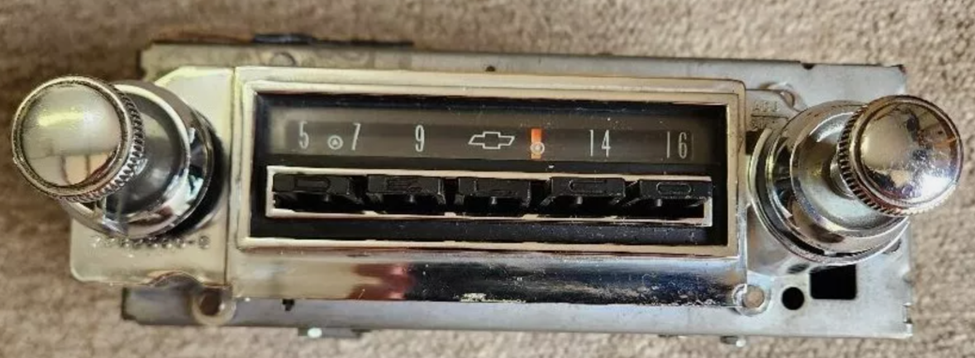
My ’64 Chevy Impala – the first car I ever owned – had hand-crank analog windows and a Delco AM Push-Button Radio (which I tuned to Chicago’s WLS-AM 890). The Impala had mirrors and no cameras, screens, and distracting bells and whistles. The car was not dependent on a semiconductor chip or software engineering.
The Impala got me from point A to point B without tracking my whereabouts and driving habits with an embedded GPS transmitter and selling that data to a third-party data broker that sold it to my insurance company so they can adjust my rate based on my driving. The Impala didn’t invade my privacy by automatically storing text and call data from my cell phone. The car was not a rolling data territory.
The corded Touch-Tone wall phone hung on the wall of my parent’s kitchen used copper wires. It didn’t pretend to be a computer. It held no apps with choice architecture programming. It wasn’t a branch of cyberspace. The phone didn’t spy on me and data grab me. When the conversation was finished, I hung up the phone and walked away from it. It wasn’t an extension of me. It wasn’t omnipresent.
Back in the ‘50s, our black and white TV used “rabbit ears” to get the best possible reception. Aluminum foil was sometimes placed on the ends of the rabbit ears to enhance reception.
The original television technology used analog signals to transmit video and audio. It wasn’t connected to a cable or Wi-Fi. The programming had commercials but it didn’t ply me with the ads I spent time looking at in the weekly newspaper insert. It was a passive non-spying device.
I listened to 45s and LPs using a turntable. The devices used in the first third of my life have been analog. I was born some twenty years before the end of the analog age (the 1970’s when signals went from waves to digital 1’s and 0’s and the use of transistors in computers).
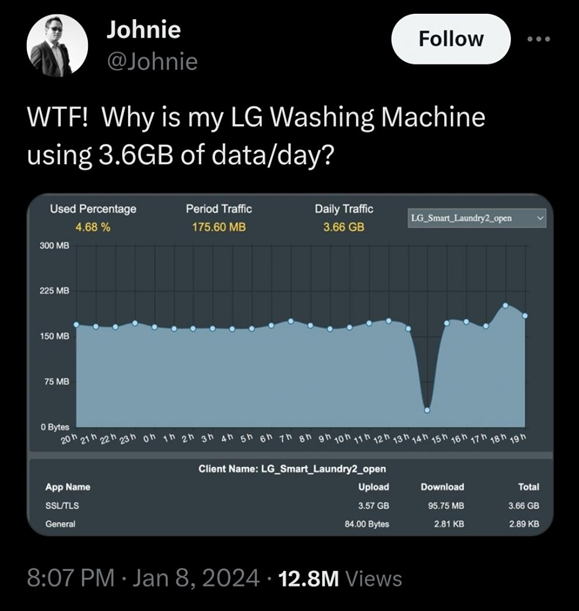
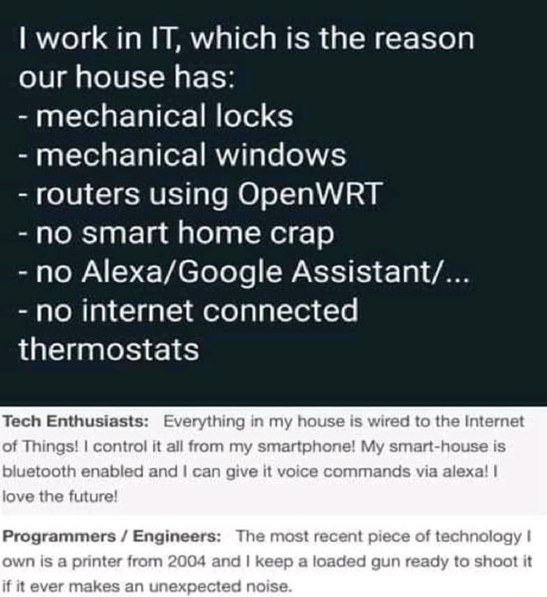
Having lived with analog technology, I prefer it over the “convenience” of “time-saving” digital devices. My reasons, echoed as concerns in the podcasts below, include not wanting to be spied on and exploited.
I do not want to be data-colonized by devices. I do not want to be an economic zone for more products and services and a mishmash of values. And, I do not want to be a product of That Hideous Strength (C.S. Lewis; the title comes from a poetic allusion to the Tower of Babel).
If you’ve read that story based on themes from Lewis’ lectures, you know about the National Institute for Coordinated Experiments or N.I.C.E. It was run by some masterminds who thought they knew best for everyone, increasing human efficiency to the point of human dissolution.
From The Devils in Our World – Official Site | CSLewis.com we read . . . N. I. C. E.’s . . .goal was “… the scientific reconstruction of the human race in the direction of increased efficiency …” (That Hideous Strength, 258). In The Abolition of Man’s more abstract terms, it was the power of some — the conditioners — over others; it was the conquest of nature and of human nature in particular through eugenics. Ultimately, it meant the abolition of man (63-64). (Emphasis mine.)
I am no fan of the digital technology because I see that the digital technology is no fan of me, a human.
Should human life be appropriated for data collection? Should an imposed alternate reality be tolerated for convenience and to ‘save’ us from boredom? Should we allow the “properties of being” to go the way of all totalitarian systems?
What do you get from your cell phone, your HD TV or the internet? Is it truth, beauty and goodness or is it isolation, loneliness, and nihilism streamed in 0s and 1s? Is it truth, beauty and goodness or is it materialism and modification of behavior?
I agree with Alexander R. Galloway, who considers the terms digital and analog in today’s world in his article Golden Age of Analog | Critical Inquiry: Vol 48, No 2, when he says . . .
If anything, the golden age of analog is happening today, all around us, as evidenced by the proliferation of characteristically analog concerns: sensation, materiality, experience, affect, ethics, and aesthetics.
Analog concerns are human concerns whereas digital concerns are about data collection and modifying consumer’s behavior with choice architecture and ‘nudges” toward a profitable end for the “conditioners.”
I feel more secure and loved with a bookshelf full of classic books than with the bits and bytes of pseudo-reality that AI/ChatGPT promises.
Humans seek their own “profitable” ends via analog concerns. Have an analog New year.
~~~~~
I’ve been asked about my take on AI. There is a lot to consider. Here are a few thoughts:
It is said that individuals who learn to harness AI tools will improve their lives. They say that new AI technologies will save us time, help us live smarter, and become super-productive unlike anything we’ve ever seen before.
They say that AI will have the potential to help out with the boring and tedious stuff in our daily lives. And, that AI will solve complex problems including the fictitious “climate change crisis,” and offer a host of other benefits to mankind including massive amounts of information to make better informed choices. (Did you know that Computers Can’t Do Math?)
The downsides of AI/ChatGPT? There will be censorship of certain information and values leading to disinformation and misinformation – a machine’s type of ‘lying’. AI is capable of false narratives.
AI/ChatGPT has no ethics or morality but there will be bias no doubt favoring DEI, ESG, CRT, political correctness, and the green new scam. We all know the acronym GIGO.
MoneyGPT: AI and the Threat to the Global Economy by Jim Rickards contains the warning
. . . we must remain vigilant on the question of whose values will be promoted in the age of AI. As Rickards predicts, these systems will fail when we rely on them the most.
MoneyGPT shows that the danger is not that AI will malfunction, but that it will function exactly as intended. The peril is not in the algorithms, but in ourselves. And it’s up to us to intervene with old-fashioned human logic and common sense before it’s too late.
There is the possibility of AI/ChatGPT inventing fantasy or confabulation when there are missing links of data. From Confabulation in Brain Injury: Causes and Treatment:
Confabulation is a memory disorder characterized by the production of fabricated, distorted, or misinterpreted memories about oneself or the world, without the conscious intention to deceive. It’s as if the brain, in its attempt to fill gaps in memory, creates a patchwork of experiences that may or may not have actually occurred. . .
Unlike lying, confabulation occurs without any intent to mislead. The individual genuinely believes in the truth of their statements, no matter how implausible they may seem to others. This can lead to a host of complications in personal relationships, professional settings, and even legal matters.
For all the proposed massive benefits of AI/ChatGPT, there is a real physical cost.
On Oct. 10, 2023 we were told that A.I. Could Soon Need as Much Electricity as an Entire Country:
A peer-reviewed analysis published Tuesday lays out some early estimates. In a middle-ground scenario, by 2027 new A.I. servers sold that year alone could use between 85 to 134 terawatt hours (Twh) annually. That’s similar to what Argentina, the Netherlands and Sweden each use in a year, and is about 0.5 percent of the world’s current electricity use.
A “green energy” grid is not able to handle charging a horde of EVs let alone power the semiconductors needed to store and process your personal data. The only good to come out of this: nuclear reactors will be built to handle base loads.
One of the “masterminds” behind “green energy”- Joe Biden – has created anti-oil and gas policies that “limit pipeline infrastructure and increased production on federal lands.” Natural gas prices have escalated because of this. Americans will suffer.
When temps drop this winter, AI/ChatGPT is not what’s needed. We need cheap and reliable energy.

Multiple Arctic outbreaks to affect more than 250 million in central, eastern US into mid-January
Going forward, I don’t see a need for AI/ChatGPT. Presumed to offer me a better self, I see AI/ChatGPT replacing thought and imagination with prescribed “answers.” We are not to think. We are to AI/ChatGPT.
Did the Greatest Story Ever Told come from AI/ChatGPT?
Will the greatest world ever known come about through AI/ChatGPT? No! That will happen when the New Jerusalem joins heaven and earth and we live in God’s immediate presence.
So, we use digital devices and AI/ChatGPT to save time. But what do we do with our saved time? Do we go back to a screen and throw away saved time? What does it mean to be “more productive”?
Digital technology and AI/ChatGPT seem to share the same ethics as Karl Marx:
“My object in life is to dethrone God and destroy capitalism.” – Karl Marx
“Keep people from their history, and they are easily controlled.” – Karl Marx
Besides the abolition of private property, Karl Marx wanted to destroy five things: the family, individuality, eternal truths, nations, and the past. All of this is possible with AI.
Will AI/CHATGPT become the opium of the masses?
“The best way to control the opposition is to lead them.” — Vladimir Lenin
And the best way to do that today is via a digital medium that includes AI/ChatGPT.
A post-human world, packaged and sold as modern conveniences and life enhancing, is being delivered by digital technology.
~~~~~
Still autonomous after all these years of data colonization? Asking for a friend.
In the present day, Big Tech is extracting resources from us, transferring and centralizing resources from people to companies. These companies are grabbing our most basic natural resources–our data–exploiting our labor and connections, and repackaging our information to control our views, track our movements, record our conversations, and discriminate against us. These companies tell us this is for our own good, to build innovation and develop new technology. But in fact, every time we unthinkingly click “Accept” on a set of Terms and Conditions, we allow our most personal information to be kept indefinitely, repackaged by companies to control and exploit us for their own profit.
~~~~
In October of 2022, I wrote “I’m becoming a neo-Luddite of sorts. I have a particular dislike for digital technology as it modifies the means of relating to ourselves, to those around us and to our world. Its dissociative medium detaches us from reality, thereby affecting identity, memory, perception, and truth.”
“The medium is the message.” -Marshall McLuhan
With digital medium, have we transitioned from “lineal connections” to “configurations”? (McLuhan, Understanding Media, p. 12)?
For McLuhan, it was the medium itself that shaped and controlled “the scale and form of human association and action”. Taking the movie as an example, he argued that the way this medium played with conceptions of speed and time transformed “the world of sequence and connections into the world of creative configuration and structure.” Therefore, the message of the movie medium is this transition from “lineal connections” to “configurations”
Respond: Marshall McCluhan, Chapter 1: The Medium is the Message | Matthew Marchewka
Does a digital medium deskill users over time? Are “tech bros” looking to deskill more users with AI/ChatGPT and do away with human workers? Are we to become Zeros in a world of 0s and 1s? Welcome to the binary new world.
~~~~
AEI senior fellow Christine Rosen, author of The Extinction of Experience. In the technological age, we too often see basic human activities, from reading and writing, to shopping and conversing, as obstacles to efficiency that must be overcome, simplified, or replaced. And while digital technology has provided many benefits, it has also come with unintended consequences for our habits of mind and social interactions. Rosen argues that we need a “new humanism” that puts the human person front-and-center and encourages people to regularly “touch grass.”
Keeping it Real – Law & Liberty
~~~~~
Do you know that Congress has passed a law to shut off your car?
Do you know about another digital trend that needs to be reversed: Going Cashless.
“It’s Just Not Right”: Major Venues Now Punishing People For Using Cash Vs. Plastic | ZeroHedge
The potential benefits of central bank digital currency or CBDC are being discussed by the “masterminds” of the International Monetary Fund (IMF). We will be told that using CBDC will be more convenient, but for whom?
CBDCs create a “digital trail”, IMF’s handbook notes. Our data – transaction histories and user demographics — could be collected and stored. AND, our CBDC accounts could be restricted or blocked by the powers that be or AI as a form of a social credit system and digitally based conformity.
If instituted, say goodbye to privacy and, perhaps, your balance. Welcome to the Binary New World and the surveillance State.
Please don’t tell me it’s more convenient to use digital.
Gold and silver and even the fiat dollar are analog assets. They can’t be hacked.
~~~~~
“A September report by Mozilla News’ *Privacy Not Included team called modern cars the “worst product category we have ever reviewed for privacy.”
“The team researched 25 car brands and concluded, “Every car brand we looked at collects more personal data than necessary and uses that information for a reason other than to operate your vehicle and manage their relationship with you.
“They can collect super intimate information about you — from your medical information, your genetic information, to your ‘sex life’ (seriously), to how fast you drive, where you drive, and what songs you play in your car — in huge quantities. They then use it to invent more data about you through ‘inferences’ about things like your intelligence, abilities, and interests.”
~~~~~
The new law would change the definition of “electronic communications surveillance provider” via an amendment to vastly expand what Goitein describes as “the universe of entities that can be compelled to assist the NSA.”
~~~~~
For the past few years, parents, researchers, and the news media have paid closer attention to the relationship between teenagers’ phone use and their mental health. Researchers such as Jonathan Haidt and Jean Twenge have shown that various measures of student well-being began a sharp decline around 2012 throughout the West, just as smartphones and social media emerged as the attentional centerpiece of teenage life. Some have even suggested that smartphone use is so corrosive, it’s systematically reducing student achievement. I hadn’t quite believed that last argument—until now.
Are Phones Making the World’s Students Dumber? – The Atlantic
~~~~~
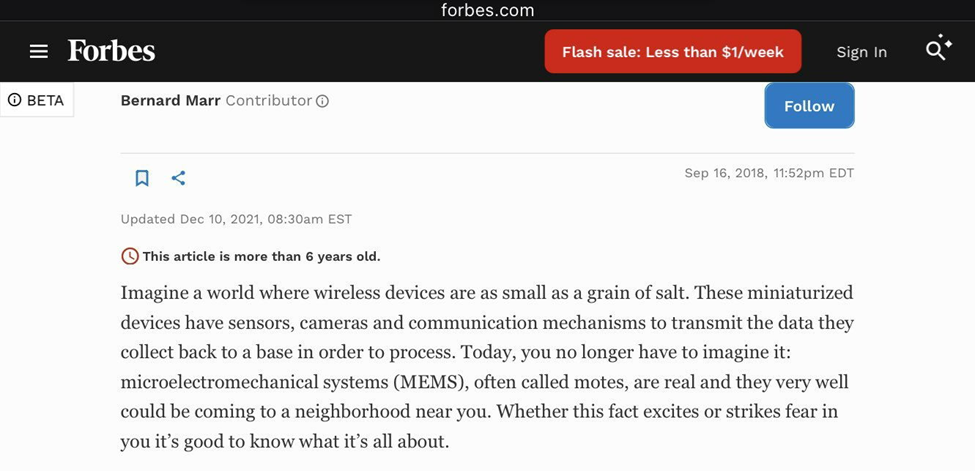
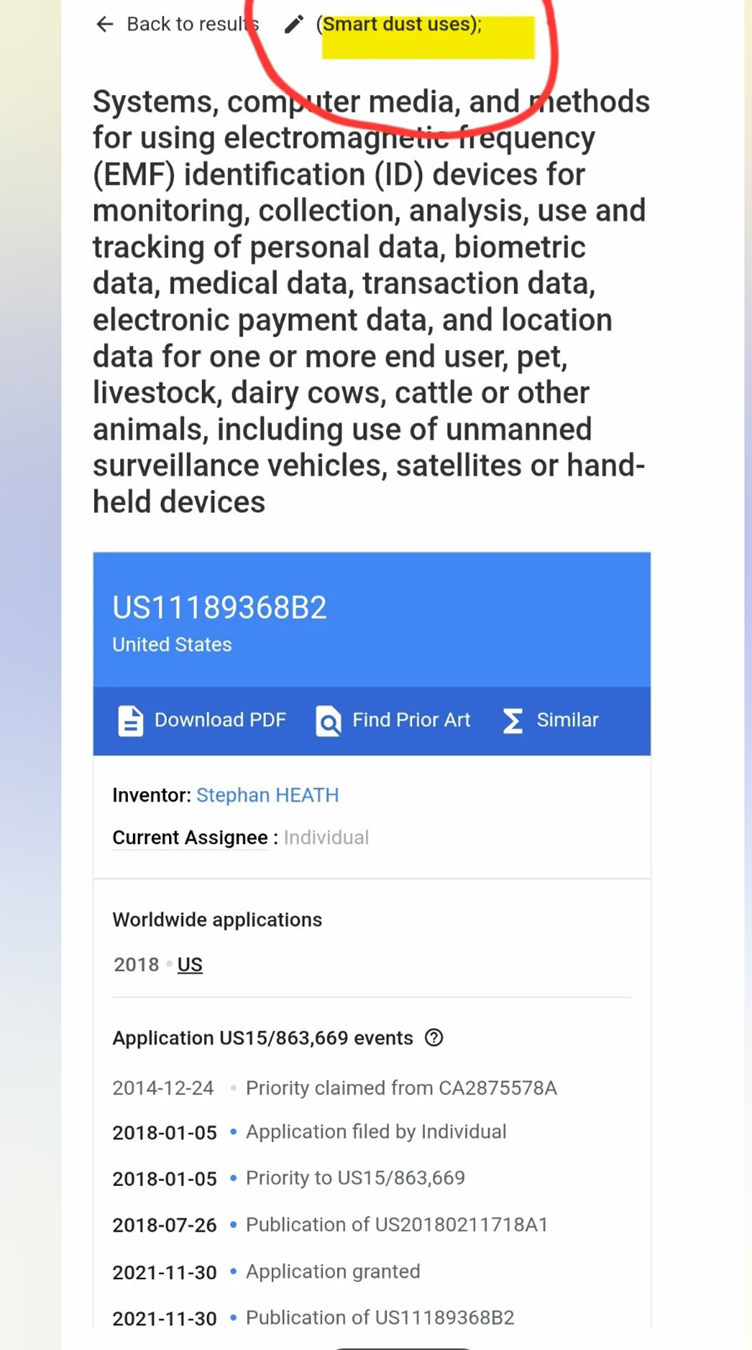
Invasive Technology – Smart Dust
Is the fog Smart Dust?

~~~~~
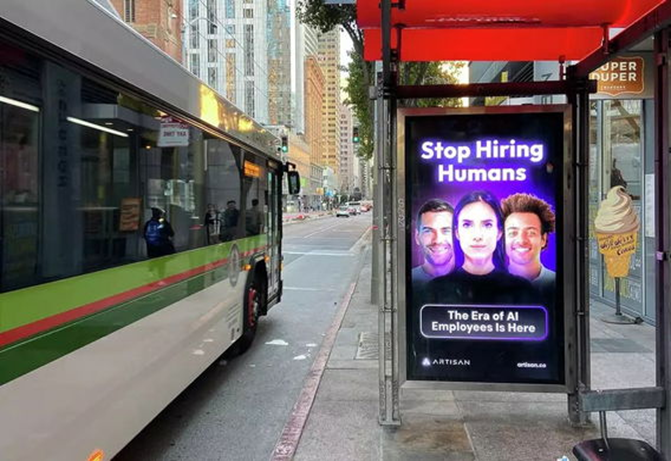
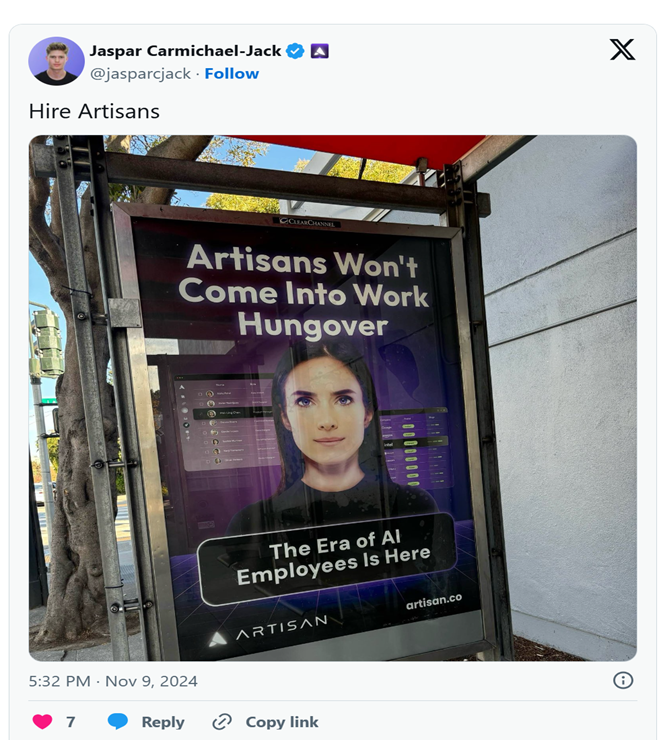
‘They hate people’: Bleak tech billboards spark angst in San Francisco
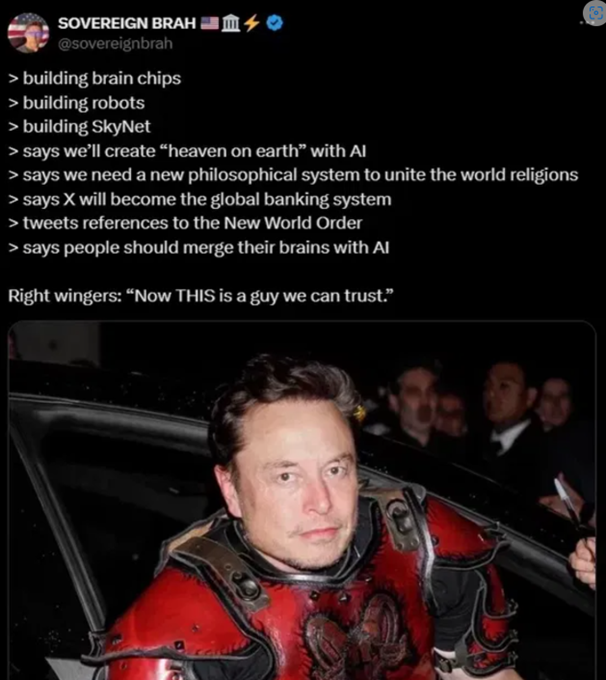
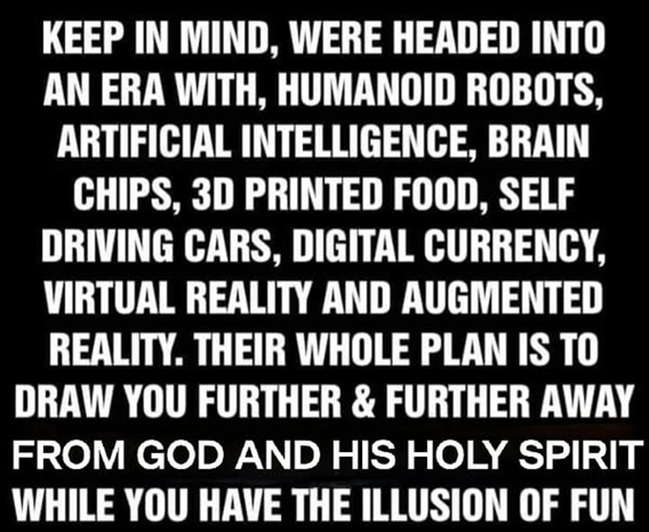
Request a Consumer Disclosure Report
Access your file and learn more about the personal information LexisNexis Risk Solutions maintains about you in accordance with the Fair Credit Reporting Act:
Home – LexisNexis Risk Solutions Consumer Disclosure
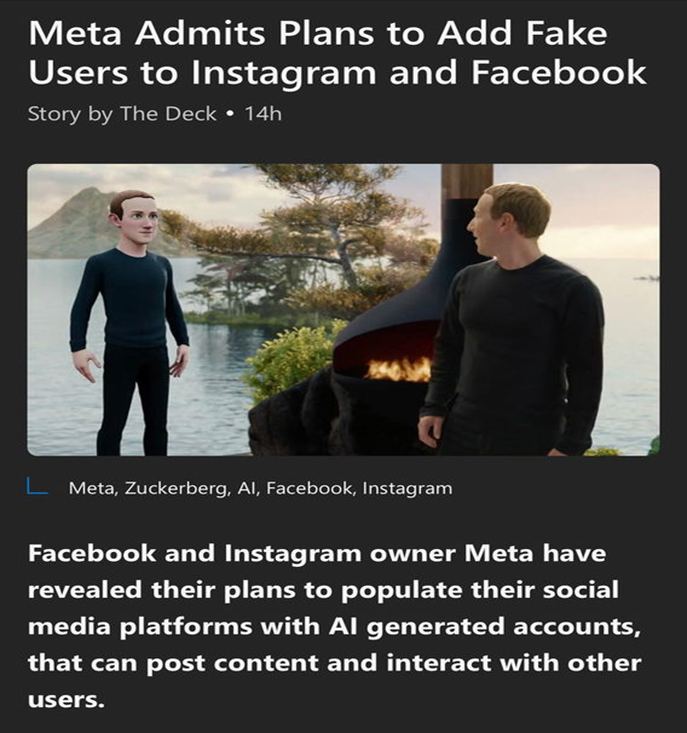
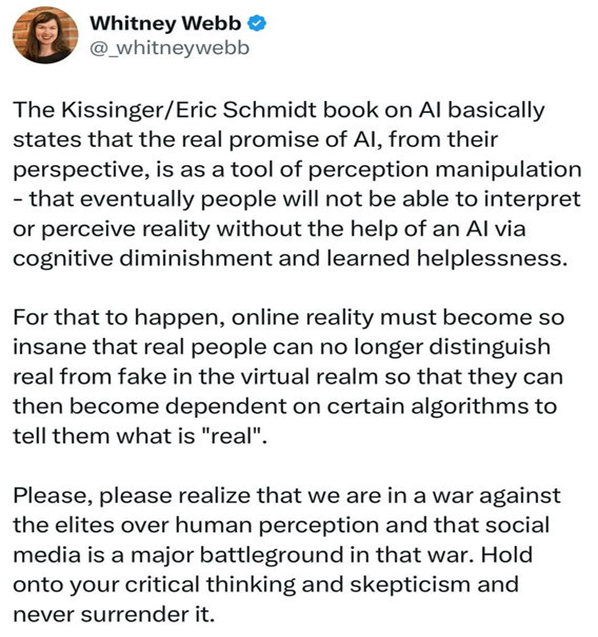
Is AI/ChatGPT “extremely dangerous to our democracy?”
Multiple local news stations say the same thing verbatim
Is AI/ChatGPT and Facebook extremely dangerous to our humanity?
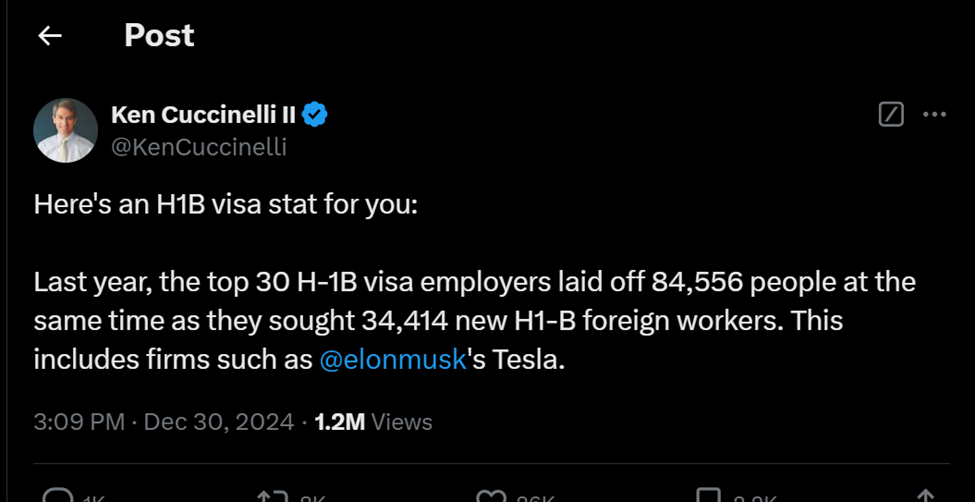
Ungar-Sargon: “Of Course Mass Immigration Raises The GDP, It Makes Oligarchs Unbelievably Wealthy.”



 Cindy Wity
Displaced in Place
October 19, 2025 Leave a comment
Monica Sanders, a survivor of Hurricane Katrina, wrote in her August 18, 2025, Oxford American article The Storm that Blew Us Apart recalling Twenty years after Katrina, we’re still living in the space between before and after:
The flood took homes and heirlooms, yes. But it also took the things that don’t have price tags: your grandmother’s pew at St. Peter Claver, the second-line route your cousin danced for the first time, the rhythm of being able to walk next door to ask for a lemon and stay for a two-hour porch talk.
We became refugees in our own country . . .
Some of us never came back.
Those who did found a different city. Not just rebuilt, but rearranged. The neighborhoods we knew—Broadmoor, Gentilly, the Lower Nine—returned with new names, new residents, and new rules. People who knew about noise ordinances but not about king cakes. People who brought nonprofits but not traditions. People who wanted charm but not character. The kind who say “N’Awlins” with a wink, and don’t hear the ghost in that mispronunciation.
Displacement gave way to gentrification. What was affordable became vacation rentals. What was vibrant became boutique. Streets that once held parades now hold pop-ups. We became the entertainment, not the community.
And yet, we remain. . .
All of us carry the “before” with us. . .
We talk about resilience now, but we forget that true resilience is cultural as much as physical. It’s knowing who to call when the lights go out. It’s gathering your neighbors even when there’s no power. Its memory passed like gumbo recipes and Sunday prayers.
~~~
I began with Monica’s reflection on the effects of Hurricane Katrina, for order being swallowed up by non-order, an overwhelming flood, parallels the flood of disorder working to decouple us from people, place and the past and to colonize us for its reorganizing purposes which include efficacy, profitability and efficiency. (Order, non-order and disorder are terms coined by Dr. John Walton to describe cosmology in his Job commentary.)
That storm is blowing us apart. And as was experienced in the aftermath of Hurricane Katrina, we feel a pervasive sense of displacement, of being refugees in our own country, of living in the space before and after the imposed transformation of our culture.
The source of dysphoria about our time and place being out of joint may not be readily recognizable. As with the “frog in boiling water”, we steep in its flood waters not recognizing the stew we are in. Screens constantly distract our attention away from what is happening to our existence.
The source: a flood of ideologically progressive technology and globalization that is wiping out our connections to people, place and the past. Its overwhelming force is our unmooring, our unmaking. Its irresistible force is displacing us in place.
I’ve been aware of the source for many years, starting when I bought a 286 computer in the 70s. The machine had an allure that had me come back to it constantly.
In an October 23, 2022 post Altered States, I quoted Jacques Ellul from his book The Technological Society and wrote the following:
I’m becoming a neo-Luddite of sorts. I have a particular dislike for digital technology as it modifies the means of relating to ourselves, to those around us and to our world. Its dissociative medium detaches us from reality, thereby affecting identity, memory, perception, and truth.
The flood waters are rising around us. Look at what is going on with the tech-bro push for AI and transhumanism, with concerns about rare earth minerals, with chips, chips, and more chips, with 5G towers, energy and water consuming data centers, constant surveillance, mandated digital IDs – why do we need any of it?
‘A Sharp Escalation’: Americans Starting To Revolt Against Data Centers | ZeroHedge
I recently came across an author that uses “the Machine” as the analogy for the inhuman forces at work to enclose all in its path for Progress. What Kingsnorth writes resonates with everything that I’ve read in dystopian novels: 1984, That Hideous Strength, Brave New World, and Darkness at Noon. Here’s Paul Kingsnorth with “Huxley and the Machine”:
Paul Kingsnorth’s, Against the Machine is “an account of the technological-cultural matrix enveloping all of us. The culmination of two decades of my writing and thinking about technology, culture, spirituality and politics, it seeks to offer an insight into how the techno-industrial culture that I call ‘the Machine’ has choked Western civilisation, is destroying the Earth itself, and is reshaping us all in its image.
From the First Industrial Revolution to the rise of artificial intelligence, this book shows how the hollowing out of humanity has been a long game—and how our very soul is now at stake.
Against the Machine is the spiritual manual for dissidents in the technological age.”
~~~~~
Per Lewis Fried, Lewis Mumford, author of The Myth of the Machine, “insisted upon the reality of the Megamachine: the convergence of science, economy, technics and political power as a unified community of interpretation rendering useless and eccentric life-enhancing values. Subversion of this authoritarian kingdom begins with that area of human contact with the world that cannot be successfully repressed – one’s feelings about one’s self. “
Mumford:
The vast material displacements the machine has made in our physical environment are perhaps in the long run less important than its spiritual contributions to our culture.
Technology, instead of introducing us to freedom, has imposed on us the slavery of the machine.
Modern Man is the victim of the very instruments he values most. Every gain in power, every mastery of natural forces, every scientific addition to knowledge, has proved potentially dangerous, because it has not been accompanied by equal gains in self-understanding and self-discipline.
A day spent without the sight or sound of beauty, the contemplation of mystery, or the search of truth or perfection is a poverty-stricken day; and a succession of such days is fatal to human life.
Our national flower is the concrete cloverleaf.
Western culture no longer represents man: it is mainly outside him, and in no small measure hostile to his whole self: he cannot take it in. He is like a patient condemned in the interests of X-ray photography to live upon a diet of barium sulphate…In the end, as Samuel Butler satirically prophesied, man may become just a machine’s contrivance for reproducing another machine.
The great gains that were made in technics during the last few centuries were largely offset by a philosophy that either denied the validity of man’s higher needs or that sought to foster only that limited set of interests which enlarged the power of science and gave scope to a power personality. At a moment when a vast surplus was available for the goods of leisure and culture, the very ideals of leisure and culture were cast into disrepute — except when they could be turned to profit. Here lies the core of the inner crisis that has afflicted our civilization for at least two centuries. In the heyday of expansionism, the middle of the nineteenth century, scarcely a single humane voice could be found to defend either the means or the ideals of a power civilization…Blake, Ruskin, Morris, Arnold, Emerson, Whitman, Thoreau, Melville, Dickens, Howells, Hugo, Zola, Mazzini, Tolstoy, Dostoyevsky, Ibsen…denounced the human results of the whole process of mechanization and physical conquest. As with one voice, they protested against the inhuman sacrifices and brutalizations, the tawdry materialisms, the crass neglect of the human personality.
~~~~~
~~~~~
The truth is, men have lost their belief in the Invisible, and believe, and hope, and work only in the Visible; or, to speak it in other words: This is not a Religious age. Only the material, the immediately practical, not the divine and spiritual, is important to us. The infinite, absolute character of Virtue has passed into a finite, conditional one; it is no longer a worship of the Beautiful and Good; but a calculation of the Profitable. Worship, indeed, in any sense, is not recognised among us, or is mechanically explained into Fear of pain, or Hope of pleasure. Our true Deity is Mechanism. It has subdued external Nature for us, and we think it will do all other things. We are Giants in physical power: in a deeper than metaphorical sense, we are Titans, that strive, by heaping mountain on mountain, to conquer Heaven also.
Thomas Carlyle, from “Signs of the Times“
~~~~~
Against the machine: Digital ID Black Pill Moment? – The Burning Platform
Rate this:
Filed under 2025 Current Events, Culture, Digitalization, social commentary, technology, the Singularity Tagged with Against the Machine, AI, artificial intelligence, chatgpt, digital technology, Paul Kingsnorth, philosophy, Silicon Valley, smartphones, technology, the Singularity