One day, after leaving the temple in Jerusalem, Jesus told the disciples that the temple would be leveled. His disciples then came to him privately and asked “What is the sign of your coming and the end of the age?” The conversation is recorded here: Matt. 24:1-35.
Jesus tells them what to watch out for and to not be fooled by. He warns of the persecution and death of disciples who bear witness to the truth they had seen and heard. He speaks of those who fall away and of those whose love for the kingdom of God grows cold because of a milieu of wickedness. Then he adds “The ones who stand firm to the end will be saved.”
The end of the age will come, he tells them, when the gospel of the kingdom is preached in the whole world as a testimony to all nations.
Jesus goes on to reveal signs and wonders of the end times. He can’t tell them the day or hour of his return, as only his Father knows the timing. When it does happen, he says, many would be caught completely off guard.
Jesus went on to speak in parables about the signs and wonders he expected to see in those entrusted with the gospel of the kingdom before he returned.
In the Parable of the Faithful and Unfaithful Servants (Matthew 24:45-51), the faithful servant follows through doing what his master had put him in charge of until he returned. He is rewarded with more responsibility. The unfaithful servant assumed that with the master’s delay he could do as he pleased. When the master showed up unexpectedly, the unfaithful servant is dealt with severely.
In The Parable of the Ten Bridesmaids (Matthew 25: 1-13) ten young women are involved in a wedding tradition. The bride and her bridesmaids, I imagine, learned that it was the beginning of the wedding week sometime before nightfall one evening. They may have caught word about extensive preparations being made for the marriage feast. The ten women prepare for their part in the ceremonies.
By tradition, the bridegroom would process with his friends at night to retrieve his bride and bring her back to his house for the wedding feast and ceremony. When he arrives, the bridesmaids join the procession carrying oil lamps.
Not knowing the exact day or hour of the bridegroom’s arrival, five of the women bring flasks of oil. I imagine that they are thinking “This may take time, but we’re gonna make it happen, we’re gonna do what we have to do to make the wedding and marriage feast a success. The bridegroom is counting on us.”
We learn that when the bridegroom is delayed the ten bridesmaids get drowsy and fall asleep. Then at midnight a shout awakes them: “The bridegroom is on his way!”
The ten get up and trim their lamps by cutting the burnt part of the wick and adding oil. But there is a problem. Five of the women had run out of fuel and brought no extra. They lacked the wherewithal to continue the simple task they were given. So, they ask for oil from the other five with extra oil.
But that’s not going to happen. The prepared five will do what is expected of them and the depleted five are sent to do what they need to do – go buy more oil. While the depleted five are away, the bridegroom arrives and the prepared bridesmaids process with the wedding party.
The depleted five, returning with lamps lit, find out that they are shut out of the wedding banquet and not even acknowledged. The prudent five were mindful of their duty to the Bride and Bridegroom. The foolish five missed an opportunity of a lifetime. It was lights-out for them.
In The Parable of the Talents (Matthew 25:14-30), a master goes on a trip. Before he leaves, he entrusts money to three slaves, each according to his ability. When he returns, he wants an account of their stewardship of what he entrusted to their care.
The slave given five talents has produced five more. The slave given two talents has produced two more. The slave given one talent has not increased its value. He played it safe.
The two slaves that produced a return on investment are rewarded with the master’s favor and receive more responsibility. The slave who did not increase the value of one talent, not even with accrued interest, has the talent taken away. The master gives the one talent to the one with ten talents. I imagine that the master wanted to see what he could do with eleven talents.
Keep watch!
In each of these parables the participants are given a responsibility and an opportunity to show themselves prudent and productive as they keep watch. But some foolishly don’t value what they have been entrusted with (signifying the gospel of the kingdom) and worse. They don’t fear or respect the master or bridegroom.
Did their love grow cold? Their indifferent attitude as to what was at stake for them and the master caught them completely off guard. If they had known the day and hour the master or bridegroom would show up and feigned readiness, how would the master or bridegroom assess who to keep around and who to get rid of and lock out?
No participation trophies were handed out when the master returns. Instead, the worthless are kicked outside, into the darkness. Their weeping and gnashing of teeth will not be acknowledged by the master. They had their day in the sun.
But those who, in the master’s absence, took their responsibility seriously without fail and for as long as it took and those with the sense and wherewithal to keep watch for as long as it took for the bridegroom to appear and those who knew what to do with what the master entrusted them with – these who “stand firm to the end will be saved.”
The main thrust of these parables: Remain vigilant. Be steadfast, immovable, always excelling in the work of the Lord, because you don’t know the day or hour of the master’s return and your labor is not in vain (1 Cor. 15:58).
~~~~~
Do you hear what Jesus said above echoed and amplified in his words, through John the Seer, to the church in Ephesus?
“To the angel of the church in Ephesus write: These are the words of him who holds the seven stars in his right hand, who walks among the seven golden lampstands:
“I know your works, your toil and your endurance. I know that you cannot tolerate evildoers; you have tested those who claim to be apostles but are not and have found them to be false. I also know that you are enduring and bearing up for the sake of my name and that you have not grown weary. But I have this against you, that you have abandoned the love you had at first. Remember, then, from where you have fallen; repent and do the works you did at first. If not, I will come to you and remove your lampstand from its place, unless you repent. Yet this is to your credit: you hate the works of the Nicolaitans, which I also hate. Let anyone who has an ear listen to what the Spirit is saying to the churches. To everyone who conquers, I will give permission to eat from the tree of life that is in the paradise of God.
What’s at stake. In the prophetic messages to the seven churches in Asia Minor, when Jesus has something against a church it comes down to the consequences he alluded to in the parables above: if you do not repent and change your ways before the master returns there will be judgement.
Note: This is the same alternative that those of us who bear witness to the truth presents to the world.
~~~~~
Brain Rot: What Screens Are Doing to Our Minds
. . . this podcast covers the effects of too much screen time. Dr. Messina talks about this topic with Dr. Harry Gill, a renown psychiatrist who also has a PhD. in neuroscience. They discuss one of the greatest difficulties they see in their child, adolescent and adult patients who contend with way too much screen time, the all-encompassing phenomenon of ceaseless digital interactions that occur on various devices, over an array of social media platforms, and through multi-player online gaming. They contend that because we are bombarded with constant stimulation which causes us to be more distant and isolated from each other, various individual tragedies, addictions, and hollowed-out interpersonal lives are becoming commonplace in our world today. In addition, they talk about the fact that misinformation is spreading at a rapid pace while social structures are breaking down on a global scale. Their hope is to provide information that will help limit screen time for our listener and their family members.
Brain Rot: What Screens Are Doing to Our Minds (1)
Primordial disorder is the image presented at the opening of the creation account in Genesis. The earth, formless and empty (tohu wabohu), was completely covered by a deep (tehom) sea.
When God began to create the heavens and the earth, the earth was complete chaos, and darkness covered the face of the deep, while a wind from God swept over the face of the waters. – Genesis 1: 1-2
Earth’s oceanic outer layer undergoes a sea change when the Spirit of God’s hovers.
Psalm 104: 5-9 describes, in poetic form, the ordering of the watery chaos:
He set the earth on its foundations; it can never be moved. You covered it with the watery depths as with a garment; the waters stood above the mountains. But at your rebuke the waters fled, at the sound of your thunder they took to flight; they flowed over the mountains, they went down into the valleys, to the place you assigned for them. You set a boundary they cannot cross; never again will they cover the earth.
Reading on in Psalm 104 (v. 10-13) we find function. Channeled water provides the basic necessity for life on earth. Food growth follows.
Chaos Creatures Serve a Function
Once the chaotic waters of the primordial sea had been assigned functions, God, on the fifth day, created sea monsters, figures of menacing chaos (Gen. 1:21). Why bring order and then allow chaos creatures to exist? By God’s wisdom, we live in a world that has order, non-order, and disorder (See video below).
Mythical creatures from pagan myths, function in scripture as symbols of primordial chaos and opposition to God: sea-monsters, serpents, beasts, and dragons. Revelation presents them as fighting against God’s faithful witnesses who are working to restore order and bring God’s kingdom on earth.[i]
Sea Change Number Two
God created (gave functions to) the material cosmos over six days. Genesis 1 is a day-by-day account of establishing order from primordial disorder, establishing anthropic conditions and temple building. God pronounced each step in functional readiness “Good.” On the seventh day, he ‘rested’ in his temple to survey what had been done. The temple garden is a metaphor for the world.
Genesis 2. Mankind is placed in the temple garden and given instructions to maintain the good by God. But mankind goes off in a disordering direction. Evil and chaos ensues. God then acts to undo creation with the flood waters of chaos[ii] and to restore his “good” creation. Noah is the new caretaker.
Now the earth was corrupt in God’s sight and was full of violence. God saw how corrupt the earth had become, for all the people on earth had corrupted their ways. So, God said to Noah, “I am going to put an end to all people, for the earth is filled with violence because of them. . .
I am going to bring floodwaters on the earth to destroy all life under the heavens, every creature that has the breath of life in it. Everything on earth will perish. Genesis 6: 11-13, 17
Sea Change Recalled
One day, Jesus’ disciples wanted Jesus to notice the temple buildings. Jesus then foretold the destruction of the temple. The perplexed and anxious disciples asked “Tell us, when will this be, and what will be the sign of your coming and of the end of the age?”
Jesus goes on to speak of the signs of the end of the age. He then speaks about the necessity of watchfulness for, he tells them, no one knows the day or hour when end things will come to pass. To underscore this, he references a familiar story that involved a cataclysmic event that caught many unprepared.
For as the days of Noah were, so will be the coming of the Son of Man. For as in the days before the flood they were eating and drinking, marrying and giving in marriage, until the day Noah entered the ark, and they knew nothing until the flood came and swept them all away, so, too, will be the coming of the Son of Man. – Matthew 24:36-39
History Lesson About the Moral Universe
The apostle Peter, in his second letter, tells his readers that there are scoffers who are saying that things on this earth have always continued the way they are now. He reminds them that this is not true. The earth was different when it was created and it was different again after the flood. He warns them that no one should scoff that God will make it different once again, judging the godless not with water but with fire. (2 Peter 3)
Jesus’ second coming will be a sea change for all of creation. Chaos will be removed.
It is Time for a Sea Change
Peter warned his readers, with reference to the Great Flood, about what can be expected if they continue as they are. John the Seer, alluding to the Great Flood in Revelation, writes that it is time (in his prophetic timeline) “for destroying those who destroy the earth.” – Revelation 11:18
“The ‘destroyers of the earth’ are the powers of evil: the dragon, the beast, and the harlot of Babylon (who in [Rev.] 19:2 is said to have ‘corrupted – or destroyed – the earth with her fornication’). With their violence, oppression, and idolatrous religion they are ruining God’s creation. His faithfulness to his creation requires that he destroy them in order to preserve and deliver it from evil. . . This he did in the flood, which was a divine judgement aimed at delivering God’s creation from the ruinous violence of its inhabitants.”[iii]
John the Seer wrote Revelation in the context of the tyranny of the Roman Empire, the imperial cult, and a permissive and polytheistic culture. The apostle Paul, in the same setting, writes to a church with a more detailed description of the ruinous inhabitants of the earth and their similar fate:
Do you not know that wrongdoers will not inherit the kingdom of God? Do not be deceived! The sexually immoral, idolaters, adulterers, male prostitutes, men who engage in illicit sex, thieves, the greedy, drunkards, revilers, swindlers—none of these will inherit the kingdom of God. -1 Corinthians 6:9-10
I imagine that the proud, the perverse, the purposefully vague, the self-serving, and those who want to create a new humanity with demonic forces[iv] – any who plunder the created order for power, wealth and self-righteous ends will be met with divine judgement. Some will receive punishment that matches their sin (Rev. 16:8; 18:6; Rev. 22:18-19).
John the Seer prophesied about an end time involving a series of warning judgements to bring about repentance and the ultimate restoring of creation’s order from mankind’s reversion of it to chaos.
Final Sea Change
Scripture begins by telling an old story and ends by retelling the old story with a new and final outcome. Both narratives involve chaos and creation. The lynchpin of the two theological narratives – Genesis 1-11 and Revelation – and of history itself is the earthly, risen, and returning Jesus.
A final sea change occurs to restore creation. John the Seer writes:
Then I saw a new heaven and a new earth, for the first heaven and the first earth had passed away, and the sea was no more. –Rev. 21:1
Creation is not destroyed, just as it wasn’t with the Great Flood. Rather, creation’s corrupting influence is removed. Think in terms of no longer being overcome by evil but the overcoming of evil with good. Think in terms of “if anyone is in the Messiah, there is new creation! Old things have gone, and look – everything has become new!” (2 Cor. 5:17)
“The waters of the primeval abyss, that represent the source of destructive evil, the possibility of the reversion of creation to chaos, are finally no more.”[v]
~~~~~
Lent is a time for a sea change. It’s a time to remove chaos from your life.
This Lent appears to be the first time that corruption, misuse of funds, money laundering, excess, and disorder in the government are being shown the detox door. Hence, the weeping and gnashing of teeth in the MSM. Hence, destroyers of the earth want the chaos to continue as before.
A leviathan in Washington recently surfaced. What emerged was corrupt and destabilizing influence involving actors in the State Department, the Department of Defense, the “deep state”, the unaccountable administrative state, the unchecked CIA meddling in foreign affairs and a politically motivated FBI meddling in internal affairs, activist DOJ and federal judges, shady non-profits, and the propaganda of the MSM to maintain cover for the chaos.
Maelstroms are sucking us in: a proxy war with Russia, Middle East conflicts, a huge federal deficit, out of control spending by Congress, the Green New Deal wealth redistribution scam, and what to do with the over 12 million illegal economic migrants bringing with them neediness, disease and crime.
In the first 50 days of the Trump administration, ICE reported arresting over 14,000 convicted criminals, 9,800 migrants with pending criminal charges, 1,155 suspected gang members, and 44 foreign fugitives.
An additional 8,718 arrests were categorized as “immigration violators.”
AI is being touted as a new pathway to greater productivity (Why do we need that? For greater profits? To be unburdened by what has been?). It is said that disruptive AI will transform the workplace, replace jobs, shake up economies and reshape global alliances. Our world, with Promethean AI, will look different by 2030. AI will look at us differently, too.
[i] The creation of the “sporty” Leviathan (Ps. 104:26), a creature that cannot be tamed, shows us God’s mastery over powerful creatures. Leviathan was used metaphorically to instruct Job (Job 41). Job (a behemoth-like creature) cannot tame God to his ideas of how the world works.
[ii] Consider that several ancient Near East accounts of a devastating flood were understood as a god using force to restore order in the world. See Genesis 6-9 for the theological interpretation of the mythic flood.
The writer of the Genesis Flood account, using hyperbole, wanted to impress upon the reader the theological implications of a universal “cataclysmic event” that occurred to restore creation. There was no global deluge, as science has determined and Ps 104: 9 indirectly states. No matter. The author wanted the reader to understand the theological significance of God’s act.
Protect our food supply from the Cure worse Than the Problem
Action Over Talk: Join the Nationwide Protest Against Food Supply mRNA!
This Friday, Americans across the country are coming together to take a stand. Concern is growing as Secretary Rollins moves closer to approving mRNA vaccines for the beef, dairy, and poultry industry to combat diseases like Avian Flu. Many are voicing their opposition, demanding that these vaccines not be used in our food supply.
Make Your Voice Heard! Flood Secretary Rollins’ email with your concerns:
Here is a structured email template for Secretary @BrookeLRollins:
Subject: Immediate Halt to Meat Supply Vaccination
Dear Secretary Rollins,
As Americans who supported the election of Donald J. Trump, we are deeply concerned about your plan to introduce vaccines into our nation’s meat supply, including pork, cattle, poultry, and even seafood.
We do not merely request a pause—we demand a complete and permanent stop to this effort. The American people will not accept government-mandated intervention in our food supply, especially without full transparency and consent.
If the USDA continues to push forward with testing and implementation of the H5N1 vaccine, we are prepared to take action. Our voices will not be ignored, and we will make it clear to President Trump that millions of Americans oppose this overreach.
We stand firm in our right to protect our food, our health, and our families. This is non-negotiable.
Sincerely, [Your Name] [Your State]
With the news that mRNA vaccinated beef, dairy, eggs, and poultry are already in the food supply, some are demanding to know where our Secretary of Health is. You’ll be pleased to know he’s practicing self-care with long walks in the mountains, while currently reposting advice from the CDC.
Before I came on the scene in the early 50s, the advent of nuclear weapons in the 40s posed the threat of nuclear war annihilation. Adding to American’s anxiety and panic during the Cold War period that followed was the new mass medium of 1950s television. Its B&W news, public service announcements, documentaries, and science fiction programming brought into homes the stark magnitude of the nuclear age.
One response during that anxious time was to use ‘Duck and Cover’ drills in schools across the United States. Students were trained as to what they should do in case of an atomic attack – dive under their desks and cover their heads (Producing another Atomic Kid!).
And though in the early 60s the concept of Mutual Assured Destruction (MAD) was discussed as a mutual deterrent, no one knew what would happen as in 1962 when the Cold War nearly escalated into nuclear war. The United States and the Soviet Union faced off during the Cuban Missile Crisis. The escalating arms race was at issue.
Released in 1965, Barry McGuire’s The Eve Of Destruction protest song addressed the instability in the world – the prospect of nuclear war, the Vietnam War, the middle east conflict and civil rights.
During the late 60s and early 70s, I was involved in the Chicago area Jesus People movement. I remember attending a Larry Norman concert where he sang, I Wish We’d All Been Ready. (Sadly, the song refers to a “Rapture” event, a popular escape plan for Christians based on a mis-reading of scripture.)
Life was filled with guns and war And everyone got trampled on the floor I wish we’d all been ready . . .
There’s no time to change your mind The Son has come and you’ve been left behind . . .
A man and wife asleep in bed She hears a noise and turns her head He’s gone I wish we’d all been ready . . .
Nor did the wild claims of ‘The Adam and Eve Story’, written by a former US Air Force employee, UFO researcher and self-proclaimed psychic Chan Thomas in 1966. For the past 59 years the book has been kept under wraps by the CIA. The claims of the book are based around periodic cataclysmic events in history. The next one he proposed would be a sudden reversal of Earth’s magnetic poles, thereby wreaking havoc and total destruction to the planet in a matter of hours.
“You Never Want a Serious Crisis to Go to Waste.”
Along with the many end-of the world scenarios came Pop eschatology. The end-times prophecy business has been around during my entire lifetime. Not long ago I received a flyer announcing a weekend End-Times Prophecy seminar to be held at a local hotel.
In 1995 a series of books fictionalizing events surrounding a supposed rapture and seven-year tribulation period prior to the second coming of Christ began to appear on best-seller lists. The 16 Left Behind lowbrow thrillers of the Left Behind series, authored by Tim LaHaye and Jerry Jenkins, arrived on the scene twenty-five years after another end-times book.
When Hal Lindsey and C. C. Carlson came out with The Late Great Planet Earth in 1970 it sold millions of copies. Their ‘non-fiction’ end-times book was later adapted (1979) into a documentary film narrated by Orson Welles.
Some readers might recall that Orson Well’s, on October 30, 1938, gave a dramatic War of the Worlds radio broadcast. It scared the heck out of a lot of people. Some say Lindsey’s book did the same.
The Pop eschatology of LGPE, applied to current events such as the Cold War, was released shortly after the Israel’s Six-Day War. The authors aligned their dispensational theology with contemporary geopolitical events to show that civilization was headed for doomsday. They pushed hardcore Zionism.
Men Who Stare at Charts
The Left Behind series, The Late Great Planet Earth, and much of today’s “prophecy”, are steeped in John Nelson Darby’s dispensational theology and “rapture” nonsense. Darby (1800-1882) was an Anglo-Irish Bible teacher, clergyman, and founder of the Plymouth Brethren and the Exclusive Brethren. Among other things, he thought that Christians should not be involved in politics (as if Jesus ascended to the Father only to leave us here to ponder salvation in different epochs, to develop dispensational theology charts to schedule God’s acts, and to console ourselves with millennial dreams.)
In my estimation, dispensational theology, which didn’t exist in the church history until Darby came along and the Scofield Bible expanded its reach, is a way of charting Scripture into manageable chunks of salvation history and a way of managing God and expectations. This theology proposed to show how God planned for people’s salvation in each historical period by what relates to Israel, what relates to the church, and what the End Times will look like. It was a way to get a handle on dates and times and God.
Dispensational theology and its offshoot Pop eschatology seem to be a science project applied to theology. Darby, the originator of a pre-trib rapture, lived during the 1800s, a period following the Enlightenment when knowledge by way of rationalism and of empiricism was emphasized.
Pop eschatology looks at the geopolitical landscape, cherry picks what is literal and symbolic, and crams headline news into end-time predictions. But “de-coding” symbolic scripture prophecies to give a detailed scenario of end-time events is not Christian eschatology. It’s trying to time the market for the I wish we’d all been ready crowd to jump in. It’s manipulation of scripture and of people to produce a turn to God out of FOMO.
~~~
Added 6-23-2025, in light of the Israel/US attack on Iran’s nuclear facilities:
I have a great deal of sympathy for Christians who still believe the lore that dispensationalism offers. I understand what motivates them and why. But, it is well past time for the church to provide better Bible teaching that does not encourage American Christians to develop misplaced loyalties. American Christians have duties to their nation and their church. But for too many American Christians, misplaced theological convictions have led to political loyalties that prioritize Israel over both the church and their own nation.
This post is not meant to be a reproach to making sense and order of what is happening around us. That’s what we do, especially in a time and under those who “forsake the law and praise the wicked” (Prov. 28:4):
And why did Biden pardon the treasonous General Mark Milley and the murderous Anthony Fauci? Why did Joe Biden preemptively pardon them and the illegal Jan. 6 committee? (I don’t believe these Federal pardons are legal. In any case, states can bring charges against them.)
Why did Joe Biden commute the sentences of 37 of the 40 men on federal death row — a list that includes at least five child killers and several mass murderers? Biden gave the reprieve to some of the nation’s most violent murderers — nine of them found too dangerous to live after butchering fellow inmates — as part of his effort at “ensuring a fair and effective justice system.”
Why did Joe Biden preemptively pardon capitol police officer Michael Byrd, the one who murdered unarmed US Air Force veteran Ashli Babbit on J6?
Why haven’t the “Spies Who Lie” – 51 intelligence agents – who signed a letter in 2020 saying emails from Hunter Biden’s laptop carried “classic earmarks of a Russian information operation in an effort to interfere with the election been brought to justice? (Trump just yanked their security clearances.)
How does one justify Biden protecting Ukraine’s border with billions and billions of US taxpayer dollars and weapons as being more important than protecting our own overrun borders and our exposed citizens? And how does one justify Biden and Ukraine escalating the war with Russia to a point that’s dangerously close to nuclear war?
And what about those (Globalists, WEF, WHO) who appear to use dystopian novels as their guidebook to immanentize the eschaton with their version of sense and order – a New World Order – under the guise of saving the planet (from the people living here)?
And, going forward, why turn over our future to godless pagan Globalists and their anti-human tokenization of life? Why let them concentrate power in human-replacing AI?
(Thank God. Trump just signed executive orders to get the U.S. out of the WHO and out of the Paris Climate Accord. He also signed an EO barring central bank digital currencies (CBDCs). CBDCs could facilitate a social credit scoring system that controlled a person’s behavior and assets.
Trump also signed EOs to secure the border with a National Emergency and EOs that work to eliminate “government censorship of free speech” and the “weaponization of government” against “political adversaries of the previous administration.” Thank God Christians wereinvolved in politics this last election!
Seeing evil expand its reach over the last four years of the illegitimate Biden regime and finding out that there were Christians who supported four more years of it just to say “No” to Trump, had me horrified at where this world is headed. With Trump as president now we have some buffer against the evil that works to overcome us. The fight against dark forces is not over.)
Alarm bells should go off when you hear dogmatic pronouncements such as “Trump will destroy democracy” and “humanity is unequivocally facing a climate emergency.” These preposterous statements are meant to manipulate. We must be careful as to what and who we put our trust in.
When things converge and become dark, ugly and threatening, imaginations take on visions of the end times. And unless you are a nihilist and believe in Nothing except power, you desire a time when things will be put right. Most of us want justice to prevail in the end and to see all of our best hopes realized.
Despite literal, surface-level interpretations of conditions here on earth leading to end-of the world predictions, false prophecies, doomsday scenarios, worries about near-Earth asteroids, hyperbolic threats of “mass extinction” due to a “climate crisis”, and a “global crisis of unprecedented reach and proportion” (Fauci’s gain-of-function pandemic) The End has not happened during my 70+ years. Why?
“THE END IS IN PROCESS.”
The delay of The End, the delay in Christ’s Parousia or Second Coming, is God’s patience and grace giving people time hear the truth and to repent. How do they hear the truth? Those who have entered God’s kingdom as a result of his first appearance have a role in bearing witness to the nations to bring about God’s universal kingdom before his Second Coming.
Before “God through Christ Jesus judges the secret thoughts of all” (Paul in Rom. 2:16), all nations are to hear the gospel message. God’s desire is that all people hear the truth about His Son and turn to him and away from the worship of false gods and false power. This is what John of Patmos communicates to seven struggling churches in a Roman province in Asia with his apocalyptic prophecy Revelation.
John of Patmos writes to the seven churches, each in their own context, about their witness within the context of the worldwide tyranny of Rome and the broader context of God’s cosmic battle against evil and his purpose for his creation and kingdom.
John makes it clear that witness of the truth proceeds based on the church’s loyalty to God’s kingdom and the church knowing the truth worth dying for and on the church being a faithful witness of that truth even unto death. The truth: Jesus Christ, the Lamb Who was slain, is One with God and worthy of all worship and praise.
Revelation was written within the setting of the Roman empire. Early Christians were struggling against the “satanic trinity: the dragon or serpent (the primeval, supernatural source of all opposition to God), the beast or sea-monster (the imperial power of Rome), and the second beast or earth-monster (the propaganda machine of the imperial cult).”[i] The worship and witness of only the One True God and not of the Roman emperor put these early Christians in serious opposition to this “satanic trinity.”
Regarding a surface reading of events and of scripture (sometimes called “the plain meaning of the text”), consider the reverse engineering applied to the Genesis creation account to create a ‘Biblical origins’ response to Darwin’s On the Origin of Species and later, for the Scopes Monkey Trial.
Based on research that includes astrophysics, geology, and the James Webb Space Telescope, the universe is estimated to be 13.8 -26.7 billion years old. But reverse engineering of earth’s age using a literal surface reading interpretation of the creation account in Genesis estimates the earth to be about 6-10,000 years old. In terms of Jewish and Chrisitan thinking over millennia, the young earth creationism (YEC) position came about recently.
The YEC position has tied itself to concerns of Biblical inerrancy as if only a plain reading of the text, the lowest level of understanding, is what makes the Bible the Word of God. The fact that the Bible was written for us but not to us, the YEC position doesn’t allow for a historically contextual understanding to be taken into account.
Consider that the same reverse engineering used for the creation account (recently, the attempt to conform physical evidence into a Young-Earth biblical framework) has often been applied to End Time accounts in scripture to conform events to dispensational theology.
The prophecy and theology of Revelation relates not literal dates and geopolitical events but cosmic eventualities and resolutions. Its message for those in Christ is to persevere while living with evil opposition all around and with the tension of the imminence and delay of Christ’s return.
John encourages the churches: the enemies of God are finally defeated to make way for the ushering in of God’s fully realized everlasting kingdom. Heaven and earth will be joined together.
The delay of The End is a concern in heaven. John writes (Rev. 6): When [the Lamb] broke the fifth seal, I saw under the altar the souls of those who had been slaughtered for the word of God and for the testimony they had given; they cried out with a loud voice, “Sovereign Lord, holy and true, how long will it be before you judge and avenge our blood on the inhabitants of the earth?”
John’s apocalyptic vision, filled with symbols and with descriptions of mythical characters evoking the book of Daniel, summons our imaginations to visualize things as heaven sees them. John’s prophecy, like the hundreds of OT prophecies he alludes to, is to reveal God’s POV.
Revelation, you see, is what history has been all about. With that understanding, we carry on “knowing what soon must take place” (Rev. 1:1).
More about Revelation in my next post.
[i] Bauckham, R. (1993/2018). The theology of the Book of Revelation. PP 88-89
Imagine. You are the half-brother of a new baby brother. The little guy seems to be prized above all else. Certainly, there was a big fuss about his birth. Field workers showed up just to see him. They talked of angels appearing.
A couple years later, sages come from a long way away. They talk of being guided by a star to find a newborn king. They give your half-brother expensive gifts.
Then your father has a dream. He says that authorities want to kill your brother. Your father and step-mother suddenly take your brother and flee to another country. You and your brothers and sisters stay with relatives in Bethlehem. When they return with the boy, your family moves to Nazareth in Galilee. There are too many eyes on Bethlehem, your father says.
You can’t forget the time your family went to up Jerusalem for the Festival of the Passover. Afterward, walking for a day toward home, your step-mother finds out that your half-brother is not around. When asked about his whereabouts, you said “How should I know where he is? Am I his baby sitter?”
Your family walks back to Jerusalem to look for him. Your father and mother ask folks along the way if they’ve seen your brother. It turns out, after three days of looking for that guy, that you find him in the temple courts, sitting among the teachers, listening to them and asking them questions. He’s got their attention! The nerve of your twelve-year kid brother!
Your step-mother was panicky. She was not at all happy when we finally found him. She said to him, “Son, why have you treated us like this? Your father and I have been anxiously searching for you.”
And he says “Why were you searching for me? Didn’t you know I had to be in my Father’s house?” That sounded like crazy talk.
You, Jacob, and your brothers, Joses, Judah, and Simon and your sisters Salome and Mary are astonished at the attention your father and step-mother and others give to your half-brother. You become jealous and find it easy to look askance at him. You are not alone in these feelings.
When he teaches in your synagogue, people whisper “Where’d he get all this? Where’d he get this wisdom? How does he have that kind of power in his hands?” Everyone was wondering “Who is this guy?” “Isn’t he just a local yokel like the rest of us?” They took offense at him.
He is your brother, so you try to reserve judgement. He does say and do astonishing things but you find it really hard to believe in him. He’s been a mystery since the beginning. You and your three brothers think that if he really is such a big deal he should go show himself to the whole world. The four of you push him to do this. But he goes in a deadly direction.
After your half-brother’s resurrection, you are convinced beyond any doubt that he is the Christ, God’s great mystery. You agree with the apostle Paul that he became to us wisdom from God. And, that everything that we have – right thinking and right living, a clean slate and a fresh start – comes from God by way of Jesus Christ.
~~~
Who is Jacob, in translations called James? He was a half-brother of Jesus and therefore, an eyewitness of his life. He was likely one of the sources for the gospel of Luke along with Peter, Cleopas, Mary, and Joanna. James could vouch for the infancy narrative and childhood of Jesus. The gospel of Luke notes, in the account of the boy Jesus at the temple, that “Jesus grew in wisdom and stature, and in favor with God and man.” Both James and Mary would know this.
James is mentioned in the gospel of Mark (6:3) and the gospel of Matthew (13:55). He is in Paul’s list of eyewitnesses who saw the risen Lord (1 Cor. 15: 5-7).
Paul mentions that he received his apostleship in the same tradition as the Jerusalem apostles, including Peter and James (Gal. 1:18). He mentions James first, and then Peter and John, as “pillars” in his allusion to the temple (Gal. 2:9).
After the resurrection, the Jerusalem church became the mother church of the Christian movement under the leadership of The Twelve and James. James is mentioned as head of that church (Acts 12:17; 15:13-21; 21:18-25). (It needs to be said: all first-century Christianity was Jewish. Early Christianity was a distinctive form of Judaism. James writes from the same Jewish heritage and wisdom tradition that Jesus taught from. “Christianity” was not a break from the past.)
Jacob wrote the letter/book of James.
James is considered the Proverbs of the New Testament. Written with knowledge of Jewish wisdom-traditions and Torah, James is simple and direct in his words. He writes wisdom sayings – practical moral instruction. He doesn’t pull any punches.
James instructs us to match faith with good works and to “Show by your good life that your works are done with the gentleness born of wisdom.” And not just any wisdom. We are to choose “wisdom from above” and not the “earthly, unspiritual, devilish” kind. (James 3: 13-18).
It has been suggested that the New Testament book of James “has been heavily influenced by two sources, the first of which is Jesus’ teaching about life in the Kingdom of God, especially the Sermon on the Mount (Matt. 5-7).“ See “hearers and doers” example in Matthew 7: 24-27 and James 1:22-25.
“The second key influence is the biblical wisdom book of Proverbs, especially the poems in Proverbs 1-9.” See Proverbs 1-9 and James 1:5 regarding the importance of acquiring wisdom.
Reading James, I see the parallels and influence of Proverbs and the Sermon on the Mount. I also read James in terms of another selection of wisdom literature: the Book of Job. Therein, hardships and trials require a new perspective. The letter of James, written to the Jewish Christians throughout the Diaspora, speaks of the need for wisdom and Job-like perseverance in a world where people struggle and suffer because of what they profess.
My brothers and sisters, whenever you face various trials, consider it all joy, because you know that the testing of your faith produces endurance. And let endurance complete its work, so that you may be complete and whole, lacking in nothing.
And . . .
Blessed is anyone who endures temptation. Such a one has stood the test and will receive the crown of life that the Lord has promised to those who love him. No one, when tempted, should say, “I am being tempted by God,” for God cannot be tempted by evil and he himself tempts no one. But one is tempted by one’s own desire, being lured and enticed by it; then, when desire has conceived, it engenders sin, and sin, when it is fully grown, gives birth to death. (James. 1: 12-15)
And . . .
Indeed, we call blessed those who showed endurance. You have heard of the endurance of Job, and you have seen the outcome that the Lord brought about, for the Lord is compassionate and merciful. (James. 5:11)
The Book of Job tell us where not to look for wisdom. Job 28: 12-15 says that we won’t find wisdom and understanding in the human realm:
“But where shall wisdom be found?
And where is the place of understanding?
Mortals do not know the way to it,
and it is not found in the land of the living.
The deep says, ‘It is not in me,’
and the sea says, ‘It is not with me.’
It cannot be gotten for gold,
and silver cannot be weighed out as its price.”
James tells us where to look for wisdom:
If any of you is lacking in wisdom, ask God, who gives to all generously and ungrudgingly, and it will be given you. But ask in faith, never doubting, for the one who doubts is like a wave of the sea, driven and tossed by the wind. For the doubter, being double-minded and unstable in every way, must not expect to receive anything from the Lord. (James. 1: 5-8)
~~~
The Lord by wisdom founded the earth; by understanding he established the heavens; by his knowledge the deeps broke open, and the clouds drop down the dew.
Prov. 3: 19-20
The Lord created me [Lady Wisdom] at the beginning of his work, the first of his acts of long ago. Ages ago I was set up, at the first, before the beginning of the earth. . .
I was beside him, like a master worker, and I was daily his delight, playing before him always, playing in his inhabited world and delighting in the human race.
Christians typically start their version of the creation narrative in Genesis 1 and 2. I start with what many scholars consider, based on archaic language, style, themes, and similar works, the oldest book of the Bible, the Book of Job. After hearing the human perspective about the cosmos from Job’s friends, I want the Divine perspective which includes the Wisdom Hymn in Job 28.
God alone knows the way to Wisdom,
he knows the exact place to find it.
He knows where everything is on earth,
he sees everything under heaven.
Job and his friends thought the world worked a certain way. They thought God acted a certain way. But they lacked Divine perspective – wisdom. After all that is said in the human realm, God questions Job from out of a whirlwind:
“Where were you when I laid the foundation of the earth? Tell me, if you have understanding.”
“Have you ever in your days commanded the morning light?”
“Where does light live, or where does darkness reside?”
“Can you lead out a constellation in its season?”
God reveals to Job and his friends their utter lack of understanding of how the complex cosmos is ordered. He describes intricate wonders of creation (Job 38-41) and challenges Job to even begin to understand His world. It becomes quickly evident that it is not their place to question God’s rectitude or wisdom.
To illustrate further, God instructs Job with the ways of Behemoth and Leviathan (Job 40-41).
Wisdom from God matches us up with the created order and the Creator. Wisdom is working with God’s created order, avoiding disorder and recognizing non-order (John Walton). See Uncharted Understanding | Kingdom Venturers
Having information is not having knowledge. Having information is not having wisdom. Knowledge is knowing what to do with information. Wisdom is understanding, discernment, and character supplied by God and applied with knowledge. Lady Wisdom calls us to good sense, sound judgment, and moral understanding. Wisdom has the capacity to contemplate profounder problems of human life and destiny.
It is the wisdom of the clever to understand where they go, but the folly of fools misleads. Prov. 14:8
To get wisdom is to love oneself; to keep understanding is to prosper. Prov. 19:8
Buy truth, and do not sell it; buy wisdom, instruction, and understanding. Prov. 23:23
James, steeped in Jewish wisdom-traditions, knows that wisdom belongs to the very nature of God himself. He knows that wisdom comes to man only as a divine gift. He writes telling readers to ask for the divine gift of wisdom by faith.
If you don’t know what you’re doing, pray to the Father. He loves to help. You’ll get his help, and won’t be condescended to when you ask for it. Ask boldly, believingly, without a second thought. People who “worry their prayers” are like wind-whipped waves. Don’t think you’re going to get anything from the Master that way, adrift at sea, keeping all your options open. (James 1:5-8)
The beast Behemoth is not worried:
A raging river does not alarm it; it is secure, though the Jordan should surge against its mouth.
Ronda Paulson and her husband Corey founded Isaiah 117 House to provide a safe and loving home for children awaiting placement in the foster care system. Isaiah 177 House was featured on Mike’s Facebook show, Returning the Favor. Ronda tells how her appearance on the show affected her mission, her life, and especially her health.
The Trump-Vance transition team announced that Stanford Professor Jay Bhattacharya, MD, PhD, author of “The Great Barrington Declaration,” is his pick to lead the National Institutes of Health. This is a terrific choice; Dr. Bhattacharya is highly respected and was right about the negative effects of lockdowns during the COVID pandemic when so many others were wrong. He didn’t back down despite numerous attempts to silence him. (Emphasis mine.)
(Professor Jay Bhattacharya is ten-thousand times better than former NIH director Dr. Francis Collins!!)
Mexican President Claudia Sheinbaum addressed U.S. President-elect Donald Trump’s renewed threats of steep tariffs this week, asserting that migrant caravans are no longer reaching the U.S.-Mexico border.
Ephesus, a major seaport on the eastern Mediterranean and the capital of a Roman province in Asia, was a vibrant hub of commerce, and a center of Roman rule and the Roman imperial cult.
Centuries before becoming a political capital, Ephesus was a center of religious activity. Communities of Jesus-followers living in the Greek city of Ephesus at the end of the first century AD would be confronted daily with political and cultic imagery. The city was renowned for its devotion to various gods and goddesses.
Artemis
Christians in that Greco-Roman setting would be well aware of one of the most prominent goddesses: Artemis. Her temple was famous for its great size and for the magnificent works of art that adorned it (See video below.)
The Greek goddess Artemis was worshipped as the goddess of hunting, wild animals, and fertility. Her Roman counterpart was Diana. Goddess Diana shared similar aspects of deity with Artemis. She was worshipped as a benefactress of the countryside and nature, hunters, wildlife, childbirth, crossroads, the night, and the Moon (See video below.)
During his second missionary journey to Ephesus, the Apostle Paul caused a big stir with the Artemis image industry (c. A.D. 52) (Acts 18:19).
The Lady of Ephesus no 718 1st century AD Ephesus Archaeological Museum
“Around that time there was a major disturbance because of the Way. There was a silversmith called Demetrius who made silver statues of Artemis, which brought the workmen a tidy income. He got them all together, along with other workers in the same business.
“Gentlemen,” he began. “You know that the reason we are doing rather well for ourselves is quite simply this business of ours. And now you see, and hear, that this fellow Paul is going around not only Ephesus but pretty well the whole of Asia, persuading the masses to change their way of life, telling them that gods made with hands are not gods after all! This not only threatens to bring our business into disrepute, but it looks as if it might make people disregard the temple of the great goddess Artemis. Then she – and, after all, the whole of Asia, indeed the whole world worships her! – she might lose her great majesty.” (Acts 19:23-28)
The temple of Artemis was one of the wonders of the world. Its great size and lavish decorations were a major attraction for the many pilgrims and tourists who came to Ephesus. Their Artemis image purchases provided the guild of silversmiths the coin to produce more images and to sustain their livelihoods. After listening to Demetrius, “the whole city was filled with uproar” and people shouted “Great is Ephesian Artemis!”
We read in Acts 19 that the town clerk quieted the crowd. A riot would bring the Roman army down on them. He said, “Citizens of Ephesus, who is there who does not know that the city of the Ephesians is the temple keeper of the great Artemis and of the statue that fell from heaven?”
Nike
Jesus-followers living in Ephesus would also be conscious of ubiquitous images of Nike, a Greek goddess who personified Victory. That Muse website has more about Nike:
“. . .she was almost always represented in Greek art as a beautiful, winged woman. Her main role in life was to fly around battlefields, rewarding victors. The winning soldiers received a wreath of laurel leaves, symbolizing fame and glory. But she also visited and crowned outstanding athletes and heroes.”
In Roman mythology Nike is called Victoria. She is depicted as holding a palm leaf with her right hand while carrying a laurel wreath on the other. She was worshipped by the Roman army as personifying speed, strength, and victory.
Polytheism
The citizens of cosmopolitan Ephesus were polytheistic. It was common for them to add new gods to their personal pantheon. Like with Artemis (Diana) and Nike (Victoria), different gods had different roles.
Polytheism was not a religion with written scriptures. People knew the multiplicity of Greco-Roman deities by their images and myths – their form of theology. Seeing their gods was a way to believe and to practice their contractual religion (do ut des, “I give that you might give”). Offerings and sacrifices were offered to the gods in return for certain favors.
Contrary to the explicit polytheism all around them – pagan temples, pagan priests, pagan priestesses, pagan worshippers and pagan idols – Christians, along with the Jews, were monotheistic. Ephesians tolerated Christians who worshipped a new and different god (except as noted above with Paul) as there were many gods divided up among many peoples. And it seems, at that time, that the Roman government did not yet have a policy of persecution of the Christians; official action was based on the need to maintain good order, not on religious hostility.
Political and Cultic Imagery
Citizens of this capital of the Roman Empire in Asia Minor would also celebrate and worship deified Emperors who claimed being a divine son of god. Julius Caesar, Augustus, Tiberius, and subsequent Roman emperors were regularly referred to as “son of god” (divi filius). Coins were struck with the imperial image on one side and “son of god” on the other.
The Roman Empire, claiming divine authority on earth, spread its political influence in religious terms using monuments, iconography, myths, and Imperial cult rituals.
Symbolizing victory, Victoria’s (nike’s) image was vital to the Roman military. Her likeness, with crowns, laurel wreaths, or palm branches as victory emblems, was seen on coins, sculptures, and architectural reliefs, triumphal arches, and monuments.
Worship of Victoria was also thought to bring good fortune and help with politics, business, and personal undertakings.
The goddess Artemis had been worshiped for centuries. Her great temple in Ephesus (one of the seven wonders of the world) and the cult of Ephesian Artemis was vitally important to the citizens, as notes N.L. Gill in his post The Cult Statue of Artemis of Ephesus:
“The Ephesians’ goddess was their protector, a goddess of the polis (‘political’), and more. The Ephesians’ history and fate were intertwined with hers, so they raised the funds needed to rebuild their temple and replace their statue of the Ephesian Artemis.”
The Dispatch
Into this political and cultic context at the end of the first century AD, a circular letter was sent around to Jesus-follower communities in and around Ephesus.
1 John is a pastoral letter that presents a no-nonsense counter-cultural narrative. It is full of contrasts: those born of the world and those born of the father, light vs. darkness, truth vs. falsehood, righteousness vs. sin, love of the Father vs. love of the world, and the Spirit of God vs. the spirit of the Antichrist.
The letter was penned by an eyewitness of gospel events and one who had seen way beyond the images and idols and imperial power of Rome. 1 John is a rebuke to the claims of the Antimessiahs and to the appeal of a pagan culture. It also provided spiritual reinforcement for the letter’s recipients.
1 John was most likely written by John the Elder (and not John the son of Zebedee and one of the Twelve; more below) around 90 AD during the reign of Domitian (81-96 A.D.). (Domitian believed in the divine nature of his rule, aligning himself with the lineage of the first Roman emperor Augustus. He saw himself as an absolute ruler and took pride in being called master or god: “dominus et deus.”)
John opens his letter, not with the typical (“grace and peace”) greeting, but with an authoritative “we” reassurance of his and other’s experience of Jesus, the son of God. He speaks in terms of visual, aural, and physical contact with the Messiah. This is crucial for what he writes against the “Antimessiahs”.
“That which was from the beginning, which we have heard, which we have seen with our eyes, which we have gazed at, and our hands have handled – concerning the Word of Life!” That life was displayed, and we have seen it, and bear witness, and we announce to you the life of God’s coming age, which was with the father and was displayed to us. That which we have seen and heard we announce to you too, so that you also may have fellowship with us. And our fellowship is with the father, and with his son Jesus the Messiah. We are writing these things so that our joy may be complete.” (1 John 1: 1-4)
John the Elder closes the circle of the fellowship of the joy bound by linking those (“we”) who were physically present with the Messiah with the Ephesian Christians who heard the gospel message and believed that Jesus is the Messiah, so that “our joy may be complete.”
(NB: The “joy” talked about here is not the DNC slogan “Joy”– a cover for the Harris cackle. Rather, John’s “our joy” completed would be the satisfaction of a deep yearning by the “we” for the readers to believe that Jesus is the son of God and the Messiah and for them to be included in the dancing embrace of the father, son and spirit.)
John then writes in terms of the associative “we” about what it means for followers of Jesus to have fellowship with him: we are not to deceive ourselves about our sin, we keep the Lord’s commandments and we show rightly ordered love. (1 John 1: 6 – 2:11).
Conflict Within and Without
The letter’s opening brings to the fore one of the main purposes of the letter: to reaffirm that Jesus, the son of God and the Christ, (mentioned some 24 times in the letter) did have a real body and not, as some were saying, that Jesus only seemed to be human, and that his human form was an illusion (Docetism). This thinking had come into Ephesian churches.
“Docetism was a doctrine in the early years of the Christian church that claimed that Jesus didn’t have a physical body. The name comes from the Greek dókēsis which means “to seem.” It refers to the belief that Jesus only seemed to have a physical body. . .
“It was understood that mind/spirit was good and body was bad. Since Jesus is good, he must be all spirit and not body at all. In modern language, Jesus was almost a hologram. He looked perfectly human but underneath the image, there was no muscle or bone.”
Those worshipping images would not believe that a god would come down and dwell in the flesh. They believed the gods stayed up and away from humans and did their own thing. Intellectual sorts, who were anti-incarnation, unethical, and loveless Gnostics, were deceiving Ephesian Christians (1 John 2:26).
John presented truth tests to discern whether they were false teachers. Anyone who denied that Jesus is the Messiah was not from God (1 John 4:2-3). They were a “liar” and an “Antimessiah” (1 John 2:22).
He writes about “the spirit of truth” and the spirit of error (1 John 4:6). And, that “many false prophets have gone out into the world” (1 John 4:1). “They went out from among us, but they were not really of our number” (1 John 2:19)
Denying that Jesus was the Messiah, the Antimessiahs split off from the church community. They didn’t accept Scripture’s references about Jesus or the testimony of eyewitnesses. (They were revisionist historians who, like many in Progressive churches today, homed in on his sayings. They think of Jesus in terms of being a fellow traveler who imparted esoteric truths.) Whatever love or joy the Antimessiahs had went with them when they left the church.
In his second letter, John echoes this warning: “Many deceivers, you see, have gone out into the world. These are people who do not admit that Jesus is the Messiah has come in the flesh. Such a person is the Deceiver – the Antimessiah!” (2 John 2:7)
(Ongoing conflict: Earlier (c. A.D. 52), Priscilla and Aquila, who had come to Ephesus with Paul, instructed a Jew named Apollos in the way of the Lord. Apollos then “vigorously refuted his Jewish opponents in public debate, proving from the Scriptures that Jesus was the Messiah. (Acts 18:28))
Beside the conflict within the local churches, there was the ever-present Roman Empire that expected worship of the emperor. John writing over and over that Jesus is the son of God (and not the emperor) put the Christians in direct opposition to Rome. But it seems that, at that time, Rome was somewhat lax about forcing the Jews and Christians to burn incense for the emperor. If these two groups did disturb Rome’s Pax Romana, they would be dealt with.
(Calling Jesus “Lord” and having a “kingdom of God” message also conflicted with the Roman empire’s ‘divine’ prerogatives.)
Living as a Conquering Contradiction
As mentioned above, imperial Rome spread political propaganda through religion. And throughout Ephesus there would be visual representations of Roman conquest and power: grand architecture and monuments, centurions and soldiers all around, and the conquering, overcoming, prevailing, subduing, obtaining victory, Nike/Victoria images around the city and on coins.
Perhaps, with all of these images in mind, John the Elder writes:
“. . . everything fathered by God conquers the world. This is the victory (nike, νίκη) that conquers the world: our faith. (1 John 5:4):
Conquering Attitude
We, the “fathered by God” no longer continue sinning (1 John 3: 9; 5:18).
Because we are “fathered by God” we understand that we are God’s children (1 John 3: 1) and that loving one another is a character trait of all who know the father (1 John 4:7).
And because we are “fathered by God” and “God is love” (1 John 4:7-12), we as his children need not live in fear like the pagans who look to capricious gods and superstitious practices and the Roman state for understanding and favor. (Sounds like Progressives today.)
We understand that “the one in you is greater than the one who is in the world” (the Antimessiah) (1 John 4:4).
We believe that Jesus the Messiah has been fathered by God (1 John 5: 1), (The center of Christianity is the Incarnation of Jesus, God becoming flesh and dwelling among humanity. John railed against the Antimessiahs because he and others had witnessed the flesh and blood presence and power of the true Messiah. Jesus wasn’t some esoteric figure floating in the air. He wasn’t a statue or icon of a god. Jesus, son of God, Messiah, was “displayed” to John and others as a new way of being human.)
We understand that “we are from God, and the whole world is under the power of evil one” (1 John 5:19) (As Paul wrote to the Ephesian church some 30-40 years before:
“For our struggle is not against flesh and blood, but against the rulers, against the authorities, against the powers of this dark world and against the spiritual forces of evil in the heavenly realms.” – Ephesians 6:12)
As the letter comes to a close, John reemphasizes his message:
“We know that the son of God has come and given us understanding so that we know the truth. And we are in the truth, in his son Jesus the Messiah. This is the true God; this is the life of the age to come. (1 John 5:20-21).
The letter of 1 John ends with a succinct pastoral exhortation based on what was said at the beginning of the letter about the reality of what John and others had witnessed: “keep yourself from idols.”
Christians are not to get involved with unreality. They are not to collude with evil. Early Christians believed that idol worship in its various forms was used by demonic forces. The Apostle Paul in 1 Corinthians 10:21–22:
“You cannot drink the cup of the Lord and the cup of demons. You cannot partake of the table of the Lord and the table of demons. Or are we provoking the Lord to jealousy? Are we stronger than he?”
Those of us born of the father live in the tension of contrasts: light vs. dark, truth vs. falsehood, righteousness vs. sin, love of the Father vs. love of the world, and the Spirit of God vs. the spirit of the Antimessiahs. We are to overcome that tension with the reality of Jesus, son of God and Messiah.
I see tremendous forces (DEI, ESG, LGBTQ, Critical Race theory, WEF, WHO, Globalism, etc.) at work to conform everyone into a monolithic unity of enforced pluralism subject to one Satanic Beast. Those who confess loyalty to the Beast will find it easier to get a job, move up, gain tenure and more. Those who don’t will be called “weird” and sacrificed to the Beast.
In the milieu of this sociocultural pluralism, it would be quite easy to glide into a religious pluralism and end up worshipping the vaunted images of the world and rage against those who don’t – “Great is Ephesian Artemis!”
And, with the multiplicity of political and cultic images generated daily to influence behavior, it would be quite easy to glide into a religious pluralism so as to be accepted, to have “likes” and clicks and to avoid the pressure being applied by the culture. One would thus end up having a form of godliness (virtue signaling) but denying its power (2 Timothy 3:5). Neither John the Elder nor I want anything to do with such people.
For those who question the uniqueness or claims of Christian faith, John’s letter with truth tests would be in order.
Not longer just image bearers of the One True God, we are more: overcoming image bearers of Jesus, the son of God, Messiah, and Lord.
~~~~
This circular pastoral letter was most likely written by John the Elder and not John the son of Zebedee, one of the Twelve. John was from an aristocratic family in Jerusalem and a member of the High Priest’s family.
According to Polycrates, bishop of Ephesus late in the second century, John (the Elder), “who leaned back on the Lord’s breast,” was a (Jewish high) “priest” (who had officiated in the Jerusalem temple early in his life), a “witness”, and a “teacher” (Eusebius, Hist. Eccl. 5.24.2-7). (cf. Acts 4:6 & John 18:15, John’s record of Jesus’ high priestly intercessory prayer in John 17, and his courtyard access John 18:15).
John the Elder was most likely the Beloved disciple who was mentioned in John 21: 20-23. Because of his proximity to Jesus, John the Elder was an eyewitness of the events of gospel history. He was at Jesus’ crucifixion and given charge over Mary. He eventually brought her with him to Ephesus.
“When Jesus saw his mother there, and the disciple whom he loved standing nearby, he said to her, ‘Woman, here is your son,’ and to the disciple, ‘Here is your mother.’ From that time on, this disciple took her into his home.” (John 19:26-27)
Several years younger than the Twelve Apostles, John the Elder survived most of them. It seems that he lived into the reign of Trajan (AD 98-117) as prominent Christian teacher in Asia. (We don’t know why he is called John the Elder. “Elder” may refer to John’s old age (Likely 80-90 years old at the end of the first century) more than an honorific. He writes to his “little children” in his letters.
John the Elder most likely wrote the Gospel of John and the three Johannine letters – 1, 2 & 3 John.
Within days, global elitists will try to put world government on steroids. The perpetrators don’t want us to know it, but that’s the purpose of the upcoming “Summit of the Future” and the accord it is supposed to adopt, dubbed the “Pact for the Future.”
Rather than openly doing so by voting to revise the United Nations Charter, the idea is to launch a “process” to be conducted largely behind closed doors. The UN’s Secretary-General and former president of the Socialist International, Antonio Guterres, however, has let slip that process’ goal – namely, granting him authority unilaterally to declare and dictate the responses to emergencies caused by any of a number of so-called “complex global shocks.”
I get the sense that there are Christians who want to hurry off to heaven. They believe that there will be a rapture and they will be taken away from the trouble on earth and therefore voting doesn’t matter. Understand, there will be NO rapture. That is a misinterpretation of Scripture. Go vote!!
In late August officials [of China’s Communist Party] published regulations for dealing with them [the corrupt, criminal and disloyal], too. The aim is to reform or expel people who show a “lack of revolutionary spirit” . . .
Religious members are seen as another problem. Newbies must swear that they are atheist. But many still harbour beliefs in the supernatural. . .According to the regulations, religious folk should be given a chance to renounce their beliefs—and kicked out if they do not.
One day, Peter sat down with Mark and told him about the challenges of being a disciple of Jesus and what he witnessed.
“Jesus called the twelve of us together, gave us instructions, and sent us out in pairs to several areas in Galilee. We announced that the kingdom of God had arrived, and that people should repent. We cast out unclean spirits. And we anointed many sick people with oil and cured them. We were doing what he had been doing.
“When we returned from our mission, we were anxious to share with him all that we had done and taught. We must have looked tired and hungry. He said we all needed a break. People were constantly coming and going around us. So much so that we didn’t have time to eat.
“We got in the boat and sailed to a deserted spot. But the crowd saw us going, realized what was happening and arrived there first. When Jesus got out of the boat and saw the huge crowd, I could tell that he felt deeply sorry for them. He said they were like a flock without a shepherd. So, he began to teach them many things.
“There was nothing to eat at that deserted place and it was getting late in the day. We wanted the Teacher to send the crowd away so they could buy food in the countryside or in the villages. But then he said “We don’t need to send them away. Why don’t you give them something.”
“We looked at each other wondering what in the world he was suggesting. Was he serious? Philip said “It would take more than half a year’s wages to buy enough bread for each one to have a bite!”
“Then he said “Well, how many loaves have you got? Go and see.”
“My brother Andrew found a boy with five small barley loaves and two small fish. But we were standing in front of thousands of people.
“Jesus had us sit everyone down, group by group, on the green grass. So, we made everyone sit in companies of hundreds and fifties. Then Jesus took the five loves and the two fish, looked up to heaven, and blessed the bread. He broke it and gave it to us to give to the crowd. Then he broke the fish into pieces and handed to it to us to give to the crowd. Everyone ate and had their fill including me and the others of our group. Over five thousand people were fed.
“We gathered up the leftovers and there were twelve baskets of broken pieces and of the fish. Everyone was full and tired.
“And then, just like that, Jesus told us to get into the boat and sail toward the opposite shore. He dismissed the crowd and then went off up the mountain to pray.
“Mark, you won’t believe what happened. We had rowed about three or four miles and were in the middle of the sea. It had been hard rowing all night. A stiff wind coming down from the mountains on the eastern shore of the lake was working against us.
“Then, in the dead of night, we all thought we saw a ghost walking on the water. It was about to go past our boat. We were scared out of our wits. We were yelling “Who goes there?!” And then, just like that, we hear “Cheer up! It’s me. Don’t be afraid.” When the figure came closer, we could see that it was Jesus. He was walking on the water!
“I said “if it’s really you, Master, then give me the word and I’ll come to you on the water.” And he said “Come along, then.”
“So, I got out of the boat, and would you believe it Mark, I walked on the water. But then I saw the wind chopping the waves and the chaos at my feet and I began to sink just like that. I called out to the Teacher. He put his hand out and caught me before I went under. He looked at me and said “A fine lot of faith you’ve got! Why did you doubt?” I was shivering and feeling pretty low, so I said nothing as we walked to the boat and climbed in.
“As soon as we got in the boat the wind stopped blowing just like that. And just like that we reached the shore. And just like that we went from being scared out of our minds to being thunderstruck by what had taken place, just like before.
“I told you, Mark, about the last storm we faced on the Sea of Galilee. It came up suddenly from the West. Waves beat against the boat and it quickly began to fill with water. That time Jesus was with us. He was asleep and we woke him up to help us bale out water. He got up, scolded the wind, and said to the sea “Silence! Shut up!” Things went to a dead calm, just like that. Then he said “Why are you scared? Don’t you believe yet?”
We were terrified when we saw this. We looked at each other and said “Who is this? Even the wind and the sea do what he says.”
This time we fell down and worshipped Jesus saying, “You are really God’s son!”
“We made landfall at Gennesaret and tied the boat up. As soon as we landed people recognized Jesus. They began to bring sick people on stretchers to where they heard he was.
“And Mark, wherever Jesus went, in the villages, towns or open country, people brought their sick to the marketplace and begged him to let them touch the edge of his cloak. And whoever touched the hem became well. The healed were getting up from their stretchers and were running around praising God. You should have seen it.”
Did Jesus have Peter and the other apostles wade into waters over their heads to remove the scales from their eyes? Did he put them through the wringer to squeeze out unbelief? It would seem so.
The Twelve – fishermen, a tax collector, and other regular guys – are sent to districts of Galilee on a kingdom of God mission well outside the range of their experience. This while earthly kingdoms get word of their kingdom message and of the power at work in them. And this while there is news of the arrest and beheading of John the Baptist by Herod.
When the Twelve return to Jesus, he has the group sail to a deserted area for a break away from the constant flow of people. But upon arriving they are met by an enormous crowd that had figured out where they were going. Then the Twelve are asked to provide food for the thousands listening to Jesus.
Having no resources other than a meager five loaves and two fish, the Twelve are assigned by Jesus to have everyone sit down in groups, to pass out the baskets of bread and fish that he hands them, and to collect the leftovers. Menial labor after a lofty mission and no rest for the Twelve.
That evening, Jesus sends the Twelve rowing across a sea that was known for its challenges. (Nature is no respecter of persons except for Jesus.) And on that sea, in the early morning hours, they encounter a ghost-like figure that scares the beJesus into them.
We don’t always get the inner perspective of the disciple’s thoughts and feelings in the gospel of Mark. But in at least two accounts we learn that the Twelve were “terrified” (Mk. 4:41) and “astounded” (Mk. 6:51) by the Who of “Who is this?” and “Who goes there?”
It is one thing to hear about divine revelation in the synagogue, to hear the words He made known his ways to Moses, his deeds to the people of Israel (Ps. 103:7). It is quite another to encounter God’s ways and deeds in person. And what the “terrified” and “astounded” Twelve experienced was God’s favor, care, and protection for those he chose to be with.
Peter, a fisherman who spent most of his time on the water in a boat, walked on the water with the Son of God right there urging him to do so and ready to catch him. For, faith is more than floating along on what you think you know.
The Twelve, schooled by each unsettling situation the Teacher had them face – strong winds and a sudden storm at sea, a scary specter, a supply shortage, and steady streams of the sick and sheep without a shepherd – discovered God’s power, His presence, His plenty, and His pity.
To their uncertainty, their fears, their inadequacy, and their helplessness, God’s presence was revealed.
“Who is this?” “Who goes there? “
“Cheer up! It is I AM.
~~~
Isaac, Joseph, Moses, Joshua, Gideon, Saul, David, Solomon, Jeroboam, Asa, Jehoshaphat, and Jeremiah were promised the presence of God. The Presence was promised to Jacob:
“Know that I am with you and will keep you wherever you go, and will bring you back to this land; for I will not leave you until I have done what I have promised you.” (Genesis 28:15) (Emphasis mine.)
Jesus made the same promise to his followers before he ascended into heaven:
“I am with you, every single day, to the very end of the age.” (Matt. 28:20)
And beyond . . .
And I heard a loud voice from the throne saying, “Look! God’s dwelling place is now among the people, and he will dwell with them. They will be his people, and God himself will be with them and be their God. (Rev. 21:3) (Emphasis mine.)
The Real Presence is with you in the Holy Eucharist. Jesus is literally and wholly present—body and blood, and divinity—in the elements of bread and wine.
The age-to-age continuum of God’s promise of presence with us, expressing His covenant faithfulness, is the premise of our faith. He will not abandon us. The praxis of knowing that – living by faith – operates within The Presence continuum.
~~~
The time the Twelve spent with Jesus was eye-opening – but not always mind’s eye opening.
After Mark tells us that the apostles were overwhelmed with astonishment (having just watched Jesus walking on the water) he adds a comment (Mk. 6:52): they didn’t understand what Jesus had done with the fishes and loaves – their hearts were hardened.
Mark doesn’t explain this last note. Maybe, when presented with the existential reality of what took place that afternoon, the Twelve chose to ignore it or had no place in their imagination for it. Or maybe, their hearts were hardened by God.
Recall that during the Ten Plagues of Egypt, Pharoah’s heart was hardened by God and remained that way even after Pharoah’s magicians threw in the towel when they couldn’t fabricate further “miracles”:
The magicians said to Pharaoh, “This is God’s doing.” But Pharaoh was stubborn and wouldn’t listen. Just as God had said
Exodus 9:15-16 gives us the reason why Pharoah’s heart was hardened. God tells Moses to confront Pharaoh and tell him the following:
You know that by now I could have struck you and your people with deadly disease and there would be nothing left of you, not a trace. But for one reason only I’ve kept you on your feet: To make you recognize my power so that my reputation spreads in all the Earth. You are still building yourself up at my people’s expense. (Emphasis mine.)
We don’t know why the Twelve couldn’t take in what had happened that afternoon. But I wonder: did they later recollect that experience and understand the multiplication of loaves and fishes in the context of the Exodus? God fed thousands in the wilderness.
Did they later recollect their experiences (walking on water, Jesus intending to pass by the boat, disclosure of God’s presence with them, a healing hem) and understand them in context of the Exodus?
God controlled nature (the Red Sea) so that Israel can walk through/on it.
God revealed Himself to Moses as “I Am” in a physical phenomenon (a burning bush).
Israelites were healed by a physical object – by looking at a snake made of fiery copper (Num.21-4-9),
With the events described by Peter in Mark’s gospel and the events of Israel’s history, Jesus’ kingdom mission for the world is equated with the Exodus mission of rescue and redemption for Israel.
The Old Testament is often maligned as an outmoded and even dangerous text. Best-selling authors like Richard Dawkins, Karen Armstrong, and Derrick Jensen are prime examples of those who find the Old Testament to be problematic to modern sensibilities. In his new book Seriously Dangerous Religion: What the Old Testament Really Says and Why It Matters (Baylor UP, 2014), Iain W. Provan counters that such easy and popular readings misunderstand the Old Testament
Discussed in this podcast are three books authored by OT scholar Iain Proven:
“Surely the Lord is in this place—and I did not know it!”
Born into a dysfunctional family? Making your own way through life anyway you can? Does God know where to find you?
When Rebekkah’s time to give birth came, sure enough, there were twins in her womb. The first came out reddish, as if snugly wrapped in a hairy blanket; they named him Esau (Hairy). His brother followed; his fist clutched tight to Esau’s heel; they named him Jacob (Heel). Isaac was sixty years old when they were born.
The boys grew up. Esau became an expert hunter, an outdoorsman. Jacob was a quiet man preferring life indoors among the tents. Isaac loved Esau because he loved his game, but Rebekah loved Jacob. (Genesis 25:24-28.)
Years later, Jacob the heel-grabber buys Esau’s birthright with a bowl of stew. The birthright was recognition of the chief position in the family and the inheritance of a double portion of everything a father owned. Esau rashly “sells” the birthright to Jacob for a bite to eat after a day of hunting.
Jacob said, “Make me a trade: my stew for your rights as the firstborn.” And Esau said, “I’m starving! What good is a birthright if I’m dead?” Esau did not appreciate the gravity of birthright.
Jacob had had his eye on the birthright and saw the moment to grasp it by cooking up a stew.(Genesis 25:19-34)
Years after that, Jacob the heel-grabber, by tricking his weak blind father, grasped the blessing that Isaac had in store for his favorite son Esau. The blessing was more personal than the birthright. It provided, with God’s assurance, a purpose and a path for the family’s future.
God had promised to bless Abraham and, through his descendants, the world (Genesis 12:1-3). The blessing was passed on to Isaac who first heard of God’s personal presence (Genesis 26):
I am the God of Abraham your father; don’t fear a thing because I’m with you. I’ll bless you and make your children flourish because of Abraham my servant.
The scheme was concocted by the boy’s mother Rebekkah. She was going by what God had told her when she was pregnant:
“Two nations are in your womb, two peoples butting heads while still in your body. One people will overpower the other, and the older will serve the younger.” (Genesis 25)
When Esau found out about the stolen blessing, he was furious and ready to kill Jacob. Rebekkah gets word of this. She pretends like nothing has happened and lies to her husband Issac. She presses Issac to send Jacob some five-hundred miles away – to her homeland. She says that Jacob should find a wife there among her kin and not from among the locals.
So, Isaac sends Jacob away, to Paddan-aram and to Laban, the brother of Rebekah. Turns out, Laban is a schemer just like his sister. (Genesis 29)
Jacob left his hometown Beersheba in a hurry and headed toward Haran. On his way he came to a place outside the city of Luz in the land of Canaan. He camped there for the night since the sun had set. He took one of the stones there, set it under his head and lay down to sleep. And he dreamed of a ziggurat stairway that reached all the way to the sky. Messengers of God were going up and down the stairway, between earth and heaven. (Genesis 28:10-12)
Jacob saw God standing beside him and saying, “I am God, the God of Abraham your father and the God of Isaac. I’m giving the ground on which you are sleeping to you and to your descendants. Your descendants will be as the dust of the Earth; they’ll stretch from west to east and from north to south. All the families of the Earth shall be blessed in you and in your offspring. Yes. I’ll stay with you, I’ll protect you wherever you go, and I’ll bring you back to this very ground. I’ll stick with you until I’ve done everything I promised you.
Jacob woke up from his sleep. He said, “God is in this place—truly. And I didn’t even know it!” (Genesis 28:10-16)
At the foot of the stairway and not from the towering top of the ziggurat, a man-made temple where mortals ascend to the gods, God revealed himself to Jacob as the same God who spoke to Abraham. He confirms Jacob’s place and identity in the chosen line. Jacob is given a divine promise of presence.
And that very night the Lord appeared to Isaac and said, “I am the God of your father Abraham; do not be afraid, for I am with you and will bless you and make your offspring numerous for my servant Abraham’s sake.” Genesis 26:24, cf. 26:28
God has come all the way down the stairway to be where Jacob is (intimacy) to announce himself to Jacob. It is on the earth where human beings sleep that we encounter God and not at the top of the ziggurat of philosophical reasoning and empirical research.
This is the first time Jacob encounters God. It’s his first acknowledgement of a transcendent dimension to his life. He is gob smacked by the experience. To mark the spot of God’s presence, he places a stone pillar, pours oil over it to sanctify it, and calls the location Bethel – house of God. This is Jacob’s first religious response. Then Jacob vowed a conditional vow:
“If God stands by me and protects me on this journey on which I’m setting out, keeps me in food and clothing, and brings me back in one piece to my father’s house, this God will be my God. This stone that I have set up as a memorial pillar will mark this as a place where God lives. And everything you give me, I’ll return a tenth to you.” (Genesis 28: 18-19)
Jacob’s vow to God is all about taking care of himself. He is preoccupied with personal well-being and wanting his father’s assets. He is obsessed with blessing and property. His vow is not a commitment but a bargain. His personal bandwidth, even with the presence and promise of God, hadn’t expanded. But God’s encounters with Jacob would continue.
As noted above, Jacob as he was leaving the land promised to him, has an encounter with God in a “ladder” dream. When he returns to the land, he has another encounter with God – a wrestling match at the river Jabbok (emptying).
Like all of us, Jacob is a work in progress. He is of questionable character and not someone we would have thought of to be the namesake (Israel) of a line of people who are to represent God’s character to the world. But God, in His wisdom and mercy, works with Jacob- his faults, his dysfunction, his deceitful ways, and his sins – and seeks to redeem him for his purposes. God is slow to anger and plenteous in mercy (cf. Psalm 103: 6-18) (unlike many judgmental types today who are loathe to work with God to redeem relationships with those they do not deem worthy).
Of course, there is much more to the Jacob/Israel story than presented here. But this was presented so that you might know that God will encounter us. He may find us in a dysfunctional family (Jacob). He may find us roaming a desert watching a flock of sheep when most of our time on earth is behind us (Moses). He may find us sitting beneath a tree or up a tree (Nathaniel, Zaccheus). He may find us working on a fishing boat (Simon, Andrew, James, John) or at a tax collecting booth (Matthew).
The incomparable and personal God will search for us, the lost sheep and the lost bad pennies, to make his presence and promises known. When we find out that we are found, what will be the response?
~~~~~
For another perspective on God tracking us down, read what Fr Donovan learned when he was attempting to evangelize the Masai, a fiercely independent semi-nomadic tribe of herders spread over thirty thousand square miles of Tanzania.
A Masai elder contrasted ways of faith in hunting terms: a white hunter shooting an animal from afar to a lion wrapping its limbs and claws around its prey. You will want to read this to find out about the lion:
The Hound of Heaven – A Sermon preached in Duke University Chapel on September 16, 2007 by the Revd Dr Sam Wells
Hadn’t things already been mapped out? Most thought they knew the system of cosmic order and justice in a world of evil, suffering, and chaos. But the course they followed, was it determined by superstitious and romantic assumptions?
Someone had a novel idea: write a prose tale of events and characters employing an extreme case to exemplify, expand, and examine common notions at the time. What was created is similar to a parable.
The conventional wisdom was that you take care of the gods through ritual and they take care of you. You forget the gods and the gods got angry. And then one had to work to appease the gods to regain favor and benefits. This quid pro quo piety-for-prosperity symbiosis between contingent and capricious gods and mankind was considered the foundational principle in the cosmos. It was thought to represent order and justice in the cosmos.
Two particular issues were scrutinized by the author. (1) Was the Retribution Principle (RP) – the righteous will prosper and the wicked will suffer – the foundational principle of the cosmos? (2) Does anyone serve God for nothing?
The characters or figures in the fictional account:
The Arbiter – a character representing God
The Challenger. His function was adversarial: to point out issues with people and policies and to present arguments against a person or policy.
Job, a ritually pious man and the subject of the problem posed.
Eliphaz, Bildad, Zophar, and Elihu. They are Job’s friends, counselors, advice givers, and challengers.
An unnamed friend of the heavenly court. He offers supplemental material.
The following is a brief summary of the account:
One day the Arbiter was holding court. Heavenly beings were there to report on what was going on in the cosmos. Among them was the Challenger.
The Arbiter pointed out Job to the Challenger. There was no on quite like him, he said. He considered Job to be honest through and through, a man of his word, totally devoted to him, and someone who hated evil with a passion. Job even made sacrificial atonement to the Arbiter for his children just in case they sinned during their partying.
Knowing that Job was incredibly wealthy and the most influential man in all the East, the Challenger alleged that a self-interest symbiosis with the Arbiter motivated Job. Righteous people like Job behaved righteously, he contended, because of the expectation of a reward from the Arbiter.
Was this true? Was the Retribution Principle the Arbiter’s policy? Was reward Job’s motivation to be righteous? Does Job serve God for nothing? The Challenger wanted to find out. He picked Job to be the unwitting focus of his posed problematic policy:
“So do you think Job does all that out of the sheer goodness of his heart? Why, no one ever had it so good! You pamper him like a pet, make sure nothing bad ever happens to him or his family or his possessions, bless everything he does—he can’t lose!
“But what do you think would happen if you reached down and took away everything that is his? He’d curse you right to your face, that’s what.”
With the Arbiter’s go ahead, Job, a blameless and upright man was exposed to devastating loss. Yet, in spite of losing everything including his sons and daughters, Job maintained his integrity. And, he didn’t blame the Arbiter.
Seeing the failed result of this trial, the Challenger wanted to further test his proposition – that righteous behavior is based on physical blessing:
“A human would do anything to save his life. But what do you think would happen if you reached down and took away his health? He’d curse you to your face, that’s what.”
The Arbiter once again gave the go ahead but with the condition that Job does not lose his life in the process. Job was then struck with terrible sores. He had ulcers and scabs from head to foot. He used pottery shards to scrape himself. He went and sat on a trash heap among the ashes. Job was in extremis.
Job’s despair – William Blake
And it was there, among the ashes, that Job gets his first feedback into the horrendous situation that he finds himself and has had no control of:
His wife said, “Still holding on to your precious integrity, are you? Curse God and be done with it!”
Job’s wife responded with imperatives to her husband: accept the tragic situation, curse God, and accept the fate of death – in effect, “life is not worth living Job”. It should be noted that if Job does what she says, the Challenger’s claim would be proven true: benefits had motivated him all along. But Job tells her that she is out of line:
“You’re talking like an empty-headed fool. We take the good days from God—why not also the bad days?”
The study records that after all that had been inflicted on Job, he remained blameless and said nothing against the Arbiter.
Included in this tale are three cycles of dialogs that Job had with his three friends Eliphaz, Bildad, and Zophar. These three heard of Job’s situation and came to console him. When they saw him, it was written, they sat quietly mourning. They thought Job was on the way out.
Later, after days of silence, they each in turn offer Job their worldly wisdom about his dire state. They believed there was something off about him and his thinking. So, they each try to find fault with Job and they each reaffirm the Retribution Principle in the process.
The Arbiter, they tell Job, protects the righteous and punishes the wicked. Regarding the reason for his suffering, they tell Job that no mortal is righteous and how can mortals understand what the Arbiter demands.
Their advice to Job: put away sin, restore your righteousness, plead your case before the Arbiter, and regain benefits. Notably, their counsel was contrary to Job’s wife’s directive when she told her husband to just be done with the RP and die. The friends, like Job’s wife, do tell Job to accept the tragic situation but they want him to revise his thinking and his life and then he will find that life is worth living through restored benefits.
Job Rebuked by His Friends – William Blake
The three friends counsel was in line with the Challenger’s claim: there’s a symbiotic relationship between piety and prosperity. To defend this principle, they reject any notion of Job’s righteousness. For them, the end game was material reward.
If Job acted in accord to what his three friends said, he would validate the Challenger’s claim. But Job has not been swayed by their words directing him back to benefits. He has shown that his righteousness stands apart from benefits. And so, the three friends are silenced.
Job does question the Arbiter’s justice:
“Does it seem good to you to oppress, to despise the work of your hands and favor the schemes of the wicked?”
In saying his suffering is undeserved, Job claims that what has happened to him cannot be justified by his behavior. He thinks the RP system of justice is broken and the Arbiter is being petty.
The dialog with the three friends ends with them not finding fault with Job’s behavior. Job maintained his innocence all along. He had done nothing wrong and admitted to no wrong doing. And Job does not expect any benefit or reward. He does serve the Arbiter for nothing. As such, he refutes the Challenger’s claim.
In standing by his righteousness, Job believed there was an advocate or mediator (a redeemer) who would show up and vindicate him. This seems to be Job pointing a finger at the Arbiter and wanting the Arbiter to justify his actions to Job. The Arbiter remained silent throughout the dialogs.
After the dialogs, supplemental material is inserted. Someone who has not been involved (an unnamed friend of the heavenly court?) offers poetic insight that speaks to the cosmic issues raised. He provides perspective from territory not explored in the dialogs.
He asks “Where do mortals find wisdom? and “Where does insight hide?” And he answers: “Mortals don’t have a clue, haven’t the slightest idea where to look.”
With what’s been dug up so far in the dialogs, these questions raise issues: what man has found- the Retribution Principle – is this the foundational principle of order in the cosmos? Is justice the foundational principle of the cosmos? If neither is true, then what is?
The supplemental material would have us understand that the foundational principle of the cosmos is wisdom and not justice. And, that the Arbiter alone knows the exact place to find wisdom. For the Arbiter is the only source of wisdom and its only evaluator.
The poem states that the Arbiter, after focusing on wisdom and making sure it was all set and tested and ready, created with wisdom thereby bringing order and coherence to the cosmos. What’s man to do? Totally respect the wisdom of the Arbiter. Insight into that wisdom means shunning evil
After this poetic insert there are three speeches.
Job begins by pining for the past: “Oh, how I long for the good old days, when God took such very good care of me.” The RP was working and things seemed coherent. He was in a good place then and in good standing socially.
“People who knew me spoke well of me; my reputation went ahead of me. I was known for helping people in trouble and standing up for those who were down on their luck.”
But now, Job says, things are not good. His role and status in society has reversed – from honor to dishonor. He’s the butt of jokes in the public square. He’s mistreated, taunted and mocked. And the Arbiter has remained silent. He laments:
“People take one look at me and gasp. Contemptuous, they slap me around and gang up against me. And the Arbiter just stands there and lets them do it, lets wicked people do what they want with me. I was contentedly minding my business when the Arbiter beat me up. He grabbed me by the neck and threw me around.
For Job, things are incoherent. It’s a dark night for Job’s soul. He feels abandoned, empty, and desolate along with enduring extreme physical agony.
The trauma he is experiencing may have scrambled his senses. He lashes out at the Arbiter:
“I shout for help, you, and get nothing, no answer! I stand to face you in protest, and you give me a blank stare!”
“What did I do to deserve this?” he says. “Haven’t you seen how I have lived and every step I take?”
Job tries to restore coherence with an oath of innocence. He lists forty-two things that he is innocent of and then pleads for a vindication scenario: “Oh, if only someone would give me a hearing! I’m prepared to account for every move I’ve ever made – to anyone and everyone, prince or pauper.”
As things seem to be out of control, Job considers the Arbiter something of a wild card, an unknown or unpredictable factor. He’s being capricious like all the other gods.
After Job speaks, another friend enters the conversation. Elihu, younger than the others, has been waiting and listening to the conversation. He’s somewhat brash in addressing the group. Elihu, in a somewhat superior way, wants Job and the others to know that he is speaking on behalf of the Arbiter.
“Stay with me a little longer. I’ll convince you. There’s still more to be said on God’s side. I learned all this firsthand from the Source; everything I know about justice I owe to my Maker himself.”
Elihu is angry with the older three friends. They had condemned Job and yet were stymied because Job wouldn’t budge an inch—wouldn’t admit to an ounce of guilt. And they ran out of arguments. He contends that the wisdom of their many years – the conventional thinking about the self-interest symbiosis and the carrot sticks of the Retribution Principle – did nothing to refute Job.
Elihu presents another accusation angle and it’s not the motivation claim of the Challenger. He starts by repeating Job’s words:
“Here’s what you said. I heard you say it with my own ears. You said, ‘I’m pure—I’ve done nothing wrong. Believe me, I’m clean—my conscience is clear. But the Arbiter keeps picking on me; he treats me like I’m his enemy. He’s thrown me in jail; he keeps me under constant surveillance.’”
Job thought that he was being scrutinized way too much by the Arbiter. He was being excessively attentive and petty.
Elihu is angry at Job for justifying himself rather than God. Job, he claims, regards his own righteousness more than the Arbiter’s and is therefore self-righteous and proud. That is why he is suffering. And, his suffering, Elihu claims, may not be for past sins but as a means to reveal things now to keep him from sinning later.
Elihu heard Job questioning the Arbiter’s justice: Job was not happy about a policy where the righteous suffer; something was off with the RP system or its execution. Job thought that the Arbiter could do a better job of things. Job, claims Elihu, doesn’t know what he is talking about and speaks nonsense.
He comes at Job with a defense of the transcendence of the Arbiter.
“The Arbiter is far greater than any human. So how dare you haul him into court, and then complain that he won’t answer your charges? The Arbiter always answers, one way or another, even when people don’t recognize his presence.”
And,
“Take a long, hard look. See how great he is—infinite, greater than anything you could ever imagine or figure out!
Against Job’s “senseless” claims, Elihu says that the Arbiter is not accountable to us. The Arbiter is not contingent and not bound to our scrutiny. In a break with the conventional wisdom – the quid pro quo piety-for-prosperity symbiosis with the gods – Elihu says that neither righteousness and wickedness have an effect on the Arbiter.
The Arbiter, he says, “is great in power and justice.” He uses nature to explain:
“It’s the Arbiter who fills clouds with rainwater and hurls lightning from them every which way. He puts them through their paces—first this way, then that— commands them to do what he says all over the world. Whether for discipline or grace or extravagant love, he makes sure they make their mark.”
Elihu wants Job to know that no one can out-Arbiter the Arbiter. He poses a theodical reason for Job’s suffering –the Arbiter’s justice. And that is how he tries to introduce coherence to Job’s situation. He thinks justice is the foundational principle of the cosmos.
Elihu’s justice and cosmic order also includes the RP. At one point he tells Job that if people listen and serve the Arbiter, they will complete their days in prosperity and their years in pleasantness.
Finally, from out of a whirlwind, the Arbiter speaks. He remains silent about Job’s oath of innocence.
Starting with “Who is this that darkens counsel by words without knowledge?” the Arbiter asks Job rhetorical questions which reveal the utter lack of understanding of those who thought they knew how the complex cosmos was ordered.
“Where were you when I laid the foundation of the earth?”
“Have you ever in your days commanded the morning light?”
“Where does light live, or where does darkness reside?”
“Can you lead out a constellation in its season?”
Job and friends had reduced cosmic order to be a mechanical system of automatic justice: the Retribution Principle. The Arbiter would have Job know that he and his friends don’t know all the ins and outs of how the cosmos is ordered including why there is suffering. And that he is not to be defined and held accountable by their systems of thought.
After detailing some of the knowledge and intricate design that went into the ordered cosmos, a cosmos that encompasses the yet-to-be ordered, the disordered, and wild things, the Arbiter then corners Job: “Now what do you have to say for yourself? Are you going to haul me, the Mighty One, into court and press charges?” The Arbiter agrees with Eliphaz’s assessment of Job: Job is self-righteous.
Job responds: “I’m speechless, in awe—words fail me. I should never have opened my mouth! I’ve talked too much, way too much. I’m ready to shut up and listen.”
The Arbiter challenges Job: “Do you presume to tell me what I’m doing wrong? Are you calling me a sinner so you can be a saint? Go ahead, show your stuff. Let’s see what you’re made of, what you can do. I’ll gladly step aside and hand things over to you—you can surely save yourself with no help from me!”
To exemplify their differences and respective roles, the Arbiter instructs Job with examples of imaginative creatures seemingly both natural and mythical: Behemoth and Leviathan
Job is compared to Behemoth: “Look at the land beast, Behemoth. I created him as well as you. Grazing on grass, docile as a cow . . .”
Behemoth – William Blake
Behemoth is content and well-fed, strong, first of its kind, cared for, sheltered, not alarmed by turbulence. Behemoth is an example of stability and trust: “And when the river rages, he doesn’t budge, stolid and unperturbed even when the Jordan goes wild.”
The Arbiter is compared to Leviathan, the sea beast with enormous bulk and beautiful shape.
“Who would even dream of piercing that tough skin or putting those jaws into bit and bridle?”
Leviathan can’t be tamed or controlled and should not be challenged or messed with. “There’s nothing on this earth quite like him, not an ounce of fear in that creature!”
The Arbiter has drawn a vast distinction between himself and Job.
Job had been speaking about his own righteousness and God’s justice. Behemoth is not an example of righteousness or of a questioning attitude. Rather, Behemoth is an example of stability amidst turbulence (crisis). Behemoth symbolizes creaturely trust.
Leviathan, not an example of justice, is the image of a rather terrifying creature. There is nothing wilder than the Leviathan. Leviathan cannot be domesticated. It would be utter folly to tangle with such a creature.
Behemoth and Leviathan – William Blake
After the Arbiter finishes his description of Leviathan, Job answers:
You asked, ‘Who is this muddying the water, ignorantly confusing the issue, second-guessing my purposes?’ I admit it. I was the one. I babbled on about things far beyond me, made small talk about wonders way over my head. You told me, ‘Listen, and let me do the talking. Let me ask the questions. You give the answers.’ I admit I once lived by rumors of you; now I have it all firsthand—from my own eyes and ears! I’m sorry—forgive me. I’ll never do that again, I promise! I’ll never again live on crusts of hearsay, crumbs of rumor.”
The Arbiter accepts Job’s admission that he was both ignorant and wrong about the Arbiter. Job has grown in his understanding: justice is not automatic – good is not rewarded and evil punished mechanically. The Arbiter is not a contingent being. He is not beholden to Job. He is not accountable to Job. Job cannot force the Arbiter to act.
The Arbiter, who heard Elihu say true things about the Arbiter, addresses Eliphaz:
“I’ve had it with you and your two friends. I’m fed up! You haven’t been honest either with me or about me—not the way my friend Job has!”
The Arbiter tells them to go to Job and sacrifice a burnt offering on their own behalf and Job will pray on their behalf – just as Job did for his own children just in case they’d sinned. The Arbiter accepts Job’s prayer.
After Job had interceded for his friends, God restored his fortune—and then doubled it! Job’s later life was blessed by the Arbiter even more than his earlier life. He lived on another 140 years, living to see his children and grandchildren—four generations of them! Then he died—an old man, a full life.
Job’s restoration at the end does not make up for the losses he incurred. The restoration seems to reset the stage for Job to bring the understanding he gained during his suffering to a new generation. He will tell his daughters to have Behemoth-like trust in the Arbiter and not in a mechanical system of justice.
He may even tell them that prayer is not a cause-and-effect mechanism. Prayer is listening to God.
~~~
As we find out, this fictional tale is not an answer as to why there is suffering or benefit, for that matter. The author’s narrative was meant to educate and expand the reader’s understanding of Yahweh in a world where there are things that make people suffer. Its purpose was to challenge conventional thinking about order, justice, and Yahweh.
The narrative asked questions: Is the Retribution Principle (RP) – the righteous will prosper and the wicked will suffer – the foundational principle in the cosmos? And, does anyone serve the Arbiter for nothing?
The first question is answered through two contrasted views of reality: the old-time religion of piety-for-prosperity as order and justice in the cosmos and the Arbiter’s Wisdom as being the foundational principle in the cosmos. The second question is resolved by Job.
He continued to serve the Arbiter (and did not curse him as the Challenger supposed would happen) during his suffering. He did so without expectation of reward thereby rejecting the piety-for-prosperity symbiosis that was thought to exist between the gods and man.
We find out that the Arbiter, not Job, is put on trial. Under great suffering, Job questioned the Arbiter’s policies. He wondered if the Arbiter was petty and unjust.
The Arbiter, with no need to defend himself, corrects Job. For, Job did not begin to understand what’s involved in the mysteries of creation nor about cosmic order and justice. Job and his friends were not the source of Wisdom.
The Arbiter, along with the supplemental “wisdom” poetry, raised Job’s and the reader’s focus on suffering – the “raging waters” – up to great heights – the uncharted territory of creation beyond man’s comprehension where one would find a Leviathan-like being beyond our control.
This brief summary does not begin to extract the wealth of wisdom and understanding found in Dr. John Walton’s study of the book of Job:
John H. Walton (Ph.D., Hebrew Union College) is professor of Old Testament at Wheaton College. Previously he was professor of Old Testament at Moody Bible Institute in Chicago, Illinois.
Bibliography: Block, Daniel I., ed. Israel: Ancient Kingdom or Late Invention? Nashville: Broadman & Holman, 2008; Longman, Tremper III, and John H. Walton. The Lost World of the Flood: Mythology, Theology, and the Deluge Debate. Downers Grove: InterVarsity, 2018; Walton, John H. Ancient Near Eastern Thought and the Old Testament: Introducing the Conceptual World of the Hebrew Bible. Second edition. Grand Rapids: Baker, 2018; idem. Genesis 1 as Ancient Cosmology. Winona Lake: Eisenbrauns, 2011; idem. Old Testament Theology for Christians: From Ancient Context to Enduring Belief. Downers Grove: InterVarsity, 2017; idem. The Lost World of the Israelite Conquest: Covenant, Retribution, and the Fate of the Canaanites. Downers Grove: InterVarsity, 2017; idem. The Lost World of the Torah: Law as Covenant and Wisdom in Ancient Context. Downers Grove: InterVarsity, 2019.
~~~~~
“The suffering and evil of the world are not due to weakness, oversight, or callousness on God’s part. But rather, are the inescapable costs of a creation allowed to be other than God.” – John Polkinghorne
~~~~~
In light of the severe suffering and trauma that Job is exposed to, some may see the Arbiter’s response as cold and clinical, unfeeling and even autistic. Some in this day and age may hold that feelings and victimhood are core principles for understanding the world and may bad mouth the Arbiter for not being empathetic. Some might assert that his response is not their version of the RP’s justice and order- social justice. They may want an Arbiter to express himself like they do. Finding out that the Arbiter is beyond all reckoning unsettles them.
~~~~~
The Uncertainty Specialist with Sunita Puri
Pain is like a geography—one that isn’t foreign to palliative care physician, Dr. Sunita Puri. Kate and Sunita speak about needing new language for walking the borderlands and how we all might learn to live—and die—with a bit more courage.
In this conversation, Kate Bowler and Sunita discuss:
How to walk with one another through life’s ups and downs—especially health ups and downs
What “palliative care” means (and how it is distinct from hospice)
The difference between what medicine can do and what medicine should do
Sunita’s script for how to talk to patients facing difficult diagnoses
“Here be dragons” (Latin: hic sunt dracones) means dangerous or unexplored territories
“Here be Dragons” was a phrase frequently used in the 1700s and earlier by cartographers (map makers) on faraway, uncharted corners of the map. It was meant to warn people away from dangerous areas where sea monsters were believed to exist. It’s now used metaphorically to warn people away from unexplored areas or untried actions. There are no actual dragons, but it is still dangerous.
Our common understanding of what Peter’s betrayal of Jesus meant. Our shared history of misery and redemption. Our interrelated human experience of being guided by truth and beauty. Each of these connections are considered by a twenty-two-year-old clerical student named Ivan Velikopolsky in the very short story The Student (1894) by Anton Chekhov.
Things start out fine for hunter Ivan on Good Friday. The weather is agreeable. But when it begins to grow dark the weather turns cold and stiff winds blow. He starts to walk home.
On the path, he feels that nature itself is “ill at ease” by the change in weather and that darkness in response is falling more quickly. He senses overwhelming isolation and unusual despair surrounding him and the village three miles away where he spots the only light – a blazing fire in the widow’s garden near the river.
As he walks, he remembers what is waiting for him at home – a miserable situation that he sees as the desperation, poverty, hunger, and oppression of what people have dealt with over time and that it’s always been this way no matter the secular changes by those who come along. He doesn’t want to go home. Instead, he walks over to the campfire at the widow’s garden.
There, by the fire, are two widows – Vasilisa and her daughter Lukerya. He greets them and they talk.
Ivan relates the gospel events to the two widows. This has an acute effect on them. As he heads home, Ivan reflects on the implications of this and has an epiphany.
“At just such a fire the Apostle Peter warmed himself,” said the student, stretching out his hands to the fire, “so it must have been cold then, too. Ah, what a terrible night it must have been, granny! An utterly dismal long night!”
. . .it was evident that what he had just been telling them about, which had happened nineteen centuries ago, had a relation to the present — to both women, to the desolate village, to himself, to all people.
He returns home with a different outlook. He sees the “same desperate poverty and hunger, the same thatched roofs with holes in them, ignorance, misery, the same desolation around, the same darkness, the same feeling of oppression” differently – with an attitude of “unknown mysterious happiness”. There’s a sense of resurrection in Ivan’s attitude as he rises out of the despondency of dark winter’s return to a new life of hope based on the human connection to enduring truth and with Easter on the horizon.
Was Ivan’s new attitude born out of the women’s reaction that signaled an age-old inherent understanding of what the betrayal of truth produces?
It seems to me that Ivan is more than just a clerical student. He’s also a student of history and cultural anthropology. And he knows scripture. He is able to see our common plight and our common redemption through the broken lives of others.
I’m not going to share any more of this gem of a very short story (2 min. read). Ivan has more to say to us from his epiphany. I recommend reading the story before listening to the audio version of it with commentary at the end.
The Student was written 130 years ago. Chekhov’s realist fiction hands to readers today one end of an unbroken chain of truth.
Will the human condition improve with Progressivism or when humans stop betraying the truth and seek what is above instead of materialism?
John Donne wrote “No man is an island entire of itself”. Certainly, no man is a context entirely of himself.
And Thomas Dubay said
The acute experience of great beauty readily evokes a nameless yearning for something more than earth can offer. Elegant splendor reawakens our spirit’s aching need for the infinite, a hunger for more than matter can provide.
“Poetically translated to “golden joinery,” kintsugi, or Kintsukuroi, is the centuries-old Japanese art of fixing broken pottery. Rather than rejoin ceramic pieces with a camouflaged adhesive, the kintsugi technique employs a special tree sap lacquer dusted with powdered gold, silver, or platinum. Once completed, beautiful seams of gold glint in the conspicuous cracks of ceramic wares, giving a one-of-a-kind appearance to each “repaired” piece.”Kintsugi, a Centuries-Old Japanese Method of Repairing Pottery with Gold (mymodernmet.com)
“The aesthetic that embraces insufficiency in terms of physical attributes, that is the aesthetic that characterizes mended ceramics, exerts an appeal to the emotions that is more powerful than formal visual qualities, at least in the tearoom. Whether or not the story of how an object came to be mended is known, the affection in which it was held is evident in its rebirth as a mended object. What are some of the emotional resonances these objects project?
“Mended ceramics foremost convey a sense of the passage of time. The vicissitudes of existence over time, to which all humans are susceptible, could not be clearer than in the breaks, the knocks, and the shattering to which ceramic ware too is subject. This poignancy or aesthetic of existence has been known in Japan as mono no aware, a compassionate sensitivity, an empathetic compassion for, or perhaps identification with, beings outside oneself. It may be perceived in the slow inexorable work of time (sabi) or in a moment of sharp demarcation between pristine or whole and shattered. In the latter case, the notion of rupture returns but with regard to immaterial qualities, the passage of time with relation to states of being. A mirage of “before” suffuses the beauty of mended objects.”
“What kind of a church would we become if we simply allowed broken people to gather, and did not try to “fix” them but simply to love and behold them, contemplating the shapes that broken pieces can inspire?” ― Makoto Fujimura, Art and Faith: A Theology of Making
“Be All You Can Be” is not just the Army’s recruiting slogan. It is the appeal of self-help books, magazines, videos, seminars, and podcasts. It is the allure of prosperity gospel and the appeal of bucket lists. It is also the speculative assurance of transhumanism, the technological heir of evolutionary progressivism. There are plenty of gurus, gimmicks, and gizmos ready to give you Your Best Life Now.
We can live at full potential by taking seven steps. We can name-it-and-claim-it wealth, health, and total victory over circumstances. We can choose to have incredible experiences and to do incredible things before we die. And we can, one day, live with boosted cognition and become a radically enhanced superhuman. Why, we can conquer the whole universe by human will and consciousness and with a little help from my “Be All You Can Be” friends.
Certainly, such offerings have purchase. People want to be healthy, financially secure and control outcomes. And people want to “feel” alive.
Just as certain, “Be All You Can Be” taps into a fear of missing out on Your Best Life Now before you kick the bucket. “You Only Live Once” is the high-octane fuel in the motivator engine – get busy and live full throttle. The FOMO messaging comes from all corners, including from the expected self-help speakers both secular and Christian and from celebrities.
“Go for it now. The future is promised to no one.”
Wayne Dyer, self-help author and a motivational speaker.
“A life of adventure is ours for the taking, whether we’re seven or seventy. Life for the most part is what me make it. We have been given a responsibility to live it fully, joyfully, completely, and richly, in whatever span of time God grants us on this earth.
Luci Swindoll, author and speaker with Women of Faith
Dream as if you’ll live forever. Live as if you’ll die today.
James Dean
The possibility of “A New You” born out of the intensity of experiences and the dramatic are oft portrayed as producing “real” life, while the prosaic life of simple acts of truth, goodness, and beauty are deemed ho-hum and therefore not worth exploring and exploiting. (The dramatic life vs. the prosaic life is found in a close reading of Tolstoy’s Anna Karenina.)
The self-improvement racket has spawned cottage industries such as “biblical manhood” and “biblical womanhood”. Such topics, that get at our core identities and callings, are prone to scams, as Karen Swallow Prior writes in her Opinion: The ‘Biblical Manhood’ Industry Is A Scam:
In my recent book, “The Evangelical Imagination,” I devote an entire chapter to the notion of “improvement,” showing how this early modern concept contributed to the rise of the self-help movement in the 19th century and has spilled over into Christian thinking and practice today.
Many of the publications centered on “biblical manhood” and “biblical womanhood” are just a continuation of this Victorian (and secular) movement.
As you reflect on how to be within the time you have, do you envision having a multiplicity and intensity of experiences – 101 Incredible Things to Do Before You Die? Do you hear yourself speaking the “it” you want and believing you will receive “it” and “it” will come to pass? Do you see yourself embracing a you-can-have-it-all “Be All You Can Be” life? Is the bucket list of your now filled to the brim with FOMO activity?
Does submission to digital technology effect how to be within the time you have?
An interesting concept, noted in the context of the digital revolution suddenly increasing “the rate and scale of change in almost everyone’s lives,” is presented by the Lionel Trilling Professor in the Humanities Edward Mendelson in his essay “In the Depths of the Digital Age”:
In Thomas Pynchon’s Gravity’s Rainbow (1973), an engineer named Kurt Mondaugen enunciates a law of human existence: “Personal density … is directly proportional to temporal bandwidth.” The narrator explains:
“Temporal bandwidth” is the width of your present, your now…. The more you dwell in the past and future, the thicker your bandwidth, the more solid your persona. But the narrower your [bandwidth] sense of Now, the more tenuous you are.
The genius of Mondaugen’s Law is its understanding that the unmeasurable moral aspects of life are as subject to necessity as are the measurable physical ones; that unmeasurable necessity, in Wittgenstein’s phrase about ethics, is “a condition of the world, like logic.” You cannot reduce your engagement with the past and future without diminishing yourself, without becoming “more tenuous.”
As I read this: if you’re just constantly in the moment rushing from one thing to the next without the context of the past and future, your personal density becomes diffuse and unsupportable.
. . . benefit of reflecting on the past is awareness of the ways that actions in one moment reverberate into the future. You see that some decisions that seemed trivial when they were made proved immensely important, while others which seemed world-transforming quickly sank into insignificance. The “tenuous” self, sensitive only to the needs of This Instant, always believes – often incorrectly – that the present is infinitely consequential.
It seems to me, and your own experience will bear this out, that This Instant is the impetus of Your Best Life Now and that self-help schemes produce the thinness and self-deception of a tenuous now.
(The wicked thrive in the tenuous now. The wicked want nothing to do with the past or the future. The narcissistic now is all the wicked care about.)
Is there a better way to address our frailty, finitude, imperfection, and self-esteem and produce a thicker bandwidth?
As a follower of Jesus, I look to him for affirmation and not from the world’s gurus, gimmicks, and gizmos.
As a follower of Jesus, I’ve seen that for the world, the drive to succeed is paramount and can be all-consuming. But I’ve come to understand that I can’t have it all and be it all in my mortal life. I am content with that. I have no fear of missing out. The Lord knows the desires of my heart and what I need. (See Psalm 37 & Matt. 6:32)
As a follower of Jesus, I’ve come to understand that the density of my “Temporal bandwidth” does not consist in an abundance of possessions (Luke 12:15) nor in the abundance of experiences (Luke 10: 20).
As a follower of Jesus, I’ve learned from Job to not be deceived into thinking of life in terms of “what’s in it for me”. Nor will I be incentivized by a Retribution Principle that has God prospering the “righteous” with material gain and health while inflicting suffering on the wicked.
As a follower of Jesus, I understand, contrary to the world’s notion of acquiring power, that I am a sheep cared for by the Good Shepherd. (See Psalm 23 & John 10: 1-30) My Temporal bandwidth is within his care. My personal density is being thickened; my persona becoming more solid. Seven decades into life and I know this to be true.
And, there’s the realization that unmeasurable moral aspects of lifeare as subject to necessity as are the measurable physical ones. They’re a condition of the world, like logic.
Ash Wednesday: “Remember that you are dust, and to dust you shall return.” With these words and the ash-cross marked on our foreheads we are engaged with our past and our future.
Ash Wednesday and Lent, the 40-day season of prayer, fasting and of giving up things, addresses our frailty, finitude, imperfection, and self-esteem. This Lent Be All You Can’t Be before the Lord and He will lift you up.
~~~~~
The Blessing of Imperfect Days with Kate Bowler – February 21, 2023
In this conversation, Kate shares about her work detailing the Prosperity Gospel movement from an academic standpoint, and how her own setbacks and health catastrophe in a cancer diagnosis both deepened her sense of being loved by God and softened her toward those desperate for a miracle.
Kate and Cherie’s conversation goes through deep waters, but does so with much humor and heart. We hope you’ll listen and share it with your friends and loved ones.
Kate Bowler, in her dissertation and later book Blessed: A History of the American Prosperity Gospelargues that these diverse of Christian faith-fueled abundance can be understood as a movement, for they stem from a cohesive set of shared understandings. First, the movement centered on Faith. It conceived of faith as an “activator,” a power given to believers that bound and loosed spiritual forces and turned the spoken word into reality. Second and third respectively, the movement depicted faith as palpably demonstrated in wealth and health. It could be measured in both in the wallet–one’s personal wealth–and in the body–one’s personal health–making material reality the measure of the success of immaterial faith. Last, the movement expected faith to be marked by victory. Believers trusted that culture held no political, social, or economic impediment to faith, and no circumstance could stop believers from living in total victory here on earth.
~~~~~
Escaping the Prosperity Gospel
In this episode Mikel Del Rosario and Costi Hinn discuss the prosperity gospel, focusing on Hinn’s spiritual journey out of the religious movement. This interview was recorded before March 2020.
For those committed to human flourishing, absorbing that transhumanism is a scientific nonstarter would be a major boon. But a singular focus on information is not limited to this arena. It increasingly pervades our day-to-day existences, in terms of how we proceed in our professional and social lives, as well as when others decide what counts about us (or even who we “are”), often without our awareness. Prospects for societal improvement depend, in part, on our becoming more conscious of this informational frame, especially where it is a mismatch with the nonlinear and richly contextual nature of what matters most to us as human beings.
“We have entered, as I see it, a spiritual limbo. Our educational institutions are no longer the bearers of high culture, and public life has been deliberately moronised. But here and there, sheltered from the noise and glare of the media, the old spiritual forces are at work” Roger Scruton
*****
“When a common culture declines, the ethical life can be sustained and renewed only by a work of the imagination.”-Roger Scruton
*****
“Jesus prayed, “This is eternal life, that they may know You . . .” (John 17:3). The real meaning of eternal life is a life that can face anything it has to face without wavering. If we will take this view, life will become one great romance— a glorious opportunity of seeing wonderful things all the time. God is disciplining us to get us into this central place of power.” Oswald Chambers
*****
“No power on earth or in hell can conquer the Spirit of God in a human spirit, it is an inner unconquerableness.” Oswald Chambers
*****
To those who have had no agony Jesus says, “I have nothing for you; stand on your own feet, square your own shoulders. I have come for the man who knows he has a bigger handful than he can cope with, who knows there are forces he cannot touch; I will do everything for him if he will let Me. Only let a man grant he needs it, and I will do it for him.” The Shadow of an Agony,Oswald Chambers
*****
“If we wish to erect new structures, we must have a definite knowledge of the old foundations.” John Calvin Coolidge
*****
Atheism is a post-Christian phenomenon.
*****
If social justice looks like your hand in someone else’s pocket then you are stealing.
*****
“In Sweden, giving to charity, absurdly, came to be considered a lack of solidarity, since it undermined the need for the welfare state.” – Roland Martinsson
*****
“…to love democracy well, it is necessary to love it moderately.” Alexis de Tocqueville
*****
Capitalism seeks to help others through a servce or product it provides. Free Market Capitalism is the most moral and fair economic system available to man. Capitalism augments personal growth, responsibility and ownership. Charity flourishes under capitalism. Charity dies under subjective “fair share” government confiscatory policies. Socialism redistributes ambivalence and greed.
*****
“We are to regard existence as a raid or great adventure; it is to be judged, therefore, not by what calamities it encounters, but by what flag it follows and what high town it assaults. The most dangerous thing in the world is to be alive; one is always in danger of one’s life. But anyone who shrinks from that is a traitor to the great scheme and experiment of being.” G.K. Chesterton
*****
Any intelligent fool can make things bigger, more complex, and more violent.
It takes a touch of genius – and a lot of courage – to move in the opposite direction. Albert Einstein
*****
“You shall know the truth and the truth shall make you odd.” Flannery O’Connor
*****
“There is but one good; that is God. Everything else is good when it looks to Him and bad when it turns from Him.” C.S. Lewis, The Great Divorce
*****
“Though He slay me, yet will I trust Him” (Job 13:15).
*****
God’s grace is not about the allowance for sin. God’s grace is about the conversation God allows regarding sin.
*****
From the book of Proverbs: We are not to favor the rich or the poor. We are to pursue justice.
*****
“Always keep in contact with those books and those people that enlarge your horizon and make it possible for you to stretch yourself mentally.” Oswald Chambers
*****
One goldfish says to another, “If there is no God who keeps changing the water?”
*****
“The truth is always there in the morning.”
From Cat On A Hot Tin Roof script – playwright Tennessee Williams
*****
God blesses those who hunger and thirst for justice, for they will be satisfied.
*****
“America’s greatness has been the greatness of a free people who shared certain moral commitments. Freedom without moral commitment is aimless and promptly self-destructive.” John W. Gardner
**
“Men of integrity, by their very existence, rekindle the belief that as a people we can live above the level of moral squalor. We need that belief; a cynical community is a corrupt community.” John W. Gardner
*****
“In the world it is called Tolerance, but in hell it is called Despair, the sin that believes in nothing, cares for nothing, seeks to know nothing, interferes with nothing, enjoys nothing, hates nothing, finds purpose in nothing, lives for nothing, and remains alive because there is nothing for which it will die.” Dorothy L. Sayers
*****
“Art, like morality, consists of drawing the line somewhere.”
G. K. Chesterton
*****
“The battle line between good and evil runs through the heart of every man.” Alexander Solzhenitsyn
*****
This is what the LORD says:
“Stand at the crossroads and look;
ask for the ancient paths,
ask where the good way is, and walk in it,
and you will find rest for your souls.
But you said, ‘We will not walk in it.’
-The prophet Jeremiah, 6:16
*****
“…our common task is not so much discovering a truth hiding among contrary viewpoints as it is coming to possess a selfhood that no longer evades and eludes the truth with which it is importunately confronted.” James McClendon, Ethics: Systematic Theology, Vol. 1
*****

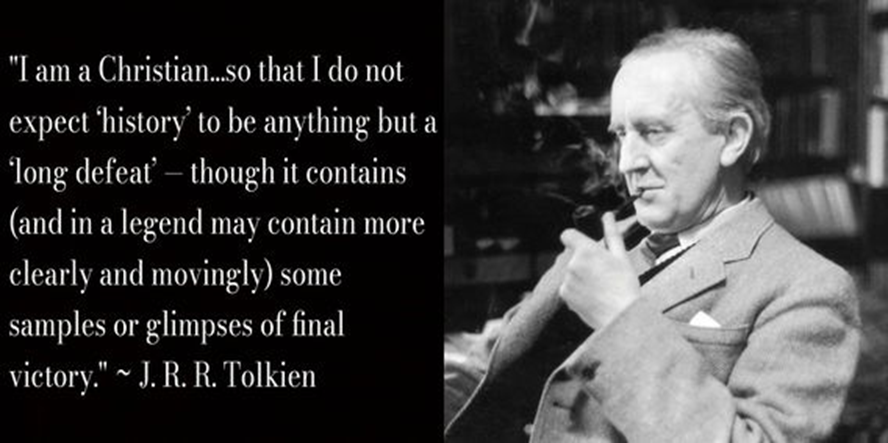

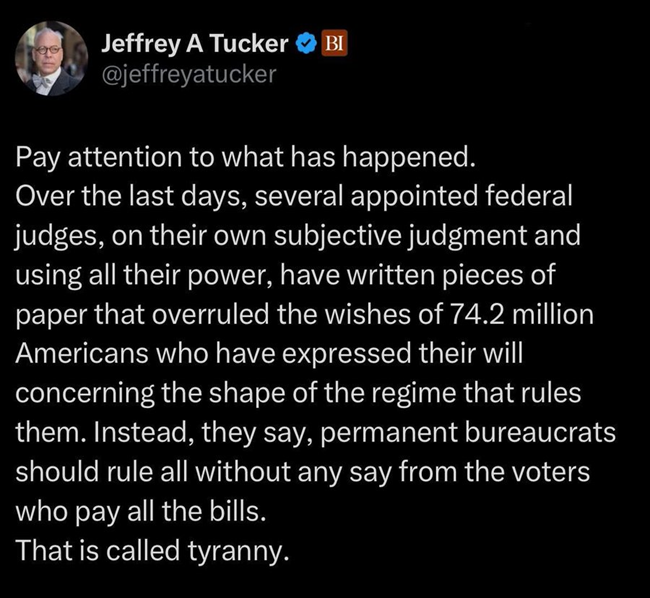



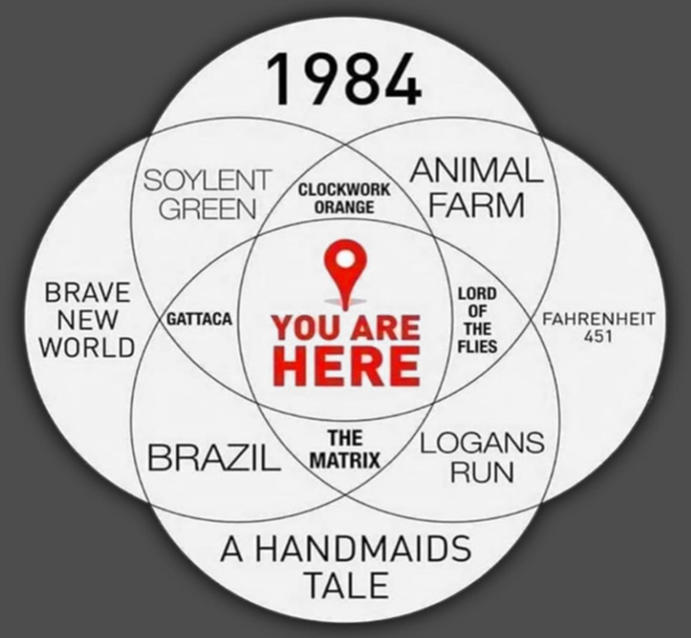

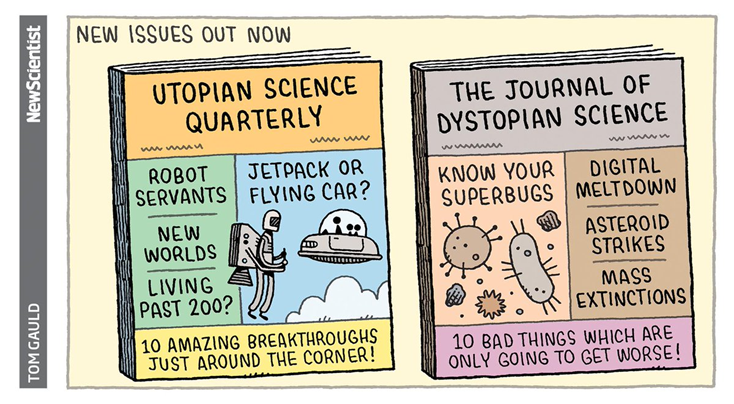





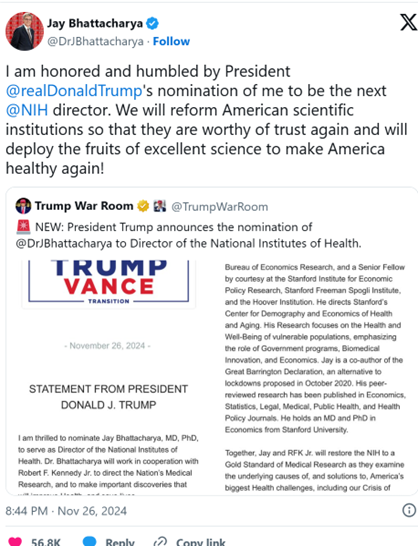


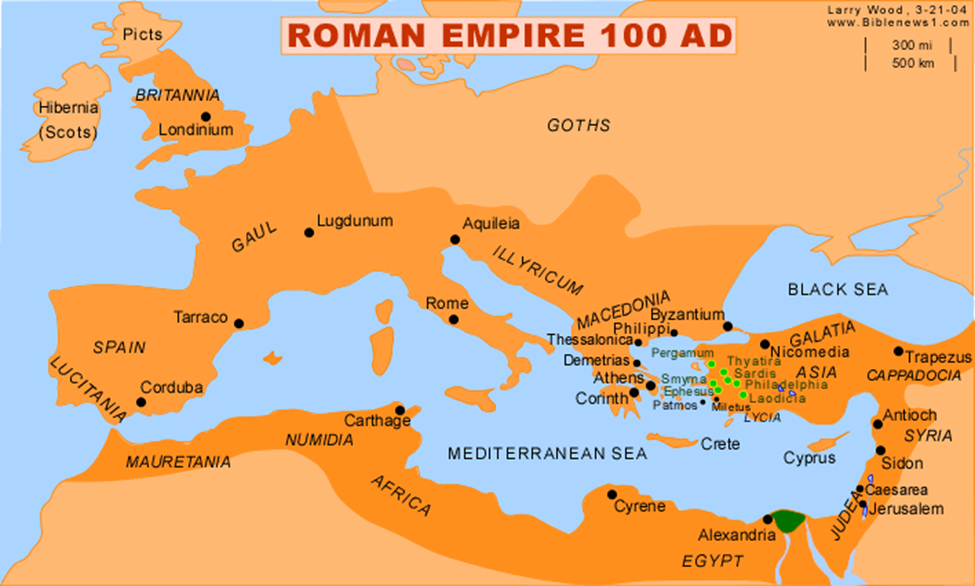

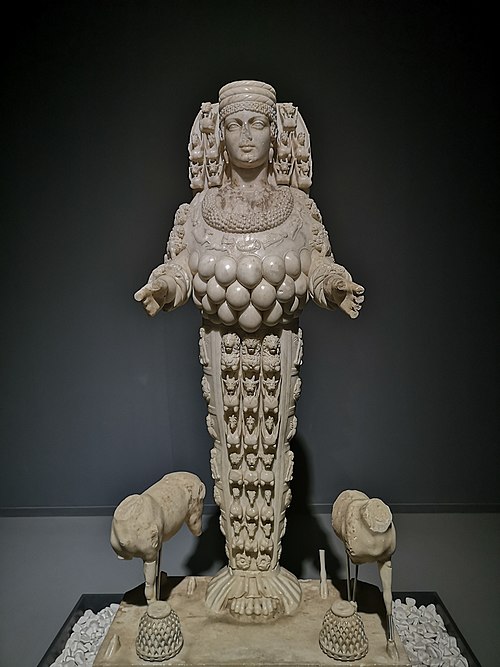


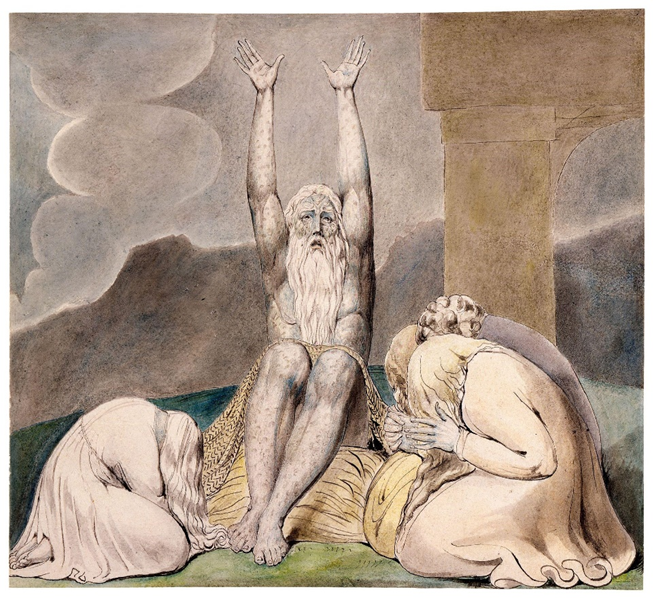


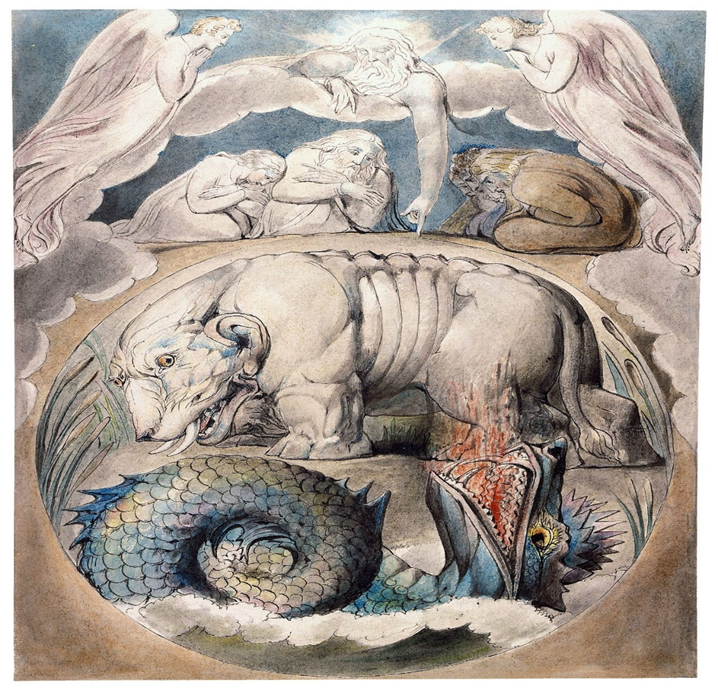







 Cindy Wity
Sea Change
March 8, 2025 Leave a comment
Primordial disorder is the image presented at the opening of the creation account in Genesis. The earth, formless and empty (tohu wabohu), was completely covered by a deep (tehom) sea.
When God began to create the heavens and the earth, the earth was complete chaos, and darkness covered the face of the deep, while a wind from God swept over the face of the waters. – Genesis 1: 1-2
Earth’s oceanic outer layer undergoes a sea change when the Spirit of God’s hovers.
Psalm 104: 5-9 describes, in poetic form, the ordering of the watery chaos:
He set the earth on its foundations;
it can never be moved.
You covered it with the watery depths as with a garment;
the waters stood above the mountains.
But at your rebuke the waters fled,
at the sound of your thunder they took to flight;
they flowed over the mountains,
they went down into the valleys,
to the place you assigned for them.
You set a boundary they cannot cross;
never again will they cover the earth.
Reading on in Psalm 104 (v. 10-13) we find function. Channeled water provides the basic necessity for life on earth. Food growth follows.
Chaos Creatures Serve a Function
Once the chaotic waters of the primordial sea had been assigned functions, God, on the fifth day, created sea monsters, figures of menacing chaos (Gen. 1:21). Why bring order and then allow chaos creatures to exist? By God’s wisdom, we live in a world that has order, non-order, and disorder (See video below).
Mythical creatures from pagan myths, function in scripture as symbols of primordial chaos and opposition to God: sea-monsters, serpents, beasts, and dragons. Revelation presents them as fighting against God’s faithful witnesses who are working to restore order and bring God’s kingdom on earth.[i]
Sea Change Number Two
God created (gave functions to) the material cosmos over six days. Genesis 1 is a day-by-day account of establishing order from primordial disorder, establishing anthropic conditions and temple building. God pronounced each step in functional readiness “Good.” On the seventh day, he ‘rested’ in his temple to survey what had been done. The temple garden is a metaphor for the world.
Genesis 2. Mankind is placed in the temple garden and given instructions to maintain the good by God. But mankind goes off in a disordering direction. Evil and chaos ensues. God then acts to undo creation with the flood waters of chaos[ii] and to restore his “good” creation. Noah is the new caretaker.
Now the earth was corrupt in God’s sight and was full of violence. God saw how corrupt the earth had become, for all the people on earth had corrupted their ways. So, God said to Noah, “I am going to put an end to all people, for the earth is filled with violence because of them. . .
I am going to bring floodwaters on the earth to destroy all life under the heavens, every creature that has the breath of life in it. Everything on earth will perish. Genesis 6: 11-13, 17
Sea Change Recalled
One day, Jesus’ disciples wanted Jesus to notice the temple buildings. Jesus then foretold the destruction of the temple. The perplexed and anxious disciples asked “Tell us, when will this be, and what will be the sign of your coming and of the end of the age?”
Jesus goes on to speak of the signs of the end of the age. He then speaks about the necessity of watchfulness for, he tells them, no one knows the day or hour when end things will come to pass. To underscore this, he references a familiar story that involved a cataclysmic event that caught many unprepared.
For as the days of Noah were, so will be the coming of the Son of Man. For as in the days before the flood they were eating and drinking, marrying and giving in marriage, until the day Noah entered the ark, and they knew nothing until the flood came and swept them all away, so, too, will be the coming of the Son of Man. – Matthew 24:36-39
History Lesson About the Moral Universe
The apostle Peter, in his second letter, tells his readers that there are scoffers who are saying that things on this earth have always continued the way they are now. He reminds them that this is not true. The earth was different when it was created and it was different again after the flood. He warns them that no one should scoff that God will make it different once again, judging the godless not with water but with fire. (2 Peter 3)
Jesus’ second coming will be a sea change for all of creation. Chaos will be removed.
It is Time for a Sea Change
Peter warned his readers, with reference to the Great Flood, about what can be expected if they continue as they are. John the Seer, alluding to the Great Flood in Revelation, writes that it is time (in his prophetic timeline) “for destroying those who destroy the earth.” – Revelation 11:18
“The ‘destroyers of the earth’ are the powers of evil: the dragon, the beast, and the harlot of Babylon (who in [Rev.] 19:2 is said to have ‘corrupted – or destroyed – the earth with her fornication’). With their violence, oppression, and idolatrous religion they are ruining God’s creation. His faithfulness to his creation requires that he destroy them in order to preserve and deliver it from evil. . . This he did in the flood, which was a divine judgement aimed at delivering God’s creation from the ruinous violence of its inhabitants.”[iii]
John the Seer wrote Revelation in the context of the tyranny of the Roman Empire, the imperial cult, and a permissive and polytheistic culture. The apostle Paul, in the same setting, writes to a church with a more detailed description of the ruinous inhabitants of the earth and their similar fate:
Do you not know that wrongdoers will not inherit the kingdom of God? Do not be deceived! The sexually immoral, idolaters, adulterers, male prostitutes, men who engage in illicit sex, thieves, the greedy, drunkards, revilers, swindlers—none of these will inherit the kingdom of God. -1 Corinthians 6:9-10
I imagine that the proud, the perverse, the purposefully vague, the self-serving, and those who want to create a new humanity with demonic forces[iv] – any who plunder the created order for power, wealth and self-righteous ends will be met with divine judgement. Some will receive punishment that matches their sin (Rev. 16:8; 18:6; Rev. 22:18-19).
John the Seer prophesied about an end time involving a series of warning judgements to bring about repentance and the ultimate restoring of creation’s order from mankind’s reversion of it to chaos.
Final Sea Change
Scripture begins by telling an old story and ends by retelling the old story with a new and final outcome. Both narratives involve chaos and creation. The lynchpin of the two theological narratives – Genesis 1-11 and Revelation – and of history itself is the earthly, risen, and returning Jesus.
A final sea change occurs to restore creation. John the Seer writes:
Then I saw a new heaven and a new earth, for the first heaven and the first earth had passed away, and the sea was no more. –Rev. 21:1
Creation is not destroyed, just as it wasn’t with the Great Flood. Rather, creation’s corrupting influence is removed. Think in terms of no longer being overcome by evil but the overcoming of evil with good. Think in terms of “if anyone is in the Messiah, there is new creation! Old things have gone, and look – everything has become new!” (2 Cor. 5:17)
“The waters of the primeval abyss, that represent the source of destructive evil, the possibility of the reversion of creation to chaos, are finally no more.”[v]
~~~~~
Lent is a time for a sea change. It’s a time to remove chaos from your life.
This Lent appears to be the first time that corruption, misuse of funds, money laundering, excess, and disorder in the government are being shown the detox door. Hence, the weeping and gnashing of teeth in the MSM. Hence, destroyers of the earth want the chaos to continue as before.
A leviathan in Washington recently surfaced. What emerged was corrupt and destabilizing influence involving actors in the State Department, the Department of Defense, the “deep state”, the unaccountable administrative state, the unchecked CIA meddling in foreign affairs and a politically motivated FBI meddling in internal affairs, activist DOJ and federal judges, shady non-profits, and the propaganda of the MSM to maintain cover for the chaos.
Maelstroms are sucking us in: a proxy war with Russia, Middle East conflicts, a huge federal deficit, out of control spending by Congress, the Green New Deal wealth redistribution scam, and what to do with the over 12 million illegal economic migrants bringing with them neediness, disease and crime.
In the first 50 days of the Trump administration, ICE reported arresting over 14,000 convicted criminals, 9,800 migrants with pending criminal charges, 1,155 suspected gang members, and 44 foreign fugitives.
An additional 8,718 arrests were categorized as “immigration violators.”
ICE has arrested 32,000 violent criminals in Trump’s first 50 days.
And there’s a new beast on the horizon – AI.
AI is being touted as a new pathway to greater productivity (Why do we need that? For greater profits? To be unburdened by what has been?). It is said that disruptive AI will transform the workplace, replace jobs, shake up economies and reshape global alliances. Our world, with Promethean AI, will look different by 2030. AI will look at us differently, too.
~~~~~
Dr. John Walton, Job, Lecture 25, The world in the Book of Job: Order, non-order and disorder
[i] The creation of the “sporty” Leviathan (Ps. 104:26), a creature that cannot be tamed, shows us God’s mastery over powerful creatures. Leviathan was used metaphorically to instruct Job (Job 41). Job (a behemoth-like creature) cannot tame God to his ideas of how the world works.
[ii] Consider that several ancient Near East accounts of a devastating flood were understood as a god using force to restore order in the world. See Genesis 6-9 for the theological interpretation of the mythic flood.
The writer of the Genesis Flood account, using hyperbole, wanted to impress upon the reader the theological implications of a universal “cataclysmic event” that occurred to restore creation. There was no global deluge, as science has determined and Ps 104: 9 indirectly states. No matter. The author wanted the reader to understand the theological significance of God’s act.
See also Genesis and the Flood: Understanding the Biblical Story – Article – BioLogos;
The Lost World of the Flood: Mythology, Theology, and the Deluge Debate
The Flood – Undeceptions
[iii] Bauckham, Richard. (1993/2018). The Theology of the Book of Revelation. Cambridge University Press, 1993. https://doi.org/10.1017/cbo9780511819858. PP 52
[iv] Yuval Harari, historian and futurist, gay Israeli and WEF advisor comes to mind and so does the N.I.C.E., The National Institute of Coordinated Experiments in That Hideous Strength by C.S. Lewis
[v] Ibid 53
~~~~~
Protect our food supply from the Cure worse Than the Problem
Action Over Talk: Join the Nationwide Protest Against Food Supply mRNA!
This Friday, Americans across the country are coming together to take a stand. Concern is growing as Secretary Rollins moves closer to approving mRNA vaccines for the beef, dairy, and poultry industry to combat diseases like Avian Flu. Many are voicing their opposition, demanding that these vaccines not be used in our food supply.
Make Your Voice Heard! Flood Secretary Rollins’ email with your concerns:
AgSec@usda.gov
Contact Secretary of Agriculture Brooke Rollins of whitehouse
Here is a structured email template for Secretary @BrookeLRollins:
Subject: Immediate Halt to Meat Supply Vaccination
Dear Secretary Rollins,
As Americans who supported the election of Donald J. Trump, we are deeply concerned about your plan to introduce vaccines into our nation’s meat supply, including pork, cattle, poultry, and even seafood.
We do not merely request a pause—we demand a complete and permanent stop to this effort. The American people will not accept government-mandated intervention in our food supply, especially without full transparency and consent.
If the USDA continues to push forward with testing and implementation of the H5N1 vaccine, we are prepared to take action. Our voices will not be ignored, and we will make it clear to President Trump that millions of Americans oppose this overreach.
We stand firm in our right to protect our food, our health, and our families. This is non-negotiable.
Sincerely,
[Your Name]
[Your State]
With the news that mRNA vaccinated beef, dairy, eggs, and poultry are already in the food supply, some are demanding to know where our Secretary of Health is. You’ll be pleased to know he’s practicing self-care with long walks in the mountains, while currently reposting advice from the CDC.
https://x.com/SecKennedy
Rate this:
Filed under apocalypse, Christianity, creation, creation care, Culture, Political Commentary, Revelation, Revelation Tagged with apocalypse, atheism, Bible, chaos, Christianity, creation, culture, faith, God, Jesus, Kingdom of God, prophecy, Revelation, The Great Flood