Revolutions of the Soul
November 12, 2023 Leave a comment
Know this: the issue, whether abortion, gender, sexuality, racism, capitalism, equality, colonialism, Jews or some other oppressor/oppressed power struggle– the issue is never the issue. The revolution is the issue. The key question of any revolution is who holds power, as Lenin wrote.
Many of the revolution’s WOKE reactionaries are blinded by the mythic romance of revolution. Pursuit of revolution itself is seen as something valuable, as taking part in something stylishly ‘Che Guevarean’ and adventurous and something to be passionate about. It may be a religion for some.
The revolution’s WOKE reactionaries are OK with creating suffering and totalitarianism as long as the rhetoric is about total transformation, whatever that entails.
The revolution of the hour: for the destruction of the Western world; we are to be the causalities and they, the martyrs in their romantic myth.
I’ve learned how true revolution takes place. It’s not through mad passions but through everyday empathy and love and the tiny alterations of the heart and mind that move us in that direction . . .
~~~
Literary critic Joseph Epstein, with the title of his book-length essay, asks The Novel, Who Needs It? Turns out, I do, as it offers “truth of an important kind unavailable elsewhere in literature or anywhere else.”
So, I’ve made it a point to read the realist fiction of Russian writers – Solzhenitsyn, Dostoyevsky, Tolstoy, and others along with Chekhov’s short stories.
With a sense of moral urgency, fiction-writing has always been serious business for Russians. The great writers were the truth-tellers, the prophets, the voice of the voiceless, and the conscience of a nation— “a second government,” as Alexander Solzhenitsyn once put it.
Why read great novels and Russian literature today? Gary Saul Morson provides his reasoning:
Like realism in painting, the realism in Russian fiction captures life with an accurate, detailed, unembellished depiction of life. It rejects flowery idealization, fantasy, and supernatural elements, and presents close observation of the human experience which can lead to personal discovery.
Life’s most important questions are explored in Russian fiction. The open-endedness of the writing leaves one to ponder the choices one is making. Literary realism can be grounding.
Ultimately about ideas, superior fiction shows how ideas -ideology and love for two examples – are played out in the lives of the characters. Over time, with tiny alterations, they change their minds –- and you see their conversion. Character development in literary realism is important.
“A single novel can touch on the wildest adventure but also dwell on the most private personal psychology,” writes Epstein. He gives the example of Moby Dick. I went with Tolstoy’s Anna Karenina for the latter.
Anna Karenina (1878), a novel about love and the family, explores the lives of its characters. Some pursue romantic love and others develop mature love. There are heroes and villains in Tolstoy’s most pro-family story.
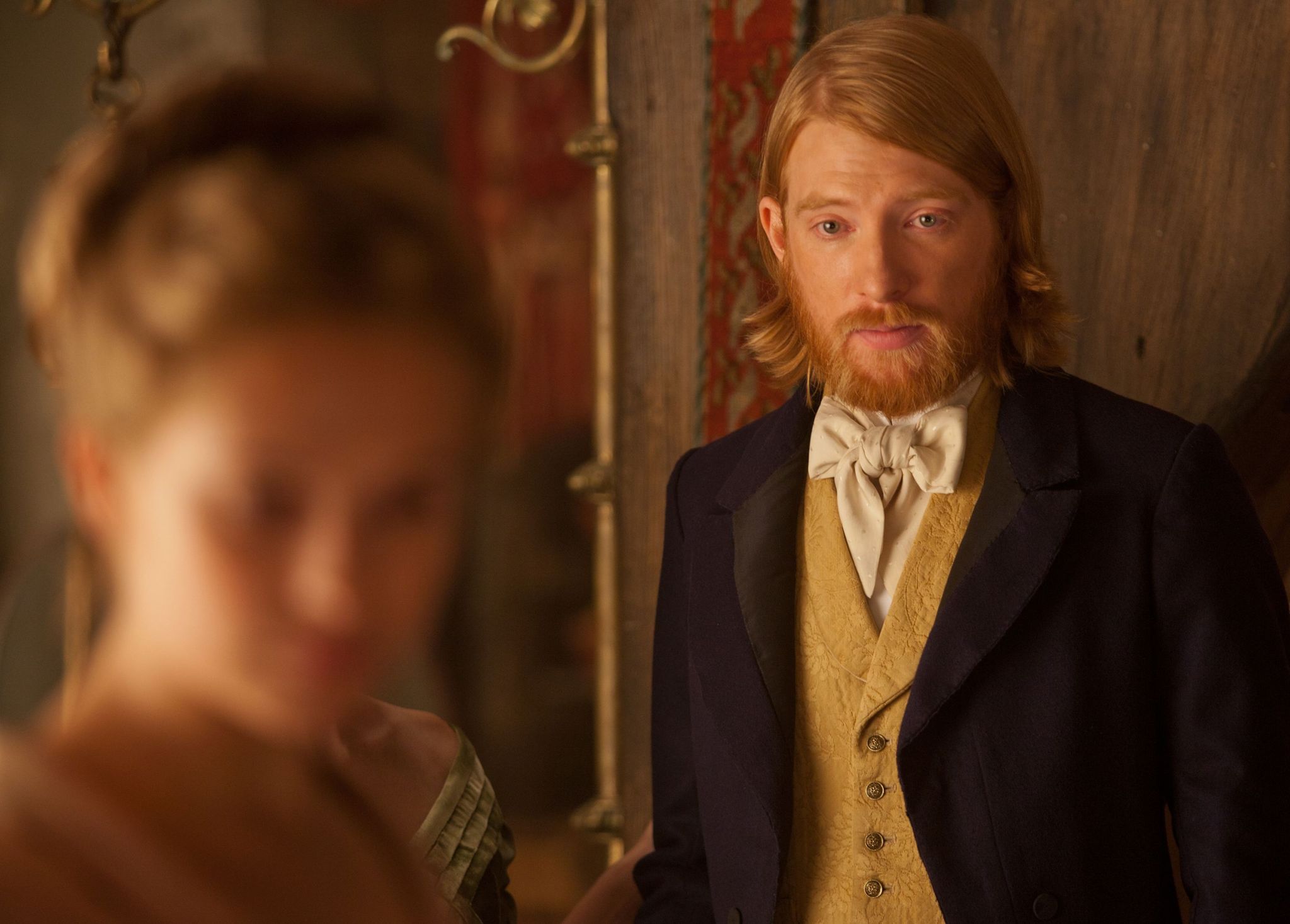
The consequences of infidelity and the compromises made for forbidden love begin to add up for both Anna and Stiva. In contrast are those well-married and living a rather prosaic life – Kitty and Levin. Over time and with many intimate conversations to understand each other, they have matured from romance to love and found contentment.
Tolstoy at 68 years of age, had just finished Anna Karenina. It has been said by some that as he wrote Anna, Tolstoy was going through a spiritual crisis. He perhaps goes through a very similar spiritual conversion as does Levin.
Tolstoy had been as baptized and raised according to the principles of the Orthodox Christian Church. But later, at eighteen, he said “I no longer believed in anything I had been taught.” I see that as a typical eighteen-year-old response to what feels confining and irrational.
But Tolstoy moves from staunch atheist to a firmly spiritual person. He believed that God was the answer to the type of carnal excess and groundless passions found in the Anna and Vronsky relationship.
Were Levin’s thought processes and his spiritual journey, his tiny alterations of consciousness, also Tolstoy’s spiritual journey? We get a sense of spiritual crisis, of spiritual revolution, and of spiritual maturation in the following four excerpts.
Tolstoy narrates the birth of Levin’s son almost entirely from the new father’s point of view. The birth of his son sparks a spiritual breakthrough in Levin.
Anna Karenina, Part 7, Chapter 13
One night, Kitty awakens Levin with news that her labor has begun. Levin is beside himself, aware only of her suffering and the need to alleviate it. Kitty sends Levin to fetch the midwife and the doctor and to get a prescription from the pharmacist. As he heads for the door, Levin hears a pitiful moan.
“Yes, that’s her,” he told himself, and clutching his head, he ran downstairs.
“Lord have mercy! Forgive us, help us! He repeated the words that suddenly came to his lips out of nowhere, and he, a nonbeliever repeated these words not only with his lips. Now, at this moment, he knew that neither all his doubts nor the impossibility of believing with his reason, which he had known in himself, in any way prevented him from turning to God. Now all that flew from his soul like dust. Who else was he to turn to if not to the One in whose hands he felt himself, his soul, his love?”
Gary Saul Morson, in Anna Karenina in Our Time: Seeing More Wisely,73:
“His reason suspended out of intense empathy, Levin, an unbeliever on rational grounds, finds himself praying, and not “only with his lips” (738). Why he, an atheist, prays sincerely at this moment becomes for him a riddle touching on life’s essential meaning. Desperate to do something but with nothing to do, Levin simply has to endure, a state that (as we shall see with Karenin) provokes the soul torn from its habitual responses to experience the sublime.”
Anna Karenina, Part 7, Chapter 14
Levin is floored, angry that the pharmacist preparing the opium and the doctor drinking his coffee are so laid back – taking their time – about the approach of the birth. He’s in such a state he can’t think straight. For them, the birth was an ordinary event. But for landowner Levin, who had been primarily concerned with farming and agricultural and was writing a theory book about it, there was no place to catalog the event.
Levin has no way to analyze what is happening. “All the usual conditions of life without which it is impossible to form a conception of anything ceased to exist for Levin. He had lost the sense of time.”
When Levin hears Kitty’s first scream, Levin is nonplussed. He has so bonded to Kitty over time that, in empathy, he suffers intense agony. He had experienced the same intense feelings and helplessness as his brother was dying.
“He knew and felt only that what was transpiring was similar to that which had transpired a year before in the provincial town hotel at his brother Nikolai’s deathbed. But that had been grief – and this was joy. Still, both that grief and this joy were identically outside all of life’s ordinary conditions; they were like an opening in that ordinary life through which something sublime appeared. What was transpiring had come about with identical difficulty and agony; and with identical incomprehensibility, the soul, when it did contemplate this sublime something, rose to a height as it had never risen before, where reason could not keep up.
“Lord, forgive and help us,” he repeated to himself incessantly, feeling, in spite of such a long and seemingly total estrangement, that he was addressing God just as trustingly and simply as during his childhood and first youth.”
Anna Karenina, Part 7, Chapter 15
Watching his brother die, Levin thinks that death is a cruel joke – you live, suffer, struggle and suddenly cease to exist. Now seeing his wife in such a painful state and thinking she is dying, he is beside himself: he “had long since given up wanting the child. He now hated the child. He didn’t even wish for her life now, he only wanted a cessation to these horrible sufferings.” New life brings new suffering.
But with the birth of his son and being anchored to life by his new family, Levin then understands that death is merely part of life. He maturely concludes that if one lives “for one’s soul” rather than for illusory self-gratification, the end of life is no longer a cruel trick, but a further revelation of life’s truths.
“If Levin had been told before that Kitty was dead, and that he had died with her, and that their children were angels, and that God was standing before him, he would have been surprised at nothing. But now, coming back to the world of reality, he had to make great mental efforts to take in that she was alive and well, and that the being howling so desperately was his son. Kitty was alive, her suffering was over. And he was inexpressively happy. This he understood and it made him completely happy. But the child? Where had he come from, and why, and who was he? He simply could not understand, could not get used to the idea. It seemed to him something superfluous, something extra, which he could not get used to for a long time.
Anna Karenina, Part 7, Chapter 16
A changed man.
“At ten o’clock the old prince, Sergey Ivanovitch, and Stepan Arkadyevitch were sitting at Levin’s. Having inquired after Kitty, they had dropped into conversation upon other subjects. Levin listened to them and during these conversations could not keep from recalling what had come to pass, what had happened prior to this morning, recalled himself as he had been yesterday, before all this. It was as if a hundred years had passed since then. He felt as if he were on some in accessible height from which he was making an effort to descend in order not to insult the people he was speaking to. He spoke and thought incessantly about his wife, the details of her present condition, and his son, to the idea of whose existence he was trying to accustom himself. The entire feminine world, which had taken on for him a new, previously unknown significance since he had been married, now in his mind had risen so high that his mind could not grasp it. He listened to the conversation about dinner yesterday at the club and thought, “What is happening with her now? Has she fallen asleep? How is she feeling? What is she thinking? Is my son Dimitri crying? And in the middle of the conversation, in the middle of a sentence, he jumped up and left the room.”
. . .
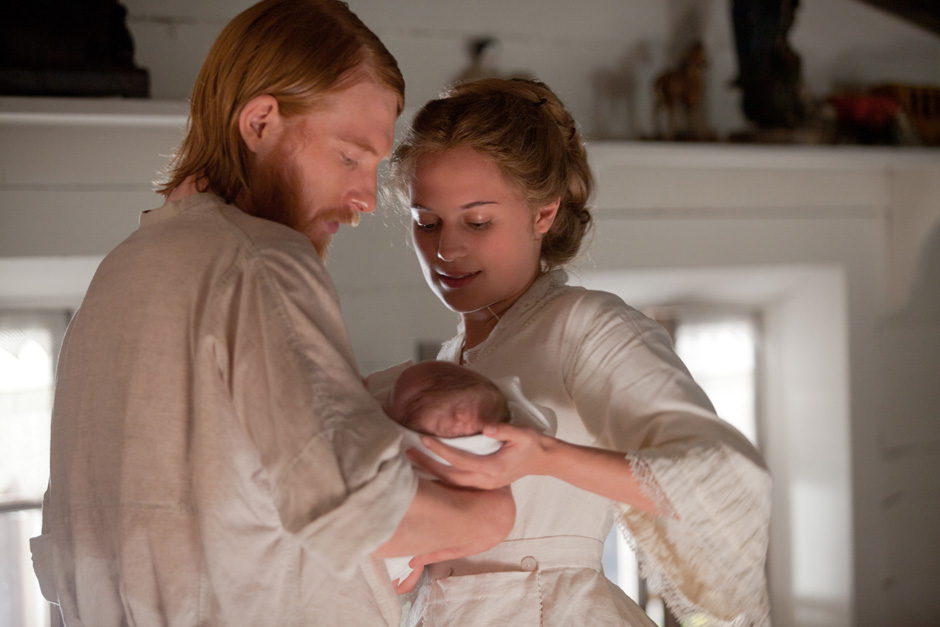
“Her gaze, bright in any case, shone even more brightly the closer he came. On her face was that same alteration from earthly to unearthly that one sees on the face of the dead; but there it is farewell, here a welcome. Again agitation similar to what he had experienced at the moment of the birth overwhelmed his heart. She took his hand and asked him whether he had slept. He couldn’t answer and turned away, convinced of his own weakness.
~~~
These four excerpts offer an opening into the ordinary life of Levin and Kitty. Other characters, the novel’s headliners Anna and Vronsky, go through significant turmoil over their decisions. Dolly, whose husband Stiva was unfaithful, stands out. But not for bad decisions or for the number of mentions, but for her care and love. She simply does what is needed and shows Christian love.
I’ll end with a quote from Gary Saul Morson’s Anna Karenina in Our Time: Seeing More Wisely:, 190:
“In this novel, Christian love produces monstrosity, and real saintliness, if the term can be so used, is inconspicuous. It does not sound a trumpet.
Any doctrine that defies human nature and everyday practices will, if backed by sufficient force, create much greater suffering than it sets out to alleviate. A movement that is truly “revolutionary” – that, like Bolshevism, sets out to change human nature entirely – will create evil on a scale not seen before the twentieth century. Tolstoy saw Christian love, revolutionism, and all other utopian ways of thinking as related errors. If so, they are errors of our time, and perhaps prosaic goodness offers the best hope of correction.”
I would correct the above with “Tolstoy saw insincere Christian love . . .”
~~~~~
The Abiding Truths of Russian Literature – A Conversation with Gary Saul Morson
The Abiding Truths of Russian Literature: A Conversation with Gary Saul Morson – AlbertMohler.com
~~~~~
2017 marks the centenary of the Bolshevik Revolution, an event that tragically reshaped Russian and Western history. How such an extraordinary event, and the ghastly regime it produced, could ever have happened depended not only on a great war, and the theoretical arcana of Karl Marx but, perhaps even more, on the outlook of the Russian intelligentsia and its assumptions about its social role. These same psychological and ideological predispositions continue to be found among intellectuals today. Hence, understanding the cultural setting of the Russian Revolution also helps us understand some of the more dangerous currents in contemporary intellectual life.
“Russian Lessons from 1917” – Gary Saul Morson – YouTube
~~~~~



 Cindy Wity
Daylight on the Garden of Good and Evil
March 19, 2023 Leave a comment
In the early chapters of Tolstoy’s Anna Karenina, we are introduced to the winsome character Stiva Oblonsky. With a smile and self-possessed mannerisms, he draws the attention and affections of many. He comes across as likeable, amiable and nothing out of the ordinary – as one of us. Yet, the first thing we read is that Stiva has thrown his household into chaos.
We immediately learn that he has been unfaithful to his wife, Dolly. He’s had an affair with their children’s former governess. We go on to learn that Stiva is remorseful of the exposure of the affair but has not one iota of remorse about what he has done: “He repented only that he had not done a better job of concealing this fact from his wife.”
When confronted by a note exposing his adultery, Stiva worried more about his response than about the hurt he caused his wife. The narrator gives us insight into that moment:
“Instead of taking offense, disavowing it, justifying himself, begging forgiveness, even feigning indifference – anything would have been better than what he did do! – his face, quite involuntarily (“the reflexes of the brain,” thought Stepan Arkadyevich, who was fond of physiology), suddenly, and quite involuntarily, broke into his usual good-nature, and thus foolish, smile.”
Stiva passes the blame for the mess he’s in: “That foolish smile of mine is to blame for everything”. It is his smile that first endeared him to Dolly. And now, as a response that appears to mock remorse, the smile allows Dolly to begin to see what lies behind Stiva’s beguiling demeanor.
Stiva’s evil is not the blatant action-taking evil. History has a record of such people. Rather, it is the absence of good. Stiva forgets, neglects, and fails to act. We get a sense of this in Part III, chap. 7:
“No matter how hard Stepan Arkadyevich (Stiva) tried to be a concerned father and husband, he never could remember that he had a wife and children.”
Remembering is unresolved grief. It’s not for a committed hedonist such as Stiva. He would never embrace suffering. And remembering brings guilt and guilt is suffering, so he is willing to tolerate a sense of sin to get on with life. Life’s unpleasantries are a bother. His forgetfulness is achieved with a smile and social acceptance. Stiva “was the familiar friend of everyone with whom he took a glass of champagne, and he took a glass of champagne with everyone”.
Behind Stiva’s good-natured smile is what Tolstoy described as “the liberalism of the blood”. Stiva fostered an easy-going liberal mindset:
“Stepan Arkadyevitch took and read a liberal newspaper, not a radical one, but one advocating the viewpoint maintained by the majority. And even though neither science, nor art or politics held any particular interest for him, he firmly maintained the same views on all these subjects that were maintained by the majority and by his paper, and he changed them only when the majority changed them, or, better put, he did not change them at all; they imperceptibly changed within him . . .
“And so liberalism had become a habit of Stepan Arkadyevitch’s, and he liked his newspaper, as he did his cigar after dinner, for the slight fog it diffused in his brain.”
Reading further, we find Tolstoy contrasting the ordinariness of self-giving love, as expressed by Dolly, with the ordinariness of Stiva’s self-satisfying evil, expressed without ill-will or bitterness. Making waves would disrupt his complacency and the slight fog diffused in his brain.
For many years I’ve enjoyed reading Russian literature. Russian history has veered toward extremes – totalitarianism and atheism produced by the intelligentsia aka politically connected radical socialist atheists. Russian literature offers a window into the life and times of Russia, its people, and the thinking that led to so much suffering.
Realism abounds in the works of Solzhenitsyn, Chekhov, Dostoevsky, and Tolstoy. Ultimate questions and meaning of life issues are openly dealt with. No AI. No BLM, CRT, LGBTQ, pandering, no Wokey-dokey or playing with pronouns. Just serious adult things.
With Anna Karenina Tolstoy portrays prosaic good and evil, self-deception, and the nature of love – the seemingly fate-occurring dramatic love of romance vs. the committed non-trumpeting prosaic love that does good, i.e., cares for the family. With more than a dozen major characters and around 800 pages, the novel fleshes out the first line: “All happy families resemble one another; each unhappy family is unhappy in its own way.”
Once you read Anna, I think you’ll find that Tolstoy’s characters, including the absence-of-good Stiva, are not unique. You may find yourself in their stories and perhaps the impetus for change.
*****
Consider that Stiva is the first transhumanist. Look at his utter acquiescence to whatever is printed and accepted by the majority. And look at his attitude– cooly dispassionate and compliant. He’s a non-entity with a pasted-on smile.
*****
I coined the term “pornservatives” to describe the type of person who on paper or in person looks like a good old-fashioned red-state conservative, but in practice is living a morally dubious lifestyle antithetical to anything that resembles “conservatism” or “trad” values.
Hicklibs on Parade – The American Mind
*****
Tell me, where is the wisdom when you promote experimental COVID vaccines and refuse to promote safe, effective, and cheap repurposed drugs? (REPORT) US heath officials hid urgent recommendation to use ivermectin for Covid | Sharyl Attkisson
“So [the effect of the COVID vaccine] is negative, and that continues. The magnitude of that negativity increases over time. What does that mean, folks? It literally means that the people who received that vaccine were more likely to contract COVID-19 after seven months than the people who did not. That is a fact, has the CDC or FDA ever said a word about that? No.”
“I’m Not Sure Anyone Should Be Taking Them” – Florida Surgeon General Declares mRNA COVID-19 Vaccines Have a “Terrible Safety Profile” (VIDEO) | The Gateway Pundit
Tell me, where is the wisdom of financially befitting – with tax-payer dollars – NGOs like Catholic Charities who are doing the bidding of godless globalists under the pretense of Christian charity? Such groups aid and abet illegal border crossings which undoubtedly involve the trafficking of children, of criminals and of fentanyl? Such involvement serves to dilute and weaken the U.S. with an America hating Progressive/Globalist agenda.
Tell me, where is the wisdom when you employ out-of-control spending and money printing that leads to expected out-of-control consequences such as inflation and devaluation of the dollar?
Modern Monetary Theory (MMT) has been embraced by progressives, like Rep. Alexandria Ocasio-Cortez, who see MMT as the means for increased government spending that could help finance initiatives such as the Green New Deal policy on climate change and, of course, buy votes.
MMT says that a government can basically blow as much money as it wants to boost its economy as long as that government borrows in its own currency because it can always just print more money. This allows the government plenty of room for free spending without forcing it to raise taxes. It also means it would be impossible for that government to default on its debts.
“The central idea of MMT is that governments with a fiat currency system under their control can and should print (or create with a few keystrokes in today’s digital age) as much money as they need to spend because they cannot go broke or be insolvent unless a political decision to do so is taken.” – Modern Monetary Theory (MMT): Definition, History, and Principles (investopedia.com)
“According to MMT, the only limit that the government has when it comes to spending is the availability of real resources, like workers, construction supplies, etc. When government spending is too great with respect to the resources available, inflation can surge if decision-makers are not careful. (Emphasis mine)
The Failure of MMT Is Now Evident (noqreport.com)
And so it is the political decision of Democrats and Globalists to leave the southern border wide open for the infusion into the economy of low-cost workers to help finance MMT spending for such progressive legislation as universal healthcare and other public programs for which governments claim to not have enough money to fund:
During the past 25 years, low interest rates and highly expansionary monetary policy with little apparent inflation have created the illusion that a government can simply print money to fund exorbitant deficit spending with no repercussions. This core tenet of so-called “modern monetary theory” ignores the fact that deficit spending is constrained in the long run by a government’s ability to satisfy creditors. (Emphasis mine)
MMT and Government Finance: You Can’t Always Get What You Want | Richmond Fed
*****
Informed Dissent:
“I Was Severely Injured by the Moderna Vaccine” – Former Pussycat Dolls Member Shares Her Vaccine Injury Story (VIDEO) | The Gateway Pundit
UPDATE: Contracts Released For CDC Purchasing Of Phone Data To Track Americans’ Compliance With COVID Lockdowns | The Gateway Pundit
Too many doctors and nurses to count in recent months have told me about the alarming rise in sudden cancers in young people since the introduction of the experimental COVID vaccines.
“Turbo Cancer” Comes For The Vaccinated (substack.com)
(REPORT) US heath officials hid urgent recommendation to use ivermectin for Covid | Sharyl Attkisson
TRAGIC: 37-Year-Old Italian Swimmer Reportedly Took His Own Life After a Long Period of Suffering Due to COVID Vaccine Reaction | The Gateway Pundit
Chicago:
Indiana:
We need your help to protect parental rights in Indiana! HB1407 is the bill we emailed you about a few weeks ago that protects parents’ rights to direct the care and upbringing, education, health care, and mental health of their minor children. The bill passed through the House at the end of February, but with concerns held by a few judges. The bill’s author, Rep. Dale DeVon, advocated hard for the bill on the House floor and thankfully, the bill passed through to the Senate.
Sadly, several groups are trying to kill this important piece of legislation, despite Rep. DeVon’s assurances that the judges who have reservations would be able to testify in the Senate committee, as well as his vow to work with them on amendments that would resolve their concerns.
HB1407 is a parental rights bill that protects parents’ rights to direct the care and upbringing, education, health care, and mental health of their minor children. The bill passed through the House at the end of February, but with concerns held by a few judges. The question is whether the Senate will hear and pass the bill despite the judges’ concerns.
Take action here to support HB1407>>>>
INDIANA: Parental rights bill in danger | Stand for Health Freedom
Health Freedom Advocacy Center | Stand For Health Freedom
Under the guise of “health education” the grant focused on coercing those in poorer communities to get vaccinated against COVID-19.
Florida’s Collier County rejects CDC/NIH grant, logging an important win for health freedom | Stand for Health Freedom
Canada:
Where are other pastors like Pastor Derek Reimer? Are they hiding behind Romans 13?
Read this for background on above >>>>
Breaking: Calgary pastor arrested protesting new law limiting anti-drag show demonstrations – Rebel News
J6 FedSurection:
HE HAS THE PROOF: DC Gulag Political Prisoner and Decorated Army Special Forces Soldier Jeffrey McKellop Reveals Extent of Government Agents at J6 Capitol Protest – IT WAS A COMPLETE SET-UP! (Audio) | The Gateway Pundit
DOJ Claims Trump Tweet Started Jan 6, but Bodycam Suggests Tear Gas Sparked Crowd – Valiant News
J6 Political Prisoner Matthew Webler: The FBI Raided His Home After He Walked into the US Capitol with a Flag – Then Feds Came Back and Took His Son | The Gateway Pundit
Ugh! Mike Pence:
Mike Pence Pandering To D.C. Media Is Pathetic And Disqualifying (thefederalist.com)
In caving to corporate and elite pressure to “fix” Indiana’s Religious Freedom Restoration Act, Gov. Mike Pence and the rest of the state’s laughingstock Republican leadership have ironically bungled into amending it in a way that now makes Indiana the most hostile state in the country to the conscience rights the original law was designed to protect.
Indiana Is Now The Most Hostile State To Religious Freedom (thefederalist.com)
Professor: Indiana RFRA ‘Fix’ Could Send Christians to Jail (breitbart.com)
The Netherlands:
The strength of green feeling here, both for and against, is a bellwether for the struggle to come in other countries and farming economies. But BBB [the Farmer Citizen Movement (BoerBurgerBeweging] should not be dismissed as ‘anti-green’; rather farmers are more of a lime green versus the dark green of the eco activists, both of whom claim they want to protect the land.
Dutch farmers’ party secures landslide victory – The Post (unherd.com)
Unchanged Climate Change:
Banking Climate Change:
WSJ oped discusses why Silicon Valley Bank failed (unusualwhales.com)
Woke Silicon Valley Bank Gave Over $73 Million to Black Lives Matter Movement | The Gateway Pundit
Congress Takes Brief Pause From Sending All Your Tax Dollars To Ukraine To Send Them To Silicon Valley Bank | Babylon Bee
Why would anyone use a Tier 2 Bank… – CITIZEN FREE PRESS
“It doesn’t matter what you call it, it’s still privatizing the gains and socializing the losses.
So is your $250,000 bank guarantee you currently enjoy.
You have to have a deposit guarantee.”
“Biden’s Spending, Leads to the Biden Inflation, That Leads to the Biden Bonds, that Leads to the Biden Banks” – Steve Bannon Puts Entire Blame for Massive Financial Crisis We Are In Today on Biden | The Gateway Pundit
*****
Rate this:
Filed under 2023 current events, Climate change, Globalism, Literature, Political Commentary, Politics, Russian Literature, Short Story Tagged with Anna Karenina, evil, Globalism, Mike Pence, Modern monetary theory, open border, Tolstoy, transhumanism