The Dis-Mantled

A certain meticulous copyist, a bibulous tailor, a prominent personage, and a coat-stealing ghost walk into a short story by “Russia’s most baffling comic writer” Nikolai Gogol (1809–1852). Satirical and sobering, The Overcoat depicts the smallness of human concerns and the smallness of human hearts in the life of a ‘nobody’ dealing with exposure, humiliation, and public injustices. The Overcoat covers the dehumanizing problems of the “little man.”

The “little man” is a theme employed in 19th century Russian literature: “Due to his low social and career position, the “little man” had a difficult fate, which consisted only of difficulties and obstacles. “Little Man,” modest and meek in nature, was forced to endure humiliation. No one ever noticed such people who were completely defenseless against circumstances, no one helped them, which is why the life of a “little man” ended very tragically.”

The main character in The Overcoat is an unremarkable figure – a low-ranking government clerk. He is portrayed as a raw stripped-down version of humanity. He is a ghost of a man in the sense that his place in society is little or completely invisible.

Clerk Akaky Akakievich Bashmachkin lives a meager existence. He wears a patched-up overcoat that, with much wear, has also becomes meager. It doesn’t keep out the cold of the St. Petersburg winter.

Gogol’s clerk is also a “little man” in that his vital interests are extremely narrow, his world small. His self-contentment is derived from his copying work. There is something almost petty about his solitary life dedicated to repetitive work.

Unmarried and not gregarious, he doesn’t copy others who wanted more in life. Unlike many of his coworkers, he indulges in no diversion of any kind, not even the taste of his soup at night, to focus on copying. He goes to bed, after copying papers for pure enjoyment, “smiling at the thought of the next day and wondering what God would send him to copy.”

Of Akaky, Gogol writes:

“. . . in a certain department there was a certain official—not a very high one, it must be allowed—short of stature, somewhat pock-marked, red-haired, and short-sighted, with a bald forehead, wrinkled cheeks, and a complexion of the kind known as sanguine. . .  he was what is called a perpetual titular councilor, over which, as is well known, some writers make merry, and crack their jokes, obeying the praiseworthy custom of attacking those who cannot bite back.”

We learn that Akaky was given his father’s name, making him a copy of his father, a government official. When baby Akaky was christened, it was said that “he wept and made a grimace, as though he foresaw that he was to be a titular councilor.”

(A titular councilor was ranked at 9 out of l4 grades in the hierarchy of government positions.)

Akaky is seen as unchanging fixture and not human:

“When and how he entered the department, and who appointed him, no one could remember. However much the directors and chiefs of all kinds were changed, he was always to be seen in the same place, the same attitude, the same occupation; so that it was afterwards affirmed that he had been born in undress uniform with a bald head. No respect was shown him in the department. . . His superiors treated him in coolly despotic fashion.”

Akaky’s job was to copy official documents by hand and he is diligent in doing so. He worked, “as his companions, the wits, put it, like a horse in a mill.” Akaky doesn’t hate his uninteresting job:

“It is not enough to say that Akaky labored with zeal: no, he labored with love. In his copying, he found a varied and agreeable employment. Enjoyment was written on his face: some letters were even favorites with him; and when he encountered these, he smiled, winked, and worked with his lips, till it seemed as though each letter might be read in his face, as his pen traced it. If his pay had been in proportion to his zeal, he would, perhaps, to his great surprise, have been made even a councilor of state.

When given an opportunity to advance and do more – change titles and edit pronouns – Akaky tries the new work, gets flustered and says “No, give me rather something to copy.” He does not want to deviate from his first love – the repetitive work of copying. (He seems to spend a lot of time in his head. He does have an imagination as we find out later.)

“Outside this copying, it appeared that nothing existed for him. He gave no thought to his clothes: his undress uniform was not green, but a sort of rusty- meal color.   Never once in his life did he give heed to what was going on every day in the street. . . Akaky Akakievitch saw in all things the clean, even strokes of his written lines . . . “

And though Akaky kept to himself and minded his own business, he is nonetheless made sport of by those around him. He is a running joke in the office. His overcoat – “they even refused it the noble name of cloak, and called it a cape.”

But Akaky silently endures ridicule from co-workers, asserting himself only when they go too far. (He reminds of the quirky oft-rejected collator, Milton Waddams, in the movie Office Space.)

“The young officials laughed at and made fun of him, so far as their official wit permitted; told in his presence various stories concocted about him, and about his landlady, an old woman of seventy; declared that she beat him; asked when the wedding was to be; and strewed bits of paper over his head, calling them snow. But Akaky Akakievitch answered not a word, any more than if there had been no one there besides himself. It even had no effect upon his work: amid all these annoyances he never made a single mistake in a letter.”

Then one time, Akaky does protest the harassment: “Leave me alone! Why do you insult me?”

These words affect a new hire who had participated in the constant teasing:

“In these moving words, other words resounded —” I am thy brother.” And the young man covered his face with his hand; and many a time afterwards, in the course of his life, shuddered at seeing how much inhumanity there is in man, how much savage coarseness is concealed beneath delicate, refined worldliness, and even, O God! in that man whom the world acknowledges as honorable and noble.

Akaky is chaffed, not only by his fellow workers, but also by St. Petersburg’s Northern cold. His overcoat is threadbare and unable to fend off the icy wind. He goes to see his tailor, Petrovich, the imbiber, for another patch job. Living on a meager salary, Akaky goes to Petrovich with a budget amount in mind.

Seeing the state of the coat – “the cloth was worn to such a degree that he could see through it, and the lining had fallen into pieces” – the tailor balks at any more repair. Akaky is told that the coat is beyond salvation and he needs a new one. Hearing this, Akaky is beside himself. He doesn’t have the money on hand to pay for a new overcoat. After an unsuccessful back and forth with the tailor in hopes of another patch job, Akaky sets out on a singular life-mission to buy a new coat.

Pinching his salary of only four hundred rubles, he begins living an ascetic lifestyle for the space of one year. He curtails his living expenses and doesn’t eat at night. Less food, more imagination, and a labor of love for Akaky:

“He even got used to being hungry in the evening, but he made up for it by treating himself, so to say, in spirit, by bearing ever in mind the idea of his future cloak. From that time forth his existence seemed to become, in some way, fuller, as if he were married, or as if some other man lived in him, as if, in fact, he were not alone, and some pleasant friend had consented to travel along life’s path with him, the friend being no other than the cloak, with thick wadding and a strong lining incapable of wearing out. He became more lively, and even his character grew firmer, like that of a man who has made up his mind, and set himself a goal.”

The desired overcoat becomes a substitute for the bond of normal human love. Is it also a symbol of dignity that needs repair? A chance at survival?

 Akaky is finally able to get the money together to buy the material needed for the coat. He is overjoyed with it. He wears the overcoat to work and coworkers notice it. Gaining new status among them, he is invited to a party that night to celebrate the new coat and a birthday.

Leaving the poor side of town, Akaky crosses St. Petersburg square to reach the party. He muses about the people living on the other side of town. For one night he becomes a socialite, joining in the food and fun. Around midnight, he picks up his coat from the floor, brushes it off, and heads home.

On his way he is assaulted by two thugs who steal the garment. The Square’s watchman is no help. His landlady tells him he must go straight to the district chief of police. She has some connection with him.

Akaky goes to the district chief of police and finds that he is never makes himself available. When Akaky finally asserts himself and gets in to see him, the chief of police, instead of listening to the stollen overcoat matter, begins to question Akaky about his late-night behavior – as if Akaky was to blame for the stolen coat. He leaves the office not knowing what will happen.

A co-worker, “moved by pity, resolved to help Akaky Akakievitch.” He tells Akaky that the best thing for him to do is to go see a certain prominent personage who would expedite the matter.

“The reader must know that the prominent personage had but recently become a prominent personage, having up to that time been only an insignificant person.”

To increase his image, the prominent personage copied the protocol of what he saw being done by those in positions above him. For “In Holy Russia all is thus contaminated with the love of imitation; every man imitates and copies his superior.”

And so it was that “The manners and customs of the prominent personage were grand and imposing, but rather exaggerated. The main foundation of his system was strictness. “Strictness, strictness, and always strictness!”

Akaky arrives at the office of the prominent personage and has to wait. The prominent personage is in no hurry. When Akaky finally appears before him in his worn undress uniform, he gets a curt greeting: “What do you want?” Fearful and confused, Akaky explains that his new overcoat was stolen and that he came to him as an intermediary with the police.

The prominent personage then upbraids Akaky for not strictly following protocol. Akaky did not go through the layers of bureaucracy leading up to the prominent personage.

“But, your excellency,” said Akaky Akakievitch, trying to collect his small handful of wits, and conscious at the same time that he was perspiring terribly, “I, your excellency, presumed to trouble you because secretaries—are an untrustworthy race.”

This response is taken as another breach of etiquette and the prominent personage goes ballistic:

“What, what, what!” . . . “Do you know to whom you speak? Do you realize who stands before you? Do you realize it? do you realize it? I ask you!” Then he stamped his foot and raised his voice to such a pitch that it would have frightened even a different man from Akaky Akakievitch.”

Akaky is stunned and becomes weak. He has to be held up and carried out by porters. The prominent personage is quite pleased with himself “that his word could even deprive a man of his senses.”

Coatless Akaky staggers home slack-jawed in St. Petersburg snow and cold, the wind blowing from everywhere. He catches a cold that becomes a severe fever and dies. Enter the ghost. And justice?

I’ll not say more so you can read what develops. My purpose here is to introduce the story.

I see the overcoat as symbolic of different viewpoints:

For Gogol, the old threadbare overcoat represents bar-bone humanity. How much can be removed from a person’s life before the person is gone? For Akaky, it meant just getting by with another patch job.

The idea of the future coat, as imagined by Akaky, represented no longer being cut off from life. The new threads are a life-line. When he finally gets the new overcoat, it represents a goal achieved, a baseline of survival in the cold, and acceptance in society where appearances matter.

For thugs, the new overcoat represented an object of illicit desire – “But, of course, the cloak is mine!” For the victim, Akaky, the dis-mantling meant a life changed forever.

For bureaucratic overlords, the stolen overcoat represented a nuisance. They could make better use of their time. They amuse their selves with their selves.

And for the ghost, the dis-mantling of the prominent personage represented justice for the dis-mantled “little man:

“Ah, here you are at last! I have you, that—by the collar! I need your cloak; you took no trouble about mine, but reprimanded me; so now give up your own.”

~~~~~

Though you might not be a fan of Russian literature, Gogol’s last short story The Overcoat is considered one of the best in Russian literature and worth a read. And you are likely someone who can relate to those who are made fun off, insulted, considered unworthy, acknowledged only in negative terms, ignored by society, shown disrespect by bureaucrats, and robbed of dignity and life by those who boost themselves up by pushing others down

Both realistic and supernatural, The Overcoat by Nikolai Gogol is an appeal for compassion for the barely visible “little man” and the dis-mantled.

The Overcoat, short story by Nikolay Gogol, published in Russian as “Shinel” in 1842. The Overcoat is perhaps the best-known and most influential short fiction in all of Russian literature. Gogol’s Dead Souls and “The Overcoat” are considered the foundation of 19th-century Russian realism.

The Overcoat | Russian Literature, Satire, Comedy | Britannica

From the Father of the Golden Age of Russian Literature, Nicolai Gogol’s The Overcoat is one of the greatest short stories of all time. This satire on Russia’s 19th century bureaucracy is amusing, pointed and has influenced many renowned Russian writers.

The Overcoat by Nikolai Gogol | Goodreads

Gogol was also capable of piercing insight into the human condition, satirizing the banality of everyday life while not losing sight of the pathos of those who struggle to rise above it.

“Absolute nonsense”–Gogol’s tales | The New Criterion

~~~~~

Another unnoticed fixture?

A 60-year-old Arizona Wells Fargo employee scanned into her office on a Friday on what appeared to be an ordinary workday. Then, four days later, she was found dead in her cubicle.

Officials probe death of Wells Fargo employee found in her cubicle 4 days after last scanning into work (nbcnews.com)

~~~~~

Getting Back to Outside-of-Spacetime Normal


“Elsewhere on the Las Vegas Strip, things appeared to go back to normal quite quickly.”  -Quote from a Oct. 4th, 2017 Daily Mail post


“I am please asking your prayers for the late 13 year old J— T—— and for his family and friends. J—, a neighbor of ours passed away unexpectedly on Tuesday, Oct. 3rd. J— was a smart, kind young man. He went through a lot of pain in his short life. May J— be surrounded with God’s unconditional love and may God lift J—’s family and friends up at this time. Give them peace, comfort, and spiritual healing over the loss of their family member and friend.”

-a recent prayer request from a church’s prayer email list

~~~

Whether be it hurricanes, floods, tornados, mass killings, local armed robberies (my town) and the loss of a child, there are life-events that seem to come out of nowhere. And, they are beyond our control. There are also cause-and-effect circumstances that follow from our own actions. These consequences often situate us in a place beyond our control. After any such occurrences, whether thrust upon us or resultant, it becomes clear to us that there is no going back to before. One passes through an event horizon* after which things will never be the same.

Those in the world who experience any of the above will likely face the situation initially with shock, hurt and outrage and then, as some time passes, turn to a “let’s return to normal” Epicurean palliative mind set -“the show must go on”. Later, they may turn off their feelings altogether within a Stoic apathy, especially if life-events ‘pile’ up. The cycle of indifference then ‘piles’ up until “action must be taken”.

After a horrific event most will seek a motive when great harm is done to others. They will ask “Why?” because they want to discover the means to stop all pain in this life, pain which so often comes home with them. A Christian will view the events from a Kingdom of God perspective, one which is Outside of Spacetime Normal.

“I am persuaded, you see, that neither death nor life, nor angels nor rulers, nor the present, nor the future, nor powers, nor height, nor depth, nor any other creature will be able to separate us from the love of God in King Jesus our Lord.” -Paul’s letter to the Roman church, 8: 38-39

Those of us who call Jesus “Lord” are being conformed to the image of the Alpha and Omega, the One who is outside of spacetime ‘normal’. As such, we are a royal priesthood (1 Peter 2:9) and are summoned to do the work of a priest – stand between heaven and earth and intercede for the world. We are to take the hurt, the pain, the sufferings and the groanings of the world and bring it to the Father and to do so without ceasing.

Maybe you have witnessed the following in your spirit. I have come to understand, after 55 years of a relationship with the Lord, that the Holy Spirit is constantly in conversation with the Father and the Son through me. The Spirit is constantly interceding. I am made continually aware of those around me. I lift them to the Lord. In my spirit I hear the cries of thousands who are hurting. When I see news reports of disasters – natural and manmade – I pray in the Spirit. Most times I do not have words. The Spirit, helping me in my weakness, prays through my very limited understanding.

“…the spirt comes alongside and helps us in our weakness. We don’t know what to pray for as we ought to; but the same spirit pleads on our behalf, with groanings too deep for words. And, the Searcher of Hearts knows what the spirit is thinking, because the spirit pleads for God’s people according to God’s will.”  -Paul’s letter to the Roman church, 8: 26-27

For some, prayers begin with a “Why?” and end up with “How could you let this happen?”

For followers of Jesus our often-wordless intercessions begin with, “How long, Sovereign Lord Jesus?” and end with “Come Lord Jesus. Maranatha.”


~~~

*event horizon is a boundary in spacetime, the shell of “points of no return”. Nothing inside the event horizon can ever cross the boundary and escape beyond it, including light. Nothing that enters a black hole can get out or can be observed from outside the event horizon.

A Brave New World or Evil Will Make One Lose Their Head

  Macbeth

“Fair is foul and foul is fair

Hover through the fog and filthy air.”


If like me you are a follower of The Way then I don’t have to tell you that we live in an age of ever encroaching evil. The effects:  man’s inhumanity to man is shown daily on the nightly news along with the moral relativism which justifies it all. We now “Hover through the fog and filthy air.”

 In the U.S. we now are governed and adjudicated by those who want to “fundamentally transform” the world around them. For these morally adrift flotsam and jetsam of embattled truth, the ends justify the means. For them, right or wrong considerations are the millstones which keep them from reaching the distant shores of their island utopias called ‘Freedom’ and ‘Rights’.

 Our world in almost every aspect has been turned upside down by moral relativism. One prime example: criminals (and illegal aliens this very day, too) are now considered the victims by many judges.

 Unconstrained judges will often base their final decisions on the fatuous reasoning of rationalism’s data merchants, the social scientists ~ ‘scientists’ who paint family background and poverty scenarios with a blind eye to the true victim. The resultant formulation: a sliding scale of ad hoc “social justice” created with a calculus of personal ambition by a judge who is being watched by the attention-seeking liberal media, the ‘acclaimed’ ‘social’ ‘scientists’ and his/her cocktail party sycophants.

 Personal responsibility for one’s behavior has been thrown out the window. Such a ‘weight’ would incur too much shame and guilt on the part of the perpetrators of evil. Psychologists, social workers and their ilk want to avoid shame and guilt. And if Rousseau were here today he would say that institutions and authorities are the problem, that man is inherently good. You know better.

 Willfully the social do-gooders replace personal responsibility and consequences with an “I’m OK Your Ok” “fog and filthy air” therapy. Mind altering anxiety killing pills are prescribed to deal with guilt. Heaven forbid that a person encounter and understand the consequences of their actions.

 Shakespeare’s The Tragedy of Macbeth is an excellent example of the very human tragedy that is the result of good people crossing a line to make evil choices. And, after having read several of Shakespeare’s plays, it would seem that Shakespeare knew more about humanity than any ‘social scientist’ who has ever published. The Bible being unquestionably the authority, The Book, about mankind.

 Another writer who understood man’s capacity for evil was Alexander Solzhenitsyn. A Russian novelist, historian, dissident and documentarian Solzhenitsyn had first-hand knowledge of evil as he and others experienced it under the murderous tyrant Stalin. From under the clouds of evil, as well as introspectively, Solzhenitsyn observed:

 “The battle line of good and evil runs through the heart of every man.”

 Moral relativism, a synthesis of good and evil, makes the line dividing good and evil murky. And, in these days of Progressivism’s Pontius Pilate-like questioning, “What is truth?” it has become increasingly difficult to see the delineation between good and evil. The “fog and filthy air” of moral relativism must be seen for what it is ~ the admixture of good and evil.


The opening quote, spoken in unison by three witches, is from the opening of Shakespeare’s play The Tragedy of Macbeth, Act One, Scene 1.

 The foreboding first scene takes place on the heather moors of Scotland under a stage setting of “Thunder and lightening.” The imagery throughout the play is of night, of darkness, of man’s dark nature, of blood, of distortion. In other words, the play brings to ‘light’ the evil overcast in men’s souls.

 Macbeth, a Scottish General and the thane (a noble) of the village of Glamis in Scotland, is the main character.

 In the play’s opening scene Macbeth is the subject of a plot by three witches. He is to be encountered by them in an open field after he has completed a battle. Their reason: the witches want to give Macbeth their ‘prophecies’ right after his victory while the won battle is fresh in his mind and his pride is stoked.

 At the end of the brief opening scene that the witch’s animal ‘spirit lords’ call to them and they fly away. Act One, Scene 1 ends portentously. Evil is in the air. The witches are the harbingers.

 The play is a tragedy about its eponymous main character facing the battle line within his heart. He begins as a noble and valiant warrior for Scotland. He starts out as good. He knows right from wrong; He fights for the good of all Scotland with all his might. But things begin to change after he returns victorious from a recent battle for Scotland. Macbeth walks into the aforementioned open field with his battlefield companion Banquo. The open field context could appear to them as a broad daylight moment and therefore any ‘truth’ would be clear to see. Yet it is not.

 For the three witches this is perfect timing to speak their prophecy. Its appeal goes directly Macbeth’s pride and to his grandiosity after having gained victory on another field.

 By telling Macbeth and his companion that they will rule Scotland each in their own way their imaginations begin to run wild. Reason also begins to plot as to how to ‘cross the line’ into royalty. The two men, warriors and servants of the King of Scotland, having just come from battle for their current regent Duncan now hear that they, too, will be regents. They begin to imagine that they are ‘meant’ to have what others have. So, they are told.

 After the witches relay their prophecies, Banquo counsels Macbeth (from the No fear translation, Act One, scene 3):

 If you trust what they say, you might be on your way to becoming king, as well as thane of Cawdor. But this whole thing is strange. The agents of evil often tell us part of the truth in order to lead us to our destruction. They earn our trust by telling us the truth about little things, but then they betray us when it will damage us the most

 What a perfect description of the enticement of moral relativism that leads us to ruin!

 To speed up the process of becoming a regent (no time line was given by the witches) Macbeth crosses a line and chooses a path of evil. The evil compounds quickly into greater evil when Macbeth sends a letter to Lady Macbeth.

 Lady Macbeth quickly embraces evil after reading the letter from her husband reciting the witch’s prophecies. (She, obviously, like Macbeth, doesn’t consider the source. Moral relativism has a penchant for this.). Lady Macbeth is stricken by the idea of being royalty and invites evil in, desiring to enable her husband to become king of Scotland. In doing so, Lady Macbeth becomes the very image of subjecting one’s self to evil in hopes of achieving ‘gain.’ She embraced the lie that evil brings right to your door step.

 Shortly afterward, when she hears that King Duncan will be coming to the Macbeth house, she plots his murder. Her words, again from No Fear Shakespeare, Act One scene 5:

 “So the messenger is short of breath, like a hoarse raven, as he announces Duncan’s entrance into my fortress, where he will die. Come, you spirits that assist murderous thoughts, make less like a woman and more like a man, and fill me from head to toe with deadly cruelty! Thicken my blood and clog my veins so I won’t feel remorse, so that no human compassion can stop my evil plan or prevent me from accomplishing it! Come to my female breasts and turn my mother’s milk into poisonous acid, you murdering demons, wherever you hide, invisible and waiting to do evil! Come, thick night and cover the world in the darkest smoke of hell, so that my sharp knife can’t see the wound it cuts open, and so heaven can’t peep through the darkness and cry, No! Stop!”

 Lady Macbeth, consumed by evil, question’s Macbeth’s manhood when he waffles considering what must take place for his ‘prophetic’ rule to occur.

 The play stages many of the elements and images of evil. Macbeth’s machismo, his masculinity is questioned by an evil embracing wife. There is guilt and paranoia, blood shed, ghosts, complicity in doing evil, delusional thinking leading to madness, remorse leading to suicide, darkness – all the time. Let it be known: evil hates the light of day.


At this juncture in the post I do not want to reveal and dissect the whole storyline or make this post longer than the play itself. I suggest reading the whole play in one sitting. It is a short, fast paced tragedy.

And, I suggest, if you haven’t read Shakespeare’s plays then do what I have done: read the plays from the very accessible, inexpensive series of books called No Fear Shakespeare. As the cover relates: “The Play Plus A Translation Anyone Can Understand”.


Can man remake himself with pills, through better institutions, by labeling himself a “deserving” person or by removing a psychopathic bent from the DSM?

 Can man rule in life by crossing the line in his heart from good over to evil? Progressivism, materialism and evil itself would suggest it is possible. Yet, in doing so one is radically and “Fundamentally Transformed” as are the lives of those around them.

 Was not Christ tempted by Satan in the same way as we are?

Satan took Jesus to a high pinnacle and showed him the world. Satan said to Christ, “You can have all of this if you give your allegiance to me.” In other words, “Cross the Line. Believe the lie.”

 There is no namby-pamby Jesus or cheap Unitarian grace where good is mixed with evil.

 When describing the Kingdom of Heaven to his disciples Jesus spoke in parables or similes of real life experiences they would have had. The passage below is from just such a discourse. It is from the Gospel according to Matthew 13: 44-53:

 “…Again, the kingdom of heaven is like a net that was thrown into the sea, and collected every type of fish. When it was full, the fishermen brought it to shore. They sat down and selected the good ones, which they put into a bucket; but they threw out the bad ones. That’s what it will be like at the close of an age. The angels will go off and separate the wicked from the righteous, and they will throw them into the fiery furnace, where there will be weeping and gnashing of teeth.

“Have you understood this?” asked Jesus

“Yes, “they answered….”

You have a choice. Don’t let anyone conjure up excuses for you. You have a choice.


 ***

A short description of Shakespeare’s tragedy Macbeth from Wikipedia:

Macbeth is a play written by William Shakespeare. It is considered one of his darkest and most powerful tragedies. Set in Scotland, the play dramatizes the corroding psychological and political effects produced when its protagonist, the Scottish lord Macbeth, chooses evil as the way to fulfill his ambition for power.


****

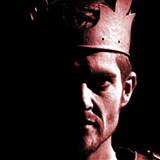
Macbeth picture courtesy of :

http://www.thelowry.com/event/Macbeth-February2010

Unlawful Entry (Adam Lanza, Dec. 14th, 2012)

Unlawful Entry (Adam Lanza, Dec. 14th, 2012)

The Unthinkable:

20 children dead.

First Man Adam chose unlawful entry into the things of God,

Sin followed him in.

First man Adam expelled from the Garden,

Sin followed him out.

First Man Adam returned to the garden

 ~ unlawful entry ~ with vengeance

And self-hate loaded with evil’s murderous projectiles.

The Unthinkable:

20 children dead within a sharp picosecond of eternity where angels wait,

20 unopened gifts are carried to heaven.

…..

The Unthinkable:

God becomes man ~ Second Man Adam,

Born during the time of Herod and

The Slaughter of Innocents!

Later crucified, One Innocent Man atoning for all First Adams,

Second Man Adam endured the Unthinkable as one of us.


By this evil is kept outside the door in outer darkness,

But access is granted to all who hear His resurrected Voice,

To all those who choose lawful entry:

“I am the gate; whoever enters through me will be saved.”


Under the wings of the Almighty ~

They overshadow you –

The terror by night or by day cannot enter.


Just ask the 20 children when you see them again.


© Sally Paradise, 2012, All Rights Reserved