“…this country, despite its sins, also is a country for the last sixty years has truly transformed itself morally. And, Americans today are a different people in regard to all these issues [discrimination, oppression] …” Shelby Steele, How America’s Past Sins Have Polarized Our Country
Parallel Perspective
April 1968. I was sixteen when I heard of Martin Luther King Jr.’s assassination. I read the Chicago newspapers and watched the local news.
In the days after the assassination of Martin Luther King, Jr., in more than 130 cities, hundreds of thousands of black Americans let their anger and grief boil over into collective rage. In Chicago, more than 48 hours of rioting left 11 Chicagoans dead, 48 wounded by police gunfire, 90 policemen injured, and 2,150 people arrested. Some two miles of the commercial heart of Lawndale on West Madison were little more than charred rubble.
Chicago is my home. I have lived here during the 60 years of fundamental transformation that Shelby Steele describes in the epigraph. Prior to that tragic day in 1968, I was aware of strife in the country. The civil rights movement began during my childhood as did the Vietnam war. I watched the nightly news reports with my father. Both were covered.
In high school social studies class, I read Black Like Me and Cry, the Beloved Country. Civil War history was also taught. I was given excerpts of the Lincoln-Douglas debates to read (Essentially, Douglas, a Democrat, wanted states to be allowed chose slavery if they so desired. Lincoln, a Republican, wanted a nation without pockets of slavery. I would later learn that a higher percentage of Republicans than Democrats voted for the Civil Rights Act of 1964 and for the Voting Rights Act of 1965.) Later, in the 1980s, I read Stephen B. Oates’ Let The Trumpet Sound: The Life Of Martin Luther King, Jr. after the book came out. I wanted to gain insight into MLK’s life.
From my various readings I understood why Martin Luther King and black Americans were protesting. I also understood, from my visits with my grandparents, that there was something in the human heart that was prejudicial and could act to discriminate against another human being.
My father and mother would take my brother and me to see his Dutch parents. My grandparents lived in a small house in Bellwood on Chicago’s west side. They prided themselves on their perfectly manicured landscape which included a rose garden in the backyard. The frontroom’s (a Chicagoism) sofa and chairs were covered with plastic slipcovers. Having lived through the depression, everything they owned was protected and meant to last.
On the drive over to their house, my father warned us kids that grandpa (definitely an Archie Bunker archetype) had issues with black people (and other ethnic groups). We would hear grandpa talk about the “niggers” moving into the neighborhood. Grandma would try to shoosh him with “little ears!” I heard my dad trying to move grandpa beyond prejudice, but grandpa, a gruff truck driver, was set in his ways.
My Dutch father was like my Dutch grandparents in that he loved order and cleanliness. But he was not like them in his attitude toward black folk. From what I could gather from my visits, the antipathy that my grandparents held toward blacks seemed to circulate in the attitudes of those who attended their local Dutch Christian Reformed Church. I listened to the conversations when the members gathered outside the church after the service. As a young man, my father attended a different church, dated my mother, discovered Jesus and rejected his father’s ways in the process. That fundamental transformation made the difference for his children’s understanding of race relations.
Now, I don’t pretend to know what it is like to be black. But over 67 years I did gain perspective on black American life. I empathized with the black American’s anger over Jim Crow laws. I empathized with their loss of MLK who called out the injustice. But I did not then and do not now sympathize with the rioting, looting and violence of protestors. These acts are the antithesis of MLK’s non-violent approach to protesting. Such “mindless mimicry of anger and resentment” (Shelby Steel) and destruction only sets back the cause of race relations. Such behavior comes from a very dark place. MLK exemplified Proverbs 16:32:
He who is slow to anger is better than the mighty, and he who rules his spirit than he who takes a city.
Progressive Perspective
Anyone who has watched Monty Python’s Flying Circus will remember the Dead Parrot sketch. Mr. Praline comes into the pet shop to complain that his recently purchased parrot is dead. The owner of the shop denies any of Mr. Praline’s claims with exasperating excuses.
Mr. Praline: Look, I took the liberty of examining that parrot when I got it home, and I discovered the only reason that it had been sitting on its perch in the first place was that it had been NAILED there.
(pause)
Owner: Well, o’course it was nailed there! If I hadn’t nailed that bird down, it would have nuzzled up to those bars, bent ’em apart with its beak, and VOOM! Feeweeweewee!
Mr. Praline: “VOOM”?!? Mate, this bird wouldn’t “voom” if you put four million volts through it! ‘E’s bleedin’ demised!
Owner: No no! ‘E’s pining!
Mr. Praline: ‘E’s not pinin’! ‘E’s passed on! This parrot is no more! He has ceased to be! ‘E’s expired and gone to meet ‘is maker! ‘E’s a stiff! Bereft of life, ‘e rests in peace! If you hadn’t nailed ‘im to the perch ‘e’d be pushing up the daisies! ‘Is metabolic processes are now ‘istory! ‘E’s off the twig! ‘E’s kicked the bucket, ‘e’s shuffled off ‘is mortal coil, run down the curtain and joined the bleedin’ choir invisible!! THIS IS AN EX-PARROT!!
This hilarious satire of customer service works because of the two opposing perspectives: the real versus the absurd. Bring these two perspectives into any serious discussion of societal or economic matters and it becomes glaringly obvious that there can be no resolution or reconciliation. (In the sketch, the shopkeeper, after repeatedly responding to Mr. Praline’s protests with nonsense, goes off on an absurd tangent, declares that he always wanted to be a lumberjack and begins singing the lumberjack song.) I have had similar back-and-forths when I was on Twitter.
Engaging activists and their Progressive followers on a Twitter thread, I would ask “What is racist about America?” These ‘shopkeepers’ of racism would respond that “America is racist” or “there is injustice” or “there is unfairness”. I would ask again and again for examples – proof of life that racism was alive in America. I would receive the same blanket replies: “America is racist”, “there is injustice”, “there is unfairness”. They were trying to justify what they thought by parroting the same things over and over again. Emotions flared and words were written, but nothing was said to prove that America was a racist country.
(The latest generation of Americans seem to have come out of “How do you feel about that?” therapy. They are hot-wired for emotional response. Hence, the “safe space” mentality that is meant to protect them from emotional overload when confronted with realities beyond the existential.)
Thomas Sowell, like Shelby Steele, has consistently contended against the race narrative posited by the Left. And, like many other blacks who disagree with the Left, is labeled “Uncle Tom”. Sowell is a ninety-year old black American economist and social theorist who is currently a senior fellow at Stanford University’s Hoover Institution. Here are just a couple of his rejoinders to the Left’s hype of racism:
Racism does not have a good track record. It’s been tried out for a long time and you’d think by now we’d want to put an end to it instead of putting it under new management.
The word ‘racism’ is like ketchup. It can be put on practically anything – and demanding evidencemakes you a ‘racist.’
It’s been my experience on social media, with its “safe space” anonymity, that there is more than just stonewalling buzzwords repeatedly being stacked up. The ad hominems also pile up. The pejoratives “racist” and “bigot” are used on social media and in print for anyone who does not comport with the narrative proffered by the ‘shopkeepers’ of race. Saul Alinsky’s Rule #5 in his Rules for Radicals handbook is put to use:
“Ridicule is man’s most potent weapon. There is no defense. It’s irrational. It’s infuriating. It also works as a key pressure point to force the enemy into concessions.”
(What makes any discussion about race relations (or any relationship) even more bizarre and destructive is Progressivism’s identarian politics: dividing people into boxes with labels to pit “victims” against the “oppressors”. This dissection of society is the opposite of reconciliation. And it is rank Marxism.)
“Black votes matter to many politicians — more so than black lives. That is why such politicians must try to keep black voters fearful, angry and resentful. Racial harmony would be a political disaster for such politicians”. Thomas Sowell
Despite what is parroted on social media and in the ‘news’ media, things have changed with regard to race relations in the last 60 years. But the Black Lives Matter cabal denies the reality of that change as do those who buy the BLM propaganda and bring it home.
I see “woke” Americans placing a “Black Lives Matter” sign on the well-manicured lawn of their far-west suburban Chicago homes. Apparently, they want to signal to others that they are down with the manufactured cause. I do not share their token empathy for dead parrot racism, no matter how many times agitators and rioters rattle cages to make it appear to be alive.
We laugh at the Dead Parrot Sketch. It makes perfect sense to us that Mr. Praline is exasperated to no end with the shopkeeper. Likewise, we are exasperated when anyone or a group maintains fixed false beliefs (2 + 2 = 5, 50+ genders, people are poor because of the rich, Progressive Woodrow Wilson was not a racist, “Defund the Police”, white privilege, critical race theory, America is inherently racist, etc.) even when confronted with facts. We become even more exasperated when we learn that a person or a group grapples for political power to establish fixed false beliefs as truth. The inordinate craving for power comes from a dark place, as philosopher Leszek Kolakowski notes in his essay Politics and the Devil:
“To the extent that politics is the sheer struggle for power, it is bound, in Christian terms, to be the realm of the devil by definition; it then simply releases our libido dominandi as a drive that expands, as it were, for the sake of its own expansion and has no objective beyond itself. As in all other areas of human life, however, the devil distorts and poisons the good natural order.” [i]
Progressivism’s delusional perspective can be summed up as ”Dead Parrots Matter”. It can be applied to any cause it raises, including racism and socialism, as both these ‘causes’ have been dealt with definitively in the past.
Racism is not dead, but it is on life support — kept alive by politicians, race hustlers and people who get a sense of superiority by denouncing others as ‘racists’. -Thomas Sowell
I have always enjoyed Professor Sowell’s down-to-earth perspective regarding economics, social issues and government. He provides great insight into the problems affecting blacks. Sowell deals in reality and not in the fallacies, myopia or the jejune foot-stomping responses of the Left. The video below, Myths of EconomicInequality affirms this. Therein, his perspective and some of the wealth of his comprehensive understanding of the matters that affect society. The video presents Sowell’s background and his early bent toward Marxism. You will also hear about his book A Conflict of Visions. This was the first book of his that I read. I consider it a primer to understanding the “unconstrained vision” and the “constrained visions” so prominent and at odds in America today.
Here are just a few of the videos offering Professor Sowell’s perspectives:
With this post and my previous post, I am offering counterpoints to the delusional thinking of the race shopkeepers. I presented Shelby Steele’s and Thomas Sowell’s perspective and my own which parallels theirs of the last sixty years. These perspectives run counter to the populist notion that America is inherently racist and whites should be guilt-ridden about it. Yet, along with Steele and Sowell and many others, I have witnessed the fundamental transformation of America. And it happened long before Barack Obama came along with his Marxist Liberation theology/Jeremiah Wright version of “fundamental transformation”.
I would advise staying clear of broadcast media and op-eds with their myopic flash-point inducing ‘journalism’. Their version of racism is not worth your time. Rather, read to gain a new perspective and a comprehensive understanding of the issues facing America today and how they can be resolved. Below is a recommended list of books, an article and a link to begin with.
The Courthouse Ring: Atticus Finch and the limits of Southern liberalism, by Malcolm Gladwell
Exclusion and Embrace: A Theological Exploration of Identity, Otherness and, Reconciliation, by Miroslav Volf
Watershed at the Well -A short story of Jesus meeting the Samaritan woman at the well. The Jews and the Samaritans are at odds. Jesus challenges their ethno-centric understanding of God and worship that provokes hostilities between the two groups.
Added 9-18-20:
“Go to the website for the Black Futures Lab, a venture of Black Lives Matter founder Alicia Garza, and click on the “Donate” button. It will ask you to send your money to an obscure organization, the Chinese Progressive Association, explaining that “Black Futures Lab is a fiscally sponsored project of the Chinese Progressive Association.”
There are plenty of media commentators and opinion columnists (NY Times, LA Times, Chicago Tribune and their ilk) that posit and promote the narrative of racial injustice and white privilege in America. We are told again and again that America is characterized by “systemic racism” and “systems of oppression”. But those are meaningless terms. Neither “systemic racism” nor “systems of oppression” can be measured or tested to be true. The specious 1619 Project published in the NY Times does not prove systemic racism. It proves that the writer is systemically myopic with regard to victim-focused identity. It was written to project racism onto American history and to produce white guilt. And, the “Black Lives Matter” taunt is also meant as a rebuke in order to generate white guilt. But has racial reconciliation come out of the manipulative 1619 Project? Has any good come out of the “Black Lives Matter” movement? Muhammad Ali’s son doesn’t think so, calling the movement “racist” and the protesters “devils.”
With this post and the next, I want to offer a counterpoint to the “mindless mimicry of anger and resentment” (Shelby Steel) so prominent in our country today. One of the great intellects of our time, Shelby Steele is a black conservative, as he himself defined: “A black conservative is a black who dissents from the victimization explanation of black fate”.
So, here we are. The summer of 2020. And we find, once again, activists without actualities, wandering through a universe circumscribed by themselves. That which stands in their way, whether human or representation, must be removed, cancelled, done away with. Only their likeness must stand.
The statue of Christopher Columbus was removed from Grant Park during the night. Chicago’s Mayor Lightfoot said the likeness was a “public safety issue”. So, to appease the raging horde who had emerged from their cramped safe spaces (perhaps a darkened basement in their parent’s home lit only by the glare of a computer monitor) Lightfoot removed the static and mute reminder of a discoverer who used fixed reference points outside of himself to voyage to a new world.
As we have come to witness in Chicago, Portland and, Seattle, wanderers with no reference point other than their own solipsistic compass create a world of lawlessness. There is nothing new or Progressive about the ways of the lawless wanderer. As House Speaker Nancy Pelosi remarked when hearing about the toppled statue, “People will do what they do.” The way of the wanderer is a return to the old world of Cain.
You remember the story of brothers Cain and Abel. Their relationship was removed, cancelled, done away with. The sibling dysfunction began with their mother Eve. After giving birth she declared “I have created a man with the Lord”. Her words go well beyond acknowledging God’s help in the birth of her son. She ascribes to herself equality with God as a source of life. And so, she named her first born Cain (translated in this context: “to create”), imparting to her firstborn the same delusional thinking, the same self-actualization and self-divination, that she and Adam had chosen when they ate from the forbidden tree and were kicked out of the garden for doing so.
(It is interesting to note that Eve named her second son Abel, meaning “breath” or breeze”. Perhaps Eve, after seeing herself in Cain, chose the name to acknowledge that man is ephemeral, transient and, mortal and not equal with God after all.)
Both Cain and Abel worked the land, exerting dominion over it as God had charged in the first chapter of Genesis. Both were aware of God’s presence. Both offer the fruits of their labor to him as a sacrifice. But there is an issue with one of their sacrifices. The issue is not so much the quality of the sacrifice. They both offer yields from God’s good creation. The issue lies beneath the surface.
Abel offers the best cuts from the first born of his flock. Cain offers portions of what’s growing. It cost him nothing to do this. Abel’s sacrifice is a recognition that the growth and flourishing of his flocks were gifts from God. His sacrifice is a recognition that God is God and therefore deserves respect and the best creation has to offer, no matter the cost. Cain’s sacrifice is a recognition that Cain is co-creator with God. He had worked the land and thought of himself as the one who made it grow and flourish. As such, Cain’s sacrifice is an attempt to bribe God into blessing him as caretaker, to make things go well for him.
When his sacrifice is rejected by God, Cain became angry. His face became downcast. Cain felt that he had rights by placing God in debt to him. He did what he felt was required and now God must do what is required and give him his favor. Freedom from anxiety, peace of mind and pleasure were of the highest priority to Cain. He traded some token of produce in order to receive back empathy for his epicurean life.
Cain’s quid pro quo religion – seeking to broker with the god/s for order and harmony in one’s life, would go on to become the religious practice for many in the world, old and new. But religion is mere formality. Doing what is right is more important than sacrifice before God. Doing what is morally and ethically right begins with the acknowledgement of and respect for God as God. So, God gives Cain a choice: do right and be the offering that is accepted or continue his self-divinization; rule over the works of God’s own hands or let the works of his own hands rule over him.
Then the Lord said to Cain, “Why are you angry? Why is your face downcast?If you do what is right, will you not be accepted? But if you do not do what is right, sin is crouching at your door; it desires to have you, but you must rule over it.” Genesis 4: 6-7
Cain made his choice. He brought Abel to a field and out of jealousy killed him. Perhaps he thought, “I shall have no other gods before me”. But what happens on the field does not stay on the field. Abel’s blood cried out to the Lord. And the just Lord came looking for accountability.
After Adam and Eve made their choice, God asked “where are you?”. Adam answered “I was afraid…” After the murder, Cain was asked: “Where is your brother Abel?” Cain answered “I don’t know. Am I my brother’s keeper?” Cain denies culpability. Perhaps he thought, “If I remove the competition the god will have to deal with only me. Besides, I did my due diligence and have nothing to show for it. So there!”. Maybe he said, “People will do what they do”.
Genesis 2:15 tells us that The Lord God took the man and put him in the Garden of Eden to work it and take care of it. Mankind’s vocation was to care for God’s creation, His Temple. That care would include God’s image bearers placed in the temple. Abel did the work of caring for creation and bringing its best back to God. Cain would have none of it. He evaded his responsibility with self-deception and denial. He canceled it. So, God dealt with Cain. Cain was cursed.
The curse God imposed on Adam, Cursed is the ground because of you is similar to but lesser than the curse imposed on Cain: You are cursed from the ground …When you work the ground, it will no longer yield its crops for you. You will be a restless wanderer on the earth. The land and now a man are cursed.
The form of justice to be imposed on Cain could have been a life for a life. Instead, Cain is exiled by God. He is to be a wanderer. But Cain decides to be a whiner and not a repenter.
Cain said to the Lord, “My punishment is more than I can bear. Today you are driving me from the land, and I will be hidden from your presence; I will be a restless wanderer on the earth, and whoever finds me will kill me.” Genesis 4: 13-14
In exile, Cain has a chance to repent and turn back to God. God will look after Cain. God put a mark on Cain so that anyone who came across him would not kill him. The mark of protection, not described in Gen. 4:15, reminds me of the Passover lamb’s blood put on the two doorposts and lintel of the houses of the Israelites in Egypt. Clearly, God is patient and merciful with Cain. He could have canceled Cain from the face of the earth. Yet, God watches over Cain; God does for Cain what Cain should have done for Abel.
But none of that matters to Cain. Cain will watch after Cain. The self-indulgent Cain goes his own way. Instead of wandering he builds a city. He wanted to make a name for himself and become the kingpin of his own domain, his own safe space. Cain’s descendants glory in their barbarism and in possessing women as objects (Gen. 4:19-24). The dysfunction that began in the garden continued in the line of Cain. He is the father of the self-reliant god-like superheroes who control their own destinies with force.
Genesis chapter 4 ends with the birth of Seth to Adam and Eve. Eve has had a change of heart after the tragedy of Cain and Abel: God has granted me another child in place of Abel, since Cain killed him. There is no talk of being a god-like superwoman. And the line of Seth does not go the way of autonomous Cain.
So, here we are. The summer of 2020. And we find, once again, activists without actualities, wandering through a universe circumscribed by themselves. That which stands in their way, whether human or representation, must be removed, canceled and, destroyed. These are the days of Cain.
It is easy to rail against the anarchists and their subjectivist view of morality. It is easy to condemn the barbarism and destruction of the wanderers. It is easy to denounce those who kneel to false gods before games. It is easy to deride the Democrat pols who appease and dismiss the angry mobs with “People will do what they do”. But what about the choices we each make to go our own way and to do what we do thereby creating dysfunction and havoc in our relationships? What happens when we cancel relationships by not forgiving? Some may thumb their noses at God under the guise of American Individualism and self-sufficiency. Some may have even offered some token to God (going to church, putting money in the plate, etc.) hoping to receive back the American Dream (a “Made in the U.S.” sticker placed on a cask of Greek Epicureanism). We make relational choices based on our relationship with God. We become what we do with God. Have you become a likeness of Cain?
In addition to the behavior describe above, Cain is impatient, short-tempered and, …
…self-referring.
…demands tokens of assurance, of victory, of winning.
…uses fear mongering to gain and remain in power.
…avoids all risk to obtain security and protectionism.
…seeks to replace the timeless with the temporal.
…obtains identity from tribal sources and denigrates all others
…is self-centered and narcissistic in his demand for self-preservation.
…makes everything personal.
…has no problem inflicting pain on others
…shuts down discussion and debate
…goes his own way; is his own man.
The choices presented to Cain are the same choices presented to each of us. But we don’t have to live the days of Cain. If someone has made wrong choices and has wandered far from God, they should know that God, as he had done with Cain, is asking, “Where are you?” God is ready to show mercy. He wants to bring the wanderer back from exile and to redeem his life from the garbage pit and crown him with love and compassion. God seeks to restore His likeness in His image-bearers. No other likeness will stand before him.
He delighteth not in the strength of the horse: he taketh not pleasure in the legs of a man. The LORD taketh pleasure in them that fear him, in those that hope in his mercy.Psalm 147:10, 11
“We have entered, as I see it, a spiritual limbo. Our educational institutions are no longer the bearers of high culture, and public life has been deliberately moronised. But here and there, sheltered from the noise and glare of the media, the old spiritual forces are at work” Roger Scruton
*****
“When a common culture declines, the ethical life can be sustained and renewed only by a work of the imagination.”-Roger Scruton
*****
“Jesus prayed, “This is eternal life, that they may know You . . .” (John 17:3). The real meaning of eternal life is a life that can face anything it has to face without wavering. If we will take this view, life will become one great romance— a glorious opportunity of seeing wonderful things all the time. God is disciplining us to get us into this central place of power.” Oswald Chambers
*****
“No power on earth or in hell can conquer the Spirit of God in a human spirit, it is an inner unconquerableness.” Oswald Chambers
*****
To those who have had no agony Jesus says, “I have nothing for you; stand on your own feet, square your own shoulders. I have come for the man who knows he has a bigger handful than he can cope with, who knows there are forces he cannot touch; I will do everything for him if he will let Me. Only let a man grant he needs it, and I will do it for him.” The Shadow of an Agony,Oswald Chambers
*****
“If we wish to erect new structures, we must have a definite knowledge of the old foundations.” John Calvin Coolidge
*****
Atheism is a post-Christian phenomenon.
*****
If social justice looks like your hand in someone else’s pocket then you are stealing.
*****
“In Sweden, giving to charity, absurdly, came to be considered a lack of solidarity, since it undermined the need for the welfare state.” – Roland Martinsson
*****
“…to love democracy well, it is necessary to love it moderately.” Alexis de Tocqueville
*****
Capitalism seeks to help others through a servce or product it provides. Free Market Capitalism is the most moral and fair economic system available to man. Capitalism augments personal growth, responsibility and ownership. Charity flourishes under capitalism. Charity dies under subjective “fair share” government confiscatory policies. Socialism redistributes ambivalence and greed.
*****
“We are to regard existence as a raid or great adventure; it is to be judged, therefore, not by what calamities it encounters, but by what flag it follows and what high town it assaults. The most dangerous thing in the world is to be alive; one is always in danger of one’s life. But anyone who shrinks from that is a traitor to the great scheme and experiment of being.” G.K. Chesterton
*****
Any intelligent fool can make things bigger, more complex, and more violent.
It takes a touch of genius – and a lot of courage – to move in the opposite direction. Albert Einstein
*****
“You shall know the truth and the truth shall make you odd.” Flannery O’Connor
*****
“There is but one good; that is God. Everything else is good when it looks to Him and bad when it turns from Him.” C.S. Lewis, The Great Divorce
*****
“Though He slay me, yet will I trust Him” (Job 13:15).
*****
God’s grace is not about the allowance for sin. God’s grace is about the conversation God allows regarding sin.
*****
From the book of Proverbs: We are not to favor the rich or the poor. We are to pursue justice.
*****
“Always keep in contact with those books and those people that enlarge your horizon and make it possible for you to stretch yourself mentally.” Oswald Chambers
*****
One goldfish says to another, “If there is no God who keeps changing the water?”
*****
“The truth is always there in the morning.”
From Cat On A Hot Tin Roof script – playwright Tennessee Williams
*****
God blesses those who hunger and thirst for justice, for they will be satisfied.
*****
“America’s greatness has been the greatness of a free people who shared certain moral commitments. Freedom without moral commitment is aimless and promptly self-destructive.” John W. Gardner
**
“Men of integrity, by their very existence, rekindle the belief that as a people we can live above the level of moral squalor. We need that belief; a cynical community is a corrupt community.” John W. Gardner
*****
“In the world it is called Tolerance, but in hell it is called Despair, the sin that believes in nothing, cares for nothing, seeks to know nothing, interferes with nothing, enjoys nothing, hates nothing, finds purpose in nothing, lives for nothing, and remains alive because there is nothing for which it will die.” Dorothy L. Sayers
*****
“Art, like morality, consists of drawing the line somewhere.”
G. K. Chesterton
*****
“The battle line between good and evil runs through the heart of every man.” Alexander Solzhenitsyn
*****
This is what the LORD says:
“Stand at the crossroads and look;
ask for the ancient paths,
ask where the good way is, and walk in it,
and you will find rest for your souls.
But you said, ‘We will not walk in it.’
-The prophet Jeremiah, 6:16
*****
“…our common task is not so much discovering a truth hiding among contrary viewpoints as it is coming to possess a selfhood that no longer evades and eludes the truth with which it is importunately confronted.” James McClendon, Ethics: Systematic Theology, Vol. 1
*****
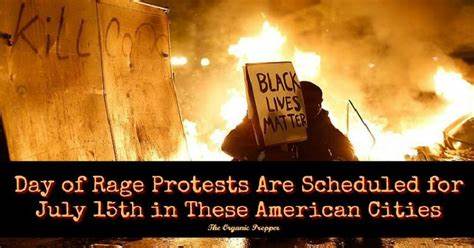 the narrative of racial injustice and white privilege in America. We are told again and again that America is characterized by “systemic racism” and “systems of oppression”. But those are meaningless terms. Neither “systemic racism” nor “systems of oppression” can be measured or tested to be true. The specious 1619 Project published in the NY Times does not prove systemic racism. It proves that the writer is systemically myopic with regard to victim-focused identity. It was written to project racism onto American history and to produce white guilt. And, the “Black Lives Matter” taunt is also meant as a rebuke in order to generate white guilt. But has racial reconciliation come out of the manipulative 1619 Project? Has any good come out of the “Black Lives Matter” movement? Muhammad Ali’s son doesn’t think so, calling the movement “racist” and the protesters “devils.”



 Cindy Wity
Perspectives on Race Relations
September 6, 2020 Leave a comment
“…this country, despite its sins, also is a country for the last sixty years has truly transformed itself morally. And, Americans today are a different people in regard to all these issues [discrimination, oppression] …” Shelby Steele, How America’s Past Sins Have Polarized Our Country
Parallel Perspective
April 1968. I was sixteen when I heard of Martin Luther King Jr.’s assassination. I read the Chicago newspapers and watched the local news.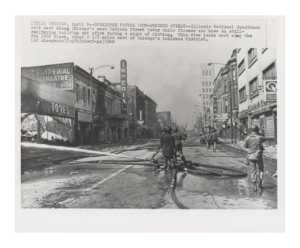
In the days after the assassination of Martin Luther King, Jr., in more than 130 cities, hundreds of thousands of black Americans let their anger and grief boil over into collective rage. In Chicago, more than 48 hours of rioting left 11 Chicagoans dead, 48 wounded by police gunfire, 90 policemen injured, and 2,150 people arrested. Some two miles of the commercial heart of Lawndale on West Madison were little more than charred rubble.
West Madison Street, 1968, Encyclopedia of Chicago
Chicago is my home. I have lived here during the 60 years of fundamental transformation that Shelby Steele describes in the epigraph. Prior to that tragic day in 1968, I was aware of strife in the country. The civil rights movement began during my childhood as did the Vietnam war. I watched the nightly news reports with my father. Both were covered.
In high school social studies class, I read Black Like Me and Cry, the Beloved Country. Civil War history was also taught. I was given excerpts of the Lincoln-Douglas debates to read (Essentially, Douglas, a Democrat, wanted states to be allowed chose slavery if they so desired. Lincoln, a Republican, wanted a nation without pockets of slavery. I would later learn that a higher percentage of Republicans than Democrats voted for the Civil Rights Act of 1964 and for the Voting Rights Act of 1965.) Later, in the 1980s, I read Stephen B. Oates’ Let The Trumpet Sound: The Life Of Martin Luther King, Jr. after the book came out. I wanted to gain insight into MLK’s life.
From my various readings I understood why Martin Luther King and black Americans were protesting. I also understood, from my visits with my grandparents, that there was something in the human heart that was prejudicial and could act to discriminate against another human being.
My father and mother would take my brother and me to see his Dutch parents. My grandparents lived in a small house in Bellwood on Chicago’s west side. They prided themselves on their perfectly manicured landscape which included a rose garden in the backyard. The frontroom’s (a Chicagoism) sofa and chairs were covered with plastic slipcovers. Having lived through the depression, everything they owned was protected and meant to last.
On the drive over to their house, my father warned us kids that grandpa (definitely an Archie Bunker archetype) had issues with black people (and other ethnic groups). We would hear grandpa talk about the “niggers” moving into the neighborhood. Grandma would try to shoosh him with “little ears!” I heard my dad trying to move grandpa beyond prejudice, but grandpa, a gruff truck driver, was set in his ways.
My Dutch father was like my Dutch grandparents in that he loved order and cleanliness. But he was not like them in his attitude toward black folk. From what I could gather from my visits, the antipathy that my grandparents held toward blacks seemed to circulate in the attitudes of those who attended their local Dutch Christian Reformed Church. I listened to the conversations when the members gathered outside the church after the service. As a young man, my father attended a different church, dated my mother, discovered Jesus and rejected his father’s ways in the process. That fundamental transformation made the difference for his children’s understanding of race relations.
Now, I don’t pretend to know what it is like to be black. But over 67 years I did gain perspective on black American life. I empathized with the black American’s anger over Jim Crow laws. I empathized with their loss of MLK who called out the injustice. But I did not then and do not now sympathize with the rioting, looting and violence of protestors. These acts are the antithesis of MLK’s non-violent approach to protesting. Such “mindless mimicry of anger and resentment” (Shelby Steel) and destruction only sets back the cause of race relations. Such behavior comes from a very dark place. MLK exemplified Proverbs 16:32:
He who is slow to anger is better than the mighty,
and he who rules his spirit than he who takes a city.
Progressive Perspective
Anyone who has watched Monty Python’s Flying Circus will remember the Dead Parrot sketch. Mr. Praline comes into the pet shop to complain that his recently purchased parrot is dead. The owner of the shop denies any of Mr. Praline’s claims with exasperating excuses.
Mr. Praline: Look, I took the liberty of examining that parrot when I got it home, and I discovered the only reason that it had been sitting on its perch in the first place was that it had been NAILED there.
(pause)
Owner: Well, o’course it was nailed there! If I hadn’t nailed that bird down, it would have nuzzled up to those bars, bent ’em apart with its beak, and VOOM! Feeweeweewee!
Mr. Praline: “VOOM”?!? Mate, this bird wouldn’t “voom” if you put four million volts through it! ‘E’s bleedin’ demised!
Owner: No no! ‘E’s pining!
Mr. Praline: ‘E’s not pinin’! ‘E’s passed on! This parrot is no more! He has ceased to be! ‘E’s expired and gone to meet ‘is maker! ‘E’s a stiff! Bereft of life, ‘e rests in peace! If you hadn’t nailed ‘im to the perch ‘e’d be pushing up the daisies! ‘Is metabolic processes are now ‘istory! ‘E’s off the twig! ‘E’s kicked the bucket, ‘e’s shuffled off ‘is mortal coil, run down the curtain and joined the bleedin’ choir invisible!! THIS IS AN EX-PARROT!!
This hilarious satire of customer service works because of the two opposing perspectives: the real versus the absurd. Bring these two perspectives into any serious discussion of societal or economic matters and it becomes glaringly obvious that there can be no resolution or reconciliation. (In the sketch, the shopkeeper, after repeatedly responding to Mr. Praline’s protests with nonsense, goes off on an absurd tangent, declares that he always wanted to be a lumberjack and begins singing the lumberjack song.) I have had similar back-and-forths when I was on Twitter.
Engaging activists and their Progressive followers on a Twitter thread, I would ask “What is racist about America?” These ‘shopkeepers’ of racism would respond that “America is racist” or “there is injustice” or “there is unfairness”. I would ask again and again for examples – proof of life that racism was alive in America. I would receive the same blanket replies: “America is racist”, “there is injustice”, “there is unfairness”. They were trying to justify what they thought by parroting the same things over and over again. Emotions flared and words were written, but nothing was said to prove that America was a racist country.
(The latest generation of Americans seem to have come out of “How do you feel about that?” therapy. They are hot-wired for emotional response. Hence, the “safe space” mentality that is meant to protect them from emotional overload when confronted with realities beyond the existential.)
Thomas Sowell, like Shelby Steele, has consistently contended against the race narrative posited by the Left. And, like many other blacks who disagree with the Left, is labeled “Uncle Tom”. Sowell is a ninety-year old black American economist and social theorist who is currently a senior fellow at Stanford University’s Hoover Institution. Here are just a couple of his rejoinders to the Left’s hype of racism:
Racism does not have a good track record. It’s been tried out for a long time and you’d think by now we’d want to put an end to it instead of putting it under new management.
The word ‘racism’ is like ketchup. It can be put on practically anything – and demanding evidence makes you a ‘racist.’
It’s been my experience on social media, with its “safe space” anonymity, that there is more than just stonewalling buzzwords repeatedly being stacked up. The ad hominems also pile up. The pejoratives “racist” and “bigot” are used on social media and in print for anyone who does not comport with the narrative proffered by the ‘shopkeepers’ of race. Saul Alinsky’s Rule #5 in his Rules for Radicals handbook is put to use:
“Ridicule is man’s most potent weapon. There is no defense. It’s irrational. It’s infuriating. It also works as a key pressure point to force the enemy into concessions.”
(What makes any discussion about race relations (or any relationship) even more bizarre and destructive is Progressivism’s identarian politics: dividing people into boxes with labels to pit “victims” against the “oppressors”. This dissection of society is the opposite of reconciliation. And it is rank Marxism.)
“Black votes matter to many politicians — more so than black lives. That is why such politicians must try to keep black voters fearful, angry and resentful. Racial harmony would be a political disaster for such politicians”. Thomas Sowell
Despite what is parroted on social media and in the ‘news’ media, things have changed with regard to race relations in the last 60 years. But the Black Lives Matter cabal denies the reality of that change as do those who buy the BLM propaganda and bring it home.
I see “woke” Americans placing a “Black Lives Matter” sign on the well-manicured lawn of their far-west suburban Chicago homes. Apparently, they want to signal to others that they are down with the manufactured cause. I do not share their token empathy for dead parrot racism, no matter how many times agitators and rioters rattle cages to make it appear to be alive.
We laugh at the Dead Parrot Sketch. It makes perfect sense to us that Mr. Praline is exasperated to no end with the shopkeeper. Likewise, we are exasperated when anyone or a group maintains fixed false beliefs (2 + 2 = 5, 50+ genders, people are poor because of the rich, Progressive Woodrow Wilson was not a racist, “Defund the Police”, white privilege, critical race theory, America is inherently racist, etc.) even when confronted with facts. We become even more exasperated when we learn that a person or a group grapples for political power to establish fixed false beliefs as truth. The inordinate craving for power comes from a dark place, as philosopher Leszek Kolakowski notes in his essay Politics and the Devil:
“To the extent that politics is the sheer struggle for power, it is bound, in Christian terms, to be the realm of the devil by definition; it then simply releases our libido dominandi as a drive that expands, as it were, for the sake of its own expansion and has no objective beyond itself. As in all other areas of human life, however, the devil distorts and poisons the good natural order.” [i]
Progressivism’s delusional perspective can be summed up as ”Dead Parrots Matter”. It can be applied to any cause it raises, including racism and socialism, as both these ‘causes’ have been dealt with definitively in the past.
Racism is not dead, but it is on life support — kept alive by politicians, race hustlers and people who get a sense of superiority by denouncing others as ‘racists’. -Thomas Sowell
Professor’s Perspective
In the 80s I came across Thomas Sowell in a series of Free to Choose videos, including Frances Fox Piven vs. Milton Friedman and Thomas Sowell and Milton Friedman and Thomas Sowell on the Welfare System. Today, one does not come across the discussion and debates shown in these videos. (See Delusional Perspective above for the reason why.)
I have always enjoyed Professor Sowell’s down-to-earth perspective regarding economics, social issues and government. He provides great insight into the problems affecting blacks. Sowell deals in reality and not in the fallacies, myopia or the jejune foot-stomping responses of the Left. The video below, Myths of Economic Inequality affirms this. Therein, his perspective and some of the wealth of his comprehensive understanding of the matters that affect society. The video presents Sowell’s background and his early bent toward Marxism. You will also hear about his book A Conflict of Visions. This was the first book of his that I read. I consider it a primer to understanding the “unconstrained vision” and the “constrained visions” so prominent and at odds in America today.
Here are just a few of the videos offering Professor Sowell’s perspectives:
The Real History of Slavery
Intellectuals and Society
The Ethnic Flaw – Economics and Race, culture as a variable in success and failure
Discrimination and Disparities
Penetrating Perspective
With this post and my previous post, I am offering counterpoints to the delusional thinking of the race shopkeepers. I presented Shelby Steele’s and Thomas Sowell’s perspective and my own which parallels theirs of the last sixty years. These perspectives run counter to the populist notion that America is inherently racist and whites should be guilt-ridden about it. Yet, along with Steele and Sowell and many others, I have witnessed the fundamental transformation of America. And it happened long before Barack Obama came along with his Marxist Liberation theology/Jeremiah Wright version of “fundamental transformation”.
I would advise staying clear of broadcast media and op-eds with their myopic flash-point inducing ‘journalism’. Their version of racism is not worth your time. Rather, read to gain a new perspective and a comprehensive understanding of the issues facing America today and how they can be resolved. Below is a recommended list of books, an article and a link to begin with.
A Conflict of Visions by Thomas Sowell
The Thomas Sowell Reader by Thomas Sowell
The Courthouse Ring: Atticus Finch and the limits of Southern liberalism, by Malcolm Gladwell
Exclusion and Embrace: A Theological Exploration of Identity, Otherness and, Reconciliation, by Miroslav Volf
Watershed at the Well -A short story of Jesus meeting the Samaritan woman at the well. The Jews and the Samaritans are at odds. Jesus challenges their ethno-centric understanding of God and worship that provokes hostilities between the two groups.
Added 9-18-20:
“Go to the website for the Black Futures Lab, a venture of Black Lives Matter founder Alicia Garza, and click on the “Donate” button. It will ask you to send your money to an obscure organization, the Chinese Progressive Association, explaining that “Black Futures Lab is a fiscally sponsored project of the Chinese Progressive Association.”
This BLM Co-founder and Pro-Communist China Group are Partnering up
Added 9-29-20:
[i] Leszek Kolakowski, Modernity on Endless Trial (University of Chicago Press, Chicago, 1990, 175-176
Rate this:
Filed under 2020 current events, Culture, Current Events 2020, Political Commentary, Progressivism, Race Relations Tagged with Black Lives Matter, culture, politics, progressivism, Race Relations, racism, Shelby Steel, Thomas Sowell