Divorce and PAS
October 27, 2010 Leave a comment
Walking around on Resurrection ground
October 15, 2010 Leave a comment
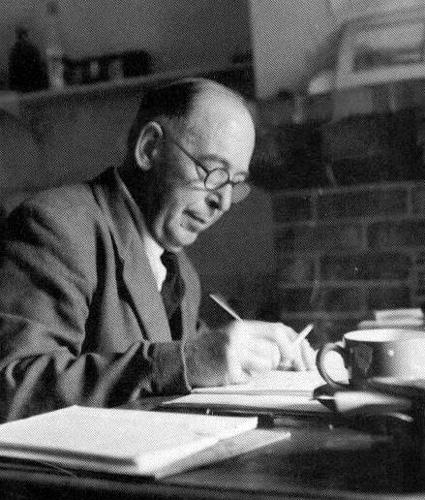 “We live, in fact, in a world starved for solitude, silence, and private: and therefore starved for meditation and true friendship.”
–C.S. Lewis, The Weight of Glory
September 15, 2010 Leave a comment
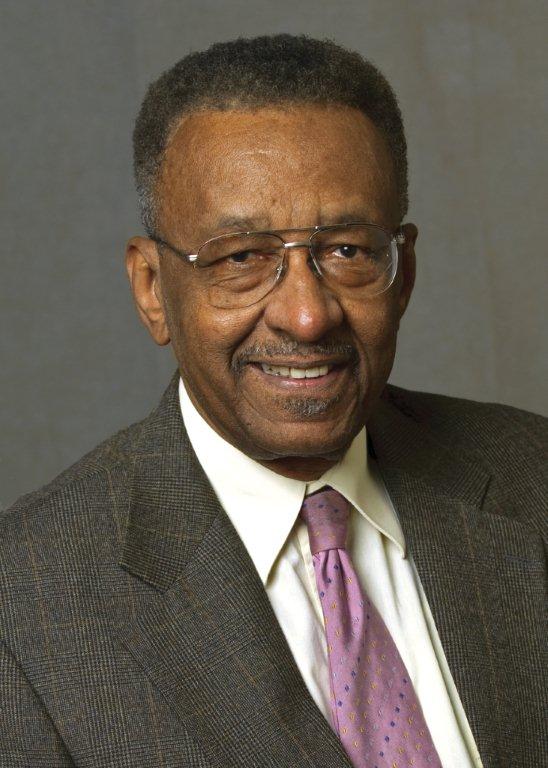
The American economist and academic, Walter Williams, talks about redistribution of wealth:
“A right, such as a right to free speech, imposes no obligation on another, except that of non-interference. The so-called right to health care, food or housing, whether a person can afford it or not, is something entirely different; it does impose an obligation on another. If one person has a right to something he didn’t produce, simultaneously and of necessity it means that some other person does not have right to something he did produce. That’s because, since there’s no Santa Claus or Tooth Fairy, in order for government to give one American a dollar, it must, through intimidation, threats and coercion, confiscate that dollar from some other American.”
“No human should be coerced by the state to bear the medical expense, or any other expense, for his fellow man. In other words, the forcible use of one person to serve the purposes of another is morally offensive.”
“For the most part, income is a result of one’s productivity and the value that people place on that productivity.”
“One of the wonderful things about free markets is that the path to greater wealth comes not from looting, plundering and enslaving one’s fellow man, as it has throughout most of human history, but by serving and pleasing him.”
“People who denounce the free market and voluntary exchange, and are for control and coercion, believe they have more intelligence and superior wisdom to the masses. What’s more, they believe they’ve been ordained to forcibly impose that wisdom on the rest of us. Of course, they have what they consider good reasons for doing so, but every tyrant that has ever existed has had what he believed were good reasons for restricting the liberty of others.”
September 14, 2010 Leave a comment
One negative effect of a redistribution of wealth, a class warfare mantra currently voiced by Obama, is that wealth given to someone who has not earned it creates a means for the recipient to disregard the situation that brought the recipient to a place of need. The factors that created the need may be outside one’s control (becoming a widow or an orphan or a natural disaster) but most likely the factors are based on choices made by the recipient or their forebears. Having economic need increases the sensitivity to the choices made and can help the person in need make the necessary corrections in their life.
A redistribution of wealth can also blot out the effects of sin passed down from generation to generation. Being fully present to the context of your life can bring about an understanding of one’s spiritual poverty and then, perhaps, to a place of redemption and spiritual reward. A redistribution of wealth can numb the recipient to a needed spiritual ‘goading’. Because of this and many other substantial moral reasons (e.g., “Thou shall not steal.”), redistribution of wealth is not an ideal economic policy for humanity. Everyone wants to avoid pain but it is pain which redistributes a wealth of information to the bearer.
The founding fathers never envisioned this type of economic policy, economic policy which is punitive to some and palliative to others. Equal opportunity is the baseline premise of our country, not envy and whining. And. a man’s property is sacred. Here is what some of the founding fathers wrote about redistribution of wealth:
“The moment the idea is admitted into society that property is not as sacred as the laws of God, and that there is not a force of law and public justice to protect it, anarchy and tyranny commence. If ‘Thou shalt not covet’ and ‘Thou shalt not steal’ were not commandments of Heaven, they must be made inviolable precepts in every society before it can be civilized or made free.” John Adams, A Defense of the Constitutions of Government of the United States of America, 1787
“To take from one, because it is thought his own industry and that of his fathers has acquired too much, in order to spare to others, who, or whose fathers, have not exercised equal industry and skill, is to violate arbitrarily the first principle of association, the guarantee to everyone the free exercise of his industry and the fruits acquired by it.” Thomas Jefferson, letter to Joseph Milligan, April 6, 1816
“A wise and frugal government… shall restrain men from injuring one another, shall leave them otherwise free to regulate their own pursuits of industry and improvement, and shall not take from the mouth of labor the bread it has earned. This is the sum of good government.” Thomas Jefferson, First Inaugural Address, March 4, 1801
“I predict future happiness for Americans if they can prevent the government from wasting the labors of the people under the pretense of taking care of them.” Thomas Jefferson
“Congress has not unlimited powers to provide for the general welfare, but only those specifically enumerated.” Thomas Jefferson
With respect to the two words ‘general welfare,’ I have always regarded them as qualified by the detail of powers connected with them. To take them in a literal and unlimited sense would be a metamorphosis of the Constitution into a character which there is a host of proofs was not contemplated by its creators.” James Madison in a letter to James Robertson
“When the people find that they can vote themselves money, that will herald the end of the republic.” Benjamin Franklin
“The Constitution only gives people the right to pursue happiness. You have to catch it yourself.” Benjamin Franklin
“But a Constitution of Government once changed from Freedom, can never be restored. Liberty, once lost, is lost forever.” John Adams
“There are more instances of the abridgment of the freedom of the people by gradual and silent encroachments of those in power than by violent and sudden usurpations.” James Madison, speech to the Virginia Ratifying Convention, June 16, 1788
September 6, 2010 Leave a comment
Tenacity. Here’s a word that, in my mind’s eye, brings together tension and elasticity. Tenacity: a pliable Gumby who never loses his form, no matter how far he is stretched? Or, Plastic Man stretched to infinity and then some, yet keeping his head when all others lose theirs? Perhaps tenacity is a high school girl’s cross country team running distance repeats during the early morning hours of Labor Day.
This morning about sixty young women were racing around the .7 mile path in the riverside park called St. Mary’s. I walk this path often. This is where I walk and talk with God and tenacity is what I observed this morning as I walked around St. Mary’s park. I supposed that sleeping in on a holiday was on their mind. No doubt their fellow students were doing so. Yet, there they were – stretching, dashing, puffing, sweating and straining, a crescendo of rapidly patting shoes and heavy breathing moving quickly toward me and then withdrawing just as quickly…tenaciously.
The apostle Paul had tenacity in mind when he said: “Do you not know that in a race all the runners run, but only one gets the prize? Run in such a way as to get the prize.”
Tenacity. Doggedness. Persistence. Pertinacity.
Sloth, sluggishness, idleness, indolence, apathy, laziness.
August 30, 2010 Leave a comment
Why You Should Sign the Manhattan Declaration.
(To Alistair Begg, John MacArthur and R.C. Sproul: “Do not stop him,” Jesus said, “for whoever is not against you is for you.”)
August 21, 2010 Leave a comment
“…This paranoid Islam…”
“If terrorism is to be defeated, the world of Islam must take on board the secularist-humanist principles on which the modern is based, and without which Muslim countries’ freedom will remain a distant dream.” SALMAN RUSHDIE
“Then Jesus said to the crowd, “If any of you wants to be my follower, you must turn from your selfish ways, take up your cross daily, and follow me.”
“God sent his Son Jesus into the world not to judge the world, but to save the world through him.” The Apostle John