The End is Year
December 31, 2025 Leave a comment
2025. Those of us striving to maintain the good, the true, the beautiful, and our precious homeland felt a hard-to-name force displacing us from the “past, people, place, and prayer” (Kingsnorth).
That force, soon to be coupled to Deterministic AI, is moving us in the direction of History deemed as an evolutionary process called Progress, as if later was better. Paul Kingsnorth, in his book Against the Machine, calls the force “The Machine.”
This year, The Machine’s red in tooth and gear displacement process included Charlie Kirk being shot in the neck and killed in front of the whole country in daylight. Kirk, as everyone knows, was a Christian and spoke in terms of the “past, people, place, and prayer.” Since the murder, the growing response is the rejection of what The Machine did to Kirk and is doing to them – the Process of Dehumanization.
People want the values Kirk spoke about and represented. They want to invest in precious lasting values – the good, the true and the beautiful – and they no longer want a modern Machine culture that generates everything the way central banks generate money: fiat morality, fiat identity, fiat community, fiat justice, fiat politics.
It is no surprise that in 2025, people and countries, sensing a constant state of flux, uncertainty, and manipulation in the fiat USD, were buying precious metals. The go-to values of physical commodities such as gold or silver increased in 2025.
At the beginning of 2025, gold was $2,640/oz. Recently, it was $4,550. Gold will likely hit $10k/oz. in 2026.
Silver, at the beginning of 2025, was $29/oz. Now, it’s over $77/oz.
Going Forward, a Few Recommendations:
The U.S. needs to uncouple from any involvement with the corrupt money-laundering country of Ukraine. We should not provide any security agreements to Ukraine. We should walk away and let Europe deal with Europe. Ukraine can become part of the EU (money-laundering system).
The U.S. needs to uncouple from its involvement with Israel. Israel can go off and do its own thing.
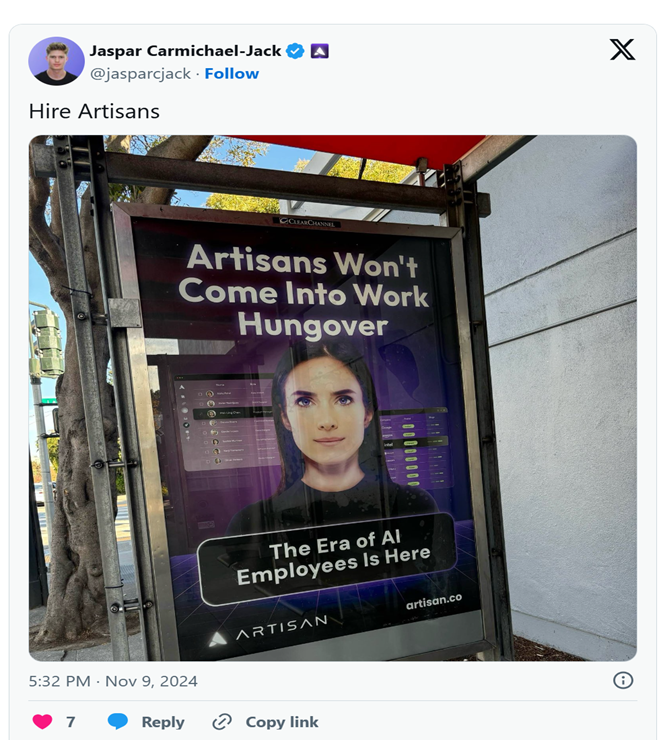
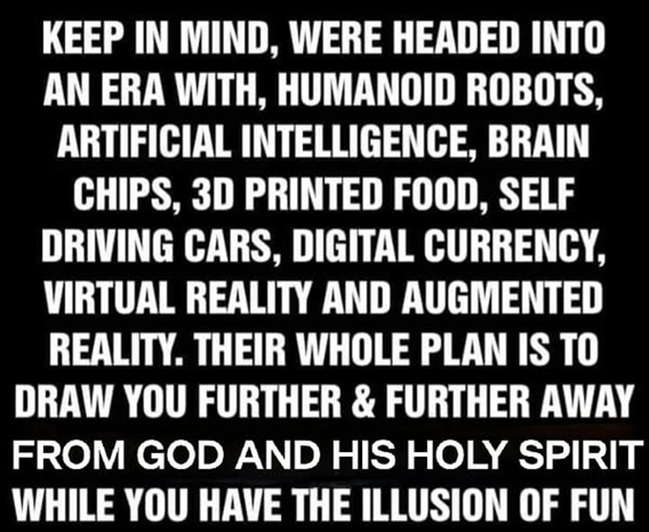
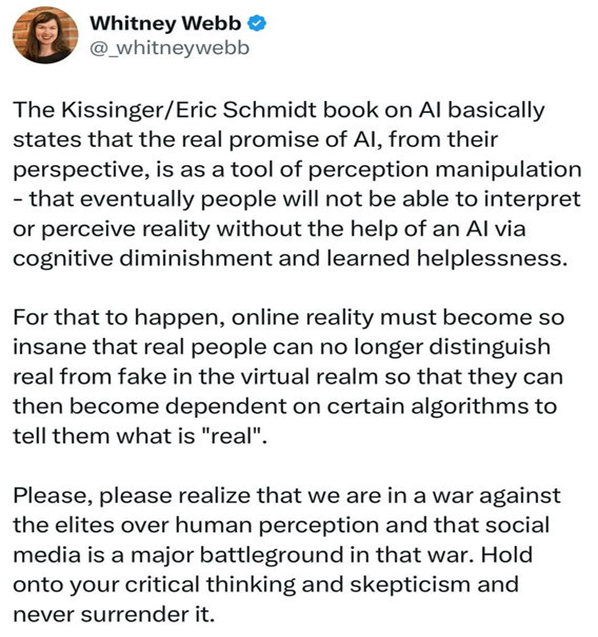
There should not be one-size-fits-all federal AI regulations. Better, keep AI out of our lives.
Big Tech’s Darkest Failure: How an AI Chatbot Manipulated a Child Into Suicide
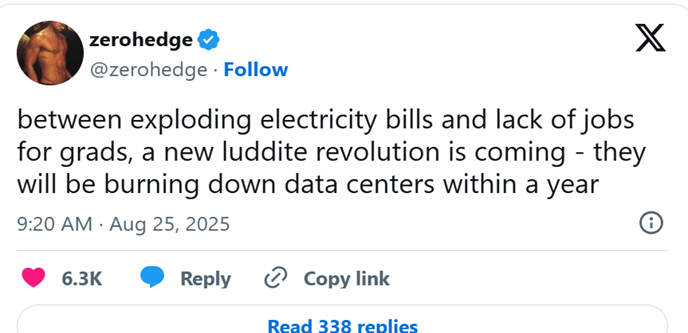
Americans should resist all attempts in their state to build energy-hoarding data centers and more 5G (spy on us) towers.
At a minimum and no more, the U.S. should establish, by law, one day voting on paper ballots with a secure chain of custody.
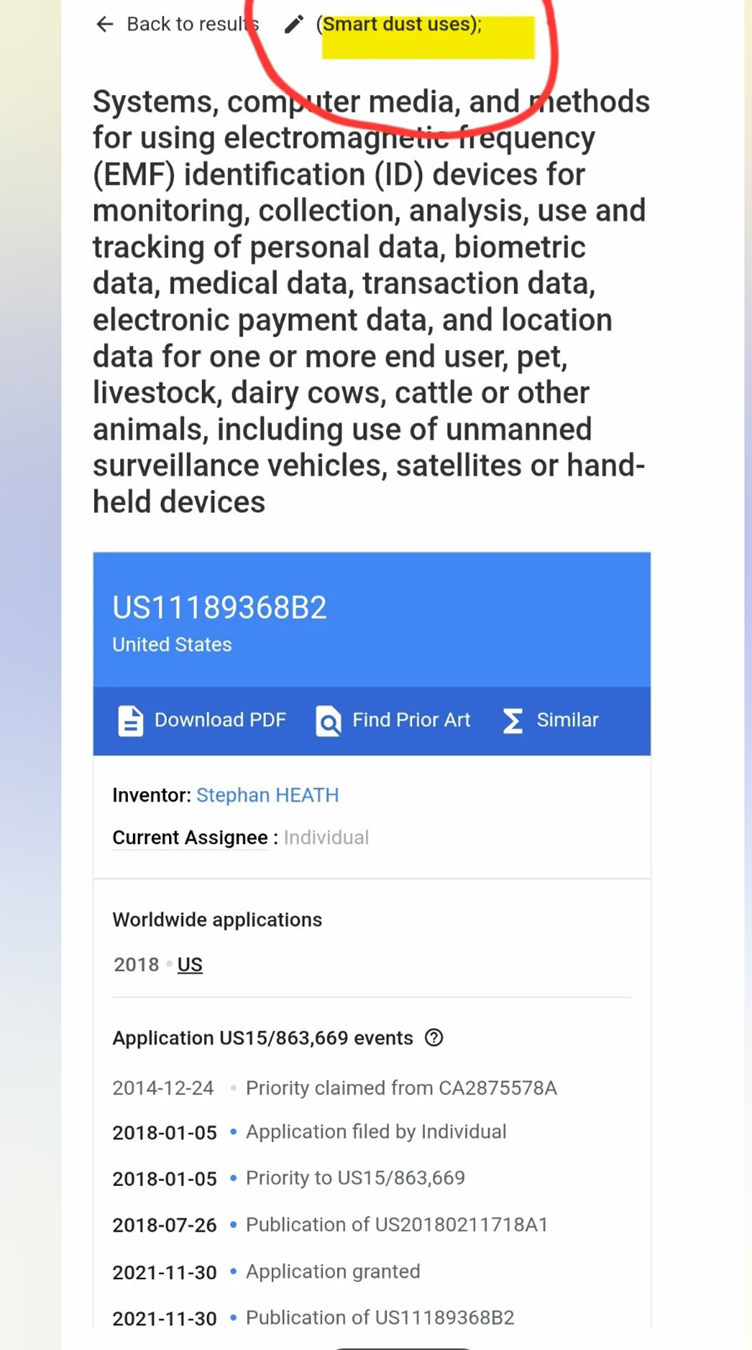
Americans should resist all attempts to ID them digitally.
Americans should resist all attempts to go cashless and converting to a digital currency that will track all of purchases and decide who’s in and who’s out.
The U.S. should deport all illegal invaders. They are not refugees. They are economic and criminal opportunists. The open borders “compassion” behind “Welcoming the stranger” is exactly like a judge applying ad hoc justice to multiple offence criminals because they are minorities and because of their “circumstances.”
A Few Obvious Predictions:
Democrats will continue presenting themselves as saving the world while doing everything they can to tear it down using massive fraud, abortion, assisted suicide, anarchy, and more. The Left will continue with its Trump Derangement Syndrome (TDS). The deep-state media tells them what to think about everything.

Globalists will continue to globalize. They will continue to try to amass power over people and make them worker bees with a hive mind. Unless Kingdom Christians say “No More!”
The Islamification of the West will continue its takeover of U.S. communities and states unless Kingdom Christians say “No More!” Why repeat “Thy will be done on earth as it is on heaven” if it has no meaning here and now? Mamdani to use Quran for swearing in ceremony.
Trans-cultists, Islamists and the mentally ill will continue to kill. The media will continue to say that guns kill.
Humans will continue to lose their humanity with associations and applications of things that move them away from the good, the true, and the beautiful in the name of novelty and efficiency.
Literary life:
This year, beside the books shown on the side bar under Goodreads, I read:
The Truth and Beauty: How the Lives and Works of England’s Greatest Poets Point the Way to a Deeper Understanding of the Words of Jesus by Andrew Klaven
Recessional: The Death of Free Speech and the Cost of a Free Lunch by David Mamet
The Silent Corner: A Novel of Suspense by Dean Koontz
The Best American Mystery Stories Of The Century: The Definitive Anthology of 100 Years of Crime, Mystery, and Thriller Short Stories Edited by Tony Hillerman
All the Pretty Horses by Cormac McCarthy
(I encourage everyone to read Paul Kingsnorth’s Against the Machine: On the Unmaking of Humanity at the beginning of 2026. See what Kingsnorth means by The Machine and understand how it affects you. The book is referenced on my blog here Displaced in Place and here The Hound of Hell.)
Want to start a literary life? I recommend this website:
House of Humane Letters – Recover the Lost Intellectual Tradition
Media:
I am not on social media. It is a waste of time and worse. The Machine will use it to distract you while it moves you where it wants you to go.
If I watch TV, I typically watch true crime shows such as The First 48 and Homicide Hunter. The rest on TV is not worth viewing.
Except, I did watch the first episode of Pluribus. The 1st episode was subscription free on Prime. Watching Pluribus, I was reminded of The Invasion of the Body Snatchers. The series looks interesting. For more info, check out this podcast: In “Pluribus” An America Without Division, But At What Price? – New Books Network
I recently purchased the Criterion Collection DVD of Babette’s Feast. I watched this last weekend. What a blessing!
Babette’s Feast, based on a Karen Blixen story, is a delightful tale of generosity in 19th century Denmark. A lavish feast evokes the transformative power of God’s grace. “Mercy and truth have kissed.”

~~~~
The Right Brain Needs Your Support
Dr Iain McGilchrist is a psychiatrist, neuroscientist, philosopher and literary scholar is the author of The Master and His Emissary and The Matter with Things. His work on the divided brain has helped millions of people find wisdom, meaning, and guidance for living in the modern world.
Iain and Demetri [Kofinas] begin their conversation exploring McGilchrist’s core thesis about the divided brain, how the left and right hemispheres attend to the world in fundamentally different ways, where we see evidence of an increased preponderance in left-brain thinking, and how this has impacted the way we conduct science, reason through problems, use our imagination, and apply wisdom to the world.
Iain believes that our civilization is caught in what some have described as a metacrisis, exacerbated by the encroachment of the left hemisphere onto more and more areas of lived experience. We see it in the procedurally abysmal manner in which modern medicine goes about formulating diagnoses, the ever-increasing obsession with process over outcomes, the commodification of writing, the rise in depression, the policing of language, and the reverence for machine-like efficiency and profit maximization at the expense of almost everything else.
The Metacrisis: Finding Reality & Meaning | Iain McGilchrist
British psychiatrist, neuroscientist, and author Dr. Iain McGilchrist about intelligence, mental illness, and AI.
~~~~~
A New (Year) baby has arrived:























 Cindy Wity
The Hound of Hell
November 9, 2025 Leave a comment
“The Mechanical Hound slept but did not sleep, lived but did not live in its gently humming, gently vibrating, softly illuminated kennel back in a dark corner of the firehouse.”
-Guy Montag, Fahrenheit 451
Anyone who has read Ray Bradbury’s Fahrenheit 451 will remember the menacing Mechanical Hound.
In fireman Guy Montag’s world, firemen burn outlawed books and where people hid them. The firehouse ‘dog’, a robotic beast, is an enforcer for the state. If you do not follow society’s rules, the Hound is unleashed. It tracks down and kills book readers using stored information about individuals. The Hound catches its prey and then injects it with lethal drugs.
Though configured as man’s best friend, Montag finds out the true nature of the beast. Being “fascinated as always with the dead beast, the living beast,” he touches the muzzle of the Hound. The Hound growls and Montag recoils.
“The Hound half rose in its kennel and looked at him with green-blue neon light flickering in its suddenly activated eye bulbs. It growled again, a strange rasping combination of electric sizzle, a frying sound, a scraping of metal, a turning of cogs that seemed rusty and ancient with suspicion.”
Not long afterward, Montag tells Captain Beatty “It doesn’t like me.” Captain Beatty tells Montag:
“Come off it. It doesn’t like or dislike. It just `functions.’ It’s like a lesson in ballistics. It has a trajectory we decide for it. It follows through. It targets itself, homes itself, and cuts off. It’s only copper wire, storage batteries, and electricity.”
The Mechanical Hound attacks what it is programmed to attack. And when Montag becomes more and more inquisitive about books and one is found in his possession, the Hound is released to track him down.
~~~
The techno-capitalist-industrialist-open borders system that goes by “Progress” or “Development” or “the Science” or “Fair-Trade” or “Commercialization” or “Globalization” or “Open Society,” is summed into a single descriptor – “the Machine” – by Paul Kingsnorth in his book Against the Machine (See side bar, previous post, and podcasts below for more information.)
In the chapter Come the Black Ships, Kingsnorth describes the process of Machine as being
“a war against all ‘closed’ things; against limits and boundaries of any kind, cultural and ecological; against historical traditions, local economies, trade unions, national economic plans, nations themselves, tribal cultures, religions . . . anything that interferes with the path of commercial expansion and its associated culture of individualist liberalism. Open is good, closed is bad. Why? Because closed things can’t be harvested, exploited or transformed in the image of the new world which the Machine is building. ‘Open’ things, on the other hand; well, they’re easy prey.”
That is our reality today. The West has colonialized itself with what it has colonized other nations – the Machine’s promise of the “open is good” gravy train. The WEF’s mission statement cloaks the Machine in good: “We bring together government, businesses and civil society to improve the state of the world” by “seiz[ing] opportunities for positive change.”
And so it is that the Machine’s process is advertised as that which benefits humanity in various ways. These include “Enhanced Customer Experience”, “Innovation”, “Diversity”, and “Advancements in Medicine, Education, Efficiency, Productivity, and “Sustainability” all while waging “a war against all ‘closed’ things” for the sake of its commercialization, monetization, and control of the process.
For the Machine to wage “war against all ‘closed’ things”, technology is employed to sniff out and snuff out the ‘closed’ – those people and their places unwilling to “be harvested, exploited or transformed in the image of the new world.” This machine I see depicted as Bradbury’s Mechanical Hound.
The Mechanical Hound represents the perversion of technology. Man’s best friend, a creature meant for companionship, aid, and protection, is turned into a technological tool of oppression. Its purpose is to impose order with terror.
With the Mechanical Hound in mind, consider digital technology which can be seen as friendly and helpful but can been programmed to avenge and punish citizens who break society’s rules. See China’s social credit system.
With the Mechanical Hound in mind, see the UK introducing digital ID cards. The UK government claims the system will simplify access to public services such as healthcare, welfare, and childcare, reduce identity fraud, ensure that only those with the right to work can be hired and is expected to minimize identity fraud by linking personal information to a secure digital format. With all these great “benefits” (for the state), what could go wrong? Say, if someone online says something that is considered “hate speech” by the UK government will the Hound be released to track that person down? That is happening today in the UK.
See a cashless society and Central Bank digital currency (CBDC) where purchases are monitored and financial accounts controlled by the government.
See the smartphone that “slept but did not sleep, lived but did not live in its gently humming, gently vibrating, softly illuminated kennel back in a dark corner of” your pocket.
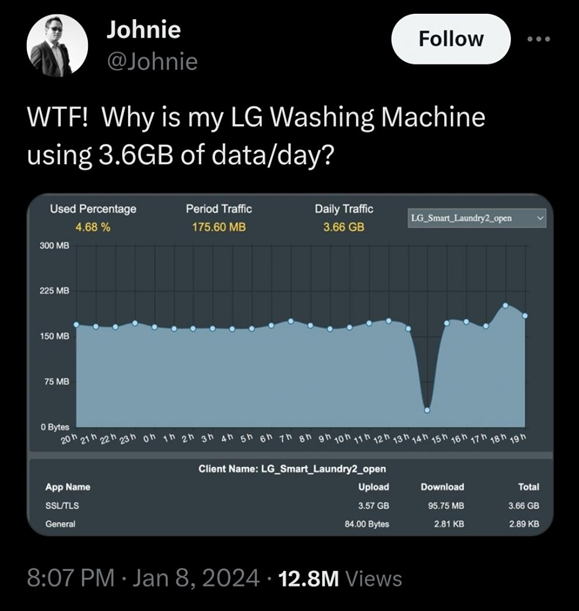
Consider the digital contraptions in your home and car that, like the Hound, can track you with information gathered from 5G towers that is downloaded to data centers that consume massive amounts of energy and water and taxpayer money – to monitor your physical and societal whereabouts so it can sell you more of the Machine’s process.
In Montag’s repressed society, books, book holders, and critical thinkers are dealt with. For books hold the experience and wisdom of ‘closed’ things – history, tradition, culture and religion – and must be done away with. And, so must thinking critically. For researching and comprehending what the Machine is doing to humans and their world is a threat. (https://www.thefire.org/news/10-worst-censors-2024)
With this in mind, consider the calls for censorship on our college campuses. In Britain you can go to jail for saying the ‘wrong’ thing.
In Montag’s repressed society, wall screens and pills replace books. The wall screens produce for Montag’s wife, Mildred, her ‘family’. Their home has three wall screens. She wants a fourth wall screen. We learn how depressing life is for Mildred when she attempts to commit suicide with an overdose.
Consider that it is depressing to live in places run by Democrats: (Illinois state legislature passes assisted-suicide bill)
~~~
How did we get amenable to the Machine’s control over us and thus take on a mechanized way of seeing and relating to the world? Bradbury provides insight.
Fahrenheit 451 is about more than censorship. It is about conformity to state-imposed uniformity. Books in 451 were seen as creating discord. They had to go. For, with the advent of visual media, TV in particular, people no longer read and didn’t want to hear anything but what they heard on the screens. People wanted censorship and conformity to the screens.
As Captain Beatty tells Montag,
“’The fact is we didn’t get along well until photography came into its own. Then–motion pictures in the early twentieth century. Radio. Television. Things began to have mass.’
“Montag sat in bed, not moving.
“’And because they had mass, they became simpler,” said Beatty. “Once, books appealed to a few people, here, there, everywhere. They could afford to be different. The world was roomy. But then the world got full of eyes and elbows and mouths. Double, triple, quadruple population. Films and radios, magazines, books levelled down to a sort of paste pudding norm, do you follow me?’”
“’I think so.’”
“Beatty peered at the smoke pattern he had put out on the air. ‘Picture it. Nineteenth-century man with his horses, dogs, carts, slow motion. Then, in the twentieth century, speed up your camera. Books cut shorter. Condensations, Digests. Tabloids. Everything boils down to the gag, the snap ending.”
“’Snap ending.’ Mildred nodded.”
Captain Beatty, again:
“You must understand that our civilization is so vast that we can’t have our minorities upset and stirred. Ask yourself, What do we want in this country, above all? People want to be happy, isn’t that right? Haven’t you heard it all your life? I want to be happy, people say. Well, aren’t they? Don’t we keep them moving, don’t we give them fun? That’s all we live for, isn’t it? For pleasure, for titillation? And you must admit our culture provides plenty of these.”
“Yes.”
Beatty’s Full Speech to Montag is provided below.
~~~~~
This our reality: the Machine and the Mechanical Hound.
Paul Kingsnorth’s Against the Machine – On the Unmaking of Humanity has provided us a prophetic understanding of where we are and where we are headed. The Machine is moving us downstream, displacing us from what we value – in Kingsnorth’s words “the past, people, place, and prayer.”
Various entities participate and promote the Machine.
Mainstream media is run by the Machine. ABC, CBS, NBC, CNN, MSNBC, CNBC, WSJ, NYT, WaPo and other outlets are the Machine’s mouthpieces. They talk down the “closed” and proclaim the “open.”
Both political parties promote the Machine. It is “progress” (and control) after all. The biggest threat to democracy is the Machine that consumes culture and churns out cogs.
Now that Mamdani has won the NYC mayor’s race, you can be sure that the Mechanical Hound will be released in NYC to enforce socialist jihad. Neither socialism nor Jihad exists without a Mechanical Hound.
Central planners – The World Economic Forum (WEF), the World Health Organization (WHO), and the World Trade Organization – represent the Machine’s values.
It takes no stretch of the imagination to see ourselves in Montag’s society or to see technology as that which mimics the good but is easily programmed to avenge and punish citizens who break society’s rules. The Mechanical Hound can tract us down to dispose of the ‘closed’ and conform us to the “Open is good” of the Machine.
Bradbury said that with Fahrenheit 451 he wasn’t trying to predict the future but to prevent it. He wanted to protect the present.
The terror of the Hound of Hell is becoming a permanent feature of the “open” (closing up) brave new (upside down) world.
~~~~~
Read Fahrenheit 451: Beatty’s Speech to Montag
~~~~~
Against the Machine: On the Unmaking of Humanity | Paul Kingsnorth
Demetri Kofinas speaks with Paul Kingsnorth, a novelist, essayist, and former environmental activist who first came on many people’s radars during the Covid-19 pandemic with the publication of his viral three-part series “The Vaccine Moment.” His current work explores the intersection of technology, culture, and the divine. In his latest book, Against the Machine, Kingsnorth examines how our increasingly mechanized way of seeing and relating to the world—and to ourselves—has contributed to the death of Western culture, and what it would take to reclaim our humanity and save our souls.
Against the Machine: On the Unmaking of Humanity | Paul Kingsnorth | Listen Notes
~~~
How We Lost Ourselves to Technology—and How We Can Come Back
Do you feel uneasy? Do you feel a level of ambient anxiety? Do you feel despair, despite the fact that we live in the most luxurious time and place in human history?
The point is, you are not crazy. If you feel these things, you are simply attuned to reality—and it’s not a problem that’s solvable with less screen time or with meditation, red light, or sea moss.
Bari Weiss’ brilliant guest, Paul Kingsnorth, argues that the reason you feel this way is not this or that social media app or algorithm or culture war issue. That these are all superficial expressions of a thousand-year battle with what he calls “the Machine.” What exactly that means, he’ll explain tonight.
How We Lost Ourselves to Technology—and How We Can Come Back
~~~~~
From Doug Ross’ substack:
Top 20 Chilling Insights from Yuri Bezmenov
How the KGB’s Playbook Is Destroying the West Today
Yuri Aleksandrovich Bezmenov (1939–1993), also known as Tomas David Schuman, was a Soviet journalist and KGB operative specializing in propaganda and ideological subversion.
Ideological subversion is the process of bending a society’s perception of reality so completely that it destroys itself.
The goal is to demoralize a society by undermining its moral, educational, and cultural foundations, making people unable to recognize or defend against threats.
Demoralization takes 15-20 years, the time needed to educate one generation with subversive ideas.
Read Bezmenov’s 20 key insights
~~~~~
~~~~~
From the Free Press:
Peter Thiel Says Capitalism Is Failing the Young. Is He Right?
Five years ago, Peter Thiel, the billionaire venture capitalist behind PayPal and Palantir, sent a prescient email to Facebook executives.
“When 70% of millennials say they are pro-socialist,” he wrote, “we need to do better than simply dismiss them by saying that they are stupid or entitled or brainwashed; we should try and understand why.”
The email went viral after democratic socialist Zohran Mamdani’s victory last week in the New York City mayoral race. Thiel then sat down with The Free Press’s Sean Fischer to explain what he saw in 2020 that no one else did.
Capitalism isn’t working for young people, Thiel said, citing burdensome student debt and regulations putting homeownership out of reach for many. “People assume everything still works, but objectively, it doesn’t. . . . If you proletarianize the young people, you shouldn’t be surprised if they eventually become communist.” (Emphasis mine.)
Thiel, who I see as also promoting the Machine, at least sees what the Machine is doing to the young.
And, of course, socialism/communism is a horrifying Machine that revels in terror to replace humanity with ideology.
~~~~~
The Machine’s AI Alchemy
Mary Shelly’s Victor Frankenstein, obsessed with creating a human being, used alchemy and electricity and body parts to create a creature (without woman). . .
A group of Stanford University scientists . . . used artificial intelligence to design new viruses capable of killing bacteria.
In a world where AI keeps creeping in on uniquely human territory by composing sonnets, writing songs or forging friendships, this seemed to be crossing a new Rubicon. Depending on your belief system, AI was doing what evolution, or God, or scientists working with genome-engineering tools aim to do.
“Machines are rethinking what it is to be human, what it is to be alive,” said Michael Hecht, a chemistry professor at Princeton University focused on designing novel proteins and artificial genomes. “I find this very unsettling and staggering. They are devising, coming up with novel life forms. Darwin 2.0.”
AI-designed viruses raise fears over creating life – The Washington Post
Rate this:
Filed under 2025 Current Events, AI, central planning, Economic World Forum, Globalism, Political Commentary, Progressivism, social commentary, Technocracy, technology, totalitarianism, WEF, World Economic Forum Tagged with Against the Machine, AI, artificial intelligence, censorship, central planning, Fahrenheit 451, Globalism, progressivism, technology, totalitarianism