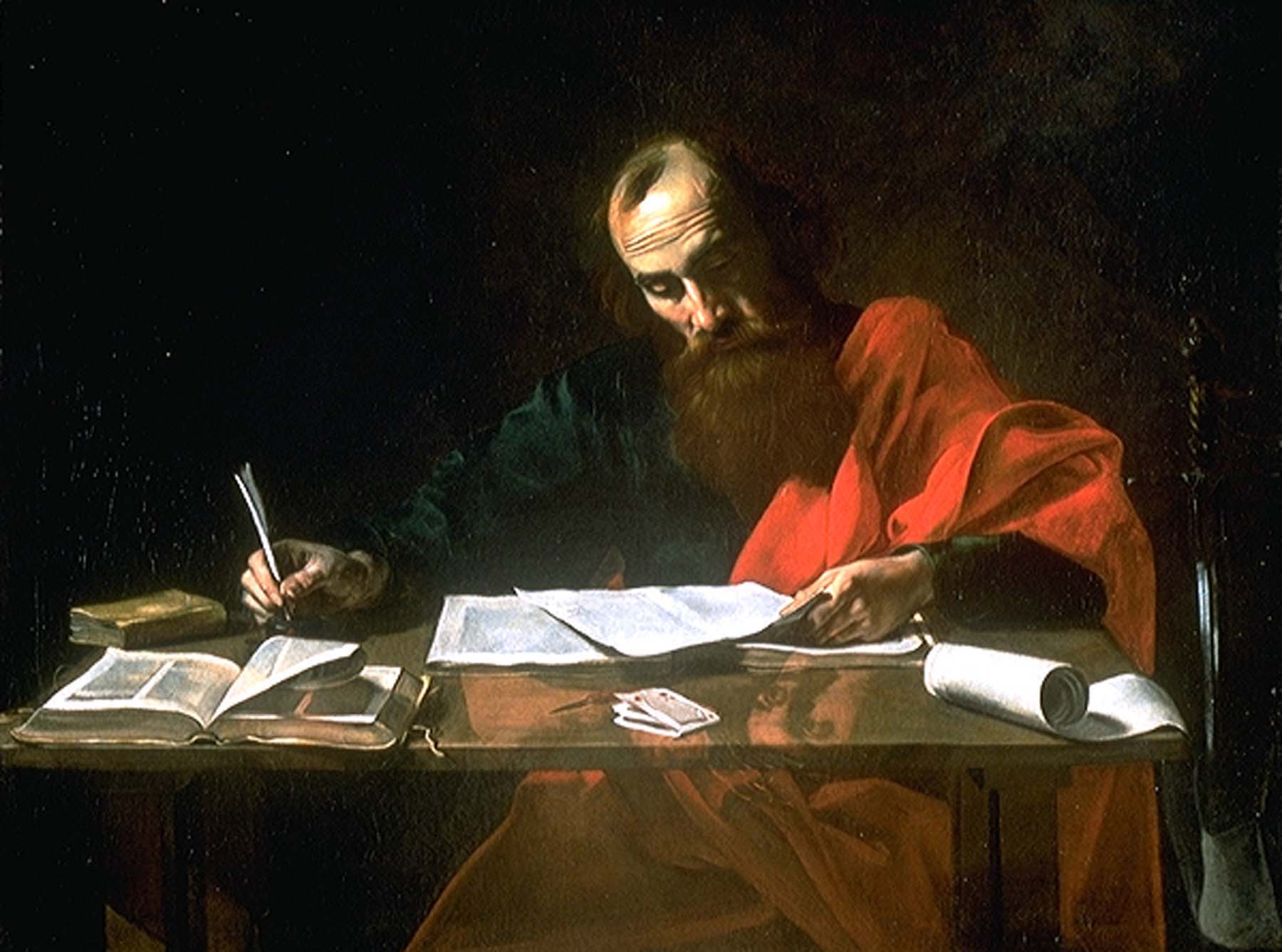
Beginning to Imagine the Kingdom of God

Recently I finished reading Professor N.T. Wright’s book, “How God became King:  The Forgotten Story of the Gospels.”

This book is a needed return to the focus of the four gospels:  the inauguration of the Kingdom of God here on earth.  On the final page the Biblical scholar writes:  “Part of the tragedy of the modern church, I have been arguing, is that the “orthodox” have preferred creed to kingdom, and the unorthodox” have tried to get a kingdom without a creed.  It’s time to put back together what should never have been separated.  In Jesus, the living God has become King of the whole world.”

 Being raised and ‘churched’ in an evangelical setting for most of my life my understanding of the Gospel (generally a misapplied Pauline bias) from out of all of the sermons and education (Moody Bible Institute) and Christian radio programs was that Jesus came to earth to die, to be resurrected and to save me from my sins, thereby giving me hellfire insurance and access to heaven ~ the Reader’s Digest of the Four Spiritual Laws.

 “How God became King:  The Forgotten Story of the Gospels” opened my eyes to a Kingdom of God understanding that I have been searching for over many, many years.

Here is the third section (read the whole) of a lecture, ‘Imagining the Kingdom: Mission and Theology in Early Christianity’ by


N. T. Wright

Research Professor of New Testament and Early Christianity


‘Imagining the Kingdom: Mission and Theology in Early Christianity’

3. Early Christian Mission and Theology

 All this leads to my concluding remarks on early Christian mission and theology. For over a century now it has been commonplace within the discipline called New Testament Studies to assume that the early church had to jettison its Jewishness in order to be relevant to the Gentile world into which it quickly went. Thus it has been assumed, again, that Paul had to downplay the idea of Jesus as Israel’s Messiah and to switch, instead, to the more readily available category of the kuvrio~, the ‘Lord’. But this proposal, hugely influential though it has been, simply fails to imagine what ‘the kingdom of God’ meant to the early Christians, Paul included (he doesn’t use the phrase that often, but when he does we can see that it remains at the centre of his worldview). Paul, in fact, held firmly to the ancient Jewish belief, rooted in the Psalms, in Isaiah and in Daniel, that a world ruler would indeed arise from Judaea, that Israel’s God would thereby return to dwell amongst and within his people, and that through this means the long-awaited new creation of peace and justice would be inaugurated for the whole world. All of that standard Jewish expectation came to fresh flowering in Paul’s work. Of course, the communities which Paul founded were determinedly non-ethnic in their basis. But this was not because Paul had as it were gone soft on the essential Jewishness of his mission, or because there was something wrong (as Epicureans imagine) with Judaism, but because he believed that it was precisely part of the age-old divine plan that when God did for Israel what he was going to do for Israel then the nations would be brought under the healing, saving rule of this one God. Paul’s ‘gospel’, his eujaggevlion, was thus much closer in meaning to the various eujaggevlia of Caesar than most of modern scholarship has imagined. It was, as Acts 17 (already quoted) indicates, the royal announcement, right under Caesar’s nose, that there was ‘another king, namely Jesus’. And Paul believed that this royal announcement, like that of Caesar, was not a take-it-or-leave-it affair. It was a powerful summons through which the living God worked by his Spirit in hearts and minds, to transform human character and motivation, producing the tell-tale signs of faith, hope and love which Paul regarded as the biblically prophesied marks of God’s true people.

 The communities which sprang into surprised existence as Paul went around making this royal announcement were remarkably devoid of an obvious symbolic world. They were precisely not defined by the worldview-symbols of Judaism – Temple, Torah observance and so on. They certainly didn’t adopt the symbols of the surrounding pagan culture. How could this new community, this new sort of community, retain what for Paul was its vital centre, namely its strong unity across traditional social divisions, and its strong holiness in matters of our old friends, money, sex and power? For Paul the answer was simple. The community needed to understand what it was that had happened in Jesus the Messiah, and in particular who the God was into whose new world they had been brought. What we see in Paul is thus properly characterized as the birth of the discipline which later came to be called Christian theology, by which I mean the prayerful and scripture-based reflection, from within the common life of the otherwise disparate body called the church, on who exactly the one God was and what his action in Jesus and by the Spirit was to mean. Early Christian theology was not an exercise undertaken for the sake of speculative system-building. It was load-bearing. If the unity and holiness of the early church were the central symbols of the movement, they could only be held in place if a vigorous theology was there to stabilize them in the winds and storms of the first century. Theology, in this sense, serves ecclesiology and thus the kingdom-based mission. Actually, I have come to worry about a post-Enlightenment theology that doesn’t do this, that thinks the point is simply to ‘prove’ the divinity of Jesus, or his resurrection, or the saving nature of his death in themselves, thereby demonstrating fidelity to the Creeds or some other regula fidei. In the gospels themselves it isn’t like this. All these things matter, but they matter because this is how God is becoming king. To prove the great Creeds true, and to affirm them as such, can sadly be a diversionary exercise, designed to avoid the real challenge of the first-century gospel, the challenge of God’s becoming king in and through Jesus.

 This challenge, of course, required imagination: not the undisciplined fantasy of which left-brain thinking often accuses right-brain thinking, but the imaginative leap from the worldviews of paganism, with their many gods who might either be far removed, as in Epicureanism, or rolled into one and close at hand, as in Stoicism – or indeed from the worldviews of ancient Judaism, with their fierce concentration on the symbols of land, nation, temple and Torah. But the leap was not made into the unknown. The imaginative leap required was made on the basis of Jesus, Jesus the crucified and risen Jewish Messiah, Jesus the one in and through whom Israel’s God had at last returned in person to rescue his people and the world. And to sustain precisely that leap, the early Christians told and retold, and eventually wrote down, the story of Jesus.

 The four gospels, then, to return to our starting point, are thus appropriately named ‘gospel’, in line both with Isaiah 40 and 52 and with the contemporary pagan usage. They themselves, in telling the story of how God became king in and through Jesus, invite their readers to the imaginative leap of saying, ‘Suppose this is how God has done it? Suppose the world’s way of empire is all wrong? Suppose there’s a different way, and suppose that Jesus, in his life, death and resurrection, has brought it about?’ And the gospels themselves, of course, contain stories at a second level, stories purportedly told by Jesus himself, which were themselves, in their day, designed to break open the worldview of their hearers and to initiate a massive imaginative leap to which Jesus gave the name ‘faith’. The gospels invite their readers, in other words, to a multiple exercise, both of imagining what it might have been like to make that leap in the first century (both for Jesus’ hearers and then, at a second stage, for their own readers) and, as a further stage again, of imagining what it might be like to do so today. For too long gospel study has been dominated by the attempt to make the gospels reflect, simply, the faith-world of the early church. Why, after all, the radical critics used to say, would the early Christians have been particularly interested in miscellaneous stories of what Jesus actually said or did, when all that really mattered was his saving death, making the gospels simply ‘passion narratives with extended introductions’? The conservative response has been that early converts would naturally want to know more about this Jesus in whom they had come to place their faith. But this stand-off, on both sides, has usually failed to reflect the larger question: that the gospels tell the story of Jesus not out of mere historical anecdotage or faith-projection, but because this is how Jesus launched the kingdom of God, which he then accomplished in his death and resurrection. Even to hold this possibility in one’s head requires, in today’s western church, whether radical or conservative, no less than in the non-Christian world, a huge effort of the imagination.

 This imagination, like all good right-brain activity, must then be firmly and thoroughly worked through the left brain, disciplined by the rigorous historical and textual analysis for which the discipline of biblical studies has rightly become famous. But, by itself, the left brain will produce, and has often produced, a discipline full of facts but without meaning, high on analysis and low on reconstruction, good at categories and weak on the kingdom. One of the reasons I was excited to be invited to come to St Andrews is because this is already one of the very few places in the world where the imagination is taken seriously as part of the whole theological discipline. I hope and trust and pray that we will be able to work together at the challenging but richly rewarding tasks of imagining the kingdom in such a way that will simultaneously advance the academic understanding of our extraordinary primary texts and enrich the mission and theology of tomorrow’s church. It is just as difficult today as it was in the first century to imagine what the kingdom of God might look like. Rigorous historical study of the gospels and the other early Christian writings has a proper role to play in fuelling, sustaining and directing that imagination, and in helping to translate it into reality.

(emphasis mine)

“To Be or Not To Be” Has Always Been the Question

It’s been a while since my last post.  I have been away visiting my mom & dad.  My dad is close to death.

 I drove out to see my folks when I heard that my dad was failing fast.  We expect him to leave us soon.

 I spent several days with mom and dad.  I was able to speak and pray with dad.  He is ready to die.

My father believes that God is faithful to His Word and that he will be in the Lord’s presence soon.

 My father is coherent but feeble. An oxygen tank and a pump supply air thru his nose into his lungs and into his blood stream. There will be no more doctor visits for him.

 My dad is a Godly man. He has done the work of the Kingdom of God here on earth: reconciliation, redemption, giving, witnessing, intercession and many other good works.  And he has been married to my mom for almost 64 years!

 Each of us siblings is praying that dad will quietly pass over into the presence of the Lord while he is in his chair or in his bed. I will miss dad. (I am the oldest child.)

 While there I met with my siblings to talk about future things regarding mom.

 “The LORD cares deeply when his loved ones die.”  Psalm 116:15

 A photo of mom & dad & me:

dad & mom & me

 While visiting mom and dad I was able to catch up with my siblings and their kids.  Wow!  The kids have grown! 

 I am not a ‘Facebook’ kind of person so I haven’t seen the latest goings-on with each relative. How much I have missed!

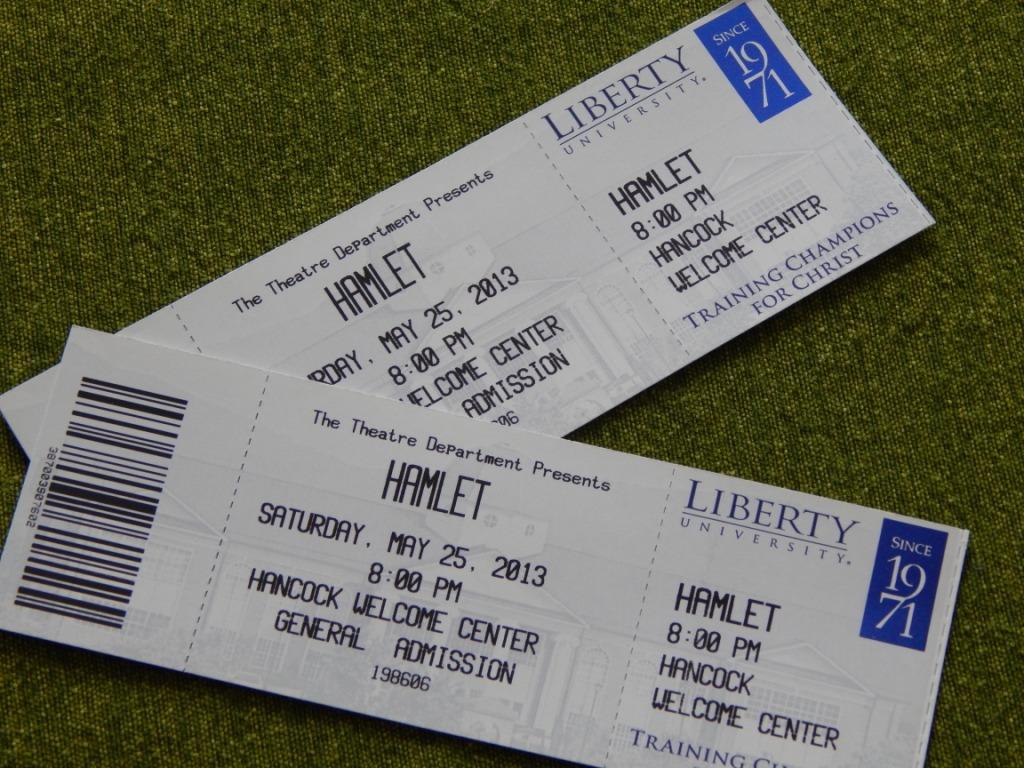
 My sister-in-law is also not a ‘Facebook’ kind of person.  But she and I are into drama.  She invited me  to go over to nearby Liberty U to see my nephew in Hamlet.   Her son had two roles:  Rosencrantz and Laertes.

 The play began outside and then each scene was set in a different location around the Hancock Welcome Center ~ inside and out.   

 As we moved outside to the balcony a glorious panoramic view opened to us:   the sun was behind and below the Blue Ridge Mountains in the distance, the horizon gilt with gold and rose.

 The gravedigger scene ~ “Alas, poor Yorick …”~ was hilarious.

 At the play’s end there was a clash of swords. Laertes and the rest didn’t survive the sword fight or the poison. Death was strewn everywhere.

 And then I was reminded of what G. k. Chesterton once said:

 “We are to regard existence as a raid or great adventure; it is to be judged, therefore, not by what calamities it encounters, but by what flag it follows and what high town it assaults. The most dangerous thing in the world is to be alive; one is always in danger of one’s life. But anyone who shrinks from that is a traitor to the great scheme and experiment of being.”

Hamlet tickets

The Church and Gender

   From my perspective the Christian Church has helped fuel gender confusion by placing added emphasis or burdens on others regarding the masculine and the feminine. 

 Recall the early Christian Churches of Jerusalem and Galatia which demanded that new Christians follow the strict tradition “soaked” Law along with the teachings of Jesus?  Today’s church in similar fashion, is seeking to subjugate men and women to “Biblically” masculine or feminine stereotypes, demanding that their romantic notions of what they consider masculine and feminine become de facto behavior for all Christians.

 As a former student of Moody Bible Institute and during the course of a lifetime I have read through the Bible several times and many, many passages several times over.    I have to say that I have never, ever found any description of Biblical manhood or womanhood.  What is written are what characteristics a man likes about a woman (see Song of Solomon and Proverbs 31) and what a woman likes about a man (see Song of Solomon).  None of these “characteristics” ~ physical and pragmatic – carry the moral weight of the Ten Commandments or of the New Commandment that Jesus gave us to “Love one another.” These “characteristics” should never be used to propagate more sons and daughters of the “Biblically masculine and feminine.”

 Now, when a Church or group puts the word “Biblical” in front of its messaging it is inferring that this is what a Christian must do or be. These “characteristics” should never be taught as Biblical mandates for manhood or womanhood. 

 As the Apostle Paul noted about food offered to idols (I Cor. 8), there are some who can eat such food and have no issue with their conscience.  Others must refuse because of their conscience. He voiced concern about those with maturity and freedom being a stumbling block to the weak in their eating of food offered to idols.  But I believe that it is the Church with regard to its “genderization of males and females” that has become a stumbling block for the weak.  Throughout history the Christian church has sought to enforce its will onto Christians.  This was certainly true before the reformation and it is still true with the “free” church’s Libertarian Paternalism that nudges people into making decisions the church feels are best for them, including gender roles.  But the church does not decide what our Spirit-led conscience tells us to do.  Paul learned that lesson the hard way.  We as Christians have the freedom to decide our masculinity and femininity before God as the Spirit speaks to our conscience.

 The closest we come to a description of “Biblical manhood and womanhood” in the Bible is within the Apostle Paul’s letter to the church at Ephesus (Eph. 5). It is there that he instructs Christians as to how married men and women should relate to each other. 

 Regarding these relational or family matters he bids husbands to love their wives and wives to respect their husbands.  Biblical manhood and womanhood as seen here is relating to the ‘other’ ~ wife or husband ~ with love and respect. Biblical manhood and womanhood are as relational as simply loving your neighbor as you love yourself.  Why create extra yokes called “Biblical Masculine and feminine” to be placed on people’s necks?

 Now it is common knowledge that people do not like ambiguity. We demand black and white.  We demand inerrancy.  We demand “Biblically masculine and feminine” males and females.  Our minds are wired to alert us to any differences to a norm.  We seek to reconcile things as quickly as possible.  Ambiguity comes off as a potential threat to our understanding of how life should be. As related to gender we tend to overemphasize male and female “roles” in order to reduce our anxiety over ambiguity.  I believe that some of this fear has grown out the Christian Fundamentalist movement that was raised up in the early twentieth century against the threat of Liberal theologian’s textual infractions.  The Conservative Christian world sought to tighten its reins on what is and isn’t “Biblical.”  But it has also put a noose around each gender. 

 Yet, there is no gender typecasting in Scripture.  And, more importantly, the message of the Gospel offers everyone freedom from fear.  This includes freedom from the fear of the ambiguous and the unknown, the fear of the future and the fear of the not being able to follow the letter of the Law and therefore deserving punishment.

 In the past I have attended para-church seminars based on gender “issues.”  There seminar leaders urged attendees to pray asking God for the “True masculine and the “True Feminine.”  These prayers, of course, will not be answered because there is no such thing. The best a man or woman can ever become is to be Spirit-filled.  And the best how-to books to become Spirit-filled are the Bible and My Utmost for His Highest by Oswald Chambers. Forget the OTC self-help books and seminars on Biblical Manhood and Womanhood.  You would be wasting your time and money.  Worse, you would most likely seek to adapt to someone else’s notion of what it is to be a man or a woman. Run from this nonsense.

 The current falderal about gender~- “Biblical manhood and womanhood”~- are gooey romantic notions mandated as Biblical “righteousness.” Let’s not go there.  Let’s be free to be men and women without the yoke of the man-made gender laws placed on our necks. And then, perhaps, homosexuals will then feel free to come home.

 I have written about this before:  What is Biblical About it?

 ******

I ask the homosexual community:  What happened to friendship between one man and another?  And, between one woman and another?  And, why take something good like friendship and debase and pervert it into something unnatural and sexualized? And why create an emotional codependency when a good friendship creates a safe environment for sharing life’s joys and hardships?

Flowers of the Field

I went for a mammogram on Good Friday.  This was my first mammogram even though I am about ten years from retirement.  I put off health tests ( I tell myself)  because I am so busy.

 After the images were taken I was told that a radiologist would review my scans and send a report to my doctor. This would take about a week.

 The following week I waited anxiously because of what happened as I left the medical office: 

 I opened the door and walked over to the elevator.  There a few feet away were two women facing each other. One of the women, clutching papers in her hand, turned away when I came out the door.  Waiting for the elevator I could hear the other woman, perhaps her mother, comforting her:  “It will be OK.  You will be alright.” I quickly realized that the woman had received some bad news from the radiologist’s report. She was quietly sobbing.

 A lot of things go through your mind when you are in medical limbo. For me there was fear, then anger and then calm took over as I give the matter back to the Lord.

 The next Friday I came home from work and found the report in my mail box.  I wondered why they sent me the report.  They told me that my doctor would get the first look.

 Well, I was relieved to find that the mammogram was “normal.” The staff wanted to let me know right away. 

 The tentative calm became a sigh of relief and then a prayer for the woman at the elevator:  “Lord, please remove all cancer from this woman’s body. I ask this in the name of Jesus.”

 Maybe five years from now someone will pray for me as I stand by the elevator crying. Life is like that.

 ***

 It was during this time of waiting for the radiologist’s report that I heard the shocking news that a coworker had died overnight. 

 This man was slightly older than me.  He died of a brain aneurism ~ in an instant without any warning.

Something like this gives one pause:  How close to death am I?

 Yet, I do not fear death.  It is a matter of perspective.

 I know that even though the dust I am made of will crumble and return to the earth I will live on within the dancing embrace of the Trinity ~ as a flower of the field that never withers or dies.

There Is No Greater Love

Sacrificial Love

By Chuck Asay – March 30, 2013

Incarnation (LHC)

Incarnation (LHC)


God with us

Hope acquired mass

Shepherds, angels witnesses

Eternal Light through prism of flesh

Evolution His manger

God man reconciled

Christ in us.


© Sally Paradise, 2012, All Rights Reserved

Unlawful Entry (Adam Lanza, Dec. 14th, 2012)

Unlawful Entry (Adam Lanza, Dec. 14th, 2012)

The Unthinkable:

20 children dead.

First Man Adam chose unlawful entry into the things of God,

Sin followed him in.

First man Adam expelled from the Garden,

Sin followed him out.

First Man Adam returned to the garden

 ~ unlawful entry ~ with vengeance

And self-hate loaded with evil’s murderous projectiles.

The Unthinkable:

20 children dead within a sharp picosecond of eternity where angels wait,

20 unopened gifts are carried to heaven.

…..

The Unthinkable:

God becomes man ~ Second Man Adam,

Born during the time of Herod and

The Slaughter of Innocents!

Later crucified, One Innocent Man atoning for all First Adams,

Second Man Adam endured the Unthinkable as one of us.


By this evil is kept outside the door in outer darkness,

But access is granted to all who hear His resurrected Voice,

To all those who choose lawful entry:

“I am the gate; whoever enters through me will be saved.”


Under the wings of the Almighty ~

They overshadow you –

The terror by night or by day cannot enter.


Just ask the 20 children when you see them again.


© Sally Paradise, 2012, All Rights Reserved

Prison

Prison

Prison?

Walls shingled together, overlapping?

Bars with intervals of freedom?

A look In Someone’s eyes doubting me?

The slab of self under which I am interred?

Do I hold the keys before I enter

Prison?

© Sally Paradise, 2012, All Rights Reserved

Envision

The free form litany below was compiled based on the verbs and the sequence of action found in Genesis Chapters One and Two.

I agree with the theory of theistic evolution:  the creation act once initiated by God set evolution into motion (without the need for fine tuning) over millions of years and right up to our present day.

 Here’s something you’ll get a big bang out of:  if you wonder whether there is a personal God, wonder no more.  God had (in our time frame) envisioned every boson in every hair of every head. You are a unique accumulation of God Particles held together by the Quantum Force of Love. Smashing.

*******

Envision


In the Beginning…


God said

  God saw

God separated

  God saw

God called

  God saw

God hovered

  God saw

God called

  God saw

God made

  God saw

God created

  God saw

God blessed

  God saw

God breathed

  God saw

God commanded

  God saw

God provided

  God saw

God finished.

  God saw

God rested

  God saw

God blessed.

  God and Man saw.

Not the End.

The Sights and Sounds of You, O God

The Sights and Sounds of You, O God


The sights and sounds of You, O God,

The sights and sounds of You,

Your bolts of light dash through space,

Heralds of mercy’s hues.


The sights and sounds of You, O God,

The sights and sounds of You,

Agnostics and atheists do espy.

What hearts already knew.


Rapids thrash and tides behave,

While man finds shadows in his cave,

And though “Billions” of galaxies” wait outside,

Man into darkness burrows his grave.


Ecosystems, single cell to upright and spry.

Genomes and hormones and tears when you cry –

Life is the sight and sound of You, O Lord

Life is Your wonders yet to be explored.


© Sally Paradise, 2012, All Rights Reserved