That’s what I said to my parents as a teenager back in the 60s. I don’t remember what occasioned me to say this, but I can still hear myself saying it.
No doubt adolescent idealism played a part in the negative perception of my inherited church. And no doubt the countercultural 60s played a part in me speaking up about it. For the 60s were a time of social unrest and revolt against norms, materialism, and war. People organized and worked for change in the social order and in government. Raised in the church and on plenty of scripture, I saw the church operating as just another establishment enterprise and as one that was evocative of the nearby country club.
Wasn’t the church a social venue, a private club where members came together for banquets and weddings and as something to belong to? Wasn’t the member-run church I attended flush with country-club type politics? Weren’t there were bitter disputes over issues during church business meetings? Wasn’t there a membership cost for upkeep and to have a say on what was what?
With that familiar system in place, one could play a round on Sundays on a familiar course and be reminded of green pastures, still waters, and hazards. A bit cynical? Perhaps. But that is how teenage me saw things. And I wasn’t alone in my opinion that the church I inherited resembled something other than what is described in the Acts of the Apostles and the epistles.
The Jesus People Movement, begun on the west coast in the late 60s, was a spiritual awakening that, by the power of the Holy Spirit, took place outside the established church and on the street. The JPM sought a reset and a return to the life of the early church, a life that included the gifts of the spirit, miracles, signs and wonders, healing, prayer, and simple living.
What first alerted me and several in our church youth group about the Jesus People Movement, I don’t recall. There was no internet back then. Some of what was going on in Haight-Ashbury San Francisco was covered in the secular media. But Chicago media had no local Jesus People reports.
May 5, 1973: Hundreds of Calvary Chapel members line Corona del Mar beach for baptism ceremony.
I do remember Jesus People music showing up at a local Chrisitan book store and seeing event flyers posted there. That’s how I came to hear long-haired Larry Norman sing I Wish We’d All Been Ready at the DuPage County fairgrounds one night. And that’s how I learned of street preachers and their meetings at local high schools. And some preached in farmer’s fields and baptized in a pond.
While parents and church leaders tuned into the evening news and read the newspapers trying to see where things were headed and, perhaps, wondering if their established ways were under attack, us ‘radical’ youth met in homes and read scripture, specifically the Acts of the Apostles, from our “One Way” New Testaments. And that was when we saw what the church was to be and what it wasn’t. And that was when our church, in typical establishment practice, decided to hire a youth leader to “oversee” and manage the youth.
I write these things not as the judge of the church. Read the book of Revelation and the letter to the seven churches in Asia for the One who does judge the church. Rather, I write as am a member of the body of Christ. My concern: has the body transitioned into something akin to the bride of the world?
My 60s assessment signaled this. The Jesus People Movement signaled this. What about the Church of 2024 – is it the Bride of Christ? Why are people leaving the church? Does ensuring that everything is done “decently and in order” mean the Holy Spirit is restricted to only work within a corporate power structure and hierarchy? Wasn’t the body of Christ given one spirit to drink? (1 Cor. 12:13)
~~~~~
Why is church after church succumbing to corruption and false doctrine? Yes, it’s the result of greed, immorality, and a lust for power. But we’ve had those vices forever. So, why is there an epidemic of corruption in the church now?
Author, pastor, and church planter, Lance Ford, who’s worked inside pastor training networks for decades, answers that question with a line reminiscent of Bill Clinton’s first presidential campaign motto: “It’s the system, stupid.” Lance explains more in this enlightening edition of The Roys Report, featuring his session from our recent Restore Conference.
What do we talk about when we talk about apocalypse?
Are we talkin’ Steppenwolf and his legions of Parademons attempting to take over the Earth using the combined energies of the three Mother Boxes?
Are we talkin’ nuclear war? World War Z?
Are we talkin’ The Late Great Planet Earth?
Are we talkin’ a supposed climate change catastrophe prophesied as either a meltdown or an ice age?
In popular use, “apocalypse” tags something with the worst possible outcome usually in terms of an end-of-the-world scenario and mankind’s role in events much bigger than himself. But the Greek word apokálypsis, from which “apocalypse” is derived, means an uncovering or revelation.
In terms of scripture, “apocalypse” is a genre in which God reveals His point of view. Such are the books of Isaiah, Jeremiah, Ezekiel, Joel, Zechariah, Daniel and Revelation. The “apocalypse” as an author’s vision of the end times or the end of the age became a distinct literary genre during the Second Temple period and into the Common Era.
Apocalyptic “non-canonical” literature helped pave the way for the Jesus movement in the first century CE. Many in Israel, based on these writings and OT texts (Psalm 146:7-8, Isaiah 61: 1-2), held a belief in a Messianic Apocalypse – the anointed one, a divine messianic agent, revealed at the end time who executes justice for the oppressed, gives food to the hungry, sets prisoners free, opens the eyes of the blind, and lifts up those who are bowed down.
Within this millenarist writing context and using explicit connections to the Old Testament via quotes, and with accounts of eyewitness testimony, the four gospels record God’s revelation in Jesus Christ as the Messianic Apocalypse. And, they record the apocalyptic pronouncements of Jesus, including Matthew 24 (The Destruction of the Temple and Signs of the End Times) and in Matthew 25 (The Sheep and the Goats; Judgement). Jesus’ words and works throughout the four gospels disclose God’s POV.
Near the end of the John’s gospel account we are given the reason why John wrote to reveal Jesus:
“Jesus did many other signs in the presence of his disciples, which are not written in this book. But these are written so that you may believe that the Messiah, the son of God, is none other than Jesus; and that, with this faith, you may have life in his name.” (Jn. 20:31)
The gospel according to Mark, written from a Petrine perspective, recorded what Jesus did and said in the presence of his disciples so that with the centurion standing watch at the cross, we might say “Truly this man was God’s Son!” (Mark 15:39)
Throughout the first six chapters of the gospel according to Mark, chapters I am memorizing, I find Jesus over and over again revealing who he is to the Twelve and the group of disciples around him. Yet, they are not making the connection. They consider him a great prophet and a maybe-Messiah Apocalypse but nothing more.
When Jesus is in the synagogue teaching, the gathered are astonished by his teaching. He speaks with authority. Then a man with an unclean spirit reveals Jesus’s identity:
“What business have you got with us, Jesus of Nazareth?” he yelled. “Have you come to destroy us? I know who you are: you’re God’s Holy One!”
Jesus commands the unclean spirit to be quiet and then casts out the unclean spirit. The buzz begins.
“What’s this?” they started to say to each other. “New teaching – with real authority! He even tells the unclean spirits what to do and they do it!”
Before chapter one ends, Jesus has healed many people suffering from all kinds of diseases and cast out many demons – exactly what Psalm 146 and Isaiah 61 talk about.
I learn from Mark that Jesus won’t let the demons speak. They would reveal his identity. I understand this as Jesus wanting each person to come to grips with who he is on their own.
In chapter two, Jesus heals a paralyzed man. But first he recognizes the faith of those who bring the man to him. He tells the cripple that his sins are forgiven. Upon hearing this the legal experts in the room start grumbling “Its’ blasphemy! Who can forgive sins except God?” They are so ready to pounce that they don’t understand who is standing before them. And why would they?
Who would expect the invisible God to be incarnate, to be physically present? And who would expect a consuming fire (Deut. 4:24) to be in their midst?
Chapter Four: After teaching a huge crowd about the kingdom of God, Jesus and the disciples set sail across the sea. A big wind storm comes up. Waves beat against the boat and it quickly begins to fill up. Jesus, however, is asleep on a cushion in the stern. Very anxious disciples wake him up and say “We’re going down. Don’t you care?”
Now, I don’t believe that any of the disciples were thinking that Jesus would get up and end the storm. They were likely thinking that they needed another hand to bail water out of the boat (kind of like my prayers at times).
Jesus gets up. He scolds the wind and says to the sea, “Silence! Shut up!”. Nature calms down but not the sailors. They had been ‘apocalypsed’. Someone in their boat just took control of the cosmic order. Someone in their boat just revealed God-like properties.
Great fear stole over the crew (survivors in the mini-Noah’s arc). “Who is this?” they said to each other. “Even the wind and sea do what he says!”
Jesus had looked at them and said “Why are you scared?” Don’t you believe yet?” That was his response to the disciple’s “Don’t You care?”
Jesus’ response to the disciples was not to shame them. It was to reveal their unbelief in what has been revealed to them: God was walking among them; God was in the boat with them; God’s love as demonstrated would see them through.
“Don’t you care?” is the corporate expression of anxious Israel waiting for Messianic Apocalypse.
“Don’t you care?” is the corporate expression of an anxious world that, with chronic uncertainty, is focused on a coming the-ship-is-going-down apocalypse and not on the certainty of the revelation of Jesus.
What do I talk about when I talk about apocalypse? This: what’s been revealed of Jesus is greater than what could ever possibly be revealed – whether in nature or alien or made-made or imagination-made.
2024: “We’re going down. Don’t you care?”
“Don’t you believe yet?”
~~~~~
Hope in an Age of Anxiety with Curtis Chang and Curt Thompson
We are in an anxious age. By some estimates, a third of all Americans will struggle with anxiety in their lives, and nearly 20% currently suffer from an anxiety disorder. For those suffering the mental distortions of anxiety, life can be difficult, and hope elusive. And for many Christians who have tried and failed to stop their slide into fear and worry by simply “laying down their burdens,” they may feel an added sense of spiritual failure as well.
We’re joined on our podcast by psychiatrist Curt Thopmson and theologian Curtis Chang who help us explore a counterintuitive approach to understanding our anxiety:
Hope in an Age of Anxiety with Curtis Chang and Curt Thompson – the Trinity Forum
How do we seek, find and share hope and healing in hard times?
Psychiatrist and author Curt Thompson and Trinity Forum President Cherie Harder discuss healing, grace, and reintegration — both for our individual and spiritual lives, and our shared life together. Together they consider how being known and believing what is true about our stories can transform our perspective and bring hope and healing:
“Shame is the antithesis and is that force that evil wants to use to undermine not only our ability to be known by one another deeply, which we were made for, we were made to be known, but we were also made to be known on the way to creating artifacts of beauty, whether those artifacts are relationships, whether they’re new pieces of music, art, businesses, and so forth.” – Curt Thompson
The room is dark now except for the lights on the Christmas tree. Tired of all the pharmaceutical commercials promising smiles on users, she’s shut off the TV. There is no real hope to be found anywhere in media. She’s had it with the fake, the clichéd and the unmitigated gall of nihilism that says “life has no meaning so keep watching for the meaning we give to it”.
She’s a flesh-and-blood human. She wants real, not CGI. She wants no part in manipulated drama, no part of AI. And she wants nothing of a New World Order and its utopian nightmare. Right now, she wants signal and not noise. Past, present, and future, like specters, enter her thoughts.
She recalls losses. She recalls past sorrows. She recalls her soul’s constant groaning and lamenting and crying out for rescue arising from its well of wordlessness. Drawn from that well are her tears, tears that now blur the glowing angel atop the tree.
The present is a world that is hurting and she feels helpless. When she prays she feels like a Secret Santa and not like a hands-on saint like Mother Teresa.
Tonight, many will end the year with loss. Some have lost a loved one and some a job and some the means to continue.
Tonight, some will end the year struggling with addictions.
Tonight, some will end the year alone and alienated.
Tonight, some will end the year struggling with depression and thoughts of suicide.
Tonight, some will end the year struggling with respiratory illness or the effects of the COVID vaccination.
Tonight, some will end the year in the hospital with a debilitating illness, some with cancer.
Tonight, some will end the year estranged from their families with memory loss, Alzheimer’s, and dementia.
Tonight, some will end the year with war injuries and memories of loved ones killed in battle.
Tonight, the entire creation is groaning. The future looks as bleak.
Is the cosmic and historical drama moving toward the ultimate reconciliation of things?
Will the evil of the human condition, our sufferings and our failures, reveal their redemptive meaning when seen from the vantage point of ultimate salvation?
She has chosen the vantage point of an Aslan Christmas and not of a Charlie Brown Christmas. She has chosen to embrace a hope that will not put her to shame – a bold noble hope, a hope that has faced lions and suffering first hand, a poured-out-love hope and not a mopey introverted “Oh, Bother” cartoonish perspective.
Will the Holy Spirit work all things together for good with those who love him and are called according to his purpose?
She has chosen to live in the realm of the Spirit. For the Searcher of Hearts knows what the Spirit is thinking. The Spirit comes alongside her – she doesn’t know how to pray as she ought – and pleads on her behalf. And that pleading is the wordlessness welling up in her tonight.
~~~~~
Scripture can become a weapon in the hands of the ultra-certain. As if every pain or suffering is part of “God’s divine plan.” So how should we understand and apply the Bible to our real lives with our real-life problems?
NT Wright, a New Testament scholar, is a trusted expert to help us understand what truths resound across time and circumstance and which don’t. In this conversation, Kate [Bowler] and Tom [NT Wright] dig in especially on Romans 8:28 which is the Pauline version of EVERYTHING HAPPENS FOR A REASON. Is that what Paul intended to say? Is there maybe another, more life-giving way to interpret it instead?
Kate and NT Wright also discuss:
The importance of lament as a response to the human condition
Why we have such a low tolerance for uncertainty
Which scripture to turn to when life comes apart (and which to avoid)
What our response should be to others who are in pain or experiencing tragedy
The italicized words are from Leszek Kolakowski’s essay Can the Devil Be Saved as published in Modernity on Endless Trial, Leszek Kolakowski, The University of Chicago Press, 1990, 75
Romans 5 & 8 are referenced.
~~~~~
Out of the deep have I called unto thee, O Lord: Lord, hear my voice O let thine ears consider well: the voice of my complaint If thou, Lord, wilt be extreme to mark what is done amiss: O Lord, who may abide it? For there is mercy with thee: therefore shalt thou be feared I look for the Lord; my soul doth wait for him: In his word is my trust My soil fleeth unto the Lord: Before the morning watch I say, before the morning watch O Israel, trust in the Lord, for with the Lord there is mercy: And with him is plentеous redemption And he shall rеdeem Israel: from all his sins
~~~~~
The 1951 b&w A Christmas Carol with Alastair Sim is the best movie version of Dicken’s classic.
We have entered a time to reflect on incarnational reality – the presence of God both with us and within us.
The Nativity by Gari Melchers
With awe we marvel at the birth of Jesus and the reversal of power. God humbly took on the appearance of man and became man’s servant.
We remember our own birth from above which opened our eyes to the reality of the kingdom of God on earth. Two realms – heaven-and-earth – together in our temple being.
We now acknowledge that new creation poured into well-worn no longer flexible ways of religion that have stretched to the limit and become brittle will be lost in the process. New wine needs new wine skins, for new wineskins are able to expand by grace as needed.
And we admit that the inappropriateness of trying to redeem things with a new unshrunk patch of legalism will cause more damage than what it attempts to fix.
We accept that new creation means the renewal of the present world rather than its abandonment and replacement by some other kind of world altogether.
We retell the course of events before Advent and the promises fulfilled.
We contemplate ultimate purposes and ultimate or final things.
We acknowledge the darkness that surrounds us and remains with us. We turn once again to the True Light that defies the darkness. We light candles and say “The Light of Christ”.
We sing “Joy to the World” with the longing and expectation of the world being put right with the return of the King as he establishes his reign of justice, mercy and peace.
But hold on. I wonder what sort of advent we’ve fallen into.
Recall this advent advert?
“The Great “Reset”, nee “Build Back Better”, is the scheduled advent of a man-made new world order and, we are told, a “better future”. Should we hope that with this advent things will be put right? Will the “The Great “Reset” bring joy to the world? Will it bring justice, mercy and peace? Will it bring relief from the burdens of life? So far, the Build Back Better Plan/Inflation Reduction Act has created more burdens.
Will the arrival of “The Great “Reset” bring peace on earth, goodwill toward men? Or will it, like critical theory and The Accuser, constantly find fault and offer no hope of forgiveness and redemption? Will it promote more ill will, division, and hate?
Will the arrival of “The Great “Reset” advance beauty and truth and goodness? Or will we recoil in horror at its manifestation? Will it be antihuman? Will it be Beastly?
With the arrival of “The Great “Reset” will the darkness that surrounds us now increase? Human forces and agencies were not able to contain the Gerasene demoniac.
What is the telos of “The Great “Reset”? Will it be like the kingdom of God on earth which turns everything upside down – power, privilege and wealth. Or, will it promote a world where the loudest, strongest, wealthiest, and most privileged people prey on the less fortunate. Will it be the Californication of America?
Will the arrival of “The Great “Reset” be good news that will cause great joy for all the people? Or, will this advent be the start of a countdown to the collapse and the end of the world? Will human trafficking end? Will drug trafficking end? Will justice be blind? Will depression and suicides decrease? Will it be a time of depopulation?
Herod the king, in his raging, Chargèd he hath this day His men of might in his own sight All young children to slay. -Coventry Carol
Will the arrival of “The Great “Reset” mean that the meek, the mournful, and the merciful are held in contempt so the rest of the world can have the “right” to ease and comfort?
Should we hope that with the advent of the New World Order that things will be put right? Should we expect justice, mercy and peace? Or should we expect pseudo-justice, pseudo-mercy and pseudo-peace in the form of pseudo-religion? Socialist activist and communist party leader in Italy Antonio Gramsci is one of many who promoted the latter:
“Socialism is precisely the religion that must overwhelm Christianity. … In the new order, Socialism will triumph by first capturing the culture via infiltration of schools, universities, churches, and the media by transforming the consciousness of society.”
Do you want the infiltration of schools, universities, churches, and the media and the transformation of the consciousness of society in the New World Order? Have you already joined this religion? What sort of advent have you fallen into?
Maybe you should take a look at the advent of the man-made New World Order:
Here’s the best summary video I’ve seen of the advent of the NWO and what is coming for you, me, and our children and grandchildren. It begs the questions “Why was I born at this time?” and “Which advent do I choose?”
To put things right, per a globalist worldview, the UN has an 2030 goal agenda. The virtuous-sounding goals touch on andseek to monitor and control, through digital technology, every aspect of human life for a “better world”. But, DO NOT Be Fooled!
To exist in the UN’s 2030 NWO society, people will have to submit their biometrics to the digital industrial complex. Each will be assigned a digital carbon footprint identity to monitor and control their behavior. Freedom, human agency and human dignity will be a thing of the past. Religions will be replaced with materialism.
Digital socialism and communism with centralized assets and resources will ration out resources to each person deemed socially responsible. The world court, world police, and the world health organization will control everyone via digital currency and digital IDs.
UN’s 2030 agenda goals:
The oldest liturgical prayer that we know: “Come, Lord Jesus!”
This advent, you can either pray the incarnational prayer “Come, Lord Jesus!” or the Globalist prayer “Come, Klaus Schwab!”
~~~~~
A CRITICAL EXAMINATION OF TWO MYTHS THAT DRIVE CULTURE: THE AXIAL AGE AND DARK GREEN RELIGION
“Most people, I believe, do not comprehend the way in which each of us is inevitably caught up in what theologian Ched Myers has called the “war of myths” – a battle of overarching stories that claim to explain life (what it’s about, where it’s going, and what its purpose is).” – Iain Proven, retied E. Marshall Shepherd Professor of Biblical Studies (Old Testament) at Regent College.
The contemporary world has been shaped in part by two important and potent myths. Karl Jaspers’ ‘axial age’ myth as narrated by Karen Armstrong and others and the myth of the ‘dark green golden age’ as narrated by David Suzuki and others. Both myths contend that to maintain balance we must return to the idealized past. In this lecture, Iain Provan engages critically with both myths, explaining why we should not embrace them and why it matters if we do. This was recorded at the University of British Columbia Graduate and Faculty Christian Forum.
“We have a ruling class in the United States defined by its hatreds. Not its loves, not its hopes, but by its hatreds. They hate all kinds of people, large groups of people: the deplorables, the bitter clingers, America’s entire blue-collar population, the unfashionable people. They’re hated by the people who run our country.
But no one is hated more by them than a man called Alex Jones.”
Ep. 46 The Alex Jones Interview
TIMESTAMPS:
2:46 Alex Jones predictions 15:07 Deplatforming 21:59 Dividing us on race 25:37 The border 28:09 Austin 32:12 New World Order 42:09 Brian Stelter demon video 50:57 Depopulation 1:07:51 Food 1:13:51 Whiskey 1:16:22 Presidential… pic.twitter.com/IsJAQDUzDc
“I thought about safety, security, good jobs, good education — all that stuff is very important to my family and my community,” she recalled. “And when I broke down those values between Democrats and Republicans, to me it was obvious who stood up for my values.”
“We calculate the toxicity of the vaccine for all ages,” explained Dr. Rancourt, “given the number of doses given worldwide to conclude that 17 million people would have been killed by this vaccine.”
The paper is based on 17 countries in the Southern Hemisphere and equatorial region. A definite causal link is shown between many peaks in all-cause mortality and rapid vaccine rollouts. The authors quantify the fatal toxicity risk per injection, which is exceedingly large in the most elderly.
The peer-reviewed study, published in the journal Epidemiology and Infection on Nov. 13, analyzed mask use among 3,209 individuals from Norway. Researchers followed them for 17 days, and then asked the participants about their use of masks. The team found that there was a higher incidence of testing positive for COVID-19 among people who used masks more frequently.
Between 2021 and 2022 when most of the now-fully vaccinated world got jabbed, cancer deaths skyrocketed, particularly among young people, according to data from the United Kingdom’s Office for National Statistics (ONS).
Know this: the issue, whether abortion, gender, sexuality, racism, capitalism, equality, colonialism, Jews or some other oppressor/oppressed power struggle– the issue is never the issue. The revolution is the issue. The key question of any revolution is who holds power, as Lenin wrote.
Many of the revolution’s WOKE reactionaries are blinded by the mythic romance of revolution. Pursuit of revolution itself is seen as something valuable, as taking part in something stylishly ‘Che Guevarean’ and adventurous and something to be passionate about. It may be a religion for some.
The revolution’s WOKE reactionaries are OK with creating suffering and totalitarianism as long as the rhetoric is about total transformation, whatever that entails.
The revolution of the hour: for the destruction of the Western world; we are to be the causalities and they, the martyrs in their romantic myth.
I’ve learned how true revolution takes place. It’s not through mad passions but through everyday empathy and love and the tiny alterations of the heart and mind that move us in that direction . . .
~~~
Literary critic Joseph Epstein, with the title of his book-length essay, asks The Novel, Who Needs It? Turns out, I do, as it offers “truth of an important kind unavailable elsewhere in literature or anywhere else.”
So, I’ve made it a point to read the realist fiction of Russian writers – Solzhenitsyn, Dostoyevsky, Tolstoy, and others along with Chekhov’s short stories.
With a sense of moral urgency, fiction-writing has always been serious business for Russians. The great writers were the truth-tellers, the prophets, the voice of the voiceless, and the conscience of a nation— “a second government,” as Alexander Solzhenitsyn once put it.
Why read great novels and Russian literature today? Gary Saul Morson provides his reasoning:
Like realism in painting, the realism in Russian fiction captures life with an accurate, detailed, unembellished depiction of life. It rejects flowery idealization, fantasy, and supernatural elements, and presents close observation of the human experience which can lead to personal discovery.
Life’s most important questions are explored in Russian fiction. The open-endedness of the writing leaves one to ponder the choices one is making. Literary realism can be grounding.
Ultimately about ideas, superior fiction shows how ideas -ideology and love for two examples – are played out in the lives of the characters. Over time, with tiny alterations, they change their minds –- and you see their conversion. Character development in literary realism is important.
“A single novel can touch on the wildest adventure but also dwell on the most private personal psychology,” writes Epstein. He gives the example of Moby Dick. I went with Tolstoy’s Anna Karenina for the latter.
Anna Karenina (1878), a novel about love and the family, explores the lives of its characters. Some pursue romantic love and others develop mature love. There are heroes and villains in Tolstoy’s most pro-family story.
The consequences of infidelity and the compromises made for forbidden love begin to add up for both Anna and Stiva. In contrast are those well-married and living a rather prosaic life – Kitty and Levin. Over time and with many intimate conversations to understand each other, they have matured from romance to love and found contentment.
Tolstoy at 68 years of age, had just finished Anna Karenina. It has been said by some that as he wrote Anna, Tolstoy was going through a spiritual crisis. He perhaps goes through a very similar spiritual conversion as does Levin.
Tolstoy had been as baptized and raised according to the principles of the Orthodox Christian Church. But later, at eighteen, he said “I no longer believed in anything I had been taught.” I see that as a typical eighteen-year-old response to what feels confining and irrational.
But Tolstoy moves from staunch atheist to a firmly spiritual person. He believed that God was the answer to the type of carnal excess and groundless passions found in the Anna and Vronsky relationship.
Were Levin’s thought processes and his spiritual journey, his tiny alterations of consciousness, also Tolstoy’s spiritual journey? We get a sense of spiritual crisis, of spiritual revolution, and of spiritual maturation in the following four excerpts.
Tolstoy narrates the birth of Levin’s son almost entirely from the new father’s point of view. The birth of his son sparks a spiritual breakthrough in Levin.
Anna Karenina, Part 7, Chapter 13
One night, Kitty awakens Levin with news that her labor has begun. Levin is beside himself, aware only of her suffering and the need to alleviate it. Kitty sends Levin to fetch the midwife and the doctor and to get a prescription from the pharmacist. As he heads for the door, Levin hears a pitiful moan.
“Yes, that’s her,” he told himself, and clutching his head, he ran downstairs.
“Lord have mercy! Forgive us, help us! He repeated the words that suddenly came to his lips out of nowhere, and he, a nonbeliever repeated these words not only with his lips. Now, at this moment, he knew that neither all his doubts nor the impossibility of believing with his reason, which he had known in himself, in any way prevented him from turning to God. Now all that flew from his soul like dust. Who else was he to turn to if not to the One in whose hands he felt himself, his soul, his love?”
“His reason suspended out of intense empathy, Levin, an unbeliever on rational grounds, finds himself praying, and not “only with his lips” (738). Why he, an atheist, prays sincerely at this moment becomes for him a riddle touching on life’s essential meaning. Desperate to do something but with nothing to do, Levin simply has to endure, a state that (as we shall see with Karenin) provokes the soul torn from its habitual responses to experience the sublime.”
Anna Karenina, Part 7, Chapter 14
Levin is floored, angry that the pharmacist preparing the opium and the doctor drinking his coffee are so laid back – taking their time – about the approach of the birth. He’s in such a state he can’t think straight. For them, the birth was an ordinary event. But for landowner Levin, who had been primarily concerned with farming and agricultural and was writing a theory book about it, there was no place to catalog the event.
Levin has no way to analyze what is happening. “All the usual conditions of life without which it is impossible to form a conception of anything ceased to exist for Levin. He had lost the sense of time.”
When Levin hears Kitty’s first scream, Levin is nonplussed. He has so bonded to Kitty over time that, in empathy, he suffers intense agony. He had experienced the same intense feelings and helplessness as his brother was dying.
“He knew and felt only that what was transpiring was similar to that which had transpired a year before in the provincial town hotel at his brother Nikolai’s deathbed. But that had been grief – and this was joy. Still, both that grief and this joy were identically outside all of life’s ordinary conditions; they were like an opening in that ordinary life through which something sublime appeared. What was transpiring had come about with identical difficulty and agony; and with identical incomprehensibility, the soul, when it did contemplate this sublime something, rose to a height as it had never risen before, where reason could not keep up.
“Lord, forgive and help us,” he repeated to himself incessantly, feeling, in spite of such a long and seemingly total estrangement, that he was addressing God just as trustingly and simply as during his childhood and first youth.”
Anna Karenina, Part 7, Chapter 15
Watching his brother die, Levin thinks that death is a cruel joke – you live, suffer, struggle and suddenly cease to exist. Now seeing his wife in such a painful state and thinking she is dying, he is beside himself: he “had long since given up wanting the child. He now hated the child. He didn’t even wish for her life now, he only wanted a cessation to these horrible sufferings.” New life brings new suffering.
But with the birth of his son and being anchored to life by his new family, Levin then understands that death is merely part of life. He maturely concludes that if one lives “for one’s soul” rather than for illusory self-gratification, the end of life is no longer a cruel trick, but a further revelation of life’s truths.
“If Levin had been told before that Kitty was dead, and that he had died with her, and that their children were angels, and that God was standing before him, he would have been surprised at nothing. But now, coming back to the world of reality, he had to make great mental efforts to take in that she was alive and well, and that the being howling so desperately was his son. Kitty was alive, her suffering was over. And he was inexpressively happy. This he understood and it made him completely happy. But the child? Where had he come from, and why, and who was he? He simply could not understand, could not get used to the idea. It seemed to him something superfluous, something extra, which he could not get used to for a long time.
Anna Karenina, Part 7, Chapter 16
A changed man.
“At ten o’clock the old prince, Sergey Ivanovitch, and Stepan Arkadyevitch were sitting at Levin’s. Having inquired after Kitty, they had dropped into conversation upon other subjects. Levin listened to them and during these conversations could not keep from recalling what had come to pass, what had happened prior to this morning, recalled himself as he had been yesterday, before all this. It was as if a hundred years had passed since then. He felt as if he were on some in accessible height from which he was making an effort to descend in order not to insult the people he was speaking to. He spoke and thought incessantly about his wife, the details of her present condition, and his son, to the idea of whose existence he was trying to accustom himself. The entire feminine world, which had taken on for him a new, previously unknown significance since he had been married, now in his mind had risen so high that his mind could not grasp it. He listened to the conversation about dinner yesterday at the club and thought, “What is happening with her now? Has she fallen asleep? How is she feeling? What is she thinking? Is my son Dimitri crying? And in the middle of the conversation, in the middle of a sentence, he jumped up and left the room.”
. . .
“Her gaze, bright in any case, shone even more brightly the closer he came. On her face was that same alteration from earthly to unearthly that one sees on the face of the dead; but there it is farewell, here a welcome. Again agitation similar to what he had experienced at the moment of the birth overwhelmed his heart. She took his hand and asked him whether he had slept. He couldn’t answer and turned away, convinced of his own weakness.
~~~
These four excerpts offer an opening into the ordinary life of Levin and Kitty. Other characters, the novel’s headliners Anna and Vronsky, go through significant turmoil over their decisions. Dolly, whose husband Stiva was unfaithful, stands out. But not for bad decisions or for the number of mentions, but for her care and love. She simply does what is needed and shows Christian love.
“In this novel, Christian love produces monstrosity, and real saintliness, if the term can be so used, is inconspicuous. It does not sound a trumpet.
Any doctrine that defies human nature and everyday practices will, if backed by sufficient force, create much greater suffering than it sets out to alleviate. A movement that is truly “revolutionary” – that, like Bolshevism, sets out to change human nature entirely – will create evil on a scale not seen before the twentieth century. Tolstoy saw Christian love, revolutionism, and all other utopian ways of thinking as related errors. If so, they are errors of our time, and perhaps prosaic goodness offers the best hope of correction.”
I would correct the above with “Tolstoy saw insincere Christian love . . .”
~~~~~
The Abiding Truths of Russian Literature – A Conversation with Gary Saul Morson
The Abiding Truths of Russian Literature – A Conversation with Gary Saul Morson
2017 marks the centenary of the Bolshevik Revolution, an event that tragically reshaped Russian and Western history. How such an extraordinary event, and the ghastly regime it produced, could ever have happened depended not only on a great war, and the theoretical arcana of Karl Marx but, perhaps even more, on the outlook of the Russian intelligentsia and its assumptions about its social role. These same psychological and ideological predispositions continue to be found among intellectuals today. Hence, understanding the cultural setting of the Russian Revolution also helps us understand some of the more dangerous currents in contemporary intellectual life.
I sat down with a close friend the other day. I asked him about his early church experience, as I am interested in church dynamics.
Here’s what Dan (not his real name) said during the interview:
“My parents attended a Baptist church in Chicago before moving to the suburbs. I was a kid and just remember old buildings with a fusty smell and pictures to color. After the move, we started attending a Bible church. I was eight years old.
“I don’t remember a single sermon. But I do remember the church sanctuary. I sat there Sunday mornings and evenings for maybe twenty years.
“There was a plaque on the back wall above the choir loft. It said “God is in His holy temple. Let all the earth keep silent. Hab. 2:20.
“Front and center was a large wing pulpit. Three large minister chairs were behind it along the choir loft. A piano on the left and an organ on the right flanked the platform.
“On the main floor in front of the pulpit was the oak communion table. “This Do In Remembrance of Me” was carved on the front. The table held the offering plates and a flower arrangement.
“To the right of the platform and behind a large rectangular hole in the wall was the baptistry. A landscape was painted on the walls surrounding the water tank.
“Opposite the platform, sixteen rows back, was the entrance to the sanctuary. A clock was centered above the double doors to let the minister know when to end the service.
“Rows of blond wood pews filled the space between the front and back with an aisle down the center and along each end.
“The side walls were painted-beige cinder block. Each wall had three windows of tinted-amber bubble glass. Forest green curtains bordered two sides of each window.
“The walls around the windows were bare except for a wooden rack near the organ. It held the numbers in attendance at the service and at Sunday school the week before. An usher counted attendance every Sunday.
“That’s a twenty-five-year snapshot. I don’t recall that room ever changing.”
I asked him about the service.
“Prelude. Hymns. Lots of choruses about leaving earth and flying away. Sermon. Calls for salvation and rededication of your life. Postlude. Every Sunday.”
I asked him about memories that stick out.
“Let’s see. There was the leader of the boy’s club. He let us run around and be crazy one night each week. One time he took us to a construction site to show us what he was working on. He was a carpenter.
“There was an adult Sunday School teacher who visited a nursing home once a month. He had me come with him on those Saturdays. I’d play a hymn with my trumpet. Afterward he would give a short devotional.
“And there was this interim minister – there were lots of them – who got me my first job as a clerk in a Camera/Photo store. One time – I was twelve or thirteen – he had me come with him downtown to Pacific Garden Mission. I played my trumpet and he spoke to those who had come off the streets of Chicago.”
I told Dan that he only mentioned certain men as memories that stick out. Then I asked if anyone had mentored him.
“No one from church. Only my trumpet teachers did.”
I asked him to explain.
“I started playing the trumpet in third grade. My uncle gave me a beat-up Conn trumpet that he longer wanted to play. In the Junior High School, the band director wasn’t crazy about the look or the sound of my horn. So, he switched me to French horn for two years. But my heart was with the trumpet. I asked my parents for private lessons.
“Before I started lessons – this was during eighth grade – my father and I went to an instrument store. He bought me a brand-new Bach Stradivarius b-flat trumpet. The horn was a beautiful and expensive gift. I felt affirmed.
“My first trumpet teacher was a high school principal who also played trumpet in big bands. The first question he asked me: What trumpet players did I listen to? I told him Herb Albert. He just shook his head.
“He told me who I should listen to and to what pieces of music. He began giving me exercises to practice. Major and minor scales. Tonguing exercises. I’d have to play them for him the following week.
“The summer before high school I took what he taught me and practiced like crazy. The high school concert band director had sent out the requirements for entering the band. Those included playing major and minor scales and site reading.
“A month before my freshman year began, I was called in to audition for the band director. I played all the scales and sight read what he put in front of me. He was pleased. I was in the concert band – first trumpet section right behind the first chair trumpet, a sophomore.
“My junior year of high school the band director Mr. Gies became my second trumpet teacher. He also played the trumpet semi-professionally.
“What happened was this: the guy who sat first chair was a stellar trumpeter but he needed to be replaced. During the summer the first chair French horn player became pregnant. Both would soon be leaving the school. So, the band director began one-on-one time with me.
“Over several months Mr. Gies and I met in the school auditorium during an open period for both of us. Playing the trumpet in that auditorium, that sanctuary, was like no other experience. With those unstifled acoustics I could open up and project a nice broad sound.
“Mr. Gies asked me how I practiced. I shared with him the Carmine Caruso method for building chops. I learned the method from my first trumpet teacher, Mr. Lichti.
“I told him that the method involves interval training, articulation, range and produces endurance. With it, I had developed an extensive range -double high C to over an octave below the treble staff. The method had formed my sound to that point.
“Sitting together offstage, Mr. Gies and I worked through the Caruso method along with the Clarks – Clark Technical Studies – which are exercises used for the development of fingering technique.
“I cherished that time alone with the band director. In between playing an exercise we talked about anything and everything. And sometimes we were silent and it felt comfortable.
“We practiced together the rest of my junior year. I was ready for the first chair trumpet position when the other guy left.
“My third trumpet teacher was at a Bible school. After high school I entered a Christian Ed/Music program. The Christian Ed program was a bust but the music program was a blessing.
“I took private lessons from the concert band director, Mr. Edmonds. Unlike the other teachers, he was an established pianist with perfect pitch. He had a different take, a different sound in mind, for my horn – a precise centered pitch. He was also a composer. He adapted classical music for our concert band to play.
“In between playing my practiced exercises and being critiqued, the director and I would talk about anything. I shared with him the challenges I was facing. My practice time was limited because of my studies and the time spent listening to classical music for music appreciation class. And I had a part time job. He prayed for me at the end of each lesson.
“Like back in high school, I sat first trumpet second seat behind a sophomore in the concert band. But at an outdoor band concert, Mr. Edmonds had me solo the opening trumpet lines of Rimsky-Korsakov’s “Procession of the Nobles”. And when The Gaither Trio – Bill, Gloria, and Danny – came to town for a couple of concerts and needed some horns for the finales, Mr. Edmonds offered his two first chair trumpet players. The private lessons and my practice gave me opportunities to play.
“Looking back . . . sitting next to a trumpet teacher week after week, I learned from those who knew what to listen for and who to listen to. Mr. Lichti, for example, helped me realize that I had “deaf spots” in my listening. To develop my “ear”, I began to listen to Adolph “Bud” Herseth, principal trumpet in the Chicago Symphony Orchestra. I wanted to emulate his bel canto sound and his musical acumen.
“To accomplish this, I had to take a risk. You see, with one-on-one instruction you cannot hide, you can’t fake or pretend. You play your horn and the truth comes out. Sloppy practicing is immediately revealed and so is the need for discipline. You need another’s knowledgeable perspective to grow as a musician. Words or notes alone are not enough.
“The three trumpet teachers I mentioned invited me into their musical realm, which was both affirming and daunting, as I was made me accountable to them. In the role of apprentice, they imparted to me trumpet knowledge, technical ability, and a love for the craft.
“And now that I think about it, I take it back. The man who took me and others to his construction site and the man who took me with him to the rest home and the man who took me with to the Chicago mission and got me my first job were mentors. They influenced me just like the trumpet teachers advanced the formation of my horn playing.
“You asked about my early church experience. I’d say that there was lots of scaffolding but no formation. For me, there was really nothing life changing about going to church and sitting in silence listening to someone standing behind a pulpit. But there was with people I spent time with.”
End of interview.
~~~~~
Church culture: “Tragically, in recent years, Christians have gotten used to revelations of abuses of many kinds in our most respected churches–from Willow Creek to Harvest, from Southern Baptist pastors to Sovereign Grace churches. Respected author and theologian Scot McKnight and former Willow Creek member Laura Barringer wrote this book to paint a pathway forward for the church.”
In this podcast, theologian Scot McKnight and his daughter, Laura Barringer, join Julie Roys to discuss their latest book, A Church Called Tov: Forming a Goodness Culture That Resists Abuses of Power and Promotes Healing.
While their first book explained the characteristics of a “tov,” or good, culture, their latest book tackles the next challenge—transforming ingrained toxic cultures into tov ones.
Pivoting Your Church from Toxic to Healthy | The Roys Report
Two options guided my early incorrigible years: “Either you do what I say or your father will deal with you when he comes home” “Either you clean you room or lose your allowance” “Either you are home by 9 or you will be grounded.” The church, too, presented two stark choices: “Either you get saved and go to heaven or you go to hell”; “Either walk the straight and narrow or walk the wide way of the world.”
The either/or binaries of my early childhood were meant to prepare me for life. I learned that if I wandered off into “or” territory there was sure to be consequences. My parents guided my behavior from their own experience of walking within binary guard rails.
They had learned that from the simplest safety issues to the most important issues in life, honest straightforward either/or choices are required. My late mother shared one such either/or choice.
My father, having grown up in the Dutch Reformed church where smoking was the norm for men, was given a choice by my mother when she was dating my father: “Either you stop smoking or that’s it.” Thankfully, my father didn’t “or” the situation. I wouldn’t be here if he did.
With knowledge of their own either/or choices and exposing me to the either/or choices of the book of Proverbs, my parents either/or’d my youth. Binary guard rails were set in place for my time in Jr. High and High school.
When I attended Moody Bible Institute after high school (early 70s), the binary thinking infused in me by the church came into question.
A first-year class called “Personal Evangelism” was taught by Mr. Winslett. During that semester Mr. W described different religions. As he did so he labeled the churches of the Seventh Day Adventists, Mormons, Jehovah’s Witness and others as cults. When he came to the Catholic church, he said it was a cult because Catholics worshipped Mary, had a pope, and put tradition ahead of scripture. I remember hearing this and thinking that we’re better than all of them. But something felt off.
The highly partisan Mr. W, a representative of MBI, had sallied Catholicism: MBI represented real Christianity and Catholicism, a “cult”, did not; either you are with us in Bible first thinking or you are not one of us. (Mr. W was the only teacher I met a MBI like this. But there are many who preach and teach the same binary “us and them” thing.)
I was raised Protestant. Differences of Protestantism and Catholicism were minimally noted in my church. But I had read about Luther, the Ninety-five Theses, and the Reformation. I knew about the abuses and corruption of the Catholic church. Those include Johann Tetzel selling indulgences.
But faith in God and his salvation coupled to Mary, the pope and tradition were not Christianity deal breakers for me. For without faith it is impossible to please God, because anyone who approaches Him must believe that He exists and that He rewards those who earnestly seek Him.
Instead of imposing exclusionary theology, abide by the words of the old hymn: “God moves in a mysterious way His wonders to perform . . . God is his own interpreter, and he will make it plain.”
Years later I came across the same “us and them” attack. I brought my daughter to an Awana program going on at a Baptist church. On the night that she and I were to race the Pinewood Derby Car we had crafted together, the speaker bad-mouthed the Catholic church during a promotion for the Baptist church we were standing in.
He said something to the effect that their Baptist church wasn’t like the unsound Catholic church. I was shocked. There were members of that Baptist church and other churches in attendance. What did they walk away with that night?
I’ve seen this attitude surface so many times by haughty either/or Protestants. I’ve also seen it in either/or Catholics. Both groups interpret Church teaching in a narrow way, then argue that whoever disagrees with their tightly wound interpretation must—by the fact of that disagreement—be in opposition to Church teaching. The Either-Or fallacy used by both Protestants and Catholics: “I can’t be in error therefore YOU must be!”
Another anecdote of the “us and them” attitude: One night I was sitting in a donors meeting listening to a presentation. The Episcopal church I attended wanted to annex and refurbish the house next store and make it ministry usable. At front and center of the room that night was a picture board showing the proposed design. The crossway from the existing church building to the house showed a cross in relief in the arc above the passageway. One woman remarked that we should get rid of the cross because “we’re not Baptists.”
Look. Our family and church backgrounds teach us to think in opposites – basically in terms of good and bad. We are presented with two options and they appear as your only options and mutually exclusive. We then bring unmediated polar extremes into adulthood.
Either/or thinking integrated into our lives and then reinforced by our respective cultures can produce a worldview in stringent binary terms: as a one or zero. Black-and-white thinking is used to reduce the world to something we can handle which then provides a sense of certainty and security. But “a one or zero” thinking can be adversarial, dividing people into “us vs. them.” A few examples:
“I am right and you are wrong.” (How does that work out in marriage? With our neighbors?)
“If you’re not with me, you’re against me. I have friends and enemies but not acquaintances.”
“Either I win or I lose in this situation.”
It can also produce all-or-nothing false dilemma fallacies which are really manipulative setups:
“If you care about your neighbor, you will get vaccinated” and “Putting others first will get us through he pandemic” “Getting vaccinated is loving your neighbor as yourself.”
“Social solidarity is the most precious tenet of our democracy.”
“You’re either pro-choice or anti-woman. There’s no other moral stance.”
“If you’re not part of the solution, you’re part of the problem.”
“Either you let your child change their gender or they will commit suicide.”
“You are either racist (by not agreeing with me) or you are anti-racist (by agreeing with me).”
“If you are against LGBTQ books in the library you are a book banner.”
“If you question what is being taught in public schools, you are a domestic terrorist.”
“If you question the 2020 election you are a MAGA extremist.”
“If you don’t accept the climate science consensus (or COVID science consensus), then you are a science denier.”
Either/or “us and them” thinking tends toward exclusion and not embrace. It tends toward absolutism, authoritarianism, fundamentalism and judgement. We see it in Hamas’ attack on Israel. We see it in climate activism. We see it in cancel culture. We see it in the murderous history of totalitarian regimes. We see it in church teaching and we sing it: “Onward, Christian soldiers, marching as to war.”
We see it in the teachings and practice of Christians, Muslims, and the Progressive Left which would have us believe that they are the opposite of conservative either/or thinking while mandating their own anything-goes version of it. Theology, ideology and government policies are marketed with the dichotomy of good and bad.
It seems that many have retained their childhood’s unyielding binary worldview. It is used as a defense mechanism, as a means of protection from the “hazards and vicissitudes of life”. (From the statement made by FDR when he signed the Social Security Act.)
I’ve seen the binary thinking defense mechanism employed by Christians. Though it comes across as holding fast to the faith and Sola Scriptura, faith vs. science messaging reduces the supposed conflict to “us vs. them” binary thinking which allows no quarter for God’s revelation in nature as revealed by science. Yet, God has revealed himself in both scripture and nature. Science is a tool for understanding God’s revelation of Himself in the physical world.
When I told my eighty-nine-year-old Godly mother that, based on research, I believed the universe to be billions of years old and that God used evolution, she didn’t reply “That’s interesting. Tell me more.” She said “That’s heresy!” Her defense mechanism alarm bell went off. She was reacting from what she had been taught and how she had been taught to think about what she was taught.
Becoming emotionally invested in extremes may lead to the exclusion of people, as “Heresy!” suggests. Such binary thinking can produce unrealistic portrayals of others and it can become used, as mentioned above, as a weaponized defense against others.
Certainly, there are people who watch news commentators because they relish the mocking and “owning” of the opposition. Certainly, there are people who go to church for the same reasons. But there is nothing mature about participation in bad mouthing others. I see nothing of this in Jesus.
I come across Jesus-whipping-the-money-changers-in-the-temple memes on social media. These are extrapolated as Jesus is “destroying” his enemies, so we can do the same. Horrible nonsense.
Relying solely on binary thinking is intellectual and spiritual laziness. An open both/and questioning mind is not a slippery slope and it’s not anything-goes Progressivism. Seek truth and not the comfort of tribal consensus.
Consider that no one has all the information – not your pastor nor MBI nor Anthony Fauci nor climate scientists. It’s OK. Consider that not everything is black and white. Knowing the difference and knowing when to introduce AND with “perhaps” is wisdom.
The Creator of the universe is not a small-minded Person. He holds a universe of disparate thought, theories, and faith in his hands. He is not threatened by any of it. A follower of the Creator of the universe lets God hold the messiness and uncertainty of life in His hands and does not feel threatened.
Finally, a reductionist’s worldview makes it incredibly difficult to hold space for the uncertainty and messiness of others. But there is a better way, a much better way: love and maturity.
Love is great-hearted; love is kind,
Knows no jealousy, makes no fuss,
Is not puffed up, no shameless way,
Doesn’t force its rightful claim,
Doesn’t rage or bear a grudge,
Doesn’t cheer at other’s harm,
Rejoices, rather, in truth.
Love bears all things, believes all things;
Love hopes all things, endures all things.
As a child I spoke, and thought, and reasoned like a child; When I grew up, I threw off childish ways.
I Cor. 13:4-7, 11
~~~~~
(Note: I’ve summed up a lot so as to make this post accessible. I was involved in the Jesus People movement during high school. Along with those in the movement I questioned a lot of the binary thinking of the church. I’ll share that story in another post.)
~~~~~
Science and Faith
In this episode, we focus on the apparent tension between science and faith.
“Many people believe that science and religious faith are bitter enemies with conflicting views of the universe. One the one hand there is the scientific account of the origins of life and then there is the story of universal origins told by the bible. But is this tension real, or is it based on a deep misunderstanding of what the Bible is and how it communicates?
. . .
“Consider this a crash course in reading the Bible as an ancient cross-cultural experience.”
Kate Boyd has been learning to live out her faith in the messy middle in a culture that rewards picking a side. While her journey didn’t begin with a conflict between science and religion, her story explores the complexities of understanding the Bible in today’s context and anyone who has struggled with issues of science and faith will resonate with this conversation.
Wearing camel hair clothes with a leather belt, eating locust and wild honey – that’s not the way, truth and life of today’s celebrity preachers. No. The wilderness figure of the unentangled Forerunner was light-years away from metropolitan Evangelical-industrial-complex pastors.
John the Baptist had none of the trappings of celebrity mega-church preachers, not even the dressed-down attire that some celebrity preachers wear so as to not put too much emphasis on appearance while placing emphasis on their appearance and calling attention to themselves.
John the Baptist didn’t dress like swanky celebrity preachers, who call attention to their prosperity gospel. He didn’t dress like royalty.
The Forerunner didn’t promote himself. He said “Someone a lot stronger than me is coming close behind” and “Look! There’s God’s lamb! He’s the one who takes away the world’s sin! He’s the one I was speaking about when I said, ‘There’s a man coming after me who ranks ahead of me, because he was before me. I came to baptize with water – so that he could be revealed to Israel.”
The Forerunner was a doormat. He laid down his life to make way for the One who would lay down his life for the world, of whom, John told the crowd, he was not worthy to undo his sandals.
John the Baptist didn’t preach impediments. He didn’t preach a prosperity health and wealth gospel or a power of love and positive attitude gospel. He wasn’t a reed bobbling in the winds of culture. The Baptist announced a baptism of repentance for the forgiveness of sins – not a “you can do it” message.
The Baptist wasn’t a culture warrior. He didn’t preach mushy church talk. He didn’t entertain. He didn’t cajole. He didn’t try to impress with his knowledge. He didn’t preach social justice. Dressed in penitential garb, John called for repentance and criticized a King for his wicked ways.
His wasn’t a ‘you gotta get saved so you can go to heaven’ message. There was no ‘what’s-in-it-for-me’ retribution principle sermon. No. He declared a person, a lamb, a Holy Spirit baptizer, a realized hope. John’s message was for those who had ears to hear: repent and be baptized and I’m not the center of attention.
John the Baptist didn’t have a large auditorium with a worship band and multi-media productions. His message drew huge crowds out to a wilderness riverside. The whole of Judea and everyone who lived in Jerusalem went out to the desert to see the spectacle of a hairy wild-eyed Elijah standing in a river calling for confession of sins, repentance and a plunge in the river.
John the Baptist didn’t have degrees, references, prestige or the charisma of a “winning personality”. The bona fides of the crude and unorthodox John were the words that came out of his mouth and all the prophets and law that had made their prophecies before he came on the scene.
John the Baptist had none of the revenue streams of the modern-day mega pastors. He had no salary. He didn’t receive perks and special treatment. He wore and ate and lived off the land.
The Baptist had no social media accounts or TV presence. He had no royalties from book sales, no online webinars, no DVD sales. He didn’t sell “merch”. He didn’t offer boat cruises and trips to the Holy Land (well, he was already there) and receive a free trip in return. He had no brand or image to protect. There was no John the Baptist newsletter promoting his ministry, detailing the number baptized, and asking for donations.
John the Baptist didn’t have a $6 million church-owned lakefront mansion. Like the son of man, John the Baptist had nowhere to lay his head except when it was time to give up his life. John’s head, laid on a platter, was a gift from King Herod, “that fox” who regularly enjoyed listening to John’s disturbing words.
The Forerunner heralded the beginning of Jesus’ ministry, not his own. Sent from God, John came as evidence about the life that was the light of the human race so that everyone might believe through him. He prepared the way, not for himself but for the One who was to come. John eschewed self-promotion, celebrity, and the creation of a following. He wasn’t Forerunner “forward”.
Is that the way, truth and life of today’s celebrity preachers?
The following text were referenced: Matthew 11: 7-15; Mark 1: 4-11; Luke 1: 57-80, 13: 32; John 6:6-36
I watched him park his black Mercedes. I watched him cross the parking lot. He was angry talking on the phone. I watched him sneer at a man get out of a car next to his. I watched him looking at his watch. I watched him enter the home. My son Edward.
I watched over him in my belly. I watched him at my breast. I watched his first steps. I heard his first words.
I heard his loud voice from my chair by the window. I heard my name. I heard “Five minutes.” I heard the front desk “Over there.”
I watched him come over. I heard “Mom, I’m here.” I felt a kiss on my head. I smelled cigar and bourbon. I saw my face cringe in the mirror. I saw him look in the mirror. “Sit down,” I said.
“I don’t have much time,” he said.
“Where you off to?” I said.
“My new business Going Beyond Inc.,” he said.
“What’s that?” I said.
“Human enhancement technology,” he said.
“What’s that?” I said.
“Life extension. Changing and improving humanity with technology,” he said. “Well how you been?”
“I’ve been here where you put me,” I said.
“I asked how you are,” he said.
“I’m eighty-seven years old have trouble reading, hearing, walking, eating, pooping, Jim is gone, and my only child has business to attend to,” I said.
“I come as often as I can get away,” he said. “Besides,” he said, “I pay them good money to look after you when I’m not here.”
“You better get on with it” I said. “Things are not improving here.”
I saw him place a twenty-dollar bill on the lamp stand.
“Have them buy some of that candy you like,” he said.
“I’ll rent a son,” I said.
I watched him look in the mirror one last time. I felt a kiss on my head. I smelled cigar and bourbon. I heard “Bye mmmm.” I watched him walk away.
I heard his loud voice from my chair by the window. I heard “Next month” “Keep eye on her.” I heard the front desk “Oh, she’s not going anywhere.”
I watched him leave the home. I watched him cross the parking lot. He was angry talking on the phone. I watched him looking at his watch. I watched him look over his car on the passenger side. I watched him get in his Mercedes. I watched him drive off. My son Edward.
Joe Vukov, Associate Professor of Philosophy and the Associate Director of the Hank Center for the Catholic Intellectual Heritage at Loyola University Chicago, helps to explain the pitfalls of both extremes—on one side, the transhumanists (who embrace technology as a way to become more human) and on the other, the neoLuddites (who shun certain kinds of technology)—and begins to clear a path somewhere in the middle.
Like a thief in the night, artificial intelligence has inserted itself into our lives. It makes important decisions for us every day. Often, we barely notice. As Joe Allen writes in this groundbreaking book, “Transhumanism is the great merger of humankind with the Machine. At this stage in history, it consists of billions using smartphones. Going forward, we’ll be hardwiring our brains to artificial intelligence systems.”
The death, burial, and resurrection of Jesus– who did the evangelists turn to for their record of these events? They relied on the testimony of several women – supporters and disciples – who had been with Jesus from the earliest days of his Galilean ministry and followed him to Jerusalem. The women were authoritative apostolic witnesses of these events in the early Christian community. Their telling and retelling of these events shaped the Gospel tradition.
The four gospel accounts variously record the women’s eyewitness testimony of the exceptional events in spite of what is alleged about a first century woman’s testimony not considered credible in a court run by men.
The gospel writers, as did other ancient historiographers, set great store in the role of eyewitnesses.[1] First-hand accounts of what was seen and heard and its interpretation were the most reliable. As a matter of record and for a connection to the sources, the identities of the women who witnessed the events of the Passion and resurrection are clearly identified by the gospel writers (see Women as Eyewitnesses below). The women were present and accounted for in the gospels.
The-Three-Marys-Henry Ossawa Tanner
Across the four gospel accounts, two or three women are noted to be at the cross, at the burial and at the empty tomb. This would fulfill Torah’s requirement (Deut. 19:15) for two or three witnesses for evidence to be substantiated.
We can be thankful that the women’s eyewitness testimonies, even if rejected by a first century court of men, provides for us today the historical reality of the extraordinary events. Those who have not seen the risen Lord are dependent on those who have such as Mary Magdalene, an apostle to the apostles, who said “I have seen the Lord!”
The women’s testimony, even if rejected by men, certainly didn’t preclude women in the community from accepting it. The women’s firsthand account of the events spread throughout the Christian community, where as many women as men, and likely more, were drawn to early Christianity. And where the role of the women as benefactors and disciples of Jesus was already well-known.[2] That a woman was commissioned by Jesus to be his “go and tell” witness – this was no surprise. The resurrection was the “Do you know what this means!” surprise.
For the women involved, it wasn’t a matter of passive observation. It involved active understanding, as Richard Bauckham, in Gospel Women: Studies of the Named Women in the Gospels writes [3]:
“It would be a mistake to envisage the women’s role of eyewitnesses as a passive one. As participants in events that radically changed their own lives, the women, in telling and retelling the stories of the events of the passion and resurrection, were also interpreting the significance of the events.”
It would also be a mistake to assume that what the women were relating had to reinterpreted and retold by men.
Again, Richard Bauckham[4] :
“I conclude that there is no evidence to suggest that the role of women in the resurrection stories has been depreciated or limited in the Gospel narratives of Matthew, Luke, and John. Where male prejudice against the credibility is explicitly evoked (Luke 24:11), this is so that it may be decisively overturned.
“Where readers may bring such prejudice to the texts, even though the texts give no pretext for doing so, again the effect of the narratives will be to refute and to reverse assumptions of male priority and female unreliability.
“. . . it suggests that within the Christian communities themselves the role of women as witnesses was highly respected. There seems to be no evidence that it became less so over time. It is one of a variety of striking aspects of early Christianity that belong to the countercultural nature of the Christian communities as societies in which God’s eschatological overturning of social privilege was taken very seriously.” (Emphasis mine.)
Present but not accounted for: women, apostolic traditioners and eyewitness guarantors of not only the Passion and resurrection events but also of the incarnation, are not included in the kerygmatic summaries of Peter and Paul.
(Kerygmatic summaries can be thought of as basically sermon outlines open to improvisation and amplification from gospel tradition influences.)
Kerygmatic summaries in sermons (Acts 2:14-36, 3:12-36, 10:34-43, 13:16-41) and in Paul’s resurrection discussion (1 Cor. 15) do not mention the role of women. That they are not mentioned doesn’t disavow the women’s roles as apostolic traditioners and eyewitness guarantors of the gospel tradition. The sermons are an overview of the gospel story meant for a crowd not aware of it.
(Did Peter and Paul have concerns about mentioning the role of women to a patriarchal assembly? Where they concerned that their message would be rejected by male listeners? It’s a real possibility.)
What may be seen as a snub, though, is not being accounted for in Paul’s resurrection appearance list (1 Cor. 15:3-7).
Here ‘s Richard Bauckham’s take on that [5]:
“. . . we should notice that the women are not in fact, as so often assumed, absent from 1 Corinthians 15:3-7. Paul distinguishes between an appearance to the twelve and one to all the apostles, since, unlike Luke, he does not confine the term “apostle” to the twelve. At this appearance, he would have assumed that other apostles he knew, such as Barnabas, Sylvanus, and James the Lord’s brother, were present along with the twelve. Now that it is generally recognized that Paul knew and had a great respect for at least one woman apostle, Junia (Rom 16:7), we must certainly also conclude that he would have taken for granted that women were included in an appearance to “all the apostles.”
(The apostle Paul calls Andronicus and Junia (Rom 16:7) “apostles”, likely meaning that they had been present at a resurrection appearance of Jesus. The name Junia was probably the Latin name of Jesus’s disciple Joanna (Luke 8:3; 24:10).) Andronicus (Junia’s husband Chuza?) and Junia (Joanna), Palestinian Jews, were likely members of the Jerusalem church before going to Rome.
Present today but not accounted for: Women as apostolic traditioners and eyewitness guarantors of the gospel traditions in today’s sermons AND women of the same caliber and devotion to the Lord in our pulpits.
We need more women traditioners, like those who followed and supported Jesus from the earliest days of his Galilean ministry and then followed him to Jerusalem and to the cross, the burial, and the empty tomb. We need more women traditioners like those who sat at Jesus’s feet and were discipled by him: “[Martha’s] sister, Mary, sat at the Lord’s feet, listening to what he taught.” (Luke 10:39). But women today have been “roled” into submission with the weight of out of context scripture verses.
The apostle Paul, in 1 Timothy 2:14, alludes to women being deceived and about divine order needing to be observed. Does anyone think that the women supporters and disciples of Jesus were deceived and out of order? Does anyone think that women were deceived in the tomb garden as Eve had been deceived in Eden’s Garden? What I see in scripture is a reversal of status – from women easily deceived to women rightfully believed.
Paul wrote to Timothy alluding to the female only cult of Artemis (Diana) in Ephesus. The women of the cult had been deceived. The women of the cult subordinated men. Paul didn’t want that deception and disorder brought into the church community at Ephesus. Ephesus and the Diana cult were the context for “I do not permit a woman to teach or to assume authority over a man; she must be quiet.” (1 Tim. 2:12). Paul’s words to Timothy were of a parochial concern, intending to make Timothy be aware of what’s around him and how he could confront it.
Paul’s words to Timothy were not a universal injunction against women believing them to be unreliable in discerning what is true and good and thereby disqualified as an authoritative voice in the church. If Paul thought that, then the female apostolic traditioners and eyewitness guarantors of the birth, death, burial, and resurrection of Jesus would also be suspect. That would fly in the face of reality.
Consider that throughout scripture we find that God used lowly salvation agents to bring about a reversal of status, not just for the agents e.g., Hannah and Mary, but also for Israel and the world. And, as mentioned, women – Mary and Elizabeth – were also apostolic traditioners and eyewitness guarantors of the incarnation. (Read Luke chapter 1 where events are related from a gynocentric perspective, rather than the typical androcentric perspective. Quite a pulpit!)
The narrative of women communicating the word of God is so clear in the New Testament. Women were present and accounted for in the Gospels, in the epistles and in extrabiblical sources. Today, women are being accounted for in a role, a designated role, a pre- “countercultural nature of the Christian communities as societies in which God’s eschatological overturning of social privilege was taken very seriously” role.
*****
[1] See Richard Bauckham’s Jesus and the Eyewitnesses: The Gospels as Eyewitness Testimony (William B. Eerdmans Pub. Co., Grand Rapids, MI, 2017) for the role of testimony in ancient historiography and in the gospels.
[2] See chapter 5, Joanna the Apostle, in Richard Bauckham’s Gospel Women: Studies of the Named Women in the Gospels (William B. Eerdmans Pub. Co., Grand Rapids, MI, 2002) for the background behind the financial support given Jesus by Joanna, the wife of Herod’s steward Chuza (Luke 8:3) and for background of women in the first century being in possession of independent financial resources.
[3] Richard Bauckham, Gospel Women: Studies of the Named Women in the Gospels (William B. Eerdmans Pub. Co., Grand Rapids, MI, 2002) 302
There are sermons and books on the roles for men and women. There are sermons and books about male-female hierarchy. There are sermons and books explaining gender roles in egalitarian or complementarian terms. “Roles!” “Roles!” “Roles!” There are voices so contentious and acrimonious demanding “Roles” that schisms result. The apostle Paul would be a-Pauled!
“Sarah Clatworthy, a member of Lifepoint Baptist Church in San Angelo, Texas, who has called on the SBC “to shut the door to feminism and liberalism,” said she supported the ban on female pastors.
“We should leave no room for our daughters and granddaughters in the generations ahead to have confusion on where the SBC stands,” she said. “Let them know Scripture is our authority and not the culture.”’
The first century women were not feminists or liberals, though it would look that way to the legalists. They saw and reported what they had witnessed and learned. They were active in the “countercultural nature of the Christian communities as societies in which God’s eschatological nature overturning of social privilege was taken very seriously”.
Many think of Scripture and the church in androcentric terms. How could they not when they see men on a platform expounding, in male voices, what the scripture says. Have these interpreters rightly divided the word of God regarding men and women in the Kingdom of God? Have they wrongly divided men and women in the Kingdom of God into superficial roles?
Remember Genesis 2? Adam (‘adam, a generic term meaning “human person”) was split in two and Eve was formed from one half of Adam. We read that this was done to form an equal partnership that would work to bring form and function to creation, a work God started and handed over to mankind. I find this partnership emphasis continued in the apostle Paul’s writing.
As I read Paul’s letters to the individual Christian communities, as I read his explanations and guidance of how to think and relate as new creations where they’re at, I hear his admonitions: “Get your act together! The world has its way of thinking! The world has its own form and function! But you are of different stock! Think and act like it! Work together for the sake of the gospel!”
The Spirit of God has been released into the world. The Spirit of God will go where it will. Did you really think that anyone could domesticate the Holy Spirit with theology and dispensationalism and policies of roles? Sure, those things tend to make one feel safe and secure, like you have a handle on things. But as we have seen with Jesus and now with the Holy Spirit, neither one “plays” by our rules.
Finally, note that Paul wrote to the Corinthian “brothers and sisters” that God gives His gifts as He determines (1 Cor. 12:1, 11). No further distinction is made regarding their allotment.
*****
Women as Eyewitnesses
In the gospel narratives of the Passion, burial and resurrection of Jesus, there are five named eyewitnesses and two unnamed but specified eyewitnesses: Mary Magdalene, Mary the mother of James and Joses, Salome, Joanna, and Mary of Clopas, the mother of the sons of Zebedee, and the mother of Jesus. Each evangelist mentions the women significant to their readers.
These had active roles as eyewitnesses. You see, they were there in person at the cross, at the burial, and at the empty tomb, as we learn in Matthew’s gospel account:
“There were several women there [at the cross], watching from a distance. They had followed Jesus from Galilee, helping to look after his needs. They included Mary Magdalene, Mary the mother of James and Joseph, and the mother of Zebedee’s sons.” (Matt 27: 55-56).
Mary Magdalene and the other Mary [the mother of James and Joseph] had watched the burial of Jesus. They had been sitting opposite the tomb (Matt. 27:61). They returned on the first day of the week to look at the tomb. (Matt: 28:1). There, they encounter an earthquake and an angel. They receive divine revelation: “He is not here; he has risen, just as he said.” (Matt. 28: 5-6). The women then receive a command to proclaim (“Go and tell”) the Lord’s resurrection to the disciples (Matt. 28: 7). As they start running to herald the news, they are suddenly met by Jesus who says “Hello!” and “Don’t be afraid” and “Go and tell my brothers that they should go to Galilee. Tell them they’ll see me there.”
The gospel of John, chapter 20, records that Mary Magdalene, after seeing the stone rolled away from the Jesus’ tomb, runs off to tell Peter and John, the one closest to Jesus, that the body was missing. Peter and John run to the tomb and check it out. Mary Magdalene must have shown them the way because she – not them – had watched the burial.
Back at the empty tomb, Mary begins crying as she looks inside. She then sees two angels who ask her why she is crying. Mary then turns and sees a figure standing nearby. She thinks it’s the gardener. The figure asks why she is crying. She explains and then Jesus reveals himself to her. Jesus then tells her “Go to my brothers and say to them, ‘I’m going up to my father and your father – to my God and your God.”
Mary Magdalene, an apostle to the apostles, went and told the disciples, “I’ve seen the Lord!” and that he said these things to her. Later, when the disciples see the Lord, they corporately say what Mary said: “We’ve seen the Lord!” Seeing is followed by belief.
Jesus told the group “God’s blessings on people who don’t see, and yet believe!”
Notice in the following synoptic gospel texts how “women” and seeing verbs are emphasized.
Matthew 27:55-56
Many women were there, watching from a distance. They had followed Jesus from Galilee to care for his needs. Among them were Mary Magdalene, Mary the mother of James and Joseph, and the mother of Zebedee’s sons.
Mark 15:40-41
Some women were watching from a distance. Among them were Mary Magdalene, Mary the mother of James the younger and of Joseph, and Salome. In Galilee these women had followed him and cared for his needs. Many other women who had come up with him to Jerusalem were also there.
Luke 23: 49
But all those who knew him, including the women who had followed him from Galilee, stood at a distance, watching these things.
“Atrazine [a herbicide] is an endocrine disrupter, which is able both demasculinize (chemically castrate) and completely feminize adult male frogs as well as other aquatic life. It has been documented to affect murine (mouse) reproductive systems.
“. . . common foods which are endocrine disruptors can cause feminization in adult human males:
“. . . Secondary hypogonadism caused by the excessive intake of isoflavones in soy milk was diagnosed. In men, an excessive intake of isoflavones may cause feminization and secondary hypogonadism.”
“We have entered, as I see it, a spiritual limbo. Our educational institutions are no longer the bearers of high culture, and public life has been deliberately moronised. But here and there, sheltered from the noise and glare of the media, the old spiritual forces are at work” Roger Scruton
*****
“When a common culture declines, the ethical life can be sustained and renewed only by a work of the imagination.”-Roger Scruton
*****
“Jesus prayed, “This is eternal life, that they may know You . . .” (John 17:3). The real meaning of eternal life is a life that can face anything it has to face without wavering. If we will take this view, life will become one great romance— a glorious opportunity of seeing wonderful things all the time. God is disciplining us to get us into this central place of power.” Oswald Chambers
*****
“No power on earth or in hell can conquer the Spirit of God in a human spirit, it is an inner unconquerableness.” Oswald Chambers
*****
To those who have had no agony Jesus says, “I have nothing for you; stand on your own feet, square your own shoulders. I have come for the man who knows he has a bigger handful than he can cope with, who knows there are forces he cannot touch; I will do everything for him if he will let Me. Only let a man grant he needs it, and I will do it for him.” The Shadow of an Agony,Oswald Chambers
*****
“If we wish to erect new structures, we must have a definite knowledge of the old foundations.” John Calvin Coolidge
*****
Atheism is a post-Christian phenomenon.
*****
If social justice looks like your hand in someone else’s pocket then you are stealing.
*****
“In Sweden, giving to charity, absurdly, came to be considered a lack of solidarity, since it undermined the need for the welfare state.” – Roland Martinsson
*****
“…to love democracy well, it is necessary to love it moderately.” Alexis de Tocqueville
*****
Capitalism seeks to help others through a servce or product it provides. Free Market Capitalism is the most moral and fair economic system available to man. Capitalism augments personal growth, responsibility and ownership. Charity flourishes under capitalism. Charity dies under subjective “fair share” government confiscatory policies. Socialism redistributes ambivalence and greed.
*****
“We are to regard existence as a raid or great adventure; it is to be judged, therefore, not by what calamities it encounters, but by what flag it follows and what high town it assaults. The most dangerous thing in the world is to be alive; one is always in danger of one’s life. But anyone who shrinks from that is a traitor to the great scheme and experiment of being.” G.K. Chesterton
*****
Any intelligent fool can make things bigger, more complex, and more violent.
It takes a touch of genius – and a lot of courage – to move in the opposite direction. Albert Einstein
*****
“You shall know the truth and the truth shall make you odd.” Flannery O’Connor
*****
“There is but one good; that is God. Everything else is good when it looks to Him and bad when it turns from Him.” C.S. Lewis, The Great Divorce
*****
“Though He slay me, yet will I trust Him” (Job 13:15).
*****
God’s grace is not about the allowance for sin. God’s grace is about the conversation God allows regarding sin.
*****
From the book of Proverbs: We are not to favor the rich or the poor. We are to pursue justice.
*****
“Always keep in contact with those books and those people that enlarge your horizon and make it possible for you to stretch yourself mentally.” Oswald Chambers
*****
One goldfish says to another, “If there is no God who keeps changing the water?”
*****
“The truth is always there in the morning.”
From Cat On A Hot Tin Roof script – playwright Tennessee Williams
*****
God blesses those who hunger and thirst for justice, for they will be satisfied.
*****
“America’s greatness has been the greatness of a free people who shared certain moral commitments. Freedom without moral commitment is aimless and promptly self-destructive.” John W. Gardner
**
“Men of integrity, by their very existence, rekindle the belief that as a people we can live above the level of moral squalor. We need that belief; a cynical community is a corrupt community.” John W. Gardner
*****
“In the world it is called Tolerance, but in hell it is called Despair, the sin that believes in nothing, cares for nothing, seeks to know nothing, interferes with nothing, enjoys nothing, hates nothing, finds purpose in nothing, lives for nothing, and remains alive because there is nothing for which it will die.” Dorothy L. Sayers
*****
“Art, like morality, consists of drawing the line somewhere.”
G. K. Chesterton
*****
“The battle line between good and evil runs through the heart of every man.” Alexander Solzhenitsyn
*****
This is what the LORD says:
“Stand at the crossroads and look;
ask for the ancient paths,
ask where the good way is, and walk in it,
and you will find rest for your souls.
But you said, ‘We will not walk in it.’
-The prophet Jeremiah, 6:16
*****
“…our common task is not so much discovering a truth hiding among contrary viewpoints as it is coming to possess a selfhood that no longer evades and eludes the truth with which it is importunately confronted.” James McClendon, Ethics: Systematic Theology, Vol. 1
*****



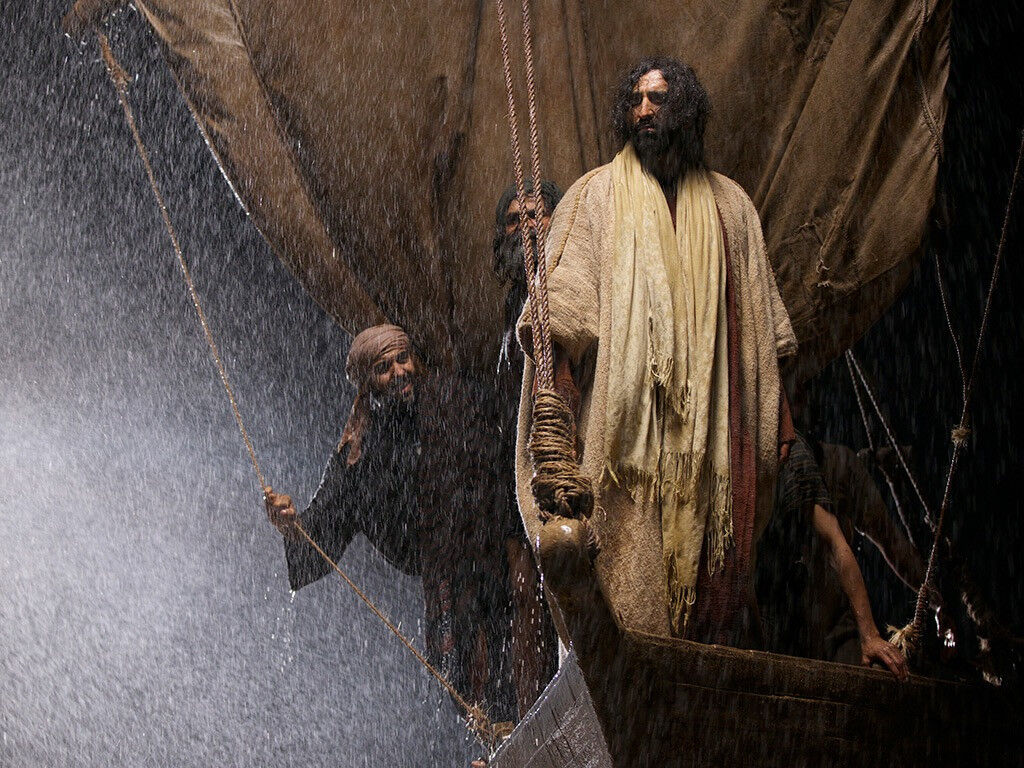












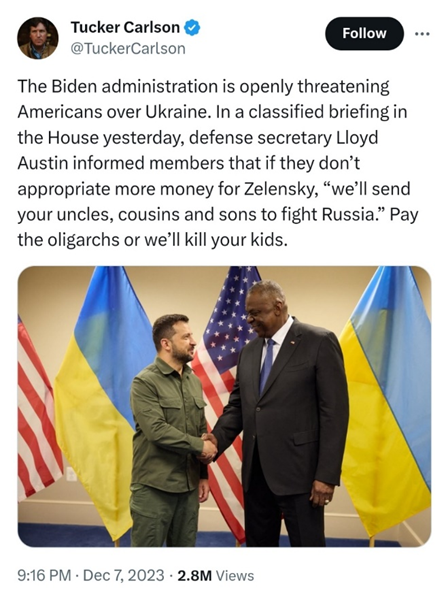








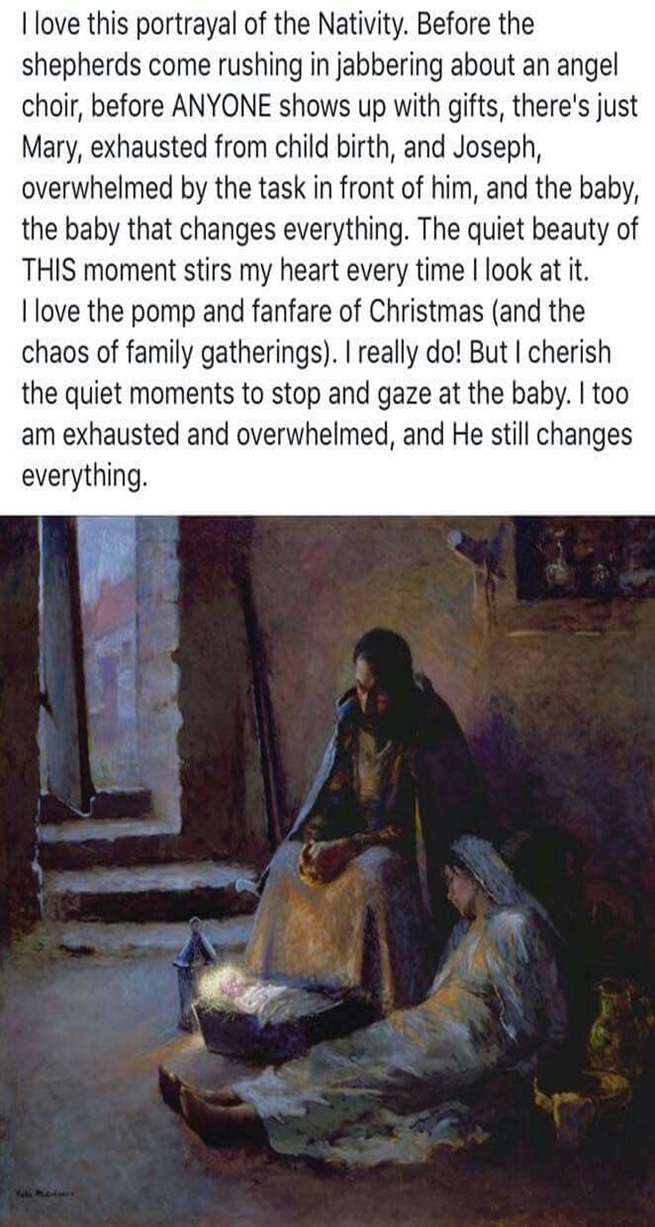

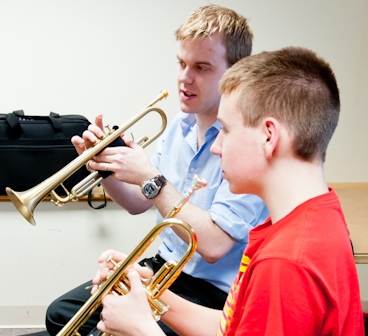
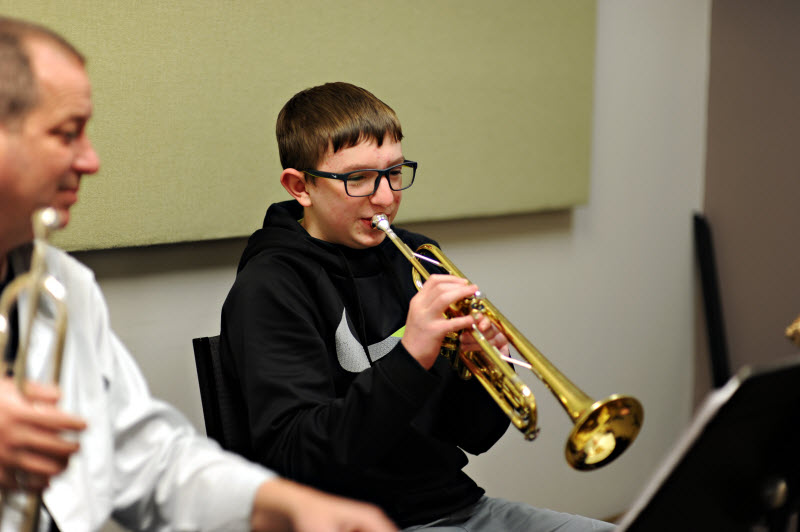
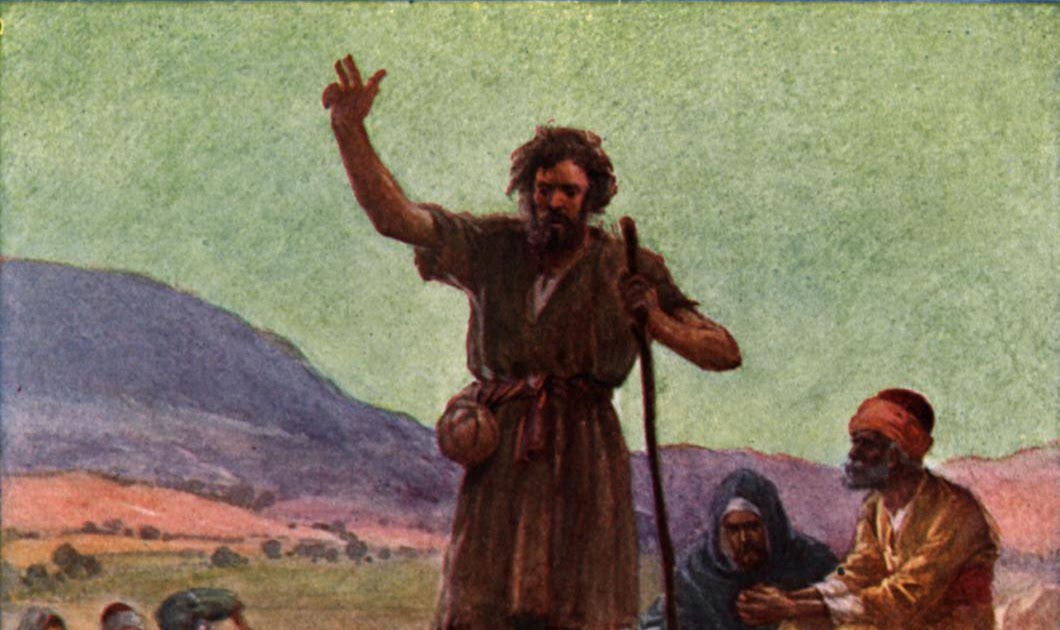












Binary Beckons for More from You
October 15, 2023 Leave a comment
Two options guided my early incorrigible years: “Either you do what I say or your father will deal with you when he comes home” “Either you clean you room or lose your allowance” “Either you are home by 9 or you will be grounded.” The church, too, presented two stark choices: “Either you get saved and go to heaven or you go to hell”; “Either walk the straight and narrow or walk the wide way of the world.”
The either/or binaries of my early childhood were meant to prepare me for life. I learned that if I wandered off into “or” territory there was sure to be consequences. My parents guided my behavior from their own experience of walking within binary guard rails.
They had learned that from the simplest safety issues to the most important issues in life, honest straightforward either/or choices are required. My late mother shared one such either/or choice.
My father, having grown up in the Dutch Reformed church where smoking was the norm for men, was given a choice by my mother when she was dating my father: “Either you stop smoking or that’s it.” Thankfully, my father didn’t “or” the situation. I wouldn’t be here if he did.
With knowledge of their own either/or choices and exposing me to the either/or choices of the book of Proverbs, my parents either/or’d my youth. Binary guard rails were set in place for my time in Jr. High and High school.
When I attended Moody Bible Institute after high school (early 70s), the binary thinking infused in me by the church came into question.
A first-year class called “Personal Evangelism” was taught by Mr. Winslett. During that semester Mr. W described different religions. As he did so he labeled the churches of the Seventh Day Adventists, Mormons, Jehovah’s Witness and others as cults. When he came to the Catholic church, he said it was a cult because Catholics worshipped Mary, had a pope, and put tradition ahead of scripture. I remember hearing this and thinking that we’re better than all of them. But something felt off.
(Per Article I of The Chicago Statement on Biblical Inerrancy found on the Moody Bible Institute website, the Bible, not tradition, is the authoritative Word of God.)
The highly partisan Mr. W, a representative of MBI, had sallied Catholicism: MBI represented real Christianity and Catholicism, a “cult”, did not; either you are with us in Bible first thinking or you are not one of us. (Mr. W was the only teacher I met a MBI like this. But there are many who preach and teach the same binary “us and them” thing.)
I was raised Protestant. Differences of Protestantism and Catholicism were minimally noted in my church. But I had read about Luther, the Ninety-five Theses, and the Reformation. I knew about the abuses and corruption of the Catholic church. Those include Johann Tetzel selling indulgences.
But faith in God and his salvation coupled to Mary, the pope and tradition were not Christianity deal breakers for me. For without faith it is impossible to please God, because anyone who approaches Him must believe that He exists and that He rewards those who earnestly seek Him.
Instead of imposing exclusionary theology, abide by the words of the old hymn: “God moves in a mysterious way His wonders to perform . . . God is his own interpreter, and he will make it plain.”
Years later I came across the same “us and them” attack. I brought my daughter to an Awana program going on at a Baptist church. On the night that she and I were to race the Pinewood Derby Car we had crafted together, the speaker bad-mouthed the Catholic church during a promotion for the Baptist church we were standing in.
He said something to the effect that their Baptist church wasn’t like the unsound Catholic church. I was shocked. There were members of that Baptist church and other churches in attendance. What did they walk away with that night?
I’ve seen this attitude surface so many times by haughty either/or Protestants. I’ve also seen it in either/or Catholics. Both groups interpret Church teaching in a narrow way, then argue that whoever disagrees with their tightly wound interpretation must—by the fact of that disagreement—be in opposition to Church teaching. The Either-Or fallacy used by both Protestants and Catholics: “I can’t be in error therefore YOU must be!”
Another anecdote of the “us and them” attitude: One night I was sitting in a donors meeting listening to a presentation. The Episcopal church I attended wanted to annex and refurbish the house next store and make it ministry usable. At front and center of the room that night was a picture board showing the proposed design. The crossway from the existing church building to the house showed a cross in relief in the arc above the passageway. One woman remarked that we should get rid of the cross because “we’re not Baptists.”
Look. Our family and church backgrounds teach us to think in opposites – basically in terms of good and bad. We are presented with two options and they appear as your only options and mutually exclusive. We then bring unmediated polar extremes into adulthood.
Either/or thinking integrated into our lives and then reinforced by our respective cultures can produce a worldview in stringent binary terms: as a one or zero. Black-and-white thinking is used to reduce the world to something we can handle which then provides a sense of certainty and security. But “a one or zero” thinking can be adversarial, dividing people into “us vs. them.” A few examples:
“I am right and you are wrong.” (How does that work out in marriage? With our neighbors?)
“If you’re not with me, you’re against me. I have friends and enemies but not acquaintances.”
“Either I win or I lose in this situation.”
It can also produce all-or-nothing false dilemma fallacies which are really manipulative setups:
“If you care about your neighbor, you will get vaccinated” and “Putting others first will get us through he pandemic” “Getting vaccinated is loving your neighbor as yourself.”
“Social solidarity is the most precious tenet of our democracy.”
“You’re either pro-choice or anti-woman. There’s no other moral stance.”
“If you’re not part of the solution, you’re part of the problem.”
“Either you let your child change their gender or they will commit suicide.”
“You are either racist (by not agreeing with me) or you are anti-racist (by agreeing with me).”
“If you are against LGBTQ books in the library you are a book banner.”
“If you question what is being taught in public schools, you are a domestic terrorist.”
“If you question the 2020 election you are a MAGA extremist.”
“If you don’t accept the climate science consensus (or COVID science consensus), then you are a science denier.”
Either/or “us and them” thinking tends toward exclusion and not embrace. It tends toward absolutism, authoritarianism, fundamentalism and judgement. We see it in Hamas’ attack on Israel. We see it in climate activism. We see it in cancel culture. We see it in the murderous history of totalitarian regimes. We see it in church teaching and we sing it: “Onward, Christian soldiers, marching as to war.”
We see it in the teachings and practice of Christians, Muslims, and the Progressive Left which would have us believe that they are the opposite of conservative either/or thinking while mandating their own anything-goes version of it. Theology, ideology and government policies are marketed with the dichotomy of good and bad.
It seems that many have retained their childhood’s unyielding binary worldview. It is used as a defense mechanism, as a means of protection from the “hazards and vicissitudes of life”. (From the statement made by FDR when he signed the Social Security Act.)
I’ve seen the binary thinking defense mechanism employed by Christians. Though it comes across as holding fast to the faith and Sola Scriptura, faith vs. science messaging reduces the supposed conflict to “us vs. them” binary thinking which allows no quarter for God’s revelation in nature as revealed by science. Yet, God has revealed himself in both scripture and nature. Science is a tool for understanding God’s revelation of Himself in the physical world.
When I told my eighty-nine-year-old Godly mother that, based on research, I believed the universe to be billions of years old and that God used evolution, she didn’t reply “That’s interesting. Tell me more.” She said “That’s heresy!” Her defense mechanism alarm bell went off. She was reacting from what she had been taught and how she had been taught to think about what she was taught.
Becoming emotionally invested in extremes may lead to the exclusion of people, as “Heresy!” suggests. Such binary thinking can produce unrealistic portrayals of others and it can become used, as mentioned above, as a weaponized defense against others.
Certainly, there are people who watch news commentators because they relish the mocking and “owning” of the opposition. Certainly, there are people who go to church for the same reasons. But there is nothing mature about participation in bad mouthing others. I see nothing of this in Jesus.
I come across Jesus-whipping-the-money-changers-in-the-temple memes on social media. These are extrapolated as Jesus is “destroying” his enemies, so we can do the same. Horrible nonsense.
Relying solely on binary thinking is intellectual and spiritual laziness. An open both/and questioning mind is not a slippery slope and it’s not anything-goes Progressivism. Seek truth and not the comfort of tribal consensus.
Consider that no one has all the information – not your pastor nor MBI nor Anthony Fauci nor climate scientists. It’s OK. Consider that not everything is black and white. Knowing the difference and knowing when to introduce AND with “perhaps” is wisdom.
The Creator of the universe is not a small-minded Person. He holds a universe of disparate thought, theories, and faith in his hands. He is not threatened by any of it. A follower of the Creator of the universe lets God hold the messiness and uncertainty of life in His hands and does not feel threatened.
Finally, a reductionist’s worldview makes it incredibly difficult to hold space for the uncertainty and messiness of others. But there is a better way, a much better way: love and maturity.
Love is great-hearted; love is kind,
Knows no jealousy, makes no fuss,
Is not puffed up, no shameless way,
Doesn’t force its rightful claim,
Doesn’t rage or bear a grudge,
Doesn’t cheer at other’s harm,
Rejoices, rather, in truth.
Love bears all things, believes all things;
Love hopes all things, endures all things.
As a child I spoke, and thought, and reasoned like a child; When I grew up, I threw off childish ways.
I Cor. 13:4-7, 11
~~~~~
(Note: I’ve summed up a lot so as to make this post accessible. I was involved in the Jesus People movement during high school. Along with those in the movement I questioned a lot of the binary thinking of the church. I’ll share that story in another post.)
~~~~~
Science and Faith
In this episode, we focus on the apparent tension between science and faith.
“Many people believe that science and religious faith are bitter enemies with conflicting views of the universe. One the one hand there is the scientific account of the origins of life and then there is the story of universal origins told by the bible. But is this tension real, or is it based on a deep misunderstanding of what the Bible is and how it communicates?
. . .
“Consider this a crash course in reading the Bible as an ancient cross-cultural experience.”
Science & Faith (bibleproject.com)
~~~~~~
Kate Boyd | Science and the Messy Middle
Kate Boyd has been learning to live out her faith in the messy middle in a culture that rewards picking a side. While her journey didn’t begin with a conflict between science and religion, her story explores the complexities of understanding the Bible in today’s context and anyone who has struggled with issues of science and faith will resonate with this conversation.
149. Kate Boyd | Science and the Messy Middle | Language of God (biologos.org)
~~~~~
I’ve been told that I’m either naive or stupid.
I’m not sure which side I’m moron.
Rate this:
Filed under Christianity, Psychology, Science, social commentary, totalitarianism Tagged with absolutism, Authoritarianism, binary thinking, Catholicism, Christianity, either/or, fundamentalism, Protestantism, psychology, Science, totalitarianism