What’s At Stake

One day, after leaving the temple in Jerusalem, Jesus told the disciples that the temple would be leveled. His disciples then came to him privately and asked “What is the sign of your coming and the end of the age?” The conversation is recorded here: Matt. 24:1-35.

Jesus tells them what to watch out for and to not be fooled by. He warns of the persecution and death of disciples who bear witness to the truth they had seen and heard. He speaks of those who fall away and of those whose love for the kingdom of God grows cold because of a milieu of wickedness. Then he adds “The ones who stand firm to the end will be saved.”

The end of the age will come, he tells them, when the gospel of the kingdom is preached in the whole world as a testimony to all nations.

Jesus goes on to reveal signs and wonders of the end times. He can’t tell them the day or hour of his return, as only his Father knows the timing. When it does happen, he says, many would be caught completely off guard.

Jesus went on to speak in parables about the signs and wonders he expected to see in those entrusted with the gospel of the kingdom before he returned.

In the Parable of the Faithful and Unfaithful Servants (Matthew 24:45-51), the faithful servant follows through doing what his master had put him in charge of until he returned. He is rewarded with more responsibility. The unfaithful servant assumed that with the master’s delay he could do as he pleased. When the master showed up unexpectedly, the unfaithful servant is dealt with severely.

In The Parable of the Ten Bridesmaids (Matthew 25: 1-13) ten young women are involved in a wedding tradition. The bride and her bridesmaids, I imagine, learned that it was the beginning of the wedding week sometime before nightfall one evening. They may have caught word about extensive preparations being made for the marriage feast. The ten women prepare for their part in the ceremonies.

By tradition, the bridegroom would process with his friends at night to retrieve his bride and bring her back to his house for the wedding feast and ceremony. When he arrives, the bridesmaids join the procession carrying oil lamps.

Not knowing the exact day or hour of the bridegroom’s arrival, five of the women bring flasks of oil. I imagine that they are thinking “This may take time, but we’re gonna make it happen, we’re gonna do what we have to do to make the wedding and marriage feast a success. The bridegroom is counting on us.”

We learn that when the bridegroom is delayed the ten bridesmaids get drowsy and fall asleep. Then at midnight a shout awakes them: “The bridegroom is on his way!”

The ten get up and trim their lamps by cutting the burnt part of the wick and adding oil. But there is a problem. Five of the women had run out of fuel and brought no extra. They lacked the wherewithal to continue the simple task they were given. So, they ask for oil from the other five with extra oil.

But that’s not going to happen. The prepared five will do what is expected of them and the depleted five are sent to do what they need to do – go buy more oil. While the depleted five are away, the bridegroom arrives and the prepared bridesmaids process with the wedding party.

The depleted five, returning with lamps lit, find out that they are shut out of the wedding banquet and not even acknowledged. The prudent five were mindful of their duty to the Bride and Bridegroom. The foolish five missed an opportunity of a lifetime. It was lights-out for them.

In The Parable of the Talents (Matthew 25:14-30), a master goes on a trip. Before he leaves, he entrusts money to three slaves, each according to his ability. When he returns, he wants an account of their stewardship of what he entrusted to their care.

The slave given five talents has produced five more. The slave given two talents has produced two more. The slave given one talent has not increased its value. He played it safe.

The two slaves that produced a return on investment are rewarded with the master’s favor and receive more responsibility. The slave who did not increase the value of one talent, not even with accrued interest, has the talent taken away. The master gives the one talent to the one with ten talents. I imagine that the master wanted to see what he could do with eleven talents.

Keep watch!

In each of these parables the participants are given a responsibility and an opportunity to show themselves prudent and productive as they keep watch. But some foolishly don’t value what they have been entrusted with (signifying the gospel of the kingdom) and worse. They don’t fear or respect the master or bridegroom.

Did their love grow cold? Their indifferent attitude as to what was at stake for them and the master caught them completely off guard. If they had known the day and hour the master or bridegroom would show up and feigned readiness, how would the master or bridegroom assess who to keep around and who to get rid of and lock out?

No participation trophies were handed out when the master returns. Instead, the worthless are kicked outside, into the darkness. Their weeping and gnashing of teeth will not be acknowledged by the master. They had their day in the sun.

But those who, in the master’s absence, took their responsibility seriously without fail and for as long as it took and those with the sense and wherewithal to keep watch for as long as it took for the bridegroom to appear and those who knew what to do with what the master entrusted them with – these who “stand firm to the end will be saved.”

The main thrust of these parables:  Remain vigilant. Be steadfast, immovable, always excelling in the work of the Lord, because you don’t know the day or hour of the master’s return and your labor is not in vain (1 Cor. 15:58).

~~~~~

Do you hear what Jesus said above echoed and amplified in his words, through John the Seer, to the church in Ephesus?

“To the angel of the church in Ephesus write: These are the words of him who holds the seven stars in his right hand, who walks among the seven golden lampstands:

“I know your works, your toil and your endurance. I know that you cannot tolerate evildoers; you have tested those who claim to be apostles but are not and have found them to be false.  I also know that you are enduring and bearing up for the sake of my name and that you have not grown weary.  But I have this against you, that you have abandoned the love you had at first.  Remember, then, from where you have fallen; repent and do the works you did at first. If not, I will come to you and remove your lampstand from its place, unless you repent.  Yet this is to your credit: you hate the works of the Nicolaitans, which I also hate.  Let anyone who has an ear listen to what the Spirit is saying to the churches. To everyone who conquers, I will give permission to eat from the tree of life that is in the paradise of God.

Revelation 2: 1-7

What’s at stake. In the prophetic messages to the seven churches in Asia Minor, when Jesus has something against a church it comes down to the consequences he alluded to in the parables above: if you do not repent and change your ways before the master returns there will be judgement.

Note: This is the same alternative that those of us who bear witness to the truth presents to the world.

~~~~~

Brain Rot: What Screens Are Doing to Our Minds

 . . . this podcast covers the effects of too much screen time. Dr. Messina talks about this topic with Dr. Harry Gill, a renown psychiatrist who also has a PhD. in neuroscience. They discuss one of the greatest difficulties they see in their child, adolescent and adult patients who contend with way too much screen time, the all-encompassing phenomenon of ceaseless digital interactions that occur on various devices, over an array of social media platforms, and through multi-player online gaming. They contend that because we are bombarded with constant stimulation which causes us to be more distant and isolated from each other, various individual tragedies, addictions, and hollowed-out interpersonal lives are becoming commonplace in our world today. In addition, they talk about the fact that misinformation is spreading at a rapid pace while social structures are breaking down on a global scale. Their hope is to provide information that will help limit screen time for our listener and their family members.

Brain Rot: What Screens Are Doing to Our Minds (1)

Brain Rot: What Screens Are Doing to Our Minds (1) – New Books Network

~~~~~
Victor Davis Hanson: Democrats’ 10-Part Strategy to Stopping Trump (At Any Cost)

Home – VDH’s Blade of Perseus

Surface Readings

Now is the age of anxiety. ― W H Auden

“THE END IS NEAR.” Phenomena Pending.

Impending doom has been in the news during my entire lifetime. You can view some of the headlines and pronouncements here: Wrong Again: 50 Years of Failed Eco-pocalyptic Predictions.

Before I came on the scene in the early 50s, the advent of nuclear weapons in the 40s posed the threat of nuclear war annihilation. Adding to American’s anxiety and panic during the Cold War period that followed was the new mass medium of 1950s television. Its B&W news, public service announcements, documentaries, and science fiction programming brought into homes the stark magnitude of the nuclear age.

One response during that anxious time was to use ‘Duck and Cover’ drills in schools across the United States. Students were trained as to what they should do in case of an atomic attack – dive under their desks and cover their heads (Producing another Atomic Kid!).

And though in the early 60s the concept of Mutual Assured Destruction (MAD) was discussed as a mutual deterrent, no one knew what would happen as in 1962 when the Cold War nearly escalated into nuclear war. The United States and the Soviet Union faced off during the Cuban Missile Crisis. The escalating arms race was at issue.

Released in 1965, Barry McGuire’s The Eve Of Destruction protest song addressed the instability in the world – the prospect of nuclear war, the Vietnam War, the middle east conflict and civil rights.

During the late 60s and early 70s, I was involved in the Chicago area Jesus People movement. I remember attending a Larry Norman concert where he sang, I Wish We’d All Been Ready. (Sadly, the song refers to a “Rapture” event, a popular escape plan for Christians based on a mis-reading of scripture.)

Life was filled with guns and war
And everyone got trampled on the floor
I wish we’d all been ready . . .

There’s no time to change your mind
The Son has come and you’ve been left behind . . .

A man and wife asleep in bed
She hears a noise and turns her head
He’s gone
I wish we’d all been ready . . .

Spectacularly wrong environmental and climate predictions were made around the time of the first Earth Day in 1970. Some in 1971 predicted an Ice Age. Not one of the alarmist climate crisis predictions during my lifetime (or yours) have ever come to pass.

Nor did the wild claims of ‘The Adam and Eve Story’, written by a former US Air Force employee, UFO researcher and self-proclaimed psychic Chan Thomas in 1966. For the past 59 years the book has been kept under wraps by the CIA. The claims of the book are based around periodic cataclysmic events in history. The next one he proposed would be a sudden reversal of Earth’s magnetic poles, thereby wreaking havoc and total destruction to the planet in a matter of hours.

“You Never Want a Serious Crisis to Go to Waste.”

Along with the many end-of the world scenarios came Pop eschatology. The end-times prophecy business has been around during my entire lifetime. Not long ago I received a flyer announcing a weekend End-Times Prophecy seminar to be held at a local hotel.

In 1995 a series of books fictionalizing events surrounding a supposed rapture and seven-year tribulation period prior to the second coming of Christ began to appear on best-seller lists. The 16 Left Behind lowbrow thrillers of the Left Behind series, authored by Tim LaHaye and Jerry Jenkins, arrived on the scene twenty-five years after another end-times book.

When Hal Lindsey and C. C. Carlson came out with The Late Great Planet Earth in 1970 it sold millions of copies. Their ‘non-fiction’ end-times book was later adapted (1979) into a documentary film narrated by Orson Welles. 

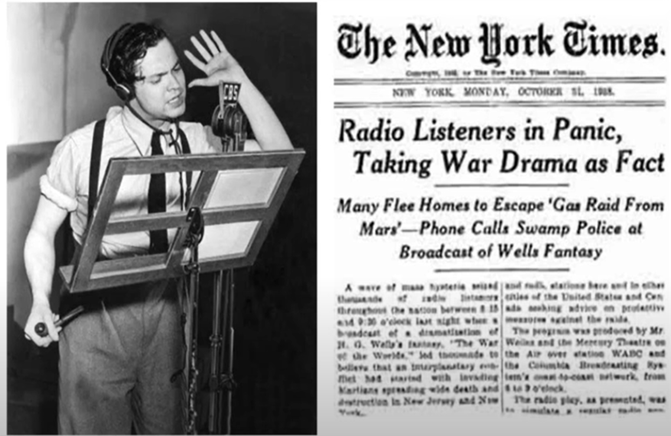
Some readers might recall that Orson Well’s, on October 30, 1938, gave a dramatic War of the Worlds radio broadcast. It scared the heck out of a lot of people. Some say Lindsey’s book did the same.

The Pop eschatology of LGPE, applied to current events such as the Cold War, was released shortly after the Israel’s Six-Day War. The authors aligned their dispensational theology with contemporary geopolitical events to show that civilization was headed for doomsday. They pushed hardcore Zionism.

 Men Who Stare at Charts

The Left Behind series, The Late Great Planet Earth, and much of today’s “prophecy”, are steeped in John Nelson Darby’s dispensational theology and “rapture” nonsense. Darby (1800-1882) was an Anglo-Irish Bible teacher, clergyman, and founder of the Plymouth Brethren and the Exclusive Brethren. Among other things, he thought that Christians should not be involved in politics (as if Jesus ascended to the Father only to leave us here to ponder salvation in different epochs, to develop dispensational theology charts to schedule God’s acts, and to console ourselves with millennial dreams.)

In my estimation, dispensational theology, which didn’t exist in the church history until Darby came along and the Scofield Bible expanded its reach, is a way of charting Scripture into manageable chunks of salvation history and a way of managing God and expectations. This theology proposed to show how God planned for people’s salvation in each historical period by what relates to Israel, what relates to the church, and what the End Times will look like. It was a way to get a handle on dates and times and God.

Dispensational theology and its offshoot Pop eschatology seem to be a science project applied to theology. Darby, the originator of a pre-trib rapture, lived during the 1800s, a period following the Enlightenment when knowledge by way of rationalism and of empiricism was emphasized.

I don’t know that anyone cares about dispensational theology except for a few wonky theologians. If you do, then see The Rise and Fall of Dispensationalism: How the Evangelical Battle Over the End Times Shaped a Nation and What Is Dispensationalism and Who Believes It?

Pop eschatology looks at the geopolitical landscape, cherry picks what is literal and symbolic, and crams headline news into end-time predictions. But “de-coding” symbolic scripture prophecies to give a detailed scenario of end-time events is not Christian eschatology. It’s trying to time the market for the I wish we’d all been ready crowd to jump in. It’s manipulation of scripture and of people to produce a turn to God out of FOMO.

~~~

Added 6-23-2025, in light of the Israel/US attack on Iran’s nuclear facilities:

I have a great deal of sympathy for Christians who still believe the lore that dispensationalism offers. I understand what motivates them and why. But, it is well past time for the church to provide better Bible teaching that does not encourage American Christians to develop misplaced loyalties. American Christians have duties to their nation and their church. But for too many American Christians, misplaced theological convictions have led to political loyalties that prioritize Israel over both the church and their own nation.

https://www.jchasedavis.com/p/rumors-of-war

Questions Abound

This post is not meant to be a reproach to making sense and order of what is happening around us. That’s what we do, especially in a time and under those who “forsake the law and praise the wicked” (Prov. 28:4):

Why did Joe Biden award the wicked Hillary Clinton and George Soros the Presidential Medal of Freedom?

And why did Biden pardon the treasonous General Mark Milley and the murderous Anthony Fauci? Why did Joe Biden preemptively pardon them and the illegal Jan. 6 committee? (I don’t believe these Federal pardons are legal. In any case, states can bring charges against them.)

Why did Joe Biden commute the sentences of 37 of the 40 men on federal death rowa list that includes at least five child killers and several mass murderers? Biden gave the reprieve to some of the nation’s most violent murderers — nine of them found too dangerous to live after butchering fellow inmates — as part of his effort at “ensuring a fair and effective justice system.”

Why did Joe Biden preemptively pardon capitol police officer Michael Byrd, the one who murdered unarmed US Air Force veteran Ashli Babbit on J6?

Why haven’t the “Spies Who Lie” – 51  intelligence agents – who signed a letter in 2020 saying emails from Hunter Biden’s laptop carried “classic earmarks of a Russian information operation in an effort to interfere with the election been brought to justice? (Trump just yanked their security clearances.)

How does one justify Biden protecting Ukraine’s border with billions and billions of US taxpayer dollars and weapons as being more important than protecting our own overrun borders and our exposed citizens? And how does one justify Biden and Ukraine escalating the war with Russia to a point that’s dangerously close to nuclear war?

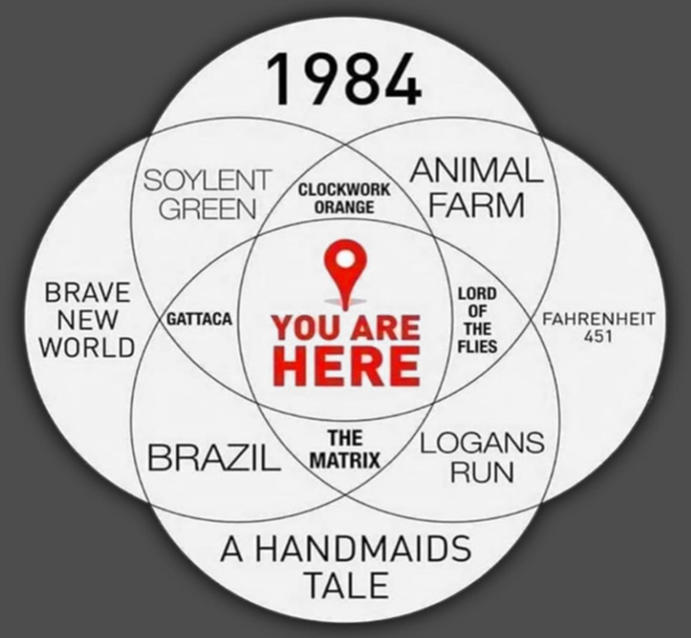
And what about those (Globalists, WEF, WHO) who appear to use dystopian novels as their guidebook to immanentize the eschaton with their version of sense and order – a New World Order – under the guise of saving the planet (from the people living here)?

And, going forward, why turn over our future to godless pagan Globalists and their anti-human tokenization of life?  Why let them concentrate power in human-replacing AI?

(Thank God. Trump just signed executive orders to get the U.S. out of the WHO and out of the Paris Climate Accord. He also signed an EO barring central bank digital currencies (CBDCs). CBDCs could facilitate a social credit scoring system that controlled a person’s behavior and assets.

Trump also signed EOs to secure the border with a National Emergency and EOs that work to eliminate “government censorship of free speech” and the “weaponization of government” against “political adversaries of the previous administration.” Thank God Christians were involved in politics this last election!

Seeing evil expand its reach over the last four years of the illegitimate Biden regime and finding out that there were Christians who supported four more years of it just to say “No” to Trump, had me horrified at where this world is headed. With Trump as president now we have some buffer against the evil that works to overcome us. The fight against dark forces is not over.)

Alarm bells should go off when you hear dogmatic pronouncements such as “Trump will destroy democracy” and “humanity is unequivocally facing a climate emergency.” These preposterous statements are meant to manipulate. We must be careful as to what and who we put our trust in.

When things converge and become dark, ugly and threatening, imaginations take on visions of the end times. And unless you are a nihilist and believe in Nothing except power, you desire a time when things will be put right. Most of us want justice to prevail in the end and to see all of our best hopes realized.

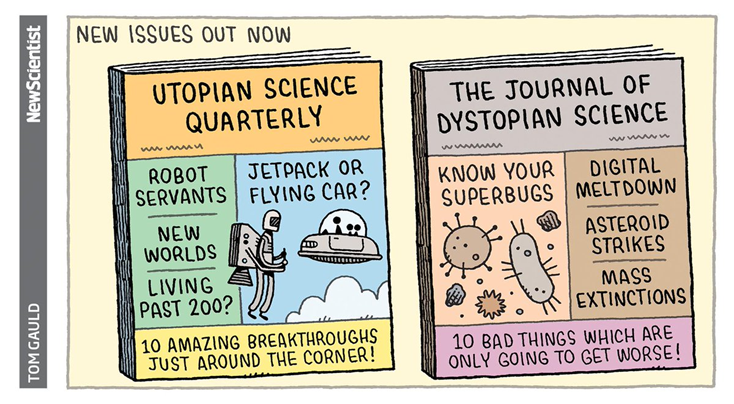
Despite literal, surface-level interpretations of conditions here on earth leading to end-of the world predictions, false prophecies, doomsday scenarios, worries about near-Earth asteroids, hyperbolic threats of “mass extinction” due to a “climate crisis”, and a “global crisis of unprecedented reach and proportion” (Fauci’s gain-of-function pandemic) The End has not happened during my 70+ years. Why?

“THE END IS IN PROCESS.”

The delay of The End, the delay in Christ’s Parousia or Second Coming, is God’s patience and grace giving people time hear the truth and to repent. How do they hear the truth? Those who have entered God’s kingdom as a result of his first appearance have a role in bearing witness to the nations to bring about God’s universal kingdom before his Second Coming.

Before “God through Christ Jesus judges the secret thoughts of all” (Paul in Rom. 2:16), all nations are to hear the gospel message. God’s desire is that all people hear the truth about His Son and turn to him and away from the worship of false gods and false power. This is what John of Patmos communicates to seven struggling churches in a Roman province in Asia with his apocalyptic prophecy Revelation.

John of Patmos writes to the seven churches, each in their own context, about their witness within the context of the worldwide tyranny of Rome and the broader context of God’s cosmic battle against evil and his purpose for his creation and kingdom.

John makes it clear that witness of the truth proceeds based on the church’s loyalty to God’s kingdom and the church knowing the truth worth dying for and on the church being a faithful witness of that truth even unto death. The truth:  Jesus Christ, the Lamb Who was slain, is One with God and worthy of all worship and praise.

Revelation was written within the setting of the Roman empire. Early Christians were struggling against the “satanic trinity: the dragon or serpent (the primeval, supernatural source of all opposition to God), the beast or sea-monster (the imperial power of Rome), and the second beast or earth-monster (the propaganda machine of the imperial cult).”[i] The worship and witness of only the One True God and not of the Roman emperor put these early Christians in serious opposition to this “satanic trinity.”

Regarding a surface reading of events and of scripture (sometimes called “the plain meaning of the text”), consider the reverse engineering applied to the Genesis creation account to create a ‘Biblical origins’ response to Darwin’s On the Origin of Species and later, for the Scopes Monkey Trial.

Based on research that includes astrophysics, geology, and the James Webb Space Telescope, the universe is estimated to be 13.8 -26.7 billion years old. But reverse engineering of earth’s age using a literal surface reading interpretation of the creation account in Genesis estimates the earth to be about 6-10,000 years old. In terms of Jewish and Chrisitan thinking over millennia, the young earth creationism (YEC) position came about recently.

The YEC position has tied itself to concerns of Biblical inerrancy as if only a plain reading of the text, the lowest level of understanding, is what makes the Bible the Word of God. The fact that the Bible was written for us but not to us, the YEC position doesn’t allow for a historically contextual understanding to be taken into account.

Consider that the same reverse engineering used for the creation account (recently, the attempt to conform physical evidence into a Young-Earth biblical framework) has often been applied to End Time accounts in scripture to conform events to dispensational theology.

The prophecy and theology of Revelation relates not literal dates and geopolitical events but cosmic eventualities and resolutions. Its message for those in Christ is to persevere while living with evil opposition all around and with the tension of the imminence and delay of Christ’s return.

John encourages the churches: the enemies of God are finally defeated to make way for the ushering in of God’s fully realized everlasting kingdom. Heaven and earth will be joined together.

The delay of The End is a concern in heaven. John writes (Rev. 6): When [the Lamb] broke the fifth seal, I saw under the altar the souls of those who had been slaughtered for the word of God and for the testimony they had given; they cried out with a loud voice, “Sovereign Lord, holy and true, how long will it be before you judge and avenge our blood on the inhabitants of the earth?” 

John’s apocalyptic vision, filled with symbols and with descriptions of mythical characters evoking the book of Daniel, summons our imaginations to visualize things as heaven sees them. John’s prophecy, like the hundreds of OT prophecies he alludes to, is to reveal God’s POV.

 Revelation, you see, is what history has been all about. With that understanding, we carry on “knowing what soon must take place” (Rev. 1:1).

More about Revelation in my next post.


[i] Bauckham, R. (1993/2018). The theology of the Book of Revelation. PP 88-89

~~~~~

The Tribulation and the Rapture – Dr. Walter Martin (Historic Premillennial)

~~~~~

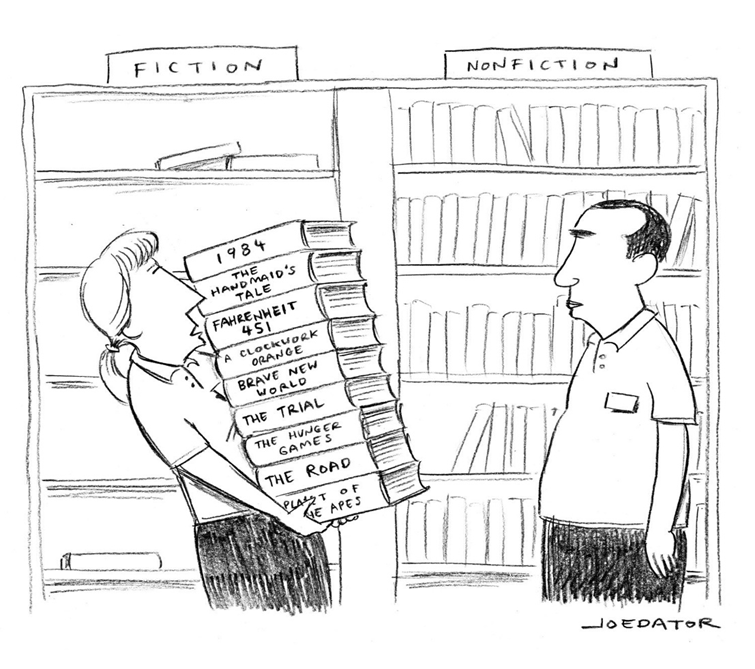
“Can you give me a hand moving these?”

Daily Cartoon: Monday, May 13th | The New Yorker

Reports from Davos before President Trump speaks:

Personhood For Rivers And Trees: Larry Taunton On The Fundamentally Anti-Human Sentiment Of WEF

Noor Bin Ladin Reporting From WEF: The Golden Age Is Incompatible With AI Replacement

2024: “Don’t You Care?”

What do we talk about when we talk about apocalypse?

Are we talkin’ Steppenwolf and his legions of Parademons attempting to take over the Earth using the combined energies of the three Mother Boxes?

Are we talkin’ nuclear war? World War Z?

Are we talkin’ The Late Great Planet Earth?

Are we talkin’ a supposed climate change catastrophe prophesied as either a meltdown or an ice age?

In popular use, “apocalypse” tags something with the worst possible outcome usually in terms of an end-of-the-world scenario and mankind’s role in events much bigger than himself. But the Greek word apokálypsis, from which “apocalypse” is derived, means an uncovering or revelation.

In terms of scripture, “apocalypse” is a genre in which God reveals His point of view. Such are the books of Isaiah, Jeremiah, Ezekiel, Joel, Zechariah, Daniel and Revelation. The “apocalypse” as an author’s vision of the end times or the end of the age became a distinct literary genre during the Second Temple period and into the Common Era.

Apocalyptic “non-canonical” literature helped pave the way for the Jesus movement in the first century CE. Many in Israel, based on these writings and OT texts (Psalm 146:7-8, Isaiah 61: 1-2), held a belief in a Messianic Apocalypse – the anointed one, a divine messianic agent, revealed at the end time who executes justice for the oppressed, gives food to the hungry, sets prisoners free, opens the eyes of the blind, and lifts up those who are bowed down.

Within this millenarist writing context and using explicit connections to the Old Testament via quotes, and with accounts of eyewitness testimony, the four gospels record God’s revelation in Jesus Christ as the Messianic Apocalypse. And, they record the apocalyptic pronouncements of Jesus, including Matthew 24 (The Destruction of the Temple and Signs of the End Times) and in Matthew 25 (The Sheep and the Goats; Judgement). Jesus’ words and works throughout the four gospels disclose God’s POV.

Near the end of the John’s gospel account we are given the reason why John wrote to reveal Jesus:

“Jesus did many other signs in the presence of his disciples, which are not written in this book. But these are written so that you may believe that the Messiah, the son of God, is none other than Jesus; and that, with this faith, you may have life in his name.” (Jn. 20:31)

The gospel according to Mark, written from a Petrine perspective, recorded what Jesus did and said in the presence of his disciples so that with the centurion standing watch at the cross, we might say “Truly this man was God’s Son!” (Mark 15:39)

Throughout the first six chapters of the gospel according to Mark, chapters I am memorizing, I find Jesus over and over again revealing who he is to the Twelve and the group of disciples around him. Yet, they are not making the connection. They consider him a great prophet and a maybe-Messiah Apocalypse but nothing more.

When Jesus is in the synagogue teaching, the gathered are astonished by his teaching. He speaks with authority. Then a man with an unclean spirit reveals Jesus’s identity:

“What business have you got with us, Jesus of Nazareth?” he yelled. “Have you come to destroy us? I know who you are: you’re God’s Holy One!”

Jesus commands the unclean spirit to be quiet and then casts out the unclean spirit. The buzz begins.

“What’s this?” they started to say to each other. “New teaching – with real authority! He even tells the unclean spirits what to do and they do it!”

Before chapter one ends, Jesus has healed many people suffering from all kinds of diseases and cast out many demons – exactly what Psalm 146 and Isaiah 61 talk about.

I learn from Mark that Jesus won’t let the demons speak. They would reveal his identity. I understand this as Jesus wanting each person to come to grips with who he is on their own.

In chapter two, Jesus heals a paralyzed man. But first he recognizes the faith of those who bring the man to him. He tells the cripple that his sins are forgiven. Upon hearing this the legal experts in the room start grumbling “Its’ blasphemy! Who can forgive sins except God?” They are so ready to pounce that they don’t understand who is standing before them. And why would they?

Who would expect the invisible God to be incarnate, to be physically present? And who would expect a consuming fire (Deut. 4:24) to be in their midst?

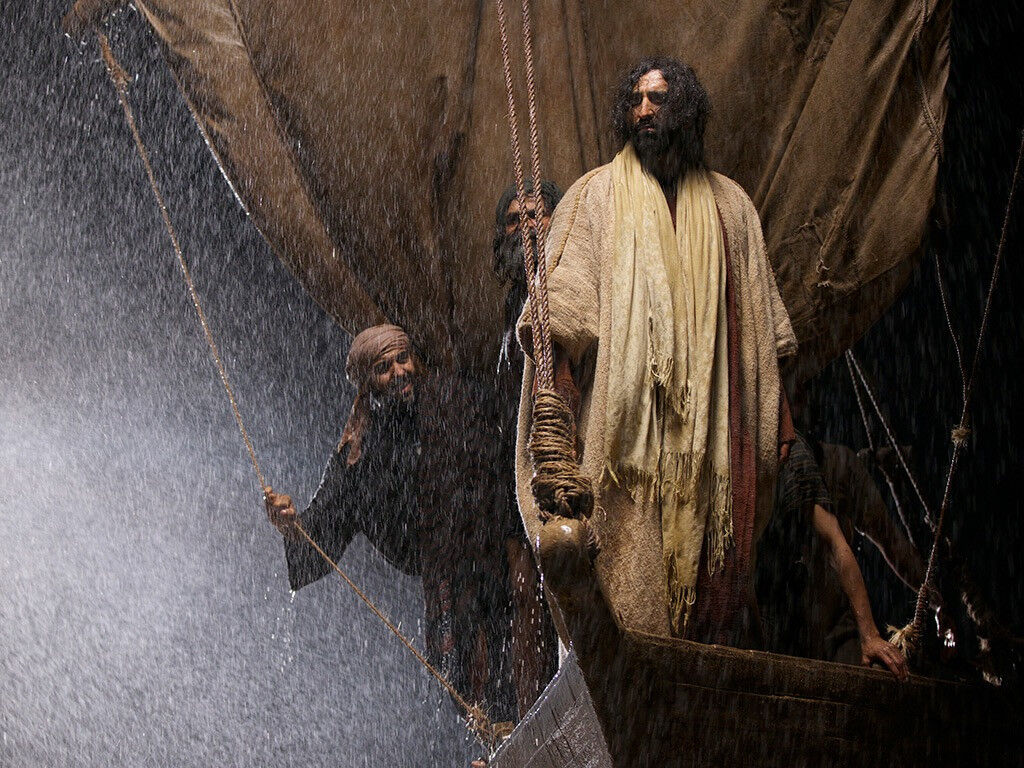
Chapter Four:  After teaching a huge crowd about the kingdom of God, Jesus and the disciples set sail across the sea. A big wind storm comes up. Waves beat against the boat and it quickly begins to fill up. Jesus, however, is asleep on a cushion in the stern. Very anxious disciples wake him up and say “We’re going down. Don’t you care?”

Now, I don’t believe that any of the disciples were thinking that Jesus would get up and end the storm. They were likely thinking that they needed another hand to bail water out of the boat (kind of like my prayers at times).

Jesus gets up. He scolds the wind and says to the sea, “Silence! Shut up!”. Nature calms down but not the sailors. They had been ‘apocalypsed’. Someone in their boat just took control of the cosmic order. Someone in their boat just revealed God-like properties.

Great fear stole over the crew (survivors in the mini-Noah’s arc). “Who is this?” they said to each other. “Even the wind and sea do what he says!”

Jesus had looked at them and said “Why are you scared?” Don’t you believe yet?” That was his response to the disciple’s “Don’t You care?”

Jesus’ response to the disciples was not to shame them. It was to reveal their unbelief in what has been revealed to them: God was walking among them; God was in the boat with them; God’s love as demonstrated would see them through.

“Don’t you care?” is the corporate expression of anxious Israel waiting for Messianic Apocalypse.

“Don’t you care?” is the corporate expression of an anxious world that, with chronic uncertainty, is focused on a coming the-ship-is-going-down apocalypse and not on the certainty of the revelation of Jesus.

What do I talk about when I talk about apocalypse? This: what’s been revealed of Jesus is greater than what could ever possibly be revealed – whether in nature or alien or made-made or imagination-made.

2024: “We’re going down. Don’t you care?”

“Don’t you believe yet?”

~~~~~

Hope in an Age of Anxiety with Curtis Chang and Curt Thompson

We are in an anxious age. By some estimates, a third of all Americans will struggle with anxiety in their lives, and nearly 20% currently suffer from an anxiety disorder. For those suffering the mental distortions of anxiety, life can be difficult, and hope elusive. And for many Christians who have tried and failed to stop their slide into fear and worry by simply “laying down their burdens,” they may feel an added sense of spiritual failure as well.

We’re joined on our podcast by psychiatrist Curt Thopmson and theologian Curtis Chang who help us explore a counterintuitive approach to understanding our anxiety:

Hope in an Age of Anxiety with Curtis Chang and Curt Thompson – the Trinity Forum

Episode 70 | Hope in an Age of Anxiety | The Trinity Forum (ttf.org)

~~~

Beauty from Darkness with Curt Thompson

How do we seek, find and share hope and healing in hard times?

Psychiatrist and author Curt Thompson and Trinity Forum President Cherie Harder discuss healing, grace, and reintegration — both for our individual and spiritual lives, and our shared life together. Together they consider how being known and believing what is true about our stories can transform our perspective and bring hope and healing:

“Shame is the antithesis and is that force that evil wants to use to undermine not only our ability to be known by one another deeply, which we were made for, we were made to be known, but we were also made to be known on the way to creating artifacts of beauty, whether those artifacts are relationships, whether they’re new pieces of music, art, businesses, and so forth.”
– Curt Thompson

Episode 45 | Beauty from Darkness with Curt Thompson | The Trinity Forum (ttf.org)

~~~~~

Must have been all those Venusian women with SUVs . . .

When We All Get to (New) Heaven (and New Earth)


Just the other day I saw this picture, a billboard remembrance of Billy Graham, posted in a Tweet.

“Gone home” brought back memories of the spurious teaching and preaching I have been under for many years regarding the end of one’s life. If we say “home is where the heart is” then yes, Billy Graham went home. If we say Heaven is our final destination, as I have heard so often in sermons and songs then no, Billy Graham did not go home.

Am I being picayune? I will tell you why I do not think so. Like with the constant preaching of “ministry, ministry, ministry”, so much of my life in attendance in a Bible church setting has been under the preaching and teaching that someday we will all be taken up and away from this ‘God-forsaken’ mess. We will either be ‘raptured’ or die. Either way, as the sermon goes, we will be taken up to our final resting place in heaven. As far as I am concerned that preaching is dead wrong for at least a couple of reasons.

First, the “rapture” is a fantasy imposed onto Scripture. We should see the Scripture in the context it was written and not add fantasy notions to it. The Apostle Paul, by the Holy Spirit, gave us the imagery of Christ returning in power. In 1 Thessalonians 4.15-16 the Apostle “Paul is casting a vision of Christ’s return wrapped in political overturns (he actually does this a lot!)”. There will be no “rapture”. “The Late Great Planet Earth” and the “Left Behind” series of ‘end times’ books are also fantasies imposed on Scripture. These books are not worth your time.

Second, when we die we do go to heaven – the place where Jesus is. And where Jesus goes, we go too. He will be returning to the worlds that are created for him.

You see, “heaven” is just a way station, an intermediate stopping place. Heaven can be thought of as a station set between principal stations on a line of travel. Think railroad. Heaven is not our final destination. Heaven is a way station along the way.

As such, heaven is not a retirement community, as has been implied by so much preaching and teaching and by popular songs and hymnody. I remember singing “This world is not my home I’m just a passing through” and wondering, “Is that all there is? If we’re just passing through what was the point of all this? Is heaven some hyper-imaginary place where I put my feet up after a life of work? There are many more escapist songs just like “This World…”.

I remember singing “When we all get to heaven…” and “I’ll fly away” and “When the roll is called up yonder, I’ll be there”.


Now, why would God create a new heaven and a new earth if “heaven” was your final destination?

“Then I saw a new heaven and a new earth. The first heaven and the first earth had passed away, and there was no longer any sea. And I saw the holy city, the new Jerusalem, coming down out of heaven, from God, prepared like a bride dressed up for her husband. I heard a voice from the throne, and this is what it said: “Look! God has come to dwell with humans! He will dwell with them, and they will be his people, and God himself will be with them and will be their God. He will wipe away every tear from their eyes. There will be no more death or mourning or weeping or pain anymore, since the fist things have passed away.

The one who sat on the throne said, “Look, I am making all things new….” Revelation 21: 1-5

Compare Genesis 1 and 2 and Revelation 21 and 22. Creation was meant to be a place where God dwells with his creation. Creation is the temple designed by God where He is to dwell among his people. Consider the Garden of Eden, Consider the tabernacle, the Temple, and now the indwelling of the Holy Spirit in us who are the temple of the Holy Spirit. Consider the new heavens and new earth where God dwells with his people. The work of Jesus on the cross is a work of creation’s redemption, of restoring Genesis in Revelation. The life of Jesus and his death on the cross is for the reunification of heaven and earth. You and I, after passing through the way station of heaven will return and take up roles in the new created order.

Jesus, in fact, will be returning with Billy and all those who have gone on before. Jesus is not giving up on his creation. Jesus will be returning to put things right and he will use us to do so, since when we see him we will become like him. In the context of current church life, Paul writes:

“Don’t you know that God’s people will judge the world? And if the world is to be judged by you, are you really incompetent to try smaller matters? Don’t you know that we shall be judging angels?” 1 Cor. 6:3

The reason I write this post is to get instill the reader with spiritual momentum that will push one past the grave and past the “final resting place” thinking and towards the dynamic of the Kingdom of God on earth. With your death you are not being put out to pasture. Rather, you are being resurrected and repurposed to do the work of the Kingdom of God on earth where God will dwell with you. Lay up for yourselves those ‘retirement fund’ thoughts now.