Cosplay Christians Are at it Again
March 23, 2026 Leave a comment
In the “Anything Goes” Gnostic dream world of Progressive Christianity, one can dress up their politics to pose as a Christian persona for emotive performance art . . .

Woke Christian Leaders Issue Letter Against Rise of ‘White Christian Nationalism’
Michael Austin at Gateway Pundit writes:
A coalition of left-leaning evangelical Christians issued a new open letter against the Trump administration and what they claimed is a rising tide of “white Christian nationalism.”
In recent years, legacy media outlets and Democratic leaders have linked a rise in distinctly Christian conservative political engagement to “Christian nationalism,” denouncing the notion that America is an historically Christian people and country.
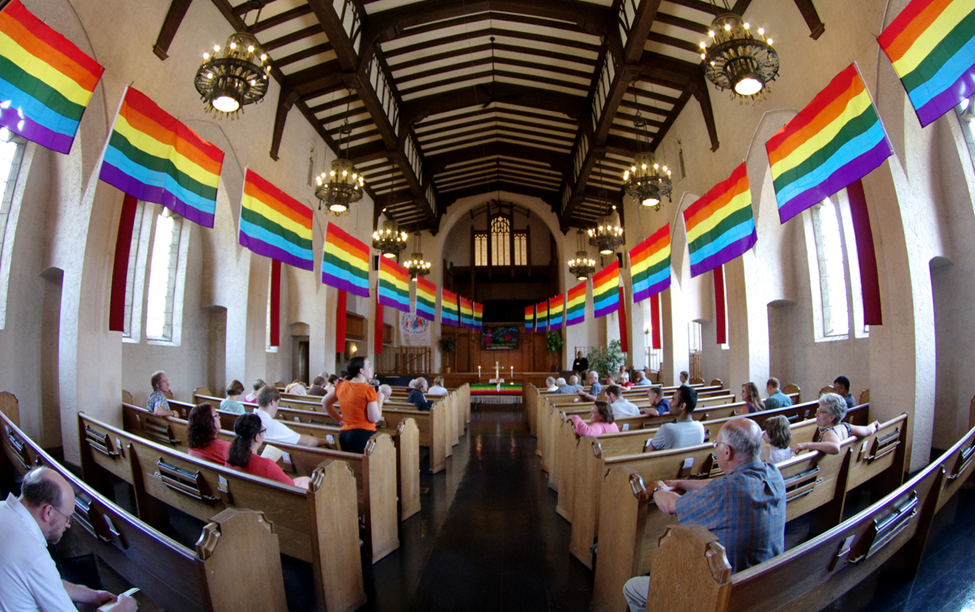
The “open letter”, with its condemnations and call to resistance expressed in Christian-speak, is an implicit denunciation of ICE, the Trump administration, and any notion of Christianity that hasn’t bowed the knee to the many flags of Progressivism. It comes with an appeal to join the troupe of Cosplay Christianity. You can add your name to a list of those who have bowed the knee.
The website: A Call to Christians in a Crisis of Faith and Democracy | Stand for Justice & Faith — Act Now
From the coalition’s Why We Write:
We are facing a cruel and oppressive government; citizens and immigrants being demonized, disappeared, and even killed; the erosion of hard-won rights and freedoms; and a calculated effort to reverse America’s growing racial and ethnic diversity– all of which are pushing us toward authoritarian and imperial rule.
What confronts us is not only an endangered democracy and the rise of tyranny. It is also a Christian faith corrupted by the heretical ideology of white Christian nationalism, and a church that has often failed to equip its members to model Jesus’s teachings and fulfill its prophetic calling as a humanitarian, compassionate, and moral compass for society.
Therefore, as Christians in the United States, representing the breadth of Christian traditions and one part of our nation’s religiously plural society, we are compelled to speak out more boldly at this time.
~~~
I am compelled to boldly reply. So I’ll start by addressing reality and what these posers have willfully ignored: what has been cruel and oppressive:
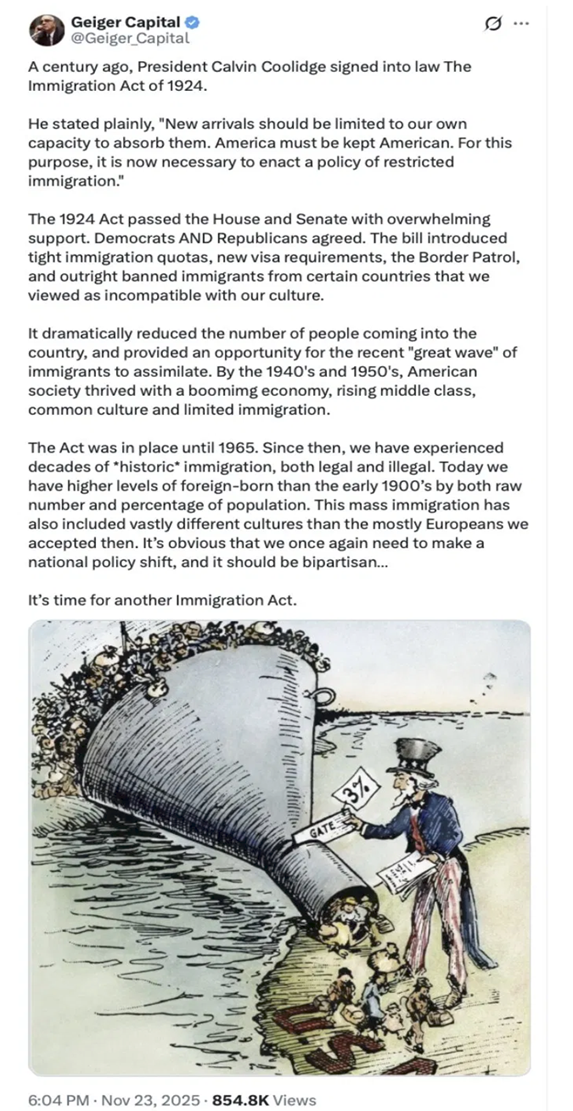
Millions of foreign invaders have entered our country illegally. They have been allowed to do so under the globalist open borders Biden Regime. They have been allowed to enter without vetting, vaccines, health monitoring, and financial means of support. U.S. citizens – our neighbors – have been forced to bear the brunt of this invasion. This, while there has been a legal means to enter the country especially if you needed political asylum from persecution, e.g., white South African refugees.
The effects of the mass invasion of opportunists, per Matthew Dickerson, Director of Budget Policy:
“This surge has imposed a significant human cost, with communities across the United States grappling with the consequences of human and drug trafficking.
“A substantial financial price has also been paid by American taxpayers. Many illegal aliens become eligible for taxpayer-funded welfare programs, costing billions of dollars annually.”
Is the Cloward-Piven strategy being used to overthrow the system?
In 1966, sociologists Richard Cloward and Frances Fox Piven developed a political strategy aimed at creating a crisis in the welfare system by encouraging mass enrollment. The manufactured emergency sought to overload welfare agencies, crash the system and trigger a crisis that would expose its inadequacies and force the U.S. government to implement guaranteed income and create a more “equitable” society.
Most of the invaders are on taxpayer-funded welfare. Because of this and other free stuff, Democrats expect them to vote for Democrat candidates and more Big Government dependency. The Democrat’s corporate donors expect cheap labor.
This is the coalition’s inversion of the Good Samaritan story. Rescue 20+ million invaders from ICE and then have them pay you back with votes and cheap labor. Of course, the coalition doesn’t want you to know this. They want focus to be on big bad ICE and on Christians who say “Stop.” The coalition’s list of cosplayer signatories shows who approves of such.
Minnesota Elections Official Finally Admits What We All Knew About Illegals Voting
What has been cruel and oppressive for our neighbors has been the invasion of M.S.13 affiliated narco-gangs that are selling drugs and recruiting new members. Fentanyl deaths and overdoses have followed in the wake of the invasion. Our vulnerable children are being trafficked, pimped, and killed. The coalition would have us focus our compassion, our “Christian” empathy, on the “stranger in our midst” and not on what the “stranger in our midst” is doing to our children.
What has been cruel and oppressive for our vulnerable neighbors: the “strangers in our midst” have committed fraud, robbery, sexual assault, exploitation of a minor, aggravated assault, manslaughter, rape, and murder.
Recently reported:
Illegal alien Israel Flores Ortiz, 19, is facing nine counts of assault and battery for groping girls at a Fairfax County high school he was attending. Victims and parents have alleged that Ortiz approached about 12 girls from behind in crowded hallways, grabbed them between the legs and groped their private areas, . . .
I doubt that you will hear or read anything bad about the foreign invaders via MS NOW, CNN, NYT, WaPo, The Atlantic, and legacy media. The propagandists want you to believe that the foreign invaders are victims of “cruel and oppressive” law and order deportations. The “vulnerable”, the coalition implies, are the foreign invaders and not our U.S. neighbors who are being demonized, disappeared, and even killed by the foreign invaders.
Here’s a reality check for the cosplayer Christian: Arrested: Worst of the Worst
What has been cruel and oppressive are the non-citizen truck drivers who don’t speak the language and don’t know the rules of the road and are on the highway maiming and killing our vulnerable neighbors.
Another Illegal Alien Trucker Leaves a U.S. Citizen in Critical Condition.
What has been cruel and oppressive: those who have been radicalized by anti-ICE indoctrination biting the dust. Renée Good and Alex Pretti died putting up resistance to ICE that so many on the Left and the coalition of cosplay Christians have advocated for.
Good, armed with a Honda Pilot SUV and main character syndrome, drove into an ICE officer. Pretti brought a military-grade handgun to a protest. Instead of remaining calm and standing back to protest, they came armed and ready to fight the criminal-removing ICE agents.
~~~
Let’s move on to another of the coalition’s absurd claims:
“What confronts us is not only an endangered democracy and the rise of tyranny. It is also a Christian faith corrupted by the heretical ideology of white Christian nationalism.”
Progressive Christianity is heretical. Even AI knows this:
“Progressive Christianity is a modern movement within Christianity that emphasizes social justice, inclusivity, and a re-interpretation of traditional doctrines. It seeks to align Christian beliefs with contemporary values and often draws from various theological perspectives, including feminist and liberation theologies.” (Emphasis mine.) AI left out gender theology, eco-theology, and prosperity theology.
Progressive Christianity, a mix of theo-ideologies under the cover of Christianity, seeks political power to “overcome” any form of Christianity that says “Stop!” Its methodology is not much different than the religion of Islam.
Islam uses fear as a motivator to bring about submission to Islam. The Gnostic religion of Progressivism uses fear to bring about submission to woke social issues and a never-ending desire for top-down change.
Fearmongering is essential to Progressivism’s conversion therapy. Deconstructionist sermonizers use “cruel and oppressive” “endangered democracy and the rise of tyranny” “white Christian nationalism” “extremist” and “right-wing” to scare those (diagnosed as) Trump obsessed and deranged. They soon take possession of them and keep their boot, the administrative state, on their neck. The Biden/Harris regime gave us insight into that tyrannical rule. And so did the days of COVID.
See the pattern of manufactured threats to produce doomsday frenzy leading to submission:
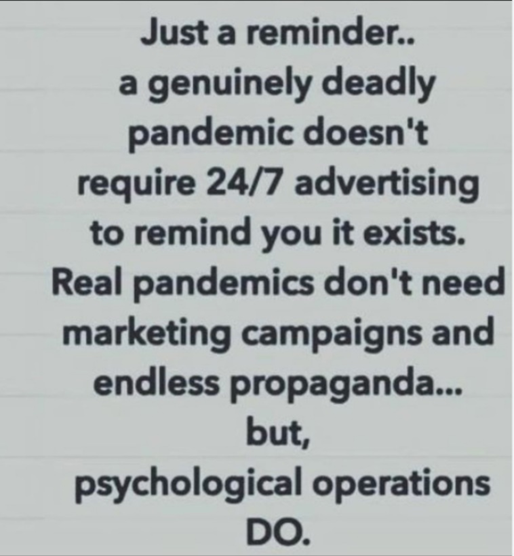
How could we forget the constant scare tactics during COVID? The media dashboards of COVID cases, hospitalizations, and deaths? How could we forget the cruel and oppressive authoritarian rule accompanying the propaganda that mandated masks, lockdowns, social distancing, church closures, and vaccines? How could we forget the consequences if we didn’t bend the knee to “the science”?
Pandemic politics was used as a test to see if people would submit to the tyranny of Progressivism’s one rule scientism. Progressives Anthony Fauci, Francis Collins, and Rochelle Walensky were the primary mouth pieces for COVID scientism (and of so much deceit about mitigation, natural immunity, Ivermectin, and COVID origins).
With the likes of charlatans and false prophets with climate models, we have been subjected to doomism and the pressure to submit to the narrative (and the globalist wealth transfer schemes required to ‘mitigate’ warming and bring every country under one imperial globalist rule)?
MS Now and CNN voiced 24/7 “Democracy!” alarmism during Trump’s presidential campaigns. The talking heads wanted their viewers to be scared out of their minds about Trump. The talking heads now want their viewers to be scared out of their minds about ICE and Christian Nationalism and people looking into the 2020 election fraud and any law that would stop Progressives from taking over and telling us what to do.
NBC News reports Progressives’ latest attack on basic common sense:
“The SAVE Act is nothing more than Jim Crow 2.0. It could disenfranchise millions of American citizens,” Senate Minority Leader Chuck Schumer, D-N.Y., said last week.
This, while the Save Act’s “Support now includes 71% of self-identified Democrats, 83% of independents and 76% of Black voters.”
Pattern recognition tells us that The Call to Christians in a Crisis of Faith and Democracy is more of Progressives’ histrionics – this time dressed up in the cloaking of Christianity. The call is meant to persuade people to see the moral world as inverted – law and order bad; lawlessness, ad hoc justice, lawfare, chaos, and “Anything Goes” Christianity as good. Ergo, people are to hate Trump, his administration, ICE, and Christians who are not Progressive.
There are dark forces at work to deconstruct the U.S. by diluting its historically Christian history and people with invaders and to colonize Americans under One World globalism. The deep state, CIA, George Soros and others – know how to dress up deception for their purposes.
~~~
My replies to the coalition’s (in bold) “points”:
The government-sponsored cruelty and violence we are witnessing stands in total opposition to the teachings of Jesus.
First of all, notice how the coalition wants the focus to be on deportation efforts and not on the government-sponsored cruelty and violence we are witnessing that came about with the invasion of millions of foreign invaders under their Joe Biden. (MS NOW, CNN and the rest of liberal media do not report what the invaders are doing to people, so cosplayer Christians never hear about it.)
The religious leader’s statement above is meant to stir up an angry mob just as what happened when an angry mob shouted for Pontious Pilate to arrest and crucify Jesus because of his growing influence – his cruelty to the religious leader’s narrative. Jesus was a threat to the power of the influencers. He was doing violence to their lock on truth and practice.
Did you ever hear Jesus tell his disciples to rise up against Roman authority? No. Did you ever hear Jesus tell his disciples to rise up against Pax Romana? No. Did you ever hear the apostle Paul tell Christians to rise up? No. They spoke of spiritual warfare and cautioned about false teaching. (And, so will I.)
Pax Romana (27 BCE to roughly 180 CE) established a stable government, reformed the military, and created a system of laws that maintained order across the empire. Military power was used to suppress revolts and ensure loyalty among the provinces, promoting peace through strength. Rome’s power created a political and cultural order in which people could trade, travel, and thrive in relative safety. But contentious Jews did rise up. They did not want Roman authority over them in any form.
The Jews’ Great Revolt against Rome in 66 CE led to one of the greatest catastrophes in Jewish life. During the summer of 70 AD, the second temple was destroyed. It is estimated that as many as one million Jews died in the Great Revolt against Rome. Jesus and Paul had taught that the kingdom of God is not brought about by political power but by the gospel’s power to transform lives.
Now we find cosplayer Christian zealots inciting revolt against ICE and the Trump administration that are responding to the voter mandates of restoring law and order and safety to American citizens. Both are working to clean up the disastrous, chaotic, and dangerous mess the Biden regime created. They are working to bring stability to our country. Why won’t these religious leaders work with them? Because they did not want any authority over them except their own.
What good are the coalition’s intentions if the real effects that they have will be considered moral in their Gnostic dream world have an entirely different effect on people’s lives?
Why didn’t the coalition talk about government-sponsored cruelty and violence when Biden acted like a petulant child and undid President Donald Trump’s immigration policies from his first term? Biden opened the border and flooded the country with illegal invaders, many of whom kill, maim, rape, and drug to death our neighbors? Arrested: Worst of the Worst
During 2022, the huge spike in inflation created during the Biden regime, mostly by federal spending, caused many to suffer. Would Jesus approve of placing such a burden on the poor and vulnerable? Did the coalition speak out then? No. Taxpayer money was supporting “Anything Goes” Progressivism around the world.
Freedoms and rights once assumed to be secure are being stripped away, redefined, or selectively applied.
They say that “Decades-old civil rights protections are being dismantled.” You mean your invention of “the constitutional right to abortion” being dismantled? You mean Obergefell v. Hodges being over turned? You mean the right to define reality, e.g., gender?
This same coalition, under the banner of “Anything Goes” love, no doubt supports abortion on demand, gender ideology, LGBT-ism, critical race theory, George Floyd-worship, crisis environmentalism– every Woke issue their deep state CIA masters tell them to empathetically support.
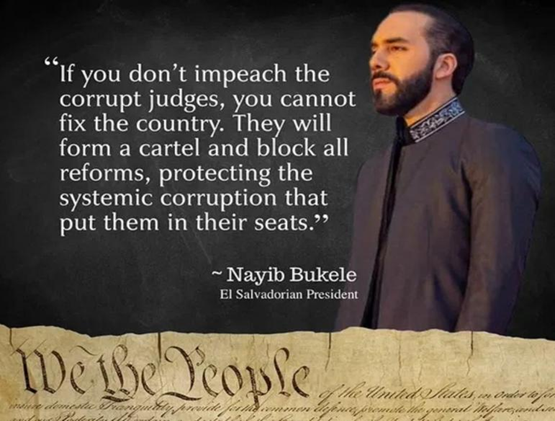
They say that “Governance is being hollowed out and replaced with corruption, intimidation, and the normalization of lawlessness.” Look to Democrat run states and cities for corruption. Look to Democrat-appointed AGs and judges for loyalty tests, intimidation, and the normalization of lawlessness. Look to rogue judges who work to usurp the executive branch and the will of the people. They accrue power unto themselves. I would have no doubt the coalition’s cosplayer Christians are OK with these abuses of power. Political power is their end game and that end justifies their means.
They say that “The architecture of democracy and the rights secured by the separation of powers are being eroded from within, while we are told to accept it as “law”, “order,” or “God’s will.”
See the above response. “God’s will”? It’s the U.S. Constitution’s and the people’s will.
Foreign invaders do not have U.S. citizen rights, so they can’t be taken away.
Foreign invaders can leave on their own with dignity or we can deport them with dignity, as CBS News reports:
The federal government is now paying $2,600 to undocumented immigrants to self-deport if they use the Customs and Border Protection Home App. That’s up from $1,000 when the initiative started a year ago. On top of that stipend is a free flight to their home country.
Freedom and rights are being stripped away from legal citizens when laws are selectively applied to favor the foreign invader and not our citizen neighbors.
Freedom and rights are being stripped away when laws are selectively applied to favor the criminal and the not victim. Is the coalition OK with ad hoc justice, i.e., justice that sidesteps the law to achieve a certain supposed ideal outcome (equality, say) for the criminal? Is the coalition OK with ad hoc justice that releases criminals back into society to commit heinous crimes? Will the ideal outcome cause others to suffer?
Economist Thomas Sowell, in his book A Conflict of Visions, writes about the “unconstrained vision.”
This is the belief, based on the Rousseauian Theory of “Natural Goodness” that human nature is essentially good and that ideal solutions exist for every problem. Proponents of this vision have a distrust of traditional institutions and advocate for significant changes to achieve a perfect society. Compromise is viewed as unacceptable.
Judges of the “unconstrained vision” believing that human nature is essentially good and that ideal solutions exist for societal problems will use direct ad hoc individual decision making to seek an ideal outcome regarding a criminal or illegal migrant person before them. Their perspective often results in a disregard for the complexities and trade-offs involved in human nature and the cost to society at large
Is the coalition OK when judges release repeat criminals to go free so they can commit more harm to the vulnerable?
As reported:
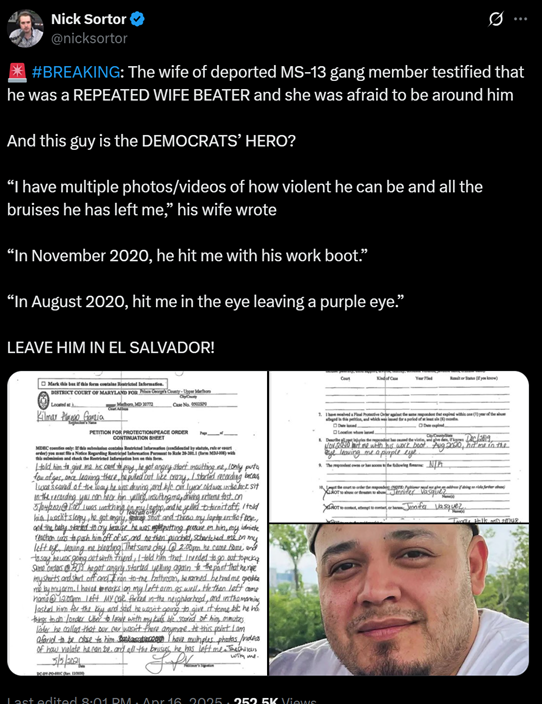
DHS Acting Assistant Secretary Lauren Bis stated, “This activist, Obama-appointed judge RELEASED Carlos Antonio Flores-Miguel, a criminal illegal alien from El Salvador and MS-13 gang member, from ICE custody.”
And
Family goes after Soros-backed prosecutor for allowing illegal to murder their daughter…
No doubt, the coalition is OK with the massive lawfare campaign waged against Trump and his administration because they are working to deconstruct their avenues of political power in the deep state. When the don’t get their way, Progressives lash out. But WWJD?
Their statement says that they oppose unjust laws. But does the coalition oppose the unjust application of laws and the two-tier justice system of the last several years meant to persecute political opponents?
Sadly, the crisis is not only political—it is one driven by a moral and spiritual collapse showing up in alarming levels of polarization. Our faith is being tested. Christians cannot pretend otherwise and must make a decision to act.
Polarization? Faith being tested? The majority of Americans not having faith in your Gnostic dream world? If you had faith in God you would go to your knees and pray for those in authority, and make supplications, prayers, intercessions, and thanksgivings for all people, for kings and all who are in high positions, that we may lead a peaceful and quiet life, godly and dignified in every way. Instead, you rise up.
Act? You mean by any means necessary? You mean throw away your lives like Renée Good and Alex Pretti?
We choose to resist, calling forth the righteous demands of our faith rooted in the teachings of Jesus.
“Righteous demands”? When you call people and laws “cruel and oppressive”, “extremist” and “right-wing”, you shut down discussion. Jesus (and Charlie Kirk) discussed. You demand.
You mean a faith rooted in the obtuse morality of Progressivism, don’t you?
You mean a faith rooted in your liturgy of resistance and Rules for Radicals by Saul Alinsky, don’t you?
You mean a faith in “a comprehensive national civic uprising”, the communist revolution that NYT op-ed columnist and Christian cosplayer David Brooks alludes to?
As Christians, we must never preach nationalism as discipleship, confuse American and Christian identity with whiteness, or mistake allegiance to modern-day Caesars for faithfulness to Christ.
No one but you, cosplayer Christians, think this way. No one but you, cosplayer Christians, confuse Christian identity with whiteness. No one but you, Christian cosplayers, disciple people for allegiance to DEI.
Their statement is interesting given the fact that white Christian nationalists developed the Constitution, the Declaration of Independence, and settled this country. Is Progressivism to be the new ultra-nationalism?
A Christian loving their country, their home, and their rootedness is not wrong. Why speak of “a good and spacious land, a land flowing with milk and honey?” Read Leviticus 20:24 and Exodus 3:8.
Therefore, we commit to: Protect and Stand with Vulnerable People
Will you protect the vulnerable who are now afflicted by illegal invaders committing horrendous crimes? There is no mention of that in your cosplay performance.
Will you protect the vulnerable who are hurt by those released with no bail or jail time? No. There is no mention of that in your cosplay performance.
Or, are you, who are dressed up as ‘principled’ Christians, protecting your own vulnerable political power? You see your political power endangered by the current administration. You saw what happened in the 2024 election. You see the current administration looking into the corrupt voting practices that occurred during the 2020 election. The 20+ million invaders represent to you a ready-made voting base.
Catherine Salgado, at PJ Media:
House Minority Leader Hakeem Jeffries basically admitted that the Democrats’ disgusting shutdown theatrics are all about fury over Immigration and Customs Enforcement (ICE) preventing illegal aliens from taking American jobs and blocking them from voting in our elections.
. . . Illegal immigration sure looks like the [Democrat Party’s] solution to Republicans taking away their slaves. And illegal immigration is their solution to having no policies that appeal to American voters.
(Emphasis mine.)
Democrats, of course, are fear-mongering about the Save America Act so they can continue to defraud and disenfranchise their American neighbors with non-citizen votes.
Top Democrat Accidentally Reveals What Her Party Really Fears in the SAVE Act – PJ Media
Americans support SAVE America Act’s photo ID requirement, but Democrats reject it
It wasn’t that long ago that these same Democrats wanted everyone to wear a mask, to stand six feet apart in a line, to stay out of a church, to be isolated in COVID camps, and to get a vaccine passport. Now, they do not want voters to have to ID themselves as American citizens. We know why.
~~~
“We will always stand in solidarity with those who are most vulnerable among us.”
I wonder. Did any of these cosplayers denounce the assassination attempts on President Trump or the assassination of Charlie Kirk. Were they silent? Are they selective in their compassion and mercy?
I wonder. Do they stand with those who have been hurt by the foreign invaders?
I wonder why London Buses Must Now Be Equipped With Stab-Kits | ZeroHedge. Who are the vulnerable?
~~~
Another cosplayer Chrisian, this time dressed as a Catholic Cardinal – Illinois’ Cardinal Blase Cupich, archbishop of Chicago – presided over an outdoor Ash Wednesday mass and a community procession.
His performance, acknowledged by the Left’s narrative monger MS NOW, was done “in solidarity with the immigrant communities being ruthlessly targeted by the Trump administration.”
“God does not need papers to know who or where you are,” Cupich told attendees. “The world may look at your legal status, but God looks at your heart.”
I wonder. Did Cardinal Cupich one day decide to be a Catholic Cardinal or was there a process that made him a cardinal? Was there a process to become Catholic?
Jesus knew what was in man’s heart. He said that what comes out of the heart are evil intentions—murder, adultery, sexual immorality, theft, false testimony, slander. So, the Cardinal’s “heart” statement is a call to be sentimental about the foreign invaders, some of whom are now living out their evil intentions.
I wonder. Would Cardinal Cupich consider Jesus ruthless when he separates the sheep and the goats and separates the wheat and the chaff? Have some people made themselves vulnerable on the last day?
~~~
More Catholic cosplayers: U.S. Conference of Catholic Bishops (USCCB)
S.A. McCarthy at the American Spectator: The Bishops’ Misplaced Priorities: Immigration eclipsed abortion as the central political concern of America’s Catholic leadership.
A U.S. Conference of Catholic Bishops (USCCB) spokeswoman cited by [The Atlantic’s Francis X.] Rocca stated that “human dignity and national security are not in conflict.” That’s true. Stringent immigration enforcement is in line with the perennial teachings of the Catholic Church and is, in fact, in accord with the virtue of justice. The arrest and detention of those who have violated the law (in this case, federal immigration law) is not a violation of human dignity, nor is returning foreigners who have abused U.S. hospitality and services to their home countries. In fact, it’s something of a merciful move.
Regarding the foreign invaders – the wolves, McCarthy writes
Shepherds ought to protect their flocks from wolves. Instead, we find them demanding that the wolves share our pastures. (Emphasis mine.)
I’ve heard the “human dignity” defense used to approve of all kinds of unholy things. See S.J. James Martin.
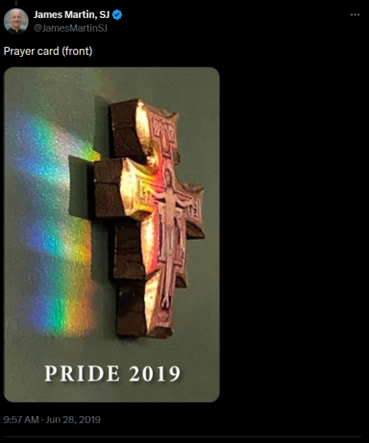
~~~
This coalition of Progressive cosplayers want you to think they are above politics with their holier-than-MAGA posturing. But they are not apolitical. Their version of Christianity is “Anything Goes” with a will to political power. They want to be Caesar.
We were warned about them and their antics by Jude, a servant of Jesus Christ and brother of James:
For certain intruders have stolen in among you, people who long ago were designated for this condemnation as ungodly, who pervert the grace of our God into debauchery and deny our only Master and Lord, Jesus Christ. . . these dreamers also defile the flesh, reject authority, and slander the glorious ones.
This coalition of Christian cosplayers subordinate the claims of Scripture to the values of secular progressivism (DEI) and call the result “faith rooted in the teachings of Jesus.”
I am reminded of the Pharisees when they, in the same hyper-spiritual way, added a set of rules (values) about the washing of hands before eating above scripture. Their focus was on the exterior performance of ritual and not on the evil intentions coming out of the interior.
This outward manifestation of ritual purity, enforced by the Pharisees, allowed someone to focus on the practice and not on the evil intentions lurking inside. Jesus denounced them, calling them hypocrites, for focusing on the pretense of spirituality and abandoning God’s word which would expose their intentions. Mark 7: 1-23
This coalition of cosplayer Christians is beating the academic world ‘s drum of globalism, cosmopolitanism, postcolonialism, DEI, and open borders advocacy. Their deconstructionist formulations declare all hierarchies unjust save their own which is they see as required to self-righteously denounce all authority but their own.
This coalition of Progressive cosplayers de-centers scripture to have people focus on “the poor little foreigner in our midst.” They subordinate the claims of Scripture to the moral machinations of secular progressivism (DEI) and call the result ‘the gospel.’
Isaiah: They honor God with their (virtue signaling) lips but their hearts are from Him. All in vain they seek to Worship God. All they teach is human commands.
This coalition of cosplayer Christians focuses not on the laws that have been broken and the invasion of millions of unvetted people who do not share our values, who will not assimilate, and who will use America for their own benefit. They focus on a platitude-contrived issue.
Isn’t it something how this coalition is very concerned about Christian Nationalism and authoritarianism but not at all concerned about theocratic and authoritarian Islam taking over areas of our country and creating no-go zones in our land.
Christopher Hitchins Barely Touched Upon Islam’s Predations – American Thinker
See how women are treated in Iran and Afghanistan under Islam.
The MSM and the press have spent years talking about “Christian Nationalism,” often using the phrase to target Christians who are Trump supporters. But the same media runs cover for Islamic attacks, the latest being a man who yelled “Allahu Akbar” and threw bombs into a crowd of anti-Islamic protesters outside Gracie mansion. The protestors were protesting against what they described as the “Islamic takeover of New York City.”
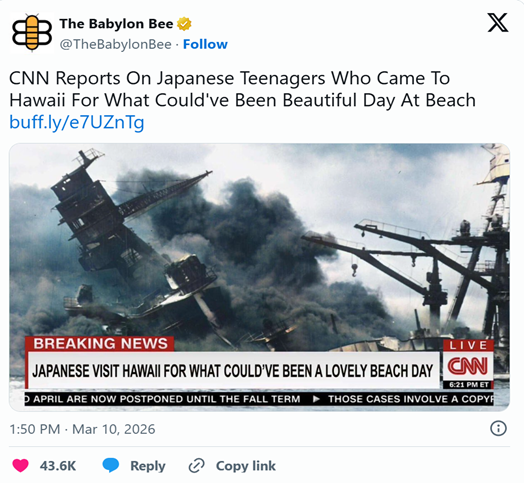
This cosplay Christian performance is one of projection. They accuse some Christians of wanting to destroy democracy with Christian nationalism. They blast deportation as unchristian. But they want to do away with democracy by keeping millions of non-citizens around to vote so as to establish their authoritarian government run by elites.
I wonder . . .
Do these cosplay Christians, who so care about others, willing to denounce Zohran Mamdani’s wife, Rama Duwaji, for liking posts on Instagram that supported Hamas’s attack on Israel on Oct. 7? Do they support Jihadi socialism?
Is declaring the rising tide of “white Christian nationalism” just another application of the victim -oppressor power dynamic narrative that so many seem to accept as a given?
Are the signatories also people who would see the Minnesota Somalis fraudsters as vulnerable and in need of billions of taxpayer money. Do they think that laws and the system are unjust so being fraudulent is necessary? Is stealing taxpayer money just a given these days because there are unfair things in the life? Is it really OK to steal from taxpayers by allowing in 20+ million invaders who mooch off the system and send money back to the country of origin? Isn’t such wealth transfer back door socialism?
Is this coalition against remigration – immigrants returning to their home country? The members could pray over them and send them back home with their blessing. Would these who pose as “principled Christians” let that happen? Would they claim the concept of encouraging people to go back home is somehow based in right-wing extremism so as to keep their imported voters and low-cost workers here for their use?
Don’t be duped. Naïve Christians will eat up Christian sounding words and phrases. But this ploy is meant to induce hatred toward Trump and the majority of Americans who want the invaders to go back home.
~~~
It’s no secret. Progressives love to dress up and show the world they care.
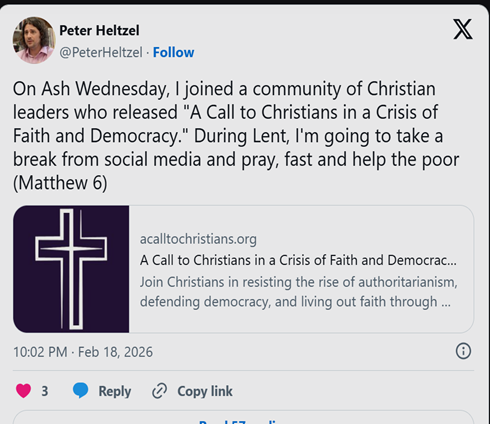
It is of no matter to these performance artists that Jesus said “Beware of practicing your righteousness before others in order to be seen by them, for then you have no reward from your Father in heaven” and “when you give alms, do not let your left hand know what your right hand is doing, so that your alms may be done in secret, and your Father who sees in secret will reward you.” (Matt. 6: 1-6)
~~~
~~~
Another Christian Cosplayer: Texas’s Democrat senatorial candidate James Talarico
Stephen Soukup, writing at American Greatness, asks Is James Talarico Really a Christian X-Ray?:
David French’s praise for a progressive Christian candidate reveals a deeper problem in modern moral thinking: feelings and intentions now outweigh doctrine, truth, and the consequences of policy.
In the article . . .
Consider, for example, French’s declaration that Talarico is a good man and a good candidate for public office because “he acts like a Christian.” He has “his heart right,” spreads “hope,” and says that he’s tired of “being pitted against” and being “told to hate” his neighbor. That, apparently, makes Talarico a good—or at least properly acting—Christian. . .
. . .French declares that Talarico “acts like a Christian,” he never explains how, never provides any examples of his Christian behavior, or explains how they might be more “Christian” than the good deeds of his Republican opponents. French thinks Talarico is a good and decent man, not because of any acts he can relay to us, but because of a feeling he has. French likes Talarico. French feels good about him and his religious expression, which again makes Talarico the real Christian in American politics.
(Emphasis mine.)
Because of his religious acting credentials, David French endorses Talarico:
“Talarico is one of the few openly Christian politicians in the United States who acts like a Christian, and by acting like a Christian he reveals a profound contrast with so many members of the MAGA Christian movement that’s dominated American political life for 10 years,” Never Trumper David French fawningly wrote in the New York Times.
Such statements—which depict Talarico as a normal, middle of the road “Moses”—contrast sharply with his beliefs from just a few years ago.
On race, Talarico sounded exactly like a white Ibram X. Kendi.

Richard Kirk at Townhall: Talarico, With His Left Hand on the Bible: Calling Texas’s Democrat senatorial candidate James Talarico, even derisively, a “bible-banger” is a disservice to bible-bangers.
Talarico’s forays into theology are prime examples of Nietzsche’s atheistic critique, “The text has disappeared under the interpretation.”
Talarico clearly criticizes Christians (smeared as Christian Nationalists) more than any other group. The state rep even vilified this largely conservative cohort for using the bible (plus, I would add, common sense and reliable science) to oppose sex changes for minors. Those who did so in the state capital, he thundered, not only harmed children, they also dishonored scripture for the sake of a “hateful amendment.” Stated without leftist distortion, Talarico believes Christians harm children if they oppose their mutilation. Instead, he embraces the faux science of propagandists who inundated our culture with the bizarre notion that even pre-teens are capable of evaluating the lifelong medical and psychological consequences of transition decisions. In short, Talarico inverts biblical teaching and slanders Christians who seek to protect “little ones” from the ravages of a mass delusion.
Joseph Chalfant at Townhall writes in his article James Talarico Quietly Deletes Endorsement Page Showcasing His Most Radical Supporters
An archived version of Talarico’s site showed that he was proudly backed by groups like Houston LGBTQ+ Political Caucus, the 134 PAC, Stonewall Democrats, and Mothers Against Greg Abbott. . .
The groups who have backed Talarico have espoused a radical, pro-transgender agenda for children as young as seven-years-old, promote “drag queen story hours” for kids (which are subject to prosecution in Texas), and have pushed Diversity, Equity, and Inclusion policies on Texans. Another group fighting for Talarico, the Stonewall Democrats, set out on an agenda of “holding candidates accountable” should they not toe the line of far-left transgender ideology.
The Waco chapter of Indivisible has also backed Talarico, which has called ICE operations to remove dangerous criminals from American communities a “Terror Machine” and labeled the Minneapolis surge as an “invasion.”
~~~
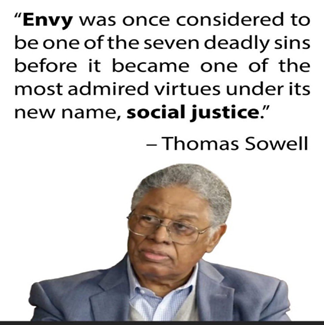
I never use the term “Social Justice.” Justice is always social. Modifying “justice” with “social” is a contrivance of Progressivism to have you focus on their designated woke issues and not on what is going on behind the scenes to negate democracy.
If you are an enabler of progressivism’s values, an SJW, and a virtue signaler, then you serve a purpose for Progressivism. Otherwise, you are just a “right-wing extremist.”
~~~

Added 3-28-2026:

Dr. Malone warns there’s a dangerous ‘mole’ working inside the CDC… – Revolver News























 Cindy Wity
The Inside Out Story
January 26, 2026 Leave a comment
“Evil intentions come from inside, out of people’s hearts.”-Jesus
In the world you will have . . . the content of their character, coming out as . . .
Cruel, intolerant, intimidating, subversive, disruptive, antagonistic, rude, lazy, overindulged, abusive, deceitful, corrupt, amoral, unlawful, power hungry, confederate, self-deceiving, addled, mentally and emotionally stunted, neurotic, narcissistic, manipulative, antisocial, psychotic, borderline psychotic, unruly, destructive, evasive, duplicitous . . . as persecution.
These traits aptly describe what comes out of the Lord-of-the-Flies Left in all of its manifestations – Democrats, Progressives, Democratic Socialists of America, ANTIF, BLM, NGOs, NGO paid protestors, MSM, and Globalists. These characteristics also describe a good many Islamists. The most recent examples of what comes out of the Left has been exhibited by Democratic governance in Minnesota, by ICE protestors, and by Somalis.
What Comes Out of Them is Deliberate Deception:
Don’t buy what comes out of the MSM (CNN, MSNOW, NYT, WaPo, ABC, CBS, NBC, etc.) about the ICE protestors and the Somali fraudsters. The so-called journalists on these ‘news’ sites are wanna-be script writers who push the content of their character onto everyone with their narrative. And like street gang members, they have a no-snitch code for their comrades in arms who go about breaking the law at every turn. It seems that the MSM’s purpose these days is to make the world bleed so it can lead with the story.
The media will deceive by framing both the law and the good guys as bad. Instead of taking in what comes out of MSM, see what you see.
And, don’t go by what comes out of the mouth of Democratic pols (Waltz, Frey, Ellison). With the aid of mother media, they cover their asses just like anyone under investigation on the real-life crime shows.
To wit: Minneapolis Mayor Jacob Frey, on ABC’s “This Week” characterized the violent confrontations – the riots, assaults, and lawlessness – targeting federal immigration agents in his city as an expression of “love.”
Minneapolis. January 7. Renee Nicole Good, as an expression of “love” and encouraged by what came out of the mouth of her lesbian lover, directed her vehicle into an ICE agent. She was shot as the agent defended himself against being crushed. (MADD would certainly agree that a vehicle is a deadly weapon.) Sponsored activist mob mayhem followed as an expression of “love.”
Minneapolis. Sunday, January 18th. More organized mayhem. A mob, led by Black Lives Matter organizers and encouraged by a video posted on social media, stormed into an area church during a service. Inside the sanctuary of Cities Church, agitators loudly chanted “Justice for Renee Good.”
See what you see when Don Lemon and ‘Sanctuary City’ Radicals Invade Minneapolis Church.
On Sunday, Don Lemon and a group of radical, anti-ICE left-wing extremists stormed a Minneapolis church. They barreled into a house of worship while families with young children were praying and proceeded to harass and intimidate congregants based on supposed “intel” that someone connected to the church had ties to ICE.
WHOOPS: Don Lemon’s live stream is a goldmine of evidence against him… – Revolver News
With displays of ersatz moral sanctimony, the Machine politics of Left destroys people and their place in the world and their past and their sacred space, their house of prayer. What comes out of the Left is not “love”. What comes out of the wild boar Left is grunting, posturing, and bristling followed by picking fights to see who is the stronger.
What Comes Out of Them is Stupid
When the Pharisees confronted Jesus about his disciples eating with unwashed hands, he responded to their desire to harass him and his disciples about the performative ritual purity they were so concerned with. He got under their skin when he said . . .
“What makes someone unclean,” Jesus went on, “is what comes out. Evil intentions come from inside, out of people’s hearts – sexual immorality, theft, murder, adultery, greed, wickedness, treachery, debauchery, envy, slander, pride, stupidity. These evil things all come from inside. They are what make someone unclean.” Mark 7:20-23
Note that stupidity is on the list of evil intentions. The stupid act without sense. In the matter at hand, the stupid ramp up their violence-instigating rhetoric because they simply are not able to discuss or persuade – they lack sense. Force is all they have left, and they will use it. And so it is that the NGO paid army of activists, agitators and provocateurs – useful idiots all – descend into savagery that a mayor describes as acts of brotherly “love.”
Rory Miller, “a corrections officer and sergeant working booking, maximum security, and mental health units” and “trained corrections and enforcement officers, primarily in force-related skills… and force policy” wrote in his book Force Decisions: A Citizen’s Guide that . . .
“If you have to be defiant, don’t be stupid about it. Argue, if you absolutely have to, but show the officer your hands. If the officer says, “Show me your hands!” and you say, “No,” you have given the officer no choice but to assume that you have a weapon ready to deploy. This is so stupid—right up there with checking for gas leaks with matches—it shouldn’t even need to be said, but it happens. Being defiant about something stupid can escalate a verbal situation to deadly force for childish, immature ego.”
“If the officer ever uses the magic phrase, ‘For your safety and mine, I need you to…’ do it. That is a solid signal that the officer perceives this as an issue of safety, and the officer will absolutely use force if you do not comply.” (Emphasis mine.)
A Citizen’s Guide to Violence in Minneapolis › American Greatness
What Comes Out of Them is Lawlessness
Richard Lawson at The Free Press writes Sanctuary Cities are Built on Shaky Law:
Federal law makes it a crime to “encourage” illegal immigration, which is exactly what Tim Walz and Jacob Frey are doing.
The Supreme Court recently clarified that federal law is violated when a person provides “assistance to a wrongdoer with the intent to further an offense’s commission.” It is also unlawful to knowingly act in support of illegal aliens residing in the U.S., or even to conspire to help them remain here.
(Emphasis mine.)
Democratic governors and mayors in Minnesota, Oregon and Illinois have gone so far as to actively enable the chaos by withdrawing police protection. And, Dem Leaders Move to Block Funding for ICE, DHS.
Fools escalate violent rhetoric:
Dem AG Suggests People Can Shoot Masked ICE Agents Under Stand-Your-Ground Laws.
April 17, 2025, Columnist David Brooks of the NYT wrote an opinion column openly and explicitly called for a mass uprising alluding to a Communist revolution.
Headline USA writes:
“Agitators aren’t just targeting our officers. Now they’re targeting churches, too,” the U.S. Immigration and Customs Enforcement agency stated. “They’re going from hotel to hotel, church to church, hunting for federal law enforcement who are risking their lives to protect Americans. (Emphasis mine.)
The ordained reverend “Nekima Levy Armstrong, who participated in the protest and leads the local grassroots civil rights organization Racial Justice Network, dismissed the potential DOJ investigation as a sham.
“When you think about the federal government unleashing barbaric ICE agents upon our community and all the harm that they have caused, to have someone serving as a pastor who oversees these ICE agents, is almost unfathomable to me,” said Armstrong.
ICE should not back down one iota no matter the threats or moral posturing against them. All illegal invaders must go home. President Trump will be justified to invoke the Insurrection Act.
The Trump administration is working to clean up the horrible mess the four years of the illegitimate Biden regime created. That mess includes the 20-30 million illegal invaders that are taking jobs and taxpayer money and bringing in the content of their character.
Understand, the invasion was done on purpose to destroy the U.S. There is much more going on here than meets the fixated eye. You won’t get this understanding from the talking heads of MSM. They are in on it. The immigrants were sent here to destroy the U.S.
Read the newly published The Invisible Coup: How American Elites and Foreign Powers Use Immigration as a Weapon by Peter Schweizer.
No Christian should be swayed by MSM or by Progressive Christianity’s “Welcome the stranger” social justice tactics. No Christian should be muddled in their thinking about legal mass deportations.
~~~
In the world you will have . . . the content of their character – fraudulent Islamists enabled by Democrats.
The amount of fraudulent billing in Minnesota’s Medicaid programs could be as high as $9 billion, Assistant United States Attorney Joe Thompson said Dec. 18.
The ADL’d – the Machine combine of America and Democracy Last – don’t seem to care that the Minnesota Somali fraudsters stole billions of taxpayer dollars to spend on themselves and to send to Somalia. The Somalis were enabled by Democratic governance with its (purposeful?) lack of oversight in Minnesota and other Blues states.
What struck me most about the Minnesota case was not only the scale of the theft but the silence surrounding it. The fraud appears to have operated in plain sight within tightly knit circles, yet few people spoke out. . .
According to federal indictments, the stolen money flowed through networks bound by kinship and loyalty. The theft was large, coordinated, and sustained. What stood out was not only who took the money, but who stayed silent. In societies with strong civic norms, whistleblowing is often praised, or at least protected. In tightly bound clan systems, speaking out can mean punishment.
High-trust societies solve this dilemma by extending cooperation beyond family and tribe. Laws, institutions, and norms reinforce the idea that cheating ultimately harms everyone, including oneself. Low-trust societies work differently. Trust is reserved for kin. Outsiders are assumed to cheat. In that environment, cheating is not necessarily immoral. It is often rational, expected, and even applauded.
Somalia And The High Cost Of Low Trust | ZeroHedge
Senseless people vote for senseless people. That’s how Minnesota has tanked under Waltz, Frey, and Ellison.
Senseless people voted in NYC for a Democratic Socialist Jihadi Shia Muslim deeply critical of Israel who wants to “globalize the intifada.”
And citizens of Virgina will now suffer because the senseless elected Abigail Spanberger as its governor and reps who encourage lawlessness and impose tyranny. This New Virginia Law Helps Illegals Vote for Democrats
Out of them comes taxes, more taxes and more oppression:
~~~~~
Concerned about the content of his older brother’s character, Russian playwright, short-story writer, and doctor Anton Chekhov (26), wrote a letter of advice to Nikolai (28), a talented painter, writer, and alcoholic. In 1886, Chekhov writes:
“To my mind, civilized people ought to satisfy the following conditions:
1. They respect the individual and are therefore always indulgent, gentle, polite and compliant. They do not throw a tantrum over a hammer or a lost eraser. When they move in with somebody, they do not act as if they were doing him a favor, and when they move out, they do not say, “How can anyone live with you!” …
2. Their compassion extends beyond beggars and cats. They are hurt even by things the naked eye can’t see. If for instance, Pyotr knows that his father and mother are turning gray and losing sleep over seeing their Pyotr so rarely (and seeing him drunk when he does turn up), then he rushes home to them and sends his vodka to the devil….
3. They respect the property of others and therefore pay their debts.
4. They are candid and fear lies like the plague. They do not lie even about the most trivial matters. A lie insults the listener and debases him in the liar’s eyes. They don’t put on airs, they behave in the street as they do at home, and they do not try to dazzle their inferiors. They know how to keep their mouths shut and they do not force uninvited confidences on people. Out of respect for the ears of others they are more often silent than not.
5. They do not belittle themselves merely to arouse sympathy. They do not play on people’s heartstrings to get them to sigh and fuss over them. They do not say, “No one understands me!” or “I’ve squandered my talent on trifles!” because this smacks of a cheap effect and is vulgar, false and out-of-date.
6. They are not preoccupied with vain things. They are not taken in by such false jewels as friendships with celebrities, handshakes with drunken Plevako, ecstasy over the first person they happen to meet at the Salon de Varietes, popularity among the tavern crowd….
7. If they have talent, they respect it. They sacrifice comfort, women, wine and vanity to it….
8. They cultivate their aesthetic sensibilities. They cannot stand to fall asleep fully dressed, see a slit in the wall teeming with bedbugs, breathe rotten air, walk on a spittle-laden floor or eat off a kerosene stove. They try their best to tame and ennoble their sexual instinct…
And so on. That’s how civilized people act. If you want to be civilized and not fall below the level of the milieu you belong to, it is not enough to read The Pickwick Papers and memorize a soliloquy from Faust. It is not enough to hail a cab and drive off to Yakimanka Street if all you’re going to do is bolt out again a week later.
You must work at it constantly, day and night. You must never stop reading, studying in depth, exercising your will. Every hour is precious.”
Letters of Anton Chekhov to His Family and Friends (public domain | public library)
~~~~~
Why are poets and storytellers being drawn towards Christ? In this bonus episode Justin Brierley speaks to two adult converts to Christianity whose stories overlap in remarkable ways.
Celebrated poet and author Paul Kingsnorth, and mythologist and storyteller Martin Shaw, both had unexpected conversions that have led them into the Orthodox church.
Episode 9 – Paul Kingsnorth & Martin Shaw: A poet and mythologist convert – Justin Brierley ⬩ Think Faith
Royce White, a Voice from the Belly of the Beast Minnesota:
https://americasvoice.news/video/1L3WPrlAlN0ouni/
https://americasvoice.news/playlists/show/the-royce-white-show/
https://www.youtube.com/@pleasecallmecrazypodcast
~~~~~
Marginalia:
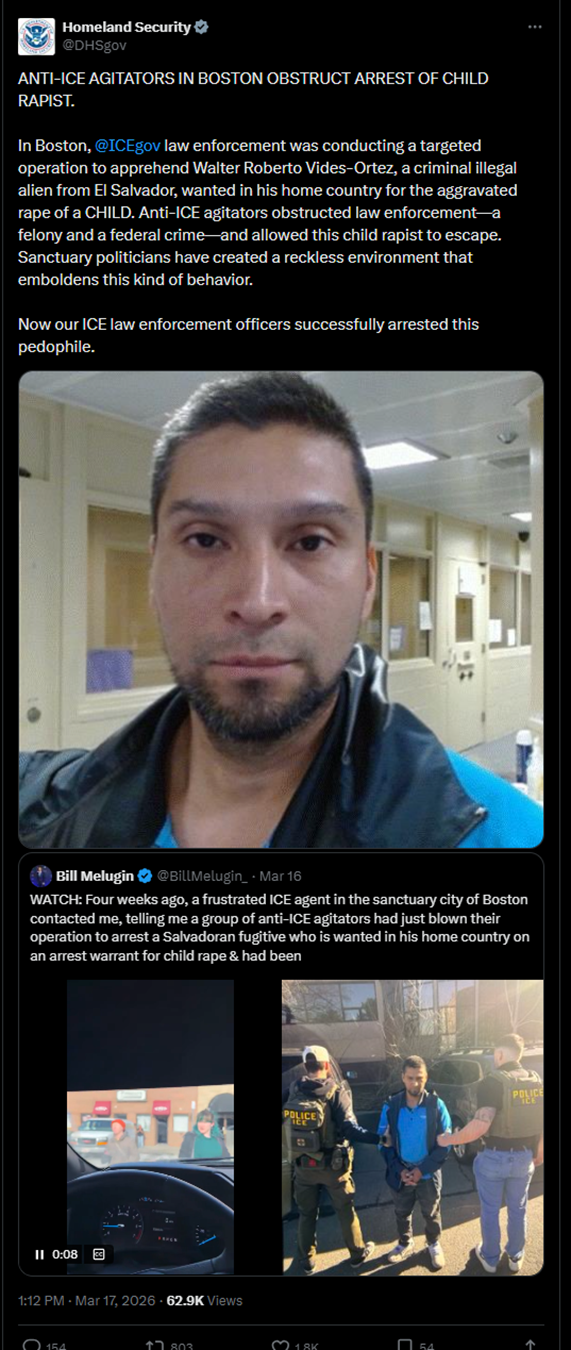
See what you see here: Arrested: Worst of the Worst | Homeland Security
In past articles I have tried to plead with conservatives to recognize that these activists are NOT sincere fellow citizens engaging in legitimate protest. They are a mercenary army paid to go to war. I’ll say it once again: WE ARE AT WAR. We need to start acting like it.
When there are no consequences for bad behavior, bad behavior will escalate into violence and chaos. It’s important to understand that the political left is made up largely of people who are emotionally stunted. They are toddlers trapped in adult bodies. And, like spoiled children, they act the way they do because they have never been spanked.
Maybe It’s Time For Conservative Patriots To Rally In Minneapolis | ZeroHedge
Approximately 3,000 federal agents are currently deployed in Minnesota, as part of an immigration operation dubbed “Operation Metro Surge.” The Department of Homeland Security (DHS) announced on Monday that the operation has resulted in the arrests of 3,000 criminal illegal aliens, “including vicious murderers, rapists, child pedophiles, and incredibly dangerous individuals.” (Emphasis mine.)
Walz, Ellison, Frey’s Offices Served Grand Jury Subpoenas › American Greatness
~~~~~
Amelia:
So, what was already disturbing now looks downright corrupt. It turns out that one of the men caught on video inside the church, pumping his fist while terrified children cried, isn’t some random left-wing extremist. He actually works for the local (Soros-backed) prosecutor’s office.
Shocking new evidence shows just how deep and dark the MN church Ambush goes… – Revolver News
The insurrection, the color revolution is upon us
Rate this:
Filed under 2026 Current Events, Culture, Immigration, Insurrection, media, Political Commentary, Politics, Progressivism Tagged with character, culture, democrats, deportations, Globalism, ICE, Immigration, Jacob Frey, Keith Ellison, minneapolis, news, politics, progressivism, The Left, Tim Waltz, Trump