Becoming a follower of Jesus Christ and an heir of the King and a fellow servant in the Kingdom of God began when I first believed that God existed. What followed was the understanding that God not only existed but that He is an Infinite-Personal God who, though having created the vast universe ex nihilo using the Big Bang and evolution, loves me.
Beyond my own personal encounters with God through my reason and through the testimony of others, there are the historical facts supporting the death and resurrection of Jesus Christ. There is also astounding supporting evidence in nature. God exists.
But there are some who say otherwise: “Atheism exists, this I know, for my reason tells me so.” These would be the angry atheists Richard Dawkins, the former Christopher Hitchens (Hitch) and others.
I have at one time or another heard these atheists give their arguments of disbelief and I have found their words wanting for any real substance. They often come across as superior and snobbish. And, their arguments are certainly unfettered by the factual account of the resurrection or of the fine tuning of the universe that makes life and thought and argument possible at all. Their anger exists.
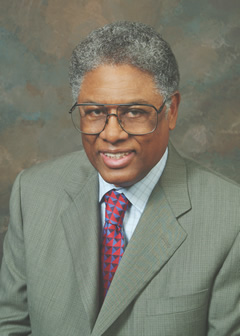
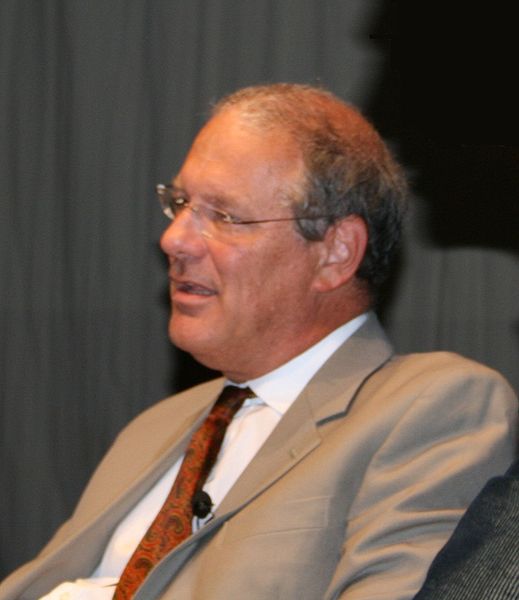
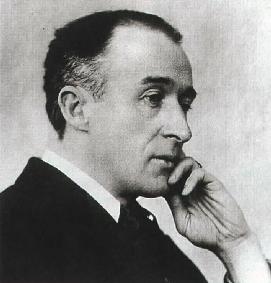
There are three atheists I pay attention to. I tune in to them because what they often say through words or music reveals the truth about God in a way they may not even realize. The three atheists are Thomas Sowell, Dr. Theodore Dalrymple and Frederick Delius
“…writing for the general public enables him to address the heart of issues without the smoke and mirrors that so often accompany academic writing.”
Sowell is an economist, a common sense economist. You will get that sense as you read his books and articles. Of late, I have read The Thomas Sowell Reader (start with this book for short articles addressing current issues both economic and social) and A Conflict of Visions.
The Thomas Sowell Reader, a compilation of articles and essays written by Thomas Sowell, economist:
“From an early age, I have been convinced with trying to understand the social problems that abound in any society. First and foremost, this was an attempt to try to grasp some explanation of the puzzling and disturbing things going on around me. This was all for my own personal clarification, since I neither had political ambitions nor the political talents required for either elective or appointed office. But, one having achieved some sense of understanding of particular issues ~ a process that sometimes took years – I wanted to share that understanding with others. That is the reason for the things that appear in this book.”
“What are the underlying assumptions behind the very different ideological visions of the world being contested in modern times? The purpose here will not be to determine which of these visions is more valid but rather to reveal the inherent logic behind each of these sets of views and the ramifications of the assumptions which lead not only to different conclusions on particular issues but also to wholly different meanings to such fundamental words as “justice,” “equality,” and “power.”
Regarding Dr. Theodore Dalrymple and some of his recurring themes from books and articles note the following from his Wikipedia entry. I confirm these themes having read his book Life at the bottom. The Worldview that makes the Underclass:
-The cause of much contemporary misery in Western countries ~ criminality, domestic violence, drug addiction, aggressive youths, hooliganism, broken families ~ is the nihilistic, decadent, and/or self-destructive behavior of people who do not know how to live. Both the smoothing over of this behavior, and the lexicalization of the problems that emerge as a corollary of this behavior, are forms of indifference. Someone has to tell those people, patiently and with understanding for the particulars of the case, that they have to live differently. (Life at the bottom. The Worldview that makes the Underclass)
-Moral relativism can easily be a trick of an egotistical mind to silence the voice of conscience. (‘The Uses of Metaphysical Skepticism’, in: In Praise of Prejudice. The Necessity of Preconceived Ideas, p. 6 (chapter 2).
-The decline of civilized behavior ~ self-restraint, modesty, zeal, humility, irony, detachment – ruins social and personal life. (Not with a Bang but a Whimper)
-The root cause of our contemporary cultural poverty is intellectual dishonesty. First, the intellectuals (more specifically, left-wing ones) have destroyed the foundation of culture, and second, they refuse to acknowledge it by resorting to the caves of political correctness.
Lastly, Frederick Delius. I don’t recall when I first heard his compositions. It may have been in my thirties at a Chicago Symphony concert. The first piece I remember is the symphonic poem The Song Of Summer. I was overwhelmed by its simple beauty.
From The Delius Collection, Vol. 2 CD liner notes:
“Many have written of Delius’ ‘moods’ or ‘feelings’, views which reflect only the ‘impression’ his music has made on the writers (read music critics).
Such Romantic or rather Impressionistic ~ notions of his art are only concerned with its surface appeal, as if that is all that is valuable in it, and ignore wholly his unique technical and structural mastery. In such ways, Delius is more of an anti-Romantic, for the sentimentality or self-projection of Romanticism are alien to his music. Delius hymned Nature, not himself as did Sebelius; such sentimentality as may condemn his art stems from a performing style wherein expressive beauty is stressed at the cost of his music’s intellectual power.” Robert Matthew-Walker
For starters I would recommend listening to Irmelin Prelude, Song of Summer, A Late Lark, the orchestral interlude A Walk to Paradise Gardenfrom his opera A Village Romeo and Juliet and On Hearing the First Cuckoo in Spring.
An avowed atheist, Delius embraced nature for his inspiration. He also embraced Nietzsche’s philosophy which produced Delius’ loud and unattractive A Mass of Life.
“A Mass of Life is an attack upon Christian doctrine and the Christian way of life as Nietzsche and Delius saw it. They both wanted to correct what they called the “slave morality” of Christianity. Their great emphasis was upon the will, not bowing to anyone, and living and dying fearlessly though death be total extinction.
Death, when it came to Delius, was terrible, and within a few months his steadfast wife was dead too.
In speaking about Delius, Eric Fenby (Delius’ composition scribe after Delius became blind) observes, “Given those great natural musical gifts and that nature of his, so full of feeling, and which at its finest inclined to that exalted end of man which is contemplation, there is no knowing to what sublime heights he would have risen had he chosen to look upwards to God instead of downward to man!” From the Gift of Music by Jane Stuart Smith and Betty Carlson, Crossway Books
What the first two atheists have in common is their ability to speak truth, wisdom and common sense ~ God’s law within each of us – simply. As Richard Feynman, Nobel laureate of physics said, “You can recognize truth by its beauty and simplicity.”
Both men, from their lifetime of experiences, have seen reality and tell us that there are values that a man must embrace to be civilized, to be ‘right side up’, so to speak. They tell us that Man must draw the line somewhere.
Now, I believe that it is the God of Creation who has created the line ~ the natural law written on our hearts ~ and He has exposed our crossing it. But, He did not leave us on our own, to remake ourselves as Nietzsche’s ideal human, the Übermensch, who would be able to channel passions creatively (but to what end?). He gave us the only way possible, through His Son, to regain our humanity.
Frederick Delius revealed truth through his music’s contemplative moments of rhapsodic beauty as inspired by God’s creation.
All three have seen things (even the eventually blind Delius) that others often willfully ignore. They are honest with themselves about what they see and they repeat it back. And, there is knowledge of reality in their words and works that can only find its genesis in God’s created order and His law written on our hearts.
“He has made everything beautiful in its time. He has also set eternity in the human heart; yet no one can fathom what God has done from beginning to end.” Ecclesiastes 3:11
“When Jesus spoke again to the people, he said, “I am the light of the world. Whoever follows me will never walk in darkness, but will have the light of life.” from the Gospel according to John
Yes, I know, Christmas is the celebration of the birth of Jesus, the greatest Gift of all and the advent of God’s Kingdom here on earth. But at this time of the year especially, giving reminds us of what capitalism gets right all year long.
Here some quotes from George Gilder’s book “Knowledge and Power: The Information Theory of Capitalism and How it is Revolutionizing Our World:”
“Capitalism begins with giving. Free markets and exchanges are characteristic of capitalism, but they are a result of entrepreneurship ~ not a cause of it….
The anthropological evidence, detailed in the original Wealth and Poverty, suggests that capitalism begins with the gift and continues with competitions in giving.
A gift will elicit a greater response only if is based on an understanding of the recipient’s needs. As any baffled beneficiary of a costly but unwanted Christmas present can attest, giving is difficult and requires close attention to the lives and longings, tastes and talents of others. In the most successful and catalytic gifts, the giver fulfills an unknown, unexpressed, or even unconscious desire in a surprising way.
A successful gift startles and gratifies the recipient with the unexpected sympathy of the giver. In order to repay him, however, the receiver must come to understand the giver. The contest of gifts leads to an expansion of human sympathies…
In deciding what new goods to assemble or create, therefore, the givers and investors must be willing to focus on others’ needs more than their own…
Profit is thus an index of the altruism of an investment….
The conventional wisdom, whether liberal or conservative regards charity or generosity as essentially simple ~ just giving things away without calculation or continuing concern with their true use. The hero of this narrative is the anonymous donor, while the investor is seen as a Shylock, extorting usurious gains from lending money, or a Scrooge, extracting his profits from the exploitation of workers. A welfare system of direct money grants financed by anonymous taxpayers through the choices of their elected representatives is, in this view, the ultimate expression of compassion and charity.
Dumb money, however, does more harm than good. It is extremely difficult to transfer value to people in a way that actually helps them. Excess welfare hurts its recipients, demoralizing them or reducing them to an addictive dependency that can ruin their lives. The anonymous private donation may be a good thing in itself. It may foster an outgoing and generous spirit. But society as a whole is more likely to become charitable and compassionate if the givers are given unto, if the givers seek some form of voluntary reciprocation. Then the spirit of giving spreads, and wealth gravitates toward those who are most likely to give back, who are most capable of using it for the benefit of others, who are most knowledgeable and best informed, whose gifts evoke the greatest returns. Even the most indigent families will do better under a system of free enterprise and investment than under a supposedly “compassionate” welfare system that asks no return. The law of reciprocity ~ that one must supply in order to demand, save in order to invest, considers others in order to serve oneself ~ is essential for a humane society.
At the heart of capitalist growth, however, is not the mechanistic homo economicus but conscious, willful, often altruistic, inventive man. Although a marketplace may work mechanically, an economy is no sense a great machine. The market provides only the perfunctory dénouement of a tempestuous drama, dominated by the incalculable creativity of entrepreneurs, making purposeful gifts without predetermined returns, launching enterprise into the always unknown future. The market is the conduit, not the content; the low-entropy carrier, not the high entropy message.
Capitalism begins not with exchange but with giving, not with determinist rationality but with creation and surprisal.
(emphasis mine)
***
Some interesting thoughts about poverty from the British doctor Theodore Dalrymple’s book “Life at the Bottom”:
What do we mean by poverty? Not what Dickens or Blake or Mayhew meant. Today no one seriously expects to be hungry in England or to live without running water or medical care or even TV. Poverty has been redefined in industrial countries, so that anyone at the lower end of the income distribution is poor ex offico, as it were ~ poor by virtue of having less than the rich. And of course by this logic, the only way of eliminating poverty is by egalitarian redistribution of wealth ~ even if the society as a whole were to become poorer as a result.
Such redistribution was the goal of the welfare state. But it has not eliminated poverty, despite the vast sums expended, and despite the fact that the poor are now substantially richer ~~ indeed are not by traditional standards, poor at all. As long as the rich exist, so must the poor, as we now define them.
Years ago, in the 60’s and 70’s, I was part of the Jesus People Movement. It was during those days that I heard street-wise preachers like Phil in school auditoriums and in public parks. Hundreds of us teenagers attended.
We brought our school friends with us and many believed. And after they believed we took them down to the lake and baptized them right then and there. I baptized my best friend Carl.
Those are times I will never forget. Phil Robertson’s words reminded me once more of God’s love towards us, then and now and forever.
And don’t forget! Christmas ~ the birth of the Messiah King ~ is the start of the Kingdom of God on earth.
“Mary will give birth to a son, and you are to give him the name Jesus, because he will save his people from their sins.” the gospel of Matthew 1:21
(Jesus is the Greek form of Joshua, which means the Lord saves.)
Regarding the uproar over Phil’s A&E show comments, know this: at the heart of the problem of sin is “the persistent refusal to tolerate a sense of sin.” Alvin. Plantinga
The American Studies Association has passed a resolution promoted by the anti-Semitic Boycott, Divest and Sanction (BDS) movement to single out Israel alone for an academic boycott.
You can read the whole sordid back story here at Legal Insurrection’s post:
And some words of Roger Berkowitz, regarding Hanna Arendt’s understanding of controlled groupthink: “They take pride not only in their dutifulness, but also in their initiative and support for carrying out the goals of the regime.”
Having made it through the sixties I understand youth’s hot-blooded fervor over and desire for revolution. My own adrenalin was pushing me in all directions looking for answers and for my own special scene on the reel of history.
The Beatles gave us their theme song for those times: “Revolution” “well you know we all want to change the world.” Today’s youth are no different. The adrenalin is still pumping wildly; the hot-button issues are different.
The sixties, basically a large party staged around the Vietnam War and the Cold War with its escalating nuclear armament, gave us the apocalyptic warning that the “Eve of Destruction” was upon us. The sixties also gave us zeitgeist as the narcissistic moral, intellectual and spiritual center of our universe.
As political philosopher Allan Bloom writes in “The Closing of the American Mind: How Higher Education Has Failed Democracy and Impoverished the Souls of Today’s Students (1987) when discussing certain professors at Cornell University (circa 1969) who gave up their intellectual credibility,
“The American university in the sixties was experiencing the same dismantling of the structure of rational inquiry as had the German university in the thirties. No longer believing in their higher vocation, both gave way to a highly ideologized student populace. And the content of the ideology was the same ~ value commitment. The university had abandoned all claim to study or inform about value ~ undermining the sense of value of what it taught, while turning over the decision about values to the folk, the Zeigist, the relevant. Whether it be Nuremberg or Woodstock, the principle is the same.” (emphasis mine)
Today’s Millennials are no less radical in spirit but are clearly misguided due to the denouement of rational thought and critical inquiry. The sixties zeitgeist has fast-forwarded on history’s reel to the present. You’ll see it particularly in the theaters of politics and religion.
Here is just one example of what I am talking about. This article may or may not shock you:
From the opening of StanleyKurtz’s article, The WannaBe Oppressed, The National Review Online, October 16th, 2013:
What do America’s college students want? They want to be oppressed. More precisely, a surprising number of students at America’s finest colleges and universities wish to appear as victims ~ to themselves, as well as to others ~ without the discomfort of actually experiencing victimization. Here is where global warming comes in. The secret appeal of campus climate activism lies in its ability to turn otherwise happy, healthy, and prosperous young people into an oppressed class, at least in their own imaginings. Climate activists say to the world, “I’ll save you.” Yet deep down they’re thinking, “Oppress me.”
In his important new book, The Fanaticism of the Apocalypse: Save the Earth, Punish Human Beings, French intellectual gadfly Pascal Bruckner does the most thorough job yet of explaining the climate movement as a secular religion, an odd combination of deformed Christianity and reconstructed Marxism. (You can find Bruckner’s excellent article based on the book here.) Bruckner describes a historical process wherein “the long list of emblematic victims ~ Jews, blacks, slaves, proletarians, colonized peoples ~ was replaced, little by little, with the Planet.” The planet, says Bruckner, “has become the new proletariat that must be saved from exploitation.”
But why? Bruckner finds it odd that a “mood of catastrophe” should prevail in the West, the most well-off part of the world. The reason, I think, is that the only way to turn the prosperous into victims is to threaten the very existence of a world they otherwise command.
And why should the privileged wish to become victims? To alleviate guilt and to appropriate the victim’s superior prestige. In the neo-Marxist dispensation now regnant on our college campuses, after all, the advantaged are ignorant and guilty while the oppressed are innocent and wise. The initial solution to this problem was for the privileged to identify with “struggling groups” by wearing, say, a Palestinian keffiyeh. Yet better than merely empathizing with the oppressed is to be oppressed. This is the climate movement’s signal innovation.
Read the whole doggone article. You’ll read things like white male Bill McKibben “almost single-handedly turned global warming into a public issue in 1989, his problem was solved. Now everyone could be a victim.” And, “Climate activism answers their existential challenges and gives them a sense of crusading purpose in a lonely secular world. The planet, as Bruckner would have it, is the new proletariat.” (emphasis mine)
The cult or religion of global warming has it devotees circling the UN in hopes of coercing the world to pay up for carbon credits and, more importantly, to make themselves pseudo-martyrs for this now victims-everywhere cause.
I’ll close this post with these thoughts from David Mamet’s book, The Secret Knowledge: On Dismantling of American Culture (2011). In discussing religion’s focus on the unknowable as applied to political and social issues, Mamet writes,
Observe that to propitiate an unknowable power, the Left, ignorant or dismissive of any society or history but is own, insists upon the primacy of Trees and Soil, Oceans and Animals ~ theirs is a return to the worship of the Savage. To see that this nature worship is not quite the good simple-heartedness they believe it is, but rather a religion, observe its imperviousness to information: polar bears are not, in fact, decreasing but increasing in population; the earth is not, in fact, warming.
Added:
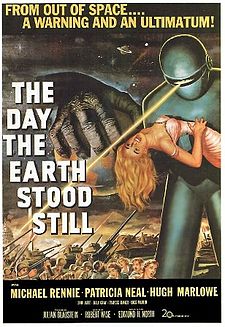
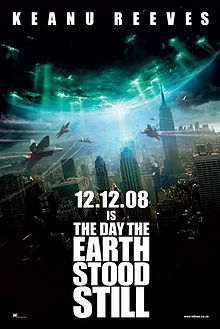
It is interesting to note the points made above cinematically, in the two films The Day the Earth Stood Still. More specifically, the 2008 version underscores the thrust of Kurtz’s article: “The planet, says Bruckner, “has become the new proletariat that must be saved from exploitation.””
You have undoubtedly seen one or both versions of the following movies. You know the characters so I will go forward.
In the 1951 version of The Day the Earth Stood Still Klaatu’s message centers on a very real and immediate concern ~ The Cold War and nuclear armament: “…government agents escort Klaatu to see Barnhardt. Klaatu introduces himself and warns the professor that the people of the other planets have become concerned for their own safety after human beings developed atomic power. Klaatu declares that, if his message goes unheeded, “planet Earth will be eliminated“. (From Wikipedia)
The 2008 version of The Day the Earth Stood Still centers around the desire for earth to remain sustainable: “Klaatu meets with Mr. Wu (James Hong), another alien who has lived on earth for 70 years. Mr. Wu tells Klaatu that he has found the human race to be destructive and unwilling to change. This confirms Klaatu’s experience so far, and so he determines that the planet must be cleansed of humans to ensure that the planet—with its rare ability to sustain complex life—can survive.”(From Wikipedia)
Congressman Trey Gowdy hotly contests the Obama administration’s lies after the siege of the American Embassy in Benghazi, Libya and the murder of U.S. Ambassador Stevens and three others.
“In Fact!” “Concrete evidence!”
Is Congress, the People’s Elected Representatives, being bypassed by the Obama administration? You better believe it.
“We have entered, as I see it, a spiritual limbo. Our educational institutions are no longer the bearers of high culture, and public life has been deliberately moronised. But here and there, sheltered from the noise and glare of the media, the old spiritual forces are at work” Roger Scruton
*****
“When a common culture declines, the ethical life can be sustained and renewed only by a work of the imagination.”-Roger Scruton
*****
“Jesus prayed, “This is eternal life, that they may know You . . .” (John 17:3). The real meaning of eternal life is a life that can face anything it has to face without wavering. If we will take this view, life will become one great romance— a glorious opportunity of seeing wonderful things all the time. God is disciplining us to get us into this central place of power.” Oswald Chambers
*****
“No power on earth or in hell can conquer the Spirit of God in a human spirit, it is an inner unconquerableness.” Oswald Chambers
*****
To those who have had no agony Jesus says, “I have nothing for you; stand on your own feet, square your own shoulders. I have come for the man who knows he has a bigger handful than he can cope with, who knows there are forces he cannot touch; I will do everything for him if he will let Me. Only let a man grant he needs it, and I will do it for him.” The Shadow of an Agony,Oswald Chambers
*****
“If we wish to erect new structures, we must have a definite knowledge of the old foundations.” John Calvin Coolidge
*****
Atheism is a post-Christian phenomenon.
*****
If social justice looks like your hand in someone else’s pocket then you are stealing.
*****
“In Sweden, giving to charity, absurdly, came to be considered a lack of solidarity, since it undermined the need for the welfare state.” – Roland Martinsson
*****
“…to love democracy well, it is necessary to love it moderately.” Alexis de Tocqueville
*****
Capitalism seeks to help others through a servce or product it provides. Free Market Capitalism is the most moral and fair economic system available to man. Capitalism augments personal growth, responsibility and ownership. Charity flourishes under capitalism. Charity dies under subjective “fair share” government confiscatory policies. Socialism redistributes ambivalence and greed.
*****
“We are to regard existence as a raid or great adventure; it is to be judged, therefore, not by what calamities it encounters, but by what flag it follows and what high town it assaults. The most dangerous thing in the world is to be alive; one is always in danger of one’s life. But anyone who shrinks from that is a traitor to the great scheme and experiment of being.” G.K. Chesterton
*****
Any intelligent fool can make things bigger, more complex, and more violent.
It takes a touch of genius – and a lot of courage – to move in the opposite direction. Albert Einstein
*****
“You shall know the truth and the truth shall make you odd.” Flannery O’Connor
*****
“There is but one good; that is God. Everything else is good when it looks to Him and bad when it turns from Him.” C.S. Lewis, The Great Divorce
*****
“Though He slay me, yet will I trust Him” (Job 13:15).
*****
God’s grace is not about the allowance for sin. God’s grace is about the conversation God allows regarding sin.
*****
From the book of Proverbs: We are not to favor the rich or the poor. We are to pursue justice.
*****
“Always keep in contact with those books and those people that enlarge your horizon and make it possible for you to stretch yourself mentally.” Oswald Chambers
*****
One goldfish says to another, “If there is no God who keeps changing the water?”
*****
“The truth is always there in the morning.”
From Cat On A Hot Tin Roof script – playwright Tennessee Williams
*****
God blesses those who hunger and thirst for justice, for they will be satisfied.
*****
“America’s greatness has been the greatness of a free people who shared certain moral commitments. Freedom without moral commitment is aimless and promptly self-destructive.” John W. Gardner
**
“Men of integrity, by their very existence, rekindle the belief that as a people we can live above the level of moral squalor. We need that belief; a cynical community is a corrupt community.” John W. Gardner
*****
“In the world it is called Tolerance, but in hell it is called Despair, the sin that believes in nothing, cares for nothing, seeks to know nothing, interferes with nothing, enjoys nothing, hates nothing, finds purpose in nothing, lives for nothing, and remains alive because there is nothing for which it will die.” Dorothy L. Sayers
*****
“Art, like morality, consists of drawing the line somewhere.”
G. K. Chesterton
*****
“The battle line between good and evil runs through the heart of every man.” Alexander Solzhenitsyn
*****
This is what the LORD says:
“Stand at the crossroads and look;
ask for the ancient paths,
ask where the good way is, and walk in it,
and you will find rest for your souls.
But you said, ‘We will not walk in it.’
-The prophet Jeremiah, 6:16
*****
“…our common task is not so much discovering a truth hiding among contrary viewpoints as it is coming to possess a selfhood that no longer evades and eludes the truth with which it is importunately confronted.” James McClendon, Ethics: Systematic Theology, Vol. 1
*****






 Cindy Wity