One of the greatest disciples of the twentieth century was neither a priest, nor a religious, nor a married person. She was a celibate, single woman who spent the last 13 years of her life battling lupus while writing some of the best fiction the world has ever known—all while living on a 544-acre dairy farm in Milledgeville, Ga. with her mother, her books, and forty-four peacocks. Her name was Flannery O’Connor.
Writing that may be dismissed as jarring, acerbic, and too controversial by people who are loathe to sit in the same room with someone who won’t validate their narrative – whether Progressive or Christian – are the short stories of Flannery O’Connor (1925–1964). She didn’t compile fluff for people to sit with the comfortable.
“She believed that story-telling ought to help modern men and women see “things as they are,” cutting through the fog of a culture that tells us that everything can be just the way we’d like it to be.” -George Weigel, Flannery O’Connor and Catholic realism
O’Connor’s stories are typically set in the rural American South. Her sardonic Southern Gothic style employed the grotesque, the transgressive, and wild, comical and deeply-flawed characters who are often alienated from God and often in violent situations. Because of these traits, her stories may be dismissed by some readers – they do not sense a clear-cut Gospel message in her work or a comforting message.
Faith, for O’Connor, was not something easy or comforting. It involved a struggle with doubt within the seeming randomness and cruelty of life. She understood that struggle as maturing her faith.
I think there is no suffering greater than what is caused by the doubts of those who want to believe. I know what torment this is, but I can only see it, in myself anyway, as the process by which faith is deepened. A faith that just accepts is a child’s faith and all right for children, but eventually you have to grow religiously as every other way, though some never do.
What people don’t realize is how much religion costs. They think faith is a big electric blanket, when of course it is the cross. It is much harder to believe than not to believe. If you feel you can’t believe, you must at least do this: keep an open mind. Keep it open toward faith, keep wanting it, keep asking for it, and leave the rest to God.
O’Connor wrote about the world as she found it in the Protestant South and etched her Catholic worldview into her stories. She professed: “I see from the standpoint of Christian orthodoxy. This means that for me the meaning of life is centered in our redemption by Christ and what I see in the world I see in relation to that.”
Her signature short story, A Good Man is Hard to Find, embodies this. You might recognize yourself and what’s at work in your life upon reading it.
The title of the story is the title of a well-known song of O’Connor’s day, sung by Bessie Smith. But the story doesn’t reference a woman’s hard time with men as the song does. The story would have us look at what it means to be a “good man”. Everyone has their own definition of what it means to be good, as do two characters in the story – the grandmother and the Misfit.
The grandmother values her Southern upbringing and mannerisms. For a road trip, the grandmother is all fancied up, white gloves and all, as is the habit of Southern women. The grandmother thinks goodness is being polite, nice, respectful, and agreeing with her views on things. This is brought out in her conversation with Red Sam, a character as fatuous as the grandmother. He delivers the title’s line that comes across as a cliché dismissive of the real world’s Misfit-type violence.
The escaped-convict Misfit, also steeped in Southern tradition, views the world through an amoral nihilist filter. He is unconcerned with traditional morality or even the value of other people’s lives. He shows up in a big black hearse-like vehicle. By a turn of events, generated by the manipulative grandmother and her cat, they meet. The grandmother, “good” in a decent person sense of good does not appreciate what she is up against. Will she finally grasp what makes a “good man?”
The family members, who shout and argue until someone gives in and behave in petty selfish ways without much reflection or moral thought find themselves in a less-than-good situation. What happens to them?
What does the Misfit say about punishment, the law, and about Jesus and the resurrection?
And what does the story show about the activity of and need for grace and the state of the human condition that refuses it?
I have purposefully not given you a summary of A Good Man is Hard to Find. Reading it first and then listening to podcasts would be the best introduction to her work.
Why do I read Flannery O’Connor?
Her unsentimental gimlet-eyed Kafkaesque realism speaks to me as a writer in our distorted and moronic times.
“Writers who see by the light of their Christian faith will have, in these times, the sharpest eye for the grotesque, for the perverse, and for the unacceptable. To the hard of hearing you shout, and for the almost-blind you draw large and startling figures.” ― Flannery O’Connor
Flannery O’Connor. Photo: Joe McTyre
Her stories move mystical concepts down from a theological mountain into the hands of her characters – the misfits, freaks, and outsiders who reckon with them or don’t. Her ‘parables’ hit home more than all the logical sermons I’ve heard on grace, salvation, goodness, punishment, forgiveness, and moral decay.
And, like Jesus, she’s “thrown everything off balance.”
(Cormac McCarthy (1933 – 2023) had a several influences including O’Connor. Georgia-born O’Connor wrote in Southern Gothic mode and Tennessee-born McCarthy in Appalachian Gothic mode. Both, with grim-humor, created grotesque characters and nihilistic settings – O’Conner to reveal the possibility of divine grace and lapsed Catholic McCarthy to wonder about the meaning of life. Both writers use violence in their stories. McCarthy to the extreme (Anton Chigurh, No Country for Old Men.)
In these grotesque works, we find that the writer has made alive some experience which we are not accustomed to observe every day, or which the ordinary man may never experience in his ordinary life. We find that connections which we would expect in the customary kind of realism have been ignored, that there are strange skips and gaps which anyone trying to describe manners and customs would certainly not have left. Yet the characters have an inner coherence, if not always a coherence to their social framework. Their fictional qualities lean away from typical social patterns, toward mystery and the unexpected. It is this kind of realism that I want to consider.
All novelists are fundamentally seekers and describers of the real, but the realism of each novelist will depend on his view of the ultimate reaches of reality.
Imagine creating something significant and you make it public it and it is well-received. Then, State media (MSNBC and the NYT for example) pans it and you are declared an “enemy of Democracy.” The self-expression born of your life’s work, your name, and your personhood are to be eclipsed – blackened – by an authoritarian enforcement of new cultural norms. You are to be held hostage artistically and, if you do not conform, literally.
You realize that you can either abandon your life’s work out of fear of crushing reprisals, or you find a subversive way to bring your work to the public, as did one of the greatest composers of the 20th century.
“In January 1936, after Stalin attended a performance of [Dmitri] Shostakovich’s dangerously erotic opera Lady Macbeth of the Mtsensk District, there appeared the notorious Pravda editorial ‘Chaos Instead of Music’, with its threat that things could ‘end badly’ for Soviet musicians – and for Shostakovich in particular. Its unnamed author was David Zaslavsky, a well-connected Soviet journalist and propagandist. No family was left untouched by the purges. The composer’s uncle, sister, brother-in-law and mother-in-law were arrested and when his patron, Marshal Tukhachevsky, was declared an ‘enemy of the people’, it is likely that he himself was interrogated by the NKVD. The musicologist Nikolay Zhilayev, to whom Shostakovich played the second movement in May 1937, had joined the disappeared by the time of the Fifth’s Leningrad premiere on November 21, 1937.” – David Gutman, Shostakovich’s Fifth Symphony: A deep dive into the best recordings | Gramophone
The opera was attacked as “muddle instead of music” in an editorial, probably written by Stalin himself, in the Communist Party newspaper, Pravda. If Shostakovich did not turn away from the “decadent” avant-garde in favor of Soviet Realism, threatened the editorial, “things could end very badly.” The popular opera disappeared from the stage overnight. One of the Soviet Union’s most prominent composers was in danger of becoming a “nonperson” just as he was reaching his artistic prime. –Timothy Judd, writing in Shostakovich’s Fifth Symphony: The Unlikely Triumph of Freedom
After the vicious official attack, Shostakovich lived in constant fear. Conductor, composer, music director, and arranger Benjamin Zander, writes
Overnight the 30-year-old composer’s rapidly ascending star plummeted. He came to regard himself, and to be regarded, as a doomed man, waiting with packed bags for the secret police to take him away during the night. In fact, the police never came, but the fear of official reprisals for any displeasure which his music might occasion coloured every moment of his life after that. He was never to know freedom again, except surreptitiously in some of his music.
Knowing that at any moment the authoritarian Soviet State might find fault with his music and then imprison him and his family, Shostakovich looked for a way to continue to work within the overshadowing Stalinist system.
“Shostakovich attempted to restore himself to the good graces of the Soviet critical establishment with “a conscious attempt to create a simplified ‘Socialist realist’ style that could be acceptable both to the Party and to the intelligentsia.” (Source)
And so, knowing that his latest effort would not be accepted (written in 1936, but not publicly performed until 1961) . . .
Shostakovich withdrew the Fourth Symphony from its scheduled performance and began the composition of a fifth which had as its [imposed by the State] subtitle, ‘An artist’s practical answer to just criticism’. His intention was to reinstate himself, through this work, in the eyes of the Politburo. The Fifth Symphony did indeed do that: the first performance was a huge success. It is anything but cheerful: the first movement is dark and foreboding, the second is ironic and brittle, and the third a deep song of sorrow. However, only the message at the end was important to the Soviets, and Shostakovich knew that. The long final movement, as they heard it, climaxed in a triumphant march, a paean of praise to the Soviet State.– Benjamin Zander
Was the Fifth Symphony to be understood as essentially Stalinist? There was more to the forced empty pomp of the fourth movement than met the Politburo’s ears.
“In [Solomon Volkov’s 1979] Testimony, Shostakovich fiercely renounces all this, in particular denying that the Fifth’s finale was ever meant as the exultant thing critics took it for: “What exultation could there be? I think it is clear to everyone what happens in the Fifth. The rejoicing is forced, created under threat, as in Boris Godunov. It’s as if someone were beating you with a stick and saying, ‘Your business is rejoicing, your business is rejoicing,’ and you rise, shaky, and go marching off, muttering, ‘Our business is rejoicing, our business is rejoicing.’ What kind of apotheosis is that? You have to be a complete oaf not to hear that.” -Samuel Lipman, writing in Shostakovich decoded? | The New Criterion (Emphasis mine.)
Was the Fifth Symphony a subversive symphonic response to Stalin, one that both mocks the dictator while bowing to him?
In the remarkable finale, Shostakovich achieves one of the greatest coups of his symphonic career: a “victorious” closer that drives home the expected message and at the same time makes an entirely different point — the real one. The resounding march that ends the movement represents the triumph of evil over good. The apparent optimism of the concluding pages is, as one colleague of the composer put it, no more than the forced smile of a torture victim as he is being stretched on the rack. (Source)
Shostakovich publicly described the new work as “a Soviet artist’s reply to just criticism.” Privately, he said (or is said to have said) that the finale was a satirical picture of the dictator, deliberately hollow but dressed up as exuberant adulation. It was well within Shostakovich’s power to present a double message in this way, and it is well beyond our means to establish whether the messages are true or false. The listener must read into this music whatever meaning may be found here; its strength and depth will allow us to revise our impressions at every hearing. (Source)
Did Shostakovich openly camouflage* a subversive message in the forced celebration of the fourth movement? The finale was not what it seemed.
“In his official comments on his symphony, Shostakovich said the following:
“”I wanted to show in my symphony how, through a series of tragic conflicts, of great internal spiritual struggle, optimism as a worldview finds its affirmation.”
“The affirmation of “optimism as a worldview” — what a grotesque phrase! Farewell, spiritual struggle! It would seem impossible to accept this account of what the music “means” — and yet this interpretation seems to have been swallowed whole by the establishment; the work was praised, and Shostakovich’s “rebirth” as an ideologically acceptable composer was complete. And, indeed — music being what it is — the symphony seems to offer no objective reason for doubting the official reception. After all, isn’t the triumph of the finale… triumphant?
“. . . if things were so straightforward, then what made Pasternak, who was in the audience at the premiere, supposedly say the following:
“”And to think that he said everything he wanted to, and nothing happened to him!””
Shostakovich, with a motif from his own Four Romances on Poems by Pushkin, Op. 46: I. Rebirth, had inserted a Pushkin reference into the fourth movement. The poem-motif attacked Stalin and his ways and went on to express that over time, his work which had been defaced, will survive even the most brutal oppression and defilement. The reference heralded his own “rebirth”, as an ideologically acceptable composer and as a resurrected artist.
Rebirth (Alexander Pushkin)
A barbarian artist, with his indolent brush, Blackens the painting of a genius, And, atop it, he senselessly traces His lawless drawing.
But, over the years, these alien layers of paint Are shed like old scales; Before us, the genius’s creation Emerges with its former beauty.
Thus do delusions vanish From my tormented soul, And in it visions arise Of primal, pristine days.
In the podcasts below, you’ll hear conductor Joshua Weilerstein explore the four movements of Shostakovich’s 5th Symphony.
* “Time and again, Tolstoy uses this technique of open camouflage. He does so, I think, so that we learn not to equate noticeability with importance and so that we acquire, bit by tiny bit, the skill of noticing what is right before us.” – Gary Saul Morson, The Moral Urgency of Anna Karenina – Commentary Magazine
~~~~~
Playing the fourth movement (Allegro Non Troppo) of Shostakovich’s 5th in high school concert band, I had no idea of the circumstances under which it had been composed – an artist threatened with suppression and persecution. I had no idea of the Pushkin reference hidden in the work. As first trumpet, all I knew was that it was a brass-forward piece of music. But now, I notice what was right before me and that has expanded my temporal bandwidth enough to see the approaching eclipse.
The barbarian artists of our day – Progressives and the Biden regime – with indolent brushes, blacken any expression, any individual, and any name that will not conform to its strictures and senselessly traces lawless drawings upon the works of truth, beauty, and goodness using the media, the administrative state, the CIA, the DOJ, and Taylor Swift.
Reason doesn’t suit the appetite of most. Artists, writers, playwrights, poets, journalists, composers, and musicians must work to subvert the approaching eclipse of humanity by the State, the WHO, the WEF, AI, transhumanism, and communism.
~~~~~
“This was not the Moral Majority of my father’s era. Rather, this was a subversive, courageous subculture that was resisting the dominant narrative, and the morass of darkness that is our dominant cultural moment.” – Dr. Naomi Wolf: “Letter from CPAC”
~~~~~
Here is the State eclipsing a journalist. . .
Just caught up with journalist Steve Baker just moments after being released from federal custody.@TPC4USA details what he’s had to endure at the hands of the corrupt DOJ.
Shostakovich’s life and career was so wrapped up with his relationship to the Soviet government that it is sometimes hard to appreciate that, all else aside, he was one of the great 20th century composers. His 5th symphony is the meeting point between Shostakovich’s music and the political web he was often ensnared in, and it is a piece that is still being vociferously debated. This week we’re going to tell the story of the piece’s genesis, and then we’ll explore the movements of the symphony.
Shostakovich Symphony No. 5, Part 1Shostakovich Symphony No. 5, Part 2
The first time I heard about novelist, war correspondent, activist, pacifist, letter writer, and third wife of Ernest Hemingway, Martha Gellhorn, was during a documentary about Hemingway. I became intrigued by the pluck of this woman, as I am about Maria Agnesi and Rose E. Livingston.
1944. To witness the D-Day landings on the beaches of Normandy during World War II, Gellhorn stowed away on a hospital ship (locked herself in a bathroom) and masqueraded as a medic. She impersonated a stretcher bearer.
All night she labored, with blisters on her hands, her mind and heart seared with images of pain and death she would never forget. Later she would learn that every one of the hundreds of credentialed journalists, including her husband, sat poised behind her in the Channel with binoculars, never making it to shore. Hemingway’s story soon appeared in Collier’s alongside hers, with top billing and more dazzle, but the truth had already been written on the sand. There were 160,000 men on that beach and one woman. Gellhorn.
Gellhorn’s reporting from the front lines of every major international conflict in six decades distinguishes her as one of the great war correspondents of the 20th century. Her war coverage spanned from the Spanish Civil War in the 1930s to the Vietnam War.
Martha would go to great lengths to get a good story. During the Second World War she rode with British pilots on night raids over Germany. She was one of the first journalists to report on Dachau once it was liberated by the Allies. She paid her own way to go to Viet Nam and cover the war.
I followed the war wherever I could reach it. I had been sent to Europe to do my job, which was not to report the rear areas or the woman’s angle. – Martha Gellhorn
Caroline Moorehead, author of Gellhorn: A Twentieth Century Life, says Gellhorn remained undaunted for most of her 90 years. “I think she was fearless but she knew what it was like to be frightened,” a toughness she got from her upbringing, Moorehead says.
Gellhorn covered wars in a different way than other journalists. “She didn’t write about battles and she didn’t know about military tactics,” Moorehead says. “What she was really interested in was describing what war does to civilians, does to ordinary people.”
Background
Gellhorn was born in Missouri in 1908. Her independent and determined nature along with the desire to champion the cause of the oppressed was formed in her by the examples of her father and mother. George Gellhorn, a German-born Jew, was a reputable gynecologist and social reformer in St. Louis. Edna Fischel Gellhorn championed women’s suffrage, child welfare laws, and free health clinics. Both parents were reformers, advocating for the disenfranchised.
Gellhorn was an activist early on. At age 7, she participated in “The Golden Lane,” a rally for women’s suffrage at the Democratic Party’s 1916 national convention in St. Louis. (Source)
She later attended Bryn Mawr College, a women’s liberal arts school. Her first published articles appeared in The New Republic. “In 1930, determined to become a foreign correspondent, she went to France for two years, where she worked at the United Press bureau in Paris, but was fired after she reported sexual harassment by a man connected with the agency.” (Source)
In the fall of 1934 Martha would go on to work for FERA (Federal Emergency Relief Administration). There, she documented the lives of the unemployed, the hungry, and the homeless during the Great Depression, alongside photographer Dorothea Lange. Gellhorn became close to Eleanor Roosevelt during that time.
Gellhorn’s began her journalist career during the Spanish Civil War. She arrived in Madrid in 1937 to cover the conflict for Collier’s Weekly. There she met Ernest Hemingway, also in Spain as a correspondent. They married in 1940. The marriage lasted five years. Gellhorn left Hemingway. The breakup was due to Hemingway’s unhappiness about Gellhorn’s’ absence when she was on assignment and his drinking and infidelity.
From Paula McLain, author of a biographical novel about Martha Gellhorn titled Love and Ruin :
She saw herself as a champion of ordinary people in extraordinary circumstances, and worked hard, all her life, to give voice to the voiceless. She never wanted to be famous, and was enraged to know that the larger world knew her mostly through her marriage to Ernest Hemingway, which lasted from 1940-1945. “Why should I be a footnote to someone else’s life,” she noted ruefully in an interview, pointing out that she’d been her own woman and writer before meeting him, and would go on being just that. She in fact went on to publish for nearly fifty years after leaving him, writing a total of five novels, fourteen novellas, two short story collections and three books of essays.
While many consider Hemingway a better fiction writer, many consider Gellhorn a better journalist. Two of Gellhorn’s writings – an article and a letter – show how she analyzed what she witnessed in terms of what man is capable of doing to man. Her writing, biting and eye-opening, reveals her conscience.
Given the evil of ordinary, rather bland, bureaucrats and judges and the globalist tyranny that would make slaves of us all and the toxic air of nihilism, Gellhorn’s writing should serve as a warning to us all.
Gellhorn, in a February 1962 The Atlantic article titled Eichmann and the Private Conscience, writes “on some of the facts and some of the lessons to be learned from this Trial, which is unique in the history of the world”. The following quotes about Eichmann are from that article:
This is a sane man, and a sane man is capable of unrepentant, unlimited, planned evil. He was the genius bureaucrat, he was the powerful frozen mind which directed a gigantic organization; he is the perfect model of inhumanness; but he was not alone. Eager thousands obeyed him. Everyone could not have his special talents; many people were needed to smash a baby’s head against the pavement before the mother’s eyes, to urge a sick old man to rest and shoot him in the back of the head; there was endless work for willing hands. How many more like these exist everywhere? What produced them — all sane, all inhuman?
We consider this man, and everything he stands for, with justified fear. We belong to the same species. Is the human race able — at any time, anywhere — to spew up others like him? Why not? Adolf Eichmann is the most dire warning to us all. He is a warning to guard our souls; to refuse utterly and forever to give allegiance without question, to obey orders silently, to scream slogans. He is a warning that the private conscience is the last and only protection of the civilized world. (Emphasis mine.)
…
In a single sentence, Eichmann divided the world into the powers of light and darkness. He chose the doctrine of darkness, as did the majority of his countrymen, as did thousands throughout Europe — men with slave minds, pig-greedy for power: the Vichy police, the Iron Guard, big and little Quislings everywhere. He stated their creed in one line: “The question of conscience is a matter for the head of the state, the sovereign.”
Gellhorn’s Letter Writing
“She wrote several a day, often describing the same episodes to different people, sending letters by boat, sometimes adding to them over days until they stretched to 50 pages. Letters were, as her friend Bill Buford put it in his introduction to Gellhorn’s book, Travels With Myself and Another, her main form of social life. . .. Gellhorn’s friend George Brennan once suggested to her that letters were her ‘real genre, and it is where you yourself come through most genuinely and convincingly’.” (Source) (We have lost touch with hand-written humanness – our own and others – with email and texting.)
While Gellhorn’s wartime dispatches rank among the best of the century, her personal letters are their equal: as vivid and fascinating as anything she ever published.
Gellhorn’s correspondence from 1930 to 1996–chronicling friendships with figures as diverse as Eleanor Roosevelt, Leonard Bernstein, and H. G. Wells, as well as her tempestuous marriage to Ernest Hemingway–paint a vivid picture of the twentieth century as she lived it. (Source)
Gellhorn’s connection to Leonard Bernstein:
“While traveling in Israel in 1949, Gellhorn met Leonard Bernstein by chance in a “scruffy bar” in Tel Aviv. A few months later, Bernstein turned up unannounced (with a grand piano in tow, no less!), in Cuernavaca, Mexico, where she was living and proposed he move in with her for a while. She convinced him to rent a house up the road instead. One night, he persuaded her to try marijuana with him for the first time, having heard from local musicians that it “helped the music flow.” They were both sick all night, with “appalling nightmares.” While never romantic, the two remained close friends and confidants for decades.” (Source)
Gellhorn’s wrote to Bernstein after viewing West Side Story. She was affected by Cool, the most disturbing number (relentless unresolved tritones) of the musical.
“But what stays in my mind, as the very picture of terror, is the scene in the drug store, when the Jets sing a song called “Keep Cool, Man.” I think I have never heard or seen anything more frightening. (It goes without saying that I think the music so brilliant I have no words to use for it.) I found that a sort of indicator of madness: the mad obsession with nothing, the nerves insanely and constantly stretched–with no way to rest, no place to go; the emptiness of the undirected minds, whose only occupation could be violence and a terrible macabre play-acting. If a man can be nothing, he can pretend to be a hoodlum and feel like a somebody. I couldn’t breathe, watching and hearing that; it looks to me like doom, as much as these repeated H-bomb tests, with the atmosphere of the world steadily more and more irrevocably poisoned. I think that drug store and the H-bomb tests are of the same family.
“What now baffles me is that all the reviews, and everyone who has seen the show, has not talked of this and this only: the mirror held up to nature, and what nature. I do not feel anything to be exaggerated or falsified; we accept that art renders beautiful, and refines the shapeless raw material of life. The music and the dancing, the plan, the allegory of the story do that; but nature is there, in strength; and surely this musical tragedy is a warning. . ..” (Emphasis mine.)
Though I’ve not read of any religious practice in Gellhorn’s life and though her hard-drinking way of life is not something I would recommend – New York Times writer Rick Lyman described Gellhorn as “a cocky, raspy-voiced, chain-smoking maverick”; Gellhorn was a self-made woman who took cyanide to end her life at 90 – still, there is much to commend about Martha Gellhorn: her devotion to humanity and the eyewitness conscience-driven writing of her dauntless war zone life.
Gellhorn, who had a distrust of politicians, documented what the politicians’ war did to civilians. “I followed the war wherever I could reach it,” said Gellhorn. Hers was the Samaritan’s attitude of not wanting to look away. “I wrote very fast, as I had to,” she says, “afraid that I would forget the exact sound, smell, words, gestures, which were special to this moment and this place.”
Paula McLain, Gellhorn’s biographer, writes that Gellhorn saw herself as a champion of ordinary people in extraordinary circumstances, and worked hard, all her life, to give voice to the voiceless
Gellhorn said of herself “The only way I can pay back for what fate and society have handed me is to try, in minor totally useless ways, to make an angry sound against injustice.”
Gellhorn’s reporting was widely influential at the time and cleared a path for women.
There is a hard, shining, almost cruel honesty to Gellhorn’s work that brings back shellshocked Barcelona, Helsinki, Canton and Bastogne – the prelude and crashing symphony of World War II – with almost unbearable vividness.
–The Guardian, reviewing Gellhorn’s book The Face of War
In a journalism career that spanned 60 years, Gellhorn’s particular brand of nerve was rare as radium. Fear seemed to activate rather than suppress her, and it taught her courage in the face of injustice instead of despair. Sharpened by rage and wielded in the service of others, her voice became a sword. I’m not sure I have encountered its equal, even today. We could use an army of such voices, in fact. And precisely now. – Paula McLain (Emphasis mine.)
~~~~~
Martha Gellhorn Quotes:
“Americans did not acquire their fear neurosis as the result of a traumatic experience – war devasting their country, pestilence sweeping the land, famine wiping out helpless millions. Americans had to be taught to hate and fear an unseen enemy. The teachers were men in official positions, in government, men whom Americans normally trust without question.”
“I do not see myself as a footnote to someone else’s life.” (Regarding her marriage to Hemingway.)
“Stop spying on the lawful citizenry. Democracy and dossiers go ill together. It is all right for God but all wrong for the State to keep its eye on sparrows.”
“From the earliest wars of men to our last heart-breaking worldwide effort, all we could do was kill ourselves. Now we are able to kill the future.”
“In more than half the nations of our world, torture certifies that the form of government is tyranny. Only tyranny, no matter how camouflaged, needs and employs torturers. Torture has no ideology.”
“The only way I can pay back for what fate and society have handed me is to try, in minor totally useless ways, to make an angry sound against injustice.”
“War happens to people, one by one. That is really all I have to say and it seems to me I have been saying it forever. Unless they are immediate victims, the majority of mankind behaves as if war was an act of God which could not be prevented; or they behave as if war elsewhere was none of their business. It would be a bitter cosmic joke if we destroy ourselves due to atrophy of the imagination.”
“Gradually I came to realize that people will more readily swallow lies than truth, as if the taste of lies was homey, appetizing: a habit.”
“On the night of New Year’s Day, I thought of a wonderful New Year’s resolution for the men who run the world: get to know the people who only live in it.”
“Here one has the perfect example of justice: the men have kept their women enslaved…stupid and limited and apart, for their male vanity and power; result: the dull women bore the daylights out of the men.”
“Democracy is dying. It’s a disease called cowardice.” (From a 1938 letter.)
~~~~~
Janet Somerville, author of Yours, for Probably Always,talks about novelist, war correspondent, activist, and iconoclast Martha Gellhorn.
Janet Somerville on Martha Gellhorn | The Hemingway Society
Exposing abuse and corruption can be a thankless job. Powerful figures doing wrong often deny and attack those exposing them. And their supporters often join suit—attacking the messenger, rather than holding their leader accountable. . . why continue reporting, advocating, and shining a light when doing so comes at such a high personal cost?
“Be All You Can Be” is not just the Army’s recruiting slogan. It is the appeal of self-help books, magazines, videos, seminars, and podcasts. It is the allure of prosperity gospel and the appeal of bucket lists. It is also the speculative assurance of transhumanism, the technological heir of evolutionary progressivism. There are plenty of gurus, gimmicks, and gizmos ready to give you Your Best Life Now.
We can live at full potential by taking seven steps. We can name-it-and-claim-it wealth, health, and total victory over circumstances. We can choose to have incredible experiences and to do incredible things before we die. And we can, one day, live with boosted cognition and become a radically enhanced superhuman. Why, we can conquer the whole universe by human will and consciousness and with a little help from my “Be All You Can Be” friends.
Certainly, such offerings have purchase. People want to be healthy, financially secure and control outcomes. And people want to “feel” alive.
Just as certain, “Be All You Can Be” taps into a fear of missing out on Your Best Life Now before you kick the bucket. “You Only Live Once” is the high-octane fuel in the motivator engine – get busy and live full throttle. The FOMO messaging comes from all corners, including from the expected self-help speakers both secular and Christian and from celebrities.
“Go for it now. The future is promised to no one.”
Wayne Dyer, self-help author and a motivational speaker.
“A life of adventure is ours for the taking, whether we’re seven or seventy. Life for the most part is what me make it. We have been given a responsibility to live it fully, joyfully, completely, and richly, in whatever span of time God grants us on this earth.
Luci Swindoll, author and speaker with Women of Faith
Dream as if you’ll live forever. Live as if you’ll die today.
James Dean
The possibility of “A New You” born out of the intensity of experiences and the dramatic are oft portrayed as producing “real” life, while the prosaic life of simple acts of truth, goodness, and beauty are deemed ho-hum and therefore not worth exploring and exploiting. (The dramatic life vs. the prosaic life is found in a close reading of Tolstoy’s Anna Karenina.)
The self-improvement racket has spawned cottage industries such as “biblical manhood” and “biblical womanhood”. Such topics, that get at our core identities and callings, are prone to scams, as Karen Swallow Prior writes in her Opinion: The ‘Biblical Manhood’ Industry Is A Scam:
In my recent book, “The Evangelical Imagination,” I devote an entire chapter to the notion of “improvement,” showing how this early modern concept contributed to the rise of the self-help movement in the 19th century and has spilled over into Christian thinking and practice today.
Many of the publications centered on “biblical manhood” and “biblical womanhood” are just a continuation of this Victorian (and secular) movement.
As you reflect on how to be within the time you have, do you envision having a multiplicity and intensity of experiences – 101 Incredible Things to Do Before You Die? Do you hear yourself speaking the “it” you want and believing you will receive “it” and “it” will come to pass? Do you see yourself embracing a you-can-have-it-all “Be All You Can Be” life? Is the bucket list of your now filled to the brim with FOMO activity?
Does submission to digital technology effect how to be within the time you have?
An interesting concept, noted in the context of the digital revolution suddenly increasing “the rate and scale of change in almost everyone’s lives,” is presented by the Lionel Trilling Professor in the Humanities Edward Mendelson in his essay “In the Depths of the Digital Age”:
In Thomas Pynchon’s Gravity’s Rainbow (1973), an engineer named Kurt Mondaugen enunciates a law of human existence: “Personal density … is directly proportional to temporal bandwidth.” The narrator explains:
“Temporal bandwidth” is the width of your present, your now…. The more you dwell in the past and future, the thicker your bandwidth, the more solid your persona. But the narrower your [bandwidth] sense of Now, the more tenuous you are.
The genius of Mondaugen’s Law is its understanding that the unmeasurable moral aspects of life are as subject to necessity as are the measurable physical ones; that unmeasurable necessity, in Wittgenstein’s phrase about ethics, is “a condition of the world, like logic.” You cannot reduce your engagement with the past and future without diminishing yourself, without becoming “more tenuous.”
As I read this: if you’re just constantly in the moment rushing from one thing to the next without the context of the past and future, your personal density becomes diffuse and unsupportable.
. . . benefit of reflecting on the past is awareness of the ways that actions in one moment reverberate into the future. You see that some decisions that seemed trivial when they were made proved immensely important, while others which seemed world-transforming quickly sank into insignificance. The “tenuous” self, sensitive only to the needs of This Instant, always believes – often incorrectly – that the present is infinitely consequential.
It seems to me, and your own experience will bear this out, that This Instant is the impetus of Your Best Life Now and that self-help schemes produce the thinness and self-deception of a tenuous now.
(The wicked thrive in the tenuous now. The wicked want nothing to do with the past or the future. The narcissistic now is all the wicked care about.)
Is there a better way to address our frailty, finitude, imperfection, and self-esteem and produce a thicker bandwidth?
As a follower of Jesus, I look to him for affirmation and not from the world’s gurus, gimmicks, and gizmos.
As a follower of Jesus, I’ve seen that for the world, the drive to succeed is paramount and can be all-consuming. But I’ve come to understand that I can’t have it all and be it all in my mortal life. I am content with that. I have no fear of missing out. The Lord knows the desires of my heart and what I need. (See Psalm 37 & Matt. 6:32)
As a follower of Jesus, I’ve come to understand that the density of my “Temporal bandwidth” does not consist in an abundance of possessions (Luke 12:15) nor in the abundance of experiences (Luke 10: 20).
As a follower of Jesus, I’ve learned from Job to not be deceived into thinking of life in terms of “what’s in it for me”. Nor will I be incentivized by a Retribution Principle that has God prospering the “righteous” with material gain and health while inflicting suffering on the wicked.
As a follower of Jesus, I understand, contrary to the world’s notion of acquiring power, that I am a sheep cared for by the Good Shepherd. (See Psalm 23 & John 10: 1-30) My Temporal bandwidth is within his care. My personal density is being thickened; my persona becoming more solid. Seven decades into life and I know this to be true.
And, there’s the realization that unmeasurable moral aspects of lifeare as subject to necessity as are the measurable physical ones. They’re a condition of the world, like logic.
Ash Wednesday: “Remember that you are dust, and to dust you shall return.” With these words and the ash-cross marked on our foreheads we are engaged with our past and our future.
Ash Wednesday and Lent, the 40-day season of prayer, fasting and of giving up things, addresses our frailty, finitude, imperfection, and self-esteem. This Lent Be All You Can’t Be before the Lord and He will lift you up.
~~~~~
The Blessing of Imperfect Days with Kate Bowler – February 21, 2023
In this conversation, Kate shares about her work detailing the Prosperity Gospel movement from an academic standpoint, and how her own setbacks and health catastrophe in a cancer diagnosis both deepened her sense of being loved by God and softened her toward those desperate for a miracle.
Kate and Cherie’s conversation goes through deep waters, but does so with much humor and heart. We hope you’ll listen and share it with your friends and loved ones.
Kate Bowler, in her dissertation and later book Blessed: A History of the American Prosperity Gospelargues that these diverse of Christian faith-fueled abundance can be understood as a movement, for they stem from a cohesive set of shared understandings. First, the movement centered on Faith. It conceived of faith as an “activator,” a power given to believers that bound and loosed spiritual forces and turned the spoken word into reality. Second and third respectively, the movement depicted faith as palpably demonstrated in wealth and health. It could be measured in both in the wallet–one’s personal wealth–and in the body–one’s personal health–making material reality the measure of the success of immaterial faith. Last, the movement expected faith to be marked by victory. Believers trusted that culture held no political, social, or economic impediment to faith, and no circumstance could stop believers from living in total victory here on earth.
~~~~~
Escaping the Prosperity Gospel
In this episode Mikel Del Rosario and Costi Hinn discuss the prosperity gospel, focusing on Hinn’s spiritual journey out of the religious movement. This interview was recorded before March 2020.
For those committed to human flourishing, absorbing that transhumanism is a scientific nonstarter would be a major boon. But a singular focus on information is not limited to this arena. It increasingly pervades our day-to-day existences, in terms of how we proceed in our professional and social lives, as well as when others decide what counts about us (or even who we “are”), often without our awareness. Prospects for societal improvement depend, in part, on our becoming more conscious of this informational frame, especially where it is a mismatch with the nonlinear and richly contextual nature of what matters most to us as human beings.
My father, on the nights when my mother goes to bridge club, makes creamed chipped beef with peas on toast for supper. He told me one time that in the military it’s called “shit on a shingle” or SOS for short. He makes me eat it even though I can’t stomach peas or the dried beef or the gravy and I’m not a soldier. Tonight again, my mother is at bridge club and I’m sitting here with SOS.
After looking at my plate for a long time, I move the peas out of the gravy, off the toast and onto the plate with my knife. I’m hoping I won’t have to eat them. The kitchen phone rings and I jump to answer it. My best friend Janey wants to know if I want to go with her and her boyfriend Nick to watch West Side Story at the Sky-Hi Drive-In. I say I sure do and hang up. My father doesn’t want me on the phone during supper.
The peas are cold and clammy now and I say I they’re cold and clammy and I can’t eat them. My father tilts his head down and tells me to eat them. I want to say no but I need his okay to go to the movie. So, I stab some peas with my fork and swirl them in the flour gravy and then I eat the green-grey mush with a bite of toast. I gag. I drink some milk and wash it down. My father lifts his head and says “alright”. I clear the dishes and wash them. I’ve done what he wanted, so now I can ask him about Friday night. But I wait until he’s sitting in front of the TV.
An hour later, my father is in the basement watching TV. I sit with him and ask about his movie. He says troops have been ordered to risk their lives and retake a hill that’s not important in the battle. I ask him why. He says it shows the enemy their resolve to continue to fight if an agreement is not reached in negotiations.
A Marlboro commercial comes on and I ask him about Friday night. He wants to know about the movie. I tell him it’s a musical about people fighting, dancing and falling in love and he says “Okay. Ask your mother when she come home from playing bridge.”
My mother finally gets home and I tell her about Friday night. She says she knows the movie. “Saw it with a friend when it came out in ’61,” she says. She knows Janey and Nick and she says it’s okay with her that I go.
Saturday night Nick’s car pulls into the driveway. He honks the horn and I yell “They’re here”. My father yells from the basement “Have a good time honey. Call if there is a problem.” Mom, on the phone with someone, yells for me to come straight home after the movie. I yell back “I will.”
I get in the back seat of Nick’s Chevy and we drive off – but not in the direction of the Sky-Hi. I ask where we’re going. Janey turns to me and says that Nick asked his friend Tom to come along. He had nothing to do, Nick says. I immediately panic. I wonder if I look alright.
I have a face full of pimples and a bony nose that’s too big for my face. I wonder if I used enough concealer. The green top I’m wearing is wrinkled. It was at the bottom of my closet. And the jeans I’m wearing are worn thin. I was expecting to sit in the dark and watch a movie with Nick and Janey.
We pull up to a ranch house on the other side of town. Nick honks the horn. A skinny blonde-haired guy walks out the front door and down the front walk. “Here’s Tom,” Janey says.
Tom gets in the back seat. Janey introduces Tom. I don’t know him from school. I give him a quick smile and then give Janey a stare. She just winks back at me. She knows I don’t have a boyfriend.
Tom is neatly dressed. He’s wearing a button-down shirt, khaki pants and loafers. His boxy glasses make him look like a bookworm. In junior high school he’d be called “a climber” and Nick “a greaser.”
The Twin Theater Sky-Hi Drive In is on the west end of our town. On the way we listen to the AM radio. A Chicago station plays Born to Be Wild and I Will Always ThinkAbout You. Tom and I sit quietly in the back. I suck in my lips and look out my window. The cloudy sky looks like flour gravy.
We arrive at Sky-Hi and pay for our tickets. Nick drives over to a center spot in the East Theater. Nick and Tom say they’re going to the concession stand. They ask what we want. Janey and I ask for Cokes and popcorn. I hand Nick some money and they head off. The guys return after twenty minutes just as the coming attractions start. I roll down my window and Tom hands me the Coke and popcorn. I say thank you. He gets into the back seat on the other side of the car.
Janey’s been sitting next to Nick the whole time he’s been driving. Now Nick puts his arm around Janey’s shoulder and they snuggle together. Janey asks “are you guys okay back there?” I say I have to move over to see the screen. I look at Tom and he gives me a nod that says it’s okay. I scooch over to the middle of the back seat and put my legs to the left side of the floor hump. “That’s better,” I say.
Finally, the movie begins. There’s an overture and then the Jets sing about being a Jet and beating up other gangs. The Jets and the Sharks want to fight each other for control of the streets. But first they go to a dance. It’s a musical, so I guess it doesn’t have to make sense.
At the dance, Tony of the Jets meets Maria, Bernardo’s sister. Bernardo is the head of the Puerto Rican Shark gang. Tony and Maria fall in love at first sight. Nobody is happy about that except Tony and Maria. Tony’s half in half out about the gang stuff but he’s all in on Maria. He wants to run away with her.
Tony and Maria start singing Tonight and I stop eating popcorn. I put my hand down on the car seat so I can lean forward and hear what’s coming from the speaker. My little finger touches Tom’s little finger. He takes my hand into his. We stay this way, looking at the movie and holding hands, until the movie ends and headlights turn on.
It’s past midnight when we leave Sky-HI. Nick says he’ll drive me home first. I go back and sit behind Nick. Tom looks out his window. Everyone is quiet. Nick turns on the radio. Ain’t Nothing Like the Real Thing comes on. I suck in my lips and look out my window. On the way home I see a car with one headlight and say “perdiddle.” Janey and Nick kiss.
At home I get out of the car and say thanks to Janey and Nick and goodnight to Tom. Tom says good night looking at Nick and Janey.
I go inside and hear the TV on in the basement. I walk down the hallway to my bedroom. My mother is sitting in her bed reading her magazines. She sees me and asks “Susan, how was it?” I poke my head into the room and tell her it was alright.
“Just alright? Nothing more?” she asks.
“Nothing more than alright” I say.
“Okay,” she says. “Now go to bed. It’s late. Tomorrow’s another day.”
As I walk away she reminds me that she has bridge club again tomorrow night. I say okay.
In my room I take the ticket stub out of my jeans pocket. I find a pen and write on the back of the stub West Side StoryTom. I pull my keepsake box out from under the bed and put the ticket stub inside along with the Valentine cards from third grade and my second-place medals from clarinet solo contests and some poems I wrote. I close the box and put it back.
I go to bed thinking about the movie and Tom and peas on my plate.
Love. Is it die-cut like the Valentine cards of grade school? Is it cliché like pop music? Is it a potion we constantly thirst for? Is it intoxication and under its influence we are not in our right minds? Is love passion? Sentimental? Carnal? Absolute? “What do any of us really know about love?”
The last question is raised during a conversation between two couples. Their dialog and the juxtaposition of the couple’s ideas about love are found in Raymond Carver’s 1981 short story What We Talk About When We Talk About Love. Carver has us listen in.
We learn from narrator Nick that he and his wife Laura are spending the afternoon at Mel and Terri’s home. Both couples live in Albuquerque, but as Nick says and the ‘love’ dialog relates, they “were all from somewhere else”.
Nick tells us that Mel McGinnis is a forty-five-year-old cardiologist who, before medical school, spent five years in seminary. Terri is his second wife. We later learn that Mel was married before to Majorie and has two children. His movements are usually precise when he hasn’t been drinking.
Terri, we learn, was previously in an abusive relationship with a guy named Ed. He would beat her and drag her around the room by her ankles, all the while professing his love for her.
Mel and Terri have been married for four years.
Nick tells us about Laura and their relationship: she’s a legal secretary who’s thirty-five and three years younger than he is. He says they’re in love, they like each other and enjoy each other’s company. “She’s easy to be with.” They’ve been married for eighteen months.
Beside the four adults, sunlight and gin figure in the story.
As the story begins, the four are sitting around a kitchen table. Sunlight fills the room. Gin and tonic water are being passed around. The subject of love comes up.
(I get the sense that the older couple have argued a lot about what love is and now want to air it all again in front of the younger couple. It seems they have things they want to get off their chest. Is that why the cheap gin is being passed around? Are Nick and Laura in place to be the arbiters of who’s right and who’s wrong?)
The heart doctor Mel, based on “the most important years of his life” in seminary, thinks that “real love was nothing less than spiritual love”. (This signals that love’s definition may not be solid.)
Terri believes that Ed, the man who tried to kill her, loved her. She asks “What do you do with love like that? Mel responds that Ed’s treatment could not be called love.
Terri then makes excuses for Ed’s behavior – “People are different”. She defends him – “he may have acted crazy. Okay. But he loved me.”
We begin to notice a growing tension between Mel and Terri. (There has been tension in their marriage about Ed and Marjorie before this.)
Mel relates that Ed threatened to kill him. Mel reaches for more gin and becomes antagonistic himself. He calls Terri a romantic for wanting brutal reminders of Ed’s love. Then he smiles at her hoping she won’t get mad. Terri responds to Mel, not with a rejection of his or of Ed’s behavior, but with what might have been her leave-the-door-open enabling response to Ed after one of his physical attacks: “Now he wants to make up.” Her past relationship reveals the continuous nature of Terri’s emotional deficit.
(Does Mel know how to land verbal blows on Terri like Ed did physically?)
Mel tries to soften the blow by calling Terri “honey” and by saying again that what Ed did wasn’t love. He then asks Nick and Laura what they think.
Nick says he doesn’t know the man or the situation to make a decision. Laura says the same and adds “who can judge anyone else’s situation?” Nick touches her hand and she smiles.
Nick picks up her “warm” hand, looks at the polished and manicured nails and then holds her hand. With this display of affection, Nick shows his love and respect for Laura, the opposite of the emotional and physical abuse Terri suffered at the hands of Ed.
Mel posits that his kind of love is absolute and nonviolent. (Then again, emotional abuse doesn’t kill or leave physical bruises.)
Terri and Mel describe Ed’s two attempts at suicide. Terri talks with sympathy for the guy. “Poor Ed” she says. Mel won’t have any of it: “He was dangerous.” Mel says they were constantly threatened by Ed. They lived like fugitives, he says. Mel bought a gun.
Terri stands by her illusion that Ed loved her – just not the same way that Mel loves her.
They go to relate that Ed’s first suicide attempt -drinking rat poison – was “bungled”. This puts him in the hospital. Ed recovers. The second attempt is a shot in the mouth in a hotel room. Mel and Terri fight over whether she will sit at his hospital bedside. She ends up there.
Mel reiterates that Ed was dangerous. Terri admits they were afraid of Ed. Mel wants nothing to do with Ed’s kind of love. Terri, on the other hand, reiterates that Ed loved her – in an odd way perhaps but he was willing to die for it. He does die.
Mel grabs another bottle of gin.
Laura says that she and Nick know what love is. She bumps Nick’s knee for his response. He makes a show of kissing Laura’s hand. The two bump knees under the table. Nick strokes Laura’s thigh.
Terri teases them, saying that things will be different after the honeymoon period of their relationship. Then, with a glass of gin in hand, she says “only kidding”. Mel opens a new bottle of gin and proposes a toast “to true love.”
The glow of the afternoon sun and of young love in the room makes them feel warm and playful, like kids up to something.
Matters-of-the-heart Mel wants to tell them “what real love is”. He goes on about what happens to the love between couples who break up. After all, he once loved his ex-wife, Marjorie, and Terri once loved Ed. Nick and Laura were also both married to other people before they met each other.
He pours himself more gin and wipes the “love is” slate clean with “What do any of us really know about love?” He – the gin Mel – talks about physical love, attraction, carnal love, sentimental love, and memory of past love. Terri wonders if Mel is drunk. Mel says he’s just talking. Laura tries to cheer Mel by saying she and Nick love him. Mel responds saying he loves them too. He picks up his glass of gin.
Mel now gets around to his example of love, an example that he says should shame anyone who thinks they know what they are talking about when they talk about love. Terri asks him to not talk drunk. (Is Mel, focused only on himself and his gin, becoming a slurring, stammering and cursing drunk?) He tells her to shut up.
Mel begins his story of an old couple in a major car wreck brought on by a kid. Terri looks over at Nick and Laura for their reaction. Nick thinks Terri looks anxious. Mel hands the bottle of gin around the table.
Mel was on call that night. He details the extensive wounds. The couple is barely alive. After saying that seat belts saved the lives of the couple, he then makes a joke of it. Terri responds affirmatively to Mel and they kiss.
Mel goes on about the old couple. Despite their serious injuries, he says, they had “incredible reserves” – they had a 50/50 chance of making it.
Mel wants everyone to drink up the cheap gin and then go to dinner. He talks about a place he knows. Terri says they haven’t eaten there yet. The heart doctor’s coherence dissipates with each drink.
He says he likes food and that he’d be a chef if he had to do things all over again. Then he says he wants to come back in another life as a medieval knight. Knights, he says, were safe in armor and they had their ladies. As he talks, Mel uses the word “vessels”. Terri corrects him with “vassals”. Mel dismisses her correction with some profanity and false modesty.
Nick counters the heart doctors fantasy by saying that knights could suffer a heart attack in the hot armor and they could fall of a horse and not get back up because it is heavy.
Mel responds to Nick and Terri, acknowledging it would be terrible to be a knight, that some “vassal” would spear him in the name of love. More profanity. More gin.
Laura wants Mel to return to old couple story. The sunlight in the room is thinning. (And so is “love’s” illumination.)
Terri gets on Mel’s nerves with something she said jokingly. Mel hits on Laura saying he could easily fall in love with her if Terri and Nick weren’t in the picture. He’d carry her off knight-like. (Terri and Nick, of course, are sitting right there.)
Mel, with more vulgarity, finally returns to his anecdote. The old couple are covered head to toe in casts and bandages with little eye, nose and mouth holes. The husband is depressed, but not about his extensive injuries. He’s depressed because he cannot see his wife through his little eye holes. Mel is clearly blown away by this kind of love. He asks the other three if they see what he’s talking about. They just stare at him.
Sunlight is leaving the room. Nick acknowledges that they were all “a little drunk”.
Mel wants everyone to finish off the gin and then go eat. Terri says he’s depressed, needs a pill. Mel wants to call his kids, who live with his ex-wife and her new boyfriend. Teri cautions Mel about taking to Marjorie – it’ll make him more depressed.
Terris says that Marjorie, because she isn’t remarried, is bankrupting them. Mel, who says he once loved Marjorie, fantasizes about Majorie dying after being stung by a swarm of bees, as she’s allergic to bees. Mel then shows with his hands on Terri’s neck how it would happen to “vicious” Marjorie.
Mel decides against phoning his children and mentions about going out to eat again. Nick is OK with eating or drinking more. Laura is hungry. Terri mentions putting out cheese and crackers put she never gets up to do this. Mel spills his glass of gin on the table – “Gin’s gone”. Terri wonders what’s next.
As the story ends, daylight (illumination) is gone from the kitchen. The four are ‘in the dark’ about what love really is. The conversation is also gone after Mel’s futile attempts to talk about love in any satisfying way and the inability of two characters to move on from the past and with two characters wondering what’s next.
The only sound Nick hears is the sound of human hearts beating (somewhere in the Lost World of Love).
~~~~
This story, though not of “Christian” genre, certainly would resonate with many readers. Do you relate to anyone in the story?
Terri understood Ed’s abusive and suicidal behavior as him being passionate about love. Mel, the heart doctor and would-be knight, showed himself idealistic and ignorant about the realities of the ‘heart’ and not loving towards Terri. Nick and Laura revealed the affection and passion of the heady first days of romance love. The old couple possessed an enduring love for each other after many years of marriage.
Why would I, as a Christian, gravitate to a ‘worldly’ author like Raymond Carver, especially when his stories are filled with alcohol? One reason is that I recognize myself in many of his stories. I see elements of myself at various stages of my life in each of the characters above. I could pretend to see myself otherwise, as I think some Christians do.
Another reason is that Carver writes about working class people. He doesn’t write down to people. His writes stories of domestic American life with its passions, fears, foibles, and fantasies. He writes with realism about human nature, revealing the old self that I must recognize in myself to put away.
Men need sex. And it’s their wives’ job to give it to them—unconditionally, whenever they want it, or these husbands will come under Satanic attack.
Stunningly, that’s the message contained in many Christian marriage books. Yet, research shows that instead of increasing intimacy in marriages, messages like these are promoting abuse.
In this edition of The Roys Report, featuring a talk from our recent Restore Conference, author Sheila Wray Gregoire provides eye-opening insights based on her and her team’s extensive research on evangelicalism and sex.
The life of Rose E. Livingston is something to behold. The rescued becomes the rescuer. The restored becomes the restorer. And the wronged becomes redeemer. Do not doubt the resolve of the battered and broken-jawed Rose. And do not dismiss the value she placed on the lives of young women even as a price was put on her head. Please read on.
Anyone calling this diminutive woman (about five feet tall and weighing about 90 pounds) “a force to be reckoned with” would sound daft. But this phrase matches the description of Rose in the numerous newspaper clippings of her time. The “Angel of Chinatown” intervened in the coercion of White females into prostitution rings in New York City’s Chinatown during the Progressive Era (1890–1920).
“I don’t go in to visit these girls and give them a tract and say ‘God bless you,’ and invite them around to take tea with me. That’s not my kind of work. There are some girls that it’s mighty hard to help, but there are some little, fresh young things that have just been brought to Chinatown, and that you can sometimes reach in time to save them. Sometimes you can get there before the harm is done. There are 350 white girls in Chinatown now, by friends. I got thirty-seven of them out last year. I once rescued a little bit of a girl who was only 10 years old. That’s the sort of work it is. I don’t get much help. It seems as though as soon as a cop in Chinatown shows himself to be honest they move him to some other part of town. They don’t want honest cops down there. I don’t know whose fault it is — Gaynor‘s or Waldo‘s or whose — but it makes it mighty hard sometimes. Sometimes they tell me these are bad girls and there’s nothing I can do for them. They try to tell me that these girls could escape if they wanted to, but that they don’t want to. I tell you it isn’t true. I saw a girl running away from a cadet, and she ran almost into a policeman’s arms. I was over there in a jiffy. ‘Officer,’ I said, ‘won’t you protect this poor girl from this fellow?’ and, would you believe it. that policeman just knocked her back into the cadet’s arms and watched while he beat her up.”
The following are various accounts of Rose’s life primarily sourced from early 1900s newspaper articles:
“It’s believed Rose was only ten years of age when she was taken from her home and transported to New York City’s notorious Chinatown, an area known for prostitution and opium dens. There, she would become forcibly hooked on opium. The man who held her captive sexually abused her, and by the time Rose was sixteen, she’d given birth to two children.” [ii]
~~~~
“Rose Livingston was an American suffrage activist and social reformer. She was abducted as a young girl and forced to work as a prostitute in New York’s Chinatown. Livingston developed a drug problem, but managed to escape. She then devoted her life to helping prostitutes and victims of human trafficking, teaching them about Christianity, gaining the nickname the “Angel of Chinatown.” In 1910, she helped pass the Mann Act, which made interstate sex trafficking a federal crime. Livingston was attacked in 1912, while trying to rescue a prostitute, suffering permanent damage to her jaw. In 1914, her life was threatened after a gang offered a $500 reward for her death. Livingston supported woman suffrage, believing that if women could vote they might not be driven to prostitution. She was well-known for her work for suffrage and against human trafficking; in 1929 she received a gold medal from the National Institute of Social Science, and in 1937 she received a silver cup from Edith Claire Bryce of the Peace House. Livingston lived in poverty most of her life, but in 1934 the public raised a retirement fund for her. By this point, she had worked for three decades and rescued over 5,000 young women and children. She retired in 1936.”[iii]
~~~~
“In 1909, Rose Livingston, a reform worker, was working to intervene in the coercion of White females into prostitution rings in New York City’s Chinatown (“Save Young Girls from Chinatown,” 1909, p. 7). In 1912, she was brutally beaten when she attempted to save a girl from her procurer (“How Rose Livingston Works in Chinatown,” 1912, p. 5). Livingston, who was supported by several suffrage organizations, toured the country lecturing on white slavery in Chinatown. Moreover, women’s organizations were active in the anti-prostitution movement’s efforts; for example, the Woman Suffrage Party of New York listed the “abolition not regulation of the White Slave traffic” (p. 46) as a chief component of its social reform agenda (Laidlaw, 1914). Livingston routinely criticized the police for turning a blind eye to prostitution. Her efforts brought public pressure on Mayor Gaynor to seriously address the issue of the prostitution rings (“How Rose Livingston Works in Chinatown,” 1912, p. 5). Livingston was all too familiar with white slavery in Chinatown. She herself had been held captive and abused from the age of 10 to 17. At the ages of 12 and 15 she gave birth to her captor’s children. Eventually she was rescued by a missionary worker and underwent a religious conversion (Lui, 2009).”[iv]
~~~~
The following is sourced from multiple newspaper clippings referenced below [v]:
Rose Livingston (1876 – December 26, 1975), known as the Angel of Chinatown, was a suffragist who worked to free prostitutes and victims of sexual slavery. With financial and social support from Harriet Burton Laidlaw and other noted suffragettes, as well as the Rose Livingston Prudential Committee, she worked in New York City‘s Chinatown and in other cities to rescue girls from forced prostitution, and helped pass the Mann Act to make interstate sex trafficking a federal crime.
Livingston initially thought that she wanted to work overseas as a missionary. She realized, though, that there was much good that she could do in New York. She referred to herself as a missionary and worked nights looking for pre-teen and teenage girls who were forced into sexual slavery. A small and thin woman, she was beaten and shot, sometimes spending months in the hospital recovering from her injuries. Once she rescued girls, she helped them transition into a life of freedom. She lectured about the dangers of children and young women being forced into sex work. She also advocated for women’s right to vote.
Early life
Rose Livingston was born in New York in 1876. Her parents were born in New York. Livingston was reportedly raised in Ohio and Texas in the Methodist faith. Livingston came to New York City at age 12.
Livingston was initially interested in becoming a foreign missionary, but decided she could be an independent missionary in New York City after she saw a drug-crazed girl being rescued.
Life’s work
Initially, about 1903, Livingstone worked at Sunshine Settlement, a settlement house on Baxter and at 106 Bayard Street in New York City. Established in 1900, Sunshine Settlement helped mothers and poor children by providing health services, education, and “healthful” visits to the seaside beaches. Gospel services and lectures were performed there. It offered a kindergarten, sewing school, and a library. Clients could request medical and legal advice. It operated through ca. 1911.
Unidentified striker, Fola La Follette and Rose Livingston in New York City in 1913
Background
Girls and women became sexual slaves by being physically kidnapped, drugged, or unknowingly lured into the industry with a promise of a job or an adventure. In 1934, the New York City police department statistics showed that 4,000 females disappeared from that city each year, and many more disappeared without being reported missing. Their captors often got the girls addicted to drugs to better contain and control them. Ultimately, some girls were rescued and did well, some were rescued but were so broken they had to be institutionalized, some died early, and others remained as captive sex workers.
Many girls that Livingston rescued said something like, “I met him and he was nice to me. Then he invited me to go for a ride.” Then the girls were handed off to another person who would drug, poison, beat, or otherwise mistreat them. Girls were often transported across state lines. Livingston found that there was an auction on the Lower East Side of New York where girls and women were sold.
Rescues
Focusing on girls that were nine to seventeen years of age, Livingston made it her life’s work to free thousands of girls and women from sexual slavery beginning on March 4, 1903 or about 1904. Her modus operandi was to follow men that were sexual slavers, figure out what females were held captive, make friends with them, and encourage them to escape. She looked for enslaved girls in opium dens, dance halls, and bars, particularly in New York City’s Chinatown and the Brooklyn Navy Yard. Sometimes she ventured out of the city to Boston, Newark, Bridgeport, New Haven, and Chicago. In 1907, there were 300 girls younger than 18 in Chinatown that were sex workers, out of a total of 800 white slaves. Six years later, she could not find any girls under age 18 there.
She had a masculine looking face and she wore short hair and men’s clothing, which allowed her to blend in at dance halls and other night spots when she went in search of girls to rescue.
Once freed, she offered the girls and young women rehabilitation and ministered to them in accordance with her Christian faith. Called the “Angel of Chinatown”, she considered herself a missionary and an independent social worker. She saved an eight-year-old girl who had been kidnapped and taken to Philadelphia, after being asked by her father to find his daughter. There were times when bravery and quick thinking helped her rescue girls, like the time that she saved a girl who was being kidnapped by three men. She motioned that she had a gun in her pocket and waited for the police, who arrested the men. She went on high-speed chases in taxis to save girls. When she rescued girls, she took them to her apartment, rather than the police or the children’s society, and contacted the girls’ families. She was aware of the fact that it was a difficult process to transition back into a family, so she did not believe in rushing girls back to their parents’ homes. Livingston described her brand of missionary work:
“I don’t go in to visit these girls and give them a tract and say ‘God bless you’, and invite them around to take tea with me. That’s not my kind of work. There are some girls that it might hard to help, but there are some little, fresh young things that have just been brought to Chinatown, and that you can sometimes reach in time to save them. Sometimes you can get there before the harm is done.”
— Rose Livingston, speaking at the Metropolitan Temple, 1912
By 1934, with over 30 years of experience, the number of young women Livingston had reportedly rescued varied: 800, 4,000, or 5,000 girls or young women. Of the girls that she rescued, only two returned to life as a sex worker. If the girl had a baby, in her experience, not one of the girls’ families took the baby into the family. Many of the girls she rescued looked on her as a mother, and brought potential husbands to her for approval. The League of Nations identified her as a noted figure in the fight against sexual slavery around the world. She found that there was a world-wide network of trafficking sexual slaves. In a report by the League,
“Miss Livingston sets forth the diabolical tactics of white slave rings in this country as she has seen them. She suggests a remedy and sounds a warning to mothers and fathers.”
She offered solutions to the sexual slavery problem, particularly regarding girls and young women. She asked all women to be more understanding of children, so that they did not want to run away from home. She suggested that cities hire plain-clothed police women to patrol vice-ridden districts to prevent girls from being led into slavery. She asked parents to talk to their daughters about the danger of being taken, without terrorizing them. Livingston stated that she believed that this would dramatically reduce the likelihood of girls being kidnapped by avoiding the first false, reckless step—like getting into the car of a stranger.
Financial support
Before the Rose Livingston Committee was established, she received support from Miss Elizabeth Voss, whose father had been the city’s District Attorney. The Committee of Fourteen women from Brooklyn supported her. At some point a church in Brooklyn, New York provided for her maintenance. About 1911, she became affiliated with suffragettes who offered her support. A few women met her when she was trying to save a girl from killing herself. They introduced Livingston to Harriet Burton Laidlaw whose husband, James Laidlaw, created the Committee of Three with Rev. M. Sanderson and Lawrence Chamberlain.
In the late 1920s or early 1930, her work was sponsored by the Rose Livingston Committee, also called the Rose Livingston Prudential Committee, who paid her $600 (~$10,511 in 2022) a year. She used part of her salary to pay for clothes and food for the girls she rescued. The members of the committee included women, several ministers, and a former assistant district attorney. Livingston was supported, financially and socially, by Harriet Burton Laidlaw, as well as other noted suffragettes across the country, and James Lees Laidlaw. She lectured across the country about the prevalence of white slavery. The Rose Livingston Committee issued an annual report of the freed girls and convicted people who were the slaveholders.
Danger
As she rescued women, she put herself in danger. About five feet tall and weighing about 90 pounds, she faced male procurers, or cadets, as she tried to rescue girls and women. She was severely beaten, shot, wounded, and thrown out windows. In 1912, she was severely beaten, resulting in permanent damage. She had severe neuritis and persistent neuralgic pain due to a fracture of the alveolar process of the upper jaw bone. On one side of her face, she lost all of the teeth of the upper jaw.
In 1914, a contract was taken out on her life for $500 (equivalent to $14,610 in 2022). Once, a few years before 1934, she was hurt so badly trying to save a girl from Boston that she was in the hospital for five months and on crutches for two years. She was pushed from a roof of the red-light district in Brooklyn. By 1933, she had 22 beatings, one of which caused severe injury of her eyes. After a number of operations, her eyesight continued to fail her in the 1930s. She carried a gun with her, but was never known to have shot at anyone.
Mann Act
Before 1910, it was not illegal to engage in sex trafficking across state lines. Livingston helped pass the Mann Act, that made interstate sex trafficking a federal crime in 1910.
Awards
A week of testimonial dinners were conducted in 1927 to celebrate the 24 years that she helped girls attain freedom. In 1929, she was awarded a gold medal by the National Institute of Social Sciences, for her “unique work and indefatigable faithfulness for almost 30 years.” In 1937 she was awarded a silver cup by Mrs. J. Sergeant Cram (Edith Claire Bryce) of the Peace House for her “deeds of courage without violence”.
Personal life
In 1914, she participated in one of the Suffrage Hikes from Manhattan to Albany, New York and over the years, she lectured about women’s suffrage. In 1914, she conducted lectures throughout 40 counties of Ohio for the Ohio Woman Suffrage Association to explain to girls the dangers of being led into a life as a sexual worker.
In order to search for girls at night, Livingston slept during the day for about three hours. To protect her safety, only her best friends knew her address. She lived in cold water flats and had a very frugal lifestyle. For instance, she lived in a three-room flat on E. 49th Street in New York City for 46 years, beginning about 1929. It was near the East River. By 1928, she wore masculine clothing. In 1934, she was found living in poverty, and a retirement fund was established for her.
Although she read the Bible and a book on Christian Science, she did not attend church services, unless she had agreed to speak at the church. She did not consider herself a Christian Scientist.
Although she was quoted as saying that she was still involved helping girls in 1950, she retired after 1937 and received a pension of $100 per month. She was cared for by neighbors who helped her obtain a supplemental Social Security pension and did chores for her. She particularly needed help once she started to lose her sight. She died on December 26, 1975, at 99 years of age. A rabbi conducted a Jewish service for her, and her friend, Mike Supple, a Catholic, arranged for a Mass in her memory.
References
Fields, Sydney (January 19, 1976). “Only Human”. New York Daily News. p. 43. Retrieved March 12, 2020 – via newspapers.com (clipping).
“Rose Livingston, lived at E. 49th Street, NYC. 50 years of age, born in New York”, Manhattan, New York, New York, Enumeration District: 0628, United States of America, Bureau of the Census. Fifteenth Census of the United States, 1930., Washington, D.C.: National Archives and Records Administration
Rose writes to Jane Addams about her article on white slavery, because she herself is working in the Chinatown area of New York City working to help women get out of prostitution.
Dear Miss Addams
Pardon me for writing to you but have been reading Nov Magazine about the white slavery you wrote. I feel my heart go out to every woman that is fighting against this great evil. I have been shut up for 10 long years in China Town NY, and this coming March 4 will be 9 years since I have been out serving God, and doing [page 2] missionary work for God. last year with God help have got 29 young girls out from China Town girls from 10 years old to 17. hope if God willing someday I may see you, and tell you of the work I am doing and all about how God has keep me true for 9 years.
God bless you in your fight for the young girls. [page 3]
Yours in God work.
Miss R E Livingston.
49 Greenwich Ave
NY City.
“In the United States during the 19th and early 20th centuries, “white slavery” was the term used for sexual slavery. It was not a phrase indicative of race, but simply referred to the practice of organized coercion of unwilling persons into prostitution. Any race could be forced into white slavery, although of main concern were White women. Any race could also be a “white slaver” (i.e., slave holder or master); however, Eastern European Jews and Chinese immigrants were often singled out to be the most likely suspects.”[vii]
If one is “severely beaten, shot, wounded, and thrown out windows” as happened to Rose during her rescues, the natural inclination would be to return evil with evil. Isn’t that the premise of all revenge movies and of most so-called “social justice”? But Rose took on the challenge to not allow herself to be overcome by evil and become evil. She responded to evil as a force of good, as the “Angel of Chinatown”.
Take care not to despise one of these little ones. I tell you this: in heaven, their angels are always gazing on the face of my father who lives there.
Jesus, Matthew 18: 10
I considered writing a condensed version of Rose’s life. But would readers skim through and move on to the next thing? Her life and times deserve our full attention, especially in light of Biden’s open-border invasion of our country and the human-trafficking it enables via the cartels, coyotes, and on-the- government-dole NGOs. Democrats and globalists have a demand for trafficked humans.
Please consider reading the newspaper clippings referenced in the links above. With them you’ll get a sense of the times and of Rose – her dealings with the denizens of darkness, her valiant rescues, and her self-sacrifice to save young women from hell on earth. Hers is not a Hallmark made-for-TV life.
Likewise, what was depicted in the Sound of Freedom was not about providing a short-term emotional ride and then release. It was about joining the fight to stop child trafficking and children being sold into sex slavery.
For disciples of Jesus, Rose’s Christ-like nature deserves the greatest attention. Hers is a life not only to behold but as an example to follow. For, it is the way of life in Christ Jesus as the Apostle Paul states:
We are under all kinds of pressure, but we are not crushed completely; we are at a loss, but not at our wit’s end; we are persecuted, but not abandoned; we are cast down, but not destroyed. We always carry the deadness of Jesus about in the body, so that the life of Jesus may be revealed in our body. Although we are still alive, you see, we are always being given over to death because of Jesus, so that the life of Jesus may be revealed in our mortal humanity. So this is how it is: death is at work in us – but life in you!
The apostle Paul, 2 Corinthians 4:8-12
~~~~~
Do not be deceived. There is no climate crisis. There IS a child trafficking crisis. The open border is a human trafficking situation.
Unaccompanied minors crossing the U.S. border each year present among the most worrying challenges in America’s response to [illegal] migration, with reports showing a recent rise in apprehensions of children, and criticism that the White House has violated providing legal protections for them.
Who are the sponsors? Are they background checked?
As record numbers of migrants continue to enter the United States from Mexico, border authorities are also seeing higher numbers of minors traveling without a legal guardian. In response to the surge in unaccompanied youth, the Biden administration is releasing children to sponsors in an average of 28 days. Prospective hosts can fill out their paperwork remotely and case workers rarely visit their home. Officials are required to follow up with the child via a phone call one month later.
Between 2021 and 2022, 85,000 unaccompanied children—one third of children released to sponsors in the United States—didn’t pick up the phone. The government is unable to account for their whereabouts or welfare. Following a congressional hearing last April, Sen. Josh Hawley, R-Mo., demanded the FBI locate the “missing children.”
The Supreme Court’s recent unconstitutional response to states protecting themselves shows the direction this country is headed – towards lawlessness, anarchy, and civil war.
Behind The Rescue in The Sound of Freedom, Paul’s Mission to Eradicate Child Trafficking.
In this special episode of Liberating Humanity, host Paul Hutchinson takes us behind the scenes of the movie “The Sound of Freedom.” Join him as he shares the real-life story behind the film, recounting his firsthand experiences on a daring undercover mission to rescue children from human traffickers in Colombia. As an expert in investigative journalism and true crime, Paul sheds light on the shocking reality of child trafficking, emphasizing the importance of combatting this global crisis through organizations like the Child Liberation Foundation and the Sentinel Foundation. Discover the inspiring journey of hope, bravery, and the relentless pursuit of justice in the fight against child exploitation. Let’s unite to make a difference and protect the most vulnerable among us.
[iv] Smolak A. White slavery, whorehouse riots, venereal disease, and saving women: historical context of prostitution interventions and harm reduction in New York City during the Progressive Era. Soc Work Public Health. 2013;28(5):496-508. doi: 10.1080/19371918.2011.592083. PMID: 23805804; PMCID: PMC3703872.; https://www.ncbi.nlm.nih.gov/pmc/articles/PMC3703872/
“We whip the groaning masses … towards a theoretical future happiness, which only we can see.”
– Rubashov, a functionary of the Communist Party in Darkness at Noon by Arthur Koestler
“Rebuilding Trust” – the theme of this year’s World Economic Forum annual meeting in Davos Switzerland.
The mission of the “international” WEF, as the link states, involves “public-private cooperation” by engaging “the foremost political, business, cultural and other leaders of society to shape global, regional and industry agendas”. Sounds rather benign, so far.
To advance its “agendas”, the WEF needs the buy-in of the rich, the powerful, and the celebrated:
As we face an increasingly fractured and polarised world, this year’s World Economic Forum summit will look at ways of rebuilding and strengthening trust amongst global stakeholders.
But what about the trust between the global stakeholders and the common man? This was brought up by the CEO of Allianz.
Unusual for this to be said at Davos 🤔.
The president of Allianz:
“We have a growing disconnect between the political elite and the working class. The population does not trust the elites, and we need to start telling people the truth.” pic.twitter.com/KjkU9wYrlz
Leaders speaking the truth would be a great start. But someone saying “I have to invest hundreds of billions in transforming our economy” is a non-starter for the common man who is to foot the bill for WEF “agendas”. And, our well-functioning economy won’t survive DEI, Degrowth and a lot of tinkering.
What I hear this guy saying: “the common man should know how he will be exploited for the cost of future WEF projects as if he was all in in their determination.
Behind the façade of benign WEF is malign WEF. The organization that presents itself as an instrument of deliverance is actually an instrument of totalitarianism. The WEF, while working to “Rebuild Trust” amongst global stakeholders, is intent on destroying trust in anything besides itself – the elites in cahoots.
The World Economic Forum has declared that anybody who promotes a “different perception of reality” and questions the authority of “experts” should be considered “more dangerous” than a terrorist in 2024. [sounds like Dictator Biden’s J6 speech: “We must be absolutely clear about what is true and what is a lie.”]
The danger for the global elite, according to [WEF managing director Saadia] Zahidi, lies in the fact that non-authorized viewsare capable of encouraging “different perceptions of reality” which can encourage people to question whether the mainstream media and global elite are telling the truth.
[non-authorized views? Tyranny? Anyone?]
“If some of those views start spilling over into very different perceptions of reality, when it comes to health, when it comes to what people are thinking about education, what people think about specific people, who then becomes the owner of the truth? “
WEF managing director Saadia Zahidi discusses the WEF's Global Risks Report 2024, released ahead of their Annual Meeting in Davos next week.
Unsurprisingly, misinformation and disinformation rank #1. Especially during an election year, as emphasized: pic.twitter.com/CX1kEtRmku
For the WEF to be the sole owner of truth – The party is never wrong! – digital technology has been and will continue to be deployed to monitor content (via smartphones, online social media, and digital devices in your home and car) and circumscribe all aspects of one’s life (via social credit scoring and CBDC) so as to crush “misinformation”.
Did you know that information warriors are engaged in the act of shutting down dissent. . .
“At the height of the pandemic, the United Nations recruited over 100,000 “digital first responders’ to push the establishment narrative on COVID via social media.
“The revelation actually slipped out in October 2020 during a World Economic Forum podcast called ‘Seeking a cure for the infodemic’, although it is only going viral on Twitter today.
“In the podcast, Melissa Fleming, head of global communications for the United Nations, explains how the COVID pandemic and lockdowns created a “communications crisis” in addition to a public health emergency.
“Fleming acknowledged that in order to fight so-called “misinformation” about the pandemic, the UN tapped up 110,000 people to amplify their messaging across social media.
““So far, we’ve recruited 110,000 information volunteers, and we equip these information volunteers with the kind of knowledge about how misinformation spreads and ask them to serve as kind of ‘digital first-responders’ in those spaces where misinformation travels,” Fleming stated.
“That was nearly 2 years ago. It is not known how many ‘digital first responders’ have been recruited up to this point.”
You can listen to the WEF podcast in question here.
And so it is, the WEF in concert with the UN and the WHO, mankind’s Nemesis triumvirate, will enact its inescapable ‘divine’ retribution against those committing hybris or insolence towards them. For, we are to believe, the world needs the “owners of truth” to shape global, regional and industry agendas to make them instruments of deliverance from all that ails the world, so help themselves.
“Whip the groaning masses towards . . . a theoretical future happiness, which only we[f] can see”?
Not heard, herded?
Tell me. Does one “Rebuild Trust” by censoring voices? Doesn’t rebuilding trust involve hearing each other out? Doesn’t rebuilding trust involve embrace and not exclusion?
Speak out against the WEF madness!
~~~~~
Regarding the quote at the top:
The main character of Darkness at Noon, Nicholas Salmanovitch Rubashov, was at one time a “Commissar of the People” but he fell out of favor. He wasn’t discreet. He talked to his friends concerning his doubts about the effectiveness and correctness of certain Party policies. He is imprisoned and subsequently put on trial.
Rubashov is contemplating the suffering of the masses deliberately caused by the Party and its methods of control. He questions these draconian and inhumane actions because they are based only on a theoretical notion of the future. The Party thinks it can see the future it is whipping the masses toward, but in fact it can’t possibly know what future its actions will create.
The Party line is that the suffering of the masses will be compensated by future happiness. But, again, this happiness is purely notional and may never come about. Still the Party imposes pain on the people in the name of this unknown, hypothetical future.
Ray Bradbury’s Fahrenheit 451 was influenced by Darkness at Noon, as Jonathon R. Eller writes in his essay The Story of Fahrenheit 451 in the 60th Anniversary Edition of the book:
Bradbury was initially inspired by Arthur Koestler’s riveting exposé of Stalin’s political terrors and finally motivated to write by the emerging climate of fear during the early years of the Cold War. His hatred of all totalitarian regimes came into sharp focus in his “Day After Tomorrow” essay, published in The Nation just as he was about to finish the final draft of Fahrenheit 451: Consider the similarity of two books—Koestler’s “Darkness at Noon,” laid in our recent past, and George Orwell’s “1984,” set in our immediate future. And here we are, poised between the two, between a dreadful reality and an unformed terror, trying to make such decisions as will avoid the tyranny of the very far right and the tyranny of the very far left, the two of which can often be seen coalescing into a tyranny pure and simple, with no qualifying adjective in front of it at all.
Seems to me, based on the suppression of dissent, the use of legal forums for political purposes – “lawfare”, and the central planning going on, that the Biden regime, the Uniparty, big tech, the WEF, the UN, and the WHO are coalescing into a tyranny pure and simple, with no qualifying adjective in front of it at all.
Biden calling Americans “extremist” for their objections to the above and to the direction their country is being taken is tyranny.
Lawfare seeking to keep Trump off the ballot and from being elected president is not “saving Democracy”. It is the opposite – tyranny.
Arresting J6ers and giving them horrific sentences and prison conditions for a made-up “insurrection” are draconian and inhumane actions. This injustice, highlighted by a J6 show trial, was meant to instill fear and to silence protest in Americans. Do not be silent about the injustice done to J6ers and the tyranny pure and simple it represents.
During COVID, voices opposing “the science” were censored. They were not to be heard. For, people were to be herded in one direction – toward big pharma.
The voice of millions was stolen during the 2020 election. For, “Democracy!” was to be herded in one direction – toward the OBiden regime and tyranny.
Isn’t ironic that while the Left is subverting systems of power in the name of social justice, critical race theory, and whatever so as to be liberated, they are creating a top-down monolithic power that will enslave them.
All one has to do to go along with the coalescing tyranny: remain isolated, remain silent and remain dependent on the state media.
Not everyone is ready to turn over their lives to a totalitarian movement masking itself as an instrument of deliverance from inequality, poverty, sickness, and manufactured crises, e.g., “the climate crisis”.
President of Argentina Javier Milei demolishes socialism in front of a bunch of socialists at the World Economic Forum.
“I’m here to tell you that the western world is in danger and it is endangered because those who are supposed to have to defend the values of the West are co-opted by a vision of the world that inextricably leads to socialism and thereby to poverty.”
“Unfortunately, in recent decades, motivated by some well-meaning individuals willing to help others and others motivated by the wish to belong to a privileged caste.”
“The main leaders of the Western world have abandoned the model of freedom for different versions of what we call collectivism. We are here to tell you that collectivist experiments are never the solution to the problems that afflict the citizens of the world. Rather, they are the root cause.”
🔥🚨NEW: JAVIER MILEI, the president of Argentina slams socialism in front of a bunch of globalists and socialists at the WEF:
“I'm here to tell you that the western world is in danger and it is endangered because those who are supposed to have to defend the values of the West… pic.twitter.com/eMATjpFC1N
In a society where so many feel unseen and unknown, how do we become the kind of people who deeply see and know those around us? The conflict and division in our society demonstrate the need for people committed to pursuing human connection, even across lines of difference. What can we do – as individuals and in community – that will help us really understand the people in our lives?
In this podcast, David Brooks, discusses his book How to Know a Person: The Art of Seeing Others Deeply and Being Deeply Seen. What do you think?
That’s what I said to my parents as a teenager back in the 60s. I don’t remember what occasioned me to say this, but I can still hear myself saying it.
No doubt adolescent idealism played a part in the negative perception of my inherited church. And no doubt the countercultural 60s played a part in me speaking up about it. For the 60s were a time of social unrest and revolt against norms, materialism, and war. People organized and worked for change in the social order and in government. Raised in the church and on plenty of scripture, I saw the church operating as just another establishment enterprise and as one that was evocative of the nearby country club.
Wasn’t the church a social venue, a private club where members came together for banquets and weddings and as something to belong to? Wasn’t the member-run church I attended flush with country-club type politics? Weren’t there were bitter disputes over issues during church business meetings? Wasn’t there a membership cost for upkeep and to have a say on what was what?
With that familiar system in place, one could play a round on Sundays on a familiar course and be reminded of green pastures, still waters, and hazards. A bit cynical? Perhaps. But that is how teenage me saw things. And I wasn’t alone in my opinion that the church I inherited resembled something other than what is described in the Acts of the Apostles and the epistles.
The Jesus People Movement, begun on the west coast in the late 60s, was a spiritual awakening that, by the power of the Holy Spirit, took place outside the established church and on the street. The JPM sought a reset and a return to the life of the early church, a life that included the gifts of the spirit, miracles, signs and wonders, healing, prayer, and simple living.
What first alerted me and several in our church youth group about the Jesus People Movement, I don’t recall. There was no internet back then. Some of what was going on in Haight-Ashbury San Francisco was covered in the secular media. But Chicago media had no local Jesus People reports.
May 5, 1973: Hundreds of Calvary Chapel members line Corona del Mar beach for baptism ceremony.
I do remember Jesus People music showing up at a local Chrisitan book store and seeing event flyers posted there. That’s how I came to hear long-haired Larry Norman sing I Wish We’d All Been Ready at the DuPage County fairgrounds one night. And that’s how I learned of street preachers and their meetings at local high schools. And some preached in farmer’s fields and baptized in a pond.
While parents and church leaders tuned into the evening news and read the newspapers trying to see where things were headed and, perhaps, wondering if their established ways were under attack, us ‘radical’ youth met in homes and read scripture, specifically the Acts of the Apostles, from our “One Way” New Testaments. And that was when we saw what the church was to be and what it wasn’t. And that was when our church, in typical establishment practice, decided to hire a youth leader to “oversee” and manage the youth.
I write these things not as the judge of the church. Read the book of Revelation and the letter to the seven churches in Asia for the One who does judge the church. Rather, I write as am a member of the body of Christ. My concern: has the body transitioned into something akin to the bride of the world?
My 60s assessment signaled this. The Jesus People Movement signaled this. What about the Church of 2024 – is it the Bride of Christ? Why are people leaving the church? Does ensuring that everything is done “decently and in order” mean the Holy Spirit is restricted to only work within a corporate power structure and hierarchy? Wasn’t the body of Christ given one spirit to drink? (1 Cor. 12:13)
~~~~~
Why is church after church succumbing to corruption and false doctrine? Yes, it’s the result of greed, immorality, and a lust for power. But we’ve had those vices forever. So, why is there an epidemic of corruption in the church now?
Author, pastor, and church planter, Lance Ford, who’s worked inside pastor training networks for decades, answers that question with a line reminiscent of Bill Clinton’s first presidential campaign motto: “It’s the system, stupid.” Lance explains more in this enlightening edition of The Roys Report, featuring his session from our recent Restore Conference.
I walk into Katy’s Place just after seven AM and look for my sister. I don’t see her so I look for a table. Seven men and a woman, each in a police uniform, are sitting at a long table eating breakfast. Two tables have not been bused yet from the day before. The other tables, except for one, are taken by couples and one family. I sit down at the last open table.
It’s Sunday morning in this small Indiana town. The streets are quiet. Traffic lights blink red. Some folks, I figure, are at home getting ready for church and others are sleeping in except for a gaggle of seniors sipping coffee down at the MacDonalds. The rest are here in this small diner near the town square and the courthouse and halfway to my sister’s house. It’s my first time here.
There is only one waitress and she can’t keep up with the tables. Is it always this busy early on a Sunday morning? It’ll be some time before I can ask for coffee and some menus. But it doesn’t matter. I’m waiting for my sister to drop off my eight-year-old niece.
While I wait, I look around. There’s a half-wall between the long table where the police are sitting and the entrance. Across the room there is a partial wall separating the kitchen from the served. On the wall I’m facing is a picture of a black horse standing in profile in front of a white fence. The horse reminds me of Black Beauty, a horse-memoir book my grandmother gave me when I was a little girl.
The waitress comes over and asks me what I want to drink. I tell her coffee and chocolate milk. I let her know that there will be two of us. Waiting for the coffee, I have an idea. I give my friend Anne a call. I ask her if my niece and I could come over this morning after breakfast. Anne says “Sure!”
I’m spending the day with my niece. My sister is headed to a day spa for the works: a massage, manicure, pedicure, and facial. She told me when she called yesterday and asked about today that she has to get rid of a lot of built-up stress.
The waitress brings my coffee and the chocolate milk. She takes two menus from under her arm and plunks them on the table. And she’s off.
After a half-hour I see Mandy and my niece come through the door. They walk over to the table. My sister looks at me and says “Aimee wants to be called Adam. Be sure to say Adam.” I don’t know what to do with this information. I have no place for it. I just tell Mandy that we have a big day planned and that I’ll bring “my niece” home later this afternoon. Mandy says “That’s fine” and then tells “Adam” to “behave with aunt Nora”. She begins to leave and I stop her.
“Listen,” I say to my niece, “this is our special day together. No phones.”
Mandy looks at me, her eye brows in a ‘V’, and says “Really?”. I say “Really”.
My sister takes the phone from my niece and says “Just for today. Just for aunt Nora.” She pockets the phone and leaves.
My frowning niece sits down where I put the chocolate milk. I ask about the chocolate milk. She takes a drink and says “It’s good”. She uses her tongue to wipe her upper lip. Her blue eyes follow her tongue like they’re connected. I can’t help notice that my niece’s beautiful blond curls have been cut off, the sides of her head are shorn. I didn’t say anything. What was I going to say?
“Did your mom take you to church last Sunday for advent?”
“She took me to the library. For story hour.”
My sister is the head librarian in her town. She has a Masters of Library and Information Science. I think that means that she should be really good at putting things in their proper place. But now I am having doubts about that.
The out-of-breath waitress comes over. I tell her we’re ready to order. I don’t want to keep Anne waiting. I order a stack of pancakes for my niece and some scrambled eggs with bacon and an English muffin for myself.
The room is loud with conversations, shuffling chairs, and some piped rock music. I want to have a conversation with my niece but I’m having a hard time hearing her, so I have her sit next to me at the table.
“Did you hear about Mary and Joseph and baby Jesus at story hour?
“No.”
“What did you hear about?
“Ah, something about, ah, boys liking boys, girls liking girls and a girl who wanted to be a boy. Stuff like that. It wasn’t Charlotte’s Web. Like last time.”
“Who read the stories to you?”
“Ah, some man wearing ah dress and a wig. He talked funny.”
“Did he say it was OK to pretend to be a boy all the time?”
She nodded yes.
“Does your teacher call you Adam?”
“Uh-Huh.”
“Do the kids in school call you Adam?”
“Uh-Huh. Miss Bigelow said they had to or they would be punished.”
I raised five kids and never had to deal with any of this. My kids chose what musical instrument they wanted to play and what sport to play in. At this point in the conversation, I hear myself wanting to come down on the whole gender switcheroo business, but I stop myself. I’ll just be Aunt Nora today and see what happens.
Our food arrives. I watch my niece take her time carefully lathering the pancakes with butter and then pouring syrup on the stack. Looking at her wide wonderful eyes, I feel that I can’t say nothing. I want to say things without saying things.
“You know,” I began again, “A woman runs this place. This is Katy’s Place. And that police officer over there (I point my head) is a woman. Both were girls once.” I hear myself forcing things with the obvious and tell myself that it’s time to shut up.
With a mouthful, my niece looks over at the long table. She turns back, swallows and says “What is advent?”
“Advent is the season of arrival – the arrival of Jesus our Savior into the world.”
“Oh.” She went back to eating.
“Hey kiddo. We’re gonna have a fun day. Right after this we’re going to a horse farm.” My niece tilted her head to one side and her eyes lit up. “My friend Anne has a new foal she wants you to see.”
We finished our breakfast and I paid the bill.
~~~
We drive over to next county where Anne has twenty flat acres of white-fenced property. The long driveway leading to her ranch house and the horse barns is lined with evergreen-shaped trees. The leaves are a deep green with a bluish tint. Birds dart back and forth between the dense branches.
I park the car near the front of the house and we get out. Anne leaves her porch chair and walks over. I introduce her to “my niece who wants to be called Adam” with a shake of my head “No”. Anne understands. She leads us over to the barn and the foaling stall. Inside is a baby horse – a foal.
“This filly was born last night,” Anne tells us. “I was sleeping by the stall and then got up for a bathroom break. Came back and found her waiting for me. It happens that quick.” Anne tells us that it takes around 11 months for a foal to fully develop inside of the mother- “the mare”.
“This one is already walking around, “I say.
“Foals can stand, walk, and trot shortly after birth,” Anne says. “They’re up and nursing within two hours of being born. It’s important that foals nurse. They get what they need in their mother’s milk. In about ten days they’ll be eating grass and hay.”
“What else can you tell us about fillies?” I ask, hoping she’ll say things without saying things.
“Like all foals, this one will grow rapidly and be playful. During their first year, they learn to walk, run, and develop strong bonds with their mothers. Fillies are delicate and refined in their build compared to colts. They are known for their grace and agility. They are calmer than colts.”
Anne turned to my niece. “What shall we call her?”
My niece’s jaw dropped and then, ten seconds later, out came “Addie. Let’s call her Addie.”
“Why Addie?” Anne asked.
“For Advent,” my niece came back.
“Addie it is,” Anne said. “Do you want to learn some tips on horsemanship?”
My niece said “Oh yeah.”
Anne started heading to the tackle room with my niece in hand but I stop them.
“Anne, hearing you say “tips” just reminded me that I forgot to leave a tip at the restaurant. Dear Lord! I get into my head and lose track of things like my keys and my glasses and tipping. I need to go and make this right before the waitress leaves. Can my niece stay with you while I do this?”
“Sure,” Anne replied. “There’s lots to see and do here.”
Back at the restaurant I walk past the tables and behind the kitchen wall. The waitress is surprised to see me. I hand her the tip money and apologize for forgetting. She looks relieved. Walking out, I see the horse picture again. On the way back to Anne’s I think about Black Beauty.
The story of a highbred horse’s life is told by Black Beauty. As a colt, Beauty enjoys carefree days on the farm. But things change when owners sell him. Some owners are kind, some are cruel, and some are bungling when it comes to horses.
Under one master, Beauty and his best horse friend Ginger are forced to wear the check rein – a piece of a carriage horse’s harness to keep the horse from lowering its head. This was done to make the horse look fashionably noble in Victorian times. But the check rein caused lasting pain and undercut a horse’s pulling strength. Beauty and Ginger had to learn to live with this.
Another owner, a man with a drinking problem, didn’t look after Beauty’s shoes. Beauty’s legs collapse at one point and the owner is thrown off and dies. After a corrective medical procedure, Beauty’s legs are permanently scarred. No longer considered presentable enough, Beauty is put to hard work as a job horse.
Beauty is rented out by drivers who do not know how to properly take care of horses. As a result, Beauty incurs long-term physical harm. The author Sewall wrote the story from the horse’s point of view “to induce kindness, sympathy, and an understanding treatment of horses”.
Back at Anne’s place I find my niece sitting on a chestnut horse called Sassy and wearing one of Anne’s wide-brimmed cowboy hats. From the look on my niece’s face, I didn’t have to ask Anne how it went.
Later, as my niece and I head to the car, Anne offers to have us come every weekend to see Addie grow and to teach us western riding. I ask about that.
She explains that it involves learning how to sit deep in the saddle, how to walk, jog, lope, and gallop a horse, how to hold the reins with the non-dominate hand, and teaching a horse to be responsive on very light rein contact to move in the direction you want instead of a pulling motion.
At the car, Anne tells my niece “Going forward, I’ll need your mom’s approval”.
“We’ll talk to her,” I say looking at my niece. “Let’s see what happens.”
“We have entered, as I see it, a spiritual limbo. Our educational institutions are no longer the bearers of high culture, and public life has been deliberately moronised. But here and there, sheltered from the noise and glare of the media, the old spiritual forces are at work” Roger Scruton
*****
“When a common culture declines, the ethical life can be sustained and renewed only by a work of the imagination.”-Roger Scruton
*****
“Jesus prayed, “This is eternal life, that they may know You . . .” (John 17:3). The real meaning of eternal life is a life that can face anything it has to face without wavering. If we will take this view, life will become one great romance— a glorious opportunity of seeing wonderful things all the time. God is disciplining us to get us into this central place of power.” Oswald Chambers
*****
“No power on earth or in hell can conquer the Spirit of God in a human spirit, it is an inner unconquerableness.” Oswald Chambers
*****
To those who have had no agony Jesus says, “I have nothing for you; stand on your own feet, square your own shoulders. I have come for the man who knows he has a bigger handful than he can cope with, who knows there are forces he cannot touch; I will do everything for him if he will let Me. Only let a man grant he needs it, and I will do it for him.” The Shadow of an Agony,Oswald Chambers
*****
“If we wish to erect new structures, we must have a definite knowledge of the old foundations.” John Calvin Coolidge
*****
Atheism is a post-Christian phenomenon.
*****
If social justice looks like your hand in someone else’s pocket then you are stealing.
*****
“In Sweden, giving to charity, absurdly, came to be considered a lack of solidarity, since it undermined the need for the welfare state.” – Roland Martinsson
*****
“…to love democracy well, it is necessary to love it moderately.” Alexis de Tocqueville
*****
Capitalism seeks to help others through a servce or product it provides. Free Market Capitalism is the most moral and fair economic system available to man. Capitalism augments personal growth, responsibility and ownership. Charity flourishes under capitalism. Charity dies under subjective “fair share” government confiscatory policies. Socialism redistributes ambivalence and greed.
*****
“We are to regard existence as a raid or great adventure; it is to be judged, therefore, not by what calamities it encounters, but by what flag it follows and what high town it assaults. The most dangerous thing in the world is to be alive; one is always in danger of one’s life. But anyone who shrinks from that is a traitor to the great scheme and experiment of being.” G.K. Chesterton
*****
Any intelligent fool can make things bigger, more complex, and more violent.
It takes a touch of genius – and a lot of courage – to move in the opposite direction. Albert Einstein
*****
“You shall know the truth and the truth shall make you odd.” Flannery O’Connor
*****
“There is but one good; that is God. Everything else is good when it looks to Him and bad when it turns from Him.” C.S. Lewis, The Great Divorce
*****
“Though He slay me, yet will I trust Him” (Job 13:15).
*****
God’s grace is not about the allowance for sin. God’s grace is about the conversation God allows regarding sin.
*****
From the book of Proverbs: We are not to favor the rich or the poor. We are to pursue justice.
*****
“Always keep in contact with those books and those people that enlarge your horizon and make it possible for you to stretch yourself mentally.” Oswald Chambers
*****
One goldfish says to another, “If there is no God who keeps changing the water?”
*****
“The truth is always there in the morning.”
From Cat On A Hot Tin Roof script – playwright Tennessee Williams
*****
God blesses those who hunger and thirst for justice, for they will be satisfied.
*****
“America’s greatness has been the greatness of a free people who shared certain moral commitments. Freedom without moral commitment is aimless and promptly self-destructive.” John W. Gardner
**
“Men of integrity, by their very existence, rekindle the belief that as a people we can live above the level of moral squalor. We need that belief; a cynical community is a corrupt community.” John W. Gardner
*****
“In the world it is called Tolerance, but in hell it is called Despair, the sin that believes in nothing, cares for nothing, seeks to know nothing, interferes with nothing, enjoys nothing, hates nothing, finds purpose in nothing, lives for nothing, and remains alive because there is nothing for which it will die.” Dorothy L. Sayers
*****
“Art, like morality, consists of drawing the line somewhere.”
G. K. Chesterton
*****
“The battle line between good and evil runs through the heart of every man.” Alexander Solzhenitsyn
*****
This is what the LORD says:
“Stand at the crossroads and look;
ask for the ancient paths,
ask where the good way is, and walk in it,
and you will find rest for your souls.
But you said, ‘We will not walk in it.’
-The prophet Jeremiah, 6:16
*****
“…our common task is not so much discovering a truth hiding among contrary viewpoints as it is coming to possess a selfhood that no longer evades and eludes the truth with which it is importunately confronted.” James McClendon, Ethics: Systematic Theology, Vol. 1
*****





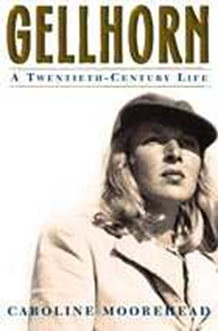

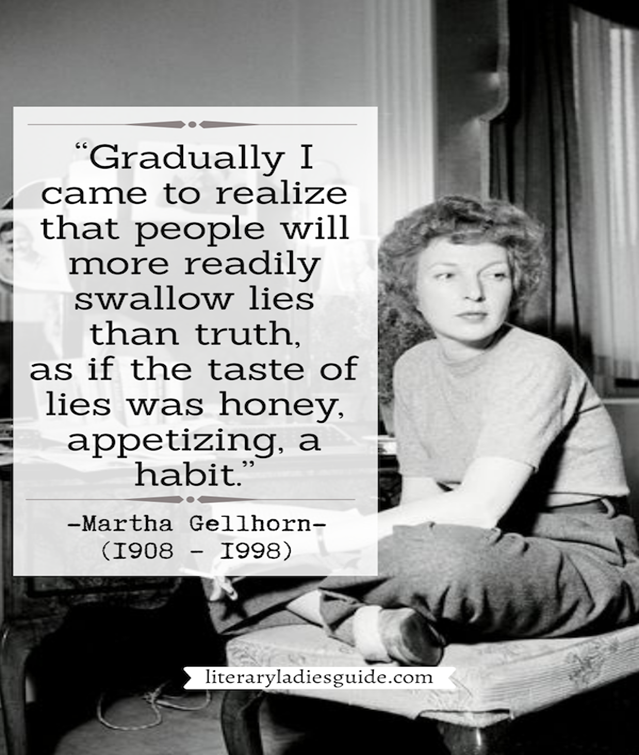






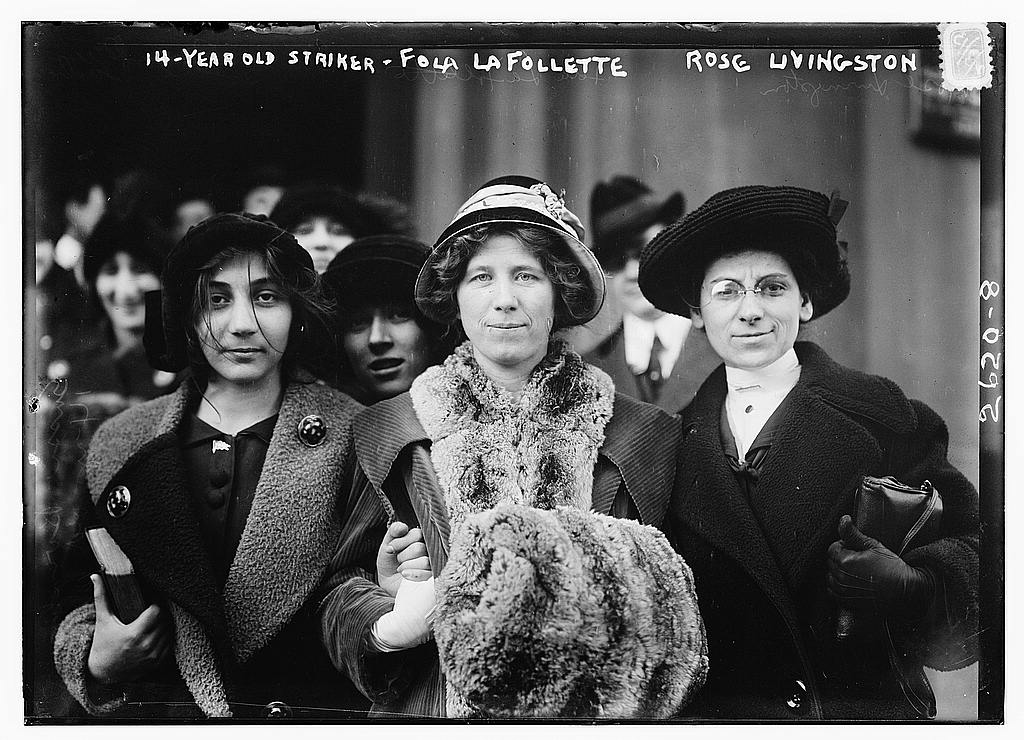









 Cindy Wity

Not Heard, Herded
January 21, 2024 Leave a comment
“We whip the groaning masses … towards a theoretical future happiness, which only we can see.”
– Rubashov, a functionary of the Communist Party in Darkness at Noon by Arthur Koestler
“Rebuilding Trust” – the theme of this year’s World Economic Forum annual meeting in Davos Switzerland.
The mission of the “international” WEF, as the link states, involves “public-private cooperation” by engaging “the foremost political, business, cultural and other leaders of society to shape global, regional and industry agendas”. Sounds rather benign, so far.
To advance its “agendas”, the WEF needs the buy-in of the rich, the powerful, and the celebrated:
As we face an increasingly fractured and polarised world, this year’s World Economic Forum summit will look at ways of rebuilding and strengthening trust amongst global stakeholders.
But what about the trust between the global stakeholders and the common man? This was brought up by the CEO of Allianz.
Leaders speaking the truth would be a great start. But someone saying “I have to invest hundreds of billions in transforming our economy” is a non-starter for the common man who is to foot the bill for WEF “agendas”. And, our well-functioning economy won’t survive DEI, Degrowth and a lot of tinkering.
What I hear this guy saying: “the common man should know how he will be exploited for the cost of future WEF projects as if he was all in in their determination.
Behind the façade of benign WEF is malign WEF. The organization that presents itself as an instrument of deliverance is actually an instrument of totalitarianism. The WEF, while working to “Rebuild Trust” amongst global stakeholders, is intent on destroying trust in anything besides itself – the elites in cahoots.
From The People’s Voice:
The World Economic Forum has declared that anybody who promotes a “different perception of reality” and questions the authority of “experts” should be considered “more dangerous” than a terrorist in 2024. [sounds like Dictator Biden’s J6 speech: “We must be absolutely clear about what is true and what is a lie.”]
The danger for the global elite, according to [WEF managing director Saadia] Zahidi, lies in the fact that non-authorized views are capable of encouraging “different perceptions of reality” which can encourage people to question whether the mainstream media and global elite are telling the truth.
[non-authorized views? Tyranny? Anyone?]
“If some of those views start spilling over into very different perceptions of reality, when it comes to health, when it comes to what people are thinking about education, what people think about specific people, who then becomes the owner of the truth? “
For the WEF to be the sole owner of truth – The party is never wrong! – digital technology has been and will continue to be deployed to monitor content (via smartphones, online social media, and digital devices in your home and car) and circumscribe all aspects of one’s life (via social credit scoring and CBDC) so as to crush “misinformation”.
Did you know that information warriors are engaged in the act of shutting down dissent. . .
Per the Centre for Research on Globalization:
“At the height of the pandemic, the United Nations recruited over 100,000 “digital first responders’ to push the establishment narrative on COVID via social media.
“The revelation actually slipped out in October 2020 during a World Economic Forum podcast called ‘Seeking a cure for the infodemic’, although it is only going viral on Twitter today.
“In the podcast, Melissa Fleming, head of global communications for the United Nations, explains how the COVID pandemic and lockdowns created a “communications crisis” in addition to a public health emergency.
“Fleming acknowledged that in order to fight so-called “misinformation” about the pandemic, the UN tapped up 110,000 people to amplify their messaging across social media.
““So far, we’ve recruited 110,000 information volunteers, and we equip these information volunteers with the kind of knowledge about how misinformation spreads and ask them to serve as kind of ‘digital first-responders’ in those spaces where misinformation travels,” Fleming stated.
“That was nearly 2 years ago. It is not known how many ‘digital first responders’ have been recruited up to this point.”
You can listen to the WEF podcast in question here.
And so it is, the WEF in concert with the UN and the WHO, mankind’s Nemesis triumvirate, will enact its inescapable ‘divine’ retribution against those committing hybris or insolence towards them. For, we are to believe, the world needs the “owners of truth” to shape global, regional and industry agendas to make them instruments of deliverance from all that ails the world, so help themselves.
“Whip the groaning masses towards . . . a theoretical future happiness, which only we[f] can see”?
Not heard, herded?
Tell me. Does one “Rebuild Trust” by censoring voices? Doesn’t rebuilding trust involve hearing each other out? Doesn’t rebuilding trust involve embrace and not exclusion?
Speak out against the WEF madness!
~~~~~
Regarding the quote at the top:
The main character of Darkness at Noon, Nicholas Salmanovitch Rubashov, was at one time a “Commissar of the People” but he fell out of favor. He wasn’t discreet. He talked to his friends concerning his doubts about the effectiveness and correctness of certain Party policies. He is imprisoned and subsequently put on trial.
In Darkness at Noon, The Second Hearing: 7 we learn:
Rubashov is contemplating the suffering of the masses deliberately caused by the Party and its methods of control. He questions these draconian and inhumane actions because they are based only on a theoretical notion of the future. The Party thinks it can see the future it is whipping the masses toward, but in fact it can’t possibly know what future its actions will create.
The Party line is that the suffering of the masses will be compensated by future happiness. But, again, this happiness is purely notional and may never come about. Still the Party imposes pain on the people in the name of this unknown, hypothetical future.
“Darkness at Noon” by Arthur Koestler | A Podcast Summary of Classic Novels (youtube.com)
Interesting to note:
Ray Bradbury’s Fahrenheit 451 was influenced by Darkness at Noon, as Jonathon R. Eller writes in his essay The Story of Fahrenheit 451 in the 60th Anniversary Edition of the book:
Bradbury was initially inspired by Arthur Koestler’s riveting exposé of Stalin’s political terrors and finally motivated to write by the emerging climate of fear during the early years of the Cold War. His hatred of all totalitarian regimes came into sharp focus in his “Day After Tomorrow” essay, published in The Nation just as he was about to finish the final draft of Fahrenheit 451: Consider the similarity of two books—Koestler’s “Darkness at Noon,” laid in our recent past, and George Orwell’s “1984,” set in our immediate future. And here we are, poised between the two, between a dreadful reality and an unformed terror, trying to make such decisions as will avoid the tyranny of the very far right and the tyranny of the very far left, the two of which can often be seen coalescing into a tyranny pure and simple, with no qualifying adjective in front of it at all.
Seems to me, based on the suppression of dissent, the use of legal forums for political purposes – “lawfare”, and the central planning going on, that the Biden regime, the Uniparty, big tech, the WEF, the UN, and the WHO are coalescing into a tyranny pure and simple, with no qualifying adjective in front of it at all.
Biden calling Americans “extremist” for their objections to the above and to the direction their country is being taken is tyranny.
Lawfare seeking to keep Trump off the ballot and from being elected president is not “saving Democracy”. It is the opposite – tyranny.
Arresting J6ers and giving them horrific sentences and prison conditions for a made-up “insurrection” are draconian and inhumane actions. This injustice, highlighted by a J6 show trial, was meant to instill fear and to silence protest in Americans. Do not be silent about the injustice done to J6ers and the tyranny pure and simple it represents.
Ashli Babbitt was murdered that day.
Time for Truth and Accountability J6 Committee (declassified.live)
During COVID, voices opposing “the science” were censored. They were not to be heard. For, people were to be herded in one direction – toward big pharma.
The voice of millions was stolen during the 2020 election. For, “Democracy!” was to be herded in one direction – toward the OBiden regime and tyranny.
Isn’t ironic that while the Left is subverting systems of power in the name of social justice, critical race theory, and whatever so as to be liberated, they are creating a top-down monolithic power that will enslave them.
All one has to do to go along with the coalescing tyranny: remain isolated, remain silent and remain dependent on the state media.
Think local, not global.
~~~~~
Mattias Desmet / Tucker Carlson – MASS FORMATION PSYCHOSIS [Mirror] (youtube.com)
~~~~~
Not everyone is ready to turn over their lives to a totalitarian movement masking itself as an instrument of deliverance from inequality, poverty, sickness, and manufactured crises, e.g., “the climate crisis”.
President of Argentina Javier Milei demolishes socialism in front of a bunch of socialists at the World Economic Forum.
“I’m here to tell you that the western world is in danger and it is endangered because those who are supposed to have to defend the values of the West are co-opted by a vision of the world that inextricably leads to socialism and thereby to poverty.”
“Unfortunately, in recent decades, motivated by some well-meaning individuals willing to help others and others motivated by the wish to belong to a privileged caste.”
“The main leaders of the Western world have abandoned the model of freedom for different versions of what we call collectivism. We are here to tell you that collectivist experiments are never the solution to the problems that afflict the citizens of the world. Rather, they are the root cause.”
Javier Milei slams the west for ‘abandoning freedom for socialism’ in Davos (bitchute.com)
Sweden Scraps Agenda 2030 Goals – The People’s Voice (thepeoplesvoice.tv)
~~~~~
In a society where so many feel unseen and unknown, how do we become the kind of people who deeply see and know those around us? The conflict and division in our society demonstrate the need for people committed to pursuing human connection, even across lines of difference. What can we do – as individuals and in community – that will help us really understand the people in our lives?
In this podcast, David Brooks, discusses his book How to Know a Person: The Art of Seeing Others Deeply and Being Deeply Seen. What do you think?
Episode 67 | How to Know a Person with David Brooks | The Trinity Forum (ttf.org)
~~~~~
DAVOS Watch:
Davos Elite’s Vision Of Your Future | Davos Watch Ep. 1 (youtube.com)
Rate this:
Filed under 2024 Current Events, Political Commentary, totalitarianism, WEF, WHO Tagged with Biden, censorship, Darkness at Noon, Davos, Globalism, Klaus Schwab, totalitarianism, tyranny, World Economic Forum