We, a community of those who confess the lordship of Jesus Christ, met on the Lord’s Day to hear again about the Day of the Lord. For us and for Rome, religion and politics are one. Under Roman rule we live with conflicting sovereignties. We met to hear about the ruler of the kings of earth returning to put things right.
We are a house church in Ephesus, a major seaport and capital city in the Roman province of Asia. The city stands at the entrance of a valley that reaches far into the province with highways to other important cities in the region. As a major trade route, Ephesus connects east and west. It also connects travelers with gods and goddesses.
Our city is renowned for the Greek temple devoted to the goddess of fertility Artemis or Diana. Images of Diana, crafted by local artisans and sold in the market place, are a big business. Likenesses of Nike, the Greek goddess of victory, are seen on coins, sculptures, and architectural reliefs, triumphal arches, and monuments. Nike or Victoria is important to the Roman military. She represents speed, strength, and victory – characteristics of Rome’s overwhelming force.
As I said, our city is governed by Rome. Symbols of Roman power are everywhere you turn: statues, iconography, rituals, festivals. Several cohorts of Roman soldiers are stationed here. Our city is a center for the imperial cult.
There are two temples in the city devoted to the worship of the emperor. Images of the emperor, declaring him to be the “son of god”, are on the coins we trade with. Citizens are obligated to pay homage and offer worship to the ‘divine’ emperor. We do not do this, as there is only one divine Lord and ruler of us all. This defiance puts us in constant tension with our overseers.
Our community in Ephesus began when the apostle Paul passed through on his way to Jerusalem. He left with us Aquila and Priscilla, a couple of Jewish tentmakers he worked with and taught in Corinth. They were to teach us the Way of Jesus. Paul promised to come back if he could.
While Paul was away, a Jew named Apollos came to Ephesus. He was a learned man, with a thorough knowledge of the Scriptures. He spoke with great fervor about Jesus and began to speak boldly in the synagogue. He vigorously refuted his Jewish opponents in public debate, proving from the Scriptures that Jesus was the Messiah.
When Priscilla and Aquila heard Apollos speak, they learned that he only knew of the baptism of John. So, they invited him to their home and explained to him the way of God more adequately.
When Paul returned, he asked if we had been baptized in the Holy Spirit. We said no. We hadn’t heard about the Holy Spirit. He then asked into what we were baptized. We told him John’s baptism. He explained that John baptized with the baptism of repentance, telling the people to believe in the one who was to come after him, that is, in Jesus.
We were then baptized in the name of the Lord Jesus. Then Paul had laid his hands on us and the Holy Spirit came upon us. We spoke in tongues and prophesied. Our hearts were filled with love, joy and peace. We shared the Way of Jesus with the Ephesians.
For three months, Paul preached in the synagogues. He spent three months speaking to the established Jewish community. But the Jews were not willing to accept gentiles into their church community. In spite of that resistance, over the next two years Paul baptized Hellenized Jews and gentile converts.
During his stay in Ephesus, Paul performed many miracles and exorcisms. Many in our city renounced their idolatrous ways. They rid themselves of images of Diana. This caused a riot with the craftsmen who made a steady profit from selling them.
The apostle later wrote a letter to our church. He wrote it from a prison in Rome, as Tychicus told us when he delivered the letter and read it to us.
Paul wrote about our redemption and prayed that we would see the hope that we were called to. God, he said, has made known to us the secret of his purpose just as he wanted to be. It was set it forward in Jesus as a blueprint for when the time was ripe. The plan was to sum up the whole cosmos in King Jesus – everything in heaven and earth.
Not long ago we received a letter from John the Elder. John had been a Jewish high priest” who had officiated in the Jerusalem temple early in his life. Because of his proximity to Jesus, John the Elder was an eyewitness of the events surrounding Jesus – his teaching, his miracles, his death, and his resurrection. John was at Jesus’ crucifixion and given charge over Mary. He eventually brought her with him to Ephesus.
In his pastoral letter for the churches in the province, John contrasted those born of the world and those born of the father, light versus darkness, truth versus falsehood, righteousness versus sin, love of the Father versus love of the world, and the Spirit of God versus the spirit of the antichrist
John warned us about antichrists in our community. He said to test the spirits to see if they are from God as many false prophets have gone out into the world. The test: “every spirit that agrees that Jesus the Messiah has come in the flesh is from God, and every spirit that does not confess Jesus is not from God.” These last, he said, are the spirit of the antichrist. We heard that it was coming, and now it is in our midst.
~~~
As is our habit when we meet and share the Lord’s table, we sing psalms and listen to the teachings of Jesus from the elders. We reread pastoral letters sent to us. We hang on every word, as we are a small community surrounded by every kind of darkness.
We also hear the prophets read. As the Jewish believers have told us, the Day of the Lord that brings judgement on the tyrannical rulers and salvation from tyrannical rule has been in the hearts and minds of God’s people for hundreds of years.
And how could it not be when Joel the prophet wrote “Alas for that day! For the day of the Lord is near; it will come like destruction from the Almighty.”
And Amos the prophet wrote “Woe to you who long for the day of the Lord! Why do you long for the day of the Lord? That day will be darkness, not light.”
And Isaiah the prophet wrote “Enter into the rock and hide in the dust from the terror of the Lord, and from the glory of his majesty. The haughty eyes of people shall be brought low, and the pride of everyone shall be humbled; and the Lord alone will be exalted on that day.”
~~~
Recently, I, Dionysius, an elder in our church, received a long letter from the island of Patmos. It was written by John- not John the Elder but John the prophet. John is a common name. I introduced the letter to those gathered:
“This letter is sent from John, a brother and partner in our suffering. He received a message from He Who Is and Who Was and Who Is to Come – Jesus, the Messiah, the faithful witness, the firstborn from the dead, and ruler of the kings of the earth. It is addressed to the seven churches in Asia.
“Here is the message to our church here in Ephesus:
“These are the words of the one who holds the seven stars in his right hand, and who walks in among the seven golden lampstands. I know what you have done, your hard labor and patience. I know that you cannot tolerate evil people, and that you have tested those who pass themselves off as apostles, but are not, and you have demonstrated them to be frauds. You have patience, and you have put up with a great deal because of my name, and you haven’t grown weary. I do, however, have one thing against you: you have abandoned the love you showed at the beginning. So remember the place from which you have fallen. Repent, and do the works you did at the beginning. If not – if you don’t repent – I will come and remove your lampstand out of its place. You do, though, have this in your favor: you hate what the Nicolaitans are doing, and I hate it too. Let anyone who has an ear listen to what the spirit is saying to the churches. The tree of life stands in God’s paradise, and I will give to anyone who conquers the right to eat from it.”
This word affected us greatly. Our work and endurance of hope in our Lord Jesus Christ was recognized by him. We did as John the Elder said. We tested and then purged from our midst false prophets and antichrists. We took a stand against the Nicolaitans, idolatrous enemies of God.
But our love, born out of the love with which Christ first loved us and gave himself for us, had become a joyless sense of order. We were going through the motions, like those who worship idols. Over time, the truth worth dying for was not going out to the people Christ died for.
When Paul laid hands on us and we received the holy spirit, we were passionate about the love that brought us in, making us sons and daughters of God. We were passionate about sharing this love with the Ephesians.
I reminded everyone that the apostle Paul had ended his letter to us with “Grace be with all who love our Lord, King Jesus, with a love that never dies!”
Had our waiting and watching, and wanting a reckoning of those who claim ultimate power over us turned us inward and away from the love of Christ for the world?
We needed to reorient our hearts, minds, soul, desires, actions, and pursuits toward our first love, a love not defined by our circumstances but by the love that gave itself up for the world on the cross. If we don’t, our lampstand, our witness, will be removed and we will be like all the other religious practices around us.
As I continued to read the letter, Jewish believers in our community spoke of Daniel’s apocalypse and the coming of “one like the son of man.” Here, John wrote of “one like the son of man” standing in the middle of the seven lampstands and speaking to him.
The letter went on to reveal, as prophecy and apocalypse, a cosmic vision of “what soon must take place.”
With mythical imagery, things on earth – things well known to us – and things in heaven were interacting. What happened on earth affected things in heaven. What happened in heaven affected things on earth.
Imaginations took off as we recognized forces fighting against the true God and his kingdom on earth.
The dragon or serpent we understood as the primeval, supernatural source of all opposition to God. The beast or sea-monster was a deified Roman Emperor using military and political power for tyranny and economic exploitation. The second beast or earth-monster was the promoter of the imperial cult. It set up the image of the emperor to be worshipped and enforced its worship.
Babylon is the city of Rome exploiting the world for economic prosperity. The woman giving birth is Israel. The number of Nero’s name was 666.
The letter also provided counter-images to what we see daily in Ephesus.
God’s holiness is depicted with flashes of lightening, rumbling, peals of thunder, a violent earthquake, huge hailstones, and glory beyond all glory. There are scenes of a tree of life, a glassy sea, new creation, and the New Jerusalem.
Before the return of Christ and the final establishment of His eternal kingdom on earth, the long-prophesied Day of the Lord will bring judgements upon those -the living and the dead -who’ve turned away from God to worship the Beast.
With Seven seals, Seven trumpets, and Seven bowls, God’s wrath is revealed against all those in heaven and on earth who will not acknowledge him as the Sovereign God.
The letter began with Seven golden lampstands. They are the seven churches in Asia – bearers of light in our dark world.
Our prophetic mission here in Ephesus is to witness to the Ephesians and to the world that passes through our city before the terrible Day of the Lord, before “what soon must take place.”
Our witness is to bring about repentance and the conversion of all nations to the worship of the true God. So, we must endure all hardship and persevere to give witness to the truth worth dying for with the same love with which Christ loved us and gave himself up for us as a fragrant offering and sacrifice to God. We must not turn inward.
~~~~~
Eternal Father, strong to save
Eternal Father, strong to save, whose arm hath bound the restless wave, who bidd’st the mighty ocean deep its own appointed limits keep: O hear us when we cry to thee for those in peril on the sea.
O Christ, whose voice the waters heard and hushed their raging at thy word, who walkedst on the foaming deep, and calm amid the storm didst sleep; O hear us when we cry to thee for those in peril on the sea.
Most Holy Spirit, who didst brood upon the chaos dark and rude, and bid its angry tumult cease, and give, for wild confusion, peace: O hear us when we cry to thee for those in peril on the sea.
O Trinity of love and power, our brethren shield in danger’s hour; from rock and tempest, fire and foe, protect them wheresoe’er they go; thus evermore shall rise to thee glad hymns of praise from land and sea.
~~~~~
Marxism, Socialism, and Communism: Cultural Marxism
On this episode of The Hillsdale College Online Courses Podcast, Jeremiah and Juan discuss Communism’s transformation into a popular political position in the United States.
In “Marxism, Socialism, and Communism,” professors of history, politics, and economics look at Marx’s life and writings, the misery and brutality in the Soviet Union, the atrocities of communist China, and the proliferation of Cultural Marxism in America. They explore how many ideas animating American politics today are rooted in Marxism, and yet how they differ from Marx’s thought. By taking Marx, Lenin, Stalin, Mao, and the Frankfurt School seriously, we can see the injustice and evil inherent in all strands of Marxism. We also better understand the critiques of communism made by Mises, Hayek, and Solzhenitsyn. We are, therefore, better equipped to defeat it.
Marxism, Socialism, and Communism: Solzhenitsyn, Mises, and Hayek
What has happened to our ability to sit in discomfort? What has happened to our stamina for life, especially life when it gets hard?
As an employer of more than 350 people over the past decade, I’ve seen a shift in the younger generation. Many don’t seem to know how to tolerate even mild discomfort. There’s a deep urge to escape anything that doesn’t feel good—whether through substances, screens, sugar, or distractions. And I can’t help but trace this trend back to childhood: when we hand kids a screen so we can finish dinner in peace, when we give them sugar to soothe a meltdown, when we teach them—without ever saying it out loud—that the goal is to feel good all the time.
We’ve created a culture that treats discomfort like a pathology. If something is hard, we assume it must be wrong. But that’s not how life works.
Pain, struggle, and uncertainty are baked into the human experience. Maybe it’s not discomfort that’s the problem—but our inability to face it.
Yes, we should limit screen time. Yes, we should cut back on sugar. But more importantly, we need to stop teaching our children that discomfort is something to be avoided at all costs. It’s okay to be bored. It’s okay to be hot, or tired, or challenged. Just because something feels bad doesn’t mean it is bad. Most worthwhile things—motherhood, entrepreneurship, marriage, community, growth—will feel hard at some point. That’s not a flaw. That’s the path.
Are we raising a generation of escape artists, or are we raising people who can stay present through difficulty, learn from it, and grow?
Brain Rot: What Screens Are Doing to Our Minds (2)
In this second podcast Dr. Karyne Messina, a psychologist, psychoanalyst, author and NBN host discusses the problems the emerge when children watch screens and digital devices too much. Dr. Messina talked about this topic with Dr. Harry Gill, a well-known psychiatrist who also has a PhD. in neuroscience. In this episode the focus was on Erik Eriksson’s 5th stage of development, Industry versus Inferiority. They discussed one of the greatest difficulties they see in their young patients who contend with way too much screen time.
Brain Rot: What Screens Are Doing to Our Minds (2)
Ephesus, a major seaport on the eastern Mediterranean and the capital of a Roman province in Asia, was a vibrant hub of commerce, and a center of Roman rule and the Roman imperial cult.
Centuries before becoming a political capital, Ephesus was a center of religious activity. Communities of Jesus-followers living in the Greek city of Ephesus at the end of the first century AD would be confronted daily with political and cultic imagery. The city was renowned for its devotion to various gods and goddesses.
Artemis
Christians in that Greco-Roman setting would be well aware of one of the most prominent goddesses: Artemis. Her temple was famous for its great size and for the magnificent works of art that adorned it (See video below.)
The Greek goddess Artemis was worshipped as the goddess of hunting, wild animals, and fertility. Her Roman counterpart was Diana. Goddess Diana shared similar aspects of deity with Artemis. She was worshipped as a benefactress of the countryside and nature, hunters, wildlife, childbirth, crossroads, the night, and the Moon (See video below.)
During his second missionary journey to Ephesus, the Apostle Paul caused a big stir with the Artemis image industry (c. A.D. 52) (Acts 18:19).
The Lady of Ephesus no 718 1st century AD Ephesus Archaeological Museum
“Around that time there was a major disturbance because of the Way. There was a silversmith called Demetrius who made silver statues of Artemis, which brought the workmen a tidy income. He got them all together, along with other workers in the same business.
“Gentlemen,” he began. “You know that the reason we are doing rather well for ourselves is quite simply this business of ours. And now you see, and hear, that this fellow Paul is going around not only Ephesus but pretty well the whole of Asia, persuading the masses to change their way of life, telling them that gods made with hands are not gods after all! This not only threatens to bring our business into disrepute, but it looks as if it might make people disregard the temple of the great goddess Artemis. Then she – and, after all, the whole of Asia, indeed the whole world worships her! – she might lose her great majesty.” (Acts 19:23-28)
The temple of Artemis was one of the wonders of the world. Its great size and lavish decorations were a major attraction for the many pilgrims and tourists who came to Ephesus. Their Artemis image purchases provided the guild of silversmiths the coin to produce more images and to sustain their livelihoods. After listening to Demetrius, “the whole city was filled with uproar” and people shouted “Great is Ephesian Artemis!”
We read in Acts 19 that the town clerk quieted the crowd. A riot would bring the Roman army down on them. He said, “Citizens of Ephesus, who is there who does not know that the city of the Ephesians is the temple keeper of the great Artemis and of the statue that fell from heaven?”
Nike
Jesus-followers living in Ephesus would also be conscious of ubiquitous images of Nike, a Greek goddess who personified Victory. That Muse website has more about Nike:
“. . .she was almost always represented in Greek art as a beautiful, winged woman. Her main role in life was to fly around battlefields, rewarding victors. The winning soldiers received a wreath of laurel leaves, symbolizing fame and glory. But she also visited and crowned outstanding athletes and heroes.”
In Roman mythology Nike is called Victoria. She is depicted as holding a palm leaf with her right hand while carrying a laurel wreath on the other. She was worshipped by the Roman army as personifying speed, strength, and victory.
Polytheism
The citizens of cosmopolitan Ephesus were polytheistic. It was common for them to add new gods to their personal pantheon. Like with Artemis (Diana) and Nike (Victoria), different gods had different roles.
Polytheism was not a religion with written scriptures. People knew the multiplicity of Greco-Roman deities by their images and myths – their form of theology. Seeing their gods was a way to believe and to practice their contractual religion (do ut des, “I give that you might give”). Offerings and sacrifices were offered to the gods in return for certain favors.
Contrary to the explicit polytheism all around them – pagan temples, pagan priests, pagan priestesses, pagan worshippers and pagan idols – Christians, along with the Jews, were monotheistic. Ephesians tolerated Christians who worshipped a new and different god (except as noted above with Paul) as there were many gods divided up among many peoples. And it seems, at that time, that the Roman government did not yet have a policy of persecution of the Christians; official action was based on the need to maintain good order, not on religious hostility.
Political and Cultic Imagery
Citizens of this capital of the Roman Empire in Asia Minor would also celebrate and worship deified Emperors who claimed being a divine son of god. Julius Caesar, Augustus, Tiberius, and subsequent Roman emperors were regularly referred to as “son of god” (divi filius). Coins were struck with the imperial image on one side and “son of god” on the other.
The Roman Empire, claiming divine authority on earth, spread its political influence in religious terms using monuments, iconography, myths, and Imperial cult rituals.
Symbolizing victory, Victoria’s (nike’s) image was vital to the Roman military. Her likeness, with crowns, laurel wreaths, or palm branches as victory emblems, was seen on coins, sculptures, and architectural reliefs, triumphal arches, and monuments.
Worship of Victoria was also thought to bring good fortune and help with politics, business, and personal undertakings.
The goddess Artemis had been worshiped for centuries. Her great temple in Ephesus (one of the seven wonders of the world) and the cult of Ephesian Artemis was vitally important to the citizens, as notes N.L. Gill in his post The Cult Statue of Artemis of Ephesus:
“The Ephesians’ goddess was their protector, a goddess of the polis (‘political’), and more. The Ephesians’ history and fate were intertwined with hers, so they raised the funds needed to rebuild their temple and replace their statue of the Ephesian Artemis.”
The Dispatch
Into this political and cultic context at the end of the first century AD, a circular letter was sent around to Jesus-follower communities in and around Ephesus.
1 John is a pastoral letter that presents a no-nonsense counter-cultural narrative. It is full of contrasts: those born of the world and those born of the father, light vs. darkness, truth vs. falsehood, righteousness vs. sin, love of the Father vs. love of the world, and the Spirit of God vs. the spirit of the Antichrist.
The letter was penned by an eyewitness of gospel events and one who had seen way beyond the images and idols and imperial power of Rome. 1 John is a rebuke to the claims of the Antimessiahs and to the appeal of a pagan culture. It also provided spiritual reinforcement for the letter’s recipients.
1 John was most likely written by John the Elder (and not John the son of Zebedee and one of the Twelve; more below) around 90 AD during the reign of Domitian (81-96 A.D.). (Domitian believed in the divine nature of his rule, aligning himself with the lineage of the first Roman emperor Augustus. He saw himself as an absolute ruler and took pride in being called master or god: “dominus et deus.”)
John opens his letter, not with the typical (“grace and peace”) greeting, but with an authoritative “we” reassurance of his and other’s experience of Jesus, the son of God. He speaks in terms of visual, aural, and physical contact with the Messiah. This is crucial for what he writes against the “Antimessiahs”.
“That which was from the beginning, which we have heard, which we have seen with our eyes, which we have gazed at, and our hands have handled – concerning the Word of Life!” That life was displayed, and we have seen it, and bear witness, and we announce to you the life of God’s coming age, which was with the father and was displayed to us. That which we have seen and heard we announce to you too, so that you also may have fellowship with us. And our fellowship is with the father, and with his son Jesus the Messiah. We are writing these things so that our joy may be complete.” (1 John 1: 1-4)
John the Elder closes the circle of the fellowship of the joy bound by linking those (“we”) who were physically present with the Messiah with the Ephesian Christians who heard the gospel message and believed that Jesus is the Messiah, so that “our joy may be complete.”
(NB: The “joy” talked about here is not the DNC slogan “Joy”– a cover for the Harris cackle. Rather, John’s “our joy” completed would be the satisfaction of a deep yearning by the “we” for the readers to believe that Jesus is the son of God and the Messiah and for them to be included in the dancing embrace of the father, son and spirit.)
John then writes in terms of the associative “we” about what it means for followers of Jesus to have fellowship with him: we are not to deceive ourselves about our sin, we keep the Lord’s commandments and we show rightly ordered love. (1 John 1: 6 – 2:11).
Conflict Within and Without
The letter’s opening brings to the fore one of the main purposes of the letter: to reaffirm that Jesus, the son of God and the Christ, (mentioned some 24 times in the letter) did have a real body and not, as some were saying, that Jesus only seemed to be human, and that his human form was an illusion (Docetism). This thinking had come into Ephesian churches.
“Docetism was a doctrine in the early years of the Christian church that claimed that Jesus didn’t have a physical body. The name comes from the Greek dókēsis which means “to seem.” It refers to the belief that Jesus only seemed to have a physical body. . .
“It was understood that mind/spirit was good and body was bad. Since Jesus is good, he must be all spirit and not body at all. In modern language, Jesus was almost a hologram. He looked perfectly human but underneath the image, there was no muscle or bone.”
Those worshipping images would not believe that a god would come down and dwell in the flesh. They believed the gods stayed up and away from humans and did their own thing. Intellectual sorts, who were anti-incarnation, unethical, and loveless Gnostics, were deceiving Ephesian Christians (1 John 2:26).
John presented truth tests to discern whether they were false teachers. Anyone who denied that Jesus is the Messiah was not from God (1 John 4:2-3). They were a “liar” and an “Antimessiah” (1 John 2:22).
He writes about “the spirit of truth” and the spirit of error (1 John 4:6). And, that “many false prophets have gone out into the world” (1 John 4:1). “They went out from among us, but they were not really of our number” (1 John 2:19)
Denying that Jesus was the Messiah, the Antimessiahs split off from the church community. They didn’t accept Scripture’s references about Jesus or the testimony of eyewitnesses. (They were revisionist historians who, like many in Progressive churches today, homed in on his sayings. They think of Jesus in terms of being a fellow traveler who imparted esoteric truths.) Whatever love or joy the Antimessiahs had went with them when they left the church.
In his second letter, John echoes this warning: “Many deceivers, you see, have gone out into the world. These are people who do not admit that Jesus is the Messiah has come in the flesh. Such a person is the Deceiver – the Antimessiah!” (2 John 2:7)
(Ongoing conflict: Earlier (c. A.D. 52), Priscilla and Aquila, who had come to Ephesus with Paul, instructed a Jew named Apollos in the way of the Lord. Apollos then “vigorously refuted his Jewish opponents in public debate, proving from the Scriptures that Jesus was the Messiah. (Acts 18:28))
Beside the conflict within the local churches, there was the ever-present Roman Empire that expected worship of the emperor. John writing over and over that Jesus is the son of God (and not the emperor) put the Christians in direct opposition to Rome. But it seems that, at that time, Rome was somewhat lax about forcing the Jews and Christians to burn incense for the emperor. If these two groups did disturb Rome’s Pax Romana, they would be dealt with.
(Calling Jesus “Lord” and having a “kingdom of God” message also conflicted with the Roman empire’s ‘divine’ prerogatives.)
Living as a Conquering Contradiction
As mentioned above, imperial Rome spread political propaganda through religion. And throughout Ephesus there would be visual representations of Roman conquest and power: grand architecture and monuments, centurions and soldiers all around, and the conquering, overcoming, prevailing, subduing, obtaining victory, Nike/Victoria images around the city and on coins.
Perhaps, with all of these images in mind, John the Elder writes:
“. . . everything fathered by God conquers the world. This is the victory (nike, νίκη) that conquers the world: our faith. (1 John 5:4):
Conquering Attitude
We, the “fathered by God” no longer continue sinning (1 John 3: 9; 5:18).
Because we are “fathered by God” we understand that we are God’s children (1 John 3: 1) and that loving one another is a character trait of all who know the father (1 John 4:7).
And because we are “fathered by God” and “God is love” (1 John 4:7-12), we as his children need not live in fear like the pagans who look to capricious gods and superstitious practices and the Roman state for understanding and favor. (Sounds like Progressives today.)
We understand that “the one in you is greater than the one who is in the world” (the Antimessiah) (1 John 4:4).
We believe that Jesus the Messiah has been fathered by God (1 John 5: 1), (The center of Christianity is the Incarnation of Jesus, God becoming flesh and dwelling among humanity. John railed against the Antimessiahs because he and others had witnessed the flesh and blood presence and power of the true Messiah. Jesus wasn’t some esoteric figure floating in the air. He wasn’t a statue or icon of a god. Jesus, son of God, Messiah, was “displayed” to John and others as a new way of being human.)
We understand that “we are from God, and the whole world is under the power of evil one” (1 John 5:19) (As Paul wrote to the Ephesian church some 30-40 years before:
“For our struggle is not against flesh and blood, but against the rulers, against the authorities, against the powers of this dark world and against the spiritual forces of evil in the heavenly realms.” – Ephesians 6:12)
As the letter comes to a close, John reemphasizes his message:
“We know that the son of God has come and given us understanding so that we know the truth. And we are in the truth, in his son Jesus the Messiah. This is the true God; this is the life of the age to come. (1 John 5:20-21).
The letter of 1 John ends with a succinct pastoral exhortation based on what was said at the beginning of the letter about the reality of what John and others had witnessed: “keep yourself from idols.”
Christians are not to get involved with unreality. They are not to collude with evil. Early Christians believed that idol worship in its various forms was used by demonic forces. The Apostle Paul in 1 Corinthians 10:21–22:
“You cannot drink the cup of the Lord and the cup of demons. You cannot partake of the table of the Lord and the table of demons. Or are we provoking the Lord to jealousy? Are we stronger than he?”
Those of us born of the father live in the tension of contrasts: light vs. dark, truth vs. falsehood, righteousness vs. sin, love of the Father vs. love of the world, and the Spirit of God vs. the spirit of the Antimessiahs. We are to overcome that tension with the reality of Jesus, son of God and Messiah.
I see tremendous forces (DEI, ESG, LGBTQ, Critical Race theory, WEF, WHO, Globalism, etc.) at work to conform everyone into a monolithic unity of enforced pluralism subject to one Satanic Beast. Those who confess loyalty to the Beast will find it easier to get a job, move up, gain tenure and more. Those who don’t will be called “weird” and sacrificed to the Beast.
In the milieu of this sociocultural pluralism, it would be quite easy to glide into a religious pluralism and end up worshipping the vaunted images of the world and rage against those who don’t – “Great is Ephesian Artemis!”
And, with the multiplicity of political and cultic images generated daily to influence behavior, it would be quite easy to glide into a religious pluralism so as to be accepted, to have “likes” and clicks and to avoid the pressure being applied by the culture. One would thus end up having a form of godliness (virtue signaling) but denying its power (2 Timothy 3:5). Neither John the Elder nor I want anything to do with such people.
For those who question the uniqueness or claims of Christian faith, John’s letter with truth tests would be in order.
Not longer just image bearers of the One True God, we are more: overcoming image bearers of Jesus, the son of God, Messiah, and Lord.
~~~~
This circular pastoral letter was most likely written by John the Elder and not John the son of Zebedee, one of the Twelve. John was from an aristocratic family in Jerusalem and a member of the High Priest’s family.
According to Polycrates, bishop of Ephesus late in the second century, John (the Elder), “who leaned back on the Lord’s breast,” was a (Jewish high) “priest” (who had officiated in the Jerusalem temple early in his life), a “witness”, and a “teacher” (Eusebius, Hist. Eccl. 5.24.2-7). (cf. Acts 4:6 & John 18:15, John’s record of Jesus’ high priestly intercessory prayer in John 17, and his courtyard access John 18:15).
John the Elder was most likely the Beloved disciple who was mentioned in John 21: 20-23. Because of his proximity to Jesus, John the Elder was an eyewitness of the events of gospel history. He was at Jesus’ crucifixion and given charge over Mary. He eventually brought her with him to Ephesus.
“When Jesus saw his mother there, and the disciple whom he loved standing nearby, he said to her, ‘Woman, here is your son,’ and to the disciple, ‘Here is your mother.’ From that time on, this disciple took her into his home.” (John 19:26-27)
Several years younger than the Twelve Apostles, John the Elder survived most of them. It seems that he lived into the reign of Trajan (AD 98-117) as prominent Christian teacher in Asia. (We don’t know why he is called John the Elder. “Elder” may refer to John’s old age (Likely 80-90 years old at the end of the first century) more than an honorific. He writes to his “little children” in his letters.
John the Elder most likely wrote the Gospel of John and the three Johannine letters – 1, 2 & 3 John.
Within days, global elitists will try to put world government on steroids. The perpetrators don’t want us to know it, but that’s the purpose of the upcoming “Summit of the Future” and the accord it is supposed to adopt, dubbed the “Pact for the Future.”
Rather than openly doing so by voting to revise the United Nations Charter, the idea is to launch a “process” to be conducted largely behind closed doors. The UN’s Secretary-General and former president of the Socialist International, Antonio Guterres, however, has let slip that process’ goal – namely, granting him authority unilaterally to declare and dictate the responses to emergencies caused by any of a number of so-called “complex global shocks.”
I get the sense that there are Christians who want to hurry off to heaven. They believe that there will be a rapture and they will be taken away from the trouble on earth and therefore voting doesn’t matter. Understand, there will be NO rapture. That is a misinterpretation of Scripture. Go vote!!
In late August officials [of China’s Communist Party] published regulations for dealing with them [the corrupt, criminal and disloyal], too. The aim is to reform or expel people who show a “lack of revolutionary spirit” . . .
Religious members are seen as another problem. Newbies must swear that they are atheist. But many still harbour beliefs in the supernatural. . .According to the regulations, religious folk should be given a chance to renounce their beliefs—and kicked out if they do not.
Looking back, how many of you, during the COVID planned-demic, wore a mask, or worse, received the experimental DNA-altering jab because you feared losing access to someplace or someone, or losing your job? Authoritarians, and their media handmaids, made a point of telling you to fall in line and fear repercussions. Authoritarians control people with narratives that are to be taken as gospel.
If you and I did not practice the gospel of safetyism – a means to scare everyone into conformity under authoritarian rule – then you and I were portrayed as heartless and extremists.
Let us not forget. The abusive, manipulative and corrosive nature of authoritarianism has been evidenced the past two years. Our lives, families, and communities have incurred massive blows from the hammer of unconstrained authority. Liberty – freedom of thought, word and association – be damned!
It has been and continues to be the authoritarians who see themselves as the most intellectually and morally advanced people. They have no issue telling others what to do and making them do so with jackboot mandates. They speak in terms of power to truth.
One ubiquitous televised authority told you that he was “science” – period! Based on this pronouncement, you and I were to immediately end critical thinking and questioning about COVID “science”. We were to submit to the apotheosis of “the science”.
Several authorities used manipulative ways to bring about conformity to their will: This is a pandemic of the unvaccinated!
Now, one authority figure is saying “I think we all agree the most important thing going on in the world right now is the war in Ukraine”. Really?! Ukraine’s border is more important than the massive invasion happening at our own southern border? What this authority figure is really saying is that the military-industrial complex must be served first before the concerns of Americans.
The last two years have also shown us that authoritarians demand that the bio-industrial complex be served at the expense of freedom and human life.
You see, for the military-industrial complex to financially survive it must produce and sell weaponry . . . and war. For the bio-medical complex to financially survive it must mass produce new serums and pandemics to sell.
Repurposed drugs like Hydroxychloroquine and Ivermectin are not money makers. Of course, the politicians and media who support the military complex and/or the bio-medical complex and not the repurposed drugs are rewarded.
There is no question in my mind that very significant powerbrokers around the world have either planned to take advantage of the next pandemic or created the pandemic. – Dr. Michael Yeadon, ex-Pfizer VP
Global authoritarians are now telling us to believe in climate change and to be prepared to pay a price to fix it. Yet, scientists say there is no climate emergency.
Those who have read my blog since 2020 know that I haven’t accept COVID authority. I did not get the jab and I will not wear a mask. I have questioned everything that comes from the CDC and on TV. I have witnessed true science being denied so that authoritarians can have their way.
I have linked to hundreds of commentaries that question the validity of COVID “science” via each post’s “Informed Dissent”. I question what is posited as “the science” and gospel truth. I question authority and take on challenges.
What follows is a common authority challenge presented to Christians from the pulpit and elsewhere, as you will see:
The conversation that follows started with a recent social media post that included a video.
The post: What’s your authority – God’s Word or man’s word? The age of the earth issue is not a science VS faith or an interpretation issue, it’s actually an authority issue. And that issue affects the Gospel. Find out how in this episode of Creation Basics.
Does the Bible support evolution or billions of years? Whatever your final authority is will determine how you answer this question.
The video’s premise: “adding billions of years into the Bible destroys the concept of Biblical authority”.
Underlying premises: science is secular thinking; empirical science doesn’t apply to creation origin; “If the Bible isn’t true to the facts of the real world, about the age of the earth, then there is really no reason to trust it . . . “; (and Bible skeptics and atheists might get the upper hand).
Per the video’s premise, I’m a Biblical authority denier for “believing the secular geologic time scale”. To this and to the brazen and distorted underlying premises of Biblical authority and the gospel as compromised by science, I had to write a reply.
My comment to the post:
Wow! This video is messed up. This way of thinking is messed. up. Authority issue? Pitting manmade “Biblical authority” against manmade science authority? What foolishness. The physical world existed long before God gave the cosmos function and order. Genesis tells us that God set up the existing cosmos to be his temple within 7 literal days. Genesis 1 -11 should be understood as being written to ancient Near East people. The Genesis account made sense, in temple terms, to these readers. They understood Genesis as describing functional origins rather than accounts of material origins. Genesis begins with the functional origins of an existing universe that science confirms came into existence billions of years before. Genesis is theological history and science the physical history. I see no conflict.
*****
Marq, a proponent of Answers In Genesis message, replied to my comments:
If the Bible is fantasy than how did it know that there were springs in the oceans, Genesis 7&8?
BTW, God created the earth the seas and all that is in them in six twenty-four-hour days. Although it could be six twenty-hour days.
BTW, if you’d like to refute the Bible try proving abiogenesis. Omne vivum ex vivo. If you can give us the formula to prove abiogenesis, maybe we could then entertain the idea of evolution being plausible.
You see no conflict? Jesus said it was real history. There is your conflict. I can’t trust in someone who is either a liar or is delusional. Maybe you don’t have that problem, but I do.
*****
My reply to Marq:
I didn’t say the Bible is fantasy. The OT was written for us but it wasn’t written to us. It was written to ancient Israel who understood Genesis in temple creation terms- functional terms – and not in physical material creation terms. You are forcing Scripture – taking it out of context – to have it say what you want it to say. I grew up with the same reductionist thinking. I went to Moody Bible Institute. I was taught that Genesis was literal – but Gen. 1-11 is not literal. God used true mythology to give ancient Israel an explanation of origins and operations. BTW: God gave us two Scriptures – the Bible and science. We can learn from both scripture and science while not forcing the other to have it mean something that is not true. The study of scripture and science must include history, ancient history. We must look at all of the evidence God laid out. The people in the ancient world understood things differently than we do. Genesis was written to them so we must read Genesis in their context of language, culture and meaning. which included mythology to explain things. Study the ancient history, the language and culture. God didn’t give us a Sunday School color-in-the-lines paper to take home. He gave us a world to explore.
*****
Marq replied:
I know what you meant, as I have debated theistic evolutionists. I’m saying we have proof of the literal interpretation.
We know from science that springs actually exist and it was written in Genesis 7&8, you know that part you said is mythology. It wasn’t until 1971 that science proved it and it was only postulated by science in the 1960’s.
So, your mythology takes [sic] crumbles into reality. Also, the migration of people in Genesis eleven is also proven by archeology and now it is shown by the Y-chromosome DNA again sowing [sic] it’s not mythology.
It has been proven repeatedly that life only begets life, omne vivum ex vivo, just as Genesis said. Remember paganism has always believed the universe created itself.
Finally, as I said Jesus would be a liar because he taught that Genesis was true history as did the apostle Paul to Areopagus and not an allegory.
As Jesus said, “John 3:12 If when I tell you earthly things, ye believe not, how should ye believe, If I shall tell you of heavenly things?”
Do you believe Jesus raised Himself from the dead? Do you believe He walked on water? Do you believe He raised Lazarus from the dead? If you do, what scientific proof do you have of those events?
*****
My reply to Marq:
You have provided no proof of a literal interpretation. You provided inuendo, circular reasoning and crumbling logic.
You say that science backs up some things in Scripture and therefore proves Genesis 1-11 to be literal and not myth. Based on that you tell me that since science cannot prove other things in scripture therefore scripture trumps science and myth. Let’s talk mythology.
Modern man views mythology as being false. C.S. Lewis, for one, thought otherwise. God, the great storyteller, revealed Himself through different mythologies throughout history. The core ideas behind the myths were “literally” fulfilled in the first century via Jesus of Nazareth’s incarnation, death, and resurrection.
Myths as false?
Jesus spoke to the multitudes in myth-like parables. These tales were not literal historic events. These were allegorical, metaphorical, and symbolic stories that were spoken in contemporary terms. The parables conveyed truth to the listener.
God gave us science so we could explore and understand the physical world that he created. Science is not a discipline that explains things metaphysically just as theology is not a discipline that explains creation in physical terms. Science is NOT in conflict with scripture – except when secularists and fundamentalists make it so. God gave us both science AND scripture to reveal Himself to us. The material world is incredibly important to God – the word became flesh.
Genesis 1-11 is the true myth written to ancient Israel living within a pagan culture. It wasn’t written specifically to a Sunday school class in the ‘50s that had been taught to hate Darwin and evolutionary creation.
Ancient cultures understood all that is not in science-based terms but in metaphysical-based terms. The saw their world as controlled by gods. They had temples to these gods. The temples were thought of as the cosmos. In their way of thinking, the creation of a temple is the creation of the cosmos.
The apostle Paul addressed the god/temple way of thinking during his speech to the Athenians at the Areopagus. He tells them about the “Unknown God” who created the world. He goes on to say that this “Unknown God” does not live in a temple made by human hands. God created a temple out of the cosmos so that people could seek him out and know him.
Genesis 1 is an account of God inaugurating order (out of the existing chaos) and functionality for his cosmic temple. Genesis 1& 2 is not an account of material origins and material preparations for his temple. Genesis 1 & 2 should be understood as a temple-based explanation of creation.
Over 6–24-hour days God ordered the existing chaos (after the Big Bang) and gave it functions. Heaven and earth, sea and dry land, light and dark, night and day, seedtime and harvest, seasons . . . On the seventh day God “rested” in his cosmic temple and oversaw his creation.
The English word “created” used for Genesis 1:1 translation does not help our understanding. The Hebrew word (bara), in its ancient context, does not imply God creating the universe ex nihilo and it does not imply a function-giving interpretation. Within its context in scripture (about 50x) it does seem that ancient Israel viewed things in functional terms rather than material terms.
*****
Marq’s response:
Nice try! But the Y-chromosome and as I said the springs in the seas in ch. 7,8, and 11 shows it is not an allegory.
Just as omne vivum ex vivo destroys any concept of evolution. There is zero evidence of evolution or your logic. Evolution uses circular reasoning which creationists exposed, because evos use fossils to date the rocks and rocks to date the fossils based on their belief of the rock strata presupposition.
Even SCOTUS when evolutionists brought suit to keep creationism out of school could not confirm evolution so SCOTUS said creationism could not be taught because of separation of church and state.
When our own school board in Columbus, Ohio was allowing creationism to be taught alongside evolution in 1976 evolutionists showed up arguing against it saying separation of church and state. Again, they did not present facts because there are none. I was present at the meeting and as always creationists brought facts.
Evolutonists are scared of facts as there are none that a reasonable person would consider. As Richard Dawkins found out when he debated A. E. Wilder-Smith at Oxford University. Wilder-Smith and another creationist of whom I can’t recall his name was able to persuade quite a few people at this bastion of evolutionary dogma.
After it was over Dawkins refused to openly debate and warned other evolutionists not to debate openly.
Instead of engaging me on evidence you too resort to innuendos. As I said if God was just using parables than how did springs (fountains) end up being real? How did Genesis 11 and the migration of Shem, Ham, and Japheth turn out to be true? or omne vivum ex vivo?
You, and your evo friends, are the ones hiding behind mythology.
Let’s settle this argument. Give me the mathematical formula that proves evolution. One that can be demonstrated time and time again.
Stop hiding behind mythology and it takes millions of years to hide behind the fact that you have no answers. Evolution is only in fairy tale books fit for little children.
Genesis 7:11 In the six hundredth year of Noah’s life, in the second month, the seventeenth day of the month, in the same day WERE ALL THE FOUNTAINS OF THE GREAT DEEP WERE BROKEN UP, and the windows of heaven were opened,
Job 38:16 “Have you entered into the springs of the sea, or walked in the recesses of the deep?
Matthew 24:37 For as were the days of Noah, so will be the coming of the Son of Man. 38 For as in those days before the flood they were eating and drinking, marrying and giving in marriage, until the day when Noah entered the ark, 39 and they were unaware until the flood came and swept them all away, so will be the coming of the Son of Man.
May God open your eyes.
*****
My reply:
Your words: “the Y-chromosome and as I said the springs in the seas in ch. 7,8, and 11 shows it is not an allegory.” How?!? That literal things existed that science later discovered and therefore Genesis 1-11 could not be a myth explaining existence in temple-making terms to ancient people? So, according to you, everything in Genesis 1-11 must be considered literal because things existed? Your logic makes no sense.
Here’s another example of the same illogic:
“As I said if God was just using parables than how did springs (fountains) end up being real?”
By the same logic, learning some 2000 years after Jesus told the parable of the Good Samaritan that there were actual Samaritans and Levites in Jesus’ time would mean that what Jesus said in parable format should be discounted as false and not literal authoritative. NB: their literal existence didn’t refute the use of parable by Jesus to speak (the unseen) kingdom truths.
Does everything have to be literal to be proven true? If so, that is a sad commentary on modern man. If so, that supposition also shows that left brain literal thinking has taken over.
Back on track, we are talking about whether Genesis 1-11 is a myth explaining to Israel the setup of a cosmic temple or Genesis as a literal science explanation of creation using 6-7 24 hr. days. Right?
We are talking about whether the cosmos is billions of years old (a science calculated estimate) old or 6-8k years old (a young earth creationist calculated estimate). Right?
The video would have us believe that if we do not accept the authority of scripture – a 6-24 hr. day material creation postulated by Answers in Genesis – then we are misled and are denying scriptural authority. What utter nonsense and pretentiousness! What a con job!
I don’t believe in spontaneous generation. I don’t know any biologists who do. I don’t know anyone who does. Evolution is a scientific theory that doesn’t contradict the Bible. (Note: social Darwinism is not something, as a Christian, I adhere to.) Like with the study of ancient cultures, it is more than OK to look at historical evidence: rock strata, fossil records, and genetics. It is Ok to understand the biogeography of nature. It is OK to study the natural order. It testifies of God.
“The Heavens declare the glory of God; the skies proclaim the work of his hands” (Psalm 19:1)
And so it is that understanding of the stars has led scientists to refine the ages of the stars in globular clusters, and now estimate them to be about 13 billion years old. This means that the stars in the globular clusters must have formed within the first several hundred million years of the universe’s existence!
No mythology: The approximate age of the universe can be derived using Hubble’s law: v = H0d where (d) is the distance between two galaxies, (v) their apparent separation velocity, (H0) the expanding universe (Hubble’s) constant. The velocity of the galaxy, aka, redshift, is directly proportional to its distance.
Q.E.D.
*****
Marq’s next response:
Flavius Josephus, Jesus, and all of the Apostles all believed Genesis 1-11 was true chronological history reserved for mankind and not mythological or allegorical account not to be taken as literal.
So, it’s the evolutionists job to prove what is obvious to any casual observer.
Romans 1:18 For the wrath of God is revealed from heaven against all ungodliness and unrighteousness of men, who by their unrighteousness suppress the truth. 19 For what can be known about God is plain to them, because God has shown it to them. 20 For his invisible attributes, namely, his eternal power and divine nature, have been clearly perceived, ever since the creation of the world, in the things that have been made. So they are without excuse. 21 For although they knew God, they did not honor him as God or give thanks to him, but they became futile in their thinking, and their foolish hearts were darkened. 22 Claiming to be wise, they became fools, 23 and exchanged the glory of the immortal God for images resembling mortal man and birds and animals and creeping things.
From Flavius Josephus Antiquities of the Jews Book 1, Chapter 3:9. Now when Noah had lived three hundred and fifty years after the Flood, and that all that time happily, he died, having lived the number of nine hundred and fifty years. But let no one, upon comparing the lives of the ancients with our lives, and with the few years which we now live, think that what we have said of them is false; or make the shortness of our lives at present an argument, that neither did they attain to so long a duration of life, for those ancients were beloved of God, and [lately] made by God himself; and because their food was then fitter for the prolongation of life, might well live so great a number of years: and besides, God afforded them a longer time of life on account of their virtue, and the good use they made of it in astronomical and geometrical discoveries, which would not have afforded the time of foretelling [the periods of the stars] unless they had lived six hundred years; for the great year is completed in that interval. Now I have for witnesses to what I have said, all those that have written Antiquities, both among the Greeks and barbarians; for even Manetho, who wrote the Egyptian History, and Berosus, who collected the Chaldean Monuments, and Mochus, and Hestieus, and, besides these, Hieronymus the Egyptian, and those who composed the Phoenician History, agree to what I here say: Hesiod also, and Hecatseus, Hellanicus, and Acusilaus; and, besides these, Ephorus and Nicolaus relate that the ancients lived a thousand years. But as to these matters, let every one look upon them as he thinks fit.
II Peter 3:1 This is now the second letter that I am writing to you, beloved. In both of them I am stirring up your sincere mind by way of reminder, 2 that you should remember the predictions of the holy prophets and the commandment of the Lord and Savior through your apostles, 3 knowing this first of all, that scoffers will come in the last days with scoffing, following their own sinful desires. 4 They will say, “Where is the promise of his coming? For ever since the fathers fell asleep, all things are continuing as they were from the beginning of creation.” 5 For they deliberately overlook this FACT, that the heavens existed long ago, and the earth was formed out of water and through water by the word of God, 6 and that by means of these the world that then existed was deluged with water and perished. 7 But by the same word the heavens and earth that now exist are stored up for fire, being kept until the day of judgment and destruction of the ungodly.
******
My reply:
“What is obvious to any casual observer” is that you are dropping a lot of names and scripture bombs to conceal your lack of a coherent argument. None of your references support a literal 6-24 hr day creation. They just refer to creation as creation.
Of course, Jesus believed in creation. NT writers told us that he is the creator (Jn. 1, Col. 1). But nothing in the NT tells us that Jesus spoke of or believed in literal 6-24 hr. days of creation.
Colossians 1: 15 “He is the image of God, the invisible one, The firstborn of creation”.
How should we understand the “firstborn of creation” words from this early Christian hymn? In literal terms? By the authority of scripture, we can fully acknowledge the metaphor that Jesus is the “firstborn of creation.”
A metaphor helps us understand a truth we cannot fully grasp. This, it seems to me, is how Genesis 1-11 was written – in true myth to an ancient people.
Remember the words of Jesus: “Destroy this temple, and in three days I will raise it up.” Those around him took it literally. It wasn’t until the resurrection that the disciples understood what he meant.
Remember Jesus saying “If you’ve got ears, then listen!” after he told them parables. The multitudes loved the literal feedings, the literal healings, and the literal exorcisms. They came to him for the literal. But the things of the kingdom of God, expressed in parables, were not literal enough for most of them.
Jesus telling Nicodemus that he must be born again confused him.
There are many, many metaphors, allegories and true myths in scripture. Is Song of Solomon literal? Should I cut off my hand if it makes me sin? Genesis 1-11 as true myth should not upset anyone’s theology.
One last word on Genesis 1-2.
In the last two chapters of the Revelation of John we find that God’s cosmic temple-based explanation of creation, written as true myth to ancient Israel in Genesis 1-2, is fully realized.
“I heard a loud voice from the throne, and this is what it said: “Look! God has come to dwell with humans! He will dwell with them, and they will be his people, and God himself will be with them and will be their God.” Rev. 21: 3
The peace of the Lord be with you.
*****
Marq’s next response:
I forgot to mention that I went to a Messianic Synagogue to learn Hebrew. They believe in the literal interpretation of Genesis and Yeshua as God incarnate.
They were also taught as children the literal interpretation of Genesis as Jews. In fact, most orthodox Jews believe in the literal translation of Genesis. Again, this counters your argument that they did not believe in the literal interpretation of Genesis 1-11.
*****
My friend, I cannot vouch for what others think or for the generation of their beliefs.
As I understand it, you believe the verb bara’ translated as “create” infers a material creation of the universe that lasted 6 -24 hr days. The seventh day is tacked on as a non-workday, I guess.
We would both agree that Hebrew lexicons translate the verb bara’ as “create”. That is the closest English word. The definition given for bara’ is to create, shape and form.
Bara’ (Gen. 1:1) can be God choosing to give order and purpose to the material creation out of the existing chaos. Bara’ can describe a formative process and a function-giving process.
Examples of bara’ would be an artist who “creates” a painting or an architect who “creates” a temple. The materials are there and the scope/vision is there. Creation is the application of materials and vision to produce the desired outcome.
That creation understanding is my understanding of the literal 7 days of Genesis. God gave functions and roles to the existing creation to support mankind. Man was created to be the caretaker-priest of his temple creation. We find out later that Adam, an archetype of caretaker-priest mankind, needed someone to help with the caretaking of the temple. Hence Eve, derived from one-half of Adam and another such archetype.
Reading the 7 days of Genesis in functional terms and not in material creation terms, makes sense. God is inaugurating his cosmic temple over the 6 24 hr days. On the seventh God “rests’ or sits and rules in his cosmic temple. Ancient people would understand the temple building, temple inauguration, and priests serving temple gods.
Note: the temple theme begins in Genesis 1 and goes through scripture to the last chapters of John’s Revelation. Temple creation, tent-tabernacle, Solomon’s temple, the second temple, new creations as the temple of God, and finally God dwelling with man and . . .
“I saw no temple in the city, because the Lord God the Almighty is it temple, together with the Lamb.” Rev. 21: 22
Finally, my initial comment was directed to the video posted. I rejected its premise:
The age of the earth issue is not a science VS faith or an interpretation issue, it’s actually an authority issue. And that issue affects the Gospel
The Catholic church also had “authority” issues. Those issues led to the Inquisition to combat “heresy”. The Inquisition generated dread – people feared being rejected by the church and loss of salvation. There were horrific consequences if they did not profess whatever they were told to profess. They accepted, out of fear of losing their salvation, whatever they were told to accept. The video reminded me of the Inquisition and how church authorities felt threatened by those questioned what their authority dictated.
People of science should never be marginalized and ostracized by the Christian community.
I’m done here. Thank you for the back and forth.
The peace of the Lord be with you.
*****
Marq’s final words:
Ultimately, what you are saying is that the universe created God?
The first Law of Thermodynamics says the universe cannot create itself and the 2nd Law says it had to be created.
This is just common logic, otherwise, God is just as material and useless as the pagan gods and Jesus would just be a clown.
It’s funny because the Catholic Church has always believed in evolution and the scientific community which is why they adopted the pagan Aristotle and Ptolemy. It’s the evolutionists who are running the inquisition. They are saying that evolution is a fact that needs no proof.
Again, the only proof you’ve proffered for evolution is that Genesis was meant as an allegory.
Since the Laws of Thermodynamic are mathematical proofs and cannot be refuted, evolutionists try to say we don’t understand so their sycophants fall in line. You do not demand that evos put up or shut up.
You’d think after thousands of years they’ve spent trying to convince people they could put something together that was coherent.
May God open your eyes to the obvious truth.
And . .
Thank you too for conversing!
**********
Marq’s replies reveal that he totally missed what I was saying all along. Or, he just didn’t want to deal with what I was saying except in scripted terms. Marq’s final words are defensive and dismissive. He does not offer new information in support of a literal 6-day 24 hr. creation. Before that, he claimed that others believe that his position is true and therefore that proves it to be true.
And like the unconscionable video message, Marqe pits science against scripture, as if God’s own material creation would betray God’s own word to us.
Legal experts from Jerusalem set up a similar adversarial scenario – “it’s not the way we say it’s supposed to be” vs. the way it is. The Gospel according to Mark chapter 3, vs. 22-30 records Jesus being accused of being possessed by an unclean spirit because he cast out demons. His response: “How can the Accuser cast out the Accuser?”
And how could material creation betray the creator? Even the stones would be shouting out praise to the Living Word if all else is silent!
In my responses I never said or implied that the universe created itself or that God didn’t create the universe. I was stating that scripture, and Genesis in particular, is not scientific revelation. The opening chapters of Genesis are true myth written to an ancient people and their understanding.
Apparently, he thinks that since I am positing Genesis 1 & 2 as true myth – God’s way of explaining creation to an ancient people – that I am saying God didn’t create the world. God did create the universe and, as I tried to convey, perhaps not in the way that Marq insisted it happened. And, of course, the laws of thermodynamic operate in the physical world.
I don’t read Genesis, and scripture as a whole, as scientific revelation. Scripture is a revelation of identity, function and purpose. We find out from scripture who God is and who we are and what we are to be about.
To convey this in contemporary terms, God used the culture, language and understanding of an ancient writer (and every writer of scripture since) to convey what He wanted the people of that time to know. Genesis was written in their ancient terms.
I responded to Marq, not for a debate, but so that I could present another look at Genesis 1-11. Not once did he respond to my temple creation viewpoint. Instead, he tied me in, as if going by a young earth creationist playbook, with evolutionists and the godless cabal who deny the authority of “6-day 24 hr. material creation” and therefore the authority of the Bible. (Here I am being accused of being a scripture denier, not a “COID science denier”.)
The opening of the video presents a red herring argument: “scripture doesn’t mention billions of years” Well, scripture is not a scientific journal of events.
Scripture also doesn’t mention, among many other things, that the earth revolves around the sun. Science figured that out and church authoritarians rallied against such a finding because it didn’t align with their teaching. Huh.
Again, scripture is a revelation of identity and relationships. Genesis 1 & 2 names the functions of the cosmic temple, Adam and Eve are the named archetypes of mankind, genealogies follow, Jesus names the twelve, Saul is renamed Paul, new names are handed out as recorded in the John’s Revelation. Names and relationships.
What the video would have us believe: “If you don’t affirm what I saying about a literal Genesis account as being authoritative then the gospel you believe cannot be authoritative.” This setup is not just childish and unconscionable. It is a demonic point of view.
Because science and scripture present different ways of understanding reality, they will not look like they sync. And that is not a justification to reject either one. To suggest that science should be rejected in order to support “Biblical creation” is also a demonic point of view.
Scripture is authoritative. Interpretation is not. Every directive from an authority should be questioned, whether it be from pastor, priest, Pope, Jesuit, professor, the CDC or politician. Don’t roll over and play dead. Study and become convinced of what you believe. As a trailblazer who will not stand being shamed for referring to scripture and science maps, “carve out a straight path for the word of truth- the gospel” (2 Tim. 2:15).
Recall that Jesus had to constantly inform and upbraid legal experts and Pharisees. Many of these self-styled authoritarians presented themselves as “the most intellectually and morally advanced people” in the community and therefore qualified to communicate authoritatively. But they had settled on interpretations of God’s word that missed the mark. As synagogue authorities they passed on their interpretations to the communities in which they lived.
It is a serious matter to Jesus if the interpretation and teachings of God’s word causes anyone to stumble (see Matt. 18:1-7). And remember: the only one who possesses all truth is Jesus, and he served as a model of meekness.
“The lawsuit, filed in October, 2021 by Liberty Counsel, represents more than 500 current and former health care workers who were unlawfully discriminated against and denied religious exemptions from the COVID shot mandate.”
People are turning down Remdesivir at hospitals, so the hospitals are still giving Remdesivir to them, but under another name: Veklury Generic Name: Remdesivir Brand Name: Veklury Same deadly fauci drug.
There is a well-known account in Scripture (Gen. 4) that on its face seems simple and straightforward. Yet, the Hebrew writer presents a scenario with enormous ramifications. We must dig deep to understand its meaning for us.
Now Adam had sexual relations with his wife, Eve, and she became pregnant. When she gave birth to Cain, she said, “I have acquired a man with God’s help!” Later she gave birth to his brother and named him Abel.
When they grew up, Abel became a shepherd, while Cain cultivated the ground. When it was time for the harvest, Cain presented some of his crops as a gift to the Lord. Abel also brought a gift—the best portions of the firstborn lambs from his flock. The Lord accepted Abel and his gift, but he did not accept Cain and his gift. This made Cain very angry, and he looked dejected.
“Why are you so angry?” the Lord asked Cain. “Why do you look so dejected? You will be accepted if you do what is right. But if you refuse to do what is right, then watch out! Sin is crouching at the door, eager to control you. But you must subdue it and be its master.”
Early in Hebrew Scripture we learn of pairs and contrast: light and dark, human and animals, Adam and Eve and Cain and Abel. The pairings and contrast are meant to be instructive, as are the names of Cain and Abel.
Although Cain’s name has the primary meaning of “acquire,” the word that his name comes from (קָנָה kanah) also means “to erect, to found,” and “to create.” In Genesis 14:19 we see various translations describe God as either the “Possessor of heaven and earth” (King James Bible, New American Standard Bible, Webster‘s Bible Translation), or “Creator of heaven and earth (New Living Translation, New International Version). Both words “Possessor” and “Creator” are translations of the same word קֹנֵה konay, a cognate of Cain’s name Kayin.What’s In A Name: A Secret About Cain and Abel
In the context of contrasting the brothers Cain and Abel, “Cain!”, an exclamation from mom and the name for her son, connotes “Possessor” and “Creator”. It’s possible that Eve’s new found God-likeness had gone to her head, perhaps claiming co-creation with God. The name signals Eve’s bending in toward self-divination and for her son to project himself in the same way – as self-sufficient creator and possessor of all before him – in contrast to the “Creator and Possessor of heaven and earth”. The pairing of the two names – Cain and Abel – tends toward this interpretation.
Abel as noun הבל (hebel) means vapor, breath, or something very close to nothing. Abel could have been nicknamed Whiff.
I wonder. Did Eve feel exhausted and out of breath chasing after little Cain? Naming her second son Abel implies a here-one-minute-gone-the-next tracking of a little life. Abel’s name is further contexed in Ecclesiastes: Everything is breath (not “vanity”, a current mistranslation). And, in Ps. 39:5, 144:4; Prov. 31:30.
We get the impression from their names that Cain is a rooted of-the-earth man and that Abel is a reed in the winds of heaven. Their vocations tell us more about them..
We learn from the narrative that both brothers are fulfilling the human vocation given earlier in Genesis: dominion and care of animals and the land. They are doing so successfully under God’s blessing and in communion with God. At the end of the year, harvest time, the brothers bring an offering to God. Cain brought only some of the fruits of the soil. Abel brought the fat portions from the firstborn of his flock.
God makes a distinction between the two offerings. God looks with favor on Abel’s offering – the best of what he has. And, God rejects Cain’s token offering. The prophet Malachi gives us some understanding as to what offering the “Possessor of heaven and earth” – the Landowner – desires:
“When you bring injured, lame or diseased animals and offer them as sacrifices, should I accept them from your hands?” says the Lord. “Cursed is the cheat who has an acceptable male in his flock and vows to give it, but then sacrifices a blemished animal to the Lord. For I am a great king,” says the Lord Almighty, “and my name is to be feared among the nations.
-Malachi 1:13-14
God’s response does not go over well with Cain. Farmer Cain, “Possessor” and “Creator” of his own domain, grows an attitude. God notices and issues a warning.
“Why are you so angry?” the Lord asked Cain. “Why do you look so dejected?You will be accepted if you do what is right. But if you refuse to do what is right, then watch out! Sin is crouching at the door, eager to control you. But you must subdue it and be its master.”
God gives Cain a choice. He could repent and do right. Then his fallen countenance would be lifted up. He would know joy. Or, if he refuses to what is right sin will have dominion over him. His fallen countenance will remain. Sin’s chaos will rule his life and the lives of his descendants. We learn that Cain, his own man, chooses pathway number two which takes him away from home and out of God’s sight (does he think this?):
Cain said to Abel his brother, “Let us go out to the field.” And when they were in the field, Cain rose up against his brother Abel, and killed him. -Gen. 4:8
The advent of civilization (Gen. 4:17-26) is stained by a wrong choice, one made out of anger and of a desire for revenge. The horrific ramifications of the wrong choice are the pollution of the land, blood guilt and curses (as opposed to God’s blessing). The Land Owner had warned the tenant and now asks Cain the same question posed to Adam (Gen. 3: 9):
Then the Lord said to Cain, “Where is Abel your brother?” He said, “I do not know; am I my brother’s keeper?” And the Lord said, “What have you done? The voice of your brother’s blood is crying to me from the ground. And now you are cursed from the ground, which has opened its mouth to receive your brother’s blood from your hand. When you till the ground, it shall no longer yield to you its strength; you shall be a fugitive and a wanderer on the earth.” Cain said to the Lord, “My punishment is greater than I can bear. Behold, thou hast driven me this day away from the ground; and from thy face I shall be hidden; and I shall be a fugitive and a wanderer on the earth, and whoever finds me will slay me.” Then the Lord said to him, “Not so! If anyone slays Cain, vengeance shall be taken on him sevenfold.” And the Lord put a mark on Cain, lest any who came upon him should kill him. Then Cain went away from the presence of the Lord, and dwelt in the land of Nod, east of Eden. -Gen. 4:9-16
Cain lies and evades responsibility for his actions. The sin in his heart is growing rapidly. It is taking dominion over him, the self-made dominionist. Cain’s domain, his farm land, is now working against him and Cain has become more cursed than the land. The once solid self-defined man is to become a wanderer through life– fleeting, ephemeral, mortal, transient, without strength, a passing wind, …a breath.
Cain, beginning to feel the weight of his actions, balks at his punishment. But murder is no small thing. Murder brings about a greater punishment, as we learn in Numbers 35:33:
Do not pollute the land where you are. Bloodshed pollutes the land, and atonement cannot be made for the land on which blood has been shed, except by the blood of the one who shed it.
But in the Cain and Abel account God does not take a life for a life. Rather, as an act of mercy, God exiles Cain from his home, from others and from the land, his source of strength. Cain is removed from out of the context of God’s blessing. Exiled, Cain still has a chance to repent and return to the Land Owner.
As Cain finds out, man’s sin affects the land that we are to have dominion over. Hosea wrote about it (Hos. 4: 2-3):
There is only cursing, lying and murder,
stealing and adultery;
they break all bounds,
and bloodshed follows bloodshed.
Because of this the land dries up,
and all who live in it waste away;
the beasts of the field, the birds in the sky
and the fish in the sea are swept away
This early account in Scripture is a study of contrasts. It reveals two ways of being and two distinct personalities. There are the Abels who acknowledge the transient and dependent nature of their being, as in the words of the Psalmist (39:5)
You have made my days a mere handbreadth; the span of my years is as nothing before you. Everyone is but a breath, even those who seem secure.
And, there are the Cains who deem themselves god-like Creators and Possessors and thereby mocking the One True Creator and Possessor, as described in Prov. 21:24:
The proud and arrogant person— “Mocker” is his name— behaves with insolent fury.
There is an offering of the best portion and there is an offering of a token. Clearly from this account and from many more, our offerings reveal what we think about God. Do we view God as Creator and Possessor? Do we view God as the Land Owner under Whom we work as faithful stewards and return the best of our stewardship? Or, do we see God as an obligation that needs to be dealt with on our terms? (See the Parable of the Ten Talents, Matt. 25: 14-30) (See also the account of Ananias’ and Sapphira’s token offering in Acts chapter 5. It doesn’t end well!)
The Cain and Abel account reveals that there is God’s view of things and man’s. God’s warning to Cain makes His view clear beyond a doubt. And though a victim is entitled to revenge in the Old testament God does not take revenge. Rather, God lets Cain live with the consequences of his actions. “You want to live outside my blessing – Go for it!”
This account reveals that Biblical ethics are not the same as Biblical Law. God does not take a life for a life. God does not seek monetary compensation (2 Sam. 21). The Law should be read in a larger context. Jesus tried to get the Scribes and Pharisees to understand the bigger context, the Big Picture, of His work of Redemption.
One final contrast. Abel – “breath” or “breeze” – dies in accordance with the transient nature of human existence. Cain, who saw himself as the rooted “Creator” and “Possessor” is to wander the earth like a breeze. As a fugitive he has to keep moving. He’s not tied to the land (a symbol of his strength) as he once was. What Cain had refused to accept of God and of his brother Whiff he now has to accept as his existence “east of Eden”.
A recent Twitter conversation offers some insight into the thinking of many.
Background: a presidential candidate presents himself as Christian and gay. A Twitter post highlighting this candidate was replied to by a well-known religious figure (XYZ). The reply stated unequivocally that you cannot be Christian and gay. (I am purposely leaving out the names (and politics) involved because there is a greater issue going on here. Politics adds another level of misanthropy to an already contentious and serious issue lurking beneath.)
In a reply to XYZ’s censuring Twitter post, a gay man (rainbow flag tagged) replied:
“Jesus NEVER SAID ONE WORD about being gay He did however warn us about false prophets – like XYZ.”
After reading many similar replies over the past two years the selective blind-men and the elephant thinking behind such responses goes something like this: Jesus the Progressive revolutionary showed up one day to bring about change we can believe in. God’s initial project – keeping the Law – was too off-putting and not inclusive. Besides, there are no more animal sacrifices the Law required. Jesus deemed the project a failure. And so, he rejected that plan and began a new one of love, grace and mercy, of inclusion and diversity. To make his point Jesus had to kick some butt, the butt of those who judge and of hypocrites (since man is the measure of all things and feelings are truth). And because of the new radical program imparted by Jesus, Biblical accounts like the account of Sodom and Gomorrah therefore must be revised to fit the new narrative: God’s fire and brimstone judgement was not brought on by the attempted homosexual rape of Lot’s guests but due to people not being welcoming and inclusive. Does this sound familiar?
As I have witnessed time and again, the standard replies from gays and social justice warriors (SJWs) on Twitter (as evidenced above) is that Jesus, as Condemner, did not mention homosexuality and therefore gave it a pass. This way of thinking, of course, is not inclusive (except in revisionist form) of all that happened before Jesus showed up, nor of the whole of Scripture and its narrative of the Enduring Context. These gays and SJWs live out of context.
Though the gospel accounts record Jesus saying that he did not come to abolish the Law and the Prophets but came to fulfill them (Matt. 5:17), it seems that many today think that Jesus did abolish the Law and the Prophets in effect. They understand the gospels as Jesus freeing people from the letter of the Law and offering a more human (read liberal) way of living apart from the Law. They posit a contrast between the (negative) Jews who sought to please God by keeping the Law and the (positive) Jesus who they believe taught that you can only please God by having faith and love. The law-following Jews, stereotyped, are seen as rigid and obsessed with the Law the many deem antiquated. Jesus is seen as modern, flexible and love obsessed. Jesus’ encounters with the Pharisees is brought up as the example of this contrast.
The Pharisees were devout men who sought to keep the letter of the law. Jesus did not upbraid them for doing so. Rather, he challenged their keeping the spirit of the Law, their intentionality. And, it would be wrong to superimpose the understanding of the Law held by the Pharisees onto all Judaism at the time of Jesus. The Pharisees were among several religious groups at that time. Each held their own interpretation of the Law. It would be equally wrong to interpret Jesus’ encounters with the Pharisees as his rejection of the Law and his replacing it with love.
When the Pharisees test Jesus “Teacher, which commandment in the law is the greatest?” Jesus summarizes all of the commandments with words from the book of the law, the Torah’s Deuteronomy (6:5): Love the LORD your God with all your heart and with all your soul and with all your strength. And, from Leviticus (19:18): ‘Do not seek revenge or bear a grudge against anyone among your people, but love your neighbor as yourself. I am the LORD.
The gospel writer Matthew, whose account was intended for a Jewish audience, recorded Jesus’ the above encounter with the scribes (Matt. 22:34-40). His record of the Sermon on the mount is all about Jesus infusing the Law and Prophets with its intended meaning: to create a people who would represent the true humanity to the world.
When Jesus says, “You’ve heard that it was said…” Jesus is not contradicting the Torah. Jesus was providing a radical interpretation of its meaning and effect – to produce righteousness and life in his kingdom on earth. Jesus ends his sermon with “Be perfect, therefore, as your father in heaven is perfect.” (Matt. 5:48)
Like Matthew, the Apostle Paul, a scholar of the law, was keen to present the gospel within the context and continuity of the law and the prophets. He strove to make it clear what the law was intended for and not intended for. Early on Paul was adamant to write that the law was not what declared us righteous or gave us life or the promises of God (Rom. 4:13). He wrote to the church in Galatia in this regard and to admonish them (and Peter’s recent behavior) regarding the Law’s matter of circumcision, Gentile believers and being in the Messiah. He states that his law-keeping heritage is not what produces what is freely offered by the One Who is Faithful to the Law and its promises:
“We are Jews by birth, not “Gentile sinners”. But we know that a person is not declared “righteous” by works of the Jewish law, but through the faithfulness of Jesus the Messiah.” (Gal. 3:15)
Later in the same passage, he writes of the law’s purpose:
Before this faithfulness arrived, we were kept under guard by the law, in close confinement until the coming faithfulness should be revealed. Thus the law was like a babysitter for us, looking after us until the coming of the Messiah, so that we might be given covenant membership on the basis of faithfulness. (Ga. 3: 23-24)
Earlier, Paul writes of the law, the babysitter, keeping him in line with God’s intention:
Let me explain it like this. Through the law I died to the law, so that I might live to God. I have been crucified with the Messiah. I am, however, alive – but it isn’t me any longer; it’s the Messiah who lives in me. And the life I do still live in the flesh, I live by the faithfulness of God. (Gal. 3: 19-20)
And…
Let me put it like this. As long as the heir is a child, he is no different than a slave –even if, in fact, he is master of everything! He is kept under guardians and stewards until the time set by his father.
When we were children (babysat children), we were kept in “slavery” under the “elements of the world.” But when the fulness of time arrived, God sent his son, born of a woman, born under the law, so that he might redeem those under the law, so that we might receive the adoption of sons. (Gal. 4: 1-5).
Pauls’ letter to the church at Rome is an explanation of the gospel of Jesus Christ by means of its coherence with and continuity of the Old Testament. Paul writes, as above, that the Law was given to God’s people to shepherd them until an Israelite would one day come and completely obey the perfect law of the Lord (Rom. 5:18). Out of God’s righteousness, his covenant faithfulness, came Jesus, the Messiah, who obeyed his Father perfectly. Pauls’ letter to the church in Rome goes into great detail about the righteousness of God – his faithfulness to the covenants he made, as recorded in the Torah. God’s law would be fulfilled by God’s covenant. The reason God made a covenant with Abraham was to undo the sin of Adam and its effects, as revealed by the law. The law babysat those who received the covenant, keeping them in line with God’s promises until the Faithful One appeared and rescued the world.
Returning to the opening conversation, it is important to note that Jesus came to his people Israel. He spoke in the context of what they knew: the law and prophets. He did not speak to pagan issues such as idol worship and homosexuality. The law forbade that behavior. The Jews in Jesus day were well aware of this. Jesus commissioned Paul as “apostle of the gentiles” (Rom. 11:13). Paul did speak to those issues. Maybe that’s why many today reject Paul’s writings and choose an ends-justifying-the-means lawlessness.
In summary, if one hangs their hat on a just few chosen words of Jesus that justifies their worldview, then God’s worldview[i] as recorded in the Law and the Prophets and continued in the New Testament is meaningless to them. They are living out of context, just like the prodigal son.
The Prodigal Son 1888 John Macallan Swan 1847-1910
I am reminded of what Grace said at the end of the goings on in C.S. Lewis’ That Hideous Strength:
“Those who call for Nonsense will find that it comes.”
[i] We read in Genesis that God created heaven and earth. It was to be a His temple. Images of God – humans – were placed in the temple. Humans were to tend to it. Humans failed. The garden, the temple, became despoiled by sin. The law would not only act as Israel’s guardian but also the guardian of creation. If humans mess up, the creation is hurt.
Abraham was chosen to undo the sin of Adam. To make this happen, God promised him descendants as many as the stars and a tract of land. His descendants would be the caretakers of that smaller garden. Israel failed as the true humanity. They could not keep the law. They went into exile.
A Savior came to rescue the world. The kingdom of God on earth was initiated. The church was founded with the giving of the Holy Spirit into the likes of Peter, fallible humans. The church was created to reveal the true humanity to the world. The image of God would be restored in humans. Humanity and creation are to be redeemed as the church awaits the appearing of the Lord and final redemption.
God dwells with man in the New Heaven and New Earth. The law of the land: justice, righteousness and peace. There will be no, “Jesus NEVER SAID ONE WORD about …” It will be UNDERSTOOD.
From a humanities perspective, God’s word to us is a study in contrasts. Distinctions of people, places and things are noted on page after page. The Creator, who dwells in unapproachable light, provided those created in His image with eyes to see and ears to hear so as to discern the dissimilarities with a handbook of juxtapositions as a guide. And so, we read of light and darkness, good and evil, love and hatred and much, much more. Let’s take a look.
At the beginning of the God and human narrative one can read of a void and then a creation, of night and day, of sea and dry land, of heaven and earth, of human and animal, of male and female, of right and wrong choices, and of the garden and not the garden.
Later we learn of Egypt and the Promised Land and of leeks and garlic and of milk and honey.
Israel is given the Ten Commandments to contrast right from wrong behavior towards God and others.
Slavery or freedom are predominant alternatives posed to Israel.
Israel must choose between serving idols or serving the One True God.
The Torah provides Godly practices to do and unclean pagan practices to avoid.
The Psalms of Solomon (eighteen psalms) serve a didactic role as they describe the ways of sinners and their end and the way of the righteous and their end.
The wisdom literature of Proverbs encourages us to consider the ways of the wise and the foolish.
Ecclesiastes talks about contrasting seasons and perspectives.
The prophets reminded Israel of the alienating contrast between seeking God’s hometown blessing through obedience and exile from the City of Peace because of disobedience. Isaiah contrasts the fate of the Babylonians and Israel (Is. 26).
Daniel the scribe presents us his account of dreams and visions which contrast beastly rulers and beastly empires with the coming righteous and just reign of the Son of Man.
The intertestamental Jewish writings repeat and augment the differences found in the Old Testament:
Unrighteous rulers and the Messiah; Antiochus IV Epiphanes and The King of the Universe (2 Maccabees)
Fallen angels and holy ones of God (1 Enoch 15)
The fate of the unrighteous and the righteous at the time of the resurrection and judgment (4 Ezra 7).
The Gospels record the polarizing life and teaching of Jesus. Here, briefly, are some of the dichotomies Jesus presents through parables and encounters:
Sand and rock.
Lost and found.
Blind and seeing.
Out of your mind and in your right mind.
Pride and humility.
Wheat and chaff.
Sheep and goats.
Water and wine and the best wine.
Blessings (Matthew 5) and woes (Matthew 23).
Virtue signaling righteousness and honest to goodness righteousness.
Truth and untruth.
The world and the kingdom of God.
The self-righteous and the humble.
The wide way and the narrow way.
Faith and sight.
Life and death.
First and last.
There is a contrast within no contrast: the rain falls on the just and the unjust.
The fierceness of Jesus’ gaze and his tears over Jerusalem and at a funeral.
(Jesus does not contrast the rich and poor as do Progressives based on their power-gathering political ideology. Instead, Jesus contrasted the poverty of material mindedness with the richness of righteousness mindedness.)
The Epistles continue the contrast narrative begun in the Old Testament and reiterated in the Jewish writings between the testaments. With this univocal background and the unequivocal words of Jesus, the writers of the epistles provide the theology and practical application of the Kingdom of God on earth using opposites. Here is a list of some those:
The righteous and the unrighteous.
The justified and the unjust.
The reprobate and the rescued
Those who have exchanged truth for a lie and those who dwell in truth.
Those who do not acknowledge God and those who
Those with a stubborn and unrepentant heart and those who “by perseverance in doing good seek for glory and honor and immortality, eternal life”.
The glorious inheritance in Christ and the minimum wage of death
There are those who say you may have faith but I have works and those who show their faith by their works.
Those who live by faith and those who live by sight.
Those who say one thing and do another and those who love in word and deed.
False teaching and teaching that has been handed down.
The physical body and the spiritual body.
The body used for immorality and the body as the temple of God.
Saints and sinners.
The Levitical priesthood and Melchizedek’s priesthood.
Light and darkness.
Throughout Scripture we read of the people of God and the enemies of God. The opposing forces clash in the last days. They and the whole universe reach a summing point in Jesus.
The Apostle John, in The Revelation of Jesus Christ, testifies that mankind’s entrenched polar opposites come together for the Lord of the Universe’s final division:
The letter begins with a heart-stopping contrast: “I was dead, and behold I am alive for ever and ever!”
Seven letters to churches delineate “well done” times and sharp warnings about dysfunctional times.
John’s apocalyptic letter details…
Those written in the book of life and those not written in the book of life.
Hades and Heaven.
The lake of fire and the river of the water of life.
Demonic forces and angels.
Satan and the Son of Man.
The Beast and the Lamb.
A war to end all wars and a peace to end all wars.
The lion and the lamb.
Despite all the bally-hoo touting rainbow-colored “diversity, in the end all of the temporary social constructs will be torn down to reveal the definer of persons and groups to be result of choices each has made with black and white alternatives. Note, Jesus did not say, “I am for your way and your truth and your lifestyle”. Even Jesus did not choose his own way but the Father’s. Had Jesus chosen that which was offered to him by the Satan in the desert and later by Pontius Pilate where would mankind be?
With all of the contrasts, binaries, dichotomies and lack of ambiguities in the God and human narrative that are re-voiced from start to finish, it’s as if God wanted us to “choose this day whom we will serve”.
~~~~
In C.S. Lewis’ Perelandra novel, Ransom questions the Green Lady. He is trying to understand why he was invited to Perelandra and about its world and its ways. At one point the Green Lady responds:
“Since our Beloved became a man, how can reason in any world take another form? Do you not understand? That is all over. Among times there is a time that turns a corner and everything this side of it is new. Times do not go backward.”
The Progressive’s notion of equal outcomes: “income equality” realized through redistribution; test results based on tests revised so that certain people could pass the test; participation-trophy type merit; laws that ‘fix’ opportunity for certain people; verdicts and sentencing of activist judges who rule based on a defendant’s social circumstances rather than by the crime committed upon another; homosexual ‘marriage’ as marriage equality; “equal pay for equal work” which dismisses the resultant quality of what each worker produces; a state in which people have approximately the same material wealth and achieve equal levels of income; equating equal opportunities with equal results…
Economist Thomas Sowell gives us some insight into Progressive thinking:
Equal opportunity does not mean equal results, despite how many laws and policies proceed as if it does, or how much fashionable rhetoric equates the two.
An example of that rhetoric was the title of a recent New York Times column: “A Ticket to Bias.” That column recalled bitterly the experience of a woman in a wheelchair who bought a $300 ticket to a rock concert but was unable to see when other people around her stood up. This was equated with “bias” on the part of those who ran the arena.
The woman in the wheel chair declared, “true equality remains a dream out of reach.” Apparently only equality of results is “true’ equality….
…Confusion between equal opportunity and equal results is a dangerous confusion behind many kinds of spoiled brat politics. -Thomas Sowell from Spoiled Brat Politics, The Thomas Sowell Reader
To put us in the proper reflective mood for the Season to Rethink Equal Outcomes, below are three accounts from Scripture which reveal to us God’s concept of equal outcomes.
But the king replied to Araunah, “No, I insist on paying you for it. I will not sacrifice to the LORD my God burnt offerings that cost me nothing.” So David bought the threshing floor and the oxen and paid fifty shekels of silver for them. 2 Samuel 24:24
The first thing I notice about the above account is that forms of capitalism have been around for a long time. That is, capitalism, simply defined, as an economic and social system in which property, business, and industry are privately owned and directed towards making the greatest possible profits for successful organizations and people, especially as contrasted to cooperatively or state-owned means of wealth.
In the above account there was a cooperative exchange of private property between two individuals. Both were satisfied with the outcome. And, apparently God was satisfied with the outcome. David’s desire was to not give God the impression that he was doing something good for God, a.k.a. virtue signal or tokenism, but to pay proper respect and attribute worth to God through his offering.
David built an altar to the LORD there and sacrificed burnt offerings and fellowship offerings. Then the LORD answered his prayer in behalf of the land, and the plague on Israel was stopped. 2 Samuel 24:25
The second thing I notice is restraint. Though Araunah offered his property freely to king David (2 Sam. 24:23) the king did not accept it without paying Araunah its worth to Araunah and perhaps more. That cost David. The king could have just taken the property to begin with. Beastly kings and rulers throughout history have seized property for themselves and for “the masses”. David was not about to disrespect his neighbor Araunuh or his God by stiffing either. The king did not exploit Araunuh for righteous ends.
Worth had to be accounted for with regard to Araunah’s property and with regard to a show of respect to God. “I will not sacrifice to the LORD my God burnt offerings that cost me nothing.” That is what David said and that is what the widow thought.
Then Jesus sat down opposite the offering box, and watched the crowd putting coins into it. Many rich people were throwing in large amounts. And a poor widow came and put in two small copper coins, worth less than a penny. He called his disciples and said to them, “I tell you the truth, this poor widow has put more into the offering box than all the others. For they all gave out of their wealth. But she, out of her poverty, put in what she had to live on, everything she had.” Mark 12:41-44
The first thing we notice in this account is the virtue signaling and tokenism of cha-ching-ers who want to appear to profit God while incurring little or no cost to themselves. In kingdom contrast, the unassuming widow, like king David, gave an offering that cost her appreciably and was God’s Temple worthy. The widow gave her financial security. The Lord was pleased to acknowledge her gift acknowledging the God Who is Faithful (Psalm 146: 8). She loved God more than life itself. Now, did you notice in these two stories that taking into account the worth of each party and their property creates equal outcomes – both parties being satisfied and even pleased with what is exchanged? This method of accounting, making sure the ‘other’ is considered and is valued as at least equal with ourselves, can be applied to all interactions.
In a previous post I wrote:
We are told by Jesus to “love your neighbors as yourself”. To do this we must consider our own self-interest and then apply the same measure of self-interest toward our neighbors. This parity of accounting is not unlike the Lord’s accounting of forgiveness: “forgive us our trespasses as we forgive others their trespasses.” […,] the resentment worldview has a perverted accounting system: the self is to be credited and others must be debited for there to be parity in their world. If the word “fairness” is ever to be applied socially and economically to our culture then these two commands of our Lord define its limited and personal application.
As shown from Scripture, God endorsed equal outcomes are marriages of opportunities with offerings. The outcomes are not forced or determined by a higher power or the state. The individuals involved come to an agreement about the outcome. A marriage of a man and woman is the archetype of this union of opportunity and offering.
The man and woman exchange vows and rings and, over time, their lives. The opportunity: they met and each determined that an exchange of their life for the other would make both happy. The offering: they give themselves which costs everything. They do so freely. The exchange is not coerced as in a shot-gun wedding or when those in power decide to take your property by force. When things are forced and a person is acted upon without it being offered it is called rape. It is called stealing when a person’s property is forcibly taken.
The equal outcome of marriage is that the two become one. The transaction creates a greater good (including little ones) and both parties equally, with God’s help, continue to be satisfied with the outcome.
One more illustration from Scripture regarding the marriage of opportunity and offering. Remember this woman?
While Jesus was at Bethany, in the house of Simon (known as “the Leper’), a woman came to him who had an alabaster vase of extremely valuable ointment. She poured it on his head as he was reclining at the table.
When the disciples saw it, they were furious.
“What’s the point of all this waste?” they said. “This could have been sold for a fortune, and the money could have been given to the poor!”
Jesus knew what they were thinking.
“Why make life difficult for the woman?” he said. “It’s a lovely thing, what she’s done for me. You always have the poor with you, don’t you? But you won’t always have me. When she poured this ointment on my body, you see, she did it to prepare me for burial. “I’m telling you the truth: where this gospel is announced in all the world, what she has done will be told, and people will remember her.”
Matthew 26: 6-13
What do we learn about opportunity and offering from this account of a woman pouring a very expensive offering onto Jesus’ head? We learn that the Progressives around Jesus were highly offended when they couldn’t control the outcome of the “alabaster vase of extremely valuable ointment”. We also learn from Jesus about the opportunity that brought them together: “… you won’t always have me”. The woman’s offering was what she could have lavished on herself. Maybe she applied David’s words to her head: “I will not sacrifice to the LORD my God burnt offerings that cost me nothing.”
The extravagant and expensive offering given freely was freely accepted by Jesus in preparation for his burial. In fact, he tells us that the equally shared outcome of what she had done was worth proclaiming: the marriage of opportunity and sacrificial offering as an act of love.
Three scenarios, two Marys, and only one thing matters:
Jesus’s parents used to go to Jerusalem every year for the Passover festival. When Jesus was twelve years old, they went up as usual…
After the festival, Joseph and Mary left Jerusalem for their home in Galilee. They went on for a day’s journey thinking the boy was with the traveling party. But Jesus had remained in Jerusalem. When it as discovered that Jesus was nowhere to be found, Joseph and Mary returned to Jerusalem. There, they found the boy in the temple courts sitting among the teachers. He was listening to them and asking questions. Those who heard him were astonished at his understanding and his answers. And the teachers were not the only ones who were taken aback. When Joseph and Mary saw the boy they were quit overwhelmed.
“Child,” said his mother, “why did you do this to us?” Look—your father and I have been in a terrible state looking for you!”
“Why were you looking for me?” he replied. “Didn’t you know that I would have to be getting involved with my father’s work?”
It appears from Luke’s Gospel text that Joseph and Mary assumed that the boy Jesus was mature enough to make his way home within the traveling party and without oversight. Maybe at that time Mary was caring for or carrying another child. Chasing a twelve-year-old boy around would have been too much.
What we do know is that Mary did keep track in her heart of what the angel had said to her before her pregnancy. No doubt she also remembered that she and Joseph had escaped the rage of a king. And, she must have told Luke after the resurrection and ascension that the boy Jesus was “full of wisdom, and God’s grace was upon him.” (Luke 2: 40). Yet, with such unique events (including wise men appearing) surrounding the child, I wonder why a closer eye wasn’t kept on the boy. It appears that Mary did not comprehend Jesus.
One observation, based on this early account of Jesus’s life, is that Jesus isn’t in the ‘business’ of making people, his own parents in this case, feel OK about him. His parent’s assumptions, in fact, had them carry on thinking all was well. But the harsh reality had them turn around and look for Jesus.
It is said that Saint Teresa of Avila once remarked to the Lord, regarding not being OK with how he treated her, that, “If this is the way you treat your friends, it’s no wonder you have so few!”
Now, let’s turn to a wedding. (No, not that wedding.)
Roughly eighteen years after Joseph and Mary catch up to Jesus, Jesus and Mary attend a wedding in Cana. Mary invokes mother privilege when the wine runs out. What prompted her to think Jesus should do something about empty wine glasses? Did she remember boy Jesus asking, “Didn’t you know that I would have to be getting involved with my father’s work?” Had she seen Jesus perform other such miracles? Was she simply trying to get him involved in procuring more wine for the wedding feast? I assume that Mary, like most mothers, was concerned about guests being taken care of. The wedding invite likely meant that she was close to the wedding family. In any case, mother gets involved…
Jesus’s mother came over to him.
“They haven’t got any wine!” she said.
“Oh, Mother!”, replied Jesus. What’s that got to do with you and me? My time hasn’t come yet.”
The apostle John records (Chapter 2) Jesus’s act of transubstantiation — turning water into wine — as the first sign of Jesus’s public ministry. The One who is involved with his Father’s work knew that once the signs of his kingdom had begun publicly, that everything would change. It would be the end of a quiet family life. The public ministry would involve throngs of people around him. It would involve choosing disciples from the locals. It would involve facing down all the powers in heaven and on earth. It would involve the ultimate sacrifice, his death on a cross.
Mary did not see this coming. She only saw in Jesus what most Jews had hoped for – a promise come true, a covenant kept, a prophet, a teacher and, a triumphant Messiah — one who came and conquered. The Jews of the first century believed a Messiah would come to save God’s people. Going up to the Passover festival every year would reinforce that thinking. Their Deliverer was coming. It was Mary who said, [God] “has rescued his servant, Israel, his child, because he remembered his mercy of old…”.
The Jews assumed that this Messiah would be a special human, a “full of wisdom, and God’s grace was upon him” human. They assumed wrong. And, when the wine ran out, did Mary assume that she could force Jesus to deliver the goods and reveal himself to the world? Others would later demand a sign from Jesus (Matthew 12:38).
Jesus counters Mary’s assumption on that “Oh, Mother!”’s Day: “My time hasn’t come yet.”
One observation, based on this account of Jesus’s life, is that Jesus isn’t in the ‘business’ of making people, his own mother in this case, feel OK about things. Mary’s assumption, in fact, likely had her thinking all will be well if Jesus just does what she asked of him. Wine glasses were empty and more wine was needed immediately for the celebration to continue. An honest need. But, more wine depended on the Father. Listening to the Father was the only thing that mattered to Jesus.
Now, let’s turn to a third scenario found in Luke’s Gospel account 10: 38-42.
On their journey, Jesus came into a village. There was a woman there named Martha, who welcomed him. She had a sister named Mary, who sat at the master’s feet and listened to his teaching.
Martha was frantic with all the work in the kitchen.
“Master,” she said, coming in to where they were, “don’t you care that my sister has left me to do the work all by myself? Tell her to give me a hand!”
“Martha, Martha,” he replied, “you are fretting and fussing about so many things. Only one thing matters. Mary has chosen the best part, and it’s not going to be taken away from her.”
A Proverbs 31 woman/host has major setbacks when that woman is determined to lord her peace of mind over another. That was what Martha sought to do to Mary. Martha assumed that her demands would be met. She assumed that the Lord would put Mary in her place – the woman’s space. I think it is safe to assume that Mary was sitting at Jesus’s feet listening to Jesus as he talked to Mary’s brother Lazarus, as they sat together in the men’s space.
We are told in John’s gospel account chapter 11: 2 that this Mary was the same Mary who would anoint the feet of Jesus with myrrh and then wipe them with her hair. Listening to Jesus and then responding to him with extravagant love defines the ultimate woman and more so than Proverbs 31 could ever do.
Assumptions about Jesus can make us frantic, as when Joseph and Mary, after thinking that Jesus was under control, had to turn around and look for their missing child. Or, assumptions about Jesus can make us fret, as when the wine runs out at a wedding feast. Or, assumptions about Jesus can make us fussy when we make a demand for satisfaction. Discard assumptions about Jesus. Turn off social media. Turn off noise.
There is only one thing that matters and we see it restated in the three scenarios above. First, Mary and Joseph find the missing boy Jesus instructing the teachers in the temple. Those who heard the boy Jesus were astonished at his understanding and his answers. Second, Mary tells the servants at the wedding to listen to Jesus. And finally, Jesus honors Mary because she is listening to him.
If you think you know what Jesus would do, you don’t. You begin to know him as you listen to him and not to your assumptions about him. To listen to him means to be at his feet without your Smartphone assumptions. Choose “the best part” and not frantic fussy fretting. Choose the one thing that matters and you won’t lose it, empty it and, it’s not going to be taken away from you.
“I’m not implying that I’ve already received “resurrection,” or that I’ve already become complete and mature! No: I’m hurrying on, eager to overtake it, because King Jesus has overtaken me. My dear family, I don’t reckon that I have yet over taken it. But this is my one aim: to forget everything that’s behind, and to strain every nerve to go after what’s ahead. I mean to chase on toward the finishing post, where the prize waiting for me is the upward call of God in King Jesus.” -the Apostle Paul, Philippians 3: 12-14
~~~
“What did I forget?” I’ve asked myself this dozens of times. The question comes up in the grocery store and when I am cooking a meal for the family and when I am getting into the car ready to pull out of the driveway. I have asked this when I am finishing a project at work. “What did I forget?”
In each situation there is something in the back of my head telling me that I am forgetting something. As I mentioned, this happens often. But, thinking about what I need to forget didn’t occur until this past week. I read the above verses in my study of Paul’s letter to the Philippian church.
Oh, yes. I’ve read those verses many times before. And when I did, I glossed over the words as if it made sense at a prosaic level. This time the words nudged me and maybe because I am older now.
During this past week I worked out on the elliptical machine at the local fitness club. There is a TV screen above the machine. I typically watch the business programs which include stock futures (I’m an early bird). When the business program goes to commercial I surf the channels.
That morning there were two other programs that caught my interest. The first was a show about a select group of marines going through extensive training to become recon marines. The second show, What Not to Wear, includes us in a fashion makeover. Typically, a reluctant twenty-something is confronted with her wardrobe and her appearance. Both shows seemed to me to be reality checks before the participants moved on.
The Marine recon show depicted the guys going through intense physical training beyond anything they ever knew they could endure. During the exercise the men ‘forgot’ what they knew and pressed on for the upward call to become recon Marines. Not all of the fifty men who entered the program finished.
As typical for What Not to Wear, the hosts had their ‘client’ try on what she usually wore and then critiqued the outfit with her as all three stand in front several mirrors. During the next step in the fashion transformation, the hosts pull the client’s brought-to-the-program clothes off the rack and throw them into a garbage can before her. They want her to forget about them and move on. Without saying as much, they want her to become mature in her view of herself and how she appears to others. Many of the young women wore sloppy attire or clothes a teenager would wear. The hosts prompt their ‘client’ to take herself and her appearance seriously. They want her to dress age and life situation appropriately.
During the next step, the hosts show their TV ‘client’ a manikin dressed in clothes they consider she would look suitable in. After detailing “why” the clothes would befit her, they send her shopping for a new look. I would say, a “resurrected” look.
Forgetting what you know is not easy. Several marines stopped short of recon transformation. On What Not to Wear, many a ‘client’ grimaced and some wept as their habit-formed clothes were tossed in the can. Not wanting to forget makes going forward even harder.
Forgetting. Where do I start?
As I read Paul’s letter to the Philippians, I was reminded that I have done things which are not at all within God’s good graces. I have sinned in God-defying sinful ways. I’m sure I must have gotten God’s attention. And, more than once. But, as with the Pauls’ own admission of not having achieved sinless maturity, I press on. My own recognition and then confession of sin, like Paul’s, moves me forward to the goal of the upward call of God – resurrection, new life, in Him – the Alpha and Omega, the No-beginning and No-end, the Mercy that follows me all the days of my life.
The words of I john 1:9 are critically important to anyone who wants to remove sin’s dead weight and “to strain every nerve to go after what’s ahead”. What John, an eyewitness of Jesus, records is critically important to pressing on and forgetting.
“If we confess our sins, he is faithful and just, and will forgive us our sins, and cleanse us from all unrighteousness.” The First Letter of John, 1:9
The wonder of advent reminds us of Jesus’ first coming and of his second coming. The Kingdom of God on earth began when Jesus inaugurated it during his first coming. Yet, “sins and sorrows grow” and “thorns infest the ground”. There is much injustice, strife, and wickedness taking place. The Kingdom of God is not mature. It is a work in process. On every groaning level of creation there exists a huge amount of tension between the first coming and the second coming.
The same tension applies to the individual who confesses and renounces their sin and seeks to go on to maturity in Christ. This tension will either makes us or break us.
What do I need to forget? Three encumbrances come to mind: status, sentimentality and sin.
Let’s start with status. The world we live in favors world status. Paul reminds the Christian in Philippians 3: 20, “We are citizens of heaven…” Prior to that, at the opening of Philippians 3, Paul warns the church about those who trust in the flesh-the bad works people. Then Paul writes, “Mind you, I have good reason to trust in the flesh…” Paul reminds the readers of his background, a Hebrew of the Hebrews background. He writes, in effect, that his status does not bring him closer to the prize – gaining Jesus. Before stating his forgetting of his status, he reminds us of Someone who ‘forgot’ his status.
In Philippians 2 Paul records an early Christian poem, which contains the words…
Who, though in God’s form, did not
Regard his equality with God
As something to exploit
Instead, he emptied himself,
And received the form of a slave,
Being born in the likeness of humans.
Sentimentality. The desire–the toxic craving–to relive the past, to re-feel. Ugh. You can’t run a race when you are standing in a tar pit. Paul doesn’t go there, even though his memories were astounding: “…my one aim: to forget everything that’s behind, and to strain every nerve to go after what’s ahead.”
Sin. Let’s forget the sin which has so easily beset us. Like the Psalmist, I cry out…
“If you, LORD, kept a record of sins, Lord, who could stand?” Psalm 130.:3
“Do not remember the sins of my youth and my rebellious ways; according to your love remember me, for you, LORD, are good.” Psalm 25:7
Record keeping. The Evil One and those in sync with him will tell you that are unqualified to run and win any race because you failed before. They will say, “You will never be mature because you were immature before”.
Yes, there are those who keep a record of my sins, for ‘safe keeping’. They believe that by standing on a record of my sins they place themselves on higher ground. It doesn’t. Side line opinions are air and hold no weight unless you give them weight. As far as the east is from the west so far has God removed self-serving opinions from us. Don’t go back to the trash and dig them out.
“What am I not forgetting?” is a most important question.
One last word: Consider, that often a lack of forgetting is coupled to a lack of forgiveness. A lack of forgiveness leads to unresolved anger- a root of bitterness. Perhaps a root of bitterness has a grip on both your legs and you are not able to “chase on toward the finishing post, where the prize waiting for me is the upward call of God in King Jesus” let alone stand.
All things were created both through him and for him.
-The first stanza of one of the earliest Christian poems as recorded in the Apostle Paul’s letter to the church at Colossae, Colossians 1:15-16
~~~
The thing of it.
I grew up around Sola Scriptura thinking. I attended Bible churches for the first half of my life. I attended Moody Bible Institute after high school. In these institutions the trinity of Scripture, right living and evangelism were constantly posited and deemed to be what mattered most. The rest of the cosmos seemed immaterial, except for the tithe. And, not once during that time did I hear anything about science and the nature of things. It was if nature was to be seen but not heard from. But gnostic thinking didn’t come from Jesus. He offered his body and blood as true food and drink (John 6: 53-57).
It wasn’t until I took a college level physics course which employed a mathematics course I was taking at the same time that I became wowed by the nature of things and the theology of science. When I saw that mechanical forces and properties could be defined in beautiful mathematical terms I knew that God was the Designer. I was wowed into worship. I knew for the first time that every…thing… would lead me back to the Creator in a way that Sola Scriptura could never do.
It was also at that time that I began a career in electrical engineering. I saw engineering as a place where the material and the spiritual could be fused in a creative process. As an engineer I no longer used my Sola Scriptura-infused right brain to dismiss the left brain and its focus on objects—things–as unspiritual and of no eternal value.
Why study the nature of things and theology of science? Everything in the natural world is a sign, a trace, an echo, an image and a sacrament of the triune God. The goodness of God is diffused into HIs good creation. As such, everything in creation has been given a profound relationality with a space to be and a sense of particularity so that it is encountered and not just used.
Science, and certainly engineering, attends to the particularity of things. Both scientists and engineers must understand a thing and how it relates to other things. Imagine if they didn’t. Imagine if geneticists, physicists, biologists, chemists and aeronautical engineers didn’t consider how things relate to each other. Imagine if an electrical engineer didn’t consider that 3000 amps through an aluminum conductor rated for 600 amps would cause heating and the ultimate melting of the conductor. God gave us Scripture so that we could understand God’s nature expressed in the Word (John’s Gospel chapter one). God gave us nature so that we could understand God’s nature as expressed in things.
God creates in particular and yet everything created is related. Electrons are relational to protons and neutrons. The periodic table reveals that relationality.
Exoplanet-A temperate exo-Earth around a quiet M dwarf at 3 & 4 tenths parsecs
Before the elements ever began to appear in Mendeleyev’s table they had been fused together-related-in the nuclear furnace of stars. The dying stars sent the dust off into space, into our space, where the elements are now used by engineers to design airplanes, prosthetic arms, super colliders, diodes, super conductors, …every…thing…known to man.
Why study the science of things? Because God made them to be studied. God made the unpredictability of quantum physics for us to puzzle over, to reflect on and then to uncover its mysteries, e.g., light as both point and wave. That contemplative exercise is necessary for the theology of science. And, it what’s required for our theology of the mysterious three-in-one Trinity.
Why study the science of things? Because nothing is stamped on the bottom, “made by God.” That’s for us to find out. We were created to be scientists.
~~~
The Lord and Creator of the Universe, the One for whom all things were created, the One who has taken on a stardust composite of an image-bearing human is standing on a hillside speaking to a massive crowd of people about his kingdom on earth. Just then, a creation of about 13.8 billion years in the making darts by and lands near an open spot. Jesus then talks about what he values in particular…
Collared flycatcher-Ficedula albicollis
“Don’t be afraid of people who can kill the body, but can’t kill the soul. The one you should be afraid of is the one who can destroy both body and soul in Gehenna. How much would you get for a couple of sparrows? A single copper coin if you are lucky? And not one of them falls to the ground without your father knowing about it. When it comes to you—why, every hair on you head is counted. So don’t be afraid! You’re worth much more than a great many sparrows.”
-the Gospel according to Matthew 10: 28-31
All things reconsidered, since Paul’s poem tells us that all things were created for Jesus, then Jesus’ words to us give us a clue as to where his treasure lies: “Show me your treasure, and I’ll show you where your heart is.”
~~~
The Pleaides and Orion by John Michael Talbot
Michael Polanyi: "The information in DNA could no more be reduced to the chemical than…" https://t.co/VZAtuEDZ05
“We have entered, as I see it, a spiritual limbo. Our educational institutions are no longer the bearers of high culture, and public life has been deliberately moronised. But here and there, sheltered from the noise and glare of the media, the old spiritual forces are at work” Roger Scruton
*****
“When a common culture declines, the ethical life can be sustained and renewed only by a work of the imagination.”-Roger Scruton
*****
“Jesus prayed, “This is eternal life, that they may know You . . .” (John 17:3). The real meaning of eternal life is a life that can face anything it has to face without wavering. If we will take this view, life will become one great romance— a glorious opportunity of seeing wonderful things all the time. God is disciplining us to get us into this central place of power.” Oswald Chambers
*****
“No power on earth or in hell can conquer the Spirit of God in a human spirit, it is an inner unconquerableness.” Oswald Chambers
*****
To those who have had no agony Jesus says, “I have nothing for you; stand on your own feet, square your own shoulders. I have come for the man who knows he has a bigger handful than he can cope with, who knows there are forces he cannot touch; I will do everything for him if he will let Me. Only let a man grant he needs it, and I will do it for him.” The Shadow of an Agony,Oswald Chambers
*****
“If we wish to erect new structures, we must have a definite knowledge of the old foundations.” John Calvin Coolidge
*****
Atheism is a post-Christian phenomenon.
*****
If social justice looks like your hand in someone else’s pocket then you are stealing.
*****
“In Sweden, giving to charity, absurdly, came to be considered a lack of solidarity, since it undermined the need for the welfare state.” – Roland Martinsson
*****
“…to love democracy well, it is necessary to love it moderately.” Alexis de Tocqueville
*****
Capitalism seeks to help others through a servce or product it provides. Free Market Capitalism is the most moral and fair economic system available to man. Capitalism augments personal growth, responsibility and ownership. Charity flourishes under capitalism. Charity dies under subjective “fair share” government confiscatory policies. Socialism redistributes ambivalence and greed.
*****
“We are to regard existence as a raid or great adventure; it is to be judged, therefore, not by what calamities it encounters, but by what flag it follows and what high town it assaults. The most dangerous thing in the world is to be alive; one is always in danger of one’s life. But anyone who shrinks from that is a traitor to the great scheme and experiment of being.” G.K. Chesterton
*****
Any intelligent fool can make things bigger, more complex, and more violent.
It takes a touch of genius – and a lot of courage – to move in the opposite direction. Albert Einstein
*****
“You shall know the truth and the truth shall make you odd.” Flannery O’Connor
*****
“There is but one good; that is God. Everything else is good when it looks to Him and bad when it turns from Him.” C.S. Lewis, The Great Divorce
*****
“Though He slay me, yet will I trust Him” (Job 13:15).
*****
God’s grace is not about the allowance for sin. God’s grace is about the conversation God allows regarding sin.
*****
From the book of Proverbs: We are not to favor the rich or the poor. We are to pursue justice.
*****
“Always keep in contact with those books and those people that enlarge your horizon and make it possible for you to stretch yourself mentally.” Oswald Chambers
*****
One goldfish says to another, “If there is no God who keeps changing the water?”
*****
“The truth is always there in the morning.”
From Cat On A Hot Tin Roof script – playwright Tennessee Williams
*****
God blesses those who hunger and thirst for justice, for they will be satisfied.
*****
“America’s greatness has been the greatness of a free people who shared certain moral commitments. Freedom without moral commitment is aimless and promptly self-destructive.” John W. Gardner
**
“Men of integrity, by their very existence, rekindle the belief that as a people we can live above the level of moral squalor. We need that belief; a cynical community is a corrupt community.” John W. Gardner
*****
“In the world it is called Tolerance, but in hell it is called Despair, the sin that believes in nothing, cares for nothing, seeks to know nothing, interferes with nothing, enjoys nothing, hates nothing, finds purpose in nothing, lives for nothing, and remains alive because there is nothing for which it will die.” Dorothy L. Sayers
*****
“Art, like morality, consists of drawing the line somewhere.”
G. K. Chesterton
*****
“The battle line between good and evil runs through the heart of every man.” Alexander Solzhenitsyn
*****
This is what the LORD says:
“Stand at the crossroads and look;
ask for the ancient paths,
ask where the good way is, and walk in it,
and you will find rest for your souls.
But you said, ‘We will not walk in it.’
-The prophet Jeremiah, 6:16
*****
“…our common task is not so much discovering a truth hiding among contrary viewpoints as it is coming to possess a selfhood that no longer evades and eludes the truth with which it is importunately confronted.” James McClendon, Ethics: Systematic Theology, Vol. 1
*****
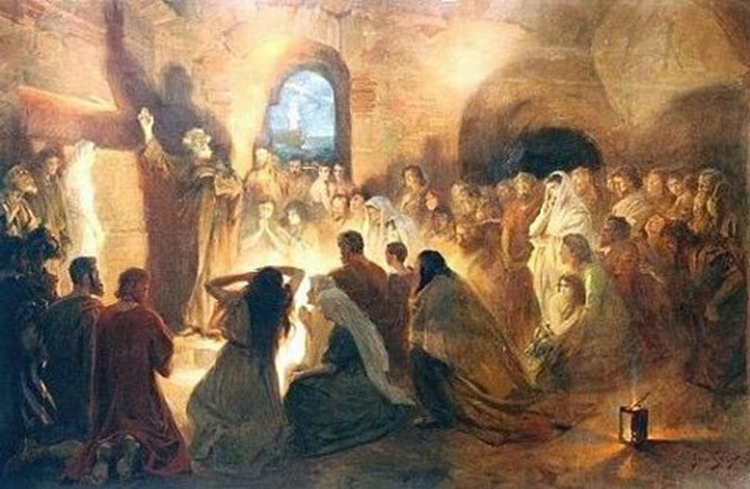
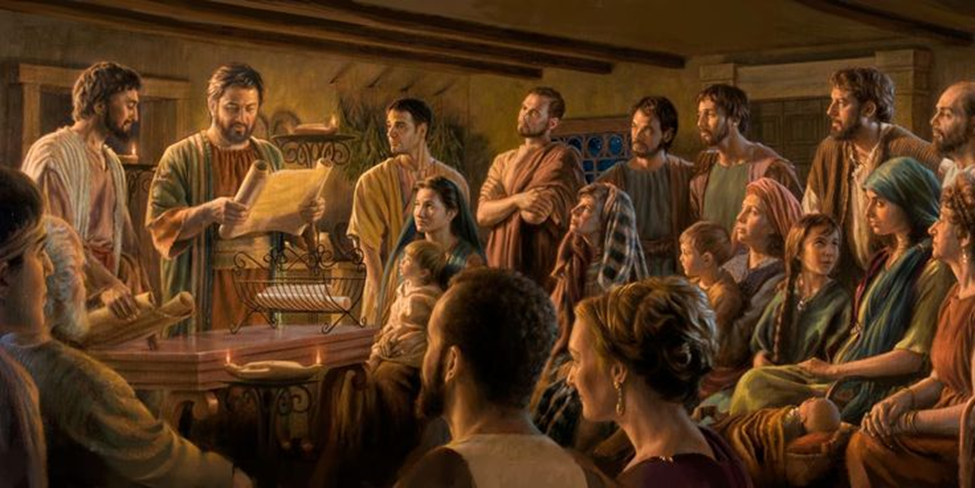


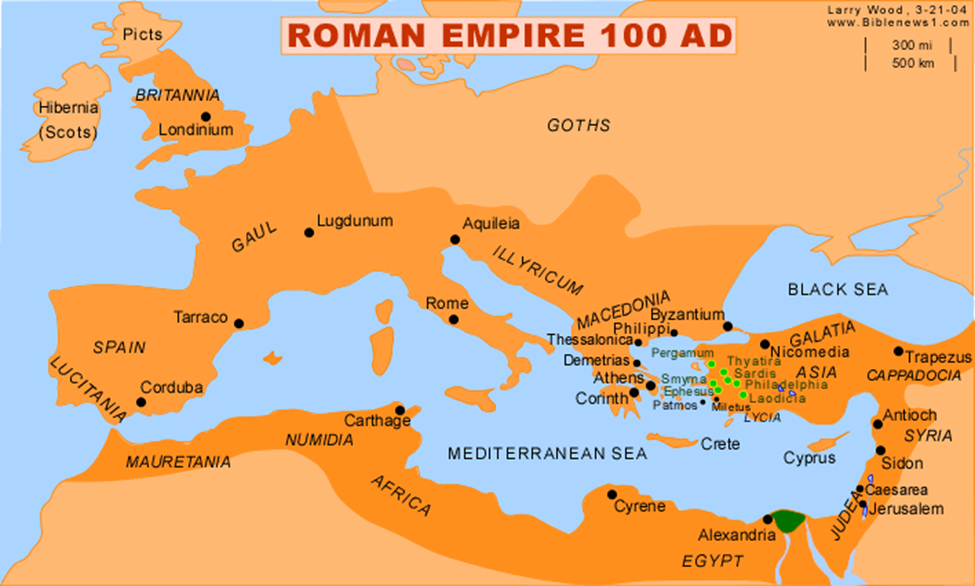

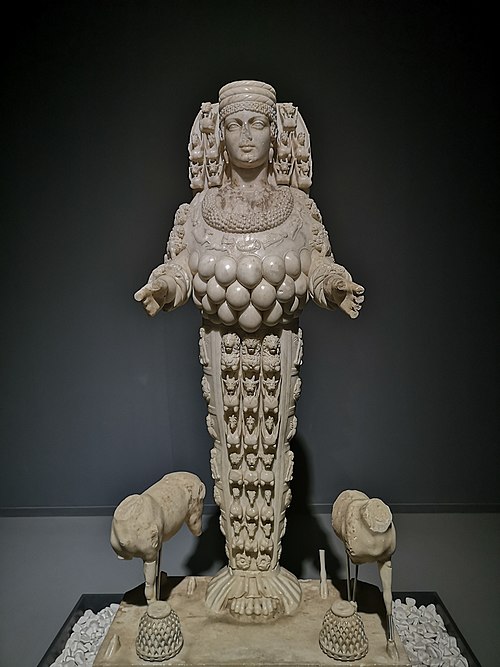


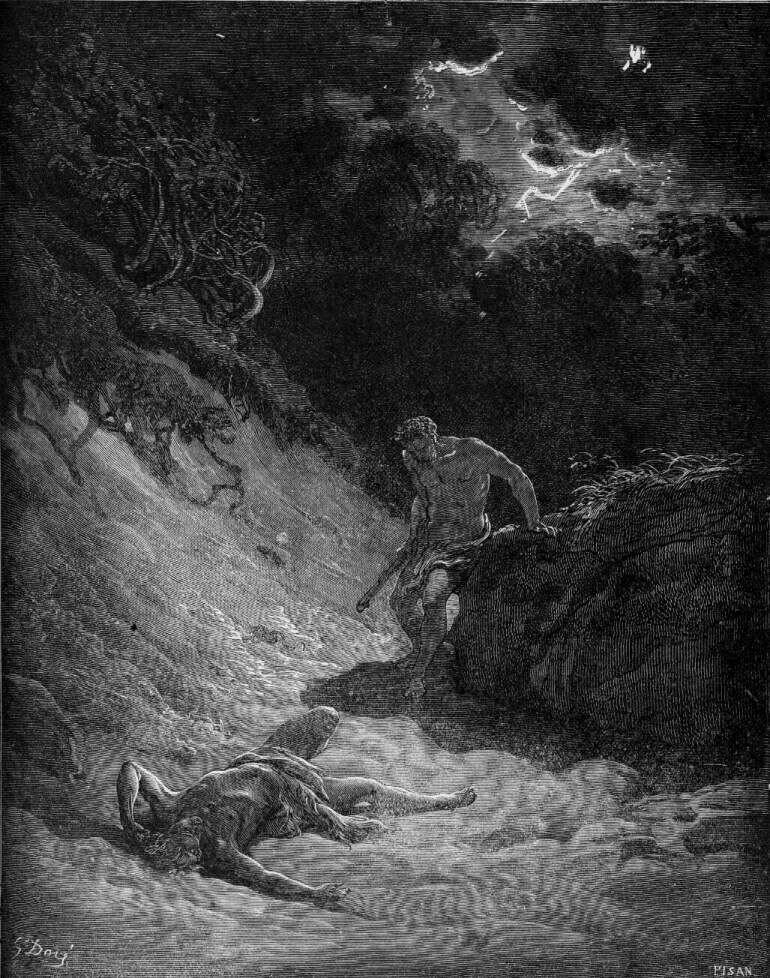
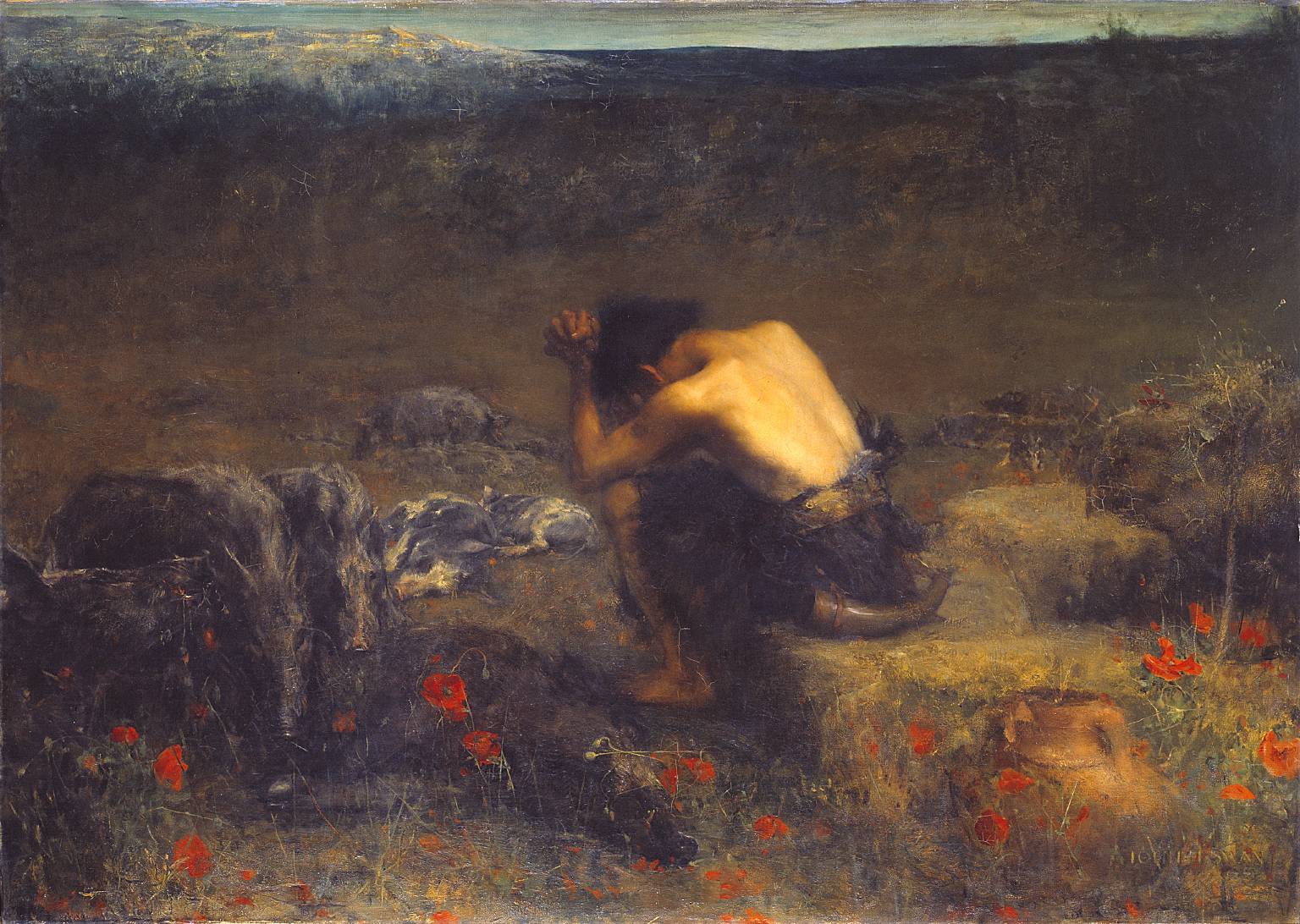


 Science, and certainly engineering, attends to the particularity of things. Both scientists and engineers must understand a thing and how it relates to other things. Imagine if they didn’t. Imagine if geneticists, physicists, biologists, chemists and aeronautical engineers didn’t consider how things relate to each other. Imagine if an electrical engineer didn’t consider that 3000 amps through an aluminum conductor rated for 600 amps would cause heating and the ultimate melting of the conductor. God gave us Scripture so that we could understand God’s nature expressed in the Word (John’s Gospel chapter one). God gave us nature so that we could understand God’s nature as expressed in things.





 Cindy Wity
Authority Issues
January 1, 2023 Leave a comment
Looking back, how many of you, during the COVID planned-demic, wore a mask, or worse, received the experimental DNA-altering jab because you feared losing access to someplace or someone, or losing your job? Authoritarians, and their media handmaids, made a point of telling you to fall in line and fear repercussions. Authoritarians control people with narratives that are to be taken as gospel.
If you and I did not practice the gospel of safetyism – a means to scare everyone into conformity under authoritarian rule – then you and I were portrayed as heartless and extremists.
Let us not forget. The abusive, manipulative and corrosive nature of authoritarianism has been evidenced the past two years. Our lives, families, and communities have incurred massive blows from the hammer of unconstrained authority. Liberty – freedom of thought, word and association – be damned!
It has been and continues to be the authoritarians who see themselves as the most intellectually and morally advanced people. They have no issue telling others what to do and making them do so with jackboot mandates. They speak in terms of power to truth.
One ubiquitous televised authority told you that he was “science” – period! Based on this pronouncement, you and I were to immediately end critical thinking and questioning about COVID “science”. We were to submit to the apotheosis of “the science”.
Several authorities used manipulative ways to bring about conformity to their will: This is a pandemic of the unvaccinated!
Now, one authority figure is saying “I think we all agree the most important thing going on in the world right now is the war in Ukraine”. Really?! Ukraine’s border is more important than the massive invasion happening at our own southern border? What this authority figure is really saying is that the military-industrial complex must be served first before the concerns of Americans.
The last two years have also shown us that authoritarians demand that the bio-industrial complex be served at the expense of freedom and human life.
You see, for the military-industrial complex to financially survive it must produce and sell weaponry . . . and war. For the bio-medical complex to financially survive it must mass produce new serums and pandemics to sell.
Repurposed drugs like Hydroxychloroquine and Ivermectin are not money makers. Of course, the politicians and media who support the military complex and/or the bio-medical complex and not the repurposed drugs are rewarded.
There is no question in my mind that very significant powerbrokers around the world have either planned to take advantage of the next pandemic or created the pandemic. – Dr. Michael Yeadon, ex-Pfizer VP
Global authoritarians are now telling us to believe in climate change and to be prepared to pay a price to fix it. Yet, scientists say there is no climate emergency.
Those who have read my blog since 2020 know that I haven’t accept COVID authority. I did not get the jab and I will not wear a mask. I have questioned everything that comes from the CDC and on TV. I have witnessed true science being denied so that authoritarians can have their way.
I have linked to hundreds of commentaries that question the validity of COVID “science” via each post’s “Informed Dissent”. I question what is posited as “the science” and gospel truth. I question authority and take on challenges.
What follows is a common authority challenge presented to Christians from the pulpit and elsewhere, as you will see:
The conversation that follows started with a recent social media post that included a video.
The post: What’s your authority – God’s Word or man’s word? The age of the earth issue is not a science VS faith or an interpretation issue, it’s actually an authority issue. And that issue affects the Gospel. Find out how in this episode of Creation Basics.
The video: No Verses Support This, Yet Christians Believe It…
Does the Bible support evolution or billions of years? Whatever your final authority is will determine how you answer this question.
The video’s premise: “adding billions of years into the Bible destroys the concept of Biblical authority”.
Underlying premises: science is secular thinking; empirical science doesn’t apply to creation origin; “If the Bible isn’t true to the facts of the real world, about the age of the earth, then there is really no reason to trust it . . . “; (and Bible skeptics and atheists might get the upper hand).
Per the video’s premise, I’m a Biblical authority denier for “believing the secular geologic time scale”. To this and to the brazen and distorted underlying premises of Biblical authority and the gospel as compromised by science, I had to write a reply.
My comment to the post:
Wow! This video is messed up. This way of thinking is messed. up. Authority issue? Pitting manmade “Biblical authority” against manmade science authority? What foolishness. The physical world existed long before God gave the cosmos function and order. Genesis tells us that God set up the existing cosmos to be his temple within 7 literal days. Genesis 1 -11 should be understood as being written to ancient Near East people. The Genesis account made sense, in temple terms, to these readers. They understood Genesis as describing functional origins rather than accounts of material origins.
Genesis begins with the functional origins of an existing universe that science confirms came into existence billions of years before.
Genesis is theological history and science the physical history. I see no conflict.
*****
Marq, a proponent of Answers In Genesis message, replied to my comments:
If the Bible is fantasy than how did it know that there were springs in the oceans, Genesis 7&8?
BTW, God created the earth the seas and all that is in them in six twenty-four-hour days. Although it could be six twenty-hour days.
BTW, if you’d like to refute the Bible try proving abiogenesis. Omne vivum ex vivo. If you can give us the formula to prove abiogenesis, maybe we could then entertain the idea of evolution being plausible.
You see no conflict? Jesus said it was real history. There is your conflict. I can’t trust in someone who is either a liar or is delusional. Maybe you don’t have that problem, but I do.
*****
My reply to Marq:
I didn’t say the Bible is fantasy. The OT was written for us but it wasn’t written to us. It was written to ancient Israel who understood Genesis in temple creation terms- functional terms – and not in physical material creation terms. You are forcing Scripture – taking it out of context – to have it say what you want it to say.
I grew up with the same reductionist thinking. I went to Moody Bible Institute. I was taught that Genesis was literal – but Gen. 1-11 is not literal. God used true mythology to give ancient Israel an explanation of origins and operations.
BTW: God gave us two Scriptures – the Bible and science. We can learn from both scripture and science while not forcing the other to have it mean something that is not true.
The study of scripture and science must include history, ancient history. We must look at all of the evidence God laid out. The people in the ancient world understood things differently than we do. Genesis was written to them so we must read Genesis in their context of language, culture and meaning. which included mythology to explain things.
Study the ancient history, the language and culture. God didn’t give us a Sunday School color-in-the-lines paper to take home. He gave us a world to explore.
*****
Marq replied:
I know what you meant, as I have debated theistic evolutionists. I’m saying we have proof of the literal interpretation.
We know from science that springs actually exist and it was written in Genesis 7&8, you know that part you said is mythology. It wasn’t until 1971 that science proved it and it was only postulated by science in the 1960’s.
So, your mythology takes [sic] crumbles into reality. Also, the migration of people in Genesis eleven is also proven by archeology and now it is shown by the Y-chromosome DNA again sowing [sic] it’s not mythology.
It has been proven repeatedly that life only begets life, omne vivum ex vivo, just as Genesis said. Remember paganism has always believed the universe created itself.
Finally, as I said Jesus would be a liar because he taught that Genesis was true history as did the apostle Paul to Areopagus and not an allegory.
As Jesus said, “John 3:12 If when I tell you earthly things, ye believe not, how should ye believe, If I shall tell you of heavenly things?”
Do you believe Jesus raised Himself from the dead? Do you believe He walked on water? Do you believe He raised Lazarus from the dead? If you do, what scientific proof do you have of those events?
*****
My reply to Marq:
You have provided no proof of a literal interpretation. You provided inuendo, circular reasoning and crumbling logic.
You say that science backs up some things in Scripture and therefore proves Genesis 1-11 to be literal and not myth. Based on that you tell me that since science cannot prove other things in scripture therefore scripture trumps science and myth. Let’s talk mythology.
Modern man views mythology as being false. C.S. Lewis, for one, thought otherwise. God, the great storyteller, revealed Himself through different mythologies throughout history. The core ideas behind the myths were “literally” fulfilled in the first century via Jesus of Nazareth’s incarnation, death, and resurrection.
Myths as false?
Jesus spoke to the multitudes in myth-like parables. These tales were not literal historic events. These were allegorical, metaphorical, and symbolic stories that were spoken in contemporary terms. The parables conveyed truth to the listener.
God gave us science so we could explore and understand the physical world that he created. Science is not a discipline that explains things metaphysically just as theology is not a discipline that explains creation in physical terms. Science is NOT in conflict with scripture – except when secularists and fundamentalists make it so. God gave us both science AND scripture to reveal Himself to us. The material world is incredibly important to God – the word became flesh.
Genesis 1-11 is the true myth written to ancient Israel living within a pagan culture. It wasn’t written specifically to a Sunday school class in the ‘50s that had been taught to hate Darwin and evolutionary creation.
Ancient cultures understood all that is not in science-based terms but in metaphysical-based terms. The saw their world as controlled by gods. They had temples to these gods. The temples were thought of as the cosmos. In their way of thinking, the creation of a temple is the creation of the cosmos.
The apostle Paul addressed the god/temple way of thinking during his speech to the Athenians at the Areopagus. He tells them about the “Unknown God” who created the world. He goes on to say that this “Unknown God” does not live in a temple made by human hands. God created a temple out of the cosmos so that people could seek him out and know him.
Genesis 1 is an account of God inaugurating order (out of the existing chaos) and functionality for his cosmic temple. Genesis 1& 2 is not an account of material origins and material preparations for his temple. Genesis 1 & 2 should be understood as a temple-based explanation of creation.
Over 6–24-hour days God ordered the existing chaos (after the Big Bang) and gave it functions. Heaven and earth, sea and dry land, light and dark, night and day, seedtime and harvest, seasons . . . On the seventh day God “rested” in his cosmic temple and oversaw his creation.
The English word “created” used for Genesis 1:1 translation does not help our understanding. The Hebrew word (bara), in its ancient context, does not imply God creating the universe ex nihilo and it does not imply a function-giving interpretation. Within its context in scripture (about 50x) it does seem that ancient Israel viewed things in functional terms rather than material terms.
*****
Marq’s response:
Nice try! But the Y-chromosome and as I said the springs in the seas in ch. 7,8, and 11 shows it is not an allegory.
Just as omne vivum ex vivo destroys any concept of evolution. There is zero evidence of evolution or your logic. Evolution uses circular reasoning which creationists exposed, because evos use fossils to date the rocks and rocks to date the fossils based on their belief of the rock strata presupposition.
Even SCOTUS when evolutionists brought suit to keep creationism out of school could not confirm evolution so SCOTUS said creationism could not be taught because of separation of church and state.
When our own school board in Columbus, Ohio was allowing creationism to be taught alongside evolution in 1976 evolutionists showed up arguing against it saying separation of church and state. Again, they did not present facts because there are none. I was present at the meeting and as always creationists brought facts.
Evolutonists are scared of facts as there are none that a reasonable person would consider. As Richard Dawkins found out when he debated A. E. Wilder-Smith at Oxford University. Wilder-Smith and another creationist of whom I can’t recall his name was able to persuade quite a few people at this bastion of evolutionary dogma.
After it was over Dawkins refused to openly debate and warned other evolutionists not to debate openly.
Instead of engaging me on evidence you too resort to innuendos. As I said if God was just using parables than how did springs (fountains) end up being real? How did Genesis 11 and the migration of Shem, Ham, and Japheth turn out to be true? or omne vivum ex vivo?
You, and your evo friends, are the ones hiding behind mythology.
Let’s settle this argument. Give me the mathematical formula that proves evolution. One that can be demonstrated time and time again.
Stop hiding behind mythology and it takes millions of years to hide behind the fact that you have no answers. Evolution is only in fairy tale books fit for little children.
Genesis 7:11 In the six hundredth year of Noah’s life, in the second month, the seventeenth day of the month, in the same day WERE ALL THE FOUNTAINS OF THE GREAT DEEP WERE BROKEN UP, and the windows of heaven were opened,
Job 38:16 “Have you entered into the springs of the sea, or walked in the recesses of the deep?
Matthew 24:37 For as were the days of Noah, so will be the coming of the Son of Man. 38 For as in those days before the flood they were eating and drinking, marrying and giving in marriage, until the day when Noah entered the ark, 39 and they were unaware until the flood came and swept them all away, so will be the coming of the Son of Man.
May God open your eyes.
*****
My reply:
Your words: “the Y-chromosome and as I said the springs in the seas in ch. 7,8, and 11 shows it is not an allegory.” How?!? That literal things existed that science later discovered and therefore Genesis 1-11 could not be a myth explaining existence in temple-making terms to ancient people? So, according to you, everything in Genesis 1-11 must be considered literal because things existed? Your logic makes no sense.
Here’s another example of the same illogic:
“As I said if God was just using parables than how did springs (fountains) end up being real?”
By the same logic, learning some 2000 years after Jesus told the parable of the Good Samaritan that there were actual Samaritans and Levites in Jesus’ time would mean that what Jesus said in parable format should be discounted as false and not literal authoritative. NB: their literal existence didn’t refute the use of parable by Jesus to speak (the unseen) kingdom truths.
Does everything have to be literal to be proven true? If so, that is a sad commentary on modern man. If so, that supposition also shows that left brain literal thinking has taken over.
Back on track, we are talking about whether Genesis 1-11 is a myth explaining to Israel the setup of a cosmic temple or Genesis as a literal science explanation of creation using 6-7 24 hr. days. Right?
We are talking about whether the cosmos is billions of years old (a science calculated estimate) old or 6-8k years old (a young earth creationist calculated estimate). Right?
The video would have us believe that if we do not accept the authority of scripture – a 6-24 hr. day material creation postulated by Answers in Genesis – then we are misled and are denying scriptural authority. What utter nonsense and pretentiousness! What a con job!
I don’t believe in spontaneous generation. I don’t know any biologists who do. I don’t know anyone who does. Evolution is a scientific theory that doesn’t contradict the Bible. (Note: social Darwinism is not something, as a Christian, I adhere to.) Like with the study of ancient cultures, it is more than OK to look at historical evidence: rock strata, fossil records, and genetics. It is Ok to understand the biogeography of nature. It is OK to study the natural order. It testifies of God.
“The Heavens declare the glory of God; the skies proclaim the work of his hands” (Psalm 19:1)
And so it is that understanding of the stars has led scientists to refine the ages of the stars in globular clusters, and now estimate them to be about 13 billion years old. This means that the stars in the globular clusters must have formed within the first several hundred million years of the universe’s existence!
No mythology: The approximate age of the universe can be derived using Hubble’s law: v = H0d where (d) is the distance between two galaxies, (v) their apparent separation velocity, (H0) the expanding universe (Hubble’s) constant. The velocity of the galaxy, aka, redshift, is directly proportional to its distance.
Q.E.D.
*****
Marq’s next response:
Flavius Josephus, Jesus, and all of the Apostles all believed Genesis 1-11 was true chronological history reserved for mankind and not mythological or allegorical account not to be taken as literal.
So, it’s the evolutionists job to prove what is obvious to any casual observer.
Romans 1:18 For the wrath of God is revealed from heaven against all ungodliness and unrighteousness of men, who by their unrighteousness suppress the truth. 19 For what can be known about God is plain to them, because God has shown it to them. 20 For his invisible attributes, namely, his eternal power and divine nature, have been clearly perceived, ever since the creation of the world, in the things that have been made. So they are without excuse. 21 For although they knew God, they did not honor him as God or give thanks to him, but they became futile in their thinking, and their foolish hearts were darkened. 22 Claiming to be wise, they became fools, 23 and exchanged the glory of the immortal God for images resembling mortal man and birds and animals and creeping things.
From Flavius Josephus Antiquities of the Jews Book 1, Chapter 3:9. Now when Noah had lived three hundred and fifty years after the Flood, and that all that time happily, he died, having lived the number of nine hundred and fifty years. But let no one, upon comparing the lives of the ancients with our lives, and with the few years which we now live, think that what we have said of them is false; or make the shortness of our lives at present an argument, that neither did they attain to so long a duration of life, for those ancients were beloved of God, and [lately] made by God himself; and because their food was then fitter for the prolongation of life, might well live so great a number of years: and besides, God afforded them a longer time of life on account of their virtue, and the good use they made of it in astronomical and geometrical discoveries, which would not have afforded the time of foretelling [the periods of the stars] unless they had lived six hundred years; for the great year is completed in that interval. Now I have for witnesses to what I have said, all those that have written Antiquities, both among the Greeks and barbarians; for even Manetho, who wrote the Egyptian History, and Berosus, who collected the Chaldean Monuments, and Mochus, and Hestieus, and, besides these, Hieronymus the Egyptian, and those who composed the Phoenician History, agree to what I here say: Hesiod also, and Hecatseus, Hellanicus, and Acusilaus; and, besides these, Ephorus and Nicolaus relate that the ancients lived a thousand years. But as to these matters, let every one look upon them as he thinks fit.
II Peter 3:1 This is now the second letter that I am writing to you, beloved. In both of them I am stirring up your sincere mind by way of reminder, 2 that you should remember the predictions of the holy prophets and the commandment of the Lord and Savior through your apostles, 3 knowing this first of all, that scoffers will come in the last days with scoffing, following their own sinful desires. 4 They will say, “Where is the promise of his coming? For ever since the fathers fell asleep, all things are continuing as they were from the beginning of creation.” 5 For they deliberately overlook this FACT, that the heavens existed long ago, and the earth was formed out of water and through water by the word of God, 6 and that by means of these the world that then existed was deluged with water and perished. 7 But by the same word the heavens and earth that now exist are stored up for fire, being kept until the day of judgment and destruction of the ungodly.
******
My reply:
“What is obvious to any casual observer” is that you are dropping a lot of names and scripture bombs to conceal your lack of a coherent argument. None of your references support a literal 6-24 hr day creation. They just refer to creation as creation.
Of course, Jesus believed in creation. NT writers told us that he is the creator (Jn. 1, Col. 1). But nothing in the NT tells us that Jesus spoke of or believed in literal 6-24 hr. days of creation.
Colossians 1: 15 “He is the image of God, the invisible one, The firstborn of creation”.
How should we understand the “firstborn of creation” words from this early Christian hymn? In literal terms? By the authority of scripture, we can fully acknowledge the metaphor that Jesus is the “firstborn of creation.”
A metaphor helps us understand a truth we cannot fully grasp. This, it seems to me, is how Genesis 1-11 was written – in true myth to an ancient people.
Remember the words of Jesus: “Destroy this temple, and in three days I will raise it up.” Those around him took it literally. It wasn’t until the resurrection that the disciples understood what he meant.
Remember Jesus saying “If you’ve got ears, then listen!” after he told them parables. The multitudes loved the literal feedings, the literal healings, and the literal exorcisms. They came to him for the literal. But the things of the kingdom of God, expressed in parables, were not literal enough for most of them.
Jesus telling Nicodemus that he must be born again confused him.
There are many, many metaphors, allegories and true myths in scripture. Is Song of Solomon literal? Should I cut off my hand if it makes me sin? Genesis 1-11 as true myth should not upset anyone’s theology.
One last word on Genesis 1-2.
In the last two chapters of the Revelation of John we find that God’s cosmic temple-based explanation of creation, written as true myth to ancient Israel in Genesis 1-2, is fully realized.
“I heard a loud voice from the throne, and this is what it said: “Look! God has come to dwell with humans! He will dwell with them, and they will be his people, and God himself will be with them and will be their God.” Rev. 21: 3
The peace of the Lord be with you.
*****
Marq’s next response:
I forgot to mention that I went to a Messianic Synagogue to learn Hebrew. They believe in the literal interpretation of Genesis and Yeshua as God incarnate.
They were also taught as children the literal interpretation of Genesis as Jews. In fact, most orthodox Jews believe in the literal translation of Genesis. Again, this counters your argument that they did not believe in the literal interpretation of Genesis 1-11.
*****
My friend, I cannot vouch for what others think or for the generation of their beliefs.
As I understand it, you believe the verb bara’ translated as “create” infers a material creation of the universe that lasted 6 -24 hr days. The seventh day is tacked on as a non-workday, I guess.
We would both agree that Hebrew lexicons translate the verb bara’ as “create”. That is the closest English word. The definition given for bara’ is to create, shape and form.
Bara’ (Gen. 1:1) can be God choosing to give order and purpose to the material creation out of the existing chaos. Bara’ can describe a formative process and a function-giving process.
Examples of bara’ would be an artist who “creates” a painting or an architect who “creates” a temple. The materials are there and the scope/vision is there. Creation is the application of materials and vision to produce the desired outcome.
That creation understanding is my understanding of the literal 7 days of Genesis. God gave functions and roles to the existing creation to support mankind. Man was created to be the caretaker-priest of his temple creation. We find out later that Adam, an archetype of caretaker-priest mankind, needed someone to help with the caretaking of the temple. Hence Eve, derived from one-half of Adam and another such archetype.
Reading the 7 days of Genesis in functional terms and not in material creation terms, makes sense. God is inaugurating his cosmic temple over the 6 24 hr days. On the seventh God “rests’ or sits and rules in his cosmic temple. Ancient people would understand the temple building, temple inauguration, and priests serving temple gods.
Note: the temple theme begins in Genesis 1 and goes through scripture to the last chapters of John’s Revelation. Temple creation, tent-tabernacle, Solomon’s temple, the second temple, new creations as the temple of God, and finally God dwelling with man and . . .
“I saw no temple in the city, because the Lord God the Almighty is it temple, together with the Lamb.” Rev. 21: 22
Finally, my initial comment was directed to the video posted. I rejected its premise:
The age of the earth issue is not a science VS faith or an interpretation issue, it’s actually an authority issue. And that issue affects the Gospel
The Catholic church also had “authority” issues. Those issues led to the Inquisition to combat “heresy”. The Inquisition generated dread – people feared being rejected by the church and loss of salvation. There were horrific consequences if they did not profess whatever they were told to profess. They accepted, out of fear of losing their salvation, whatever they were told to accept. The video reminded me of the Inquisition and how church authorities felt threatened by those questioned what their authority dictated.
People of science should never be marginalized and ostracized by the Christian community.
I’m done here. Thank you for the back and forth.
The peace of the Lord be with you.
*****
Marq’s final words:
Ultimately, what you are saying is that the universe created God?
The first Law of Thermodynamics says the universe cannot create itself and the 2nd Law says it had to be created.
This is just common logic, otherwise, God is just as material and useless as the pagan gods and Jesus would just be a clown.
It’s funny because the Catholic Church has always believed in evolution and the scientific community which is why they adopted the pagan Aristotle and Ptolemy. It’s the evolutionists who are running the inquisition. They are saying that evolution is a fact that needs no proof.
Again, the only proof you’ve proffered for evolution is that Genesis was meant as an allegory.
Since the Laws of Thermodynamic are mathematical proofs and cannot be refuted, evolutionists try to say we don’t understand so their sycophants fall in line. You do not demand that evos put up or shut up.
You’d think after thousands of years they’ve spent trying to convince people they could put something together that was coherent.
May God open your eyes to the obvious truth.
And . .
Thank you too for conversing!
**********
Marq’s replies reveal that he totally missed what I was saying all along. Or, he just didn’t want to deal with what I was saying except in scripted terms. Marq’s final words are defensive and dismissive. He does not offer new information in support of a literal 6-day 24 hr. creation. Before that, he claimed that others believe that his position is true and therefore that proves it to be true.
And like the unconscionable video message, Marqe pits science against scripture, as if God’s own material creation would betray God’s own word to us.
Legal experts from Jerusalem set up a similar adversarial scenario – “it’s not the way we say it’s supposed to be” vs. the way it is. The Gospel according to Mark chapter 3, vs. 22-30 records Jesus being accused of being possessed by an unclean spirit because he cast out demons. His response: “How can the Accuser cast out the Accuser?”
And how could material creation betray the creator? Even the stones would be shouting out praise to the Living Word if all else is silent!
In my responses I never said or implied that the universe created itself or that God didn’t create the universe. I was stating that scripture, and Genesis in particular, is not scientific revelation. The opening chapters of Genesis are true myth written to an ancient people and their understanding.
Apparently, he thinks that since I am positing Genesis 1 & 2 as true myth – God’s way of explaining creation to an ancient people – that I am saying God didn’t create the world. God did create the universe and, as I tried to convey, perhaps not in the way that Marq insisted it happened. And, of course, the laws of thermodynamic operate in the physical world.
I don’t read Genesis, and scripture as a whole, as scientific revelation. Scripture is a revelation of identity, function and purpose. We find out from scripture who God is and who we are and what we are to be about.
To convey this in contemporary terms, God used the culture, language and understanding of an ancient writer (and every writer of scripture since) to convey what He wanted the people of that time to know. Genesis was written in their ancient terms.
I responded to Marq, not for a debate, but so that I could present another look at Genesis 1-11. Not once did he respond to my temple creation viewpoint. Instead, he tied me in, as if going by a young earth creationist playbook, with evolutionists and the godless cabal who deny the authority of “6-day 24 hr. material creation” and therefore the authority of the Bible. (Here I am being accused of being a scripture denier, not a “COID science denier”.)
The opening of the video presents a red herring argument: “scripture doesn’t mention billions of years” Well, scripture is not a scientific journal of events.
Scripture also doesn’t mention, among many other things, that the earth revolves around the sun. Science figured that out and church authoritarians rallied against such a finding because it didn’t align with their teaching. Huh.
Again, scripture is a revelation of identity and relationships. Genesis 1 & 2 names the functions of the cosmic temple, Adam and Eve are the named archetypes of mankind, genealogies follow, Jesus names the twelve, Saul is renamed Paul, new names are handed out as recorded in the John’s Revelation. Names and relationships.
What the video would have us believe: “If you don’t affirm what I saying about a literal Genesis account as being authoritative then the gospel you believe cannot be authoritative.” This setup is not just childish and unconscionable. It is a demonic point of view.
Because science and scripture present different ways of understanding reality, they will not look like they sync. And that is not a justification to reject either one. To suggest that science should be rejected in order to support “Biblical creation” is also a demonic point of view.
Scripture is authoritative. Interpretation is not. Every directive from an authority should be questioned, whether it be from pastor, priest, Pope, Jesuit, professor, the CDC or politician. Don’t roll over and play dead. Study and become convinced of what you believe. As a trailblazer who will not stand being shamed for referring to scripture and science maps, “carve out a straight path for the word of truth- the gospel” (2 Tim. 2:15).
Recall that Jesus had to constantly inform and upbraid legal experts and Pharisees. Many of these self-styled authoritarians presented themselves as “the most intellectually and morally advanced people” in the community and therefore qualified to communicate authoritatively. But they had settled on interpretations of God’s word that missed the mark. As synagogue authorities they passed on their interpretations to the communities in which they lived.
It is a serious matter to Jesus if the interpretation and teachings of God’s word causes anyone to stumble (see Matt. 18:1-7). And remember: the only one who possesses all truth is Jesus, and he served as a model of meekness.
*****
EXCLUSIVE: Archbishop Vigano Calls for 3-Day Fast for Jan 6 Detainees | Human Events | humanevents.com
MIT Adopts Free Speech Resolution: “We Cannot Prohibit Speech as Offensive or Injurious.” – JONATHAN TURLEY
*****
Informed Dissent:
Equity Investment Executive Ed Dowd: 1.7 Million Americans Placed on Disability – Directly Related to COVID Vaccine (VIDEO) (thegatewaypundit.com)
Warning from Ed Dowd: 7,500 Americans are killed or disabled EACH DAY as vax jabs take heavy toll… USA imploding under “decivilization” assault – NaturalNews.com
VAX DEATHS LABELED SUICIDE BY LIFE INSURANCE COMPANIES — NOT COVERED (bitchute.com)
9-Year-Old Boy from Ontario Dies Suddenly After Suffering a Blood Clot in his Brain (thegatewaypundit.com)
The most detailed evidence yet of the devastating damage Covid vaccines can do – The Conservative Woman
12ft | Pfizer’s COVID-19 Vaccine Linked to Blood Clotting: FDA
Why Does Peter Hotez Think We Are Mass Murderers? (substack.com)
quick updates on covid vaccine fertility issues (substack.com)
Top Australian Doctor Who Advocated for COVID Vaccine Finally Breaks Her Silence – Says Doctors are Censored – Reveals She and Her Wife Both Suffer Serious COVID Shot Injuries (thegatewaypundit.com)
EU announces first ‘direct carbon tax’ on individuals… – CITIZEN FREE PRESS
“The lawsuit, filed in October, 2021 by Liberty Counsel, represents more than 500 current and former health care workers who were unlawfully discriminated against and denied religious exemptions from the COVID shot mandate.”
Final Approval in $10.3 Million Settlement Case for Health Care Workers Granted by Court (thegatewaypundit.com)
People are turning down Remdesivir at hospitals, so the hospitals are still giving Remdesivir to them, but under another name: Veklury
Generic Name: Remdesivir
Brand Name: Veklury
Same deadly fauci drug.
Arizona Border Hospital Hit With $20 Million Bill For Treating Illegal Migrants – ‘It’s Unsustainable’ (thegatewaypundit.com)
SLU Encourages Students to Speak Out Against Proposed Minor Protection Rule for Public Libraries – Young America’s Foundation (yaf.org)
White House Can’t Mandate COVID Jabs for Federal Contractors: Appeals Court | NTD
How Twitter Rigged the Covid Debate (thefp.com)
What Could Go Wrong? Startup Releases Particles into The Atmosphere to Stop “Climate Change” (thegatewaypundit.com)
Do vaccines cause autism? It sure looks like it to me. (substack.com)
The (Covid) Law is an Ass – No Jab, No Job (substack.com)
700% diabetes surge predicted as Covid vaccine is linked to diabetes | Sharyl Attkisson
Confidential Pfizer and Government Documents confirm ADE, VAED, and AIDS due to COVID-19 Vaccination have led to Millions “Dying Suddenly” & still counting – The Expose (expose-news.com)
No hock Sherlock!
The left hates humans:
Democrat Gov. Hochul Legalizes Composting Human Remains in New York (thegatewaypundit.com)
Hmmmmm:
Spending Bill Funnels Over $300 Million Related To A Future Flu Pandemic, Including For ‘Surveillance Tools’ (nationalfile.com)
Omnibus Pork Thread: Thread by @RepDanBishop on Thread Reader App – Thread Reader App
Perspective:
The gift that keeps on giving:
Omnibus Shows Congress’s Priorities: Authoritarianism & War | ZeroHedge
18 Republicans Voted to Pass the McConnell-Schumer Omnibus (dailysignal.com)
ANOTHER NASTY SURPRISE: GOP Sellouts Gave Biden Regime $11 MILLION to Target Gun Owners in Repulsive Omnibus Bill (thegatewaypundit.com)
Annus horribilis:
The year the West erased women – UnHerd
Where are the adults?
Stanford University Walks Back Plan to Eliminate ‘Racist’ and ‘Harmful’ Words Like ‘American,’ ‘Grandfather’ After Backlash (thegatewaypundit.com)
Secretary Pete Buttigieg AWOL as Massive Southwest Airlines Cancellations Create Holiday Travel Hell Across Nation (thegatewaypundit.com)
‘Kidults’ Now Responsible For a Quarter of All US Toy Sales – Summit News
Rate this:
Filed under 2023 current events, Christianity, cosmology, Creationism, Political Commentary, Politics, social commentary Tagged with Authoritarianism, Bible, Christianity, COVID, creation, Genesis, Scripture, Vax, young earth creationsism