Central Planning or I Know What I Know?
May 19, 2024 Leave a comment
“If science is really given a free hand it can now take over the human race and re-condition it: make man a really efficient animal. If it doesn’t – well, we’re done.”
That is Lord Feverstone speaking to Mark Studdock in C.S. Lewis’ That Hideous Strength.
Feverstone, a shrewd sociopath, uses idealism to lure gullible Mark Studdock, an ambitious, self-centered and shallow intellectual looking to ‘upgrade’ his life. Feverstone wants Mark to join the National Institute for Co-ordinated Experiments (N.I.C.E.)
N.I.C.E. is a scientific social engineering agency and a front for dark supernatural forces. It is bent on world domination through scientific management. Propagandistic media is used to persuade the educated, like Studdock, to join in disseminating N.I.C.E. propaganda:
One interesting feature in the effort toward totalistic control over society, as developed in That Hideous Strength, is the matter of influencing public opinion through the news media. Mark, the insecure protagonist in the story, finds himself drawn into the “inner ring” of the technocratic project; he eventually discerns his role to write stories that support the agenda of the National Institute of Coordinated Experiments (N.I.C.E.). -Ted Lewis, Jacques, Jack and the Technocrats | | The International Jacques Ellul Society
Feverstone continues working Mark . . .
“Man has got to take charge of Man. That means, remember, that some men have got to take charge of the rest – which is another reason for cashing in on it as soon as one can. You and I want to be the people who do the taking charge, not the ones who are taken charge of. Quite.”
[Mark] “What sort of thing have you in mind?”
“Quite simple and obvious things, at first – sterilization of the unfit, liquidation of backward races (we don’t want any dead weights), selective breeding. Then real education, including pre-natal education. By real education I mean one that has no ‘take-it-or-leave-it’ nonsense. A real education makes the patient what it wants infallibly: whatever he or his parents try to do about it. Of course, it’ll have to be mainly psychological at first. But we’ll get on to biological conditioning in the end and the direct manipulation of the brain . . .”
“N. I. C. E.’s symbol, devoted as it was to “Technocratic and Objective Man” (That Hideous Strength, 259), was a muscular male nude grasping a thunderbolt (That Hideous Strength, p. 215).” – The Devils in Our World – Official Site | CSLewis.com
There were significant parallels to N.I.C.E.’s scientific management activity and the characters involved in 1945, when Lewis came out with the final book of his Ransom trilogy. Mechanical engineer Frederick Winslow Taylor (1856–1915) the “father of scientific management”, could have been one of the characters in the technocratic project. And there’s Le Corbusier (1886–1965), a Swiss French architect, designer, and painter who was an urban planner.
Le Corbusier was to architecture what Pol Pot was to social reform. In one sense, he had less excuse for his activities than Pol Pot: for unlike the Cambodian, he possessed great talent, even genius. Unfortunately, he turned his gifts to destructive ends, and it is no coincidence that he willingly served both Stalin and Vichy. Like Pol Pot, he wanted to start from Year Zero: before me, nothing; after me, everything. By their very presence, the raw-concrete-clad rectangular towers that obsessed him canceled out centuries of architecture. Hardly any town or city in Britain (to take just one nation) has not had its composition wrecked by architects and planners inspired by his ideas.
-Theodore Dalrymple, Le Corbusier’s Baleful Influence: The Architect as Totalitarian (city-journal.org)
Today, there are significant parallels to N.I.C.E.’s scientific management activity and the characters involved. I suppose one could replace the Lord Feverstone character with a number of elites: Lord (Klaus) Schwab of the World Economic Forum (WEF) or Lord (Tedros Adhanom) Ghebreyesus of the World Health Organization (WHO) or with the infamous Lord Science, Anthony Fauci and his COVID boss Lord (Francis) Collins who now Confesses Lockdown Damage Was ‘Another Mistake We Made’.
The scientific management of COVID “to save a life” went in a horrible direction against humans. Many of my posts from March 2020 onward document the destructiveness of central public health planning and what other experts were saying.
Certainly, there are those today who want to rework humans with neural links, gene therapy, AI, and scientific management via central planning.
The following well-produced documentary Trust Us is an absolute must for understanding the central planners and the elites. Homeschoolers should show this video to the charges.
““Trust Us” traces the rise of American technocracy: governance by bureaucratic experts. Beginning in the early 20th century, “Trust Us” reveals how our leaders funneled power to unelected experts, who were convinced they could engineer solutions to all our nation’s problems. Not only did these experts fail to solve those problems, but in example after example, they caused irreversible damage to the country.
With The One Best Way – scientific management – Progressives “impose an ideology that not only can every corner of society be planned and controlled from the top down, but that it must be.”
Trust Us | The Rise of American Technocracy (youtube.com)
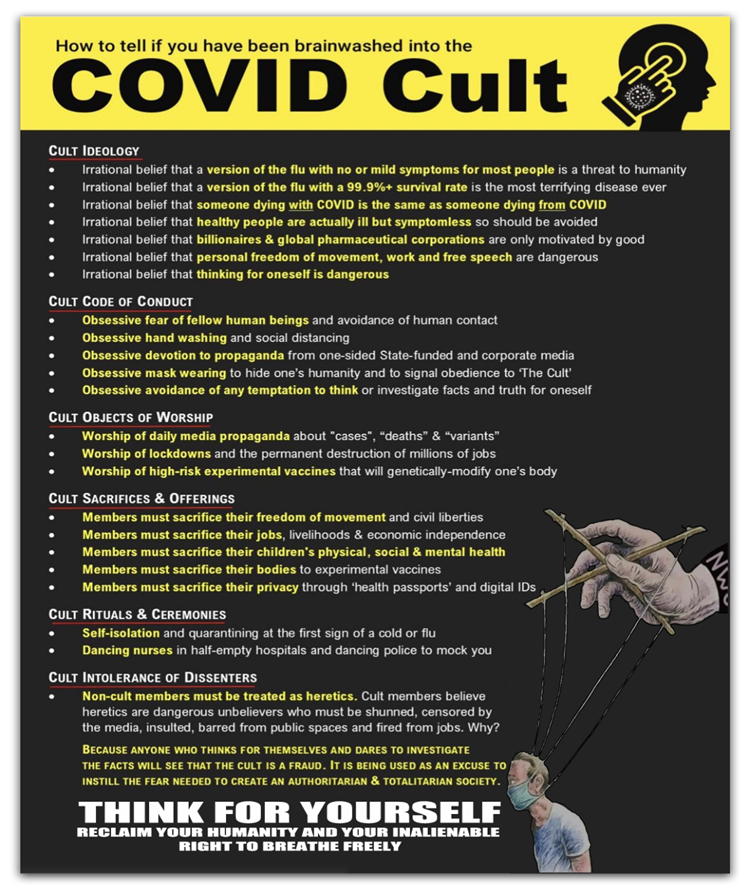
As we saw during COVID, the collusion of science and state powers forms a dangerous mix. We were told and made to “trust the science” about masks, lockdowns, social distancing, and the COVID vaccine for a flu virus that was 99.9 % survivable for healthy adults who were not very elderly.
The elites of public health central planning lied to us about immunity so that the vaccine could be pushed by the medical-industrial complex. They told us lies about hydroxychloroquine and Ivermectin so that the vaccine could be pushed by the medical-industrial complex. They told us lies about the origins of COVID to protect the medical-industrial complex that created a gain-of function virus.
At the same time, you would be mocked as “misinformed” and as a “conspiracy theorist” if you questioned the elites of public health central planning. You would be punished by censorship or loss of license or worse.
See this link for the lies we were told and for the adverse and deadly effects of the COVID vaccine: Investigations Archives – DailyClout.
A world-renowned scientist and leading immunology expert has raised the alarm with an explosive warning to the public that everyone who has been vaccinated with Covid mRNA shots “will die within 3 to 5 years, even if they have had only one injection.”
The alert was issued by Professor Dr. Dolores Cahill.
Renowned Scientist: All Covid-Vaxxed ‘Will Die in 3 to 5 Years’ – Slay News
The Onrushing Death Wave – by Richard Sauder (substack.com)
C.S. Lewis tried to warn us about the collusion of science and state powers used against humanity for “the public good.” (Who determines what “the public good” is should concern us all. Should the Godless determine “the public good”?)
That Hideous Strength “is a cautionary tale about the dangers of unchecked scientific and technological advancement.
The National Institute for Coordinated Experiments (N.I.C.E.) embodies the perils of divorcing knowledge from ethics. Their vision of progress, which seeks to dominate and control nature, starkly contrasts the traditional Christian understanding of humanity’s role as stewards of creation. In this, Lewis critiques a growing cultural trend that prioritizes technological advancement at the expense of moral and spiritual values.” Manrado Gorgio
I am not against technological advancements. I have worked in engineering for many years. Experts are needed and should be given a platform but not the power to coerce.
Do not become so desperate and afraid that you beg government to do something.
I am against technological advancements tied to bureaucratic machinations and coercion by the state. I am against top-down scientific management central planning of my life. I am against elites telling me how to live my life. I am against being experimented on.
We, of Middle Earth America, are sick and tired of elites telling us how to think, speak and act!
~~~
Currently, there are organizations plotting world domination in terms of scientific management. The World Economic Forum (WEF) is one such cabal of elites chomping at the bit to control every corner of our lives. Another is the World Health Organization (WHO), the public health arm of the UN with more elites hankering to centrally plan our health under One Health.
Be aware! May 27th – June 1st, the Seventy-seventh World Health Assembly is being held in Geneva, Switzerland. The theme of this year’s Health Assembly is: All for Health, Health for All. There will be scheduled votes on the World Health Organization’s (WHO) pandemic treaty and the proposed changes to the International Health Regulations (IHR). The votes on this treaty and the IHR won’t be the end of an attempt at a global health security state; they mark just the beginning.
I do not want WHO oversight of my health/life. Nor do I want a Federal or State apparatus that has oversight of my health/life. I don’t want to exchange one authoritarian central planning system for another. I don’t want to live under a health technocracy. I prefer practical wisdom over central planning.
“. . .an unlettered peasant is considered ignorant, however much he may know about nature and man, and a Ph.D. is never considered ignorant, however barren his mind might be outside his narrow specialty and however little he grasps about human feelings or social complexities.” Thomas Sowell, Knowledge and Decisions
In the video you will learn:
The status and legality of the WHO treaty and IHR votes.
How we got here.
What’s in the ever-shifting documents.
What states are doing about it.
How state AGs and U.S. senators are stepping up for health freedom.
WHO Update 5/13/24: The votes are still on! (rumble.com)
WHO Update 5/13/24 – STAND FOR HEALTH FREEDOM
~~~~~
If you start from a belief that the most knowledgeable person on earth does not have even one percent of the total knowledge on earth, that shoots down social engineering, economic central planning, judicial activism, and innumerable other ambitious notions favored by the political left. – Thomas Sowell
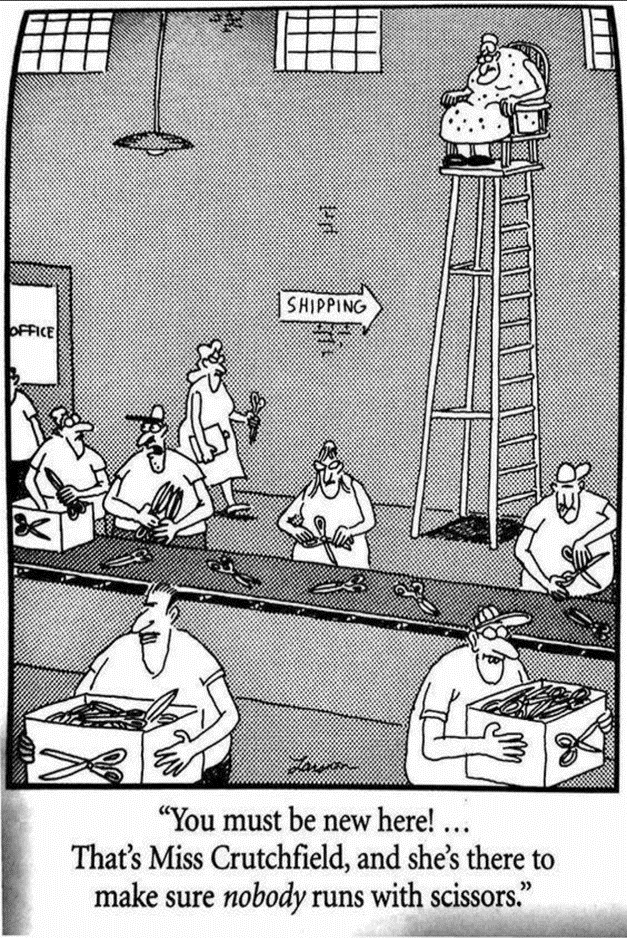
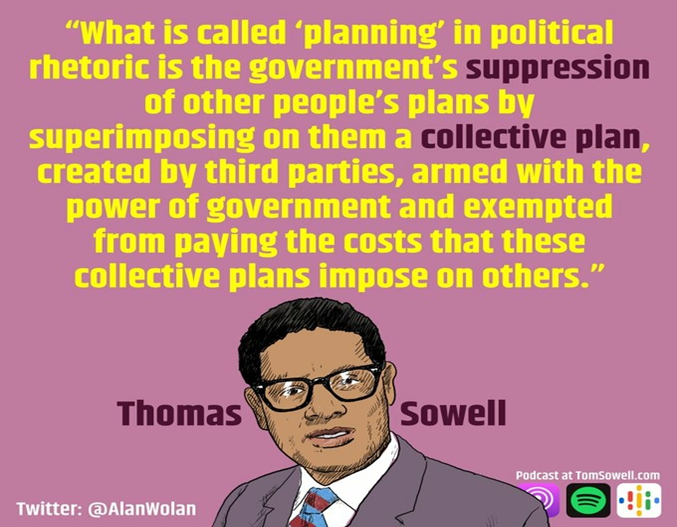
Government central planning means over-riding other people’s plans. – Thomas Sowell
“What is inadmissible, both morally and scientifically, is the hubris that pretends to understand the behavior of human agents without for a moment listening systematically to how they understand what they are doing and how they explain themselves.”
― James C. Scott, Two Cheers for Anarchism: Six Easy Pieces on Autonomy, Dignity, and Meaningful Work and Play
“Social order is not the result of the architectural order created by T squares and slide rules. Nor is social order brought about by such professionals as policemen, nightwatchmen, and public officials. Instead, says Jacobs, “the public peace—the sidewalk and street peace—of cities … is kept by an intricate, almost unconscious network of voluntary controls and standards among the people themselves, and enforced by the people themselves.”
― James C. Scott, Seeing Like a State: How Certain Schemes to Improve the Human Condition Have Failed
Here’s an inciteful brief description of James Scott’s Seeing Like a State: How Certain Schemes to Improve the Human Condition Have Failed:
“. . . the twentieth century has been racked by grand utopian schemes that have inadvertently brought death and disruption to millions. Why do well-intentioned plans for improving the human condition go tragically awry?
“The author [James Scott] builds a persuasive case against “development theory” and imperialistic state planning that disregards the values, desires, and objections of its subjects. He identifies and discusses four conditions common to all planning disasters: administrative ordering of nature and society by the state; a “high-modernist ideology” that places confidence in the ability of science to improve every aspect of human life; a willingness to use authoritarian state power to effect large- scale interventions; and a prostrate civil society that cannot effectively resist such plans.” (Emphasis mine.)
What remains of hubristic endeavors. . .
I met a traveller from an antique land
Who said: Two vast and trunkless legs of stone
Stand in the desert. Near them, on the sand,
Half sunk, a shattered visage lies, whose frown,
And wrinkled lip, and sneer of cold command,
Tell that its sculptor well those passions read
Which yet survive, stamped on these lifeless things,
The hand that mocked them and the heart that fed:
And on the pedestal these words appear:
“My name is Ozymandias, King of Kings:
Look on my works, ye Mighty, and despair!”
No thing beside remains. Round the decay
Of that colossal wreck, boundless and bare
The lone and level sands stretch far away.
— Percy Shelley, “Ozymandias”, 1819
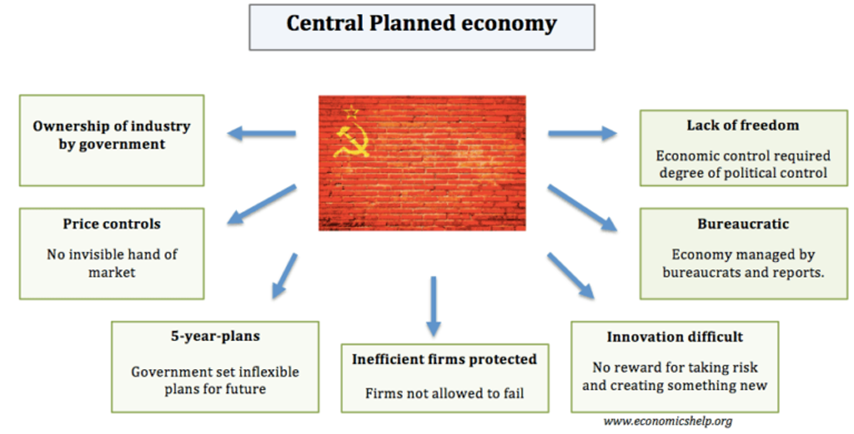
31 reasons why central planning failed in the Soviet Union | by Charles Orton-Jones | Medium
~~~~~
That Hideous Strength: Is technology dangerous?
Alister McGrath explores how CS Lewis addresses the perceived conflict between God and science in That Hideous Strength. What insights can Lewis give about pertinent issues such as the atomic age, eugenics and Artificial Intelligence? When does technology becomes technocracy and why was Tolkien so anti tech? What are some of the ways religion is being challenged and how does Lewis expose these critiques?
#143 That Hideous Strength: Is technology dangerous? – ThriveCast
John J. Miller is joined by Michael Ward of the University of Oxford to discuss C. S. Lewis’s That Hideous Strength.
The Great Books — Episode 224: ‘That Hideous Strength’ by C. S. Lewis | National Review
~~~~~





























Honey, They Shrunk the Choice Architecture
May 26, 2024 Leave a comment
You and I being are being directed to change our behaviors.
Felt a Nudge lately? A reminder to do something to better your health, your finances, the environment? Felt a Nudge during COVID to mask and social distance and sanitize and to be vaccinated?
Felt a Nudge Down With RYBELSUS? A Nanny State Nudge to buy into a government service? A pop-up nudge? A click-bait nudge? A text nudge? A nudge to buy something before its gone? A nudge to pay for something using only digital payment and not cash? A Nurge (Urgent Nudge) to decarbonize to prevent “climate catastrophe”?
Behavioral science is being used to direct our decisions.
Influencing behavior in a libertarian paternalistic way with active engineering of choice architecture is behind the concept of nudge theory developed by Richard Thaler, a professor of economics and behavioral science at the University of Chicago.
Why influence behavior in a libertarian paternalistic way? It has been said that . . .
“In recent decades, behavioral economists have shown that, out of impulse, impatience, or ignorance, people often make choices that are not the best or even good for them: we are not the rational self-interest maximizers that conventional economists have long assumed [see “The Marketplace of Perceptions,” March-April 2006].” Cass Sunstein on the constitution in the 21st century | Harvard Magazine
The “nudge”, a gentle prompt that influences people’s behavior in a predictable way, was popularized in the 2008 book Nudge: Improving Decisions About Health, Wealth, and Happiness, by behavioral economist Richard Thaler and legal scholar Cass Sunstein. The book discusses how it is both possible and legitimate for private and public institutions to affect behavior, while maintaining freedom of choice, to help steer people to people make better choices in their daily lives, because in Thaler’s and Sunstein’s assessment . . .
“People often make poor choices—and look back at them with bafflement!” And . . .
“We do this because, as human beings, we all are susceptible to a wide array of routine biases that can lead to an equally wide array of embarrassing blunders in education, personal finance, health care, mortgages and credit cards, happiness, and even the planet itself.”
Nudge theory is based upon the idea that by shaping the environment, also known as the “choice architecture” – a term coined by Thaler and Sunstein in their Nudge book – one can influence the likelihood that one option is chosen over another by individuals who feel in control of the decisions they make.
Terms
Choice architecture is the framing of different ways choices are presented. These would include the number of choices presented, the manner in which attributes are described, and the presence of a “default.” One example: how food is displayed in cafeterias. Offering healthy food at the beginning of the line or at eye level can contribute to healthier choices.
Libertarian paternalism is an oxymoronic term coined by Richard Thaler. Being “Libertarian” “means being free to make your own choices about your own life, that what you do with your body and your property ought to be up to you. Other people must not forcibly interfere with your liberty, and you must not forcibly interfere with theirs.”
Paternalism is “A policy or practice of treating or governing people in a fatherly manner, especially by providing for their needs without giving them rights or responsibilities. Paternalism can be “excessive governmental regulation of the private affairs and business methods and interests of the people; undue solicitude on the part of the central government for the protection of the people and their interests, and interference therewith.”
A Libertarian approach preserves freedom of choice and being able to opt out. A paternalistic approach assumes a restriction of choice. Libertarian paternalism is “an approach that preserves freedom of choice but that authorizes both private and public institutions to steer people in directions that will promote their welfare.”
Nudge is a gentle prompt that influences people’s behavior in a predictable way to make better decisions. It doesn’t mandate, order, enforce, or control. It uses motivational techniques most people respond to – such as the need to fit in with social norms. A nudge is meant to move people toward the best decisions for ourselves, our families, and our society, without restricting our freedom of choice.
“Nudging, like persuasion, can be used with more or less ethical intentions. When it is less ethical it is known as Sludge. A lot of nudging involves changing a choice architecture that people are faced with.”
10 Important Nudges: Simple Things That Can Change Behaviors – The World of Work Project
Examples of using “choice architecture”:
In Retail:
1. Placement of items in a store
2. Use of scarcity and social proof in marketing
3. Use of loyalty programs and rewards
In Technology:
1. Default settings on devices and apps
2. Push notifications and reminders
3. Gamification of tasks and activities
In Health and Wellness
Use of reminders and goal-setting tools
Design of workout spaces and equipment
Use of social support and accountability
In Finance
1. Automatic savings and investment plans
2. Design of banking apps and websites
3. Use of behavioral economics in financial education
Nudge Theory: Definition and 10 Examples (2024) (helpfulprofessor.com)
Small nudges to giant leaps: Examples of nudging in the workplace (applaudhr.com)
Examples of Nudge Theory in Public Policy:
Nudging supposedly makes it easier for improved access to public services and help people achieve their goals in life.
In the UK the Nudge Unit was established in the Cabinet Office in 2010 by David Cameron’s government to apply behavioral science to public policy. The Behavioral Insights team, or “Nudge Unit”, plays a big role in helping the government formulate its response to coronavirus. “The Nudge Unit is working closely with the Department of Health and Social Care in crafting the government response. The most visible manifestation of its influence to date is in the communication around hand-washing and face touching – in particular the use of “disgust” as an incentive to wash hands and the suggestion of singing Happy Birthday to ensure hands are washed for the requisite 20 seconds.” -Jill Rutter, “Nudge Unit” | Institute for Government
Boris Johnson’s government tried to fight the coronavirus pandemic by using the nudge theory to encourage “herd immunity”.
The Canadian Behavioural Insights Team (BIT), established in 2014, emerged from the original “Nudge Unit” in the British government, which was founded in the Cabinet Office in 2010. It uses a consultancy model to support government and the not-for-profit sector to support BI [behavioral insights] policy interventions. Nudging the way to better public policy (irpp.org)
One example in Canada is to make Elections and voting day need an injection of fun and celebration. Nudge theory illustrates ways to inspire anyone too busy, too “irritated” to vote.
Personal freedoms are a fundamental value of our liberal democracy. Citizens have the choice to opt out of participating. Thus, we should focus on making voting easier to opt into but not mandatory. We should act in ways that will nudge, not force, people to the voting booth.
We need to nudge joy into voting (irpp.org)
Both David Cameron and Barack Obama employed the nudge theory to advance domestic policy goals in their countries.
In the U.S. . . .based on research from University of Chicago economist Richard Thaler and Harvard law school professor Cass Sunstein, Obama’s regulatory czar. . . who argued in their 2008 book “Nudge” that government policies can be designed in a way that “nudges” citizens towards certain behaviors and choices. . .
On September 15, 2015, Obama issued Executive Order 13707 “Using Behavioral Science Insights to Better serve American People” directing Federal Government Agencies to apply Behavioral Science Insights to design their policies and programs.
Per Donald Marron at Forbes:
“President Obama established the unit—officially known as the Social and Behavioral Sciences Team (SBST)—to use insights from psychology, behavioral economics, and other decision sciences to improve federal programs and operations. Those social sciences increasingly appreciate what regular folks have long known: people are imperfect. We procrastinate. We avoid making choices. We get confused and discouraged by complex forms. We forget to do things. We sometimes lack the energy to weigh decisions thoroughly, so we act based on what we think our peers do or how choices are framed. And we sometimes cut corners when we think no one is looking.”
The Executive Order also charges the Social and Behavioral Sciences Team (SBST), a cross-agency group, to make it happen.
Per Megan Fella at Obama’s effort to ‘nudge’ America (politico.com)
“Ultimately, knowing what drives us puts us in the driver’s seat.” – Susan M. Schneider
The Social and Behavioral Science Team (SBST) is a small, but mighty group of leading behavioral scientists and innovators from across the country. Housed within the Office of Evaluation Sciences at GSA, the SBST realizes that “seemingly small barriers to engagement…can prevent programs from effectively reaching the people they are intended to serve” and that “an effective and efficient government must, therefore, reflect our best understanding of human behavior.”
According to Meet the Social and Behavioral Science Team (usa.gov):
In order to create a better government, the SBST looks for opportunities in four aspects of program design:
Streamlining access to programs and benefits
Improving how government presents information to consumers, borrowers, and program beneficiaries
Enhancing how government presents and structures choices within programs
Examining the frequency, presentation, and labeling of benefits, tax credits, and other incentives
Chuck Ross, on September 15, 2015, voiced his concerns: Obama’s Nudge Brigade: White House Embraces Behavioral Sciences To Improve Government (forbes.com)
“President Obama’s federal health care law, Obamacare, is replete with “nudge” language and experimentation. . .
“Another nudge contained in Obamacare was brought to light in the debate over whether the individual mandate contained in the law was a tax hike.
“Republicans insisted that it was a tax increase, but the White House portrayed it as a penalty on the logic that the word “tax” has a negative connotation.
While the Obama administration touted nudge policies, others were hesitant to get on board.
““I am very skeptical of a team promoting nudge policies,” Michael Thomas, an economist at Utah State University, told Fox News in 2013.
““Ultimately, nudging…assumes a small group of people in government know better about choices than the individuals making them.”” (Emphasis mine.)
The purpose of this post is to provide a simplified overview of behavioral science manipulation tactics being used and to make readers aware of “nudging”. The little pokes and prods to improve behavior sound benign:
“Sunstein defines nudges as “simple, low-cost, freedom-preserving approaches, drawing directly from behavioral economics, that promise to save money, to improve people’s health, and to lengthen their lives”—small pushes in the right direction, like a restaurant disclosing the calorie count of each dish so patrons are more likely to order healthy food, or a company setting up its 401(k) plan so employees are automatically enrolled in the savings program and must choose to opt out.”
– Lincoln Caplan, Cass R. Sunstein – Harvard Law School | Harvard Law School
Richard Thaler – Nudge: An Overview (youtube.com)
My concerns:
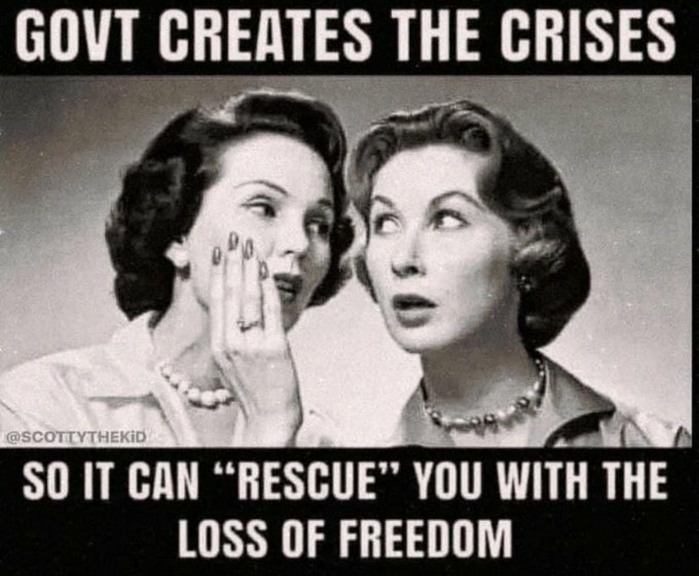
Who’s nudging me? Who’s arranging my choices? Who’s engineering my “choice architecture” and by what values?
Using motivational techniques most people respond to – such as the need to fit in with social norms to positively change people’s behavior, I’m OK with. Automatically enrolling employees in an optional 401(k), for instance, or easily allowing organ donors to opt out, I’m OK with. But what about the motivational techniques behind consequential choices like healthcare or the COVID vaccine or whether I need more government decision making in my life? Can I opt of the choices given me?
As employed by government policies and programs, behavioral science “nudging” seems to be making big government more attractive and more conducive for an individual to rely on government for more and more decision making. Nudge’s low intensity manipulation seems to always advance the goals of the federal government while couched in ways as helping people make good decisions. As such, “nudging” seems to be growing the Nanny State.
Certainly, there are concerns about the ethics of nudging. Nudges can engineer people’s choices to reach certain ends desired by a policy maker. A policy “choice architecture” can, by design, make certain options have a greater chance of being chosen. Ergo, the government should be transparent in its behavioral approaches to ensure that policymakers, media, and the public have the evidence they need to judge their merits. Yet, I don’t every government agency will be transparent with its manipulation or propaganda.
When nudging seeks to frame behavior with limited choices to achieve a political outcome, then formerly well-intentioned nudges give way to outright manipulation. We will then be influenced to do whatever those in power want done. Example: When “We’re all in this together” becomes the stigmatizing “The pandemic of the unvaccinated.”
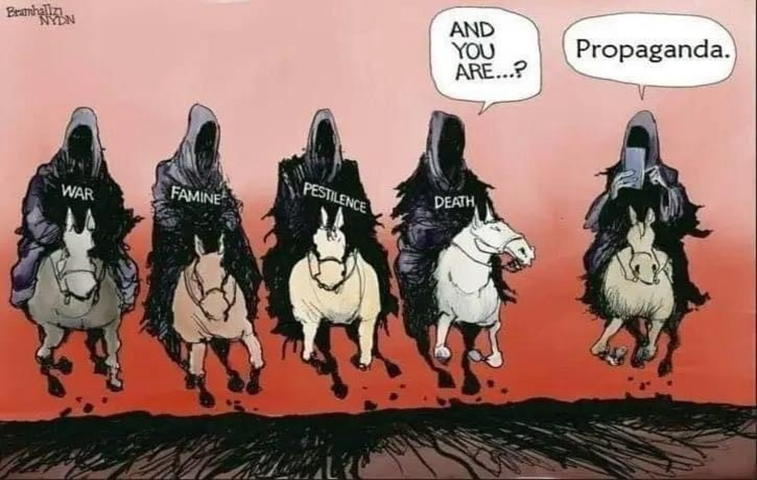
What happens when the owners of a technocratic control group known as social media shrink your choice architecture” on the inter-web and you do not see all there is to know? Such frames are difficult to combat because we are not often presented with the alternative frame, and thus we often don’t realize how the frame we see affects our decisions.
When information leading to truth is censored by technocrats with government approval, tyranny is slowly being put in place to rob common people of their health, savings, freedoms, and their futures. In other words, “Freedom of choice be damned!”
You will want to read this>> Exposing The CIA’s Secret Effort To Seize Control Of Social Media | ZeroHedge
What happens when sensible “choice architecture” that nudges people toward the best decisions for themselves, their families, and society without restricting freedom of choice, shrinks to “choose this or else” as with a mandate? “Honey, they shrunk the Choice Architecture and have grown the size of their influence!”
A [San Francisco Democrat’s] bill before California lawmakers would require new cars sold in the state in coming years to beep a warning whenever drivers exceed the speed limit by at least 10 mph
New cars in California could alert drivers for breaking the speed limit – ABC News (go.com)
According to the write up, the signal can be turned off – the driver’s choice architecture.
~~~~~
More information:
Richard Thaler won the 2017 Nobel Prize in Economic Sciences for his “contributions to behavioral economics.”
Cass Sunstein is an American legal scholar known for his work in constitutional law, administrative law, environmental law, and behavioral economics. Cass R. Sunstein – Harvard Law School | Harvard Law School
“From 2009 to 2012, he was Administrator of the White House Office of Information and Regulatory Affairs [under Obama], and after that, he served on the President’s Review Board on Intelligence and Communications Technologies and on the Pentagon’s Defense Innovation Board. Mr. Sunstein has testified before congressional committees on many subjects, and he has advised officials at the United Nations, the European Commission, the World Bank, and many nations on issues of law and public policy. He serves as an adviser to the Behavioral Insights Team in the United Kingdom.”
How Nudging Can Change Customer’s Behaviour – Radiant Copywriting
Frontiers | Nudge politics: efficacy and ethics (frontiersin.org)
Nudge and Nudging in Public Policy | SpringerLink
Nudging in Public Policy | Oxford Research Encyclopedia of Politics
Behavioural Insights Team: ethical, professional and historical considerations | Behavioural Public Policy | Cambridge Core
Nudge theory: what 15 years of research tells us about its promises and politics (theconversation.com)
Nudge theory doesn’t work after all, says new evidence review – but it could still have a future (theconversation.com)
Barriers to Converting Applied Social Psychology to Bettering the Human Condition (tandfonline.com)
There’s a backlash against nudging – but it was never meant to solve every problem | Cass Sunstein | The Guardian
Freedom and Flourishing: Is economics becoming a branch of psychology?
Nudge: How Small Changes Can Significantly Influence People’s Choices – Effectiviology
~~~~~
Winston Marshall Matters
Laura Dodsworth is a photographer, artist and author. In her most recent book Free Your Mind: The New World of Manipulation and How to Resist it, Laura draws on the Nudge Unit, behavioral psychology and fact checking services to analyze the range of ways in which our minds are manipulated. On the podcast, Laura talks about the government propaganda machine and how this all relates back to issues such as climate catastrophe, the pandemic and free speech.
Laura Dodsworth: How to protect yourself from government propaganda | The Spectator
Learn how to recognize and resist the daily attempts to control and manipulate your mind.
There is a war on for your mind. You may not notice, but you are surrounded by manipulators: advertisers, politicians, big tech, even the humble waiter who asks, ‘Still or sparkling?’
Free Your Mind is your field manual to surviving the information battlefield. In this indispensable book, Laura Dodsworth and Patrick Fagan draw on interviews with mind-control experts ranging from monks to magicians, infiltrate cults and forums to uncover their most deceptive techniques and expose the hidden tactics used to influence you, from social media to subliminal messages.
Free Your Mind: The must-read expert guide on how to identify techniques to influence you and how to resist them: Amazon.co.uk: Dodsworth, Laura, Fagan, Patrick: 9780008600945: Books
This is a book about fear. Fear of a virus. Fear of death. Fear of losing our jobs, our democracy, our human connections, our health and our minds. It’s also about how the government weaponised our fear against us – supposedly in our best interests – until we were one of the most frightened countries in the world.
A State of Fear: How the UK government weaponised fear during the Covid-19 pandemic: Amazon.co.uk: Dodsworth, Laura: 9781780667201: Books
~~~~~
I have often posted about those who seek to engineer our lives – my previous post Central Planning or I Know What I Know?
I am cynical about those who seek to control us for “our own good.” There are always people in the world who want to manipulate and control others to have them make ‘better’ decisions, i.e., think like them. And this is true in the church:
There’s a growing list of the controlled opposition’s shaming screeds promoted on MSNBC to influence voters by making them feel morally superior if they make the ‘right’ choice: to not support and vote for Trump.
These Nudge-mental authors want to move you in the direction of being an ‘acceptable’ Christian and to be politically ‘acceptable’ in their eyes.
Tim Alberta and The Kingdom, the Power, and the Glory: American Evangelicals in an Age of Extremism, published December 5, 2023
Tom Schaller and Paul Waldman with White Rural Rage: The Threat to American Democracy published on February 27, 2024
Jim Wallis: The False White Gospel: Rejecting Christian Nationalism, Reclaiming True Faith, and Refounding Democracy, published April 2, 2024
The After Party: Toward Better Christian Politics, Nancy French and Curtis Chang, based on project by David French, Russell Moore & Curtis Chang, published April 23, 2024
Ironically, these holier-than-MAGA disparagers no doubt benefitted from Trump’s presidency. There was peace and prosperity. There were no wars. Look at Trump’s Middle East peace deal. There was no invasion of our southern border. Inflation was around 2%. People had money to support themselves and to give to charitable causes like The Roy’s Report and The Trinity Forum, (where these guys hawk their wares.)
During those four years and since, these guys sit around and nitpick about people who are not like them at great benefit to themselves.
And please don’t tell me they are writing these things to protect Jesus from the rabble. “Put down your sword, Peter.” Jesus – very God – is not beholden to anyone for protection.
~~~~~
Well before Nudge, the book of Proverbs talked about those who act out of impulse, impatience, or ignorance. Proverbs talked about people who often make choices that are not the best or even good for them. What Does the Book of Proverbs Say About Fools? – Bible Gateway Blog
Wisdom was in place long before Nudge came along:
The Lord Created me [Wisdom] at the beginning of his work, the first of his acts of old, Proverbs 8:22-31
Wisdom, personified as a female in the book of Proverbs, aspires to produce much more than a nudge toward a rational self-interest maximizing approach to decision making. Wisdom’s desire is to expand one’s personal bandwidth with the experience of the knowledge and fear of God.
Wisdom wants you to tap into God’s creation.
Wisdom is coupled with humility – you don’t have all the answers. (I get the image of a wife telling her husband to ask for directions when they are lost.)
You can ask God for wisdom in your decision making and God will supply you with wisdom.
Trust in the LORD with all your heart,
and lean not on your own understanding;
in all your ways acknowledge Him,
and He will make your paths straight.
Be not wise in your own eyes;
fear the LORD and turn away from evil.
This will bring healing to your body
and refreshment to your bones. Proverbs 3:5-8
“The wise shall inherit glory (all honor and good) but shame is the highest rank conferred on [self-confident] fools.” Proverbs 3:35
“A foolish person will believe anything. But a wise person thinks about what he does.” Proverbs 14:15
You don’t need to be a tenuous reed in the wind, nudged in every direction. Seek wisdom from God.
~~~~~
Nudge them not before a TV screen:
“. . . while screen time may be harmless or even enriching in moderation, it’s still rife with pitfalls. Screens can tempt kids away from physical activity and imaginative play, for example, and could stunt development of critical skills like emotional self-regulation if overused.
“According to a new study, screen time for babies and toddlers is also linked to an additional risk many parents may not have considered: developing atypical sensory-processing behaviors. . .
“The behaviors include “sensation seeking” and “sensation avoiding” – when a child seeks out more intense sensory stimulation or is more averse to intense sensations, respectively – as well as “low registration,” a lower sensitivity or slower response to stimuli.”
Screen Time Could Have a Surprising Effect on Our Children’s Ability to Process Sensations : ScienceAlert
There be NO Health choice architecture if Dr. Tedros of the WHO becomes the health dictator:
Exposing WHO Chief Dr. Tedros: Militant Marxist and China Stooge (rumble.com)
The World Health Organization is working with the European Union to roll out international, interoperable digital IDs. If you go to the World Economic Forum website these digital IDs are touted as means to enrich our lives by making the following tasks easier: Accessing healthcare, opening a bank account, traveling, engaging in online transactions, accessing Medicare/Medicaid, voting, and paying taxes. Without these IDs, you won’t be able to do any of those things. Or, if you step out of line in some way (say, if a certain vaccine is mandated that you refuse), the WHO could interfere with your digital ID to limit your access to any of these very basic activities. (Emphasis mine.)
Reggie Littlejohn: “We Should All Be Worried About The WHO’s Pandemic Treaty”
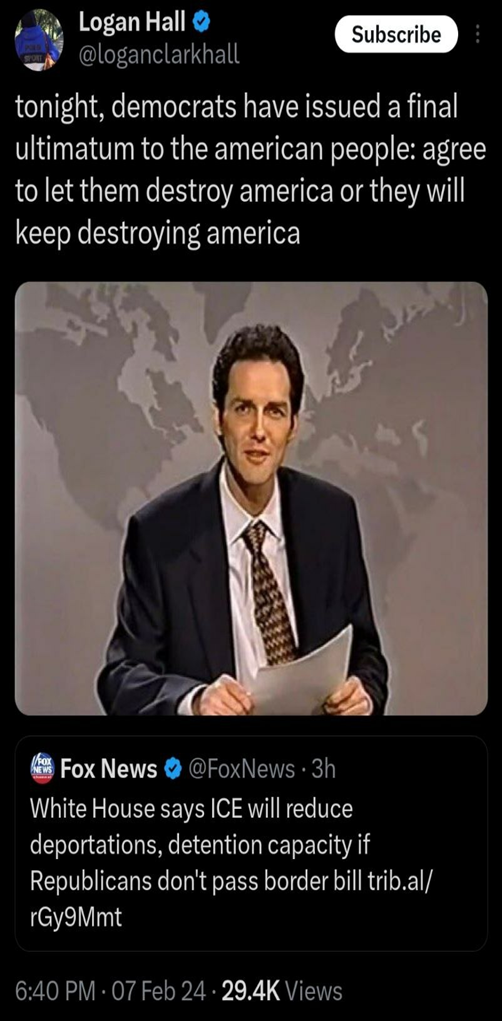
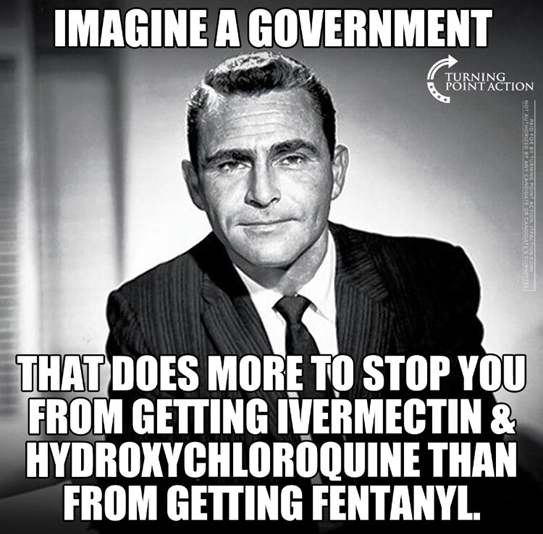
Celebrity “Nudge-mentalism”:
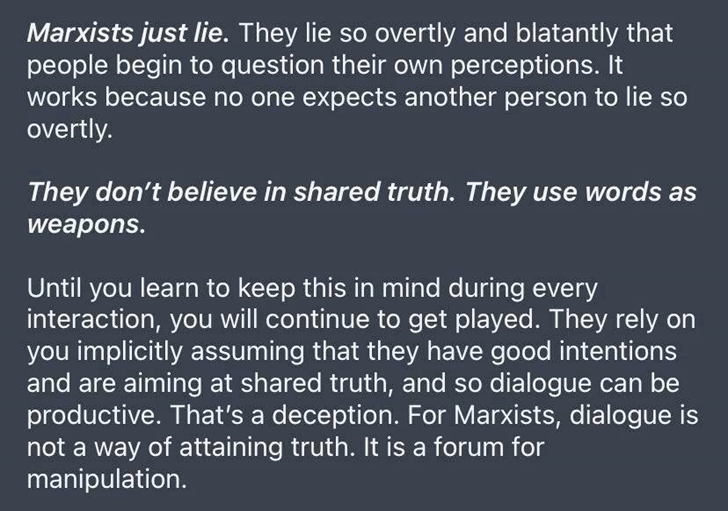
Nudge-truth:
Rate this:
Filed under 2024 Current Events, Culture, social commentary, social engineering Tagged with behavioral economics, behavioral policy, behavioral science, Cass Sunstein, choice architecture, culture, Nudge, politics, Richard Thaler