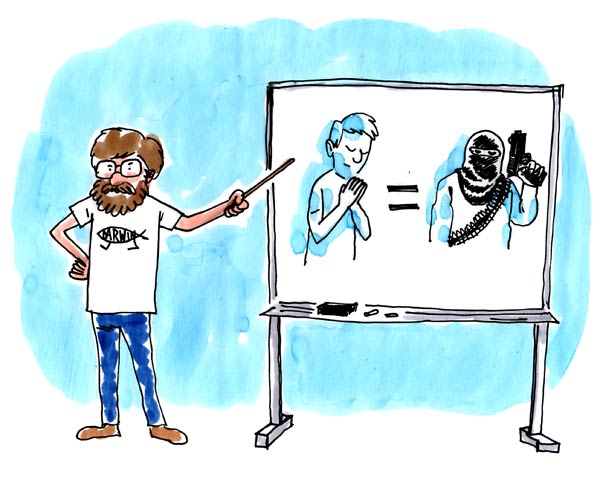
Sea Change

Primordial disorder is the image presented at the opening of the creation account in Genesis. The earth, formless and empty (tohu wabohu), was completely covered by a deep (tehom) sea.

When God began to create the heavens and the earth, the earth was complete chaos, and darkness covered the face of the deep, while a wind from God swept over the face of the waters. – Genesis 1: 1-2

Earth’s oceanic outer layer undergoes a sea change when the Spirit of God’s hovers.

Psalm 104: 5-9 describes, in poetic form, the ordering of the watery chaos:

He set the earth on its foundations;
    it can never be moved.
You covered it with the watery depths as with a garment;
    the waters stood above the mountains.
But at your rebuke the waters fled,
    at the sound of your thunder they took to flight;
they flowed over the mountains,
    they went down into the valleys,
    to the place you assigned for them.
You set a boundary they cannot cross;
    never again will they cover the earth.

Reading on in Psalm 104 (v. 10-13) we find function. Channeled water provides the basic necessity for life on earth. Food growth follows.

Chaos Creatures Serve a Function

Once the chaotic waters of the primordial sea had been assigned functions, God, on the fifth day, created sea monsters, figures of menacing chaos (Gen. 1:21). Why bring order and then allow chaos creatures to exist? By God’s wisdom, we live in a world that has order, non-order, and disorder (See video below).

Mythical creatures from pagan myths, function in scripture as symbols of primordial chaos and opposition to God: sea-monsters, serpents, beasts, and dragons. Revelation presents them as fighting against God’s faithful witnesses who are working to restore order and bring God’s kingdom on earth.[i]

Sea Change Number Two

God created (gave functions to) the material cosmos over six days. Genesis 1 is a day-by-day account of establishing order from primordial disorder, establishing anthropic conditions and temple building. God pronounced each step in functional readiness “Good.” On the seventh day, he ‘rested’ in his temple to survey what had been done. The temple garden is a metaphor for the world.

Genesis 2. Mankind is placed in the temple garden and given instructions to maintain the good by God. But mankind goes off in a disordering direction. Evil and chaos ensues. God then acts to undo creation with the flood waters of chaos[ii] and to restore his “good” creation. Noah is the new caretaker.

Now the earth was corrupt in God’s sight and was full of violence. God saw how corrupt the earth had become, for all the people on earth had corrupted their ways. So, God said to Noah, “I am going to put an end to all people, for the earth is filled with violence because of them. . .

I am going to bring floodwaters on the earth to destroy all life under the heavens, every creature that has the breath of life in it. Everything on earth will perish. Genesis 6: 11-13, 17

Sea Change Recalled

One day, Jesus’ disciples wanted Jesus to notice the temple buildings. Jesus then foretold the destruction of the temple. The perplexed and anxious disciples asked “Tell us, when will this be, and what will be the sign of your coming and of the end of the age?”

Jesus goes on to speak of the signs of the end of the age. He then speaks about the necessity of watchfulness for, he tells them, no one knows the day or hour when end things will come to pass. To underscore this, he references a familiar story that involved a cataclysmic event that caught many unprepared.

 For as the days of Noah were, so will be the coming of the Son of Man. For as in the days before the flood they were eating and drinking, marrying and giving in marriage, until the day Noah entered the ark, and they knew nothing until the flood came and swept them all away, so, too, will be the coming of the Son of Man. – Matthew 24:36-39

History Lesson About the Moral Universe

The apostle Peter, in his second letter, tells his readers that there are scoffers who are saying that things on this earth have always continued the way they are now. He reminds them that this is not true. The earth was different when it was created and it was different again after the flood. He warns them that no one should scoff that God will make it different once again, judging the godless not with water but with fire. (2 Peter 3)

Jesus’ second coming will be a sea change for all of creation. Chaos will be removed.

It is Time for a Sea Change

Peter warned his readers, with reference to the Great Flood, about what can be expected if they continue as they are. John the Seer, alluding to the Great Flood in Revelation, writes that it is time (in his prophetic timeline) “for destroying those who destroy the earth.” – Revelation 11:18

“The ‘destroyers of the earth’ are the powers of evil: the dragon, the beast, and the harlot of Babylon (who in [Rev.] 19:2 is said to have ‘corrupted – or destroyed – the earth with her fornication’). With their violence, oppression, and idolatrous religion they are ruining God’s creation. His faithfulness to his creation requires that he destroy them in order to preserve and deliver it from evil. . .  This he did in the flood, which was a divine judgement aimed at delivering God’s creation from the ruinous violence of its inhabitants.”[iii]

John the Seer wrote Revelation in the context of the tyranny of the Roman Empire, the imperial cult, and a permissive and polytheistic culture. The apostle Paul, in the same setting, writes to a church with a more detailed description of the ruinous inhabitants of the earth and their similar fate:

Do you not know that wrongdoers will not inherit the kingdom of God? Do not be deceived! The sexually immoral, idolaters, adulterers, male prostitutes, men who engage in illicit sex, thieves, the greedy, drunkards, revilers, swindlers—none of these will inherit the kingdom of God.  -1 Corinthians 6:9-10

I imagine that the proud, the perverse, the purposefully vague, the self-serving, and those who want to create a new humanity with demonic forces[iv] – any who plunder the created order for power, wealth and self-righteous ends will be met with divine judgement. Some will receive punishment that matches their sin (Rev. 16:8; 18:6; Rev. 22:18-19).

John the Seer prophesied about an end time involving a series of warning judgements to bring about repentance and the ultimate restoring of creation’s order from mankind’s reversion of it to chaos.

Final Sea Change

Scripture begins by telling an old story and ends by retelling the old story with a new and final outcome. Both narratives involve chaos and creation. The lynchpin of the two theological narratives – Genesis 1-11 and Revelation – and of history itself is the earthly, risen, and returning Jesus.

A final sea change occurs to restore creation. John the Seer writes:

Then I saw a new heaven and a new earth, for the first heaven and the first earth had passed away, and the sea was no moreRev. 21:1

Creation is not destroyed, just as it wasn’t with the Great Flood. Rather, creation’s corrupting influence is removed. Think in terms of no longer being overcome by evil but the overcoming of evil with good. Think in terms of “if anyone is in the Messiah, there is new creation! Old things have gone, and look – everything has become new!” (2 Cor. 5:17)

“The waters of the primeval abyss, that represent the source of destructive evil, the possibility of the reversion of creation to chaos, are finally no more.”[v]

~~~~~

Lent is a time for a sea change. It’s a time to remove chaos from your life.

This Lent appears to be the first time that corruption, misuse of funds, money laundering, excess, and disorder in the government are being shown the detox door. Hence, the weeping and gnashing of teeth in the MSM. Hence, destroyers of the earth want the chaos to continue as before.

A leviathan in Washington recently surfaced. What emerged was corrupt and destabilizing influence involving actors in the State Department, the Department of Defense, the “deep state”, the unaccountable administrative state, the unchecked CIA meddling in foreign affairs and a politically motivated FBI meddling in internal affairs, activist DOJ and federal judges, shady non-profits, and the propaganda of the MSM to maintain cover for the chaos.

Maelstroms are sucking us in: a proxy war with Russia, Middle East conflicts, a huge federal deficit, out of control spending by Congress, the Green New Deal wealth redistribution scam, and what to do with the over 12 million illegal economic migrants bringing with them neediness, disease and crime.

In the first 50 days of the Trump administration, ICE reported arresting over 14,000 convicted criminals, 9,800 migrants with pending criminal charges, 1,155 suspected gang members, and 44 foreign fugitives.

An additional 8,718 arrests were categorized as “immigration violators.”

ICE has arrested 32,000 violent criminals in Trump’s first 50 days.

And there’s a new beast on the horizon – AI.

AI is being touted as a new pathway to greater productivity (Why do we need that? For greater profits? To be unburdened by what has been?). It is said that disruptive AI will transform the workplace, replace jobs, shake up economies and reshape global alliances. Our world, with Promethean AI, will look different by 2030. AI will look at us differently, too.

~~~~~

Dr. John Walton, Job, Lecture 25, The world in the Book of Job: Order, non-order and disorder


[i] The creation of the “sporty” Leviathan (Ps. 104:26), a creature that cannot be tamed, shows us God’s mastery over powerful creatures. Leviathan was used metaphorically to instruct Job (Job 41). Job (a behemoth-like creature) cannot tame God to his ideas of how the world works.

[ii] Consider that several ancient Near East accounts of a devastating flood were understood as a god using force to restore order in the world. See Genesis 6-9 for the theological interpretation of the mythic flood.

The writer of the Genesis Flood account, using hyperbole, wanted to impress upon the reader the theological implications of a universal “cataclysmic event” that occurred to restore creation. There was no global deluge, as science has determined and Ps 104: 9 indirectly states. No matter. The author wanted the reader to understand the theological significance of God’s act.

See also Genesis and the Flood: Understanding the Biblical Story – Article – BioLogos;

The Lost World of the Flood: Mythology, Theology, and the Deluge Debate

The Flood – Undeceptions

[iii] Bauckham, Richard. (1993/2018). The Theology of the Book of Revelation. Cambridge University Press, 1993. https://doi.org/10.1017/cbo9780511819858. PP 52

[iv] Yuval Harari, historian and futurist, gay Israeli and WEF advisor comes to mind and so does the N.I.C.E., The National Institute of Coordinated Experiments in That Hideous Strength by C.S. Lewis

[v] Ibid 53

~~~~~

Protect our food supply from the Cure worse Than the Problem

Action Over Talk: Join the Nationwide Protest Against Food Supply mRNA!

This Friday, Americans across the country are coming together to take a stand. Concern is growing as Secretary Rollins moves closer to approving mRNA vaccines for the beef, dairy, and poultry industry to combat diseases like Avian Flu. Many are voicing their opposition, demanding that these vaccines not be used in our food supply.

 Make Your Voice Heard! Flood Secretary Rollins’ email with your concerns:

AgSec@usda.gov

Contact Secretary of Agriculture Brooke Rollins of whitehouse

Here is a structured email template for Secretary @BrookeLRollins:

Subject: Immediate Halt to Meat Supply Vaccination

Dear Secretary Rollins,

As Americans who supported the election of Donald J. Trump, we are deeply concerned about your plan to introduce vaccines into our nation’s meat supply, including pork, cattle, poultry, and even seafood.

We do not merely request a pause—we demand a complete and permanent stop to this effort. The American people will not accept government-mandated intervention in our food supply, especially without full transparency and consent.

If the USDA continues to push forward with testing and implementation of the H5N1 vaccine, we are prepared to take action. Our voices will not be ignored, and we will make it clear to President Trump that millions of Americans oppose this overreach.

We stand firm in our right to protect our food, our health, and our families. This is non-negotiable.

Sincerely,
[Your Name]
[Your State]

With the news that mRNA vaccinated beef, dairy, eggs, and poultry are already in the food supply, some are demanding to know where our Secretary of Health is. You’ll be pleased to know he’s practicing self-care with long walks in the mountains, while currently reposting advice from the CDC. 

https://x.com/SecKennedy

Reentry

April 1961. The first human to travel into space returned to Earth after traveling 17,500 mph for 108 minutes. He circled the earth once at a maximum altitude of 203 miles.

About 4.35 miles above the Earth, Russian cosmonaut Yuri Gagarin ejected from Vostok 1, a pressurized spherical capsule just two meters wide. He parachuted to the ground.

This first of its kind scientific event made Gagarin a space hero and made for a compelling narrative for the Soviet system to promote socialism and scientific atheism:

“For Soviet Communism, cosmonauts were utopianism made flesh – Socialist Realist heroes come to life – and Socialist Realism and socialist reality were never closer than during the Soviet space age.”[i]

After Joseph Stalin died on March 5, 1953, Soviet leaders during the Khrushchev era (1953-1964) were eager for a return to party purity. Stalin had given up trying to purge religion from Soviet Russia. He had wanted to produce an atheist society. But after seeing that the stubborn religiosity of the masses could not be eradicated, he finally decided to maintain authoritarian control over it. He heavily regulated churches and church leaders to keep them politically impotent.

“Under Khrushchev, then, the party realized that it was not enough to eliminate the political and economic base of religion. In order to transform the Soviet society of the present into the Communist society of the future, religion had to be eradicated not just from Soviet politics and public life but also from Soviet people’s consciousness.”[ii]

Khrushchev’s focus on party purity meant a return to campaigns to eradicate religious “survivals” and the promotion of a scientific materialist conception of the world as outlined by Marx-Leninism. The latter, in the form of secularist rituals, was supposed to fill the void left behind by a life without religion.

Soviet space flights were thought to show the world that the Soviet’s scientific, materialist, and atheistic worldview was superior to that of the religious and capitalist U.S. After all, wasn’t science the only path to knowledge, and matter the fundamental reality? And wasn’t it reason and not God who put a man into space? And a space-hero cosmonaut who didn’t see God in space, well . . .

Before a plenary session of the Central Committee, Russian Premiere Nikita Khrushchev gave all the Party and Komsomol organizations [Young Communists] the mission of promoting anti-religious propaganda. With that directive he said: “Why are you clinging to God? Here Gagarin flew into space and didn’t see God.”

Yuri Gagarin’s close friend and colleague, Colonel Valentin Petrov, denied that Gagarin ever said that. The words put in Gagarin’s mouth by Russian Premiere Nikita Khrushchev and Gagarin’s supposed godlessness became popular folklore and a party narrative created to support atheism. The party knew that people would have believed more in Gagarin’s words than in Khrushchev’s.

“There Is No God.” (Boga net!)

From out of the heavens, Yuri Gagarin, a baptized member of the Russian Orthodox Church, reentered into a world system that set itself up opposed to God. Gagarin was made a caricature of the atheistic propaganda the party wanted to propagate.

Khrushchev: “Why should you clutch at God” (you cannot see when you look out the capsule window into space when you can envision a materialist utopia in the successful figure of our own cosmonaut Yuri Gagarin.)

~~~~~

A view through a window into heaven . . .

At the end of the first century CE, seven churches of Asia received a circular letter sent from the island of Patmos. The author composed the letter “in the spirit” on the Lord’s Day. The letter was to be read out loud in full on the Lord’s Day when Christians met for corporate worship. Their circumstances served as a type of inset in the letter’s cosmic space-time mapping.
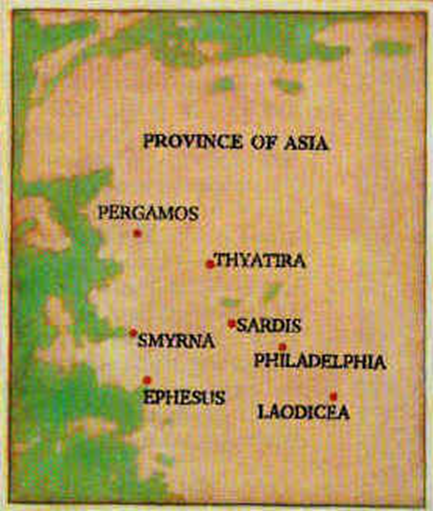
The churches were situated in a Roman province in what is now western Turkey. Some twenty years before, the Roman Empire unleashed its full power against a Jewish rebellion resulting in the fall of Jerusalem and the complete destruction of the Second Temple.

Though Christian persecution had been sporadic, the oppressive nature of the Roman Empire made for distressful times for these early Christians. Devotion to and worship of only one Lord and God kept these Christians under suspicion by Roman authorities.

The surrounding Greco-Roman culture was polytheistic. The official state religion, headed by Jupiter, was the Roman pantheon of gods. Temples to Jupiter, Mars, and Venus were built throughout Rome. Being able to add your god or goddess to the local pantheon of gods worked to keep a diversity of religions in check for Pax Romana.

The Roman empire operated under ‘divine’ authority. The emperor, both a political and a deified religious figure, held absolute power. He maintained authority through political alliances, military might and a dutiful citizenry.

Public support for the imperial cult worked to solidify the emperor’s authority. Citizens were expected to show loyalty to the ‘divine’ emperor by participating in religious festivals, rituals, and emperor worship. Neglecting the imperial cult was considered treasonous. 

Throughout the empire Roman power and political influence were on display with monuments, mosaics, iconography, frescos, and image-stamped coins. Adding to perceptions of Rome as a formidable world power was literature, inscriptions, myths, architecture, and elaborate public ceremonials.

All eyes on the emperor.

Roman imperial propaganda was also used to shape the public’s perception of the emperor. His presence, like Rome’s, was to be sensed everywhere – in public places and in the sanctuaries of the imperial cult in provincial towns.

Emperors were depicted as tough warrior and general types and as benevolent paternalistic protector and statesman types. At the time of the Patmos letter Emperor Domitian governed (81 to 96 CE) as divine monarch and benevolent despot. As such, he saw himself as a cultural and moral authority able to guide every aspect of a citizen’s life.

The expectation for everyone under Roman rule was to respond to Rome in its terms and beyond that, to show devotion to the sovereign emperor. Or, feel the force of the empire. Fear was the motivation. “Bread and circus games” were the distractions used to deflect from the fact that Roman emperors were selfish and incompetent tyrants.

The Patmos letter was sent to those who held an expectation of God’s coming universal rule and to those who lost that focus. A clash between an all-powerful Sovereign and his kingdom and the ubiquitous domineering emperor and empire was expected. The letter, with vivid prophetic imagery, did not disappoint.

Every eye will see him.

Christians in the seven churches, upon hearing “Look! He is coming with the clouds, and every eye shall see him, yes, even those who pierced him. All the tribes of the earth shall mourn because of him. Yes! Amen,” looked out the window of their imagination to see Christ and the coming of God’s universal rule.

As the letter was read, they recognized the “satanic trinity” fighting against them and God’s kingdom on earth: “the dragon or serpent (the primeval, supernatural source of all opposition to God), the beast or sea-monster (the imperial power of Rome), and the second beast or earth-monster (the propaganda machine of the imperial cult).”[iii]

And they heard a devastating critique of Roman power dynamics. The letter recognized “the way a dominant culture, with its images and ideals, constructs the world for us, so that we perceive and respond to the world in its terms. Moreover, it unmasks this dominant construction of the world as an ideology of the powerful which serves to maintain their power.”[iv]

They also envisioned their role in saying “No” to the idolatries of Rome (Babylon) and to be a witness of the truth worth dying for to all tribes of the earth. And then the Day of the Lord.

After hearing the letter read, the church community once again reentered into a world system opposed to their Sovereign. But now they had something their imaginations could clutch – a view of God’s throne room and of “what must soon take place” – and a counter-cultural approach for the church.

More about John’s Apocalypse or The Revelation of John in the next post.


[i] Smolkin, Victoria. A Sacred Space Is Never Empty: A History of Soviet Atheism. Princeton University Press, 2018. https://doi.org/10.2307/j.ctt1zgb089. PP 86-87

[ii] Ibid 61

[iii] Bauckham, Richard. (1993/2018). The Theology of the Book of Revelation. Cambridge University Press, 1993. https://doi.org/10.1017/cbo9780511819858. PP 89

[iii] Ibid 159

~~~~~

A counter-cultural approach for the church

In this parable of Jesus, recorded in the gospel of Mark (chap. 4), notice how the kingdom of God grows -not by power, might or militancy:

“This is what God’s kingdom is like. Once upon a time a man sowed seed on the ground. Every night he went to bed; every day he got up; and the seed sprouted and grew without him knowing how it did it. The ground produces crops by itself: first the stalk, then the ear, then the complete corn in the ear. But when the crop is ready, in goes the sickle at once, because harvest has arrived.”

~~~~~

Melanie Hempe, founder of Screen Strong, joins host Scot Bertram of Hillsdale College to discuss how to prevent your children from forming a lifelong screen addiction, simple tips for reducing screen time, and how to answer questions from other parents.

How to Combat Screen Addiction

How to Combat Screen Addiction – Hillsdale College Podcast Network

~~~~~
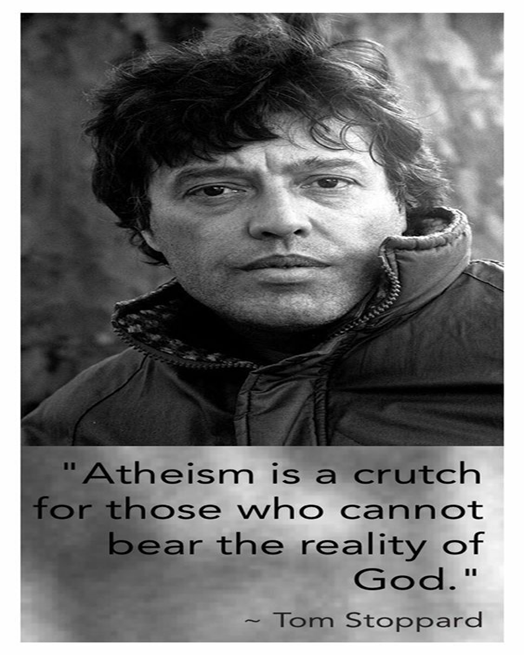
What’s Up with God?

“What’s up with God?” This question has been posed in various forms throughout history, often in the context of the problem of evil. And often with God’s existence being made contingent upon man’s assessment of God in relation to evil, as was posited by Greek philosopher Epicurus in what has become known as the “Epicurean paradox”:

If God is willing to prevent evil, but is not able to

Then He is not omnipotent.

If He is able, but not willing

Then He is malevolent.

If He is both able and willing

Then whence cometh evil.

If He is neither able nor willing

Then why call Him God?

What’s up with theodicy? Ivan Fyodorovich Karamazov, one of The Brothers Karamazov in Dostoyevsky’s masterful novel, is a sullen and withdrawn 24-year-old rationalist afflicted with great inner conflict. He rejects the world as it is because it doesn’t line up with the moral reasoning of his “Euclidean mind, an earthly mind”:

Ivan Fyodorovich Karamazov

“I accept God […] It’s not God that I do not accept, you understand, it is this world of God’s […] that I do not accept and cannot agree to accept.”- Ivan, The Brothers Karamazov, Part 2: Book 5, Chapter 3

Where is the vindication of God’s goodness and justice and the idea of a loving God in the horror of unjust human suffering—particularly the suffering of children?

Going further than Ivan, professional God-denying atheist Richard Dawkins thinks he knows what’s up with God. He’s done a “1619 Project” on God:

“The God of the Old Testament is arguably the most unpleasant character in all fiction: jealous and proud of it; a petty, unjust, unforgiving control-freak; a vindictive, bloodthirsty ethnic cleanser; a misogynistic, homophobic, racist, infanticidal, genocidal, filicidal, pestilential, megalomaniacal, sadomasochistic, capriciously malevolent bully.” Richard Dawkins, THE GOD DELUSION P.31.

It’s not just philosophers and characters in novels and atheists who question “What’s up with God?” Those who have walked in God’s presence have also thought that God as God should act in certain ways.

Job and his friends had strong inclinations as to how God should act. Their back-and-forth dialogues disclose that they thought that God should act with the retribution principle: the righteous prosper and the wicked suffer. Do your due diligence, bring offerings and sacrifices and God will return the favor. If you suffer misfortune, it is because you have made God unhappy and you are not as righteous as you thought you were.

Quid pro quo religious rituals were common throughout ancient Near Eastern history. Ancients interested in attaining a god’s favor offered sacrifices in order to receive it. Sacrifice as a form of bribery was also common during the Greek and Roman times when there were many gods to feed and take care of. The religious practitioners thought of the gods as being like them – needy. Now let’s go back in time to the first What’s up with God? situation recorded in Scripture.

As you read Genesis chapter 4 you find that the narrator, without adding any moral qualification of his own, wants the reader to assess what is said and done. Note: this Mother’s Day story doesn’t end well.

The setting: just outside the garden of Eden.

We read that brothers Cain and Abel offer the fruits of their labor to God as a sacrifice. They may have placed the offerings outside the flaming sword-protected gate of the garden. Abel offers the best cuts from the mature firstlings of his flock. Cain offers portions of what’s been growing. They both offer yields from God’s good creation, but there is an issue with one of the offerings. The narrator doesn’t give us the motives behind the offerings but we do get Cain’s reaction and God’s response.

When his offering is not considered by God, Cain became hot with anger. His face became downcast. What’s behind Cain’s response? Likely two very human attitudes: “Why was Abel’s offering accepted and not mine – No fair! Inequality! I am the oldest! What about my rights?!” and “God isn’t supposed to act this way when I give him something. What’s up with God?!”

Cain likely felt that he had rights by placing God in debt to him with his offering. He did what he felt was required and now God must do what is required and return the favor. He had made a deal with his offering perhaps thinking “If I feed God then I get a return on my investment”. As noted above, this was a typical Near Eastern attitude of brokering with the gods for favor (I am not assuming that there are only four humans on earth at this time.)

Then the Lord said to Cain, “Why are you angry? Why is your face downcast? If you do what is right, will you not be accepted? But if you do not do what is right, sin is crouching at your door; it desires to have you, but you must rule over it.” Genesis 4: 6-7

God gives Cain a free-will choice. I read it as “Do you want to be accepted or are you just looking to get your conditional ritual brokering accepted? If you want to be accepted, then do what is right with regard to me and you’ll be accepted. You doing right is infinitely more acceptable than a plateful of greens.”

Or, “Cain, you can continue going you own way. Just be ready to be pounced on and be overtaken by more of the same “What’s up with God?” behavior that overcame and killed your brother Abel. You would then live like a wild animal. Isn’t that how you imagine yourself now –as one of them, free to roam and ready to pounce? I told your parents to continue what I began – bring order to the as-yet-to-be-ordered world, to subdue and rule. Will you choose to be disorder and the sower of suffering for yourself and others?

Cain made his free-will choice. It appears that he decided that God was petty and unfair. So, he weaponized his anger toward God and destroyed his image. He brought Abel to a field and murdered him. But what happens on the field does not stay on the field. Abel’s split blood cried out to God and the “petty and unfair” God came looking for murderously unfair Cain.

“Then the Lord said to Cain, “Where is your brother Abel?” He said, “I do not know; am I my brother’s keeper?” And the Lord said, “What have you done? Listen, your brother’s blood is crying out to me from the ground!”

Cain admits no culpability. As a consequence of Cain’s attitude and actions, God curses Cain. The curse in Genesis 4 is very similar to the one in Genesis 3, except that it’s not just the ground that is cursed it is a human being that is also cursed.

“And now you are cursed from the ground, which has opened its mouth to receive your brother’s blood from your hand. When you till the ground, it will no longer yield to you its strength; you will be a fugitive and a wanderer on the earth.”

It seems that the punishment God gave Cain was Cain’s heart’s desire: to be his own man and to go his own way. But Cain balks, perhaps realizing that what goes around comes around. And so, for protection, Cain’s implied plea is for God to act like a “brother’s keeper”.

“Cain said to the Lord, “My punishment is greater than I can bear! Today you have driven me away from the soil, and I shall be hidden from your face; I shall be a fugitive and a wanderer on the earth, and anyone who meets me may kill me.” Then the Lord said to him, “Not so! Whoever kills Cain will suffer a sevenfold vengeance.” And the Lord put a mark on Cain, so that no one who came upon him would kill him. 

The Lord shows undeserved goodwill toward Cain, favor that Cain had once assumed should be automatic with his offering. The Lord treats Cain as Cain should have treated his brother Abel.

Cain should have received the death penalty. (Did Richard Dawkins ever read Genesis 4?), but instead is banished from living near the garden and the Lord’s presence. The mark placed on Cain by God means that God promises to look after Cain in exile, so that no one who came upon him would kill him. The Lord promises Cain justice in avenging his split blood.

These are very sad words: “Then Cain went away from the presence of the Lord and settled in the land of Nod, east of Eden.” (“Nod” = “wandering”)

In the land of wandering, Cain has a chance to repent and return to God. But . . .  the willful Cain goes his own way. Instead of wandering, Cain defies God and builds a city. The city for him equals protection, security, being surround by allies, and a lack of trust in God’s character.

When God didn’t respond to Cain’s offering, Cain could have asked “Why” to gain understanding but his attitude kept him from doing so. He had decided about how God should act. If Cain had asked God “Why?”, would God have answered “Just because I chose your younger brother’s offering this time doesn’t make me petty and unfair? It doesn’t mean that I don’t accept you. You don’t know me. Three dimensions cannot contain me. The fourth dimension of time allows for your understanding of me. And Cain, you assumed something about me with your petty conditional thinking. Had you asked you would have found out what I am like and what I desire. My lack of response was meant as a challenge. I wanted you to respond with questioning humility and to patiently wait for my response.”

What does the Genesis 4 narrator want to us understand? That we must begin our understanding of God with the acknowledgement of and respect for God as God? That God is Other than us? That because God has made himself present to us never means that one is on equal terms with God? That we must not try to domesticate God with our assumptions about him? That Cain thought that God would be as needy as he was for attention and that was the motive for his offering?

God prescribed a “fugitive and a wanderer on the earth” life for Cain. Exile to the land of exclusion was done, I believe, as a means for Cain to take time to reflect on his attitude and on what he had done and to come to the point of repentance and to returning to the presence of God. But self-reliant Cains hunkers down and builds a city for protection. As we shall see in a future post, cities magnify what is in the human heart.

In the Cain and Abel account, the question of “What’s up with God?” is met with “What have you done?”

*****

“The suffering and evil of the world are not due to weakness, oversight, or callousness on God’s part. But rather, are the inescapable costs of a creation allowed to be other than God.” – John Polkinghorne

*****

*****

“The cross of popular evangelicalism is not the cross of the New Testament. It is, rather, a new bright ornament upon the bosom of a self-assured and carnal Christianity whose hands are indeed the hands of Abel, but whose voice is the voice of Cain. The old cross slew men; the new cross entertains them. The old cross condemned; the new cross amuses. The old cross destroyed confidence in the flesh; the new cross encourages it. The old cross brought tears and blood; the new cross brings laughter. The flesh, smiling and confident, preaches and sings about the cross; before the cross it bows and toward the cross it points with carefully staged histrionics but upon that cross it will not die, and the reproach of that cross it stubbornly refuses to bear.” — A.W. Tozer

*****

Informed Dissent:

Vaccine Atrocities

Former Pfizer VP Dr. Michael Yeadon

Large study finds people who received COVID jab have higher risk of visual impairment – LifeSite (lifesitenews.com)

SARS-CoV-2 Spike Protein Accumulation in the Skull-Meninges-Brain Axis: Potential Implications for Long-Term Neurological Complications in post-COVID-19 | bioRxiv

Rand Paul says ‘no more,’ urges Americans to ‘resist’ lockdowns and mask mandates | The Post Millennial | thepostmillennial.com

US Military Doctor Testifies She Was Ordered to ‘Cover Up’ Vaccine Injuries | Principia Scientific Intl. (principia-scientific.com)

FOIA Reveals Troubling Relationship between HHS/CDC & the American College of Obstetricians and Gynecologists – America Out Loud

How to Save Your Life and Those You Love When Hospitalized – LewRockwell

Patient Documents | OurPatientRights.com (protocolkills.com)

The American Sovereignty Declaration: It’s Time for America to Exit the W.H.O.” – Dr. Robert Malone


“ . . . in the course of the COVID-19 pandemic, the WHO lied about the natureorigins and effective responses to the Wuhan Virus. The “China Model” of lockdownsmasks and vaccine mandates and digital enforcement mechanisms was endorsed. And the WHO approved the use of expensive and inadequately tested gene therapies as “vaccinations” and the suppression of readily available, effective and inexpensive treatments. Thanks in part to such misconduct, the pandemic has resulted in the deaths of over a million Americans and many more elsewhere around the world, an untold number of whom perished needlessly.

Given the WHO’s appalling record, it is outrageous that the Biden administration is working to give the WHO and its Director-General more power over sovereign nations, including the United States. Yet, U.S. government officials are actively negotiating amendments to existing International Health Regulations and a new treaty governing future pandemics. These accords would effectively repose in Dr. Tedros the authority unilaterally to dictate what constitutes an actual or potential Public Health Emergency of International Concern (PHEIC) and to order how affected nations must respond.” (Emphasis mine.)

The American Sovereignty Declaration (substack.com)

The American Sovereignty Declaration: It’s Time for America to Exit the W.H.O.
Sign at this link>>  Sovereignty Coalition

News Release: New ‘Sovereignty Coalition’ Campaign to Prevent the Surrender of American Freedom – Sovereignty Coalition

*****

How Disney Comes Up With New Movie Ideas – YouTube

The ‘Out of Sync’ Debate, Log 5-4-2017

“My job is to make clear to everyone just what the secret plan is, the purpose that’s been hidden from the very beginning of the world in God who created all things. This is it: that God’s wisdom, in all its rich variety, was to be made known to the rulers and authorities in the heavenly places – through the church.” The Apostle Paul, Ephesian 3: 9 & 10

~~~

Often, I will engage atheists, the LGBT, SJWs and others on Twitter. I seek to debate them from a Kingdom perspective. I will inject myself into a conversation where I see a bashing of God and Christians with throwaway statements and a misuse of Scripture to promote, say, socialized health care.

It is easy for atheists, the LGBT, SJWs – anyone – to make such statements on Twitter. There is the cover of anonymity and a copy and paste groupthink mentality. Invariably, the ‘conversation’ ends with the atheist or LGBT-er or other being dismissive, derogatory and using ad hominin.  In the socialized health care debate, misappropriated Jesus quotes are used for shaming by SJWs.

As I debate, I find that atheists believe that “science” is all-you-need truth, trumping anything one might have to offer.  They readily assume that science is superior over ‘subjective’ Christianity, which holds dogmatic beliefs. In practice, though, the atheist asserts his belief system, his values, as being dogmatic and backed by a nebulous theory of scientific evidence.

The other day, I engaged Heisenberg @Atheist_in_nc. He made a reply to someone denigrating Christians. He asserted that mind and body can be “out of sync” per evolving scientific evidence, evidence which he doesn’t provide. Science had nothing to do with his original antagonistic reply. Here are our two Twitter profiles:

Our Twitter Profiles:

Heisenberg @Atheist_in_nc

“Spent 27 years as an adult pentecostal. Soul winner. Prayer warrior. Bible college graduate. Was born again through the gospel of reality.”


Cindy wity @WityCindy

“A follower of The Way and a Milton Friedman Libertarian in the midst of the demolition derby called Illinois. Always pithy, never picayune. Pro-human & Debate”


Here is the (complete>) Twitter feed and more evidence of the fact-value split in our world. I “cut” to the pre-op chase:

~~~

Debating helps me define what I think about issues. I often find that I need to research more. And, I learn from each encounter, especially about how other’s think and how they view the world. Post-modernists eschew the overarching domain of right and wrong – Christianity, for the domain of particularity – personal values couched in scientism.

It is not easy to debate in 140 characters. So, such encounters help me tweak my words to have more meaning in less space. Another reason to take a stance on issues: to stand out for the Kingdom of God in the rubble created by the post-modernist destruction of institutions. Sadly, I don’t get much collegial help from other Christians in these debates. I don’t know if the intellectual Christians have opted-off Twitter to write books and blog posts but Twitter appears to be a battle front in need of push back. Kingdom Christians must engage the culture where the people are and not from their Bible towers and fortresses. How else will Epicurean and Deist people know that Jesus is alive and actively engaged with mankind and that his Kingdom has been inaugurated on earth?


Here is another (complete>) Twitter feed, about socialized health care as pushed by James Martin SJ. James has been characterized as the Bill Nye of Catholicism by other Catholics:

https://twitter.com/Catholicismguy/status/857967778581577730

Here’s James Martin, SJ, being ‘inclusive’:

To be researched:

What is Faith?


“Let all things be done decently and in order” I Corinthians 14:40


The above verse was repeated so often by my father that it became a joking family rejoinder to whatever was askew at the moment.

My Dutch grandparents epitomized the verse. Their tiny two-bedroom bungalow in Bellwood, Illinois was immaculate. The bungalow’s smaller yard was well-manicured and well-guarded by a chain link fence against intruders of all kinds including rabbits that munched on Marigolds.

My father, before I was born, left the Dutch Christian Reformed church and what he considered its old-country austerity, an austerity that seemed to be reinforced by his hot-tempered foul-mouthed truck-driving father, who “cleaned up” for the Sunday Morning service.

My Swedish grandparents and my mother belonged to a Swedish Evangelical Covenant Church in the Andersonville area of Chicago were they also lived. Like Dutch immigrants, Swedish immigrants were very concerned about cleanliness and presenting a proper and well-kept image to their neighbors. These two immigrant groups were thrilled to be in the New World. The Old World had become too unyielding to make a decent living.

At one point my parents met (in a decent and orderly fashion, of course) and my father aligned himself for a time with the church my mom attended. They would soon marry and later attend the Moody Bible Institute in Chicago. That is when and where I was born. The word became flesh and was placed in a crib over a Chinese take-out restaurant.

Fast forward to eleven years after my birth and I am sitting in a Bible church hearing the Four Spiritual Laws for the thousandth time, during a Vacation Bible School assembly. I decided then and there that I would ask Jesus into my heart. My friend did so at the same time. We both received a new Bible after we came forward. The New Bible was the draw for me at the time. A kid will take anything that is free, except peas and carrots.


Now, why am I telling you this? Everything in life emerges from relationship. Everything!


When someone considers God, they view God through a lens of their worldview or weltanschauung. Most, I suspect, view God through the relationship they have or have had with their parents. The parental relationship may be one of ‘happily ever after’ or one of rancor, division and divorce. A child’s view of God may become skewed when only one parent cares for him or her and the other parent is out of the picture most of the time or all of the time.

The person considering God may also have their view of God reinforced by whatever authority is in their lives, whether it be benevolent or malevolent. He or she may further view God as distant or absent or a non-issue. He or she may view God, as I believe most do, as himself or herself projected. Much of what is called social justice today is a projection of “what would Jesus as me do?” And, he or she may view God as “values-adjusted-God” to reflect one’s compromised ‘ethical’ life, as many Christians do.

But, what about God external to all rational thought and emotional bonding? Our limited minds, our limited reasoning can only summon the past to outline what it is we think we know in the present. And then such determination is a matter of interpretation, whether affixed on atheism or on theism. I suggest that relationship is key to knowing what it is you know and to what you don’t know. And yes, not knowing (meekness, teachableness) is a matter of acquiring humility in today’s Post-Enlightenment world. For a Christian worldview, holding rational thought, paradox and mystery in tension is, I believe, essential. Truth-seekers require both left and right brain hemispheres to be put to work. Why?

The Left-brain does not know what it does not know. The right-brain looks at the big picture and sees that there is mystery. It receives the paradox and supplies the left brain with context the Left-brain doesn’t see. The left brain sees detail and seeks certainty to manipulate the world. The right brain sees the big picture and hands off the context to the left brain for processing.

The Enlightenment has pushed thinking including the consideration of God, into the realm of black and white “certainty” and away from paradox and mystery, away from big questions. The media’s constant barrage of images, of ad-hoc fantasy overwhelms the right-brain, hindering its imagining of a cosmos greater than a tweet or 1440 x 2560 pixels.

Truly, the medium is a message evangelist. The perverse rapid-fire images that we view daily in anonymity enjoin us to paganism.

And as reflected, today’s Epicureans say the gods are distant and so I’ll surround myself with friends who will let say what my truth is and I’ll find sensate pleasure to offset any questions or concerns.

The many atheists (they call themselves “atheists”) I have engaged in conversations all at some point demand certainty. They will ask, “How can any rational mind accept that there is a God?” Well, a purely rational mind cannot know that there is a God. The Left-brain hemisphere will always seek certainty and never find it. The Left-brain hemisphere will always see fragmented pieces of data that mean nothing in themselves. The right-brain ‘sees’ the whole picture including what it doesn’t know and is OK with what it doesn’t know. The right-brain intuits that there is more that can be known while the left-brain balks at such ambiguity.

In my debates with atheists I say that I cannot prove that there is a God but that there is a very high probability that there is a God based on the design of Creation and the extreme fine-tuning of the universe. I mention the strong nuclear force, the weak nuclear force, the electromagnetic force, and gravity. All four finely adjusted constants make life on earth possible.

I go on to say that we only are aware of 5% of the universe and there is 95% of it that we don’t know about, including dark energy and dark matter.  I ask them that “if they can accept the mystery that light is both a wave and a particle why can’t they accept the mystery of a God beyond their understanding?” They are held in check for a moment. They expected me to “blather on about what the Bible says”.  I go on then to tell them that I have a personal relationship with the Infinite-Personal God that is reinforced by my reading of Scripture and my knowledge of the universe and prayer. (This is experiential knowledge that is at least equal to any atheist experiential knowledge). At this point, the atheist will often resort to calling me names and dismissing me out of hand. Out of these many conversations I have come to see that these same folks reject any notion of a relationship with God. Their worldview blocks all other light. So, I try to present a reasonable doubt for the case an atheist presents to me


I didn’t know it at the time but my eleven-year-old acceptance of Jesus would become an intimate relationship with Jesus. The big thrust in those days was to get saved and get your ticket to heaven and be ready to get raptured out of here. Sure, there was mention of Jesus as your personal Savior, but the personal part seemed to be that “Jesus died for you and you better behave before you leave this earth on the day of rejoicing”.

As I recall those days, the rigmarole surrounding being “saved” seemed artificial and trite. I heard the same salvation message week after week after week. I was starving for more than the reduction of the get-saved-and-get-the-hell-out-of-here salvation-gospel into 140 characters. As an eleven-year old the only big-ticket ‘certainty’ I had was the intuition that there was a Creator God who loved me. And, my intuition told me that the Eucharist was where to find the immediate reality of Jesus. After all of the twists and turns and sinful trajectories of my life I found a church where the Eucharist provided me the True Reality I sought.

Years later, I have learned to trust the Lord’s covenant faithfulness, which is the righteousness of (not from) God:

God’s covenant justice comes into operation through the faithfulness of Jesus the Messiah, for the benefit of all who have faith.” Romans 3:22

What is faith then?

I observe God working in my life daily and in the lives of others I pray for. I see and wonder at the intelligent design of the universe as unfolded over 14.8 billion years. Prayer, mediation and contemplation through music, art and literature informs and strengthens my relationship with the Lord. I hear God speaking to me. My worldview, once colored by projections, has become less opaque, less cloudy, as I am led by the Spirit.

You see, faith is an eye-opening relationship in the absence of logical certainty.


“I pray that the God of King Jesus our Lord, the father of glory, would give you, in your spirt, the gift of being wise, of seeing things people can’t normally see, because you are coming to know him, and to have the eyes of your inmost self opened to God’s light.” -the Apostle Paul writing to the churches around Ephesus, 1: 17

~~~

My parent’s life verse speaks of relationship, of covenantal faithfulness, of things working out decently and in order in God’s purview:

“We know in fact, that God works all things together for good to those who love him, who are called according to his purpose.”  Romans 8:28

~~~

Open thou mine eyes

Open thou mine eyes and I shall see, Incline my heart and I shall desire, Order my steps and I shall walk In the ways of thy commandments.

Open thou mine eyes and I shall see, Incline my heart and I shall desire, Order my steps and I shall walk In the ways of thy commandments.

O Lord God, be thou to me a God And beside thee let there be none else, No other, nought else with thee. Vouchsafe to me to worship thee and serve thee According to thy commandments In truth of spirit, In reverence of body, In blessing of lips, In private and in public.


Lancelot Andrewes (1555-1626)

Island 120

Start here…

Hold the Scotch and the Logical Fallacy of Atheism

“One more logical fallacy and we’re done.”


This past week I encountered atheists on Twitter.  I noticed one atheist’s snarky scorn of Christians and I responded.

As you’ll see, I engaged him and one other for just a few rounds (please forgive my typos and some bad grammar, I was busy making a living at the same time).  The atheists immediately stop tweeting after dismissing me out of hand:  “One more logical fallacy and we’re done.” Their arguments must have fallen off the edge of the earth, the black hole of unbelief having sucked them away.

The exchange reminded me of a post I put together when Christopher Hitchens’s passed. (This is a long but hopefully informative post.  So, grab some coffee and hold the scotch.)


In Memoriam: Christopher Hitchens, 1949–2011

As you will see and hear in the video below, Christopher Hitchens’ (Hitch’s) arguments for atheism (exclusively an argument against theism), after many dead-end asides, were centered on his aversion to having anyone telling anyone what to do.  His followers readily know that over the years Hitch has repeatedly taken umbrage on paper or in one-upmanship debates against totalitarianism and against any authoritarian person or religion having a say in his life or in the lives of others. For the record, William Lane Craig (marker 13:59) noted that Hitch despised and hated religion.


Hitch was certainly OK, though, with authoritarian imposition upon others if he felt the cause justified removing other authoritarian figures from the lives of those he thought were oppressed.  He, to the horror of the liberal elitists, aligned himself philosophically with G.W. Bush regarding the Iraq war and the war on terror against radical Islamists.


The February 2012 issue of Vanity Fair includes Salman Rushdie’s “In Memoriam”, Christopher Hitchens: 1949-2011.” Rushdie wrote about Hitch’s return to the left:


“Paradoxically, it was God who saved Christopher Hitchens from the right. Nobody who detested God as viscerally, intelligently, originally, and comically as C. Hitchens could stay in the pocket of god-bothered American conservatism for long.  When he bared his fangs and went for God’s jugular, just as he had previously fanged Henry Kissinger, Mother Teresa, and Bill Clinton, the resulting book, God is not great, carried Hitch away from the American right and back toward his natural, liberal, ungodly constituency.”


As a way of life Hitch sought to stand juxtaposed to the universal rule of law (his own conscience) in an antinomian position while at the same time declaring moral diatribes against religious and political authorities he considered too overarching in their imposition. A true Epicurean in his ways, Hitch also liked to keep his conscience well inebriated and his roving moralist eye ever looking elsewhere – looking outside and not within – denial and pretense being typical liberal traits.


With atheistic cowardice and hubris, Hitch attacked Mother Teresa, a little old lady. He apparently wanted to feed his prurient desire to neutralize any authority figure (overt or implied) by trying to bring her down several notches in people’s eyes.  Why? He claimed she was pushing her authoritarian teachings onto the helpless. He accused her of hypocrisy in her dealings (an easy, self-serving claim for an atheist to make against any Christian). He may have felt threatened by her devotion to an unseen God and her ability to make things happen for others and doing so as a little old lady.


Why would a grown man verbally attack a helpless woman who indeed went about helping others who themselves were under the totalitarianism of poverty and squalor?  Maybe Hitch thought she wasn’t helpless. Maybe it was a direct attack against God. It certainly was an act of unmatched intelligential cowardice. To be sure Mother Teresa fought the unseen authorities of this world (the “powers of darkness”) by physically helping the outcast, the hungry and the hurting with an agape-powered love and not verbal hubris.


Hitch, on the other hand, fought the very public “seen” authorities of this world by aligning rhetorically with causes which he felt were important for him. He should have noted that he and Mother Teresa were fighting the same issue – human suffering at the hands of others (whether a dictator or a false religion) -from two different sides. Yet, he chose to denigrate Mother Teresa. I believe he did this because he felt threatened by her belief in the unseen God.


Hitch postures that Christians, especially Christian missionaries like Mother Teresa, are hypocrites who say things they know to be true and good but live disconnected lives apart from such truth – their deeds not matching match their words. This argument (?) against God was replayed in his use the La Rochefoucauld quote “hypocrisy is a tribute vice pays to virtue.” Yet, this hypocrisy argument folds in on itself if one were to hold any moral standard at all. Perhaps Hitch, a polymath, saw moral laws as “many a quaint and curious volume of forgotten lore.” (The Raven, Edgar Allen Poe)


Clearly Hitch’s excessive lifestyle (his immoderate drinking, smoking, etc. have been noted elsewhere) made his salacious attacks against God all the more the more forthcoming and lubricious.  His lifestyle had also proved his belief in nihilism – life is nothing if not suffering. So he apparently used a “get it while you can” justification to medicate the blows between verbal jousting contests.


His liquid lifestyle also spoke to the fact of Hitch’s drive for “freedom” from any limitation imposed on his person including by his own person – his physiology. He chose against himself again and again.  He did this while throwing the world a bone now and then, choosing willy-nilly causes to deflect away any personal soul-searching which might lead to accountability to any higher authority. (see marker 25: 5, If god does not exist then objective moral standards don’t exist – a self-satisfying argument.)


Hitch detested dictatorships of all kinds and he did so while as a potentate of his own world. He would not bend the knee to anyone or to anything.  He would fight, as Salmon Rushdie recalled in the same Vanity Fair article remembering his friend, for anyone who was made to do so.  Hitch’s rebellion was against dictatorial authority of any kind and not just in the political and religious realm.  And he certainly rebelled against authority stated as codified truth – the Bible and the recorded history of the resurrection of Jesus.  His moral relativism, stated above, is characteristic of most atheists (and the “ungodly constituency”) since they affirm that no moral standard exists outside one’s self.


In the video Hitch asks the universal question posed to theism:  why would a God who was all powerful and good allow suffering?  My answer:  suffering comes out of created man’s free-will choices in a fallen world. God has allowed it for a time but not forever. Justice will be meted out and suffering will end.


He continues his disbelief: “Why would God spend eons of time in creating a world that he could set up in a blink of an eye?” He went on to say that Christians are now co-opting evolution theory in accordance with the Creation argument, evolution being a position long held by atheists.  He “christens” this “tactic” or “style” of argument as “retrospective evidentialism” or as a “second thought.” (marker 37:40)


As a Christian theist I see no conflict whatsoever with science and creation.  I believe in theistic evolution-a finely tuned theistic universe, a personal cause of the universe and a theistic objective morality. As scientific evidence becomes available it should be used and not discarded.  Beyond scientific proofs, my own belief in God is vindicated every day because I, a rational human being, know that God exists. I continue to pursue Him actively and I submit to His authority. Hitch, on the other hand, fled from any such authority outside of himself and employed his own existentialist belief system where he felt safe from intrusion.


Also in the video, Hitch uses the Creationist argument of a literal seven days to say that we as Christians are basically lunatics to believe such things. Again, I see no conflict with a Creationist’s position of a literal seven days and the theory of relativity which could make thousands of millennia appear as seven literal days. But as I mentioned above, I accept theistic evolution, so the point is mute in my case.


Hitch takes another jab at Christian theism by invoking his own god-like view point when questioning why God would do what Christian theists believe He did. He balks at the idea (and I’ll paraphrase): “…the eons of time that God has created-evolved – that all of this fine tuning, mass extinction and randomness is the will of a Creator God (marker 40:21) and that all of this happened so that one very imperfect race of evolved primates might become Christian – all of this was “with us in view” is a curious kind of solipsism, a curious kind of self-centeredness.”


Hitch jests that he thought Christians were modest and humble, not self-centered with certain arrogance to the assumption that this “was all about us.” And, “The tremendous wastefulness of it, the tremendous cruelty of it, the tremendous caprice of it, the tremendous tinkering and incompetence of it, never mind, at least we’re here and we can be people of faith.” This projection from one who, with his own free will, spoke from a self-centered and solipsistic core throughout his entire life!


The Gospel of Jesus Christ, the Creator, was always meant to bypass the wise of this earth: “For the wisdom of this world is foolishness to God. As the Scriptures say, “He traps the wise in the snare of their own cleverness.”” (Apostle Paul’s letter to the Corinthian church).   A priori rebellion coded as cleverness is found in the Mitochondrial DNA of man.


Apart from Hitch’s free-wheeling self-directed solipsism, there is a bounty of sound arguments for theism and William Lane Craig (WLC) highlights them artfully: “No good argument that atheism is true, there are good arguments that theism is true – not via social questions or ethics (marker 16:00).


WLC philosophical arguments in quick notation:


Cosmological argument:  things exist, not nothing; the universe began to exist not infinite, not eternal – Big Bang Beginning, ex-nihilo, a cause by an UnCause beyond space and time; David Hillburg – The infinite; there must be a cause of creation. This Being must be uncaused, timeless, space unfathomable & personal and not abstract thought or object; The universe has begun to exist and is not infinite, not eternal (astrophysics concur); Past event are real, there must be Personal creator of the universe, transcendent intelligent mind


Teological argument: (marker 20:00) finely tuned universe – mathematically constants (e.g., gravity) not determined by the laws of nature & the arbitrary conditions (entropy, balance between matter and antimatter); any change in these would be the end of life itself (the atomic weak force being altered)


Chance?  Odds are incomprehensibly great, life prohibiting universes are more probable


It follows logically by Design – intelligent argument, intelligent designer


Moral argument (marker 25: 15):  if god does not exist then objective moral standards don’t exist; if God exists then valid and binding; the morality that has emerged proves that god exists – via moral experience; we understand that there are things that are really wrong.


 Historical fact (marker 27:40):  The resurrection of Jesus a historical fact not just a belief; tomb discovered empty eyewitnesses; individuals and groups saw Jesus, appearances to believers and unbelievers; the original disciples believed in the resurrection and Jewish religion believed otherwise about when resurrection occurs; Christian die for the truth of the resurrection (marker 30:26)


Experiential knowledge:  The experience of God or claim to know that God exists – properly basic beliefs part of a system of beliefs including the belief of an external world; context of physical objects; grounded in our experience of God; God immediate reality


Hitch responds (marker 33:16): “arguments the same across religions – belief in God but differences; presuppositionalists (by faith) and the evidentialists a distinction without a difference.”


As you will note Hitch’s arguments are all basically dismissive of Christian supporting arguments for belief and are not evidentiary in favor of atheism; note his “rather sweet” dismissal of those who believe – that those of faith should have evidence.  (Hitch once again conveniently dismisses the facts of the resurrection and the improbability of causation by chance.)


Hitch: “We argue that is no plausible or convincing reason, certainly no evidential one to believe that there is such an entity…all observable phenomena is explicable (marker 42:00); I don’t believe that following the appropriate rituals…


“Even if this deity did exist it doesn’t prove that he cared about us…cared who we had sex with …care whether we lived or died… (marker 42:32)


“Miracles suspend the natural order – Christians want it both ways (“promiscuous”) (marker 44:00); The natural order – “It is miraculous without a doubt”


“I have to say that I appear as a skeptic, I doubt these things.” (marker 46:16)


“The theist says it must be true…” Extraordinary claims require extraordinary evidence.”;


“Too early in the study of biology…to make these claims.”


Hitch, the verbal grappler, was as a sound and fury professional wrestler who was agile at avoiding a real match-up with Truth. But now, the fight has ended, the match is over. All that’s left in the empty corner is Hitch’s book “God is Not Great” and an empty bottle of Scotch.

https://youtu.be/FofDChlSILU

The Atheist Delusion and the Art of Incomprehensibility

The Moral Mixups of an Angry Atheist

The Moral Mixups of an Angry Atheist

“The “New Atheism” movement was launched as a direct consequence of the attacks of September 11, 2001.”

This is the opening statement of the Prologue from Why Science Does Not Disprove God by Amir D. Aczel, PH.D.

According to Dr. Aczel, religion and the acts of militancy creating the carnage of the 9-11 attacks are the raison d’etre for the New Atheists and for their haranguing believers in a God:

“New Atheism is combative, aggressive, and belligerent against people of belief. Its proponents hold that religion is evil, and they state this belief loudly and clearly. Whether they are scientists or not, the new atheists frequently employ science as their tool.”

If you have listened to talks or read the books by the New Atheists Richard Dawkins and the late Christopher Hitchens, among others, you might come away with the conclusion that science had disproved a need for God.

Restating Dr. Aczel in a familiar art format, the New Atheists have created a collage of “supporting” scientism. First they used bits and pieces of biology and evolution that were familiar to them. Then, they pasted on clippings of quantum mechanics theories. And now they are using a splatter technique, throwing infinite unknown universes with their infinite probabilities at the canvas to finish their collage.

All together I would call this hodgepodge work of Pop Art “The Atheist Delusion”.

The New Atheist’s debate diatribes, their dysfunctional use of science, their avoidance of archeological findings and their animus towards believers in a God are addressed by Dr. Aczel in his book.

From the Introduction, we read of Dr. Aczel’s authenticated cri de coeur:

“The past few years have seen the rapid growth of the idea that God and Science cannot possibly coexist….The purpose of this book is to defend the integrity of science.” (emphsis added)

Dr. Aczel knows first-hand the New Atheist’s agenda via debating with them:

“And these New Atheists—Richard Dawkins, Lawrence Krauss, the late Christopher Hitchens, Sam Harris, and Daniel Dennett”—are bound together under a powerful common purpose, and continually reinforce each other. The problem with the science in the books and lectures of the New Atheists is that it is not pure science—the objective pursuit of knowledge about the universe.” Rather, it is “science” with a purpose” [I call it “scientism,” as do others]: the purpose of disproving the existence of God.” (emphasis added)

~~~


Something to think about:

What do the ancient Greek “atomist” philosophers (circa 460-270 BC) like Epicurus and Democritus and the On Origin of the Species author Charles Darwin and the New Atheists have in common?

There are at least three issues that frame the writings and dialog of each subset:

1-All of them had the notion that no Supreme Being would exist that would allow judgment and eternal punishment. For example…

Charles Darwin: “I gradually came to disbelieve in Christianity as divine revelation”; “The plain language of the [biblical] text seems to show that men who do not believe and this would include my Father, Brother and almost all my best friends, will be everlastingly punished. And this is a damnable doctrine.”  -Chapter Eight, “Triumph and the Reversal of Natural Selection”, Darwin: Portrait of a Genius by Paul Johnson

The New Atheists, speaking as gods, posit that no Supreme Being would ever judge mankind or let evil enter our world. (They are OK, though, with an Epicurean “free will” attenuated by evolution and Social Darwinism and with ignoring murderous dictators, genocide, eugenics, abortion, Stalin, Pol Pot, Mao, etc.-all the “damnable” by-products of atheism and Social Darwinism.)

2-All of them used unscientific analogs and personal anecdotes (feelings) to create their “empirical” disavowal and disapproval of God’s existence. There are too many references to list all of them here.

From Paul Johnson’s biography:

“The trouble with [Darwin’s] Descent [of Man] really starts in chapter 5, “On the Development of the Intellectual and Moral Faculties during Primeval and Civilized Times.” It is a mass of generalizations.”

According to historian Paul Johnson, Charles Darwin made statements in The Descent of Man and elsewhere that would be considered highly racist, chauvinistic and speculative today.

“Like Dawkins, Hitchens also uses anecdotes from his own life to illustrate the overwhelming viciousness he sees in all religions:” (Dr. Aczel goes on to quote Hitch’s church memories.)

Feelings and sentimentality do not a scientist make.

The New Atheists, from railing on and on about the Crusades and Catholic Priest child abuse to denigrating Mother Teresa to childhood church memories, hope to poison the well of Living Water that a Samaritan women would drink from.

3- None of the above studied anthropology, metaphysics, archeology and mathematics. Instead, they read the tabloids. They wanted to know what people thought about them. Darwin held off publishing On Origin of the Species due to his concern over public opinion.

For your consideration:

Dr. Aczel states that atheism began with the “Atomist” philosophers. This is not so. Atheism is a post-Christian phenomenon. The Epicureans mentioned above believed in Roman and Greek deities, to be sure, but they felt that those deities where busy off somewhere else and were always angry with mankind anyway. So, they chose to ignore those gods.

One final note about the book:

Dr. Aczel, as his book clearly reinforces, reasons scientifically that there is a God-in the “broadest possible sense.” But, Dr. Aczel makes no claim saying that God is a personal God or, say, as Francis Schaeffer, founder of L’Abri said in his writings and lectures that, “God is Infinite-Personal”. Dr. Aczel’s book, one could say, is purely academic…and scientifically supports Theism.

Amir D. Aczel holds graduate degrees in mathematics. He is also the author of Fermat’s Last Theorem. In Why Science Does Not Disprove God he notes a significant array of distinguished scientists interviewed in the process of writing his book. And, here are the chapter titles to pique your interest:

Prologue: The Birth of the New Atheism

1-The Coevolution of Very Early Science and Religion

2-Why Archaeology Does not Disprove the Bible

3-The Revolt of Science

4-The Triumphs of Science in the Nineteenth Century

5-Einstein, God, and the Big Bang

6-God and the Quantum

7-The “Universe from Nothing” Deception

8-And on the Eighth Day, God Created the Multiverse

9-Mathematics, Probability, and God

10-Catastrophes, Chaos, and the Limits of Human Knowledge

11-Between God and the Anthropic Principle

12-The Limits of Evolution

13-Art, Symbolic Thinking, and the Invisible Boundary

14-Engaging the Infinite

15-Conclusion: Why the “Scientific” Argument for Atheism Fails


~~~

Added 9-26-2015:

Below, the Hebrew King David (c. 1040–970 BC) speaks about a morally perverse person, an ungodly person, and one who disregards God and any thought of moral adjudication (see above for the modern folly version by the New Atheists). David is not talking about theoretical atheism. The Apostle Paul later references Psalm 14 in his letter to the Roman church (Chapter 3) when talks about the nature of sin:

“For the choir director: A psalm of David. Only fools say in their hearts, “There is no God.” They are corrupt, and their actions are evil; not one of them does good!” Psalm 14:1

~~~

Cartoon from: http://www.christianpost.com/news/the-moral-mixups-of-an-angry-atheist-125221/

“Imagine” Juxtaposed

Previous posts attempted to expose the Epicurean influence on modernity: the exclusion of God from the garden of good and evil and replaced with Darwinian materialism under the influence of man-made reasoning: “cogito ergo sum”.

The posts also revealed the inclusion of ‘reasoned’ or ‘rational’ people into the high-horse club of scientism. This exclusive club is governed by those who have the power, perhaps the raison d’état, to control the inputs and outputs of desired ‘truth’. “What is truth?” Pilate asked (when he thought he had the force of the whole Roman empire to define it.)

As I wryly mentioned in my previous posts the above either/or, God/science dichotomy came, at first, philosophically, from what I call Epicurus’ “High-Horse” Mal-ware. This mal-ware has since been downloaded over the centuries into each century’s modern man’s psyche. The devastating effect of the Mal-ware was to disable the AND gate of your truth tables. It was not to be used in queries.

Now, like the historically recorded scene of two thieves each hanging on cross with Jesus hanging between them, I offer a similar juxtaposition of two end results, two disparate “Imagines”.

One “Imagine” is Epicurean, God dismissed, materialistic, nihilistic and personified in the likes of former atheist Christopher Hitchens, materialist Barack Obama and fatalist Beatle John Lennon:

 The other “Imagine” is God-inclusive. Here, God is the nucleus, the epicenter of being and meaning. Here, God and science coexist as Lion and lamb, creation being the sublime work of His hands, His signature found in the molded clay.

God’s Kingdom, now begun on earth, has become a dwelling place for all who see His light and follow it. True reality is made known to His followers by the Holy Spirit. The earthly spectrum of sodium street lights, of tungsten lights, of neon lights, of mercury lights, of halogen lights, of xenon lights, lights all of which enable us to see our way on earth are sourced from the Prism of Eternal Light.

“I believe in Christianity as I believe that the sun has risen: not only because I see it, but because by it I see everything else.” C.S. Lewis

At His appearance we will then know Him as He knows us. That Eternal Light you see is Love, not short-lived Epicurean fireworks and party favors. 


Footnote: The above song by MercyMe was played during my son’s funeral service, about fourteen years ago. Justin was eighteen when the Lord took him home in a freak car accident. The police reported that it was a clear, sunny and dry day in Texas as Justin drove down a frontage road and lost control of the car. No other cars were involved. No drugs or alcohol were involved according to the Police report.

 Justin had recently graduated from high school. The afternoon of his death he was driving back from his girlfriend’s house. We don’t know why this happened. We just know that we will see him again and this is not final. The Joy that only God’s True Love can give replaced the deepest loss I have ever experienced.  Physics caused the physical death. But, Justin lives on.

 Sure there is pain, loss and evil in the world. But God is greater than any of these, if you let Him be God in your life.

Epicurus “High-Horse” Mal-Ware v. 2.015

As my last post noted Greece, the home of the ancient philosopher Epicurus, rejected fiscal restraint and austerity in exchange for “Hope is coming” debt finagling.

Epicurus sans hammock

Epicurus sans hammock

 “Syriza” or “Let the Good Times Roll Without Repercussions Party” has won a short-lived victory in Epicurean Greece: “Avoid pain or at least spread it around. Give it to someone else. Let us work a few hours a week and then let us seek our pleasures. Let us surround ourselves with good friends and good drink. Forget the creditors. Those fools believed we would pay them back”. And so it goes in ancient modern Greece.

 Well, back in the day Epicurus had an even bigger dilemma than a fiscal crisis. But it was a problem that he was able to philosophize or finagle away with even bigger denial than today’s Greeks. I am talking about the problem of evil.

 The problem of evil–whether viewed as a man being burned alive or as a Roman crucifixion or as someone stealing cigars from a mini-mart or as one neighbor lying to another neighbor-is in our face daily. This enormous topic can only be glanced at in this post. I will give you a perspective to consider. First, let’s see what Epicurus foisted on his followers from his hammock ‘high horse’.

 From Wikipedia Chapter One, verse two:

Logical problem of evil

The originator of the logical problem of evil has been cited as the Greek philosopher Epicurus and this argument may be schematized as follows:

  1. If an omnipotent, omniscient, and omnibenevolent god exists, then evil does not.
  2. There is evil in the world.
  3. Therefore, an omnipotent, omniscient, and omnibenevolent God does not exist.

This perspective of the problem of evil is held by many in the world. It is a perspective which atheism willing points to and one that bothers agnostics. It is a perspective that lends itself to the myopic religion of scientism where everything can only be validated through scientific proofs or, basically, through one’s senses (a more refined Epicurean philosophy). Yet, the above logical problem of evil is self-defeating. It assumes knowledge of good and evil.

One has to ask, how did Epicurus determine good and evil and the truth that defines them? Did he feel their effects via his physical senses? Did he and his friends determine what is good and what is evil via their collective senses? Did Epicurus make up ‘truth’ about good and evil by what his friends let him get away with saying? Or did Epicurus as a proto-Foucault define ‘regimes of truth’ as “the historically specific mechanisms which produce discourses which function as true in particular times and places”? Or, did Epicurus, as President Obama has recently done at the 2015 National Prayer Breakfast, use moral equivalency or relativism (in this case, high horse lecturing Christians with historical error) as a basis to decide what is a good and what is a bad by comparison (with God as a rubber stamp). It should be noted that none of these premises and perspectives is based on a perspective outside ones’ self or on an Absolute reference point. At the epicenter of these premises is self-serving man, ergo the likes of the American Humanist Association and their motto: “Good Without God“.

 If you believe as pre-Darwin-pre-Enlightenment-pre-scientism Epicurus believed-that humans are just randomized atoms (as he called them) that “swerved” and collided to form the materialistic world-then how did a rational concept of good and evil enter our gardens of random atoms? Remember, in Epicurus’ worldview god had been expelled from the garden of good and evil.

 This early formulation of the logical problem of evil, as I see it and now describe it, is when the Epicurus “High-Horse” Mal-ware began its download hactivism into the software of our networked psyche creating a down-through-the-centuries botnet. This Mal-ware put God in the “Recycle Bin” and made Him inaccessible. It also redirected our boot up executable file to scientism, making it our default root drive. Social manipulation by amoral hactivists and humanists keeps the botnet going.

 The Epicurus “High-Horse” Mal-ware searches for any thought of God and seeks to delete it from your consciousness. It causes doubt spam and creates a zombie-like effect with regard to outside-your-senses thinking. You are made subservient to a ‘regime of truth’, to those who now have the power to control truth. And, there are many who would desire to do so in this present age. And remember, Pontius Pilate asked Jesus “What is truth?” as if Pilate could willy-nilly define truth through his earthly power.

 For the sake of brevity I think you will agree with me that the logical problem of evil comes down to premises and perspectives. You may also agree with me that there is a need to wipe clean the hard drives of our minds of all Epicurus “High-Horse” Mal-ware.

 Here is a proper perspective from Dr. Ron Rhodes regarding the existence of evil:

 …it is impossible to distinguish evil from good unless one has an infinite reference point which is absolutely good. Otherwise one is like a boat at sea on a cloudy night without a compass (i.e., there would be no way to distinguish north from south without the absolute reference point of the compass needle).

The infinite reference point for distinguishing good from evil can only be found in the person of God, for God alone can exhaust the definition of “absolutely good.” If God does not exist, then there are no moral absolutes by which one has the right to judge something (or someone) as being evil. More specifically, if God does not exist, there is no ultimate basis to judge the crimes of Hitler. Seen in this light, the reality of evil actually requires the existence of God, rather than disproving it.

If Epicurus had read the even more ancient book of Job perhaps he would not have been so clueless and the “High-Horse” Mal-ware would never have been downloaded with its intent on hacking into our truth files.

One more perspective regarding truth, good and evil and moral equivalency:

C.S. Lewis has a few words to say about the matter, too:

“If the whole universe has no meaning, we should never have found out that it has no meaning: just as, if there were no light in the universe and therefore no creatures with eyes, we should never know it was dark. Dark would be without meaning.”

 “Reason is the natural order of truth; but imagination is the organ of meaning.”

 “There is but one good; that is God. Everything else is good when it looks to Him and bad when it turns from Him.”