“Highly Qualified to be Completely Useless”

“All who are thirsty come”

“Come, all you who are thirsty, come to the waters; and you who have no money, come, buy and eat! Come, buy wine and milk without money and without cost.” Isaiah 55:1

The eye-witness account by the apostle John (and also of a disciple named Philip) relates the true narrative of Jesus meeting a Samaritan woman at Jacob’s well. jacobs-well

 The well and the field surrounding it were gifts from Jacob to Joseph.  (And you will remember Joseph. He is the one who received good gifts from his father ~a coat ~ and bad treatment from his brothers.) I have no doubt that the well was, pun intended, well-known to many who traveled though the area. 

This oasis would be on the minds of those seeking to quench their thirst, thirst brought about by the day’s relentless heat.  John’s Gospel account tells us that as Jesus was traveling from one place to another he became tired and thirsty. He stopped outside the town of Sychar in the region of Samaria to rest at the well.

 As Jesus sat down on the edge of the well he told his disciples to go and get some food in the nearby town. Being midday the sun was directly overhead and the heat was stifling. The group was thirsty and hungry from their long walk.

Jesus had no means of retrieving the water from the well. Imagine someone being even thirstier when they know that water is just out of reach.

 As Jesus sits resting a woman from the town of Sychar approaches the well carrying her clay jar (I am assuming some things here.).  The woman comes to the well in the middle of the day because, I suspect, no one else will be there during the hottest part of the day. She has her reasons for not wanting to be around the other women of the town:  she sleeps around.

From John’s Gospel account Chapter 4:

 Jesus spoke to her.

“Give me a drink,” he said (The disciples had gone off into town to buy food.)

“What!” said the Samaritan woman.  “You, a Jew, asking for a drink from me, a woman, and a Samaritan at that?” (Jews, you see, don’t have dealing with Samaritans.)

“If only you’d known God’s gift, “replied Jesus, “and who it is that’s saying to you give me a drink,” you’d have asked him, and he would have given you living water.”

“But sir, replied the woman, “you haven’t got a bucket! And the well’s deep! So how are you thinking of getting living water?  Are you greater than our father Jacob, who gave us the well, and drank of it himself, with his sons and animals?”

“Everyone who drinks this water, Jesus replied, “will get thirsty again. But anyone who drinks the water I’ll give them won’t ever be thirsty again. No: the water will become a spring of water welling up to the life of God’s new age.”

“Sir,” the woman said, “give me this water!  Then I won’t be thirsty anymore, and I won’t have to come here to draw from the well.”

“Well, then, said Jesus to the woman, “go and call your husband and come here.”

“I haven’t got a husband,” replied the woman.

“You’re telling me you haven’t got a husband!” replied Jesus.  The fact is, you’ve had five husbands, and the one you’ve got now isn’t your husband.  You were speaking the truth!”

“Well, sir, replied the woman, “I can see that you’re a prophet…Our ancestors worshipped on this mountain.  And you say that in Jerusalem is the place where people ought to worship.”

“Believe me, woman, replied Jesus, “the time is coming when you won’t worship the father on this mountain or in Jerusalem. You worship what you don’t know.  We worship what we do know; Salvation, you see, is indeed from the Jews.  But the time is coming ~ indeed, it’s here already! ~ when the true worshippers will worship the father in spirit and in truth.  Yes:  that’s the kind of worshippers the father is looking for.  God is spirit, and those who worship him must worship him in spirit and truth.”

“I know that Messiah is coming,” said the woman, “the one they call ‘the anointed.’  When he comes, he’ll tell us everything.”

“I’m the one ~ the one speaking to you right now, “said Jesus.

Just then Jesus’ disciples came up. They were astonished that he was talking with a woman; but nobody said, “What did you want?” or “Why were you talking with her?”  So the woman left her water-jar, went into town, and spoke to the people.

“Come on! She said. “Come and see a man who told me everything I ever did!  You don’t think he can be the Messiah do you?”

So they left the town and were coming out to him.

Meanwhile,, the disciples were nagging him, “Come on, Rabbi!” they were saying. “You must have something to eat!”

“I’ve got food to eat that you know nothing about, he said.

“Nobody’s brought him anything to eat, have they?” said the disciples to one another.

“My food,” replied Jesus, “is to do the will of the one who sent me, and to finish his work!  Don’t you have a saying, ‘Another four months, then comes harvest?” Well, let me tell you raise your eyes and see!  The fields are white!  It’s harvest time already!  The reaper earns his pay, and gather crops for the life of God’s coming age, so that sower and reaper can celebrate together.  This is where that saying comes true. ‘One sows, another reaps,’ I sent you to reap what you didn’t work for.  Others did the hard work, and you’ve come into the results.”

Several Samaritans from that town believed in Jesus because of what the woman sad in evidence about him: “He told me everything I did.”  So when the Samaritans came to him, they asked to stay with them.  And he stayed there two days.

Many more believed because of what he said.

“We believe, too,” they said to the woman, “but it’s no longer because of what you told us.  We’ve hear him ourselves!  We know that he really is the one! He’s the savior of the world!”

 This passage from John’s account thrills me every time I read it.  The passage overflows with Kingdom of God thirst quenchers.

Is it me or is there a bit of snark in the woman’s reply to Jesus’ request for a drink?

“But sir, replied the woman, “you haven’t got a bucket! And the well’s deep! So how are you thinking of getting living water?  Are you greater than our father Jacob, who gave us the well, and drank of it himself, with his sons and animals?”

Jesus doesn’t respond to the snark or try to pull rank.  He speaks directly to the Samaritan woman who is at the well, thirsty herself:

“Everyone who drinks this water, Jesus replied, “will get thirsty again. But anyone who drinks the water I’ll give them won’t ever be thirsty again. No: the water will become a spring of water welling up to the life of God’s new age.”

The woman, maybe with a little more snark, says, “OK, give me some of that! water and I won’t have to come back in the middle of the day (to avoid the gossiping women).”  (my unauthorized color commentary)

Now Jesus pulls rank:  “Go get your husband(s).”

 “Oops, I’ve pushed this guy too far!” the woman thought. (more unauthorized color commentary from the bleachers)

The woman, like most of us, wanted to deflect any accounting of her sinful life.  She became polemical and quickly changed the subject.  She pressed Jesus about a heated religious and geopolitical issue of the day – our mountain or yours, our religion or yours.

Jesus poured out some fresh Kingdom of God water:

“Believe me, woman, replied Jesus, “the time is coming when you won’t worship the father on this mountain or in Jerusalem. You worship what you don’t know.  We worship what we do know; Salvation, you see, is indeed from the Jews.  But the time is coming ~ indeed, it’s here already! ~ when the true worshippers will worship the father in spirit and in truth.  Yes:  that’s the kind of worshippers the father is looking for.  God is spirit, and those who worship him must worship him in spirit and truth.”

Here Jesus reminds the woman of the “truth” (the non-denial) she spoke about herself earlier and about the spirit who is to come so that all who believe can worship the One True God in Spirit and in Truth.  The rivers of living water are beginning to flow freely.  The extremely costly water bill will be paid in full by Jesus.

Now, what did the disciples think when they returned to the well and found Jesus talking to a woman, A Samaritan woman, a well-known (pun intended again) harlot Samaritan woman?  Nobody asked.  “Zip your lip, Peter!”

Jesus begins to talk about harvest time as he sees the Samaritans come running out to see what the woman was talking about.  The fact that the woman, a harlot, told them that Jesus told her everything she had done, made a impression on the town gossipers and on the wives whose husbands had betrayed them with her. It was no easy thing to tell the people of the town her ‘secrets’ but Jesus was like no other.  “Come and see” she told them.

Jesus:  “Well, let me tell you raise your eyes and see!  The fields are white!  It’s harvest time already!  The reaper earns his pay, and gather crops for the life of God’s coming age, so that sower and reaper can celebrate together.  This is where that saying comes true. ‘One sows, another reaps,’ I sent you to reap what you didn’t work for.  Others did the hard work, and you’ve come into the results.””

Fast forward:  the ‘anointed one’ has been crucified.  The resurrection has occurred.  Jesus meets with his disciples and at least 120 people have seen him.  Jesus breathes on the assembled disciples and they receive the Holy Spirit.  Jesus ascends to the Father. The Spirit, in the form of wind and fire, descends upon the praying assembly of eye witnesses.

 All of Jerusalem is now afire with the good news of Jesus Christ and the Kingdom of God come to earth. Thousands believe the words of the apostles, of Peter and John and the others. The response:   “Brothers, what must we do?”   Peter: “Turn back ~ Be baptized every single one of you ~ in the name of Jesus the Messiah, so that your sins can be forgiven and you will receive the gift of the holy spirit.  The promise for you and your children, and for everyone who is far away, as many as the Lord our God will call.”

At this point the religious SuperPac of Pharisees did NOT like the media message:  Jesus, the Messiah-King, the “King of the Jews”, whom they had crucified, was raised from the dead!  This had to be stopped or they would lose their powerful standing. (sounds familiar ~ today’s political world)

Persecutions began in full fury.  And, a different unequivocal message had to be sent out to counter the Truth. 

The message was sent via Stephen. Stephen, a man said to be full of the grace and power had testified to the Facts of Jesus before the Super Pac. He held nothing back. So, he was quickly shut up by being stoned to death.  His last words:  “Lord, don’t let this sin stand against them.” Saul, the soon-to-be Paul of missionary fame, was the eyewitness of Stephen’s martyrdom.

Immediately after Stephen’s death a Christian Diaspora began.  Christians, except for most of the apostles, fled Jerusalem. Philip goes to Samaria (see The Acts of the Apostles, Chapter 8).

The word and the living water gets around. Remember Samaria?

“Philip went off to a town in Samaria and announced the Messiah to them.  The crowds, acting as one, clung to what Philip was saying, as they heard him and saw the signs he performed.  For unclean spirits came out of many of them and several who were paralyzed or lame were cured. So there was great joy in that town.”

Rivers of living water” began streaming throughout the world ~ God’s Kingdom on earth.  Souls are being replenished with waters from the deep well cut out of the Solid Rock . Do you see why I find this Samaritan woman’s story so brimful of Kingdom Thirst quenchers?

“Well, let me tell you raise your eyes and see!  The fields are white!  It’s harvest time already!  The reaper earns his pay, and gather crops for the life of God’s coming age, so that sower and reaper can celebrate together.  This is where that saying comes true. ‘One sows, another reaps,’ I sent you to reap what you didn’t work for.  Others did the hard work, and you’ve come into the results.””

As Christians we must “Come into the results!” The message of the Kingdom of God is inclusive:  it is for Jews and Greeks, men, and women ~ for anyone who receives him.

“On the last and greatest day of the festival, Jesus stood and said in a loud voice, “Let anyone who is thirsty come to me and drink.”  (John 7:37)

One last thought:  Jesus was poor.  As the above story reveals, his poverty, his hunger did not overcome him or preoccupy him.  He, instead, before all else, willed to do the will of the One who sent him.  That was his food and drink.  That was enough.

Good Company – “He Chooses You”

“Will to do His will”

“Bridges Get Walked On”

“He chooses you.”

Grab some Starbucks and enjoy this incredible Interview with Rosaria Butterfield; January 11, 2013


The Collect For the Second Sunday of Lent (and my prayer):

 O God, whose glory it is always to have mercy:  Be gracious to all who have gone astray from your way, and bring them again with penitent hearts and steadfast faith to embrace and hold fast the unchangeable truth of your Word, Jesus Christ your Son; who with you and the Holy Spirit lives and reigns, one God for ever and ever. Amen

Apotheosis: “Laying Aside” Yourself for the Gospel – Saeed Abedini

Remember the Scripture’s account of the boy Samuel from 1 Samuel Chapter 3?

One night after young Samuel had gone to bed, he heard a voice calling his name. Quickly he ran to Eli’s side, saying, “Here am I; for you called me.”

“I called not,” Eli responded; “lie down again.”

Samuel obeyed Eli and returned to his bed. When he lay down again, he heard the same voice call his name.

Samuel hurried back to Eli’s side, but Eli again denied calling him. Puzzled, Samuel returned to his room. A third time he clearly heard his name called, and again he returned to Eli.

This time Eli realized that it must be the Lord who was calling Samuel. He said, “Go and lie down, and if he calls you, say, ‘Speak, Lord, for your servant is listening.’”

Samuel returned to bed and waited. Once more the Lord came and called, “Samuel, Samuel.”

This time Samuel responded, “Speak, for your servant is listening.”

The Lord then told Samuel that because Eli’s sons were disobedient and because Eli did not control them, they would be punished and Samuel would become the new prophet.

Because of his diligence and obedience, Samuel continued to learn and grow. The Lord was with him, and all Israel knew that Samuel had been called to be a prophet of the Lord. (emphasis mine)

Tear Down That Anthropocentricity

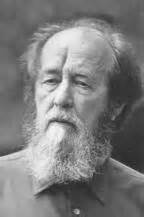
 Solzhenitsyn


It may have been in the later 1970s that I became aware of Alexander Solzhenitsyn.  I don’t recall exactly what brought him to my attention. It may have been news reports of the Soviet Union’s exiled dissident. Solzhenitsyn had been deported from the USSR and stripped of Soviet citizenship in 1974. He later came to live in the US for almost twenty years.

 With the admixture of the Cold War, the horror stories coming out of the USSR, reports of Solzhenitsyn’s moral courage and my youthful desire to make a difference in the world I soon became enthralled by Russia and Solzhenitsyn.

 During the 1980s I read Solzhenitsyn.  I read all three volumes of The Gulag Archipelago, an eye-opening history of the Soviet police state and One Day in the Life of Ivan Denisovich, a novella.  These works forever etched on my mind the Stolypin cars used to resettle passenger and livestock together; Stalin’s Cult of Personality, his purges, his deportations, his gulags and his murder of tens of millions of people.

 In addition to media reports about Soviet atrocities in the 1980s I traveled to Poland for business purposes.  I used a polish translator.  It turned out that the translator, a Pole, was once a CIA agent who worked inside Russia. He told me about the atrocities done to the Poles by the USSR and the KGB.  He hated what the Soviets had done to his people. From my perspective, except for the occasional flower stands on the streets, Warsaw and Bialystok looked gray and depleted of life from the effects of Communism.

 Solzhenitsyn, an author who documented life under Stalin with short stories, novels and poems that included harsh critiques of Stalin and totalitarianism, survived prison camps – the gulags – and assassination attempts by the KGB. But, Solzhenitsyn kept writing, speaking out against the evil being done to the Russian people.  This is why Solzhenitsyn is a hero to me unlike any ‘hero’ regarded today.  This man suffered for the truth he did not hesitate to speak.

 Born the month that Dwight D. Eisenhower was elected to the presidency, I was raised during the Cold War days (1947-1991). I recall the election of John F. Kennedy and the US ‘cold shoulder’ standoffs with the Soviet Union and the Eastern Bloc.

 The two superpowers, the US and the USSR, stood diametrically opposed politically, economically and ideologically. Solzhenitsyn would speak to one of those powers when he gave his Harvard commencement address on June 8, 1978 – A World Split Apart. For some context, the speech was made the summer after Jimmy Carter was sworn in as President on January 20, 1977.

 I came across the speech again yesterday.  I reread it on the train last night, on my way home from work.

 Though I prefer shorter posts I would like to share the power of these words with you plus some poignant commentary about Solzhenitsyn’s works and words from the book The Conservative Foundations of the Liberal Order by Daniel J. Mahoney.

 First, from the book, Chapter 7, The Totalitarian Subversion of Modernity:  Solzhenitsyn on the Self-deification of Man and the Origins of the Modern Crisis are some words of warning for any democratic impulse:

 “The experience of totalitarianism, that “twentieth-century invention,” as Alexander Solzhenitsyn once called it, ought to have permanently discredited all facile or naïve progressivism. But as the previous chapter attests, too many in the West mistakenly identified the fall of Communism in the East-central Europe and the Soviet Union with “the overflowing triumph of an all-democratic bliss.”  The writings of Solzhenitsyn (1918-2008) provide unique resources for understanding both the evils of totalitarianism and the limits of democratic euphoria.”…

 Regarding Solzhenitsyn publishing of August 1914 in 1972:

“If August 1914 provided a devastating critique of the sclerotic character of the old Russian regime, of the unwillingness of its purblind bureaucrats and courtiers to adjust thoughtfully to conditions of modernity, it is also clear that Solzhenitsyn had no sympathy for those left-liberals then or in his time who flirted with nihilism, apologized for terrorism, and showed contempt for the best spiritual and cultural traditions of the Russian nation. The luminous essays by Solzhenitsyn and his collaborators in From Under the Rubble contemplate a Russian future freed from evils of ideological despotism.  At the same time, its contributors warned against the slavish imitation of the worst features of contemporary Western democracy, including its scientism, subjectivism, and rejection of the classical and Christian resources of the Western tradition.” (emphasis mine)

 The chapter then goes on to speak of Solzhenitsyn’s indictment of Marxism and collectivism, as well, his “Augustinian defense of freedom – but no special privileges – for religious believers.”

 Under the chapter’s section The Fragility of Modern Liberty:

 “Solzhenitsyn, though, remains what has always been – an eloquent and principled defender of liberty and human dignity.  Yet, Solzhenitsyn is acutely aware of the fragility of the Enlightenment principles that under gird the regime of modern liberty… Solzhenitsyn’s refusal to sever freedom from an order of truth sets him apart from every radically modern articulation of human liberty and makes him suspicious in the eyes of those who identify liberty with the rejection of all natural or divine limits.” (emphasis mine)

 There is way too much depth about Solzhenitsyn and the weakness of our modern democracy in The Conservative Foundations of the Liberal Order for me to relate here and now.  I highly recommend the book to you.

 Now to Solzhenitsyn’s words:

 Intro: The Soviet and Russian novelist, dramatist, and historian during his commencement address delivered at Harvard University, June 8, 1978, without wavering, noted that the problems of the two superpowers were not the military strengths and ideological differences of each turned against each other but rather their lack of a moral center and moral courage.

Because Solzhenitsyn was addressing a western audience, an elite Western audience at Harvard, his speech was decidedly a stinging indictment of the West – its materialism and it’s almost “unlimited freedom of choice of pleasures, its self-serving, inbred media and its disavowal of its spiritual roots:

 “However, in early democracies, as in the American democracy at the time of its birth, all individual human rights were granted because man is God’s creature. That is, freedom was given to the individual conditionally, in the assumption of his constant religious responsibility. Such was the heritage of the preceding thousand years. Two hundred or even fifty years ago, it would have seemed quite impossible, in America, that an individual could be granted boundless freedom simply for the satisfaction of his instincts or whims. Subsequently, however, all such limitations were discarded everywhere in the West; a total liberation occurred from the moral heritage of Christian centuries with their great reserves of mercy and sacrifice. … State systems were becoming increasingly and totally materialistic. The West ended up by truly enforcing human rights, sometimes even excessively, but man’s sense of responsibility to God and society grew dimmer and dimmer.” (emphasis mine)

 And…

“If humanism were right in declaring that man is born only to be happy, he would not be born to die. Since his body is doomed to die, his task on earth evidently must be of a more spiritual nature. It cannot be unrestrained enjoyment of everyday life. It cannot be the search for the best ways to obtain material goods and then cheerfully get the most of them. It has to be the fulfillment of a permanent, earnest duty so that one’s life journey may become an experience of moral growth, so that one may leave life a better human being than one started it. It is imperative to review the table of widespread human values. Its present incorrectness is astounding. It is not possible that assessment of the President’s performance be reduced to the question how much money one makes or of unlimited availability of gasoline. Only voluntary, inspired self-restraint can raise man above the world stream of materialism.” (emphasis mine)

And…

“It would be retrogression to attach oneself today to the ossified formulas of the Enlightenment. Social dogmatism leaves us completely helpless in front of the trials of our times. Even if we are spared destruction by war, our lives will have to change if we want to save life from self-destruction. We cannot avoid revising the fundamental definitions of human life and human society. Is it true that man is above everything? Is there no Superior Spirit above him? Is it right that man’s life and society’s activities have to be determined by material expansion in the first place? Is it permissible to promote such expansion to the detriment of our spiritual integrity?” (emphasis mine)

 In the speech Solzhenitsyn speaks of “…our Earth – divided against itself;” “…all of a sudden the twentieth century brought the clear realization of this society’s fragility.;” ”…the persisting blindness of superiority;” “A decline in courage may be the most striking feature that an outside observer notices in the West today.;” “…and the decline of courage, at times attaining what could be termed a lack of manhood, is ironically emphasized by the occasional outbursts and inflexibility on the part of those same functionaries when dealing with weak governments and with countries that lack support, or with doomed currents which clearly cannot offer resistance..  But they get tongue-tied and paralyzed when they deal with powerful government and threatening forces, with aggressors and international terrorists.”

Sounds familiar, doesn’t it?  Even when echoed from the distance of 1978.

 Take a look at what drives you and perhaps you will see why America is no longer a nation under God, no longer a nation of civil courage, of moral decency.  As Solzhenitsyn points out in his address the West has become humanist anthropocentric:  “the proclaimed and practiced autonomy of man from any higher force above him…with a willful denial of a “Supreme Complete Entity.”

Liberty and the rule of law is not enough to keep us right side up. “Whenever the tissue of life is woven of legalistic relationships, this creates an atmosphere of spiritual mediocrity that paralyzes man’s noblest impulses.”

And, perhaps you will now understand why people would vote for a president who uses class warfare rhetoric to promote the sands of material security as foundational to life’s happiness and not the bedrock of spiritual fortitude.

Please read the speech in its entirety. You will be better for it. Solzhenitsyn’s Harvard Address 6-8-1978

America’s ‘DeValued’ Moral Currency

Pervasive throughout our land is the avoidance of asking the hard questions.  We shun the real questions about life and death and about God.  We do not want to talk “good and evil.”  We glibly talk about body and soul, about reason and revelation, about eternity and time. 

 The other day I happened to watch The Lord of the Rings (LTR):  The Return of the King.  Putting the above statement into LTR terms, we want to live peaceably in the shire without ever having to venture out and deal with the Ring, a Ring which has consequential power over us. We may say to ourselves, “Why destroy the ring when we don’t know for sure it exists? We may have thoughts that all that the shire presents to us is all there is to life. We will go on with our quietude in order to avoid conflict and to live peaceably. We choose society’s ‘safe’ surroundings and its costly ‘insurance’ policies to avoid the dangerous quest that truth demands of us. We fear what it might take to make the journey.  We fear we will lose ourselves on the way and never return to the shire. We fear, we fear and we fear again.

   We fear conflict.  And this is because inherent in conflict are the morals or ethics that each of the disparate parties brings with them. Conflict is the evil we most want to avoid.  Our “dialectics” begin with opposites and often end in synthesis or in the exclusion (or boycott) of the ‘other’.  We will seek out the ‘no-fault divorce’ of our language from its historical meaning. We give a pass to “Political-Correctness” (PC) because PC talk bypasses truth and goes straight to a word originally devoid of any value in and of itself but now given full political power: “diversity.”  

With the acceptance of “diversity,” also a code-word for “whatever” or “it-depends,” moral relativity’s child, lawlessness, increasingly becomes a de facto way to govern and self-govern. Yet, “Wisdom shouts in the street, She lifts her voice in the square; At the head of the noisy streets she cries out; At the entrance of the gates in the city She utters her sayings…”

As we go on and find more and more moral conflicts and in order to avoid angst we find it easier to believe nothing of import so that we do not have to fear disagreement, ostracism or even death for what one believes. And because we do not believe in anything then we cannot be responsible for outcomes. Nihilism’s union with materialism begets the DNA of nihilism – lives drained of any meaning other than the moment. In fact, we are told duplicitously “to live in the moment.”

 To choose to believe nothing means that absolute truth is discharged from our lives.  Its voice is no longer heeded.  In fact its voice is now being drowned out.  The commotion that you hear daily is man’s raucous resistance to leaving the shire ~ his tweeting and texting of empty words, the ever streaming pop/rock music filling the void, the Surround sound of ubiquitous blaring entertainment.  It is as if men and women were walking around in the dark calling out to each other and never finding the light switch. They have chosen to stay in the purgatory of their fears.

 The avoidance of pain and conflict has become our primary goal in life.  This is seen in the young voter’s desire for Obamacare.  The health care reform is seen by them as in line with their “values”.  The reform is also seen as providing a sense of self-esteem in that it affirms the young voters wish to avoid pain and insecurity at all costs. On the surface Obamacare appears to provide security for themselves and for others while in truth it is a compromise of what is good and what is evil – the good being the desire for your well-being and the well-being of others and the evil which is the lie that Obama and the government will somehow provide self-esteem and security for you and others and do it with altruism. Remember, God has now been replaced by social science, social science based on rationalism and egalitarianism (think John Rawls, Laurence Tribe, etc.) all under the banner of “Social Justice.”  Rationalism’s,’ “Social Justice” trumps God every time.  Social science is now becoming the creator of society’s values, e.g., God is not to be talked about in public but homosexuality must be.  All of this in spite of the fact that rationalism without revelation could never create value. As Benedict XVI said in 1969:

“What is essential is that reason shut in on itself does not remain reasonable or rational, just as the state that aims at being perfect becomes tyrannical. Reason needs revelation in order to be able to be effective as reason.”

 The avoidance of truth with its inherent conflicts with other than the truth affects our relationships, our sexuality, our creativity, our culture. In place of absolute truth Americans, as mentioned, have latched on to “values.” And our new “value” system has a new way of talking:  “lifestyle”, “Be Yourself;” “Be original;” “Let go and be;”  diversity;” “I have my rights.” But now “rights” are no longer the natural inalienable God-given rights “of life, liberty and the pursuit of happiness.”  Now “rights” have morphed into feelings worn on our sleeve.  We demand that others accept what we feel and that others be open and tolerant. This is what we value above all else. Right and wrong (and love (read not sex)) no longer have a place in our psyche. “Values” – a synthesis of good and evil dominates our diseased culture. And when we ignore serious questions we create words with synthetic meanings to describe our lives.

 “Charisma” is one of those words often heard today. Charisma was once considered a God-given grace but has been used as cover for the “banality of evil” as Hannah Arendt, political philosopher, notes when talking about Hitler’s appeal.

  Allan Bloom, another political philosopher, notes in his 1987 book The Closing of the American MindHow Higher Education Has failed Democracy and Impoverished the Souls of Today’s Students,Charisma both justifies leaders and excuses followers.  The very word gives a positive twist to rabble-rousing qualities and activities treated as negative in our constitutional tradition.  And it s vagueness makes it a tool for frauds and advertising men adept at manipulating images.” Consider that both Bill Clinton and Barack Obama have both been called charismatic leaders.

 In the introduction to his book, Bloom writes about what he sees in the classrooms of higher education: 

“There is one thing a professor can be absolutely certain of:  almost every student entering the university believes, or says he believes that truth is relative….They are unified only in their relativism and their allegiance to equality….They have been equipped with this framework early on, and it is the modern replacement for the inalienable rights that used to be the traditional American grounds for a free society…The danger they have been taught to fear from absolutism is not error but intolerance.  Relativism is necessary to openness; and this is virtue, the only virtue, which all primary education for more than fifty years has dedicated itself to inculcating.  Openness ~ and the relativism that makes it only plausible stance in the face of various claims to truth and various ways of life and kinds of human beings ~ is the great insight of our times. The true believer is the real danger.  The study of history and culture teaches that all the world was mad in the past; men always thought they were right, and that led to wars, persecutions, slavery, xenophobia, racism, and chauvinism.  The point (now) is not to correct the mistakes and really be right; rather it is not to think you are right at all.”  (emphasis mine)

  In a later chapter titled The German Connection, Bloom relates how Nietzsche, Heidegger, Hegel, Weber, Freud have influenced American thinking.  Americans, within a “pro-choice” democracy, have assimilated this German thinking sometimes turning it on its head.   Bloom writes, 

“…there is now an entirely new language of good and evil, originating in an attempt to get “beyond good and evil” and preventing us from talking with any conviction about good and evil anymore.  Even those who deplore our current moral condition do so in the very language that exemplifies that condition.”

“The new language is that of value relativism and it constitutes a change in our view of things moral and political as great as the one that took place when Christianity replaced Greek and Roman paganism.” (empahsis mine) …

“Value relativism can be taken to be a great release from the perpetual tyranny of good and evil, with its cargo and shame and guilt, and the endless efforts that the pursuit of the one and the avoidance of the other enjoin. Intractable good and evil cause infinite distress – like war and sexual repression – which is almost instantly relieved when more flexible values are introduced.  One need not feel bad about or uncomfortable with oneself when just a little value adjustment is necessary.  And this longing to shuck off constraints and have one peaceful, happy world is the first of the affinities between our real American world and that of German philosophy in its most advanced form, given expression by the critics of the President’s speech.”

 Here Bloom is referring to the clamor arising when President Reagan referred to the Soviet Union as the “evil empire.”  When yet at another time Reagan said that the Soviets had “different values,” this statement was met “at worst with silence and frequently with approval,” thus revealing our loathing of absolutism in the former statement.

 At the beginning of the chapter Values, Bloom, relates, “We have come back to the point where we began (in the book), where values take the place of good and evil.” (emphasis mine)

And so like Gollum we place the utmost value on the ring of power, becoming blind to its tyranny over us. Along with the ring we call our values “My Precious.”  Under the yolk of temporal “values” and without facing the serious questions of life we lose ourselves, we lose the real.  We lose love, romance, culture, art ~ everything that gives meaning to life.

 Love or charity, a virtue which must be constantly worked at, is replaced with ‘sexual rights.’ Consider that in our culture sexual activity is not to be repressed or self-controlled but rather it is to be given preeminent unrestrained “value.” Think Sandra Fluke and contraception. Think in-your-face homosexuality. Does America “confirm her soul in self-control” or not?

 Romance, apart from truth is portrayed in movie after movie as just a response to nihilism. Nowhere to be found is the expectation, the unrequited desire and the hoped-for revelation of real romance. Without absolutes there can be no true romance.

 We are a culture that seeks therapeutic counseling.  Yet modern psychology, the sworn enemy of shame and guilt, refuses to talk about good and evil and therefore offers nothing for the soul. Freudian psychology only brings the patient back to repressed sex.

 Modern art has nothing of consequence to offer. Consider the pop art of Andy Warhol and Roy Lichtenstein.

 Deafening music, pop or rock, pummels our ear drums daily evoking barbaric passions and depriving the soul of its senses.

 Tattoos deface our bodies so as to reveal our disdain for the discipline that purity of mind and body requires. Inking is given the (non-)value of counter-culture and rabble-rousing.

 Religion, wherein serious questions are faced, is being replaced by positive thinking as preached from the temples of TV.

 In view of the fact that our nation is becoming increasingly devoid of absolutes and truth while at the same time becoming increasingly laced with relativism and sliding scale “values” consider this:

 Jesus, the Son of the Living God and The Way, the Truth and the Life says, “You shall know the truth and the truth will set you free.” Free from what? Free from fear.  All fear:  the fear of the unknown, the fear of facing ultimate accountability, the fear of death, the fear of loss and personal suffering, the fear of evil.  Jesus’ perfect love casts out all fear. Because of this we can face the serious questions of life head-on knowing that God ~ Father, Son and Holy Spirit love us, that They stand with us and that Jesus has gone before us through the same difficult places. Seek Him and He will be found.

 Going back to the LTR analogy do you remember how Frodo and Sam and the rest rejoiced that the ring had been destroyed, that their arduous life and death journey had been accomplished? Their courage and resoluteness saved the shire, themselves and Middle Earth even while the others in the shire had no clue as to what was going on.  You and I must do the same.

Three Atheists I Listen To

Becoming a follower of Jesus Christ and an heir of the King and a fellow servant in the Kingdom of God began when I first believed that God existed. What followed was the understanding that God not only existed but that He is an Infinite-Personal God who, though having created the vast universe ex nihilo using the Big Bang and evolution, loves me.

 Beyond my own personal encounters with God through my reason and through the testimony of others, there are the historical facts supporting the death and resurrection of Jesus Christ. There is also astounding supporting evidence in nature. God exists.

But there are some who say otherwise: “Atheism exists, this I know, for my reason tells me so.” These would be the angry atheists Richard Dawkins, the former Christopher Hitchens (Hitch) and others.

 I have at one time or another heard these atheists give their arguments of disbelief and I have found their words wanting for any real substance. They often come across as superior and snobbish.  And, their arguments are certainly unfettered by the factual account of the resurrection or of the fine tuning of the universe that makes life and thought and argument possible at all. Their anger exists.

 There are three atheists I pay attention to.  I tune in to them because what they often say through words or music reveals the truth about God in a way they may not even realize. The three atheists are Thomas Sowell, Dr. Theodore Dalrymple and Frederick Delius

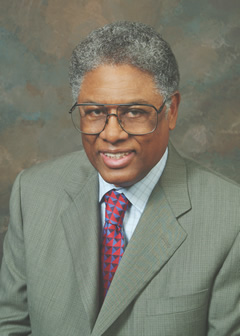
Thomas SowellFirst, Thomas Sowell.  Start at his web page Thomas Sowell. And, here is a short bio from the Townhall.com web page: http://townhall.com/columnists/thomassowell/

“…writing for the general public enables him to address the heart of issues without the smoke and mirrors that so often accompany academic writing.”

  Sowell is an economist, a common sense economist.  You will get that sense as you read his books and articles.  Of late, I have read The Thomas Sowell Reader (start with this book for short articles addressing current issues both economic and social) and A Conflict of Visions.

  The Thomas Sowell Reader, a compilation of articles and essays written by Thomas Sowell, economist:

 “From an early age, I have been convinced with trying to understand the social problems that abound in any society.  First and foremost, this was an attempt to try to grasp some explanation of the puzzling and disturbing things going on around me.  This was all for my own personal clarification, since I neither had political ambitions nor the political talents required for either elective or appointed office.  But, one having achieved some sense of understanding of particular issues ~ a process that sometimes took years – I wanted to share that understanding with others.  That is the reason for the things that appear in this book.”

 A Conflict of Visions, also written by Thomas Sowell:

 “What are the underlying assumptions behind the very different ideological visions of the world being contested in modern times?  The purpose here will not be to determine which of these visions is more valid but rather to reveal the inherent logic behind each of these sets of views and the ramifications of the assumptions which lead not only to different conclusions on particular issues but also to wholly different meanings to such fundamental words as “justice,” “equality,” and “power.”

 A sample article by Thomas Sowell:  The Fallacy of Redistribution

 519px-TheodoredalrympleRegarding Dr. Theodore Dalrymple and some of his recurring themes from books and articles note the following from his Wikipedia entry.  I confirm these themes having read his book Life at the bottom. The Worldview that makes the Underclass:

 -The cause of much contemporary misery in Western countries ~ criminality, domestic violence, drug addiction, aggressive youths, hooliganism, broken families ~ is the nihilistic, decadent, and/or self-destructive behavior of people who do not know how to live. Both the smoothing over of this behavior, and the lexicalization of the problems that emerge as a corollary of this behavior, are forms of indifference. Someone has to tell those people, patiently and with understanding for the particulars of the case, that they have to live differently. (Life at the bottom. The Worldview that makes the Underclass)

-Moral relativism can easily be a trick of an egotistical mind to silence the voice of conscience. (‘The Uses of Metaphysical Skepticism’, in: In Praise of Prejudice. The Necessity of Preconceived Ideas, p. 6 (chapter 2).

-Multiculturalism and cultural relativism are at odds with common sense. (“Multiculturalism Starts Losing Its Luster”. City Journal. Retrieved 12 July 2009)

-The decline of civilized behavior ~ self-restraint, modesty, zeal, humility, irony, detachment – ruins social and personal life. (Not with a Bang but a Whimper)

-The root cause of our contemporary cultural poverty is intellectual dishonesty. First, the intellectuals (more specifically, left-wing ones) have destroyed the foundation of culture, and second, they refuse to acknowledge it by resorting to the caves of political correctness.

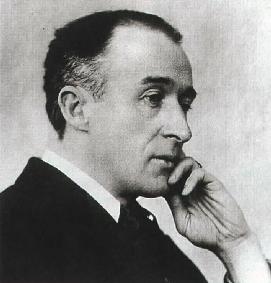
deliusLastly, Frederick Delius.  I don’t recall when I first heard his compositions. It may have been in my thirties at a Chicago Symphony concert.  The first piece I remember is the symphonic poem The Song Of Summer.  I was overwhelmed by its simple beauty.

 From The Delius Collection, Vol. 2 CD liner notes:

 “Many have written of Delius’ ‘moods’ or ‘feelings’, views which reflect only the ‘impression’ his music has made on the writers (read music critics).

Such Romantic or rather Impressionistic ~ notions of his art are only concerned with its surface appeal, as if that is all that is valuable in it, and ignore wholly his unique technical and structural mastery.  In such ways, Delius is more of an anti-Romantic, for the sentimentality or self-projection of Romanticism are alien to his music.  Delius hymned Nature, not himself as did Sebelius; such sentimentality as may condemn his art stems from a performing style wherein expressive beauty is stressed at the cost of his music’s intellectual power.” Robert Matthew-Walker

 For starters I would recommend listening to Irmelin Prelude, Song of Summer, A Late Lark, the orchestral interlude A Walk to Paradise Garden from his opera A Village Romeo and Juliet and On Hearing the First Cuckoo in Spring.

 An avowed atheist, Delius embraced nature for his inspiration.  He also embraced Nietzsche’s philosophy which produced Delius’ loud and unattractive A Mass of Life.

 “A Mass of Life is an attack upon Christian doctrine and the Christian way of life as Nietzsche and Delius saw it. They both wanted to correct what they called the “slave morality” of Christianity.  Their great emphasis was upon the will, not bowing to anyone, and living and dying fearlessly though death be total extinction.

Death, when it came to Delius, was terrible, and within a few months his steadfast wife was dead too.

In speaking about Delius, Eric Fenby (Delius’ composition scribe after Delius became blind) observes, “Given those great natural musical gifts and that nature of his, so full of feeling, and which at its finest inclined to that exalted end of man which is contemplation, there is no knowing to what sublime heights he would have risen had he chosen to look upwards to God instead of downward to man!”  From the Gift of Music by Jane Stuart Smith and Betty Carlson, Crossway Books

 What the first two atheists have in common is their ability to speak truth, wisdom and common sense ~ God’s law within each of us – simply. As Richard Feynman, Nobel laureate of physics said, “You can recognize truth by its beauty and simplicity.”

 Both men, from their lifetime of experiences, have seen reality and tell us that there are values that a man must embrace to be civilized, to be ‘right side up’, so to speak.  They tell us that Man must draw the line somewhere. 

Now, I believe that it is the God of Creation who has created the line ~ the natural law written on our hearts ~ and He has exposed our crossing it. But, He did not leave us on our own, to remake ourselves as Nietzsche’s ideal human, the Übermensch, who would be able to channel passions creatively (but to what end?). He gave us the only way possible, through His Son, to regain our humanity.

 Frederick Delius revealed truth through his music’s contemplative moments of rhapsodic beauty as inspired by God’s creation.

 All three have seen things (even the eventually blind Delius) that others often willfully ignore. They are honest with themselves about what they see and they repeat it back.  And, there is knowledge of reality in their words and works that can only find its genesis in God’s created order and His law written on our hearts.

 “He has made everything beautiful in its time. He has also set eternity in the human heart; yet no one can fathom what God has done from beginning to end.” Ecclesiastes 3:11

The New/Old Jesus People Speak

Years ago, in the 60’s and 70’s, I was part of the Jesus People Movement.  It was during those days that I heard street-wise preachers like Phil in school auditoriums and in public parks.  Hundreds of us teenagers attended. 

We brought our school friends with us and many believed.  And after they believed we took them down to the lake and baptized them right then and there. I baptized my best friend Carl.

Those are times I will never forget.  Phil Robertson’s words reminded me once more of God’s love towards us, then and now and forever. 

And don’t forget! Christmas ~ the birth of the Messiah King ~ is the start of the Kingdom of God on earth.

  “Mary will give birth to a son, and you are to give him the name Jesus, because he will save his people from their sins.” the gospel of Matthew 1:21

(Jesus is the Greek form of Joshua, which means the Lord saves.)

Regarding the uproar over Phil’s A&E show comments, know this:  at the heart of the problem of sin is “the persistent refusal to tolerate a sense of sin.” Alvin. Plantinga

We Thirst …For God’s Love

St. Patrick’s Prayer within Henryk Górecki’s Symphony No.3 “Symphony of Sorrowful Songs,” within Terrence Malick’s “to The Wonder.”

We are mortal. God’s Love is inexhaustible, eternal.

****

“You can recognize truth by its beauty and simplicity.”  – Richard Feynman Nobel laureate in physics from Part One of ‘Tthe Evidential Power of Beauty: Science and Theology Meet by Thomas Dubay, S. M.

The Road Less Traveled By – To The Solidification Zone

The Great Divorce

You are about to take a bus ride into another dimension.  No, not a trip to the Twilight Zone. Or, maybe it IS to the Real Twilight Zone!

 Despite the nonsense that comes from Oprah’s benign (?) pulpit, all roads are not radii that lead to God and Heaven.  Instead there will be a Fork in the road.  It is this bus ride that will take you to that juncture, albeit through fantasy.

 I learned about this bus ride from a recent series of classes I attended at a nearby church.  The topic of the class was C.S. Lewis’ book The Great Divorce.  The discussion was led by a retired Wheaton College professor, Dr. Rolland Hein, Professor Emeritus, English. Dr. Rolland also teaches a class on Saturday mornings at the Wade Center which is located near the college.

 The title page of The Great Divorce, “A Dream” has this quote from George MacDonald:

 “No, there is no escape.  There is no heaven with a little of hell in it ~ no plan to retain this or that of the devil in our hearts or our pockets. Our Satan must go, every hair and feather.”

 The Preface to The Great Divorce lets us know that Lewis will be endeavoring with his dream story to break up the marriage of Heaven and Hell (a response of sorts to William Blakes’ book The Marriage of Heaven and Hell), a marriage that many in our lifetime wish for. He writes to inform us of their necessary divorce.

 In an age of moral relativity and subjectivism many want to synthesize good with evil in hopes of redeeming evil. But as Lewis reveals, the choices we make take us down divergent pathways.  We either choose a path of good that becomes an even greater good as we continue to make good choices and stay on its narrow way or we choose a broad path that leads towards ever greater evil.

 The Great Divorce offers us a bus ride from “grey town” with its “continued hope of morning” to the “High Country,” a place of contrasts and a place where God honors the choices we make.

 You will meet many characters, many perhaps like someone you know.  There will be those who cannot fathom Heaven as any place they would want to stay and there are others who fear losing what they had on earth in “grey town”. There will be the proud, the stubborn, the willful and the angry.  There will be those who demand their rights and also the ego-unchallenged.  There will be those whose feet hurt them as they walk on solid ground for the first time and there will also be the “bright solid people” who move about the “High Country” without effort.  And finally, there will be those who reject Joy and solid Reality to return to “grey town” on the same bus. 

 The passengers are all phantoms or ghosts.  When they arrive in the High Country they are almost completely transparent – you can see right through them in every way:  there is the well-dressed (and very self-conscious woman); there is the broad-minded man, the artist, the Tousle-Headed poet, the mother who has lost a son, the golden apple stealing materialist, Sarah Smith and the Dwarf and Tragedian.  You will also meet George MacDonald: 

 Lewis, the main character in the dream and a phantom, meets up with George MacDonald, one of the solid people.  (MacDonald, forerunner of the “Inklings,” was a good friend and mentor to Lewis.).  Together they discuss what they see the phantoms choose.  At one point Lewis hears MacDonald say, “Milton was right, said my Teacher, “The choice of every lost soul can be expressed in the words, “Better to reign in Hell than to serve in Heaven…There is always something they prefer to joy— that is, to reality.”

 The bus ride ends with the choice you make.  God honors your choice:

 “There are only two kinds of people in the end: those who say to God, ‘Thy will be done,’ and those to whom God says, in the end, ‘Thy will be done.’

 Lewis’ The Great Divorce is the bus ticket; the Choice is before you.