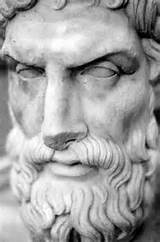
“Culture no longer necessarily implies self-cultivation or learning; it is a value neutral term embracing everything and nothing. Its practitioners are largely oblivious of the noble ambition to transcend time and place to discover eternal truths or to create works of enduring beauty.
They are instead transfixed by technologically driven ephemera, guilt-induced humanitarianism, and status-defined identity politics. In such circumstances, culture may lose its autonomy and become instead the mere reflection of society that Marxist and utilitarians of many stripes have always taken it to be.”The Dereliction of Dutyby Daniel Johnson
~~~
“The study of the past is the main portal through which culture is acquired.”
“The acquisition of culture requires repose, sitting quietly in a room with a book, or alone with one’s thoughts even in any crowded concert or art museum.”
― Joseph Epstein, A Literary Education and Other Essays
~~~
“Now these things occurred as examples for us, so that we might not desire evil as they did.” 1 Corinthians 10:1-13
~~~
“…the gold-standard, which had existed since the Lydian’s first coinage, disappeared forever in the two decades after World War I.
Freed from the obligation of having to exchange paper money for the yellow metal, governments began to print bills, sometimes with abandon…the result was the first great worldwide inflation.”The Four Pillars of Investing by William J. Bernstein
~~~
Pictures at an Exhibition. Teaching students about contemplation…
“Opportunities to unlock the poetry and stories of their surroundings were no longer a given, and skill in doing so was waning.
[Harvard’s Jennifer] Roberts responded by placing one of her assignments, a three-hour “visual analysis” of an artwork, at the center of her teaching to show her charges that learning is not synonymous with access, that knowledge is not available at a glance…
For Roberts, introducing her students to the practice of “naïve observation” as preparatory research has become something more than a simple homework assignment. Time, she seeks to show, is not the enemy but the vehicle of understanding. Slowness is not an obstacle to progress but a key to the practice of knowledge-making. And close looking is preface to the hard-won making of thought. At heart, she is coaxing her students to question what’s beyond surface appearances—of a painting, a frown, a flower, or an idea.” (emphasis added) Catching Our Eye by Maggie Jackson, The State of the American Mind
Beyond the data. Since the days of the Enlightenment there has been a conflict between two truth-seeking modes: the scientific or rational and the intuitive or poetic. The latter is losing ground. The packaging has become more important than the gift. And so…
The little lambs of this generation are lost in self-discovery. The wisdom of the ages, a shepherding influence, has been left far behind. The sheep wander aimlessly, not realizing the danger they are in. Seeing this, the wolves salivate. Think political motivation. Think identity politics. Think liberal colleges. Think race and gender cards.
“Dereliction of Duty”. Christian churches have sought the lost sheep with the cultural gimmickry that deserves only a glance. Worse. The church’s One Foundation has been replaced with a multilayered mosaic of cultural soapstones.
The return to the gold-standard for those of us in the kingdom of God: see the side bar and the N.T. Wright quote.
For the sake of the five men and one woman whose lives are on the line now and have been daily for the citizens of Baltimore I plead with you that you recuse yourself Ms. Mosby and push for a new venue for the trial. Blind Justice demands it and your law career would not appear to be enslaved to black identity politics.
Something tragic happened to Freddie Gray. We don’t know what, yet.
Your rush to over-charge these six officers due to a coroner’s report of a possible homicide is directly from the theater of Absurd. Freddie was a known druggie-pot and heroin. He may have hurt himself before ever getting into the van. He may have even hurt himself in the van because of another arrest situation he did not want. In jail you cannot get drugs. Paying for bail comes out of drug money. And, he may have, like you, have known that the whole world is watching.
Baltimore Cops Charged
What possible motive or intent would these six officers have to hurt Freddie? Each of them, without a doubt in any one’s mind, had heard the ubiquitous and tainted news reports of so-called police brutality in Ferguson and New York. Wouldn’t each of these six just want to transport Freddie safely to the station without incident? They each knew the jeopardy at hand if anything went ‘wrong’. They would not risk their reputations or their jobs by hurting Freddie. He was already a known criminal. There was nothing to gain ‘racially’ or in any way, shape or form by hurting Freddie. You and the new DOJ AG just intuit criminal and racial intent…somehow.
Ms. Mosby, since you have made yourself into a black youth political activist by your flashpoint statements during your recent press briefing let’s talk politics, briefly.
Rousseauism: new age Liberals, especially black Democrats, have consistently made the claim that institutions, not man himself, are corrupt and constantly flawed (ergo, Democrats constantly arguing for raising taxes to repair their Progressive policy disasters).
If you do not recuse yourself Ms. Mosby because of your obvious incestuous political relationships and push for a new trial venue then yes, the institution and office of the Baltimore DA is deeply flawed. And, as we have witnessed the past six years, the Eric Holder assembled DOJ institution is also deeply flawed and myopically unjust. Do not follow his example.
Justice, Blind Justice, and NOT the ad hoc “hate the man” identity politics framed ‘justice’ is what MLK’s legacy requires of you.
“…Obama and modern liberal world view of moral equivalence:” * are key words to understanding America’s weakness in the face of Evil.
I believe that the philosophy of Epicureanism, a philosophy inculcated into mankind’s worldview hundreds of years prior to the Renaissance and The Enlightenment periods of history, is found in the DNA of American thinking. America’s make-shift democracy was shaped by that philosophy. America’s democracy now suffers moral ambiguity from that same sensory pleasure, godless philosophy.
Also shaping the foundation of America, the Puritans brought with them an ethos of Judeo-Christian understanding; an ethos that negated Epicureanism and that would become the cornerstone of our Bill of Rights, the Declaration of Independence and the rule of law. But over time with sensory pleasure and materialism being pushed as elementary rights and with God being pushed into the attic America’s moral stance is afloat in the ether. Democracy is helpless to bring man back to his senses. It has, in fact, become the aggregate of a growing amoral demos.
Epicureanism, embraced by the likes of Thomas Jefferson and other early American founders is inherent to that driving force that summons the “American Dream” from the depths of sheer pleasure. It has created an America that is prone to moral equivalency (basically, lacking in judgment and discernment; synthesizing good with evil) and to a lack of moral courage, the latter Alexander Solzhenitsyn addresses in his speech below.
Solzhenitsyn’s speech also provides for us an accurate description of our current leadership from his then vantage point of 1978 and his years spent in gulags for writing truth to power.
Excerpts from Alexander Solzhenitsyn’s speech at Harvard, June of 1978, “A World Split Apart” (emphasis mine):
“A decline in courage may be the most striking feature which an outside observer notices in the West in our days. The Western world has lost its civil courage, both as a whole and separately, in each country, each government, each political party, and, of course, in the United Nations. Such a decline in courage is particularly noticeable among the ruling groups and the intellectual elite, causing an impression of loss of courage by the entire society. Of course, there are many courageous individuals, but they have no determining influence on public life.
Political and intellectual bureaucrats show depression, passivity, and perplexity in their actions and in their statements, and even more so in theoretical reflections to explain how realistic, reasonable, as well as intellectually and even morally worn it is to base state policies on weakness and cowardice. And decline in courage is ironically emphasized by occasional explosions of anger and inflexibility on the part of the same bureaucrats when dealing with weak governments and with countries not supported by anyone, or with currents which cannot offer any resistance. But they get tongue-tied and paralyzed when they deal with powerful governments and threatening forces, with aggressors and international terrorists.
Should one point out that from ancient times declining courage has been considered the beginning of the end?
When the modern Western states were created, the principle was proclaimed that governments are meant to serve man and man lives to be free and to pursue happiness. See, for example, the American Declaration of Independence. Now, at last, during past decades technical and social progress has permitted the realization of such aspirations: the welfare state.
Every citizen has been granted the desired freedom and material goods in such quantity and of such quality as to guarantee in theory the achievement of happiness — in the morally inferior sense of the word which has come into being during those same decades. In the process, however, one psychological detail has been overlooked: the constant desire to have still more things and a still better life and the struggle to attain them imprint many Western faces with worry and even depression, though it is customary to conceal such feelings. Active and tense competition fills all human thoughts without opening a way to free spiritual development.
The individual’s independence from many types of state pressure has been guaranteed. The majority of people have been granted well-being to an extent their fathers and grandfathers could not even dream about. It has become possible to raise young people according to these ideals, leaving them to physical splendor, happiness, possession of material goods, money, and leisure, to an almost unlimited freedom of enjoyment. So who should now renounce all this? Why? And for what should one risk one’s precious life in defense of common values and particularly in such nebulous cases when the security of one’s nation must be defended in a distant country? Even biology knows that habitual, extreme safety and well-being are not advantageous for a living organism. Today, well-being in the life of Western society has begun to reveal its pernicious mask.
…
I have spent all my life under a Communist regime and I will tell you that a society without any objective legal scale is a terrible one indeed. But a society with no other scale than the legal one is not quite worthy of man either. A society which is based on the letter of the law and never reaches any higher is taking very scarce advantage of the high level of human possibilities. The letter of the law is too cold and formal to have a beneficial influence on society. Whenever the tissue of life is woven of legalistic relations, there is an atmosphere of moral mediocrity, paralyzing man’s noblest impulses. And it will be simply impossible to stand through the trials of this threatening century with only the support of a legalistic structure.
….
Destructive and irresponsible freedom has been granted boundless space. Society appears to have little defense against the abyss of human decadence, such as, for example, misuse of liberty for moral violence against young people, such as motion pictures full of pornography, crime, and horror. It is considered to be part of freedom and theoretically counterbalanced by the young people’s right not to look or not to accept. Life organized legalistically has thus shown its inability to defend itself against the corrosion of evil.
And what shall we say criminality as such? Legal frames, especially in the United States, are broad enough to encourage not only individual freedom but also certain individual crimes. The culprit can go unpunished or obtain undeserved leniency with the support of thousands of public defenders. When a government starts an earnest fight against terrorism, public opinion immediately accuses it of violating the terrorist’s civil rights. There are many such cases.
Such a tilt of freedom in the direction of evil has come about gradually, but it was evidently born primarily out of a humanistic and benevolent concept according to which there is no evil inherent to human nature. The world belongs to mankind and all the defects of life are caused by wrong social systems, which must be corrected. Strangely enough, though the best social conditions have been achieved in the West, there still is criminality and there even is considerably more of it than in the pauper and lawless Soviet society.
The press too, of course, enjoys the widest freedom. (I shall be using the word press to include all media.) But what sort of use does it make of this freedom?
…
And yet — no weapons, no matter how powerful, can help the West until it overcomes its loss of willpower. In a state of psychological weakness, weapons become a burden for the capitulating side. To defend oneself, one must also be ready to die; there is little such readiness in a society raised in the cult of material well-being. Nothing is left, then, but concessions, attempts to gain time, and betrayal. Thus at the shameful Belgrade conference free Western diplomats in their weakness surrendered the line where enslaved members of Helsinki Watchgroups are sacrificing their lives.
Western thinking has become conservative: the world situation should stay as it is at any cost; there should be no changes. This debilitating dream of a status quo is the symptom of a society which has come to the end of its development. But one must be blind in order not to see that oceans no longer belong to the West, while land under its domination keeps shrinking. The two so-called world wars (they were by far not on a world scale, not yet) have meant internal self-destruction of the small, progressive West which has thus prepared its own end. The next war (which does not have to be an atomic one and I do not believe it will) may well bury Western civilization forever.
Facing such a danger, with such splendid historical values in your past, at such a high level of realization of freedom and of devotion to freedom, how is it possible to lose to such an extent the will to defend oneself?
How has this unfavorable relation of forces come about? How did the West decline from its triumphal march to its present sickness? Have there been fatal turns and losses of direction in its development? It does not seem so. The West kept advancing socially in accordance with its proclaimed intentions, with the help of brilliant technological progress. And all of a sudden it found itself in its present state of weakness.
This means that the mistake must be at the root, at the very basis of human thinking in the past centuries. I refer to the prevailing Western view of the world which was first born during the Renaissance and found its political expression from the period of the Enlightenment. It became the basis for government and social science and could be defined as rationalistic humanism or humanistic autonomy: the proclaimed and enforced autonomy of man from any higher force above him. It could also be called anthropocentricity, with man seen as the center of everything that exists.”
BTW: from the Wikipedia link above, the section “On Russia and the Jews” regarding Solzhenitsyn’s supposed anti-Semitism: “Holocaust survivor Elie Wiesel denied this claim and insisted that Solzhenitsyn was not an anti-Semite: “He is too intelligent, too honest, too courageous, too great a writer.” He added he wished Solzhenitsyn were more sensitive to Jewish suffering, but believed his insensitivity to be unconscious.”
Culture Considered: A conversation between Roger Scruton,a philosopher, and Terry Eagleton, a Marxist, about culture and the best way to infuse its value, whether as Scruton would have it-as of traditional worth or as Eagleton would have it-as a radicalized deconstructed whatever?
Capitalism tends to overtake high culture with base consumption. Marxism tends to come up lazy and empty handed as its namesake, with little to add to culture except ad hoc criticism.
“Most people who read “The Communist Manifesto” probably have no idea that it was written by a couple of young men who had never worked a day in their lives, and who nevertheless spoke boldly in the name of “the workers”.” Thomas Sowell, economist
As my last post noted Greece, the home of the ancient philosopher Epicurus, rejected fiscal restraint and austerity in exchange for “Hope is coming” debt finagling.
Epicurus sans hammock
“Syriza” or “Let the Good Times Roll Without Repercussions Party” has won a short-lived victory in Epicurean Greece: “Avoid pain or at least spread it around. Give it to someone else. Let us work a few hours a week and then let us seek our pleasures. Let us surround ourselves with good friends and good drink. Forget the creditors. Those fools believed we would pay them back”. And so it goes in ancient modern Greece.
Well, back in the day Epicurus had an even bigger dilemma than a fiscal crisis. But it was a problem that he was able to philosophize or finagle away with even bigger denial than today’s Greeks. I am talking about the problem of evil.
The problem of evil–whether viewed as a man being burned alive or as a Roman crucifixion or as someone stealing cigars from a mini-mart or as one neighbor lying to another neighbor-is in our face daily. This enormous topic can only be glanced at in this post. I will give you a perspective to consider. First, let’s see what Epicurus foisted on his followers from his hammock ‘high horse’.
The originator of the logical problem of evil has been cited as the Greek philosopher Epicurus and this argument may be schematized as follows:
If an omnipotent, omniscient, and omnibenevolent god exists, then evil does not.
There is evil in the world.
Therefore, an omnipotent, omniscient, and omnibenevolent God does not exist.
This perspective of the problem of evil is held by many in the world. It is a perspective which atheism willing points to and one that bothers agnostics. It is a perspective that lends itself to the myopic religion of scientism where everything can only be validated through scientific proofs or, basically, through one’s senses (a more refined Epicurean philosophy). Yet, the above logical problem of evil is self-defeating. It assumes knowledge of good and evil.
One has to ask, how did Epicurus determine good and evil and the truth that defines them? Did he feel their effects via his physical senses? Did he and his friends determine what is good and what is evil via their collective senses? Did Epicurus make up ‘truth’ about good and evil by what his friends let him get away with saying? Or did Epicurus as a proto-Foucault define ‘regimes of truth’ as “the historically specific mechanisms which produce discourses which function as true in particular times and places”? Or, did Epicurus, as President Obama has recently done at the 2015 National Prayer Breakfast, use moral equivalency or relativism (in this case, high horse lecturing Christians with historical error) as a basis to decide what is a good and what is a bad by comparison (with God as a rubber stamp). It should be noted that none of these premises and perspectives is based on a perspective outside ones’ self or on an Absolute reference point. At the epicenter of these premises is self-serving man, ergo the likes of the American Humanist Association and their motto: “Good Without God“.
If you believe as pre-Darwin-pre-Enlightenment-pre-scientism Epicurus believed-that humans are just randomized atoms (as he called them) that “swerved” and collided to form the materialistic world-then how did a rational concept of good and evil enter our gardens of random atoms? Remember, in Epicurus’ worldview god had been expelled from the garden of good and evil.
This early formulation of the logical problem of evil, as I see it and now describe it, is when the Epicurus “High-Horse” Mal-ware began its download hactivism into the software of our networked psyche creating a down-through-the-centuries botnet. This Mal-ware put God in the “Recycle Bin” and made Him inaccessible. It also redirected our boot up executable file to scientism, making it our default root drive. Social manipulation by amoral hactivists and humanists keeps the botnet going.
The Epicurus “High-Horse” Mal-ware searches for any thought of God and seeks to delete it from your consciousness. It causes doubt spam and creates a zombie-like effect with regard to outside-your-senses thinking. You are made subservient to a ‘regime of truth’, to those who now have the power to control truth. And, there are many who would desire to do so in this present age. And remember, Pontius Pilate asked Jesus “What is truth?” as if Pilate could willy-nilly define truth through his earthly power.
For the sake of brevity I think you will agree with me that the logical problem of evil comes down to premises and perspectives. You may also agree with me that there is a need to wipe clean the hard drives of our minds of all Epicurus “High-Horse” Mal-ware.
Here is a proper perspective from Dr. Ron Rhodes regarding the existence of evil:
…it is impossible to distinguish evil from good unless one has an infinite reference point which is absolutely good. Otherwise one is like a boat at sea on a cloudy night without a compass (i.e., there would be no way to distinguish north from south without the absolute reference point of the compass needle).
The infinite reference point for distinguishing good from evil can only be found in the person of God, for God alone can exhaust the definition of “absolutely good.” If God does not exist, then there are no moral absolutes by which one has the right to judge something (or someone) as being evil. More specifically, if God does not exist, there is no ultimate basis to judge the crimes of Hitler. Seen in this light, the reality of evil actually requires the existence of God, rather than disproving it.
If Epicurus had read the even more ancient book of Job perhaps he would not have been so clueless and the “High-Horse” Mal-ware would never have been downloaded with its intent on hacking into our truth files.
One more perspective regarding truth, good and evil and moral equivalency:
C.S. Lewis has a few words to say about the matter, too:
“If the whole universe has no meaning, we should never have found out that it has no meaning: just as, if there were no light in the universe and therefore no creatures with eyes, we should never know it was dark. Dark would be without meaning.”
“Reason is the natural order of truth; but imagination is the organ of meaning.”
“There is but one good; that is God. Everything else is good when it looks to Him and bad when it turns from Him.”
My last two posts took you for a ride in the “Wayback Machine”. The ride, with no cost to you and minimal effort on your part, took you back to the time of Epicurus, the Greek philosopher. Then I forwarded the machine to our present time, the age of the Angry Atheists. Today’s post will take you for a ride in the “Lean Forward” Machine.
The “Lean Forward” Machine is not like the “Wayback Machine”. Whereas the “Wayback Machine” records and regards history in its travels as an annotated time line worthy of informing present decision-making regarding morals, social concerns, spirituality, politics and economics the “Lean Forward” Machine says “phooey with all of that”:
“Let’s go full steam ahead to the future. “We have the omniscient and omnipresent being-‘perfected’-as-we-speak-with-your-tax-dollars Government (of Titanic proportions mind you) to pilot us (in ad hoc fashion mind you) to the Elysian Fields of the Brave New World.”
At this point you should know that the “Lean Forward” Machine is regarded by some as a religious temple. Some even call it by the sacred name of its goddess-“Progress”.
But, before we “Lean Forward” into unreality let us take at quick look at Epicurus’ homeland today to get a reality check on effects of his philosophy:
ATHENS — Greece’s left-wing Syriza appeared on course to trounce the ruling conservatives in Sunday’s snap election and could win the absolute majority it wants to fight international creditors’ insistence on painful austerity measures.
Tsipras’ campaign slogan “Hope is coming!” resonated with voters, weary of austerity after six years of constant crisis that has sent unemployment over 25 percent and threatened millions with poverty.
“Hope is coming!” Wait! Where have I heard that before?
Anyway, Greece, the land of the ancient philosopher Epicurus, has rejected austerity and forsaken posterity!: “My friends, let us make Epicurean lifestyle the epicenter of things! Eat, drink and be merry with impunity! Run up the tab! The gods don’t care. Why should we?”
There you have it my friends. Sorry to say but it appears that the ticket for the “Lean Forward” Machine return trip would cost you everything. And, if you did go, you would not see your children and grandchildren flourishing. Rather, you would not find them at all, having vanquished in the Farmworkers’ Grape Pickers Camp; having been cast into the great winepress of the wrath of Progress.
I’m not going with you to look for my future in the “Lean Forward” Machine. I have not lost the Spirit or my faith in God. I have the Kingdom of God here on earth to tend to whether or not my belly is full. The Kingdom of God is my vocation, my calling, my camp.
“Instead, make your top priority God’s kingdom and his way of life, and all these things will be given to you as well.” Matthew’s Gospel 6, verse 33
Little did he know at the time (341-270 B.C.) that he, Epicurus, a Greek philosopher, would be a founding father of the atheism sect, a sect which began its angry resistance movement when Jesus Christ appeared on the scene claiming to be God incarnate. Or, that he, Epicurus would be the gardener who would plant the seeds of the Enlightenment’s now perennial social Darwinism, seeds embedded with the DNA of Democritus’ dictum of random Atomism. Or, that he would be considered an ancient agnostic theologian who preached that the gods were out-of-the picture and the Roman gods were way too bossy. Or, that his philosophy would become an eponymous link with shameless pleasures.
An allegory of five senses. Still Life by Pieter Claesz, 1623. The painting illustrates the senses through musical instruments, a compass, a book, food and drink, a mirror, incense and an open perfume bottle. (via Wikipedia)
Epicurus had concluded that any idea of the ‘gods’ had to be put upstairs in the ‘attic’-out of sight, out of mind. Not seen. Not heard from. They should be not be given any consideration much less be feared. Epicurus had an alternative universe to offer his disciples.
Epicurus lived and taught a moderate lifestyle, keeping to himself and to his close friends. He believed and taught that one could learn everything through one’s senses. He counted the senses as trustworthy.
Epicurus spoke of natural desires in life such as food and shelter which one could not live without (a no-brainer). And, he spoke of the natural desire for sex which one could live without (a no-boner). In practice, unlike today’s hedonistic Epicureans, Epicurus was pleasure-passive but not in the sense that he would waste away his time in Margaritaville.
Epicurus also taught that wealth and fame should be avoided because they are intrinsically narcissistic and appeal only to vanity. These things were to be considered ephemeral. (Al Sharpton and a host of politicians and Hollywood stars would not be examples of true Epicureanism.)
As Epicurus was a proponent of living a quiet and peaceful life, unnoticed by the world I am reminded of the Apostle Paul’s missive to the church in Thessalonica (circa Ad 52). Paul’s letter was likely written from Corinth the home of Aphrodite’s temple-a hedonist hangout. He encouraged the Christians in Thessalonica to “… make it your ambition to lead a quiet life: You should mind your own business and work with your hands, just as we told you,” (I Thess. 4:11 )
Epicurean philosophy, detached from its sedate founder’s teaching, would later become associated with extreme pleasure seeking. Per Wikipedia, a “hedonist strives to maximize net pleasure (pleasure minus pain)”. And, with the angry ‘gods thought of as remote, unconcerned and out of the picture a hedonist could unleash and unlock the Animal House within him. But, Epicurus was not a Caligula in pursuit of untold ‘pleasures’. There were no toga parties at Epicurus’ home.
“Seek pleasure in peace and pursue it” was his cart’s bumper sticker-right next to his “COEXIST” bumper sticker.
Due to his compartmentalizing, putting god upstairs and putting earthly pleasure as a priority, Epicurus can also be considered as one of the founding fathers of the fact/value split, a split where science and religion and politics and religion are deemed to have no common ground-in heaven nor on earth. This Epicurean dichotomy would eventually cause Americans to exile God from their thinking. To fill the vacancy America would welcome all manner of European philosophical and psychoanalytical nonsense as well as all manifestations of statistical ‘science’. (See my post “How Shall I Then Live” regarding the fact/value split.)
Sadly it was with an Epicurean mindset already in place that America’s founding fathers including Thomas Jefferson wrote the U.S. Constitution as the divorce papers to be served on God –God was not to be part of our nation’s public’ life: And though our currency reads “In God We Trust”, that has come to mean “God is our fall back position”. “You may worship God up there but just don’t bring him down from the attic into our Novus ordo seclorum” (see your after tax currency of the New World for both mottos).
It probably could be said that the Epicurean philosophy was the origin of Freud’s Pleasure Principle. The Principle simply stated, is that man’s default modus operandi is to pursue pleasure and avoid pain. Here it would appear that neo-Epicurean philosophy influenced at least Christopher Hitchens, a well-known provocateur atheist given to well-documented habits of smoking, strong drink and other ravishing appetites, a raison d’etre for a pleasure seeker like Hitchens-but only in his previous life.
Mr. Epicurus, on the other hand, took his afternoon delight in hammock contemplation of Atomism, the dictum of his day: life is reducible to invisible atoms which swerve and smash randomly into each other without a defining purpose. This dictum could well define the “angry atheists” Atomistic arguments against the existence of God. (During Epicurus time you had to walk by faith to believe in invisible atoms and no God. Later quantum physics via the LHC and other nuclear colliders would provide us with the silhouettes of nuclear particles including bosons but many scientists chose not to see God as Creator of this “Atomism”)
Today, “angry atheists,” one such is Richard Dawkins, continue to swerve and smash their Atomistc-like arguments against God’s apologists but their pro-atheistic arguments never coalesce into anti-God anti-matter. And, when everything else they have said fails to discharge God from the universe these angry fellows and their devoted followers resort to ad hominem and strong drink.
Epicurus is the man for all reasons today. Here is someone who can say it better than I.
N.T. Wright, a New Testament scholar, notes Epicurus’ influence on modern man in his recent book “Surprised by Scripture.” Here are some quotes from Chapter One “Healing the Divide Between Science and Religion”.
“You could sum up Epicurus’ philosophy, at least in its desired effects, with the slogan Richard Dawkins and his associates put as an advertisement on London buses two or three years ago: “There’s probably no god. Now stop worrying and enjoy your life….
So, for Epicurus, there was nothing to worry about. Draw a direct line from him to John Lennon: imagine there’s no heaven, no hell beneath us; now get on and live for today. The image of Epicurus as a hedonist is true, but it was a very refined hedonism, since he taught that the more obviously bodily pleasures didn’t last and produced less pleasurable effects.”
Wright goes on to say that
“The philosophy of Epicurus was given a major new lease on life by the Roman poet Lucretius, who lived about seventy years before Jesus….In Lucretius it all become clear and straightforward. The world is what is it is because of (what he called) atoms, which, free-falling through space, collide with one another, sometimes combining and sometimes bouncing off…major changes are caused by the inexplicable “swerve” that sometime happens to atoms so that they veer off in new directions and produce different results. But the main point is essentially what we would today call the evolutionary thesis: life in the world has developed under its own steam as the random by-product of chance collisions and combinations of atoms and the more complex life-forms they produce….
The second point I want to make about the rise of Epicureanism at the dawn of modernity, and particularly in the origins of the Enlightenment, is that it was seized upon not least because of it political implications. That is clear already in Machiavelli and Hobbes, but it comes to fore in the eighteenth century.”
The Epicurean endorsed idea that random free-floating atoms made the world what it is ‘swerved’ into the mix of political ideologies which rejected monarchy and a ‘bossy-guy-upstairs’ rule. “Vox populi vox Dei is the cry-but then Deus himself disappears off into the far beyond, and vox populi is all we’re left with.” N. T. Wright, and again:
“…Democracy can generate new forms of tyranny, and once we have sold our souls to a particular voting process there no way back. We need to return to the drawing board and think more clearly about whether the natural and proper human passion for freedom and the natural and proper need for order and stability are best served by the kinds of democracy we have developed, without the aid of the divine or monarchial intervention from above, on the model of the Epicureanism that has proved so popular and influential.” (I would add that it appears that radicalized Islam seeks to place their false god Allah on the world’s throne. N. T. Wright is referring to the One True God-YHVH-“I Am That I Am”.)
The threads of Epicurus philosophy are woven throughout our life’s fabric. As Wright notes, “Basically, the American dream is that if you get up and go, you’ll succeed; the egalitarian hope is that the fittest will survive the economic jungle”. And, as I noted above Epicurean philosophy began the fact value split that modern man uses as his template for all of life’s questions, whether personal or political.
Do I look to God or to some form of science for life’s contextual meaning? Am I a random mix of atoms evolved into a human form? Is life only meant for pleasure seeking and pain avoidance and at any cost to me and to my fellow man. Should I vote to obtain pleasure? And so on…
For Christians (for all, really) what does it mean that the Kingdom of God has been established on earth? N.T. Wright, in his book referenced above, goes on to explore the current thinking and a Christian response to an Epicurean worldview. For now, there is way too much of Wright’s insight to post today. Except to say that sadly the world now divides science and religion into separate rooms –one downstairs and one upstairs. This should not be. I am convinced that science and properly tuned philosophy support God’s existence, Scripture and the work of His hands. As Francis Schaeffer of L’ Abri once wrote, “He is there and He is not silent.” I’ll save that for other posts.
Final thoughts. As mentioned above Epicurus treasured his close friends. They were very important to him. And I would imagine they would be.
In a universe where god is perceived as remote, uninterested, detached and at best considered as always-looking-down-on you angry and bossy it feels good to have close like-minded friends to commiserate with: “Dionysus my friend, pass the wine and let us sing ”Don’t Worry, Be Happy””.
Now, you should know from previous posts that I accept the theory of theistic evolution with its old earth creationism. (BTW: after learning about Epicurus you should know that the Atomism dictum that he promoted well preceded any Darwinian theory of evolution.) Having said this I would offer the following friendly apologia.
Each of us as God formed evolved humans can ‘recognize’ another person, the ‘other,’ via our evolved senses. Can we agree that this was done at a prehistoric man level? And, when one cave man was hungry and another cave man was also hungry they may have then formed a hunter/gatherer tribe to fulfill their basic need for food. Again, this was done at a prehistoric man level.
Now fast forward millions of years and hold on. Epicurus understood his friends at a basic human level-through his basic five senses. The fact the he held them dear meant that he looked outside of himself and considered the ‘other’ as worthy, perhaps starting from a place of tribalism. (I hope I’ve made you epicurious.)
Certainly myriad mutations have made our basic senses ‘alive’ and aware that another being in our presence is either friend or foe. But it is only God’s likeness incarnated into the once primate-now human form that can bring about an embrace, a love for the ‘other’. Human friendship and human love was born out of a different tribe, a tribe not of the Epicurean worldview-the Dancing Embrace of the Trinity Tribe.
“Joy to the World, the Lord has come, Let earth receive her King”: The Kingdom of God is heaven and earth, science and religion and you and me in one eternal embrace with the Trinity.
At the beginning of Kingdom of God on earth and during his Sermon on the Mount, Jesus-I AM That I Am-reminds us that we are being watched over with love and care. Jesus nullifies Epicurean philosophy, if we let Him.
As we head into the New Year let’s take a moment to not look back…
Ah, yes.
Sentimentality is that taskmaster which keeps us longing for the leeks and garlic of Egypt, the known-knowns of past life, up to and including slavery.
Sentimentality is gate keeper to the past, fending off reality to preserve sugar-plum memories.
Sentimentality serves as wooer, policy maker and candlestick maker, ergo, The Great Society (aka “Let’s help the little people and feel good about ourselves in the process”, affirmative action (see The Great Society for further social science mishaps), education (aka job-security for union workers), amnesty (aka imported votes for Progressive Democrats) and multiculturalism (aka “We promote “Diversity” here, just stay off my lawn and don’t get near my rights, you fools.”)
Sentimentality, the emo that keeps on giving, will keep an angry woman ever angry; never forgiving. For her the past will be kept stewing, waiting for the next victim to be boiled alive.
Sentimentality will fight fires by removing the oxygen from the room: “This is the way we have always done it.”
Sentimentality is not tradition. It is more like unclaimed baggage that keeps going around on the airport turnstile day after day. You watch it to see if anyone claims it. If not it’s yours to drag around forever.
Sentimentality chooses the moldy and crusty bread of the past over the fresh gluten free, sugar-free crackers of the present ala “This white bread reminds me of mom.”
Sentimentality can be good wine turned into vinegar; old wineskins never replaced.
Sentimentality is the troll who guards the bridge to the New Year. The troll demands a toll. (Just tell the little bugger, ”I paid years ago, be off with you or I’ll call my Father Time. He’ll kick your little troll butt!”)
Sentimentality calls up past fears and dreams for advertised future benefits, benefits created at any cost to reality. See the Social Security trust fund. See the Barney Frank everyone-needs-a-house bubble machine that unleashed the Kraken upon world finances when the bubbles burst.
Sentimentality wants to relive the civil rights and war protests of the sixties and invoke the depression era bindle-bums of the thirties. OWS Millennials ‘must’ ‘re-live’, record and recreate a diorama of those events from a BA degree in Identity Politics perspective. The grapes of wrath must be re-trampled. Social justice must be served with an order of the freshest iPhones.
Sentimentality “keeps me hanging on” by a thread of delusion. “Marriage is secular, a right, a ‘love-in’.” Sentimentality says “I do” to whatever makes me feel… sentimental. And, sentimental makes me feel all gooey inside like…cable TV lovers.
Sentimentality demands that Mother Earth be saved from manmade people while avoiding fact-see leftist Pope Francis for further encyclical faldera. Does the Pope realize that the Green Movement believes that overpopulation of the world is the problem? Does the Pope realize that he is actually promoting abortion, assisted-suicide and humanist population control? (BTW: does the Pope even understand that capitalism fills the coffers of DisneyVatican?) And, forget “Seasons in the Sun”. We may be facing an Inferno or an Ice Age depending on which way the inverted dated is put up on the overhead. ALGore Rhythm has predicted inverted hockey stick apocalyptic weather conditions to occur at any second now. And this, my friends, despite the fact that CO2 makes growing things…green! We are told by dogged Gaia loving-tenure-loving-paycheck-loving scientists that CO2 is not green ‘making’ ‘stuff’ when man is involved. Mankind only creates off-green “problems,” “problems” that are only resolvable with enormous sums of green taxpayer money. And, to increase our awareness of the right uses for CO2 the greenie bible Mother Earth News reportedly reports “green is god, dude, especially when rolled and smoked.” Anyway “It’s hard to die when all the birds are singing in the sky.”
Sentimentality: a Disney movie replaying your childhood over and over. You know, the time you spent fantasizing about being princess as a young boy. Animated cels have always portrayed our deepest feelings, the best of our culture and the highest aspirations of our humanity-remember? Who needs reality when you have “Frost”?
Sentimentality is that trampoline you keep in your back yard just in case you need to jump up and down endlessly to walk away from the back and forth of everyday life.
Sentimentality gets an Enlightened Epicurean Scientism big bang out of a singular boson appearance but considers God’s silhouette passé.
“A sentimentalist“, Oscar Wilde wrote, “is one who desires to have the luxury of an emotion without paying for it”.
Use “Sentimentality” in a sentence/s: “I prefer my sentimentality over tradition, dudes. Tradition is so predictable whereas ad hoc sentimentality ushers in a new age of Progress as well as a proto-social justice that protests everything that isn’t sentimental.”
Sentimentality as cultural entrenchment, as socio-political-economic-education policy-see Spoilt Rotten: The Toxic Cult of Sentimentality (subtitle in US editions: How Britain is Ruined by Its Children) by Theodore Dalrymple. Who could resist this book with chapter titles like these: Chapter Three: “The Family Impact Statement”, Chapter Four: “The Demand for Public Emotion”, Chapter Five: “The Cult of the Victim”, Chapter Six: “Make Poverty History!”
Sentimentality-I could go on but, at this point, if I look back, I just might become sentimental. I won’t look back. Yes, there were good times but I keep those memories like a locket around my neck. And, don’t worry. Good memories have a way of making themselves known and sustaining you at the right time-that is if you create them first. (The Israelites used to create stone monuments as a place of remembrance where Jehovah had intervened. They did not carry the monument around with them. The thought that God is Infinite-Personal became a fixed place in their memory.)
Looking back, as one who was told not to look back, did not work out well for Lot’s wife. She may have very well thought that God was like her-sentimental about what someone holds dear, in this case her life in Sodom. She may have very well thought that God would not destroy a place she called home. She got it wrong.
A pillar of salt goes nowhere in life.
A pillar of the community!
~~~~~
Who needs the shallowness of sentimentality when you can have full-bodied hope! And, I’m not talking about “Hope” as found in the “Hope and Change” campaign come-on that was used to lull Millennial lemmings to follow Obama over the cliffs of insanity.
I am talking real hope. And, real hope includes distancing yourself from sentimentality and going forward with God into sublime reality, as the Apostle Paul described here in his letter to the Church at Rome (Chapter 4-5):
“…since we believe in the one who raised from the dead Jesus our Lord, who was handed over because of our trespasses and raised because of our justification.
The result is this: since we have been declared “in the right” on the basis of faith, we have peace with God through our Lord Jesus the Messiah. Through him we have been allowed to approach, by faith, into this grace in which we stand; and we celebrate the hope of the glory of God.
That’s not all. We also celebrate in our sufferings, because we know that suffering produces patience, patience produces a well-formed character, and a character like that produces hope.
Hope, in its turn, does not make us ashamed, because the love of God has been poured out in our hearts through the holy spirit who has been given to us.” (emphasis mine)
“We have entered, as I see it, a spiritual limbo. Our educational institutions are no longer the bearers of high culture, and public life has been deliberately moronised. But here and there, sheltered from the noise and glare of the media, the old spiritual forces are at work” Roger Scruton
*****
“When a common culture declines, the ethical life can be sustained and renewed only by a work of the imagination.”-Roger Scruton
*****
“Jesus prayed, “This is eternal life, that they may know You . . .” (John 17:3). The real meaning of eternal life is a life that can face anything it has to face without wavering. If we will take this view, life will become one great romance— a glorious opportunity of seeing wonderful things all the time. God is disciplining us to get us into this central place of power.” Oswald Chambers
*****
“No power on earth or in hell can conquer the Spirit of God in a human spirit, it is an inner unconquerableness.” Oswald Chambers
*****
To those who have had no agony Jesus says, “I have nothing for you; stand on your own feet, square your own shoulders. I have come for the man who knows he has a bigger handful than he can cope with, who knows there are forces he cannot touch; I will do everything for him if he will let Me. Only let a man grant he needs it, and I will do it for him.” The Shadow of an Agony,Oswald Chambers
*****
“If we wish to erect new structures, we must have a definite knowledge of the old foundations.” John Calvin Coolidge
*****
Atheism is a post-Christian phenomenon.
*****
If social justice looks like your hand in someone else’s pocket then you are stealing.
*****
“In Sweden, giving to charity, absurdly, came to be considered a lack of solidarity, since it undermined the need for the welfare state.” – Roland Martinsson
*****
“…to love democracy well, it is necessary to love it moderately.” Alexis de Tocqueville
*****
Capitalism seeks to help others through a servce or product it provides. Free Market Capitalism is the most moral and fair economic system available to man. Capitalism augments personal growth, responsibility and ownership. Charity flourishes under capitalism. Charity dies under subjective “fair share” government confiscatory policies. Socialism redistributes ambivalence and greed.
*****
“We are to regard existence as a raid or great adventure; it is to be judged, therefore, not by what calamities it encounters, but by what flag it follows and what high town it assaults. The most dangerous thing in the world is to be alive; one is always in danger of one’s life. But anyone who shrinks from that is a traitor to the great scheme and experiment of being.” G.K. Chesterton
*****
Any intelligent fool can make things bigger, more complex, and more violent.
It takes a touch of genius – and a lot of courage – to move in the opposite direction. Albert Einstein
*****
“You shall know the truth and the truth shall make you odd.” Flannery O’Connor
*****
“There is but one good; that is God. Everything else is good when it looks to Him and bad when it turns from Him.” C.S. Lewis, The Great Divorce
*****
“Though He slay me, yet will I trust Him” (Job 13:15).
*****
God’s grace is not about the allowance for sin. God’s grace is about the conversation God allows regarding sin.
*****
From the book of Proverbs: We are not to favor the rich or the poor. We are to pursue justice.
*****
“Always keep in contact with those books and those people that enlarge your horizon and make it possible for you to stretch yourself mentally.” Oswald Chambers
*****
One goldfish says to another, “If there is no God who keeps changing the water?”
*****
“The truth is always there in the morning.”
From Cat On A Hot Tin Roof script – playwright Tennessee Williams
*****
God blesses those who hunger and thirst for justice, for they will be satisfied.
*****
“America’s greatness has been the greatness of a free people who shared certain moral commitments. Freedom without moral commitment is aimless and promptly self-destructive.” John W. Gardner
**
“Men of integrity, by their very existence, rekindle the belief that as a people we can live above the level of moral squalor. We need that belief; a cynical community is a corrupt community.” John W. Gardner
*****
“In the world it is called Tolerance, but in hell it is called Despair, the sin that believes in nothing, cares for nothing, seeks to know nothing, interferes with nothing, enjoys nothing, hates nothing, finds purpose in nothing, lives for nothing, and remains alive because there is nothing for which it will die.” Dorothy L. Sayers
*****
“Art, like morality, consists of drawing the line somewhere.”
G. K. Chesterton
*****
“The battle line between good and evil runs through the heart of every man.” Alexander Solzhenitsyn
*****
This is what the LORD says:
“Stand at the crossroads and look;
ask for the ancient paths,
ask where the good way is, and walk in it,
and you will find rest for your souls.
But you said, ‘We will not walk in it.’
-The prophet Jeremiah, 6:16
*****
“…our common task is not so much discovering a truth hiding among contrary viewpoints as it is coming to possess a selfhood that no longer evades and eludes the truth with which it is importunately confronted.” James McClendon, Ethics: Systematic Theology, Vol. 1
*****
The West: Moral Courage or Moral Chaos?
April 20, 2015 Leave a comment
“…Obama and modern liberal world view of moral equivalence:” * are key words to understanding America’s weakness in the face of Evil.
I believe that the philosophy of Epicureanism, a philosophy inculcated into mankind’s worldview hundreds of years prior to the Renaissance and The Enlightenment periods of history, is found in the DNA of American thinking. America’s make-shift democracy was shaped by that philosophy. America’s democracy now suffers moral ambiguity from that same sensory pleasure, godless philosophy.
Also shaping the foundation of America, the Puritans brought with them an ethos of Judeo-Christian understanding; an ethos that negated Epicureanism and that would become the cornerstone of our Bill of Rights, the Declaration of Independence and the rule of law. But over time with sensory pleasure and materialism being pushed as elementary rights and with God being pushed into the attic America’s moral stance is afloat in the ether. Democracy is helpless to bring man back to his senses. It has, in fact, become the aggregate of a growing amoral demos.
Epicureanism, embraced by the likes of Thomas Jefferson and other early American founders is inherent to that driving force that summons the “American Dream” from the depths of sheer pleasure. It has created an America that is prone to moral equivalency (basically, lacking in judgment and discernment; synthesizing good with evil) and to a lack of moral courage, the latter Alexander Solzhenitsyn addresses in his speech below.
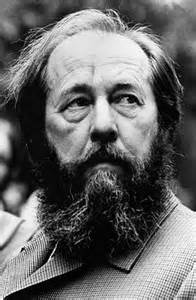
Solzhenitsyn’s speech also provides for us an accurate description of our current leadership from his then vantage point of 1978 and his years spent in gulags for writing truth to power.
Excerpts from Alexander Solzhenitsyn’s speech at Harvard, June of 1978, “A World Split Apart” (emphasis mine):
…
….
…
There too many nuggets of truth to post. Here is the link to the speech: http://www.americanrhetoric.com/speeches/alexandersolzhenitsynharvard.htm
*The above quote and this post, a revised version of a comment I made, are from this post: “Sharansky: The U.S. has “lost the courage of its convictions”
****
BTW: from the Wikipedia link above, the section “On Russia and the Jews” regarding Solzhenitsyn’s supposed anti-Semitism: “Holocaust survivor Elie Wiesel denied this claim and insisted that Solzhenitsyn was not an anti-Semite: “He is too intelligent, too honest, too courageous, too great a writer.” He added he wished Solzhenitsyn were more sensitive to Jewish suffering, but believed his insensitivity to be unconscious.”
Rate this:
Filed under Liberalism, Political Commentary Tagged with Alexander Solzhenitsyn, American Declaration of Independence, culture, Democracy, Epicureanism, founding fathers, humanism, moral relativism