Three Atheists I Listen To

Becoming a follower of Jesus Christ and an heir of the King and a fellow servant in the Kingdom of God began when I first believed that God existed. What followed was the understanding that God not only existed but that He is an Infinite-Personal God who, though having created the vast universe ex nihilo using the Big Bang and evolution, loves me.

 Beyond my own personal encounters with God through my reason and through the testimony of others, there are the historical facts supporting the death and resurrection of Jesus Christ. There is also astounding supporting evidence in nature. God exists.

But there are some who say otherwise: “Atheism exists, this I know, for my reason tells me so.” These would be the angry atheists Richard Dawkins, the former Christopher Hitchens (Hitch) and others.

 I have at one time or another heard these atheists give their arguments of disbelief and I have found their words wanting for any real substance. They often come across as superior and snobbish.  And, their arguments are certainly unfettered by the factual account of the resurrection or of the fine tuning of the universe that makes life and thought and argument possible at all. Their anger exists.

 There are three atheists I pay attention to.  I tune in to them because what they often say through words or music reveals the truth about God in a way they may not even realize. The three atheists are Thomas Sowell, Dr. Theodore Dalrymple and Frederick Delius
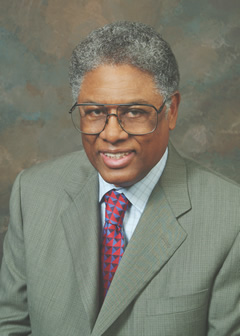
Thomas SowellFirst, Thomas Sowell.  Start at his web page Thomas Sowell. And, here is a short bio from the Townhall.com web page: http://townhall.com/columnists/thomassowell/

“…writing for the general public enables him to address the heart of issues without the smoke and mirrors that so often accompany academic writing.”

  Sowell is an economist, a common sense economist.  You will get that sense as you read his books and articles.  Of late, I have read The Thomas Sowell Reader (start with this book for short articles addressing current issues both economic and social) and A Conflict of Visions.

  The Thomas Sowell Reader, a compilation of articles and essays written by Thomas Sowell, economist:

 “From an early age, I have been convinced with trying to understand the social problems that abound in any society.  First and foremost, this was an attempt to try to grasp some explanation of the puzzling and disturbing things going on around me.  This was all for my own personal clarification, since I neither had political ambitions nor the political talents required for either elective or appointed office.  But, one having achieved some sense of understanding of particular issues ~ a process that sometimes took years – I wanted to share that understanding with others.  That is the reason for the things that appear in this book.”

 A Conflict of Visions, also written by Thomas Sowell:

 “What are the underlying assumptions behind the very different ideological visions of the world being contested in modern times?  The purpose here will not be to determine which of these visions is more valid but rather to reveal the inherent logic behind each of these sets of views and the ramifications of the assumptions which lead not only to different conclusions on particular issues but also to wholly different meanings to such fundamental words as “justice,” “equality,” and “power.”

 A sample article by Thomas Sowell:  The Fallacy of Redistribution
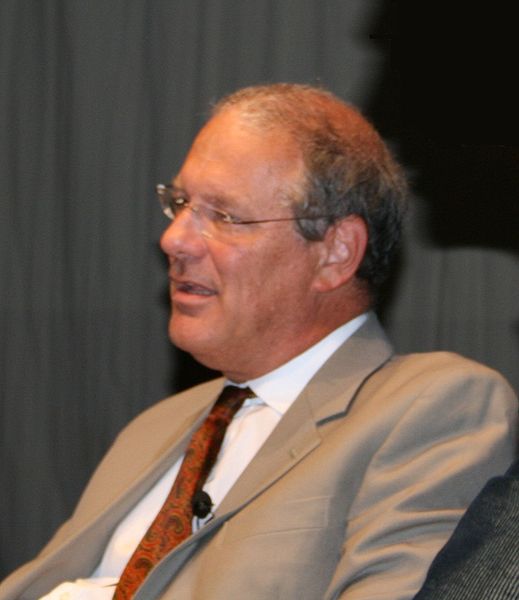
 519px-TheodoredalrympleRegarding Dr. Theodore Dalrymple and some of his recurring themes from books and articles note the following from his Wikipedia entry.  I confirm these themes having read his book Life at the bottom. The Worldview that makes the Underclass:

 -The cause of much contemporary misery in Western countries ~ criminality, domestic violence, drug addiction, aggressive youths, hooliganism, broken families ~ is the nihilistic, decadent, and/or self-destructive behavior of people who do not know how to live. Both the smoothing over of this behavior, and the lexicalization of the problems that emerge as a corollary of this behavior, are forms of indifference. Someone has to tell those people, patiently and with understanding for the particulars of the case, that they have to live differently. (Life at the bottom. The Worldview that makes the Underclass)

-Moral relativism can easily be a trick of an egotistical mind to silence the voice of conscience. (‘The Uses of Metaphysical Skepticism’, in: In Praise of Prejudice. The Necessity of Preconceived Ideas, p. 6 (chapter 2).

-Multiculturalism and cultural relativism are at odds with common sense. (“Multiculturalism Starts Losing Its Luster”. City Journal. Retrieved 12 July 2009)

-The decline of civilized behavior ~ self-restraint, modesty, zeal, humility, irony, detachment – ruins social and personal life. (Not with a Bang but a Whimper)

-The root cause of our contemporary cultural poverty is intellectual dishonesty. First, the intellectuals (more specifically, left-wing ones) have destroyed the foundation of culture, and second, they refuse to acknowledge it by resorting to the caves of political correctness.
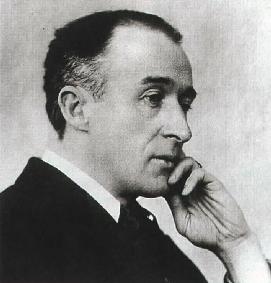
deliusLastly, Frederick Delius.  I don’t recall when I first heard his compositions. It may have been in my thirties at a Chicago Symphony concert.  The first piece I remember is the symphonic poem The Song Of Summer.  I was overwhelmed by its simple beauty.

 From The Delius Collection, Vol. 2 CD liner notes:

 “Many have written of Delius’ ‘moods’ or ‘feelings’, views which reflect only the ‘impression’ his music has made on the writers (read music critics).

Such Romantic or rather Impressionistic ~ notions of his art are only concerned with its surface appeal, as if that is all that is valuable in it, and ignore wholly his unique technical and structural mastery.  In such ways, Delius is more of an anti-Romantic, for the sentimentality or self-projection of Romanticism are alien to his music.  Delius hymned Nature, not himself as did Sebelius; such sentimentality as may condemn his art stems from a performing style wherein expressive beauty is stressed at the cost of his music’s intellectual power.” Robert Matthew-Walker

 For starters I would recommend listening to Irmelin Prelude, Song of Summer, A Late Lark, the orchestral interlude A Walk to Paradise Garden from his opera A Village Romeo and Juliet and On Hearing the First Cuckoo in Spring.

 An avowed atheist, Delius embraced nature for his inspiration.  He also embraced Nietzsche’s philosophy which produced Delius’ loud and unattractive A Mass of Life.

 “A Mass of Life is an attack upon Christian doctrine and the Christian way of life as Nietzsche and Delius saw it. They both wanted to correct what they called the “slave morality” of Christianity.  Their great emphasis was upon the will, not bowing to anyone, and living and dying fearlessly though death be total extinction.

Death, when it came to Delius, was terrible, and within a few months his steadfast wife was dead too.

In speaking about Delius, Eric Fenby (Delius’ composition scribe after Delius became blind) observes, “Given those great natural musical gifts and that nature of his, so full of feeling, and which at its finest inclined to that exalted end of man which is contemplation, there is no knowing to what sublime heights he would have risen had he chosen to look upwards to God instead of downward to man!”  From the Gift of Music by Jane Stuart Smith and Betty Carlson, Crossway Books

 What the first two atheists have in common is their ability to speak truth, wisdom and common sense ~ God’s law within each of us – simply. As Richard Feynman, Nobel laureate of physics said, “You can recognize truth by its beauty and simplicity.”

 Both men, from their lifetime of experiences, have seen reality and tell us that there are values that a man must embrace to be civilized, to be ‘right side up’, so to speak.  They tell us that Man must draw the line somewhere. 

Now, I believe that it is the God of Creation who has created the line ~ the natural law written on our hearts ~ and He has exposed our crossing it. But, He did not leave us on our own, to remake ourselves as Nietzsche’s ideal human, the Übermensch, who would be able to channel passions creatively (but to what end?). He gave us the only way possible, through His Son, to regain our humanity.

 Frederick Delius revealed truth through his music’s contemplative moments of rhapsodic beauty as inspired by God’s creation.

 All three have seen things (even the eventually blind Delius) that others often willfully ignore. They are honest with themselves about what they see and they repeat it back.  And, there is knowledge of reality in their words and works that can only find its genesis in God’s created order and His law written on our hearts.

 “He has made everything beautiful in its time. He has also set eternity in the human heart; yet no one can fathom what God has done from beginning to end.” Ecclesiastes 3:11
The New/Old Jesus People Speak

Years ago, in the 60’s and 70’s, I was part of the Jesus People Movement.  It was during those days that I heard street-wise preachers like Phil in school auditoriums and in public parks.  Hundreds of us teenagers attended. 

We brought our school friends with us and many believed.  And after they believed we took them down to the lake and baptized them right then and there. I baptized my best friend Carl.

Those are times I will never forget.  Phil Robertson’s words reminded me once more of God’s love towards us, then and now and forever. 

And don’t forget! Christmas ~ the birth of the Messiah King ~ is the start of the Kingdom of God on earth.

  “Mary will give birth to a son, and you are to give him the name Jesus, because he will save his people from their sins.” the gospel of Matthew 1:21

(Jesus is the Greek form of Joshua, which means the Lord saves.)

Regarding the uproar over Phil’s A&E show comments, know this:  at the heart of the problem of sin is “the persistent refusal to tolerate a sense of sin.” Alvin. Plantinga

We Thirst …For God’s Love

St. Patrick’s Prayer within Henryk Górecki’s Symphony No.3 “Symphony of Sorrowful Songs,” within Terrence Malick’s “to The Wonder.”

We are mortal. God’s Love is inexhaustible, eternal.

****

“You can recognize truth by its beauty and simplicity.”  – Richard Feynman Nobel laureate in physics from Part One of ‘Tthe Evidential Power of Beauty: Science and Theology Meet by Thomas Dubay, S. M.

The Road Less Traveled By – To The Solidification Zone

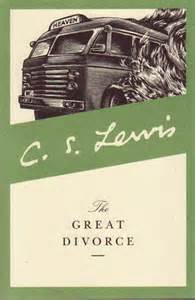
The Great Divorce

You are about to take a bus ride into another dimension.  No, not a trip to the Twilight Zone. Or, maybe it IS to the Real Twilight Zone!

 Despite the nonsense that comes from Oprah’s benign (?) pulpit, all roads are not radii that lead to God and Heaven.  Instead there will be a Fork in the road.  It is this bus ride that will take you to that juncture, albeit through fantasy.

 I learned about this bus ride from a recent series of classes I attended at a nearby church.  The topic of the class was C.S. Lewis’ book The Great Divorce.  The discussion was led by a retired Wheaton College professor, Dr. Rolland Hein, Professor Emeritus, English. Dr. Rolland also teaches a class on Saturday mornings at the Wade Center which is located near the college.

 The title page of The Great Divorce, “A Dream” has this quote from George MacDonald:

 “No, there is no escape.  There is no heaven with a little of hell in it ~ no plan to retain this or that of the devil in our hearts or our pockets. Our Satan must go, every hair and feather.”

 The Preface to The Great Divorce lets us know that Lewis will be endeavoring with his dream story to break up the marriage of Heaven and Hell (a response of sorts to William Blakes’ book The Marriage of Heaven and Hell), a marriage that many in our lifetime wish for. He writes to inform us of their necessary divorce.

 In an age of moral relativity and subjectivism many want to synthesize good with evil in hopes of redeeming evil. But as Lewis reveals, the choices we make take us down divergent pathways.  We either choose a path of good that becomes an even greater good as we continue to make good choices and stay on its narrow way or we choose a broad path that leads towards ever greater evil.

 The Great Divorce offers us a bus ride from “grey town” with its “continued hope of morning” to the “High Country,” a place of contrasts and a place where God honors the choices we make.

 You will meet many characters, many perhaps like someone you know.  There will be those who cannot fathom Heaven as any place they would want to stay and there are others who fear losing what they had on earth in “grey town”. There will be the proud, the stubborn, the willful and the angry.  There will be those who demand their rights and also the ego-unchallenged.  There will be those whose feet hurt them as they walk on solid ground for the first time and there will also be the “bright solid people” who move about the “High Country” without effort.  And finally, there will be those who reject Joy and solid Reality to return to “grey town” on the same bus. 

 The passengers are all phantoms or ghosts.  When they arrive in the High Country they are almost completely transparent – you can see right through them in every way:  there is the well-dressed (and very self-conscious woman); there is the broad-minded man, the artist, the Tousle-Headed poet, the mother who has lost a son, the golden apple stealing materialist, Sarah Smith and the Dwarf and Tragedian.  You will also meet George MacDonald: 

 Lewis, the main character in the dream and a phantom, meets up with George MacDonald, one of the solid people.  (MacDonald, forerunner of the “Inklings,” was a good friend and mentor to Lewis.).  Together they discuss what they see the phantoms choose.  At one point Lewis hears MacDonald say, “Milton was right, said my Teacher, “The choice of every lost soul can be expressed in the words, “Better to reign in Hell than to serve in Heaven…There is always something they prefer to joy— that is, to reality.”

 The bus ride ends with the choice you make.  God honors your choice:

 “There are only two kinds of people in the end: those who say to God, ‘Thy will be done,’ and those to whom God says, in the end, ‘Thy will be done.’

 Lewis’ The Great Divorce is the bus ticket; the Choice is before you.

The Good News and Capitalism All Under One Tent

tent-making

Over the past several months I have been reading several of the Apostle Paul’s letters. He wrote to churches he had planted and to those he intended to visit such as the one in Rome. 

 His two letters to the Christians in Thessalonica struck me, especially in light of the terms “social justice” and “fair share” being pandered today by so~called Christian groups (Sojourners & Jim Wallis, etc.) under the guise of helping others.

 What struck me within these particular letters is that Paul, without healthcare, without government subsidies, without insurance of any kind went about the business of the Kingdom of God, working with his own hands, as he states, making tents, paying his own way. 

 Paul said that he could have “entitled” himself to share in their “wealth” because he was a hard-working minister of the good news.  Instead, he chose to not become a burden to the people he was talking to and therefore not a burden or an impedance to the freely offered Good News of the Kingdom of God.

 “Here is a command we have for you, my dear family, in the name of our Lord Jesus the Messiah.  Keep away from any member of the family who is stepping out of line, and not behaving according to the tradition that you received from us.

You yourselves know, after all, how you should copy us. We didn’t step out of line, nor did we eat anyone’s food without paying for it.  We worked night and day, with labor and struggle, so as to not place a burden on any of you.  It wasn’t that we don’t have a right; it was so that we could give you an example, for you to copy us. And indeed, when we were with you, we gave you this command:  those who won’t work shouldn’t eat!”  II Thess. 3:6-10


From a provocative post by R.J. Moeller:  “Hayek on Socialism,”  American Spectator

 “For my fellow Christians who are skeptical of free-market capitalism, I’m all in favor of having those internal discussions about the most God-honoring, effective ways to help the least among us. But if you’re a believer who takes the Bible seriously and you actively (or even passively) endorse government~enforced and funded “social justice,” you’re wrong. You may mean well, but you’re wrong.”

Today I see many young people wanting to help others “socially.” Social media impacts and drives a lot of this desire and also a lot of misinformation about Capitalism and the Free-market. One only has to look at the Occupy Wall Street “movement” to see that there are some who have angst and anger about Capitalism, angst and anger revved up by the main stream media pushing Progressivism’s socialist agenda.

But we need Capitalism more than ever to restore human flourishing to our country.  More importantly, we need Capitalism to help us Christians increase the Kingdom of God here on planet earth. Think fishermen, disciples, non-union community and fellowship, image-of-God creativity, Jerusalem~Christian-like charity, sparrow~like dependence on God ~ agape love feasts and more.

 Capitalism combined with a knowledge of God and the freedom to act, can enable an individual to freely share the Kingdom of God with others and to do this without the middleman of government and apart from the propaganda of the main stream media. Why else would the Evil One so push for a centralized government where he can consolidate his power?

 Here are some authoritative thoughts about capitalism’s creativity and information sharing that could have a positive impact on the Kingdom of God: 

In a recent book by George Gilder “Knowledge and Power:  Information Theory of Capitalism and How It Is Revolutionizing Our World,”  he writes, 

 “In order for the entrepreneur to succeed, he must know that, if his creation generates an upside surprise, the related profits will not be confiscated or taxed away.  If they may be confiscated, his entire project will not be able to attract the necessary resources to bring it to market.” 

 “The successful entrepreneur has found a creative way to serve his fellow-man, and his profits are the measure of the extent to which he has been of service.  He needs to be able to keep those profits in order to be able to use what he has learned to bring other creative ideas to market to further serve his fellow-man.  When a government takes away the entrepreneur’s profits, it essentially takes away his creative lifeblood.”

 Also,

 “A leftward administration can destroy the value of the 1 percent’s property, but cannot seize it or pass it on….Under capitalism, wealth is less a stock of goods than a flow of ideas and entropy….Capitalism is a system that begins not with taking but with giving to others.”

 And,

 “All economic growth ultimately stems from innovations. …Innovation is always a product of individual innovators, a rare and dynamic breed not always appealing to the millions who depend on their creativity for their own comfort, health, and security.”

“In capitalism, “the givers or investors must be willing to focus on others’ needs more than on their own.  The difference between the value of an item to the giver and its value to the recipient is the profit.  Profit is thus an index of the altruism of an investment.”

Capitalism is the most effective way of expanding wealth, not because it offers the most powerful incentives…but because it links knowledge with power.  It gives control over resources and over the future flow of investment not to political bureaucracies of certified experts or to the most avidly self-loving pursuers of leisure and luxury, but to the particular entrepreneurs who manage successful experiments of enterprise.  It grants riches to those very individuals who have proved their ability to forgo immediate gratification in pursuit of larger goals, and who refuse to waste or to hedonistically consume their incomes.  …Under capitalism, economic power flows not to the intellectual, who manipulates ideas and basks in their light, but to the man who gives himself to his ideas and tests them with his own wealth and workThe greatest damage inflicted by state systems of redistribution and industrial policy is not the ‘distortion of markets,’ the ‘misallocation of resources’, or the ‘discoordination’ of producer and consumers, but the deflation of capitalist energy, the repression of new entrepreneurial ideas, and the stultification of wealth.” (emphasis mine)


And remember, there are those who seek to profit by selling the Kingdom of God message in exchange for “social justice:” 

 Judas held the disciples’ money bag. The other disciples suspected that Judas stole coins from the purse.  Judas likely decided that his “fair share” should come out of the donations received.  And then, horrifically, Judas decides that he would sell out the Kingdom of God for the “good” of his nation ~ for his take on “social justice.” 

 Judas received thirty pieces of silver for his socially “conscientious” efforts.  He then hanged himself (because you can’t invest blood money in good conscience).  And finally like all revolutionaries, a public site ~ Akeldama ~ was named after Judas to memorialize his “social work.” Now that is “social justice.”

********

Recommended reading for those who need help understanding capitalism and the free- market:

 Defending The Free Market:  The Moral Case For a Free Economy

 Books by George Gilder:

 Knowledge and Power:  Information Theory of Capitalism and How It Is Revolutionizing Our World, copyright 2013 (see above reference)

 Wealth and Poverty, 21st century edition

Recommended website:

The Acton Institute

*****

“Play is the exultation of the possible.” theologian Martin Buber


So God Gave Them Up

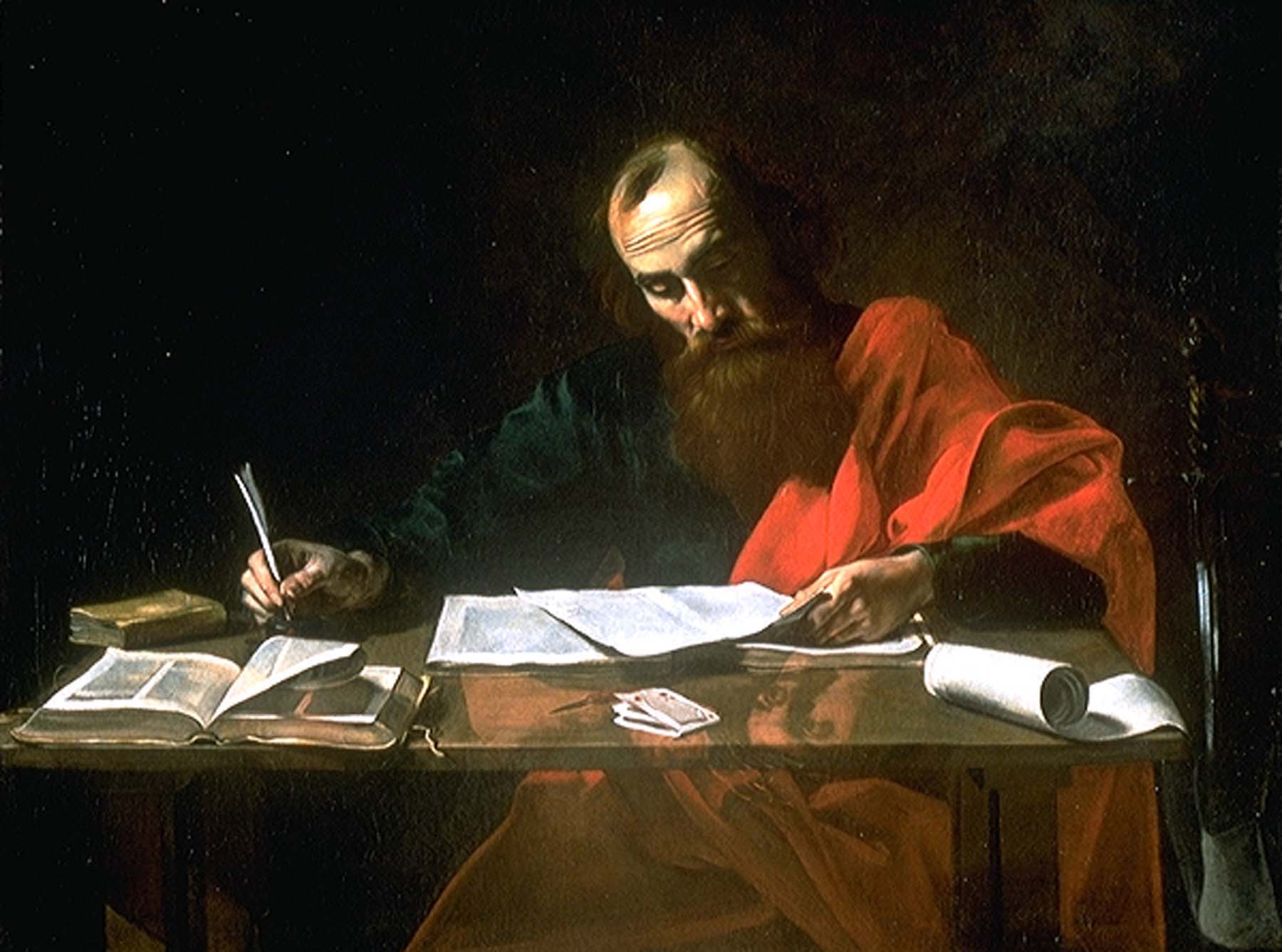
 valentin_paul_writing1800x1337

As you begin reading Paul’s letter to the house churches in Rome you clearly see Paul’s heart for the church and for the Kingdom of God now in place in this most cosmopolitan of cities:

 “This letter comes to all in Rome who love God, all who are called to be his holy people. Grace and peace to you from God our father, and King Jesus, the Lord.”

 Paul’s letter is tactful, spirited, full of information and pastoral.  He is excited and “not ashamed about the gospel” even though many outside the church are not eager to receive Good News of the Kingdom of God. Paul knew that Rome was the dominion of the “rulers of this age.”

 Paul clearly understood that by calling Jesus “King Jesus, the Lord,” that he was promoting another ruler above the Emperor.  This was seditious and dangerous for Paul.  But Paul knew the power of the Gospel.  Paul knew what God’s Good News had done in his own life and in the lives of others. He knew the cost of God’s mercy.

 Prior to Paul’s letter, Rome had gone through sweeping changes.  Pagan Rome didn’t much care for Jews and their purifying religious rituals.  They also didn’t very much care for the new “religion” in town, Christianity, which some of the Jews embraced.  Emperor Claudius had the Jews expelled from Rome.  The Jewish Christians left behind Gentile house churches. Some believe that these churches in Rome began with Gentile believers who were converted during Pentecost, while they were in Jerusalem.

 After Claudius died in AD 54 Nero became Emperor.  Under a new Emperor the Jews and with them the Jewish believers returned to Rome. It is then that Paul writes his letter, circa AD 58, describing the sweeping changes brought about by the Kingdom of God on earth.  He writes about God’s justification of all those who believe that God would keep His Covenant promise. That promise was completely fulfilled in the life, death and resurrection of Jesus.

 Paul was deeply concerned for Christ’s church at Rome.  His “masterpiece” letter hopes to resolve conflicts between Gentile believers and Jews now returning to Rome. And, more importantly, he writes to give the church an overarching vision of God’s Covenant plan to save the world from itself.

 As you read Romans you sense that the church and the world system at that time are not so different from that of our world and our own times. 

 At the beginning of the letter Paul writes that he was under obligation to barbarians as well as to Greeks, that he was  obliged to the uncultured and the cultured. He was obliged to speak the Gospel to the wise and to the foolish.   These kinds of people are with us today, are they not?

 Paul begins God’s creation salvation story with the problem:  man’s brokenness and man’s unwillingness to turn from his sin.  To make the point, within the first paragraphs of his letter the phrase “So God gave them up” occurs three times:

 “So God gave them up to uncleaness in the desires of their hearts, with the result that they dishonored their bodies among themselves.  They swapped God’s truth for a lie, and worshipped and served the creature rather than the creator, who is blessed for ever, Amen.

So God gave them up to shameful desires.  Even the women, you see swapped natural sexual practice for unnatural; and men, too, abandoned natural sexual relations with women, and were inflamed with their lust for one another.  Men performed shameless acts with men, and received in themselves the appropriate repayment for their mistaken ways.

Moreover, just as they did not see fit to hold on to knowledge of God, God gave them up to an unfit mind, so that they would behave inappropriately.”

 Keep in mind that Paul knew the Jewish canon.  He knew about the destruction of Sodom and Gomorrah – God’s righteous anger poured out on the sexual perversion within those cities. Those cities had been warned.  Paul was again warning the new Christians in pagan Rome about God’s Righteousness and Justice and man’s hardheartedness. Is not homosexuality worshipping the creature rather than the Creator? But Paul was revealing a way out ~ a path made straight by the One Jew who fulfilled all of God’s desires for His rebellious people ~ Jesus.

 And lest we read Paul’s words and become smug and judge others keep in mind Paul’s words in his letter to the Corinthians:  “Some of you were once like that.”

 “Don’t you realize that those who do wrong will not inherit the Kingdom of God? Don’t fool yourselves. Those who indulge in sexual sin, or who worship idols, or commit adultery, or are male prostitutes, or practice homosexuality, or are thieves, or greedy people, or drunkards, or are abusive, or cheat people–none of these will inherit the Kingdom of God

Some of you were once like that. But you were cleansed; you were made holy; you were made right with God by calling on the name of the Lord Jesus Christ and by the Spirit of our God.” (I Cor 6:9-11)

 I don’t have to tell you that in our time the main stream media pours out filth and degeneration into our homes.  Our lives are constantly bombarded with TV programs, movies and advertisements that use sex or by political party advocates who call homosexuality a “right.”  Yet, a “right” does confer righteousness to the owner, only license and worse, in the case of homosexuality, licentiousness.

 The perversion and antinomianism now seems even more pervasive in our age than in Paul’s because of the ever-present media.  What can Christians do to heed Paul’s words today in our pagan world? It begins with worship.  So God will give them up – the people of this age – who follow in the footsteps of the pagan Romans but for us who believe we can give up to God what Paul writes later in Romans:

 “Therefore, I urge you, brothers and sisters, in view of God’s mercy, to offer your bodies as a living sacrifice, holy and pleasing to God–this is your true and proper worship.”

*******

Here is some helpful info if you choose to walk away from those chains:

http://www.narth.com/

NARTH 2012 Press Conference & Reparative Therapy

http://voices-of-change.org/

God Saw That It Was Good – All Along (Theistic Evolution)

Have you read the engaging book by scientist Francis S. Collins:  The Language of God: A Scientist Presents Evidence for Belief.?  As someone who works in the engineering field and as a Kingdom of God Venturer the book’s discussion of science and faith intersecting piqued my interest.

Before reading this book I did have the innate understanding that science and faith were compatible and that each discipline reinforced the other with their respective insights and revelations.  But prior to reading this book I hadn’t seen much credible literature discussing this premise.  Currently, there appears to be plenty of antipathy between the church and science. So I was excited to purchase the book and evaluate a scientist’s take on the nexus. I was not disappointed.

Francis S. Collins, as the back cover bio reads, headed the Human Genome Project and is one of the world’s leading scientists. “He works at the cutting edge of the study of DNA, the code of life.  Yet he is also a man of unshakable faith in God and Scripture.

Dr. Collins believes that faith in God and faith in science can coexist within a person and be harmonious. In The Language of God he makes his case for God and Science.”

Of special interest to me is the fact that Collins (as I do) accepts theistic evolution.  In Chapter Ten he writes:

“This view is entirely compatible with everything that science teaches us about the natural world.  It is also entirely compatible with the great monotheistic religions of the world.  The theistic evolution perspective cannot, of course, prove that God is real, as no logical argument can fully achieve that. Belief in God will always require a leap in faith.”

The book lays out for the reader in very accessible terms how Collins who was not raised in a Christian home came to his belief in God as a budding scientist in his twenties.  The book goes on to discuss why Collins fully accepts theistic evolution as opposed to literal Creationism and Intelligent Design.  Based on his own research Collins says the evidence is overwhelming in favor of natural evolution as God’s creative methodology.  I would agree.

He then further encourages the church to endorse scientific research as a resource for understanding God’s creation, therefore offering a better understanding of God.  In concert with his plea I believe every church leader should purchase this book and read its message.  There is, sadly, too much mis-information being preached and taught by the Christian Evangelical church regarding creation.  This information makes the church look rather foolish.  Remember Galileo’s row with the church? Being raised an Evangelical I was taught that the earth was created about 6-8000 years ago and that the seven days described in Genesis Chapter One were literal days:  Poof!  We just showed up on the scene.

Later in life I became skeptical of the Young Earth Creationist theology but I clung to it because I had heard of no other plausible evidence to the contrary.  Evolution was routinely discounted in the Evangelical church.  In fact everything I had heard in church told me that evolution was the atheist’s version of the Christian creation. Evolution was also described as a slippery slope which would carry people away from God toward unbelief.  And worse, the church seemed opposed to science and science was something I truly enjoyed being involved with.  I would later look into Intelligent Design (ID) and had wondered if ID might be the catch-all for my belief in God’s creative act. But I was to learn that ID was flawed theory that did not take into account the nature of God.

My change in thinking occurred a few years ago when I came across the writings of Christian philosopher Alvin Plantinga from the University of Notre Dame.  Spending two and a half hours on a train five days a week over the course of several years I had been able to read and research many different science and philosophy topics. And I did this precisely because I wanted to know more about God, the nature of His being and the world around me.  This excited me no end.  I don’t read romance novels.  I find my excitement by romancing the truth.

Through reading Plantinga’s papers, though sometimes written in difficult philosophical terms, the door of my understanding was opened wide and I accepted theistic evolution as a valid creation methodology.  I would encourage anyone to read Plantinga’s papers.

The basics of theistic evolution are clearly delineated in Francis Collins’ book and on the Biologos website.  Biologos is the name given to theistic evolution by scientist Collins.  Here are the Biologos premises/beliefs from that website:

We believe that God created the universe, the earth, and all life over billions of years. God continues to providentially sustain the natural world, and the cosmos continues to declare the glory of God.

  • We believe that all people have sinned against God and are in need of salvation.
  • We believe in the historical incarnation of Jesus Christ as fully God and fully man. We believe in the historical death and resurrection of Jesus Christ, by which we are saved and reconciled to God.
  • We believe that God continues to be directly involved in human history in acts of salvation, personal transformation, and answers to prayer.
  • We believe the Bible is the inspired and authoritative word of God. By the Holy Spirit it is the “living and active” means though which God speaks to the church today, bearing witness to God’s Son, Jesus, as the divine Logos, or Word of God.
  • We believe that God also reveals himself in and through the natural world he created, which displays his glory, eternal power, and divine nature. Properly interpreted, scripture and nature are complementary and faithful witnesses to their common Author.
  • We believe that the methods of science are an important and reliable means to investigate and describe the world God has made. In this, we stand with a long tradition of Christians for whom Christian faith and science are mutually hospitable.
  • We believe that the diversity and interrelation of all life on earth are best explained by the God-ordained process of evolution and common descent. Thus, evolution is not in opposition to God, but a means by which God providentially achieves his purposes.
  • We believe that God created humans in biological continuity with all life on earth, but also as spiritual beings. God established a unique relationship with humanity by endowing us with his image and calling us to an elevated position within the created order.
  • We believe that conversations among Christians about controversial issues of science and faith can and must be conducted with humility, grace, honesty, and compassion as a visible sign of the Spirit’s presence in Christ’s body, the Church.
  • We reject ideologies such as Deism that claim the universe is self-sustaining, that God is no longer active in the natural world, or that God is not active in human history.
  • We reject ideologies such as Darwinism and Evolutionism that claim that evolution is a purposeless process or that evolution replaces God.
  • We reject ideologies such as Materialism and Scientism that claim science is the sole source of knowledge and truth, that science has debunked God and religion, or that the physical world constitutes the whole of reality.

As a follower of Christ and as someone who seeks to bring people to faith in Him I see it as imperative that Evangelical church leaders (John Paul II accepted theistic evolution) come to grips with science (natural science, quantum physics, genetics, etc.) and to avail themselves of all empirical data and evidences coming out of science research.  As I see I, the church and science are completely compatible.  Therefore, the church must not seek to restrain the hand of God, an evolved hand that was once nailed to a tree, a resurrected hand that now reaches out to all of us.

For more information about theistic evolution and Christianity I especially recommend Dr. Karl Giberson’s book The Language of Science and Faith: Straight Answers to Genuine Questions, InterVarsity Press | March, 2011

More from Dr. Giberson:

The Language of Faith:  Straight Answers to Genuine Questions by Karl Giberson and Francis Collins, Intervarsity Press, 2011

The Wonder of the Universe:  Hints of God in Our Fine-Tuned World by Karl W. Giberson, Intervarsity Press, 2012

Other resources:

http://biologos.org/

Philosopher Sticks up for God

Alvin Plantinga

Dr. Francis S. Collins speaks about science and God:

Beginning to Imagine the Kingdom of God

Recently I finished reading Professor N.T. Wright’s book, “How God became King:  The Forgotten Story of the Gospels.”

This book is a needed return to the focus of the four gospels:  the inauguration of the Kingdom of God here on earth.  On the final page the Biblical scholar writes:  “Part of the tragedy of the modern church, I have been arguing, is that the “orthodox” have preferred creed to kingdom, and the unorthodox” have tried to get a kingdom without a creed.  It’s time to put back together what should never have been separated.  In Jesus, the living God has become King of the whole world.”

 Being raised and ‘churched’ in an evangelical setting for most of my life my understanding of the Gospel (generally a misapplied Pauline bias) from out of all of the sermons and education (Moody Bible Institute) and Christian radio programs was that Jesus came to earth to die, to be resurrected and to save me from my sins, thereby giving me hellfire insurance and access to heaven ~ the Reader’s Digest of the Four Spiritual Laws.

 “How God became King:  The Forgotten Story of the Gospels” opened my eyes to a Kingdom of God understanding that I have been searching for over many, many years.

Here is the third section (read the whole) of a lecture, ‘Imagining the Kingdom: Mission and Theology in Early Christianity’ by


N. T. Wright

Research Professor of New Testament and Early Christianity


‘Imagining the Kingdom: Mission and Theology in Early Christianity’

3. Early Christian Mission and Theology

 All this leads to my concluding remarks on early Christian mission and theology. For over a century now it has been commonplace within the discipline called New Testament Studies to assume that the early church had to jettison its Jewishness in order to be relevant to the Gentile world into which it quickly went. Thus it has been assumed, again, that Paul had to downplay the idea of Jesus as Israel’s Messiah and to switch, instead, to the more readily available category of the kuvrio~, the ‘Lord’. But this proposal, hugely influential though it has been, simply fails to imagine what ‘the kingdom of God’ meant to the early Christians, Paul included (he doesn’t use the phrase that often, but when he does we can see that it remains at the centre of his worldview). Paul, in fact, held firmly to the ancient Jewish belief, rooted in the Psalms, in Isaiah and in Daniel, that a world ruler would indeed arise from Judaea, that Israel’s God would thereby return to dwell amongst and within his people, and that through this means the long-awaited new creation of peace and justice would be inaugurated for the whole world. All of that standard Jewish expectation came to fresh flowering in Paul’s work. Of course, the communities which Paul founded were determinedly non-ethnic in their basis. But this was not because Paul had as it were gone soft on the essential Jewishness of his mission, or because there was something wrong (as Epicureans imagine) with Judaism, but because he believed that it was precisely part of the age-old divine plan that when God did for Israel what he was going to do for Israel then the nations would be brought under the healing, saving rule of this one God. Paul’s ‘gospel’, his eujaggevlion, was thus much closer in meaning to the various eujaggevlia of Caesar than most of modern scholarship has imagined. It was, as Acts 17 (already quoted) indicates, the royal announcement, right under Caesar’s nose, that there was ‘another king, namely Jesus’. And Paul believed that this royal announcement, like that of Caesar, was not a take-it-or-leave-it affair. It was a powerful summons through which the living God worked by his Spirit in hearts and minds, to transform human character and motivation, producing the tell-tale signs of faith, hope and love which Paul regarded as the biblically prophesied marks of God’s true people.

 The communities which sprang into surprised existence as Paul went around making this royal announcement were remarkably devoid of an obvious symbolic world. They were precisely not defined by the worldview-symbols of Judaism – Temple, Torah observance and so on. They certainly didn’t adopt the symbols of the surrounding pagan culture. How could this new community, this new sort of community, retain what for Paul was its vital centre, namely its strong unity across traditional social divisions, and its strong holiness in matters of our old friends, money, sex and power? For Paul the answer was simple. The community needed to understand what it was that had happened in Jesus the Messiah, and in particular who the God was into whose new world they had been brought. What we see in Paul is thus properly characterized as the birth of the discipline which later came to be called Christian theology, by which I mean the prayerful and scripture-based reflection, from within the common life of the otherwise disparate body called the church, on who exactly the one God was and what his action in Jesus and by the Spirit was to mean. Early Christian theology was not an exercise undertaken for the sake of speculative system-building. It was load-bearing. If the unity and holiness of the early church were the central symbols of the movement, they could only be held in place if a vigorous theology was there to stabilize them in the winds and storms of the first century. Theology, in this sense, serves ecclesiology and thus the kingdom-based mission. Actually, I have come to worry about a post-Enlightenment theology that doesn’t do this, that thinks the point is simply to ‘prove’ the divinity of Jesus, or his resurrection, or the saving nature of his death in themselves, thereby demonstrating fidelity to the Creeds or some other regula fidei. In the gospels themselves it isn’t like this. All these things matter, but they matter because this is how God is becoming king. To prove the great Creeds true, and to affirm them as such, can sadly be a diversionary exercise, designed to avoid the real challenge of the first-century gospel, the challenge of God’s becoming king in and through Jesus.

 This challenge, of course, required imagination: not the undisciplined fantasy of which left-brain thinking often accuses right-brain thinking, but the imaginative leap from the worldviews of paganism, with their many gods who might either be far removed, as in Epicureanism, or rolled into one and close at hand, as in Stoicism – or indeed from the worldviews of ancient Judaism, with their fierce concentration on the symbols of land, nation, temple and Torah. But the leap was not made into the unknown. The imaginative leap required was made on the basis of Jesus, Jesus the crucified and risen Jewish Messiah, Jesus the one in and through whom Israel’s God had at last returned in person to rescue his people and the world. And to sustain precisely that leap, the early Christians told and retold, and eventually wrote down, the story of Jesus.

 The four gospels, then, to return to our starting point, are thus appropriately named ‘gospel’, in line both with Isaiah 40 and 52 and with the contemporary pagan usage. They themselves, in telling the story of how God became king in and through Jesus, invite their readers to the imaginative leap of saying, ‘Suppose this is how God has done it? Suppose the world’s way of empire is all wrong? Suppose there’s a different way, and suppose that Jesus, in his life, death and resurrection, has brought it about?’ And the gospels themselves, of course, contain stories at a second level, stories purportedly told by Jesus himself, which were themselves, in their day, designed to break open the worldview of their hearers and to initiate a massive imaginative leap to which Jesus gave the name ‘faith’. The gospels invite their readers, in other words, to a multiple exercise, both of imagining what it might have been like to make that leap in the first century (both for Jesus’ hearers and then, at a second stage, for their own readers) and, as a further stage again, of imagining what it might be like to do so today. For too long gospel study has been dominated by the attempt to make the gospels reflect, simply, the faith-world of the early church. Why, after all, the radical critics used to say, would the early Christians have been particularly interested in miscellaneous stories of what Jesus actually said or did, when all that really mattered was his saving death, making the gospels simply ‘passion narratives with extended introductions’? The conservative response has been that early converts would naturally want to know more about this Jesus in whom they had come to place their faith. But this stand-off, on both sides, has usually failed to reflect the larger question: that the gospels tell the story of Jesus not out of mere historical anecdotage or faith-projection, but because this is how Jesus launched the kingdom of God, which he then accomplished in his death and resurrection. Even to hold this possibility in one’s head requires, in today’s western church, whether radical or conservative, no less than in the non-Christian world, a huge effort of the imagination.

 This imagination, like all good right-brain activity, must then be firmly and thoroughly worked through the left brain, disciplined by the rigorous historical and textual analysis for which the discipline of biblical studies has rightly become famous. But, by itself, the left brain will produce, and has often produced, a discipline full of facts but without meaning, high on analysis and low on reconstruction, good at categories and weak on the kingdom. One of the reasons I was excited to be invited to come to St Andrews is because this is already one of the very few places in the world where the imagination is taken seriously as part of the whole theological discipline. I hope and trust and pray that we will be able to work together at the challenging but richly rewarding tasks of imagining the kingdom in such a way that will simultaneously advance the academic understanding of our extraordinary primary texts and enrich the mission and theology of tomorrow’s church. It is just as difficult today as it was in the first century to imagine what the kingdom of God might look like. Rigorous historical study of the gospels and the other early Christian writings has a proper role to play in fuelling, sustaining and directing that imagination, and in helping to translate it into reality.

(emphasis mine)

“To Be or Not To Be” Has Always Been the Question

It’s been a while since my last post.  I have been away visiting my mom & dad.  My dad is close to death.

 I drove out to see my folks when I heard that my dad was failing fast.  We expect him to leave us soon.

 I spent several days with mom and dad.  I was able to speak and pray with dad.  He is ready to die.

My father believes that God is faithful to His Word and that he will be in the Lord’s presence soon.

 My father is coherent but feeble. An oxygen tank and a pump supply air thru his nose into his lungs and into his blood stream. There will be no more doctor visits for him.

 My dad is a Godly man. He has done the work of the Kingdom of God here on earth: reconciliation, redemption, giving, witnessing, intercession and many other good works.  And he has been married to my mom for almost 64 years!

 Each of us siblings is praying that dad will quietly pass over into the presence of the Lord while he is in his chair or in his bed. I will miss dad. (I am the oldest child.)

 While there I met with my siblings to talk about future things regarding mom.

 “The LORD cares deeply when his loved ones die.”  Psalm 116:15

 A photo of mom & dad & me:

dad & mom & me

 While visiting mom and dad I was able to catch up with my siblings and their kids.  Wow!  The kids have grown! 

 I am not a ‘Facebook’ kind of person so I haven’t seen the latest goings-on with each relative. How much I have missed!

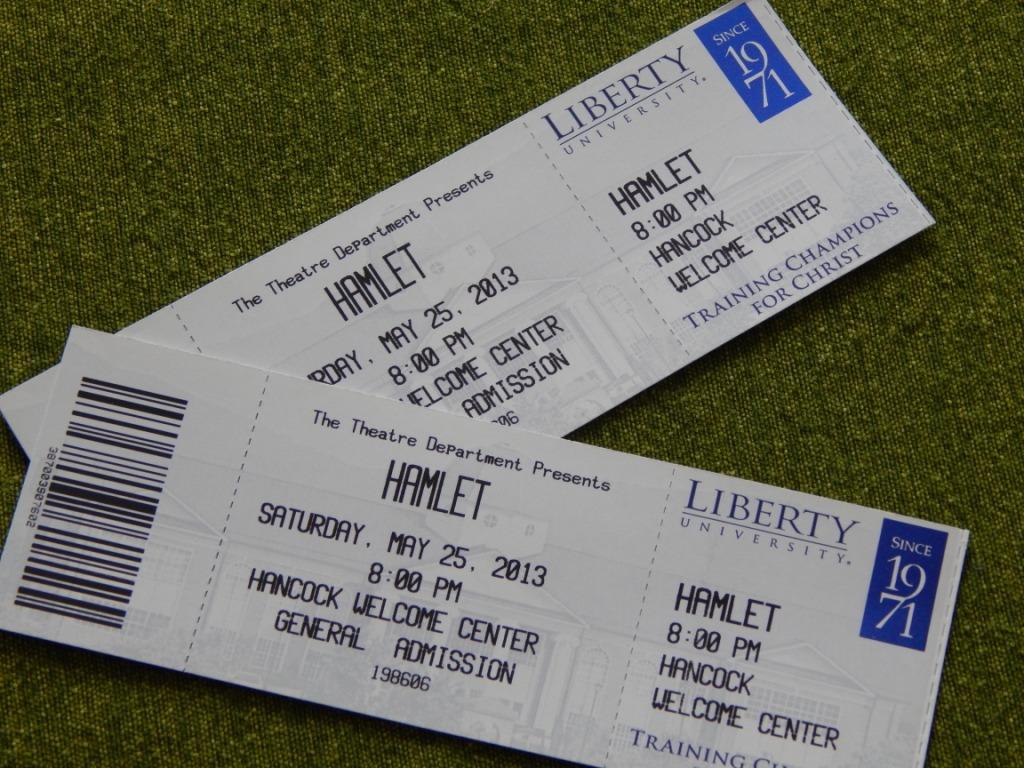
 My sister-in-law is also not a ‘Facebook’ kind of person.  But she and I are into drama.  She invited me  to go over to nearby Liberty U to see my nephew in Hamlet.   Her son had two roles:  Rosencrantz and Laertes.

 The play began outside and then each scene was set in a different location around the Hancock Welcome Center ~ inside and out.   

 As we moved outside to the balcony a glorious panoramic view opened to us:   the sun was behind and below the Blue Ridge Mountains in the distance, the horizon gilt with gold and rose.

 The gravedigger scene ~ “Alas, poor Yorick …”~ was hilarious.

 At the play’s end there was a clash of swords. Laertes and the rest didn’t survive the sword fight or the poison. Death was strewn everywhere.

 And then I was reminded of what G. k. Chesterton once said:

 “We are to regard existence as a raid or great adventure; it is to be judged, therefore, not by what calamities it encounters, but by what flag it follows and what high town it assaults. The most dangerous thing in the world is to be alive; one is always in danger of one’s life. But anyone who shrinks from that is a traitor to the great scheme and experiment of being.”

Hamlet tickets

The Church and Gender

   From my perspective the Christian Church has helped fuel gender confusion by placing added emphasis or burdens on others regarding the masculine and the feminine. 

 Recall the early Christian Churches of Jerusalem and Galatia which demanded that new Christians follow the strict tradition “soaked” Law along with the teachings of Jesus?  Today’s church in similar fashion, is seeking to subjugate men and women to “Biblically” masculine or feminine stereotypes, demanding that their romantic notions of what they consider masculine and feminine become de facto behavior for all Christians.

 As a former student of Moody Bible Institute and during the course of a lifetime I have read through the Bible several times and many, many passages several times over.    I have to say that I have never, ever found any description of Biblical manhood or womanhood.  What is written are what characteristics a man likes about a woman (see Song of Solomon and Proverbs 31) and what a woman likes about a man (see Song of Solomon).  None of these “characteristics” ~ physical and pragmatic – carry the moral weight of the Ten Commandments or of the New Commandment that Jesus gave us to “Love one another.” These “characteristics” should never be used to propagate more sons and daughters of the “Biblically masculine and feminine.”

 Now, when a Church or group puts the word “Biblical” in front of its messaging it is inferring that this is what a Christian must do or be. These “characteristics” should never be taught as Biblical mandates for manhood or womanhood. 

 As the Apostle Paul noted about food offered to idols (I Cor. 8), there are some who can eat such food and have no issue with their conscience.  Others must refuse because of their conscience. He voiced concern about those with maturity and freedom being a stumbling block to the weak in their eating of food offered to idols.  But I believe that it is the Church with regard to its “genderization of males and females” that has become a stumbling block for the weak.  Throughout history the Christian church has sought to enforce its will onto Christians.  This was certainly true before the reformation and it is still true with the “free” church’s Libertarian Paternalism that nudges people into making decisions the church feels are best for them, including gender roles.  But the church does not decide what our Spirit-led conscience tells us to do.  Paul learned that lesson the hard way.  We as Christians have the freedom to decide our masculinity and femininity before God as the Spirit speaks to our conscience.

 The closest we come to a description of “Biblical manhood and womanhood” in the Bible is within the Apostle Paul’s letter to the church at Ephesus (Eph. 5). It is there that he instructs Christians as to how married men and women should relate to each other. 

 Regarding these relational or family matters he bids husbands to love their wives and wives to respect their husbands.  Biblical manhood and womanhood as seen here is relating to the ‘other’ ~ wife or husband ~ with love and respect. Biblical manhood and womanhood are as relational as simply loving your neighbor as you love yourself.  Why create extra yokes called “Biblical Masculine and feminine” to be placed on people’s necks?

 Now it is common knowledge that people do not like ambiguity. We demand black and white.  We demand inerrancy.  We demand “Biblically masculine and feminine” males and females.  Our minds are wired to alert us to any differences to a norm.  We seek to reconcile things as quickly as possible.  Ambiguity comes off as a potential threat to our understanding of how life should be. As related to gender we tend to overemphasize male and female “roles” in order to reduce our anxiety over ambiguity.  I believe that some of this fear has grown out the Christian Fundamentalist movement that was raised up in the early twentieth century against the threat of Liberal theologian’s textual infractions.  The Conservative Christian world sought to tighten its reins on what is and isn’t “Biblical.”  But it has also put a noose around each gender. 

 Yet, there is no gender typecasting in Scripture.  And, more importantly, the message of the Gospel offers everyone freedom from fear.  This includes freedom from the fear of the ambiguous and the unknown, the fear of the future and the fear of the not being able to follow the letter of the Law and therefore deserving punishment.

 In the past I have attended para-church seminars based on gender “issues.”  There seminar leaders urged attendees to pray asking God for the “True masculine and the “True Feminine.”  These prayers, of course, will not be answered because there is no such thing. The best a man or woman can ever become is to be Spirit-filled.  And the best how-to books to become Spirit-filled are the Bible and My Utmost for His Highest by Oswald Chambers. Forget the OTC self-help books and seminars on Biblical Manhood and Womanhood.  You would be wasting your time and money.  Worse, you would most likely seek to adapt to someone else’s notion of what it is to be a man or a woman. Run from this nonsense.

 The current falderal about gender~- “Biblical manhood and womanhood”~- are gooey romantic notions mandated as Biblical “righteousness.” Let’s not go there.  Let’s be free to be men and women without the yoke of the man-made gender laws placed on our necks. And then, perhaps, homosexuals will then feel free to come home.

 I have written about this before:  What is Biblical About it?

 ******

I ask the homosexual community:  What happened to friendship between one man and another?  And, between one woman and another?  And, why take something good like friendship and debase and pervert it into something unnatural and sexualized? And why create an emotional codependency when a good friendship creates a safe environment for sharing life’s joys and hardships?