Deliver Us from Evil
February 10, 2019 Leave a comment
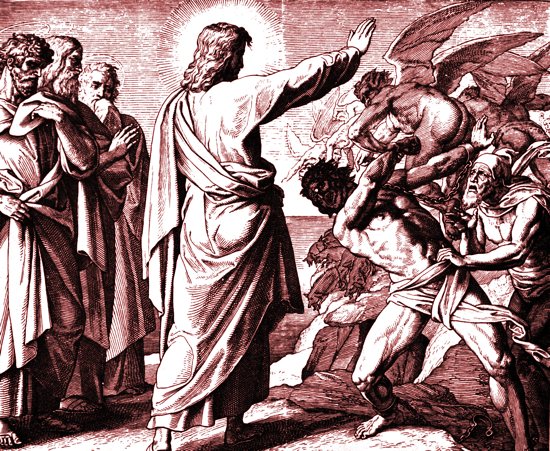
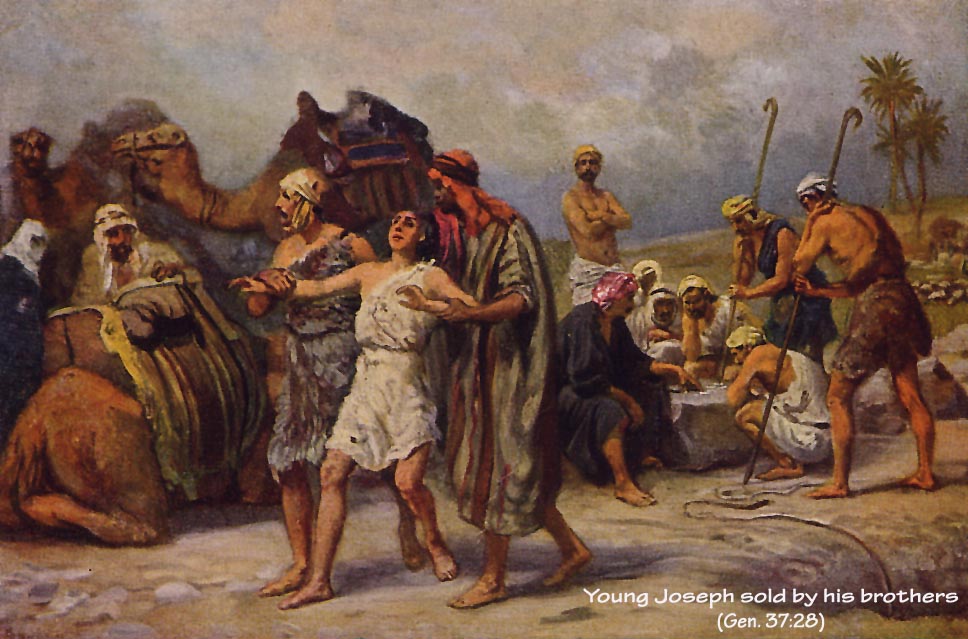
Evil and its enforcer, power, has been around long before man employed both to consolidate empires. Cain killed Abel to gain power over the living reminder of his own disobedience. Joseph’s brothers sold Joseph into slavery to gain power over the living reminder of their supposed unfair treatment and over their father’s love and estate. Evil and its enforcer, power, have always worked together with ruthless abandon to take truth hostage.
“Violence finds its only refuge in falsehood, falsehood its only support in violence.”
-Aleksandr Solzhenitsyn
An astute student of world history would discern that seeking and holding absolute power is valued as far superior to seeking and holding absolute truth. Those who hold power believe they can generate a ‘regime of truth’ by virtue of their position: “truth is what I say it is.”. Anyone attuned to current world affairs can readily see that culture and politics, including our democratic Republic in the U.S., revolve around who holds what power and therefore controls what is and what has been. For, as Winston repeated over and over in George Orwell’s 1984, “who controls the past, controls the future: who controls the present controls the past.” A student of Scripture will see that the regimes of power and truth, beastly kingdoms, are made subject to Absolute Power and Absolute Truth.
It has been said that the gospel crafted by Mark, an ace narrator, was written to a Roman audience. Certainly, there is a “just then” immediacy to his gospel. A sense of action is invoked which would peek a centurion’s ‘man of action’ curiosity. Of more importance to a Roman though, and to any earthly authority and to those under authority, is the theme of who holds power. On earth, regimes of power control regimes of truth. The spiritual world of unclean spirits requires a human habitation to control truth incarnate (Rom. 1:21). Mark’s gospel is the proclamation of a new regime of power and has nothing to do with a justice league of super-heroes with super powers.
In terms similar to announcing a new emperor who claimed to be a son of god, Mark begins his gospel by proclaiming Jesus’ title:
“This is where the good news starts – the good news of Jesus the Messiah, God’s son.”
With this proclamation a new regime is declared. The title acknowledges Jesus’ authority and connotes his power. The title announces what Israel had so hoped for — a Messiah, one who is anointed by God and therefore God’s representative. The Hebrew scriptures chronicled anointed kings, priests and prophets who represented God to Israel. The book of Daniel and writings between the Testaments, in particular the Messianic Apocalypse and the Son of God text from the Dead Sea Scrolls, record Jewish Messianic beliefs in ancient Judaism. In these texts, “Son of Man” is the title given to the one who will reign and hold dominion over all things and offer blessings to those under him.
The new regime, anticipated in Psalm 146 and the Messianic Apocalypse, comes with four blessings:
-The hungry are fed
-the prisoner is set free
-the blind receive their sight
– all things are put right.
Mark’s opening statement declares Jesus to be the anointed One of God. And, of vast more import to the Jews and to the regimes of power and truth, Jesus is declared to be not just another mere mortal claiming to be a son of god, but the One God’s own Son. Human and spirit and citizen and centurion encounter Jesus in Mark’s account. They soon come to this realization.
In the first paragraphs of Mark, Jesus’ baptism by John the Baptist is recorded. Here is the anointing of Jesus by water, by the spirit and by The Voice from the realm of heaven: “You are my son! You are the one I love! You make me very glad!”
Next, Jesus is tested by the Satan. The temptation is for Jesus to accept the realm of power and authority that the Satan offers to him.
A few paragraphs later we read of Jesus and his new disciples going to Capernaum. There Jesus encounters a force from the realm of darkness, the same realm offered to him by the Satan:
They went to Capernaum. At once, on the sabbath, Jesus went into the synagogue and taught. They were astonished at his teaching. He wasn’t like the legal teachers; he said things on his own authority.
All at once, in the synagogue, there was a man with an unclean spirit.
“What business have you got with us, Jesus of Nazareth?” he yelled. “Have you come to destroy us? I know who you are: you’re God’s Holy One!”
“Be quiet!” ordered Jesus “And come out of him!”
The unclean spirt convulsed the man, gave a great shout, and came out of him. Everyone was astonished.
“What’s this?” they started to say to each other. “New teaching – with real authority! He even tells unclean spirits what to do, and they do it!”
Mark’s gospel account goes on to detail events which show the authority and power of Jesus. Over and over we read of Jesus’ power over demons, the unclean spirits which roam the earth seeking whom they may inhabit. Realms of power are juxtaposed – heaven’s and the dark forces of the Satan which control men. They are shown in direct conflict. And note above: the unclean spirt knows who Jesus is and by whose authority he works before anyone else in the story. But why does Jesus stop the demon from declaring his identity? Mark’s beginning narrative imposes a tension that is resolved at the end of his gospel.
Before the end of the gospel we read of exorcisms. The realms of darkness are dealt with in these passages:
Mark 1:21-28 – shown above
Mark 5:1-20 – a wild untamed man with inhuman strength is possessed by an unclean spirit. He lives in a graveyard. We read that “No one had the strength to tame him”. This demon possessed man sees Jesus and throws himself in front of Jesus and shouts at the top of his voice…
“Why you and me, Jesus?” “Why you and me, son of the High God?” By God stop torturing me!” this last, because Jesus was saying to him “Unclean spirit, come out of him!”
Jesus cast The Legion of demons into a herd of pigs. The pigs then rush to the sea where they drowned. (The unclean spirits leave the dead pigs and go on searching for someone to inhabit.)
Mark 7:24-30 – a Greek woman throws herself at Jesus’ feet. She pleads with Jesus to cast an unclean spirit out of her daughter. After hearing the gentile woman’s “even the dogs under the table eat the crumbs that the children drop” Jesus affirms her words and sends her on her way. Her demon-possessed daughter back at home was rid of the unclean spirit.
Mark 9:14-29 – a father brings his demon possessed son to Jesus. The disciples could not cast out the demon. Jesus is notably angry at the unbelief in the power of God, especially when the father hedges, “…if you can do anything…” Jesus reprimands the father. “What do you mean, ‘If you can?” “Everything is possible to someone who believes.” The father shouts “I do believe! “Help me in my unbelief!” Jesus commands the unclean spirit to come out of the boy. The boy convulses and the unclean spirit comes out. The disciples go to question why they were ineffective. Jesus responds, “This sort can only be cast out by prayer.”
In Mark 3:15, 6:7 & 13 and 9:38-39 Jesus gives his followers the authority to cast out unclean spirits.
Mark is an excellent story-teller. As you read above, tension was imposed by Mark in the beginning paragraphs – the silence imposed on the unclean spirit who disclosed Jesus’ identity. This was done to pique the reader’s curiosity. Mark wanted the reader to discover for themselves who Jesus is. Like those involved with Jesus, the reader would question “Is Jesus really the Messiah?” and “Is Jesus really God’s son?” Each encounter and event would provoke questioning and amazement in the reader: “What’s this?”; “New teaching – with real authority! “He even tells unclean spirits what to do, and they do it!” And then the crucifixion appears to give the regime in power – the Romans- the final word about Jesus. But Mark gives us the final word through the mouth of a centurion:
When the centurion who was standing facing him saw that he died in this way, he said, “This fellow really was God’s son.”
The tension is resolved by an onlooker.
Lest anyone think that Jesus’ sole purpose on earth was to promote social justice and to have his words later passed on as “all you need is love” sixties-style bromides, Mark’s gospel declares to us that Jesus came to deal with evil and its enforcer, power, and with the agents of corruption possessing a will.
Mark declares that there is a new Lord in power, one with all authority in heaven and on earth. As shown by Mark, no power-enforced “regime of truth” on earth or under the earth can take Jesus’ truth hostage. Truth is what Jesus says it is and his truth can set a person free from power-and will-enforced bondage. No regime of power on earth or under the earth can keep his creation hostage. The world of men is to be set free and blessed by his reign. He chose his followers to make that happen.
Jesus has conferred his authority and power to his followers so that the blind will receive their sight and the hungry are fed and the prisoners are set free and unclean spirits are cast out. The world is to be put right under his Lordship.
To sum Mark’s gospel into today’s media parlance, Jesus slammed, crushed and owned the enemy of our souls. To sum Mark’s gospel in Scriptural phrasing…
The kingdom of the world has become the kingdom of our LORD and of his Messiah, and he will reign for ever and ever. -The Revelation of Jesus Christ 11:15











 Cindy Wity
‘Tis the Season to Rethink Equal Outcomes
November 10, 2018 Leave a comment
The Progressive’s notion of equal outcomes: “income equality” realized through redistribution; test results based on tests revised so that certain people could pass the test; participation-trophy type merit; laws that ‘fix’ opportunity for certain people; verdicts and sentencing of activist judges who rule based on a defendant’s social circumstances rather than by the crime committed upon another; homosexual ‘marriage’ as marriage equality; “equal pay for equal work” which dismisses the resultant quality of what each worker produces; a state in which people have approximately the same material wealth and achieve equal levels of income; equating equal opportunities with equal results…
Economist Thomas Sowell gives us some insight into Progressive thinking:
Equal opportunity does not mean equal results, despite how many laws and policies proceed as if it does, or how much fashionable rhetoric equates the two.
An example of that rhetoric was the title of a recent New York Times column: “A Ticket to Bias.” That column recalled bitterly the experience of a woman in a wheelchair who bought a $300 ticket to a rock concert but was unable to see when other people around her stood up. This was equated with “bias” on the part of those who ran the arena.
The woman in the wheel chair declared, “true equality remains a dream out of reach.” Apparently only equality of results is “true’ equality….
…Confusion between equal opportunity and equal results is a dangerous confusion behind many kinds of spoiled brat politics. -Thomas Sowell from Spoiled Brat Politics, The Thomas Sowell Reader
To put us in the proper reflective mood for the Season to Rethink Equal Outcomes, below are three accounts from Scripture which reveal to us God’s concept of equal outcomes.
But the king replied to Araunah, “No, I insist on paying you for it. I will not sacrifice to the LORD my God burnt offerings that cost me nothing.” So David bought the threshing floor and the oxen and paid fifty shekels of silver for them. 2 Samuel 24:24
The first thing I notice about the above account is that forms of capitalism have been around for a long time. That is, capitalism, simply defined, as an economic and social system in which property, business, and industry are privately owned and directed towards making the greatest possible profits for successful organizations and people, especially as contrasted to cooperatively or state-owned means of wealth.
In the above account there was a cooperative exchange of private property between two individuals. Both were satisfied with the outcome. And, apparently God was satisfied with the outcome. David’s desire was to not give God the impression that he was doing something good for God, a.k.a. virtue signal or tokenism, but to pay proper respect and attribute worth to God through his offering.
David built an altar to the LORD there and sacrificed burnt offerings and fellowship offerings. Then the LORD answered his prayer in behalf of the land, and the plague on Israel was stopped. 2 Samuel 24:25
The second thing I notice is restraint. Though Araunah offered his property freely to king David (2 Sam. 24:23) the king did not accept it without paying Araunah its worth to Araunah and perhaps more. That cost David. The king could have just taken the property to begin with. Beastly kings and rulers throughout history have seized property for themselves and for “the masses”. David was not about to disrespect his neighbor Araunuh or his God by stiffing either. The king did not exploit Araunuh for righteous ends.
Worth had to be accounted for with regard to Araunah’s property and with regard to a show of respect to God. “I will not sacrifice to the LORD my God burnt offerings that cost me nothing.” That is what David said and that is what the widow thought.
Then Jesus sat down opposite the offering box, and watched the crowd putting coins into it. Many rich people were throwing in large amounts. And a poor widow came and put in two small copper coins, worth less than a penny. He called his disciples and said to them, “I tell you the truth, this poor widow has put more into the offering box than all the others. For they all gave out of their wealth. But she, out of her poverty, put in what she had to live on, everything she had.” Mark 12:41-44
The first thing we notice in this account is the virtue signaling and tokenism of cha-ching-ers who want to appear to profit God while incurring little or no cost to themselves. In kingdom contrast, the unassuming widow, like king David, gave an offering that cost her appreciably and was God’s Temple worthy. The widow gave her financial security. The Lord was pleased to acknowledge her gift acknowledging the God Who is Faithful (Psalm 146: 8). She loved God more than life itself. Now, did you notice in these two stories that taking into account the worth of each party and their property creates equal outcomes – both parties being satisfied and even pleased with what is exchanged? This method of accounting, making sure the ‘other’ is considered and is valued as at least equal with ourselves, can be applied to all interactions.
In a previous post I wrote:
We are told by Jesus to “love your neighbors as yourself”. To do this we must consider our own self-interest and then apply the same measure of self-interest toward our neighbors. This parity of accounting is not unlike the Lord’s accounting of forgiveness: “forgive us our trespasses as we forgive others their trespasses.” […,] the resentment worldview has a perverted accounting system: the self is to be credited and others must be debited for there to be parity in their world. If the word “fairness” is ever to be applied socially and economically to our culture then these two commands of our Lord define its limited and personal application.
As shown from Scripture, God endorsed equal outcomes are marriages of opportunities with offerings. The outcomes are not forced or determined by a higher power or the state. The individuals involved come to an agreement about the outcome. A marriage of a man and woman is the archetype of this union of opportunity and offering.
The man and woman exchange vows and rings and, over time, their lives. The opportunity: they met and each determined that an exchange of their life for the other would make both happy. The offering: they give themselves which costs everything. They do so freely. The exchange is not coerced as in a shot-gun wedding or when those in power decide to take your property by force. When things are forced and a person is acted upon without it being offered it is called rape. It is called stealing when a person’s property is forcibly taken.
The equal outcome of marriage is that the two become one. The transaction creates a greater good (including little ones) and both parties equally, with God’s help, continue to be satisfied with the outcome.
One more illustration from Scripture regarding the marriage of opportunity and offering. Remember this woman?
While Jesus was at Bethany, in the house of Simon (known as “the Leper’), a woman came to him who had an alabaster vase of extremely valuable ointment. She poured it on his head as he was reclining at the table.
When the disciples saw it, they were furious.
“What’s the point of all this waste?” they said. “This could have been sold for a fortune, and the money could have been given to the poor!”
Jesus knew what they were thinking.
“Why make life difficult for the woman?” he said. “It’s a lovely thing, what she’s done for me. You always have the poor with you, don’t you? But you won’t always have me. When she poured this ointment on my body, you see, she did it to prepare me for burial. “I’m telling you the truth: where this gospel is announced in all the world, what she has done will be told, and people will remember her.”
Matthew 26: 6-13
What do we learn about opportunity and offering from this account of a woman pouring a very expensive offering onto Jesus’ head? We learn that the Progressives around Jesus were highly offended when they couldn’t control the outcome of the “alabaster vase of extremely valuable ointment”. We also learn from Jesus about the opportunity that brought them together: “… you won’t always have me”. The woman’s offering was what she could have lavished on herself. Maybe she applied David’s words to her head: “I will not sacrifice to the LORD my God burnt offerings that cost me nothing.”
The extravagant and expensive offering given freely was freely accepted by Jesus in preparation for his burial. In fact, he tells us that the equally shared outcome of what she had done was worth proclaiming: the marriage of opportunity and sacrificial offering as an act of love.
Rate this:
Filed under Christianity, Culture, Economics, Political Commentary, Politics, Progressivism, socialism Tagged with Christianity, culture, Economics, equal outcomes, politics, progressivism, Scripture