“The Gleaners” (1857), by Jean-François Millet, depicts women picking up loose grain in the field. Without words it relates the hardships and the dignity of everyday workers. The painting connects us to our own human story. We recognize something of ourselves in this glimpse of reality. We understand a day’s slog and strain. We empathize with the workers.
The painting’s aesthetic realism, its naturalism and unromanticized imagery draw us in. We like that it rejects idealization and artificiality. “The Gleaners” portrays ’us’ as we are. And the subject’s universality – women doing manual labor – is a catalyst for imaginative truth.
We empathize with the subjects as we project ourselves into their perspective. We imagine what it must be like working in a field under the hot sun. We imagine constantly bending over to pick up left-over scraps of the grain harvest so that poor women and children could live on them. We imagine ourselves in 1857.
We find ourselves stepping out of our world and connecting with history – mankind has been doing manual labor since the beginning of time. We find ourselves connecting not just with the women, but with all of humanity, a humanity that shares the work, burdens, and cares of life. And, our imagination wants to know more of the wordless ‘story’.
We cannot see the women’s faces. Are the women young or old? Are they talking to pass the time? Singing? Are they married? Have children? Do they work from sun up to sun down? How do their backs feel at the end of the day? Are their hands dried out and cracked from handling the grain?
~~~~~
Anton Chekhov’s stories are noted for their ‘naturalness’ – the ability to show ‘exactly what a little piece of life’ is like. Like with Millet’s realistic painting, his prose provides down-to-earth characters, details and a setting that, though with Russian aspects, is universal in its close-to-home familiarity.
Russian-American novelist Vladimir Nabokov, in his Lectures on Russian Literature, described Chekhov as writing “the way one person relates to another the most important things in his life, slowly and yet without a break, in a slightly subdued voice”.
Chekhov, a practicing doctor, observed everyday life and ordinary people as he made house calls and treated patients. He wrote with a concentration on the daily lives of individuals using natural detail. We connect with the subjects in terms of shared experiences, emotions, and challenges that are common to all human beings.
You won’t find sanctimony or moralizing or happy endings in his stories nor heroes in the conventional sense. Chekhov had nothing to prove, no ideology or politics to promote, and he created all his characters equal.
And though Chekhov’s stories seem to go nowhere, his ‘close to home’ imagery mirrors our own situations. Life often goes on unchanged or less than we had hoped for. Life often goes on without resolution. And that is the case in a touching story by Anton Chekhov – “On Easter Eve” (1886).
A brief introduction: “The narrator describes his moving experience of attending an early-morning celebration of Easter Eve in the countryside after crossing a river in flood in the middle of a very starry night, admiring the fireworks and listening to the boatman’s account of the sudden demise of the church deacon while composing Easter hymns.”
The ferryman, a novice monk, grieves the loss of a brother. Nikolai, a sensitive soul enraptured by words, was skilled at writing Akathists. (Akathist or “unseated hymn” is a type of hymn usually recited by Eastern Orthodox or Eastern Catholic Christians. It may be dedicated to a saint, holy event, or one of the persons of the Holy Trinity.)
The passenger (narrator) listens to the ferryman recount the death of his best friend Nikolai and about the gift Nikolai had for writing hymns of praise. “And Nikolai was writing akathists! Akathists! Not mere sermons or histories.” The passenger then asks “Are they so hard to write then? The ferryman responds “Ever so hard” and goes on to describe what’s involved, including the following:
Everything must be harmonious, brief and complete. There must be in every line softness, graciousness and tenderness; not one word should be harsh or rough or unsuitable. It must be written so that the worshipper may rejoice at heart and weep, while his mind is stirred and he is thrown into a tremor.
Just one more quote to invite you to be with the narrator and ferryman “On Easter Eve”.
Here the narrator describes Easter Eve at the Russian Orthodox Church, reminding me of the swollen river he had just crossed:
One was tempted to see the same unrest and sleeplessness in all nature, from the night darkness to the iron slabs, the crosses on the tombs and the trees under which the people were moving to and fro. But nowhere was the excitement and restlessness so marked as in the church. An unceasing struggle was going on in the entrance between the inflowing stream and the outflowing stream. Some were going in, others going out and soon coming back again to stand still for a little and begin moving again. People were scurrying from place to place, lounging about as though they were looking for something. The stream flowed from the entrance all round the church, disturbing even the front rows, where persons of weight and dignity were standing. There could be no thought of concentrated prayer. There were no prayers at all, but a sort of continuous, childishly irresponsible joy, seeking a pretext to break out and vent itself in some movement, even in senseless jostling and shoving.
Juxtaposed “On Easter Eve”: great sadness and great celebration, life and death, light and dark. Chekhov captures common shared experiences. There is nothing lofty, sarcastic, or judgmental in the story. There’s just a truthful and loving portrait – a ‘gleaning’ – of humanity at its most authentic moments.
“French painter Jean-François Millet, whose humble manner of living stands in stark contrast to the impact his work had on many artists who succeeded him, saw Godliness and virtue in physical labor. Best known for his paintings of peasants toiling in rural landscapes, and the religious sub-texts that often accompanied them, he turned his back on the academic style of his early artistic education and co-founded the Barbizon school near Fontainbleau in Normandy, France with fellow artist Théodore Rousseau.” Millet Paintings, Bio, Ideas | TheArtStory
~~~~~
Margarita Mooney Suarez shares about beauty and the liberal arts. (We need more women like her.)
Beauty and the Liberal Arts, with Margarita Mooney Suarez
Two options guided my early incorrigible years: “Either you do what I say or your father will deal with you when he comes home” “Either you clean you room or lose your allowance” “Either you are home by 9 or you will be grounded.” The church, too, presented two stark choices: “Either you get saved and go to heaven or you go to hell”; “Either walk the straight and narrow or walk the wide way of the world.”
The either/or binaries of my early childhood were meant to prepare me for life. I learned that if I wandered off into “or” territory there was sure to be consequences. My parents guided my behavior from their own experience of walking within binary guard rails.
They had learned that from the simplest safety issues to the most important issues in life, honest straightforward either/or choices are required. My late mother shared one such either/or choice.
My father, having grown up in the Dutch Reformed church where smoking was the norm for men, was given a choice by my mother when she was dating my father: “Either you stop smoking or that’s it.” Thankfully, my father didn’t “or” the situation. I wouldn’t be here if he did.
With knowledge of their own either/or choices and exposing me to the either/or choices of the book of Proverbs, my parents either/or’d my youth. Binary guard rails were set in place for my time in Jr. High and High school.
When I attended Moody Bible Institute after high school (early 70s), the binary thinking infused in me by the church came into question.
A first-year class called “Personal Evangelism” was taught by Mr. Winslett. During that semester Mr. W described different religions. As he did so he labeled the churches of the Seventh Day Adventists, Mormons, Jehovah’s Witness and others as cults. When he came to the Catholic church, he said it was a cult because Catholics worshipped Mary, had a pope, and put tradition ahead of scripture. I remember hearing this and thinking that we’re better than all of them. But something felt off.
The highly partisan Mr. W, a representative of MBI, had sallied Catholicism: MBI represented real Christianity and Catholicism, a “cult”, did not; either you are with us in Bible first thinking or you are not one of us. (Mr. W was the only teacher I met a MBI like this. But there are many who preach and teach the same binary “us and them” thing.)
I was raised Protestant. Differences of Protestantism and Catholicism were minimally noted in my church. But I had read about Luther, the Ninety-five Theses, and the Reformation. I knew about the abuses and corruption of the Catholic church. Those include Johann Tetzel selling indulgences.
But faith in God and his salvation coupled to Mary, the pope and tradition were not Christianity deal breakers for me. For without faith it is impossible to please God, because anyone who approaches Him must believe that He exists and that He rewards those who earnestly seek Him.
Instead of imposing exclusionary theology, abide by the words of the old hymn: “God moves in a mysterious way His wonders to perform . . . God is his own interpreter, and he will make it plain.”
Years later I came across the same “us and them” attack. I brought my daughter to an Awana program going on at a Baptist church. On the night that she and I were to race the Pinewood Derby Car we had crafted together, the speaker bad-mouthed the Catholic church during a promotion for the Baptist church we were standing in.
He said something to the effect that their Baptist church wasn’t like the unsound Catholic church. I was shocked. There were members of that Baptist church and other churches in attendance. What did they walk away with that night?
I’ve seen this attitude surface so many times by haughty either/or Protestants. I’ve also seen it in either/or Catholics. Both groups interpret Church teaching in a narrow way, then argue that whoever disagrees with their tightly wound interpretation must—by the fact of that disagreement—be in opposition to Church teaching. The Either-Or fallacy used by both Protestants and Catholics: “I can’t be in error therefore YOU must be!”
Another anecdote of the “us and them” attitude: One night I was sitting in a donors meeting listening to a presentation. The Episcopal church I attended wanted to annex and refurbish the house next store and make it ministry usable. At front and center of the room that night was a picture board showing the proposed design. The crossway from the existing church building to the house showed a cross in relief in the arc above the passageway. One woman remarked that we should get rid of the cross because “we’re not Baptists.”
Look. Our family and church backgrounds teach us to think in opposites – basically in terms of good and bad. We are presented with two options and they appear as your only options and mutually exclusive. We then bring unmediated polar extremes into adulthood.
Either/or thinking integrated into our lives and then reinforced by our respective cultures can produce a worldview in stringent binary terms: as a one or zero. Black-and-white thinking is used to reduce the world to something we can handle which then provides a sense of certainty and security. But “a one or zero” thinking can be adversarial, dividing people into “us vs. them.” A few examples:
“I am right and you are wrong.” (How does that work out in marriage? With our neighbors?)
“If you’re not with me, you’re against me. I have friends and enemies but not acquaintances.”
“Either I win or I lose in this situation.”
It can also produce all-or-nothing false dilemma fallacies which are really manipulative setups:
“If you care about your neighbor, you will get vaccinated” and “Putting others first will get us through he pandemic” “Getting vaccinated is loving your neighbor as yourself.”
“Social solidarity is the most precious tenet of our democracy.”
“You’re either pro-choice or anti-woman. There’s no other moral stance.”
“If you’re not part of the solution, you’re part of the problem.”
“Either you let your child change their gender or they will commit suicide.”
“You are either racist (by not agreeing with me) or you are anti-racist (by agreeing with me).”
“If you are against LGBTQ books in the library you are a book banner.”
“If you question what is being taught in public schools, you are a domestic terrorist.”
“If you question the 2020 election you are a MAGA extremist.”
“If you don’t accept the climate science consensus (or COVID science consensus), then you are a science denier.”
Either/or “us and them” thinking tends toward exclusion and not embrace. It tends toward absolutism, authoritarianism, fundamentalism and judgement. We see it in Hamas’ attack on Israel. We see it in climate activism. We see it in cancel culture. We see it in the murderous history of totalitarian regimes. We see it in church teaching and we sing it: “Onward, Christian soldiers, marching as to war.”
We see it in the teachings and practice of Christians, Muslims, and the Progressive Left which would have us believe that they are the opposite of conservative either/or thinking while mandating their own anything-goes version of it. Theology, ideology and government policies are marketed with the dichotomy of good and bad.
It seems that many have retained their childhood’s unyielding binary worldview. It is used as a defense mechanism, as a means of protection from the “hazards and vicissitudes of life”. (From the statement made by FDR when he signed the Social Security Act.)
I’ve seen the binary thinking defense mechanism employed by Christians. Though it comes across as holding fast to the faith and Sola Scriptura, faith vs. science messaging reduces the supposed conflict to “us vs. them” binary thinking which allows no quarter for God’s revelation in nature as revealed by science. Yet, God has revealed himself in both scripture and nature. Science is a tool for understanding God’s revelation of Himself in the physical world.
When I told my eighty-nine-year-old Godly mother that, based on research, I believed the universe to be billions of years old and that God used evolution, she didn’t reply “That’s interesting. Tell me more.” She said “That’s heresy!” Her defense mechanism alarm bell went off. She was reacting from what she had been taught and how she had been taught to think about what she was taught.
Becoming emotionally invested in extremes may lead to the exclusion of people, as “Heresy!” suggests. Such binary thinking can produce unrealistic portrayals of others and it can become used, as mentioned above, as a weaponized defense against others.
Certainly, there are people who watch news commentators because they relish the mocking and “owning” of the opposition. Certainly, there are people who go to church for the same reasons. But there is nothing mature about participation in bad mouthing others. I see nothing of this in Jesus.
I come across Jesus-whipping-the-money-changers-in-the-temple memes on social media. These are extrapolated as Jesus is “destroying” his enemies, so we can do the same. Horrible nonsense.
Relying solely on binary thinking is intellectual and spiritual laziness. An open both/and questioning mind is not a slippery slope and it’s not anything-goes Progressivism. Seek truth and not the comfort of tribal consensus.
Consider that no one has all the information – not your pastor nor MBI nor Anthony Fauci nor climate scientists. It’s OK. Consider that not everything is black and white. Knowing the difference and knowing when to introduce AND with “perhaps” is wisdom.
The Creator of the universe is not a small-minded Person. He holds a universe of disparate thought, theories, and faith in his hands. He is not threatened by any of it. A follower of the Creator of the universe lets God hold the messiness and uncertainty of life in His hands and does not feel threatened.
Finally, a reductionist’s worldview makes it incredibly difficult to hold space for the uncertainty and messiness of others. But there is a better way, a much better way: love and maturity.
Love is great-hearted; love is kind,
Knows no jealousy, makes no fuss,
Is not puffed up, no shameless way,
Doesn’t force its rightful claim,
Doesn’t rage or bear a grudge,
Doesn’t cheer at other’s harm,
Rejoices, rather, in truth.
Love bears all things, believes all things;
Love hopes all things, endures all things.
As a child I spoke, and thought, and reasoned like a child; When I grew up, I threw off childish ways.
I Cor. 13:4-7, 11
~~~~~
(Note: I’ve summed up a lot so as to make this post accessible. I was involved in the Jesus People movement during high school. Along with those in the movement I questioned a lot of the binary thinking of the church. I’ll share that story in another post.)
~~~~~
Science and Faith
In this episode, we focus on the apparent tension between science and faith.
“Many people believe that science and religious faith are bitter enemies with conflicting views of the universe. One the one hand there is the scientific account of the origins of life and then there is the story of universal origins told by the bible. But is this tension real, or is it based on a deep misunderstanding of what the Bible is and how it communicates?
. . .
“Consider this a crash course in reading the Bible as an ancient cross-cultural experience.”
Kate Boyd has been learning to live out her faith in the messy middle in a culture that rewards picking a side. While her journey didn’t begin with a conflict between science and religion, her story explores the complexities of understanding the Bible in today’s context and anyone who has struggled with issues of science and faith will resonate with this conversation.
“For if at any time there can be an excuse for the rashness of a Woman who ventures to aspire to the subtleties of a science, which knows no bounds, not even those of infinity itself, it certainly should be at this glorious period, in which a Woman reigns…”—Marian Gaetana Agnesi’s dedication of her book “Analytical Institutions” to Maria Theresa, empress of the Austrian empire, in 1748.
I’m curious. Have you ever come across this woman in all of your school work?
When you studied the “Enlightenment” did you ever hear about this renowned symbol of female intellectual achievement who is considered to be the first woman in the Western world to have achieved a reputation in mathematics?
Have you heard of the first woman to write a mathematics handbook – Analytical Institutions for the Use of Italian Youth – and also the second woman awarded a professorship in mathematics and physics at the University of Bologna after publishing her calculus textbook?
Have you heard of the woman who entertained Holy Roman Emperor Charles VI?
When you studied mathematics was her name mentioned? Did you study the mathematical curve called “The Witch of Agnesi?
Have you heard of this STEM-for-women trailblazer?
Did you ever hear of the pious prodigy known as the “angel of consolation”? Did you ever hear about this devout self-sacrificing Catholic in a sermon or a Sunday School lesson?
Have you heard of this passionate advocate for the education of women and the poor, a woman who believed that the natural sciences and math should play an important role in an educational curriculum and that scientific and mathematical studies be viewed in the larger context of God’s plan for creation?
The mathematician and philosopher Maria Gaetana Agnesi was born May 16, 1718 in Milan.
Maria was the eldest child of a wealthy silk merchant and professor of mathematics at the University of Bologna. Her family was recognized as one of the wealthiest in Milan. To encourage his daughter’s interest in scientific matters, her father provided Maria with distinguished professors as her tutors.
An extremely gifted child, at five years of age Maria could speak Italian and French. By her eleventh birthday she had learned Greek, Hebrew, Spanish, German, and Latin. She wasn’t the vaunted and routine “Proverbs 31” woman, a role envisioned by many in the church.
When Agnesi was 9, she recited from memory a Latin oration, likely composed by one of her tutors. The oration decried the widespread prejudice against educating women in the arts and sciences, which had been grounded in the view that a life of managing a household would require no such learning. Agnesi presented a clear and convincing argument that women should be free to pursue any kind of knowledge available to men.
Maria’s father Pietro, to elevate his family’s social status, hosted salon gatherings in his home. There the “Seven-Tongued Orator” could display her knowledge of mathematics, philosophy, history, and music in multiple languages. And, her musical prodigy sister Maria Teresa performed for guests, often playing her own compositions. Pietro used his talented daughters to make his house an important stop in Milanese social circles.
Palazzo Agnesi was a cultural salon where Maria could present theses on a variety of subjects and then defend them in academic disputations with leading scholars. Some said “She spoke like an angel.”
The disputations were conducted in Latin, but during the subsequent discussions a foreigner would usually address Maria in his native tongue and would be answered in that language. The topics on which she presented theses covered a wide range—logic, ontology, mechanics, hydromechanics, elasticity, celestial mechanics and universal gravitation, chemistry, botany, zoology, and mineralogy, among others. Some 190 of the theses she defended appear in the Propositiones philosophicae (1738), her second published work.
Massimo Mazzotti, in his book The World of Maria Gaetana Agnesi, Mathematician of God, calls the salon gatherings a strategy “of fashioning and controlling this phenomenon of the learned woman.”
The shy and introverted Maria, who wanted to be left alone to read books, performed for astonished audiences. But she did so at the expense of her own physical and emotional health, as she had more than performances to care about.
Maria’s mother died in childbirth in 1732. When her father’s second wife died Maria’s public performances were scaled back. At the age of twenty she assumed the management of the household and the education of her many younger siblings (she was the eldest of 21 children, including her half-siblings; her father remarried three times). She also spent time bolstering her own education. Women at that time could not attend school outside the home.
Seven years later Maria told her father that she didn’t want to be a public academic. She wanted to become a nun. Studying theology, she had become strong in her faith and wanted to live it out in a life of service. She desired to live in a semi-convent-like state at home avoiding all secular socializing and devoting herself entirely to the study of mathematics. She wanted to attend church whenever she chose and dress simply.
Her father, not willing to let his child prodigy become a nun, agreed to let Maria live in such a manner studying theology if she were to also continue her research into mathematics. She would be permitted to do all the charity work she wanted. This would be in addition to her performances and lessons, and her responsibility to homeschool her siblings – she wrote curriculum for them.
1740. Maria studies differential and integral calculus with Olivetan monk Ramiro Rampinelli.
In 1748 Maria she publishes a mathematical treatise, Analytical Institutions for the Use of Italian Youth. It is so impressive – regarded by those in the field as the best introduction extant to the works of Euler – that it earns her a professorship in mathematics and physics at the University of Bologna; she becomes only the second woman ever to be awarded such a position.
At the height of her fame, which includes entertaining Holy Roman Emperor Charles VI, Maria becomes physically depleted and severely ill. The relentless schedule of study and public appearances has worn her out.
In 1751, she became ill again and was told not to study by her doctors. After the death of her father in 1752 she carried out a long-cherished purpose by giving herself to the study of theology, and especially of the Fathers and devoted herself to the poor, homeless, and sick, giving away the gifts she had received and begging for money to continue her work with the poor. In 1783, she founded and became the director of the Opera Pia Trivulzio, a home for Milan’s elderly, where she lived as the nuns of the institution did. On 9 January 1799, Maria Agnesi died poor and was buried in a mass grave for the poor with fifteen other bodies.
Her attitude, says [Massimo] Mazzotti, was that “intellect was necessary for being a good Christian. If you work on strengthening your intellect, you’re doing a good thing for your spiritual life as well.” In later life, her religious writing turned mystical, but when she was most active in mathematics, her approach to religion was more intellectual and rational. Even as her religious practice became more mystical, however, she still saw intellect and passion as two complementary parts of religious life. “The human mind contemplates [the virtues of Christ] with marvel,” she wrote in an unpublished mystical essay, “the heart imitates them with love.
Maria never entered a convent. She never married or had children. With Christ at home in her heart by faith and Maria at home with the “sublime sciences” she was rooted and grounded in both love and math. The desire and direction of her life was in learning and serving. Her brilliant mathematical work seized the world’s attention. And then she gave it all up for a half-century of self-sacrifice.
In her view, human beings are capable of both knowing and loving, and while it is important for the mind to marvel at many truths, it’s ultimately even more important for the heart to be moved by love.
“Man always acts to achieve goals; the goal of the Christian is the glory of God,” she wrote. “I hope my studies have brought glory to God, as there were useful to others, and derived from obedience, because that was my father’s will. Now I have found better ways and means to serve God, and to be useful to others.”
“Katey Walter Anthony has done much of her research deep in the arctic, studying the methane bubbles that are released in thawed permafrost lakes. What she has learned helps us to better understand the complexity of earth’s climate and how it might change in the future. But alongside the exciting story of her scientific journey is a story about how she has come to understand God’s place in it all.”
Katey Walter Anthony – Science, Faith, and Thermokarst Lakes
Note: “Climate change” messaging is being framed to fit just about everything, including fear. King Charles III even launched a catastrophe countdown clock. “Man-made Climate change” is being attached to all kinds of phenomena.
As you will hear, “Climate change” is brought up by those involved in earth science during the podcast interviews offered by BioLogos, a faith and science foundation.
Science, any science, is on a journey. No one has all the information and facts.
Climate science is NOT settled science. And, anthropogenic global warming is a theory, no matter how many times “consensus” is mentioned to “prove” it to be otherwise. Remember, “consensus” doesn’t mean something is true. It means that some people agree, for whatever reason, on some idea.
In this podcast, it appears that Katey received funding and grants related to finding earth issues that generate “climate change”. Questions to keep in mind: when a person receives funding related to a specific issue, what do you think they will find and write about? And, to receive more funding to continue one’s scientific pursuits, what do you think they will find and write about?
At the end of the interview, Katey offers wisdom: we should use a circumspect approach to dealing and living with the earth and of learning to adapt in our approach to our own lives.
Become informed. Don’t rely on media for knowledge of anything. There are scientific counter-narratives to the inescapable “Climate Change” narrative as there were for the COVID narrative:
In a remote lab something is created using special occult-like knowledge and unethical scientific experiments. The creation does not emerge organically. What’s brought into existence is an intentional mutation of the natural order. Uncontrolled, the monstrous creation escapes into the public. People begin to die and the remorseless creators work to conceal their involvement.
So goes the recent account of the gain-of-function alchemy performed by a cabal of doctors -Anthony Fauci, Francis Collins, the doctors of the National Institutes of Health and of EcoHealth Alliance – in the Wuhan Lab and the ensuing lab leak of transmissible COVID-19 into the world of humans.
A parallel to the Wuhan horror story is an older science-off-the-rails account published in 1818. It is referenced in Jack Butler’s 2021 National Review article titled Frankenstein, the Original Lab Leak, Mary Shelley’s warning about the dangers of heedless scientific advancement takes on new relevance today.
Of Mary Shelly’s Frankenstein; or, The Modern Prometheus Butler writes:
Shelley’s gothic tale has become a byword for the view so, uh, ably expressed by Jeff Goldblum (playing Ian Malcolm) in Jurassic Park: “Your scientists were so preoccupied with whether or not they could, they didn’t stop to think if they should”.
The quest to unlock the secrets of heaven and earth and a burning desire to conquer the laws of nature are the driving forces behind Victor Frankenstein’s act-like-God creative act. And what he creates he cannot control. The same driving forces and results apply to the scientists of the Wuhan lab creation, as Butler notes:
Before the creature is made, Frankenstein delights in the possibility that a new species would bless him “as its creator and source” and that “many happy and excellent natures would owe their being” to him. If what we now quite reasonably suspect about the lab leak is true, then the Wuhan Institute of Virology can likewise claim the paternity of a new species, as well as of the many cases, deaths, and variants that have literally plagued the world since.
Before I ever came across the above article, I read Frankenstein. What had drawn me to Mary Shelly’s “ghost story” was what I had read in various science articles. These pieces discussed gain of function, the Executive Order 14081 Advancing Biotechnology and Biomanufacturing, coding genetics, the reanimation of dead cells, Neuralink – brain chip implants, human+, AI, transhumanism, transgenderism, and more. Reading about the desire and ability to tamper (or tinker) with the human body to effect change in it and wondering if technology was going to a dark place had me think of Frankenstein.
From the movies I learned that Victor Frankenstein had a lab, an assistant Igor and a bizarre desire to create something outside the natural order – a creature assembled from cadaver bits-and-pieces and strange chemicals, animated by a mysterious spark. I saw the brute, electrodes on his neck, clunking around the screen. I heard the screams of terrorized town’s people.
From the book I learned of Victor Frankenstein’s (no electrode, no Igor) description of his creation:
How can I describe my emotions at this catastrophe, or how delineate the wretch whom with such infinite pains and care I had endeavoured to form? His limbs were in proportion, and I had selected his features as beautiful. Beautiful! Great God! His yellow skin scarcely covered the work of muscles and arteries beneath; his hair was of a lustrous black, and flowing; his teeth of a pearly whiteness; but these luxuriances only formed a more horrid contrast with his watery eyes, that seemed almost of the same colour as the dun-white sockets in which they were set, his shrivelled complexion and straight black lips
From the book I also learned that the monster was not given a name. Frankenstein variously calls it “creature”, “fiend”, “spectre”, “the dæmon”, “wretch”, “devil”, “thing”, “being”, and “ogre”. The creation says to Victor “I Ought to Be thy Adam; but I am rather the fallen angel”. The book, I soon realized, had more to offer than depicted in the silly horror movies.
The book’s subtitle – The Modern Prometheus references Mary Shelly’s Gothic tale to Greek mythology’s interpretation of creation. Prometheus was the Greek Titan who fashioned humans out of clay and gave them fire. While Zeus was away, he stole fire from his hearth and gave it to humanity in the form of science knowledge. He taught humans the use of fire and how to trick the gods.
Victor Frankenstein, in his unchecked pursuit of the secrets of heaven and earth, “creates life and thereby challenges God (instead of Zeus) and is punished by having his creation kill a number of his close relatives and friends, including his bride on their wedding night”, writes Stephen Kearn.
Victor doesn’t get burnt, even though he plays with fire taken from God (There is no mention of God in the novel. Perhaps Mary Shelly was a deist who thought of God as away and uninvolved with humans). But unlike Prometheus, Victor doesn’t receive eternal punishment for defying God.
We do read that Victor constantly (every other page practically) regrets what he’s done. But he never acknowledges his creation or its murderous ways to anyone, except later to his father who thinks Victor is delusional. Victor remains silent when he should have spoken up at a trial to defend the innocent. Victor’s self-indulgent ruing does not lead to repentance. By remaining silent he covers up his madness. I wonder about the attitude of Anthony Fauci and Francis Collins’ after they learned of the deadly effects of their horrid creation.
Throughout, Victor receives constant support from family and a close friend, none of whom know what he’s been up to. But Victor, to hide the works of his hands, goes it alone.
Victor is a self-absorbed monster. He’s a loner in his own dark world. No one is allowed to enter it, not even his best friend Henry Clerval who then ultimately encounters the product of Victor’s solitude when he is murdered by the beast. The novel would have us ask, “Who is the monster? The creator or the creation?”
Another aspect of Shelly’s tale is the Faustian nature of Victor Frankenstein. As a student, Victor is dissatisfied with the limits of the natural philosophy he studies. He seeks to penetrate the secrets of nature and find where the spark of creation comes from.
“It was the secrets of heaven and earth that I desired to learn; and whether it was the outward substance of things or the inner spirit of nature and the mysterious soul of man that occupied me, still my inquiries were directed to the metaphysical, or in its highest sense, the physical secrets of the world.”
With such a grandiose desire, Victor trades the integrity of his soul for the capacity to tap into the forbidden knowledge. He studies alchemy and the occult. And like the damned Faust, he pays a tremendous price for his newfound ability. He eventually loses his brother and wife to the effects of his own creation.
There are many aspects of the novel that are never broached in the movies. Isolation, loneliness, the need for companionship, Paradise Lost, Adam and Eve, the garden of Eden, even Rousseauism. Mary Shelly, daughter of political philosopher William Godwin and her mother the philosopher and women’s rights advocate Mary Wollstonecraft, was well aware of the pedagogical and political philosophy of Jean-Jacques Rousseau.
The monster begins his existence as Rousseau’s natural man. He lives according to his basic needs and is content. When people come into the picture he learns virtue and develops vice.
The hideous creature, hiding in the woods from the volatile rejection of townspeople, comes across a cottage and its inhabitants – a blind grandfather, a boy and a girl. He watches them interact day after day through a crack in the wall. He sees how well they get along and love each other.
They play music and read out loud at night. Milton’s Paradise Lost is one of the volumes read. That is how, over time, the creature, ‘born’ sentient and tabula rasa, learns about humanity and how to speak. But the creature is ultimately rejected by them because of his horrid appearance. So, the once-innocent creature with growing malice turns to evil.
I am malicious because I am miserable. Am I not shunned and hated by all mankind? You, my creator, would tear me to pieces and triumph; remember that, and tell me why I should pity man more than he pities me?
Rousseau: “Man is born free, and everywhere he is in chains”. The creature: I am the way I am because of how people treat me”. (There are many creatures like this running around today.)
The monster, isolated and lonely, demands that Victor produce a female creature. In a contest of wills, it says “You are my creator but I am your master – obey!” If the monster gets what he wants he promises to go far away with his companion and won’t terrorize him anymore. Victor balks at the idea of another such creation.
Even if they were to leave Europe and inhabit the deserts of the new world, yet one of the first results of those sympathies for which the dæmon thirsted would be children, and a race of devils would be propagated upon the earth who might make the very existence of the species of man a condition precarious and full of terror. Had I right, for my own benefit, to inflict this curse upon everlasting generations? I had before been moved by the sophisms of the being I had created; I had been struck senseless by his fiendish threats; but now, for the first time, the wickedness of my promise burst upon me; I shuddered to think that future ages might curse me as their pest, whose selfishness had not hesitated to buy its own peace at the price, perhaps, of the existence of the whole human race.
That last line makes me think about all the tinkerers whose ability to engineer and tailor organisms – from transgenderism to mRNA vaccines to brain implants – could affect the existence of the whole human race. There is much of the implausible nature of Shelly’s novel that seems plausible today in the hands of Frankenscience. “Be careful what you wish for” I hear Shelly prophetically say.
Shelley’s novel doesn’t present scientific and technological advancements as purely monstrous. Rather, it is the callousness of the creator, who cannot or will not anticipate the dangers of their invention, who is truly monstrous. Throughout the novel, the reader is invited to bear witness to this ironic parallel.
“What do these people harvesting full term babies (like the witches poses as midwives did in older days) and collecting hundreds of samples (also like the witches poses as midwives) hope to do with these bodies of babies? The reasons are remarkably similar to the reasons a witch would have given. Witches used the body parts to gain knowledge and power (to heal or curse). And Francis Collins (Director of the NIH) gave similar reasons for the Pitt funding. . ..
“But Collins, Biden’s NIH, and the University of Pittsburg are hardly the first to practice such dark arts.
“Since the 1960s, aborted babies have been used to develop vaccines . . ..
“In times of old, parts of the babies were used to advance the magic of the witches, to gain dark knowledge, or as an ingredient in a potent brew. And today, baby parts are collected to gain scientific knowledge and to provide good ingredients to medicines and food. And while moderns view the distinction between science and magic as significant, are they really so different?” (Emphasis mine.)
~~~~~
“The power to kill could be just as satisfying as the power to create.” – Brandon Shaw in Alfred Hitchcock’s Rope.
Air Vax Could ‘Radically Change’ How People Are Vaccinated
“Yale University researchers have developed a new airborne method for delivering mRNA right to your lungs. The team has also used the method to vaccinate mice intranasally, opening the door for human testing in the near future.
“While scientists are hailing the creation as an easy way to vaccinate the masses, critics wonder if the development of an airborne vaccine could be used for nefarious purposes, including covert bioenhancements, which have already been recommended in academic literature.3
. . .
“Aside from the concerns of airborne delivery, mRNA COVID-19 shots are associated with significant risks — no matter how you’re exposed. People ages 65 and older who received Pfizer’s updated (bivalent) COVID-19 booster shot may be at increased risk of stroke, according to an announcement made by the U.S. Centers for Disease Control and Prevention and the Food and Drug Administration.
“Further, a large study from Israel revealed that Pfizer’s COVID-19 mRNA jab is associated with a threefold increased risk of myocarditis, leading to the condition at a rate of 1 to 5 events per 100,000 persons. Other elevated risks were also identified following the COVID jab, including lymphadenopathy (swollen lymph nodes), appendicitis and herpes zoster infection. (Emphasis mine.)
5G FEMA & FCC Plan Nationwide Emergency Alert Test for October 4, 2023
The national test will consist of two portions, testing WEA and EAS capabilities. Both tests are approximately 2:20 p.m. ET on Wednesday, Oct. 4. The WEA test will be directed to all consumer cell phones.
“The most important change to make is cutting out industrially processed seed oils, which are misleadingly labeled as vegetable oils. Examples of seed oils high in LA, which will radically increase oxidative free radicals and cause mitochondrial dysfunction,17 include soybean, cottonseed, sunflower, rapeseed (canola), corn and safflower.”
Wearing camel hair clothes with a leather belt, eating locust and wild honey – that’s not the way, truth and life of today’s celebrity preachers. No. The wilderness figure of the unentangled Forerunner was light-years away from metropolitan Evangelical-industrial-complex pastors.
John the Baptist had none of the trappings of celebrity mega-church preachers, not even the dressed-down attire that some celebrity preachers wear so as to not put too much emphasis on appearance while placing emphasis on their appearance and calling attention to themselves.
John the Baptist didn’t dress like swanky celebrity preachers, who call attention to their prosperity gospel. He didn’t dress like royalty.
The Forerunner didn’t promote himself. He said “Someone a lot stronger than me is coming close behind” and “Look! There’s God’s lamb! He’s the one who takes away the world’s sin! He’s the one I was speaking about when I said, ‘There’s a man coming after me who ranks ahead of me, because he was before me. I came to baptize with water – so that he could be revealed to Israel.”
The Forerunner was a doormat. He laid down his life to make way for the One who would lay down his life for the world, of whom, John told the crowd, he was not worthy to undo his sandals.
John the Baptist didn’t preach impediments. He didn’t preach a prosperity health and wealth gospel or a power of love and positive attitude gospel. He wasn’t a reed bobbling in the winds of culture. The Baptist announced a baptism of repentance for the forgiveness of sins – not a “you can do it” message.
The Baptist wasn’t a culture warrior. He didn’t preach mushy church talk. He didn’t entertain. He didn’t cajole. He didn’t try to impress with his knowledge. He didn’t preach social justice. Dressed in penitential garb, John called for repentance and criticized a King for his wicked ways.
His wasn’t a ‘you gotta get saved so you can go to heaven’ message. There was no ‘what’s-in-it-for-me’ retribution principle sermon. No. He declared a person, a lamb, a Holy Spirit baptizer, a realized hope. John’s message was for those who had ears to hear: repent and be baptized and I’m not the center of attention.
John the Baptist didn’t have a large auditorium with a worship band and multi-media productions. His message drew huge crowds out to a wilderness riverside. The whole of Judea and everyone who lived in Jerusalem went out to the desert to see the spectacle of a hairy wild-eyed Elijah standing in a river calling for confession of sins, repentance and a plunge in the river.
John the Baptist didn’t have degrees, references, prestige or the charisma of a “winning personality”. The bona fides of the crude and unorthodox John were the words that came out of his mouth and all the prophets and law that had made their prophecies before he came on the scene.
John the Baptist had none of the revenue streams of the modern-day mega pastors. He had no salary. He didn’t receive perks and special treatment. He wore and ate and lived off the land.
The Baptist had no social media accounts or TV presence. He had no royalties from book sales, no online webinars, no DVD sales. He didn’t sell “merch”. He didn’t offer boat cruises and trips to the Holy Land (well, he was already there) and receive a free trip in return. He had no brand or image to protect. There was no John the Baptist newsletter promoting his ministry, detailing the number baptized, and asking for donations.
John the Baptist didn’t have a $6 million church-owned lakefront mansion. Like the son of man, John the Baptist had nowhere to lay his head except when it was time to give up his life. John’s head, laid on a platter, was a gift from King Herod, “that fox” who regularly enjoyed listening to John’s disturbing words.
The Forerunner heralded the beginning of Jesus’ ministry, not his own. Sent from God, John came as evidence about the life that was the light of the human race so that everyone might believe through him. He prepared the way, not for himself but for the One who was to come. John eschewed self-promotion, celebrity, and the creation of a following. He wasn’t Forerunner “forward”.
Is that the way, truth and life of today’s celebrity preachers?
The following text were referenced: Matthew 11: 7-15; Mark 1: 4-11; Luke 1: 57-80, 13: 32; John 6:6-36
The fortune from the fortune cookie that came with the Mongolian Beef and egg roll read “Every step forward brings you closer to your destiny”.
Turns out that it’s every step forward by the UN and the WHO that brings me and you closer to a destiny not of our own choosing. Below is a webinar detailing the fast-forwarding steps being taken to control not just our health, but our whole lives. Take action as recommended below.
(Note: you won’t hear about these things mentioned on the mainstream media. The mainstream media is paid to talk about distracting things; none of the things mentioned below are conspiracy theories. One can go to the UN and WHO websites to see what is going on. Also, please send this post to your friends, relatives, and your church.)
“On September 20, the UN hosted one of three high-level meetings on health with WHO officials attending. “At the “Pandemic Prevention, Preparedness and Response” meeting on the 20th, the outcome will be a political declaration that “aims at ‘mobilizing political will at the national, regional and international levels for pandemic prevention, preparedness and response.’ This meeting and the document they will likely pass appear to be designed toprovide political momentum to the passage of the problematic Amendments to the International Health Regulations and the new proposed pandemic treaty, both of which would seriously compromise if not destroy our national sovereignty and personal medical freedom.
“In addition, the United Nations itself is calling for an “Emergency Platform” that would “operationalize automatically” . . . “in the event of a future complex global shock . . .” This shock could range from a “major climactic event” to a “cyberspace connectivity disruption,” a “major event in outer space” or even an “unforeseen ‘black swan’ event.” In other words, the United Nations, like the WHO, wants to take over operations that should be run by our own government in case of any event on earth or in outer space that it deems an “emergency.”” (Emphasis mine.)
Are you aware that your destiny is being determined by elitists? I am. I attended the following webinar last Wednesday (9/20/23). It was produced by the Stop Vax Passports Task Force (SVPTF) and The Sovereignty Coalition (@SovCoalition).
You will want to watch the video to see what is being planned for you – a Communist China type destiny. Become informed so you know what you can do about this.
Panelists:
Hon. Michele Bachmann, Member of Congress (2007-2015); Presidential candidate (2012); Dean, Robertson School of Government, Regent University • Topic: The need for our leaders to stand against global tyranny
Dr. Francis Boyle, Ph.D., Professor of international law at the University of Illinois College of Law; JD degree magna cum laude from Harvard Law School, and a Ph.D in Political Science from Harvard University; Former Board Member, Amnesty International; Draft author, U.S. domestic implementing legislation for the Biological Weapons Convention, known as the Biological Weapons Anti-Terrorism Act of 1989, that was approved unanimously by both Houses of the U.S. Congress and signed into law by President George H.W. Bush • Topic: “Stop the Globalists WHO/UN Totalitarian Medical and Scientific Police State!”
Dr. David Bell, M.D. Senior Scholar at Brownstone Institute; public health physician and biotech consultant in global health; former medical officer and scientist at the World Health Organization (WHO) • Topic: Why the WHO and the UN should not be trusted to control our healthcare and run a world government
Dr. Meryl Nass, M.D., Board-certified internist; biological warfare epidemiologist and expert in anthrax • Topic: Spawning pandemics and hyping fear through the new Pandemic Treaty
Dr. Karladine Graves, M.D., family physician, physician’s rights advocate • Topic: The WHO takeover will obliterate doctor-patient relationships and medical privacy
Alex Newman, Contributor, The Epoch Times and other diverse publications; award-winning international journalist, educator, author, and consultant who co-wrote the book “Crimes of the Educators: How Utopians Are Using Government Schools to Destroy America’s Children” • Topic: What life will be like for Americans after the Globalist coup?
Ron Armstrong, President, Stand Up Michigan • Topic: Americans must demand their elected officials and candidates save our sovereignty and secure our civil rights
Webinar resources are located at the following link:
“This week, the United Nations (UN), the parent organization for the WHO (just like the CDC reports to our federal government) met to adopt a statement on Pandemic Prevention Preparedness and Response. As expected, the declaration was adopted at that “high-level” meeting, but interestingly, it was not without protest. A group of countries got together to raise an alarm about the transparency of the process and lodge an on-the-record complaint against the process.
The United States can cooperate in international agreements and protect constitutional rights at the same time.
The White House has an opportunity in the IHR amendments to reassert our Constitutional rights, on the record. In 2005, when the WHO last amended the IHR, the U.S. put a formal “reservation” on record, which stated that we will go along with global public health agreements only to the point where our Constitution draws a line.
Friends, we are not powerless against this global body, by signing you will be joining with other freedom-minded citizens to remind our representatives that our constitution comes first.” (Emphasis mine.)
Things are happening quickly. We must act now. Sign the petition and alert you representatives:
Read about the Stand For Health Freedom stand and what the petition states here:
“Stand for Health Freedom will be prepared to use the petition in three ways:
To send to the White House to show that Americans are watching and willing to join together to stop any threat to our Constitution.
To support members of Congress who will uphold their oath of office by checking the president in overreach or unconstitutional agreements;
To deliver to the Office of Global Affairs at U.S. Health and Human Services (HHS), informing those who are directly negotiating the treaty and IHR, that this is a simple step they can take to protect Americans;, and we expect them to follow the precedent set by the previous administration, in updating and asserting the reservation for federalism.”Health Freedom Advocacy Center | Stand For Health Freedom
The 2023 Cochrane review of “Physical Interventions to Interrupt or Reduce the Spread of Respiratory Viruses” found masking had no effect on confirmed infection rates. The review also found no difference between medical/surgical masks and N95/P2 respirators.
Fauci is still doubling down on masking, saying masks work “on an individual level” even though randomized controlled trials show it makes no difference on the population level
If mask recommendations are renewed this fall, do not comply.
Paraphrasing Dr. Peter Marks: “We don’ need no public health emergency to emergency use authorize mismatched boosters”
“Many of us knew this day would come, and now here it is. As of Monday, September 11, 2023, the FDA has provided “Emergency Use Authorization” for the SARS-CoV-2 mRNA vaccine boosters. But there is no public health emergency at this time. And the “boosters” being “Emergency Use Authorized” are designed to provide protection against the Omicron variant called “Kraken”. Which is on its way to becoming extinct, outcompeted by newer variants like Eris which have evolved even further to escape the antibody pressure elicited by the globally deployed leaky “vaccines”.”
The risks of tinkering with shrimp genetics, and using mRNA shots in pigs, cattle and other animals intended for food, are completely unknown
“Few are aware that, since 2018, pork producers have been using customizable mRNA-based “vaccines” on their herds — as it largely slipped by under the radar.” (Emphasis mine.)
“We know that the COVID vaccines have done various degrees of damage to the immune system in a fraction of people who’ve taken them,” attested Dr. Harvey Risch in a recent interview with The Epoch Times.
“And that damage could be anywhere from getting COVID more often, getting other infectious diseases, and perhaps it may also be cancer in the longer term,” he warned.
"Children between six months and four years of age should receive two doses if they have not previously been vaccinated with a COVID 19 vaccine."
Important: No trial was conducted evaluating a two-dose primary series of the XBB.1.5 vaccine in children 6 months to 4 years old. pic.twitter.com/ktBMMrqvQJ
“Completely untested, variant-outdated, toxic vaccines approved for infants. I called it unconscionable as the (P)FDA no longer even bothers to pretend science and public health are their guideposts. They used to do a much better job of pretending.” Dr. Pierre Kory
“Sure, it’s absolutely insane that people are still getting injected with the mRNA Pharma sauce, but we wanted to know how much they’re being billed to make themselves sick with the hopes to fend off the Wuhan sniffles.
Here’s the numbers that major American pharmacies gave us when we called and asked what the cost of the new vaccine would come out to without insurance.
CVS: $190
Walgreens: $155.99
Publix: $202
Costco: Didn’t have any new shots yet
Walmart: Didn’t have any new shots yet
[The pharmacies without shots in stock have no inventory because they had to dump the whole supply of old shots, since the FDA deauthorized their use]”
“Cancer Gene Jock” Dr Buckhaults exposes the Plasma DNA that has been found & identified in the Covid 19 Pfizer shots. *News flash – there shouldn’t be ANY DNA in these shots. These pieces of DNA are now integrated in the DNA of those who took the previous versions of the shots & yes it’s also present in the brand new Booster Shots.
“The DNA in the Pfizer jabs are capable of facilitating future cancers – no question about it. This is a PERMANENT genetic alteration. Once the DNA is integrated into the human genome – there is NO GOING BACK.” – Dr. Tenpenny (Emphasis mine.)
Can’t see the forest from the trees? Can’t see anything but a thicket of theology? Maybe it’s time for stepping back, reassessing, and gaining a broader perspective . . . for the future of your faith.
In 1944 Robert Thornton, a young African American philosopher of science, wrote to Albert Einstein. Thorton had just finished his Ph.D. and was about to begin a new job teaching physics at the University of Puerto Rico, Mayaguez. Thornton wanted to introduce “as much of the philosophy of science as possible” [the “forest”] into the modern physics course that he was to teach the following spring. He was hoping for support. Einstein offered this reply:
“I fully agree with you about the significance and educational value of methodology as well as history and philosophy of science. So many people today—and even professional scientists—seem to me like somebody who has seen thousands of trees but has never seen a forest.A knowledge of the historic and philosophical background gives that kind of independence from prejudices of his generation from which most scientists are suffering.This independence created by philosophical insight is—in my opinion—the mark of distinction between a mere artisan or specialist and a real seeker after truth. “(Einstein to Thornton, 7 December 1944, EA 61–574)[i] (Emphasis mine.)
Writing in A Theory of Everything (That Matters): A Short Guide to Einstein, Relativity and the Future of Faith,[ii] the former atheist and currently Oxford’s Emeritus Professor of Science and Religion Alister McGrath[iii] writes that “For Einstein, it was important to develop a unified Weltbild – a coherent and comprehensive way of seeing our world – that would allow individual trees to be seen and appreciated for what they were while at the same time seeing them as part of something greater.[iv](p93).
“A coherent and comprehensive way of seeing our world” is the point of a Theory of Everything (That Matters):
“One of the central themes of this volume is the need to reflect on Einstein’s belief that it was possible to hold together – if not weave together into a coherent unity – his views on science, ethics, politics and religion.”[v] (p89)
Einstein sought a unified theory of everything. That makes him an “excellent dialogue partner”[vi], per McGrath. Without naming a contentious issue but implying a context of Christianity vs. science, the professor asks “What might a Christian learn from Einstein? How does Einstein inform and engage with a Christian ‘big picture’ of the world?”
To help us understand Einstein’s way of thinking, the “short guide’ places Einstein in history (WWI, WWII, a Jew in Nazi Germany, Atomic weapons) and in line with a science great- Issac Newton.
Newton had published (in 1687) his Principia “which set out his three laws of motion, the modern concepts of force and mass, and the new and deeply counterintuitive concept of universal gravitation.” (p31) Newton had a hand in developing differential and integral calculus and discovered that white light is made up of colored rays. From one genius to the next.
1905, Albert Einstein worked as a clerk in a Swiss patent office. His job was not challenging so he began thinking about physics problems posed in physics journals!
We learn about the Einstein’s brilliant theoretical account of the photelectric effect and the nature of light which challenged the classical notions of the nature of light.
“Although Einstein went on to gain worldwide fame after the end of the Great war for his general theory of relativity, a Nobel prize in 1921 for his explanation of the photoelectric effect, the roots of that latter fame lay in a series of four groundbreaking articles in he published in the leading journal Annel der Physik (Annals of Physics) in 1905.”[vii] (33)
McGrath provides simplified explanations of Einsetin’s revolutionary theories, including the photoelectric effect, Brownian motion, special relativity (developed using thought experiments), the equivalence of matter and energy (e=mc²), and the general theory of relativity (converting gravitational physics into the geometry of space-time, space-time being an elastic structure which is deformed by the presence, in its midst, of mass-energy).
Beside noting Einstein’s outside-the-box scientific achievements, McGrath also has the reader see that Einstein cared about greater issues. Here, McGrath quotes Einstein:
“By painful experience we have learnt that rational thinking does not suffice to solve problems of our social life. Penetrating research and keen scientific work have often had tragic implications for mankind, producing, on the one hand, inventions which liberated man from exhausting physical labor . . . but on the other hand . . . creating the means for his own mass destruction.”[viii]
Einstein, as McGrath explains, was not a religious man in the sense of religious ritual. He was aware of Jewish texts but he was not a practicing Jew. And though Einstein did not believe in a personal God, he did not shut out a belief in a ‘superior mind’ behind the universe. This belief came out the awe and wonder he experienced in discerning the complexity and coherence of the universe.
McGrath remarks that “Einstein’s approach was to treat science and religion as two distinct aspects of our attitude to our universe. . ..
“His core aim was to consider the relationship of two different realms or modalities of human thought: science (facts) and religion (values).”[ix] (P123) He quotes Einstein: “Science can only ascertain what is, but not what should be.”[x] (p125) McGrath goes on to say . . .
“Tensions arise, Einstein suggests, when religion intervenes ‘into the sphere of science’ – for example, in treating the Bible as a scientific text – or when science attempts to establish human ‘values and ends’.”[xi]
Professor McGrath, with A Theory of Everything (That Matters), would have us consider that there are Two Books revealing “Divinity”- Christianity’s scripture and natural sciences. The “Two Books” metaphor, as McGrath notes[xii], emerged during the Renaissance when the natural sciences took off, with the aid of telescopes and microscopes and experimentation, and replaced the church-controlled narrative about nature.
Encouraging a dialog with Einstein’s coherent and comprehensive way of seeing our world, Professor McGrath would have us, I believe, begin to think beyond what we think we know and what we swear to and use to accuse others of being deceived (see below).
We live in a scientific universe, not just a theological universe. With that in mind, I hope that you will read this book. I recommend the book for homeschoolers. The science is written for laymen. A thinking-outside-the-box philosophy of science like Einstein’s is good for one’s education and faith. Thinking that includes both scripture and natural science will enrich your faith. And who knows what you may discover as you venture beyond the thicket!
And why was the tree stumped? Because it couldn’t get to the root of the problem.
I hope you will listen to the podcast.
Alister McGrath – Journey of Science Journey of Faith
This podcast discusses two of Alister McGrath’s s more recent books: A Theory of Everything (that Matters) and Narrative Apologetics. The conversation ranges from talking about Einstein’s religious beliefs and how they open a door for exploring the relationship between science and theology, to the importance of storytelling for Christian Apologetics.
During the podcast, Alister mentions that he had received a microscope as a child.
When I was about ten-years-old, my father gave me a microscope for a Christmas present. I was delighted. All my other childhood gifts had been, shall I say, for kids. The microscope came with specimen slides, so I could start my discoveries that day.
Except for that one wonderous time, I was not raised to think about science. And nature, where I had spent a lot of time as a child, was not something you thought about except for the weather. It was just there.
I was raised to think of everything in terms of scripture. Nature was taught and preached as Psalm 19, six literal days of material creation, a worldwide flood, and as a place to escape and be raptured from, as in “this world is not my home I’m just a-passing through . . .” This became for me a fragmentary view of things, especially as I engaged others with my scripted view of the universe. To be honest, most of my church experience has been intellectually stifling.
So, I began to read books about physics, astrophysics, genomics, and other science texts. I took an interest in astronomy and ornithology, the study of birds. (Astronomers stay up very late and bird song seems to happen early in the morning, so I have to change my ways.)
I also read and researched the contexts of OT and NT scripture using the works of scholars like John Walton, Richard Bauckham, N.T. Wright and others. I wanted to grow intellectually and engage my imagination. And that is why I found McGrath’s book so interesting. I wanted to know more than what had been handed to me.
I also starting memorizing whole passages of scripture, as memorizing individual verses is taking them out of context. You see the latter often mis-used on social media. Memorizing whole passages of scripture – I’ve memorized four Psalms and five-and-a-half chapters of the Gospel of Mark – puts me into the context. With the Psalms, I am the one reflecting and reminding myself of God’s sovereignty and of His loving care for creation. With the Gospel according to Mark, I feel like I am there. In Mark 6:37, for example, when Jesus says to me, “You give them something to eat” what do I do?
Each of us is born into a passed-down way of understanding the world that later informs our judgements. Einstein’s cultivation of a philosophical habit of mind, his questioning attitude, provided his independence of judgement. That is something I share with Einstein.
Speaking of in terms of scientific advancement, Einstein writes about challenging a handed-down way of thinking in his “1916 memorial note for Ernst Mach, a physicist and philosopher to whom Einstein owed a special debt”:
“Concepts that have proven useful in ordering things easily achieve such an authority over us that we forget their earthly origins and accept them as unalterable givens. Thus they come to be stamped as “necessities of thought,” “a priori givens,” etc. The path of scientific advance is often made impassable for a long time through such errors. For that reason, it is by no means an idle game if we become practiced in analyzing the long commonplace concepts and exhibiting those circumstances upon which their justification and usefulness depend, how they have grown up, individually, out of the givens of experience. By this means, their all-too-great authority will be broken. They will be removed if they cannot be properly legitimated, corrected if their correlation with given things be far too superfluous, replaced by others if a new system can be established that we prefer for whatever reason. (Einstein 1916, 102”)[xiii] (Emphasis mine.)
“What might a Christian learn from Einstein? How does Einstein inform and engage with a Christian ‘big picture’ of the world?”
~~~~~
“Abandon the urge to simplify everything, to look for formulas and easy answers, and to begin to think multidimensionally, to glory in the mystery and paradoxes of life, not to be dismayed by the multitude of causes and consequences that are inherent in each experience — to appreciate the fact that life is complex.” ― M. Scott Peck, (1936–2005), American psychiatrist and best-selling author
[i]Letter to Robert Thornton, dated 7 December 1944. Einstein Archive, Reel 6-574
As I finished reading the book and started writing this post, I became engaged in a conversation on social media. My intent was to propose a different perspective than what I would call a locked-in “fundamentalist literal” perspective. Below are the screen captures.
Andrew Torba, CEO of GAB, posted the initial comment of the Tower of Babel below. Note the number “likes” for what he posted. Some of the replies were from those who thought it more Christian nonsense. I stepped in with my comment and then someone began commenting back. Here’s the dialog:
“Regrettable errors” is a deplorable defense in the mishandling of sexual abuse in a church. But that was the response of a Bishop who failed to act quickly on allegations against a lay minister.
As reported by Kathryn Post on Sept. 30, 2022, “A long-awaited third-party report on sexual abuse reveals that leaders in an Anglican Church in North America diocese failed to act on tips about sexual misconduct and abuse and defended an alleged abuser as innocent while questioning reported survivors’ credibility.”
As you’ll learn, Bishop Stewart Ruch of the Upper Midwest Diocese had made a “secret appeal “to ACNA’s seven-member Provincial Tribunal to call off the investigation. This deliberate act began a power struggle with Foley Beach, primate and archbishop of the Anglican Church in North America.
The following reports by Kathryn Post and the abuse survivor’s accounts that include grooming are disturbing to read and more so for me. I knew the leaders – the “shepherds” – involved in the “regrettable errors”.
I attended the Church of the Resurrection for many years. Stewart Ruch became pastor of “Rez” while the church gathered in the auditorium of Glenbard West High School before moving to Wheaton. I lived around the corner from Stewart and Kathryn. I was in small group with Eirik Olsen and Randy York, now priests in Bishop’s Ruch’s close-knit diocese. My thoughts follow the reports.
How would you assess the handling of the sexual abuse situation, the attempted cover up, and the ensuing power struggle from the following reports? Is Bishop Ruch’s paltry mea culpa and a claim of spiritual attack a CYA defense designed to protect himself from discredit and from being discharged from a coveted position? What Say You?
“(RNS) — In July 2021 Stewart Ruch III, bishop of the Anglican Church in North America’s Upper Midwest Diocese, went on leave after making what he called “regrettable errors” in handling cases of abuse in the diocese.
By that time, many who attended the roughly 30 churches in Ruch’s diocese knew that the missteps Ruch was referring to had to do with his delay in informing them of the accusations against Mark Rivera, a volunteer leader at Christ Our Light Anglican, an Upper Midwest Diocese church in Big Rock, Illinois.”
~~~~
What had happened was this, according to Bishop Stewart’s Letter Regarding Devastating Situation in Diocese of May 4, 2021.
“Two years ago, on May 20, 2019, Mark Rivera, a volunteer lay leader (with the title of Catechist) at Christ Our Light in Big Rock, Illinois, was accused of a sexual offense against a minor. Christ Our Light was part of the Greenhouse Missionary Society, which is within our diocese. When Greenhouse leadership learned of this accusation, Mark was immediately removed from his position as Catechist. On June 10, 2019, Mark was arrested and jailed in Kane County.”
“(RNS) — Mark Rivera, a former lay pastor in a conservative Anglican denomination who was convicted in December of felony child sexual abuse and assault, was sentenced on Monday afternoon (March 6) to 15 years in the department of corrections.
Judge John Barsanti of Illinois’ 16th Judicial Circuit Court in Kane County granted Rivera the minimum sentences for his crimes. The judge earlier found Rivera guilty of two counts of predatory sexual assault of a victim under 13 years old (a Class X felony) and three counts of aggravated criminal sexual abuse of a victim under 13 (a Class 2 felony). Rivera will get credit for time already served in jail and spent under electronic monitoring and will be eligible for parole before completing his full sentence.”
The mother says leaders in the Anglican Church in North America pressured her not to report her daughter’s abuse allegations
“In May 2019, Cherin’s 9-year-old daughter told her that she had been abused by [Mark] Rivera. She reported the alleged abuse to [Rev. Rand] York, believing that her great uncle and the others in church leadership would protect her daughter.
According to Cherin, who asked that her last name not be used in order to protect her daughter’s identity, church leaders not only failed to report the allegations to the police or to the Department of Children and Family Services, but some also pressured her not to go to the police.
Despite this pressure, Cherin reported the alleged abuse to the police. In June 2019 Rivera was arrested and later charged with felony child sexual assault and abuse. He is currently out on bond.
In November 2020, Rivera’s neighbor, Joanna Rudenborg, reported to the Kane County Sheriff’s office that Rivera had raped her twice between 2018 and 2020. The Kane County Sheriff’s office would not comment beyond saying there is an ongoing investigation. Rivera’s lawyer did not respond for comment. (Emphasis mine.)
Ten people in all have come forward with allegations of sexual abuse against a volunteer leader in the Anglican Church in North America.
“Church leaders and members in the Diocese of the Upper Midwest, of the Anglican Church in North America, trusted Rivera’s spiritual authority. According to reports from former Christ Our Light Anglican Church parishioners, they dismissed his frequent physical affection — his habit of kissing young girls on the cheek or inviting teenagers to sit on his lap — as “just Mark being Mark.””
After 9-year-old child told her mother that Rivera had abused her, “nine additional people have made allegations of abuse by Rivera, including child sexual abuse, grooming, rape, and assault, and Rivera has been charged with felony child sexual assault and abuse of the 9-year-old. To date, the diocese has publicly acknowledged only some of the allegations, and according to abuse prevention advocates, has downplayed the access he had to children and others while in church leadership.”(Emphasis mine.)
““Both my diocese and the ACNA got hit this summer by a vicious spiritual attack of the enemy,” Ruch wrote to the denomination’s top official, Archbishop Foley Beach, on Jan. 14. “I believe this is the case because both entities are doing robust Gospel work, and Satan hates us.”
“I have decided to come off of my voluntary and temporary leave of absence effective March 7, 2022,” Ruch announced to Beach. “I believe my calling as a bishop who is responsible for leading and pastoring my diocese requires me to return to my work of service, preaching and oversight.”
The ongoing investigative process, he further said, was neither “canonical or, more importantly, biblical.”
Despite an advising chancellor and others expressing solidarity with Ruch through some ecclesiastical mumbo-jumbo, “others say that Ruch and other leaders have made the situation worse by defending the church instead of attending to Rivera’s alleged victims.” (Emphasis mine.)
~~~~
“A long-awaited third-party report on sexual abuse reveals that leaders in an Anglican Church in North America diocese failed to act on tips about sexual misconduct and abuse and defended an alleged abuser as innocent while questioning reported survivors’ credibility.
The probe into events in the Upper Midwest Diocese, conducted by the investigative firm Husch Blackwell, also found that an ACNA priest did not report abuse by a lay pastor to the Department of Child and Family Services, claiming a church lawyer told him he was exempt from mandatory reporting laws. It also found that Bishop Stewart Ruch III and others allowed a church volunteer to have contact with teenagers after he had lost his teaching job for inappropriate behavior with students.” (Emphasis mine.)
Returning from self-imposed hiatus, ACNA Bishop Stewart Ruch works to regain trust
“After 16 months of a self-imposed hiatus after admitting to mishandling sexual abuse allegations in his diocese in Wheaton, Illinois, Bishop Stewart Ruch — a charismatic, controversial figure in the Anglican Church in North America — is taking steps to revive trust in his leadership. But a meeting last week held to soothe concerns of members of Church of the Resurrection showed he has work to do to restore trust.”
At a staged meeting where “Ruch and other leaders at Resurrection sat in armchairs in front of a packed church, according to church members who attended . . . Ruch read several statements, answered questions chosen from those submitted by congregants and read by church leaders. Ruch answered by reading from a script.”
“It gave me hope that the church realized that they needed to make some institutional programmatic changes or implementation and policies that would make it clear to everybody what their roles were when and if these kinds of crises hit,” one Resurrection member told RNS.
“But Ruch and other church leaders also appeared to want to manage the narrative about the bishop’s handling of the case and his return. Attendees were asked not to record the meeting, and clergy, accompanied by two police officers, were stationed at the sanctuary entrance. Audrey Luhmann, who stopped attending Resurrection in person over her concerns about church culture and who has been an outspoken member of ACNAtoo, an anti-abuse advocacy group, was barred from entering the meeting. ACNAtoo also reported that another clergy staffer tried to compel an alleged abuse victim’s mother to leave the meeting.” (Emphasis mine.)
“Archbishop Foley Beach, the primate of the Anglican Church in North America, accused his denomination’s highest court of attempting to stop an investigation into an Illinois bishop’s alleged misconduct.
“According to a statement Beach issued Wednesday (June 7), Bishop Stewart Ruch of the Upper Midwest Diocese made a “secret appeal” earlier this year to ACNA’s seven-member Provincial Tribunal to call off the investigation. After the tribunal issued a stay order, Beach and other denominational leaders questioned the impartiality of four tribunal members. He also asserted that the denomination’s bylaws don’t give the tribunal authority to issue a stay order.
“This power struggle, which had been conducted behind closed doors for months, broke into the open Wednesday with Beach’s Sept. 7, 2022 “Update on the Diocese of the Upper Midwest.””
A 10-person board of inquiry found there was probable cause to present Ruch for trial for violating denominational bylaws.
“Bishop Stewart Ruch, a controversial figure in the Anglican Church in North America, will be brought to a church court trial, according to an announcement published to the denomination’s website on Tuesday afternoon
On July 10, a 10-person board of inquiry selected by the denomination’s leader, Archbishop Foley Beach, received a presentment (or list of charges) against Ruch. The board submitted a public declaration on Friday that said at least two-thirds of the board found there was probable cause to present Ruch for trial. Specifically, per the denomination’s bylaws, they found grounds to try Ruch for violation of his ordination vows, for “conduct giving just cause for scandal or offense, including the abuse of ecclesiastical power” and for “disobedience, or willful contravention” of the denominational or diocesan bylaws.” (Emphasis mine.)
Per Wikipedia: “ACNAtoo formed in June 2021 when Joanna Rudenborg took to Twitter and alleged that she had been raped twice by ACNA catechist Mark Rivera and decried the subsequent mishandling of multiple survivors’ allegations by leadership in the Diocese of the Upper Midwest.”
“Ursa” alleges that Christopher Lapeyre abused his power as a teacher and mentor to groom her while she was a minor and enter a manipulative sexual relationship with her when she was a very young adult.
As mentioned above, I had personal connections with Stewart and Kathryn Ruch, Eirik Olsen, and Randy York while attending Church of the Resurrection during its GWHS days. I was in a small group with Eirik and Randy and their wives. Wheaton College grads, Stewart and Eirik and Randy and their wives, Jeannie and Kaye respectively, are especially close.
I’ll start by saying that I knew each of them to be decent people who expressed love for the Lord.
-It is said that after a spiritual crisis, Ruch returned fully to the Christian faith in September 1991.
-Stewart had been the rector of the Church of the Resurrection since 1999 and later consecrated as the first bishop of the Diocese of the Upper Midwest on 28 September 2013.
I knew Stewart to be a high-spirited guy whose heart, as he said from the platform, was for evangelism. He came across to me as someone who could spur excited devotion but also as someone all over the place. So, I was surprised that a young inexperienced guy who was known to have panic attacks was made rector of “Rez” and doubly surprised when he was made a bishop.
Though a decent guy who loves the Lord, Stewart was in no wise of the caliber needed for those positions. Stewart, in my estimation, was not a spiritually mature candidate for either position. His becoming pastor was one of the main reasons I left “Rez”. Another was that there was a “Leanne Payne” contingent that concertedly wanted Stewart in those positions. (More about my Leanne Payne experience in a future post.)
As revelations of the mishandling of sexual abuse under Ruch’s oversight became known to me, I was confirmed in my assessment of Stewart.
Eirik Olsen and Randy York are working priests and leaders in Ruch’s diocese. I know them as very capable in the business world. They both operate in a corporate milieu that does not tolerate sexual misconduct. HR depts rush in to handle allegations. So, I was surprised to find that they were slow to act in these matters.
I understand the scriptural criteria for accusations in a church setting. I also understand that sexual abuse and the grooming that precedes it happen in private. Allegations of abuse turn into “he said she said” scenarios. Two or three witnesses are not around to corroborate allegations. In matters of alleged abuse, a wait-and-see-what happens attitude, as reported above, leads to more abuse.
If there is any question, you separate out the alleged perpetrator immediately and provide counseling for the alleged victim. You don’t make excuses for the alleged perpetrator. Blind allowance is not an act of grace. You work to uncover, not coverup, what is taking place. In general, when someone is reluctant to press an issue, are they compromised by similar issues?
Do the proper work of a shepherd as you look after God’s flock which has been entrusted to you.
From the accounts presented above – remember Mark Rivera was found guilty of sexual abuse and sentenced to 15 years – one does not let more chips fall where they may before acting. Act to sort out what is true from the posturing obfuscations.
And one does not hide behind a subjective defense of “spiritual attack” to fend off accountability. If Bishop Stewart can sense a “spiritual attack on himself and the church, why didn’t he (and Leanne Payne-discipled others) sense it around Mark Rivera and the abused in Big Rock?
Incompetence by all three men is my finding. And a lack of spiritual discernment on the part of all three men and the church that put them in those positions. Stewart must be removed from his position.
Putting well-liked good-natured people into positions of oversight is deceptively easy. If you want to test someone’s maturity before placing them upwards, place them under the direct oversight of someone spiritually mature and give them a responsibility for several years. If you don’t know what spiritual maturity is then learn, not from books, but from obedience to Christ in all things.
Do the proper work of a shepherd as you look after God’s flock which has been entrusted to you, not under compulsion, but gladly, as in God’s presence; not for shameful profit, but eagerly. 1 Peter 5: 2
If one member of the body suffers, all members suffer with it. 1 Cor. 12: 26
What Say You?
~~~~~
Added 5-22-2024:
“On Monday, a group of ACNA clergy published an open letter expressing concern that there have not been public updates about a promised church trial for Ruch since November 2023. The letter pushes for regular updates on the trial’s progress and for information about why Ruch has not been inhibited, or limited in his duties, because of his alleged laxity in the past.”
An ACNA bishop, Todd Atkinson, tapped to assist during Bp. Stewart Ruch’s (short term) absence, was removed from ordained ministry after a church trial found he had engaged in inappropriate relationships with women and interactions with minors.
It’s the beginning of September and the neighborhood is showing signs of Halloween. The season of dabbling in fear for fun is crouching at the door ready to have you. And, so are the days of government-sponsored terror. . . again.
Remember September of 2021? `The trickster in the White House backdoored the use of OSHA to ensure that all workers in companies with 100 or more employees were either fully vaccinated [with the unholy mRNA serum] or submitted to weekly testing and mandatory masking? Members of the military and hospital workers were forced to take the jab. No exemptions allowed. Never forget. Our government, spooks and all, hasn’t forgotten either.
It/They/Them created a reason for their dabbling-in-fear seasons: obsessing about personal health.
“September is National Preparedness [for martial law] Month, an observance “to raise awareness about the importance of preparing for disasters and emergencies that could happen at any time.” In 2023, we are launching a series of discussion-based activities to help public health departmentsdevelop “whole community” plans [using martial law] that consider the impacts of social determinants of health on personal health preparedness and response.”
Tell me. If your only tool is public health admin, then is everything a potential health issue? It would seem so based on the almost unlimited scope of the CDC’s Social Determinants of Health.
Social determinants of health (SDOH) are “non-medical factors that influence health outcomes. They are the conditions in which people are born, live, learn, work, play, worship, and age, and the wider set of forces and systems shaping the conditions of daily life” [where martial law could be employed]. (Emphasis mine.)
Note how overreaching and potentially meddlesome the CDC approach is to our lives. The wider set of forces and systems shaping the conditions of daily life could be construed as anything including climate, guns, access to capital, what is taught in schools [CRT, LGBTQ+], how businesses are structured [DEI, ESG, tied to government, aka fascism], infrastructure [15-minute cities], religion, and much more.
The CDC, with its ties to the medical-pharmaceutical-biotech-climate industrial complex and the CIA, and with its influence on state and local government, has set itself up as pervasive authoritarian busybody/social engineers. We saw its domineering influence during season of the COVID plandemic. We will see it in this season’s government-sponsored terror.
Public health is nothing more than a mask for tyranny.
Now consider some of the track record of government agencies regarding the CDC’s Social Determinants of Health:
Mandates, locking down the economy, high energy costs, high food prices, inflation, high interest rates, and doubling the deficit with outrageous amounts of government spending – none of these government activities promoteEconomic stability. How does spending money we don’t have and giving billions of taxpayer dollars to UkrainepromoteEconomic stability? How does itmake for Healthy People 2030? By imposing more of the same?
Digital currency, not government spending reform, will be implemented as a means to bring about economic stability – by controlling our use of money.
Education access and quality has come down to what the Progressive teachers’ unions, the Marxist-lesbian president of the American Library Association, the deep state Dept. of Ed., and the corrupt DOJ want. And that comes down to wanting more taxpayer money, more CRT that fosters racism, hate, and segregation, more class warfare that fosters hate and division, more depravity with LGBTQ+ books and pornography, and more accusing parents at school board meeting of being domestic terrorists. And that has come down to less and less education for blacks and more and more of the blame game. How does this make for Healthy People 2030? By imposing more of the same?
Health care access and quality has come down to dealing with less choice, hospital consolidation and mega-hospital systems all under CDC “guidance”. It has been shown to come down to CDC recommendations turned mandates by local authoritarians, COVID camps, and the mandating of vaccines – with a multitude of adverse effects – that no one should be taking. How does this make for Healthy People 2030? By imposing more of the same?
Will you be allowed Health care access and quality if you do not have a vaccine passport? Will you be allowed into society if you do not have constant contract tracing?
Neighborhood and built environmenthave come down to defunding the police and the destruction of American cities by Democrats. No one feels safe on public transportation or walking the streets of these cities. People and businesses are leaving these cities. See Chicago, Seattle, Portland, and San Fransisco.
The open border will destroy cities. Just ask a mayor of a “Sanctuary City” like NYC Mayor Eric Adams. How does this make for Healthy People 2030? By imposing more of the same?
Neighborhood and built environment have come down to the neglect of East Palatine, Ohio by incompetent Pete Buttigieg and the deadly incompetent government leaders of Maui. Why don’t know the number of children killed in the fires? How does this make for Healthy People 2030? By imposing more of the same?
Neighborhood and built environment have come down to forcing people to rent through high interest rates and WEF policies that say “You’ll own nothing and be happy”. Renters are put in a position of servitude to landlords who are in servitude to globalist governments who will decide how you live.
A neighborhood and built environment of renters will come down to unstable families, transitory communities, and insecurity involving terms and rent amounts. Maybe that’s why globalists so desire to make everyone a renter – to make everyone dependent on them. How does this make for Healthy People 2030? By imposing more of the same?
Some hubristic moron at Axios writing that homeownership is “holding back the economy, hobbling the Federal Reserve, and exacerbating a national housing crisis” is akin to the mayor of Chicago Brandon Johnson saying that carjacking is the fault of the car manufacturers. Both represent an inversion of reality and a purposeful misdirection of accountability.
Social and community context has come down to the anarchy caused by the invasion of our southern border, flooding America with hordes of economic opportunists, felons, child predators, sex-trafficked children, the sick and unhealthy, and drugs like fentanyl that have already killed many. How does overwhelming America’s social systems make for Healthy People 2030? By imposing more of the same?
Social and community context has also come down to injustice: Soros-bought AGs releasing criminals back onto the street without prosecution, the Democrat party arresting political opponents, and stolen elections – all supported by a bought-and-paid-for media. How does this make for Healthy People 2030? By imposing more of the same?
As for me . . .
I don’t need or want more of the same. I don’t need or want the CDC or a government public health dept. or a globalist organization, for that matter, to tell me how to live as Healthy People 2030. The people of these organizations think you and I are sheep without a shepherd. I am not a lost sheep. Are you? Give me good non-scientism (apolitical) info and I’ll decide what to do.
If they ask me why I am healthy here’s what I would say:
Economic stability: I built my own economic stability with hard work, good choices, and faith in God.
Education access and quality: I am self-taught. I read and research. That has provided me with a quality education. I was able to earn 6-figures in an engineering field without a college degree (or DEI). I applied myself.
Health care access and quality: I go to the doctor for a yearly check up and blood test to check vitals. I pay the bill. I don’t look to TV or the CDC or to a public health dept. for my health recommendations or practices. I research and take care of myself.
I take lots of vitamin D and other vitamins, eat good food, exercise, take walks, go to church, listen to classical music, and pray. I keep Hydroxychloroquine and Ivermectin handy. I have never taken a vaccine.
Neighborhood and built environment: I’ve moved to where there are fewer Democrats. An area with Net-Zero Democrats would be great.
Social and community context: I moved out of the Chicago area a year ago to a community that, owing to civic pride among other virtues, respects others and other’s property.
Alive and well:
I am 70+ years old. I have never taken a flu vaccine, a COVID vaccine or had any vaccination since my mother took me to the doctor before I entered kindergarten back in the 50s.
I have never worn a mask except for five minutes to vote in the 2020 Presidential election (which was stolen by COVIDIAN Democrats).
I stayed away from stores, restaurants, churches, etc. that had mask and social distance requirements. For most people, freedom is choice. And freedom with good choices makes for Healthy People.
Healthy People 2030 sets data-driven national objectives to improve health and well-being over the next decade
Healthy People 2030 includes 359 core — or measurable — objectives as well as developmental and research objectives.
Man is born free and everywhere he is chains of public health treaties:
“The 2005 International Health Regulations (Agreement) signed by all of the world’s countries, provided that in the event of a declared global pandemic, all human, constitutional, and charter rights guaranteed by each country were to be suspended with the World Health Organization in control of the solution. This legal framework was set into motion in March 2020 when the WHO declared a global pandemic.”
By declaring health as one of the fundamental rights of every human, they have turned over our health to government oversight! What are considered adequate health and social measures? We will soon find out.
Former US government insider and author of 'The Great Reset', Marc Morano, on Klaus Schwab's recent G20 speech:
"He's talking about us essentially giving up national sovereignty, giving up individual freedoms, and turning over rule to experts… This whole agenda is to make it… pic.twitter.com/VwuY83sWs8
United Nations announces Klaus Schwab of the World Economic Forum and UN General Secretary Antonio Guterres have signed an agreement to ‘accelerate’ Agenda 2030 pic.twitter.com/tJ4FAkFAZG
Be prepared. Be very prepared. The days of government-sponsored terror are here again. All heads on deck.
Be prepared. Be very prepared. More of the same (“pandemic” response ’20, ’21, ’22) and Healthy People 2030 will be imposed on us. Say “NO!” to all of it.
Be prepared. Be very prepared. Crisis propaganda will be used again and again in the media to foment fear.
Be prepared. Be very prepared. The media’s paid-for and proposed answer to fear will be to trust the talking heads of the CDC and public health departments, vaccines, boosters, and “the science”.
Be prepared. Be very prepared. Outsider public health control of our personal health looks benign on the surface BUT understand – the impetus is to obtain more power and control over the individual. What began to take place in March of 2020 should be a clarion wakeup call. The 2005 International Health Regulations (Agreement) is nothing but a license to control you and me. See the world conquest programs of the WHO and WEF. The loss of buying power is another way to control people. And so are surveillance drones.
Be prepared. Be very prepared. Do not comply with mask mandates when they are foisted on you, your children or as a passenger of planes and public transportation.
Be prepared. Be very prepared. Depopulation and Degrowth are rising movements within the COVID, Climate and Capitalism Alarmist groups. Don’t be depopulated or degrown by any means, including submitting to vaccines.
Be prepared. Be very prepared. Catastrophizing is a cognitive distortion that prompts people to jump to the worst possible conclusion, usually with very limited information or objective reason to despair.
Be prepared. Be very prepared. Be ahead of the curve with your health and knowledge. Here are some treatment resources and information:
17,000 SCIENTISTS AND PHYSICIANS: Data shows the Covid Vaccinated are more likely to become infected or have disease or even death if they have been vaccinated compared to the unvaccinated people. It damages your heart, brain, reproductive tissue and lungs.pic.twitter.com/F6nMk3pN2p
“This 25-minute video explains in detail the mechanisms of action for mRNA COVID-19 vaccines, as well as highlighting some of the known risks. If you wish to have a better understanding of the technology or wish for a refresher on the tech, as well as to learn a bit of cellular and molecular biology – this is a great primer. So, sit back, relax and open your mind to a bit of science.”
Opening chit chat – the climate change narrative. Then discussion about the impact of COVID restrictions and the new era of COVID nonsense. Then DAVOS Watch about elites have planned.
“With this vignette, I can tell you as a doctor I will refuse to sit in lockdown and wait for a vaccine. In 2020, Kortepeter et al published a paper highlighting potential treatments and future vaccines. Not mentioned is hydroxychloroquine which other papers have proposed as being a useful first empiric approach. Among the immediately available products in the world to consider that are known to be safe—would be hydroxychloroquine and favipiravir, a Japanese antiviral used for influenza and COVID-19. The other strategies shown in table are futuristic genetic agents or products with unacceptable toxicity such as remdesivir. Early therapeutics and high-quality supportive care which is commonly not available in poor African countries hold the promise to reduce mortality for this sporadic illness.”
The inflammatory properties of the nanoparticles used to ferry mRNA; N1-methylpseudouridine employed to prolong synthetic mRNA function; the widespread biodistribution of the mRNA and DNA codes and translated spike proteins, and autoimmunity via human production of foreign proteins, contribute to harmful effects.
This paper reviews autoimmune, cardiovascular, neurological, potential oncological effects, and autopsy evidence for spikeopathy. With many gene-based therapeutic technologies planned, a re-evaluation is necessary and timely.
This study provides an in-depth account of various cardiovascular adverse events reported after the mRNA vaccines’ first or second dose including pericarditis/myopericarditis, myocarditis, hypotension, hypertension, arrhythmia, cardiogenic shock, stroke, myocardial infarction/STEMI, intracranial hemorrhage, thrombosis (deep vein thrombosis, cerebral venous thrombosis, arterial or venous thrombotic events, portal vein thrombosis, coronary thrombosis, microvascular small bowel thrombosis), and pulmonary embolism.
“Never forget, Lobotomies were once “Standard of Care” for rowdy young boys and other “unmanageable loved ones” and was celebrated by main-stream media as a breakthrough… It’s possible that a doctor of that time may have told an anxious mother about to allow her son to have his brain damaged to “Trust the Science”” Dr. Ken D. Barry
I watched him park his black Mercedes. I watched him cross the parking lot. He was angry talking on the phone. I watched him sneer at a man get out of a car next to his. I watched him looking at his watch. I watched him enter the home. My son Edward.
I watched over him in my belly. I watched him at my breast. I watched his first steps. I heard his first words.
I heard his loud voice from my chair by the window. I heard my name. I heard “Five minutes.” I heard the front desk “Over there.”
I watched him come over. I heard “Mom, I’m here.” I felt a kiss on my head. I smelled cigar and bourbon. I saw my face cringe in the mirror. I saw him look in the mirror. “Sit down,” I said.
“I don’t have much time,” he said.
“Where you off to?” I said.
“My new business Going Beyond Inc.,” he said.
“What’s that?” I said.
“Human enhancement technology,” he said.
“What’s that?” I said.
“Life extension. Changing and improving humanity with technology,” he said. “Well how you been?”
“I’ve been here where you put me,” I said.
“I asked how you are,” he said.
“I’m eighty-seven years old have trouble reading, hearing, walking, eating, pooping, Jim is gone, and my only child has business to attend to,” I said.
“I come as often as I can get away,” he said. “Besides,” he said, “I pay them good money to look after you when I’m not here.”
“You better get on with it” I said. “Things are not improving here.”
I saw him place a twenty-dollar bill on the lamp stand.
“Have them buy some of that candy you like,” he said.
“I’ll rent a son,” I said.
I watched him look in the mirror one last time. I felt a kiss on my head. I smelled cigar and bourbon. I heard “Bye mmmm.” I watched him walk away.
I heard his loud voice from my chair by the window. I heard “Next month” “Keep eye on her.” I heard the front desk “Oh, she’s not going anywhere.”
I watched him leave the home. I watched him cross the parking lot. He was angry talking on the phone. I watched him looking at his watch. I watched him look over his car on the passenger side. I watched him get in his Mercedes. I watched him drive off. My son Edward.
Joe Vukov, Associate Professor of Philosophy and the Associate Director of the Hank Center for the Catholic Intellectual Heritage at Loyola University Chicago, helps to explain the pitfalls of both extremes—on one side, the transhumanists (who embrace technology as a way to become more human) and on the other, the neoLuddites (who shun certain kinds of technology)—and begins to clear a path somewhere in the middle.
Like a thief in the night, artificial intelligence has inserted itself into our lives. It makes important decisions for us every day. Often, we barely notice. As Joe Allen writes in this groundbreaking book, “Transhumanism is the great merger of humankind with the Machine. At this stage in history, it consists of billions using smartphones. Going forward, we’ll be hardwiring our brains to artificial intelligence systems.”
“We have entered, as I see it, a spiritual limbo. Our educational institutions are no longer the bearers of high culture, and public life has been deliberately moronised. But here and there, sheltered from the noise and glare of the media, the old spiritual forces are at work” Roger Scruton
*****
“When a common culture declines, the ethical life can be sustained and renewed only by a work of the imagination.”-Roger Scruton
*****
“Jesus prayed, “This is eternal life, that they may know You . . .” (John 17:3). The real meaning of eternal life is a life that can face anything it has to face without wavering. If we will take this view, life will become one great romance— a glorious opportunity of seeing wonderful things all the time. God is disciplining us to get us into this central place of power.” Oswald Chambers
*****
“No power on earth or in hell can conquer the Spirit of God in a human spirit, it is an inner unconquerableness.” Oswald Chambers
*****
To those who have had no agony Jesus says, “I have nothing for you; stand on your own feet, square your own shoulders. I have come for the man who knows he has a bigger handful than he can cope with, who knows there are forces he cannot touch; I will do everything for him if he will let Me. Only let a man grant he needs it, and I will do it for him.” The Shadow of an Agony,Oswald Chambers
*****
“If we wish to erect new structures, we must have a definite knowledge of the old foundations.” John Calvin Coolidge
*****
Atheism is a post-Christian phenomenon.
*****
If social justice looks like your hand in someone else’s pocket then you are stealing.
*****
“In Sweden, giving to charity, absurdly, came to be considered a lack of solidarity, since it undermined the need for the welfare state.” – Roland Martinsson
*****
“…to love democracy well, it is necessary to love it moderately.” Alexis de Tocqueville
*****
Capitalism seeks to help others through a servce or product it provides. Free Market Capitalism is the most moral and fair economic system available to man. Capitalism augments personal growth, responsibility and ownership. Charity flourishes under capitalism. Charity dies under subjective “fair share” government confiscatory policies. Socialism redistributes ambivalence and greed.
*****
“We are to regard existence as a raid or great adventure; it is to be judged, therefore, not by what calamities it encounters, but by what flag it follows and what high town it assaults. The most dangerous thing in the world is to be alive; one is always in danger of one’s life. But anyone who shrinks from that is a traitor to the great scheme and experiment of being.” G.K. Chesterton
*****
Any intelligent fool can make things bigger, more complex, and more violent.
It takes a touch of genius – and a lot of courage – to move in the opposite direction. Albert Einstein
*****
“You shall know the truth and the truth shall make you odd.” Flannery O’Connor
*****
“There is but one good; that is God. Everything else is good when it looks to Him and bad when it turns from Him.” C.S. Lewis, The Great Divorce
*****
“Though He slay me, yet will I trust Him” (Job 13:15).
*****
God’s grace is not about the allowance for sin. God’s grace is about the conversation God allows regarding sin.
*****
From the book of Proverbs: We are not to favor the rich or the poor. We are to pursue justice.
*****
“Always keep in contact with those books and those people that enlarge your horizon and make it possible for you to stretch yourself mentally.” Oswald Chambers
*****
One goldfish says to another, “If there is no God who keeps changing the water?”
*****
“The truth is always there in the morning.”
From Cat On A Hot Tin Roof script – playwright Tennessee Williams
*****
God blesses those who hunger and thirst for justice, for they will be satisfied.
*****
“America’s greatness has been the greatness of a free people who shared certain moral commitments. Freedom without moral commitment is aimless and promptly self-destructive.” John W. Gardner
**
“Men of integrity, by their very existence, rekindle the belief that as a people we can live above the level of moral squalor. We need that belief; a cynical community is a corrupt community.” John W. Gardner
*****
“In the world it is called Tolerance, but in hell it is called Despair, the sin that believes in nothing, cares for nothing, seeks to know nothing, interferes with nothing, enjoys nothing, hates nothing, finds purpose in nothing, lives for nothing, and remains alive because there is nothing for which it will die.” Dorothy L. Sayers
*****
“Art, like morality, consists of drawing the line somewhere.”
G. K. Chesterton
*****
“The battle line between good and evil runs through the heart of every man.” Alexander Solzhenitsyn
*****
This is what the LORD says:
“Stand at the crossroads and look;
ask for the ancient paths,
ask where the good way is, and walk in it,
and you will find rest for your souls.
But you said, ‘We will not walk in it.’
-The prophet Jeremiah, 6:16
*****
“…our common task is not so much discovering a truth hiding among contrary viewpoints as it is coming to possess a selfhood that no longer evades and eludes the truth with which it is importunately confronted.” James McClendon, Ethics: Systematic Theology, Vol. 1
*****


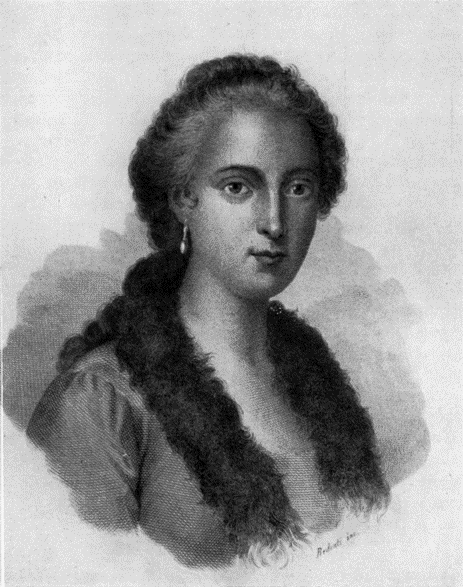
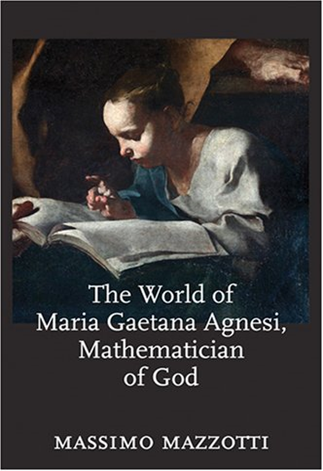

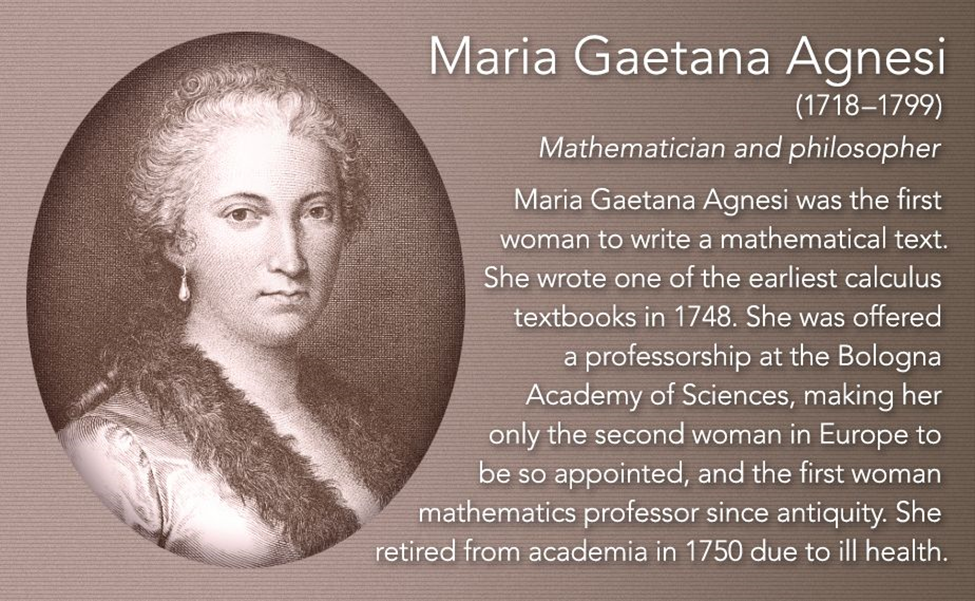
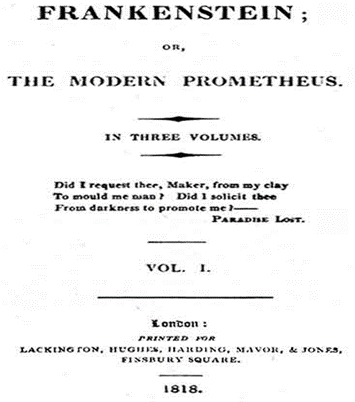



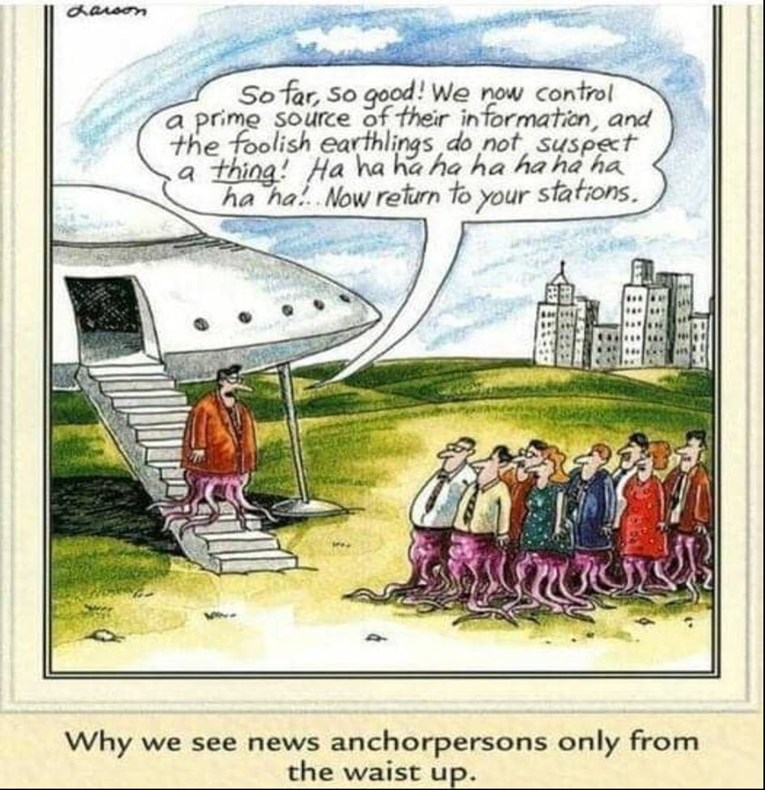
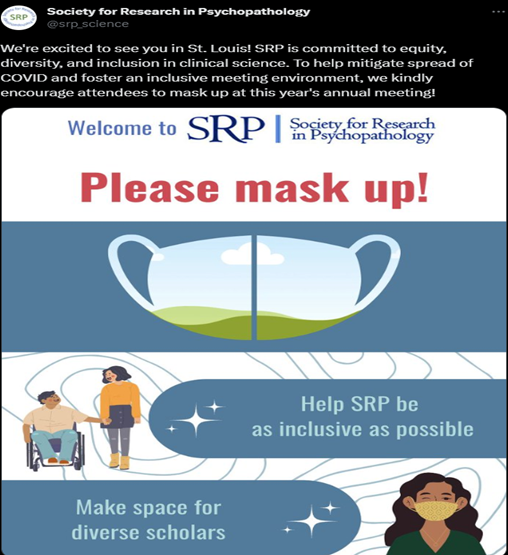
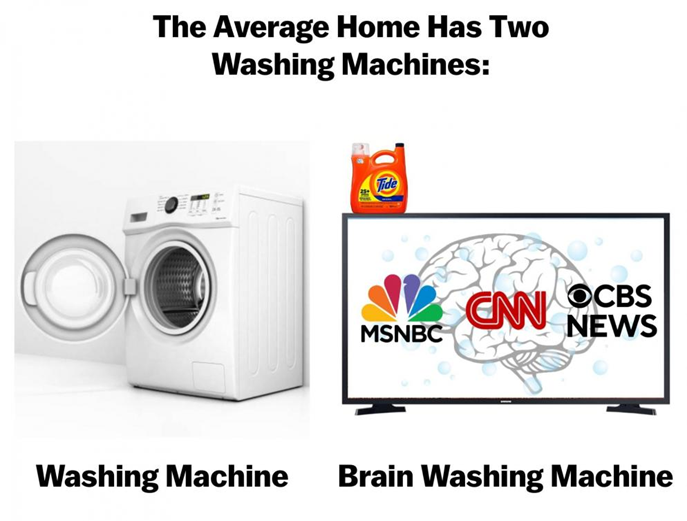


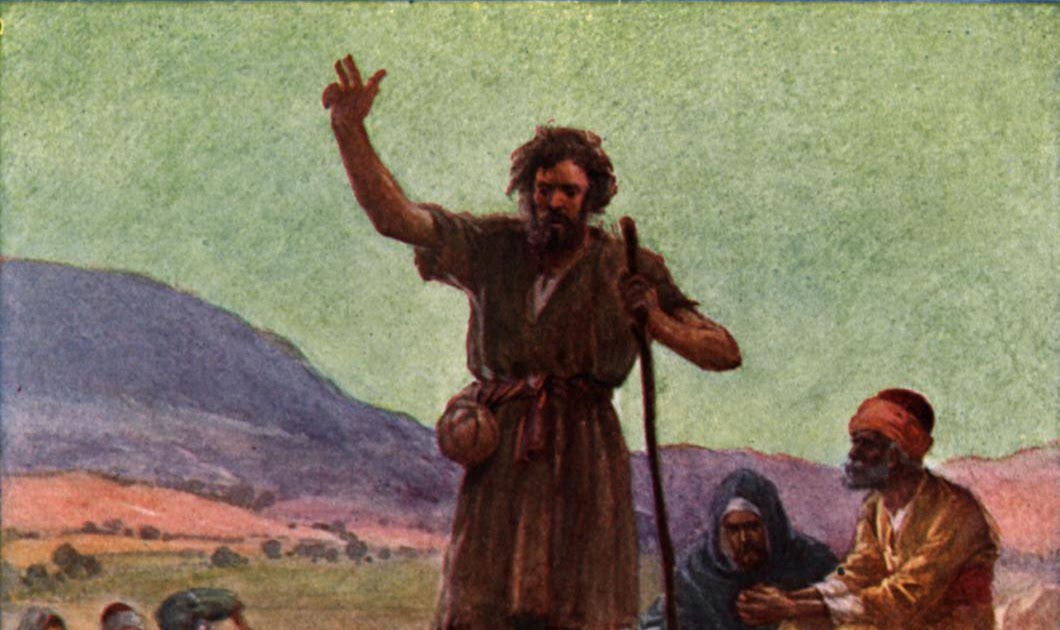
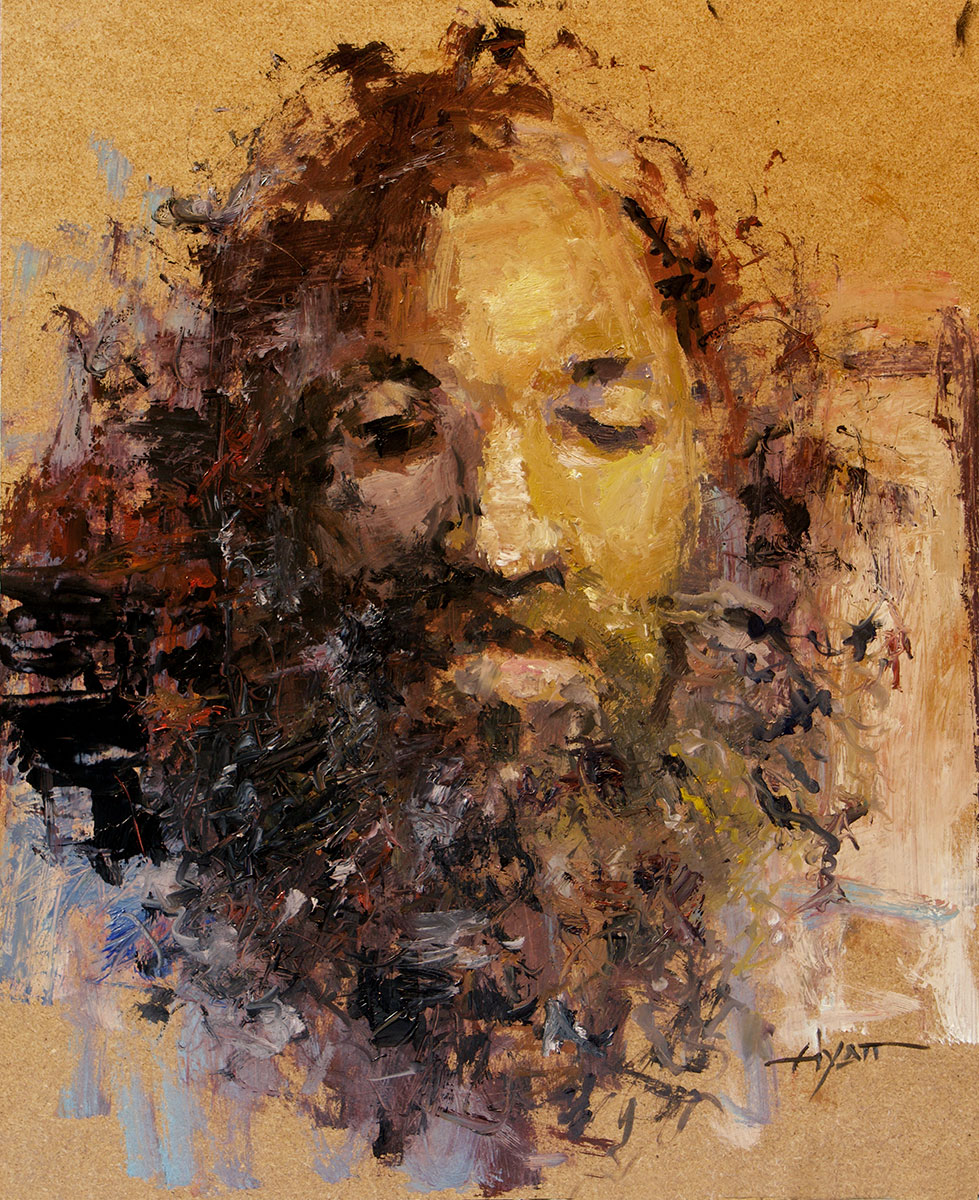
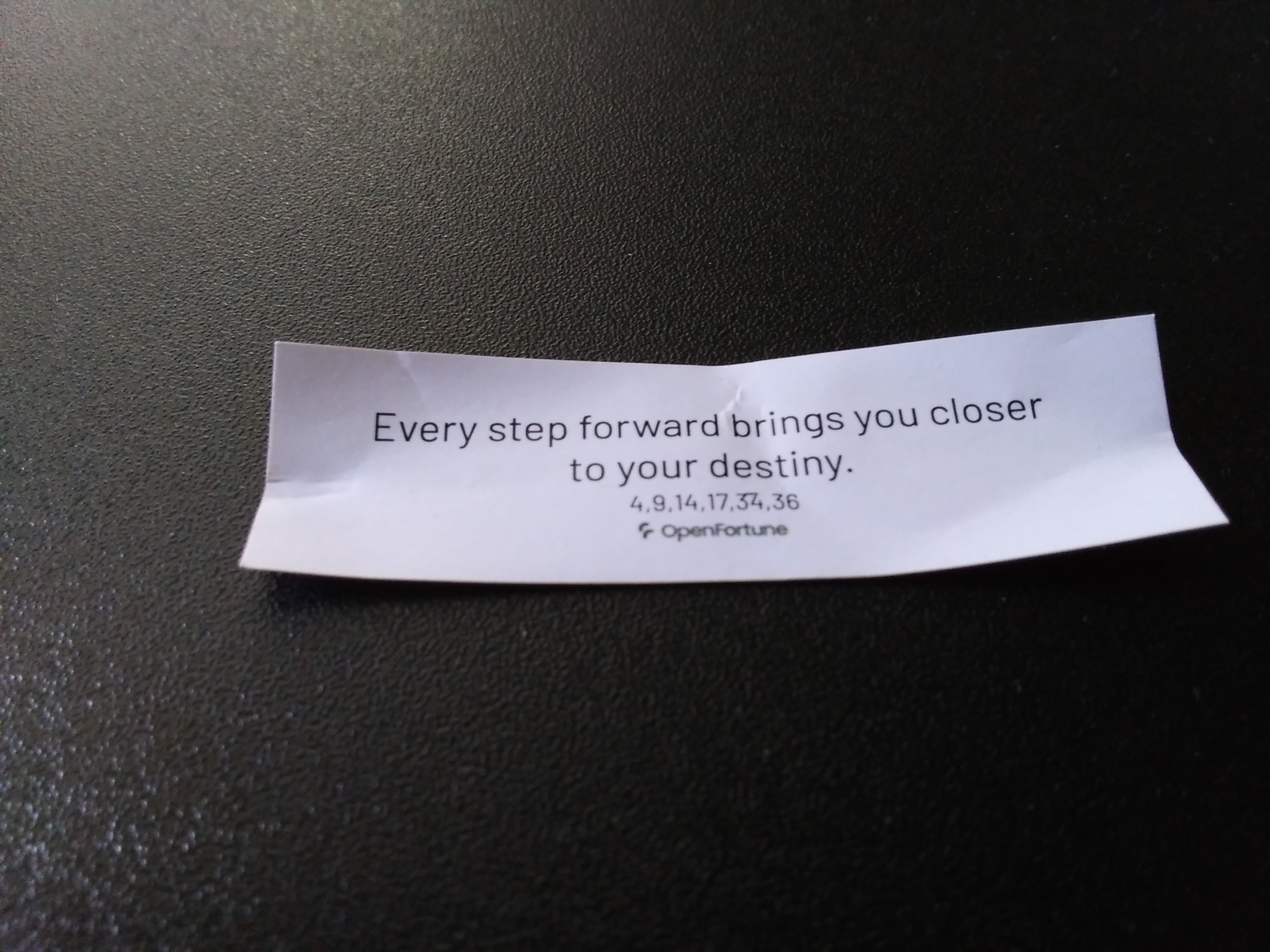


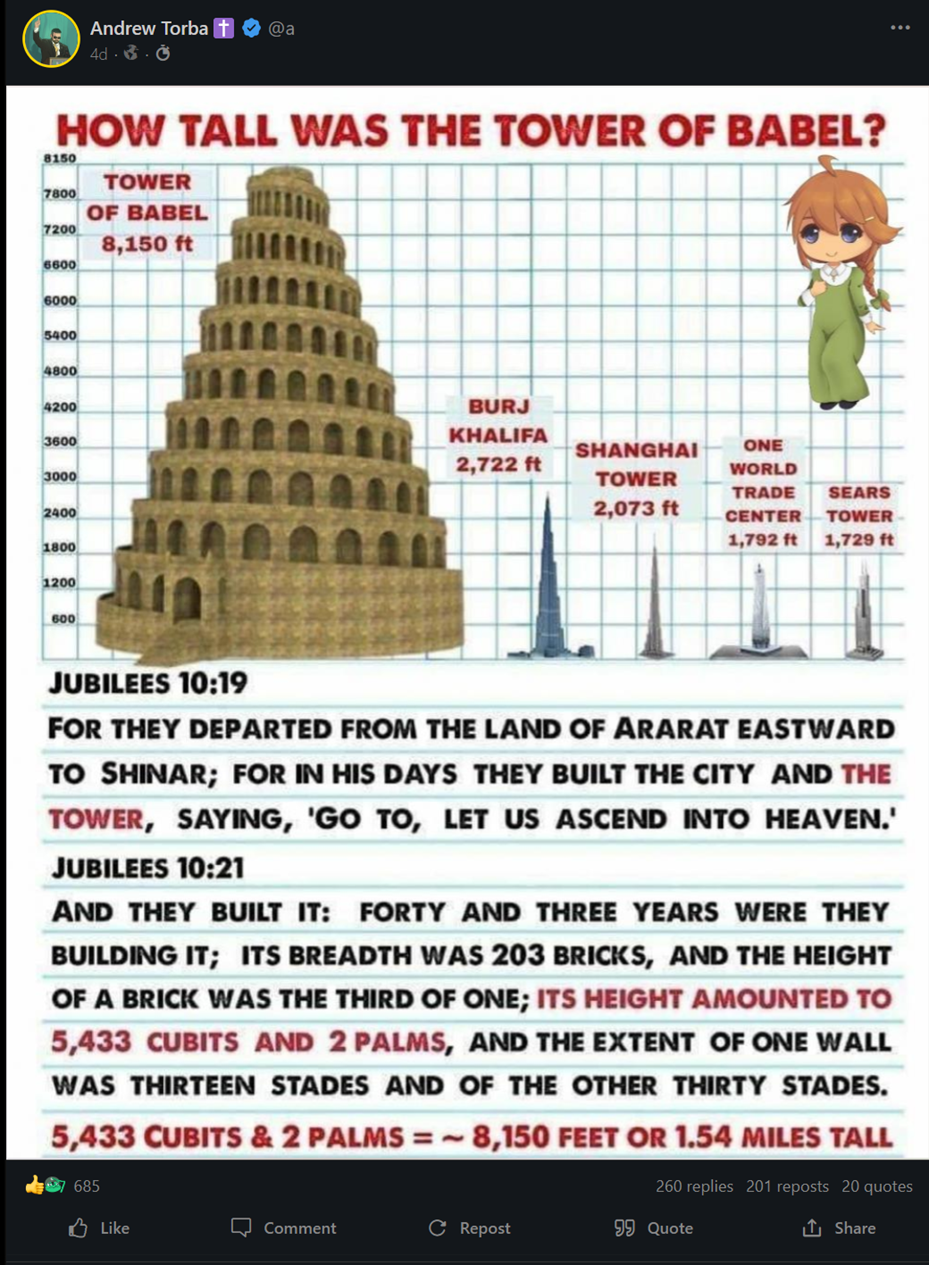
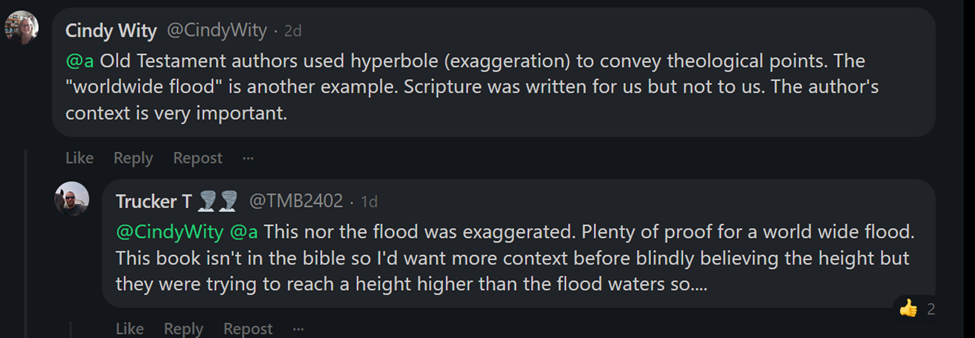
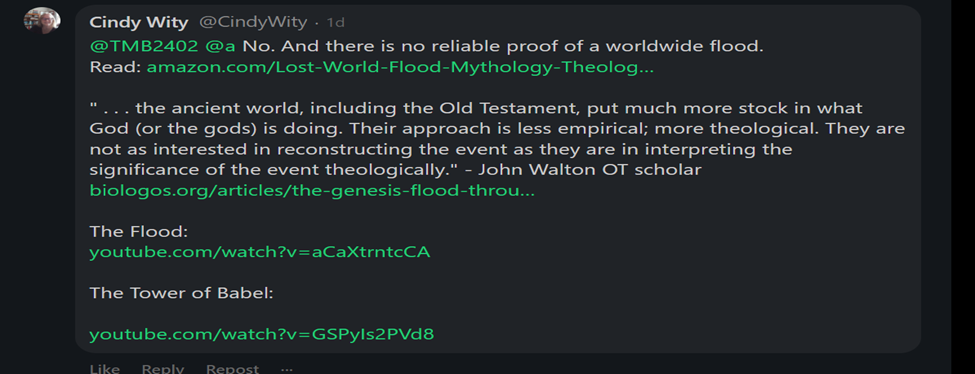

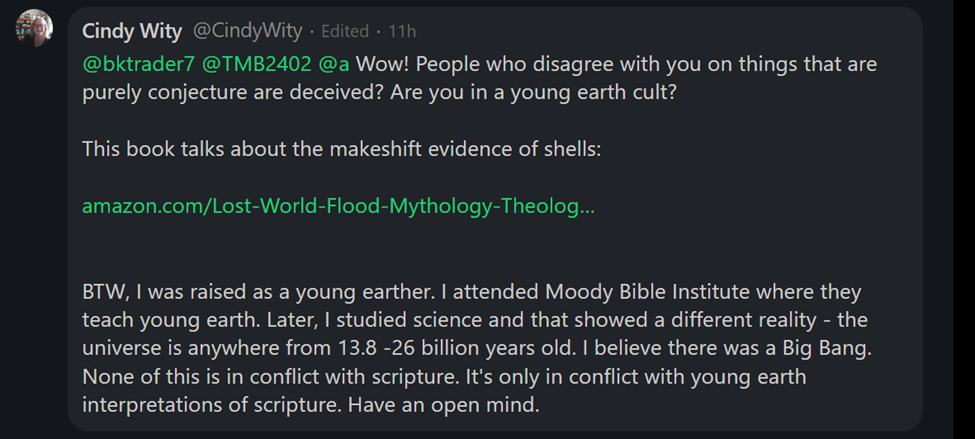
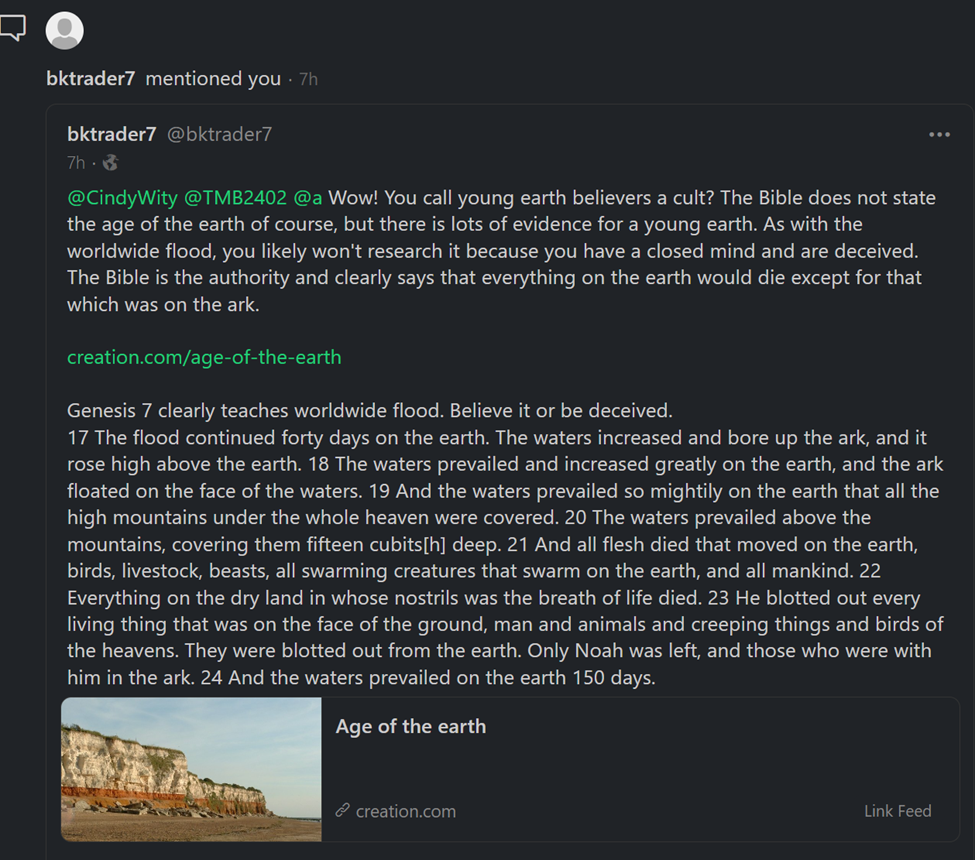
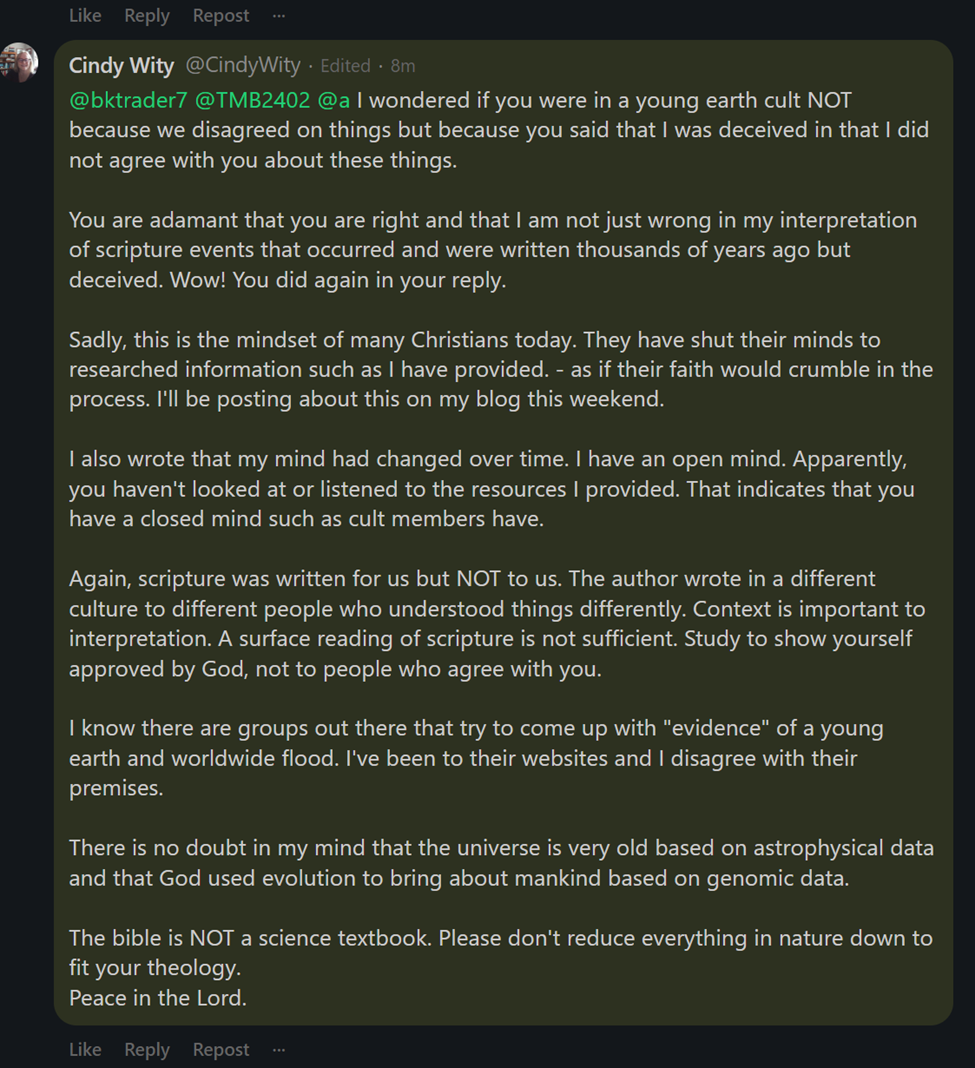


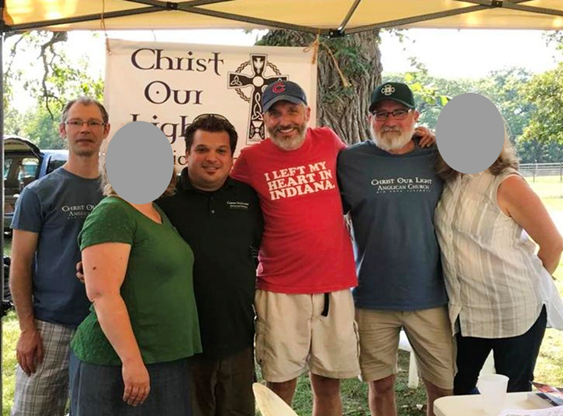
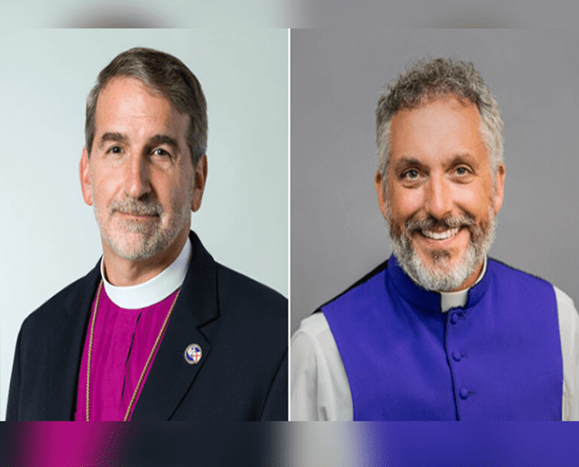

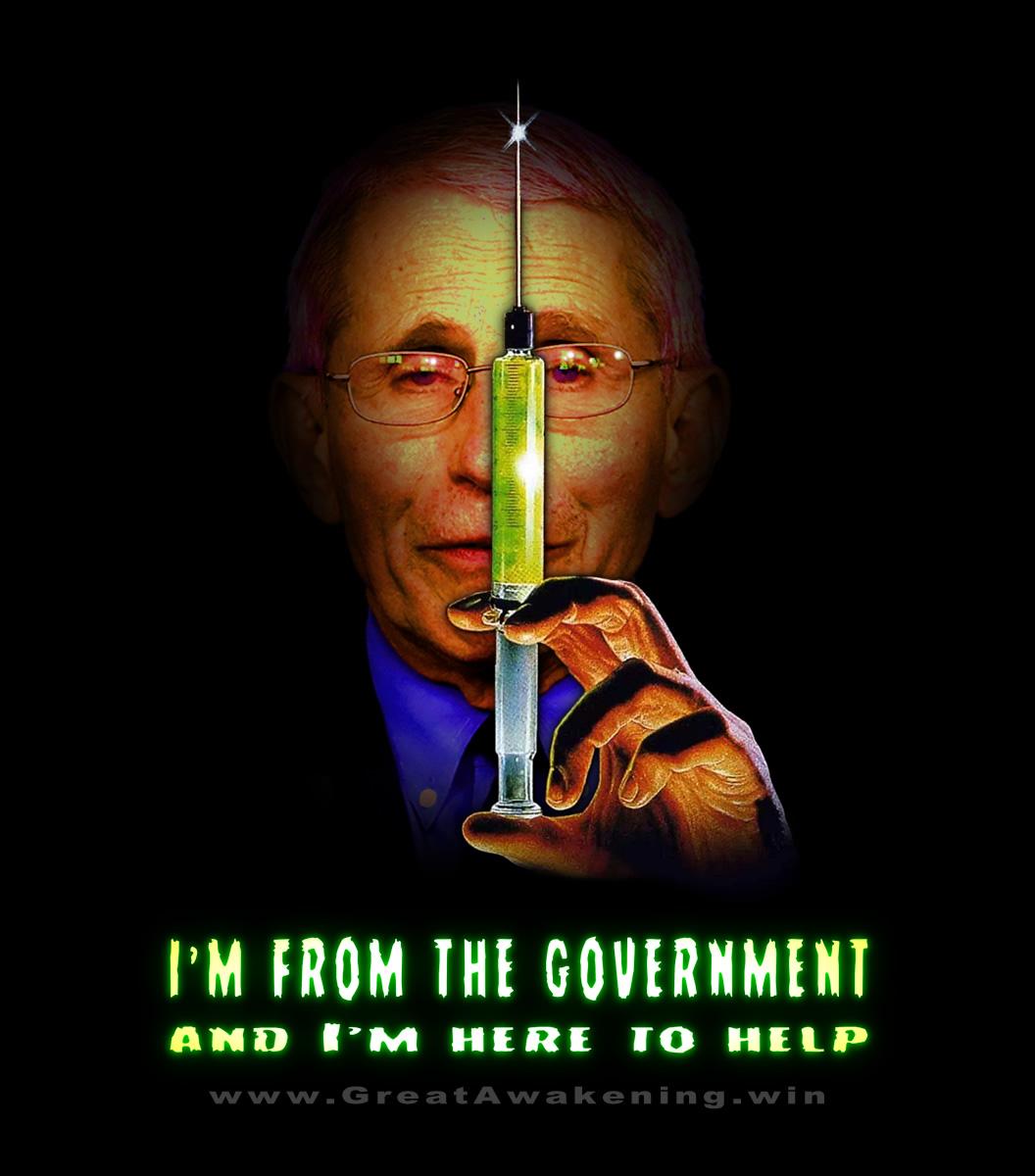
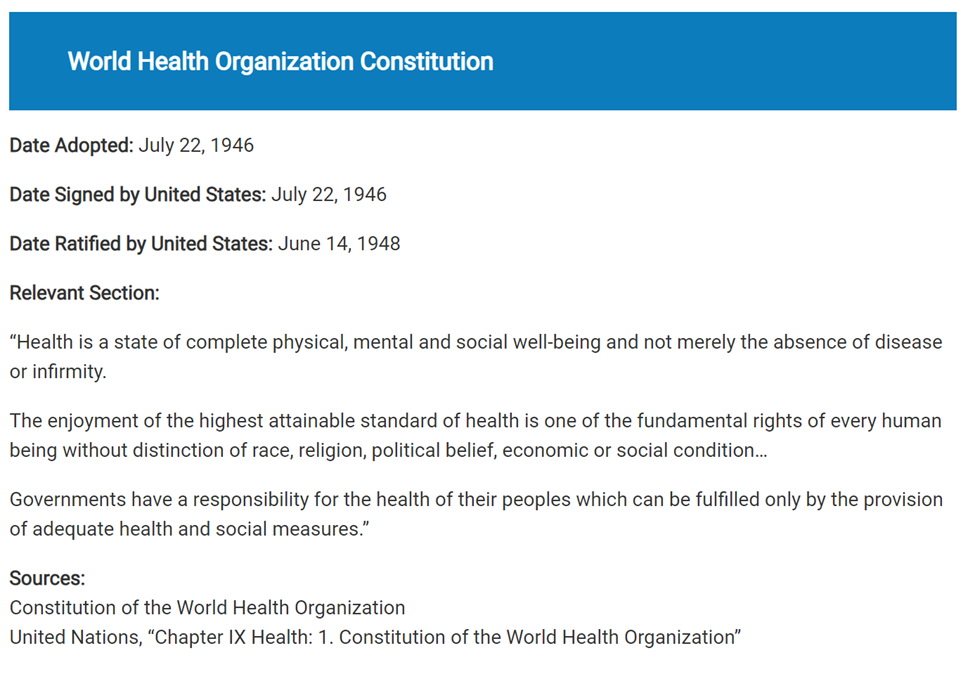
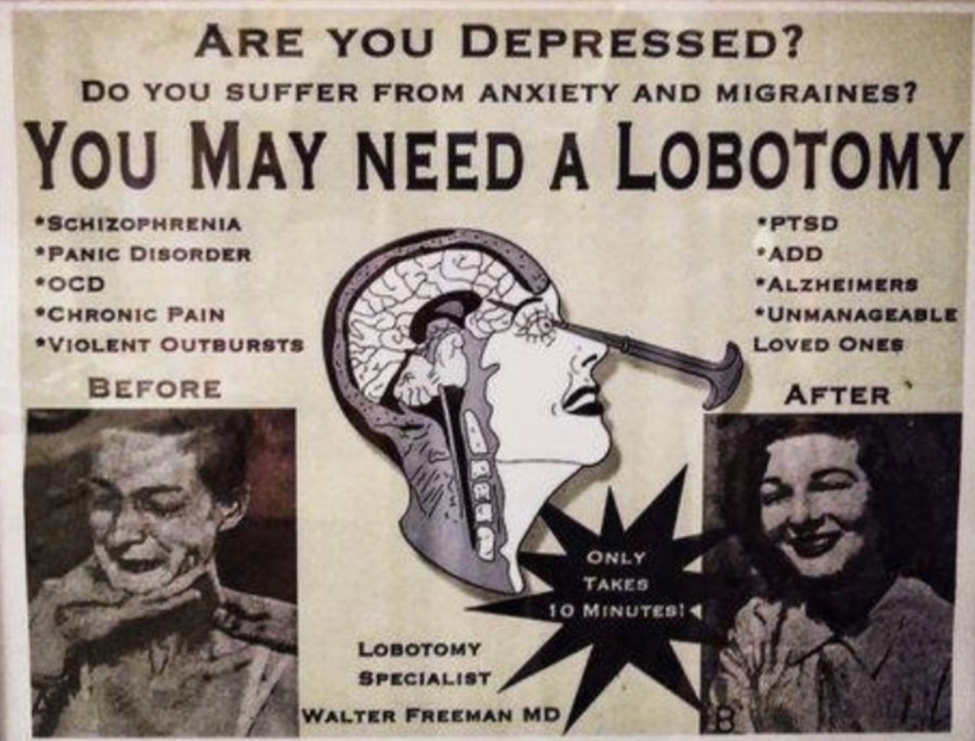
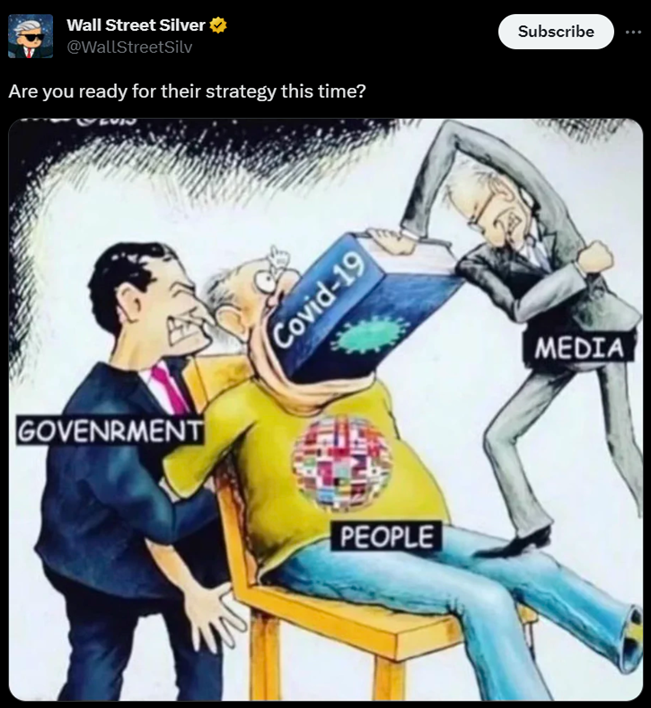
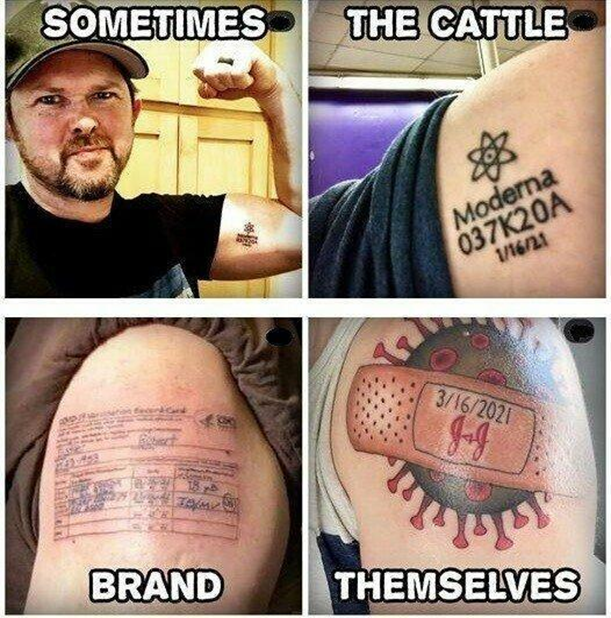

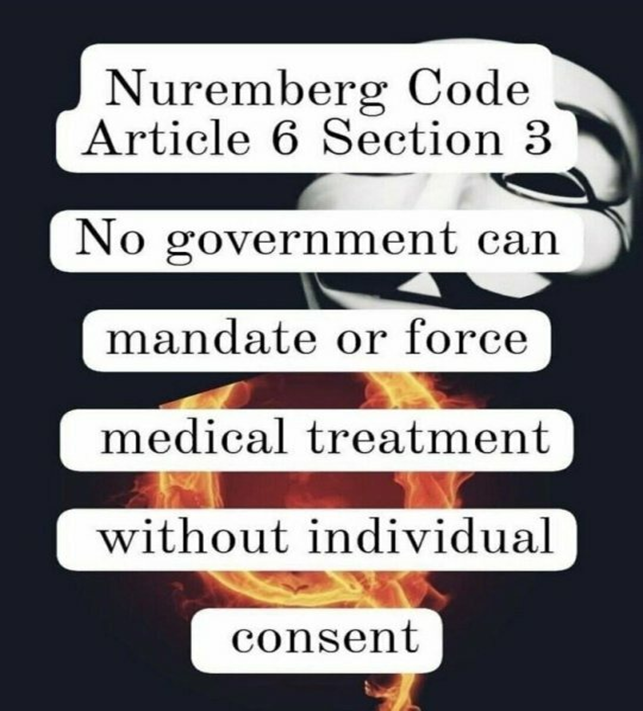



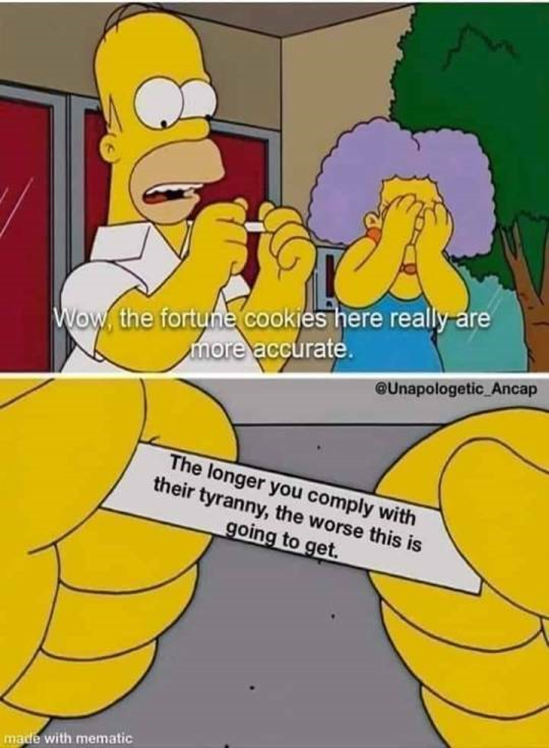
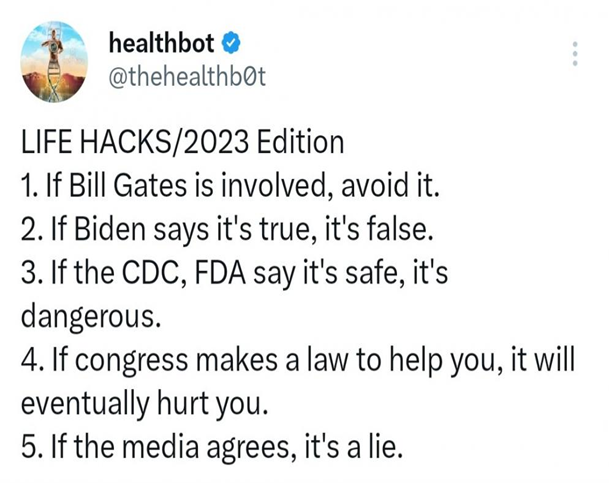



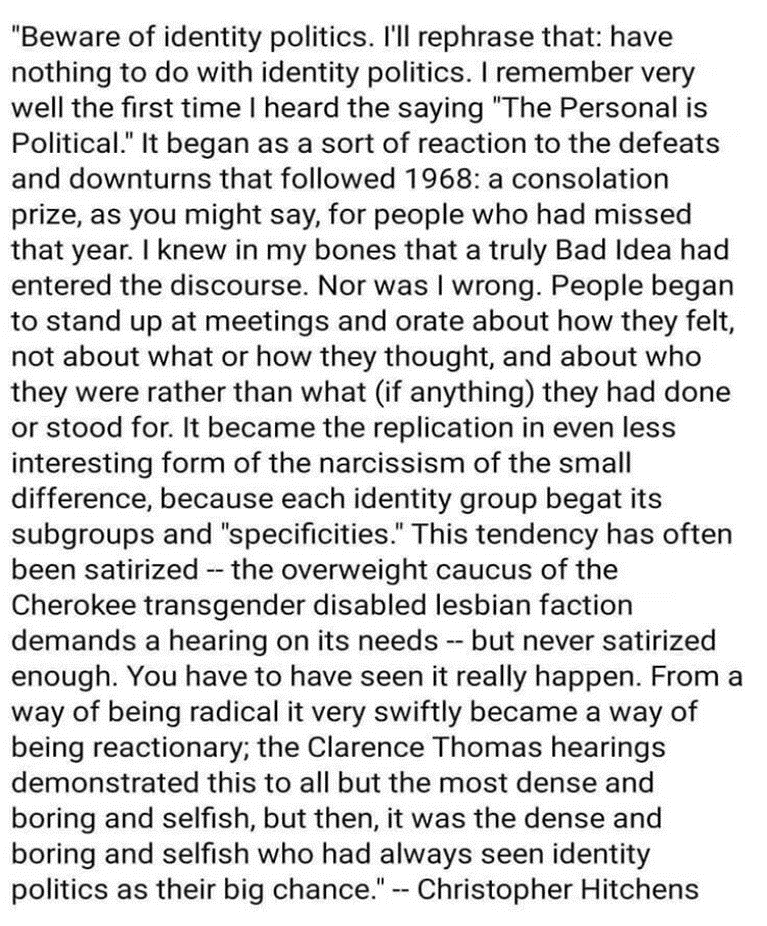

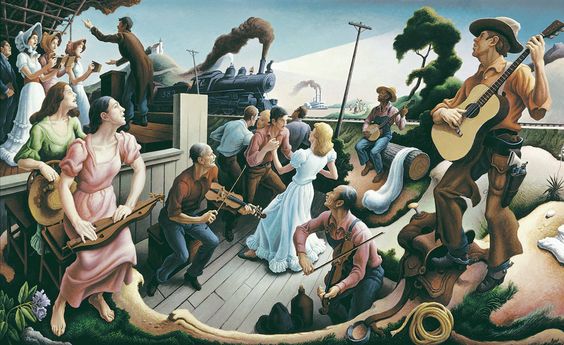



 Cindy Wity
Binary Beckons for More from You
October 15, 2023 Leave a comment
Two options guided my early incorrigible years: “Either you do what I say or your father will deal with you when he comes home” “Either you clean you room or lose your allowance” “Either you are home by 9 or you will be grounded.” The church, too, presented two stark choices: “Either you get saved and go to heaven or you go to hell”; “Either walk the straight and narrow or walk the wide way of the world.”
The either/or binaries of my early childhood were meant to prepare me for life. I learned that if I wandered off into “or” territory there was sure to be consequences. My parents guided my behavior from their own experience of walking within binary guard rails.
They had learned that from the simplest safety issues to the most important issues in life, honest straightforward either/or choices are required. My late mother shared one such either/or choice.
My father, having grown up in the Dutch Reformed church where smoking was the norm for men, was given a choice by my mother when she was dating my father: “Either you stop smoking or that’s it.” Thankfully, my father didn’t “or” the situation. I wouldn’t be here if he did.
With knowledge of their own either/or choices and exposing me to the either/or choices of the book of Proverbs, my parents either/or’d my youth. Binary guard rails were set in place for my time in Jr. High and High school.
When I attended Moody Bible Institute after high school (early 70s), the binary thinking infused in me by the church came into question.
A first-year class called “Personal Evangelism” was taught by Mr. Winslett. During that semester Mr. W described different religions. As he did so he labeled the churches of the Seventh Day Adventists, Mormons, Jehovah’s Witness and others as cults. When he came to the Catholic church, he said it was a cult because Catholics worshipped Mary, had a pope, and put tradition ahead of scripture. I remember hearing this and thinking that we’re better than all of them. But something felt off.
(Per Article I of The Chicago Statement on Biblical Inerrancy found on the Moody Bible Institute website, the Bible, not tradition, is the authoritative Word of God.)
The highly partisan Mr. W, a representative of MBI, had sallied Catholicism: MBI represented real Christianity and Catholicism, a “cult”, did not; either you are with us in Bible first thinking or you are not one of us. (Mr. W was the only teacher I met a MBI like this. But there are many who preach and teach the same binary “us and them” thing.)
I was raised Protestant. Differences of Protestantism and Catholicism were minimally noted in my church. But I had read about Luther, the Ninety-five Theses, and the Reformation. I knew about the abuses and corruption of the Catholic church. Those include Johann Tetzel selling indulgences.
But faith in God and his salvation coupled to Mary, the pope and tradition were not Christianity deal breakers for me. For without faith it is impossible to please God, because anyone who approaches Him must believe that He exists and that He rewards those who earnestly seek Him.
Instead of imposing exclusionary theology, abide by the words of the old hymn: “God moves in a mysterious way His wonders to perform . . . God is his own interpreter, and he will make it plain.”
Years later I came across the same “us and them” attack. I brought my daughter to an Awana program going on at a Baptist church. On the night that she and I were to race the Pinewood Derby Car we had crafted together, the speaker bad-mouthed the Catholic church during a promotion for the Baptist church we were standing in.
He said something to the effect that their Baptist church wasn’t like the unsound Catholic church. I was shocked. There were members of that Baptist church and other churches in attendance. What did they walk away with that night?
I’ve seen this attitude surface so many times by haughty either/or Protestants. I’ve also seen it in either/or Catholics. Both groups interpret Church teaching in a narrow way, then argue that whoever disagrees with their tightly wound interpretation must—by the fact of that disagreement—be in opposition to Church teaching. The Either-Or fallacy used by both Protestants and Catholics: “I can’t be in error therefore YOU must be!”
Another anecdote of the “us and them” attitude: One night I was sitting in a donors meeting listening to a presentation. The Episcopal church I attended wanted to annex and refurbish the house next store and make it ministry usable. At front and center of the room that night was a picture board showing the proposed design. The crossway from the existing church building to the house showed a cross in relief in the arc above the passageway. One woman remarked that we should get rid of the cross because “we’re not Baptists.”
Look. Our family and church backgrounds teach us to think in opposites – basically in terms of good and bad. We are presented with two options and they appear as your only options and mutually exclusive. We then bring unmediated polar extremes into adulthood.
Either/or thinking integrated into our lives and then reinforced by our respective cultures can produce a worldview in stringent binary terms: as a one or zero. Black-and-white thinking is used to reduce the world to something we can handle which then provides a sense of certainty and security. But “a one or zero” thinking can be adversarial, dividing people into “us vs. them.” A few examples:
“I am right and you are wrong.” (How does that work out in marriage? With our neighbors?)
“If you’re not with me, you’re against me. I have friends and enemies but not acquaintances.”
“Either I win or I lose in this situation.”
It can also produce all-or-nothing false dilemma fallacies which are really manipulative setups:
“If you care about your neighbor, you will get vaccinated” and “Putting others first will get us through he pandemic” “Getting vaccinated is loving your neighbor as yourself.”
“Social solidarity is the most precious tenet of our democracy.”
“You’re either pro-choice or anti-woman. There’s no other moral stance.”
“If you’re not part of the solution, you’re part of the problem.”
“Either you let your child change their gender or they will commit suicide.”
“You are either racist (by not agreeing with me) or you are anti-racist (by agreeing with me).”
“If you are against LGBTQ books in the library you are a book banner.”
“If you question what is being taught in public schools, you are a domestic terrorist.”
“If you question the 2020 election you are a MAGA extremist.”
“If you don’t accept the climate science consensus (or COVID science consensus), then you are a science denier.”
Either/or “us and them” thinking tends toward exclusion and not embrace. It tends toward absolutism, authoritarianism, fundamentalism and judgement. We see it in Hamas’ attack on Israel. We see it in climate activism. We see it in cancel culture. We see it in the murderous history of totalitarian regimes. We see it in church teaching and we sing it: “Onward, Christian soldiers, marching as to war.”
We see it in the teachings and practice of Christians, Muslims, and the Progressive Left which would have us believe that they are the opposite of conservative either/or thinking while mandating their own anything-goes version of it. Theology, ideology and government policies are marketed with the dichotomy of good and bad.
It seems that many have retained their childhood’s unyielding binary worldview. It is used as a defense mechanism, as a means of protection from the “hazards and vicissitudes of life”. (From the statement made by FDR when he signed the Social Security Act.)
I’ve seen the binary thinking defense mechanism employed by Christians. Though it comes across as holding fast to the faith and Sola Scriptura, faith vs. science messaging reduces the supposed conflict to “us vs. them” binary thinking which allows no quarter for God’s revelation in nature as revealed by science. Yet, God has revealed himself in both scripture and nature. Science is a tool for understanding God’s revelation of Himself in the physical world.
When I told my eighty-nine-year-old Godly mother that, based on research, I believed the universe to be billions of years old and that God used evolution, she didn’t reply “That’s interesting. Tell me more.” She said “That’s heresy!” Her defense mechanism alarm bell went off. She was reacting from what she had been taught and how she had been taught to think about what she was taught.
Becoming emotionally invested in extremes may lead to the exclusion of people, as “Heresy!” suggests. Such binary thinking can produce unrealistic portrayals of others and it can become used, as mentioned above, as a weaponized defense against others.
Certainly, there are people who watch news commentators because they relish the mocking and “owning” of the opposition. Certainly, there are people who go to church for the same reasons. But there is nothing mature about participation in bad mouthing others. I see nothing of this in Jesus.
I come across Jesus-whipping-the-money-changers-in-the-temple memes on social media. These are extrapolated as Jesus is “destroying” his enemies, so we can do the same. Horrible nonsense.
Relying solely on binary thinking is intellectual and spiritual laziness. An open both/and questioning mind is not a slippery slope and it’s not anything-goes Progressivism. Seek truth and not the comfort of tribal consensus.
Consider that no one has all the information – not your pastor nor MBI nor Anthony Fauci nor climate scientists. It’s OK. Consider that not everything is black and white. Knowing the difference and knowing when to introduce AND with “perhaps” is wisdom.
The Creator of the universe is not a small-minded Person. He holds a universe of disparate thought, theories, and faith in his hands. He is not threatened by any of it. A follower of the Creator of the universe lets God hold the messiness and uncertainty of life in His hands and does not feel threatened.
Finally, a reductionist’s worldview makes it incredibly difficult to hold space for the uncertainty and messiness of others. But there is a better way, a much better way: love and maturity.
Love is great-hearted; love is kind,
Knows no jealousy, makes no fuss,
Is not puffed up, no shameless way,
Doesn’t force its rightful claim,
Doesn’t rage or bear a grudge,
Doesn’t cheer at other’s harm,
Rejoices, rather, in truth.
Love bears all things, believes all things;
Love hopes all things, endures all things.
As a child I spoke, and thought, and reasoned like a child; When I grew up, I threw off childish ways.
I Cor. 13:4-7, 11
~~~~~
(Note: I’ve summed up a lot so as to make this post accessible. I was involved in the Jesus People movement during high school. Along with those in the movement I questioned a lot of the binary thinking of the church. I’ll share that story in another post.)
~~~~~
Science and Faith
In this episode, we focus on the apparent tension between science and faith.
“Many people believe that science and religious faith are bitter enemies with conflicting views of the universe. One the one hand there is the scientific account of the origins of life and then there is the story of universal origins told by the bible. But is this tension real, or is it based on a deep misunderstanding of what the Bible is and how it communicates?
. . .
“Consider this a crash course in reading the Bible as an ancient cross-cultural experience.”
Science & Faith (bibleproject.com)
~~~~~~
Kate Boyd | Science and the Messy Middle
Kate Boyd has been learning to live out her faith in the messy middle in a culture that rewards picking a side. While her journey didn’t begin with a conflict between science and religion, her story explores the complexities of understanding the Bible in today’s context and anyone who has struggled with issues of science and faith will resonate with this conversation.
149. Kate Boyd | Science and the Messy Middle | Language of God (biologos.org)
~~~~~
I’ve been told that I’m either naive or stupid.
I’m not sure which side I’m moron.
Rate this:
Filed under Christianity, Psychology, Science, social commentary, totalitarianism Tagged with absolutism, Authoritarianism, binary thinking, Catholicism, Christianity, either/or, fundamentalism, Protestantism, psychology, Science, totalitarianism