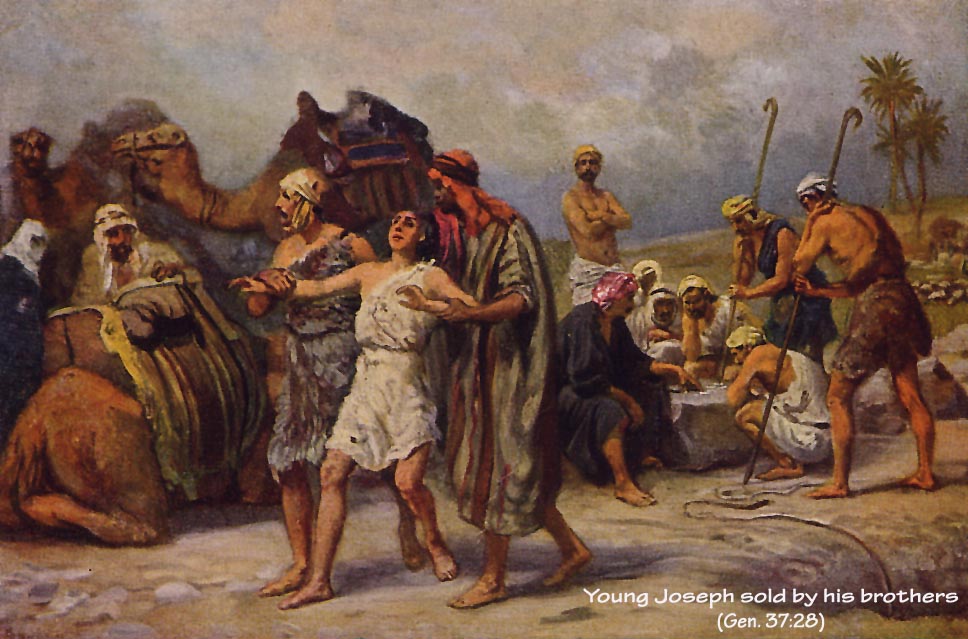
If anyone had a reason to be politically correct it was the deported and exiled Daniel, Hananiah, Mishael and Azariah. But, confronted not with a raging Twitter feed or a riotous SJW protest but with life or death choices, they acted in full confidence in who they were.
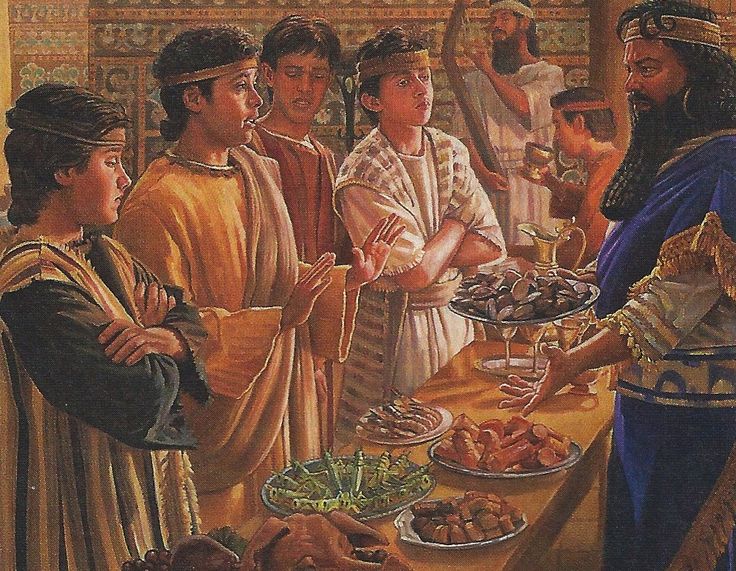
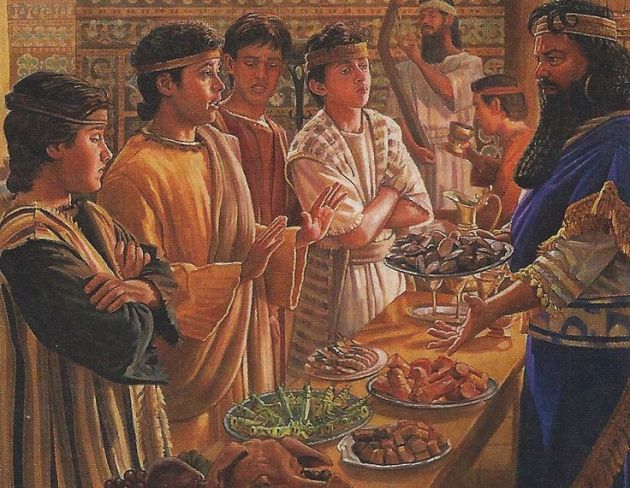
They were the chosen people of God. They knew what they were about even when their names were changed to Babylonian names. Chosen once again out of the Jewish exiles because of their unique qualities, these four were to become advisors to Nebuchadnezzar king of Babylon. It was during the start of their three-year training that Daniel balked at eating the royal food.
The food may have been offered to idols. Eating the food may have gone against their ritual purity. Most likely, saying no to the food after being given Babylonian names would have been a political statement: “We will not let you redefine us as Babylonians”.
But Daniel resolved not to defile himself with the royal food and wine, and he asked the chief official for permission not to defile himself this way.
Daniel then said to the guard whom the chief official had appointed over Daniel, Hananiah, Mishael and Azariah, “Please test your servants for ten days: Give us nothing but vegetables to eat and water to drink. Then compare our appearance with that of the young men who eat the royal food and treat your servants in accordance with what you see.” So he agreed to this and tested them for ten days. – Daniel chapter one
You know the story. Though it would have been politically correct to eat the King’s food, Daniel and the others knew that if you drink the King’s wine, you sing the King’s songs. They instead chose to be faithful to God even in this small matter. So, God gave them greater things to be faithful in. One of those greater things was a smelting furnace.
King Nebuchadnezzar made an image of gold, sixty cubits high and six cubits wide, and set it up on the plain of Dura in the province of Babylon. …the herald loudly proclaimed, “Nations and peoples of every language, this is what you are commanded to do: As soon as you hear the sound of the horn, flute, zither, lyre, harp, pipe and all kinds of music, you must fall down and worship the image of gold that King Nebuchadnezzar has set up. Whoever does not fall down and worship will immediately be thrown into a blazing furnace.” …you must fall down and worship the image of gold that King Nebuchadnezzar has set up.
But…there are some Jews whom you have set over the affairs of the province of Babylon—Shadrach, Meshach and Abednego—who pay no attention to you, Your Majesty. They neither serve your gods nor worship the image of gold you have set up.” Daniel chapter three
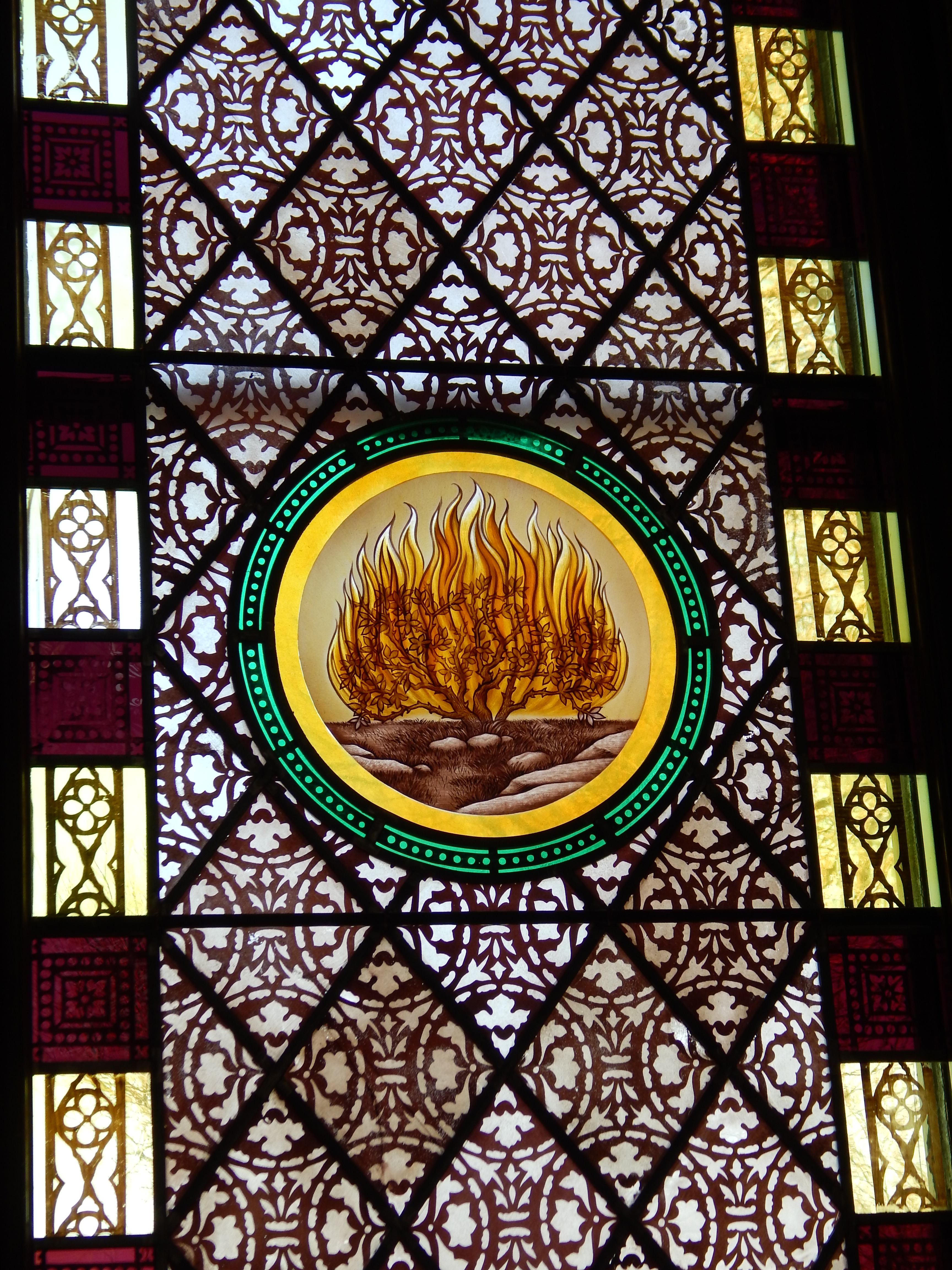
Though bowing to the image would have been politically correct, Shadrach, Meshach and Abednego would have nothing to do with worshiping anything other than the one true God. So, because of the decree, they were thrown into a seven-times stoked blazing furnace. This furnace is likely the oven where metals were refined to make idols like the “image of gold, sixty cubits high and six cubits wide, and set it up on the plain of Dura in the province of Babylon.” But that kind of heat is nothing to the Creator of the Big Bang, especially with regard to his faithful ones. In the heat of the moment, the true God was revealed:
Then King Nebuchadnezzar leaped to his feet in amazement and asked his advisers, “Weren’t there three men that we tied up and threw into the fire?”
They replied, “Certainly, Your Majesty.”
He said, “Look! I see four men walking around in the fire, unbound and unharmed, and the fourth looks like a son of the gods.” Daniel chapter three
In Daniel chapter six we read that Daniel, a newly appointed satrap (basically, an overseer of a district) was the focus of the other satrap’s and their social justice jealousy. The satraps didn’t like it that Daniel had qualities and favor they didn’t possess. So, they devised a devilish edict formulated to depose Daniel from King Darius’ good pleasure: “the decree that anyone who prays to any god or human being during the next thirty days, except to you, Your Majesty, shall be thrown into the lions’ den.”
You know the story. Being thrown into the lion’s den is something Daniel’s Creator God could also handle. The Lord God shut the lions’ mouths and the mouths of the ends-justifying-the-means SJWs.
By now you should be able to glimpse that the book of Daniel provides us with, among its telescoped history, its dreams and interpretations, an understanding of how God’s people are to live in this world and under its rulers. God’s chosen appear different, peculiar, to those onlookers standing outside the furnace and outside our place of prayer and outside the lion’s den. The reason the world does not know them is that it does not know the One True God.
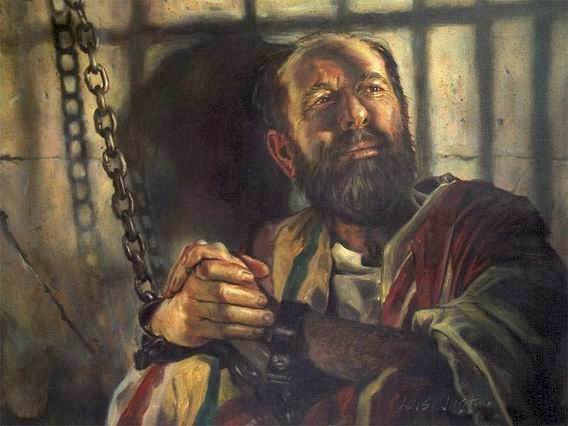
In the Apostle Paul’s second letter to the Corinthian church (chapter 6), Paul pleads with the readers to see what he and others have suffered to bring them the good news of Jesus Christ. He lists the adversities they encountered. He tells them that the hardships and their Christian character throughout are confirmed “by speaking the truth, by God’s power”.
The Corinthians Christians certainly may have presumed that because Paul and the others faced so many adversities and challenges, that they could off in their messaging. Paul wanted them to know that their messaging, though it kicked against the goads of the Roman empire (“Jesus is Lord”) and popular opinion (“food for the stomach, the stomach for food”), was not an attempt at politically correct virtue signaling. The message cost him and others dearly. The grace of his Lord cost him the cross. At the beginning of chapter six Paul appeals to the Corinthians saying, “when you accept God’s grace, don’t let it go to waste! Paul was not talking about cheap grace. Dietrich Bonhoeffer would later sum up cheap grace:
Cheap grace is the grace we bestow on ourselves. Cheap grace is the preaching of forgiveness without requiring repentance, baptism without church discipline, Communion without confession…Cheap grace is grace without discipleship, grace without the cross, grace without Jesus Christ, living and incarnate.
Unlike many church leaders today, Paul, Apostle and pastor, made sure his message and his character were one and the same. Otherwise, the Gospel would be compromised. Again, Corinthians six:
We put no obstacles in anybody’s way, so that nobody will say abusive things about our ministry. …
We have been wide open in our speaking to you, my dear Corinthians! Our heart has been open wide! There are no restrictions at our end…
Don’t be drawn into partnerships with unbelievers. What kind of sharing can there be, after all, between justice and lawlessness? What kind of partnership can there be between light and darkness? What kind of harmony can the Messiah have with Beliar? What has a believer in common with an unbeliever? What kind of agreement can there be between God’s temple and idols? We are the temple of the living God, you see, just as God said:
I will live among them and walk about them;
I will be their God, and they will be my people.
So come out from the midst of them,
And separate yourselves, says the Lord:
No unclean thing must you touch.
Then I will receive you gladly,
And I will be to you as a father,
And you will be to me as sons and daughters,
Says the Lord, the Almighty.
So, my beloved people, with promises like these, let’s make ourselves clean from everything that defiles us, outside and inside, and let’s become completely holy in the fear of God. (2 Corinthians 6: 1-7-1)
Reading this passage, do you think that Paul was talking about how the church should become acculturated to better evangelize? Do you think Paul was talking about the church assimilating the Post-modern New Age Epicurean culture surrounding it? Do you think Paul was talking here was about being inclusive? About diversity? About unleashing one’s feelings as the criteria for love?
The words Paul wrote to the Corinthian church came from the narrative God gave to his people long ago – to be a people unto himself. This is the same narrative that Daniel, Hananiah, Mishael and Azariah understood and honored. In the passage Paul references the prophet Isaiah. His language is priestly temple language. Holiness is to be narrative of God’s people. Holiness separates them from an ego-centric life full of earthly desires to be a nation for God. Holiness is an upward and outward movement of the soul towards the Father, whereas narcissism, promoted in the world since the beginning of our time, is just the opposite, focusing the soul inward and downward towards the baser elements.
The Apostle Peter wrote in the same fashion (2:9-10):
But you are a “chosen race; a royal priesthood”; a holy nation; a people for God’s possession. Your purpose is to announce the virtuous deeds of the one who called you out of darkness into his amazing light. Once you were “no people; now you are “god’s people.” Once you had not received mercy; now you have received mercy.
There are several abhorrent notions going around in churches that rubber stamp Jesus on their narratives: all religions seek the same God and are equal in that respect; Jesus talked about loving your neighbor, so advocating for a social gospel akin to Marxism is acceptable to God; Jesus talked about loving your neighbor and not judging so you must love sinners and accept their values; America is a Christian nation; our priority as Christians is to make a just and fair world; illegal immigration is an acceptable form of lawlessness; homosexuality is just another version of human sexuality. Sex/gender are not binary; prayer doesn’t feed the thousands, Progressivism’s social gospel does; prayer is a nice sentiment but action and advocacy move mountains; democracy is the best and desired form of government for everyone; revealed values trump revealed truth, as values are based one’s sincere feelings.
That is the short list.
As a teenager I read Dr. Luke’s historical account The Acts of the Apostles. As I read, I encountered a living and vibrant church whose members were not politically motivated and who demanded nothing of the Roman empire other than for it to honor its laws and to maintain order. The church was the church and the state was the state. The early church was not democratic. Leaders were Godly men. Prayer, prayer, prayer, reading Scripture, prayer, the words of the Apostles, preparing for the return of the Lord, and, prayer, was the culture for the early church.
The early church did not push for Constantinianism. The church knew that governments were in place, by God’s will, to provide order. They prayed for those in authority. They had their own political reality.
The early Christians only political motivation, their only ideology came down to a personal statement: “Jesus is Lord”. Everything and everyone fell underneath his jurisdiction, since all things were created for Jesus and for his good pleasure. The early Kingdom Christians also anticipated and prepared in holiness for the Lord’s return to fully establish his kingdom on earth. Today’s Christians anxiously await the election of their candidate to establish their kingdom of values.
As the world asked, “What is truth?” the early Christians put on Christ and became Truth incarnate. The church became a community of Truth. The embodied Truth suffered persecution and martyrdom just as their Lord told them they would. The world looked on and saw that the early Christians were turning the world upside down. They were making all the difference in the world. Today’s Christians are letting the world turn them upside down and that is making all the difference in the world, too.
As I finished writing this post, I heard the Lord say to me, “Write these words: ‘I am with you and will never forsake you.’”
~~~
Here are two church position statements I came across this past week. I endorse their message.
Adapted from American Anglican Council’s “A Place to Stand”
FOR TRUE INCLUSIVITY
In grateful response to Christ Jesus, in whom there is neither Jew nor Greek, slave nor free, male nor female, we will extend the welcome of the Church to every person, regardless of race, sex, social or economic status, sexual orientation, or past behavior. We will oppose prejudice in ourselves and others and renounce any false notion of inclusivity that denies that all are sinners who need to repent. (emphasis mine)
FOR HUMAN SEXUALITY
Sexuality is inherent in God’s creation of every human person in his image as male and female. All Christians are called to chastity: Husbands and wives by exclusive sexual fidelity to one another and single persons by abstinence from sexual intercourse. God intends and enables all people to live within these boundaries through a personal relationship with Jesus Christ and in the power of the Holy Spirit.
~~~
Here are some interesting links I came across this past week:
https://twitter.com/JanetMefferd/status/988018858215854080
https://twitter.com/0canom/status/987397897409957892
https://twitter.com/JanetMefferd/status/987296044705775616
Wheaton Offers Scholarship Named for Former Professor Who Said Muslims, Christians Worship Same God