Uncharted Understanding

Hadn’t things already been mapped out? Most thought they knew the system of cosmic order and justice in a world of evil, suffering, and chaos. But the course they followed, was it determined by superstitious and romantic assumptions?

Someone had a novel idea: write a prose tale of events and characters employing an extreme case to exemplify, expand, and examine common notions at the time. What was created is similar to a parable.

The conventional wisdom was that you take care of the gods through ritual and they take care of you. You forget the gods and the gods got angry. And then one had to work to appease the gods to regain favor and benefits. This quid pro quo piety-for-prosperity symbiosis between contingent and capricious gods and mankind was considered the foundational principle in the cosmos. It was thought to represent order and justice in the cosmos.

Two particular issues were scrutinized by the author. (1) Was the Retribution Principle (RP) – the righteous will prosper and the wicked will suffer – the foundational principle of the cosmos? (2) Does anyone serve God for nothing?

The characters or figures in the fictional account:

The Arbiter – a character representing God

The Challenger. His function was adversarial: to point out issues with people and policies and to present arguments against a person or policy.

Job, a ritually pious man and the subject of the problem posed.

Eliphaz, Bildad, Zophar, and Elihu. They are Job’s friends, counselors, advice givers, and challengers.

An unnamed friend of the heavenly court. He offers supplemental material.

The following is a brief summary of the account:

One day the Arbiter was holding court. Heavenly beings were there to report on what was going on in the cosmos. Among them was the Challenger.

The Arbiter pointed out Job to the Challenger. There was no on quite like him, he said. He considered Job to be honest through and through, a man of his word, totally devoted to him, and someone who hated evil with a passion. Job even made sacrificial atonement to the Arbiter for his children just in case they sinned during their partying.

Knowing that Job was incredibly wealthy and the most influential man in all the East, the Challenger alleged that a self-interest symbiosis with the Arbiter motivated Job. Righteous people like Job behaved righteously, he contended, because of the expectation of a reward from the Arbiter.

Was this true? Was the Retribution Principle the Arbiter’s policy? Was reward Job’s motivation to be righteous? Does Job serve God for nothing? The Challenger wanted to find out. He picked Job to be the unwitting focus of his posed problematic policy:

“So do you think Job does all that out of the sheer goodness of his heart? Why, no one ever had it so good! You pamper him like a pet, make sure nothing bad ever happens to him or his family or his possessions, bless everything he does—he can’t lose!

“But what do you think would happen if you reached down and took away everything that is his? He’d curse you right to your face, that’s what.”

With the Arbiter’s go ahead, Job, a blameless and upright man was exposed to devastating loss. Yet, in spite of losing everything including his sons and daughters, Job maintained his integrity. And, he didn’t blame the Arbiter.

Seeing the failed result of this trial, the Challenger wanted to further test his proposition – that righteous behavior is based on physical blessing:

“A human would do anything to save his life. But what do you think would happen if you reached down and took away his health? He’d curse you to your face, that’s what.”

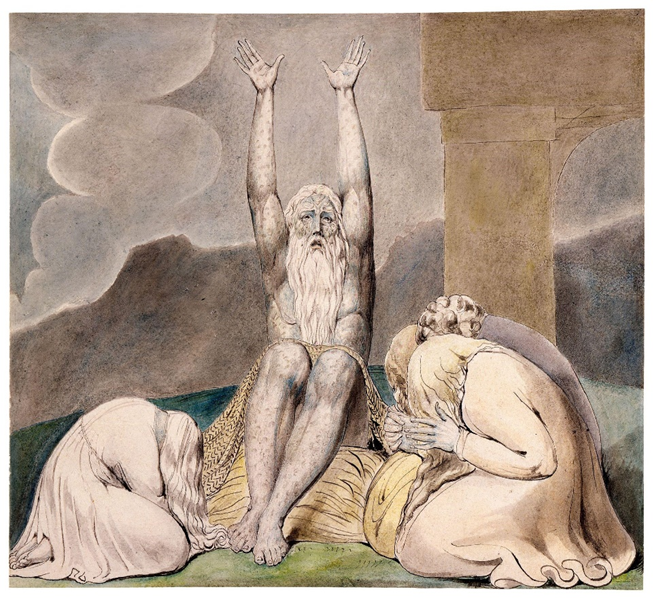
The Arbiter once again gave the go ahead but with the condition that Job does not lose his life in the process. Job was then struck with terrible sores. He had ulcers and scabs from head to foot. He used pottery shards to scrape himself. He went and sat on a trash heap among the ashes. Job was in extremis.

Job’s despair – William Blake

And it was there, among the ashes, that Job gets his first feedback into the horrendous situation that he finds himself and has had no control of:

 His wife said, “Still holding on to your precious integrity, are you? Curse God and be done with it!”

Job’s wife responded with imperatives to her husband: accept the tragic situation, curse God, and accept the fate of death – in effect, “life is not worth living Job”. It should be noted that if Job does what she says, the Challenger’s claim would be proven true: benefits had motivated him all along. But Job tells her that she is out of line:

“You’re talking like an empty-headed fool. We take the good days from God—why not also the bad days?”

The study records that after all that had been inflicted on Job, he remained blameless and said nothing against the Arbiter.

Included in this tale are three cycles of dialogs that Job had with his three friends Eliphaz, Bildad, and Zophar. These three heard of Job’s situation and came to console him. When they saw him, it was written, they sat quietly mourning. They thought Job was on the way out.

Later, after days of silence, they each in turn offer Job their worldly wisdom about his dire state. They believed there was something off about him and his thinking. So, they each try to find fault with Job and they each reaffirm the Retribution Principle in the process.

The Arbiter, they tell Job, protects the righteous and punishes the wicked. Regarding the reason for his suffering, they tell Job that no mortal is righteous and how can mortals understand what the Arbiter demands.

Their advice to Job: put away sin, restore your righteousness, plead your case before the Arbiter, and regain benefits. Notably, their counsel was contrary to Job’s wife’s directive when she told her husband to just be done with the RP and die. The friends, like Job’s wife, do tell Job to accept the tragic situation but they want him to revise his thinking and his life and then he will find that life is worth living through restored benefits.

Job Rebuked by His Friends – William Blake

The three friends counsel was in line with the Challenger’s claim: there’s a symbiotic relationship between piety and prosperity. To defend this principle, they reject any notion of Job’s righteousness. For them, the end game was material reward.

If Job acted in accord to what his three friends said, he would validate the Challenger’s claim. But Job has not been swayed by their words directing him back to benefits. He has shown that his righteousness stands apart from benefits. And so, the three friends are silenced.

Job does question the Arbiter’s justice:

“Does it seem good to you to oppress, to despise the work of your hands and favor the schemes of the wicked?”

In saying his suffering is undeserved, Job claims that what has happened to him cannot be justified by his behavior. He thinks the RP system of justice is broken and the Arbiter is being petty.

The dialog with the three friends ends with them not finding fault with Job’s behavior. Job maintained his innocence all along. He had done nothing wrong and admitted to no wrong doing. And Job does not expect any benefit or reward. He does serve the Arbiter for nothing. As such, he refutes the Challenger’s claim.

In standing by his righteousness, Job believed there was an advocate or mediator (a redeemer) who would show up and vindicate him. This seems to be Job pointing a finger at the Arbiter and wanting the Arbiter to justify his actions to Job. The Arbiter remained silent throughout the dialogs.

After the dialogs, supplemental material is inserted. Someone who has not been involved (an unnamed friend of the heavenly court?) offers poetic insight that speaks to the cosmic issues raised. He provides perspective from territory not explored in the dialogs.

He asks “Where do mortals find wisdom? and “Where does insight hide?” And he answers: “Mortals don’t have a clue, haven’t the slightest idea where to look.”

With what’s been dug up so far in the dialogs, these questions raise issues: what man has found- the Retribution Principle – is this the foundational principle of order in the cosmos? Is justice the foundational principle of the cosmos? If neither is true, then what is?

The supplemental material would have us understand that the foundational principle of the cosmos is wisdom and not justice. And, that the Arbiter alone knows the exact place to find wisdom. For the Arbiter is the only source of wisdom and its only evaluator.

The poem states that the Arbiter, after focusing on wisdom and making sure it was all set and tested and ready, created with wisdom thereby bringing order and coherence to the cosmos. What’s man to do? Totally respect the wisdom of the Arbiter. Insight into that wisdom means shunning evil

After this poetic insert there are three speeches.

Job begins by pining for the past: “Oh, how I long for the good old days, when God took such very good care of me.” The RP was working and things seemed coherent. He was in a good place then and in good standing socially.

“People who knew me spoke well of me; my reputation went ahead of me. I was known for helping people in trouble and standing up for those who were down on their luck.”

But now, Job says, things are not good. His role and status in society has reversed – from honor to dishonor. He’s the butt of jokes in the public square. He’s mistreated, taunted and mocked. And the Arbiter has remained silent. He laments:

“People take one look at me and gasp.
    Contemptuous, they slap me around
    and gang up against me.
And the Arbiter just stands there and lets them do it,
    lets wicked people do what they want with me.
I was contentedly minding my business when the Arbiter beat me up.
    He grabbed me by the neck and threw me around.

For Job, things are incoherent. It’s a dark night for Job’s soul. He feels abandoned, empty, and desolate along with enduring extreme physical agony.

The trauma he is experiencing may have scrambled his senses. He lashes out at the Arbiter:

“I shout for help, you, and get nothing, no answer! I stand to face you in protest, and you give me a blank stare!”

“What did I do to deserve this?” he says. “Haven’t you seen how I have lived and every step I take?”

Job tries to restore coherence with an oath of innocence. He lists forty-two things that he is innocent of and then pleads for a vindication scenario: “Oh, if only someone would give me a hearing! I’m prepared to account for every move I’ve ever made – to anyone and everyone, prince or pauper.”

As things seem to be out of control, Job considers the Arbiter something of a wild card, an unknown or unpredictable factor. He’s being capricious like all the other gods.

After Job speaks, another friend enters the conversation. Elihu, younger than the others, has been waiting and listening to the conversation. He’s somewhat brash in addressing the group. Elihu, in a somewhat superior way, wants Job and the others to know that he is speaking on behalf of the Arbiter.

“Stay with me a little longer. I’ll convince you.
    There’s still more to be said on God’s side.
I learned all this firsthand from the Source;
    everything I know about justice I owe to my Maker himself.”

Elihu is angry with the older three friends. They had condemned Job and yet were stymied because Job wouldn’t budge an inch—wouldn’t admit to an ounce of guilt. And they ran out of arguments. He contends that the wisdom of their many years – the conventional thinking about the self-interest symbiosis and the carrot sticks of the Retribution Principle – did nothing to refute Job.

Elihu presents another accusation angle and it’s not the motivation claim of the Challenger. He starts by repeating Job’s words:

“Here’s what you said.
    I heard you say it with my own ears.
You said, ‘I’m pure—I’ve done nothing wrong.
    Believe me, I’m clean—my conscience is clear.
But the Arbiter keeps picking on me;
    he treats me like I’m his enemy.
He’s thrown me in jail;
    he keeps me under constant surveillance.’”

Job thought that he was being scrutinized way too much by the Arbiter. He was being excessively attentive and petty.

Elihu is angry at Job for justifying himself rather than God. Job, he claims, regards his own righteousness more than the Arbiter’s and is therefore self-righteous and proud. That is why he is suffering. And, his suffering, Elihu claims, may not be for past sins but as a means to reveal things now to keep him from sinning later.

Elihu heard Job questioning the Arbiter’s justice: Job was not happy about a policy where the righteous suffer; something was off with the RP system or its execution. Job thought that the Arbiter could do a better job of things. Job, claims Elihu, doesn’t know what he is talking about and speaks nonsense.

He comes at Job with a defense of the transcendence of the Arbiter.

“The Arbiter is far greater than any human.
So how dare you haul him into court,
    and then complain that he won’t answer your charges?
The Arbiter always answers, one way or another,
    even when people don’t recognize his presence.”

And,

“Take a long, hard look. See how great he is—infinite,
    greater than anything you could ever imagine or figure out!

Against Job’s “senseless” claims, Elihu says that the Arbiter is not accountable to us. The Arbiter is not contingent and not bound to our scrutiny. In a break with the conventional wisdom – the quid pro quo piety-for-prosperity symbiosis with the gods – Elihu says that neither righteousness and wickedness have an effect on the Arbiter.

The Arbiter, he says, “is great in power and justice.” He uses nature to explain:

“It’s the Arbiter who fills clouds with rainwater
    and hurls lightning from them every which way.
He puts them through their paces—first this way, then that—
    commands them to do what he says all over the world.
Whether for discipline or grace or extravagant love,
    he makes sure they make their mark.”

Elihu wants Job to know that no one can out-Arbiter the Arbiter. He poses a theodical reason for Job’s suffering –the Arbiter’s justice. And that is how he tries to introduce coherence to Job’s situation. He thinks justice is the foundational principle of the cosmos.

Elihu’s justice and cosmic order also includes the RP. At one point he tells Job that if people listen and serve the Arbiter, they will complete their days in prosperity and their years in pleasantness.

Finally, from out of a whirlwind, the Arbiter speaks. He remains silent about Job’s oath of innocence.

Starting with “Who is this that darkens counsel by words without knowledge?” the Arbiter asks Job rhetorical questions which reveal the utter lack of understanding of those who thought they knew how the complex cosmos was ordered.

“Where were you when I laid the foundation of the earth?”

“Have you ever in your days commanded the morning light?”

“Where does light live, or where does darkness reside?”

“Can you lead out a constellation in its season?”

Job and friends had reduced cosmic order to be a mechanical system of automatic justice: the Retribution Principle. The Arbiter would have Job know that he and his friends don’t know all the ins and outs of how the cosmos is ordered including why there is suffering. And that he is not to be defined and held accountable by their systems of thought.

After detailing some of the knowledge and intricate design that went into the ordered cosmos, a cosmos that encompasses the yet-to-be ordered, the disordered, and wild things, the Arbiter then corners Job: “Now what do you have to say for yourself? Are you going to haul me, the Mighty One, into court and press charges?” The Arbiter agrees with Eliphaz’s assessment of Job: Job is self-righteous.

Job responds: “I’m speechless, in awe—words fail me. I should never have opened my mouth! I’ve talked too much, way too much. I’m ready to shut up and listen.”

The Arbiter challenges Job: “Do you presume to tell me what I’m doing wrong? Are you calling me a sinner so you can be a saint? Go ahead, show your stuff. Let’s see what you’re made of, what you can do. I’ll gladly step aside and hand things over to you—you can surely save yourself with no help from me!”

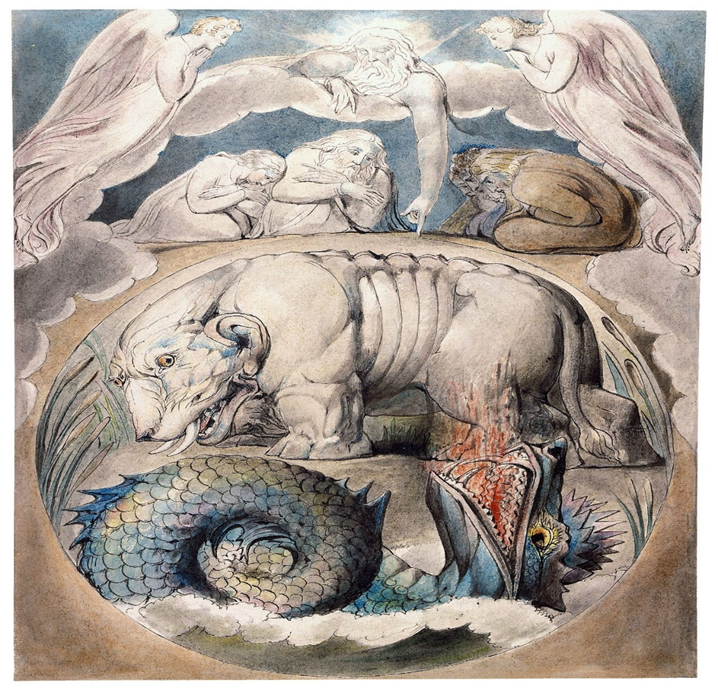
To exemplify their differences and respective roles, the Arbiter instructs Job with examples of imaginative creatures seemingly both natural and mythical: Behemoth and Leviathan

Job is compared to Behemoth: “Look at the land beast, Behemoth. I created him as well as you. Grazing on grass, docile as a cow . . .”

Behemoth – William Blake

Behemoth is content and well-fed, strong, first of its kind, cared for, sheltered, not alarmed by turbulence. Behemoth is an example of stability and trust: “And when the river rages, he doesn’t budge, stolid and unperturbed even when the Jordan goes wild.”

The Arbiter is compared to Leviathan, the sea beast with enormous bulk and beautiful shape.

“Who would even dream of piercing that tough skin or putting those jaws into bit and bridle?”

Leviathan can’t be tamed or controlled and should not be challenged or messed with. “There’s nothing on this earth quite like him, not an ounce of fear in that creature!”

The Arbiter has drawn a vast distinction between himself and Job.

Job had been speaking about his own righteousness and God’s justice. Behemoth is not an example of righteousness or of a questioning attitude. Rather, Behemoth is an example of stability amidst turbulence (crisis). Behemoth symbolizes creaturely trust.

Leviathan, not an example of justice, is the image of a rather terrifying creature. There is nothing wilder than the Leviathan. Leviathan cannot be domesticated. It would be utter folly to tangle with such a creature.

Behemoth and Leviathan – William Blake

After the Arbiter finishes his description of Leviathan, Job answers:

You asked, ‘Who is this muddying the water,
    ignorantly confusing the issue, second-guessing my purposes?’
I admit it. I was the one. I babbled on about things far beyond me,
    made small talk about wonders way over my head.
You told me, ‘Listen, and let me do the talking.
    Let me ask the questions. You give the answers.’
I admit I once lived by rumors of you;
    now I have it all firsthand—from my own eyes and ears!
I’m sorry—forgive me. I’ll never do that again, I promise!
    I’ll never again live on crusts of hearsay, crumbs of rumor.”

The Arbiter accepts Job’s admission that he was both ignorant and wrong about the Arbiter. Job has grown in his understanding: justice is not automatic – good is not rewarded and evil punished mechanically. The Arbiter is not a contingent being. He is not beholden to Job. He is not accountable to Job. Job cannot force the Arbiter to act.

The Arbiter, who heard Elihu say true things about the Arbiter, addresses Eliphaz:

“I’ve had it with you and your two friends. I’m fed up! You haven’t been honest either with me or about me—not the way my friend Job has!”

The Arbiter tells them to go to Job and sacrifice a burnt offering on their own behalf and Job will pray on their behalf – just as Job did for his own children just in case they’d sinned. The Arbiter accepts Job’s prayer.

After Job had interceded for his friends, God restored his fortune—and then doubled it! Job’s later life was blessed by the Arbiter even more than his earlier life. He lived on another 140 years, living to see his children and grandchildren—four generations of them! Then he died—an old man, a full life.

Job’s restoration at the end does not make up for the losses he incurred. The restoration seems to reset the stage for Job to bring the understanding he gained during his suffering to a new generation. He will tell his daughters to have Behemoth-like trust in the Arbiter and not in a mechanical system of justice.

He may even tell them that prayer is not a cause-and-effect mechanism. Prayer is listening to God.

~~~

As we find out, this fictional tale is not an answer as to why there is suffering or benefit, for that matter. The author’s narrative was meant to educate and expand the reader’s understanding of Yahweh in a world where there are things that make people suffer. Its purpose was to challenge conventional thinking about order, justice, and Yahweh.

The narrative asked questions: Is the Retribution Principle (RP) – the righteous will prosper and the wicked will suffer – the foundational principle in the cosmos? And, does anyone serve the Arbiter for nothing?

The first question is answered through two contrasted views of reality: the old-time religion of piety-for-prosperity as order and justice in the cosmos and the Arbiter’s Wisdom as being the foundational principle in the cosmos. The second question is resolved by Job.

He continued to serve the Arbiter (and did not curse him as the Challenger supposed would happen) during his suffering. He did so without expectation of reward thereby rejecting the piety-for-prosperity symbiosis that was thought to exist between the gods and man.

We find out that the Arbiter, not Job, is put on trial. Under great suffering, Job questioned the Arbiter’s policies. He wondered if the Arbiter was petty and unjust.

The Arbiter, with no need to defend himself, corrects Job. For, Job did not begin to understand what’s involved in the mysteries of creation nor about cosmic order and justice. Job and his friends were not the source of Wisdom.

The Arbiter, along with the supplemental “wisdom” poetry, raised Job’s and the reader’s focus on suffering – the “raging waters” – up to great heights – the uncharted territory of creation beyond man’s comprehension where one would find a Leviathan-like being beyond our control.

This brief summary does not begin to extract the wealth of wisdom and understanding found in Dr. John Walton’s study of the book of Job:

Job (The NIV Application Commentary): Walton, John H.: 9780310214427: Amazon.com: Books

Dr. John Walton, Job (30 mini-lectures) – YouTube

How should we understand our world?

Session 25: The World in the Book of Job: Order, Non-order, and Disorder by John Walton from Dr. John Walton, Job (30 mini-lectures) – YouTube

John H. Walton (Ph.D., Hebrew Union College) is professor of Old Testament at Wheaton College. Previously he was professor of Old Testament at Moody Bible Institute in Chicago, Illinois.

Bibliography: Block, Daniel I., ed. Israel: Ancient Kingdom or Late Invention? Nashville: Broadman & Holman, 2008; Longman, Tremper III, and John H. Walton. The Lost World of the Flood: Mythology, Theology, and the Deluge Debate. Downers Grove: InterVarsity, 2018; Walton, John H. Ancient Near Eastern Thought and the Old Testament: Introducing the Conceptual World of the Hebrew Bible. Second edition. Grand Rapids: Baker, 2018; idem. Genesis 1 as Ancient Cosmology. Winona Lake: Eisenbrauns, 2011; idem. Old Testament Theology for Christians: From Ancient Context to Enduring Belief. Downers Grove: InterVarsity, 2017; idem. The Lost World of the Israelite Conquest: Covenant, Retribution, and the Fate of the Canaanites. Downers Grove: InterVarsity, 2017; idem. The Lost World of the Torah: Law as Covenant and Wisdom in Ancient Context. Downers Grove: InterVarsity, 2019.

~~~~~

“The suffering and evil of the world are not due to weakness, oversight, or callousness on God’s part. But rather, are the inescapable costs of a creation allowed to be other than God.” – John Polkinghorne

~~~~~

In light of the severe suffering and trauma that Job is exposed to, some may see the Arbiter’s response as cold and clinical, unfeeling and even autistic. Some in this day and age may hold that feelings and victimhood are core principles for understanding the world and may bad mouth the Arbiter for not being empathetic. Some might assert that his response is not their version of the RP’s justice and order- social justice. They may want an Arbiter to express himself like they do. Finding out that the Arbiter is beyond all reckoning unsettles them.

~~~~~

The Uncertainty Specialist with Sunita Puri

Pain is like a geography—one that isn’t foreign to palliative care physician, Dr. Sunita Puri. Kate and Sunita speak about needing new language for walking the borderlands and how we all might learn to live—and die—with a bit more courage.

In this conversation, Kate Bowler and Sunita discuss:

How to walk with one another through life’s ups and downs—especially health ups and downs

What “palliative care” means (and how it is distinct from hospice)

The difference between what medicine can do and what medicine should do

Sunita’s script for how to talk to patients facing difficult diagnoses

Sunita Puri:The Uncertainty Specialist – Kate Bowler

~~~~~

“Here be dragons” (Latin: hic sunt dracones) means dangerous or unexplored territories

“Here be Dragons” was a phrase frequently used in the 1700s and earlier by cartographers (map makers) on faraway, uncharted corners of the map. It was meant to warn people away from dangerous areas where sea monsters were believed to exist. It’s now used metaphorically to warn people away from unexplored areas or untried actions. There are no actual dragons, but it is still dangerous.

The Psalter world map with dragons at the base:

Honey, They Shrunk the Choice Architecture

You and I being are being directed to change our behaviors.

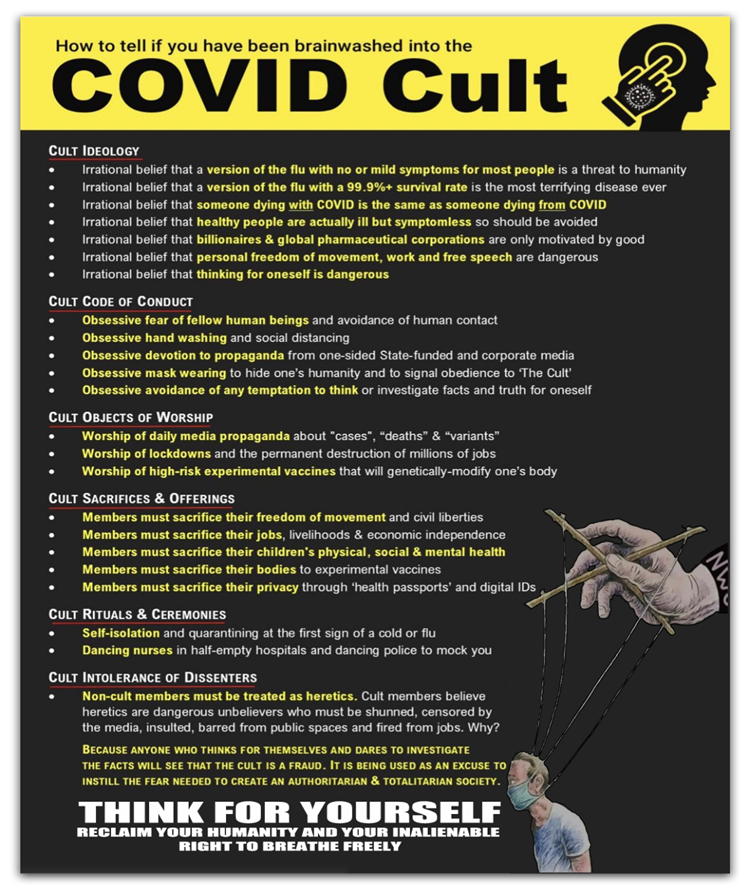
Felt a Nudge lately? A reminder to do something to better your health, your finances, the environment? Felt a Nudge during COVID to mask and social distance and sanitize and to be vaccinated?

Felt a Nudge Down With RYBELSUS? A Nanny State Nudge to buy into a government service? A pop-up nudge? A click-bait nudge? A text nudge? A nudge to buy something before its gone? A nudge to pay for something using only digital payment and not cash? A Nurge (Urgent Nudge) to decarbonize to prevent “climate catastrophe”?

Behavioral science is being used to direct our decisions.

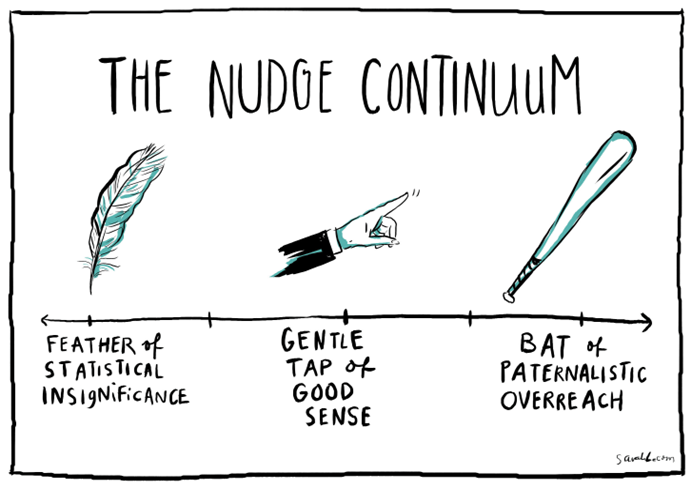
Influencing behavior in a libertarian paternalistic way with active engineering of choice architecture is behind the concept of nudge theory developed by Richard Thaler, a professor of economics and behavioral science at the University of Chicago.

Why influence behavior in a libertarian paternalistic way? It has been said that . . .

“In recent decades, behavioral economists have shown that, out of impulse, impatience, or ignorance, people often make choices that are not the best or even good for them: we are not the rational self-interest maximizers that conventional economists have long assumed [see “The Marketplace of Perceptions,” March-April 2006].” Cass Sunstein on the constitution in the 21st century | Harvard Magazine

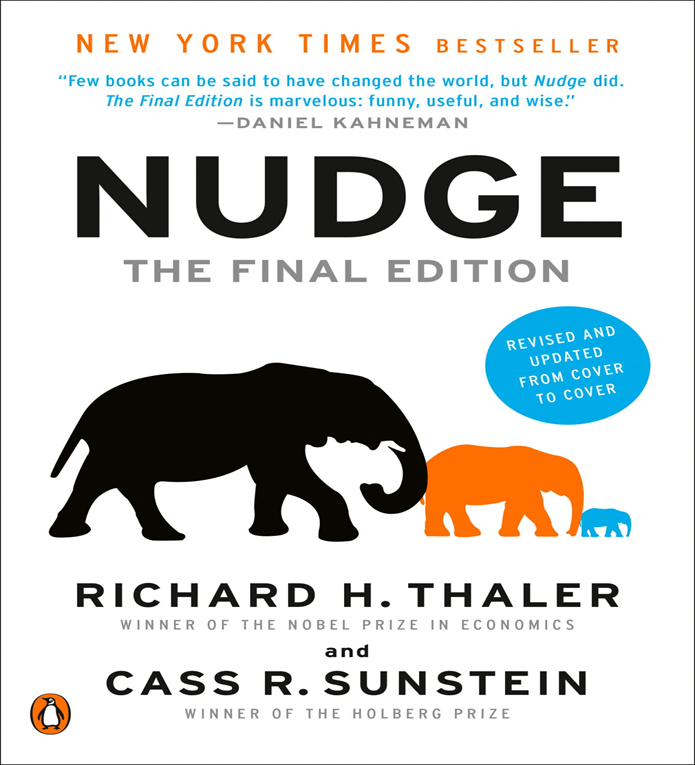
The “nudge”, a gentle prompt that influences people’s behavior in a predictable way, was popularized in the 2008 book Nudge: Improving Decisions About Health, Wealth, and Happiness, by behavioral economist Richard Thaler and legal scholar Cass Sunstein. The book discusses how it is both possible and legitimate for private and public institutions to affect behavior, while maintaining freedom of choice, to help steer people to people make better choices in their daily lives, because in Thaler’s and Sunstein’s assessment . . .

“People often make poor choices—and look back at them with bafflement!” And . . .

“We do this because, as human beings, we all are susceptible to a wide array of routine biases that can lead to an equally wide array of embarrassing blunders in education, personal finance, health care, mortgages and credit cards, happiness, and even the planet itself.”

Nudge theory is based upon the idea that by shaping the environment, also known as the “choice architecture” – a term coined by Thaler and Sunstein in their Nudge book – one can influence the likelihood that one option is chosen over another by individuals who feel in control of the decisions they make.

Terms

Choice architecture is the framing of different ways choices are presented. These would include the number of choices presented, the manner in which attributes are described, and the presence of a “default.” One example: how food is displayed in cafeterias. Offering healthy food at the beginning of the line or at eye level can contribute to healthier choices.

Libertarian paternalism is an oxymoronic term coined by Richard Thaler. Being “Libertarian” “means being free to make your own choices about your own life, that what you do with your body and your property ought to be up to you. Other people must not forcibly interfere with your liberty, and you must not forcibly interfere with theirs.”

Paternalism is “A policy or practice of treating or governing people in a fatherly manner, especially by providing for their needs without giving them rights or responsibilities. Paternalism can be “excessive governmental regulation of the private affairs and business methods and interests of the people; undue solicitude on the part of the central government for the protection of the people and their interests, and interference therewith.”

A Libertarian approach preserves freedom of choice and being able to opt out. A paternalistic approach assumes a restriction of choice. Libertarian paternalism is “an approach that preserves freedom of choice but that authorizes both private and public institutions to steer people in directions that will promote their welfare.”

Nudge is a gentle prompt that influences people’s behavior in a predictable way to make better decisions. It doesn’t mandate, order, enforce, or control. It uses motivational techniques most people respond to – such as the need to fit in with social norms. A nudge is meant to move people toward the best decisions for ourselves, our families, and our society, without restricting our freedom of choice.

Nudging, like persuasion, can be used with more or less ethical intentions. When it is less ethical it is known as Sludge. A lot of nudging involves changing a choice architecture that people are faced with.”

 10 Important Nudges: Simple Things That Can Change Behaviors – The World of Work Project

Examples of using “choice architecture”:

In Retail:

1. Placement of items in a store

2. Use of scarcity and social proof in marketing

3. Use of loyalty programs and rewards

In Technology:

1. Default settings on devices and apps

2. Push notifications and reminders

3. Gamification of tasks and activities

In Health and Wellness

Use of reminders and goal-setting tools

Design of workout spaces and equipment

Use of social support and accountability

In Finance

1. Automatic savings and investment plans

2. Design of banking apps and websites

3. Use of behavioral economics in financial education

Nudge Theory: Definition and 10 Examples (2024) (helpfulprofessor.com)

Small nudges to giant leaps: Examples of nudging in the workplace (applaudhr.com)

Examples of Nudge Theory in Public Policy:

Nudging supposedly makes it easier for improved access to public services and help people achieve their goals in life.

In the UK the Nudge Unit was established in the Cabinet Office in 2010 by David Cameron’s government to apply behavioral science to public policy. The Behavioral Insights team, or “Nudge Unit”, plays a big role in helping the government formulate its response to coronavirus. “The Nudge Unit is working closely with the Department of Health and Social Care in crafting the government response. The most visible manifestation of its influence to date is in the communication around hand-washing and face touching – in particular the use of “disgust” as an incentive to wash hands and the suggestion of singing Happy Birthday to ensure hands are washed for the requisite 20 seconds.” -Jill Rutter, “Nudge Unit” | Institute for Government

Boris Johnson’s government tried to fight the coronavirus pandemic by using the nudge theory to encourage “herd immunity”.

The Canadian Behavioural Insights Team (BIT), established in 2014, emerged from the original “Nudge Unit” in the British government, which was founded in the Cabinet Office in 2010. It uses a consultancy model to support government and the not-for-profit sector to support BI [behavioral insights] policy interventions. Nudging the way to better public policy (irpp.org)

One example in Canada is to make Elections and voting day need an injection of fun and celebration. Nudge theory illustrates ways to inspire anyone too busy, too “irritated” to vote.

Personal freedoms are a fundamental value of our liberal democracy. Citizens have the choice to opt out of participating. Thus, we should focus on making voting easier to opt into but not mandatory. We should act in ways that will nudge, not force, people to the voting booth.

We need to nudge joy into voting (irpp.org)

Both David Cameron and Barack Obama employed the nudge theory to advance domestic policy goals in their countries.

In the U.S. . . .based on research from University of Chicago economist Richard Thaler and Harvard law school professor Cass Sunstein, Obama’s regulatory czar. . . who argued in their 2008 book “Nudge” that government policies can be designed in a way that “nudges” citizens towards certain behaviors and choices. . .

On September 15, 2015, Obama issued Executive Order 13707 “Using Behavioral Science Insights to Better serve American People” directing Federal Government Agencies to apply Behavioral Science Insights to design their policies and programs.

Per Donald Marron at Forbes:

“President Obama established the unit—officially known as the Social and Behavioral Sciences Team (SBST)—to use insights from psychology, behavioral economics, and other decision sciences to improve federal programs and operations. Those social sciences increasingly appreciate what regular folks have long known: people are imperfect. We procrastinate. We avoid making choices. We get confused and discouraged by complex forms. We forget to do things. We sometimes lack the energy to weigh decisions thoroughly, so we act based on what we think our peers do or how choices are framed. And we sometimes cut corners when we think no one is looking.”

The Executive Order also charges the Social and Behavioral Sciences Team (SBST), a cross-agency group, to make it happen.

Per Megan Fella at Obama’s effort to ‘nudge’ America (politico.com)

“Ultimately, knowing what drives us puts us in the driver’s seat.” – Susan M. Schneider

The Social and Behavioral Science Team (SBST) is a small, but mighty group of leading behavioral scientists and innovators from across the country. Housed within the Office of Evaluation Sciences at GSA, the SBST realizes that “seemingly small barriers to engagement…can prevent programs from effectively reaching the people they are intended to serve” and that “an effective and efficient government must, therefore, reflect our best understanding of human behavior.”

According to Meet the Social and Behavioral Science Team (usa.gov):

In order to create a better government, the SBST looks for opportunities in four aspects of program design:

Streamlining access to programs and benefits

Improving how government presents information to consumers, borrowers, and program beneficiaries

Enhancing how government presents and structures choices within programs

Examining the frequency, presentation, and labeling of benefits, tax credits, and other incentives

Chuck Ross, on September 15, 2015, voiced his concerns: Obama’s Nudge Brigade: White House Embraces Behavioral Sciences To Improve Government (forbes.com)

“President Obama’s federal health care law, Obamacare, is replete with “nudge” language and experimentation. . .

“Another nudge contained in Obamacare was brought to light in the debate over whether the individual mandate contained in the law was a tax hike.

“Republicans insisted that it was a tax increase, but the White House portrayed it as a penalty on the logic that the word “tax” has a negative connotation.

While the Obama administration touted nudge policies, others were hesitant to get on board.

““I am very skeptical of a team promoting nudge policies,” Michael Thomas, an economist at Utah State University, told Fox News in 2013.

““Ultimately, nudging…assumes a small group of people in government know better about choices than the individuals making them.”” (Emphasis mine.)

The purpose of this post is to provide a simplified overview of behavioral science manipulation tactics being used and to make readers aware of “nudging”. The little pokes and prods to improve behavior sound benign:

“Sunstein defines nudges as “simple, low-cost, freedom-preserving approaches, drawing directly from behavioral economics, that promise to save money, to improve people’s health, and to lengthen their lives”—small pushes in the right direction, like a restaurant disclosing the calorie count of each dish so patrons are more likely to order healthy food, or a company setting up its 401(k) plan so employees are automatically enrolled in the savings program and must choose to opt out.”

– Lincoln Caplan, Cass R. Sunstein – Harvard Law School | Harvard Law School

Richard Thaler – Nudge: An Overview (youtube.com)

My concerns:

Who’s nudging me? Who’s arranging my choices? Who’s engineering my “choice architecture” and by what values?

Using motivational techniques most people respond to – such as the need to fit in with social norms to positively change people’s behavior, I’m OK with. Automatically enrolling employees in an optional 401(k), for instance, or easily allowing organ donors to opt out, I’m OK with. But what about the motivational techniques behind consequential choices like healthcare or the COVID vaccine or whether I need more government decision making in my life? Can I opt of the choices given me?

As employed by government policies and programs, behavioral science “nudging” seems to be making big government more attractive and more conducive for an individual to rely on government for more and more decision making. Nudge’s low intensity manipulation seems to always advance the goals of the federal government while couched in ways as helping people make good decisions. As such, “nudging” seems to be growing the Nanny State.

Certainly, there are concerns about the ethics of nudging. Nudges can engineer people’s choices to reach certain ends desired by a policy maker. A policy “choice architecture” can, by design, make certain options have a greater chance of being chosen. Ergo, the government should be transparent in its behavioral approaches to ensure that policymakers, media, and the public have the evidence they need to judge their merits. Yet, I don’t every government agency will be transparent with its manipulation or propaganda.

When nudging seeks to frame behavior with limited choices to achieve a political outcome, then formerly well-intentioned nudges give way to outright manipulation. We will then be influenced to do whatever those in power want done. Example: When “We’re all in this together” becomes the stigmatizing “The pandemic of the unvaccinated.”

What happens when the owners of a technocratic control group known as social media shrink your choice architecture” on the inter-web and you do not see all there is to know? Such frames are difficult to combat because we are not often presented with the alternative frame, and thus we often don’t realize how the frame we see affects our decisions.

When information leading to truth is censored by technocrats with government approval, tyranny is slowly being put in place to rob common people of their health, savings, freedoms, and their futures. In other words, “Freedom of choice be damned!”

You will want to read this>> Exposing The CIA’s Secret Effort To Seize Control Of Social Media | ZeroHedge

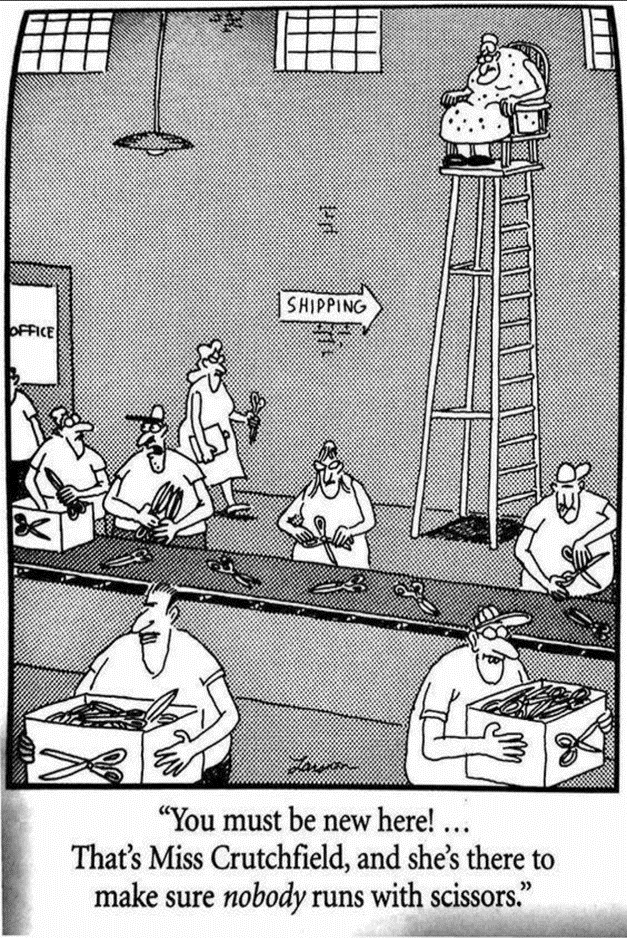
What happens when sensible “choice architecture” that nudges people toward the best decisions for themselves, their families, and society without restricting freedom of choice, shrinks to “choose this or else” as with a mandate? “Honey, they shrunk the Choice Architecture and have grown the size of their influence!”

A [San Francisco Democrat’s] bill before California lawmakers would require new cars sold in the state in coming years to beep a warning whenever drivers exceed the speed limit by at least 10 mph

New cars in California could alert drivers for breaking the speed limit – ABC News (go.com)

According to the write up, the signal can be turned off – the driver’s choice architecture.

~~~~~

More information:

Richard Thaler won the 2017 Nobel Prize in Economic Sciences for his “contributions to behavioral economics.”

Cass Sunstein is an American legal scholar known for his work in constitutional law, administrative law, environmental law, and behavioral economics. Cass R. Sunstein – Harvard Law School | Harvard Law School

“From 2009 to 2012, he was Administrator of the White House Office of Information and Regulatory Affairs [under Obama], and after that, he served on the President’s Review Board on Intelligence and Communications Technologies and on the Pentagon’s Defense Innovation Board. Mr. Sunstein has testified before congressional committees on many subjects, and he has advised officials at the United Nations, the European Commission, the World Bank, and many nations on issues of law and public policy. He serves as an adviser to the Behavioral Insights Team in the United Kingdom.”

How Nudging Can Change Customer’s Behaviour – Radiant Copywriting

Frontiers | Nudge politics: efficacy and ethics (frontiersin.org)

Nudge and Nudging in Public Policy | SpringerLink

Nudging in Public Policy | Oxford Research Encyclopedia of Politics

Behavioural Insights Team: ethical, professional and historical considerations | Behavioural Public Policy | Cambridge Core

Nudge theory: what 15 years of research tells us about its promises and politics (theconversation.com)

Nudge theory doesn’t work after all, says new evidence review – but it could still have a future (theconversation.com)

Barriers to Converting Applied Social Psychology to Bettering the Human Condition (tandfonline.com)

There’s a backlash against nudging – but it was never meant to solve every problem | Cass Sunstein | The Guardian

Freedom and Flourishing: Is economics becoming a branch of psychology?

Nudge: How Small Changes Can Significantly Influence People’s Choices – Effectiviology

~~~~~

Winston Marshall Matters

Laura Dodsworth is a photographer, artist and author. In her most recent book Free Your Mind: The New World of Manipulation and How to Resist it, Laura draws on the Nudge Unit, behavioral psychology and fact checking services to analyze the range of ways in which our minds are manipulated. On the podcast, Laura talks about the government propaganda machine and how this all relates back to issues such as climate catastrophe, the pandemic and free speech. 

Laura Dodsworth: How to protect yourself from government propaganda

Laura Dodsworth: How to protect yourself from government propaganda | The Spectator

Learn how to recognize and resist the daily attempts to control and manipulate your mind.

There is a war on for your mind. You may not notice, but you are surrounded by manipulators: advertisers, politicians, big tech, even the humble waiter who asks, ‘Still or sparkling?’

Free Your Mind is your field manual to surviving the information battlefield. In this indispensable book, Laura Dodsworth and Patrick Fagan draw on interviews with mind-control experts ranging from monks to magicians, infiltrate cults and forums to uncover their most deceptive techniques and expose the hidden tactics used to influence you, from social media to subliminal messages.

Free Your Mind: The must-read expert guide on how to identify techniques to influence you and how to resist them: Amazon.co.uk: Dodsworth, Laura, Fagan, Patrick: 9780008600945: Books

This is a book about fear. Fear of a virus. Fear of death. Fear of losing our jobs, our democracy, our human connections, our health and our minds. It’s also about how the government weaponised our fear against us – supposedly in our best interests – until we were one of the most frightened countries in the world.

A State of Fear: How the UK government weaponised fear during the Covid-19 pandemic: Amazon.co.uk: Dodsworth, Laura: 9781780667201: Books

~~~~~

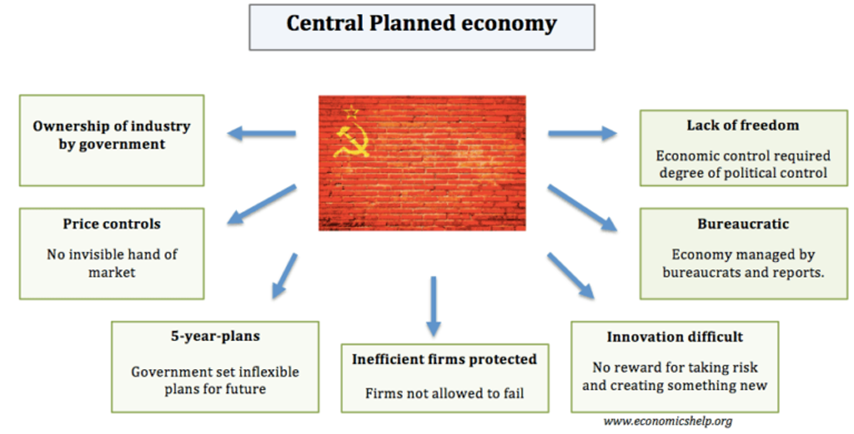
I have often posted about those who seek to engineer our lives – my previous post Central Planning or I Know What I Know?

I am cynical about those who seek to control us for “our own good.” There are always people in the world who want to manipulate and control others to have them make ‘better’ decisions, i.e., think like them. And this is true in the church:

There’s a growing list of the controlled opposition’s shaming screeds promoted on MSNBC to influence voters by making them feel morally superior if they make the ‘right’ choice: to not support and vote for Trump.

These Nudge-mental authors want to move you in the direction of being an ‘acceptable’ Christian and to be politically ‘acceptable’ in their eyes.

Tim Alberta and The Kingdom, the Power, and the Glory: American Evangelicals in an Age of Extremism, published December 5, 2023

Tom Schaller and Paul Waldman with White Rural Rage: The Threat to American Democracy published on February 27, 2024

Jim Wallis: The False White Gospel: Rejecting Christian Nationalism, Reclaiming True Faith, and Refounding Democracy, published April 2, 2024

The After Party: Toward Better Christian Politics, Nancy French and Curtis Chang, based on project by David French, Russell Moore & Curtis Chang, published April 23, 2024

Ironically, these holier-than-MAGA disparagers no doubt benefitted from Trump’s presidency. There was peace and prosperity. There were no wars. Look at Trump’s Middle East peace deal. There was no invasion of our southern border. Inflation was around 2%. People had money to support themselves and to give to charitable causes like The Roy’s Report and The Trinity Forum, (where these guys hawk their wares.)

During those four years and since, these guys sit around and nitpick about people who are not like them at great benefit to themselves.

And please don’t tell me they are writing these things to protect Jesus from the rabble. “Put down your sword, Peter.” Jesus – very God – is not beholden to anyone for protection.

~~~~~

Well before Nudge, the book of Proverbs talked about those who act out of impulse, impatience, or ignorance. Proverbs talked about people who often make choices that are not the best or even good for them. What Does the Book of Proverbs Say About Fools? – Bible Gateway Blog

Wisdom was in place long before Nudge came along:

The Lord Created me [Wisdom] at the beginning of his work, the first of his acts of old, Proverbs 8:22-31

Wisdom, personified as a female in the book of Proverbs, aspires to produce much more than a nudge toward a rational self-interest maximizing approach to decision making. Wisdom’s desire is to expand one’s personal bandwidth with the experience of the knowledge and fear of God.

Wisdom wants you to tap into God’s creation.

Wisdom is coupled with humility – you don’t have all the answers. (I get the image of a wife telling her husband to ask for directions when they are lost.)

You can ask God for wisdom in your decision making and God will supply you with wisdom.

Trust in the LORD with all your heart,

and lean not on your own understanding;

in all your ways acknowledge Him,

and He will make your paths straight.

Be not wise in your own eyes;

fear the LORD and turn away from evil.

This will bring healing to your body

and refreshment to your bones. Proverbs 3:5-8

“The wise shall inherit glory (all honor and good) but shame is the highest rank conferred on [self-confident] fools.” Proverbs 3:35

“A foolish person will believe anything. But a wise person thinks about what he does.” Proverbs 14:15

You don’t need to be a tenuous reed in the wind, nudged in every direction. Seek wisdom from God.

~~~~~

Nudge them not before a TV screen:

“. . . while screen time may be harmless or even enriching in moderation, it’s still rife with pitfalls. Screens can tempt kids away from physical activity and imaginative play, for example, and could stunt development of critical skills like emotional self-regulation if overused.

“According to a new study, screen time for babies and toddlers is also linked to an additional risk many parents may not have considered: developing atypical sensory-processing behaviors. . .

“The behaviors include “sensation seeking” and “sensation avoiding” – when a child seeks out more intense sensory stimulation or is more averse to intense sensations, respectively – as well as “low registration,” a lower sensitivity or slower response to stimuli.”

Screen Time Could Have a Surprising Effect on Our Children’s Ability to Process Sensations : ScienceAlert

There be NO Health choice architecture if Dr. Tedros of the WHO becomes the health dictator:

Exposing WHO Chief Dr. Tedros: Militant Marxist and China Stooge (rumble.com)

The World Health Organization is working with the European Union to roll out international, interoperable digital IDs. If you go to the World Economic Forum website these digital IDs are touted as means to enrich our lives by making the following tasks easier: Accessing healthcare, opening a bank account, traveling, engaging in online transactions, accessing Medicare/Medicaid, voting, and paying taxes. Without these IDs, you won’t be able to do any of those things. Or, if you step out of line in some way (say, if a certain vaccine is mandated that you refuse), the WHO could interfere with your digital ID to limit your access to any of these very basic activities. (Emphasis mine.)

Reggie Littlejohn: “We Should All Be Worried About The WHO’s Pandemic Treaty”

Celebrity “Nudge-mentalism”:

Nudge-truth:

Central Planning or I Know What I Know?

“If science is really given a free hand it can now take over the human race and re-condition it: make man a really efficient animal. If it doesn’t – well, we’re done.”

That is Lord Feverstone speaking to Mark Studdock in C.S. Lewis’ That Hideous Strength.

Feverstone, a shrewd sociopath, uses idealism to lure gullible Mark Studdock, an ambitious, self-centered and shallow intellectual looking to ‘upgrade’ his life. Feverstone wants Mark to join the National Institute for Co-ordinated Experiments (N.I.C.E.)

N.I.C.E. is a scientific social engineering agency and a front for dark supernatural forces. It is bent on world domination through scientific management. Propagandistic media is used to persuade the educated, like Studdock, to join in disseminating N.I.C.E. propaganda:

One interesting feature in the effort toward totalistic control over society, as developed in That Hideous Strength, is the matter of influencing public opinion through the news media. Mark, the insecure protagonist in the story, finds himself drawn into the “inner ring” of the technocratic project; he eventually discerns his role to write stories that support the agenda of the National Institute of Coordinated Experiments (N.I.C.E.). -Ted Lewis, Jacques, Jack and the Technocrats | | The International Jacques Ellul Society

Feverstone continues working Mark . . .

“Man has got to take charge of Man. That means, remember, that some men have got to take charge of the rest – which is another reason for cashing in on it as soon as one can. You and I want to be the people who do the taking charge, not the ones who are taken charge of. Quite.”

[Mark] “What sort of thing have you in mind?”

“Quite simple and obvious things, at first – sterilization of the unfit, liquidation of backward races (we don’t want any dead weights), selective breeding. Then real education, including pre-natal education. By real education I mean one that has no ‘take-it-or-leave-it’ nonsense. A real education makes the patient what it wants infallibly: whatever he or his parents try to do about it. Of course, it’ll have to be mainly psychological at first. But we’ll get on to biological conditioning in the end and the direct manipulation of the brain . . .”

“N. I. C. E.’s symbol, devoted as it was to “Technocratic and Objective Man” (That Hideous Strength, 259), was a muscular male nude grasping a thunderbolt (That Hideous Strength, p. 215).” – The Devils in Our World – Official Site | CSLewis.com

There were significant parallels to N.I.C.E.’s scientific management activity and the characters involved in 1945, when Lewis came out with the final book of his Ransom trilogy. Mechanical engineer Frederick Winslow Taylor (1856–1915) the “father of scientific management”, could have been one of the characters in the technocratic project. And there’s Le Corbusier (1886–1965), a Swiss French architect, designer, and painter who was an urban planner.

Le Corbusier was to architecture what Pol Pot was to social reform. In one sense, he had less excuse for his activities than Pol Pot: for unlike the Cambodian, he possessed great talent, even genius. Unfortunately, he turned his gifts to destructive ends, and it is no coincidence that he willingly served both Stalin and Vichy. Like Pol Pot, he wanted to start from Year Zero: before me, nothing; after me, everything. By their very presence, the raw-concrete-clad rectangular towers that obsessed him canceled out centuries of architecture. Hardly any town or city in Britain (to take just one nation) has not had its composition wrecked by architects and planners inspired by his ideas.

-Theodore Dalrymple, Le Corbusier’s Baleful Influence: The Architect as Totalitarian (city-journal.org)

Today, there are significant parallels to N.I.C.E.’s scientific management activity and the characters involved. I suppose one could replace the Lord Feverstone character with a number of elites: Lord (Klaus) Schwab of the World Economic Forum (WEF) or Lord (Tedros Adhanom) Ghebreyesus of the World Health Organization (WHO) or with the infamous Lord Science, Anthony Fauci and his COVID boss Lord (Francis) Collins who now Confesses Lockdown Damage Was ‘Another Mistake We Made’.

The scientific management of COVID “to save a life” went in a horrible direction against humans. Many of my posts from March 2020 onward document the destructiveness of central public health planning and what other experts were saying.

Certainly, there are those today who want to rework humans with neural links, gene therapy, AI, and scientific management via central planning.

The following well-produced documentary Trust Us is an absolute must for understanding the central planners and the elites. Homeschoolers should show this video to the charges.

““Trust Us” traces the rise of American technocracy: governance by bureaucratic experts. Beginning in the early 20th century, “Trust Us” reveals how our leaders funneled power to unelected experts, who were convinced they could engineer solutions to all our nation’s problems. Not only did these experts fail to solve those problems, but in example after example, they caused irreversible damage to the country.

With The One Best Way – scientific management – Progressives “impose an ideology that not only can every corner of society be planned and controlled from the top down, but that it must be.”

Trust Us | The Rise of American Technocracy (youtube.com)

As we saw during COVID, the collusion of science and state powers forms a dangerous mix. We were told and made to “trust the science” about masks, lockdowns, social distancing, and the COVID vaccine for a flu virus that was 99.9 % survivable for healthy adults who were not very elderly.

The elites of public health central planning lied to us about immunity so that the vaccine could be pushed by the medical-industrial complex. They told us lies about hydroxychloroquine and Ivermectin so that the vaccine could be pushed by the medical-industrial complex. They told us lies about the origins of COVID to protect the medical-industrial complex that created a gain-of function virus.

At the same time, you would be mocked as “misinformed” and as a “conspiracy theorist” if you questioned the elites of public health central planning. You would be punished by censorship or loss of license or worse.

See this link for the lies we were told and for the adverse and deadly effects of the COVID vaccine: Investigations Archives – DailyClout.

A world-renowned scientist and leading immunology expert has raised the alarm with an explosive warning to the public that everyone who has been vaccinated with Covid mRNA shotswill die within 3 to 5 years, even if they have had only one injection.”

The alert was issued by Professor Dr. Dolores Cahill.

Renowned Scientist: All Covid-Vaxxed ‘Will Die in 3 to 5 Years’ – Slay News

The Onrushing Death Wave – by Richard Sauder (substack.com)

C.S. Lewis tried to warn us about the collusion of science and state powers used against humanity for “the public good.” (Who determines what “the public good” is should concern us all. Should the Godless determine “the public good”?)

That Hideous Strength “is a cautionary tale about the dangers of unchecked scientific and technological advancement.

The National Institute for Coordinated Experiments (N.I.C.E.) embodies the perils of divorcing knowledge from ethics. Their vision of progress, which seeks to dominate and control nature, starkly contrasts the traditional Christian understanding of humanity’s role as stewards of creation. In this, Lewis critiques a growing cultural trend that prioritizes technological advancement at the expense of moral and spiritual values.” Manrado Gorgio

C. S. Lewis’s Blend of Sci-Fi and Theology: ‘That Hideous Strength’ Analysis (sciencefictionclassics.com)

I am not against technological advancements. I have worked in engineering for many years. Experts are needed and should be given a platform but not the power to coerce.

Do not become so desperate and afraid that you beg government to do something.

I am against technological advancements tied to bureaucratic machinations and coercion by the state. I am against top-down scientific management central planning of my life. I am against elites telling me how to live my life. I am against being experimented on.

We, of Middle Earth America, are sick and tired of elites telling us how to think, speak and act!

~~~

Currently, there are organizations plotting world domination in terms of scientific management. The World Economic Forum (WEF) is one such cabal of elites chomping at the bit to control every corner of our lives. Another is the World Health Organization (WHO), the public health arm of the UN with more elites hankering to centrally plan our health under One Health.

Be aware! May 27th – June 1st, the Seventy-seventh World Health Assembly is being held in Geneva, Switzerland. The theme of this year’s Health Assembly is: All for Health, Health for All. There will be scheduled votes on the World Health Organization’s (WHO) pandemic treaty and the proposed changes to the International Health Regulations (IHR). The votes on this treaty and the IHR won’t be the end of an attempt at a global health security state; they mark just the beginning.

I do not want WHO oversight of my health/life. Nor do I want a Federal or State apparatus that has oversight of my health/life. I don’t want to exchange one authoritarian central planning system for another. I don’t want to live under a health technocracy. I prefer practical wisdom over central planning.

“. . .an unlettered peasant is considered ignorant, however much he may know about nature and man, and a Ph.D. is never considered ignorant, however barren his mind might be outside his narrow specialty and however little he grasps about human feelings or social complexities.” Thomas Sowell, Knowledge and Decisions

In the video you will learn:

The status and legality of the WHO treaty and IHR votes.

How we got here.

What’s in the ever-shifting documents.

What states are doing about it.

How state AGs and U.S. senators are stepping up for health freedom.

WHO Update 5/13/24: The votes are still on! (rumble.com)

WHO Update 5/13/24 – STAND FOR HEALTH FREEDOM

~~~~~

If you start from a belief that the most knowledgeable person on earth does not have even one percent of the total knowledge on earth, that shoots down social engineering, economic central planning, judicial activism, and innumerable other ambitious notions favored by the political left. Thomas Sowell

Government central planning means over-riding other people’s plans. – Thomas Sowell

“What is inadmissible, both morally and scientifically, is the hubris that pretends to understand the behavior of human agents without for a moment listening systematically to how they understand what they are doing and how they explain themselves.”
― James C. Scott, Two Cheers for Anarchism: Six Easy Pieces on Autonomy, Dignity, and Meaningful Work and Play

“Social order is not the result of the architectural order created by T squares and slide rules. Nor is social order brought about by such professionals as policemen, nightwatchmen, and public officials. Instead, says Jacobs, “the public peace—the sidewalk and street peace—of cities … is kept by an intricate, almost unconscious network of voluntary controls and standards among the people themselves, and enforced by the people themselves.”
― James C. Scott, Seeing Like a State: How Certain Schemes to Improve the Human Condition Have Failed

Here’s an inciteful brief description of James Scott’s Seeing Like a State: How Certain Schemes to Improve the Human Condition Have Failed:

“. . . the twentieth century has been racked by grand utopian schemes that have inadvertently brought death and disruption to millions. Why do well-intentioned plans for improving the human condition go tragically awry?

“The author [James Scott] builds a persuasive case against “development theory” and imperialistic state planning that disregards the values, desires, and objections of its subjects. He identifies and discusses four conditions common to all planning disasters: administrative ordering of nature and society by the state; a “high-modernist ideology” that places confidence in the ability of science to improve every aspect of human life; a willingness to use authoritarian state power to effect large- scale interventions; and a prostrate civil society that cannot effectively resist such plans.” (Emphasis mine.)

What remains of hubristic endeavors. . .

I met a traveller from an antique land
Who said: Two vast and trunkless legs of stone
Stand in the desert. Near them, on the sand,
Half sunk, a shattered visage lies, whose frown,
And wrinkled lip, and sneer of cold command,
Tell that its sculptor well those passions read
Which yet survive, stamped on these lifeless things,
The hand that mocked them and the heart that fed:
And on the pedestal these words appear:

“My name is Ozymandias, King of Kings:
Look on my works, ye Mighty, and despair!”
No thing beside remains. Round the decay
Of that colossal wreck, boundless and bare
The lone and level sands stretch far away.

— Percy Shelley, “Ozymandias”, 1819 

31 reasons why central planning failed in the Soviet Union | by Charles Orton-Jones | Medium

~~~~~

That Hideous Strength: Is technology dangerous?

Alister McGrath explores how CS Lewis addresses the perceived conflict between God and science in That Hideous Strength. What insights can Lewis give about pertinent issues such as the atomic age, eugenics and Artificial Intelligence? When does technology becomes technocracy and why was Tolkien so anti tech? What are some of the ways religion is being challenged and how does Lewis expose these critiques?

#143 That Hideous Strength: Is technology dangerous? – ThriveCast

John J. Miller is joined by Michael Ward of the University of Oxford to discuss C. S. Lewis’s That Hideous Strength.

The Great Books — Episode 224: ‘That Hideous Strength’ by C. S. Lewis | National Review

~~~~~

What Remains?

Watching protesting students align themselves with the terrorist group Hamas and their Palestinian pawns, one wonders what legacy they are building for themselves. Are they – the combine of victim-oppressor social justice warriors – really acting for the greater good with their pro-Hamas and antisemitic chants? Whose interests are they serving? Will they later regret their actions and associations, or will their self-deception and moral distortion continue on the rest of their lives?

Looking back over one’s life work, one’s ruling passion, and reconciling that with what one’s dedicated service contributed to forms the basis of two of Kazuo Ishiguro’s novels: An Artist of the Floating World and The Remains of the Day.

Two men – a Japanese artist in the first novel and an English butler in the second – aspired to reach the highest level in their professions. Both men were attuned to honor and dignity. Both men wanted to attach themselves to a greater worldly-good. But their singular focus, their self-constrained temporal bandwidth, shut out all else until later in life (the time period in the novels). They come to see that what they gave their singleness of mind and efforts to turned out to be not just heartbreaking and reputation damaging but devastating to the greater good.

Both men come across as guarded in their retelling of events and observations in diary-like fashion, as if they didn’t want to be too harsh on themselves. By their unreliable narration we wonder if there’s more under the surface. As things come to the fore, we learn there is a tension between how each saw the world and how the world really was. And this becomes cause for a conflicted life and one of guilt, deflection, and regret about past myopia and former associations.

Each man talks as if “you” were like them – as someone living in the same neighborhood in post-war Japan and as a butler in England. The world doesn’t extend beyond their interests. There are those – daughters, an old friend, a journalist, a housemaid, local towns folk -who try to draw them out.

The artist Masuji Ono’s narration occurs after the end of WWII in 1945 (Oct. 1948 June 1950), when Japan is rebuilding her cities after defeat. We learn that Ono is a retired printmaker who lost his wife Michiko and son Kenji during the war. His beautiful home was seriously damaged by the war as was his reputation.

The elderly Ono spends his time gardening, working on the house, with his visiting daughters and his grandson and going out at night to drink in a quiet lantern-lit bar, a remnant of the pleasure district – the “floating world” of pleasure, entertainment and drink that had at one time given him much pleasure. It’s where he escapes from his dark past.

Ono recalls his early printmaking days and his rise to be a master printmaker surrounded by adoring students in the bar. We learn of his desire to go beyond just making beautiful art. He wanted to serve a higher purpose. We come to learn of Ono’s dark past – his direct involvement in Imperialist Japan’s military rise and his work as a government propagandist.

Ono reassesses events from his past throughout the novel. He reconsiders his role in those events and his guilt. His reputation proceeds him as he enters into marriage negotiations for his daughter Noriko. He also assesses how Japan is changing since the war. He questions some of the change:

“Something has changed in the character of the younger generation in a way I do not fully understand, and certain aspects of this change are undeniably disturbing.”

“Democracy is a fine thing. But that doesn’t mean citizens have a right to run riot whenever they disagree with something.”

Does Ono admit he was wrong to be a propagandist in the deadliest military conflict in history? Does he come to terms with the mistakes he made in the course of his life? Does he attain satisfaction and dignity when all is said and done?

~~

Mr. Stevens’ narration occurs during a six-day road trip in the summer of 1956. He goes to visit Mrs. Benn, nee Kenton, in the sea-side town of Weymouth, England. During this time, he reminisces about his days as head butler at Darlington Hall after WWI and leading up to WWII.

Mr. Stevens is a prim and proper Jeeves-like butler who speaks in a measured and precise way. He values professionalism and dignity above all else.

“The great butlers are great by virtue of their ability to inhabit their professional role and inhabit it to the utmost . . . They wear their professionalism as a decent gentleman will wear his suit. . . It is, as I say, a matter of “dignity.”

Mr. Stevens’ devotion and dedicated service is focused on a man he holds in high esteem: Lord Darlington. “A gentleman through and through” and “I for one will never doubt that a desire to see “justice in this world” lay at the heart of all his actions” and “All those years I served him, I trusted I was doing something worthwhile” says Stevens.

High level meetings are held at Darlington Hall after WWI. Lord Darlington lobbies leaders from England, France and America to go financially easy on Germany.

Lord Darlington, an old-fashioned English gentleman, is much like Mr. Stevens. He can’t imagine a world different from his own. He never understands the true agenda of the Nazis even as the fascists he invites to Darlington Hall seek to turn him against the Jews. Lord Darlington, “A gentleman through and through”, becomes an appeaser and Nazi sympathizer in the name of honor, fairness, friendship, and gentlemanly conduct.

The devoted Stevens views Lord Darlington as a man who had good intentions but was led astray by manipulative diplomats. “I for one will never doubt that a desire to see ‘justice in this world’ lay at the heart of all his actions.”

The devoted Stevens goes with the flow:

“How can one possibly be held to blame in any sense because, say, the passage of time has shown that Lord Darlington’s efforts were misguided, even foolish? Throughout the years I served him, it was he and he alone who weighed up evidence and judged it best to proceed in the way he did, while I simply confined myself, quite properly, to affairs within my own professional realm. And as far as I am concerned, I carried out my duties to the best of my abilities, indeed to a standard which many may consider ‘first rate’.”

The devoted Stevens extrapolates his efforts:

“A ‘great’ butler can only be, surely, one who can point to his years of service and say that he has applied his talents to serving a great gentleman – and through the latter, to serving humanity.”

Miss Kenton, the lead housemaid at Darlington Hall, is like Stevens. She takes great pride in her work. But unlike Stevens, she has emotional latitude and an independent streak. She is intelligent, headstrong, and stubborn. She disagrees not only with Stevens at time but also with the decisions made by Lord Darlington. 

Though she finds Mr. Steven infuriating – “Why, Mr. Stevens, why, why, why do you always have to pretend?” – it gradually becomes clear that Miss Kenton is in love with him. But after many years, she leaves Darlington Hall. Frustrated at Mr. Stevens’ buttoned up emotional state and lack of response Miss Kenton goes off with Mr. Benn, a footman of the house.

Years later, Stevens receives a letter from Miss Kenton. He reads it over and over believing that she might return to her post at Darlington Hall under a new owner. The letter indicates that her marriage to Mr. Benn might not be working out. Stevens’ hopes are up but well-regulated.

His new employer, a wealthy American named Mr. Farraday, tells Stevens to take some time off. He offers Stevens his car for a road trip. And off Stevens goes to see Miss Kenton.

On his way, Stevens comes into contact with several working-class characters. They challenge Stevens’ ideas about dignity. One man opines that dignity is about democracy and standing up for one’s beliefs – in other words, being attentive to what’s going on in the world and being outspoken. This, of course, is in contrast to Stevens’ conception of dignity as being about suppressing one’s own feelings in pursuit of professionalism.

What happens when Stevens reaches Weymouth and meets Mrs. Benn?

What does hindsight look like to Stevens? Does it look like not worrying oneself too much about what one could or could not have done to control the course one’s life took? Does it look like a simple butler trying to make a small contribution count for something true and worthy and sacrificing much in life in order to pursue such aspirations, that in itself, whatever the outcome, is cause for pride and contentment?

Does Stevens, as he reflects on things at the end of the day, realize the mistake he made in his lockstep devotion to Lord Darlington? Does he take the blinders off? And, does he understand the effects of his obsessive devotion to professionalism and dignity on his personal life?

Stevens gives his thoughts on the latter to a man sitting next to him on the pier as they watch the sun going down and the pier lights come on:

“The fact is, of course,’ I said after a while, ‘I gave my best to Lord Darlington. I gave him the very best I had to give, and now – well – I find I do not have a great deal more left to give.”

I return to my opening questions. Whose interests were they serving? Will they later regret their actions and associations or does willful blindness and self-deception remain?

“There was surely nothing to indicate at the time that such evidently small incidents would render whole dreams forever irredeemable.”
― Kazuo Ishiguro, The Remains of the Day

~~~~~

This post wasn’t meant to provide a complete summary of Kazuo Ishiguro’s two novels. There is a whole lot going on in each that I haven’t touched on. They are very well written human-interest stories. The Remains of the Day won The Booker Prize.

Rather, I saw parallels between the decisions youth are making today, with all ardor, for deadly causes and the experiences and feelings of the artist Masuji Ono and the butler Stevens.

I’ve read both novels. I saw the Remains of the Day before reading the book. This Merchant Ivory film is one of my favorites (There is no murder and mayhem, no car chases, no heavy breathing, no queer theory or CRT, and no Disney twaddle.)

The cast is top-notch. I recommend reading the book before viewing the movie and listening to the podcast below (spoiler alert!).

The movie, of course, is edited way down to try and give the essence of Ishiguro’s novel. But reading the text first will provide the depth and richness of the characters and much more detail of their situations.

The Booker at the Oscars: The Remains of the Day from The Booker Prize Podcast | Podcast Episode on Podbay

The Disconnected Ones

From parents pampering their progeny (Indulging “I-Me-Mine”) to priests and pastors preaching Progressivism (‘Inspired’ “I-Me-Mine”) to professors promulgating political propaganda (Ideological “I-Me-Mine” & Illiteracy) to the phenomenon of ‘political correctness’ (Ideological Conformity & Indulgent Illiberalism) to policies promoting pseudo pronouns (Indulgent Illusions of “I-Me-Mine”) to protestors pronouncing “Death to Israel” and “Death to America” (Indulgent Intifada), the Left’s Long Maoist/Marxist/ Marcusean March through institutions has left a trail strewn with social pathologies and pogroms. Ptooey!

The humorless Left, a product of its own Polarizing and Infantilizing Process, is self-absorbed but not self-examining. The Left refuses to learn from anything outside itself including history to account for its own dysfunctional and belligerent ways. If it did, it would turn from its deceptions – the filtering mindsets of victim-oppressor and of passion as morality – and it wouldn’t continue the Long March, inchoate, with those who have been patently processed like themselves to destroy whatever is in its path including “Democracy!”

Today’s products of the Polarizing and Infantilizing Process, disconnected from history and reality and preoccupied with self, are working diligently to take down Western civilization and its Judeo-Christian foundation. In its place they want to build sand castles, imagined communist and Islamic utopias, from the river to the sea.

Yet, as history has recorded as happening under all preceding totalitarian impulses, the season of indulging one’s passions and the rush to violence will soon pass. The revolutionary impulse inevitably turns inward, as the “I-Me-Mine” of the leaders begins to indulgently purge all dissent including thought crimes in order to impose mindless uniformity. Thus, the season of torture, torment, and tedium begins for the disconnected ones.

~~~~~

Retired prison psychiatrist Theodore Dalrymple (pen name for Anthony Daniels) speaks and writes with keen insight gathered from his experience of the human condition and of its surrounding culture.

Having read several of his books, I recommend two books to start with:

Life at the Bottom: The Worldview That Makes the Underclass (Start with this book. It will change how you look at the world.)

Admirable Evasions: How Psychology Undermines Morality

Here’s Theodore Dalrymple’s address at the London National Conservatism Conference on May 15, 2023.

Theodore Dalrymple | Historiography and the State of the Western Mind | NatCon UK (youtube.com)

~~~

The New Criterion’s Roger Kimball takes the audience through a history of America’s cultural revolution of the 1960’s and its effects on American politics and culture today.

The Long March: How the Cultural Revolution of the 1960’s Changed America by Roger Kimball (youtube.com)

~~~

Per Italian communist Antonio [ Gramsci] “If the Left truly wanted to win, it needed to first seize the “cultural means of production”: the culture-forming institutions such as the media and universities and even churches. He saw societal transformation coming about by a “march through the institutions.” …

“Gramsci insisted that leftist intellectuals needed to question everything, including moral absolutes and the Judeo-Christian basis of Western civilization. They needed to frame seemingly benign conventions as systematic injustices that must be exposed. This is where we got professors fulminating against everything from “the patriarchy” to “white imperialism” to “transphobia.””

Marx at 200: Cultural Marxism’s Long Happy March Through the Institutions

Expand your temporal bandwidth . . .

“The failure to read good books both enfeebles the vision and strengthens our most fatal tendency — the belief that the here and now is all there is.”
― Allan Bloom, The Closing of the American Mind

. . . because . . .

“We live in an age of full spectrum deception.” — Edward Dowd

Why I read novels . . .

“The stupidity of people comes from having an answer for everything. The wisdom of the novel comes from having a question for everything. When Don Quixote went out into the world, that world turned into a mystery before his eyes. That is the legacy of the first European novel to the entire subsequent history of the novel. The novelist teaches the reader to comprehend the world as a question. There is wisdom and tolerance in that attitude. In a world built on sacrosanct certainties the novel is dead. The totalitarian world, whether founded on Marx, Islam, or anything else, is a world of answers rather than questions. There, the novel has no place.”
― Milan Kundera, The Book of Laughter and Forgetting

~~~~~

The Way I Heard It, Mike Rowe podcast:

382: Individualism Rightly Understood with Scott Mann 1:19:03

The former U.S. Army Green Beret, NYT bestselling author, leadership consultant, and perennial storyteller talks about the division and tribal behavior that permeates our country now, the death of honor, shame, and consequence, and why Alexis de Tocqueville was right when he observed that America succeeds because she puts the individual ahead of the collective. You can preorder Scott’s newest book here.

Individualism Rightly Understood Mike Rowe with Scott Mann

Podcast – Mike Rowe

LAST OUT (lastoutplay.com)

~~~~~

Controlled Opposition

The growing list of the controlled opposition’s shaming screeds promoted on MSNBC to influence voters by making them feel morally superior if they don’t vote for Trump:

Tim Alberta and The Kingdom, the Power, and the Glory: American Evangelicals in an Age of Extremism, published December 5, 2023

Tom Schaller and Paul Waldman with White Rural Rage: The Threat to American Democracy published on February 27, 2024

Jim Wallis: The False White Gospel: Rejecting Christian Nationalism, Reclaiming True Faith, and Refounding Democracy, published April 2, 2024

Apparently, the only way to be a Christian is to be a Democrat like the author/s and to vote for all of the things that your faith disagrees with and for the continued destruction of our country. Got it.

“Teacher,” said John, “we saw someone driving out demons in your name and we told him to stop, because he was not one of us.”

“Do not stop him,” Jesus said. “For no one who does a miracle in my name can in the next moment say anything bad about me, for whoever is not against us is for us. Truly I tell you, anyone who gives you a cup of water in my name because you belong to the Messiah will certainly not lose their reward.

Mark 9:38-41

Apparently, there are people who are very ‘concerned’ about Trump being associated with Jesus because Trump “was not one of us.”

~~~~~

You realize, don’t you, that what’s going on in our country is the collapse not just of an empire, or an economy, but a comprehensive paradigm of human progress. The hallmark of post-war life in Western Civ was supposed to be a return to sanity after the mid-twentieth century fugue of mass psychotic violence. The wish for just and rational order was not entirely pretense. But that was then. Now that we are going medieval on ourselves, the not-so-ironic result will be our literally going medieval, sinking back into a pre-modern existence of darkness, superstition, and penury, grubbing for a mere subsistence in the shadow of scuffling hobgoblins, our achievements lost and forgotten. . .

The source of anguish in all that is the struggle to understand why they [the “governing apparatus”] would want that to happen. What debauched sense of history would drive anyone to such lunatic desperation? It’s a cliché now to say that the Democratic Party has turned its traditional moral scaffold upside down and inside out. It acts against the kitchen table interests of the working and middle classes. It’s against civil liberties. It demands mental obedience to patently insane policy. It’s avid for war, no matter how cruelly pointless. It’s deliberately stirring up racial hatred. It despises personal privacy. It feeds a rogue bureaucracy that has become a veritable Moloch, an all-devouring malevolent deity. And now, rather suddenly, it aligns itself with a faction that seeks to exterminate the Jews.

James Howard Kunstler at https://kunstler.com/clusterfuck-nation/pep-talk-on-a-dark-day/

~~~~~

As of 5-5-2024, we are 22 days away (May 27th) from the WHO approving One Health One World control of countries and of our health and freedom.

Find out more and how to act>>>

Exit the WHO, Take 2! – STAND FOR HEALTH FREEDOM

WHO and global health update – STAND FOR HEALTH FREEDOM

49 Republican Senators REJECT Pandemic Treaty From WHO | WLT Report

~~~~~

Citizen Free Press on X: “Babylon Bee presents Woke Jesus. This is really well done. https://t.co/RWA5KYMp5o” / X (twitter.com)

The Life of Ripley

Luke Ripley, the focal character of A Father’s Story by Andre Dubus, begins his narration with what he calls “my life” – the life people in northeastern Massachusetts know about. He then goes on to detail his personal “real life.” And later, we hear about his life without peace after an incident involving his daughter. After all is said and done, I wonder what you would think about this self-reliant guy who is comfortable with his contradictions and who refuses to sacrifice his daughter. And, who is he really protecting when all is said and done?

Luke’s publicly recognized “my life” is that of a stable owner. He boards and rents out thirty horses and provides riding lessons. The “my life” that people would see if they looked in his front room window at night is a solitary “big-gutted grey-haired guy, drinking tea and smoking cigarettes, staring out at the dark woods across the road, listening to a grieving soprano.”

Luke’s “real life” – the one nobody talks about anymore, except Father Paul LeBoeuf”- is revealed to us before the accident in the first three-quarters of the story. What do we learn?

Luke Ripley is a divorced Catholic and an empty nester with three sons and a daughter off somewhere else. His solitary existence is lived out in routine. We learn of Luke’s morning habit of prayer while making his bed and then going to feed his horses. He talks to God because there’s nobody else around.

His morning habit also includes seeing his best friend – Father Paul Leboeuf, the priest at a local Catholic church. Most mornings Luke rides one of his horses over to church where Father Paul’s officiates. There Luke hears the Mass and receives the Eucharist.  During the week the two men get together for a dinner meal.  With Father LeBeoeuf present and a can of beer in hand Luke verbally grieves his despair over losing his wife and his family.

At one point Luke tell us about the importance of ritual, having already told us that he is basically lazy person:

Do not think of me as a spiritual man whose every thought during those twenty-five minutes is at one with the words of the mass. Each morning I try, each morning I fail, and I know that always I will be a creature who, looking at Father Paul and the altar, and uttering prayers, will be distracted by scrambled eggs, horses, the weather, and memories and daydreams that have nothing to do with the sacrament I am about to receive. I can receive, though: the Eucharist, and also, at Mass and at other times, moments and even minutes of contemplation. But I cannot achieve contemplation, as some can; and so, having to face and forgive my own failures, I have learned from them both the necessity and wonder of ritual.  For ritual allows those who cannot will themselves out of the secular to perform the spiritual, as dancing allows the tongue-tied man a ceremony of love.

Nasrullah Mambrol offers this perspective:

The life that Luke tells the reader about is one filled with a variety of contradictions: He is a devout Catholic but divorced; he attends Mass regularly but does not always listen; he enjoys talking to his priest but casually, preferably over a few beers, and what they discuss is mostly small talk; he is a self-described lazy man who dislikes waking up early but does so each morning to pray, not because he feels obligated to do so but because he knows he has the choice not to do so. Luke Ripley is a man who lives with contradictions and accepts them.

Luke wants us to know that he lived through difficult days after the divorce and what he believed ritual could have done for his marriage:

It is not hard to live through a day, if you can live through a moment. What creates despair is the imagination, which pretends there is a future, and insists on predicting millions of moments, thousands of days, and so drains you that you cannot live the moment at hand.  That is what Father Paul told me in those first two years, on some bad nights when I believed I could not bear what I had to:  the most painful loss was my children, then the loss of Gloria, whom I still loved despite or maybe because of our long periods of sadness that rendered us helpless, so neither of us could break out of it to give a hand to the other. Twelve years later I believe ritual would have healed us more quickly than the repetitious talks we had, perhaps even kept us healed. Marriages have lost that, and I wish I had known then what I what I know now, and we had performed certain acts together every day, no matter how we felt, and perhaps then we could have subordinated feeling to action, for surely that is the essence of love. I know this from my distractions during Mass, and during everything else I do, so that my actions and my feelings are seldom one. It does happen every day, but in proportion to everything else in the day, it is rare, like joy.

The loss of his wife Gloria and her leaving the church and the loss of his children figured large in Luke’s life. But the “third most painful loss, which became second and sometimes first as months passed, was the knowledge that I could never marry again, and so dared not even keep company with a woman.”

Luke lets Father Paul know that he is bitter about this. And, that when he was with Gloria he wasn’t happy with the “actual physical and spiritual plan of practicing rhythm: nights of striking the mattress with a fist…”

Early in the narration we learn Luke’s thoughts about his friend Father Paul, the Catholic church, and tithing – “I don’t feel right about giving money for buildings, places.”

We later hear his reflections on Jennifer, his only daughter, becoming a woman: “It is Jennifer’s womanhood that renders me awkward.”

He relates how her growing up affected the ‘ritual’ of memories he kept of her as his sheltered little girl at home. Jennifer became an on-her-own twenty-one-year-old girl with a purse full of adult symbols including a driver’s license. Luke says that he wants to know what she is up to and he doesn’t want to know what she is up to.

And then one night, Jennifer involves her father in a life-altering incident. Luke, to manage the situation, sticks with ritual as if nothing had happened. Ritual, we learned, might have saved his marriage to Gloria. So, Luke returns to default ritual to “save” the only other woman in his life. He wasn’t about to give her up, not even to Father Paul. Luke continues his rituals but does not confess to Father Paul.

The story ends with Luke telling the reader how he justifies himself to God, in Job-like fashion each morning, for what he did: the love a father has for a daughter is different than he has for a son and he loves his daughter more than truth.

Luke’s OK with a guy being hit by the car and but not a woman. Men, like Charles Bronson and Clint Eastwood, are supposed to take the bang ups and arrests and prison time.

In the end, however, Luke must answer to God for what he does to protect Jennifer. Self-serving ritual will not save him.

I’ve read this story twice. The first time, several years ago, I felt I knew the protagonist. He was like a former father-in-law: a divorced Catholic man in his fifties who wore Old Spice, hid Playboys, had daughters, and who thought himself manly in a Hemingwayesque sense. So, it was easy to have a sentimental attachment to Luke. I could empathize with his grief about losing a spouse and children and with his ritual-managed loneliness. And especially so as he acted instinctively to protect his daughter.

After a second reading this past week, I saw Luke differently – beneath the surface, so to speak. And, I had some questions:

When all is said and done by Luke, is he really protecting himself, his “real life”, his ritualized sources of comfort, when he protects his daughter from being taken away?

Did Luke really just act out of laziness (laziness being the opposite of love) in order to maintain ritual and continue life as he knew it?

Was Luke’s manhood tied to his comfort from women?

Wasn’t it cruel, unjust, and devastating to the other family and father involved for Jennifer and Luke to leave the scene of the crime and to let things just go on without answers?

As a parent, what would I do in this situation?

A Father’s Story was first published in the Spring 1983 issue of Black Warrior Review

Profile: Andre Dubus (youtube.com)

Andre Dubus: Father and Son – YouTube

Dubus (youtube.com)

It’s Time for Some Pruning – Bishop Barron’s Sunday Sermon (youtube.com)

That Summer

A short story . . .

I couldn’t pedal any faster. Heart and legs pumped and pumped and pumped until I threw my bike down in the front yard and heard “Wash your hands, Dennis. It’s time for supper.”

Summer, like a best friend ready to pal around, came around again before my freshman year in high school. I was ready that summer to go and do a lot of things, except for one. Did I tell you this story? After sixty years, some memories, like which stories I may have told, become muddled and others remain clear as the day they happened.

Before the start of my freshman year in the fall of ’67, I received a letter from the high school that detailed all the programs the school offered. The two that interested me were sports and band.

That summer I began cross country training under Coach Howard. I was a runner. The kids on my block called me Flash. I was always chosen first for street football and sandlot baseball. But that hot and sweaty five-and-ten-mile practice summer I found out that I was not a long-distance runner. I had only enough wind for sprints and to play the trumpet.

To play in the concert band, I had to tryout that summer. I auditioned with the band director Mr. Gilles. He had me play all the major and minor scales and sight-read several pieces. I learned a week later that I was accepted into the band. This was huge. I had played the French horn in the Junior High band.

My stint with the French horn came about when the Junior High band director Mr. Palmero decided that he didn’t like the sound coming out of my beat-up Conn trumpet. The horn was a gift from an uncle who used it, from its appearance, for anything but playing. Mr. Palmero had me switch to a rental French horn. This lasted two years.

That summer – the summer before high school – my father, bless his soul, bought me a brand-new Bach b-flat trumpet. The new horn and lots of practice paid off. And that part of my Junior High experience was behind me. But how could I forget those two years?

Junior High School had a social system of Greasers and Climbers. You were lumped into one or the other based on your appearance. Greasers, like my colorful friend Juan, wore a black leather jacket, black pants, black socks and shoes and a white tee shirt. The absence of color except for the tee was Juan’s Greaser uniform.

Climbers, like most of my friends, sometimes wore paisley shirts with white collars, bell bottoms and white socks, but mostly dressed in color. I wore simple button-down shirts and sometimes a paisley shirt with bell-bottoms and black socks. I walked around with a French horn case. I wasn’t sure of the privileges accrued to either group other than being liked for what you weren’t.

I remember Juan pestering me to become a Greaser. He even had his girlfriend Lucille tell me that she would doing anything for me if I would become a Greaser. This conversation took place one morning in one of my eighth-grade classes. Lucille, who sat in front of me, turned around and offered herself on the altar of Greaserdom. I declined the invitation. I had more than I could handle. Three girls wanted my attention – in the hallways and in the band. All three played an instrument.

Diane, who I sat next to, was first chair French horn. Mary K. was a flutist and Mary E. played the clarinet. In the social scheme of things, we were considered Climbers because we played in the band and dressed in more than black and white.

I liked the attention of Diane, Mary, and Mary, but I didn’t want to go “steady” as was their intention. I put “going steady” in the same category as having to choose to be either a Greaser or a Climber. I was an independent sort. I was wary of anyone pressuring me to do something I wasn’t inclined to do, as when I was told to play the French horn. I continued on the horn because it kept me playing music. But I should return to telling you about that summer before high school.

Several days a week I had cross country practice. I also practiced my trumpet every day and I worked a part time job at a photo store. At church, I was moved up into the Senior High Youth group.

Our teens group met on Sunday mornings and after church on Sunday nights. Those evening times included going out for pizza or ice cream. During these outings I noticed that the older girls in the group were cliquish and something of a mystery. I wondered what they were saying when they whispered to each other. They weren’t like the junior high girls. They weren’t passing me notes telling me what they were thinking. But that secretiveness, as I recall, made those times wait-and-see fun.

One of the first weekday outings for our group that summer was a picnic at a local park. When we gathered in the parking lot of the Bible church there was a lot of discussion about who was riding with whom. There were only a couple of drivers and cars. I was a freshman. I had no driver’s license or car yet. Neither did my best friend Bill, also a freshman.

A ‘63 convertible T-bird, radio blasting, pulled into the lot. The guy driving was Ken. I’d seen him in the Sunday meetings. He had said that he transferred from another area high school and would be a senior in the new high school. He asked Bill and I if we wanted a ride to the park. We agreed. I remember thinking that going my own way, in James Dean fashion, would be noticed by the girls.

After several group outings, Ken started calling me and asking me to come over. He said that he had a Triumph TR3 that he was rebuilding and that he needed some help. I told him I didn’t know anything about cars. It didn’t matter to him. He begged me to come over. I finally accepted his invitation one hot, boring summer afternoon. I thought why not learn about cars. I would be driving soon enough.

That afternoon I rode my bike across town to his parent’s house. I found the garage door open with Ken standing inside. He was holding an oily car part in his hand. The TR3 was parked in the garage with the hood up. I asked about his parents. He explained that his mother worked in a clothing store and that his father worked at the local country club in the men’s locker room. ‘They’re never home during the day’ he told me. I remember hearing this and feeling a bit uneasy not knowing the neighborhood or Ken that well. It must have shown. He immediately began talking about what he was trying to do.

As best as I can recall, he said something to the effect that the Triumph had a stock positive earth electrical system and he was trying to connect a radio. Positive earth and negative earth connections had me at a loss. I knew about magnets. They had positive and negative poles and that opposites attract and like polarities repel.

I remember becoming interested in seeing the sporty little car repaired when Ken said that he might let me drive it. To help him make the polarity conversion, I read aloud the steps in the Triumph manual as he made the changes. The first step, as I recall, was to disconnect and remove the battery.

After the polarity conversion was completed, Ken invited me inside. We washed up and Ken offered me something to drink. He handed me a glass of lemonade and we sat in the kitchen. We talked for a while and then I went home. And that is how things went the next two times I came over to work on the car. We cleaned the carburetor, worked on the engine, and talked afterward.

I learned that Ken liked golf, Edgar Rice Burroughs books, and Edgar Cayce books. All three of his likes were not in my universe. I told him about cross country practice, summer band practice, and my job. I didn’t have any time to read that summer.

When I was invited over a fourth time, we worked on the brakes. After we finished, he invited me in again for a drink. This time he offered me a Coke and some rum to put in it. I said no. Then he asked me if I wanted to play cards. I told him I didn’t know how to play cards. He said he’d show me. I thought that here was something else that I could learn, so I agreed.

Ken left the room and came back with a deck of cards. He began to tell me the different hands and their value and the rules of the five-card stud, his favorite game. He dealt the cards and I gathered them up, holding them fanned out in my hand just like in a TV western.

I quickly lost every hand I played but Ken convinced me to keep trying. After winning one hand he asked me if I wanted to bet on the next hand. I told him I don’t bet. He said it would only be for candy. So, I continued to play. When my pile of M&Ms disappeared, I said I had to get home for supper. I got on my bike and headed back across town toward home.

I should remind you that while I was meeting with Ken on free afternoons, I was still doing all the things I mentioned before.

Ken called again the following week. I came over and we worked on replacing the radiator. When that was done, we cleaned up and sat down for a couple Cokes. Again, Ken wanted to play cards. And again, we played several hands. After I won a few hands, Ken wanted to know if I wanted to play for stakes. I told him that I just like playing.

But Ken persisted, asking me if I wanted to “up the ante.” I told him no. After several more hands he asked me again and I said “what are you talking about.” He said that if I were to lose the next hand that I would have to do whatever he wanted and that if he was to lose that he would do whatever I wanted. The “stakes” as he called them sounded weird to me. But at the same time, I knew that I always had the power to say no, so I played along thinking that friends don’t mess with friends. What could he ask me to do? Buy him a Coke or an ice cream the next time the teens group went out?

I lost the next hand. He then told me that he wanted me to clean the house – sweep, vacuum, everything. I looked at him like he was crazy. He then said that I had agreed to the stakes and had lost and must do what he wanted. I told Ken that I wouldn’t clean his house.

He came back and said that I had to because I gave my word and because I am a Christian. He then left the room and came back to the kitchen with a small men’s Speedo swimsuit. He told me that he wanted me to wear the Speedo while I cleaned the house. I had no idea that Ken would impose that on me. I remember a feeling of revulsion and saying “No way!”

I would not do what he wanted. I’d pay the bet some other way. Rattled, I got up and headed for the door. I promised to come back another day and help him with the TR3. That was the best I could offer. I got on my bike and sped off toward home.

Some weeks passed. At the start of August, twenty days before school started, I got a phone call from Ken. He wanted me to come over. He said the Triumph was ready to roll. I agreed to come over, thinking that this would be a harmless way to honor my bet and be done with the whole business. And maybe I’d have the chance to drive the car, as he had said.

I headed over to his house and found the Triumph parked on the street. Ken walked out of the garage and asked me if I was ready for a ride. We got in the sports car and Ken started the engine. He shifted into first and then turned on the newly installed radio. He drove the TR3 out of the neighborhood and headed for the nearby highway. The convertible sports car responded quickly, moving effortlessly through five gears. But since I hadn’t learned to drive stick shift, he wouldn’t let me drive the car.

We returned to his house an hour later. Ken parked the car in the garage and we went in for a Coke. He asked about playing cards again. I said I wouldn’t. Then he said that he had a roulette game in his room. Ken wanted to show me. I went with him to his bedroom thinking that I would see this thing he was so interested in and then head home.

When we got to his bedroom, Ken uncovered the roulette game from a box that was stored under a bunk bed. He spun its center wheel, showing me how it worked. He handed it to me and I sat down on his bed to hold the wheel on my lap. I spun the wheel to see where the ball would land. As I did, Ken sat down next to me. I quickly moved over to make room for him. Ken then moved closer, put his arms around me, and started wrestling me down to the bed.

At this point in the story, a reader might view me as naïve or even stupid for hanging around Ken after the Speedo incident. I was both and wound up tight. In church, Ken acted one way and with me he acted so weird. I do remember feeling mortified at being attached to what happened and for not picking up what Ken was doing.

I never told my parents about Ken. I had thought that I was on my own and what would they understand anyway. And I remembered the sting of humiliation I felt once before.

My mother had asked me to do something – maybe wash the supper dishes. I said that I wouldn’t. I was being defiant. She got my father involved. He had me go into my bedroom and pull my pants and underpants down in front of my mother. Then he smacked me hard with a wooden stick.

No twelve-year old boy wants to pull down their pants. Not in the Junior High locker room. Not ever in front of their mother. I deserved the punishment but not the process. But I digress.

I would remind the reader that I was fourteen years old that summer and about to enter high school. And it was the sixties. There was no internet, no social media. I had to figure things out myself with the information that came from an eighth-grade sex education class and a birds-and-bees sit-down with my parents.

The Sex-Ed talk, the graphic charts, the film strips and the short movies made the class squirm and giggle. I squirmed again when my parents took me aside to talk about sex.

They showed me a series of prenatal pictures from the 1965 April issue of Life magazine. On the cover was a photograph called Foetus 18 Weeks and the words “Drama of Life Before Birth.”

My father talked about how a woman becomes pregnant. He talked about waiting until marriage to have sex. He told me about nocturnal emissions. He said that I should masturbate if I can’t contain myself. He told me how. And then he ended our talk saying that I should never ever let a man put his penis in my mouth. I had never had such a thought and it wasn’t mentioned in the sex ed classes. This sounded like Drama of Life After Birth and something bizarre.

Things were changing rapidly in my life and in the world. Like any teenager, I wanted to fit in and be accepted. I thought the acceptance of an older friend would be a good thing. I believed in friendship. Hanging around with Bill, my best friend, I learned to value friendship as the most important and most freeing of relationships. And I still do today. I can’t tell you why being free is so important to me. I can tell you that friendship is not suffocating.

Trying to be a friend to Ken kept me coming back one more time. But as I found out, he wanted to be a predator and not a friend. I should return to what happened that afternoon.

Ken, taller than me, leveraged himself on top of me on the bed. He used his feet against the footboard of the bed and his tall frame as a lever to pin me face down. I kept thrashing about, trying to push myself out. I was telling him to stop. He grabbed one of my legs and pulled it up onto the bed. I tried to roll out sideways but couldn’t. He kept forcing my shoulder back down. Then I saw him grab a rope from the wall side of the bed. He must have hidden the rope for a time like this.

Ken tried to loop my neck and hands to the bunk bed post. I fought to keep the rope off of my neck. Then, with his full weight on top of me, I felt Ken’s pelvis thrusting back and forth on my backside. In that moment, with Ken rubbing himself on me and me thinking that my life might end, I felt a huge surge of adrenaline.

I pushed myself straight up from the bed with all of my strength. Still face down, I put one leg on the floor and then the other. I had to forcefully wrench my head out the headlock he put on me. When I finally pulled myself free from the rope and his grip, I ran out of the room, headed straight for my bike, and fled. That summer.

How do these things I’ve told you not mess with someone’s head? If I told you that this story is true and you know me, then you know it is true.

© Lena Johnson, 2024, All Rights Reserved

~~~~~

“I’ve learned a lot in these last four years. Most importantly, I’ve learned that I’m not alone. One in six men have an abusive sexual experience before they turn 18. Secrecy, shame and fear are the tools of abuse, and it is only by breaking the stigma of childhood sexual abuse that we can heal, change attitudes, and create safer environments for our children.”

–Anthony Edwards Writes about Sexual Molestation at Hand of Gary GoddardAnthony Edwards Writes About Sexual Molestation At Hand Of Gary Goddard (deadline.com)

Polly Want a Crisis?

If only it was something that remained on the pages of a dystopian novel . . .the ways the anointed ones deal with us. But the stark reality is that the anointed ones have learned that a crisis is a terrible thing to waste and that a manufactured crisis affords the anointed the opportunity to wield total power for its own sake.

“When the anointed say that there is a crisis this means that something must be done —and it must be done simply because the anointed want it done.”
― Thomas Sowell, The Vision Of The Annointed: Self-congratulation As A Basis For Social Policy

The fourth anniversary of “15 days to slow the spread” has come and gone. But the harm inflicted upon our lives and our country during the COVID “crisis” has not. More “public health” strategies are being developed to tyrannize us into “wellness” (See the WHO treaty below.) We will be made to follow “the science” even into hell if it suits the anointed ones.

We (the remnant) somehow lived through the “something must be done” ill-treatment by means of the public health anointed: Anthony Fauci, Deborah Birx, Rochelle Walensky, Francis Collins, and others of the anointed ilk.

And somehow, we lived through the abrogation of our freedom by the anointed ones. We came out the other side of the social experiment with the knowledge that the anointed ones conceived the abuse done to us and will do it again. What we had to endure mentally at the hands of the anointed arch-COVIDians was horrible: their fearmongering, their lies, their scientism, their silencing of contrary evidence, and their absurd mandates – clearly a test of wills as common sense was not considered “the science.”

The introduction of the anointed anxiety-soothing shot – the SOMA serum – has had devastating implications on the health and livelihoods. Many have suffered the loss of loved ones with an “unexpected death”, the loss of livelihood, and the loss of health. It has only been recently reported that the anointed of the CDC intentionally HID more than a quarter of a million adverse effects reports for the COVID-19 “vaccines.”

We continue to be subjected (via the anointed one’s talking heads) to the badgering about a (non-existent) climate “crisis.” We are told to do away with gasoline-powered vehicles and natural gas ranges and with all thought of fossil fuels as an energy source. We are told to become completely dependent on weather-dependent turbines and solar panels, and on hydropower and on their “climate science” directives for the energy to power a modern industrial economy.

(See my post Earth Day – Don’t Re-Greta Green Energy | Kingdom Venturers where I wrote about the exploitation of children and poor countries to secure the minerals needed for millions of electronic products e.g., rechargeable lithium batteries, sold year after year. The anointed ones have hearts of darkness.

“. . . cobalt, mined by the Congolese (and the Uyghurs in China), is a coveted substance in man’s conquest of earth. And we find, if we dare to look, that Green Energy-based colonialism is no different than the ivory-based colonialism talked about in [Joseph Conrad’s] Heart of Darkness.”)

The anointed of the World Economic Forum (WEF) had included “Climate-related risks” as “the biggest future threat facing the world.” The WEF have since moved on to “misinformation and disinformation” as the biggest risk near-term risk (to their narratives), followed by extreme weather events, social polarization and armed conflict.

Citing soaring energy and food prices resulting in inflationary pressures and a cost-of-living crisis, social unrest, conflicts, carbon emissions and future pandemics, the anointed of the WEF have created a new word for the cascading and connected crises they envision: Polycrisis.

For, the anointed of the WEF must make alarming predictions and announce sweeping solutions to create a demand for their services. These “Teflon prophets” (Thomas Sowell) predict that there will be future social, economic, or environmental problems in the absence of their anointed intervention.

It will be noted by those with an expanded personal bandwidth (informed common sense), that the cost-of-living crisis has been caused by the massive deficit spending and reckless energy policies of the anointed ones in our government. They also know that the shutdown of our economy during COVID was caused by the public health anointed ones. Wars are caused by the anointed ones. Carbon emissions have not risen to any threatening level except in the “acceptable” papers the anointed present to the WEF and the UN.

The WEF will not let their Polycrisis go to waste. They are conspiring to centrally plan the world because “something must be done” and done “for our own good.” Did anyone ask you about wanting a Great Reset?

Public health anointed ones are setting up for the next medical “crisis”. The World Health Organization (WHO) wants complete sovereignty (To call the shots!) over our health . . . and anything it calls a “crisis”. A “crisis” would include the climate, the water supply, gun ownership, how food is produced – basically, anything they can claim is an existential threat to humanity.

For these anointed ones to have complete say and sway over us, they must make an end run around to subvert our own physical sovereignty and the sovereignty of the U.S.

Dr. Meryl Nass: ‘We’re undergoing a soft coup’

Dr. Meryl Nass explains how the WHO’s proposed pandemic treaty will enable the WHO “to take over jurisdiction of everything in the world by saying that climate change, animals, plants, water systems [and] ecosystems are all central to health”. In addition to that, it will remove human rights protections, enforce censorship and digital passports, require governments to push a single “official” narrative, and enable the WHO to declare “pandemics” on a whim.

In a nutshell, the WHO is all in for whatever it takes to promote disease-related pharmaceutical interventions, including surveillance, digital health passports, tracing, the ability to impose lockdowns, and mandating vaccines, even experimental ones like the mRNA COVID-19 shots. (Emphasis mine.)

More on this here: Short Videos – Sovereignty Coalition

“The COVID-19 mandates and resulting lockdowns taught us that, given the chance, governments worldwide will seek to control citizens if a pandemic emergency is declared. The World Health Organization (WHO) closed its negotiations on May 27 with the production of an accord consisting of two treaties that could meaningfully impinge on our sovereignty as Americans. The proposed WHO Pandemic Preparedness Treaty threatens to give unprecedented power in real or maybe even perceived “public health emergencies of international concern.” -Wendi Strauch Mahoney

The WHO Accord: Global Governance is a Real Threat to American Sovereignty | uncoverdc.com | uncoverdc.com

If only it was something that remained on the pages of a dystopian novel . . .the ways the anointed ones deal with us.

Coming May 2024!!!!!!!!!

Global Health Project – Protecting the Health & Future for All Humans – The Global Health Project

You may be clutching your pearls and saying “I don’t know what to think or do.” Does Polly want a crisis so that Polly can find out what to think and do from the anointed ones?

Take Action Now!!!!! At this link: “Not Now” on the Surrender of Our Sovereignty to the WHO | AlignAct

Listen. We can’t change the past. But we can continue to learn from it and work to prevent it from happening again, so the next “crisis” doesn’t represent the death of our Constitution, our livelihood, and our freedom.

For what has happened During COVID, we must demand answers. We must demand accountability. We must demand that those who perpetrated this be tried and, as appropriate, fined and sent to prison.

The takeover of our lives “for your own good” by the anointed ones must stop now.

I am not vaxxed and not because of some partisan influence or misinformation as the Leftist media is wont to claim. I took the time to read and understand the science from various sources and I knew my own almost seventy-year old body.

I did not comply during the COVID “crisis”. I did not come to love Big Brother. I raised my voice and held strong. (See my posts since March 2020). Unfortunately, many swallowed the slogans and were like sheep led to the mRNA slaughter.

All I want from the government or any authority is information to make my own decisions. I do not want, unless authorized by me, to have decisions made for me. (One might say that a transmissible disease warrants strict compliance to “health standards” or someone might die. But there would be no evidence of such transmission, only speculation and finger pointing.)

The United States Constitution, the Bill of Rights, and the First and Second Amendments are the Supreme Law of the Land – not the WEF, not the WHO, and not a warrantless FISA.

The eclipse came and went but the tax man cometh again and again to overshadow our lives. April 15th – the day when the work of our hands is conscripted into the service of the oligarchical ruling class.

Characteristics of the anointed one’s Big Brother approach:

Increasing depression, despondency, mental illness, and suicides.

Ugliness in tone, in art and architecture – beauty is deemed subversive.

Truth, facts and language are manipulated (Newspeak).

There is a militant focus on “misinformation and disinformation” (Ministry of Truth).

History is destroyed (doublethink).

Constant surveillance.

Systematic brainwashing (Ministry of Love). 

There is obsession with population control and control of population.

If only it was something that remained on the pages of a dystopian novel . . .the ways the anointed ones deal with us.

~~~~~

There are those who see themselves as morally and intellectually superior to the general public and therefore superior to Democracy and its laws created by elected representatives.

Ad hoc justice, not established rule of law, is one product of their superior ways as is remaking society with inegalitarian means to create equal outcomes. Promoting the hatred of whites to promote blacks is another product of their superior ways.

Claremont Institute Senior Fellow Angelo Codevilla had this to say about America’s Ruling Class — And the Perils of Revolution:

“This dismissal of the American people’s intellectual, spiritual, and moral substance is the very heart of what our ruling class is about. Its principal article of faith, its claim to the right to decide for others, is precisely that it knows things and operates by standards beyond others’ comprehension . . .

“Because ordinary people will pervert reason with ideology, religion, or interest, science is “science” only in the “right” hands. Consensus among the right people is the only standard of truth. Facts and logic matter only insofar as proper authority acknowledges them . . .

“That is why the ruling class is united and adamant about nothing so much as its right to pronounce definitive, “scientific” judgment on whatever it chooses . . .

“The fact that the “hockey stick” conclusion stands discredited and Mann and associates are on record manipulating peer review, the fact that science-by-secret-data is an oxymoron, the very distinction between truth and error, all matter far less to the ruling class than the distinction between itself and those they rule.”

~~~~~

Anointed ones run our cities:

The Democratic-run city of Denver, Colorado, plans to defund its police department to pay for illegal immigrants.

Denver’s police department will be hit with an $8.4 million reduction — about 1.9% of its total operating budget, the city confirmed to the Daily Caller News Foundation.

Blue City Plans To Defund Its Police Force To Pay For Illegal Immigrants | (dailycallernewsfoundation.org)

The anointed ones who run our cities into the ground want to create new hell holes:

Hamster cages for humans, the 15-minute cities, are on city planner agendas. Soy boys and girls can walk around the city and look at their screens without a worry – “the idea is that every need is fulfilled within a 15-minute walk or short bike ride.”

~~~~~

“Democracy!” is in crisis, according to the anointed ones on the Left: Trump is on the ballot and might be elected! Anointed talking heads want to tell you what to think and do about it: “Whatever you do, Don’t Think. Accept what is said about Trump and “Democracy!””

Despotism has so often been established in the name of liberty that experience should warn us to judge parties by their practices rather than their preachings.
—Raymond Aron, The Opium of the Intellectuals

(Replace “liberty” with the Left’s “crisis of Democracy!” and you will understand what they are after.)

Tucker Carlson: For the Third Time in Three Consecutive Cycles, Secretive Federal Agencies are Trying to Rig Our Presidential Election – This Is What They Call ‘Democracy’ (VIDEO) | The Gateway Pundit | by Jim Hoft

~~~~~

You won’t get the common sense found in the words and writings of Thomas Sowell from the anointed ones.

Thomas Sowell on Intellectuals and Society (youtube.com)

Sowell argues that American thought is dominated by a “prevailing vision” which seals itself off from any empirical evidence that is inconsistent with that vision.

“…the very commonness of common sense makes it unlikely to have any appeal to the anointed. How can they be wiser and nobler than everyone else while agreeing with everyone else?”
― Thomas Sowell, The Vision of the Anointed: Self-Congratulation as a Basis for Social Policy

The vision of the anointed — with Thomas Sowell (1995) | THINK TANK (youtube.com)

Thomas Sowell and a Conflict of Visions (youtube.com)

Original air date: October 12, 1995

~~~~~~

Were you assigned George Orwell’s 1984 in school? I wonder if it’s being assigned in schools today.

We are living in an age that is increasingly characterized by the eerily prophetic 1984. Authoritarianism and coercion. The censoring of speech. The mandates. The propaganda. Utopia for the brotherhood elite. Dystopia for the rest.

Nineteen Eighty-Four

Melvyn Bragg and guests discuss Orwell’s dystopian novel where the state rewrites history, war is peace, freedom is slavery, ignorance is strength – and Big Brother is watching you

Nineteen Eighty-Four – George Orwell

BBC Radio 4 – In Our Time, Nineteen Eighty-Four

~~~

Novel Conversations: “1984” by George Orwell

 1984 follows the life of Winston Smith, a low-ranking member of ‘the Party’, who is frustrated by the omnipresent eyes of the party, and its ominous ruler, Big Brother. Orwell effectively explores the themes of mass media control, government surveillance, how a dictator can manipulate and control history, thoughts, and lives in such a way that no one can escape it.

“1984” by George Orwell

“1984” by George Orwell | Evergreen Podcasts

~~~~~~

Mike Johnson Is Fighting to Protect the Government Spy Program Used on Trump (youtube.com)

They Hate You

I’ve been reading a lot of realist fiction lately but I can’t ignore the grim reality of the hatred directed at Americans by the Left. This hatred is manifested with tactics no different than the “irregular warfare” used by the Chinese Communist Party (CCP) to impose its will:

“The three warfares are the coordinated use of public opinion, psychological, and legal warfare methods to “stifle criticism of the Chinese Communist Party, spread positive views of China,””

Elsa Kania, an adjunct fellow with the Technology and National Security Program at the Center for a New American Security writes in a 2016 China Brief article about The PLA’s Latest Strategic Thinking on the Three Warfares. She says that “the application of the three warfares is intended to control the prevailing discourse and influence perceptions in a way that advances China’s interests, while compromising the capability of opponents to respond.”

She goes on to describe the three non-kinetic warfares and their functions:

2015 Science of Military Strategy:

The [2015 National Defense University (NDU) SMS] provides an overview of public opinion warfare, psychological warfare, and legal warfare and guidance regarding their implementation. According to the text, public opinion warfare involves using public opinion as a weapon by propagandizing through various forms of media in order to weaken the adversary’s “will to fight” (战斗意志), while ensuring strength of will and unity among civilian and military views on one’s own side. Psychological warfare seeks to undermine an adversary’s combat power, resolve, and decision-making, while exacerbating internal disputes to cause the enemy to divide into factions (阵营). Legal warfare envisions use of all aspects of the law, including national law, international law, and the laws of war, in order to secure seizing “legal principle superiority” (法理优势) and delegitimize an adversary. Each of the three warfares operates in the perceptual domain (认知领域) and relies upon information for its efficacy. (Emphasis mine.)

These tactics look very familiar. “Irregular warfare”, employed with aggression and deceit (“Force and fraud are the cardinal virtues of war.” –Hobbes), are at work in the Left’s attack on Americans. We are all well aware of one assault close to home.

During COVID (the spread of the China virus) we were subjected to the coordinated force of propaganda to influence and control public opinion. There was propagandizing through various forms of media in order to weaken the adversary’s “will to fight” against what we were told to believe.

There was also the psychological balkanizing that divided the nation into those who “follow the science” and “science deniers” and the “vaxxed” and “anti-vax”.

And there was the legal warfare of COVID mandates that put people in jail or quarantines and closed churches and businesses and put people out of work if not vaxxed. All done to delegitimize an adversary to what we were told to obey.

We were subjected to coordinated fraud in the messaging about the (flu-like) virus’ transmission and effects and the effectiveness of the COVID vaccine and the efficacy of Hydroxychloroquine and Ivermectin. Multiple doctors and epidemiologists who spoke out against the narrative were silenced in the media and elsewhere. Force was used to stifle criticism and to co-opt and neutralize sources of potential opposition to “the science” and the purveyors of “the science”, the Left’s medical-pharmaceutical industrial complex (Anthony Fauci, Francis Collins, CDC, NIH, big pharma et al.).

Each of the Left’s three warfares employed during COVID operated in the “perceptual domain and relied upon [the control of] information for its effectiveness.”

We continue to be subjected to the Left’s three-fold attack with the “force and fraud” climate crisis narrative. Public opinion is being swayed by climate crisis propaganda: “We need to act now to avoid catastrophe.” “Irregular warfare” is being used against fossil fuels, LNG, agriculture, and anyone who opposes the Left’s narrative.

The fact that nuclear power, a carbon-free and a safe energy source that can produce huge amounts of reliable electricity, is not mentioned by the Left should be an indicator that climate is not an issue – controlling you is. (There is no climate crisis. See video below.)

We continue to be subjected to the Left’s “irregular warfare” with its fraudulent narrative of Trump as a threat to “Democracy”. The apoplectic Left, desiring to influence and control public opinion, wants to put the fear of Trump into their viewers and readers. The want viewers and readers to hate Trump.

The psychological warfare element of this attack includes exacerbating internal disputes to cause the enemy – the Right – to divide into factions. Hence, the Left will showcase never -Trumpers like David French to speak against Trump.

The third element of the Left’s threefold “irregular warfare” is used to “delegitimize an adversary.” This is the reason for the lawfare being waged against Donald Trump. The Left is desperate. They have tried unsuccessfully to keep him off the ballot. They have sought to disqualify him. They are seeking to bankrupt him. The Left will use any means necessary to take down Trump through “legal warfare.”

About this, George Washington University law professor Jonathan Turley notes:

“It’s becoming increasingly difficult to deny that we have a legal system now that is being heavily distorted by politics and you cannot look at all of these cases and see blind justice, you see the opposite,” Turley told Fox Business host Larry Kudlow, a former Trump administration official. “You see a justice that is being weaponized, and in many ways the Democrats fulfill the narrative of President Trump. He is now right. No matter what they thought about it at the beginning, they proved him to be right with this pile-on from Florida to Georgia, to Washington, D.C., to New York and most of the public gets it.”

The Left’s MSNBC and CNN and the NYT and WaPo and other media outlets of their ilk are so afraid that Trump will win in November that they are pulling out all the stops. They accuse Trump of promoting a lie (the stolen 2020 election) and calling illegals “animals” (Trump was talking about the murderer of Laken Riley). They will 24/7 you with “Trump is a threat to Democracy and our way of life. We will all become victims if Trump is elected (and blah blah blah).”

We continue to be subjected to the Left’s public opinion influence and psychological warfare via its constant fear-mongering. The Left conjures up end-of-the-world narratives, whether of COVID, climate, Trump or of people who don’t buy what they are selling.

Those who are taken in by Left don’t understand that they are targets of two elements of “irregular warfare”: influence of public opinion and psychological warfare. One reason they buy in is that the legal warfare component is directed at Trump and anyone connected with him. Another reason may be how they feel about the Left’s talking points: “I love the way you lie.”

A key component of the Left’s warfare against Americans is balkanization. The Left seeks to divide us into warring factions. There are those in the media who delight in dividing us rather than uniting us. They live for this. It is how they gain their power, their influence and their money. It is how they destroy America. As Jesus knew to be true, “if a kingdom is divided in two it can’t last.”

And so it is that the above media outlets present authors who foster division by writing that white Americans and Christian Nationalists (whatever they are) are a dangerous threat to “Democracy!”

The Left, to “delegitimize an adversary”, wants to put the fear of whites and of Christians who love their country into their viewers and readers – as if hating them along with Trump was a necessary condition for protecting “Democracy!”

Following the MSNBC promotion of the hectoring book White Rural Rage: The Threat to American Democracy published on February 27, 2024, came another screed published April 2, 2024 supposedly from a Christian, Sojourner’s Jim Wallis: The False White Gospel: Rejecting Christian Nationalism, Reclaiming True Faith, and Refounding Democracy.

Progressive Wallis was on MSNBC promoting his platitudes and inviting all who can be persuaded to reject and help dismantle a false gospel that propagates white supremacy and autocracy . . . and Christian Nationalism (whatever that is)

One Amazon commenter on White Rural Rage wrote something that applies to both books: “This book helps to explain the startling divide in America by showing just how profoundly uninterested such people are in understanding or accepting the views of anyone who does not accord with their own orthodoxy and must therefore be dismissed as anti-democratic.”

And from a review of White Rural Rage by Maria-Katrina Cortez:

Waldman and Schaller portray rural people as passive, unthinking agents in the democratic process. Though “rage” features prominently in their title, they use the word fewer than ten times in the text, and only to belabor their claim that Republican leaders intentionally manufactured rural voters’ anger, as though these Americans would not be concerned about their situations without external manipulation.

And here’s Nicholas F. Jacobs writing in What Liberals Get Wrong About ‘White Rural Rage’ — Almost Everything – POLITICO

“In an interview on MSNBC’s Morning Joe, [author Tom] Schaller gave this unvarnished assessment of the rage he sees overflowing in the heartland. Rural whites, he said, are “the most racist, xenophobic, anti-immigrant, anti-gay geo-demographic group in the country.” He called them, “the most conspiracist group,” “anti-democratic,” “white nationalist and white Christian nationalists.” On top of that, rural whites are also “most likely to excuse or justify violence as an acceptable alternative to peaceful public discourse . . .

“But the thing about rage — I’ve never found it.

“The problem with this “rage” thesis is much larger than the fact that my research, and that of others, is being misinterpreted and misunderstood. What the authors are getting wrong about rural America is exactly what many Democrats have been getting wrong for decades — and appear to be doing so again in this critical presidential election year.”

The following is my response to the red meat those authors threw to the ravenous Left:

“What is inadmissible, both morally and scientifically, is the hubris that pretends to understand the behavior of human agents without for a moment listening systematically to how they understand what they are doing and how they explain themselves.”
― James C. Scott, Two Cheers for Anarchism: Six Easy Pieces on Autonomy, Dignity, and Meaningful Work and Play

They hate us. They hate God.

When spoken of from the High Chairs of Hubris and Condescension, those of us who love God and our family and our country and not what proceeds from the mouths of the elites are not just called “bitter clingers” and “deplorable”. We are called “extremists.” We are called every name in the Left’s style book. And therefore, more force and fraud are needed to be applied. Hence the shaming books of the fellow traveler intelligentsia.

One would think that loving God, loving your family and loving your country would be all good. But the Left hates all that. Leftist elites love themselves and the sound of their condescension.

How far will the Left go? Students of history know. History tells us that the Left will use any means necessary, including injustice, famine, show trials, gulags, and murder to get their way. How far did the Left go this week?

The Biden regime just convicted a 71-year-old great-grandmother on federal misdemeanor charges for entering the Capitol more than three years ago for ten minutes.

Biden regime just proved once and for all that the US government is the most corrupt organization in the world, and it’s not even close… – Revolver News

“Without God, there’s no justice.” -71-year-old great-grandmother Rebecca Lavrenz who faces four federal misdemeanor charges for entering the Capitol more than three years ago during the Fedsurrection. She spent about 10 minutes inside.

Wearing a red scarf and a white hat to the rally, which she said she attended by herself, Lavrenz encountered a group of people praying outside the Capitol, and she joined them for about an hour and a half.

“It was a patriotic, joyful time to be around so many people who love their country,” she said. “I felt a strong presence of the spirt of God fall over me, and I started crying.”

At one point, she took the microphone to speak about a document that became known as the 1620 Mayflower Compact. Included in the agreement that pilgrims had signed before they set foot on American soil was that the country would be dedicated to the glory of God and advancement of the Christian faith.

“My mission in life is to know God and make his ways known and restore the country back to its godly foundation,” Lavrenz said. “Without God, there’s no justice.”

71-Year-Old Grandma Convicted on All Charges by DC Jury After Praying in Capitol on Jan. 6 | The Gateway Pundit | by Randy DeSoto, The Western Journal

This post is meant to alert you to the Left’s three-pronged warfare directed at Americans. There is more that could be said, but there is enough here, I believe, for the reader to understand the hatred directed at us.

I haven’t even mentioned the Biden inflation and the cost of living or how hard it will be for our children to buy a house and property because of the human-hating financial policies of the Left.

I haven’t even mentioned that the Biden regime’s human-hating open border policy will drive wages down for minorities and put Americans out of work. It is a policy that allows in deadly fentanyl and deadly gangs and deadly terrorists and deadly diseases to kill people. You won’t hear or see any of this from Rachel Maddow. All you’ll hear from her is “orange man bad.”

The Left hates us. And so does the Satan.

~~~~~

I see the Left – its hatred and evil schemes – depicted in The Girl with the Dragon Tattoo trilogy. Having control and imposing its will are essential to the Left, as in the story. Violence, mental and physical, are their means.

In the novels Dr. Peter Teleborian is the psychiatrist at St. Stefan’s Psychiatric Clinic for Children. Teleborian is a sadist who abuses his patients.

The child Lisbeth Salander was committed to St. Stefan’s after she tried to kill her evil father for beating and raping her mother. While in the clinic Teleborian kept Lisbeth strapped down each night for over a year and tried to force feed her psychiatric drugs. Salander later described him as the most evil man she ever met.

Lisbeth is later released from the clinic and put under guardianship. Her guardian suffers a heart attack and she is given another legal guardian – Nils Bjurman.

At their second meeting Bjurman informs Salander that she has to give over access to all of her bank accounts. Her first guardian Palmgren allowed her to control her own finances but Bjurman wants to control every aspect of her life.

Bjurman, to prove who’s in charge, molests her and forces her to pleasure him sexually. Because of her previous problems with the police, Lisbeth decides to take matters into her own hands. At their next meeting, she comes prepared with a hidden video camera. But, to her horror and dismay, she realizes she has misjudged Bjurman; he attacks and brutally rapes her.

Then The Section, an ultra-secret division of the government that reports to no one, tries to have Lisbeth recommitted to Dr. Teleborian’s clinic. This was to be done to protect the members of The Section. Dr. Teleborian is assigned by The Section to write a false report about Lisbeth Salander.

The Section harbored and protected the evil Zalachenko, ex-Russian spy who defected to Sweden. Alexander Zalachenko is Lisbeth’s abusive father.

We later learn that Dr. Teleborian kept thousands of child porn photos on his laptop. He is arrested during Lisbeth’s trial.

Looking at the nature of the people on the Left and their way of doing things with the caveat “for your own good”, it is easy for me to see similarities to the evil characters above.

~~~~~

They hate you. They hate your children. “Irregular warfare” is being waged in our public schools:

Public school “experts” are trashing traditional education in virtue and citizenship in favor of victimhood and dependency. The inheritance of Western Civilization has been officially discarded by irresponsible intellectuals, determined to advance their “progressive” ideologies. These ideologies, pushing kids to discover “their own truths,” are generally varieties of “subjectivism” or “relativism.” Critical theory deliberately undercuts our natural commonsense, the shared foundation of a free society, by teaching children that their homes, communities, and even their own physiology are their worst enemies, the foes of their real identities. Ideologues do this by “reducing” our natural experience of Truth, Goodness, and Beauty to “no more than” materialistic “animal instincts” (Modernism), that then give rise to oppressive “social constructs” (Postmodernism), and, presto, an epidemic of anxiety.

 Joseph Woodard, Rediscovering the True, Good, & Beautiful ~ The Imaginative Conservative

~~~~~

They hate you. The Open Border Means Open Season on You – thanks to gov’t paid NGOs like Catholic Charities and others; thanks to Mayorkas and Democrats in need of votes who ignore what is happening.

Illegals are coming, not to assimilate but to plunder.

Another gang threat is unfolding thanks to Biden’s open border, but this time they’re going after American elites… – Revolver News

Violent, heavily armed Venezuelan illegals found squatting in the basement of a US home… – Revolver News

Nearly 1,000 ‘Gotaway’ Illegals Crossed Southern Border on Easter Sunday. (thenationalpulse.com)

Illegal immigrant charged in ‘horrific’ child sex crime arrested by ICE after police let him go (yahoo.com)

If you allow people from all over the world to come here by the millions in violation of our laws, you make no effort to screen them for infectious diseases and you push them into our largest population centers, you are going to see outbreaks of disease. People are going to die. The health of all Americans is going to be negatively impacted.

That’s exactly what is happening now. U.S. cases of tuberculosis, a deadly infectious disease have soared to their highest level in a decade, according to the Centers for Disease Control and Prevention (CDC). After 27 years of declining tuberculosis rates in the United States, cases of the disease started to climb again in 2020. They have continued to rise every year since.

TB Is Back – Thank Joe – by Sam Faddis – AND Magazine (substack.com)

Chicago Woman Demolished Migrant City Committee With Powerful Speech (youtube.com)

~~~~~

They hate you by ignoring you.

Ben Berquam Interviews Devon Jones And Mark Carter Live From The Migrant Crisis In Chicago (rumble.com)

~~~~~

How far will the Left go to dismantle the USA?

Under OBiden’s reign of terror – No Coincidence Infrastructure destruction:

Train derailments

Supply chain crisis

Food processing plants mysteriously exploding & catching on fire

Planes falling apart in the sky

Ships crashing into bridges

Watch: Something very strange is happening to bridges in the US—the third incident in 7 days… – Revolver News

~~~~~

2024. What does it mean when Americans vote for the destruction of their country? For the destruction of their own children through abortion?

If you consume what is fed from the above media outlets you may be living in a bubble the Left has created for you. You won’t see the destruction of civil society and justice within our land. You will learn, instead, to blame Trump and those on the right for problems.

The following is from a statement from Archbishop Carlo Maria Viganò, former Apostolic Nuncio to the United States, “on the scandalous proclamation of March 31 as ‘Transgender visibility day’ by ‘president’ Joe Biden.”

All humanity is awakening from a slumber that has lasted far too long:

-the lives of the innocent are threatened by abortion, euthanasia, manipulation, and abuse;

-the health of citizens is deliberately compromised by experimental serums revealed to be a biological weapon of population decimation;

-the total moral corruption of the top echelons of civil authority, enslaved to criminal lobbies in a global coup, is now evident;

-the increasingly arrogant display of Satan worship by the media and the world of culture and entertainment show us a world awash in execrable perversions that cry out to Heaven for vengeance;

-the mad provocation of a world conflict claims lives in order to bury the horrendous sexual and financial scandals of a power that is now the enemy of its citizens.

Archbishop Viganò: Biden must be recognized as excommunicated after ‘Trans Day of Visibility’ declaration – LifeSite (lifesitenews.com)

~~~~~

They hate you. The Left’s medical-pharmaceutical industry’s reign of terror:

Multiple laboratory studies now confirm that Pfizer’s COVID-19 mRNA vaccine is heavily contaminated with plasmid DNA. The latest analysis finds that one dose of the Pfizer vaccine typically contains over 200 billion DNA fragments. These DNA fragments can incorporate into the DNA of the vaccinated individual and interfere with the expression of oncogenes and tumor suppression genes. This DNA contamination has cancer implications for millions of people who were manipulated to take part in this biowarfare experiment. (Emphasis mine.)

One Dose of Pfizer’s Covid “Vaccine” Contains Over 200 Billion DNA Fragments That Can Incorporate Into Human DNA, Causing Cancer – Discern Report

New American Daily | Vaccine-laced Food Is Here (rumble.com)

~~~~~

The Left’s Central Planning’s reign of terror:

Small chains and mom-and-pop businesses simply can’t compete.  Larger chains raised prices but have also been forced to reduce employees and labor costs through automation, but the layoffs are just getting started. 

Mass Layoffs Begin At California Fast Food Chains As $20 Minimum Wage Law Takes Effect | ZeroHedge

~~~~~

The Biden regime’s geopolitical reign of terror:

Mr. Blinken just announced World War Three

 If your situational awareness is well-tuned, you can put together a political weather report from the swirl of events that otherwise seem to confound the degenerate simps who pretend to report the news. Events are tending in the direction of self-reinforcing, ramifying chaos, and the people running the show are obviously insane as they do everything possible to hurry chaos along.

Vectoring Dangerously – Kunstler

~~~~~

The Left hates you:

Batya Ungar-Sargon, author of Second Class

Batya Ungar-Sargon Explains The MAGA Philosophy That The Left Can’t Understand (rumble.com)

~~~~~

The 2024 election comes down to a choice: for those who love you and what you love or for those who love power and control.

Must watch: The description of how Officer Diller’s family welcomed and embraced President Trump is incredible…. – Revolver News

~~~~~

The Josh Hammer Show

The Democratic Party Hates Democracy

Politics, law, and culture collide as Newsweek Senior Editor-at-Large Josh Hammer charts a path forward for American conservatism and exposes the woke Left. A voice for the New Right, Hammer delivers blistering commentary and weekly interviews with today’s top conservative thinkers.

The Democratic Party Hates Democracy

Series – The Josh Hammer Show (newsweek.com)

~~~~~

Presentation starts at 7:35.

Onstage at the Reagan Library with David Mamet (youtube.com)

Podcast here:

David Mamet | The Ronald Reagan Presidential Foundation & Institute (reaganfoundation.org)

The arc of political change: David Mamet, Whittaker Chambers, Ronald Reagan – The New Neo

~~~~~

Don’t accept the Left’s propaganda regarding climate:

Climate: The Movie (The Cold Truth) English (youtube.com)

~~~~~

Easter Morning

Easter morning me and father are down in the basement brushing shoes. We put polish on them last night with a rag father keeps with his shoe shine kit on a shelf over the washing machine. I used the rag but brown polish came through on my fingers. We polish our shoes every Sunday but I know this Sunday is Easter because we went to church on Friday and we died eggs and my mother set the dining room table and there’s a lily in the front room and ham in the refrigerator and yellow jello with something in it and plastic eggs in a basket on the kitchen table and the sun shines like this only on Easter. I woke up cold this morning. I put on clean pajamas and put the wet ones in the clothes basket. Then I went into the kitchen and ate cereal. Father woke up. He got the Sunday paper off the front porch and came into the kitchen to make coffee. He waits for me to finish eating and scratches his belly and yawns. He tells me to let mum sleep in. She works too he says. After I’m done with my cereal we go downstairs to polish our shoes. We go back upstairs and father sits at the kitchen table drinks coffee. He opens the Sunday paper and gives me the funnies. We wait for mum and my brother to wake up. They wake up. My mother has coffee and my brother eats cereal. My mother says something to father in his ear. He tells us kids to go into the front room so he and mum can talk. We go. I share the funnies with my brother. We sit there for an hour. We look out the picture window and see father walking around the bushes with a basket of plastic eggs. We know what he is doing. We run to the back door. I hold the door handle and my brother bites his nails. Father comes to the door and says there are fifteen eggs hiding in our yard. See what you can find he says. We run to the front yard and look through the bushes and behind trees and in the mail box. The grass is wet and sparkly we find eggs but there are more we run to the back yard and find more. We pull up the bottoms of our PJ tops and hold the eggs there. We count them I have eight and my brother has seven we go back inside and see what’s inside Jelly beans gum tootsie rolls mother says to have only a couple she doesn’t want us bouncing around in church she says. Father is in the kitchen peeling sweet potatoes. Mother is washing goblets. I don’t know why she calls them goblets. They are not scarry to me. Me and my brother get ready for church. The clothes feel stiff but I wear them to look nice mother says. Father combs my hair and my brother’s hair. We wait in the front room and read the funnies. Finally it is time to go. We get in the car and drive to our church. I’ve never seen so many people. Mother wants to get a seat before they are gone we sit next to my friend Jeremy’s parents I smell flowers. People are talking a lot. Mothers are telling kids to be quiet. My friend Jeremy is sitting on the other side of his parents. Hes kicking the pew in front of him. The lady in front of him with a flower hat turns around looks angry but she smiles when Jeremys mom puts a hand on Jeremys knee and makes him stop. My best friend Billy isn’t here his family doesn’t go to church. We have to stand up and sit down a lot and listen a lot the seat is hard and I can’t sit still and I can’t listen a big woman is singing a high song that hurts my ears. I want to draw. I take the pencil in front of me and a card I draw Easter eggs and the face of the big woman I show it to Jeremy and he laughs. The man up front walks back and forth and then he stops and says o death, where is thy sting o grave, where is thy victory and I think about bee stings and moms gravy. Finally he stops and we stand up again and my pencil and card fall under the seat. A man behind me picks them up and gives them to me and smiles. Everyone smiles today even the woman at the organ who made a big burp sound when the music fell. Father and mother talk and talk and talk and finally we get back into the car and go home. On the counter is a strawburry pie. Mother puts on her apron and puts the ham in the oven. Father mashes the sweet potatoes. I tell them don’t forget to put marshmallows on the sweet potatoes. Mother takes a bag off the shelf and gives me and my brother a marshmallow. She tells us to go watch TV while they make dinner. We go downstairs. I turn on the TV and only Charlie Chan is on. Finally mother calls us and we go upstairs to eat we have to wash our hands before we sit down. Mother lights two candles on our table before the food comes father prays he thanks God for the food and Jesus and empty tomb abundant life heaven and earth sea and dry land family and friends those present and not present wonders great and small and mother says amen. Finally mother brings out the ham and the sweet potatoes and something green. Everything is hot she says. When the rolls come out me and my brother grab one. My mother asks me if I washed my hands. I look at them and my fingers are brown. They smell like polish it’s shoe polish soap and water and some scrubbing will take it off father says I tell them I better eat first because scrubbing is a lot of work. The end of what we did special on Easter Mrs Meyers your student Micheal M Skokram.

~~~

©Lena Johnson, Kingdom Venturers, 2024, All Rights Reserved