When I Think of Christmas


When I think of Christmas I think of the King of Love laid in a manger –

Sovereignty supine under sterling stars twinkling through millennia of delight,

Sublimity submitted to the gaze of cherubim and seraphim and slack-jawed shepherds.


When I think of Christmas I think of a Son,

A Son, whose tiny hands, emptied of Omnipotence, outstretched from the eternal Embrace,

Nailed to a tree –

A tree of death – bearing my Exclusion!


When I think of Christmas I think of swaddling clothes

Later to be exchanged for a seamless robe and then for a torn veil,

And then, for a burial shroud turned inside out.


When I think of Christmas I think of no room in the inn

And later finding an upper room so as to lay my head on Him Who breaks His Body,

Who pours out His blood,

Who lays down His life for His friends.


When I think of Christmas I think,

Friends walking in Embrace:

“Do not our hearts burn within us, from that first day until now,

Whenever Christmas comes to our house?”


© Sally Paradise, 2011, All Rights Reserved

Have it Their Way: Obamacare

Recently, in my reading of The Girl with the Dragon Tattoo and Philosophy: Everything Is Fire, a book included in the Blackwell Philosophy and Pop Culture Series, I came across the term “McDonaldlization”.

This term, coined by sociologist George Ritzer in his 1993 book The McDonalization of Society, defines how Ritzer sees the dehumanizing affects on society through the use of a fast-food restaurant’s operation methodology in many of our businesses and our institutions.  He tells us that the scientific methods affecting us are efficiency, calculability, predictability (standardization), control and irrational rationality.

“Most specifically, irrationality means that rational systems are unreasonable systems. By that I mean that they deny the basic humanity, the human reason, of the people who work within or are served by them.” (Ritzer 1994:154)

As a process characteristic of doing business, whether as providing a service or a good to someone, McDonaldlization makes sense. But it only makes sense up until the point the customer is served and satisfied by such process.  If the customer is not satisfied the process would need to adapt in order to satisfy the customer or the provider would likely lose his customer.  Within a free market business scenario both the provider and the receiver have choices and they are free to make them. Certainly it is no secret that many people eat at McDonalds or drink Starbucks coffee, receiving the products and service of these companies which embrace process characteristics described above. Others do not seek those products and services. They are free to choose otherwise.

With the Obamacare bureaucratic healthcare franchise coming to a town near you, you the patient will no longer have a choice.  Medical providers will no longer have a choice.  Both the provider and the patient must now provide and receive respectively what is calculated, predictable, rational and efficient. All of this process will be controlled by the Federal Government.  You are being told a lie that things won’t change regarding your health care under Obamacare.  They will change dramatically under this newly created centrally planned institution. You should know that Central Planning Officer (CPO), the health-care computer, will not let you “have it your way.”

In another article in the afore-mentioned book titled Kicking the Hornet’s Nest:  The Hidden “Section” in Every Institution the writer describes how man-made institutions tend to become corrupt to maintain and protect its own power under the banner of providing a benefit to others. Institutions “trumpet rationality” (scientific management), “boast stability” (inertia to change or to adaptation for individual needs) and “pronounce power” (we need power to protect you) and yet as we look at our U.S. Congress we see that “Institutions cannot simply be swept clean of their corrupt elements; rather, they tend toward corruption in their very being.  The injustice of the institution appears necessary for the maintenance of the institution.”  Institutions do not care about democracy. They do not care about your vote.

Institutions tend to serve those in power. When this happens you will be subjugated to the rationality of the institution for the protection of the institution. And, the institution will protect itself. Rationality has nothing to do with how you the patient feels. You will then know the irrational rationality of the institution. Do you understand this?

Now, do you also understand that Obamacare is a loss of choice?  Do you understand it is loss of liberty and, more importantly, of human dignity? Do you understand that you will now become codified just like medical diagnoses and services are now codified? Do you understand Obamacare is a loss of privacy?  And, of protection?

There are people right now who want all of your medical records on tap so as they say “to make things run more efficiently for the doctor/patient relationship.” We are headed to the McDonaldlization of health care via the institution of Obamacare.  Wait till the Obamacare franchise hits town. You will be Big Mac’d in thirty seconds or less.

Where are the Parents?

Pretense, Part 2: The World Has Become a Jerry Springer Show

In a previous post linked above I pointed out that family life in America is producing children who could easily become guests on the Jerry Springer Show later in life.

Here is a video of Theodore Dalrymple giving us more anecdotal evidence of this:

American Recovery & Reinvestment Act of 2012: Gingrich-Daniels

“I simply can’t imagine a society that is radically secular or anti-religious that is nonetheless able to sustain liberty and human dignity in any meaningful way,” says Daniel J. Mahoney, author of The Conservative Foundations of the Liberal Order: Defending Democracy against Its Modern Enemies and Immoderate Friends.

“Precisely because Gingrich is right about the moral crisis the country is facing — millions of lives and entire communities destroyed by drugs, alcohol, gangs, and violence — there is a moral imperative for him to fill the leadership vacuum and address the growing devastation.” Arianna Huffington, Why Newt Must Run, The Weekly Standard, 1995 (h/t Legal Insurrection)

The video below provides a great opportunity to become familiar with Newt Gingrich. I suggest watching the complete video. Of special interest to me is the segment starting at 27:51 regarding his moral character, his family background, his promotion of wisdom, his Christianity and his discovery of the power of the Eucharist.

The Tree of Life Envisioned

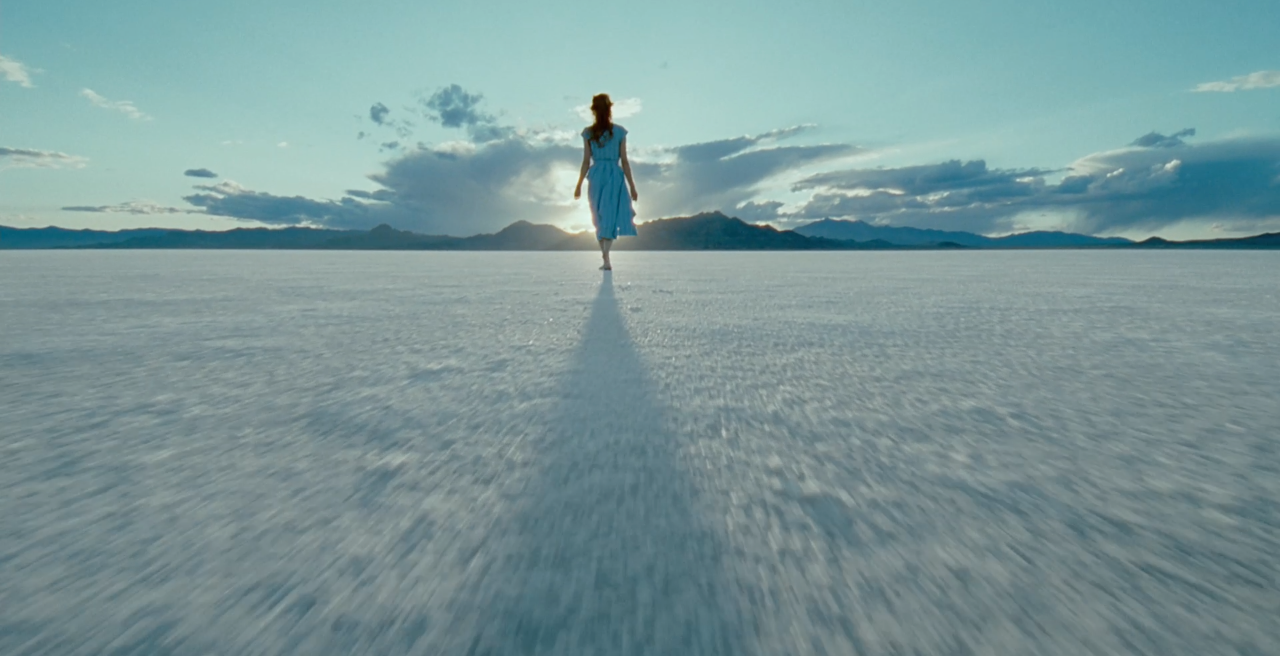
Recently I viewed Terence Malick’s The Tree of Life. It would be difficult for me to adequately describe the effect this movie had on me, the emotion and reflection evoked from me as a Christian parent who has lost a child.  This movie operates, more than any I have ever seen, on an intimate meaning-of-life level while the breadth of its vision enables us to direct our eyes away from ourselves and out into the vast cosmos. And in doing so, synchronicity with creation is summoned.

 Life’s deepest and most pressing questions, the universal “whys” behind all of life are posed using the simple narrative of the lives of the O’Brien family of five. Underlying the film’s basic premises of wonder and questioning is the ancient wisdom book of Job, for me the touchstone of the film.  I believe that each viewer’s prior contemplation of life’s deepest questions would certainly individualize the film’s impression on the viewer.  Without individuation, though, the movie is just an amalgam of exceptional pictures and music – a mood piece. I see The Tree of Life as being a spiritual movie and not a religious documentary and therefore I believe it will affect each viewer differently.

 Without going into too much of the narrative detail, detail which may deprive you of the movie’s impact, here is my initial impression of Terrence Malick’s The Tree of Life:

 Though I was ready for the usual exceptional visual imagery – Stanley Kubrick’s movies come to mind – that is part and parcel of Malick’s cinematic talent (see also his Days of Heaven) I was blown away by the large scope of the movie:  creation, the meaning of life, the existence of suffering, nature and grace and the Creator. 

One of the visual and emotional pleasures of this movie is that the images are offered to us in prolonged time frames – there are no frenetic montages matched to every blink of the eye. The absence of the modern movie restlessness allows us to contemplate the force of those images. We are then able to react with deeply held authentic feelings and at the same time not feel the need to immediately dispose of those feelings so as to be ready for the next emotional roller coaster ride of images. In this way the movie parallels life:  creation and real life takes place over time.  I believe the movie honors the fact that God takes time to accomplish His purposes – in the universe and in the saga of our lives. And, as the movie depicts, we do not understand God’s ways but, as I have seen, God, who is outside of time, uses time to reveal His Nature and His Grace to us.

 Malick rolls out before us a grand sweeping chromatic scroll of the universe. The visual imagery, often shown in natural lighting is enhanced with beautifully evocative musical selections including works by Bach, Mozart, Brahms, Smetana’s The Moldau River, Preisner’s Lacrimosa, Cassidy’s The Funeral March and Górecki’s Sorrowful Songs Symphony. Such music invokes us to come present to the spiritual within our souls.

 The awe-inspiring and overwhelming dynamic universe centers around and is grounded by a tree in the backyard of a family’s home in Waco Texas, circa 1950s. Using a minimalist script this family of five provides creation’s human narrative: father (emblematic of nature), mother (emblematic of grace) and their three young sons.  The father, the mother and Jack O’brien, the eldest son and main character give us our viewpoints. Later on in the movie Jack’s character is played as an adult by Sean Penn. The adult Jack becomes an architect who creates buildings derivative of his own hard-edged “nature”.

 Within this family life narrative we see birth, growth, maturation, anger, relational distance, death, sorrow, loss, envy, survival, strife and sin. Along the way the ever pressing questions of life are whispered to our ears using voiceovers.

 As I mentioned the display of the immensity and dynamism of the created universe provides the backdrop for these most important issues of life, questions that this family of five and certainly any sane person on earth ponders at some point in their life:  Where is God?; Does God see what is happening?; Does God care? Are we left on our own? What about evil? What about the loss of a child? Why is there suffering?

 After the death of her son Mrs. O’Brien asks, “He was in God’s hands the whole time, wasn’t he?” “If God is good and cares about us, why does he make us suffer?”  Throughout the movie we are engaged to ponder these hard questions and to once again look through a glass darkly for the answers.

 Watching this film I was also reminded of Dostoevsky’s The Brothers Karamazov and the philosophical lessons Smerdyakov learned from Ivan, regarding the impossibility of evil in a world without a God.

 In depicting some of the range of God’s creation we see vast spatial distances which hold myriad galaxies and we also see, looking through other end of the telescope, intricate microcosmic details.  We are reminded that the Creator God is ever beyond our finite comprehension. For this reason I am thankful that Malick chose to countenance theism and not a Woody Allen-type nihilism that turns its back on God and mocks Him every time.

 The movie begins by referencing the oldest piece of wisdom literature in the world, the book of Job. The stage is set with God responding to Job who had cursed the day he was born after being overwhelmed with trouble, suffering and loss.  From Job 38:4, 7:

 “Where were you when I laid the earth’s foundation … while the morning stars sang together and all the sons of God shouted for joy?”

 Throughout the movie there are other paraphrased Scripture references including Job 13:15, “I will be true to you whatever comes.”

 I believe I also heard a paraphrased reference to Paul’s letter to the Roman church during a scene where Jack is praying: “I know what I want to do but I can’t do it.”  Also, there is an oblique reference to Paul’s letter to the Corinthian church regarding the character of love:

  “There are two ways through life:  the way of nature and the way of grace. You have to choose which one you’ll follow. Grace doesn’t try to please itself. Accepts being slighted, forgotten, disliked. Accepts insults and injuries. Nature only wants to please itself. Get others to please it too. Likes to lord it over them. To have its own way. It finds reasons to be unhappy when all the world is shining around it. And love is smiling through all things. The nuns taught us that no one who loves the way of grace ever comes to a bad end.” Mrs. O’Brien, The Tree of Life

 Beyond the infusions of Scripture, I saw revealed man’s unconscious need to bump up against someone bigger and stronger than life itself. And though we are infinitesimally small compared to the enormous universe we matter to God.  In another wisdom book of the Bible, the Psalms, the shepherd boy David speaks in awe of God’s intimate knowledge of His creatures,

“When I consider your heavens, the work of your fingers, the moon and the stars, which you have set in place, what is man that you are mindful of him, the son of man that you care for him?”

  The film doesn’t seek to answer the questions of life but only poses them offering up grace as the consummate reconciler. As a believer in Jesus Christ I am transformed daily by God’s grace.  Just as important, I am forgiven and reconciled with God because Jesus Christ was nailed to another tree – the cross. His resurrection now provides me access to the Tree of Eternal Life. I know the One Who is the Answer.

A tree of life was planted in the garden long ago…

  “Now the Lord God had planted a garden in the east, in Eden; and there he put the man he had formed. And the Lord God made all kinds of trees grow out of the ground—trees that were pleasing to the eye and good for food. In the middle of the garden were the tree of life and the tree of the knowledge of good and evil.”…

 Now the serpent was more crafty than any of the wild animals the Lord God had made. He said to the woman, “Did God really say, ‘You must not eat from any tree in the garden’?”

The woman said to the serpent, “We may eat fruit from the trees in the garden, but God did say, ‘You must not eat fruit from the tree that is in the middle of the garden, and you must not touch it, or you will die.’”

 “You will not surely die,” the serpent said to the woman. “For God knows that when you eat of it your eyes will be opened, and you will be like God, knowing good and evil.”

When the woman saw that the fruit of the tree was good for food and pleasing to the eye, and also desirable for gaining wisdom, she took some and ate it. She also gave some to her husband, who was with her, and he ate it. Then the eyes of both of them were opened, and they realized they were naked; so they sewed fig leaves together and made coverings for themselves.

Then the man and his wife heard the sound of the Lord God as he was walking in the garden in the cool of the day, and they hid from the Lord God among the trees of the garden. But the Lord God called to the man, “Where are you?”


While we ask God “Where are You in all of this?”, God is asking us “Where are you?”

Occupy Thanksgiving

Words you will never see on a OWS or union protest placard:  “THANK YOU”.

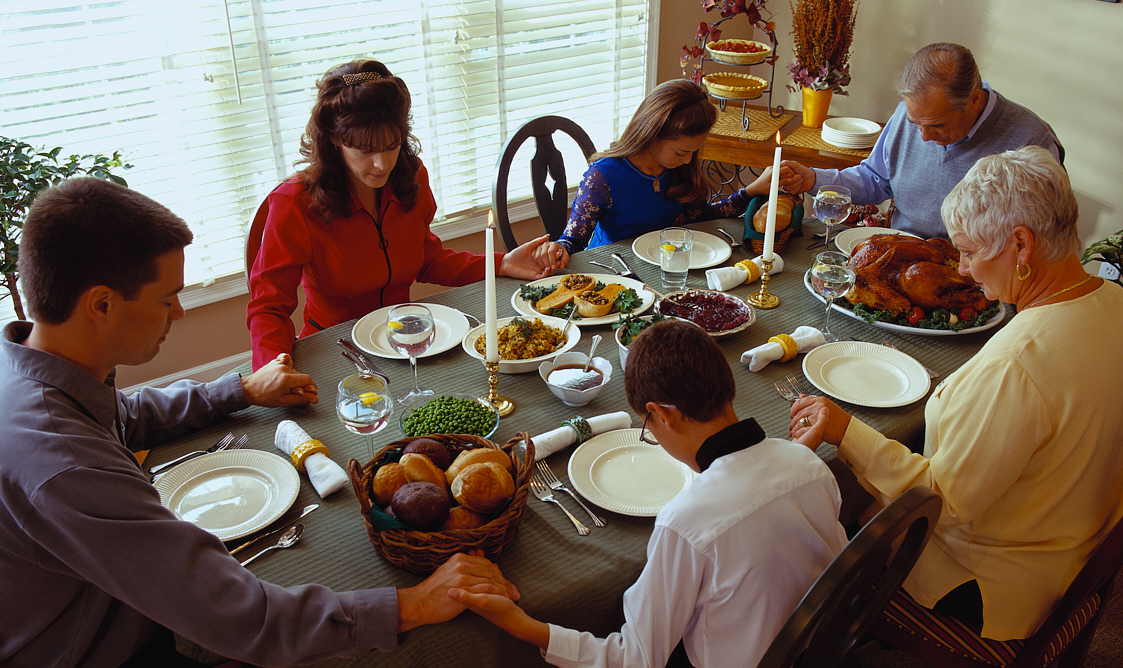
At the table this Thanksgiving there will be those who give thanks. There will also be those who pull up to the table demanding more. This latter group will echo Obama’s class warfare rhetoric griping about inequities and fairness.

There are those who do not give thanks. They will be waiting for their demands to be met. They will beg for “this, that or the other thing”, bemoaning their own situation as being intolerable.  For them there is never a thought of thanksgiving even when their most dire needs have been met.  I am reminded of the historical account of Jesus healing the Ten Lepers:

 “As he (Jesus) was going into a village, ten men who had leprosy met him. They stood at a distance and called out in a loud voice, “Jesus, Master, have pity on us!”

 When he saw them, he said, “Go, show yourselves to the priests.” And as they went, they were cleansed.

 One of them, when he saw he was healed, came back, praising God in a loud voice. He threw himself at Jesus’ feet and thanked him—and he was a Samaritan.

 Jesus asked, “Were not all ten cleansed? Where are the other nine? Has no one returned to give praise to God except this foreigner?” Then he said to him, “Rise and go; your faith has made you well.” (emphasis mine)

As this account reveals people will gladly seek benevolence from others but they will often do so out of the understanding that they deserve such gifts or benefits.  This is especially true if government has become the benefactor.  And because our government has deep pockets full of other people’s money these same people may certainly feel that they have “right”  to demand things from the government bureaucrats who have set themselves up as demi-gods of benevolence. These people believe that they “justly” deserve government beneficence because they feel that they are victims of society and also because the politicians they have put in office promised them “hope and change”; “hope and change” outcomes promised in terms of benefits on the barrel head in exchange for their vote.

Our U.S. Constitution provides for the protection of life, liberty and the pursuit of happiness. The 5th Amendment offers protections to our “life, liberty, or property,” noting we cannot be deprived of any of them without due process of law. Our Constitution does not guarantee the end results under that protection.

In effect, you are promised a fence around the rose garden but not the roses themselves. I learned from my Dutch grandfather that roses require sun, rain, good soil, fertilizing, protection from frost and rabbits and substantial pruning. It takes lots of time and energy, lots of individual attention to create an American Beauty rose. Yet, some people don’t want to work that hard or to be so dedicated.  So, they ask the government for the cut roses from someone else’s garden. They do this to make their lives just a little “nicer”, a little “richer”.  But, these cut roses quickly whither and dry up and the same people are back asking for more of them.

Dismissing the U.S. Constitution’s accumulated knowledge, wisdom and Judeo-Christian roots as outmoded and not rational for today’s society, social justice advocates demand equal outcomes.  They do so by demanding that others be deprived at any cost so that others will receive the benefits they so desire.  They do not care about another’s personal property, property such as an accumulated wealth. They care solely about their own accumulated gain. They see inequity not as a summit to climb but as a lot of work and effort that can be easily circumscribed with political action.

These advocates make their demands through willing politicians like Obama, Reid , Pelosi, Barney Frank (MA), Dick Durbin (IL), etc.  These politicians campaign with promises of changing the social landscape to favor their own version of utopian socialism. They usurp the black and white meaning of our U.S. Constitution by “intuitively” reading it so as to give the government the power to mandate social change via taxation, via the commerce clause and via the politician’s own self-interest of encapsulating power via re-election.

Speaking of self-interest, capitalism is a person who out of self-interest seeks to barter or sell a good or a service to another. The ‘other’, thinking he will benefit from the exchange, makes the trade-off. The exchange is made and both parties are happy, satisfying each their own self-interest.

Utopian socialism is a one-way exchange. It is taking from Peter to pay Paul. It is depriving Peter of what he has earned, grown, protected with his life, it is taking his savings and his wealth and then giving it to Paul for no other reason that Paul may need or want the same things. This is what is now being called “social justice” but it is not justice. It does not give Peter what is due him – the right to his property. It does not give Paul what is due him – the right to pursue happiness. This exchange is more accurately described as highway robbery.

These social justice advocates presume that the U.S. Constitution meant for them to have equal outcomes or perhaps even that the Constitution is outdated, archaic and without justice as they see it.  The social justice protestors cry out “Have pity on us, government, give us what we think we need and what we so badly want. You have the means. We gave you the place of authority.”

In 1993, during a lecture titled “The Meaning of “Justice””, Russell Kirk of the Heritage Foundation said:

“In this disordered age, when it seems as if the fountains of the great deep had been broken up, our urgent need is to restore a general understanding of the classical and Christian teaching about justice. Without just men and women, egoism and appetite bring down civilization.  Without strong administration of justice by the state, we all become so many Cains, every man’s hand against every other man’s. The humanitarian fancies himself zealous for the life impulse; in reality, he would surrender us to the death impulse.  The humanitarian’s visions issue from between the delusory gates of ivory; justice issues from between the gates of horn.”

 Today’s OWS protestors plead for pity from others using lawlessness.  They are being urged on to political violence by men who should know better. They also do not seek God for their daily bread. That would require humility on their part.

Just as ten lepers were healed and only one returned to give thanks, nine out of ten of us may likely think that we deserve such a “gift” and just walk away, pleased with ourselves having pled for pity and receiving something in return for our “effort”.  The exclusion of “Thank You” from the placards of men’s lives reveals the lifting up of “MY Rights” and the idolatrous nature behind most dissent and protest. The idea of justice, “to each his own”, is being  replaced with “feed me and then ask of me virtue.”

The Greatest Disparity in our society is between those who with contentment give thanks to God and their neighbor and those who, like leeches, demand ever more and more from government and their neighbor.

  It is time to Occupy Thanksgiving without asking for anything in return. And, let us give God what is due Him:

“Give thanks to the LORD, for he is good; his love endures forever.”   Psalm 107:1

Meet David Henry Hwang, Playwright

What’s Left? To Be Decided.

Thomas Sowell, in his excellent book A Conflict of Visions:  Ideological Origins of Political Struggles, discusses the two main opposing ways of viewing the political, economic and social landscape.  These views have come down through time to the present dichotomy of visions, namely the Left or Liberal (modern sense) vision and the Right or Conservative vision.  Sowell denotes the two visions: one being the unconstrained vision, the former, and the constrained vision, the latter.

I will try to make this a short post. Here is my brief take on The Unconstrained Vision:

The unconstrained vision relies heavily on surrogate decision makers, men or women of “superior” intelligence and virtue, to make our decisions for us.  The implication of this vision is that the common man does not know what is good for himself and for those around him.  But those with super-rational intelligence and sincerity do.  And because of our lack of “fair and just” decision making, we the people need an over-arching Decider – someone to rein in society.

I recently read what I would call a perfect description of this viewpoint’s totalitarian heavy-handedness, an oppressiveness which is often disguised as omniscient benevolence which hides its use of debilitating control methods:

“…Nurse Ratched is the Decider; under her unblinking gaze, the privileges, rewards, punishments, dosages, and furloughs for the patients are parceled out or denied. Time itself seems to run at whatever speed Nurse Ratched decrees, the clock slowing down to bring everything to a snow-globe standstill to conjure a sense of suspended animation, a zombie twilight.  Sparks of resistance are ruthlessly snuffed.  Waiting in the wings is the Shock Shop, where you go in as a person and are wheeled out as a vegetable after sufficient voltage to the brain…” (source listed below)

If you haven’t noticed by now, we are living in the “zombie twilight” of the Obama Presidency. Obama is our country’s Nurse Ratched.  He is a prime example of the unconstrained vision’s all-powerful omniscient Decider.  He is someone who talks down to people.  And enabled by the main stream media He has become the Chosen One, the chosen articulator of reason and we are his hapless patients waiting for him to put us in our place. Obama certainly believes that we the American people should follow his lead down the road to social justice and fairness. He believes that he knows what is best for us because he also believes that we the people are inept, confused and inferior in intelligence, unenlightened, lazy and worst of all, free to think for ourselves.

It certainly appears from Obama’s messages to the American people that his vision, historically filtered by the teachings of the radical Bill Ayers and “God damn America” Jeremiah Wright, has given him the understanding that he has seen the light while we the people walk in pre-enlightenment medieval darkness. It is with unbridled hubris that he stands above society, a mullah standing in an ivory tower minaret, lecturing us and calling us to pray to the god of one-world socialism and to the jihad of class warfare.

Those with this unconstrained vision see institutions as being at fault for man’s condition and not man himself.  They believe that man is a victim of inept policies and inadequately funded schools, food programs, housing programs, bailouts, etc.  And the free market, where Capitalism operates, is the impersonal culprit who steals fairness away from the victimized society. The unconstrained vision seeks to reign in the free market in order to control the outcomes of supply and demand using price controls, wage controls, unions, rent controls, quotas, the Dodd-Frank Act, ad infinitum.

Controlling the market place and controlling outcomes are what those with the unconstrained vision use to promote social justice and fairness. They want the results of economic, political and social activity to be fair in terms of their rationalistic values.  Yet, they will often, in fact, bypass statistical fact to promote fairness and equality.  In so doing they will often create a domino effect of economic havoc and inequality. This type of Stage One thinking is common for those with the unconstrained vision.  They want “fairness” implemented now at any cost regardless of the many negative repercussions that will be sure to ensue (e.g., Obamacare).

For the Left life is a zero sum game.  If someone gains then someone else must be losing out – there is only so much pie to go around. The Left must “right” this perceived wrong.

The legal system is another thing to be controlled by those with the unconstrained vision.  Instead of black and white laws known to everyone they seek to implement ad hoc reasoning per every legal situation.  Take for example a man who steals and is arrested.  He knows that he will be punished for his crime.  The law clearly states the crime and lists the options for punishment that the judge may impose.  The criminal knows that everyone will be treated the same way in the same situation within the letter of the law. Even though the criminal does not like the situation he still knows that the law applies to everyone and therefore deemed fair by everyone. In fact, he stole knowing the law and the consequences of his actions.

An activist judge with an unconstrained view, on the other hand, will have the same law before him but he will use his own ad hoc articulated reasoning to determine whether the man should be punished.  This judge may decide that the criminal acted badly because of his poor living conditions or because he was having a bad hair day or…and then decide to let him go. The judge would consider this a just outcome. The victim would not, of course, consider this fair.

While the unconstrained vision is all about controlling the political, economic or social landscape for specific outcomes the constrained vision is hands off or laissez-faire in its dealings, seeing man as having sufficient accumulated knowledge and being capable of making prudent trade-offs that would benefit himself and society in the process. Nothing is done in isolation. Benefits abound because for the Right life is not a zero sum game. Everyone can win.  Everyone can have their own pie.

The constrained vision sees man as he really is:  self-motivated. This realistic vision sees man as selfish and greedy but also willing to respect tradition and rules and certainly able to make prudent trade-offs based on knowledge gained from centuries of accumulated knowledge and wisdom, knowledge and wisdom not confined to an omnipotent Decider. One with a constrained vision doesn’t have all the answers. He or she must operate with humilty, tolerance and cooperation in order to support the freedom and liberty within which they seek to live.

 While there is much more to be said here I promised to keep this short. I highly recommend Thomas Sowell’s book, A Conflict of Visions:  Ideological Origins of Political Struggles, as a means to understand the vast differences of the two visions behind the political, economic and social struggles affecting our world today. 

I can see clearly now.

Quote source:  Vanity Fair article, Still Cuckoo After All These Years, by James Wolcott, December 2011 issue.

*****

“The highest manifestation of life consists in this: that a being governs its own actions. A thing which is always subject to the direction of another is somewhat of a dead thing.”  Thomas Aquinas

*****

**An aside into constrained thinking:

Twinkle Twinkle Little Occupiers

We are the ninety-nine percent.

We spent our wad and out it went.

We have school debt we thought we might pay.

But now we hope to protest it away.

We are the ninety-nine percent.

We occupy pointless dissent.

We scream and we yell at Wall St. greed,

While anxiously awaiting the next Twitter feed.

We are the ninety-nine percent,

Useful idiots, Mr. President.

Obama, Ayers and Bernardine Dohrn

Please provide us with your political porn.

We are the ninety-nine percent.

We want to smoke pot and pay the rent.

We are one percent happy and ninety-nine not,

We don’t “rightly” have what others have bought.

© Sally Paradise, 2011, All Rights Reserved

Disintegration Man