Luke Ripley, the focal character of A Father’s Story by Andre Dubus, begins his narration with what he calls “my life” – the life people in northeastern Massachusetts know about. He then goes on to detail his personal “real life.” And later, we hear about his life without peace after an incident involving his daughter. After all is said and done, I wonder what you would think about this self-reliant guy who is comfortable with his contradictions and who refuses to sacrifice his daughter. And, who is he really protecting when all is said and done?
Luke’s publicly recognized “my life” is that of a stable owner. He boards and rents out thirty horses and provides riding lessons. The “my life” that people would see if they looked in his front room window at night is a solitary “big-gutted grey-haired guy, drinking tea and smoking cigarettes, staring out at the dark woods across the road, listening to a grieving soprano.”
Luke’s “real life” – the one nobody talks about anymore, except Father Paul LeBoeuf”- is revealed to us before the accident in the first three-quarters of the story. What do we learn?
Luke Ripley is a divorced Catholic and an empty nester with three sons and a daughter off somewhere else. His solitary existence is lived out in routine. We learn of Luke’s morning habit of prayer while making his bed and then going to feed his horses. He talks to God because there’s nobody else around.
His morning habit also includes seeing his best friend – Father Paul Leboeuf, the priest at a local Catholic church. Most mornings Luke rides one of his horses over to church where Father Paul’s officiates. There Luke hears the Mass and receives the Eucharist. During the week the two men get together for a dinner meal. With Father LeBeoeuf present and a can of beer in hand Luke verbally grieves his despair over losing his wife and his family.
At one point Luke tell us about the importance of ritual, having already told us that he is basically lazy person:
Do not think of me as a spiritual man whose every thought during those twenty-five minutes is at one with the words of the mass. Each morning I try, each morning I fail, and I know that always I will be a creature who, looking at Father Paul and the altar, and uttering prayers, will be distracted by scrambled eggs, horses, the weather, and memories and daydreams that have nothing to do with the sacrament I am about to receive. I can receive, though: the Eucharist, and also, at Mass and at other times, moments and even minutes of contemplation. But I cannot achieve contemplation, as some can; and so, having to face and forgive my own failures, I have learned from them both the necessity and wonder of ritual. For ritual allows those who cannot will themselves out of the secular to perform the spiritual, as dancing allows the tongue-tied man a ceremony of love.
The life that Luke tells the reader about is one filled with a variety of contradictions: He is a devout Catholic but divorced; he attends Mass regularly but does not always listen; he enjoys talking to his priest but casually, preferably over a few beers, and what they discuss is mostly small talk; he is a self-described lazy man who dislikes waking up early but does so each morning to pray, not because he feels obligated to do so but because he knows he has the choice not to do so. Luke Ripley is a man who lives with contradictions and accepts them.
Luke wants us to know that he lived through difficult days after the divorce and what he believed ritual could have done for his marriage:
It is not hard to live through a day, if you can live through a moment. What creates despair is the imagination, which pretends there is a future, and insists on predicting millions of moments, thousands of days, and so drains you that you cannot live the moment at hand. That is what Father Paul told me in those first two years, on some bad nights when I believed I could not bear what I had to: the most painful loss was my children, then the loss of Gloria, whom I still loved despite or maybe because of our long periods of sadness that rendered us helpless, so neither of us could break out of it to give a hand to the other. Twelve years later I believe ritual would have healed us more quickly than the repetitious talks we had, perhaps even kept us healed. Marriages have lost that, and I wish I had known then what I what I know now, and we had performed certain acts together every day, no matter how we felt, and perhaps then we could have subordinated feeling to action, for surely that is the essence of love. I know this from my distractions during Mass, and during everything else I do, so that my actions and my feelings are seldom one. It does happen every day, but in proportion to everything else in the day, it is rare, like joy.
The loss of his wife Gloria and her leaving the church and the loss of his children figured large in Luke’s life. But the “third most painful loss, which became second and sometimes first as months passed, was the knowledge that I could never marry again, and so dared not even keep company with a woman.”
Luke lets Father Paul know that he is bitter about this. And, that when he was with Gloria he wasn’t happy with the “actual physical and spiritual plan of practicing rhythm: nights of striking the mattress with a fist…”
Early in the narration we learn Luke’s thoughts about his friend Father Paul, the Catholic church, and tithing – “I don’t feel right about giving money for buildings, places.”
We later hear his reflections on Jennifer, his only daughter, becoming a woman: “It is Jennifer’s womanhood that renders me awkward.”
He relates how her growing up affected the ‘ritual’ of memories he kept of her as his sheltered little girl at home. Jennifer became an on-her-own twenty-one-year-old girl with a purse full of adult symbols including a driver’s license. Luke says that he wants to know what she is up to and he doesn’t want to know what she is up to.
And then one night, Jennifer involves her father in a life-altering incident. Luke, to manage the situation, sticks with ritual as if nothing had happened. Ritual, we learned, might have saved his marriage to Gloria. So, Luke returns to default ritual to “save” the only other woman in his life. He wasn’t about to give her up, not even to Father Paul. Luke continues his rituals but does not confess to Father Paul.
The story ends with Luke telling the reader how he justifies himself to God, in Job-like fashion each morning, for what he did: the love a father has for a daughter is different than he has for a son and he loves his daughter more than truth.
Luke’s OK with a guy being hit by the car and but not a woman. Men, like Charles Bronson and Clint Eastwood, are supposed to take the bang ups and arrests and prison time.
In the end, however, Luke must answer to God for what he does to protect Jennifer. Self-serving ritual will not save him.
I’ve read this story twice. The first time, several years ago, I felt I knew the protagonist. He was like a former father-in-law: a divorced Catholic man in his fifties who wore Old Spice, hid Playboys, had daughters, and who thought himself manly in a Hemingwayesque sense. So, it was easy to have a sentimental attachment to Luke. I could empathize with his grief about losing a spouse and children and with his ritual-managed loneliness. And especially so as he acted instinctively to protect his daughter.
After a second reading this past week, I saw Luke differently – beneath the surface, so to speak. And, I had some questions:
When all is said and done by Luke, is he really protecting himself, his “real life”, his ritualized sources of comfort, when he protects his daughter from being taken away?
Did Luke really just act out of laziness (laziness being the opposite of love) in order to maintain ritual and continue life as he knew it?
Was Luke’s manhood tied to his comfort from women?
Wasn’t it cruel, unjust, and devastating to the other family and father involved for Jennifer and Luke to leave the scene of the crime and to let things just go on without answers?
As a parent, what would I do in this situation?
A Father’s Story was first published in the Spring 1983 issue of Black Warrior Review.
I’ve been reading a lot of realist fiction lately but I can’t ignore the grim reality of the hatred directed at Americans by the Left. This hatred is manifested with tactics no different than the “irregular warfare” used by the Chinese Communist Party (CCP) to impose its will:
Elsa Kania, an adjunct fellow with the Technology and National Security Program at the Center for a New American Security writes in a 2016 China Brief article about The PLA’s Latest Strategic Thinking on the Three Warfares. She says that “the application of the three warfares is intended to control the prevailing discourse and influence perceptions in a way that advances China’s interests, while compromising the capability of opponents to respond.”
She goes on to describe the three non-kinetic warfares and their functions:
2015 Science of Military Strategy:
The [2015 National Defense University (NDU) SMS] provides an overview of public opinion warfare, psychological warfare, and legal warfare and guidance regarding their implementation. According to the text, public opinion warfare involves using public opinion as a weapon by propagandizing through various forms of media in order to weaken the adversary’s “will to fight” (战斗意志), while ensuring strength of will and unity among civilian and military views on one’s own side. Psychological warfare seeks to undermine an adversary’s combat power, resolve, and decision-making, while exacerbating internal disputes to cause the enemy to divide into factions (阵营). Legal warfare envisions use of all aspects of the law, including national law, international law, and the laws of war, in order to secure seizing “legal principle superiority” (法理优势) and delegitimize an adversary. Each of the three warfares operates in the perceptual domain (认知领域) and relies upon information for its efficacy. (Emphasis mine.)
These tactics look very familiar. “Irregular warfare”, employed with aggression and deceit (“Force and fraud are the cardinal virtues of war.” –Hobbes), are at work in the Left’s attack on Americans. We are all well aware of one assault close to home.
During COVID (the spread of the China virus) we were subjected to the coordinated force of propaganda to influence and control public opinion. There was propagandizing through various forms of media in order to weaken the adversary’s “will to fight” against what we were told to believe.
There was also the psychological balkanizing that divided the nation into those who “follow the science” and “science deniers” and the “vaxxed” and “anti-vax”.
And there was the legal warfare of COVID mandates that put people in jail or quarantines and closed churches and businesses and put people out of work if not vaxxed. All done to delegitimize an adversary to what we were told to obey.
We were subjected to coordinated fraud in the messaging about the (flu-like) virus’ transmission and effects and the effectiveness of the COVID vaccine and the efficacy of Hydroxychloroquine and Ivermectin. Multiple doctors and epidemiologists who spoke out against the narrative were silenced in the media and elsewhere. Force was used to stifle criticism and to co-opt and neutralize sources of potential opposition to “the science” and the purveyors of “the science”, the Left’s medical-pharmaceutical industrial complex (Anthony Fauci, Francis Collins, CDC, NIH, big pharma et al.).
Each of the Left’s three warfares employed during COVID operated in the “perceptual domain and relied upon [the control of] information for its effectiveness.”
We continue to be subjected to the Left’s three-fold attack with the “force and fraud” climate crisis narrative. Public opinion is being swayed by climate crisis propaganda: “We need to act now to avoid catastrophe.” “Irregular warfare” is being used against fossil fuels, LNG, agriculture, and anyone who opposes the Left’s narrative.
The fact that nuclear power, a carbon-free and a safe energy source that can produce huge amounts of reliable electricity, is not mentioned by the Left should be an indicator that climate is not an issue – controlling you is. (There is no climate crisis. See video below.)
We continue to be subjected to the Left’s “irregular warfare” with its fraudulent narrative of Trump as a threat to “Democracy”. The apoplectic Left, desiring to influence and control public opinion, wants to put the fear of Trump into their viewers and readers. The want viewers and readers to hate Trump.
The psychological warfare element of this attack includes exacerbating internal disputes to cause the enemy – the Right – to divide into factions. Hence, the Left will showcase never -Trumpers like David French to speak against Trump.
The third element of the Left’s threefold “irregular warfare” is used to “delegitimize an adversary.” This is the reason for the lawfare being waged against Donald Trump. The Left is desperate. They have tried unsuccessfully to keep him off the ballot. They have sought to disqualify him. They are seeking to bankrupt him. The Left will use any means necessary to take down Trump through “legal warfare.”
“It’s becoming increasingly difficult to deny that we have a legal system now that is being heavily distorted by politics and you cannot look at all of these cases and see blind justice, you see the opposite,” Turley told Fox Business host Larry Kudlow, a former Trump administration official. “You see a justice that is being weaponized, and in many ways the Democrats fulfill the narrative of President Trump. He is now right. No matter what they thought about it at the beginning, they proved him to be right with this pile-on from Florida to Georgia, to Washington, D.C., to New York and most of the public gets it.”
The Left’s MSNBC and CNN and the NYT and WaPo and other media outlets of their ilk are so afraid that Trump will win in November that they are pulling out all the stops. They accuse Trump of promoting a lie (the stolen 2020 election) and calling illegals “animals” (Trump was talking about the murderer of Laken Riley). They will 24/7 you with “Trump is a threat to Democracy and our way of life. We will all become victims if Trump is elected (and blah blah blah).”
We continue to be subjected to the Left’s public opinion influence and psychological warfare via its constant fear-mongering. The Left conjures up end-of-the-world narratives, whether of COVID, climate, Trump or of people who don’t buy what they are selling.
Those who are taken in by Left don’t understand that they are targets of two elements of “irregular warfare”: influence of public opinion and psychological warfare. One reason they buy in is that the legal warfare component is directed at Trump and anyone connected with him. Another reason may be how they feel about the Left’s talking points: “I love the way you lie.”
A key component of the Left’s warfare against Americans is balkanization. The Left seeks to divide us into warring factions. There are those in the media who delight in dividing us rather than uniting us. They live for this. It is how they gain their power, their influence and their money. It is how they destroy America. As Jesus knew to be true, “if a kingdom is divided in two it can’t last.”
And so it is that the above media outlets present authors who foster division by writing that white Americans and Christian Nationalists (whatever they are) are a dangerous threat to “Democracy!”
The Left, to “delegitimize an adversary”, wants to put the fear of whites and of Christians who love their country into their viewers and readers – as if hating them along with Trump was a necessary condition for protecting “Democracy!”
Progressive Wallis was on MSNBC promoting his platitudes and inviting all who can be persuaded to reject and help dismantle a false gospel that propagates white supremacy and autocracy . . . and Christian Nationalism (whatever that is)
One Amazon commenter on White Rural Rage wrote something that applies to both books: “This book helps to explain the startling divide in America by showing just how profoundly uninterested such people are in understanding or accepting the views of anyone who does not accord with their own orthodoxy and must therefore be dismissed as anti-democratic.”
Waldman and Schaller portray rural people as passive, unthinking agents in the democratic process. Though “rage” features prominently in their title, they use the word fewer than ten times in the text, and only to belabor their claim that Republican leaders intentionally manufactured rural voters’ anger, as though these Americans would not be concerned about their situations without external manipulation.
“In an interview on MSNBC’s Morning Joe, [author Tom] Schaller gave this unvarnished assessment of the rage he sees overflowing in the heartland. Rural whites, he said, are “the most racist, xenophobic, anti-immigrant, anti-gay geo-demographic group in the country.” He called them, “the most conspiracist group,” “anti-democratic,” “white nationalist and white Christian nationalists.” On top of that, rural whites are also “most likely to excuse or justify violence as an acceptable alternative to peaceful public discourse . . .
“But the thing about rage — I’ve never found it.
“The problem with this “rage” thesis is much larger than the fact that my research, and that of others, is being misinterpreted and misunderstood. What the authors are getting wrong about rural America is exactly what many Democrats have been getting wrong for decades — and appear to be doing so again in this critical presidential election year.”
The following is my response to the red meat those authors threw to the ravenous Left:
When spoken of from the High Chairs of Hubris and Condescension, those of us who love God and our family and our country and not what proceeds from the mouths of the elites are not just called “bitter clingers” and “deplorable”. We are called “extremists.” We are called every name in the Left’s style book. And therefore, more force and fraud are needed to be applied. Hence the shaming books of the fellow traveler intelligentsia.
One would think that loving God, loving your family and loving your country would be all good. But the Left hates all that. Leftist elites love themselves and the sound of their condescension.
How far will the Left go? Students of history know. History tells us that the Left will use any means necessary, including injustice, famine, show trials, gulags, and murder to get their way. How far did the Left go this week?
JUST IN: 'Praying grandma' Rebecca Lavrenz has reportedly been found guilty by a DC jury after she briefly entered the Capitol on J6.
Glad to see our 'justice system' going after some "hard-hitting criminals."
The Biden regime just convicted a 71-year-old great-grandmother on federal misdemeanor charges for entering the Capitol more than three years ago for ten minutes.
“Without God, there’s no justice.” -71-year-old great-grandmother Rebecca Lavrenz who faces four federal misdemeanor charges for entering the Capitol more than three years ago during the Fedsurrection. She spent about 10 minutes inside.
Wearing a red scarf and a white hat to the rally, which she said she attended by herself, Lavrenz encountered a group of people praying outside the Capitol, and she joined them for about an hour and a half.
“It was a patriotic, joyful time to be around so many people who love their country,” she said. “I felt a strong presence of the spirt of God fall over me, and I started crying.”
At one point, she took the microphone to speak about a document that became known as the 1620 Mayflower Compact. Included in the agreement that pilgrims had signed before they set foot on American soil was that the country would be dedicated to the glory of God and advancement of the Christian faith.
“My mission in life is to know God and make his ways known and restore the country back to its godly foundation,” Lavrenz said. “Without God, there’s no justice.”
This post is meant to alert you to the Left’s three-pronged warfare directed at Americans. There is more that could be said, but there is enough here, I believe, for the reader to understand the hatred directed at us.
I haven’t even mentioned the Biden inflation and the cost of living or how hard it will be for our children to buy a house and property because of the human-hating financial policies of the Left.
I haven’t even mentioned that the Biden regime’s human-hating open border policy will drive wages down for minorities and put Americans out of work. It is a policy that allows in deadly fentanyl and deadly gangs and deadly terrorists and deadly diseases to kill people. You won’t hear or see any of this from Rachel Maddow. All you’ll hear from her is “orange man bad.”
The Left hates us. And so does the Satan.
~~~~~
I see the Left – its hatred and evil schemes – depicted in The Girl with the Dragon Tattoo trilogy. Having control and imposing its will are essential to the Left, as in the story. Violence, mental and physical, are their means.
In the novels Dr. Peter Teleborian is the psychiatrist at St. Stefan’s Psychiatric Clinic for Children. Teleborian is a sadist who abuses his patients.
The child Lisbeth Salander was committed to St. Stefan’s after she tried to kill her evil father for beating and raping her mother. While in the clinic Teleborian kept Lisbeth strapped down each night for over a year and tried to force feed her psychiatric drugs. Salander later described him as the most evil man she ever met.
Lisbeth is later released from the clinic and put under guardianship. Her guardian suffers a heart attack and she is given another legal guardian – Nils Bjurman.
At their second meeting Bjurman informs Salander that she has to give over access to all of her bank accounts. Her first guardian Palmgren allowed her to control her own finances but Bjurman wants to control every aspect of her life.
Bjurman, to prove who’s in charge, molests her and forces her to pleasure him sexually. Because of her previous problems with the police, Lisbeth decides to take matters into her own hands. At their next meeting, she comes prepared with a hidden video camera. But, to her horror and dismay, she realizes she has misjudged Bjurman; he attacks and brutally rapes her.
Then The Section, an ultra-secret division of the government that reports to no one, tries to have Lisbeth recommitted to Dr. Teleborian’s clinic. This was to be done to protect the members of The Section. Dr. Teleborian is assigned by The Section to write a false report about Lisbeth Salander.
The Section harbored and protected the evil Zalachenko, ex-Russian spy who defected to Sweden. Alexander Zalachenko is Lisbeth’s abusive father.
We later learn that Dr. Teleborian kept thousands of child porn photos on his laptop. He is arrested during Lisbeth’s trial.
Looking at the nature of the people on the Left and their way of doing things with the caveat “for your own good”, it is easy for me to see similarities to the evil characters above.
~~~~~
They hate you. They hate your children. “Irregular warfare” is being waged in our public schools:
Public school “experts” are trashing traditional education in virtue and citizenship in favor of victimhood and dependency. The inheritance of Western Civilization has been officially discarded by irresponsible intellectuals, determined to advance their “progressive” ideologies. These ideologies, pushing kids to discover “their own truths,” are generally varieties of “subjectivism” or “relativism.” Critical theory deliberately undercuts our natural commonsense, the shared foundation of a free society, by teaching children that their homes, communities, and even their own physiology are their worst enemies, the foes of their real identities. Ideologues do this by “reducing” our natural experience of Truth, Goodness, and Beauty to “no more than” materialistic “animal instincts” (Modernism), that then give rise to oppressive “social constructs” (Postmodernism), and, presto, an epidemic of anxiety.
They hate you. The Open Border Means Open Season on You – thanks to gov’t paid NGOs like Catholic Charities and others; thanks to Mayorkas and Democrats in need of votes who ignore what is happening.
Illegals are coming, not to assimilate but to plunder.
REPORT: Chilean gangs are taking advantage of the U.S. Visa Waiver Program and are coming to the U.S. just to burglarize luxury homes.
The U.S. Visa Waiver Program allows tourists to enter America for 90 days or less.
🚨🚨BREAKING: Colombian Gang Leader Suspected of Murder and Drug Trafficking Arrested Near San Antonio.
Aderbis Segundo Pirela Pirela, a 29 yea-old Venezuelan native is allegedly second in command for the gang Satanas was most wanted in Colombia for a slew of horrific crimes,… pic.twitter.com/rcBTAKeBwP
If you allow people from all over the world to come here by the millions in violation of our laws, you make no effort to screen them for infectious diseases and you push them into our largest population centers, you are going to see outbreaks of disease. People are going to die. The health of all Americans is going to be negatively impacted.
That’s exactly what is happening now. U.S. cases of tuberculosis, a deadly infectious disease have soared to their highest level in a decade, according to the Centers for Disease Control and Prevention (CDC). After 27 years of declining tuberculosis rates in the United States, cases of the disease started to climb again in 2020. They have continued to rise every year since.
2024. What does it mean when Americans vote for the destruction of their country? For the destruction of their own children through abortion?
If you consume what is fed from the above media outlets you may be living in a bubble the Left has created for you. You won’t see the destruction of civil society and justice within our land. You will learn, instead, to blame Trump and those on the right for problems.
The following is from a statement from Archbishop Carlo Maria Viganò, former Apostolic Nuncio to the United States, “on the scandalous proclamation of March 31 as ‘Transgender visibility day’ by ‘president’ Joe Biden.”
All humanity is awakening from a slumber that has lasted far too long:
-the lives of the innocent are threatened by abortion, euthanasia, manipulation, and abuse;
-the health of citizens is deliberately compromised by experimental serums revealed to be a biological weapon of population decimation;
-the total moral corruption of the top echelons of civil authority, enslaved to criminal lobbies in a global coup, is now evident;
-the increasingly arrogant display of Satan worship by the media and the world of culture and entertainment show us a world awash in execrable perversions that cry out to Heaven for vengeance;
-the mad provocation of a world conflict claims lives in order to bury the horrendous sexual and financial scandals of a power that is now the enemy of its citizens.
They hate you. The Left’s medical-pharmaceutical industry’s reign of terror:
Multiple laboratory studies now confirm that Pfizer’s COVID-19 mRNA vaccine is heavily contaminated with plasmid DNA. The latest analysis finds that one dose of the Pfizer vaccine typically contains over 200 billion DNA fragments. These DNA fragments can incorporate into the DNA of the vaccinated individual and interfere with the expression of oncogenes and tumor suppression genes. This DNA contamination has cancer implications for millions of people who were manipulated to take part in this biowarfare experiment. (Emphasis mine.)
Small chains and mom-and-pop businesses simply can’t compete. Larger chains raised prices but have also been forced to reduce employees and labor costs through automation, but the layoffs are just getting started.
If your situational awareness is well-tuned, you can put together a political weather report from the swirl of events that otherwise seem to confound the degenerate simps who pretend to report the news. Events are tending in the direction of self-reinforcing, ramifying chaos, and the people running the show are obviously insane as they do everything possible to hurry chaos along.
Politics, law, and culture collide as Newsweek Senior Editor-at-Large Josh Hammer charts a path forward for American conservatism and exposes the woke Left. A voice for the New Right, Hammer delivers blistering commentary and weekly interviews with today’s top conservative thinkers.
Easter morning me and father are down in the basement brushing shoes. We put polish on them last night with a rag father keeps with his shoe shine kit on a shelf over the washing machine. I used the rag but brown polish came through on my fingers. We polish our shoes every Sunday but I know this Sunday is Easter because we went to church on Friday and we died eggs and my mother set the dining room table and there’s a lily in the front room and ham in the refrigerator and yellow jello with something in it and plastic eggs in a basket on the kitchen table and the sun shines like this only on Easter. I woke up cold this morning. I put on clean pajamas and put the wet ones in the clothes basket. Then I went into the kitchen and ate cereal. Father woke up. He got the Sunday paper off the front porch and came into the kitchen to make coffee. He waits for me to finish eating and scratches his belly and yawns. He tells me to let mum sleep in. She works too he says. After I’m done with my cereal we go downstairs to polish our shoes. We go back upstairs and father sits at the kitchen table drinks coffee. He opens the Sunday paper and gives me the funnies. We wait for mum and my brother to wake up. They wake up. My mother has coffee and my brother eats cereal. My mother says something to father in his ear. He tells us kids to go into the front room so he and mum can talk. We go. I share the funnies with my brother. We sit there for an hour. We look out the picture window and see father walking around the bushes with a basket of plastic eggs. We know what he is doing. We run to the back door. I hold the door handle and my brother bites his nails. Father comes to the door and says there are fifteen eggs hiding in our yard. See what you can find he says. We run to the front yard and look through the bushes and behind trees and in the mail box. The grass is wet and sparkly we find eggs but there are more we run to the back yard and find more. We pull up the bottoms of our PJ tops and hold the eggs there. We count them I have eight and my brother has seven we go back inside and see what’s inside Jelly beans gum tootsie rolls mother says to have only a couple she doesn’t want us bouncing around in church she says. Father is in the kitchen peeling sweet potatoes. Mother is washing goblets. I don’t know why she calls them goblets. They are not scarry to me. Me and my brother get ready for church. The clothes feel stiff but I wear them to look nice mother says. Father combs my hair and my brother’s hair. We wait in the front room and read the funnies. Finally it is time to go. We get in the car and drive to our church. I’ve never seen so many people. Mother wants to get a seat before they are gone we sit next to my friend Jeremy’s parents I smell flowers. People are talking a lot. Mothers are telling kids to be quiet. My friend Jeremy is sitting on the other side of his parents. Hes kicking the pew in front of him. The lady in front of him with a flower hat turns around looks angry but she smiles when Jeremys mom puts a hand on Jeremys knee and makes him stop. My best friend Billy isn’t here his family doesn’t go to church. We have to stand up and sit down a lot and listen a lot the seat is hard and I can’t sit still and I can’t listen a big woman is singing a high song that hurts my ears. I want to draw. I take the pencil in front of me and a card I draw Easter eggs and the face of the big woman I show it to Jeremy and he laughs. The man up front walks back and forth and then he stops and says o death, where is thy sting o grave, where is thy victory and I think about bee stings and moms gravy. Finally he stops and we stand up again and my pencil and card fall under the seat. A man behind me picks them up and gives them to me and smiles. Everyone smiles today even the woman at the organ who made a big burp sound when the music fell. Father and mother talk and talk and talk and finally we get back into the car and go home. On the counter is a strawburry pie. Mother puts on her apron and puts the ham in the oven. Father mashes the sweet potatoes. I tell them don’t forget to put marshmallows on the sweet potatoes. Mother takes a bag off the shelf and gives me and my brother a marshmallow. She tells us to go watch TV while they make dinner. We go downstairs. I turn on the TV and only Charlie Chan is on. Finally mother calls us and we go upstairs to eat we have to wash our hands before we sit down. Mother lights two candles on our table before the food comes father prays he thanks God for the food and Jesus and empty tomb abundant life heaven and earth sea and dry land family and friends those present and not present wonders great and small and mother says amen. Finally mother brings out the ham and the sweet potatoes and something green. Everything is hot she says. When the rolls come out me and my brother grab one. My mother asks me if I washed my hands. I look at them and my fingers are brown. They smell like polish it’s shoe polish soap and water and some scrubbing will take it off father says I tell them I better eat first because scrubbing is a lot of work. The end of what we did special on Easter Mrs Meyers your student Micheal M Skokram.
One of the greatest disciples of the twentieth century was neither a priest, nor a religious, nor a married person. She was a celibate, single woman who spent the last 13 years of her life battling lupus while writing some of the best fiction the world has ever known—all while living on a 544-acre dairy farm in Milledgeville, Ga. with her mother, her books, and forty-four peacocks. Her name was Flannery O’Connor.
Writing that may be dismissed as jarring, acerbic, and too controversial by people who are loathe to sit in the same room with someone who won’t validate their narrative – whether Progressive or Christian – are the short stories of Flannery O’Connor (1925–1964). She didn’t compile fluff for people to sit with the comfortable.
“She believed that story-telling ought to help modern men and women see “things as they are,” cutting through the fog of a culture that tells us that everything can be just the way we’d like it to be.” -George Weigel, Flannery O’Connor and Catholic realism
O’Connor’s stories are typically set in the rural American South. Her sardonic Southern Gothic style employed the grotesque, the transgressive, and wild, comical and deeply-flawed characters who are often alienated from God and often in violent situations. Because of these traits, her stories may be dismissed by some readers – they do not sense a clear-cut Gospel message in her work or a comforting message.
Faith, for O’Connor, was not something easy or comforting. It involved a struggle with doubt within the seeming randomness and cruelty of life. She understood that struggle as maturing her faith.
I think there is no suffering greater than what is caused by the doubts of those who want to believe. I know what torment this is, but I can only see it, in myself anyway, as the process by which faith is deepened. A faith that just accepts is a child’s faith and all right for children, but eventually you have to grow religiously as every other way, though some never do.
What people don’t realize is how much religion costs. They think faith is a big electric blanket, when of course it is the cross. It is much harder to believe than not to believe. If you feel you can’t believe, you must at least do this: keep an open mind. Keep it open toward faith, keep wanting it, keep asking for it, and leave the rest to God.
O’Connor wrote about the world as she found it in the Protestant South and etched her Catholic worldview into her stories. She professed: “I see from the standpoint of Christian orthodoxy. This means that for me the meaning of life is centered in our redemption by Christ and what I see in the world I see in relation to that.”
Her signature short story, A Good Man is Hard to Find, embodies this. You might recognize yourself and what’s at work in your life upon reading it.
The title of the story is the title of a well-known song of O’Connor’s day, sung by Bessie Smith. But the story doesn’t reference a woman’s hard time with men as the song does. The story would have us look at what it means to be a “good man”. Everyone has their own definition of what it means to be good, as do two characters in the story – the grandmother and the Misfit.
The grandmother values her Southern upbringing and mannerisms. For a road trip, the grandmother is all fancied up, white gloves and all, as is the habit of Southern women. The grandmother thinks goodness is being polite, nice, respectful, and agreeing with her views on things. This is brought out in her conversation with Red Sam, a character as fatuous as the grandmother. He delivers the title’s line that comes across as a cliché dismissive of the real world’s Misfit-type violence.
The escaped-convict Misfit, also steeped in Southern tradition, views the world through an amoral nihilist filter. He is unconcerned with traditional morality or even the value of other people’s lives. He shows up in a big black hearse-like vehicle. By a turn of events, generated by the manipulative grandmother and her cat, they meet. The grandmother, “good” in a decent person sense of good does not appreciate what she is up against. Will she finally grasp what makes a “good man?”
The family members, who shout and argue until someone gives in and behave in petty selfish ways without much reflection or moral thought find themselves in a less-than-good situation. What happens to them?
What does the Misfit say about punishment, the law, and about Jesus and the resurrection?
And what does the story show about the activity of and need for grace and the state of the human condition that refuses it?
I have purposefully not given you a summary of A Good Man is Hard to Find. Reading it first and then listening to podcasts would be the best introduction to her work.
Why do I read Flannery O’Connor?
Her unsentimental gimlet-eyed Kafkaesque realism speaks to me as a writer in our distorted and moronic times.
“Writers who see by the light of their Christian faith will have, in these times, the sharpest eye for the grotesque, for the perverse, and for the unacceptable. To the hard of hearing you shout, and for the almost-blind you draw large and startling figures.” ― Flannery O’Connor
Flannery O’Connor. Photo: Joe McTyre
Her stories move mystical concepts down from a theological mountain into the hands of her characters – the misfits, freaks, and outsiders who reckon with them or don’t. Her ‘parables’ hit home more than all the logical sermons I’ve heard on grace, salvation, goodness, punishment, forgiveness, and moral decay.
And, like Jesus, she’s “thrown everything off balance.”
(Cormac McCarthy (1933 – 2023) had a several influences including O’Connor. Georgia-born O’Connor wrote in Southern Gothic mode and Tennessee-born McCarthy in Appalachian Gothic mode. Both, with grim-humor, created grotesque characters and nihilistic settings – O’Conner to reveal the possibility of divine grace and lapsed Catholic McCarthy to wonder about the meaning of life. Both writers use violence in their stories. McCarthy to the extreme (Anton Chigurh, No Country for Old Men.)
In these grotesque works, we find that the writer has made alive some experience which we are not accustomed to observe every day, or which the ordinary man may never experience in his ordinary life. We find that connections which we would expect in the customary kind of realism have been ignored, that there are strange skips and gaps which anyone trying to describe manners and customs would certainly not have left. Yet the characters have an inner coherence, if not always a coherence to their social framework. Their fictional qualities lean away from typical social patterns, toward mystery and the unexpected. It is this kind of realism that I want to consider.
All novelists are fundamentally seekers and describers of the real, but the realism of each novelist will depend on his view of the ultimate reaches of reality.
“Be All You Can Be” is not just the Army’s recruiting slogan. It is the appeal of self-help books, magazines, videos, seminars, and podcasts. It is the allure of prosperity gospel and the appeal of bucket lists. It is also the speculative assurance of transhumanism, the technological heir of evolutionary progressivism. There are plenty of gurus, gimmicks, and gizmos ready to give you Your Best Life Now.
We can live at full potential by taking seven steps. We can name-it-and-claim-it wealth, health, and total victory over circumstances. We can choose to have incredible experiences and to do incredible things before we die. And we can, one day, live with boosted cognition and become a radically enhanced superhuman. Why, we can conquer the whole universe by human will and consciousness and with a little help from my “Be All You Can Be” friends.
Certainly, such offerings have purchase. People want to be healthy, financially secure and control outcomes. And people want to “feel” alive.
Just as certain, “Be All You Can Be” taps into a fear of missing out on Your Best Life Now before you kick the bucket. “You Only Live Once” is the high-octane fuel in the motivator engine – get busy and live full throttle. The FOMO messaging comes from all corners, including from the expected self-help speakers both secular and Christian and from celebrities.
“Go for it now. The future is promised to no one.”
Wayne Dyer, self-help author and a motivational speaker.
“A life of adventure is ours for the taking, whether we’re seven or seventy. Life for the most part is what me make it. We have been given a responsibility to live it fully, joyfully, completely, and richly, in whatever span of time God grants us on this earth.
Luci Swindoll, author and speaker with Women of Faith
Dream as if you’ll live forever. Live as if you’ll die today.
James Dean
The possibility of “A New You” born out of the intensity of experiences and the dramatic are oft portrayed as producing “real” life, while the prosaic life of simple acts of truth, goodness, and beauty are deemed ho-hum and therefore not worth exploring and exploiting. (The dramatic life vs. the prosaic life is found in a close reading of Tolstoy’s Anna Karenina.)
The self-improvement racket has spawned cottage industries such as “biblical manhood” and “biblical womanhood”. Such topics, that get at our core identities and callings, are prone to scams, as Karen Swallow Prior writes in her Opinion: The ‘Biblical Manhood’ Industry Is A Scam:
In my recent book, “The Evangelical Imagination,” I devote an entire chapter to the notion of “improvement,” showing how this early modern concept contributed to the rise of the self-help movement in the 19th century and has spilled over into Christian thinking and practice today.
Many of the publications centered on “biblical manhood” and “biblical womanhood” are just a continuation of this Victorian (and secular) movement.
As you reflect on how to be within the time you have, do you envision having a multiplicity and intensity of experiences – 101 Incredible Things to Do Before You Die? Do you hear yourself speaking the “it” you want and believing you will receive “it” and “it” will come to pass? Do you see yourself embracing a you-can-have-it-all “Be All You Can Be” life? Is the bucket list of your now filled to the brim with FOMO activity?
Does submission to digital technology effect how to be within the time you have?
An interesting concept, noted in the context of the digital revolution suddenly increasing “the rate and scale of change in almost everyone’s lives,” is presented by the Lionel Trilling Professor in the Humanities Edward Mendelson in his essay “In the Depths of the Digital Age”:
In Thomas Pynchon’s Gravity’s Rainbow (1973), an engineer named Kurt Mondaugen enunciates a law of human existence: “Personal density … is directly proportional to temporal bandwidth.” The narrator explains:
“Temporal bandwidth” is the width of your present, your now…. The more you dwell in the past and future, the thicker your bandwidth, the more solid your persona. But the narrower your [bandwidth] sense of Now, the more tenuous you are.
The genius of Mondaugen’s Law is its understanding that the unmeasurable moral aspects of life are as subject to necessity as are the measurable physical ones; that unmeasurable necessity, in Wittgenstein’s phrase about ethics, is “a condition of the world, like logic.” You cannot reduce your engagement with the past and future without diminishing yourself, without becoming “more tenuous.”
As I read this: if you’re just constantly in the moment rushing from one thing to the next without the context of the past and future, your personal density becomes diffuse and unsupportable.
. . . benefit of reflecting on the past is awareness of the ways that actions in one moment reverberate into the future. You see that some decisions that seemed trivial when they were made proved immensely important, while others which seemed world-transforming quickly sank into insignificance. The “tenuous” self, sensitive only to the needs of This Instant, always believes – often incorrectly – that the present is infinitely consequential.
It seems to me, and your own experience will bear this out, that This Instant is the impetus of Your Best Life Now and that self-help schemes produce the thinness and self-deception of a tenuous now.
(The wicked thrive in the tenuous now. The wicked want nothing to do with the past or the future. The narcissistic now is all the wicked care about.)
Is there a better way to address our frailty, finitude, imperfection, and self-esteem and produce a thicker bandwidth?
As a follower of Jesus, I look to him for affirmation and not from the world’s gurus, gimmicks, and gizmos.
As a follower of Jesus, I’ve seen that for the world, the drive to succeed is paramount and can be all-consuming. But I’ve come to understand that I can’t have it all and be it all in my mortal life. I am content with that. I have no fear of missing out. The Lord knows the desires of my heart and what I need. (See Psalm 37 & Matt. 6:32)
As a follower of Jesus, I’ve come to understand that the density of my “Temporal bandwidth” does not consist in an abundance of possessions (Luke 12:15) nor in the abundance of experiences (Luke 10: 20).
As a follower of Jesus, I’ve learned from Job to not be deceived into thinking of life in terms of “what’s in it for me”. Nor will I be incentivized by a Retribution Principle that has God prospering the “righteous” with material gain and health while inflicting suffering on the wicked.
As a follower of Jesus, I understand, contrary to the world’s notion of acquiring power, that I am a sheep cared for by the Good Shepherd. (See Psalm 23 & John 10: 1-30) My Temporal bandwidth is within his care. My personal density is being thickened; my persona becoming more solid. Seven decades into life and I know this to be true.
And, there’s the realization that unmeasurable moral aspects of lifeare as subject to necessity as are the measurable physical ones. They’re a condition of the world, like logic.
Ash Wednesday: “Remember that you are dust, and to dust you shall return.” With these words and the ash-cross marked on our foreheads we are engaged with our past and our future.
Ash Wednesday and Lent, the 40-day season of prayer, fasting and of giving up things, addresses our frailty, finitude, imperfection, and self-esteem. This Lent Be All You Can’t Be before the Lord and He will lift you up.
~~~~~
The Blessing of Imperfect Days with Kate Bowler – February 21, 2023
In this conversation, Kate shares about her work detailing the Prosperity Gospel movement from an academic standpoint, and how her own setbacks and health catastrophe in a cancer diagnosis both deepened her sense of being loved by God and softened her toward those desperate for a miracle.
Kate and Cherie’s conversation goes through deep waters, but does so with much humor and heart. We hope you’ll listen and share it with your friends and loved ones.
Kate Bowler, in her dissertation and later book Blessed: A History of the American Prosperity Gospelargues that these diverse of Christian faith-fueled abundance can be understood as a movement, for they stem from a cohesive set of shared understandings. First, the movement centered on Faith. It conceived of faith as an “activator,” a power given to believers that bound and loosed spiritual forces and turned the spoken word into reality. Second and third respectively, the movement depicted faith as palpably demonstrated in wealth and health. It could be measured in both in the wallet–one’s personal wealth–and in the body–one’s personal health–making material reality the measure of the success of immaterial faith. Last, the movement expected faith to be marked by victory. Believers trusted that culture held no political, social, or economic impediment to faith, and no circumstance could stop believers from living in total victory here on earth.
~~~~~
Escaping the Prosperity Gospel
In this episode Mikel Del Rosario and Costi Hinn discuss the prosperity gospel, focusing on Hinn’s spiritual journey out of the religious movement. This interview was recorded before March 2020.
For those committed to human flourishing, absorbing that transhumanism is a scientific nonstarter would be a major boon. But a singular focus on information is not limited to this arena. It increasingly pervades our day-to-day existences, in terms of how we proceed in our professional and social lives, as well as when others decide what counts about us (or even who we “are”), often without our awareness. Prospects for societal improvement depend, in part, on our becoming more conscious of this informational frame, especially where it is a mismatch with the nonlinear and richly contextual nature of what matters most to us as human beings.
The life of Rose E. Livingston is something to behold. The rescued becomes the rescuer. The restored becomes the restorer. And the wronged becomes redeemer. Do not doubt the resolve of the battered and broken-jawed Rose. And do not dismiss the value she placed on the lives of young women even as a price was put on her head. Please read on.
Anyone calling this diminutive woman (about five feet tall and weighing about 90 pounds) “a force to be reckoned with” would sound daft. But this phrase matches the description of Rose in the numerous newspaper clippings of her time. The “Angel of Chinatown” intervened in the coercion of White females into prostitution rings in New York City’s Chinatown during the Progressive Era (1890–1920).
“I don’t go in to visit these girls and give them a tract and say ‘God bless you,’ and invite them around to take tea with me. That’s not my kind of work. There are some girls that it’s mighty hard to help, but there are some little, fresh young things that have just been brought to Chinatown, and that you can sometimes reach in time to save them. Sometimes you can get there before the harm is done. There are 350 white girls in Chinatown now, by friends. I got thirty-seven of them out last year. I once rescued a little bit of a girl who was only 10 years old. That’s the sort of work it is. I don’t get much help. It seems as though as soon as a cop in Chinatown shows himself to be honest they move him to some other part of town. They don’t want honest cops down there. I don’t know whose fault it is — Gaynor‘s or Waldo‘s or whose — but it makes it mighty hard sometimes. Sometimes they tell me these are bad girls and there’s nothing I can do for them. They try to tell me that these girls could escape if they wanted to, but that they don’t want to. I tell you it isn’t true. I saw a girl running away from a cadet, and she ran almost into a policeman’s arms. I was over there in a jiffy. ‘Officer,’ I said, ‘won’t you protect this poor girl from this fellow?’ and, would you believe it. that policeman just knocked her back into the cadet’s arms and watched while he beat her up.”
The following are various accounts of Rose’s life primarily sourced from early 1900s newspaper articles:
“It’s believed Rose was only ten years of age when she was taken from her home and transported to New York City’s notorious Chinatown, an area known for prostitution and opium dens. There, she would become forcibly hooked on opium. The man who held her captive sexually abused her, and by the time Rose was sixteen, she’d given birth to two children.” [ii]
~~~~
“Rose Livingston was an American suffrage activist and social reformer. She was abducted as a young girl and forced to work as a prostitute in New York’s Chinatown. Livingston developed a drug problem, but managed to escape. She then devoted her life to helping prostitutes and victims of human trafficking, teaching them about Christianity, gaining the nickname the “Angel of Chinatown.” In 1910, she helped pass the Mann Act, which made interstate sex trafficking a federal crime. Livingston was attacked in 1912, while trying to rescue a prostitute, suffering permanent damage to her jaw. In 1914, her life was threatened after a gang offered a $500 reward for her death. Livingston supported woman suffrage, believing that if women could vote they might not be driven to prostitution. She was well-known for her work for suffrage and against human trafficking; in 1929 she received a gold medal from the National Institute of Social Science, and in 1937 she received a silver cup from Edith Claire Bryce of the Peace House. Livingston lived in poverty most of her life, but in 1934 the public raised a retirement fund for her. By this point, she had worked for three decades and rescued over 5,000 young women and children. She retired in 1936.”[iii]
~~~~
“In 1909, Rose Livingston, a reform worker, was working to intervene in the coercion of White females into prostitution rings in New York City’s Chinatown (“Save Young Girls from Chinatown,” 1909, p. 7). In 1912, she was brutally beaten when she attempted to save a girl from her procurer (“How Rose Livingston Works in Chinatown,” 1912, p. 5). Livingston, who was supported by several suffrage organizations, toured the country lecturing on white slavery in Chinatown. Moreover, women’s organizations were active in the anti-prostitution movement’s efforts; for example, the Woman Suffrage Party of New York listed the “abolition not regulation of the White Slave traffic” (p. 46) as a chief component of its social reform agenda (Laidlaw, 1914). Livingston routinely criticized the police for turning a blind eye to prostitution. Her efforts brought public pressure on Mayor Gaynor to seriously address the issue of the prostitution rings (“How Rose Livingston Works in Chinatown,” 1912, p. 5). Livingston was all too familiar with white slavery in Chinatown. She herself had been held captive and abused from the age of 10 to 17. At the ages of 12 and 15 she gave birth to her captor’s children. Eventually she was rescued by a missionary worker and underwent a religious conversion (Lui, 2009).”[iv]
~~~~
The following is sourced from multiple newspaper clippings referenced below [v]:
Rose Livingston (1876 – December 26, 1975), known as the Angel of Chinatown, was a suffragist who worked to free prostitutes and victims of sexual slavery. With financial and social support from Harriet Burton Laidlaw and other noted suffragettes, as well as the Rose Livingston Prudential Committee, she worked in New York City‘s Chinatown and in other cities to rescue girls from forced prostitution, and helped pass the Mann Act to make interstate sex trafficking a federal crime.
Livingston initially thought that she wanted to work overseas as a missionary. She realized, though, that there was much good that she could do in New York. She referred to herself as a missionary and worked nights looking for pre-teen and teenage girls who were forced into sexual slavery. A small and thin woman, she was beaten and shot, sometimes spending months in the hospital recovering from her injuries. Once she rescued girls, she helped them transition into a life of freedom. She lectured about the dangers of children and young women being forced into sex work. She also advocated for women’s right to vote.
Early life
Rose Livingston was born in New York in 1876. Her parents were born in New York. Livingston was reportedly raised in Ohio and Texas in the Methodist faith. Livingston came to New York City at age 12.
Livingston was initially interested in becoming a foreign missionary, but decided she could be an independent missionary in New York City after she saw a drug-crazed girl being rescued.
Life’s work
Initially, about 1903, Livingstone worked at Sunshine Settlement, a settlement house on Baxter and at 106 Bayard Street in New York City. Established in 1900, Sunshine Settlement helped mothers and poor children by providing health services, education, and “healthful” visits to the seaside beaches. Gospel services and lectures were performed there. It offered a kindergarten, sewing school, and a library. Clients could request medical and legal advice. It operated through ca. 1911.
Unidentified striker, Fola La Follette and Rose Livingston in New York City in 1913
Background
Girls and women became sexual slaves by being physically kidnapped, drugged, or unknowingly lured into the industry with a promise of a job or an adventure. In 1934, the New York City police department statistics showed that 4,000 females disappeared from that city each year, and many more disappeared without being reported missing. Their captors often got the girls addicted to drugs to better contain and control them. Ultimately, some girls were rescued and did well, some were rescued but were so broken they had to be institutionalized, some died early, and others remained as captive sex workers.
Many girls that Livingston rescued said something like, “I met him and he was nice to me. Then he invited me to go for a ride.” Then the girls were handed off to another person who would drug, poison, beat, or otherwise mistreat them. Girls were often transported across state lines. Livingston found that there was an auction on the Lower East Side of New York where girls and women were sold.
Rescues
Focusing on girls that were nine to seventeen years of age, Livingston made it her life’s work to free thousands of girls and women from sexual slavery beginning on March 4, 1903 or about 1904. Her modus operandi was to follow men that were sexual slavers, figure out what females were held captive, make friends with them, and encourage them to escape. She looked for enslaved girls in opium dens, dance halls, and bars, particularly in New York City’s Chinatown and the Brooklyn Navy Yard. Sometimes she ventured out of the city to Boston, Newark, Bridgeport, New Haven, and Chicago. In 1907, there were 300 girls younger than 18 in Chinatown that were sex workers, out of a total of 800 white slaves. Six years later, she could not find any girls under age 18 there.
She had a masculine looking face and she wore short hair and men’s clothing, which allowed her to blend in at dance halls and other night spots when she went in search of girls to rescue.
Once freed, she offered the girls and young women rehabilitation and ministered to them in accordance with her Christian faith. Called the “Angel of Chinatown”, she considered herself a missionary and an independent social worker. She saved an eight-year-old girl who had been kidnapped and taken to Philadelphia, after being asked by her father to find his daughter. There were times when bravery and quick thinking helped her rescue girls, like the time that she saved a girl who was being kidnapped by three men. She motioned that she had a gun in her pocket and waited for the police, who arrested the men. She went on high-speed chases in taxis to save girls. When she rescued girls, she took them to her apartment, rather than the police or the children’s society, and contacted the girls’ families. She was aware of the fact that it was a difficult process to transition back into a family, so she did not believe in rushing girls back to their parents’ homes. Livingston described her brand of missionary work:
“I don’t go in to visit these girls and give them a tract and say ‘God bless you’, and invite them around to take tea with me. That’s not my kind of work. There are some girls that it might hard to help, but there are some little, fresh young things that have just been brought to Chinatown, and that you can sometimes reach in time to save them. Sometimes you can get there before the harm is done.”
— Rose Livingston, speaking at the Metropolitan Temple, 1912
By 1934, with over 30 years of experience, the number of young women Livingston had reportedly rescued varied: 800, 4,000, or 5,000 girls or young women. Of the girls that she rescued, only two returned to life as a sex worker. If the girl had a baby, in her experience, not one of the girls’ families took the baby into the family. Many of the girls she rescued looked on her as a mother, and brought potential husbands to her for approval. The League of Nations identified her as a noted figure in the fight against sexual slavery around the world. She found that there was a world-wide network of trafficking sexual slaves. In a report by the League,
“Miss Livingston sets forth the diabolical tactics of white slave rings in this country as she has seen them. She suggests a remedy and sounds a warning to mothers and fathers.”
She offered solutions to the sexual slavery problem, particularly regarding girls and young women. She asked all women to be more understanding of children, so that they did not want to run away from home. She suggested that cities hire plain-clothed police women to patrol vice-ridden districts to prevent girls from being led into slavery. She asked parents to talk to their daughters about the danger of being taken, without terrorizing them. Livingston stated that she believed that this would dramatically reduce the likelihood of girls being kidnapped by avoiding the first false, reckless step—like getting into the car of a stranger.
Financial support
Before the Rose Livingston Committee was established, she received support from Miss Elizabeth Voss, whose father had been the city’s District Attorney. The Committee of Fourteen women from Brooklyn supported her. At some point a church in Brooklyn, New York provided for her maintenance. About 1911, she became affiliated with suffragettes who offered her support. A few women met her when she was trying to save a girl from killing herself. They introduced Livingston to Harriet Burton Laidlaw whose husband, James Laidlaw, created the Committee of Three with Rev. M. Sanderson and Lawrence Chamberlain.
In the late 1920s or early 1930, her work was sponsored by the Rose Livingston Committee, also called the Rose Livingston Prudential Committee, who paid her $600 (~$10,511 in 2022) a year. She used part of her salary to pay for clothes and food for the girls she rescued. The members of the committee included women, several ministers, and a former assistant district attorney. Livingston was supported, financially and socially, by Harriet Burton Laidlaw, as well as other noted suffragettes across the country, and James Lees Laidlaw. She lectured across the country about the prevalence of white slavery. The Rose Livingston Committee issued an annual report of the freed girls and convicted people who were the slaveholders.
Danger
As she rescued women, she put herself in danger. About five feet tall and weighing about 90 pounds, she faced male procurers, or cadets, as she tried to rescue girls and women. She was severely beaten, shot, wounded, and thrown out windows. In 1912, she was severely beaten, resulting in permanent damage. She had severe neuritis and persistent neuralgic pain due to a fracture of the alveolar process of the upper jaw bone. On one side of her face, she lost all of the teeth of the upper jaw.
In 1914, a contract was taken out on her life for $500 (equivalent to $14,610 in 2022). Once, a few years before 1934, she was hurt so badly trying to save a girl from Boston that she was in the hospital for five months and on crutches for two years. She was pushed from a roof of the red-light district in Brooklyn. By 1933, she had 22 beatings, one of which caused severe injury of her eyes. After a number of operations, her eyesight continued to fail her in the 1930s. She carried a gun with her, but was never known to have shot at anyone.
Mann Act
Before 1910, it was not illegal to engage in sex trafficking across state lines. Livingston helped pass the Mann Act, that made interstate sex trafficking a federal crime in 1910.
Awards
A week of testimonial dinners were conducted in 1927 to celebrate the 24 years that she helped girls attain freedom. In 1929, she was awarded a gold medal by the National Institute of Social Sciences, for her “unique work and indefatigable faithfulness for almost 30 years.” In 1937 she was awarded a silver cup by Mrs. J. Sergeant Cram (Edith Claire Bryce) of the Peace House for her “deeds of courage without violence”.
Personal life
In 1914, she participated in one of the Suffrage Hikes from Manhattan to Albany, New York and over the years, she lectured about women’s suffrage. In 1914, she conducted lectures throughout 40 counties of Ohio for the Ohio Woman Suffrage Association to explain to girls the dangers of being led into a life as a sexual worker.
In order to search for girls at night, Livingston slept during the day for about three hours. To protect her safety, only her best friends knew her address. She lived in cold water flats and had a very frugal lifestyle. For instance, she lived in a three-room flat on E. 49th Street in New York City for 46 years, beginning about 1929. It was near the East River. By 1928, she wore masculine clothing. In 1934, she was found living in poverty, and a retirement fund was established for her.
Although she read the Bible and a book on Christian Science, she did not attend church services, unless she had agreed to speak at the church. She did not consider herself a Christian Scientist.
Although she was quoted as saying that she was still involved helping girls in 1950, she retired after 1937 and received a pension of $100 per month. She was cared for by neighbors who helped her obtain a supplemental Social Security pension and did chores for her. She particularly needed help once she started to lose her sight. She died on December 26, 1975, at 99 years of age. A rabbi conducted a Jewish service for her, and her friend, Mike Supple, a Catholic, arranged for a Mass in her memory.
References
Fields, Sydney (January 19, 1976). “Only Human”. New York Daily News. p. 43. Retrieved March 12, 2020 – via newspapers.com (clipping).
“Rose Livingston, lived at E. 49th Street, NYC. 50 years of age, born in New York”, Manhattan, New York, New York, Enumeration District: 0628, United States of America, Bureau of the Census. Fifteenth Census of the United States, 1930., Washington, D.C.: National Archives and Records Administration
Rose writes to Jane Addams about her article on white slavery, because she herself is working in the Chinatown area of New York City working to help women get out of prostitution.
Dear Miss Addams
Pardon me for writing to you but have been reading Nov Magazine about the white slavery you wrote. I feel my heart go out to every woman that is fighting against this great evil. I have been shut up for 10 long years in China Town NY, and this coming March 4 will be 9 years since I have been out serving God, and doing [page 2] missionary work for God. last year with God help have got 29 young girls out from China Town girls from 10 years old to 17. hope if God willing someday I may see you, and tell you of the work I am doing and all about how God has keep me true for 9 years.
God bless you in your fight for the young girls. [page 3]
Yours in God work.
Miss R E Livingston.
49 Greenwich Ave
NY City.
“In the United States during the 19th and early 20th centuries, “white slavery” was the term used for sexual slavery. It was not a phrase indicative of race, but simply referred to the practice of organized coercion of unwilling persons into prostitution. Any race could be forced into white slavery, although of main concern were White women. Any race could also be a “white slaver” (i.e., slave holder or master); however, Eastern European Jews and Chinese immigrants were often singled out to be the most likely suspects.”[vii]
If one is “severely beaten, shot, wounded, and thrown out windows” as happened to Rose during her rescues, the natural inclination would be to return evil with evil. Isn’t that the premise of all revenge movies and of most so-called “social justice”? But Rose took on the challenge to not allow herself to be overcome by evil and become evil. She responded to evil as a force of good, as the “Angel of Chinatown”.
Take care not to despise one of these little ones. I tell you this: in heaven, their angels are always gazing on the face of my father who lives there.
Jesus, Matthew 18: 10
I considered writing a condensed version of Rose’s life. But would readers skim through and move on to the next thing? Her life and times deserve our full attention, especially in light of Biden’s open-border invasion of our country and the human-trafficking it enables via the cartels, coyotes, and on-the- government-dole NGOs. Democrats and globalists have a demand for trafficked humans.
Please consider reading the newspaper clippings referenced in the links above. With them you’ll get a sense of the times and of Rose – her dealings with the denizens of darkness, her valiant rescues, and her self-sacrifice to save young women from hell on earth. Hers is not a Hallmark made-for-TV life.
Likewise, what was depicted in the Sound of Freedom was not about providing a short-term emotional ride and then release. It was about joining the fight to stop child trafficking and children being sold into sex slavery.
For disciples of Jesus, Rose’s Christ-like nature deserves the greatest attention. Hers is a life not only to behold but as an example to follow. For, it is the way of life in Christ Jesus as the Apostle Paul states:
We are under all kinds of pressure, but we are not crushed completely; we are at a loss, but not at our wit’s end; we are persecuted, but not abandoned; we are cast down, but not destroyed. We always carry the deadness of Jesus about in the body, so that the life of Jesus may be revealed in our body. Although we are still alive, you see, we are always being given over to death because of Jesus, so that the life of Jesus may be revealed in our mortal humanity. So this is how it is: death is at work in us – but life in you!
The apostle Paul, 2 Corinthians 4:8-12
~~~~~
Do not be deceived. There is no climate crisis. There IS a child trafficking crisis. The open border is a human trafficking situation.
Unaccompanied minors crossing the U.S. border each year present among the most worrying challenges in America’s response to [illegal] migration, with reports showing a recent rise in apprehensions of children, and criticism that the White House has violated providing legal protections for them.
Who are the sponsors? Are they background checked?
As record numbers of migrants continue to enter the United States from Mexico, border authorities are also seeing higher numbers of minors traveling without a legal guardian. In response to the surge in unaccompanied youth, the Biden administration is releasing children to sponsors in an average of 28 days. Prospective hosts can fill out their paperwork remotely and case workers rarely visit their home. Officials are required to follow up with the child via a phone call one month later.
Between 2021 and 2022, 85,000 unaccompanied children—one third of children released to sponsors in the United States—didn’t pick up the phone. The government is unable to account for their whereabouts or welfare. Following a congressional hearing last April, Sen. Josh Hawley, R-Mo., demanded the FBI locate the “missing children.”
The Supreme Court’s recent unconstitutional response to states protecting themselves shows the direction this country is headed – towards lawlessness, anarchy, and civil war.
Behind The Rescue in The Sound of Freedom, Paul’s Mission to Eradicate Child Trafficking.
In this special episode of Liberating Humanity, host Paul Hutchinson takes us behind the scenes of the movie “The Sound of Freedom.” Join him as he shares the real-life story behind the film, recounting his firsthand experiences on a daring undercover mission to rescue children from human traffickers in Colombia. As an expert in investigative journalism and true crime, Paul sheds light on the shocking reality of child trafficking, emphasizing the importance of combatting this global crisis through organizations like the Child Liberation Foundation and the Sentinel Foundation. Discover the inspiring journey of hope, bravery, and the relentless pursuit of justice in the fight against child exploitation. Let’s unite to make a difference and protect the most vulnerable among us.
[iv] Smolak A. White slavery, whorehouse riots, venereal disease, and saving women: historical context of prostitution interventions and harm reduction in New York City during the Progressive Era. Soc Work Public Health. 2013;28(5):496-508. doi: 10.1080/19371918.2011.592083. PMID: 23805804; PMCID: PMC3703872.; https://www.ncbi.nlm.nih.gov/pmc/articles/PMC3703872/
That’s what I said to my parents as a teenager back in the 60s. I don’t remember what occasioned me to say this, but I can still hear myself saying it.
No doubt adolescent idealism played a part in the negative perception of my inherited church. And no doubt the countercultural 60s played a part in me speaking up about it. For the 60s were a time of social unrest and revolt against norms, materialism, and war. People organized and worked for change in the social order and in government. Raised in the church and on plenty of scripture, I saw the church operating as just another establishment enterprise and as one that was evocative of the nearby country club.
Wasn’t the church a social venue, a private club where members came together for banquets and weddings and as something to belong to? Wasn’t the member-run church I attended flush with country-club type politics? Weren’t there were bitter disputes over issues during church business meetings? Wasn’t there a membership cost for upkeep and to have a say on what was what?
With that familiar system in place, one could play a round on Sundays on a familiar course and be reminded of green pastures, still waters, and hazards. A bit cynical? Perhaps. But that is how teenage me saw things. And I wasn’t alone in my opinion that the church I inherited resembled something other than what is described in the Acts of the Apostles and the epistles.
The Jesus People Movement, begun on the west coast in the late 60s, was a spiritual awakening that, by the power of the Holy Spirit, took place outside the established church and on the street. The JPM sought a reset and a return to the life of the early church, a life that included the gifts of the spirit, miracles, signs and wonders, healing, prayer, and simple living.
What first alerted me and several in our church youth group about the Jesus People Movement, I don’t recall. There was no internet back then. Some of what was going on in Haight-Ashbury San Francisco was covered in the secular media. But Chicago media had no local Jesus People reports.
May 5, 1973: Hundreds of Calvary Chapel members line Corona del Mar beach for baptism ceremony.
I do remember Jesus People music showing up at a local Chrisitan book store and seeing event flyers posted there. That’s how I came to hear long-haired Larry Norman sing I Wish We’d All Been Ready at the DuPage County fairgrounds one night. And that’s how I learned of street preachers and their meetings at local high schools. And some preached in farmer’s fields and baptized in a pond.
While parents and church leaders tuned into the evening news and read the newspapers trying to see where things were headed and, perhaps, wondering if their established ways were under attack, us ‘radical’ youth met in homes and read scripture, specifically the Acts of the Apostles, from our “One Way” New Testaments. And that was when we saw what the church was to be and what it wasn’t. And that was when our church, in typical establishment practice, decided to hire a youth leader to “oversee” and manage the youth.
I write these things not as the judge of the church. Read the book of Revelation and the letter to the seven churches in Asia for the One who does judge the church. Rather, I write as am a member of the body of Christ. My concern: has the body transitioned into something akin to the bride of the world?
My 60s assessment signaled this. The Jesus People Movement signaled this. What about the Church of 2024 – is it the Bride of Christ? Why are people leaving the church? Does ensuring that everything is done “decently and in order” mean the Holy Spirit is restricted to only work within a corporate power structure and hierarchy? Wasn’t the body of Christ given one spirit to drink? (1 Cor. 12:13)
~~~~~
Why is church after church succumbing to corruption and false doctrine? Yes, it’s the result of greed, immorality, and a lust for power. But we’ve had those vices forever. So, why is there an epidemic of corruption in the church now?
Author, pastor, and church planter, Lance Ford, who’s worked inside pastor training networks for decades, answers that question with a line reminiscent of Bill Clinton’s first presidential campaign motto: “It’s the system, stupid.” Lance explains more in this enlightening edition of The Roys Report, featuring his session from our recent Restore Conference.
What do we talk about when we talk about apocalypse?
Are we talkin’ Steppenwolf and his legions of Parademons attempting to take over the Earth using the combined energies of the three Mother Boxes?
Are we talkin’ nuclear war? World War Z?
Are we talkin’ The Late Great Planet Earth?
Are we talkin’ a supposed climate change catastrophe prophesied as either a meltdown or an ice age?
In popular use, “apocalypse” tags something with the worst possible outcome usually in terms of an end-of-the-world scenario and mankind’s role in events much bigger than himself. But the Greek word apokálypsis, from which “apocalypse” is derived, means an uncovering or revelation.
In terms of scripture, “apocalypse” is a genre in which God reveals His point of view. Such are the books of Isaiah, Jeremiah, Ezekiel, Joel, Zechariah, Daniel and Revelation. The “apocalypse” as an author’s vision of the end times or the end of the age became a distinct literary genre during the Second Temple period and into the Common Era.
Apocalyptic “non-canonical” literature helped pave the way for the Jesus movement in the first century CE. Many in Israel, based on these writings and OT texts (Psalm 146:7-8, Isaiah 61: 1-2), held a belief in a Messianic Apocalypse – the anointed one, a divine messianic agent, revealed at the end time who executes justice for the oppressed, gives food to the hungry, sets prisoners free, opens the eyes of the blind, and lifts up those who are bowed down.
Within this millenarist writing context and using explicit connections to the Old Testament via quotes, and with accounts of eyewitness testimony, the four gospels record God’s revelation in Jesus Christ as the Messianic Apocalypse. And, they record the apocalyptic pronouncements of Jesus, including Matthew 24 (The Destruction of the Temple and Signs of the End Times) and in Matthew 25 (The Sheep and the Goats; Judgement). Jesus’ words and works throughout the four gospels disclose God’s POV.
Near the end of the John’s gospel account we are given the reason why John wrote to reveal Jesus:
“Jesus did many other signs in the presence of his disciples, which are not written in this book. But these are written so that you may believe that the Messiah, the son of God, is none other than Jesus; and that, with this faith, you may have life in his name.” (Jn. 20:31)
The gospel according to Mark, written from a Petrine perspective, recorded what Jesus did and said in the presence of his disciples so that with the centurion standing watch at the cross, we might say “Truly this man was God’s Son!” (Mark 15:39)
Throughout the first six chapters of the gospel according to Mark, chapters I am memorizing, I find Jesus over and over again revealing who he is to the Twelve and the group of disciples around him. Yet, they are not making the connection. They consider him a great prophet and a maybe-Messiah Apocalypse but nothing more.
When Jesus is in the synagogue teaching, the gathered are astonished by his teaching. He speaks with authority. Then a man with an unclean spirit reveals Jesus’s identity:
“What business have you got with us, Jesus of Nazareth?” he yelled. “Have you come to destroy us? I know who you are: you’re God’s Holy One!”
Jesus commands the unclean spirit to be quiet and then casts out the unclean spirit. The buzz begins.
“What’s this?” they started to say to each other. “New teaching – with real authority! He even tells the unclean spirits what to do and they do it!”
Before chapter one ends, Jesus has healed many people suffering from all kinds of diseases and cast out many demons – exactly what Psalm 146 and Isaiah 61 talk about.
I learn from Mark that Jesus won’t let the demons speak. They would reveal his identity. I understand this as Jesus wanting each person to come to grips with who he is on their own.
In chapter two, Jesus heals a paralyzed man. But first he recognizes the faith of those who bring the man to him. He tells the cripple that his sins are forgiven. Upon hearing this the legal experts in the room start grumbling “Its’ blasphemy! Who can forgive sins except God?” They are so ready to pounce that they don’t understand who is standing before them. And why would they?
Who would expect the invisible God to be incarnate, to be physically present? And who would expect a consuming fire (Deut. 4:24) to be in their midst?
Chapter Four: After teaching a huge crowd about the kingdom of God, Jesus and the disciples set sail across the sea. A big wind storm comes up. Waves beat against the boat and it quickly begins to fill up. Jesus, however, is asleep on a cushion in the stern. Very anxious disciples wake him up and say “We’re going down. Don’t you care?”
Now, I don’t believe that any of the disciples were thinking that Jesus would get up and end the storm. They were likely thinking that they needed another hand to bail water out of the boat (kind of like my prayers at times).
Jesus gets up. He scolds the wind and says to the sea, “Silence! Shut up!”. Nature calms down but not the sailors. They had been ‘apocalypsed’. Someone in their boat just took control of the cosmic order. Someone in their boat just revealed God-like properties.
Great fear stole over the crew (survivors in the mini-Noah’s arc). “Who is this?” they said to each other. “Even the wind and sea do what he says!”
Jesus had looked at them and said “Why are you scared?” Don’t you believe yet?” That was his response to the disciple’s “Don’t You care?”
Jesus’ response to the disciples was not to shame them. It was to reveal their unbelief in what has been revealed to them: God was walking among them; God was in the boat with them; God’s love as demonstrated would see them through.
“Don’t you care?” is the corporate expression of anxious Israel waiting for Messianic Apocalypse.
“Don’t you care?” is the corporate expression of an anxious world that, with chronic uncertainty, is focused on a coming the-ship-is-going-down apocalypse and not on the certainty of the revelation of Jesus.
What do I talk about when I talk about apocalypse? This: what’s been revealed of Jesus is greater than what could ever possibly be revealed – whether in nature or alien or made-made or imagination-made.
2024: “We’re going down. Don’t you care?”
“Don’t you believe yet?”
~~~~~
Hope in an Age of Anxiety with Curtis Chang and Curt Thompson
We are in an anxious age. By some estimates, a third of all Americans will struggle with anxiety in their lives, and nearly 20% currently suffer from an anxiety disorder. For those suffering the mental distortions of anxiety, life can be difficult, and hope elusive. And for many Christians who have tried and failed to stop their slide into fear and worry by simply “laying down their burdens,” they may feel an added sense of spiritual failure as well.
We’re joined on our podcast by psychiatrist Curt Thopmson and theologian Curtis Chang who help us explore a counterintuitive approach to understanding our anxiety:
Hope in an Age of Anxiety with Curtis Chang and Curt Thompson – the Trinity Forum
How do we seek, find and share hope and healing in hard times?
Psychiatrist and author Curt Thompson and Trinity Forum President Cherie Harder discuss healing, grace, and reintegration — both for our individual and spiritual lives, and our shared life together. Together they consider how being known and believing what is true about our stories can transform our perspective and bring hope and healing:
“Shame is the antithesis and is that force that evil wants to use to undermine not only our ability to be known by one another deeply, which we were made for, we were made to be known, but we were also made to be known on the way to creating artifacts of beauty, whether those artifacts are relationships, whether they’re new pieces of music, art, businesses, and so forth.” – Curt Thompson
The room is dark now except for the lights on the Christmas tree. Tired of all the pharmaceutical commercials promising smiles on users, she’s shut off the TV. There is no real hope to be found anywhere in media. She’s had it with the fake, the clichéd and the unmitigated gall of nihilism that says “life has no meaning so keep watching for the meaning we give to it”.
She’s a flesh-and-blood human. She wants real, not CGI. She wants no part in manipulated drama, no part of AI. And she wants nothing of a New World Order and its utopian nightmare. Right now, she wants signal and not noise. Past, present, and future, like specters, enter her thoughts.
She recalls losses. She recalls past sorrows. She recalls her soul’s constant groaning and lamenting and crying out for rescue arising from its well of wordlessness. Drawn from that well are her tears, tears that now blur the glowing angel atop the tree.
The present is a world that is hurting and she feels helpless. When she prays she feels like a Secret Santa and not like a hands-on saint like Mother Teresa.
Tonight, many will end the year with loss. Some have lost a loved one and some a job and some the means to continue.
Tonight, some will end the year struggling with addictions.
Tonight, some will end the year alone and alienated.
Tonight, some will end the year struggling with depression and thoughts of suicide.
Tonight, some will end the year struggling with respiratory illness or the effects of the COVID vaccination.
Tonight, some will end the year in the hospital with a debilitating illness, some with cancer.
Tonight, some will end the year estranged from their families with memory loss, Alzheimer’s, and dementia.
Tonight, some will end the year with war injuries and memories of loved ones killed in battle.
Tonight, the entire creation is groaning. The future looks as bleak.
Is the cosmic and historical drama moving toward the ultimate reconciliation of things?
Will the evil of the human condition, our sufferings and our failures, reveal their redemptive meaning when seen from the vantage point of ultimate salvation?
She has chosen the vantage point of an Aslan Christmas and not of a Charlie Brown Christmas. She has chosen to embrace a hope that will not put her to shame – a bold noble hope, a hope that has faced lions and suffering first hand, a poured-out-love hope and not a mopey introverted “Oh, Bother” cartoonish perspective.
Will the Holy Spirit work all things together for good with those who love him and are called according to his purpose?
She has chosen to live in the realm of the Spirit. For the Searcher of Hearts knows what the Spirit is thinking. The Spirit comes alongside her – she doesn’t know how to pray as she ought – and pleads on her behalf. And that pleading is the wordlessness welling up in her tonight.
~~~~~
Scripture can become a weapon in the hands of the ultra-certain. As if every pain or suffering is part of “God’s divine plan.” So how should we understand and apply the Bible to our real lives with our real-life problems?
NT Wright, a New Testament scholar, is a trusted expert to help us understand what truths resound across time and circumstance and which don’t. In this conversation, Kate [Bowler] and Tom [NT Wright] dig in especially on Romans 8:28 which is the Pauline version of EVERYTHING HAPPENS FOR A REASON. Is that what Paul intended to say? Is there maybe another, more life-giving way to interpret it instead?
Kate and NT Wright also discuss:
The importance of lament as a response to the human condition
Why we have such a low tolerance for uncertainty
Which scripture to turn to when life comes apart (and which to avoid)
What our response should be to others who are in pain or experiencing tragedy
The italicized words are from Leszek Kolakowski’s essay Can the Devil Be Saved as published in Modernity on Endless Trial, Leszek Kolakowski, The University of Chicago Press, 1990, 75
Romans 5 & 8 are referenced.
~~~~~
Out of the deep have I called unto thee, O Lord: Lord, hear my voice O let thine ears consider well: the voice of my complaint If thou, Lord, wilt be extreme to mark what is done amiss: O Lord, who may abide it? For there is mercy with thee: therefore shalt thou be feared I look for the Lord; my soul doth wait for him: In his word is my trust My soil fleeth unto the Lord: Before the morning watch I say, before the morning watch O Israel, trust in the Lord, for with the Lord there is mercy: And with him is plentеous redemption And he shall rеdeem Israel: from all his sins
~~~~~
The 1951 b&w A Christmas Carol with Alastair Sim is the best movie version of Dicken’s classic.
We have entered a time to reflect on incarnational reality – the presence of God both with us and within us.
The Nativity by Gari Melchers
With awe we marvel at the birth of Jesus and the reversal of power. God humbly took on the appearance of man and became man’s servant.
We remember our own birth from above which opened our eyes to the reality of the kingdom of God on earth. Two realms – heaven-and-earth – together in our temple being.
We now acknowledge that new creation poured into well-worn no longer flexible ways of religion that have stretched to the limit and become brittle will be lost in the process. New wine needs new wine skins, for new wineskins are able to expand by grace as needed.
And we admit that the inappropriateness of trying to redeem things with a new unshrunk patch of legalism will cause more damage than what it attempts to fix.
We accept that new creation means the renewal of the present world rather than its abandonment and replacement by some other kind of world altogether.
We retell the course of events before Advent and the promises fulfilled.
We contemplate ultimate purposes and ultimate or final things.
We acknowledge the darkness that surrounds us and remains with us. We turn once again to the True Light that defies the darkness. We light candles and say “The Light of Christ”.
We sing “Joy to the World” with the longing and expectation of the world being put right with the return of the King as he establishes his reign of justice, mercy and peace.
But hold on. I wonder what sort of advent we’ve fallen into.
Recall this advent advert?
“The Great “Reset”, nee “Build Back Better”, is the scheduled advent of a man-made new world order and, we are told, a “better future”. Should we hope that with this advent things will be put right? Will the “The Great “Reset” bring joy to the world? Will it bring justice, mercy and peace? Will it bring relief from the burdens of life? So far, the Build Back Better Plan/Inflation Reduction Act has created more burdens.
Will the arrival of “The Great “Reset” bring peace on earth, goodwill toward men? Or will it, like critical theory and The Accuser, constantly find fault and offer no hope of forgiveness and redemption? Will it promote more ill will, division, and hate?
Will the arrival of “The Great “Reset” advance beauty and truth and goodness? Or will we recoil in horror at its manifestation? Will it be antihuman? Will it be Beastly?
With the arrival of “The Great “Reset” will the darkness that surrounds us now increase? Human forces and agencies were not able to contain the Gerasene demoniac.
What is the telos of “The Great “Reset”? Will it be like the kingdom of God on earth which turns everything upside down – power, privilege and wealth. Or, will it promote a world where the loudest, strongest, wealthiest, and most privileged people prey on the less fortunate. Will it be the Californication of America?
Will the arrival of “The Great “Reset” be good news that will cause great joy for all the people? Or, will this advent be the start of a countdown to the collapse and the end of the world? Will human trafficking end? Will drug trafficking end? Will justice be blind? Will depression and suicides decrease? Will it be a time of depopulation?
Herod the king, in his raging, Chargèd he hath this day His men of might in his own sight All young children to slay. -Coventry Carol
Will the arrival of “The Great “Reset” mean that the meek, the mournful, and the merciful are held in contempt so the rest of the world can have the “right” to ease and comfort?
Should we hope that with the advent of the New World Order that things will be put right? Should we expect justice, mercy and peace? Or should we expect pseudo-justice, pseudo-mercy and pseudo-peace in the form of pseudo-religion? Socialist activist and communist party leader in Italy Antonio Gramsci is one of many who promoted the latter:
“Socialism is precisely the religion that must overwhelm Christianity. … In the new order, Socialism will triumph by first capturing the culture via infiltration of schools, universities, churches, and the media by transforming the consciousness of society.”
Do you want the infiltration of schools, universities, churches, and the media and the transformation of the consciousness of society in the New World Order? Have you already joined this religion? What sort of advent have you fallen into?
Maybe you should take a look at the advent of the man-made New World Order:
Here’s the best summary video I’ve seen of the advent of the NWO and what is coming for you, me, and our children and grandchildren. It begs the questions “Why was I born at this time?” and “Which advent do I choose?”
To put things right, per a globalist worldview, the UN has an 2030 goal agenda. The virtuous-sounding goals touch on andseek to monitor and control, through digital technology, every aspect of human life for a “better world”. But, DO NOT Be Fooled!
To exist in the UN’s 2030 NWO society, people will have to submit their biometrics to the digital industrial complex. Each will be assigned a digital carbon footprint identity to monitor and control their behavior. Freedom, human agency and human dignity will be a thing of the past. Religions will be replaced with materialism.
Digital socialism and communism with centralized assets and resources will ration out resources to each person deemed socially responsible. The world court, world police, and the world health organization will control everyone via digital currency and digital IDs.
UN’s 2030 agenda goals:
The oldest liturgical prayer that we know: “Come, Lord Jesus!”
This advent, you can either pray the incarnational prayer “Come, Lord Jesus!” or the Globalist prayer “Come, Klaus Schwab!”
~~~~~
A CRITICAL EXAMINATION OF TWO MYTHS THAT DRIVE CULTURE: THE AXIAL AGE AND DARK GREEN RELIGION
“Most people, I believe, do not comprehend the way in which each of us is inevitably caught up in what theologian Ched Myers has called the “war of myths” – a battle of overarching stories that claim to explain life (what it’s about, where it’s going, and what its purpose is).” – Iain Proven, retied E. Marshall Shepherd Professor of Biblical Studies (Old Testament) at Regent College.
The contemporary world has been shaped in part by two important and potent myths. Karl Jaspers’ ‘axial age’ myth as narrated by Karen Armstrong and others and the myth of the ‘dark green golden age’ as narrated by David Suzuki and others. Both myths contend that to maintain balance we must return to the idealized past. In this lecture, Iain Provan engages critically with both myths, explaining why we should not embrace them and why it matters if we do. This was recorded at the University of British Columbia Graduate and Faculty Christian Forum.
“We have a ruling class in the United States defined by its hatreds. Not its loves, not its hopes, but by its hatreds. They hate all kinds of people, large groups of people: the deplorables, the bitter clingers, America’s entire blue-collar population, the unfashionable people. They’re hated by the people who run our country.
But no one is hated more by them than a man called Alex Jones.”
Ep. 46 The Alex Jones Interview
TIMESTAMPS:
2:46 Alex Jones predictions 15:07 Deplatforming 21:59 Dividing us on race 25:37 The border 28:09 Austin 32:12 New World Order 42:09 Brian Stelter demon video 50:57 Depopulation 1:07:51 Food 1:13:51 Whiskey 1:16:22 Presidential… pic.twitter.com/IsJAQDUzDc
“I thought about safety, security, good jobs, good education — all that stuff is very important to my family and my community,” she recalled. “And when I broke down those values between Democrats and Republicans, to me it was obvious who stood up for my values.”
“We calculate the toxicity of the vaccine for all ages,” explained Dr. Rancourt, “given the number of doses given worldwide to conclude that 17 million people would have been killed by this vaccine.”
The paper is based on 17 countries in the Southern Hemisphere and equatorial region. A definite causal link is shown between many peaks in all-cause mortality and rapid vaccine rollouts. The authors quantify the fatal toxicity risk per injection, which is exceedingly large in the most elderly.
The peer-reviewed study, published in the journal Epidemiology and Infection on Nov. 13, analyzed mask use among 3,209 individuals from Norway. Researchers followed them for 17 days, and then asked the participants about their use of masks. The team found that there was a higher incidence of testing positive for COVID-19 among people who used masks more frequently.
Between 2021 and 2022 when most of the now-fully vaccinated world got jabbed, cancer deaths skyrocketed, particularly among young people, according to data from the United Kingdom’s Office for National Statistics (ONS).
“We have entered, as I see it, a spiritual limbo. Our educational institutions are no longer the bearers of high culture, and public life has been deliberately moronised. But here and there, sheltered from the noise and glare of the media, the old spiritual forces are at work” Roger Scruton
*****
“When a common culture declines, the ethical life can be sustained and renewed only by a work of the imagination.”-Roger Scruton
*****
“Jesus prayed, “This is eternal life, that they may know You . . .” (John 17:3). The real meaning of eternal life is a life that can face anything it has to face without wavering. If we will take this view, life will become one great romance— a glorious opportunity of seeing wonderful things all the time. God is disciplining us to get us into this central place of power.” Oswald Chambers
*****
“No power on earth or in hell can conquer the Spirit of God in a human spirit, it is an inner unconquerableness.” Oswald Chambers
*****
To those who have had no agony Jesus says, “I have nothing for you; stand on your own feet, square your own shoulders. I have come for the man who knows he has a bigger handful than he can cope with, who knows there are forces he cannot touch; I will do everything for him if he will let Me. Only let a man grant he needs it, and I will do it for him.” The Shadow of an Agony,Oswald Chambers
*****
“If we wish to erect new structures, we must have a definite knowledge of the old foundations.” John Calvin Coolidge
*****
Atheism is a post-Christian phenomenon.
*****
If social justice looks like your hand in someone else’s pocket then you are stealing.
*****
“In Sweden, giving to charity, absurdly, came to be considered a lack of solidarity, since it undermined the need for the welfare state.” – Roland Martinsson
*****
“…to love democracy well, it is necessary to love it moderately.” Alexis de Tocqueville
*****
Capitalism seeks to help others through a servce or product it provides. Free Market Capitalism is the most moral and fair economic system available to man. Capitalism augments personal growth, responsibility and ownership. Charity flourishes under capitalism. Charity dies under subjective “fair share” government confiscatory policies. Socialism redistributes ambivalence and greed.
*****
“We are to regard existence as a raid or great adventure; it is to be judged, therefore, not by what calamities it encounters, but by what flag it follows and what high town it assaults. The most dangerous thing in the world is to be alive; one is always in danger of one’s life. But anyone who shrinks from that is a traitor to the great scheme and experiment of being.” G.K. Chesterton
*****
Any intelligent fool can make things bigger, more complex, and more violent.
It takes a touch of genius – and a lot of courage – to move in the opposite direction. Albert Einstein
*****
“You shall know the truth and the truth shall make you odd.” Flannery O’Connor
*****
“There is but one good; that is God. Everything else is good when it looks to Him and bad when it turns from Him.” C.S. Lewis, The Great Divorce
*****
“Though He slay me, yet will I trust Him” (Job 13:15).
*****
God’s grace is not about the allowance for sin. God’s grace is about the conversation God allows regarding sin.
*****
From the book of Proverbs: We are not to favor the rich or the poor. We are to pursue justice.
*****
“Always keep in contact with those books and those people that enlarge your horizon and make it possible for you to stretch yourself mentally.” Oswald Chambers
*****
One goldfish says to another, “If there is no God who keeps changing the water?”
*****
“The truth is always there in the morning.”
From Cat On A Hot Tin Roof script – playwright Tennessee Williams
*****
God blesses those who hunger and thirst for justice, for they will be satisfied.
*****
“America’s greatness has been the greatness of a free people who shared certain moral commitments. Freedom without moral commitment is aimless and promptly self-destructive.” John W. Gardner
**
“Men of integrity, by their very existence, rekindle the belief that as a people we can live above the level of moral squalor. We need that belief; a cynical community is a corrupt community.” John W. Gardner
*****
“In the world it is called Tolerance, but in hell it is called Despair, the sin that believes in nothing, cares for nothing, seeks to know nothing, interferes with nothing, enjoys nothing, hates nothing, finds purpose in nothing, lives for nothing, and remains alive because there is nothing for which it will die.” Dorothy L. Sayers
*****
“Art, like morality, consists of drawing the line somewhere.”
G. K. Chesterton
*****
“The battle line between good and evil runs through the heart of every man.” Alexander Solzhenitsyn
*****
This is what the LORD says:
“Stand at the crossroads and look;
ask for the ancient paths,
ask where the good way is, and walk in it,
and you will find rest for your souls.
But you said, ‘We will not walk in it.’
-The prophet Jeremiah, 6:16
*****
“…our common task is not so much discovering a truth hiding among contrary viewpoints as it is coming to possess a selfhood that no longer evades and eludes the truth with which it is importunately confronted.” James McClendon, Ethics: Systematic Theology, Vol. 1
*****


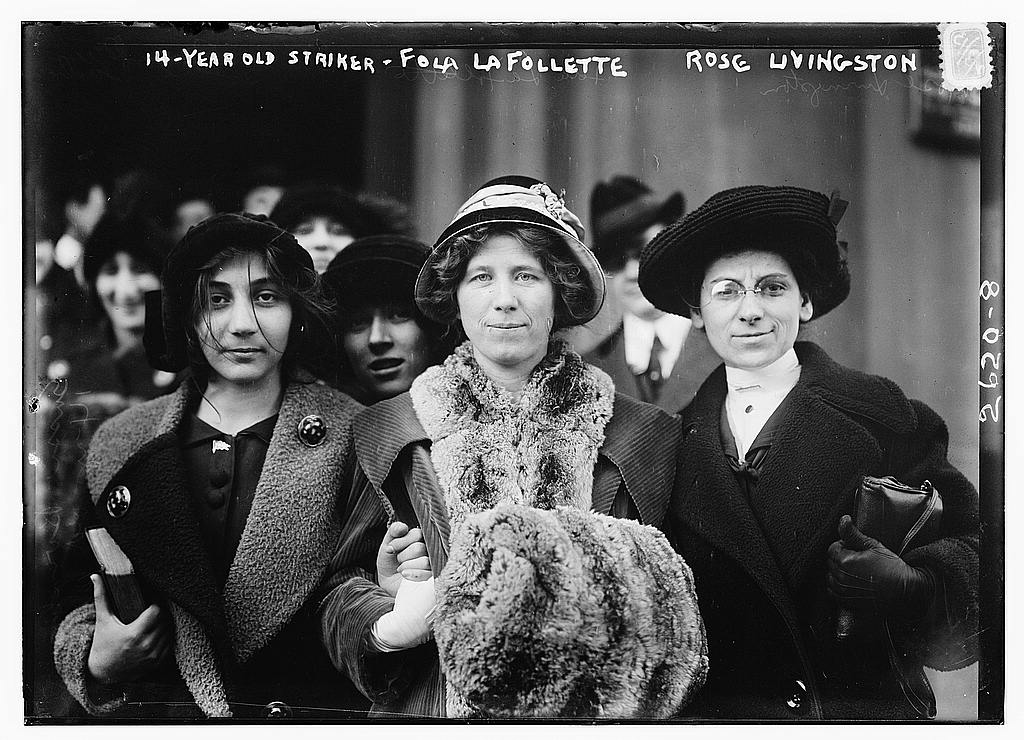

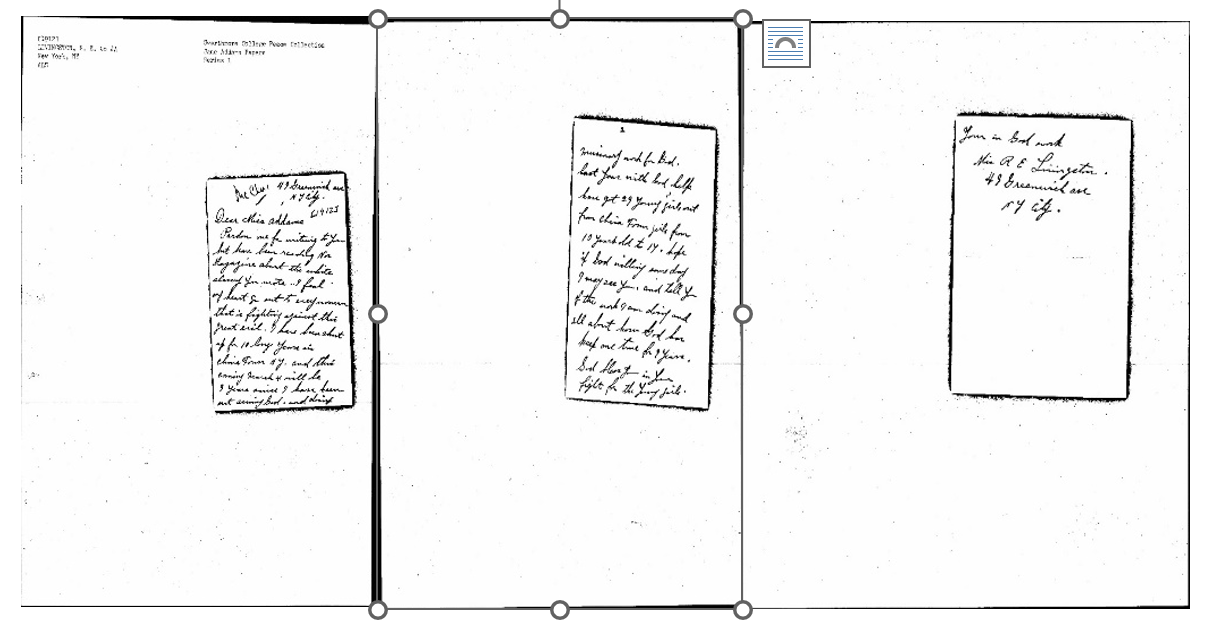



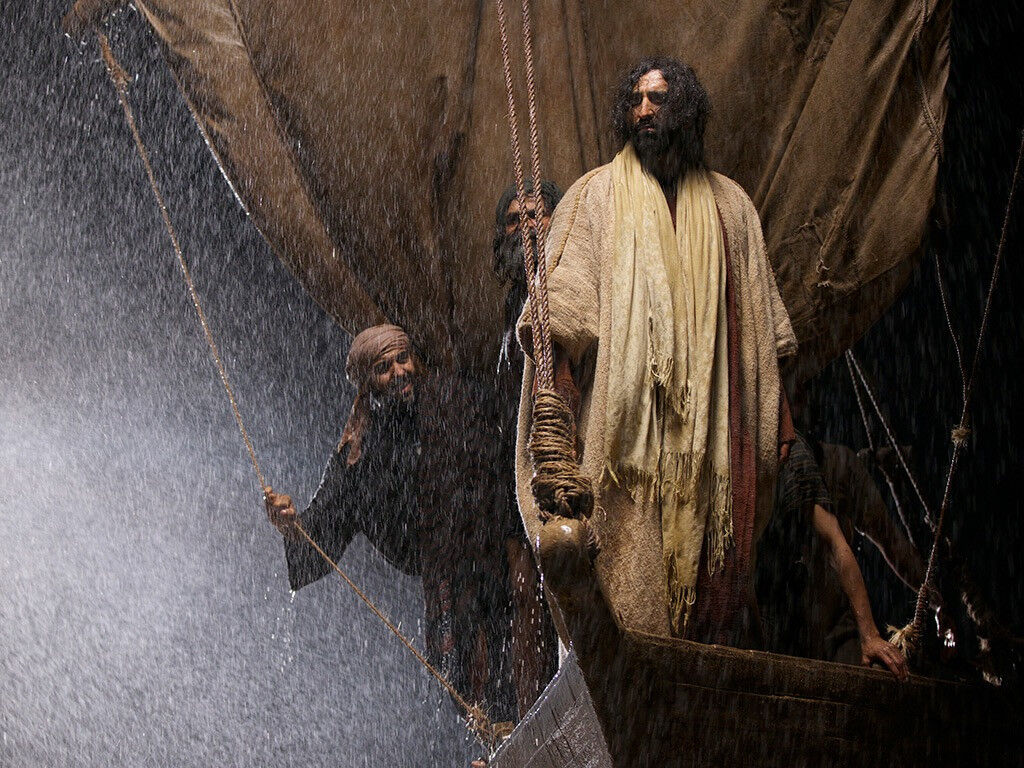





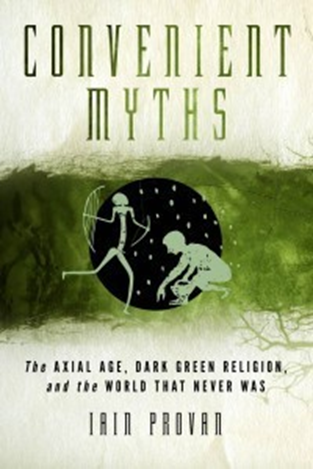







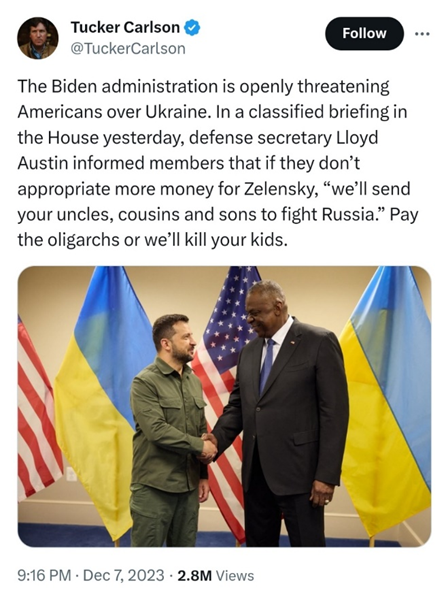

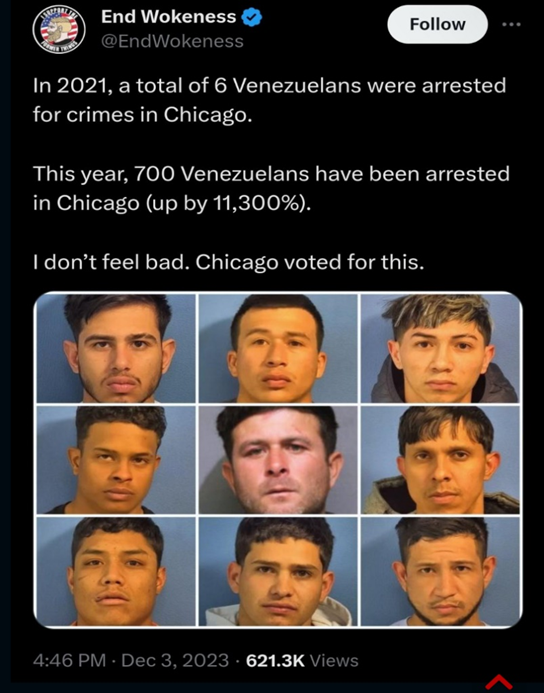





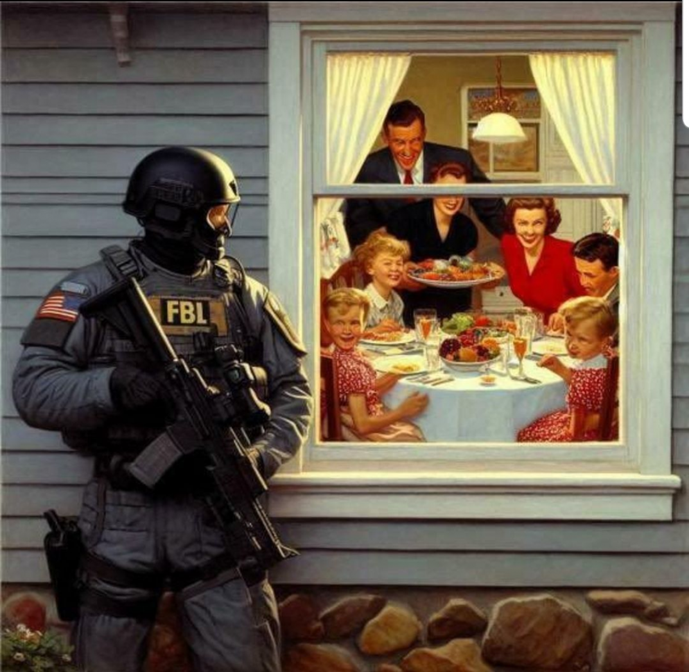




 Cindy Wity

They Hate You
April 7, 2024 Leave a comment
I’ve been reading a lot of realist fiction lately but I can’t ignore the grim reality of the hatred directed at Americans by the Left. This hatred is manifested with tactics no different than the “irregular warfare” used by the Chinese Communist Party (CCP) to impose its will:
“The three warfares are the coordinated use of public opinion, psychological, and legal warfare methods to “stifle criticism of the Chinese Communist Party, spread positive views of China,””
Elsa Kania, an adjunct fellow with the Technology and National Security Program at the Center for a New American Security writes in a 2016 China Brief article about The PLA’s Latest Strategic Thinking on the Three Warfares. She says that “the application of the three warfares is intended to control the prevailing discourse and influence perceptions in a way that advances China’s interests, while compromising the capability of opponents to respond.”
She goes on to describe the three non-kinetic warfares and their functions:
2015 Science of Military Strategy:
The [2015 National Defense University (NDU) SMS] provides an overview of public opinion warfare, psychological warfare, and legal warfare and guidance regarding their implementation. According to the text, public opinion warfare involves using public opinion as a weapon by propagandizing through various forms of media in order to weaken the adversary’s “will to fight” (战斗意志), while ensuring strength of will and unity among civilian and military views on one’s own side. Psychological warfare seeks to undermine an adversary’s combat power, resolve, and decision-making, while exacerbating internal disputes to cause the enemy to divide into factions (阵营). Legal warfare envisions use of all aspects of the law, including national law, international law, and the laws of war, in order to secure seizing “legal principle superiority” (法理优势) and delegitimize an adversary. Each of the three warfares operates in the perceptual domain (认知领域) and relies upon information for its efficacy. (Emphasis mine.)
These tactics look very familiar. “Irregular warfare”, employed with aggression and deceit (“Force and fraud are the cardinal virtues of war.” –Hobbes), are at work in the Left’s attack on Americans. We are all well aware of one assault close to home.
During COVID (the spread of the China virus) we were subjected to the coordinated force of propaganda to influence and control public opinion. There was propagandizing through various forms of media in order to weaken the adversary’s “will to fight” against what we were told to believe.
There was also the psychological balkanizing that divided the nation into those who “follow the science” and “science deniers” and the “vaxxed” and “anti-vax”.
And there was the legal warfare of COVID mandates that put people in jail or quarantines and closed churches and businesses and put people out of work if not vaxxed. All done to delegitimize an adversary to what we were told to obey.
We were subjected to coordinated fraud in the messaging about the (flu-like) virus’ transmission and effects and the effectiveness of the COVID vaccine and the efficacy of Hydroxychloroquine and Ivermectin. Multiple doctors and epidemiologists who spoke out against the narrative were silenced in the media and elsewhere. Force was used to stifle criticism and to co-opt and neutralize sources of potential opposition to “the science” and the purveyors of “the science”, the Left’s medical-pharmaceutical industrial complex (Anthony Fauci, Francis Collins, CDC, NIH, big pharma et al.).
Each of the Left’s three warfares employed during COVID operated in the “perceptual domain and relied upon [the control of] information for its effectiveness.”
We continue to be subjected to the Left’s three-fold attack with the “force and fraud” climate crisis narrative. Public opinion is being swayed by climate crisis propaganda: “We need to act now to avoid catastrophe.” “Irregular warfare” is being used against fossil fuels, LNG, agriculture, and anyone who opposes the Left’s narrative.
The fact that nuclear power, a carbon-free and a safe energy source that can produce huge amounts of reliable electricity, is not mentioned by the Left should be an indicator that climate is not an issue – controlling you is. (There is no climate crisis. See video below.)
We continue to be subjected to the Left’s “irregular warfare” with its fraudulent narrative of Trump as a threat to “Democracy”. The apoplectic Left, desiring to influence and control public opinion, wants to put the fear of Trump into their viewers and readers. The want viewers and readers to hate Trump.
The psychological warfare element of this attack includes exacerbating internal disputes to cause the enemy – the Right – to divide into factions. Hence, the Left will showcase never -Trumpers like David French to speak against Trump.
The third element of the Left’s threefold “irregular warfare” is used to “delegitimize an adversary.” This is the reason for the lawfare being waged against Donald Trump. The Left is desperate. They have tried unsuccessfully to keep him off the ballot. They have sought to disqualify him. They are seeking to bankrupt him. The Left will use any means necessary to take down Trump through “legal warfare.”
About this, George Washington University law professor Jonathan Turley notes:
“It’s becoming increasingly difficult to deny that we have a legal system now that is being heavily distorted by politics and you cannot look at all of these cases and see blind justice, you see the opposite,” Turley told Fox Business host Larry Kudlow, a former Trump administration official. “You see a justice that is being weaponized, and in many ways the Democrats fulfill the narrative of President Trump. He is now right. No matter what they thought about it at the beginning, they proved him to be right with this pile-on from Florida to Georgia, to Washington, D.C., to New York and most of the public gets it.”
The Left’s MSNBC and CNN and the NYT and WaPo and other media outlets of their ilk are so afraid that Trump will win in November that they are pulling out all the stops. They accuse Trump of promoting a lie (the stolen 2020 election) and calling illegals “animals” (Trump was talking about the murderer of Laken Riley). They will 24/7 you with “Trump is a threat to Democracy and our way of life. We will all become victims if Trump is elected (and blah blah blah).”
We continue to be subjected to the Left’s public opinion influence and psychological warfare via its constant fear-mongering. The Left conjures up end-of-the-world narratives, whether of COVID, climate, Trump or of people who don’t buy what they are selling.
Those who are taken in by Left don’t understand that they are targets of two elements of “irregular warfare”: influence of public opinion and psychological warfare. One reason they buy in is that the legal warfare component is directed at Trump and anyone connected with him. Another reason may be how they feel about the Left’s talking points: “I love the way you lie.”
A key component of the Left’s warfare against Americans is balkanization. The Left seeks to divide us into warring factions. There are those in the media who delight in dividing us rather than uniting us. They live for this. It is how they gain their power, their influence and their money. It is how they destroy America. As Jesus knew to be true, “if a kingdom is divided in two it can’t last.”
And so it is that the above media outlets present authors who foster division by writing that white Americans and Christian Nationalists (whatever they are) are a dangerous threat to “Democracy!”
The Left, to “delegitimize an adversary”, wants to put the fear of whites and of Christians who love their country into their viewers and readers – as if hating them along with Trump was a necessary condition for protecting “Democracy!”
Following the MSNBC promotion of the hectoring book White Rural Rage: The Threat to American Democracy published on February 27, 2024, came another screed published April 2, 2024 supposedly from a Christian, Sojourner’s Jim Wallis: The False White Gospel: Rejecting Christian Nationalism, Reclaiming True Faith, and Refounding Democracy.
Progressive Wallis was on MSNBC promoting his platitudes and inviting all who can be persuaded to reject and help dismantle a false gospel that propagates white supremacy and autocracy . . . and Christian Nationalism (whatever that is)
One Amazon commenter on White Rural Rage wrote something that applies to both books: “This book helps to explain the startling divide in America by showing just how profoundly uninterested such people are in understanding or accepting the views of anyone who does not accord with their own orthodoxy and must therefore be dismissed as anti-democratic.”
And from a review of White Rural Rage by Maria-Katrina Cortez:
Waldman and Schaller portray rural people as passive, unthinking agents in the democratic process. Though “rage” features prominently in their title, they use the word fewer than ten times in the text, and only to belabor their claim that Republican leaders intentionally manufactured rural voters’ anger, as though these Americans would not be concerned about their situations without external manipulation.
And here’s Nicholas F. Jacobs writing in What Liberals Get Wrong About ‘White Rural Rage’ — Almost Everything – POLITICO
“In an interview on MSNBC’s Morning Joe, [author Tom] Schaller gave this unvarnished assessment of the rage he sees overflowing in the heartland. Rural whites, he said, are “the most racist, xenophobic, anti-immigrant, anti-gay geo-demographic group in the country.” He called them, “the most conspiracist group,” “anti-democratic,” “white nationalist and white Christian nationalists.” On top of that, rural whites are also “most likely to excuse or justify violence as an acceptable alternative to peaceful public discourse . . .
“But the thing about rage — I’ve never found it.
“The problem with this “rage” thesis is much larger than the fact that my research, and that of others, is being misinterpreted and misunderstood. What the authors are getting wrong about rural America is exactly what many Democrats have been getting wrong for decades — and appear to be doing so again in this critical presidential election year.”
The following is my response to the red meat those authors threw to the ravenous Left:
“What is inadmissible, both morally and scientifically, is the hubris that pretends to understand the behavior of human agents without for a moment listening systematically to how they understand what they are doing and how they explain themselves.”
― James C. Scott, Two Cheers for Anarchism: Six Easy Pieces on Autonomy, Dignity, and Meaningful Work and Play
They hate us. They hate God.
When spoken of from the High Chairs of Hubris and Condescension, those of us who love God and our family and our country and not what proceeds from the mouths of the elites are not just called “bitter clingers” and “deplorable”. We are called “extremists.” We are called every name in the Left’s style book. And therefore, more force and fraud are needed to be applied. Hence the shaming books of the fellow traveler intelligentsia.
One would think that loving God, loving your family and loving your country would be all good. But the Left hates all that. Leftist elites love themselves and the sound of their condescension.
How far will the Left go? Students of history know. History tells us that the Left will use any means necessary, including injustice, famine, show trials, gulags, and murder to get their way. How far did the Left go this week?
The Biden regime just convicted a 71-year-old great-grandmother on federal misdemeanor charges for entering the Capitol more than three years ago for ten minutes.
Biden regime just proved once and for all that the US government is the most corrupt organization in the world, and it’s not even close… – Revolver News
“Without God, there’s no justice.” -71-year-old great-grandmother Rebecca Lavrenz who faces four federal misdemeanor charges for entering the Capitol more than three years ago during the Fedsurrection. She spent about 10 minutes inside.
Wearing a red scarf and a white hat to the rally, which she said she attended by herself, Lavrenz encountered a group of people praying outside the Capitol, and she joined them for about an hour and a half.
“It was a patriotic, joyful time to be around so many people who love their country,” she said. “I felt a strong presence of the spirt of God fall over me, and I started crying.”
At one point, she took the microphone to speak about a document that became known as the 1620 Mayflower Compact. Included in the agreement that pilgrims had signed before they set foot on American soil was that the country would be dedicated to the glory of God and advancement of the Christian faith.
“My mission in life is to know God and make his ways known and restore the country back to its godly foundation,” Lavrenz said. “Without God, there’s no justice.”
71-Year-Old Grandma Convicted on All Charges by DC Jury After Praying in Capitol on Jan. 6 | The Gateway Pundit | by Randy DeSoto, The Western Journal
This post is meant to alert you to the Left’s three-pronged warfare directed at Americans. There is more that could be said, but there is enough here, I believe, for the reader to understand the hatred directed at us.
I haven’t even mentioned the Biden inflation and the cost of living or how hard it will be for our children to buy a house and property because of the human-hating financial policies of the Left.
I haven’t even mentioned that the Biden regime’s human-hating open border policy will drive wages down for minorities and put Americans out of work. It is a policy that allows in deadly fentanyl and deadly gangs and deadly terrorists and deadly diseases to kill people. You won’t hear or see any of this from Rachel Maddow. All you’ll hear from her is “orange man bad.”
The Left hates us. And so does the Satan.
~~~~~
I see the Left – its hatred and evil schemes – depicted in The Girl with the Dragon Tattoo trilogy. Having control and imposing its will are essential to the Left, as in the story. Violence, mental and physical, are their means.
In the novels Dr. Peter Teleborian is the psychiatrist at St. Stefan’s Psychiatric Clinic for Children. Teleborian is a sadist who abuses his patients.
The child Lisbeth Salander was committed to St. Stefan’s after she tried to kill her evil father for beating and raping her mother. While in the clinic Teleborian kept Lisbeth strapped down each night for over a year and tried to force feed her psychiatric drugs. Salander later described him as the most evil man she ever met.
Lisbeth is later released from the clinic and put under guardianship. Her guardian suffers a heart attack and she is given another legal guardian – Nils Bjurman.
At their second meeting Bjurman informs Salander that she has to give over access to all of her bank accounts. Her first guardian Palmgren allowed her to control her own finances but Bjurman wants to control every aspect of her life.
Bjurman, to prove who’s in charge, molests her and forces her to pleasure him sexually. Because of her previous problems with the police, Lisbeth decides to take matters into her own hands. At their next meeting, she comes prepared with a hidden video camera. But, to her horror and dismay, she realizes she has misjudged Bjurman; he attacks and brutally rapes her.
Then The Section, an ultra-secret division of the government that reports to no one, tries to have Lisbeth recommitted to Dr. Teleborian’s clinic. This was to be done to protect the members of The Section. Dr. Teleborian is assigned by The Section to write a false report about Lisbeth Salander.
The Section harbored and protected the evil Zalachenko, ex-Russian spy who defected to Sweden. Alexander Zalachenko is Lisbeth’s abusive father.
We later learn that Dr. Teleborian kept thousands of child porn photos on his laptop. He is arrested during Lisbeth’s trial.
Looking at the nature of the people on the Left and their way of doing things with the caveat “for your own good”, it is easy for me to see similarities to the evil characters above.
~~~~~
They hate you. They hate your children. “Irregular warfare” is being waged in our public schools:
Public school “experts” are trashing traditional education in virtue and citizenship in favor of victimhood and dependency. The inheritance of Western Civilization has been officially discarded by irresponsible intellectuals, determined to advance their “progressive” ideologies. These ideologies, pushing kids to discover “their own truths,” are generally varieties of “subjectivism” or “relativism.” Critical theory deliberately undercuts our natural commonsense, the shared foundation of a free society, by teaching children that their homes, communities, and even their own physiology are their worst enemies, the foes of their real identities. Ideologues do this by “reducing” our natural experience of Truth, Goodness, and Beauty to “no more than” materialistic “animal instincts” (Modernism), that then give rise to oppressive “social constructs” (Postmodernism), and, presto, an epidemic of anxiety.
Joseph Woodard, Rediscovering the True, Good, & Beautiful ~ The Imaginative Conservative
~~~~~
They hate you. The Open Border Means Open Season on You – thanks to gov’t paid NGOs like Catholic Charities and others; thanks to Mayorkas and Democrats in need of votes who ignore what is happening.
Illegals are coming, not to assimilate but to plunder.
Another gang threat is unfolding thanks to Biden’s open border, but this time they’re going after American elites… – Revolver News
Violent, heavily armed Venezuelan illegals found squatting in the basement of a US home… – Revolver News
Nearly 1,000 ‘Gotaway’ Illegals Crossed Southern Border on Easter Sunday. (thenationalpulse.com)
Illegal immigrant charged in ‘horrific’ child sex crime arrested by ICE after police let him go (yahoo.com)
If you allow people from all over the world to come here by the millions in violation of our laws, you make no effort to screen them for infectious diseases and you push them into our largest population centers, you are going to see outbreaks of disease. People are going to die. The health of all Americans is going to be negatively impacted.
That’s exactly what is happening now. U.S. cases of tuberculosis, a deadly infectious disease have soared to their highest level in a decade, according to the Centers for Disease Control and Prevention (CDC). After 27 years of declining tuberculosis rates in the United States, cases of the disease started to climb again in 2020. They have continued to rise every year since.
TB Is Back – Thank Joe – by Sam Faddis – AND Magazine (substack.com)
Chicago Woman Demolished Migrant City Committee With Powerful Speech (youtube.com)
~~~~~
They hate you by ignoring you.
Ben Berquam Interviews Devon Jones And Mark Carter Live From The Migrant Crisis In Chicago (rumble.com)
~~~~~
How far will the Left go to dismantle the USA?
Under OBiden’s reign of terror – No Coincidence Infrastructure destruction:
Train derailments
Supply chain crisis
Food processing plants mysteriously exploding & catching on fire
Planes falling apart in the sky
Ships crashing into bridges
Watch: Something very strange is happening to bridges in the US—the third incident in 7 days… – Revolver News
~~~~~
2024. What does it mean when Americans vote for the destruction of their country? For the destruction of their own children through abortion?
If you consume what is fed from the above media outlets you may be living in a bubble the Left has created for you. You won’t see the destruction of civil society and justice within our land. You will learn, instead, to blame Trump and those on the right for problems.
The following is from a statement from Archbishop Carlo Maria Viganò, former Apostolic Nuncio to the United States, “on the scandalous proclamation of March 31 as ‘Transgender visibility day’ by ‘president’ Joe Biden.”
All humanity is awakening from a slumber that has lasted far too long:
-the lives of the innocent are threatened by abortion, euthanasia, manipulation, and abuse;
-the health of citizens is deliberately compromised by experimental serums revealed to be a biological weapon of population decimation;
-the total moral corruption of the top echelons of civil authority, enslaved to criminal lobbies in a global coup, is now evident;
-the increasingly arrogant display of Satan worship by the media and the world of culture and entertainment show us a world awash in execrable perversions that cry out to Heaven for vengeance;
-the mad provocation of a world conflict claims lives in order to bury the horrendous sexual and financial scandals of a power that is now the enemy of its citizens.
Archbishop Viganò: Biden must be recognized as excommunicated after ‘Trans Day of Visibility’ declaration – LifeSite (lifesitenews.com)
~~~~~
They hate you. The Left’s medical-pharmaceutical industry’s reign of terror:
Multiple laboratory studies now confirm that Pfizer’s COVID-19 mRNA vaccine is heavily contaminated with plasmid DNA. The latest analysis finds that one dose of the Pfizer vaccine typically contains over 200 billion DNA fragments. These DNA fragments can incorporate into the DNA of the vaccinated individual and interfere with the expression of oncogenes and tumor suppression genes. This DNA contamination has cancer implications for millions of people who were manipulated to take part in this biowarfare experiment. (Emphasis mine.)
One Dose of Pfizer’s Covid “Vaccine” Contains Over 200 Billion DNA Fragments That Can Incorporate Into Human DNA, Causing Cancer – Discern Report
New American Daily | Vaccine-laced Food Is Here (rumble.com)
~~~~~
The Left’s Central Planning’s reign of terror:
Small chains and mom-and-pop businesses simply can’t compete. Larger chains raised prices but have also been forced to reduce employees and labor costs through automation, but the layoffs are just getting started.
Mass Layoffs Begin At California Fast Food Chains As $20 Minimum Wage Law Takes Effect | ZeroHedge
~~~~~
The Biden regime’s geopolitical reign of terror:
Mr. Blinken just announced World War Three
If your situational awareness is well-tuned, you can put together a political weather report from the swirl of events that otherwise seem to confound the degenerate simps who pretend to report the news. Events are tending in the direction of self-reinforcing, ramifying chaos, and the people running the show are obviously insane as they do everything possible to hurry chaos along.
Vectoring Dangerously – Kunstler
~~~~~
The Left hates you:
Batya Ungar-Sargon, author of Second Class
Batya Ungar-Sargon Explains The MAGA Philosophy That The Left Can’t Understand (rumble.com)
~~~~~
The 2024 election comes down to a choice: for those who love you and what you love or for those who love power and control.
Must watch: The description of how Officer Diller’s family welcomed and embraced President Trump is incredible…. – Revolver News
~~~~~
The Josh Hammer Show
The Democratic Party Hates Democracy
Politics, law, and culture collide as Newsweek Senior Editor-at-Large Josh Hammer charts a path forward for American conservatism and exposes the woke Left. A voice for the New Right, Hammer delivers blistering commentary and weekly interviews with today’s top conservative thinkers.
Series – The Josh Hammer Show (newsweek.com)
~~~~~
Presentation starts at 7:35.
Onstage at the Reagan Library with David Mamet (youtube.com)
Podcast here:
David Mamet | The Ronald Reagan Presidential Foundation & Institute (reaganfoundation.org)
The arc of political change: David Mamet, Whittaker Chambers, Ronald Reagan – The New Neo
~~~~~
Don’t accept the Left’s propaganda regarding climate:
Climate: The Movie (The Cold Truth) English (youtube.com)
~~~~~
Rate this:
Filed under 2024 Current Events, 2024 Election, media, Political Commentary, Politics, Progressivism Tagged with 2024 Election, CCP, Christianity, CNN, Donald Trump, Joe Biden, media, MSNBC, NYT, politics, progressivism, The Left, Trump