What do we talk about when we talk about apocalypse?
Are we talkin’ Steppenwolf and his legions of Parademons attempting to take over the Earth using the combined energies of the three Mother Boxes?
Are we talkin’ nuclear war? World War Z?
Are we talkin’ The Late Great Planet Earth?
Are we talkin’ a supposed climate change catastrophe prophesied as either a meltdown or an ice age?
In popular use, “apocalypse” tags something with the worst possible outcome usually in terms of an end-of-the-world scenario and mankind’s role in events much bigger than himself. But the Greek word apokálypsis, from which “apocalypse” is derived, means an uncovering or revelation.
In terms of scripture, “apocalypse” is a genre in which God reveals His point of view. Such are the books of Isaiah, Jeremiah, Ezekiel, Joel, Zechariah, Daniel and Revelation. The “apocalypse” as an author’s vision of the end times or the end of the age became a distinct literary genre during the Second Temple period and into the Common Era.
Apocalyptic “non-canonical” literature helped pave the way for the Jesus movement in the first century CE. Many in Israel, based on these writings and OT texts (Psalm 146:7-8, Isaiah 61: 1-2), held a belief in a Messianic Apocalypse – the anointed one, a divine messianic agent, revealed at the end time who executes justice for the oppressed, gives food to the hungry, sets prisoners free, opens the eyes of the blind, and lifts up those who are bowed down.
Within this millenarist writing context and using explicit connections to the Old Testament via quotes, and with accounts of eyewitness testimony, the four gospels record God’s revelation in Jesus Christ as the Messianic Apocalypse. And, they record the apocalyptic pronouncements of Jesus, including Matthew 24 (The Destruction of the Temple and Signs of the End Times) and in Matthew 25 (The Sheep and the Goats; Judgement). Jesus’ words and works throughout the four gospels disclose God’s POV.
Near the end of the John’s gospel account we are given the reason why John wrote to reveal Jesus:
“Jesus did many other signs in the presence of his disciples, which are not written in this book. But these are written so that you may believe that the Messiah, the son of God, is none other than Jesus; and that, with this faith, you may have life in his name.” (Jn. 20:31)
The gospel according to Mark, written from a Petrine perspective, recorded what Jesus did and said in the presence of his disciples so that with the centurion standing watch at the cross, we might say “Truly this man was God’s Son!” (Mark 15:39)
Throughout the first six chapters of the gospel according to Mark, chapters I am memorizing, I find Jesus over and over again revealing who he is to the Twelve and the group of disciples around him. Yet, they are not making the connection. They consider him a great prophet and a maybe-Messiah Apocalypse but nothing more.
When Jesus is in the synagogue teaching, the gathered are astonished by his teaching. He speaks with authority. Then a man with an unclean spirit reveals Jesus’s identity:
“What business have you got with us, Jesus of Nazareth?” he yelled. “Have you come to destroy us? I know who you are: you’re God’s Holy One!”
Jesus commands the unclean spirit to be quiet and then casts out the unclean spirit. The buzz begins.
“What’s this?” they started to say to each other. “New teaching – with real authority! He even tells the unclean spirits what to do and they do it!”
Before chapter one ends, Jesus has healed many people suffering from all kinds of diseases and cast out many demons – exactly what Psalm 146 and Isaiah 61 talk about.
I learn from Mark that Jesus won’t let the demons speak. They would reveal his identity. I understand this as Jesus wanting each person to come to grips with who he is on their own.
In chapter two, Jesus heals a paralyzed man. But first he recognizes the faith of those who bring the man to him. He tells the cripple that his sins are forgiven. Upon hearing this the legal experts in the room start grumbling “Its’ blasphemy! Who can forgive sins except God?” They are so ready to pounce that they don’t understand who is standing before them. And why would they?
Who would expect the invisible God to be incarnate, to be physically present? And who would expect a consuming fire (Deut. 4:24) to be in their midst?
Chapter Four: After teaching a huge crowd about the kingdom of God, Jesus and the disciples set sail across the sea. A big wind storm comes up. Waves beat against the boat and it quickly begins to fill up. Jesus, however, is asleep on a cushion in the stern. Very anxious disciples wake him up and say “We’re going down. Don’t you care?”
Now, I don’t believe that any of the disciples were thinking that Jesus would get up and end the storm. They were likely thinking that they needed another hand to bail water out of the boat (kind of like my prayers at times).
Jesus gets up. He scolds the wind and says to the sea, “Silence! Shut up!”. Nature calms down but not the sailors. They had been ‘apocalypsed’. Someone in their boat just took control of the cosmic order. Someone in their boat just revealed God-like properties.
Great fear stole over the crew (survivors in the mini-Noah’s arc). “Who is this?” they said to each other. “Even the wind and sea do what he says!”
Jesus had looked at them and said “Why are you scared?” Don’t you believe yet?” That was his response to the disciple’s “Don’t You care?”
Jesus’ response to the disciples was not to shame them. It was to reveal their unbelief in what has been revealed to them: God was walking among them; God was in the boat with them; God’s love as demonstrated would see them through.
“Don’t you care?” is the corporate expression of anxious Israel waiting for Messianic Apocalypse.
“Don’t you care?” is the corporate expression of an anxious world that, with chronic uncertainty, is focused on a coming the-ship-is-going-down apocalypse and not on the certainty of the revelation of Jesus.
What do I talk about when I talk about apocalypse? This: what’s been revealed of Jesus is greater than what could ever possibly be revealed – whether in nature or alien or made-made or imagination-made.
2024: “We’re going down. Don’t you care?”
“Don’t you believe yet?”
~~~~~
Hope in an Age of Anxiety with Curtis Chang and Curt Thompson
We are in an anxious age. By some estimates, a third of all Americans will struggle with anxiety in their lives, and nearly 20% currently suffer from an anxiety disorder. For those suffering the mental distortions of anxiety, life can be difficult, and hope elusive. And for many Christians who have tried and failed to stop their slide into fear and worry by simply “laying down their burdens,” they may feel an added sense of spiritual failure as well.
We’re joined on our podcast by psychiatrist Curt Thopmson and theologian Curtis Chang who help us explore a counterintuitive approach to understanding our anxiety:
Hope in an Age of Anxiety with Curtis Chang and Curt Thompson – the Trinity Forum
How do we seek, find and share hope and healing in hard times?
Psychiatrist and author Curt Thompson and Trinity Forum President Cherie Harder discuss healing, grace, and reintegration — both for our individual and spiritual lives, and our shared life together. Together they consider how being known and believing what is true about our stories can transform our perspective and bring hope and healing:
“Shame is the antithesis and is that force that evil wants to use to undermine not only our ability to be known by one another deeply, which we were made for, we were made to be known, but we were also made to be known on the way to creating artifacts of beauty, whether those artifacts are relationships, whether they’re new pieces of music, art, businesses, and so forth.” – Curt Thompson
The room is dark now except for the lights on the Christmas tree. Tired of all the pharmaceutical commercials promising smiles on users, she’s shut off the TV. There is no real hope to be found anywhere in media. She’s had it with the fake, the clichéd and the unmitigated gall of nihilism that says “life has no meaning so keep watching for the meaning we give to it”.
She’s a flesh-and-blood human. She wants real, not CGI. She wants no part in manipulated drama, no part of AI. And she wants nothing of a New World Order and its utopian nightmare. Right now, she wants signal and not noise. Past, present, and future, like specters, enter her thoughts.
She recalls losses. She recalls past sorrows. She recalls her soul’s constant groaning and lamenting and crying out for rescue arising from its well of wordlessness. Drawn from that well are her tears, tears that now blur the glowing angel atop the tree.
The present is a world that is hurting and she feels helpless. When she prays she feels like a Secret Santa and not like a hands-on saint like Mother Teresa.
Tonight, many will end the year with loss. Some have lost a loved one and some a job and some the means to continue.
Tonight, some will end the year struggling with addictions.
Tonight, some will end the year alone and alienated.
Tonight, some will end the year struggling with depression and thoughts of suicide.
Tonight, some will end the year struggling with respiratory illness or the effects of the COVID vaccination.
Tonight, some will end the year in the hospital with a debilitating illness, some with cancer.
Tonight, some will end the year estranged from their families with memory loss, Alzheimer’s, and dementia.
Tonight, some will end the year with war injuries and memories of loved ones killed in battle.
Tonight, the entire creation is groaning. The future looks as bleak.
Is the cosmic and historical drama moving toward the ultimate reconciliation of things?
Will the evil of the human condition, our sufferings and our failures, reveal their redemptive meaning when seen from the vantage point of ultimate salvation?
She has chosen the vantage point of an Aslan Christmas and not of a Charlie Brown Christmas. She has chosen to embrace a hope that will not put her to shame – a bold noble hope, a hope that has faced lions and suffering first hand, a poured-out-love hope and not a mopey introverted “Oh, Bother” cartoonish perspective.
Will the Holy Spirit work all things together for good with those who love him and are called according to his purpose?
She has chosen to live in the realm of the Spirit. For the Searcher of Hearts knows what the Spirit is thinking. The Spirit comes alongside her – she doesn’t know how to pray as she ought – and pleads on her behalf. And that pleading is the wordlessness welling up in her tonight.
~~~~~
Scripture can become a weapon in the hands of the ultra-certain. As if every pain or suffering is part of “God’s divine plan.” So how should we understand and apply the Bible to our real lives with our real-life problems?
NT Wright, a New Testament scholar, is a trusted expert to help us understand what truths resound across time and circumstance and which don’t. In this conversation, Kate [Bowler] and Tom [NT Wright] dig in especially on Romans 8:28 which is the Pauline version of EVERYTHING HAPPENS FOR A REASON. Is that what Paul intended to say? Is there maybe another, more life-giving way to interpret it instead?
Kate and NT Wright also discuss:
The importance of lament as a response to the human condition
Why we have such a low tolerance for uncertainty
Which scripture to turn to when life comes apart (and which to avoid)
What our response should be to others who are in pain or experiencing tragedy
The italicized words are from Leszek Kolakowski’s essay Can the Devil Be Saved as published in Modernity on Endless Trial, Leszek Kolakowski, The University of Chicago Press, 1990, 75
Romans 5 & 8 are referenced.
~~~~~
Out of the deep have I called unto thee, O Lord: Lord, hear my voice O let thine ears consider well: the voice of my complaint If thou, Lord, wilt be extreme to mark what is done amiss: O Lord, who may abide it? For there is mercy with thee: therefore shalt thou be feared I look for the Lord; my soul doth wait for him: In his word is my trust My soil fleeth unto the Lord: Before the morning watch I say, before the morning watch O Israel, trust in the Lord, for with the Lord there is mercy: And with him is plentеous redemption And he shall rеdeem Israel: from all his sins
~~~~~
The 1951 b&w A Christmas Carol with Alastair Sim is the best movie version of Dicken’s classic.
When have entered a dark season. Houses and yards are lit up. And, perhaps, some of the residents.
“The holidays are always bad” – Frank Martin.
American writer Raymond Carver published a story about a man trying to move from an addiction to alcohol toward sobriety. The story, set over three days, includes New Years Day. Where I’m Calling From first appeared in theNew Yorker in 1982.
Written in Carver’s no-nonsense economical fashion, the story is told by a nameless Narrator who immediately draws us into the residential treatment center where he finds himself and another because of an inability to stop drinking.
“J.P and I are on the front porch at Frank Martin’s drying out facility. Like the rest of us at Frank’s Martin’s, J.P. is first and foremost a drunk. But he’s also a chimney sweep. It’s his first time here, and he’s scared. I’ve been here once before. What’s to say? I’m back.”
From the opening words we learn that alcoholism can take over one’s identity. The Narrator labels both J.P. and himself and everyone at the treatment center. But then the Narrator does go on to say that he knows J.P. as more than “a drunk”.
We also learn, from the Narrator’s “I’m back”, that the struggle with alcoholism can become a cycle of drinking and drying out. And then we find out that it can also become the ultimate wake-up call.
Let’s listen in . . .
“We’ve only been in here a couple of days. We’re not out of the woods yet. J.P. has these shakes, and every so often a nerve — maybe it isn’t a nerve, but it’s something — begins to jerk in my shoulder. Sometimes it’s at the side of my neck. When this happens, my mouth dries up. It’s an effort just to swallow then. I know something’s about to happen and I want to head it off. I want to hide from it, that’s what I want to do. Just close my eyes and let it pass by, let it take the next man. J.P. can wait a minute.
“I saw a seizure yesterday morning. . .”
A large man nicknamed Tiny had the seizure. As the Narrator tells us, Tiny was showing signs of improvement and looking forward to going home for New Year. But then Tiny collapsed at the table before all of them and was rushed to the hospital. The physical signs of alcoholism and withdrawal from it – shakes, spasms, swallowing issues and a seizure – have a major effect on the Narrator.
Loss of self-control brought the Narrator and the “drunk” others to Frank Martin’s drying out facility. And now the loss of physical control due to alcohol use disorder – the Narrator doesn’t want to countenance that. He recoils and hopes for the best – to “let it pass by” to someone else at the table.
“But what happened to Tiny is some-thing I won’t ever forget. Old Tiny flat on the floor, kicking his heels. So every time this little flitter starts up anywhere, I draw some breath and wait to find myself on my back, looking up, somebody’s fingers in my mouth.”
Reading on we get a sense of the need for company and storytelling that withdrawing from alcoholism produces. J.P. and the Narrator sit on the front porch of Frank Martin’s drying out facility. The Narrator listens to J.P.’s story.
The first thing we hear about is a childhood trauma. Twelve-year-old J.P. happened to fall into a dry well near a farm near where he grew up. It wasn’t until later that day that his dad found him and pulled him up. We find out from the Narrator the effect on J.P.:
“J.P. had wet his pants down there. He’d suffered all kinds of terror in that well, hollering for help, waiting, and then hollering some more. He hollered himself hoarse before it was over. But he told me that being at the bottom of that well had made a lasting impression.”
(So far, two lasting impressions from life-or-death situations.)
J.P. remembers looking up at the circle of blue sky from the “bottom of that well” and seeing passing clouds and birds and hearing rustling (of insects?) and the wind blow over the opening. To me this is a picture of the alcoholic at the bottom of the well (the bartending term “well” comes from one of the many names for the underneath of the bar top) and who now looks up and sees life going on without him and a “little circle of blue” that represents hope. The Narrator relates what J.P. said about that time:
“In short, everything about his life was different for him at the bottom of that well. But nothing fell on him and nothing closed off that little circle of blue. Then his dad came along with the rope, and it wasn’t long before J.P. was back in the world he’d always lived in.”
J.P. receives a lifeline. The Narrator wants to hear more.
“Keep talking, J.P. Then what?””
We learn from the Narrator that J.P. meets Roxy, a chimney sweep, at a friend’s house. J.P. says that he could “feel his heart knocking” as she looked him over. J.P. receives a “good luck” kiss from Roxy.
“He could feel her kiss still burning on his lips, etc. At that minute J.P. couldn’t begin to sort anything out. He was filled with sensations that were carrying him every which way.”
J.P. asks to date her.
“Then what?” the Narrator says. “Don’t stop now, J.P.”
We learn that J.P. and Roxy date. To be close to Roxy, J.P. becomes a chimney sweep and begins working with her. The two later marry, have two kids, and buy a house. The Narrator relates what J.P. felt at the time and adds a comment:
“I was happy with the way things were going,” he says. “I had everything I wanted. I had a wife and kids I loved, and I was doing what I wanted to do with my life.” But for some reason — who knows why we do what we do?— his drinking picks up.
J.P. goes on to talk about how he began to drink more and more, even taking a “thermos bottle of vodka in his lunch pail”. But then he stops talking.
The Narrator, who’s using J.P. story to help himself relax and avoid his own situation, coaxes to J.P. to continue.
J.P.’s drinking effects his relationship with Roxy. Their fights became physical – a broken nose for J.P. and a dislocated shoulder for Roxy.
“They beat on each other in front of the kids. Things got out of hand. But he kept on drinking. He couldn’t stop. And nothing could make him stop. Not even with Roxy’s dad and her brother threatening to beat hell out of him. They told Roxy she should take the kids and clear out. But Roxy said it was her problem. She got herself into it, and she’d solve it.”
Roxy fixes things by getting a boyfriend. J.P, finds out and goes berserk – like pulling off her wedding ring and cutting it in two. Things for the “drunk” J.P. go downhill – like falling off a roof and breaking a thumb and being arrested for drunk driving.
The Narrator wants us to know that he and J.P. are staying at Frank Martin’s of their own free will and that they’re trying to get their life back on track. Since it’s the Narrator’s second visit, Frank encourages him to stay longer – “The holidays are always a bad time.”
We then learn from the Narrator how J.P. arrived at the residential treatment center. Roxy’s father and brother drive J.P. to Frank Martin’s drying out facility, carry him upstairs and put him to bed. A couple of days later, J. P’s out on the porch with the Narrator telling his stories.
At one point, when the two are on the front porch, Frank Martin, who the Narrator says looks like a prize fighter and “like somebody who knows the score”, comes out to finish his cigar.
“He lets the smoke carry out of his mouth. Then he raises his chin toward the hills and says, “Jack London used to have a big place on the other side of this valley. Right over there behind that green hill you’re looking at. But alcohol killed him. Let that be a lesson. He was a better man than any of us. But he couldn’t handle the stuff, either.”
Frank then encourages them to read London’s Call of the Wild. The book is in the house, he tells them.
J.P., who wants to hide when Frank’s around, says he wishes he had a name like “Jack London” instead of his own name, Joe Penny. (Does the initial using J. P. feel that the shame, failure, and disappointment of being a “drunk” is attached to “Joe Penny? Does he desire a new name because of his tarnished name?)
The Narrator then tells us about his two trips to Frank Martin’s. When his wife brought him here the first time, Frank said he could help. The Narrator wasn’t sure:
“But I didn’t know if they could help me or not. Part of me wanted help. But there was another part.”
The second time, the Narrator was driven to Frank Martin’s by his girlfriend. He had moved in with her after his wife told him to leave.
This second trip to the treatment center came after their drinking bouts around Christmas. The girlfriend had received horrible news in the form of a medical report. With that kind of news, they decided to start drinking and get “good and drunk”. On Christmas day they were still drunk. After a lot of Bourbon, the Narrator decides to go back for treatment. The drunk girlfriend drops him off. The Narrator is not sure if she made it home OK. They haven’t talked on the phone.
New Year’s Eve morning. The Narrator tries to contact his wife, but no answer. He recalls their last conversation. They screamed at each other. “What am I supposed to do?” he says, thinking that he can’t communicate with her anyway.
We learn that there’s a man in the group who’s in denial and says his drinking is under control. He says he doesn’t know why he’s at Frank Martin’s. But he also doesn’t remember how he got there.
New Year’s Eve. Frank made steaks for the group. But Tiny doesn’t eat. He fears another seizure. “Tiny is not the same old Tiny”.
After dinner Frank brings out a cake. In pink letters across the top: HAPPY NEW YEAR – ONE DAY AT A TIME.
Eating cake J.P. tells the Narrator that his wife is coming in the morning, the first day of the year.
The Narrator tries calling his wife collect, but there’s no answer again. He thinks about calling his girlfriend but he decides that he doesn’t’ want to deal with her. He hopes she’s OK but he doesn’t want to find out if there is something wrong with her.
In the morning, Roxy arrives. J.P. introduces his wife to the Narrator. The Narrator wants a “good luck” kiss. The Narrator can see that Roxy loves J.P. She uses “Joe” instead of “J.P.”
This scene seems to trigger something in the Narrator. Lighting a cigarette, he notices that he has the shakes. They started in the morning. He wants something to drink. Depressed, he turns his mind to something else.
The Narrator remembers a happy time with his wife in their house and the house painter that surprised him one morning. These were good vibes: “And at that minute a wave of happiness comes over me that I’m not him — that I’m me and that I’m inside this bedroom with my wife.”
Sitting outside on the front steps, the Narrator thinks about reconnecting – calling his estranged wife again and then his girlfriend. He tries to remember any of Jack London’s books he’s read. “To Build a Fire” comes to mind. It’s a life-or-death story set in the Yukon.
The Narrator thinks again about reconnecting – calling his estranged wife and wish her a “Happy New Year” and to let her know where he’s at when she asks. After that, he’d call his girlfriend hoping that her mouthy teenage son won’t pick up the phone.
“Dirty Realism is the fiction of a new generation of American authors. They write about the belly-side of contemporary life – a deserted husband, an unwanted mother, a car thief, a pickpocket, a drug addict – but they write about it with a disturbing detachment, at times verging on comedy. Understated, ironic, sometimes savage, but insistently compassionate, these stories constitute a new voice in fiction.”
Carver’s influences include Anton Chekhov, Ernest Hemingway, Flannery O’Connor to some degree and others.
Like with Chekhov’s stories, Carver’s stories are like windows you can peer through and get a sense of the characters and what’s going on. Though indirect and conveying things without moral pronouncements, Carver’s stories suggest much with details that can say many things. Falling into a well and the mention of Jack London, for example, in the story above.
J.P.’s account of falling into a well gives us some idea of how it feels to be an alcoholic – helpless, in over your head, scared, and looking for a lifeline and a way out.
The Narrator, at the beginning, says “We’ve only been in here a couple of days. We’re not out of the woods yet” and at the end Jack London’s “To Build a Fire” comes to mind. I see his initial admission of trekking through the woods to sobriety and his later hint of his attempts toward sobriety (building a fire in the woods) as an inclusio or framing of the Narrator’s struggle with alcohol. His journey to sobriety will require a set of survival skills he doesn’t yet possess.
The setting of “To Build a Fire” is in the extreme cold of the largely uninhabited Yukon Territories. The unnamed (like the Narrator) solitary hiker is walking on a side trail in the woods toward an outpost. His self-confidence in hiking and survival skills has him disregard an old man’s advice about not traveling alone in such harsh weather.
Remember the Narrator saying this about his first arrival at Frank Martin’s?
“But I didn’t know if they could help me or not. Part of me wanted help. But there was another part.”
The hiker thinks that he can keep trekking toward the outpost without building a fire, despite it being 50 degrees below zero. His dog seems smarter than the hiker who underestimates the power of nature and the possibilities that can arise. While the hiker has some practical smarts, he lacks wisdom. A quote from the story describes the hiker:
“The trouble with him was that he was without imagination. He was quick and alert in the things of life, but only in the things, and not in the significances.”
At one point the hiker, almost frozen, finally decides to build a fire. Because it was easier to gather the wood needed, he builds his fire underneath a canopy of tree branches. The boughs above his fire are laden with snow. The jostling of his twig gathering and the heat of the fire cause the snow to fall onto the fire and quench it. The hiker tries again, this time out in the open, but he’s freezing up. His hands can’t function. He eventually resigns himself to his frozen fate.
One could see parallels between the unnamed hiker’s folly and the Narrator’s struggle with alcoholism. For one, there’s a self-reliance that paid off in the past that goes on to think it can handle all things. Maybe that’s why Frank Martin brought up Jack London:
“Jack London used to have a big place on the other side of this valley. Right over there behind that green hill you’re looking at. But alcohol killed him. Let that be a lesson. He was a better man than any of us. But he couldn’t handle the stuff, either.”
Another would be building a fire (drying out) under the pretense that you’ve got things figured out and under control. And that could end up in a cycle of a cycle of fires going out and building another fire, of drinking and drying out. Or worse.
Besides the hidden clues, discernable themes of addiction, self-destructive behaviors, addiction’s effect on others, loss of control while under the influence of alcohol, identity, loneliness, alienation, failure, vulnerability, and the need for human connection and story – they’re found in Where I’m Calling From.
~~~~~
Raymond Carver described himself as “inclined toward brevity and intensity”.
Characterized by an economy with words, Carver’s stories focus on surface description and its subject matter. Things are laid bare. No flowery words. No adverbs. Meaning is found in the raw context.
“Carver decided to explore minimalism in writing. He showed, in his text, real situations of everyday life; some of them could be crude, or complicated to understand, but still, he represented feelings that everyone could recognize: sadness, loneliness, failure, etc.”
Raymond Carver once said “I’m a paid-in-full member of the working poor.” He wrote stories that a blue-collar reader could connect with – of unremarkable people and the seemingly insignificant details that affect them. His own life was a constant struggle with alcohol addiction.
Carver had self-destructive issues with drinking. Alcohol shattered his health, his work and his family – his first marriage ended because of it. He stopped drinking on June 2nd 1977.
The Life of Raymond Carver documentary with Rare Interview (1989):
Hailed as the American Chekhov and short-listed for a Pulitzer Prize at the time of his death, only ten years earlier Raymond Carver had been completely down and out. In this vintage program filmed just a year after he died, Carver’s second wife, Tess Gallagher, and writers Jay McInerney and Richard Ford, his close friends, explore Carver’s artistic legacy: his stories and poems about the other side of the American Dream. In addition, excerpts from two of Carver’s most famous stories are dramatized. “No one since Steinbeck had written about these people,” says McInerney, “the people whose dreams go belly-up.”
Why do I read Carver? Because he writes about people like me and my lived experience. I can relate to J.P. and the Narrator. I’ve known alienation, loneliness, shame, brokenness, failure. I’ve made bad decisions. I’ve been at the bottom of the well. And the bottom of the well has been in me.
Several years ago I had a chat with the rector of the church I was attending. It was midweek when he and I met in the church hallway. I had just dropped off some bags of groceries to be delivered to a homeless shelter in the area.
We hadn’t talked in a while and he wanted to catch up. So we sat down in a room just off the entrance to the chapel. I could tell, first off, that he was eager to convince me to share a room with another single woman during the upcoming trip to Israel that he was heading. When I let him know that I wasn’t interested, he asked me how I was doing.
I told him about work and that I was thinking about retiring at some point. Then, I don’t remember why – maybe to tell him Where I’m Calling From, I told him that there was a well of pain so deep in me that if I brought any of it up, I didn’t know what would happen.
He responded with “Hmmm.” When our conversation ended, he prayed for me.
What I like about Carver’s stories is what I like about Anton Chekov’s stories – I don’t find sanctimony or moralizing. There is no rush to judgement. There are common shared experiences.
Where I’m Calling From, for the most part, is narrated in the present tense. If narrated in the past tense, we’d be in a position to judge. We’d be in the “I told you so” position.
But the present tense narration draws us in. We become involved. We wait and see what happens. We listen to the stories being told. We don’t judge. We understand. And we connect. As a follower of Jesus in this dark season, this is what I’m called to do.
The entire creation is groaning and that includes me.
We have entered a time to reflect on incarnational reality – the presence of God both with us and within us.
The Nativity by Gari Melchers
With awe we marvel at the birth of Jesus and the reversal of power. God humbly took on the appearance of man and became man’s servant.
We remember our own birth from above which opened our eyes to the reality of the kingdom of God on earth. Two realms – heaven-and-earth – together in our temple being.
We now acknowledge that new creation poured into well-worn no longer flexible ways of religion that have stretched to the limit and become brittle will be lost in the process. New wine needs new wine skins, for new wineskins are able to expand by grace as needed.
And we admit that the inappropriateness of trying to redeem things with a new unshrunk patch of legalism will cause more damage than what it attempts to fix.
We accept that new creation means the renewal of the present world rather than its abandonment and replacement by some other kind of world altogether.
We retell the course of events before Advent and the promises fulfilled.
We contemplate ultimate purposes and ultimate or final things.
We acknowledge the darkness that surrounds us and remains with us. We turn once again to the True Light that defies the darkness. We light candles and say “The Light of Christ”.
We sing “Joy to the World” with the longing and expectation of the world being put right with the return of the King as he establishes his reign of justice, mercy and peace.
But hold on. I wonder what sort of advent we’ve fallen into.
Recall this advent advert?
“The Great “Reset”, nee “Build Back Better”, is the scheduled advent of a man-made new world order and, we are told, a “better future”. Should we hope that with this advent things will be put right? Will the “The Great “Reset” bring joy to the world? Will it bring justice, mercy and peace? Will it bring relief from the burdens of life? So far, the Build Back Better Plan/Inflation Reduction Act has created more burdens.
Will the arrival of “The Great “Reset” bring peace on earth, goodwill toward men? Or will it, like critical theory and The Accuser, constantly find fault and offer no hope of forgiveness and redemption? Will it promote more ill will, division, and hate?
Will the arrival of “The Great “Reset” advance beauty and truth and goodness? Or will we recoil in horror at its manifestation? Will it be antihuman? Will it be Beastly?
With the arrival of “The Great “Reset” will the darkness that surrounds us now increase? Human forces and agencies were not able to contain the Gerasene demoniac.
What is the telos of “The Great “Reset”? Will it be like the kingdom of God on earth which turns everything upside down – power, privilege and wealth. Or, will it promote a world where the loudest, strongest, wealthiest, and most privileged people prey on the less fortunate. Will it be the Californication of America?
Will the arrival of “The Great “Reset” be good news that will cause great joy for all the people? Or, will this advent be the start of a countdown to the collapse and the end of the world? Will human trafficking end? Will drug trafficking end? Will justice be blind? Will depression and suicides decrease? Will it be a time of depopulation?
Herod the king, in his raging, Chargèd he hath this day His men of might in his own sight All young children to slay. -Coventry Carol
Will the arrival of “The Great “Reset” mean that the meek, the mournful, and the merciful are held in contempt so the rest of the world can have the “right” to ease and comfort?
Should we hope that with the advent of the New World Order that things will be put right? Should we expect justice, mercy and peace? Or should we expect pseudo-justice, pseudo-mercy and pseudo-peace in the form of pseudo-religion? Socialist activist and communist party leader in Italy Antonio Gramsci is one of many who promoted the latter:
“Socialism is precisely the religion that must overwhelm Christianity. … In the new order, Socialism will triumph by first capturing the culture via infiltration of schools, universities, churches, and the media by transforming the consciousness of society.”
Do you want the infiltration of schools, universities, churches, and the media and the transformation of the consciousness of society in the New World Order? Have you already joined this religion? What sort of advent have you fallen into?
Maybe you should take a look at the advent of the man-made New World Order:
Here’s the best summary video I’ve seen of the advent of the NWO and what is coming for you, me, and our children and grandchildren. It begs the questions “Why was I born at this time?” and “Which advent do I choose?”
To put things right, per a globalist worldview, the UN has an 2030 goal agenda. The virtuous-sounding goals touch on andseek to monitor and control, through digital technology, every aspect of human life for a “better world”. But, DO NOT Be Fooled!
To exist in the UN’s 2030 NWO society, people will have to submit their biometrics to the digital industrial complex. Each will be assigned a digital carbon footprint identity to monitor and control their behavior. Freedom, human agency and human dignity will be a thing of the past. Religions will be replaced with materialism.
Digital socialism and communism with centralized assets and resources will ration out resources to each person deemed socially responsible. The world court, world police, and the world health organization will control everyone via digital currency and digital IDs.
UN’s 2030 agenda goals:
The oldest liturgical prayer that we know: “Come, Lord Jesus!”
This advent, you can either pray the incarnational prayer “Come, Lord Jesus!” or the Globalist prayer “Come, Klaus Schwab!”
~~~~~
A CRITICAL EXAMINATION OF TWO MYTHS THAT DRIVE CULTURE: THE AXIAL AGE AND DARK GREEN RELIGION
“Most people, I believe, do not comprehend the way in which each of us is inevitably caught up in what theologian Ched Myers has called the “war of myths” – a battle of overarching stories that claim to explain life (what it’s about, where it’s going, and what its purpose is).” – Iain Proven, retied E. Marshall Shepherd Professor of Biblical Studies (Old Testament) at Regent College.
The contemporary world has been shaped in part by two important and potent myths. Karl Jaspers’ ‘axial age’ myth as narrated by Karen Armstrong and others and the myth of the ‘dark green golden age’ as narrated by David Suzuki and others. Both myths contend that to maintain balance we must return to the idealized past. In this lecture, Iain Provan engages critically with both myths, explaining why we should not embrace them and why it matters if we do. This was recorded at the University of British Columbia Graduate and Faculty Christian Forum.
“We have a ruling class in the United States defined by its hatreds. Not its loves, not its hopes, but by its hatreds. They hate all kinds of people, large groups of people: the deplorables, the bitter clingers, America’s entire blue-collar population, the unfashionable people. They’re hated by the people who run our country.
But no one is hated more by them than a man called Alex Jones.”
Ep. 46 The Alex Jones Interview
TIMESTAMPS:
2:46 Alex Jones predictions 15:07 Deplatforming 21:59 Dividing us on race 25:37 The border 28:09 Austin 32:12 New World Order 42:09 Brian Stelter demon video 50:57 Depopulation 1:07:51 Food 1:13:51 Whiskey 1:16:22 Presidential… pic.twitter.com/IsJAQDUzDc
“I thought about safety, security, good jobs, good education — all that stuff is very important to my family and my community,” she recalled. “And when I broke down those values between Democrats and Republicans, to me it was obvious who stood up for my values.”
“We calculate the toxicity of the vaccine for all ages,” explained Dr. Rancourt, “given the number of doses given worldwide to conclude that 17 million people would have been killed by this vaccine.”
The paper is based on 17 countries in the Southern Hemisphere and equatorial region. A definite causal link is shown between many peaks in all-cause mortality and rapid vaccine rollouts. The authors quantify the fatal toxicity risk per injection, which is exceedingly large in the most elderly.
The peer-reviewed study, published in the journal Epidemiology and Infection on Nov. 13, analyzed mask use among 3,209 individuals from Norway. Researchers followed them for 17 days, and then asked the participants about their use of masks. The team found that there was a higher incidence of testing positive for COVID-19 among people who used masks more frequently.
Between 2021 and 2022 when most of the now-fully vaccinated world got jabbed, cancer deaths skyrocketed, particularly among young people, according to data from the United Kingdom’s Office for National Statistics (ONS).
We are entering a season of celebrating Good News – the birth of a good King, the King’s establishment of a good kingdom and the King’s means for new creation. But hold on. Have we been invaded by body snatchers?
They look like us. Exactly like your loved ones or even possibly yourself. Replacement people. Exact copies yet devoid of empathy and humanity.
The 1978 film version of Invasion of the Body Snatchers takes place in San Francisco. The plot involves Matthew Bennel and Elizabeth Driscoll. Both work for the Health Department. Elizabeth is the first to suspect that something strange is going on. She awakes one morning to find her boyfriend Geoffrey being cold and distant and doing odd things. And it’s not just him. Everyone now seems strange to her.
Elizabeth Driscoll: I keep seeing these people, all recognizing each other. Something is passing between them all, some secret. It’s a conspiracy, I know it.
Matthew Bennel: There can’t be a conspiracy!
Elizabeth Driscoll: Matthew, I’m telling you something is going on here.
Matthew suggests they speak to his friend, pop-psychiatrist David Kibner. They drive over to the bookstore where Kibner is promoting his new book. On the way they encounter “They’re coming!”
Dr. David Kibner:
Elizabeth, could you please tell me, in your opinion, what is going on?
Elizabeth Driscoll:
People are being duplicated. And once it happens to you, you’re part of this… thing. It almost happened to me!”
Kibner confirms that several of his patients are claiming that their spouses are not who they seem to be. But he puts it down to mass hysteria until Jack and Nancy Bellicec, Matthew’s friends, discover a mysterious embryonic adult-body resembling Jack in the mud spa they run.
Elizabeth Driscoll:
I have seen these flowers all over. They are growing like parasites on other plants. All of a sudden. Where are they coming from?
Nancy Bellicec:
Outer space?
Jack Bellicec:
What are you talking about? A space flower?
Nancy Bellicec:
Well why not a space flower? Why do we always expect metal ships?
Jack Bellicec:
I’ve NEVER expected metal ships.
Together they figure out that humans are being replaced with flawless biological copies who are emotionless. The cold unthinking replicant has one quest – its survival. It must bring others into the fold . . . of the alien plant pods.
How does replacement happen? Organically over time. Strange spores drifted to earth from space. Mysterious pods began to grow. The pods begin replacing the dominant species by spawning emotionless replicas. The original bodies disintegrate into dust after the duplication process. The pod people outwardly resemble the people they have replaced, but are completely empty and soulless.
This happens to San Francisco’s residents one body at a time – when the citizen falls asleep near the pod. The ‘Podified’ then distribute the pods for more replication.
Spores en route to your home.
A ‘Podified’ Professor David Kibner explains the why of Pod Life:
“We came here from a dying world. We drift through the universe, from planet to planet, pushed on by the solar winds. We adapt and we survive. The function of life is survival.”
And so it is that when the credits roll, apparently there are no more humans left in San Francisco. Alien pods have consumed human’s emotional individuality for their survival. Only hollow replacement clones and a screech remain:
Pod people, alike as “two peas in a pod”, have a collective mindset and are extremely persistent. They want to replace humanity with a replicant humanity for their own survival. So America be warned. Pod people – They’re coming! Welcome to 2024 and communism.
Body Snatchers have invaded Progressive San Francisco. We see empty and soulless people acting in weird parasitic ways for the survival of the Left’s Pod People collective.
These had been lulled into replacing their humanity with an invitation for mindless wellbeing. We watch a ‘Podified” Elizabeth Driscoll try to pacify Matthew into acceptance:
“There’s nothing to be afraid of. They were right. It’s painless. It’s good. Come. Sleep. Matthew.”
People who fall asleep with media ‘pods’ wake up different people. These are the people Leftists want.
Leftist’s want Pod people who are devoid of individuality and filled with a collective consciousness. Free will and human agency are to be subsumed to create a monolithic culture. Take away one’s voice (except for the screech) and one’s power, and one’s free will and you have compliant Pod people.
Invasion of the Body Snatchers? There are several indicators:
Queer theory and critical race theory seek to Pod people with an alternate universe.
And there is Google which plants pod seeds. People who search with Google wake up as different people. For Google’s strange seeds drifted into cyberspace from the deep state. Mysterious pods begin to grow and take over minds. See The Big Brother of Silicon Valley video below.
(One disturbing aspect of the movie I noticed is that the men, including the male lead, disbelieve and gaslight the females. I don’t know if this was intentional or just indicative of society.)
Moderna ADMITS That DNA Contamination Can Lead to Cancer
• Moderna has a patent that acknowledges RNA is preferable to DNA in vaccines due to risks of insertional mutagenesis, which might activate oncogenes or inhibit tumor suppressor genes, Dr. @RWMaloneMD explained.
A whistleblower from New Zealand has gone public with vaccine data from the New Zealand Ministry of Health.
New Zealand: a COVID vaccine administrator has gone rogue and turned into a full-blown whistleblower, revealing, for the first time, the actual number of deaths related to a “bad batch” of the Pfizer vaccine.
Professor Dr. Didier Raoult and colleagues pioneered the use of hydroxychloroquine + azithromycin for treatment of COVID-19 disease.
Conclusion (Fauci lied people died)
Although this is a retrospective analysis, results suggest that early diagnosis, early isolation and early treatment of COVID-19 patients, with at least 3 days of HCQ-AZ lead to a significantly better clinical outcome and a faster viral load reduction than other treatments.
We are entering a season of celebrating Good News. But hold on. There are some, the same some since before 2016, who are now heralding a disastrous 2024.
Today, at the top of media’s Richter scale of catastrophic “Oh Nos!” and bumping “climate crisis” to number TWO is word of a disastrous new year as speculated in The Economist magazine article Donald Trump poses the biggest danger to the world in 2024 !!!!
To add to the hysteria known as Trump Derangement Syndrome, unhinged Joe Scarborough of MSNBC’s Morning Joe said that Trump “will end democracy as we know it.” Wow!!! What a power calculus!!
Joe, hyperbolizing on a New York Times Op-Ed [“Trump’s Dire Words Raise New Fears About His Authoritarian Bent”] went beyond calling Trump an authoritarian. He implied that Trump’s a murderous fascist: “he will imprison” “he will execute” enemies if reelected. Scarborough knows this because of “his past”. (I’d like to see those press clippings. Anyone?)
N.B.: MSNBC is where people go to completely lose all touch with reality because Orange Man Bad.
Here’s Mika man:
Joe Scarborough:
"Trump will imprison, he will execute whoever he is allowed to imprison, execute, drive from the country. Just look at his past. It’s not really hard to read.” pic.twitter.com/NC0vo48xAe
And there’s more from the ‘sound and fury, signifying nothing’ MSNBC:
“Former Trump White House aide Cassidy Hutchinson said Tuesday on MSNBC’s “Inside” that “everybody should vote for” President Joe Biden if they wanted democracy to survive.” Wow!!! Again!!!
Before we exit the land of the unhinged, there’s another unbalanced MSNBC political contributor who weighs in on Trump: former Democrat U.S. Senator of Missouri, the very rich Claire McCaskill.
McCaskill claims that Donald Trump is “even more dangerous” than dictators Benito Mussolini and Adolf Hitler!!! In the process of loathing Trump, McCaskill also has to mock MAGA supporters. You should know that the schtick of MSNBC contributors – our hoity-toity betters – is making their viewers feel superior to the deplorable hoi polloi.
The above insanity should tell you that the Left – Wokes, LGBTQ+ mafia, Antifa, the climate overwrought, BLM, race hustlers and all – are terrified of Trump. And they want you to be terrified of him, too. They see their world, supported by the vast administrative State that sustains their power and control over America, as threatened by Trump. For, in Trump’s next term, he will begin to pull apart the leviathan deep state apparatus that destroys Democracy and America itself.
That and the Left’s constant lawfare against Trump is an indicator to me that Trump is the right man for the job. He’s about saving what’s left of our Republic – namely, the Constitution, free speech, the right to bear arms, religious freedom, and due process which prohibits the states from depriving “any person of life, liberty, or property, without due process of law.” (14th Amendment).
The Left, on the other hand, want to abandon all that. The Left wants to seize life, liberty, and property and create a system of producing and distributing collectively owned goods via a centralized government that plans and controls the economy. The left’s economic reforms increase centralized state control to the extent that private ownership becomes virtually impossible.
See Mao’s Great Leap Forward for one example of the effects of collectivization. A Progressive’s collective communist State means that all labor, money, and production go to the State and the State determines who benefits and who must go without based on political loyalty.
And see North Korea for the Left’s brand of “Democracy!” which the braying MSNBC crew says is under threat and not because of their dictatorial ways but because of the guy who wants to keep them from their dictatorial ways.
Trump has also shown that he wants to ensure our country’s sovereignty. And that means a closed border with legal immigration. He also wants to safeguard America from another war. The Left, under the Biden regime, has shown us that open borders with constant war and anarchy are its will.
Another indicator that Trump is right for the WH job is that there are those, not just domestically but internationally, who want Trump and those around them out of the picture, e.g., Iran-linked hitmen. Trump is bothering all the right (evil) people.
Going forward, I sure don’t want someone representing me in the WH who folds or capitulates under pressure. I sure don’t want appeasers and accommodationists like members of Congress. I sure don’t want someone who, at one time in Indiana, looked the part of a respectable Christian leader but turned out to be a squish: Don’t Ever Forget That Mike Pence Threw Religious Liberty Under the Bus | National Review
Results, not presentation, earn my respect.
And though New Yorker Trump could always pick out better words and phrasing to explain his thoughts and his frustrations with the stolen 2020 election, he wasn’t chosen to be president in 2016 and 2020 and once again in 2024 because he’s a poet laureate or a pastor or a prefab politician. Trump’s a producer for the American people.
The firing-on-all cylinders low-inflation economy (before the subterfuge of COVID) and the strong dollar Trump delivered – both are being destroyed by the Biden administration’s willful neglect of the American people as are the times of peace Trump fostered.
Since the illegitimate President took office in January 2021, our southern border has been invaded. Biden-Mayorkas have allowed in (6 million +) all kinds of illegal immigrants including narco-terrorists, gangs, CCP migrants, Hamas terrorists, and more unsavory types along with fentanyl and disease. 2024 will be disastrous as the effects of the open border hit home.
Under the corrupt, compromised, incompetent, and incorrigible Joe Biden, Americans now risk getting pulled into wars on three major fronts: Europe, the Asia Pacific and the Middle East. That didn’t happen under Trump.
But MSNBC stands by their man Biden . . .
Unlike those who are “ashamed” or “embarrassed” by Trump and want to condemn his unrefined ways as being beneath them, my working life was spent in the real world outside the cloisters of academia, religious organizations, and armchair punditry. I learned which people get things done and what needs to get done.
As a business partner in a multi-million-dollar manufacturing enterprise for many years, I found out who was needed and what was needed to bring success to both employees and the bottom line. The things that Trump got done during his first term allowed me to get things done in the Kingdom of God.
N.B.: There are imperfect people like Trump and tax-collector Matthew in the kingdom of heaven. (Mk. 2:15-17). So, it is best for the offended and the ‘high-minded’ to stick with the gospels and to stay away from tea leaves.
Consider a Trump economy. With a thriving economy, I am able to support myself and give to help others in need in a closely tied relationship. But under a Leftist Joe Biden economy, disposable personal income shrinks. Financial survival kicks in. And worse.
You should be aware that Leftists are intent on neutralizing Christianity and its charity. As mentioned above, the Left wants everything to be funneled through the State and the State to be the only effect on society. This is what Progressives do. They make everyone and everything dependent on ruling class ‘good will’. And that is the substance of State media’s MSNBC and their ilk.
So, while the prophets of Baal, enflamed with Trump Derangement Syndrome, shout louder and slash themselves with swords and spears in the hope that viewers will pay attention to their frantic prophesying and let their fire rain down on Trump, let’s turn to the Good News that has already come down from the heavens with its fire poured out through the Holy Spirit.
The beginning of Mark’s Gospel (εὐαγγέλιον or euaggélion – literally, “God’s good news.”):
This is where the good news starts – the good news of Jesus the Anointed King, God’s son.
Everything in Scripture (and specifically Isaiah 40-55) up to this time pointed to the Kingdom of God on earth. Mark writes (vs.14-15):
After John’s arrest, Jesus came into Galilee, announcing God’s good news.
“The time is fulfilled!” he said; “God Kingdom is arriving! Turn back and believe the good news!”
“Turn back”? When Jesus launched the long-promised kingdom of God on earth, allegiances and lifestyles began to change direction, as he began to talk about and show what that meant.
Jesus spoke of kingdom of God in parables and directly, as in Matthew 5-7. He showed what the kingdom of God meant – unclean spirits are cast out (Mk. 1:39), people are healed (Mt. 4:23), there is restoration (Lk. 15) and resurrection (Jn. 11:38-44). And, that the kingdom of God on earth was a fulfillment of the Law and Prophets (Mt. 5:17-18).
When he taught his disciples how to pray, he prayed
May your kingdom come,
May your will be done
As in heaven, so on earth
I wonder. Is that prayer being realized? Instead of allegiance to King Jesus the ultimate restorer and to the kingdom of God on earth, have the followers of Jesus become accommodationists of the world to fit in and find ease?
Have the followers of Jesus understood what the good news is? Have they reduced the gospel (euaggélion) to the formulaic four spiritual laws and an escape from the world into heaven?
Below are two podcasts that offer an understanding of the Good News and the kingdom of God on earth. Download and listen as you enter the season of celebrating the birth of a King who brought us good news and a kingdom.
But the holy ones of the Most High shall receive the kingdom and possess the kingdom forever—forever and ever. Daniel 7:18
We, the King’s holy ones, are to herald the good news of God’s Kingdom with a new way of life to a world that sees answers in profoundly short-sighted ways rather than in the Way of King Jesus. And then . . .
Then the seventh angel blew his trumpet, and there were loud voices in heaven, saying,
“The kingdom of the world has become the kingdom of our Lord and of his Messiah, and he will reign forever and ever.” Rev 11:15
~~~~~
On Earth as it is in Heaven
Anglican Bishop, and New Testament scholar, N.T. Wright makes clear, Jesus’ good news wasn’t about giving advice, or founding a new religion, or even where a soul goes when the body dies. Jesus was inviting his hearers into a new way of understanding Israel’s ancient story and the cosmic significance of its sudden fulfillment.
A year of determination, the help of world-renowned doctors, and this mother’s research exposed the world to the known toxins in the Covid-19 vaccines that nearly killed her son.
“In 2021, after my then 21-year-old son went from running miles a day to walking with a cane, diagnosed with a rare, catastrophic blood disorder, this mom knows it is time for vaccine injury victims & families to ignite an intelligent, rational conversation about what the mRNA vaccines put into our bodies. We don’t buy food or health products without reading the labels and knowing the ingredients, and it’s time we do the same with the vaccines for our children.”
Livestock raised in confined animal feeding operations (CAFOs) are routinely given a range of veterinary drugs to prevent disease, and some of those drugs could potentially impact the health of those who eat their meat.
Thousands of vials of biological substances — including some labeled “HIV” — and a freezer marked “Ebola” were found inside a secret Chinese-owned biolab in California which the Centers for Disease Control and Prevention and FBI initially refused to investigate, according to a House committee report released Wednesday.
“This is really a massive cover-up. And I suspect it’s because there’s many more links to the funding, and there was probably discussion of the funding,” says Sen. Rand Paul (R-Ky).
Not your usual Thanksgiving fare . . . If you live in Disneyworld, then don’t bother reading further.
May 19, 1925. Saloth Sar, as the eighth of nine children, is born into a well-off and well-connected farming family, landowners in Kompong Thong province in central Cambodia. He arrives in a time when the kingdom of Cambodia is a French protectorate within French Indochina.
Sar’s childhood is strict and sheltered in the capital city of Phnom Penh. He spends a year at a Buddhist monastery prep-school before attending a French Catholic primary school. He involves himself with the violin, drama, soccer and carpentry. His Cambodian education continues until 1949.
Having won a scholarship to study abroad with a group of some 200 students, Sar journeys to Paris to study radio technology. During the one-month boat trip in 1949, Sar meets Mey Mann. Mann would later describe Sar at that time as being a pleasant man who showed little interest in politics. But in Paris during the early 1950s, Sar becomes a different man. He turns his conscious into consciousness.
What Happened? Marx and Mao happened.
“Though a Roman Catholic and a devout Jeffersonian [preferring agrarian life over city life] coming out of high school, Sar attended university in Paris, 1949-1953, where he came under the influence of several Marxists, especially the radical former nazi-collaborator Jean-Paul Sartre (1905-1980).”
In Paris, Sar is in the company of fellow travelers – radicalized Cambodians. He joins their reading group and immerses himself in the writings of Marx, Lenin and Mao. Sar connects with the ruthless ways of Lenin and Mao. He joins France’s Stalinist Communist Party.
As a result of neglecting his studies, Sar loses his scholarship. He then returns to Cambodia in 1953 to bring revolution to Cambodia. Mey Mann, who also went off to Paris as a young college student, also came back a leftist revolutionary.
Back in Cambodia, Saloth Sar joins Vietnamese communists who were intent on ridding South East Asia of western influence. When he becomes the leader of the Khmer Rouge (Red Cambodians) he takes on the nom de guerre Pol Pot, which means “the original Cambodian.” His family’s ancestry traced back to Cambodian royalty.
William Branigin, who spent 19 years overseas, reporting in Southeast Asia, Central America, the Middle East and Europe, provides background to Pol Pot’s growing revolutionary activism and his Maoist leanings in his article ARCHITECT OF GENOCIDE WAS UNREPENTANT TO THE END – The Washington Post:
After years of secret communist activity in Phnom Penh, Pol Pot rose to the leadership of the underground movement in 1962. The following year he fled to the countryside to escape a crackdown by the government of Prince Norodom Sihanouk, who dubbed the revolutionaries “Khmers Rouges,” or Red Khmers. . ..
Ensconced in the Cambodian northeast in an isolated jungle base protected by Vietnamese communist guerrillas who were then his allies, Pol Pot and his followers concocted a strange ideological brew of Marxism and what one scholar described as “badly digested Maoism.” During this period Pol Pot was apparently influenced by a five-month trip he made to China at the beginning of Mao Zedong’s Cultural Revolution and his economic “Great Leap Forward.” It was marked by the partial evacuation of Chinese cities and purges of “class enemies.”
. . .
Pol Pot then launched his own version of the “Great Leap Forward,” but with an apparent determination to jump even farther. The Khmer Rouge promptly emptied the cities, viewed as breeding grounds of capitalism, and began slaughtering old-regime soldiers and officials. The aim was to establish an agrarian Utopia in a single giant bound over the various stages of Marxist development. It was “Year Zero,” and people were entirely expendable. . ..
Pol Pot combined Stalinist and Maoist models with a focus on an agrarian society. With support from rural Cambodians, North Vietnamese, and the Chinese, Pol Pot was able to take control of the country in 1975. The Khmer Rouge began inverting the entire structure of Cambodian society.
Children, indoctrinated into the new ideology, were given power. Taught to “harden their hearts” toward their countrymen and their own families, they decided who was ideologically pure and who must be purged. But that was not enough for Pol Pot. He remained obsessively paranoid, as Branigin writes:
But soon the revolution began devouring its own children, as Pol Pot launched repeated purges of those he believed were plotting against him or working for his Vietnamese or American enemies. Thousands were tortured into making “confessions” at Tuol Sleng, a Phnom Penh school-turned-jail whose director reported to Pol Pot.
In pursuit of their dreams of a communist Utopia, the Khmer Rouge abolished money, commerce, religion and traditional education. They suppressed family relationships, individualism, intellectuals and ethnic groups, slaughtered anyone who showed recalcitrance and enforced unquestioning obedience to “Angka,” the organization.
Thousands were beaten to death, then dumped in mass graves in the regime’s “killing fields.” Many more succumbed to starvation, disease and overwork. Out of a population of about 8 million, demographers and researchers estimate, at least 1 million, and possibly as many as 1.7 million, died.
But as the killing intensified, the revolution increasingly turned on itself, targeting “enemies” whom Pol Pot perceived to be multiplying like germs, creating what he called a “sickness in the party.”
There is much to the Pol Pot murderous legacy that is not written here. This brief intro describing Saloth Sar’s fundamental transformation into genocidal dictator Pol Pot is meant to open eyes to the fundamental transformation -subtle and not so subtle – that is taking place in our country right now.
I want my readers to recognize the signs of the coming onslaught on humanity. The Biden regime, the Merrick Garland DOJ, Leftist judges and the media, are showing signs of demanding ideological conformity to their form of totalitarian “Democracy!” The Left’s constant lawfare against Trump is just one indicator of this.
And though implemented in more efficient ways today, e.g., digital technology, the same Lennin Think and Maoism is being used by the intelligentsia to control every aspect of our lives – from thought to word to deed, from sunup to sundown and throughout the night.
To understand Pol Pot’s way of thinking and that of today’s intelligentsia, listen to the podcast below – Thinking Like Lenin with Gary Saul Morson.
The three videos below reveal the man Pol Pot and the political horrors of his regime. Learn about the brutalities of the Khmer Rouge in the 1970s and the genocide, one of the worst in recorded history, of about half the Cambodian nation. Learn from the firsthand accounts of Dith Pran and Haing S. Ngor.
Dith Pran, a Cambodia-born journalist, helped bring to light the brutalities of the Khmer Rouge in the 1970s. His three brothers were killed by the Khmer Rouge.
Haing S. Ngor, Cambodian physician and actor, is best known for his Dith Pran role in the movie The Killing Fields (1984), which depicted the brutal Khmer Rouge regime in Cambodia that Ngor himself had also lived through.
Watch Roland Joffé’s The Killing Fields to see what is coming our way under the growing despotism.
Also, you may want to watch the third in Christopher Nolan’s Batman Tribology, The Dark Knight Rises, to get a sense of the anarchy and destruction just beginning to be released upon the world to bring about change. Gotham’s (Western Civilization’s) infrastructure is set apart for destruction by Bane and his “social justice” henchmen.
And learn about dehumanizing Marxism:
“Marx’s mechanical theory of society reduces real individuals, with their hopes and fears, beliefs and desires, to mere abstract “classes”. He subordinates reality—messy, limited, and all too human—to a perfect model in which utopia is the only possible outcome. As [Theodore] Dalrymple puts it: “Marx’s eschatology, lacking all common sense, all knowledge of human nature, rested on abstractions that were to him more real than the actual people around him.””
You say you want a revolution . . . so, with bloodlust, you can rid the world of monarchy and colonialism, of Christians and Jews, of the West, and of “oppressors” and replace it with an oppressive murderous regime and a descent into hell; to create a colony of insect peasants, war slaves, and execution squads, of senseless brutality, mind-numbing torture and purges; to create a society where indoctrinated children decide ideological purity among its members and where families cease to exist . . . well, you can count me out.
Mey Mann on the origin of Pol Pot’s murderous ways:
“On many occasions, Mey Mann said he tried to understand why the Khmer Rouge had turned to the killing fields. He asked Ieng Sary and Khmer Rouge leader Nuon Chea many times when Pol Pot had changed, when Saloth Sar turned into the leader of a murderous regime, but he never got a clear answer.
““Nobody knows. I don’t know why it happened like that, why they tried the extreme way,” Mey Mann said. “When we were students, we thought in a good way and did everything step by step. I don’t know which year Pol Pot changed his attitude.
““Maybe Pol Pot wanted to follow China and be strict like that. He was too biased to China and needed support from them because he hated Vietnam,” he said. “But Pol Pot forgot that Cambodia has only 10 million people. If China goes the tough way and kills 100 people, they have many more people so it doesn’t have a big effect. But here, that’s a big killing.””
“What influenced me most was the actual situation in Cambodia,” Pol Pot told American journalist Nate Thayer. When he came home from Paris, he found that his family had fallen on hard times. A once prosperous uncle had become a rickshaw puller, and other relatives had lost their land and livestock.
”I came to carry out the struggle, not to kill people,” the infirm, 72-year-old Pol Pot argued to Thayer. ”Even now, and you can look at me: Am I a savage person?” he asked, adding: “My conscience is clear.”
“In order to survive you have to pretend to be stupid.” -Dith Pran, about life in Cambodia under Khmer Rouge
“I see … a pile of skulls and bones. For the first time since my arrival, what I see before me is too painful, and I break down completely. These are my relatives, friends and neighbors, I keep thinking … It is a long time before I am calm again. And then I am able, with my bare hands, to rearrange the skulls and bones so that they are not scattered about.”
— Dith Pran, writing about his return to Cambodia for The New York Times in 1989.
“This is sad for the Cambodian people because he was never held accountable for the deaths of 2 million of his fellow countryman. The Jewish people’s search for justice did not end with the death of Hitler and the Cambodian people’s search for justice doesn’t end with Pol Pot.”
— Dith Pran, upon the death of Khmer Rouge leader Pol Pot in 1998, quoted in The Times.
Know this: the issue, whether abortion, gender, sexuality, racism, capitalism, equality, colonialism, Jews or some other oppressor/oppressed power struggle– the issue is never the issue. The revolution is the issue. The key question of any revolution is who holds power, as Lenin wrote.
Many of the revolution’s WOKE reactionaries are blinded by the mythic romance of revolution. Pursuit of revolution itself is seen as something valuable, as taking part in something stylishly ‘Che Guevarean’ and adventurous and something to be passionate about. It may be a religion for some.
The revolution’s WOKE reactionaries are OK with creating suffering and totalitarianism as long as the rhetoric is about total transformation, whatever that entails.
The revolution of the hour: for the destruction of the Western world; we are to be the causalities and they, the martyrs in their romantic myth.
I’ve learned how true revolution takes place. It’s not through mad passions but through everyday empathy and love and the tiny alterations of the heart and mind that move us in that direction . . .
~~~
Literary critic Joseph Epstein, with the title of his book-length essay, asks The Novel, Who Needs It? Turns out, I do, as it offers “truth of an important kind unavailable elsewhere in literature or anywhere else.”
So, I’ve made it a point to read the realist fiction of Russian writers – Solzhenitsyn, Dostoyevsky, Tolstoy, and others along with Chekhov’s short stories.
With a sense of moral urgency, fiction-writing has always been serious business for Russians. The great writers were the truth-tellers, the prophets, the voice of the voiceless, and the conscience of a nation— “a second government,” as Alexander Solzhenitsyn once put it.
Why read great novels and Russian literature today? Gary Saul Morson provides his reasoning:
Like realism in painting, the realism in Russian fiction captures life with an accurate, detailed, unembellished depiction of life. It rejects flowery idealization, fantasy, and supernatural elements, and presents close observation of the human experience which can lead to personal discovery.
Life’s most important questions are explored in Russian fiction. The open-endedness of the writing leaves one to ponder the choices one is making. Literary realism can be grounding.
Ultimately about ideas, superior fiction shows how ideas -ideology and love for two examples – are played out in the lives of the characters. Over time, with tiny alterations, they change their minds –- and you see their conversion. Character development in literary realism is important.
“A single novel can touch on the wildest adventure but also dwell on the most private personal psychology,” writes Epstein. He gives the example of Moby Dick. I went with Tolstoy’s Anna Karenina for the latter.
Anna Karenina (1878), a novel about love and the family, explores the lives of its characters. Some pursue romantic love and others develop mature love. There are heroes and villains in Tolstoy’s most pro-family story.
The consequences of infidelity and the compromises made for forbidden love begin to add up for both Anna and Stiva. In contrast are those well-married and living a rather prosaic life – Kitty and Levin. Over time and with many intimate conversations to understand each other, they have matured from romance to love and found contentment.
Tolstoy at 68 years of age, had just finished Anna Karenina. It has been said by some that as he wrote Anna, Tolstoy was going through a spiritual crisis. He perhaps goes through a very similar spiritual conversion as does Levin.
Tolstoy had been as baptized and raised according to the principles of the Orthodox Christian Church. But later, at eighteen, he said “I no longer believed in anything I had been taught.” I see that as a typical eighteen-year-old response to what feels confining and irrational.
But Tolstoy moves from staunch atheist to a firmly spiritual person. He believed that God was the answer to the type of carnal excess and groundless passions found in the Anna and Vronsky relationship.
Were Levin’s thought processes and his spiritual journey, his tiny alterations of consciousness, also Tolstoy’s spiritual journey? We get a sense of spiritual crisis, of spiritual revolution, and of spiritual maturation in the following four excerpts.
Tolstoy narrates the birth of Levin’s son almost entirely from the new father’s point of view. The birth of his son sparks a spiritual breakthrough in Levin.
Anna Karenina, Part 7, Chapter 13
One night, Kitty awakens Levin with news that her labor has begun. Levin is beside himself, aware only of her suffering and the need to alleviate it. Kitty sends Levin to fetch the midwife and the doctor and to get a prescription from the pharmacist. As he heads for the door, Levin hears a pitiful moan.
“Yes, that’s her,” he told himself, and clutching his head, he ran downstairs.
“Lord have mercy! Forgive us, help us! He repeated the words that suddenly came to his lips out of nowhere, and he, a nonbeliever repeated these words not only with his lips. Now, at this moment, he knew that neither all his doubts nor the impossibility of believing with his reason, which he had known in himself, in any way prevented him from turning to God. Now all that flew from his soul like dust. Who else was he to turn to if not to the One in whose hands he felt himself, his soul, his love?”
“His reason suspended out of intense empathy, Levin, an unbeliever on rational grounds, finds himself praying, and not “only with his lips” (738). Why he, an atheist, prays sincerely at this moment becomes for him a riddle touching on life’s essential meaning. Desperate to do something but with nothing to do, Levin simply has to endure, a state that (as we shall see with Karenin) provokes the soul torn from its habitual responses to experience the sublime.”
Anna Karenina, Part 7, Chapter 14
Levin is floored, angry that the pharmacist preparing the opium and the doctor drinking his coffee are so laid back – taking their time – about the approach of the birth. He’s in such a state he can’t think straight. For them, the birth was an ordinary event. But for landowner Levin, who had been primarily concerned with farming and agricultural and was writing a theory book about it, there was no place to catalog the event.
Levin has no way to analyze what is happening. “All the usual conditions of life without which it is impossible to form a conception of anything ceased to exist for Levin. He had lost the sense of time.”
When Levin hears Kitty’s first scream, Levin is nonplussed. He has so bonded to Kitty over time that, in empathy, he suffers intense agony. He had experienced the same intense feelings and helplessness as his brother was dying.
“He knew and felt only that what was transpiring was similar to that which had transpired a year before in the provincial town hotel at his brother Nikolai’s deathbed. But that had been grief – and this was joy. Still, both that grief and this joy were identically outside all of life’s ordinary conditions; they were like an opening in that ordinary life through which something sublime appeared. What was transpiring had come about with identical difficulty and agony; and with identical incomprehensibility, the soul, when it did contemplate this sublime something, rose to a height as it had never risen before, where reason could not keep up.
“Lord, forgive and help us,” he repeated to himself incessantly, feeling, in spite of such a long and seemingly total estrangement, that he was addressing God just as trustingly and simply as during his childhood and first youth.”
Anna Karenina, Part 7, Chapter 15
Watching his brother die, Levin thinks that death is a cruel joke – you live, suffer, struggle and suddenly cease to exist. Now seeing his wife in such a painful state and thinking she is dying, he is beside himself: he “had long since given up wanting the child. He now hated the child. He didn’t even wish for her life now, he only wanted a cessation to these horrible sufferings.” New life brings new suffering.
But with the birth of his son and being anchored to life by his new family, Levin then understands that death is merely part of life. He maturely concludes that if one lives “for one’s soul” rather than for illusory self-gratification, the end of life is no longer a cruel trick, but a further revelation of life’s truths.
“If Levin had been told before that Kitty was dead, and that he had died with her, and that their children were angels, and that God was standing before him, he would have been surprised at nothing. But now, coming back to the world of reality, he had to make great mental efforts to take in that she was alive and well, and that the being howling so desperately was his son. Kitty was alive, her suffering was over. And he was inexpressively happy. This he understood and it made him completely happy. But the child? Where had he come from, and why, and who was he? He simply could not understand, could not get used to the idea. It seemed to him something superfluous, something extra, which he could not get used to for a long time.
Anna Karenina, Part 7, Chapter 16
A changed man.
“At ten o’clock the old prince, Sergey Ivanovitch, and Stepan Arkadyevitch were sitting at Levin’s. Having inquired after Kitty, they had dropped into conversation upon other subjects. Levin listened to them and during these conversations could not keep from recalling what had come to pass, what had happened prior to this morning, recalled himself as he had been yesterday, before all this. It was as if a hundred years had passed since then. He felt as if he were on some in accessible height from which he was making an effort to descend in order not to insult the people he was speaking to. He spoke and thought incessantly about his wife, the details of her present condition, and his son, to the idea of whose existence he was trying to accustom himself. The entire feminine world, which had taken on for him a new, previously unknown significance since he had been married, now in his mind had risen so high that his mind could not grasp it. He listened to the conversation about dinner yesterday at the club and thought, “What is happening with her now? Has she fallen asleep? How is she feeling? What is she thinking? Is my son Dimitri crying? And in the middle of the conversation, in the middle of a sentence, he jumped up and left the room.”
. . .
“Her gaze, bright in any case, shone even more brightly the closer he came. On her face was that same alteration from earthly to unearthly that one sees on the face of the dead; but there it is farewell, here a welcome. Again agitation similar to what he had experienced at the moment of the birth overwhelmed his heart. She took his hand and asked him whether he had slept. He couldn’t answer and turned away, convinced of his own weakness.
~~~
These four excerpts offer an opening into the ordinary life of Levin and Kitty. Other characters, the novel’s headliners Anna and Vronsky, go through significant turmoil over their decisions. Dolly, whose husband Stiva was unfaithful, stands out. But not for bad decisions or for the number of mentions, but for her care and love. She simply does what is needed and shows Christian love.
“In this novel, Christian love produces monstrosity, and real saintliness, if the term can be so used, is inconspicuous. It does not sound a trumpet.
Any doctrine that defies human nature and everyday practices will, if backed by sufficient force, create much greater suffering than it sets out to alleviate. A movement that is truly “revolutionary” – that, like Bolshevism, sets out to change human nature entirely – will create evil on a scale not seen before the twentieth century. Tolstoy saw Christian love, revolutionism, and all other utopian ways of thinking as related errors. If so, they are errors of our time, and perhaps prosaic goodness offers the best hope of correction.”
I would correct the above with “Tolstoy saw insincere Christian love . . .”
~~~~~
The Abiding Truths of Russian Literature – A Conversation with Gary Saul Morson
The Abiding Truths of Russian Literature – A Conversation with Gary Saul Morson
2017 marks the centenary of the Bolshevik Revolution, an event that tragically reshaped Russian and Western history. How such an extraordinary event, and the ghastly regime it produced, could ever have happened depended not only on a great war, and the theoretical arcana of Karl Marx but, perhaps even more, on the outlook of the Russian intelligentsia and its assumptions about its social role. These same psychological and ideological predispositions continue to be found among intellectuals today. Hence, understanding the cultural setting of the Russian Revolution also helps us understand some of the more dangerous currents in contemporary intellectual life.
I sat down with a close friend the other day. I asked him about his early church experience, as I am interested in church dynamics.
Here’s what Dan (not his real name) said during the interview:
“My parents attended a Baptist church in Chicago before moving to the suburbs. I was a kid and just remember old buildings with a fusty smell and pictures to color. After the move, we started attending a Bible church. I was eight years old.
“I don’t remember a single sermon. But I do remember the church sanctuary. I sat there Sunday mornings and evenings for maybe twenty years.
“There was a plaque on the back wall above the choir loft. It said “God is in His holy temple. Let all the earth keep silent. Hab. 2:20.
“Front and center was a large wing pulpit. Three large minister chairs were behind it along the choir loft. A piano on the left and an organ on the right flanked the platform.
“On the main floor in front of the pulpit was the oak communion table. “This Do In Remembrance of Me” was carved on the front. The table held the offering plates and a flower arrangement.
“To the right of the platform and behind a large rectangular hole in the wall was the baptistry. A landscape was painted on the walls surrounding the water tank.
“Opposite the platform, sixteen rows back, was the entrance to the sanctuary. A clock was centered above the double doors to let the minister know when to end the service.
“Rows of blond wood pews filled the space between the front and back with an aisle down the center and along each end.
“The side walls were painted-beige cinder block. Each wall had three windows of tinted-amber bubble glass. Forest green curtains bordered two sides of each window.
“The walls around the windows were bare except for a wooden rack near the organ. It held the numbers in attendance at the service and at Sunday school the week before. An usher counted attendance every Sunday.
“That’s a twenty-five-year snapshot. I don’t recall that room ever changing.”
I asked him about the service.
“Prelude. Hymns. Lots of choruses about leaving earth and flying away. Sermon. Calls for salvation and rededication of your life. Postlude. Every Sunday.”
I asked him about memories that stick out.
“Let’s see. There was the leader of the boy’s club. He let us run around and be crazy one night each week. One time he took us to a construction site to show us what he was working on. He was a carpenter.
“There was an adult Sunday School teacher who visited a nursing home once a month. He had me come with him on those Saturdays. I’d play a hymn with my trumpet. Afterward he would give a short devotional.
“And there was this interim minister – there were lots of them – who got me my first job as a clerk in a Camera/Photo store. One time – I was twelve or thirteen – he had me come with him downtown to Pacific Garden Mission. I played my trumpet and he spoke to those who had come off the streets of Chicago.”
I told Dan that he only mentioned certain men as memories that stick out. Then I asked if anyone had mentored him.
“No one from church. Only my trumpet teachers did.”
I asked him to explain.
“I started playing the trumpet in third grade. My uncle gave me a beat-up Conn trumpet that he longer wanted to play. In the Junior High School, the band director wasn’t crazy about the look or the sound of my horn. So, he switched me to French horn for two years. But my heart was with the trumpet. I asked my parents for private lessons.
“Before I started lessons – this was during eighth grade – my father and I went to an instrument store. He bought me a brand-new Bach Stradivarius b-flat trumpet. The horn was a beautiful and expensive gift. I felt affirmed.
“My first trumpet teacher was a high school principal who also played trumpet in big bands. The first question he asked me: What trumpet players did I listen to? I told him Herb Albert. He just shook his head.
“He told me who I should listen to and to what pieces of music. He began giving me exercises to practice. Major and minor scales. Tonguing exercises. I’d have to play them for him the following week.
“The summer before high school I took what he taught me and practiced like crazy. The high school concert band director had sent out the requirements for entering the band. Those included playing major and minor scales and site reading.
“A month before my freshman year began, I was called in to audition for the band director. I played all the scales and sight read what he put in front of me. He was pleased. I was in the concert band – first trumpet section right behind the first chair trumpet, a sophomore.
“My junior year of high school the band director Mr. Gies became my second trumpet teacher. He also played the trumpet semi-professionally.
“What happened was this: the guy who sat first chair was a stellar trumpeter but he needed to be replaced. During the summer the first chair French horn player became pregnant. Both would soon be leaving the school. So, the band director began one-on-one time with me.
“Over several months Mr. Gies and I met in the school auditorium during an open period for both of us. Playing the trumpet in that auditorium, that sanctuary, was like no other experience. With those unstifled acoustics I could open up and project a nice broad sound.
“Mr. Gies asked me how I practiced. I shared with him the Carmine Caruso method for building chops. I learned the method from my first trumpet teacher, Mr. Lichti.
“I told him that the method involves interval training, articulation, range and produces endurance. With it, I had developed an extensive range -double high C to over an octave below the treble staff. The method had formed my sound to that point.
“Sitting together offstage, Mr. Gies and I worked through the Caruso method along with the Clarks – Clark Technical Studies – which are exercises used for the development of fingering technique.
“I cherished that time alone with the band director. In between playing an exercise we talked about anything and everything. And sometimes we were silent and it felt comfortable.
“We practiced together the rest of my junior year. I was ready for the first chair trumpet position when the other guy left.
“My third trumpet teacher was at a Bible school. After high school I entered a Christian Ed/Music program. The Christian Ed program was a bust but the music program was a blessing.
“I took private lessons from the concert band director, Mr. Edmonds. Unlike the other teachers, he was an established pianist with perfect pitch. He had a different take, a different sound in mind, for my horn – a precise centered pitch. He was also a composer. He adapted classical music for our concert band to play.
“In between playing my practiced exercises and being critiqued, the director and I would talk about anything. I shared with him the challenges I was facing. My practice time was limited because of my studies and the time spent listening to classical music for music appreciation class. And I had a part time job. He prayed for me at the end of each lesson.
“Like back in high school, I sat first trumpet second seat behind a sophomore in the concert band. But at an outdoor band concert, Mr. Edmonds had me solo the opening trumpet lines of Rimsky-Korsakov’s “Procession of the Nobles”. And when The Gaither Trio – Bill, Gloria, and Danny – came to town for a couple of concerts and needed some horns for the finales, Mr. Edmonds offered his two first chair trumpet players. The private lessons and my practice gave me opportunities to play.
“Looking back . . . sitting next to a trumpet teacher week after week, I learned from those who knew what to listen for and who to listen to. Mr. Lichti, for example, helped me realize that I had “deaf spots” in my listening. To develop my “ear”, I began to listen to Adolph “Bud” Herseth, principal trumpet in the Chicago Symphony Orchestra. I wanted to emulate his bel canto sound and his musical acumen.
“To accomplish this, I had to take a risk. You see, with one-on-one instruction you cannot hide, you can’t fake or pretend. You play your horn and the truth comes out. Sloppy practicing is immediately revealed and so is the need for discipline. You need another’s knowledgeable perspective to grow as a musician. Words or notes alone are not enough.
“The three trumpet teachers I mentioned invited me into their musical realm, which was both affirming and daunting, as I was made me accountable to them. In the role of apprentice, they imparted to me trumpet knowledge, technical ability, and a love for the craft.
“And now that I think about it, I take it back. The man who took me and others to his construction site and the man who took me with him to the rest home and the man who took me with to the Chicago mission and got me my first job were mentors. They influenced me just like the trumpet teachers advanced the formation of my horn playing.
“You asked about my early church experience. I’d say that there was lots of scaffolding but no formation. For me, there was really nothing life changing about going to church and sitting in silence listening to someone standing behind a pulpit. But there was with people I spent time with.”
End of interview.
~~~~~
Church culture: “Tragically, in recent years, Christians have gotten used to revelations of abuses of many kinds in our most respected churches–from Willow Creek to Harvest, from Southern Baptist pastors to Sovereign Grace churches. Respected author and theologian Scot McKnight and former Willow Creek member Laura Barringer wrote this book to paint a pathway forward for the church.”
In this podcast, theologian Scot McKnight and his daughter, Laura Barringer, join Julie Roys to discuss their latest book, A Church Called Tov: Forming a Goodness Culture That Resists Abuses of Power and Promotes Healing.
While their first book explained the characteristics of a “tov,” or good, culture, their latest book tackles the next challenge—transforming ingrained toxic cultures into tov ones.
Pivoting Your Church from Toxic to Healthy | The Roys Report
“Stay woke, keep your eyes open” is heard in a recording of Black folk singer Lead Belly. He’s talking about his 1938 song “Scottsboro Boys”. Radio host Lana Quest says it’s the first documented usage of the term.
Lead Belly, born Huddie William Ledbetter, advises all “colored people” to stay alert to deception–especially of law enforcement—after the injustice done to the Scottsboro Boys in Alabama. “Staying woke” was a basic survival tactic.
“Stay woke, keep your eyes open” @ 4:30 mark.
“Woke” and “stay woke” have their origins in African American Vernacular English. But since the time of Lead Belly, “Staying Woke” has been co-opted to become the watchwords of identity politics and the politics of class struggle or wealth distribution.
What is “Woke” Today?
Professor Robert George of Princeton University, the McCormick Professor of Jurisprudence and Director of the James Madison Program at Princeton, attempted to define “Woke”:
Recently, on Gab social media, Lindsay posted the following challenging the praxis of “Wokeism”:
“DEI violates the First and Fourteenth Amendments. Corporations do not have the right to subject their employees to systematic psychological abuse. Public institutions have less standing. Compelling a worldview in addition to speech through psychological torment should be a criminal offense. DEI programs compel the adoption of a systematic worldview that answers fundamental questions about the world and man’s role in it while demanding certain duties of conscience. They demand people act in the world through the view that the world is ordered by systemic oppression.”
Lindsay begins by describing wokeism and its philosophical roots. We then learn from the other panelists about the weaponization of Critical Race Theory and about the machinery that’s built up in our government to continue the woke programs. Government employees, fearing for their jobs, obey the mandates of compelled speech. I was recently made aware of one such example:
“The Department of Health and Human Services, headed up by Biden transgender Admiral Rachel Levine, has enforced a mandate requiring all employees to use preferred pronouns and “acknowledge the gender identity of their colleagues.”
“This is what Woke’s Kingdom is like,” said Marcuse. “Once upon a time a professor sowed seed of critical theory in the minds of his students. Every night he went to bed; every day he got up; and the seed sprouted and grew without much effort on his part. Social media produced the growth by itself: first the Tweet, then the “Likes”, then the complete thought reform. But when the crop of activists is ready in goes the media’s call for radical activism, because the revolution has arrived.
-The words of Jesus (Mk. 4: 26-29), converted to the secular world view.
~~~~~
Codified “Woke”
Every social institution has been affected by “Wokeism. A handful of 60s and 70s laws have reached into our legal system, our education systems, and our corporations like invasive weeds. Legislative outgrowths have had their effect on the landscape of human resources and admissions. Institutional wokeness has made space for some groups and some thought while choking off all others.
Christopher Caldwell, a senior fellow at the Claremont Institute, wrote in his 2020 book “The Age of Entitlement: America Since the Sixties”, that The Civil Rights Act of 1964 became a “rival Constitution”, incompatible with the original one. It “emboldened and incentivized bureaucrats, lawyers, intellectuals, and political agitators to become the ‘eyes and ears,’ and even the foot soldiers, of civil rights enforcement.”
“Over time,” Caldwell noted, “more of the country’s institutions were brought under the act’s scrutiny. Eventually all of them were.”
In The New Criterion’s October 2023 issue, editor Roger Kimball, Introducing “The new conservative dilemma: a symposium” with The abnormal as the new normal, references the above legal history and comments about the situation we find ourselves in:
“The hypertrophy of the Civil Rights Act did not take place in a vacuum. Its progress was directed by the essentially Marxist ambitions of those radicals who plotted the “long march through the institutions” of the 1960s and beyond. . .
“If the Civil Rights Act is the engine behind the transformation of liberal society into an illiberal, proto-totalitarian compact, the designers of the cultural revolution of the 1960s—from Frankfurt School Marxists like Herbert Marcuse on down—provided both the plan and the fuel. The result is a weird, almost surreal situation in which the most common realities and institutions are undermined, transformed, inverted. What is a family? What is a man or a woman? What is free speech? We used to be able to answer with confidence. Can we still?”
What Happened to Woke?
“Stay woke, keep your eyes open” was an early call for Black people to be aware of deceitful practices and prejudiced people and to be awake to racial and social injustice. We all should “Stay woke” and keep our eyes open to see human rights injustice and to fight it.
“. . . across a broad range of political beliefs, one recurring theme is that “wokeness” has demonstrable social, even quasi-religious, power. The writer James Lindsay has argued exhaustively that “wokeness” is essentially a religion where faith in social justice ideology stands in for belief in a deity, and that regular attendance at social justice protests has replaced the role of religious rituals for many progressives.”
Woke fundamentalist thinking thrives across the political spectrum. Monologues of shouting and abuse emanate from those who are certain that they can’t be wrong, that truth and justice are all on their side, and that there is nothing to learn from their opponents, who must be evil or deluded.
Woke fundamentalist thinking, which demands policing of speech and opinion, is antithetical to the open-mindedness and readiness to compromise that animate democracy. Woke Is the Handmaiden of Totalitarianism claims Thorsteinn Siglaugsson.
There’s a lot to take into account regarding the current state of Wokeness:
Consider, says Siglaugsson, that “One of the key characteristics of woke ideology is its utter disregard for reason; for rational thinking, and we see this perhaps most explicitly in the absurdities in the narrative around Covid-19. To the woke, all that matters is their own personal perception, subjective experience.”
Consider that intellectually bankrupt ideas have achieved acceptance in our culture. Truth, abandoned for Woke fundamentalist thinking, has taken on the postmodern understanding of the politics of power.
Consider that Woke conflict theory—separating the world into oppressor-versus-oppressed classes— with zero-sum conflict, offers no ability to agree or understand one another.
Consider that the Woke are antagonistic as everything is understood in terms of conflict: oppressor vs. oppressed power plays. The Woke, thereby, fragment culture as every relationship becomes transactional. “If I don’t get what I want you’re racist and I’m outta here.”
Consider that the Woke self is incoherent and contradictory as it is based on internal feelings. “What’s in here is more important than what’s out there.”
Consider that the Woke won’t let anyone speak into their lives. As such, there is no accountability and therefore no need for repentance, forgiveness, and redemption. There is no need to be reconciled with others and with truth.
Consider that in Woke thinking there are good and bad people. In Christian thinking there is good and bad in each one of us.
Consider that the Woke self is extremely fragile and needs constant affirmation. In the current culture, having power over others is seen as affirmation.
Consider that the Woke self is illusion, its outworking a virtue-signaling performance.
Consider that many on the job are undergoing critical theory consciousness-raising struggle sessions forcing a disconnect from reality and causing anxiety and depression, and, perhaps, suicide.
Consider that many on the job are undergoing Woke diversity training, e.g., being compelled to use preferred pronouns, even though compelling pronouns and worldviews are First Amendment violations.
Consider that our children are being taught, by the Woke, that the country they live in is racist and that all white people are racist.
Consider that Woke school boards and librarians want to place deviant pornographic material in the hands of our children.
Consider that the Woke advocate for pediatric sex changes.
Consider that the “egalitarian” Woke locked down schools for COVID, disproportionally affecting black and brown kids.
Consider that the “oppressor vs. oppressed” Woke support Islamist terrorist regimes.
Consider that the nonsensical Woke mock big business and worship Big Pharma.
Consider that there is something mentally off in the Woke push to defund the police, in eliminating bail, and in releasing violent offenders back into the public to await trial – all done under the rubric of oppressor-versus-oppressed ideology.
Consider that there is something mentally off in listening to climate alarmists and their insane and unscientific push for “Net Zero” emissions, an Eco-Woke version of the oppressor (mankind, fossil fuels) versus oppressed (earth) ideology.
Consider that there is something mentally off with Woke protestors. The issue is never the issue. The issue is always the revolution. Comrades march in solidarity.
Consider that there is something mentally off with aWoke government looking at plans to “cull” 200,000 cows to meet its climate goals to satisfy the European Union’s (EU) net zero requirements.
Consider that Woke Climate alarmism is mental health abuse of young people. Should anyone be concerned about having children because alarmists have convinced them the planet is ending?
Consider that there is something mentally off with a Woke government on track to pass a massive ‘hate speech’ bill criminalizing social media posts likely ‘to incite violence or hatred’.
Consider that wokeism is characterized by thinking unconditionally or un-contextually, in binary. Behavior is to be condemned regardless of its reasons. And so, people are having to walk on eggshells around the Woke fault-finding terrorists.
Consider that “Whoever fights monsters should see to it that in the process he does not become a monster.” – Friedrich Nietzsche
And, consider that
. . . Things fall apart; the centre cannot hold; Mere anarchy is loosed upon the world, The blood-dimmed tide is loosed, and everywhere The ceremony of innocence is drowned; The best lack all conviction, while the worst Are full of passionate intensity.
. . .
Excerpt from the poem The Second Coming by W. B. Yeats, 1865 – 1939
~~~~~
The Woke kingdom has burgeoned, promoting surreal incumbering effects. And so has mental illness. Correlation?
Consider also that Woke-derived mental illness has produced enablers:
“In fact, the culture of woke in academia is referred to as the Critical Social Justice Theory (CSJT). CSJT adherents seek to identify an enemy and project their own intolerance and guilt onto the enemy. Most of these CSJT adherents are members of the demographic that they are against, which is generally the rich, white elite. They justify themselves as being allies of the oppressed and often speak in a self-deprecating manner to show they are “woke” and striving to be less like the oppressor class. This mentality and the activism it has spawned have created a class of mental health practitioners who are more interested in “social justification” of maladaptive behaviors than actual social justice.”
Princeton professor Dr. Margarita Mooney Suarez shares her expertise as a sociologist and experience as an educator to talk about woke ideology and cancel culture and how they’re affecting the mental health of young people. She talks about the rise in loneliness, depression, anxiety, and suicide in pre-teens, teens, and young adults, and she shares a potential solution to the problem: refocusing on beauty.
Bishop Robert Barron speaking on “The Philosophical Roots of Wokeism.”
“Wokeism” is arguably the most influential public philosophy in our country today. It has worked its way into the minds and hearts of our young people, into the world of entertainment, and into the boardrooms of powerful corporations. But what is it precisely, and where did it come from”
Bishop Robert Barron speaking on “The Philosophical Roots of Wokeism.”
~~~
“Will Cain sits down with Environmental Progress founder and author, Michael Shellenberger, to discuss why the worshipping of wokeism as an ideology is inherently dangerous to a society, as well as what Michael and Will believe are the real greatest threats to the American experiment.
Will and Michael look at issues such as climate, energy, food policy, as well as drugs, mental illness, homelessness, and crime to give an overarching view of places where well-intended but naive policies have had disastrous unintended consequences.”
I would like to ask the young women in the picture and the women of the WEF video “Where are you going with this?’ and “How does doing/saying this make you feel?”
World Economic Forum: “Climate affects gender and gender affects climate.”
Mentally Disordered Laws for Mentally Disordered People:
“Reduxx has learned that a trans-identified male was arrested in Perry County, Illinois, after making threats to commit a school shooting and murder children on behalf of the transgender community in response to transphobic “bullying.”
. . .
“According to Perry County court records, Willie has not yet entered a plea on his charge of resisting arrest, but Sheriff Howard explains that even if he is found guilty he will likely walk away with a fine.
“It’s more or less going to end up going to be a hearing. Now with the state of Illinois having the SAFE-T Act, which went into effect on September 18, those types of crimes are no longer containable. You just bring [a suspect] in for booking, processing, and biometrics and then you release them with a court date and it is all handled by the courts from there on out.” (Emphasis mine.)
Willie’s next hearing is scheduled for January 2, 2024.
Dozens of U.S. states are suing Meta Platforms (META.O) and its Instagram unit, accusing them of fueling a youth mental health crisis by making their social media platforms addictive.
In a complaint filed on Tuesday, the attorneys general of 33 states including California and New York said Meta, which also operates Facebook, repeatedly misled the public about the dangers of its platforms, and knowingly induced young children and teenagers into addictive and compulsive social media use.
…
But the states said research has associated children’s use of Meta’s social media platforms with “depression, anxiety, insomnia, interference with education and daily life, and many other negative outcomes.”
“We have entered, as I see it, a spiritual limbo. Our educational institutions are no longer the bearers of high culture, and public life has been deliberately moronised. But here and there, sheltered from the noise and glare of the media, the old spiritual forces are at work” Roger Scruton
*****
“When a common culture declines, the ethical life can be sustained and renewed only by a work of the imagination.”-Roger Scruton
*****
“Jesus prayed, “This is eternal life, that they may know You . . .” (John 17:3). The real meaning of eternal life is a life that can face anything it has to face without wavering. If we will take this view, life will become one great romance— a glorious opportunity of seeing wonderful things all the time. God is disciplining us to get us into this central place of power.” Oswald Chambers
*****
“No power on earth or in hell can conquer the Spirit of God in a human spirit, it is an inner unconquerableness.” Oswald Chambers
*****
To those who have had no agony Jesus says, “I have nothing for you; stand on your own feet, square your own shoulders. I have come for the man who knows he has a bigger handful than he can cope with, who knows there are forces he cannot touch; I will do everything for him if he will let Me. Only let a man grant he needs it, and I will do it for him.” The Shadow of an Agony,Oswald Chambers
*****
“If we wish to erect new structures, we must have a definite knowledge of the old foundations.” John Calvin Coolidge
*****
Atheism is a post-Christian phenomenon.
*****
If social justice looks like your hand in someone else’s pocket then you are stealing.
*****
“In Sweden, giving to charity, absurdly, came to be considered a lack of solidarity, since it undermined the need for the welfare state.” – Roland Martinsson
*****
“…to love democracy well, it is necessary to love it moderately.” Alexis de Tocqueville
*****
Capitalism seeks to help others through a servce or product it provides. Free Market Capitalism is the most moral and fair economic system available to man. Capitalism augments personal growth, responsibility and ownership. Charity flourishes under capitalism. Charity dies under subjective “fair share” government confiscatory policies. Socialism redistributes ambivalence and greed.
*****
“We are to regard existence as a raid or great adventure; it is to be judged, therefore, not by what calamities it encounters, but by what flag it follows and what high town it assaults. The most dangerous thing in the world is to be alive; one is always in danger of one’s life. But anyone who shrinks from that is a traitor to the great scheme and experiment of being.” G.K. Chesterton
*****
Any intelligent fool can make things bigger, more complex, and more violent.
It takes a touch of genius – and a lot of courage – to move in the opposite direction. Albert Einstein
*****
“You shall know the truth and the truth shall make you odd.” Flannery O’Connor
*****
“There is but one good; that is God. Everything else is good when it looks to Him and bad when it turns from Him.” C.S. Lewis, The Great Divorce
*****
“Though He slay me, yet will I trust Him” (Job 13:15).
*****
God’s grace is not about the allowance for sin. God’s grace is about the conversation God allows regarding sin.
*****
From the book of Proverbs: We are not to favor the rich or the poor. We are to pursue justice.
*****
“Always keep in contact with those books and those people that enlarge your horizon and make it possible for you to stretch yourself mentally.” Oswald Chambers
*****
One goldfish says to another, “If there is no God who keeps changing the water?”
*****
“The truth is always there in the morning.”
From Cat On A Hot Tin Roof script – playwright Tennessee Williams
*****
God blesses those who hunger and thirst for justice, for they will be satisfied.
*****
“America’s greatness has been the greatness of a free people who shared certain moral commitments. Freedom without moral commitment is aimless and promptly self-destructive.” John W. Gardner
**
“Men of integrity, by their very existence, rekindle the belief that as a people we can live above the level of moral squalor. We need that belief; a cynical community is a corrupt community.” John W. Gardner
*****
“In the world it is called Tolerance, but in hell it is called Despair, the sin that believes in nothing, cares for nothing, seeks to know nothing, interferes with nothing, enjoys nothing, hates nothing, finds purpose in nothing, lives for nothing, and remains alive because there is nothing for which it will die.” Dorothy L. Sayers
*****
“Art, like morality, consists of drawing the line somewhere.”
G. K. Chesterton
*****
“The battle line between good and evil runs through the heart of every man.” Alexander Solzhenitsyn
*****
This is what the LORD says:
“Stand at the crossroads and look;
ask for the ancient paths,
ask where the good way is, and walk in it,
and you will find rest for your souls.
But you said, ‘We will not walk in it.’
-The prophet Jeremiah, 6:16
*****
“…our common task is not so much discovering a truth hiding among contrary viewpoints as it is coming to possess a selfhood that no longer evades and eludes the truth with which it is importunately confronted.” James McClendon, Ethics: Systematic Theology, Vol. 1
*****
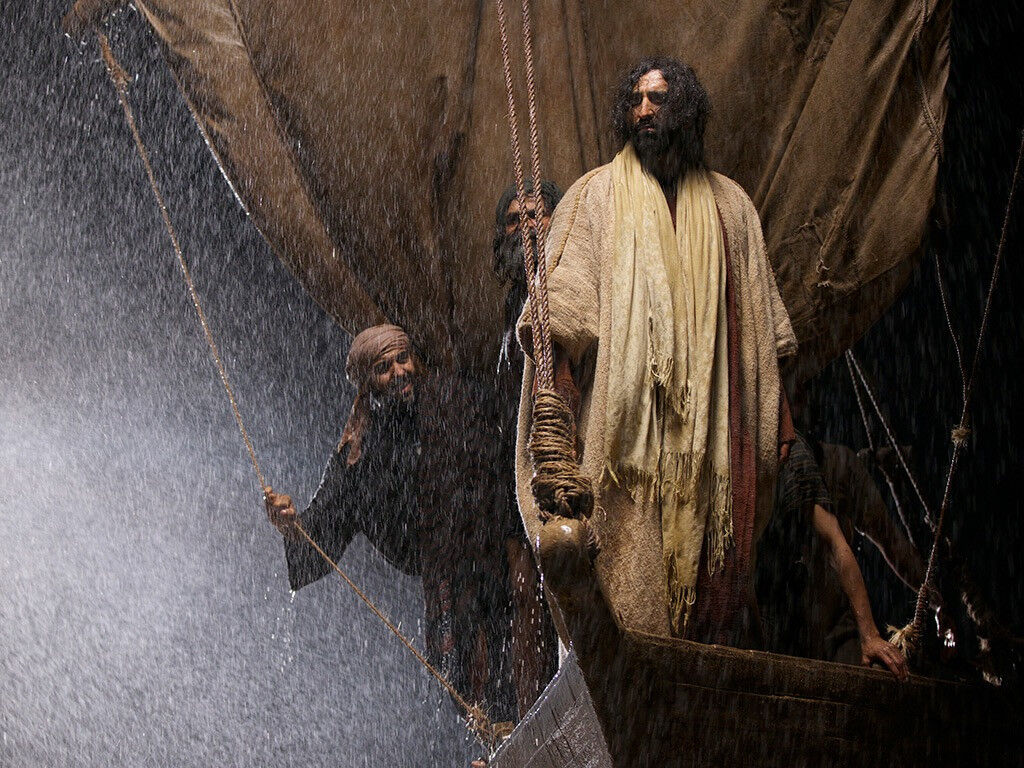






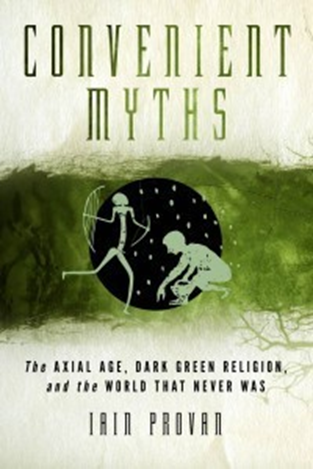


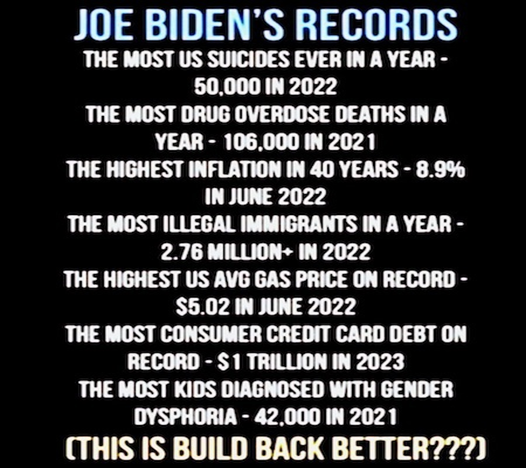
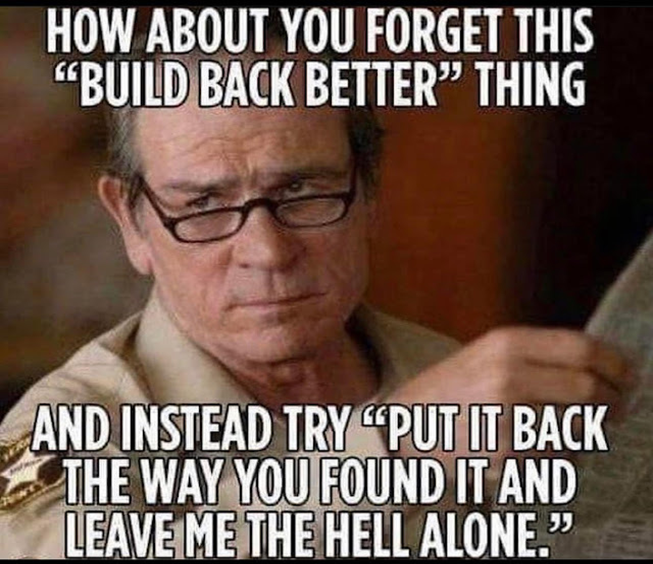



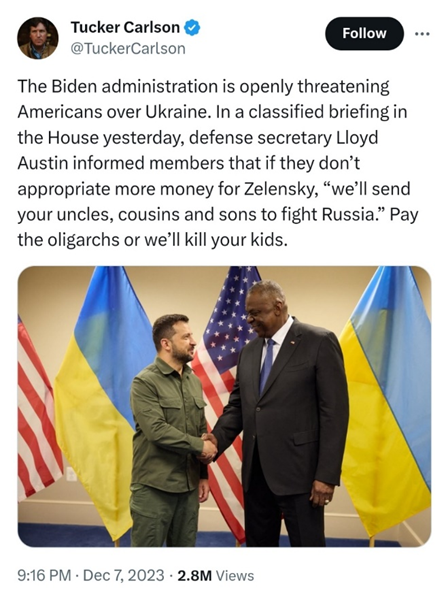







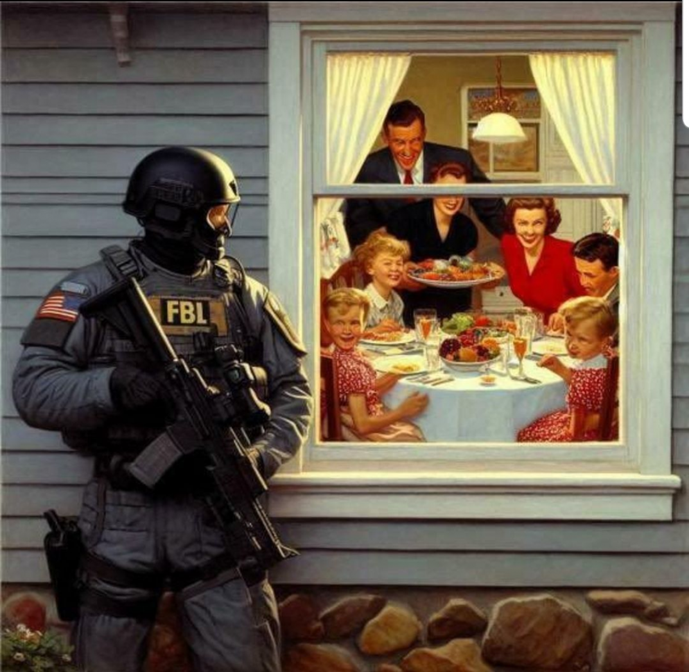
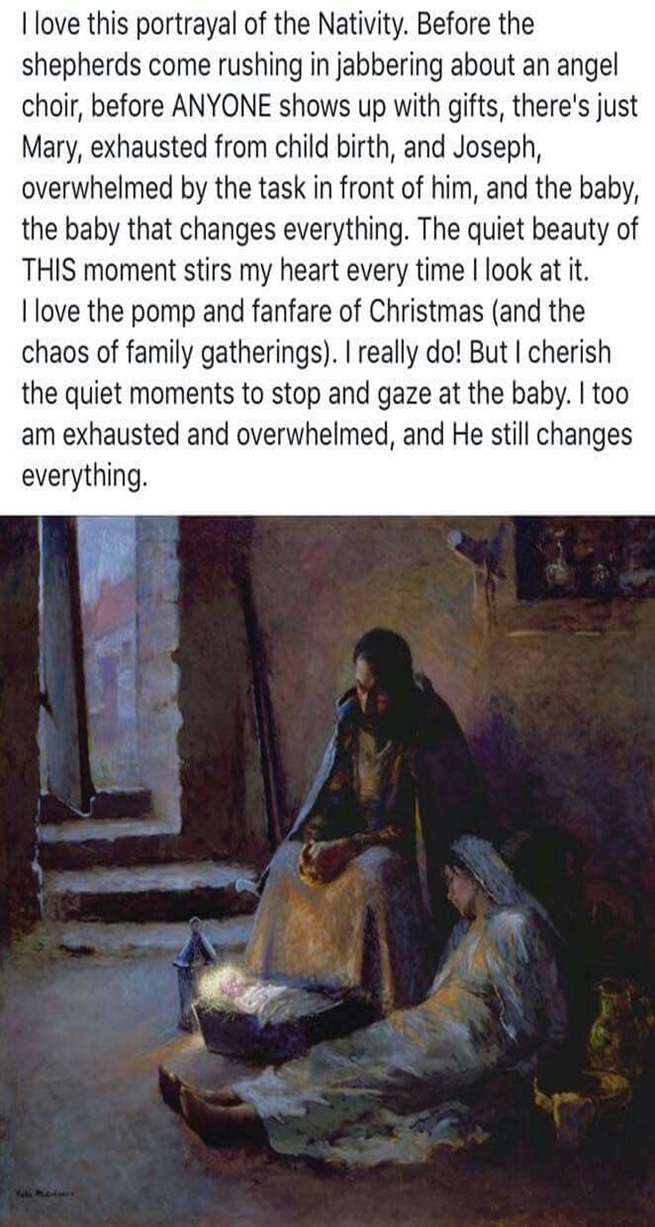


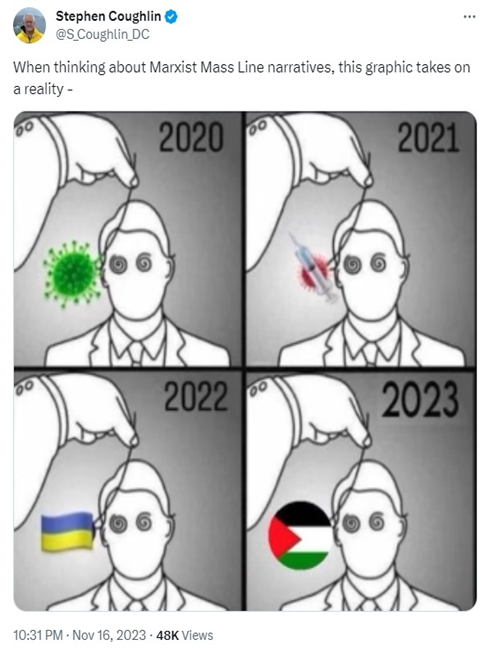
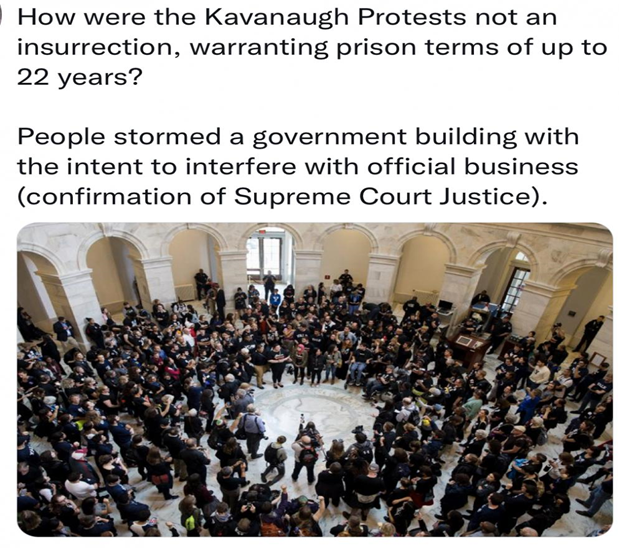






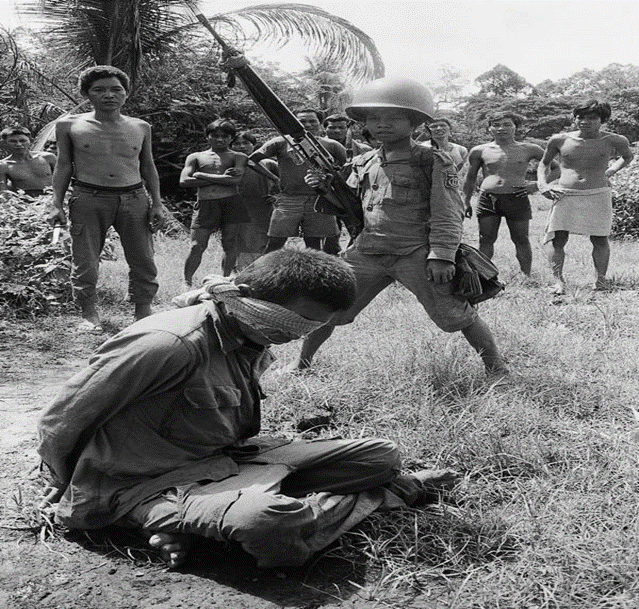
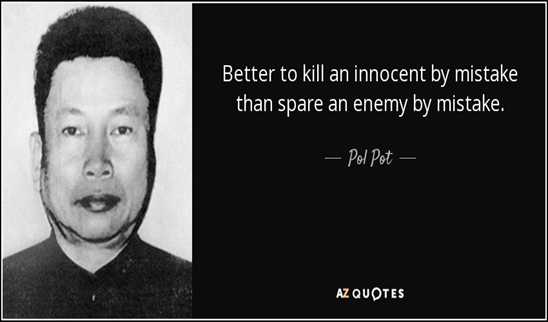
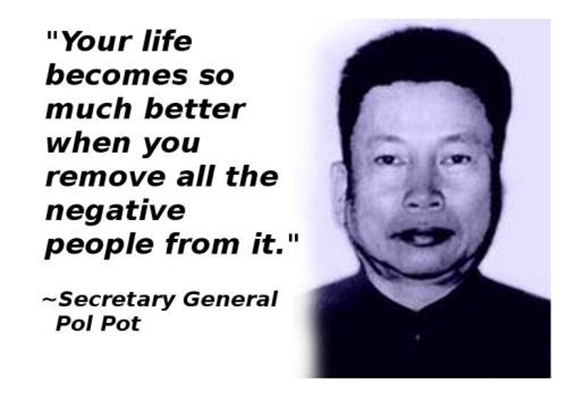
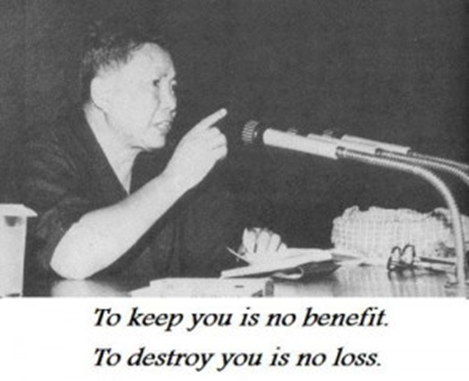

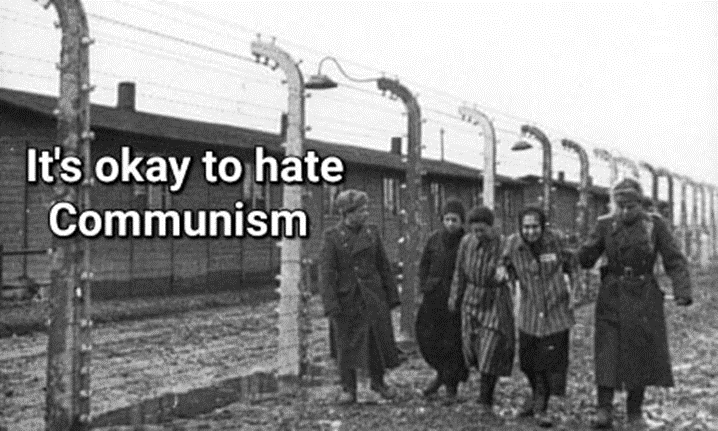
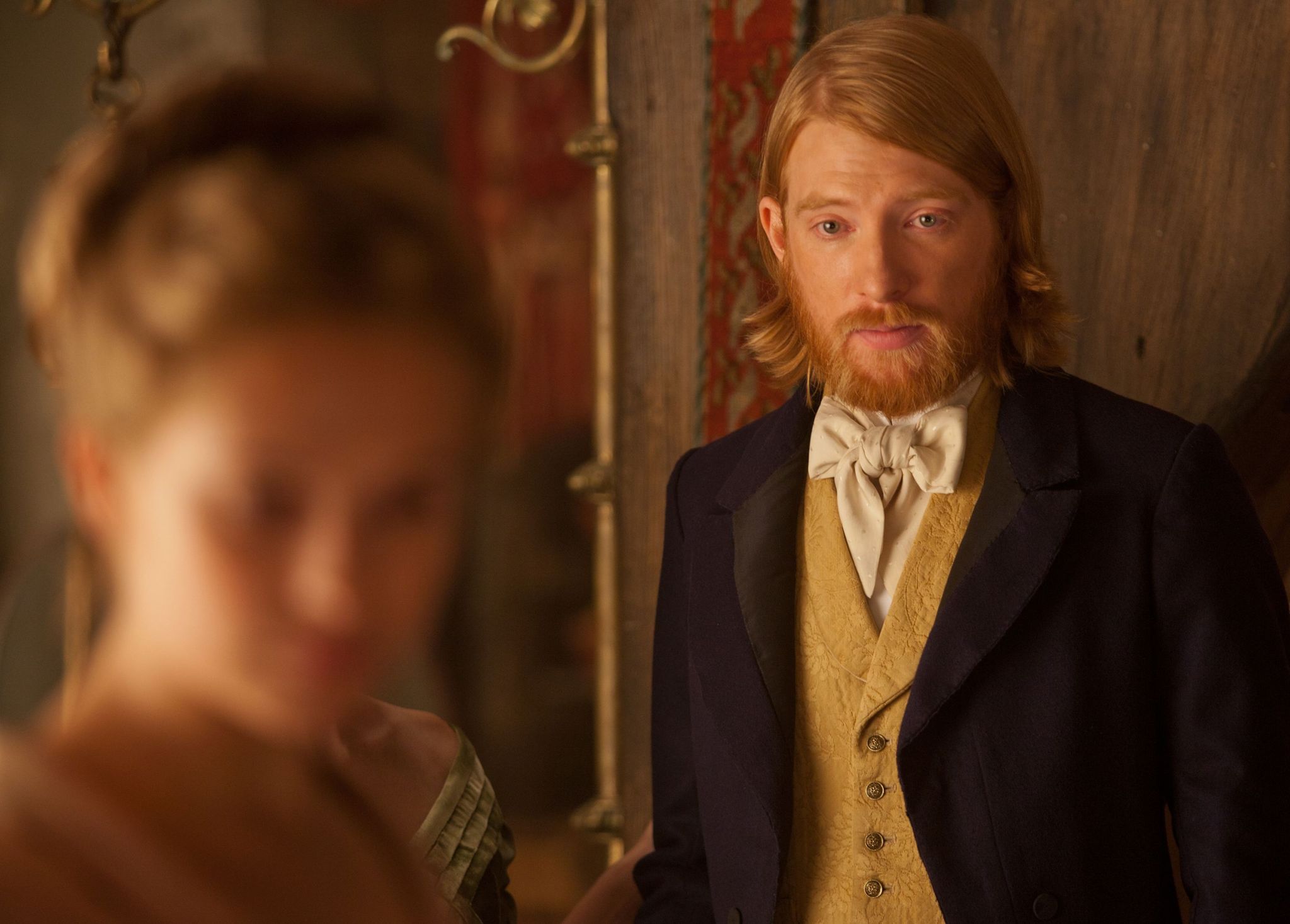
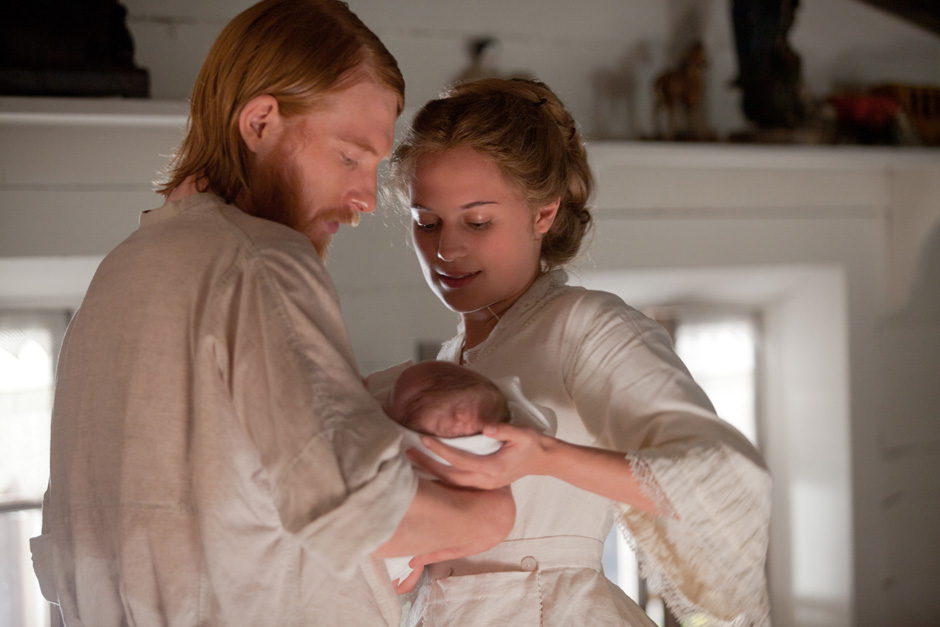
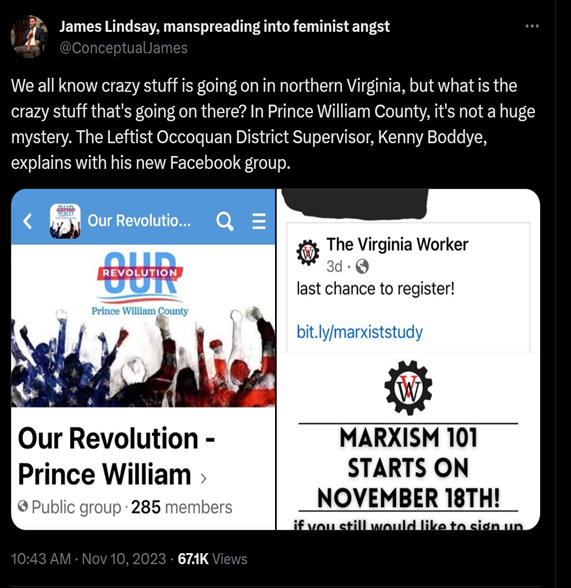



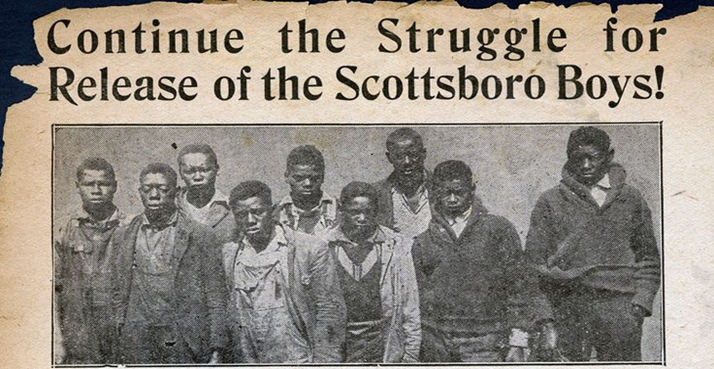

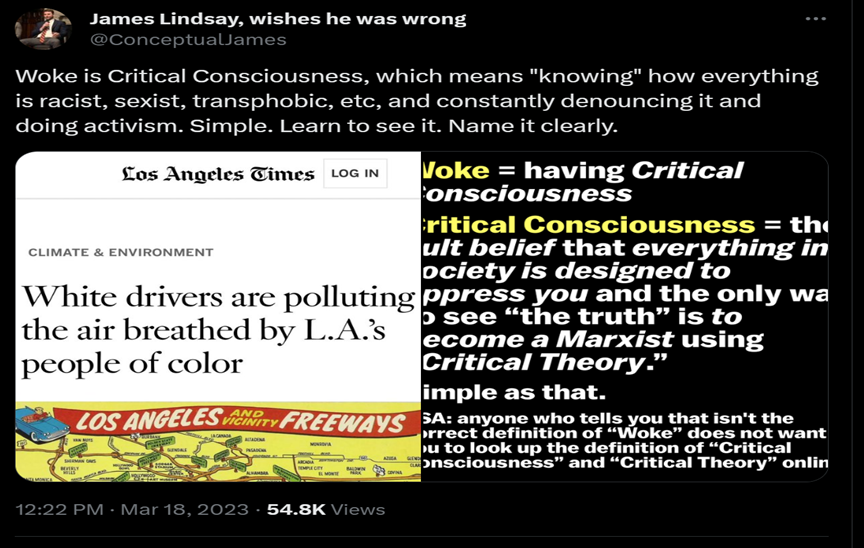








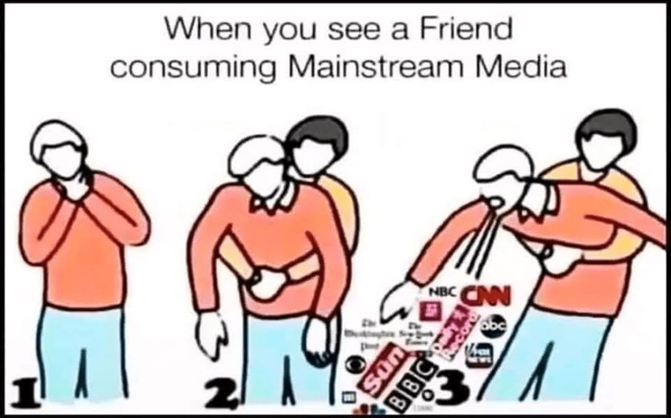
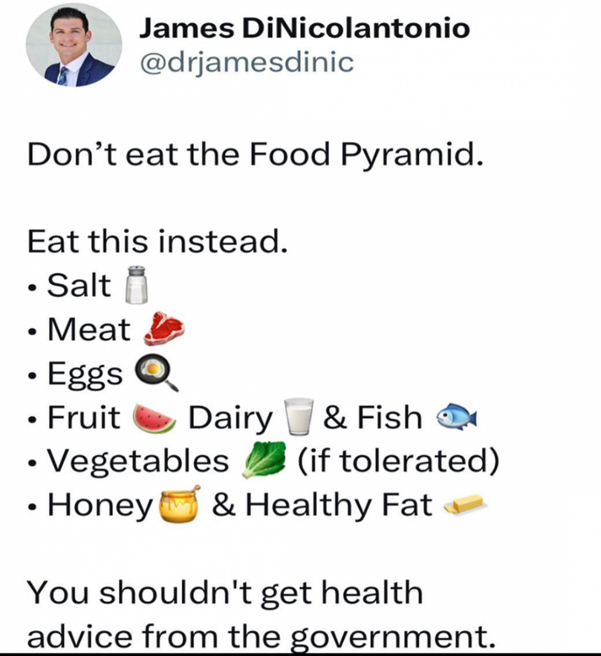


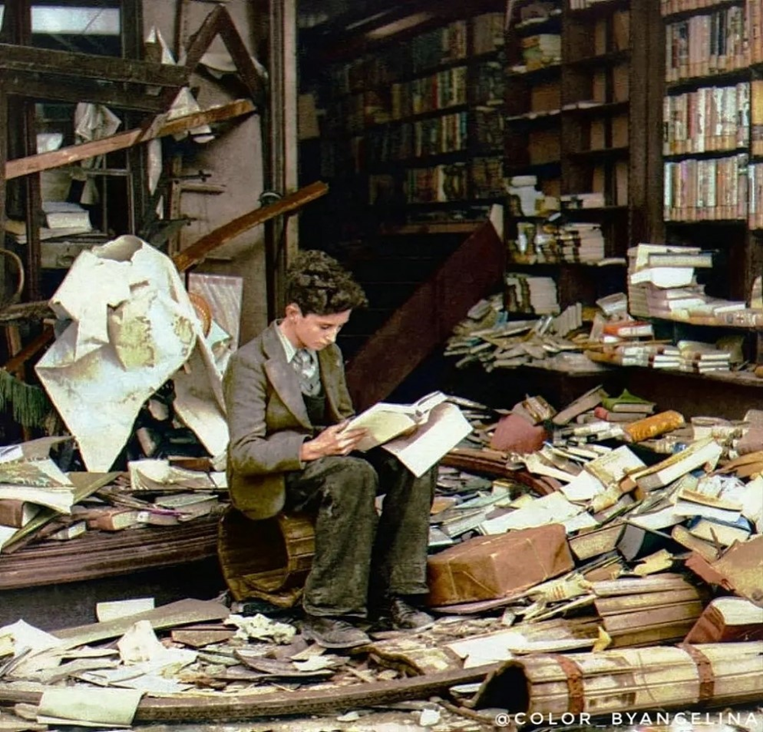



 Cindy Wity
They’re Coming!
December 3, 2023 Leave a comment
We are entering a season of celebrating Good News – the birth of a good King, the King’s establishment of a good kingdom and the King’s means for new creation. But hold on. Have we been invaded by body snatchers?
They look like us. Exactly like your loved ones or even possibly yourself. Replacement people. Exact copies yet devoid of empathy and humanity.
The 1978 film version of Invasion of the Body Snatchers takes place in San Francisco. The plot involves Matthew Bennel and Elizabeth Driscoll. Both work for the Health Department. Elizabeth is the first to suspect that something strange is going on. She awakes one morning to find her boyfriend Geoffrey being cold and distant and doing odd things. And it’s not just him. Everyone now seems strange to her.
Elizabeth Driscoll:
I keep seeing these people, all recognizing each other. Something is passing between them all, some secret. It’s a conspiracy, I know it.
Matthew Bennel:
There can’t be a conspiracy!
Elizabeth Driscoll:
Matthew, I’m telling you something is going on here.
Matthew suggests they speak to his friend, pop-psychiatrist David Kibner. They drive over to the bookstore where Kibner is promoting his new book. On the way they encounter “They’re coming!”
Dr. David Kibner:
Elizabeth, could you please tell me, in your opinion, what is going on?
Elizabeth Driscoll:
People are being duplicated. And once it happens to you, you’re part of this… thing. It almost happened to me!”
Kibner confirms that several of his patients are claiming that their spouses are not who they seem to be. But he puts it down to mass hysteria until Jack and Nancy Bellicec, Matthew’s friends, discover a mysterious embryonic adult-body resembling Jack in the mud spa they run.
Elizabeth Driscoll:
I have seen these flowers all over. They are growing like parasites on other plants. All of a sudden. Where are they coming from?
Nancy Bellicec:
Outer space?
Jack Bellicec:
What are you talking about? A space flower?
Nancy Bellicec:
Well why not a space flower? Why do we always expect metal ships?
Jack Bellicec:
I’ve NEVER expected metal ships.
Together they figure out that humans are being replaced with flawless biological copies who are emotionless. The cold unthinking replicant has one quest – its survival. It must bring others into the fold . . . of the alien plant pods.
How does replacement happen? Organically over time. Strange spores drifted to earth from space. Mysterious pods began to grow. The pods begin replacing the dominant species by spawning emotionless replicas. The original bodies disintegrate into dust after the duplication process. The pod people outwardly resemble the people they have replaced, but are completely empty and soulless.
This happens to San Francisco’s residents one body at a time – when the citizen falls asleep near the pod. The ‘Podified’ then distribute the pods for more replication.
A ‘Podified’ Professor David Kibner explains the why of Pod Life:
“We came here from a dying world. We drift through the universe, from planet to planet, pushed on by the solar winds. We adapt and we survive. The function of life is survival.”
And so it is that when the credits roll, apparently there are no more humans left in San Francisco. Alien pods have consumed human’s emotional individuality for their survival. Only hollow replacement clones and a screech remain:
Pod people, alike as “two peas in a pod”, have a collective mindset and are extremely persistent. They want to replace humanity with a replicant humanity for their own survival. So America be warned. Pod people – They’re coming! Welcome to 2024 and communism.
Body Snatchers have invaded Progressive San Francisco. We see empty and soulless people acting in weird parasitic ways for the survival of the Left’s Pod People collective.
These had been lulled into replacing their humanity with an invitation for mindless wellbeing. We watch a ‘Podified” Elizabeth Driscoll try to pacify Matthew into acceptance:
“There’s nothing to be afraid of. They were right. It’s painless. It’s good. Come. Sleep. Matthew.”
People who fall asleep with media ‘pods’ wake up different people. These are the people Leftists want.
Leftist’s want Pod people who are devoid of individuality and filled with a collective consciousness. Free will and human agency are to be subsumed to create a monolithic culture. Take away one’s voice (except for the screech) and one’s power, and one’s free will and you have compliant Pod people.
Invasion of the Body Snatchers? There are several indicators:
Artificial Intelligence or AI-based transhumanism is the closest method akin to Pod metamorphism. See Transhumanism is Satanism with a Brain Chip | Timothy Alberino talks with Joe Allen (rumble.com)
And, Joe Allen: Transhumanism and the Bio-Digital Convergence (rumble.com)
The mRNA vaccine has certainly altered healthy bodies. See below and previous posts.
Abortion is body snatching.
And so is transgenderism. See Inside the Transgender Empire.
Queer theory and critical race theory seek to Pod people with an alternate universe.
And there is Google which plants pod seeds. People who search with Google wake up as different people. For Google’s strange seeds drifted into cyberspace from the deep state. Mysterious pods begin to grow and take over minds. See The Big Brother of Silicon Valley video below.
We know that Joe Biden is a Pod Person: ANOTHER LIE! Joe Biden Claims He “Taught at the University of Pennsylvania For Four Years” – Biden NEVER Taught a Single Class (VIDEO) | The Gateway Pundit | by Cristina Laila
And, the Biden regime is made up of body-snatching Pod people U.S. Suicide Rate Hits 80-Year High Under Biden Govt.
(One disturbing aspect of the movie I noticed is that the men, including the male lead, disbelieve and gaslight the females. I don’t know if this was intentional or just indicative of society.)
INVASION OF THE BODY SNATCHERS WEB TRAILER – YouTube
~~~~~
The Big Brother of Silicon Valley – YouTube
~~~~~
Jesus’s announcement of the Kingdom of God. What did that mean?
This podcast explores the Gospel of Mark’s introduction to Jesus and his basic message and mission.
God’s Kingdom Has Arrived (bibleproject.com)
~~~~~
Informed Dissent:
Moderna Admits mRNA COVID Shot CAUSES CANCER – Billions Of DNA fragments Found In Vials (Video) » Sons of Liberty Media
A whistleblower from New Zealand has gone public with vaccine data from the New Zealand Ministry of Health.
New Zealand: a COVID vaccine administrator has gone rogue and turned into a full-blown whistleblower, revealing, for the first time, the actual number of deaths related to a “bad batch” of the Pfizer vaccine.
COVID vaccine database administrator goes rogue, reveals how many people actually died from Pfizer jab… – Revolver News
The New Zealand Government is Hiding Something; The same Tyranny is coming to the U.S.:
Emergency Broadcast – NZ Police Raid Whistleblower’s Home | Liz Gunn (bitchute.com)
Liz Gunn and the whistleblower: Operation M.O.A.R. – The Mother of All Revelations | New Zealand Loyal (bitchute.com)
Professor Dr. Didier Raoult and colleagues pioneered the use of hydroxychloroquine + azithromycin for treatment of COVID-19 disease.
Conclusion (Fauci lied people died)
Although this is a retrospective analysis, results suggest that early diagnosis, early isolation and early treatment of COVID-19 patients, with at least 3 days of HCQ-AZ lead to a significantly better clinical outcome and a faster viral load reduction than other treatments.
Outcomes of 3,737 COVID-19 patients treated with hydroxychloroquine/azithromycin and other regimens in Marseille, France: A retrospective analysis – PMC (nih.gov)
~~~~~
Pod people:
Lindsey Stirling – O Holy Night (Official Music Video) – YouTube
Rate this:
Filed under 2023 current events, Cinema, Communism, cultural Marxism, Film, Movies, Political Commentary, Politics, social engineering, totalitarianism, transhumanism Tagged with artificial intelligence, Communism, Film, Invasion of the Body Snatchers, media, social engineering, transhumanism