Present But Not Accounted For
June 25, 2023 Leave a comment
The death, burial, and resurrection of Jesus– who did the evangelists turn to for their record of these events? They relied on the testimony of several women – supporters and disciples – who had been with Jesus from the earliest days of his Galilean ministry and followed him to Jerusalem. The women were authoritative apostolic witnesses of these events in the early Christian community. Their telling and retelling of these events shaped the Gospel tradition.
The four gospel accounts variously record the women’s eyewitness testimony of the exceptional events in spite of what is alleged about a first century woman’s testimony not considered credible in a court run by men.
The gospel writers, as did other ancient historiographers, set great store in the role of eyewitnesses.[1] First-hand accounts of what was seen and heard and its interpretation were the most reliable. As a matter of record and for a connection to the sources, the identities of the women who witnessed the events of the Passion and resurrection are clearly identified by the gospel writers (see Women as Eyewitnesses below). The women were present and accounted for in the gospels.

Across the four gospel accounts, two or three women are noted to be at the cross, at the burial and at the empty tomb. This would fulfill Torah’s requirement (Deut. 19:15) for two or three witnesses for evidence to be substantiated.
We can be thankful that the women’s eyewitness testimonies, even if rejected by a first century court of men, provides for us today the historical reality of the extraordinary events. Those who have not seen the risen Lord are dependent on those who have such as Mary Magdalene, an apostle to the apostles, who said “I have seen the Lord!”
The women’s testimony, even if rejected by men, certainly didn’t preclude women in the community from accepting it. The women’s firsthand account of the events spread throughout the Christian community, where as many women as men, and likely more, were drawn to early Christianity. And where the role of the women as benefactors and disciples of Jesus was already well-known.[2] That a woman was commissioned by Jesus to be his “go and tell” witness – this was no surprise. The resurrection was the “Do you know what this means!” surprise.
For the women involved, it wasn’t a matter of passive observation. It involved active understanding, as Richard Bauckham, in Gospel Women: Studies of the Named Women in the Gospels writes [3]:

“It would be a mistake to envisage the women’s role of eyewitnesses as a passive one. As participants in events that radically changed their own lives, the women, in telling and retelling the stories of the events of the passion and resurrection, were also interpreting the significance of the events.”
It would also be a mistake to assume that what the women were relating had to reinterpreted and retold by men.
Again, Richard Bauckham[4] :
“I conclude that there is no evidence to suggest that the role of women in the resurrection stories has been depreciated or limited in the Gospel narratives of Matthew, Luke, and John. Where male prejudice against the credibility is explicitly evoked (Luke 24:11), this is so that it may be decisively overturned.
“Where readers may bring such prejudice to the texts, even though the texts give no pretext for doing so, again the effect of the narratives will be to refute and to reverse assumptions of male priority and female unreliability.
“. . . it suggests that within the Christian communities themselves the role of women as witnesses was highly respected. There seems to be no evidence that it became less so over time. It is one of a variety of striking aspects of early Christianity that belong to the countercultural nature of the Christian communities as societies in which God’s eschatological overturning of social privilege was taken very seriously.” (Emphasis mine.)
Present but not accounted for: women, apostolic traditioners and eyewitness guarantors of not only the Passion and resurrection events but also of the incarnation, are not included in the kerygmatic summaries of Peter and Paul.
(Kerygmatic summaries can be thought of as basically sermon outlines open to improvisation and amplification from gospel tradition influences.)
Kerygmatic summaries in sermons (Acts 2:14-36, 3:12-36, 10:34-43, 13:16-41) and in Paul’s resurrection discussion (1 Cor. 15) do not mention the role of women. That they are not mentioned doesn’t disavow the women’s roles as apostolic traditioners and eyewitness guarantors of the gospel tradition. The sermons are an overview of the gospel story meant for a crowd not aware of it.
(Did Peter and Paul have concerns about mentioning the role of women to a patriarchal assembly? Where they concerned that their message would be rejected by male listeners? It’s a real possibility.)
What may be seen as a snub, though, is not being accounted for in Paul’s resurrection appearance list (1 Cor. 15:3-7).
Here ‘s Richard Bauckham’s take on that [5]:
“. . . we should notice that the women are not in fact, as so often assumed, absent from 1 Corinthians 15:3-7. Paul distinguishes between an appearance to the twelve and one to all the apostles, since, unlike Luke, he does not confine the term “apostle” to the twelve. At this appearance, he would have assumed that other apostles he knew, such as Barnabas, Sylvanus, and James the Lord’s brother, were present along with the twelve. Now that it is generally recognized that Paul knew and had a great respect for at least one woman apostle, Junia (Rom 16:7), we must certainly also conclude that he would have taken for granted that women were included in an appearance to “all the apostles.”
(The apostle Paul calls Andronicus and Junia (Rom 16:7) “apostles”, likely meaning that they had been present at a resurrection appearance of Jesus. The name Junia was probably the Latin name of Jesus’s disciple Joanna (Luke 8:3; 24:10).) Andronicus (Junia’s husband Chuza?) and Junia (Joanna), Palestinian Jews, were likely members of the Jerusalem church before going to Rome.
Present today but not accounted for: Women as apostolic traditioners and eyewitness guarantors of the gospel traditions in today’s sermons AND women of the same caliber and devotion to the Lord in our pulpits.
We need more women traditioners, like those who followed and supported Jesus from the earliest days of his Galilean ministry and then followed him to Jerusalem and to the cross, the burial, and the empty tomb. We need more women traditioners like those who sat at Jesus’s feet and were discipled by him: “[Martha’s] sister, Mary, sat at the Lord’s feet, listening to what he taught.” (Luke 10:39). But women today have been “roled” into submission with the weight of out of context scripture verses.
The apostle Paul, in 1 Timothy 2:14, alludes to women being deceived and about divine order needing to be observed. Does anyone think that the women supporters and disciples of Jesus were deceived and out of order? Does anyone think that women were deceived in the tomb garden as Eve had been deceived in Eden’s Garden? What I see in scripture is a reversal of status – from women easily deceived to women rightfully believed.
Paul wrote to Timothy alluding to the female only cult of Artemis (Diana) in Ephesus. The women of the cult had been deceived. The women of the cult subordinated men. Paul didn’t want that deception and disorder brought into the church community at Ephesus. Ephesus and the Diana cult were the context for “I do not permit a woman to teach or to assume authority over a man; she must be quiet.” (1 Tim. 2:12). Paul’s words to Timothy were of a parochial concern, intending to make Timothy be aware of what’s around him and how he could confront it.
Paul’s words to Timothy were not a universal injunction against women believing them to be unreliable in discerning what is true and good and thereby disqualified as an authoritative voice in the church. If Paul thought that, then the female apostolic traditioners and eyewitness guarantors of the birth, death, burial, and resurrection of Jesus would also be suspect. That would fly in the face of reality.
Consider that throughout scripture we find that God used lowly salvation agents to bring about a reversal of status, not just for the agents e.g., Hannah and Mary, but also for Israel and the world. And, as mentioned, women – Mary and Elizabeth – were also apostolic traditioners and eyewitness guarantors of the incarnation. (Read Luke chapter 1 where events are related from a gynocentric perspective, rather than the typical androcentric perspective. Quite a pulpit!)
The narrative of women communicating the word of God is so clear in the New Testament. Women were present and accounted for in the Gospels, in the epistles and in extrabiblical sources. Today, women are being accounted for in a role, a designated role, a pre- “countercultural nature of the Christian communities as societies in which God’s eschatological overturning of social privilege was taken very seriously” role.
*****
[1] See Richard Bauckham’s Jesus and the Eyewitnesses: The Gospels as Eyewitness Testimony (William B. Eerdmans Pub. Co., Grand Rapids, MI, 2017) for the role of testimony in ancient historiography and in the gospels.
[2] See chapter 5, Joanna the Apostle, in Richard Bauckham’s Gospel Women: Studies of the Named Women in the Gospels (William B. Eerdmans Pub. Co., Grand Rapids, MI, 2002) for the background behind the financial support given Jesus by Joanna, the wife of Herod’s steward Chuza (Luke 8:3) and for background of women in the first century being in possession of independent financial resources.
[3] Richard Bauckham, Gospel Women: Studies of the Named Women in the Gospels (William B. Eerdmans Pub. Co., Grand Rapids, MI, 2002) 302
[4] Ibid, 285-286
[5] Ibid, 310
*****
Why women should be church leaders and preachers // Ask NT Wright anything – YouTube
*****
How (Not) to Read the Bible: Making Sense of the Anti-women, Anti-scie – FaithGateway Store
How (Not) To Read the Bible (bibleproject.com)
*****
There are sermons and books on the roles for men and women. There are sermons and books about male-female hierarchy. There are sermons and books explaining gender roles in egalitarian or complementarian terms. “Roles!” “Roles!” “Roles!” There are voices so contentious and acrimonious demanding “Roles” that schisms result. The apostle Paul would be a-Pauled!
Southern Baptists vote to expel two churches led by female pastors (nbcnews.com)
“Sarah Clatworthy, a member of Lifepoint Baptist Church in San Angelo, Texas, who has called on the SBC “to shut the door to feminism and liberalism,” said she supported the ban on female pastors.
“We should leave no room for our daughters and granddaughters in the generations ahead to have confusion on where the SBC stands,” she said. “Let them know Scripture is our authority and not the culture.”’
The first century women were not feminists or liberals, though it would look that way to the legalists. They saw and reported what they had witnessed and learned. They were active in the “countercultural nature of the Christian communities as societies in which God’s eschatological nature overturning of social privilege was taken very seriously”.
Many think of Scripture and the church in androcentric terms. How could they not when they see men on a platform expounding, in male voices, what the scripture says. Have these interpreters rightly divided the word of God regarding men and women in the Kingdom of God? Have they wrongly divided men and women in the Kingdom of God into superficial roles?
I’ve read inferences and assumptions as to how things are to be: The Role of Women in the Church | Articles | Moody Church Media (moodymedia.org) and Dispensational Theology | Articles | Moody Church Media (moodymedia.org). The latter includes nonsense about a “rapture” occurring – a misinterpretation of scripture which leads one to doubt the former’s “Role of Women” interpretation.
And, I’ve read even-handed accounts: Can Women be Pastors and Preachers? What the Bible Really Says (biblestudytools.com) and Complementarianism vs Egalitarianism – Do Christians Have Gender Roles Wrong? (crosswalk.com)
Remember Genesis 2? Adam (‘adam, a generic term meaning “human person”) was split in two and Eve was formed from one half of Adam. We read that this was done to form an equal partnership that would work to bring form and function to creation, a work God started and handed over to mankind. I find this partnership emphasis continued in the apostle Paul’s writing.
As I read Paul’s letters to the individual Christian communities, as I read his explanations and guidance of how to think and relate as new creations where they’re at, I hear his admonitions: “Get your act together! The world has its way of thinking! The world has its own form and function! But you are of different stock! Think and act like it! Work together for the sake of the gospel!”
The Spirit of God has been released into the world. The Spirit of God will go where it will. Did you really think that anyone could domesticate the Holy Spirit with theology and dispensationalism and policies of roles? Sure, those things tend to make one feel safe and secure, like you have a handle on things. But as we have seen with Jesus and now with the Holy Spirit, neither one “plays” by our rules.
Finally, note that Paul wrote to the Corinthian “brothers and sisters” that God gives His gifts as He determines (1 Cor. 12:1, 11). No further distinction is made regarding their allotment.
*****
Women as Eyewitnesses
In the gospel narratives of the Passion, burial and resurrection of Jesus, there are five named eyewitnesses and two unnamed but specified eyewitnesses: Mary Magdalene, Mary the mother of James and Joses, Salome, Joanna, and Mary of Clopas, the mother of the sons of Zebedee, and the mother of Jesus. Each evangelist mentions the women significant to their readers.
These had active roles as eyewitnesses. You see, they were there in person at the cross, at the burial, and at the empty tomb, as we learn in Matthew’s gospel account:
“There were several women there [at the cross], watching from a distance. They had followed Jesus from Galilee, helping to look after his needs. They included Mary Magdalene, Mary the mother of James and Joseph, and the mother of Zebedee’s sons.” (Matt 27: 55-56).
Mary Magdalene and the other Mary [the mother of James and Joseph] had watched the burial of Jesus. They had been sitting opposite the tomb (Matt. 27:61). They returned on the first day of the week to look at the tomb. (Matt: 28:1). There, they encounter an earthquake and an angel. They receive divine revelation: “He is not here; he has risen, just as he said.” (Matt. 28: 5-6). The women then receive a command to proclaim (“Go and tell”) the Lord’s resurrection to the disciples (Matt. 28: 7). As they start running to herald the news, they are suddenly met by Jesus who says “Hello!” and “Don’t be afraid” and “Go and tell my brothers that they should go to Galilee. Tell them they’ll see me there.”
The gospel of John, chapter 20, records that Mary Magdalene, after seeing the stone rolled away from the Jesus’ tomb, runs off to tell Peter and John, the one closest to Jesus, that the body was missing. Peter and John run to the tomb and check it out. Mary Magdalene must have shown them the way because she – not them – had watched the burial.
Back at the empty tomb, Mary begins crying as she looks inside. She then sees two angels who ask her why she is crying. Mary then turns and sees a figure standing nearby. She thinks it’s the gardener. The figure asks why she is crying. She explains and then Jesus reveals himself to her. Jesus then tells her “Go to my brothers and say to them, ‘I’m going up to my father and your father – to my God and your God.”
Mary Magdalene, an apostle to the apostles, went and told the disciples, “I’ve seen the Lord!” and that he said these things to her. Later, when the disciples see the Lord, they corporately say what Mary said: “We’ve seen the Lord!” Seeing is followed by belief.
Jesus told the group “God’s blessings on people who don’t see, and yet believe!”
Notice in the following synoptic gospel texts how “women” and seeing verbs are emphasized.
Matthew 27:55-56
Many women were there, watching from a distance. They had followed Jesus from Galilee to care for his needs. Among them were Mary Magdalene, Mary the mother of James and Joseph, and the mother of Zebedee’s sons.
Mark 15:40-41
Some women were watching from a distance. Among them were Mary Magdalene, Mary the mother of James the younger and of Joseph, and Salome. In Galilee these women had followed him and cared for his needs. Many other women who had come up with him to Jerusalem were also there.
Luke 23: 49
But all those who knew him, including the women who had followed him from Galilee, stood at a distance, watching these things.

*****
Informed Dissent:
A Nurses’ POV on COVID and Healthcare (substack.com)
“Atrazine [a herbicide] is an endocrine disrupter, which is able both demasculinize (chemically castrate) and completely feminize adult male frogs as well as other aquatic life. It has been documented to affect murine (mouse) reproductive systems.
“. . . common foods which are endocrine disruptors can cause feminization in adult human males:
“. . . Secondary hypogonadism caused by the excessive intake of isoflavones in soy milk was diagnosed. In men, an excessive intake of isoflavones may cause feminization and secondary hypogonadism.”
Kennedy is right – Atrazine and Gender Fluidity (substack.com)
Here we go. Swedes are moving in the right direction:
Sweden adopts ‘100% fossil-free’ energy target, easing way for nuclear – EURACTIV.com
Even Sweden Doesn’t Want Migrants Anymore (foreignpolicy.com)
Oh, swell!
Child trafficking:
Discord servers used in child abductions, crime rings, sextortion (nbcnews.com)
End Child Trafficking | Operation Underground Railroad (ourrescue.org)
*****






*****
Why Weren’t We Allowed To Question The Covid Vaccines? – YouTube
A Mighty Host [Lyric Video] – YouTube
A Mighty Host — Brian Sauvé: For the New Christendom (briansauve.com)
Bryson Gray – Reclaim The Rainbow (w/ @JimmyLevy & Shemeka Michelle) [MUSIC VIDEO] – YouTube

























































Is This Our Last Independence Day?
June 30, 2023 Leave a comment
“One, if by land, and two, if by sea”, and three, if by One Health.
Who can forget COVID tyranny? Who can forget the constant fear porn driving people to disarm themselves of critical thinking to allow entry of the COVID narrative into their lives?
Who can forget that our churches, our businesses, our relationships, and our lives were masked and quarantined for a flu with a 99% recovery rate? Who can forget the horrific mandates imposed upon us? Who can forget the threats made to induce vaccine submission? Who can forget the severe adverse events that have occurred and will continue to occur from the untested mRNA vaccine?
Who can forget that the CDC banned the use of effective repurposed drugs – Ivermectin and hydroxychloroquine – so that an “emergency use authorization” could make it possible to flood the country with the untested mRNA vaccine? Lives were lost because of this ban.
And, who can forget that before the COVID plandemic the country was rapidly bouncing back from Obama’s anti-America years?
As I write this, a worldwide totalitarian medical police state is being formed that will make the COVID plandemic’s years of oppression look like a maskless walk in the park. I’ve posted warnings about what’s coming – digital ID’s and digital currency – at least twice before. What is coming is hundreds of times more oppressive than what happened during the COVID plandemic. (They are planning to release another pandemic soon – as a test of our response and the overlords authority.)
Tell me. Have you heard about any of this in the main stream media? Have you heard anyone in the media talk about what the CCP-backed World “Health” Organization (WHO) is up to? Have you heard anyone mention digital passports and digital currency? Have you heard about One Health, a global biotech surveillance state, complete with surveillance and censorship of virtually every aspect of life on earth?
Have you heard about any of this from your rep or senators? No? Why not? Is this off their radar? Could our rep or senators be all in on global governance? Could the Uniparty, aka the Swamp, which is made up of both Dems and Republicans, be all in on the subjugation of the U.S. to global governance? Could it be: “It’s a BIG club and you ain’t in it!”
Nothing in this post is conspiracy theory. What is taking place is mostly out in the open. You can read what they doing on websites. For example, One health (who.int):
“By linking humans, animals and the environment, One Health can help to address the full spectrum of disease control – from prevention to detection, preparedness, response and management – and contribute to global health security.”
And here is WEF’s Klaus Schwab praising the CCP – communist China:
World Economic Forum Concludes “Annual Meeting of the New Champions” in China with Accelerated Plans Toward Global Social Credit and Digital Surveillance | The Gateway Pundit | by Shawn Bradley Witzemann | 181
Wanting to learn more about the attack on our independence, I attended, on Wednesday, June 28th, Webinar | A Treaty by Any Other Name: The WHO’s Latest Attack on Our Sovereignty (rumble.com)
Co-Host and Moderator
Frank Gaffney, Chairman, Center for Security Policy; Co-Chair, Stop Vaccine Passports Task force; Co-Founder, Sovereignty Coalition.
Co-Host and Panelist
Reggie Littlejohn, Founder and President, Women’s Rights Without Frontiers; Co-Chair, Stop Vaccine Passports Task force; Co-Founder, Sovereignty Coalition.
– Topic: The WHO’s new “Bureau’s Draft” of the Pandemic Treaty: Surveillance, Censorship and Loss of Sovereignty
Panelists
Hon. Michele Bachmann, Member of Congress (2007-2015); Presidential candidate (2012); Dean, Robertson School of Government, Regent University
– Topic: What I observed in Geneva at the World Health Assembly. Once sovereignty is lost, it cannot be regained. No one is a more powerful speaker on that topic than you.
Dr. David Bell, M.D., Senior Scholar at Brownstone Institute; public health physician and biotech consultant in global health; former medical officer and scientist at the World Health Organization (WHO)
– Topic: Deferring to the WHO regarding Pandemic Preparedness Makes No Sense.
Dr. Francis Boyle, Ph.D., Professor of international law at the University of Illinois College of Law; JD degree magna cum laude from Harvard Law School, and a Ph.D in Political Science from Harvard University; Former Board Member, Amnesty International; Draft author, U.S. domestic implementing legislation for the Biological Weapons Convention, known as the Biological Weapons Anti-Terrorism Act of 1989, that was approved unanimously by both Houses of the U.S. Congress and signed into law by President George H.W. Bush
– Topic: Any agreement coming out of the WHO is already baked into U.S. law. It will not have to wait for the advice and consent of the U.S. Senate to be implemented here.
Dr. Kat Lindley, D.O., family physician and president of the Texas branch of the American Academy of Physicians and Surgeons; co-Founder, Global Health Project; member
– Topic: The constitutional, legal and legislation protections we have depended on will not work to stop the WHO power grab.
Alex Newman, Contributor, The Epoch Times and other diverse publications; award-winning international journalist, educator, author, and consultant who co-wrote the book “Crimes of the Educators: How Utopians Are Using Government Schools to Destroy America’s Children”
– Topic: The dangers of digital heath passports and their connection with the ability to buy or sell.
Dr. Karladine Graves, D.O., Private Family Physician in North Kansas City, MO; Advocate for physicians
– Topic: If the Pandemic Treaty goes through, it will injure or destroy the doctor/patient relationship and give the WHO power to force vaccinations.
A May 15th webinar provides insight into “a global biotech surveillance state, complete with surveillance and censorship of virtually every aspect of life on earth under the One Health approach”:
Webinar | ONE HEALTH: The W.H.O.’s Dangerous New Ideology (rumble.com)
Co-Host and Moderator
Frank Gaffney, Chairman, Center for Security Policy; Co-Chair, Stop Vaccine Passports Task force; Co-Founder, Sovereignty Coalition.
Co-Host and Panelist
Reggie Littlejohn, Founder and President, Women’s Rights Without Frontiers; Co-Chair, Stop Vaccine Passports Task force; Co-Founder, Sovereignty Coalition.
Topic: One Health and the Bio-Medical Surveillance State
Panelists
Dr. Elizabeth Lee Vliet, M.D., President and CEO of the Truth for Health Foundation; Member of the International Society of Gynecologic Endocrinology.
Topic: One Health: The Vise of Totalitarianism
Dr. Kat Lindley, D.O., family physician and president of the Texas branch of the American Academy of Physicians and Surgeons.
Topic: One Health and the Disruption of the Physician/Patient Relationship
Dr. David Bell, M.D., Senior Scholar at Brownstone Institute; public health physician and biotech consultant in global health; former medical officer and scientist at the World Health Organization (WHO).
Topic: The Hijacking of One Health
Dr. Meryl Nass, M.D., Board-certified internist; biological warfare epidemiologist and expert in anthrax.
Topic: One Health – W.H.O. land grab?
Brian O’Shea, Private investigator and security expert.
Topic: One Health: Global Public Health’s & The CCP’s Authoritarian Trojan Horse.
For more on the globalist takeover see Webinars – Stop Vax Passports
This is at least my third alarm about what is coming to our shores to destroy life as we know it. Globalist overlords are intent on redistributing money, resources, and control to themselves. They use highfalutin sales rhetoric from “ESG” to “stakeholder capitalism” to “conscientious capitalism.” But all the gibberish, for those of us not in the globalist “club”, leads to “You’ll own nothing and be happy.”
Globalist overlords are intent on using every world crisis they create (pandemics and Climate Change) to “reset” the lives of people to their own vagary. They act to crush our wills and claim our children. They tell us what to think and do from sun up to sundown, everything from “Cut carbon” to “No stone-fired pizza” to “Eat bugs” to “You’ll own nothing and be happy.” And yet most Americans love their trucks, their home, and eating real meat. Most Americans have faith in God, but the intelligentsia, aka politically connected radical socialist atheists, want nothing to do with God in any form or fashion including “In God We Trust” America.
The destruction of our lives and all we hold dear is their creative inclination. The suits acting to “reset” our lives act in line with what Mikhail Bakunin, revolutionary socialist, social anarchist, and collectivist anarchist once said:
“The urge to destroy is also a creative urge.”
And they will creatively destroy quietly. Consider that with digital technology, no one has to be sent to a gulag or shot for not going the way of the tyrants. None of that KGB stuff needs to happen as was done in the past. Except for some public figures, there will be none of that public messy stuff that would make globalists look like Stalinists. Digital technology will do all the dirty work. Your digital device will be a KGB agent looking in on you.
Digital governance will decide if one eats, travels and leaves their home. So, when people are deprived of liberty, of choice, of movement and of hope, they will go mad. They can then be institutionalized if they don’t commit suicide first. Like Pontius Pilate, globalists can then wash their hands of the matter.
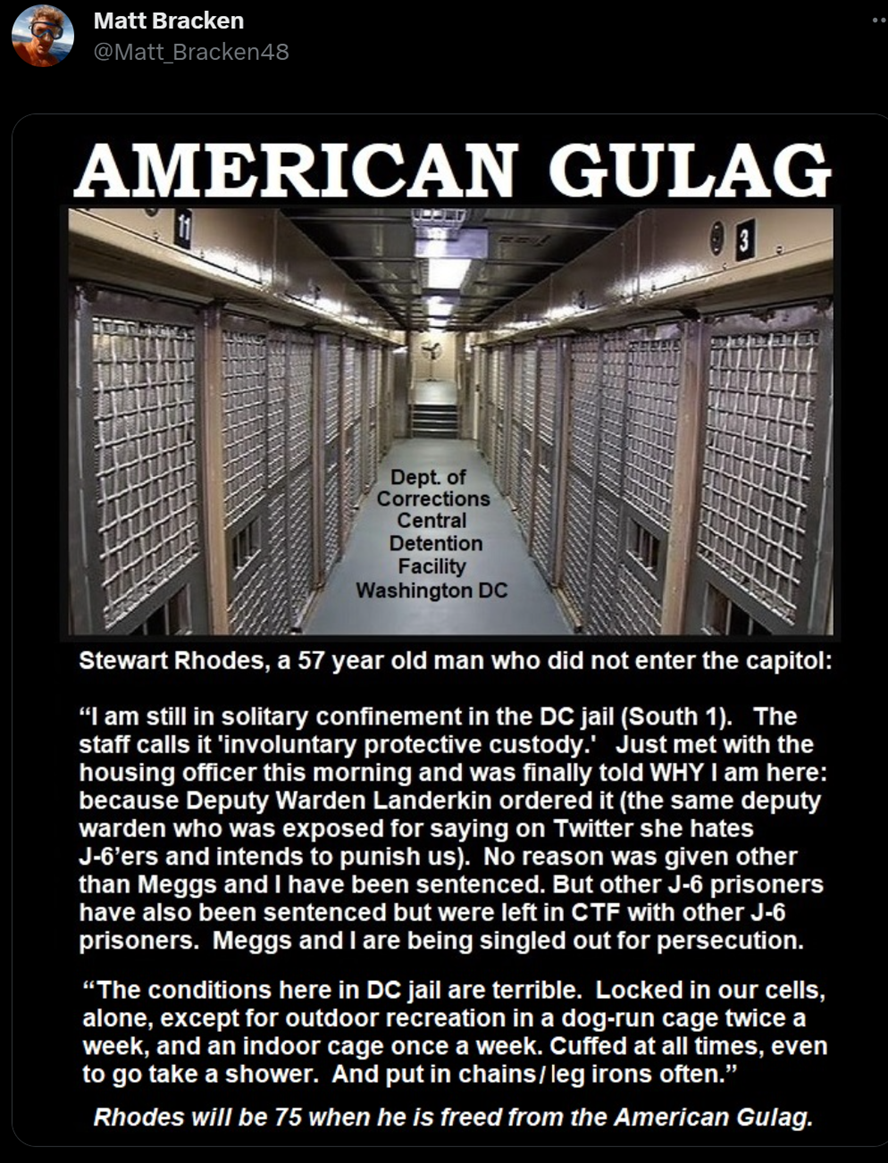
If you still doubt the extremes to which a global biotech surveillance state will deal with you, then recall the authoritarian-directed days of COVID. And look now at the two-tier system of justice under the Biden regime’s DOJ and Merrick Garland. And look at how J6 political prisoners are being treated. Each example brought together is but a small preview of what digital global governance will become.
With the extra time you have this Fourth of July weekend, I urge you to view the videos posted here. Then take action. There may not be another election.
I urge priests, pastors and leaders of the church to warn people of what’s coming and to help parishioners put a stop to it. I have no doubt that the godless globalists will restrict all Christian activity by calling it a global health “concern” (see communist China, the globalist’s role model for suppression of religion). Send a link to this post to church leaders.
Will you resist tyranny, or will this be the last Independence Day? Will you act to defend our injured, bleeding Country and insure its independence?
*****
“I only regret that I have but one life to lose for my country.” –Captain Nathan Hale, an American soldier and spy for the Continental Army during the American Revolutionary War. He was hanged by the British.
“However, at the gallows, he made a sensible and spirited speech; among other things, told them they were shedding the blood of the innocent, and that if he had ten thousand lives, he would lay them all down, if called to it, in defense of his injured, bleeding Country.”
-Captain Nathan Hale’s execution, as reported in the Essex Journal (13 February 1777).
*****
(Warning: Language!)
George Carlin – It’s A BIG Club & You Ain’t In It! – YouTube
*****
Take action:
Information you can use to make a difference: Social Toolkit – Sovereignty Coalition
Tell your reps that you do not want digital currency (CBDC) to replace physical cash. What we have now works.
Tell your reps to withdraw the U.S. from the World Health Organization (WHO).
Tell your reps to pass these bills.
H.R.79 – 118th Congress (2023-2024): WHO Withdrawal Act | Congress.gov | Library of Congress
H.R.343 – 118th Congress (2023-2024): No Taxpayer Funding for the World Health Organization Act | Congress.gov | Library of Congress
H.R.1425 – 118th Congress (2023-2024): No WHO Pandemic Preparedness Treaty Without Senate Approval Act | Congress.gov | Library of Congress
Tell your reps that you do not consent to a bio-tech totalitarian state under the WHO and the WEF.
Tell your reps that you do not consent to a digital health passport.
Note: Twenty states, all with Republican governors, prohibit proof-of-vaccination requirements. In eleven states, governors banned proof-of-vaccination requirements through executive orders. In nine states, legislators passed laws banning proof-of-vaccination requirements.
Six states—California, Illinois, New York, Hawaii, and Oregon, and Washington—have facilitated the creation of digital vaccination status applications or passed laws or enacted orders exempting fully vaccinated individuals from some COVID-19 restrictions if they can provide proof of vaccination. All six states have Democratic governors.
State government policies about vaccine requirements (vaccine passports) – Ballotpedia
Sign the It’s Time for America to Exit the W.H.O. declaration: Sovereignty Coalition
Take Action! Repeal or Amend – International Pandemic Prevention Act 2022 – Stop Vax Passports
A Cheat Sheet for Legislators Regarding the WHO and Health Emergencies ⋆ Brownstone Institute
Take action! WITHDRAW US FROM THE W.H.O. NOW! – Stop Vax Passports
Understand what’s going on around you:
Global Covid Summit
Home – Global Health and Education Projects | GHEP (globalhealthprojects.org)
The CCP is at War with America – The Chinese Communist Party’s COVID-19 Biological Warfare Attack and What’s Next (ccpatwar.com)
Of interest:
A Christian response.
Torch Of Freedom – WHO is running the world? -Part 2 -June 8 2023 (Repared) (rumble.com)
Digital ID-ing is already here. You are being surveilled:
Hohmann: Atlanta Airport goes full dystopian, using digital facial recognition IDs, fulfilling Klaus Schwab’s prophecy that humans will be digitized | The Gateway Pundit | by Jim Hoft | 2
Atlanta’s End-to-End Digital Identity Experience
Delta reveals first-ever dedicated TSA PreCheck® lobby, bag drop | Delta News Hub
*****
“CEO Larry Fink says he is going to stop using the term “ESG.” BlackRock is setting itself up to be an intermediary to help “rebuild” the Ukrainian economy. Also, James O’Keefe recently exposed an employee of BlackRock saying some really frightening things.”
Blackrock—the largest asset holder in the world
BlackRock’s Stealthy Global Ambitions – In The Tank #404 – The Heartland Institute
BREAKING: BlackRock Recruiter Who ‘Decides People’s Fate’ Says ‘War is Good for Business’ While Spilling Info on Asset Giant (okeefemediagroup.com)
A lawsuit waiting to happen: ESG violates fiduciary duty | The Hill
*****
Informed dissent:
And you think it will not happen here to you? Wake up
UK is weaponizing banking now – by Robert W Malone MD, MS (substack.com)
THOUGHTCRIME: Michigan May Imprison Residents for Years for “Misgendering” or “Threatening” LGBTQ Individuals Under New “Hate Speech” Bill | The Gateway Pundit | by Cullen Linebarger | 165
They finally debated RFK Jr. on vaccines and it did NOT go well for “the science”… – Revolver News
American Patriotic Independence Day | 4th of July Music with Beautiful Scenes of America – YouTube
Rate this:
Filed under 2023 current events, Communism, Culture, Digitalization, Fourth of July, Globalism, Health Care, Political Commentary, social commentary, totalitarianism Tagged with CBDC, digital currency, Fourth of July, Globalism, One Health, tyranny, WEF, WHO