My name is Roy Winder. I’m a homicide detective. I investigate suspicious deaths, collect evidence, and work to solve cases. My job is putting two and two together. But two and two don’t always add up to a solve a mystery, as in my last case.
When the call came, I drove over to Grace church on Fourth street. The minister led me to the body lying face up at the bottom of the baptismal tank. My first impression: foul play wasn’t involved. I didn’t see any blood or signs of a fight or an instrument of death. I saw repose. The large man in a large tub laid there with his large hands across his chest like he was finally at rest.
I asked the minister if he knew the man. He said he didn’t.
The guy didn’t look street homeless. He had a few days growth of beard but didn’t look dirty and haggard. The man at the bottom of the tank looked like he had enough to eat.
He had on a wet blue mechanics coverall jumpsuit. Above a chest pocket holding a tire pressure gauge was a red-bordered oval name patch with the name “Sam.”
Twenty years on the force – I’ve seen all kinds of things. And I have smelled the unwashed and the dead. And “Sam”, unwashed or not, was certainly dead. The flies knew it too. We shewed them away and covered our noses.
The minister said that a small group of people stayed overnight in the church during the Maundy Thursday Vigil. They smelled something awful and called him.
I asked about the vigil.
“The Maundy Thursday service extends into an all-night prayer vigil. Some folks sign up to stay every hour of the night to commemorate Jesus’ request that his disciples stay up praying with him in the Garden of Gethsemane before his arrest. Anyway, when I got here this morning at 7 AM I went looking for the smell and found this poor soul in our baptistry.”
I asked for the names of those who were there overnight. But they might not have seen the man. The smell and the bloated body told me that “this poor soul” likely died at least forty-eight hours ago. Had he been in the tank since Tuesday?
I asked the pastor about any recent baptisms. He said there would be baptisms this Easter Sunday.
“Maybe “this poor soul” couldn’t wait till Sunday.”
“Well, the thing is,” the minister explained, “we are an Anglican church. Baptisms are done with sprinkled water and not dunking. We rent this building. It had been a Baptist church but that congregation moved on to another building. The baptistry had been closed off and never used.”
I asked how he got in.
“The church is typically left open to access the office and parishioners can come into the sanctuary to pray.”
After the three-hundred-pound body was lifted out of the tank and put on a stretcher, I searched the body for an ID and phone. I found a wallet but no phone on Samuel J. Muckle, age 63. There was black residue on the grooves and cracks of his hands, almost like fingerprint dust. Sam was then taken to the morgue for an autopsy.
I wanted to know the cause of death. I wanted to know why he was in the church’s baptismal tank. I needed to find out who would be missing him. I began my inquiry back at the station.
I searched through the missing person’s database. With no matching descriptions and no missing person calls of late, I gave a copy of Sam’s driver’s license photo to a local news station. Someone had to know him.
When the autopsy report came to my desk the next day, there was no fingerprint match to anyone in our system. He wasn’t wanted by the law. DNA matching would take a bit longer.
The coroner’s report said that there were no signs of violence. Sam died of natural causes. A pulmonary embolism likely brought on by obesity did him in. The coroner thought that he may have gone into the tank and then tried to lift himself out and that struggle may have caused cardiac arrest. A large contusion on the back of the head suggested that Sam may have fallen backward, hit his head and laid there trying to recover. Time of death was estimated around 8 o’clock Tuesday evening.
Sam’s photo on TV last night produced results. The first to recognize him was a coworker named Jake. He came into the station and I interviewed him.
According to Jake, Sam hadn’t shown up for work the last few days. They work together as auto mechanics. That explained the oil-stained hands. Jake asked about Sam and I told him the sorry truth. He was shaken.
Jake worked with Sam for several years. When Sam needed a smaller pair of hands to reach something in a tight space under the hood, he asked Jake. When Jake needed help with a truck’s transmission, he asked Sam.
I asked him where Sam lived and for a phone number. He told me where Sam lived and that when he called the number, the phone rang in Sam’s locker at the shop.
“Was Sam married?”
“Sam was married but he never spoke about his wife Midge. He only talked about his kids and sport cars.”
“Was Sam a church-going man?”
Jake said that he’d been invited to Sam’s daughter’s wedding several years ago but that’s the only time he saw Sam in church.
“Where was the wedding?”
“Some Baptist church over on fourth street.”
I walked Jake out and told him that I’d come over to shop to go through Sam’s locker and pick up the phone. Mr. Muckle’s daughter Kerri was in the lobby waiting to talk to me. She looked up at me with the watery searching eyes that every homicide detective has seen.
Kerri said that her ex-husband had called her when he saw her father on the news. She was frantic. She wanted to know if her father was OK.
I brought her to an interview room for a private conversation. I told her that her father had passed. She burst into tears so I put a box of tissues in front of her. I told her that her father was found in the baptismal tank of the church over on fourth street. This had her asking me why. I had no answer only that there didn’t seem to any foul play involved.
“Where is your mother? Is she home? Did you call her?”
“Yes. I called her. She’s been staying with my two aunts. They’re investigating a pastor about some allegations of misconduct and abuse.”
“Investigating a pastor?”
“My aunts call themselves the “snoop sisters.” They like to dig up dirt on people they call “holy rollers.”
“Is she coming home? I need to talk to her.”
“She’ll be here this afternoon.”
“Did your father and mother get along?”
“They didn’t fight. But they didn’t talk much either. Mom cooked, did laundry, and managed us kids. Dad ate, went to work, fixed things, and watched stock car races and old westerns on TV. After us kids moved out, they had separate bedrooms. Maybe they made things work because of us kids. They were married but not so much. Know what I mean? “
I didn’t know what she meant. I’m happily married to my best girl, a blue-eyed blond who likes a man who serves and protects.
“The coroner thinks that your father may have died from a pulmonary embolism caused by the effects of obesity.”
“My mother called him ‘Chub.’”
“Chub?”
“Yeah. That’s the nickname she gave him. Dinner’s ready “Chub,” she’d say. “Chub” get Todd to mow the law. “Chub” my car needs fixing. “Chub” this and that.
“Was your father depressed?”
“I don’t think so. He was a quiet gentle soul. He let things bounce off of him. But maybe not. He did overeat.”
“Do you know why your father would want to be in the baptistry?”
“No. I mean. I attended there. I was married there and that is the only link to my father and that church.”
Your father wasn’t a church going man?
“Only for weddings.”
“What about baptisms? Sprinklings?”
“Yeah, and those times too.”
“Is there anything else I should know about your father?”
“I don’t think so.”
“I’m sorry for your loss. I’ll walk you out.”
Alan, Kerri’s ex-husband and Sam’s former son-in law, was in the lobby waiting to talk to me. Kerri walked past him without a word. I brought him to an interview room.
Alan said that he recognized the photo and wanted to know about his former father-in-law – if he was missing, if there was any foul play. I gave him the sorry news and told him where I found the body.
“I figured obesity would take him but in a baptistry?”
I asked Alan how long he had known his father-in-law.
“I’d been married to Kerri for seven years. I was around my father-in-law at a few get togethers.
I asked Alan if he thought Sam was depressed.
“I would be if I lived with that woman.”
Alan described his mother-in-law as disagreeable and without an ounce of grace. She had a habit of calling her husband “chub.” He didn’t know if this was a term of endearment or a belittling remark that his father-in-law just accepted.
“She didn’t find things amusing except when she found fault with someone. There was one family gathering where she and her sisters where gossiping about someone and the situation they talked about resolved itself in a funny unexpected way. I said God must have a sense of humor. She snapped back at me saying that God had no sense of humor.”
Could a disagreeable woman without a sense of humor cause a man to eat himself to death and end up in a baptistry?
That afternoon Sam’s wife Midge showed up at the station. She wanted to see the body, so I drove her over to the morgue. She looked at Sam’s face and said “That’s Him. That’s Chub.”
Driving back to the station, I asked Midge if things were OK back at home.
“Things were as they always were.”
“He was found in a baptistry. Do you know why?”
“Maybe he thought it was a spa. I don’t know.”
“You investigate people.”
“I find out people’s secrets and put them in their place. Isn’t that what you cops do?”
“We investigate who put them in their place, as in baptistries. You don’t wonder why your husband was found dead in a baptistry?”
“Why should I? There was no funny business was there?”
“Not that I could see.”
“Well, then.”
I wasn’t getting much out of Midge. She volunteered nothing. Her investigation into her husband’s death had ended.
On Sunday, a day off without a homicide call, I went to Grace church over on Fourth street. It was Easter Sunday with talk of resurrection -the other side of death that homicide detectives don’t get calls for.
On my way out after the service, rector Philbee greeted me.
“Sam’s daughter contacted me. The family will have the funeral service here this week. You are invited. Did you find out why Sam came here?”
“I interviewed the family and nothing adds up.”
“Well, detective, as you know, people do all kinds of violence to get what they want. And there are some who desperately want the kingdom of God and do violence to themselves to get ahold of it. I wonder if that was what was going on with Sam.”
On Monday I closed the case. What did I have? Sam’s was no suspicious death. But it was a mystery of location, location, location.
Putting two and two together, I had a husband, father and friend who died of natural causes in an unused baptistry. And, I had no clear motive for Sam going out of his way to be in that exact place. I had no idea of what he hoped to find there. Maybe the padre was right.
The funeral for Samuel J. Muckle was held a few days after Easter Sunday at Grace church. I attended and sat in the back row. I wanted to see “this poor soul” laid to rest. Around the casket were dozens of white trumpet-looking lilies. They gave off a sweet and fragrant scent.
A 7th century BCE proverb, attributed to Greek poet Archilochus, speaks of two ways of perceiving the world:
“The fox knows many truths, but the hedgehog knows one big thing.”
The fragment on which this metaphor was found doesn’t include what the poet meant or to whom he was referring to. But amplified versions of the two contrasting ways of thinking have come along.
Basically, hedgehog types, it is said, ignore many things available to them and relate everything to a single organizing idea – one big thing – that guides how they understand, think and feel.
Fox types, on the other hand, take in the big picture. They pursue many ends and draw upon many experiences and perspectives, some of which may be self-contradictory. They are pluralistic and know many things and approach issues from diverse perspectives.
In his 1953 essay “The Hedgehog and the Fox,” Sir Isaiah Berlin (1909-1997), a Russian-British social and political theorist, philosopher, and historian of ideas explored these two different approaches to perceiving reality – diversity or unity in thought; breadth or depth in intellectual pursuit.
Berlin saw hedgehog types as possessing a singular, unifying vision that guides their understanding of the world. To get to an essential monistic worldview, hedgehog thinkers simplify the complex and may even accept easy explanations. They hold strict beliefs and are not likely to consider alternatives. As such, they are idealists who are not likely to waver from their purpose. They have a singular focus.
Berlin saw Fox types as being curious and wanting to explore, as knowing many things. They draw upon diversity and complexity. With new perspectives, they adapt. They are practical and not ideological. Foxes see the world in all its intricacy and interconnectedness.
Robert McCrum, writing in The Guardian about Berlin’s essay: “the division of humanity into hedgehogs and foxes had become not only a witty means of classification, but also an existential way of confronting reality. Foxes, for instance, will come to understand that they know many things, that a coherent worldview is probably beyond them and that they must be reconciled to the limits of what they know . . .
“Berlin’s hedgehog, by contrast, never makes peace with the world and remains unreconciled. His or her purpose is to know one thing and” quoting Isaiah Berlin’s biographer’s words, “strive without ceasing to give reality a unifying shape. Foxes settle for what they know and may live happy lives. Hedgehogs will not settle and their lives may not be happy.”
The subtitle of Berlin’s essay: An Essay on Tolstoy’s View of History. The Greek poet’s saying had Berlin seeking to classify Lev Tolstoy as a either a fox or a hedgehog based on Tolstoy’s philosophy of history as expressed in his novel War and Peace. Both War and Peace and Anna Karenina are written with an overarching moral order and with life’s intimate details. And, there are characters in each novel that exhibit the two different mindsets.
Asking whether Tolstoy’s “vision is of one or of many, whether he is of single substance or compounded of heterogenous elements,” Berlin decided, “there is no clear or immediate answer.” Berlin thought that Tolstoy embodied both the fox and the hedgehog types of thinking.
Berlin did categorize well-known thinkers and artists.
Those with profound central visions, were systematic and held rigid ideas about life he considered hedgehogs. He included Plato, Dante, Pascal, and Dostoevsky in this category.
Those who took in and thrived on a wide range of multi-layered experiences were the foxlike. He included pluralist thinkers Aristotle, Shakespeare, Goethe, and Joyce in that category.
~~~
The above is a brief summary of a school of thought that summarizes mindsets into two groups. You can read more about the Fox and Hedgehog Theory and how the two ways of thinking have been compared and how each mode is thought to apply at What is the fox and the hedgehog theory? where this table is found:
Of course, Berlin’s interpretation is not supported by the Archilochus fragment. And there are those like myself who see the project as oversimplifying the multifaceted way we think and do so in diverse contexts.
Consider, for one example, the single-minded focus of a violinist who, in private, rehearses Paganini Caprice no. 5 and then at the time of performance, tunes her instrument to A440 and then plays focusing on the bowing and her performance.
Think of an orchestra conductor who sees the scoring of all the instruments and hears the sound of the whole ensemble. He directs the musician’s phrasing, tempo and sound according to his interpretation of what the composer had in mind.
Both solo violinist and conductor are focused on their “one big thing” and both are aware of the setting and the acoustics. They each listen to what comes forth and adapt as needed to enrich the performance for the listener.
hedgehog–the-fox_Chapter-1
Introduction to Berlin’s Division – Hedgehogs and Foxes
Throughout the book, Morson provides examples of how certainty and wonder played against each other in the writings during the Soviet era.
The nineteenth-century Russian intelligentsia and its Bolshevik successors embodied Certainty. The intelligentsia or “party-minded” related everything to a single central vision – a scientific-materialist-atheistic worldview – and did so with dogmatic certainty. Everything, everyone, and reality itself had to conform to the iron-grip of ideology. Violence made sure.
Russian realist prose, with questions posed, evoked Wonder. Realist authors drew upon the complexity in the world, its many human experiences and perspectives. They wrote about the world and the human condition in realist terms – as it was and not as it was end-of-history supposed. They knew life had contingencies and that there was no one single way to go about things
Implicit throughout Wonder Confronts Certainty is the contrast of the fox and hedgehog mindsets in Russian writers. Only in Conclusion: Into the World Symposium does professor Morson refer to the fox and hedgehog saying and to Berlin’s essay. He does so to make the point about “true dialog.” He writes:
Life is eternal dialogue, a world symposium that never ends. In Bakhtin’s notebooks we discover his core belief:
The dialogic nature of human consciousness. The dialogic nature of human life itself. The single adequate form for verbally expressing authentic human life is the open-ended dialogue. Life by its very nature is dialogic. To live means to participate in dialogue: to ask questions, to heed, to respond, to agree, and so forth. In this dialogue a person participates wholly and throughout his whole life: with his eyes, lips, hands, soul, spirit, and his whole body and deeds. He invests his entire life in discourse, and his discourse enters into the dialogic fabric of human life, into the world symposium.[i]
Further on, under the subheading The Fox Knows Many Things, Morson writes:
Given human difference and the plurality of viewpoints, wisdom consists in learning to see the world from the perspectives of others. By intellectual as well as emotional empathy, we can bring discrete positions into open ended-dialog. When we do, we enrich both ourselves and the world.[ii]
~~~
I don’t see a need to classify myself as a fox or hedgehog. There are benefits of both mindsets. I can hold two different things in my mind at the same time, and I am able to adapt to new situations.
I don’t have a degree in any area. As an autodidact, I have an open-ended humanities attitude toward life.
I am by nature a fox that takes in the big picture and I am also a hedgehog that focuses. I see the whole and wonder. I then drill down to explore my wonder. The game is afoot. A reader of my blog over time will notice this. I touch on various topics and often drill down to explore meaning. I do this so that I may understand what I think and to send it out in a post and have it come back to me as wisdom I can use.
I avoid binary, black or white, either/or, left-brain oriented thinking. The “dialogic nature of human life,” if invested in, can make a person knowledgeable and wise. And so can Michael Polanyi’s concept of knowing: ‘from-to’ subsidiary-focal-integration. See the video below.
~~~~~
How Can We Know Anything? Artful Knowing with Esther Meek
Philosopher Esther Lightcap Meek to explore how our understanding of knowledge shapes everything, from faith to creativity to everyday life. Esther challenges the modernist assumption that knowledge is merely information gathering, arguing instead for a view of knowing that is personal, participatory, and artful.
“Polanyi will argue that apart from personal epistemology as he describes it, not even knowledge is possible, let alone realism. Positively, he will view realism as integral to personal knowledge and vice versa” Esther Lightcap Meek
Discussed:
How the “knowledge as information” paradigm cuts us off from reality
Michael Polanyi’s concept of subsidiary-focal integration
Why imagination is essential to all knowing (including science!)
The relationship between attention, love, and knowledge
How artful knowing can help us navigate crises of faith
The doctrine of creation and wonder in the ordinary
Re-enchantment vs. the “lively real”
Comparing Esther’s work with Iain McGilchrist’s brain hemisphere research
Monologue – Death at the President’s Lodging by Michael Innes
We are clerks, medieval clerks leading this mental life that is natural and healthy only to men serving a transcendental idea. But have we that now? And what then does all this thinking, poring, analyzing, arguing become – what but so much agony of pent-up and thwarted action? The ceaseless driving of natural physiological energy into narrow channels of mentation and intellection… (p. 80)
We now have it on the authority of a licensed psychotherapist that “Trump Derangement Syndrome” (tds) is clinically real—though it’s probably not destined to have its own entry in the Diagnostic and Statistical Manual of Mental Disorders of the American Psychiatric Association any time soon. Writing in The Wall Street Journal, Jonathan Alpert claims that he finds a mental illness worthy of the name in his Manhattan-based practice,
where the presentation aligns with anxiety and obsessive-compulsive disorders: persistent intrusive thoughts, emotional dysregulation and impaired functioning. Patients describe sleepless nights, compulsive news checking and physical agitation. Many confess they can’t stop thinking about Donald Trump even when they try. They interpret his every move as a threat to democracy and to their own safety and control. Call it “obsessive political preoccupation”—an obsessive-compulsive spectrum presentation in which a political figure becomes the focal point for intrusive thoughts, heightened arousal and compulsive monitoring. (Emphasis mine.)
~~~
Speaking of hedgehog TDS:
Responses to a squishy feminized elite:
Late Friday, New York Times columnist David French snarkily referred to Secretary of War Pete Hegseth as a “walking MAGA caricature” on X.
Four hours later, Hegseth’s troops were pounding Iran in an intricate series of strikes that left its evil regime reeling.
The response to French — who has not withdrawn his sneer — was unsympathetic.
My favorite: “Let’s have a contest . . . you and Pete show up at Fort Bragg, see who the troops respect more.”
Is Hegseth a caricature?
To French and his ilk, maybe; but to many others, he’s a guy who gets results.
Presumably a 1945 David French would have considered Gen. George S. Patton a caricature, too . . .
As commentator William Wolf observed on X, “The fact that a billionaire real estate playboy who liked to slap his name on steaks and wine has proven to be a better diplomat and military strategist than every other politician and foreign policy expert over the last 30 years is such a damning indictment of the DC establishment I honestly don’t know how they recover.” Emphasis mine.)
Glenn Harlan Reynolds is a professor of law at the University of Tennessee and founder of the InstaPundit.com blog.
[i] Morson, Gary Saul. “Conclusion: Into the World Symposium.” In Wonder Confronts Certainty: Russian Writers on the Timeless Questions and Why Their Answers Matter, 384. Harvard University Press, 2023. https://doi.org/10.2307/jj.1791936.16.
[ii] Morson, Gary Saul. “Conclusion: Into the World Symposium.” In Wonder Confronts Certainty: Russian Writers on the Timeless Questions and Why Their Answers Matter, 388. Harvard University Press, 2023. https://doi.org/10.2307/jj.1791936.16.
At ten o’clock on a dark September evening six-year-old Andrey, the only son of Dr. Kirilov, a Zemstvo physician, died from diphtheria. The doctor’s wife had just thrown herself upon her knees at the bedside of her dead child, and was giving way to the first ecstasy of despair, when the hall-doorbell rang loudly.
The death of a child is one of the most difficult and traumatic events a husband and wife can experience. Coping and getting on with life after the loss of a child seems almost impossible. The death of a spouse is also tragic.
Anton Chekhov, in his short story Enemies, brings together both tragedies and their effects on the two main characters.
The epigraph is the opening to the story. Husband and wife are devasted by the loss of their only son. Reeling from the loss of his son, Dr. Kirilov can barely function:
. . . in this moment he had no intentions, no wishes, thought of nothing; and probably had even forgotten that in the anteroom a stranger was waiting. The twilight and silence of the hall apparently intensified his stupor. Walking from the hall into his study, he raised his right leg high, and sought with his hands the doorpost. All his figure showed a strange uncertainty, as if he were in another’s house, or for the first time in life were intoxicated, and were surrendering himself questioningly to the new sensation.
The narrator describes the deathplace:
In the bedroom reigned the silence of the grave. All, to the smallest trifle, spoke eloquently of a struggle just lived through, of exhaustion, and of final rest. A candle standing on the stool among phials, boxes, and jars, and a large lamp upon the dressing-table lighted the room. On the bed beside the window lay a boy with open eyes and an expression of surprise upon his face. He did not move, but his eyes, it seemed, every second grew darker and darker, and vanished into his skull.
But in the anteroom a stranger was waiting. Dr. Kirilov’s deathplace is soon invaded by another’s cry for help.
Can one’s all-consuming grief cross over into emotional conflict and animus? Can the egoism of the unhappy shut down dialog and be the alibi for the poison of resentment? The story ends with another loss, another tragedy.
Before reading further, please take a few minutes to read the short story. As you do, see how Chekhov mirrors inner turmoil with nature, as at the beginning (above) and at the end:
It was dark, much darker than it had been an hour before. The red half-moon had sunk behind the hill and the clouds that had been guarding it lay in dark patches near the stars.
What draws me to the writers of Russian realism (Tolstoy, Dostoevsky, Turgenev, Solzhenitsyn, Chekhov) is how they reveal human nature in everyday situations and under the relentless oppression of totalitarian regimes. You can hear a thousand sermons about human nature in theologically abstract terms but in a story like “Enemies,” the characters are straightforward you-and-me.
Chekhov, a doctor, had many opportunities to observe human nature. His description of the effects of a tragic loss is true to life. (I experienced the death of a step-son – his car crashed. That was 25 years ago. And though life goes on, his deathplace remains in my heart.)
Chekhov’s description of using one’s suffering, unhappiness, and perceived victimhood as an alibi for treating others unjustly as justice is also accurate.
Once Abogin, the one who was knocking on Dr. Krilov’s door At ten o’clock on a dark September evening, finds out the trick played on him by his wife, he tells Dr. Krililov, who was rushed to Abogin’s house to revive his wife. Reeling in his emotions from his own loss, Abogin, tells the doctor that he is “deeply unhappy” about the loss of his wife.
The miserable Dr. Krilov cannot relate at all to Abogin’s unhappiness.
While Abogin spoke, the insulted doctor changed. The indifference and surprise on his face gave way little by little to an expression of bitter offence, indignation, and wrath. His features became sharper, harder, and more disagreeable.
Dr. Krilov, in the midst of his own grief, feels insulted and extremely put out by the well-to-do Abogin. “Be so good as to tell me … where is the patient?”
Soon after, Dr. Krilov says Am I a lackey who will bear insults without retaliation?
The narrator:
The two men stood face to face, and in their anger flung insults at one another. It is certain that never in their lives had they uttered so many unjust, inhuman, and ridiculous words. In each was fully expressed the egoism of the unfortunate. And men who are unfortunate, egoistical, angry, unjust, and heartless are even less than stupid men capable of understanding one another. For misfortune does not unite, but severs; and those who should be bound by community of sorrow are much more unjust and heartless than the happy and contented.
A tragedy of poisonous resentment plays out one night between the two men, each with a tragedy of their own.
Egotism that says “Your loss and your grief are nothing compared to mine. I’m the victim here” can lead to resentment, revenge, misplaced anger, exclusion and not embrace.
~~~~
Professor Gary Saul Morson cites Chekhov’s Enemies story in Wonder Confront Certainty, Russian Writers on the Timeless Questions and Why Their Answers Matter. (See my previous post for information regarding Morson and his book.) He does so in Chapter 8 of Part Three Who is not to Blame? The Search for an Alibi, in the subsection titled The Consolation of Suffering.
Morson writes[i] “The Russian experience demonstrates the danger of ideologically based alibis.”
“The appeal of moral dualism represents a still greater danger for those who class themselves as belonging to the good group of oppressed people endowed with the right to attack their oppressors. Victim psychology, indeed, constitutes another of the great themes of Russian literature.”
The moral dualism he refers to is that which divides the world into two groups: the good belong to one group and evil in another. This, he says, “absolves people of individual responsibility. It also offers the heady feeling of moral superiority.”
Morson again: “Here then is another reason Dostoevsky, and Dostoevsky alone, foresaw in detail what we have come to call totalitarianism. He detected in intelligentsia ideology a systemization of victimhood psychology which licenses unlimited harm and provides a preface alibi for those who inflict it.”
While “lying on rotting straw in prison,” Solzhenitsyn “realized the moral truth that precludes spurious alibis: “Gradually it was disclosed to me that the line separating good from evil passes not through states, nor between classes, nor between political parties either – but right through every human heart – and through all human hearts.”
~~~~~
Can our suffering, real or imagined, turn into hostility and then murder? Can a devastating loss and the ensuing grief make us both egotistical and cruel, incapable of understanding another’s suffering? Can legitimate suffering lead to crossing the line of good and evil in the human heart?
Jesus: “You’re familiar with the command to the ancients, ‘Do not murder.’ I’m telling you that anyone who is so much as angry with a brother or sister is guilty of murder. Carelessly call a brother ‘idiot!’ and you just might find yourself hauled into court. Thoughtlessly yell ‘stupid!’ at a sister and you are on the brink of hellfire. The simple moral fact is that words kill. –Mt. 5:21-22
Brooke was not one to go looking for treasure among the trash, but the sight of a huge yard sale where unwanted items were offered for a second or third chance at redemption, she could not pass up. She parked her car and joined the dozen or so couples walking among the array of tables each presenting a collage of things once valued, then set aside, then remembered and revalued, and now priced for sale. The once attached were up for adoption.
Photo by Greg Ruffing
Atop one table sat a black 1926 electric singer sewing machine. Beneath it, against the leg of the table leaned a B & W photograph – a coastal landscape. Brooke bent down to look at it. The seller, an eighty-something woman got up from her chair and leaned across the table.
“You see something, don’t you dearie? Hang it where you will see it every night.”
The woman went on to say that she was selling her things because her son was putting her in a home “where memories walk the halls.”
A tall man with winsome blue eyes and a half smile walked up to her side. “Mom, that’s not so.” He spoke with a voice that, for some reason, reminded Brooke of a vanilla latte.
The woman grabbed his arm. “This is my son Chet.”
Brooke was curious. “Chet? I’ve not . . .”
“My father liked Chet Baker, you know, the jazz trumpeter and vocalist.” He showed her the Chet Baker Sings and Plays LP also for sale.
“Here,” proposed Chet, “this LP and this book of poetry go with the photograph.” He placed them in front of her.
Brooke held up the framed photograph. Unable to read any signature in the lower right-hand corner, she asked the woman who the photographer was.
“My late husband. Henry took up photography after he retired. He was a romantic soul with a wanderlust about him. He loved to drive back roads to new places and take pictures. This was taken when we were along the coast in northeast England.”
“It has a certain charm to it,” Brooke remarked.
“It has charmed me for years. Looking at it, I hear his sweet husky voice. But you don’t need to know all that. See for yourself.”
This last comment seemed odd to Brooke but it did lend to the photograph a certain mystical attraction. After imagining the photo hanging in her new studio apartment in the city, Brooke paid the woman and brought the three items home.
That afternoon she measured, nailed, and hung the framed 24 X 36 framed photograph in the middle of a white wall that held nothing else. She stood back to look at it.
The shoreline divided the sea on the left and cliff terrain on the right. Above the water, clouds blotted out the sun but rays of light streaked down from their edges. On the beach stood a woman. She was not looking at the water but back toward the land. What she sees is not in view. Her shadow is stretched out before her.
Brooke’s studio apartment was on the fifth floor, above the street lights. At night, the glow of the city, manufactured moonlight, immersed the small studio and the futon where she slept.
~~~
The next weekend, Brooke’s boyfriend Alex arrived to take her to dinner. He sat down on the futon to wait for her as she finished getting ready. On the side table was a book with a worn cover. He picked it up and thumbed through it and put it down.
“You reading poetry now?”
“I got it a yard sale last weekend. I bought the photo on the wall and the woman who sold it to me gave me the book.”
Alex looked over at the photo. “It’s kinda bleak. You know they make color photos these days, don’t you? And what is that woman looking at?”
Alex picked up the book again and turned to one of the dog-eared pages.
“Let’s see what Lord Byron says . . .”
“There is a pleasure in the pathless woods, There is a rapture on the lonely shore, There is society where none intrudes, By the deep Sea, and music in its roar:
“I love not Man the less, but Nature more, From these our interviews, in which I steal From all I may be, or have been before, To mingle with the Universe, and feel What I can ne’er express, yet cannot all conceal.”
“Brooke, did I tell you that I wrote limericks when I was a kid?”
No, you didn’t,” Brooke responded from the bathroom.
“There once was a man from Tijuana
Who had a pet Iguana,
He played the trumpet
And so did his pet,
But don’t ask me if I wanna.”
“Want to hear another?
“If you must.”
“There once was a man named Paul
Whose name he couldn’t recall,
When the time came to sign on the old dotted line
The old man just had to stall.”
“Brooke, did I tell you that I’m reading a novel?”
“Oh yeah, which one?” Brooke walked into the living room.
“A Tom Clancy novel.”
“I’m ready. Let’s go.”
That night they dined at Cooper’s Tap, a pub that served beer and sarnies and big screen soccer. Brooke ordered a smoked gouda and apple melt sandwich and Alex a rosemary roast beef and brie sandwich.
During their weekend outings to Cooper’s, Alex, after a few pints, would be outgoing to the point of talking to everyone at the bar. He’d slap a guy on the back and place his hand on the back of the woman next to him, as if old friends. Brooke saw something endearing about that aspect of Alex but also something needy.
The evening ended as it had the last six months of dating – at the door. Brooke was not going to make any overnight commitment until she felt something substantial to hang her heart on.
With the futon opened and the bed made, Brooke nestled in for the night. She grabbed the book from the side table and looked for a poem. She settled on A Daughter of Eve by Christina Rossetti and read it aloud.
“A fool I was to sleep at noon,
And wake when night is chilly
Beneath the comfortless cold moon;
A fool to pluck my rose too soon,
A fool to snap my lily.
“My garden-plot I have not kept;
Faded and all-forsaken,
I weep as I have never wept:
Oh it was summer when I slept,
It’s winter now I waken.
“Talk what you please of future spring
And sun-warm’d sweet to-morrow:—
Stripp’d bare of hope and everything,
No more to laugh, no more to sing,
I sit alone with sorrow.”
She put the book down and looked over at the photograph before turning out the light.
~~~
In the coming weeks her father, mother and sister would each make separate visits to see her new apartment, ask about her new job and meet Alex. Her father was the first to visit.
When Roland arrived, he stood in the middle of the 500 square foot studio apartment scratching his head over the amount of rent his daughter paid for such a small place. “You don’t even have room to have people over for a meal.”
Brooke said it was what she could afford and the apartment was just a few blocks from her job. She didn’t have a car payment.
Her father sat down on the futon and asked about her job.
“I’m an ER charge nurse now in the Level 1 trauma center. I oversee 15 nurses. We see about 35 patients a shift.”
“Do you like your job? Are you OK seeing all that gore?” her father asked.
“Well, I never ever get used to seeing someone without a face or massive amounts of hemorrhaging or exposed brain matter. Burns – especially severe ones- are gruesome. But I do what I have to do knowing that those brought in need patching up.”
“What about this Alex guy? You like him?
“He’s nice. He’s kinda like Joey, the guy I was dating in high school. He makes me laugh. But he is a bit too much, dad, so, I dunno. Maybe that will change over time change. You’ll meet him tonight.”
That evening Brooke and her father met up with Alex at Cooper’s. After a few pints and a couple games of darts, the two men wandered around the pub talking up those sitting at the bar. Alex introduced Roland to his bar-mates.
Brooke watched her father in his element. He could read a room and invite himself into it. As a sales rep, he wined and dined many clients. Tonight at Cooper’s, he was her father and someone’s sales rep and his everyman self.
It was her father’s out-of-town trips that were behind Brooke’s mother divorcing her father ten years before. That and the affair she had with Douglas while her father was not around. This, Brooke felt, left her father bitter and anxious to regain what he lost – a major customer.
When the evening ended, Brooke and her father said goodnight to Alex. On the way to the apartment Brooke asked her father what he thought about Alex.
“He’s a good egg. Fun to be around.” He paused. “Is your mother still seeing that creepy sweater-wearing guy?”
“Yes, dad.”
Brooke offered her father the futon for the night. He protested and said the air mattress he brought with would do. He spent a half-hour blowing into it, his face turning beet red. With a sheet, a pillow, and some blankets, he made his bed and settled in.
“Nite Brookes.”
“Nite dad.” Brooke turned off the light. The room took on the city’s silver glow.
“You can sleep with this garish light?”
“Garish? I’ve never heard you use that word before.”
“Janinne used it.”
“Who is Jannine?”
“I met her tonight. She’s a high school English teacher. She gave me her number.”
The next morning, Brooke awoke to find her father sitting in a chair taking antacid pills. His heartburn was bothering him again.
Brooke wanted to sleep longer as her father was up several times to the bathroom and when he was asleep he snored. But she got up to make some coffee for herself and toast for her father.
“I had a dream last night,” her father began. “I saw Janinne on the beach. She was looking for me.”
Brooke pointed to the photograph.
“Yeah, that’s what I saw.” He walked up and looked it over. “That’s what I saw. That is Janinne.”
“C’mon.”
“That’s her.”
“You only met her last night. And how could she be in a photo taken by some guy on a trip to the northern coast of England?”
“That’s her. She told me to come to her on the beach.”
Brooke smiled. “Are you taking anything else besides those antacid tablets?”
“Kismet. I’m taking kismet,” her father replied.
“Is that another word she taught you?”
“Yeah. She knows a lot of fancy words.”
That day Brooke took her father to the hospital where she worked. She introduced him to the RNs on her staff. Later they ate a sandwich at a bistro and then took in a movie her father wanted to see: “a shoot-em-up with car chases and women who liked bad boys.”
That night they returned to Cooper’s. Her father was hoping to see Janinne. He called her earlier that day but had to leave a voice mail. Father and daughter played several games of darts and went home early.
Back at the apartment, Roland sat in the chair feeding himself antacid tablets and looking at the photograph. He called Janinne’s number again and left a message again asking if everything was OK and if she had ever been to England’s northern coast.
“How about a poem dad?”
“Huh? A poem? Do I look like I need a poem?”
“This is Love Sonnet XI by Pablo Neruda.”
“Oh, boy.”
“I crave your mouth, your voice, your hair.
Silent and starving, I prowl through the streets.
Bread does not nourish me, dawn disrupts me, all day
I hunt for the liquid measure of your steps.
“I hunger for your sleek laugh,
your hands the color of a savage harvest,
hunger for the pale stones of your fingernails,
I want to eat your skin like a whole almond.
“I want to eat the sunbeam flaring in your lovely body,
the sovereign nose of your arrogant face,
I want to eat the fleeting shade of your lashes,
“and I pace around hungry, sniffing the twilight,
hunting for you, for your hot heart,
like a puma in the barrens of Quitratue.”
“That’s what Kismet does to a person. Makes their stomach ache.”
When Brook turned off the light, the cool reflected light of the city filled the room. Her father complained again about the light and then slept and snored and got up three times. In the morning, he kissed his daughter on the forehead as she lay in the bed and said goodbye.
~~~
Two months later, Brooke’s mother Shirley arrived for the weekend. Douglas stayed home.
Her mother, an interior designer, brought potted chrysanthemums and a bowl of oranges to “feng shui up” the apartment. “The flowers,” she said, “would bring positive energy and the oranges would enhance the level of energy and promote peace, luck, wealth, and prosperity.”
Looking over the studio apartment, Brooke’s mother commented that she liked the space and what her daughter had done with it. She loved the photograph. Brooke told her how she came by it.
“You can find such interesting things at yard sales,” her mother said. “That’s where I met Doug. He was looking for vintage wine glasses.”
In the evening, the pair went to the Hope and Cheese Wine Bar. Shirley talked about Doug’s palate for wine tasting, his love for pinot noir, and his recent divorce. Then she talked about her yoga classes and the clients she meets there. Brooke talked about her job.
“Is your father still belting down the beers and taking those Rolaids?”
“Yes, mom.”
Shirley swirled the wine in her glass, then picked it up and sniffed the aroma. “This wine reminds me of chocolate chip cookies baking.”
When they returned to the apartment, Brooke set up the futon for the night. Her mother would share the bed with her. Before turning out the lights, Brooke showed her mother the book of poems.
“Poems. Oh, how charming.”
“Listen to this, Annabel Lee by Edgar Allen Poe . . .
“For the moon never beams,
without bringing me dreams
of the beautiful Annabel Lee;
And the stars never rise,
but I feel the bright eyes
of the beautiful Annabel Lee;
And so, all the night-tide,
I lie down by the side of my darling — my darling —
my life and my bride,
in her sepulchre there by the sea —
in her tomb by the sounding sea.”
“Lovely dear. Please turn off the light.” Her mother turned over and Brooke turned off the light.
That night, rain pelted the large street window. Each droplet became a small rivulet that with the city lights gave the room an animated other world feel.
In the morning, Brooke awoke to find her mother sitting in the chair holding up her phone.
“Listen to this poem Doug sent me . . .
“How can I keep my soul in me, so that it doesn’t touch your soul? How can I raise it high enough, past you, to other things? I would like to shelter it, among remote lost objects, in some dark and silent place that doesn’t resonate when your depths resound. Yet everything that touches us, me and you, takes us together like a violin’s bow, which draws *one* voice out of two separate strings. Upon what instrument are we two spanned? And what musician holds us in his hand? Oh sweetest song.”
“Who wrote that?”
“Ah,” she scrolled down, “Rilke. Rainer Maria Rilke.”
“I talked to Doug this morning. I told him about your apartment and the wine bar. He said he thought of me last night as he sat drinking a glass of pinot noir. He imagined me standing on a beach waiting for him. Can you believe it. I didn’t even tell him about your photograph. Isn’t that coincidence or karma or whatever they call it?
“Kismet.”
“Yeah. Kissssmet. Dougie made reservations for the two of us at Do Tell Inn. It’s right on the Do Tell Vineyard in California. We will spend the week tasting wines.”
“How nice. I was planning to go to church today. Wanna come?”
“You go to church now?
“Yeah, ever since I moved here. I . . .”
“You need a good man in your life, Brooke. And church. Isn’t that for old folks on their way out. I was hoping to go see that furniture store on fourth avenue.”
“How about we go to church together, then go to the furniture store if it is open on Sunday, then to Hope and Cheese and then later you can meet Alex and booze it up with him.
“Brooke! That’s not me!” she huffed. “Alright, I’ll go to church with you and we’ll do the rest.”
They went to church. The priest gave a sermon about the hope for new creation and hope requiring imagination to see beyond one’s immediate circumstances. He ended by reading a poem.
After the service, Brooke and her mother found the furniture store to be closed so they headed over to Hope and Cheese.
With two Chardonnays poured and a plate of cheese, Brooke asked her mother what she thought about church.
“He’s hot. I love his sweet husky voice.”
Brooke looked at her. “What? You mean the priest?”
“Yeah. Is he married? You should find out.”
“I meant about what was said.”
“Yeah, well, your father could use some of that down-to-earth stuff. Who knows what planet he’s on.”
With that Brooke decided to end that conversation and let her mom go back to talking about Doug. Later, after a nap, the two met Alex for dinner at Cooper’s.
The evening began with introductory conversation and several pints for Alex. Shirley didn’t like the house wine so she began drinking pints with Alex when he showed her how to play darts. Brooke watched Alex and her mother having a good time and couldn’t picture her father and mother ever having fun together.
Later that night back at the apartment, Brooke asked her mother about this.
“Oh yes, we had some good times, but things, things, well, you know, things change. He treated me like equal friends when we began our marriage. I loved that but after I had you and Bailey, I realized that I had different needs. I was taking care of you and your sister and pursuing my interior design business and your father needed to be on the road to sell. Then I met Doug at the 2020 Interior Design Expo and I couldn’t see myself the same way. Things change, Brooke. One day you’re a soccer mom in a van driving kids to activities and the next, kisskarma, someone sees you as a creative artist and drives you to wine tastings.”
The next morning, they got up early, hugged, and said their goodbyes. Brooke had to go to work and her mother had to catch a train.
~~~
A month later, Brooke’s younger sister Bailey arrived at the airport. Before heading to Brooke’s apartment, they drove over to Sense of Bean for coffee.
There, Bailey talked about her job as an HR manager and asked Brooke how it went seeing mom and dad.
“Ah, well, you know them. The same as always. Dad starts conversations with everyone he meets and mom finishes everyone’s conversations. It’s weird seeing them with someone else.” Brooke went on to talk about the time spent with them.
“Are you still seeing Alex?” Balley asked.
“Yeah, we still going out. But . . .”
“Why?”
“I dunno. He’s likable, but . . .”
“Have the two of you . . .?”
“No. I want to see who he is without it.”
After coffee, they walked down the street to Off the Hook clothing resale shop. Bailey bought a plaid flannel shirt and Brooke, a paisley sherpa jacket and a vintage coral bracelet. They headed to the apartment with their purchases.
Inside, Bailey gave the studio a quick look. “It’s small but you don’t need much.” She went over to the large window. “Buildings everywhere you look. And grey everywhere you look.” As she stepped back from the window, a bird glanced off the glass.
“Mom would say that is a sign,” said Bailey. “Some force in the universe is trying to get in touch with you about your future, your romantic future.”
“I think the bird took it as a sign to not fly into a solid wall of glass in the future,” replied Brooke.
Bailey turned and saw the photograph. “That photo. Is that you?” She walked up for a closer look.
“That’s . . . I bought it at a yard sale. Chet . . .”
“Chet? Who’s Chet?”
“He was at the yard sale helping his elderly mother sell her things. He offered me this book of poetry,” she held up the book, “and an LP along with the photograph.” Brooked pulled the LP out from the closet and showed Bailey.
“Is Chet the guy on the album?” Bailey asked.
“No, his father named him Chet after,” she looked at the record jacket, “Chet Baker.”
“Don’t know him or his music.”
“I have no way of playing this.” Brooke replied. “Alex doesn’t either.”
That evening Brooke and Bailey went over to Cooper’s so Bailey could meet “dentist Alex.”
Inside, pints were clinking and conversations thrummed. Alex was standing at a small table talking to someone at the next table. When Brooke and Bailey walked up, he broke off his conversation.
“This must be Bailey.”
“It is,” Brooke replied. “She’s here for the weekend.”
The bar maid walked up, handed them menus and took their drink order.
“So, you’re a dentist Alex,” Bailey asked.
“Yes, I am,” Alex replied. “I help people put their money where their mouth is.”
“How’s that working out for you?” Bailey asked.
“Good. I have a lot of word-of-mouth referrals.” Alex flashed a smile. “Brooke says you are an HR manager. Will you be doing a performance review of me tonight?”
Bailey laughed. “I didn’t bring the forms. And, anyway, before I’d hire you, I would need three references and they can’t be from your mother, your cat or your dental hygienist.”
Alex flashed another smile. “I heard that Victor Frankenstein used human resources. Is that true?”
“He found what he needed on Monster.com,” Bailey shot back.
The back and forth between Alex and Bailey went on all evening. Brooke had never seen this side of either of them before tonight.
Later that night, back at the apartment, Brooke asked Bailey what she thought of Alex.
“Well, he’s kinda nice kinda screwball.”
“Help me make up the futon bed.”
Before turning off the light, Brooke asked, “Are you ready for some poetry?”
“Bring it on,” replied Bailey.
“This is Wild Nights—Wild Nights! by Emily Dickinson
Wild Nights – Wild Nights! Were I with thee Wild Nights should be Our luxury!
Futile – the winds – To a heart in port – Done with the compass – Done with the chart!
Rowing in Eden – Ah, the sea! Might I moor – Tonight – In thee!”
Bailey responded “Ooh la la!”
“Here is some Lord Byron . . . She Walks in Beauty:
She walks in beauty, like the night Of cloudless climes and starry skies; And all that’s best of dark and bright Meet in her aspect and her eyes”
“Oh boy! He’s so dramatic!” remarked Bailey.
“That photograph, that’s you, isn’t it?”
“How so?”
“You are standing alone on a beach, a vast ocean behind you, and you are looking or waiting for someone on shore.”
“Maybe that’s why I bought it. That and . . .”
“He made an impression on you, didn’t he?
“There was something . . . “
“A book of poems, a Chet LP, and thou beside me is the vibe I’m sensing,” Bailey teased.
“He probably wanted to help his mom get rid of stuff.”
“He probably thought you walk in beauty, like the night. How does the rest of it go?”
“The rest is goodnight, Bailey.” Brooke turned off the light.
~~~
The next day, Saturday, Brooke and Baily returned to Sense of Bean for coffee and a scone. After coffee, the two headed down the street to Bound to Be Bookstore.
After browsing and finding nothing of interest, Bailey asked, “What should I read?”
“Pride and Prejudice by Jane Austen,” Brooke replied. “You’ll meet Mr. Darcy and Mr. and Mrs. Bennet, and Elizabeth and her sisters Jane, Mary, Kitty, and Lydia.
Bailey flipped through the pages. “I don’t know. Too stuffy.”
“Anna Karenina. You’ll meet Anna, Stiva, Levin, and Dolly. “
“It’s too long and those Russian names.” Bailey left the bookstore with Book Lovers by Emily Henry.
In the early evening, Brooke and Bailey went to Hope and Cheese Wine Bar. The atmosphere was chatty with cool jazz playing in the background. They sat at the counter and ordered chardonnays and a plate of cheese to share.
The wine server talked up the wine, its origin, and its flavor notes. The ladies liked the attention.
At one point, Bailey asked, “Do you know who Chet Baker is? My sister here was given an LP of his music but she doesn’t have any way to play it.”
The server, a short mustachioed man in his sixties, said, “Yes. You’re in luck.” He went behind the wine bar. Moments later, a male voice began singing in a sensual half-whispered way.
“You don’t know what love is ‘Til you’ve learned the meaning of the blues Until you’ve loved a love you’ve had to lose You don’t know what love is . . .”
The man returned from behind the wine bar. “That’s Chet. You’ll hear his horn in this recording, too. He was part of the West Coast cool jazz sound in the early 1950s. How is your chardonnay, ladies?
“It’s a bit too fruity, “Bailey replied. Brooke nodded.
“I’ll pour you an oak-barreled chard.” He proceeded to pour two glasses. “This has notes of vanilla and butterscotch and a buttery smoothness.”
Brooke, having watched her mother, swirled the wine in her glass, picked up the glass, held it to her nose for a few seconds, took a sip, and said “There was a picture postcard that fell out of the record jacket.” She reached into her purse, pulled it out and handed it to Bailey.
“The postcard is addressed to Chet from his parents in England.” Bailey turned the card over and read the inscription on the B & W photo, “Captain Cook Monument, Whitby.”
“Chet would like his postcard back,” teased Bailey. “It’s destiny. You should go back to the yard sale and hand it to him and find out if he is married.”
Brooke hemmed her response: “The yard sale is every Saturday May through August, but I doubt he’s still there.”
“Go to his house. You have his address. He’s waiting for you to come back. Look, you live the big city by yourself and mister smiley boyfriend – find out what love is.”
Bailey took another sip of wine. “Yum. You could ask Chet about your photograph. You could ask him about Captain Cook.”
Bailey then asked the server for another pour of wine and if he knew who Captain Cook was.
“Is this Trivia night? I . . . I couldn’t guess.”
A man sitting at the bar heard the question. “He was a British naval captain, navigator, and explorer who sailed the Pacific Ocean and expanded the horizons of the known world. How’s that for an answer?”
“You win,” replied Baily. She turned to Brooke. “Expand your horizons, girl.”
At the end of the evening, Brooke and Bailey returned to the apartment and went right to bed. It was planned that early the next morning Brooke would drive Bailey to the airport and hopefully arrive back in time for church.
~~~
On the way to the airport the next morning, Bailey talked about what her husband and two boys were up to. And she talked up Chet. Brooke listened until the last few minutes before arriving. She had hesitated to say anything to her younger sister about the traumatic nature of her job. She didn’t know what Bailey would do with the information. But in the last few moments she felt compelled to say something about her reality.
“Just the other day a woman arrived in the ER with severe burns all over her body. A verbal argument between the woman and a 45-year-old man escalated and the man poured flammable liquid on her and set her on fire. She’s in critical condition at a hospital.”
“Every day EMS brings in patients transfigured by what people do to each other and to themselves. My compassion is wearing thin. I need a life-line of my own. That is why I’m going to church. To find that.”
As the car pulled up to the curb Bailey put away her phone and pulled a plane ticket out of her purse. “Smiley not doing it for you? Call me. I’m having the family over for Thanksgiving. Bring Chet. Thanks.” She got out and headed to check-in.
Driving back from the airport, Brooke had time to reflect: managing life-or-death situations in the ER had become second nature and so did the ritual of going to places like Cooper’s or Hope and Cheese or Sense of Bean. But what was also becoming second nature was accepting that there was nothing more to this life.
If there was more than what she saw every day in the ER – the cruelty and sadness of life, the suffering, and random casualties, what was it? If there was more than what she saw every time in the diversions of city life, what was it? Her full-but-empty life was one-dimensional and lonely. Being alone in the big city didn’t bother her. Being alone in the universe did.
She wondered if the ritual of going to church and connecting with God would add depth to her life and to help her see things differently or would it become another routine. Would that connection help her deal with the impact of her job?
She reflected on the fact that this was her fourth time attending church, beside going with her mother one Sunday and attending a friend’s wedding many years before. During childhood her family never bothered to attend. On Sundays, her father wanted to be home after traveling all week and her mother was busy with friends and interior decorating clients.
Brooke made it to church that morning. She followed the printed liturgy. Someone read scripture about knowing the love of Jesus that no one could begin to fully comprehend and someone read about a shepherd looking for a lost sheep. The priest gave a sermon about the lost sheep that was once attached to the flock being found by the shepherd and brought back into the fold.
After the service, Brooke went over to the flower shop on the main floor of the hospital and bought a Golden Days Basket of fresh cut fall flowers arranged in a wicker basket. She placed the arrangement of sunflowers and asiatic lilies, red roses, gold and burgundy chrysanthemums, solidaster, and brown copper beech on the lamp table next to the futon.
Before turning off the light that night, Brooke thought about the yard sale and Chet and Thanksgiving dinner with mom and Doug and dad and whoever and Bailey and her husband and kids and whether Alex should come with her and tomorrow morning in the ER.
She remembered the insert that came with the church worship guide the day she attended with her mother. It contained a poem by Luci Shaw, The “O” in Hope. She read it.
“Hope has this lovely vowel at its throat. Think how we cry “Oh!” as the sun’s circle clears the ridge above us on the hill. O is the shape of a mouth singing, and of a cherry as it lends its sweetness to the tongue. “Oh!” say the open eyes at unexpected beauty and then, “Wow!” O is endless as a wedding ring, a round pool, the shape of a drop’s widening on the water’s surface. O is the center of love, and O was in the invention of the wheel. It multiplies in the zoo, doubles in a door that opens, grows in the heart of a green wood, in the moon, and in the endless looping circuit of the planets. Mood carries it, and books and holy fools, cotton, a useful tool and knitting wool. I love the doubled O in good and cosmos, and how O revolves, solves, is in itself complete, unbroken, a circle enclosing us, holding us all together, every thing both in center and circumference zeroing in on the Omega that finds its ultimate center in the name of God.”
When she turned off the light, windowlight illuminated the room. The B & W photograph stood out in relief on the white wall. And there was the woman on the beach standing alone and looking at something outside the frame. And Brooke said “Oh!”
As was often his habit, Arthur Gilbert listened to a recording of his last stage performance from forty years ago. He listened to the lines and the life in his voice, the intensification of vocal tones and articulation. He would also listen to audio books. The susurrant stream of words lulled him to sleep each time. And today. But the sound of a distinct thud roused him and he remembered what brought him into another state of flux – a dream
“Waking up this morning,” Arthur told his best friend, “I had a dream. I was in a large passenger plane that was crashing in slow motion. When it finally landed nose first, I walked out of the cockpit window.”
Hearing this, his friend and fellow actor told Arthur that he saw a ghost of a man just last night on the ramparts. He wanted Arthur to see for himself. Arthur balked at the idea that an image could tell him anything. But his friend convinced him and Arthur said that he would go see “this poor ghost while memory holds a seat in this distracted globe.”
So that night his friend accompanied Arthur to the “parapet.” There, Arthur was beckoned by a voice to follow it to an enclosed space. Once inside, Arthur heard his bulwark being bombarded thud shudder thud. “Sling n arrows outrageous!”
“Are you OK Arthur?”
“To sleep, perchance to dream. I’m shuffling off . . .”
With acoustic script murmuring and a hovering thumping and whirring around his head, Arthur closed his eyes. After some time, he became aware that he was in a dream.
He left his apartment in east central Indiana and was driving to his home town in Illinois for a funeral. Call me when you get there, his friend told him.
Heading west on I-70 dark-bottomed clouds appeared. He heard packing paper being crunched. He became angry. He didn’t like driving in the rain or at night or to funeral. He didn’t like being cooped up for long rides.
His demeanor softened when he saw distant silos along the way. Memories of friends. His demeanor saddened as he drove further away from them.
Restaurant signs began to appear.
Good’s Family Restaurant
It’s All Good at Bob and Martha Good’s
~
A Good Breakfast is not hard to find – Exit ½ Mile
Good’s Family Restaurant
~
One Good Turn Deserves Another-Turn Left After Exit
Good’s Family Restaurant
He took the exit for Good’s Family Restaurant. He saw and heard what happened next.
He entered Good’s. He found a booth next to a window. Across from him sat a plump 30-ish woman with fuchsia streaks of hair, tattoos down both arms, and a face mask. She was wiping the table and menu with disinfectant wipes. The squeaking sound annoyed him.
He looked around the room wondering if there was another pandemic that turned everyone into Karens. He saw no one else wearing a mask. To each their own pandemic he said.
A waitress walked up with a pot of coffee.
Mornin’ Coffee?
Yes ma’am.
She turned over a cup and poured the coffee.
Where you headed?
He took a sip. To a funeral.
Someone close?
An ex.
I’m sorry.
She wasn’t.
Did she know Jesus as her personal savior?
He put the coffee down.
You’d have to ask her.
What about you? Do you know Jesus as your personal savior?
Ma’am my relationship with a personal savior began when I came into God’s good creation seventy-five years ago and when I realized that the fires of creation and apocalypse were inside me, I set out to find out what that meant.
He continued. Say, you remind me of Altar-call Jake with his tracts and the folk gospel road that I’d been on. That road reduced the cosmos to four spiritual laws and a personal tow-truck service ready to remove you from life on earth. Those on that road had a strangely-dim view of the things of earth.
He became unsettled. Doesn’t that machine noise bother you?
The waitress stood looking at him with a hand on her hip. Alrighty then. Do you know what you want to eat apocalypse man?
Yes ma’am. Two eggs over easy with hashbrowns and a side of bacon. He looked up from the menu. Are you Martha, Martha Good?
Yes, and I’m with Bob, the man that’s working the kitchen. She pointed to the opening above the counter where a head with a sports cap moved back and forth.
Ain’t no good flirting with me, Martha said with a twinkle in her eye.
Well, Martha Good, I wasn’ . . . well you do have qualities you don’t find every day on the menu. I’m sure Bob is a lucky man. You bring a lot to the table. He looked over at the woman across from him.
He hit the jackpot with me, Martha teased.
Bonanza Bob? he played along.
Is that your final answer?
Yes ma’am.
Martha finished writing the check. You win the million-dollar breakfast. She grabbed the menu and walked off.
After breakfast he walked to the cash register, told Martha that breakfast was satisfying in a Good’s way and she smiled and said Y’all come back after your funeral.
He was back in the car with the whirring thumping.
The wet putty looking sky above the interstate released its moisture. The pit-pat of rain drops became a steady thudding as he crossed the state line. Washing machine rain slashed his windows. Wipers whirred and thumped. He pulled off the road to wait. He didn’t want another rear end accident, another concussion. When a semi-trailer truck swooshed by his head throbbed.
The pounding rain stopped and he got back on the road.
He passed Danville then Champaign. He hooked up with I-72. He passed Decatur. He passed a Springfield sign. There was a thumping clanking noise. Car trouble? He pulled over into a cul-de-sac.
He suddenly felt cramped stiff panicky. His hands twitched. He couldn’t remember for the life of him why he was in this suffocating machine. He wanted out. He cursed the incessant banging clicking whirring clanging and beeping going on around him. Where was he going anyway?
He turned the car around in the cul-de-sac to retrace his way.
He passed the Decatur sign. The Champaign sign. I-74. He passed the Danville sign and looked for the Indiana sign. He saw a familiar sign.
Your Lookin’ Good at the Next Exit
Good’s Family Restaurant
For Breakfast Lunch and Dinner
He drove to Good’s.
The waitress saw him come through the door, grabbed a menu, and said Welcome back. How was your funeral?
Who died?
No one here.
I can see that. The clanging of dishes and the overhead whirring of the fan bothered him.
The waitress showed him to a booth and handed him the menu.
Coffee?
Yes, and a grilled cheese sandwich and tomato soup.
She wrote the order, grabbed the menu and walked away staring at him.
An ancient scrawny-looking man in a flannel shirt jeans and a Peterbilt hat walked up to the booth across from him. It was the same pipe smoking guy who came out of the rig parked outside his window. It was his Cavendish tobacco father.
The trucker threw down a book on the table with a thud.
What are you reading?
This. The trucker held up the book and then sat down.
The waitress brought coffee, filled his cup and turned to the trucker.
Morning ma’am, the trucker said.
Morning. What y’all reading? She poured him coffee.
The trucker showed her the book.
The Road. Cormac McCarthy. Don’t know it. Is it about trucking?
Well, yeah, in a keep on truckin’ kinda way after an apocalypse with who or what remains.
The waitress looked over at him. You read that, too?
He nodded and said Cannibalism.
Cannibalism? What on earth! The waitress scrunched her face. We don’t serve that here.
What’s left to eat is eaten, the trucker said.
To be eaten or not to be eaten that is the question! Right dad?
The waitress pointed the coffee pot in the trucker’s direction. How about you, fella? Do you know Jesus as your personal savior?
The trucker looked over at him and then at her. Ma’am, I’ve been on the road with him my whole life. But you see this Formula World is in a road race to end things to get on with the next big thing. Escaping the road and getting everyone to heaven before the next big thing, that is one formulation I don’t need. I’m a biker not a passenger in a car being towed off the road.
Uh huh. Just checking your GPS.
I had to break up with my GPS. She kept telling me to take a U-turn in my life!
Some of us need more than one U-turn. The waitress took his lunch order and headed to the kitchen.
What ya hauling?
Motorcycles, parts, manuals.
Where you headed?
Cross country. To the coast. How about you?
Home.
Where’s home?
If I knew that I wouldn’t be here.
What happened, son?
I am being eaten alive on this road. I live by words. I am made of words. And now words are being taken from me.
The trucker leaned over into the aisle Do you know your way home?
I’m seventy-five. I know my way home. What is that high-pitched beeping?
Where is home, Arthur?
Right where I left it.
The waitress brought his soup and sandwich.
Did I order this?
Yes, you did. The waitress put her hands on her hips. It’s not cannibalism but it’ll do.
Then I’ll eat it he snapped back.
The waitress looked over at the trucker and he nodded.
She turned back Everything OK?
Right as rain he replied.
The waitress looked over again at the trucker and then went to the kitchen to retrieve his order.
The trucker leaned over. Arthur, do you have family?
Yes, of course I have family . . . ah, ah . . . ah daughter.
What’s her name?
What’s her name?
Yes.
If I knew that I wouldn’t be here.
Should you call her?
I did. She told me I had an appointment today.
Did you make it to the appointment?
Damn, that whirring is so annoying.
The trucker got up and put a hand on his shoulder.
He looked up. Are we going to be OK?
You’ll be OK. You’re one of the good guys, Arthur. You’re carrying the fire. Swear that you will carry the fire.
I swear.
Come with me.
Where?
He felt himself being pulled from the booth.
“Arthur, the MRI is done. Let’s take off these acoustic tubes.”
Arthur blinked a reset and looked all around.
“There are more things in heaven and earth, Horatio, than are dreamt of in your philosophy.”
Recently, I picked up a Penguin Classics copy of Jane Austen’s Pride and Prejudice, a popular novel in the Austen canon. I read it to distance myself from the senseless present en route to WWIII and to thicken my temporal bandwidth. The reason for the latter is in my post The Lines of Others.
“To interact with people from different cultures and to gain a deeper appreciation of their values, beliefs, and customs. To become more empathetic and understanding toward others, even those who are very different from me. To gain a better understanding of the diverse world we live in and develop a more open-minded perspective.”
With Austen as guide I visited rural England at the turn of the 19th century. I found an ordered world governed by rules of etiquette. Tension between social expectations and personal feelings is often concealed behind formal politeness. Austen critiques social conventions regarding class distinctions, gender roles, and marriage through the use of irony, hyperbole, and witty rejoinders.
Her narrator’s opening lines set the viewpoint of the characters:
It is a truth universally acknowledged, that a single man in possession of a good fortune, must be in want of a wife.
However little known the feelings or views of such a man may be on his first entering a neighbourhood, this truth is so well fixed in the minds of the surrounding families, that he is considered the rightful property of some one or other of their daughters.
Enter the Bennet family with its five daughters: Jane, Elizabeth, Mary, Lydia, and Kitty.
Mr. Bennet is fond of books and is known for his sarcastic wit. Along with his favorite daughter “Lizzy,” he shares a distaste for the conventional views of wealth and rank. He also enjoys criticizing and teasing his youngest daughters Kitty and Lydia.
To his wife he says that they are “uncommonly foolish” and “two of the silliest girls in the country.” But his inability to step in and correct their behavior fosters his youngest daughters’ foolishness. Lydia will eventually be involved in a scandal that disrupts the social order and brings shame upon the family.
Mrs. Bennet is obsessed with finding suitable husbands for her daughters. The opening indicated this fixation but not the reasoning behind it. It has to do with a legal restriction on inheritance – an entail.
If Mr. Bennet passed, his estate, Longbourn, is entailed (transferred) to the closest male relative – his cousin, Mr. Collins. Mrs. Bennet saw no guarantee of Mr. Collin’s charity if that happened. She, justifiably so, knowing that acceptable employment opportunities were extremely limited for women in their social class, wanted her daughters to marry advantageously or she and they will be destitute and fall into social disgrace.
Mrs. Bennet’s favorite daughter, the one with “high animal spirits” is 15-year-old Lydia. Lydia is obsessed with men, especially the officers of her militia regiment. The flirtatious Lydia will become involved in a sexual scandal with a certain Mr. Wickham.
Mrs. Bennet is characterized as “a woman of mean understanding, little information, and uncertain temper.” She becomes fretful when her plans go awry. To ally her worries, she visits neighbors and gossips.
Elizabeth would later reflect on her father’s judgmental sarcasm, the flirtations of her wild youngest sisters Kitty and Lydia, and the unwillingness of her father and mother to control their behavior.
“They were hopeless of remedy. Her father, contented with laughing at them, would never exert himself to restrain the wild giddiness of his youngest daughters; and her mother, with manners so far from right herself, was entirely insensible of the evil.”
Beside the Bennet family, there are 20 characters in the novel. Some are charming (Charles Bingley). Some are annoying (Mrs. Bennett, Mr. Collins, Lady Catherine de Bourgh). Others, self-willed and careless (Lydia), rakish (Mr. Wickham), proud and stilted (Mr. Darcy). And one starts out very sure of herself (Elizabeth).
The characters meet at various gatherings. The Bennet sisters looked forward to every ball as dancing was a very important part of the courtship ritual. There, the daughters mingle with husband prospects and impressions are formed. At one ball, Bingley takes an immediate interest in the beautiful and shy Jane and Elizabeth danced with George Wickham.
The Elizabeth and Fitzwilliam Darcy encounter is reserved but intriguing for both. Their relationship is where the pride and prejudice of the title comes in. It begins with class distinction: Elizabeth is the daughter of a country gentleman. Darcy is a rich aristocratic landowner.
Darcy, holding a common belief in the natural superiority of the wealthy landed gentry, walks around with the pride of rank and fortune and prejudice against the social inferiority of Elizabeth’s family. He comes off as distant. Elizabeth, equally aloof, wears her pride as independence of mind.
Elizabeth also noticed that Wickham and Darcy don’t get along. She begins to hold a grudge against Darcy based on his superior ways and on the self-serving words of Wickham that belittle him.
But she later sees Darcy anew when he involves himself in ‘fixing’ Lydia’s mess and restoring social order. She later sees herself anew.
~~~
Note: It is not my purpose with this post to summarize Pride and Prejudice. There are plenty of websites that do so. My purpose here is to bring to the foreground a character who learns to see differently. And to encourage everyone to thicken their personal bandwidth by reading great literature from the past. As you’ll see by reading Pride and Prejudice, wisdom and much more comes in doing so. Don’t judge a book by its cover.
~~~
The novel was more than I expected from a so-called “romance novel.” I came across personal growth in a character who humbled herself and let go of a grudge based on social pretensions and misjudgments. She was able to open her mind and her heart to new information and begin to see things differently. I came across Elizabeth Bennet and her Anagnorisis.
Anagnorisis is a literary device used in Greek tragedies and in many plots since. It is the moment of recognition. The main character, typically, transitions from ignorance to knowledge. This seeing anew is a turning point in the story, after which things concerning the main character are not viewed the same way again.
Elizabeths’ shift in perception comes after a revelatory letter from Darcy that discloses the opposite of what she had supposed about Wickham and himself. Darcy had thought it beneath him as a gentleman to speak of Wickham’s deceitful squandering behavior.
She spends time alone thinking things through. She questions her own discernment. The outcome of her interiority is summed in her words above. Elizabeth finally learns the truth about someone she accepted at face value (Wickham) and about someone that she judged harshly (Darcy). The prejudice in the title was not the latter’s but hers. She realizes she was greatly mistaken.
Elizabeth began as a rebel. She thought she was above society’s games. She’s witty but judgmental and arrogant when fixating on flaws. Her own pride mirrored that of the one she viewed as proud. But after spending time alone with the letter and hearing confirming reports, she confronts her own snobbery. Realizing how wrong she was she is humbled.
She grew absolutely ashamed of herself. Of neither Darcy nor Wickham could she think without feeling that she had been blind, partial, prejudiced, absurd.
“How despicably have I acted!” she cried; “I, who have prided myself on my discernment! I, who have valued myself on my abilities! who have often disdained the generous candour of my sister, and gratified my vanity in useless or blameable mistrust! How humiliating is this discovery! Yet, how just a humiliation! Had I been in love, I could not have been more wretchedly blind! But vanity, not love, has been my folly. Pleased with the preference of one, and offended by the neglect of the other, on the very beginning of our acquaintance, I have courted prepossession and ignorance, and driven reason away, where either were concerned. Till this moment I never knew myself.”
Pride and Prejudice. Chastened realism. Seeing anew. Wisdom born of humility. Wit and wisdom.
“When Darcy begins to show signs of being something more than what originally met the eye, Elizabeth is able to open her mind and her heart to him and discover the truth behind his distance and disdain. Her ability to do that — instead of holding a grudge — allows her to find, in Darcy, a true equal.”
~~~~~~
“Angry people are not always wise.” ― Jane Austen, Pride and Prejudice
“There is a stubbornness about me that never can bear to be frightened at the will of others. My courage always rises at every attempt to intimidate me.” ― Jane Austen, Pride and Prejudice
“From the very beginning— from the first moment, I may almost say— of my acquaintance with you, your manners, impressing me with the fullest belief of your arrogance, your conceit, and your selfish disdain of the feelings of others, were such as to form the groundwork of disapprobation on which succeeding events have built so immovable a dislike; and I had not known you a month before I felt that you were the last man in the world whom I could ever be prevailed on to marry.” ― Jane Austen, Pride and Prejudice
~~~~~
Simone Weil once said:
“There is something else which has the power to awaken us to the truth. It is the works of writers of genius. They give us, in the guise of fiction, something equivalent to the actual density of the real, that density which life offers us every day but which we are unable to grasp because we are amusing ourselves with lies.”
~~~~~
Rosamund Pike talks about narrating Pride & Prejudice
~~~~~
Forming the Imagination Through Literature
Joshua Villarreal, Teacher Support Lead for Hillsdale College K-12, delivers a lecture on how literature forms a student’s moral imagination.
This lecture was given at the Hoogland Center for Teacher Excellence seminar, “The Art of Teaching: Upper School Literature” in February 2025. The Hoogland Center for Teacher Excellence, an outreach of the Hillsdale College K-12 Education Office, offers educators the opportunity to deepen their content knowledge and refine their skills in the classroom.
“Dog Bites Man.” Not news. Madness – “Man Bites Dog” – is a headline! And so is nauseating “ultra-violence” (a term used in the disturbing A Clockwork Orange, Stanley Kubrick’s film version of Anthony Burgesses’ book). To wit, a small sample of recent “ultra-violence” revelations in the headlines:
A homeless woman in the NYC subway was set on fire by an illegal immigrant who fanned the flames and then calmly watched her burn to death from a bench on the platform.
Shocking and bizarre evil permeates the moral order of the universe. And it is not ideological ordinariness, as seen by Hannah Arendt in her Eichmann in Jerusalem: A Report on the Banality of Evil:
Perhaps our age does not like the idea of evil or does not know what to make of it. And yet if there is one thing that we ought to be able to do, it is to identify true evil—the profundity of evil—when we see it. In our own day, it is put on display for all to see by death-cults like Hamas. – “The profundity of evil,” by Douglas Murray
Along with the use of extreme force to hurt or kill people, evil in the form of disorder, lies, chaos, corruption, grift, and utter perversion is in the news.
Here in America, the Progressive Blue Beast, allied with the primeval source of all opposition to God, refuses to give up its hold on its imperial capital. With the aid of the imperial cult propaganda machine – the main stream media – it whines, panders for sympathy and looks for ways to claw back power to continue its rule of tyranny.
It wasn’t long ago when the same propaganda machine told us to “trust (worship) the science.” We were told to pay homage to the idol the Blue Beast had created with masking, social distancing, and vaxxing the COVID mRNA spike protein vaccine into our bloodstream.
(Did you know? Yale Scientists Confirm Covid ‘Vaccines’ Cause VAIDS – Slay News VAIDS = vaccine-acquired immunodeficiency syndrome. One has to wonder if the COVID vax was used for population control. Was it used to keep the population weak, sick, and controlled? To create complete dependency on Big Pharma’s “science?”)
Remember, the Blue Beast told us to believe in the Russian collusion hoax and in many other lies that came from its mouth.
The last four years of the Biden regime and the eight years of Obama have given us a eye-opening look at the direction and speed with which evil can overtake aspects of our lives. The evil processes of the Blue Beast from those days have become so entrenched that activist federal judges are blocking the eradication of it from government. (Be aware that programs like discriminatory DEI, like all of evil’s deceptive programs, is the moral opposite of (social) justice. See Solzhenitsyn quote below.)
The Blue Beast worships power and itself and tolerates no rivals. Evil in all of it various forms (serpent, dragon, and human) and devices, and throughout time, worships power and itself. Evil tolerates no rivals, and certainly not the Risen and Conquering Christ that the prophecy of Revelation testifies about.
~~~
First century Christians, without newspapers and headlines, saw and heard about violence, oppression, and idolatries in the Roman Empire. Their world, like ours and Job’s, seemed arbitrarily mean, capricious and unfair.
These early Christians knew the enemies of God in terms of satanic forces invested in polytheism, the Roman empire’s tyranny, the imperial cult propaganda and the pressure to submit to it. And, there were those preaching another gospel other than the one they received from the apostles. The power of evil was all around them and they were looking for a divine rescue.
They were also likely aware of gospel accounts of Jesus exorcizing unclean spirits and plundering the strong man’s house (Mk 3:27). For them, awaiting Christ’s imminent return, these accounts prefigured a final victory over evil and the final realization of the kingdom of God on earth. Into that context at the end of the first century, seven struggling churches in a Roman province in Asia received a wake-up call, the letter of Revelation.
The letter begins by addressing issues in each church through a prophetic word. There’s critique of a church’s waywardness, its false teaching, its lethargy and compromises. And there are warnings to get each church on track to be victorious. The letter effectively summons each church to get involved in the divine war against evil and to conquer, conquer, conquer, conquer, conquer, conquer, conquer (Rev. 2:7; 2:11; 2:17; 2:28; 3:5; 3:12; 3:21).
How they are to conquer and what victory means is described in the rest of the letter. (Hint: conquering in Revelation has nothing to do with how the world conquers. And victory? There’s a promise that comes at the end of the letter referring to what was promised at the beginning of the letter to each church that conquers (Rev. 21:7).
You will want to read the whole of Revelation in one sitting to find out about Evil’s Last Grasp (cf. Gen. 3:15) and whether the three petitions of the Lord’s prayer are fulfilled. Is God’s name hallowed? Does his Kingdom come? Is God’s will done on earth as it is in heaven?
What would be the Final Headline and will you be one of those who were victorious over the beast? (Rev. 15:2)
~~~~~
The Big Reveal
Everyone who does evil hates the light; people like that don’t come to the light, in case their deeds get shown up and reproved. -The Gospel According to John 3:20
2025: The most transparent administration in American history is following the money . . .
The recent incursion of DOGE into the labyrinth of government has made headlines. As DOGE sheds light on what lurks there, deep state denizens are scurrying to use measures to hide their dark ways:
As in A Clockwork Orange, where a government agency works to rehabilitate the violent criminal Alex with an experimental aversion therapy, the World has had ongoing attempts at manipulating humans with mind control programs. Such are the CIA psyops, MSM propaganda, AI, brain chips, transhumanism, and more.
How Did Communism Get into the Corporations
~~~~~
Podcast:
Andrew Klaven with Megan Basham discuss her book, Shepherds for Sale.
Churches are being infiltrated – Megan Basham with Andrew Klaven
~~~~~
The evil that State media doesn’t report: Democrats illegally allowed into our country over 12,000,000 unvetted (and unvaccinated) aliens. The migrants were brought in for Democrat’s purposes: to consolidate Democrat power with votes and to support Democrat’s billionaire benefactors with low-cost workers. The illegals are to become serfs serving their welfare state lords.
It is certainly costs nothing to be ‘magnanimous’ and free with other people’s taxed money, property, freedom, safety, and our vulnerable children when sitting in your safe neighborhood virtue signaling the ‘goodness’ of open borders and ‘helping’ the ‘poor little foreigner’ in a social media text or a sermon.
You will hear from the creepy SJ James Martin on ‘X’ that “Caring for migrants and refugees Is not optional.” This kind of debauched out-of-context and Christian-sounding mumbo-jumbo for the ‘other’, directed toward the gullible – SJWs, suburban women, soy boys, and the like – is used by Martin to justify open borders, not just of our country but also for all kinds of sexual perversion in the church. Have you heard of the Lavender Mafia?
Four in five victims were male and one-fifth of the victims were female, the survey recorded, confirming reports by The Stream and other experts of a “lavender mafia” dominating the Latin-rite Roman Catholic priesthood.
Myopic, naïve, unwise, illegal, and compromised ‘compassion’ does more harm than good. Self-righteous compassion under the guise of “social justice” has become more important than the greater good.
Of course, if you speak out against open borders you are called “mean”, “racist”, a “xenophobe”, “unscriptural’, and more.
Apparently, ‘compassionately’ aiding and abetting foreigners in breaking U.S. law and thereby importing violence, narco-terrorism, fentanyl deaths, criminal gangs, drugs, felons, pedos, all kinds of disease, and economic migrants who flee their own country for a better ‘opportunity’ is OK as long as you help the “vulnerable” plunder and gut America and disregard the fact that our neighbors are made vulnerable to the above and to the chaos, disorder, disease, and cost that open borders causes.
Democrats have “invited every microbe on the planet onto our soil. And, now we are facing the consequences.”
More plundering of America enabled by the wicked. Activist federal judge is blocking deportation. His wife is “appears to be the former Vice President of National Immigration Forum, a pro-open borders advocacy group.”
“George Soros’s Open Society Foundation is also reportedly the group’s largest donor.”
~~~~~
“To do evil a human being must first of all believe that what he’s doing is good, or else that it’s a well-considered act in conformity with natural law. Fortunately, it is in the nature of the human being to seek a justification for his actions… Ideology—that is what gives the evildoing its long-sought justification and gives the evildoer the necessary steadfastness and determination.”
Watching protesting students align themselves with the terrorist group Hamas and their Palestinian pawns, one wonders what legacy they are building for themselves. Are they – the combine of victim-oppressor social justice warriors – really acting for the greater good with their pro-Hamas and antisemitic chants? Whose interests are they serving? Will they later regret their actions and associations, or will their self-deception and moral distortion continue on the rest of their lives?
Looking back over one’s life work, one’s ruling passion, and reconciling that with what one’s dedicated service contributed to forms the basis of two of Kazuo Ishiguro’s novels: An Artist of the Floating World and The Remains of the Day.
Two men – a Japanese artist in the first novel and an English butler in the second – aspired to reach the highest level in their professions. Both men were attuned to honor and dignity. Both men wanted to attach themselves to a greater worldly-good. But their singular focus, their self-constrained temporal bandwidth, shut out all else until later in life (the time period in the novels). They come to see that what they gave their singleness of mind and efforts to turned out to be not just heartbreaking and reputation damaging but devastating to the greater good.
Both men come across as guarded in their retelling of events and observations in diary-like fashion, as if they didn’t want to be too harsh on themselves. By their unreliable narration we wonder if there’s more under the surface. As things come to the fore, we learn there is a tension between how each saw the world and how the world really was. And this becomes cause for a conflicted life and one of guilt, deflection, and regret about past myopia and former associations.
Each man talks as if “you” were like them – as someone living in the same neighborhood in post-war Japan and as a butler in England. The world doesn’t extend beyond their interests. There are those – daughters, an old friend, a journalist, a housemaid, local towns folk -who try to draw them out.
The artist Masuji Ono’s narration occurs after the end of WWII in 1945 (Oct. 1948 June 1950), when Japan is rebuilding her cities after defeat. We learn that Ono is a retired printmaker who lost his wife Michiko and son Kenji during the war. His beautiful home was seriously damaged by the war as was his reputation.
The elderly Ono spends his time gardening, working on the house, with his visiting daughters and his grandson and going out at night to drink in a quiet lantern-lit bar, a remnant of the pleasure district – the “floating world” of pleasure, entertainment and drink that had at one time given him much pleasure. It’s where he escapes from his dark past.
Ono recalls his early printmaking days and his rise to be a master printmaker surrounded by adoring students in the bar. We learn of his desire to go beyond just making beautiful art. He wanted to serve a higher purpose. We come to learn of Ono’s dark past – his direct involvement in Imperialist Japan’s military rise and his work as a government propagandist.
Ono reassesses events from his past throughout the novel. He reconsiders his role in those events and his guilt. His reputation proceeds him as he enters into marriage negotiations for his daughter Noriko. He also assesses how Japan is changing since the war. He questions some of the change:
“Something has changed in the character of the younger generation in a way I do not fully understand, and certain aspects of this change are undeniably disturbing.”
“Democracy is a fine thing. But that doesn’t mean citizens have a right to run riot whenever they disagree with something.”
Does Ono admit he was wrong to be a propagandist in the deadliest military conflict in history? Does he come to terms with the mistakes he made in the course of his life? Does he attain satisfaction and dignity when all is said and done?
~~
Mr. Stevens’ narration occurs during a six-day road trip in the summer of 1956. He goes to visit Mrs. Benn, nee Kenton, in the sea-side town of Weymouth, England. During this time, he reminisces about his days as head butler at Darlington Hall after WWI and leading up to WWII.
Mr. Stevens is a prim and proper Jeeves-like butler who speaks in a measured and precise way. He values professionalism and dignity above all else.
“The great butlers are great by virtue of their ability to inhabit their professional role and inhabit it to the utmost . . . They wear their professionalism as a decent gentleman will wear his suit. . . It is, as I say, a matter of “dignity.”
Mr. Stevens’ devotion and dedicated service is focused on a man he holds in high esteem: Lord Darlington. “A gentleman through and through” and “I for one will never doubt that a desire to see “justice in this world” lay at the heart of all his actions” and “All those years I served him, I trusted I was doing something worthwhile” says Stevens.
High level meetings are held at Darlington Hall after WWI. Lord Darlington lobbies leaders from England, France and America to go financially easy on Germany.
Lord Darlington, an old-fashioned English gentleman, is much like Mr. Stevens. He can’t imagine a world different from his own. He never understands the true agenda of the Nazis even as the fascists he invites to Darlington Hall seek to turn him against the Jews. Lord Darlington, “A gentleman through and through”, becomes an appeaser and Nazi sympathizer in the name of honor, fairness, friendship, and gentlemanly conduct.
The devoted Stevens views Lord Darlington as a man who had good intentions but was led astray by manipulative diplomats. “I for one will never doubt that a desire to see ‘justice in this world’ lay at the heart of all his actions.”
The devoted Stevens goes with the flow:
“How can one possibly be held to blame in any sense because, say, the passage of time has shown that Lord Darlington’s efforts were misguided, even foolish? Throughout the years I served him, it was he and he alone who weighed up evidence and judged it best to proceed in the way he did, while I simply confined myself, quite properly, to affairs within my own professional realm. And as far as I am concerned, I carried out my duties to the best of my abilities, indeed to a standard which many may consider ‘first rate’.”
The devoted Stevens extrapolates his efforts:
“A ‘great’ butler can only be, surely, one who can point to his years of service and say that he has applied his talents to serving a great gentleman – and through the latter, to serving humanity.”
Miss Kenton, the lead housemaid at Darlington Hall, is like Stevens. She takes great pride in her work. But unlike Stevens, she has emotional latitude and an independent streak. She is intelligent, headstrong, and stubborn. She disagrees not only with Stevens at time but also with the decisions made by Lord Darlington.
Though she finds Mr. Steven infuriating – “Why, Mr. Stevens, why, why, why do you always have to pretend?” – it gradually becomes clear that Miss Kenton is in love with him. But after many years, she leaves Darlington Hall. Frustrated at Mr. Stevens’ buttoned up emotional state and lack of response Miss Kenton goes off with Mr. Benn, a footman of the house.
Years later, Stevens receives a letter from Miss Kenton. He reads it over and over believing that she might return to her post at Darlington Hall under a new owner. The letter indicates that her marriage to Mr. Benn might not be working out. Stevens’ hopes are up but well-regulated.
His new employer, a wealthy American named Mr. Farraday, tells Stevens to take some time off. He offers Stevens his car for a road trip. And off Stevens goes to see Miss Kenton.
On his way, Stevens comes into contact with several working-class characters. They challenge Stevens’ ideas about dignity. One man opines that dignity is about democracy and standing up for one’s beliefs – in other words, being attentive to what’s going on in the world and being outspoken. This, of course, is in contrast to Stevens’ conception of dignity as being about suppressing one’s own feelings in pursuit of professionalism.
What happens when Stevens reaches Weymouth and meets Mrs. Benn?
What does hindsight look like to Stevens? Does it look like not worrying oneself too much about what one could or could not have done to control the course one’s life took? Does it look like a simple butler trying to make a small contribution count for something true and worthy and sacrificing much in life in order to pursue such aspirations, that in itself, whatever the outcome, is cause for pride and contentment?
Does Stevens, as he reflects on things at the end of the day, realize the mistake he made in his lockstep devotion to Lord Darlington? Does he take the blinders off? And, does he understand the effects of his obsessive devotion to professionalism and dignity on his personal life?
Stevens gives his thoughts on the latter to a man sitting next to him on the pier as they watch the sun going down and the pier lights come on:
“The fact is, of course,’ I said after a while, ‘I gave my best to Lord Darlington. I gave him the very best I had to give, and now – well – I find I do not have a great deal more left to give.”
I return to my opening questions. Whose interests were they serving? Will they later regret their actions and associations or does willful blindness and self-deception remain?
“There was surely nothing to indicate at the time that such evidently small incidents would render whole dreams forever irredeemable.” ― Kazuo Ishiguro, The Remains of the Day
~~~~~
This post wasn’t meant to provide a complete summary of Kazuo Ishiguro’s two novels. There is a whole lot going on in each that I haven’t touched on. They are very well written human-interest stories. The Remains of the Day won The Booker Prize.
Rather, I saw parallels between the decisions youth are making today, with all ardor, for deadly causes and the experiences and feelings of the artist Masuji Ono and the butler Stevens.
I’ve read both novels. I saw the Remains of the Day before reading the book. This Merchant Ivory film is one of my favorites (There is no murder and mayhem, no car chases, no heavy breathing, no queer theory or CRT, and no Disney twaddle.)
The cast is top-notch. I recommend reading the book before viewing the movie and listening to the podcast below (spoiler alert!).
The movie, of course, is edited way down to try and give the essence of Ishiguro’s novel. But reading the text first will provide the depth and richness of the characters and much more detail of their situations.
If only it was something that remained on the pages of a dystopian novel . . .the ways the anointed ones deal with us. But the stark reality is that the anointed ones have learned that a crisis is a terrible thing to waste and that a manufactured crisis affords the anointed the opportunity to wield total power for its own sake.
The fourth anniversary of “15 days to slow the spread” has come and gone. But the harm inflicted upon our lives and our country during the COVID “crisis” has not. More “public health” strategies are being developed to tyrannize us into “wellness” (See the WHO treaty below.) We will be made to follow “the science” even into hell if it suits the anointed ones.
We (the remnant) somehow lived through the “something must be done” ill-treatment by means of the public health anointed: Anthony Fauci, Deborah Birx, Rochelle Walensky, Francis Collins, and others of the anointed ilk.
And somehow, we lived through the abrogation of our freedom by the anointed ones. We came out the other side of the social experiment with the knowledge that the anointed ones conceived the abuse done to us and will do it again. What we had to endure mentally at the hands of the anointed arch-COVIDians was horrible: their fearmongering, their lies, their scientism, their silencing of contrary evidence, and their absurd mandates – clearly a test of wills as common sense was not considered “the science.”
The introduction of the anointed anxiety-soothing shot – the SOMA serum – has had devastating implications on the health and livelihoods. Many have suffered the loss of loved ones with an “unexpected death”, the loss of livelihood, and the loss of health. It has only been recently reported that the anointed of the CDC intentionally HID more than a quarter of a million adverse effects reports for the COVID-19 “vaccines.”
We continue to be subjected (via the anointed one’s talking heads) to the badgering about a (non-existent) climate “crisis.” We are told to do away with gasoline-powered vehicles and natural gas ranges and with all thought of fossil fuels as an energy source. We are told to become completely dependent on weather-dependent turbines and solar panels, and on hydropower and on their “climate science” directives for the energy to power a modern industrial economy.
(See my post Earth Day – Don’t Re-Greta Green Energy | Kingdom Venturers where I wrote about the exploitation of children and poor countries to secure the minerals needed for millions of electronic products e.g., rechargeable lithium batteries, sold year after year. The anointed ones have hearts of darkness.
“. . . cobalt, mined by the Congolese (and the Uyghurs in China), is a coveted substance in man’s conquest of earth. And we find, if we dare to look, that Green Energy-based colonialism is no different than the ivory-based colonialism talked about in [Joseph Conrad’s] Heart of Darkness.”)
The anointed of the World Economic Forum (WEF) had included “Climate-related risks” as “the biggest future threat facing the world.” The WEF have since moved on to “misinformation and disinformation” as the biggest risk near-term risk (to their narratives), followed by extreme weather events, social polarization and armed conflict.
Citing soaring energy and food prices resulting in inflationary pressures and a cost-of-living crisis, social unrest, conflicts, carbon emissions and future pandemics, the anointed of the WEF have created a new word for the cascading and connected crises they envision: Polycrisis.
For, the anointed of the WEF must make alarming predictions and announce sweeping solutions to create a demand for their services. These “Teflon prophets” (Thomas Sowell) predict that there will be future social, economic, or environmental problems in the absence of their anointed intervention.
It will be noted by those with an expanded personal bandwidth (informed common sense), that the cost-of-living crisis has been caused by the massive deficit spending and reckless energy policies of the anointed ones in our government. They also know that the shutdown of our economy during COVID was caused by the public health anointed ones. Wars are caused by the anointed ones. Carbon emissions have not risen to any threatening level except in the “acceptable” papers the anointed present to the WEF and the UN.
The WEF will not let their Polycrisis go to waste. They are conspiring to centrally plan the world because “something must be done” and done “for our own good.” Did anyone ask you about wanting a Great Reset?
Public health anointed ones are setting up for the next medical “crisis”. The World Health Organization (WHO) wants complete sovereignty (To call the shots!) over our health . . . and anything it calls a “crisis”. A “crisis” would include the climate, the water supply, gun ownership, how food is produced – basically, anything they can claim is an existential threat to humanity.
For these anointed ones to have complete say and sway over us, they must make an end run around to subvert our own physical sovereignty and the sovereignty of the U.S.
Dr. Meryl Nass explains how the WHO's proposed pandemic treaty will enable the WHO "to take over jurisdiction of everything in the world by saying that climate change, animals, plants, water systems [and] ecosystems are all central to health".
Dr. Meryl Nass explains how the WHO’s proposed pandemic treaty will enable the WHO “to take over jurisdiction of everything in the world by saying that climate change, animals, plants, water systems [and] ecosystems are all central to health”. In addition to that, it will remove human rights protections, enforce censorship and digital passports, require governments to push a single “official” narrative, and enable the WHO to declare “pandemics” on a whim.
In a nutshell, the WHO is all in for whatever it takes to promote disease-related pharmaceutical interventions, including surveillance, digital health passports, tracing, the ability to impose lockdowns, and mandating vaccines, even experimental ones like the mRNA COVID-19 shots. (Emphasis mine.)
“The COVID-19 mandates and resulting lockdowns taught us that, given the chance, governments worldwide will seek to control citizens if a pandemic emergency is declared. The World Health Organization (WHO) closed its negotiations on May 27 with the production of an accord consisting of two treaties that could meaningfully impinge on our sovereignty as Americans. The proposed WHO Pandemic Preparedness Treaty threatens to give unprecedented power in real or maybe even perceived “public health emergencies of international concern.” -Wendi Strauch Mahoney
If only it was something that remained on the pages of a dystopian novel . . .the ways the anointed ones deal with us.
Coming May 2024!!!!!!!!!
Global Health Project – Protecting the Health & Future for All Humans – The Global Health Project
You may be clutching your pearls and saying “I don’t know what to think or do.” Does Polly want a crisis so that Polly can find out what to think and do from the anointed ones?
Listen. We can’t change the past. But we can continue to learn from it and work to prevent it from happening again, so the next “crisis” doesn’t represent the death of our Constitution, our livelihood, and our freedom.
For what has happened During COVID, we must demand answers. We must demand accountability. We must demand that those who perpetrated this be tried and, as appropriate, fined and sent to prison.
The takeover of our lives “for your own good” by the anointed ones must stop now.
I am not vaxxed and not because of some partisan influence or misinformation as the Leftist media is wont to claim. I took the time to read and understand the science from various sources and I knew my own almost seventy-year old body.
I did not comply during the COVID “crisis”. I did not come to love Big Brother. I raised my voice and held strong. (See my posts since March 2020). Unfortunately, many swallowed the slogans and were like sheep led to the mRNA slaughter.
All I want from the government or any authority is information to make my own decisions. I do not want, unless authorized by me, to have decisions made for me. (One might say that a transmissible disease warrants strict compliance to “health standards” or someone might die. But there would be no evidence of such transmission, only speculation and finger pointing.)
The United States Constitution, the Bill of Rights, and the First and Second Amendments are the Supreme Law of the Land – not the WEF, not the WHO, and not a warrantless FISA.
The eclipse came and went but the tax man cometh again and again to overshadow our lives. April 15th – the day when the work of our hands is conscripted into the service of the oligarchical ruling class.
Characteristics of the anointed one’s Big Brother approach:
Increasing depression, despondency, mental illness, and suicides.
Ugliness in tone, in art and architecture – beauty is deemed subversive.
Truth, facts and language are manipulated (Newspeak).
There is a militant focus on “misinformation and disinformation” (Ministry of Truth).
History is destroyed (doublethink).
Constant surveillance.
Systematic brainwashing (Ministry of Love).
There is obsession with population control and control of population.
If only it was something that remained on the pages of a dystopian novel . . .the ways the anointed ones deal with us.
~~~~~
There are those who see themselves as morally and intellectually superior to the general public and therefore superior to Democracy and its laws created by elected representatives.
Ad hoc justice, not established rule of law, is one product of their superior ways as is remaking society with inegalitarian means to create equal outcomes. Promoting the hatred of whites to promote blacks is another product of their superior ways.
“This dismissal of the American people’s intellectual, spiritual, and moral substance is the very heart of what our ruling class is about. Its principal article of faith, its claim to the right to decide for others, is precisely that it knows things and operates by standards beyond others’ comprehension . . .
“Because ordinary people will pervert reason with ideology, religion, or interest, science is “science” only in the “right” hands. Consensus among the right people is the only standard of truth. Facts and logic matter only insofar as proper authority acknowledges them . . .
“That is why the ruling class is united and adamant about nothing so much as its right to pronounce definitive, “scientific” judgment on whatever it chooses . . .
“The fact that the “hockey stick” conclusion stands discredited and Mann and associates are on record manipulating peer review, the fact that science-by-secret-data is an oxymoron, the very distinction between truth and error, all matter far less to the ruling class than the distinction between itself and those they rule.”
~~~~~
Anointed ones run our cities:
The Democratic-run city of Denver, Colorado, plans to defund its police department to pay for illegal immigrants.
Denver’s police department will be hit with an $8.4 million reduction — about 1.9% of its total operating budget, the city confirmed to the Daily Caller News Foundation.
The anointed ones who run our cities into the ground want to create new hell holes:
Hamster cages for humans, the 15-minute cities, are on city planner agendas. Soy boys and girls can walk around the city and look at their screens without a worry – “the idea is that every need is fulfilled within a 15-minute walk or short bike ride.”
~~~~~
“Democracy!” is in crisis, according to the anointed ones on the Left: Trump is on the ballot and might be elected! Anointed talking heads want to tell you what to think and do about it: “Whatever you do, Don’t Think. Accept what is said about Trump and “Democracy!””
Despotism has so often been established in the name of liberty that experience should warn us to judge parties by their practices rather than their preachings. —Raymond Aron, The Opium of the Intellectuals
(Replace “liberty” with the Left’s “crisis of Democracy!” and you will understand what they are after.)
Sowell argues that American thought is dominated by a “prevailing vision” which seals itself off from any empirical evidence that is inconsistent with that vision.
Were you assigned George Orwell’s 1984 in school? I wonder if it’s being assigned in schools today.
We are living in an age that is increasingly characterized by the eerily prophetic 1984. Authoritarianism and coercion. The censoring of speech. The mandates. The propaganda. Utopia for the brotherhood elite. Dystopia for the rest.
Nineteen Eighty-Four
Melvyn Bragg and guests discuss Orwell’s dystopian novel where the state rewrites history, war is peace, freedom is slavery, ignorance is strength – and Big Brother is watching you
1984 follows the life of Winston Smith, a low-ranking member of ‘the Party’, who is frustrated by the omnipresent eyes of the party, and its ominous ruler, Big Brother. Orwell effectively explores the themes of mass media control, government surveillance, how a dictator can manipulate and control history, thoughts, and lives in such a way that no one can escape it.
“There is something else which has the power to awaken us to the truth. It is the works of writers of genius. They give us, in the guise of fiction, something equivalent to the actual density of the real, that density which life offers us every day but which we are unable to grasp because we are amusing ourselves with lies.”
Simone Weil
Last year I spent several months with the Oblonskys, the Shcherbatskys, the Karenins, the Vronskys, the Levins, and a host of others. I did this, not as a foreign exchange student living in Russia, but as a mind traveler using the “guise of fiction” by a writer of genius.
Reading the 742 pages of Tolstoy’s Anna Karenina (1878) was a way for me to experience humanity in another time and place.
In community with them, I saw how they lived. I saw what they saw. I heard what they said and thought. I learned what transpired from what they had said, thought and done. During my time with them, I became aware of the inner personality of each person and recognized matters of love and of good and evil that are timeless.
I watched Anna change from a warm and appealing person at the beginning of my stay into a small, spiteful, and self-absorbed woman at the end – all because of her vain imaginings about love and about how the world and those around her were thought to be. With ongoing self-deception, she came to think in terms of extremes and therefore made herself believe she understood everything and everyone in totality: it’s all the same and life was a Darwinian struggle for survival.
Looking back at my time with Anna, I see her narcissism, a personality disorder impacting many today, as a shrunken one-size-fits-me “temporal bandwidth” (see below). I learned a lesson from her toxic attitude: life is not about me.
Stiva, Anna’s hedonist brother, was consistently evil in an absence-of-good way. He forgets, neglects, and fails to act. He’s put his own household into chaos. He lives entirely in the present without regard for the effect he has on his family and future generations.
Dolly, Stivas’s wife, was a consistently good woman who showed self-giving love. She raised children married to such a husband.
Konstantin Dmitrievich Levin, over time, matured. He came to understand love as he watched his wife Kitty. And I witnessed Levin’s spiritual journey to faith in God.
A similar mind traveler experience occurred when I spent months in Russia with The Brothers Karamazov – Dmitri, Ivan and Alexei and their father Fyodor Pavlovich and his illegitimate son, Pavel Fyodorovich Smerdyakov. Agrafena Alexandrovna Svetlova, Katerina Ivanovna Verkhovtseva, Ilyusha, and Father Zosima, the Elder also lived nearby. Quite a cast of characters when you get to know them and quite a legacy of behavior and thought they provide.
In Chekhov’s world of short stories, I shared in the experiences of many. I laughed, cried and saw myself in the everydayness of those I met along the way.
Why read 1800s novels Anna Karenina and The Brothers Karamazovand learn about people with weird names when I could have spent that time watching Yellowstone and taking in a C&W vibe? Why did I read Love in the Time of Cholera when I could have watchedanother car chase scene or another mindless comedy? Why did I read Death in the Andes when I could have watched a detective series. Why did I read My Antonia or Heart of Darkness or King Lear, for that matter, when I could have been on social media amusing myself? Why did I read anything outside my context as a Christian? Isn’t there some self-help personal growth book that will give a perspective on the world so I don’t have to venture out of a theological “safe space”?
I’ll give an answer a foreign exchange student would give for wanting an out-of-context experience:
“To interact with people from different cultures and to gain a deeper appreciation of their values, beliefs, and customs. To become more empathetic and understanding toward others, even those who are very different from me. To gain a better understanding of the diverse world we live in and develop a more open-minded perspective.”
Why read great literature from the past?
To rewire my brain from a competitive judgmental either/or reactionary mindset to a more deliberative way of thinking. To train my brain to think before leaping to conclusions. To employ such reading as a dopamine-hit buffer.
To gain the wisdom of those before me.
To grow faith and love. Imagination is required for faith. Imagination is cultivated by reading the unknown. Reading requires attentiveness. Love is attentiveness
To keep in mind that the prodigal son went looking for the Now thinking that anything could be better than what came before. He found the Now and it affirmed him to be a hungry desperate slave who longed to be fed what he fed the pigs (Luke 15:11-32).
To see another point of view and how it was arrived at.
To be a humanities archeologist. Everything came before Now. And up until broadcast media came around, all we had were the lines of others – words, music, and art.
To not be a reed in the wind. To cultivate “Temporal bandwidth” – “temporal bandwidth is “the width of your present, your now … The more you dwell in the past and future, the thicker your bandwidth, the more solid your persona. But the narrower your sense of Now, the more tenuous you are.”” – Alan Jacobs, To survive our high-speed society, cultivate ‘temporal bandwidth’
To not live as a presentist, as someone whose temporal bandwidth has narrowed to the instant something is posted on social media.
To imagine the future using what I learned from the past. For example, I read Solzhenitsyn to understand what it’s like to live under communism.
(If your temporal bandwidth is expanded even somewhat and you are not “amusing yourself with lies”, you see what was plotted before happening now. Joe Biden, along with abetting Globalist Progressives, is implementing the Cloward-Piven Strategy first developed in 1966. That strategy seeks to hasten the fall of capitalism by swarming the country with mass migration, overloading the government bureaucracy, creating a crushing national debt, have chaos ensue, take control in the chaos, and implement Socialism and Communism through Government Force.
To wit, beside the ongoing invasion of the U.S., our nation is incurring massive debt. There is the ongoing silencing of dissent by the DOJ, FBI, and social media cohorts. There is a push to impose digital IDs and digital currency along with WHO oversight to control us. The misanthropic handling of our lives should be a clarion signal to you that communist totalitarianism is coming!)
Books are safe spaces. But if you believe that words are violence (Toni Morrison in her Nobel prize address: “Oppressive language does more than represent violence. It is violence”) then you’ll stay in your “safe place” and refuse to be “breaking bread with the dead” (or listen to opposing views) where one can be an interlocuter and ask why and not just assume things and express rage.
I see going to a “safe space” as the closing in of one’s “temporal bandwidth” much like what Anna Karenina did. It has the exact opposite of a fortifying effect as one is made tenuous, anxious, and very susceptible to narcissism and Groupthink. (Ironically, that is also the effect of DEI.)
Here are two quotes from someone who championed the idea of Great Books, Allan Bloom that apply to what’s been said:
The most successful tyranny is not the one that uses force to assure uniformity but the one that removes the awareness of other possibilities, that makes it seem inconceivable that other ways are viable, that removes the sense that there is an outside.
The failure to read good books both enfeebles the vision and strengthens our most fatal tendency – the belief that the here and now is all there is.
Why read the realist fiction of writers such as Solzhenitsyn, Dostoyevsky, Tolstoy, Chekhov, and others? To break bread with the dead and step out of my context into the lines of others.
Alan Jacobs, the Distinguished Professor of Humanities in the Honors Program at Baylor University and Senior Fellow at the Institute for Advanced Studies in Culture encourages what I call “mind travel” to the past in his book Breaking Bread with the Dead: A Readers Guide for a More Tranquil Mind.
W. H. Auden once wrote that “art is our chief means of breaking bread with the dead.” In his brilliant and compulsively readable new treatise, Breaking Bread with the Dead, Alan Jacobs shows us that engaging with the strange and wonderful writings of the past might help us live less anxiously in the present—and increase what Thomas Pynchon once called our “personal density.”
Today we are battling too much information in a society changing at lightning speed, with algorithms aimed at shaping our every thought—plus a sense that history offers no resources, only impediments to overcome or ignore. The modern solution to our problems is to surround ourselves only with what we know and what brings us instant comfort. Jacobs’s answer is the opposite: to be in conversation with, and challenged by, those from the past who can tell us what we never thought we needed to know.
. . .
By hearing the voices of the past, we can expand our consciousness, our sympathies, and our wisdom far beyond what our present moment can offer.
. . . benefit of reflecting on the past is awareness of the ways that actions in one moment reverberate into the future. You see that some decisions that seemed trivial when they were made proved immensely important, while others which seemed world-transforming quickly sank into insignificance. The “tenuous” self, sensitive only to the needs of This Instant, always believes – often incorrectly – that the present is infinitely consequential.
The title of this post is a reference to the 2006 movie The Lives of Others. The plot involves the 1984 monitoring of East Berlin residents by Stasi agents of the East German Democratic Republic (GDR).
Stasi Captain Gerd Wiesler is told to conduct surveillance on playwright George Dreyman and his girlfriend, actress Christa-Maria Sieland. As Wiesler listens in from his attic post, he finds himself becoming increasingly absorbed by their lives. You’ll have to watch the movie to see if he is changed by listening to the lives and lines of others and becomes a “good man”.
~~~~~
Of course, the lines of others must include classical music, a rich and diverse soundscape. The soundscape of Now is constant noise.
Cherie Harder speaks with Alan Jacobs about the benefits of reading old books. Jacobs makes the compelling claim–using a phrase from Thomas Pynchon’s Gravity’s Rainbow–that spending our time and attention on writers from the past can increase our “personal density.”
Gary Saul Morson, a Dostoyevsky scholar, writes in a Plough article about Fyodor Dostoevsky and introduces a graphic novel adaptation of “The Grand Inquisitor” from The Brothers Karamazov.
Here is an excerpt:
In Dostoyevsky’s time, numerous schools of thought, ranging from English utilitarianism to Russian populism and socialism, maintained that they had discovered the indubitable solution to moral and social questions.
This way of thinking appalled Dostoyevsky. With his profound grasp of psychology, he regarded the materialists’ view of human nature as hopelessly simplistic. Deeply suspicious of what intellectuals would do if they ever gained the power they sought, he described in greater detail than any other nineteenth-century thinker what we have come to call totalitarianism. Even in its less terrifying forms, rule by supposedly benevolent experts was, he thought, more dangerous than people understood.
. . .
For Dostoyevsky, the Christian view of life, which most intellectuals regarded as primitive, offered a far more sophisticated understanding than materialist alternatives. . .. he regarded it as a profound mistake to rely only on technological solutions to social problems, a perspective that, if anything, needs to be challenged all the more strongly today. Man does not live by iPhone alone.
Why does it feel like everything has been going haywire since the early 2010s, and what role does digital technology play in causing this social and epistemic chaos?
A recommendation: NO smartphones for your children until at least 16 years of age. They can use a simple flip phone till then.
New book:
The Anxious Generation: HOW THE GREAT REWIRING OF CHILDHOOD IS CAUSING AN EPIDEMIC OF MENTAL ILLNESS by Jonathan HaidtHOW THE GREAT REWIRING OF CHILDHOOD IS CAUSING AN EPIDEMIC OF MENTAL ILLNESS
“We have entered, as I see it, a spiritual limbo. Our educational institutions are no longer the bearers of high culture, and public life has been deliberately moronised. But here and there, sheltered from the noise and glare of the media, the old spiritual forces are at work” Roger Scruton
*****
“When a common culture declines, the ethical life can be sustained and renewed only by a work of the imagination.”-Roger Scruton
*****
“Jesus prayed, “This is eternal life, that they may know You . . .” (John 17:3). The real meaning of eternal life is a life that can face anything it has to face without wavering. If we will take this view, life will become one great romance— a glorious opportunity of seeing wonderful things all the time. God is disciplining us to get us into this central place of power.” Oswald Chambers
*****
“No power on earth or in hell can conquer the Spirit of God in a human spirit, it is an inner unconquerableness.” Oswald Chambers
*****
To those who have had no agony Jesus says, “I have nothing for you; stand on your own feet, square your own shoulders. I have come for the man who knows he has a bigger handful than he can cope with, who knows there are forces he cannot touch; I will do everything for him if he will let Me. Only let a man grant he needs it, and I will do it for him.” The Shadow of an Agony,Oswald Chambers
*****
“If we wish to erect new structures, we must have a definite knowledge of the old foundations.” John Calvin Coolidge
*****
Atheism is a post-Christian phenomenon.
*****
If social justice looks like your hand in someone else’s pocket then you are stealing.
*****
“In Sweden, giving to charity, absurdly, came to be considered a lack of solidarity, since it undermined the need for the welfare state.” – Roland Martinsson
*****
“…to love democracy well, it is necessary to love it moderately.” Alexis de Tocqueville
*****
Capitalism seeks to help others through a servce or product it provides. Free Market Capitalism is the most moral and fair economic system available to man. Capitalism augments personal growth, responsibility and ownership. Charity flourishes under capitalism. Charity dies under subjective “fair share” government confiscatory policies. Socialism redistributes ambivalence and greed.
*****
“We are to regard existence as a raid or great adventure; it is to be judged, therefore, not by what calamities it encounters, but by what flag it follows and what high town it assaults. The most dangerous thing in the world is to be alive; one is always in danger of one’s life. But anyone who shrinks from that is a traitor to the great scheme and experiment of being.” G.K. Chesterton
*****
Any intelligent fool can make things bigger, more complex, and more violent.
It takes a touch of genius – and a lot of courage – to move in the opposite direction. Albert Einstein
*****
“You shall know the truth and the truth shall make you odd.” Flannery O’Connor
*****
“There is but one good; that is God. Everything else is good when it looks to Him and bad when it turns from Him.” C.S. Lewis, The Great Divorce
*****
“Though He slay me, yet will I trust Him” (Job 13:15).
*****
God’s grace is not about the allowance for sin. God’s grace is about the conversation God allows regarding sin.
*****
From the book of Proverbs: We are not to favor the rich or the poor. We are to pursue justice.
*****
“Always keep in contact with those books and those people that enlarge your horizon and make it possible for you to stretch yourself mentally.” Oswald Chambers
*****
One goldfish says to another, “If there is no God who keeps changing the water?”
*****
“The truth is always there in the morning.”
From Cat On A Hot Tin Roof script – playwright Tennessee Williams
*****
God blesses those who hunger and thirst for justice, for they will be satisfied.
*****
“America’s greatness has been the greatness of a free people who shared certain moral commitments. Freedom without moral commitment is aimless and promptly self-destructive.” John W. Gardner
**
“Men of integrity, by their very existence, rekindle the belief that as a people we can live above the level of moral squalor. We need that belief; a cynical community is a corrupt community.” John W. Gardner
*****
“In the world it is called Tolerance, but in hell it is called Despair, the sin that believes in nothing, cares for nothing, seeks to know nothing, interferes with nothing, enjoys nothing, hates nothing, finds purpose in nothing, lives for nothing, and remains alive because there is nothing for which it will die.” Dorothy L. Sayers
*****
“Art, like morality, consists of drawing the line somewhere.”
G. K. Chesterton
*****
“The battle line between good and evil runs through the heart of every man.” Alexander Solzhenitsyn
*****
This is what the LORD says:
“Stand at the crossroads and look;
ask for the ancient paths,
ask where the good way is, and walk in it,
and you will find rest for your souls.
But you said, ‘We will not walk in it.’
-The prophet Jeremiah, 6:16
*****
“…our common task is not so much discovering a truth hiding among contrary viewpoints as it is coming to possess a selfhood that no longer evades and eludes the truth with which it is importunately confronted.” James McClendon, Ethics: Systematic Theology, Vol. 1
*****


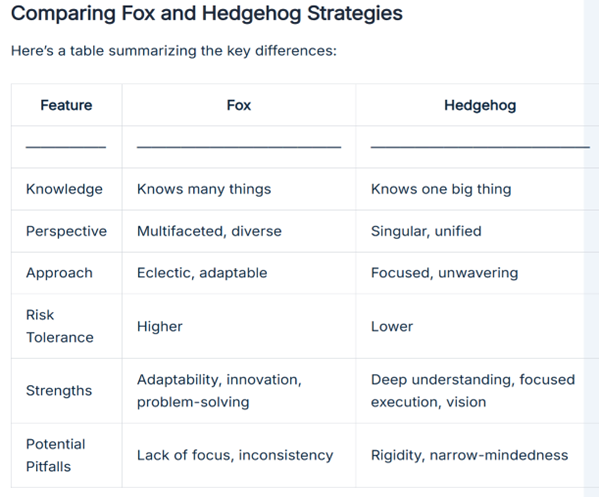




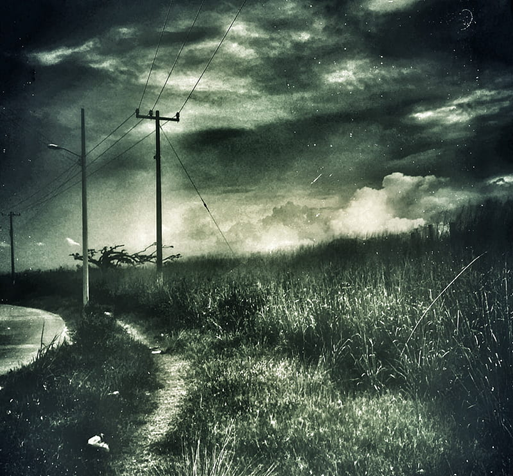


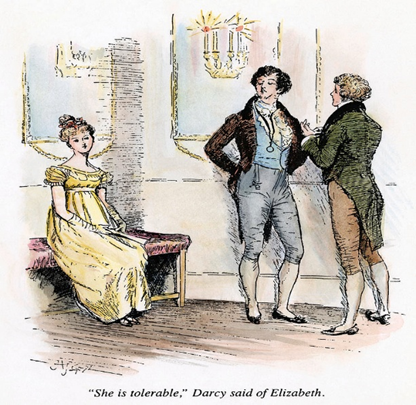








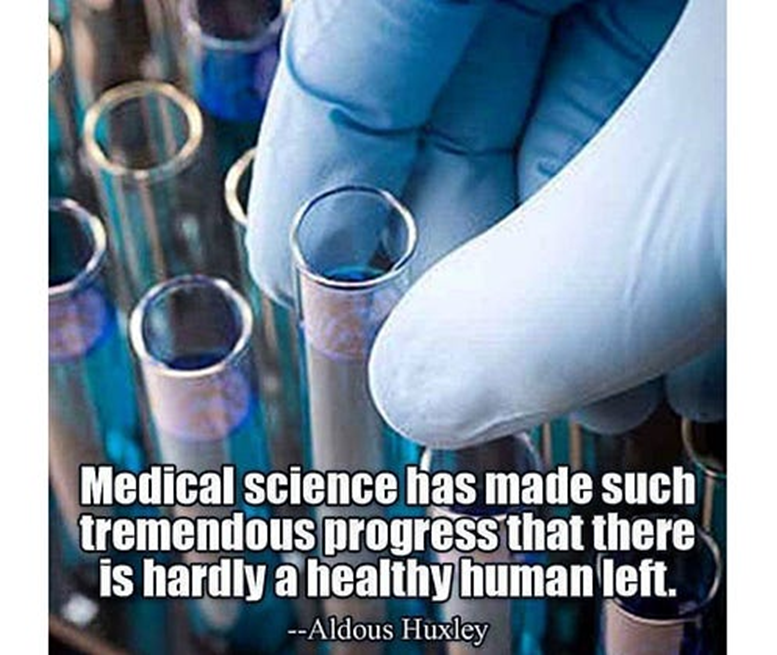






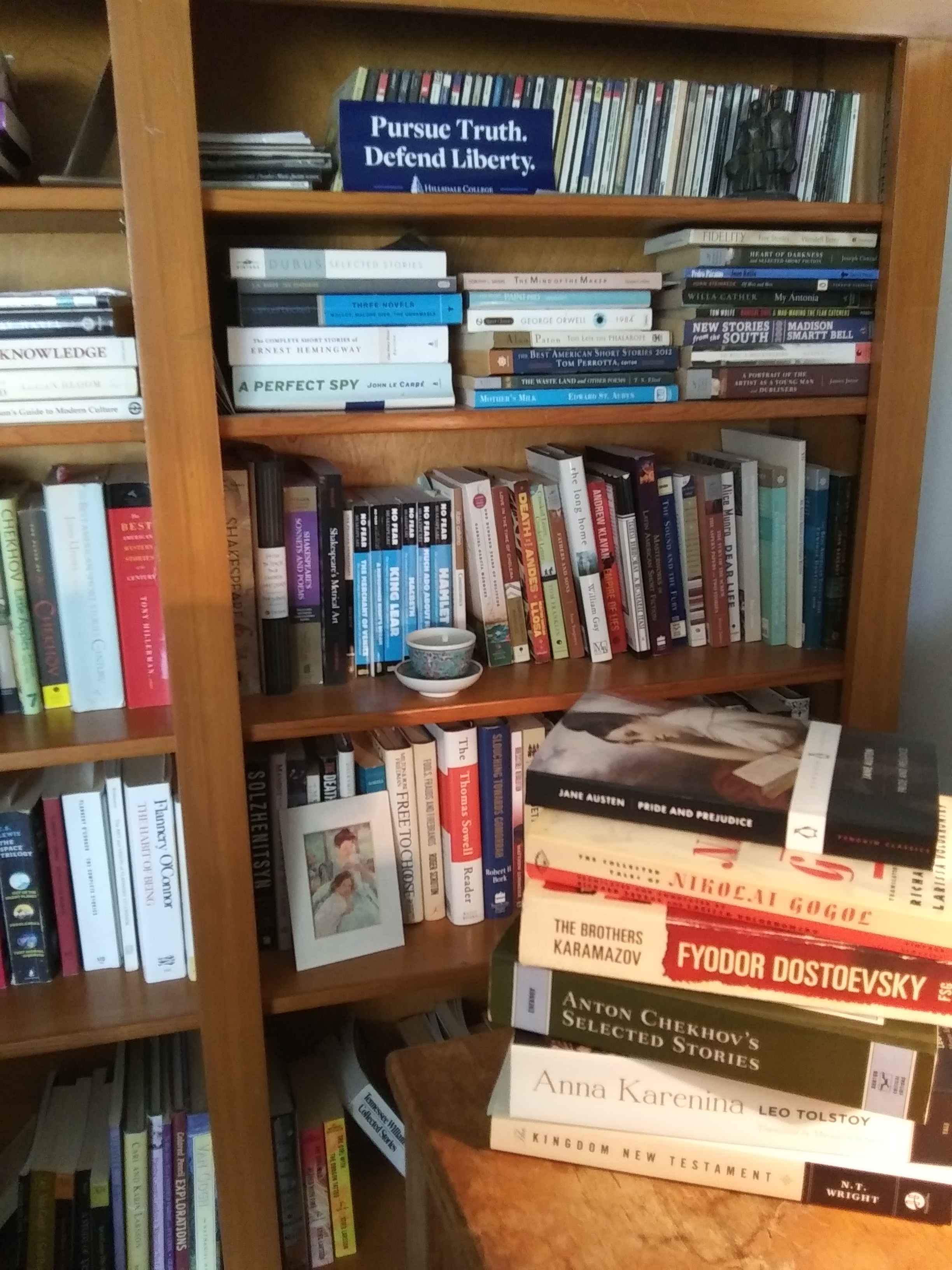




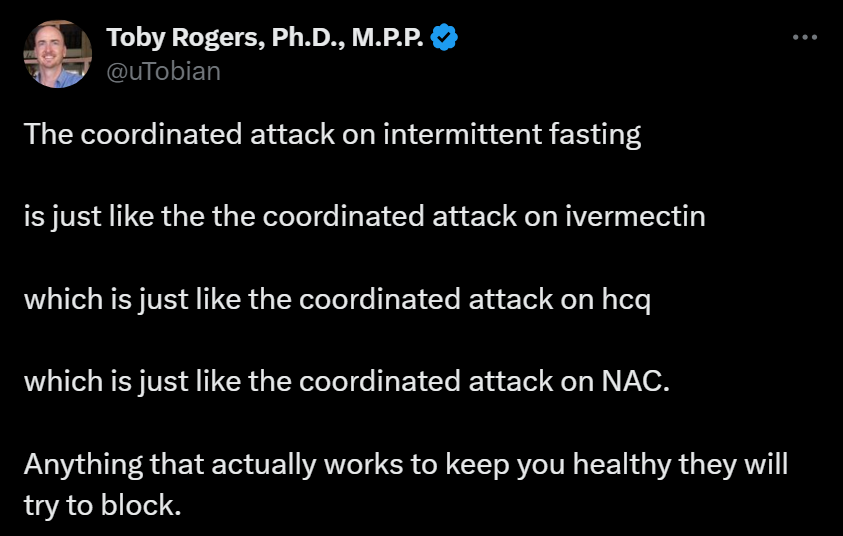



 Cindy Wity
Evil’s Last Grasp
February 22, 2025 Leave a comment
“Dog Bites Man.” Not news. Madness – “Man Bites Dog” – is a headline! And so is nauseating “ultra-violence” (a term used in the disturbing A Clockwork Orange, Stanley Kubrick’s film version of Anthony Burgesses’ book). To wit, a small sample of recent “ultra-violence” revelations in the headlines:
Cops identify NJ woman as mystery straphanger torched to death in horrific NYC subway attack
A homeless woman in the NYC subway was set on fire by an illegal immigrant who fanned the flames and then calmly watched her burn to death from a bench on the platform.
And, A mob attack at Edina Southdale YMCA leaves teen with brain injury
And, Metro-North rider stabbed in chest after complaining about loud music on passenger’s phone
And, NYC postal worker stabbed to death over food.
And, Transgender Teen Charged with Plotting Valentine’s Day School Massacre.
And, with taxpayer money, USAID funded Boko Haram slaughter of Christians in Nigeria – LeoHohmann.com
And, 70 Christians beheaded in church by Muslims.
To keep “ultra-violence” going Biden admin released 11 Yemeni detainees with suspected al Qaeda ties from Guantanamo Bay — including two alleged former bin Laden bodyguards
And, 158 DEMOCRATS VOTED AGAINST DEPORTING SEX OFFENDERS
Day after day headlines reveal man-made horrors beyond our comprehension and of absurdities that become received wisdom. Two more recent headlines:
Warrant executed for ‘child pornography’ at Texas Modern Art Museum’s LGBTQ exhibit… – Revolver News
Fauci approved $240 million for sexual mutilation (transgender) experiments on animals.
Shocking and bizarre evil permeates the moral order of the universe. And it is not ideological ordinariness, as seen by Hannah Arendt in her Eichmann in Jerusalem: A Report on the Banality of Evil:
Perhaps our age does not like the idea of evil or does not know what to make of it. And yet if there is one thing that we ought to be able to do, it is to identify true evil—the profundity of evil—when we see it. In our own day, it is put on display for all to see by death-cults like Hamas. – “The profundity of evil,” by Douglas Murray
‘Pure Evil’: Hamas Hands Over Remains of Dead Israeli Mother, Toddler & Infant
Hamas holds public celebration to hand over murdered babies in coffins.
Along with the use of extreme force to hurt or kill people, evil in the form of disorder, lies, chaos, corruption, grift, and utter perversion is in the news.
Here in America, the Progressive Blue Beast, allied with the primeval source of all opposition to God, refuses to give up its hold on its imperial capital. With the aid of the imperial cult propaganda machine – the main stream media – it whines, panders for sympathy and looks for ways to claw back power to continue its rule of tyranny.
It wasn’t long ago when the same propaganda machine told us to “trust (worship) the science.” We were told to pay homage to the idol the Blue Beast had created with masking, social distancing, and vaxxing the COVID mRNA spike protein vaccine into our bloodstream.
(Did you know? Yale Scientists Confirm Covid ‘Vaccines’ Cause VAIDS – Slay News VAIDS = vaccine-acquired immunodeficiency syndrome. One has to wonder if the COVID vax was used for population control. Was it used to keep the population weak, sick, and controlled? To create complete dependency on Big Pharma’s “science?”)
Remember, the Blue Beast told us to believe in the Russian collusion hoax and in many other lies that came from its mouth.
The last four years of the Biden regime and the eight years of Obama have given us a eye-opening look at the direction and speed with which evil can overtake aspects of our lives. The evil processes of the Blue Beast from those days have become so entrenched that activist federal judges are blocking the eradication of it from government. (Be aware that programs like discriminatory DEI, like all of evil’s deceptive programs, is the moral opposite of (social) justice. See Solzhenitsyn quote below.)
The Blue Beast worships power and itself and tolerates no rivals. Evil in all of it various forms (serpent, dragon, and human) and devices, and throughout time, worships power and itself. Evil tolerates no rivals, and certainly not the Risen and Conquering Christ that the prophecy of Revelation testifies about.
~~~
First century Christians, without newspapers and headlines, saw and heard about violence, oppression, and idolatries in the Roman Empire. Their world, like ours and Job’s, seemed arbitrarily mean, capricious and unfair.
These early Christians knew the enemies of God in terms of satanic forces invested in polytheism, the Roman empire’s tyranny, the imperial cult propaganda and the pressure to submit to it. And, there were those preaching another gospel other than the one they received from the apostles. The power of evil was all around them and they were looking for a divine rescue.
They were also likely aware of gospel accounts of Jesus exorcizing unclean spirits and plundering the strong man’s house (Mk 3:27). For them, awaiting Christ’s imminent return, these accounts prefigured a final victory over evil and the final realization of the kingdom of God on earth. Into that context at the end of the first century, seven struggling churches in a Roman province in Asia received a wake-up call, the letter of Revelation.
The letter begins by addressing issues in each church through a prophetic word. There’s critique of a church’s waywardness, its false teaching, its lethargy and compromises. And there are warnings to get each church on track to be victorious. The letter effectively summons each church to get involved in the divine war against evil and to conquer, conquer, conquer, conquer, conquer, conquer, conquer (Rev. 2:7; 2:11; 2:17; 2:28; 3:5; 3:12; 3:21).
How they are to conquer and what victory means is described in the rest of the letter. (Hint: conquering in Revelation has nothing to do with how the world conquers. And victory? There’s a promise that comes at the end of the letter referring to what was promised at the beginning of the letter to each church that conquers (Rev. 21:7).
You will want to read the whole of Revelation in one sitting to find out about Evil’s Last Grasp (cf. Gen. 3:15) and whether the three petitions of the Lord’s prayer are fulfilled. Is God’s name hallowed? Does his Kingdom come? Is God’s will done on earth as it is in heaven?
What would be the Final Headline and will you be one of those who were victorious over the beast? (Rev. 15:2)
~~~~~
The Big Reveal
Everyone who does evil hates the light; people like that don’t come to the light, in case their deeds get shown up and reproved. -The Gospel According to John 3:20
2025: The most transparent administration in American history is following the money . . .
The recent incursion of DOGE into the labyrinth of government has made headlines. As DOGE sheds light on what lurks there, deep state denizens are scurrying to use measures to hide their dark ways:
Eruption In “BleachBit,” “Wipe Hard Drive,” “Offshore Bank” Searches In DC Suggest Deep State Panic Mode | ZeroHedge
DC Internet Searches For “Criminal Defense Lawyer” & “RICO Law” Erupt As DOGE Drains Swamp
Martha Bueno on X: “These Senators voted AGAINST cutting the federal budget $1.5 trillion dollars. They say they want accountability but vote against it. Which one is the biggest hypocrite here? https://t.co/E8GhjljHZ2” / X
~~~~~
As in A Clockwork Orange, where a government agency works to rehabilitate the violent criminal Alex with an experimental aversion therapy, the World has had ongoing attempts at manipulating humans with mind control programs. Such are the CIA psyops, MSM propaganda, AI, brain chips, transhumanism, and more.
~~~~~
Podcast:
Andrew Klaven with Megan Basham discuss her book, Shepherds for Sale.
~~~~~
The evil that State media doesn’t report: Democrats illegally allowed into our country over 12,000,000 unvetted (and unvaccinated) aliens. The migrants were brought in for Democrat’s purposes: to consolidate Democrat power with votes and to support Democrat’s billionaire benefactors with low-cost workers. The illegals are to become serfs serving their welfare state lords.
The open borders madness was aided by Progressives in pulpits and by USAID-funded NGOs who participated and became rich (nonprofit Catholic Relief Services received $4.6 billion, cf. Rev. 3:14–22 ) helping the ‘poor little foreigner’ based on some misconstrued scripture.
It is certainly costs nothing to be ‘magnanimous’ and free with other people’s taxed money, property, freedom, safety, and our vulnerable children when sitting in your safe neighborhood virtue signaling the ‘goodness’ of open borders and ‘helping’ the ‘poor little foreigner’ in a social media text or a sermon.
You will hear from the creepy SJ James Martin on ‘X’ that “Caring for migrants and refugees Is not optional.” This kind of debauched out-of-context and Christian-sounding mumbo-jumbo for the ‘other’, directed toward the gullible – SJWs, suburban women, soy boys, and the like – is used by Martin to justify open borders, not just of our country but also for all kinds of sexual perversion in the church. Have you heard of the Lavender Mafia?
U.S. Catholic Church Spends $5 billion on 16,276 Clergy Sex Abuse Allegations in 20 Years
Four in five victims were male and one-fifth of the victims were female, the survey recorded, confirming reports by The Stream and other experts of a “lavender mafia” dominating the Latin-rite Roman Catholic priesthood.
Beware These 3 Lavender Mafias Outside the Church| National Catholic Register
Myopic, naïve, unwise, illegal, and compromised ‘compassion’ does more harm than good. Self-righteous compassion under the guise of “social justice” has become more important than the greater good.
Of course, if you speak out against open borders you are called “mean”, “racist”, a “xenophobe”, “unscriptural’, and more.
Apparently, ‘compassionately’ aiding and abetting foreigners in breaking U.S. law and thereby importing violence, narco-terrorism, fentanyl deaths, criminal gangs, drugs, felons, pedos, all kinds of disease, and economic migrants who flee their own country for a better ‘opportunity’ is OK as long as you help the “vulnerable” plunder and gut America and disregard the fact that our neighbors are made vulnerable to the above and to the chaos, disorder, disease, and cost that open borders causes.
Democrats have “invited every microbe on the planet onto our soil. And, now we are facing the consequences.”
Deporting Illegals Is A Good First Step, But Unfortunately The Microbes They Brought With Them Will Stay
The Immorality of Illegal Immigration – Victor Davis Hanson
Todd Bensman Discusses the Costs of Illegal Immigration
Interview with Archbishop Carlo Maria Viganò: The Pope’s Accusations Against the Trump Government are False and Delusional
More plundering of America enabled by the wicked. Activist federal judge is blocking deportation. His wife is “appears to be the former Vice President of National Immigration Forum, a pro-open borders advocacy group.”
“George Soros’s Open Society Foundation is also reportedly the group’s largest donor.”
~~~~~
“To do evil a human being must first of all believe that what he’s doing is good, or else that it’s a well-considered act in conformity with natural law. Fortunately, it is in the nature of the human being to seek a justification for his actions…
Ideology—that is what gives the evildoing its long-sought justification and gives the evildoer the necessary steadfastness and determination.”
― Aleksandr Solzhenitsyn, The Gulag Archipelago 1918–1956
Rate this:
Filed under 2025 Current Events, apocalypse, Christianity, Culture, Immigration, Political Commentary, Politics, Progressivism, Revelation, Revelation Tagged with apocalypse, art, Bible, books, Christianity, DOGE, evil, government, Illegal Immigration, politics, progressivism, Revelation