Three Atheists I Listen To
January 5, 2014 1 Comment
Becoming a follower of Jesus Christ and an heir of the King and a fellow servant in the Kingdom of God began when I first believed that God existed. What followed was the understanding that God not only existed but that He is an Infinite-Personal God who, though having created the vast universe ex nihilo using the Big Bang and evolution, loves me.
Beyond my own personal encounters with God through my reason and through the testimony of others, there are the historical facts supporting the death and resurrection of Jesus Christ. There is also astounding supporting evidence in nature. God exists.
But there are some who say otherwise: “Atheism exists, this I know, for my reason tells me so.” These would be the angry atheists Richard Dawkins, the former Christopher Hitchens (Hitch) and others.
I have at one time or another heard these atheists give their arguments of disbelief and I have found their words wanting for any real substance. They often come across as superior and snobbish. And, their arguments are certainly unfettered by the factual account of the resurrection or of the fine tuning of the universe that makes life and thought and argument possible at all. Their anger exists.
There are three atheists I pay attention to. I tune in to them because what they often say through words or music reveals the truth about God in a way they may not even realize. The three atheists are Thomas Sowell, Dr. Theodore Dalrymple and Frederick Delius
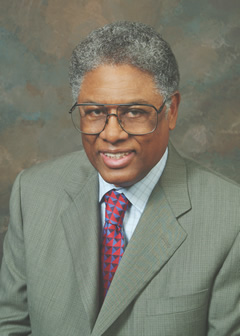 First, Thomas Sowell. Start at his web page Thomas Sowell. And, here is a short bio from the Townhall.com web page: http://townhall.com/columnists/thomassowell/
“…writing for the general public enables him to address the heart of issues without the smoke and mirrors that so often accompany academic writing.”
Sowell is an economist, a common sense economist. You will get that sense as you read his books and articles. Of late, I have read The Thomas Sowell Reader (start with this book for short articles addressing current issues both economic and social) and A Conflict of Visions.
The Thomas Sowell Reader, a compilation of articles and essays written by Thomas Sowell, economist:
“From an early age, I have been convinced with trying to understand the social problems that abound in any society. First and foremost, this was an attempt to try to grasp some explanation of the puzzling and disturbing things going on around me. This was all for my own personal clarification, since I neither had political ambitions nor the political talents required for either elective or appointed office. But, one having achieved some sense of understanding of particular issues ~ a process that sometimes took years – I wanted to share that understanding with others. That is the reason for the things that appear in this book.”
A Conflict of Visions, also written by Thomas Sowell:
“What are the underlying assumptions behind the very different ideological visions of the world being contested in modern times? The purpose here will not be to determine which of these visions is more valid but rather to reveal the inherent logic behind each of these sets of views and the ramifications of the assumptions which lead not only to different conclusions on particular issues but also to wholly different meanings to such fundamental words as “justice,” “equality,” and “power.”
A sample article by Thomas Sowell: The Fallacy of Redistribution
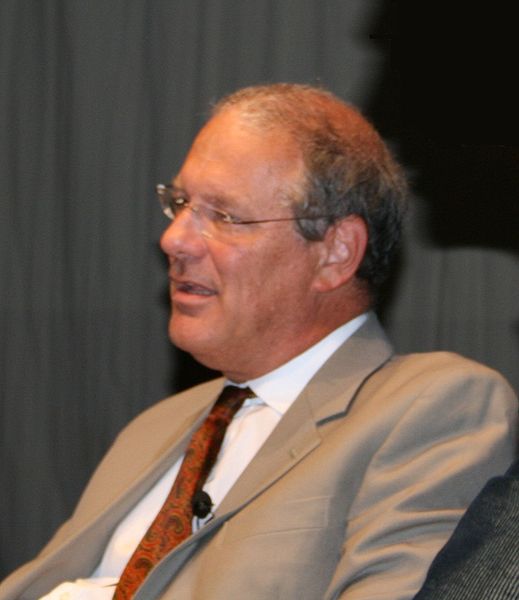 Regarding Dr. Theodore Dalrymple and some of his recurring themes from books and articles note the following from his Wikipedia entry. I confirm these themes having read his book Life at the bottom. The Worldview that makes the Underclass:
-The cause of much contemporary misery in Western countries ~ criminality, domestic violence, drug addiction, aggressive youths, hooliganism, broken families ~ is the nihilistic, decadent, and/or self-destructive behavior of people who do not know how to live. Both the smoothing over of this behavior, and the lexicalization of the problems that emerge as a corollary of this behavior, are forms of indifference. Someone has to tell those people, patiently and with understanding for the particulars of the case, that they have to live differently. (Life at the bottom. The Worldview that makes the Underclass)
-Moral relativism can easily be a trick of an egotistical mind to silence the voice of conscience. (‘The Uses of Metaphysical Skepticism’, in: In Praise of Prejudice. The Necessity of Preconceived Ideas, p. 6 (chapter 2).
-Multiculturalism and cultural relativism are at odds with common sense. (“Multiculturalism Starts Losing Its Luster”. City Journal. Retrieved 12 July 2009)
-The decline of civilized behavior ~ self-restraint, modesty, zeal, humility, irony, detachment – ruins social and personal life. (Not with a Bang but a Whimper)
-The root cause of our contemporary cultural poverty is intellectual dishonesty. First, the intellectuals (more specifically, left-wing ones) have destroyed the foundation of culture, and second, they refuse to acknowledge it by resorting to the caves of political correctness.
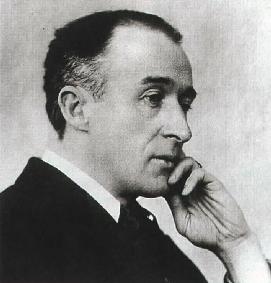 Lastly, Frederick Delius. I don’t recall when I first heard his compositions. It may have been in my thirties at a Chicago Symphony concert. The first piece I remember is the symphonic poem The Song Of Summer. I was overwhelmed by its simple beauty.
From The Delius Collection, Vol. 2 CD liner notes:
“Many have written of Delius’ ‘moods’ or ‘feelings’, views which reflect only the ‘impression’ his music has made on the writers (read music critics).
Such Romantic or rather Impressionistic ~ notions of his art are only concerned with its surface appeal, as if that is all that is valuable in it, and ignore wholly his unique technical and structural mastery. In such ways, Delius is more of an anti-Romantic, for the sentimentality or self-projection of Romanticism are alien to his music. Delius hymned Nature, not himself as did Sebelius; such sentimentality as may condemn his art stems from a performing style wherein expressive beauty is stressed at the cost of his music’s intellectual power.” Robert Matthew-Walker
For starters I would recommend listening to Irmelin Prelude, Song of Summer, A Late Lark, the orchestral interlude A Walk to Paradise Garden from his opera A Village Romeo and Juliet and On Hearing the First Cuckoo in Spring.
An avowed atheist, Delius embraced nature for his inspiration. He also embraced Nietzsche’s philosophy which produced Delius’ loud and unattractive A Mass of Life.
“A Mass of Life is an attack upon Christian doctrine and the Christian way of life as Nietzsche and Delius saw it. They both wanted to correct what they called the “slave morality” of Christianity. Their great emphasis was upon the will, not bowing to anyone, and living and dying fearlessly though death be total extinction.
Death, when it came to Delius, was terrible, and within a few months his steadfast wife was dead too.
In speaking about Delius, Eric Fenby (Delius’ composition scribe after Delius became blind) observes, “Given those great natural musical gifts and that nature of his, so full of feeling, and which at its finest inclined to that exalted end of man which is contemplation, there is no knowing to what sublime heights he would have risen had he chosen to look upwards to God instead of downward to man!” From the Gift of Music by Jane Stuart Smith and Betty Carlson, Crossway Books
What the first two atheists have in common is their ability to speak truth, wisdom and common sense ~ God’s law within each of us – simply. As Richard Feynman, Nobel laureate of physics said, “You can recognize truth by its beauty and simplicity.”
Both men, from their lifetime of experiences, have seen reality and tell us that there are values that a man must embrace to be civilized, to be ‘right side up’, so to speak. They tell us that Man must draw the line somewhere.
Now, I believe that it is the God of Creation who has created the line ~ the natural law written on our hearts ~ and He has exposed our crossing it. But, He did not leave us on our own, to remake ourselves as Nietzsche’s ideal human, the Übermensch, who would be able to channel passions creatively (but to what end?). He gave us the only way possible, through His Son, to regain our humanity.
Frederick Delius revealed truth through his music’s contemplative moments of rhapsodic beauty as inspired by God’s creation.
All three have seen things (even the eventually blind Delius) that others often willfully ignore. They are honest with themselves about what they see and they repeat it back. And, there is knowledge of reality in their words and works that can only find its genesis in God’s created order and His law written on our hearts.
“He has made everything beautiful in its time. He has also set eternity in the human heart; yet no one can fathom what God has done from beginning to end.” Ecclesiastes 3:11




 Cindy Wity
Egalitarianism. Is It Equal To The Task?
February 5, 2014 Leave a comment
The 2014 Olympics is fast approaching…
Should Olympians ‘race’ when everyone gets the same prize at the finish line?
Egalitarianism = equal outcomes. And equal outcomes are what Progressives want to have happen within our legal system, within our education system ~ within society as a whole.
Egalitarianism is posited as a means to create the unspoken Utopian bureaucratic island where near-perfect socio-politico-legal systems exist and where no one has advantage over another except for the so-called elite who have been ‘blessed’ with “superior intellect.” Only they know enough to define life for you. (e.g., Cass Sunstein’s recent Nudge book).
In my younger days I was a sprinter. I would run many heats and then the final events. To do so I had to prepare for the weekly track meet. I will use my own ‘summer event’ experience to help you to consider whether egalitarianism is equal to the hard work and discipline required for life’s trials and to decide whether the rise of “egalitarianism” will benefit or hurt our society.
I wrote the following as a ‘real-life’ depiction of my understanding of the “Constrained Vision” and the “Unconstrained Vision” as delineated by Thomas Sowell in his own favorite book A Conflict of Visions:
A Tale of Two Foot Races
Race Number One:
Eight men enter a race. They are roughly about the same height and weight but come from very different backgrounds. The eight men enter the race knowing that there will only be one winner. It was for this outcome that they had prepared themselves with rigorous discipline during the past four years.
Months prior to the track meet the eight men are told of the rules: A runner must run in qualifying heats. If the runner is successful in those heats the runner will then be allowed to compete in the final race with the other qualifying runners; a runner who jumps the gun twice at the starting line will be disqualified as having a “false start”; the commands “Ready”, “Set” and a gun shot will be used by a track official to start the race fairly; each runner must stay in his lane or he will be disqualified; runners will be timed and the first runner to cross the finish line will be the winner of the race.
The runners all agree and sign off on the rules before the race.
On the day of the race and after qualifying in the heats eight runners come to the starting line. They know that they must run straight ahead in their own lane to reach the one-hundred meter line. They know that if they jump the gun twice they will be disqualified from running. They know that they must sprint as hard as they can to cross the finish line first. They are knowingly competing for first place. The race before them has now become the culmination of years of exhausting training and dedication to finishing the race and receiving first prize.
When the race is announced the runners shed their sweats and come to the starting line. The track official then announces, “Ready”. The runners will then carefully position their legs into the starting blocks and place their open hands stretched behind the starting line.
Once the runners have settled the track official then snaps “Set”. The runners immediately come up to a “set position”, coiled in their starting block. With the burst of the starting pistol eight men bolt from their starting blocks and run down the track as fast as their disciplined bodies will carry them.
The winner of the race is the one who breaks the tape. There is also a second, a third and fourth place finisher. The runners-up each congratulate the winner for his speed and, implicitly, for his fidelity to the rules and his commitment to the sport of racing.
The first three finishers receive medals, adulation and wreaths of honor from the thousands who have come to watch a fair race between those who have so vigorously prepared themselves. The experience of the race has bolstered each runner’s self-esteem. The cheering crowd is also moved by each runner’s self-sacrifice, dedication and self-discipline. This spectacle has confirmed the crowd’s understanding of athlete’s playing by the rules and aspiring to excel within those rules. Those who witnessed the race that day are stirred, encouraged to excel at what they do.
All eight racers later return home. The runners-up are now more dedicated than ever to prepare for another day of racing and to receiving their own crown of victory. Ciltius, altius, fortius.
Race Number Two:
Eight men enter a race. They are roughly about the same height, weight but come from very different backgrounds. The eight men entered the race knowing that everyone will be a winner. It was for this outcome that they saw no need to prepare themselves with rigorous discipline during the past four years. They just had to show up.
Months prior to the race the eight men are told the rules. They are told the rules are subject to change at the time of the race based on the current ad hoc articulated reasoning of one superior intellectual with unquestionable virtue. A runner must run in qualifying heats but this will not be a constraint. Whether or not a runner is successful in those heats he will be allowed to compete in the final race with other ‘qualifying’ runners. The heats are basically events created to satisfy the need for more equality.
More rules: a runner who jumps the gun twice at the starting line will not be disqualified from running. Instead he will be given another chance; the commands “Ready” and “Set” and a gun shot will be used by a track official to start the race fairly, though any sincere attempt to cooperate with the official will be accepted; each runner must stay in his lane or he will be disqualified unless, of course, their background is such that they have never stayed within the lines; runners will not be timed because such keeping of minutes would be discrimination against slower runners. The first runner to cross the finish line will wait at the finish line so that everyone will be considered a winner of the race. This must be done at any personal cost to the first one crossing the finish line.
The runners agree and sign off on the rules before the race.
On the day of the race all of the runners come to the starting line. They know that they are supposed to run down to the finish line before the outcome-determining patrons. They know that there will be equal prizes and the egalitarian appreciation of well-wishers to look forward to. They are going to run for this reason. This race is now the culmination of years of knowing that the battle is just showing up and doing what you are told.
When all the runners are in their starting blocks and their hands are behind the starting line the track official then says, “Ready”. After a long moment of reasoned judgment the official says “Set”. The runners come up to set position. Then the race official shoots the starting gun. The eight men come out of their starting blocks and run down the track as fast as their unfocused discipline has trained them.
At the finish line everyone is a Finisher, even those who left the race due to being out of breath. There are hand-shakes and kudos all around for having shown up for such an event.
At the awards ceremony all the runners receive medals and congratulations. Thousands have come to watch a race between runners who have shown up for a race where the outcome was predetermined to be fair ~ fair as defined by the few judges of superior intellect and of unquestioned virtue.
Later, all the runners return home and rest for another day of showing up.
*****
A Tale of Two Foot Races: Equal Opportunities vs. Equal Outcomes by Sally Paradise © Sally Paradise, 2013, All Rights Reserved
Added 2/7/2014:
Communism Leads to Slavery Not To Equality
Rate this:
Filed under Egalitarianism, Political Commentary, Politics, social commentary Tagged with A Conflict of Visions, egalitarianism, equality, Olympics, politics, social justice activism, the starting line, Thomas Sowell, unconstrained vision